INTERNACIONAL
Del sueño de volar a un prototipo real: cómo es el dron tripulado creado por estudiantes argentinos que busca revolucionar la movilidad aérea

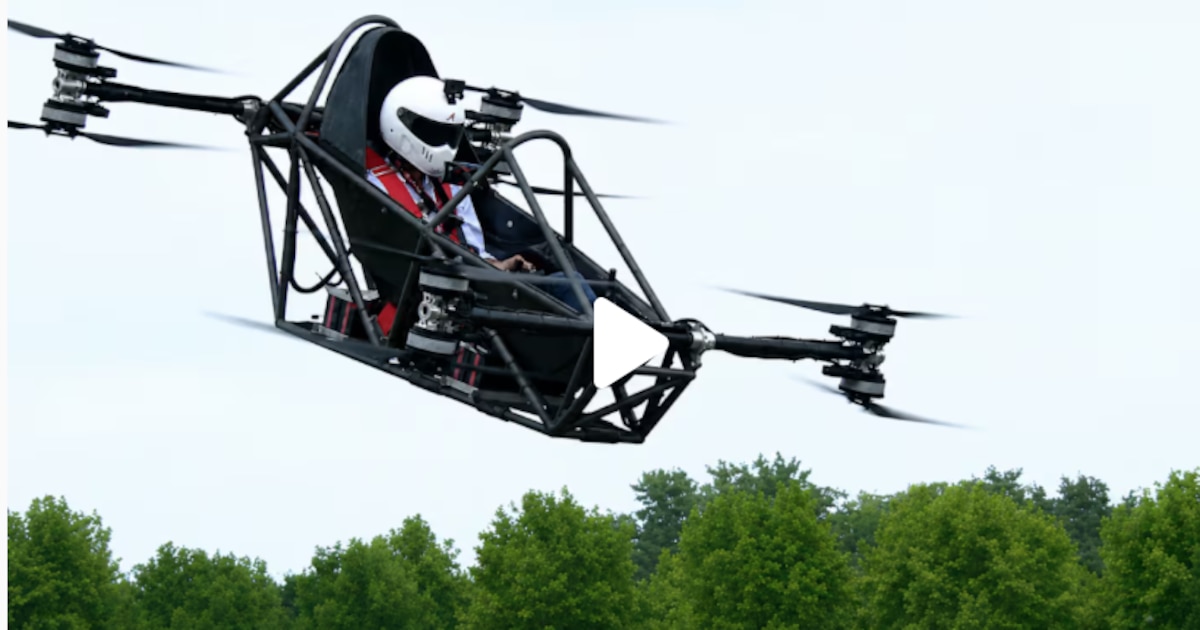
La escena reúne dos elementos que hasta hace pocos años parecían lejanos entre sí: un grupo de estudiantes y exalumnos de una escuela técnica argentina, por un lado, y una aeronave eléctrica capaz de elevarse sin pista, por el otro. De ese cruce surgió el Atol Mamba, un eVTOL monoplaza que ya realiza vuelos tripulados en Argentina y que sus desarrolladores ubican entre los primeros proyectos de este tipo en América Latina.
El término eVTOL responde a la expresión inglesa electric vertical take-off and landing, que define a los vehículos eléctricos de despegue y aterrizaje vertical. Se trata de aeronaves que suben y bajan como un helicóptero, pero emplean motores eléctricos y hélices en lugar de una turbina convencional. El Mamba adopta ese principio en una plataforma de un solo asiento, con controles inspirados en los drones y una estructura orientada a la movilidad aérea personal.
El proyecto nació como una inquietud entre jóvenes que todavía cursaban la secundaria. Con el tiempo, ese interés tomó forma en prototipos, pruebas técnicas y un equipo multidisciplinario que reunió perfiles de ingeniería aeroespacial, mecánica, industrial, electrónica y diseño industrial. La propuesta dejó de ser un desarrollo académico aislado y pasó a operar bajo la marca Atol, la compañía que concentra la evolución del vehículo.
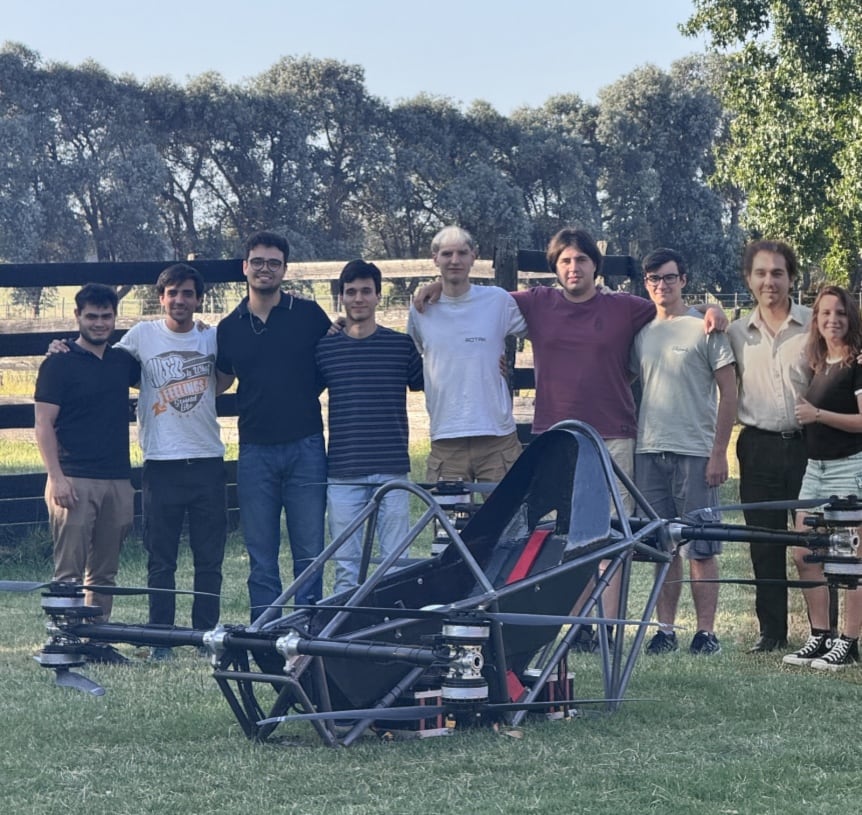
La empresa quedó formalmente constituida como Atol Tech S.A. en abril de 2026. Sus fundadores son Nicolás Maculan, Matías Felizia y Francisco Yennaccaro, quienes impulsaron los primeros diseños del proyecto. Felizia estudia Ingeniería Mecánica en el Instituto Tecnológico de Buenos Aires (ITBA), mientras que Maculan está vinculado con la Facultad de Ingeniería de la Universidad de Buenos Aires (FIUBA).
Los antecedentes del grupo incluyen competencias universitarias y experiencias relacionadas con ingeniería y aeronáutica. La idea inicial tomó impulso después de una competencia vinculada con la NASA, donde algunos de los futuros integrantes conocieron iniciativas de aeronaves eléctricas tripuladas pensadas incluso para carreras. A partir de entonces, el desafío cambió de escala: ya no se trataba de analizar tecnologías ajenas, sino de fabricar un vehículo propio.
El resultado actual conserva el carácter experimental de sus primeras etapas, pero ya incorpora componentes, sistemas de control y medidas de seguridad propias de una aeronave tripulada. La empresa sostiene que el modelo completó vuelos con una persona a bordo y que busca consolidar una plataforma con aplicaciones más amplias que una demostración tecnológica.
Ocho motores, autonomía eléctrica y sistemas de respaldo para un vuelo sin pista
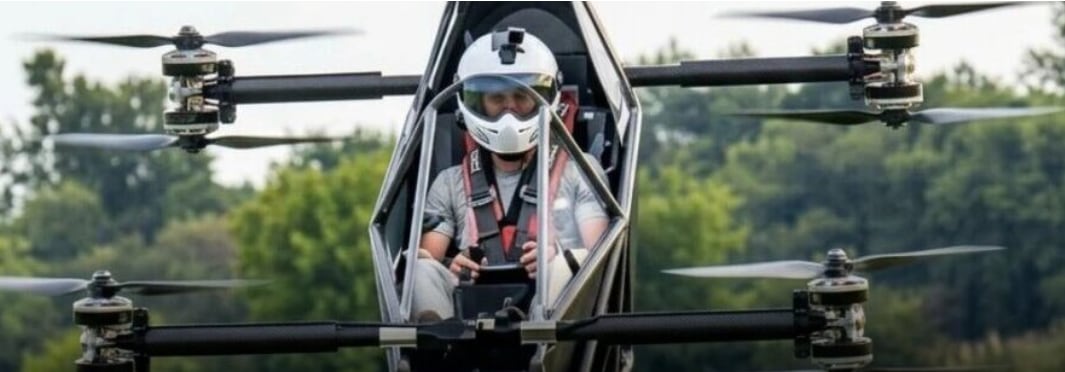
La arquitectura del Mamba se aparta de la lógica de una avioneta. No necesita recorrer una pista para tomar velocidad antes de elevarse, porque sus motores producen el empuje vertical necesario desde el inicio. Esa cualidad amplía las posibilidades de uso en sitios donde no existe infraestructura aeroportuaria, aunque cada operación depende de límites técnicos, meteorológicos y regulatorios.
El vehículo utiliza ocho motores eléctricos dispuestos en pares coaxiales. En esta configuración, dos hélices comparten un mismo eje, una sobre la otra. El diseño busca aportar la potencia necesaria para levantar la aeronave y, a la vez, distribuir funciones críticas entre varios propulsores.
La clave está en la redundancia. Según la información difundida por Atol, cada motor cuenta con una alimentación independiente. Si uno deja de responder, el sistema conserva recursos para que el piloto mantenga el control y realice un descenso controlado. Esa capacidad no elimina el riesgo de un vuelo, pero reduce la dependencia de un único componente y ofrece un margen adicional ante una falla puntual.
La seguridad reúne otras capas de protección. El Mamba incorpora una celda de seguridad para la cabina, arnés de cuatro puntos, sensores redundantes y un paracaídas balístico. Este último mecanismo funciona como un recurso de emergencia: ante una situación crítica, puede desplegar un paracaídas para desacelerar la caída de toda la aeronave.
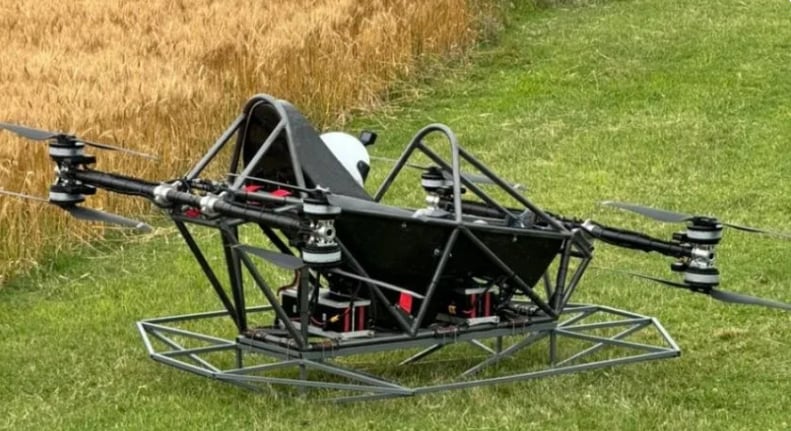
El uso de varios sensores también apunta a evitar que una lectura errónea altere de forma decisiva la respuesta del sistema. En un vehículo de despegue vertical, los datos sobre inclinación, altura, posición y potencia resultan determinantes. La computadora de vuelo procesa esa información y asiste al piloto para conservar la estabilidad del aparato.
La forma de conducción toma referencias del universo de los drones. Los comandos se relacionan con tres acciones principales: la potencia para ascender o descender, la inclinación para avanzar o retroceder y el giro para cambiar de dirección. La asistencia electrónica ayuda a sostener el equilibrio de la aeronave, pero la compañía aclara que esa simplificación no reemplaza la formación.
La autonomía marca otra frontera para este tipo de aeronaves. En sus primeras pruebas, el equipo informó vuelos de alrededor de 20 minutos y velocidades de hasta 70 kilómetros por hora. La información actual de la compañía fija como objetivo entre 25 y 30 minutos de vuelo por carga, con baterías de litio que pueden reemplazarse en menos de dos minutos.
El peso vacío del prototipo, con las baterías incluidas, es de 115 kilos. Ese dato influye de manera directa sobre el desempeño: una aeronave más liviana necesita menos energía para elevarse, aunque los materiales deben resistir vibraciones, esfuerzos mecánicos y eventuales impactos. Por esa razón, el diseño exige un equilibrio entre peso, resistencia, potencia y capacidad energética.
La sustitución rápida de baterías aparece como una solución para reducir los tiempos entre vuelos. En lugar de esperar la recarga completa de un paquete, un operador podría colocar otro conjunto ya cargado. Sin embargo, esa modalidad requiere controles estrictos sobre el estado de las celdas, la temperatura, los conectores y la trazabilidad de cada batería.
Atol busca definir el marco regulatorio y proyecta usos recreativos, deportivos y de rescate
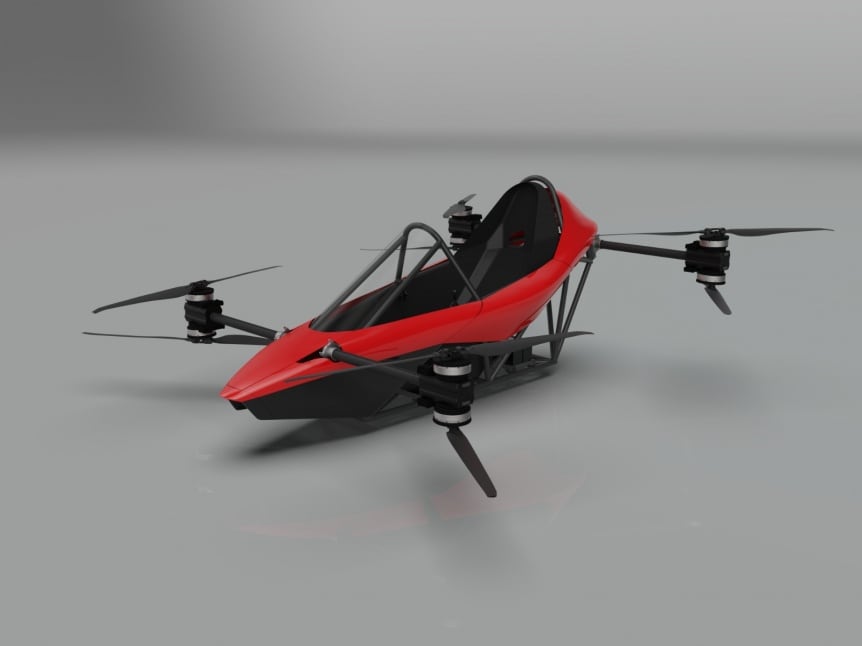
El origen del Mamba estuvo ligado a la curiosidad técnica y a la posibilidad de construir una aeronave eléctrica personal. Con la evolución del prototipo, sus creadores identificaron escenarios de uso que abarcan actividades recreativas, operaciones de rescate y aplicaciones deportivas. Cada una de esas alternativas plantea requisitos diferentes.
En zonas de montaña o lugares de acceso limitado, un vehículo de despegue vertical podría ofrecer una ventaja por su capacidad para operar sin pista. Para tareas de rescate, de todos modos, la autonomía, la carga disponible, las condiciones del viento y la formación de los operadores definen los límites reales de cualquier misión. El Mamba es un monoplaza y su configuración actual no equivale a la de un helicóptero de evacuación.
El campo deportivo adquirió un lugar relevante dentro de la estrategia de la empresa. Atol trabaja en la idea de una categoría de competencia aérea eléctrica, con vehículos que pongan a prueba velocidad y maniobrabilidad. La comparación con el automovilismo sirve para explicar ese enfoque: las carreras podrían ofrecer un ámbito exigente para evaluar componentes, sistemas de control y rendimiento de baterías.
Esa proyección comercial depende de un paso que todavía no está resuelto: la regulación. Que una aeronave experimental consiga despegar y completar vuelos no significa que pueda operar de forma comercial ni circular en cualquier espacio aéreo. La certificación busca comprobar que el vehículo cumple requisitos de diseño, fabricación, mantenimiento y seguridad antes de una habilitación.
Los desarrolladores mantienen conversaciones con la Administración Nacional de Aviación Civil (ANAC) y estudiaron el marco de la Administración Federal de Aviación de Estados Unidos (FAA, por sus siglas en inglés). El objetivo consiste en definir bajo qué categoría podría encuadrarse el Mamba y qué condiciones deberá cumplir en su evolución hacia un producto comercial.
Los eVTOL desafían los esquemas tradicionales porque combinan características de helicópteros, drones y aeronaves eléctricas. Las autoridades deben resolver cuestiones como las licencias de los operadores, los espacios autorizados para el vuelo, las exigencias de mantenimiento, las comunicaciones y las respuestas ante una emergencia. También deben establecer parámetros para las baterías y los sistemas automáticos de estabilización.
El camino que enfrenta Atol incluye demostrar que el vehículo puede operar de manera segura y repetible más allá de los vuelos de prueba. Para ello, deberá sumar ensayos, documentación técnica, capacitación y procesos de certificación. La meta ya no se limita a comprobar que el Mamba despega: consiste en definir las condiciones que permitirían que una aeronave nacida de una idea escolar encuentre un lugar dentro de la aviación regulada.

A fight over cuts to autism therapy for Georgia foster children is escalating at the state Capitol, with a Republican lawmaker and families now calling for the 30% reimbursement reduction to be reversed as advocates warn children could lose hard-earned progress.
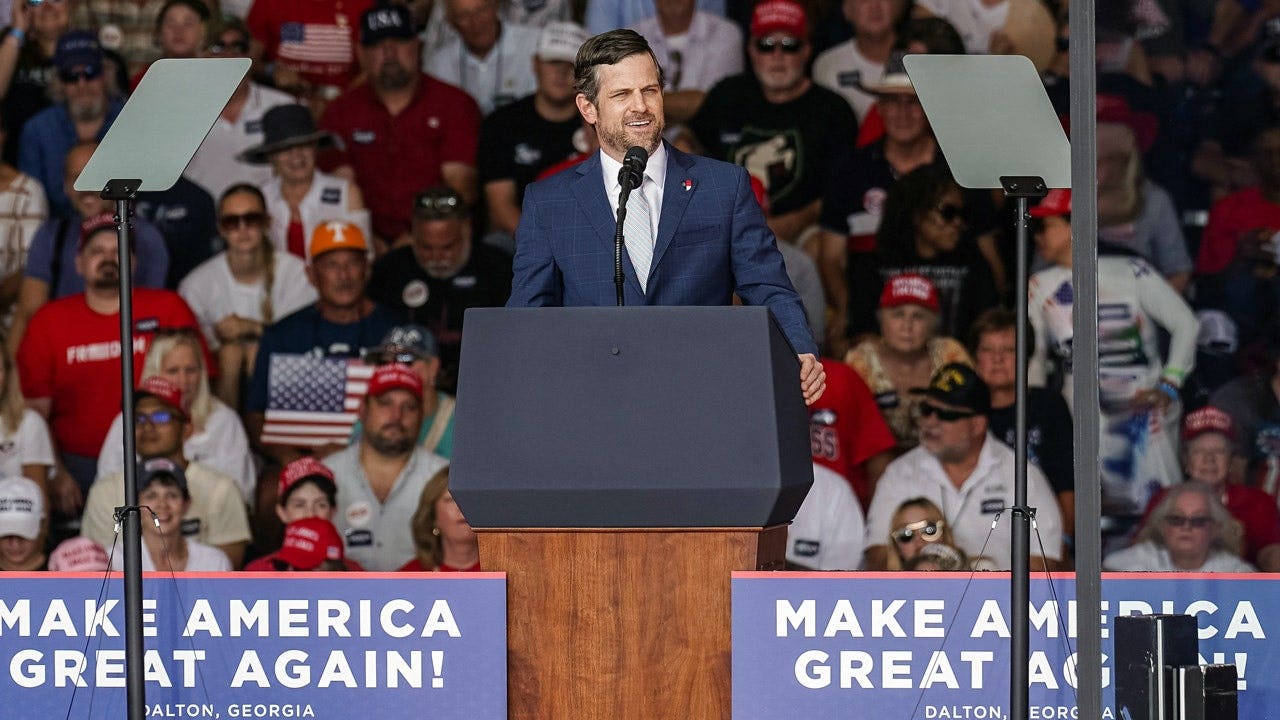
State Sen. Brian Strickland, R-McDonough, joined parents and providers Thursday to demand action over a reduction in reimbursement rates for applied behavior analysis (ABA) therapy that went into effect Sept. 1 through Amerigroup, which administers Medicaid coverage for children in Georgia’s foster care system.
«As a parent of a child with autism, I know what ABA therapy means for a family and Georgia’s foster children, which is why I stood at the Capitol to make clear that these cuts are indefensible,» Strickland told Digital.
Strickland, who is running for state attorney general, also pledged to hold companies accountable if elected.
AUTISM PROVIDERS WARN FOSTER KIDS AT RISK FROM UNINTENDED CONSEQUENCES OF TRUMP’S MEDICAID FRAUD CRACKDOWN
The political pushback comes after Digital first reported earlier this month that autism advocates feared the reduction could force providers to stop treating foster children as an unintended consequence of the Trump administration’s Medicaid fraud crackdown.
Taylor Sanders of the Autism Families Alliance told Digital on Saturday that families and clinicians have increasingly begun speaking out since the cuts took effect, emphasizing that «time is crucial to these families.»
«Every moment where their child is not receiving services, we’re seeing a regression in possible communication, safety skills,» Sanders said. «Maybe we’re seeing an increase in some of those challenging behaviors.»
Sanders previously warned that as many as 75% of clinics could close or stop serving foster children because of the cuts.
AUTISM PROVIDERS CHEER TRUMP CRACKDOWN AFTER MILLIONS ALLEGEDLY STOLEN FROM CHILDREN THROUGH MEDICAID FRAUD
She described a family whose 3-year-old child had begun using words for the first time after receiving ABA therapy and whose mother now fears losing access to treatment.
«She was in absolute tears and so worried and frustrated,» Sanders said, recalling their recent conversation.
The mother, Sanders explained, fears losing the consistent one-on-one therapy that she said helped the child begin communicating.
Sanders said the child had not received enough therapy to ensure those newly learned communication skills could be maintained across different settings.
«For these children and their families, time matters,» Kelsey Bennett of the Autism Families Alliance told Digital. «Every day without critical care risks reversing hard-earned progress and limiting opportunities for continued development.»
HOUSE GOP BILL MOVES TO CLOSE WHISTLEBLOWER GAPS EXPOSED BY MINNESOTA MEDICAID FRAUD SCANDAL
Bennett added, «Reverse the cuts.»
Advocates are calling not only for the cuts to be reconsidered, but also for families, clinicians and other stakeholders to be involved in reviewing the policy rather than relying on a blanket approach.
In a statement to 5 Atlanta, Amerigroup said it rebalanced ABA reimbursement rates based on service complexity and clinical expertise, increasing rates for treatment planning and caregiver-engagement services while decreasing rates for some technician-delivered services. The company also said rates for licensed clinicians did not decrease and that medically necessary autism services remain covered.
In response, Sanders emphasized that the reductions affected technicians who provide much of the one-on-one care.
COALITION OF 25 STATES SUES TRUMP ADMIN OVER MEDICAID WORK RULE DESIGNED TO PREVENT FRAUD
«Just because we put something down on paper doesn’t mean that it’s gonna be clinically effective or that these children are gonna be able to access care because companies are now having to maybe close their doors to these individuals because they can’t afford the rate cut,» Sanders said.
Sanders reiterated her concerns about the potential long-term consequences for children whose therapy is interrupted.
«Progress lost is extremely hard to come back from, which is the biggest concern that we’re facing here,» Sanders said. «Reconsider before ripping the rug from families. Start to involve the clinicians, involve families before making major cuts.»
Digital has reached out to Amerigroup and the Centers for Medicare & Medicaid Services for additional comment.
Digital’s Landon Mion contributed to this report.
autism, georgia, childrens health, health care, parents, health care executive, politics
INTERNACIONAL
Debate presidencial entre Lula y Bolsonaro en Brasil, EN VIVO: los momentos más destacados
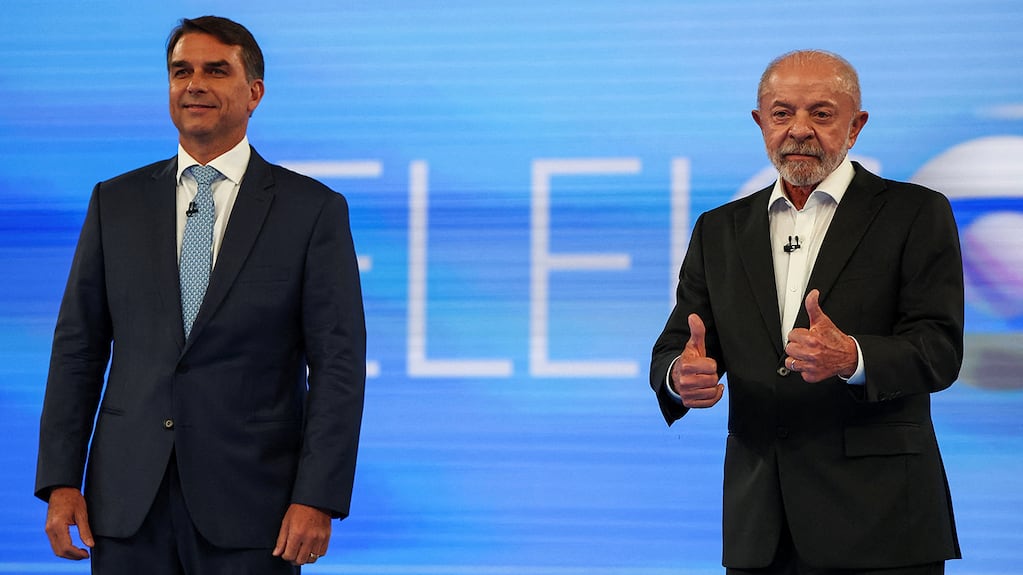
- Lula da Silva y Flávio Bolsonaro se enfrentaron este viernes en el último debate televisivo antes del balotaje del domingo en Brasil.
- Flávio Bolsonaro aseguró que hay 100.500 obras de infraestructura paralizadas en el país.
- Lula cruzó a Bolsonaro con críticas a Milei: «En la Argentina, hay gente que come carne de burro y vos querés un modelo igual».
- Flávio Bolsonaro comparó a Lula con Cristina Kirchner y cuestionó sus políticas monetarias.
- Lula acusó a Flávio Bolsonaro de «lamer las botas» de Donald Trump y lo vinculó con los aranceles del 25% que Estados Unidos impuso a las importaciones brasileñas.
Seguí en vivo la cobertura por TN y mirá las noticias más destacadas minuto a minuto:
El contundente posteo de Lula luego de que Flávio Bolsonaro lo llamara «nueve dedos» en el debate presidencial
Lula publicó una foto con una mano de cuatro dedos tras el cruce con Flávio Bolsonaro en el debate presidencial. (Foto: X / @LulaOficial)
Tras el debate, Flávio Bolsonaro apuntó contra Lula en las redes sociales

El posteo de Flávio Bolsonaro tras el debate presidencial con Lula da Silva. (Foto: X / @FlavioBolsonaro)
Terminó el segundo y último debate presidencial de Lula y Flávio Bolsonaro antes del balotaje en Brasil
Flávio Bolsonaro propuso bajar a 14 años la edad de imputabilidad para violadores

Flávio Bolsonaro en el debate en Río de Janeiro este viernes. (Foto: REUTERS/Agustin Marcarian)
“Nueve dedos”: el apodo de Flávio Bolsonaro que desató la furia de Lula
Flávio Bolsonaro comparó a Lula con Cristina Kirchner y cuestionó sus políticas monetarias
Bolsonaro: “Los pobres son los que más sufren la inflación”
Lula y Flávio Bolsonaro discutieron por los aranceles de Trump y las tasas de interés

Un grupo de personas observó el debate televisado entre Lula da Silva y Flávio Bolsonaro antes de la segunda vuelta electoral, en un bar de Río de Janeiro este 23 de octubre de 2026. (Foto: REUTERS/Pilar Olivares)
Lula afirmó que Bolsonaro «no conoce Brasil» y no comprende sus necesidades
Lula cruzó a Bolsonaro con críticas a Milei: “En la Argentina, la gente come carne de burro y vos querés un modelo igual”

El senador Flávio Bolsonaro, del Partido Liberal (PL), y el presidente Luiz Inácio Lula da Silva, del Partido de los Trabajadores (PT), en el debate televisado previo a la segunda vuelta de las elecciones presidenciales en Río de Janeiro, Brasil, el 23 de octubre de 2026. (Foto: Reuters / Agustín Marcarian).
Leé la nota completa
Lula le preguntó a Flávio Bolsonaro si sabía cuál era el salario mínimo en San Pablo y el senador lo acusó de endeudar a Brasil
Flávio Bolsonaro aseguró que hay 100.500 proyectos de infraestructura paralizados en Brasil
Empezó el último debate presidencial de Lula da Silva y Flávio Bolsonaro antes del balotaje en Brasil

El senador Flávio Bolsonaro, del Partido Liberal (PL), y el presidente Luiz Inácio Lula da Silva, del Partido de los Trabajadores (PT), en el debate televisado previo a la segunda vuelta de las elecciones presidenciales en Río de Janeiro, Brasil, el 23 de octubre de 2026. (Foto: Agustín Marcarian/REUTERS)
Cuatro bloques y límites para desplazarse por el estudio: así será el último debate entre Lula y Flávio Bolsonaro antes del balotaje
Brasil movilizará a 25.000 militares para reforzar la seguridad en el balotaje presidencial

Imagen de archivo: un soldado brasileño sobre un vehículo militar durante un ejercicio de demostración en Río de Janeiro en julio de 2025. (Foto: Tita Barros/REUTERS)
“Lula, ladrón, tu lugar es la prisión”: el cántico de los votantes de Bolsonaro antes del debate presidencial

Carolina Amoroso habló con votantes de Bolsonaro antes del debate presidencial. (Video: TN)
Lula da Silva y Flávio Bolsonaro se preparan para el último debate antes del balotaje en Brasil
Imagen de archivo del primer debate entre los candidatos presidenciales brasileños Luiz Inácio Lula da Silva y Flávio Bolsonaro en San Pablo el 18 de octubre de 2026. (Foto: Jean Carniel/REUTERS)
“Brasil está muy dividido”: qué opinan los vecinos de la favela más grande de San Pablo a dos días del balotaje

«Brasil está muy dividido y esto hace que muchas personas tengan dudas sobre lo que va a pasar», señaló el dueño de una peluquería en Heliópolis. (Video: TN).
Leé la nota completa
Brasil, Flavio Bolsonaro, Lula Da Silva
INTERNACIONAL
From arrests to crackdowns, how Europe’s leaders are responding as protests rock the continent
NEWYou can now listen to Fox News articles!
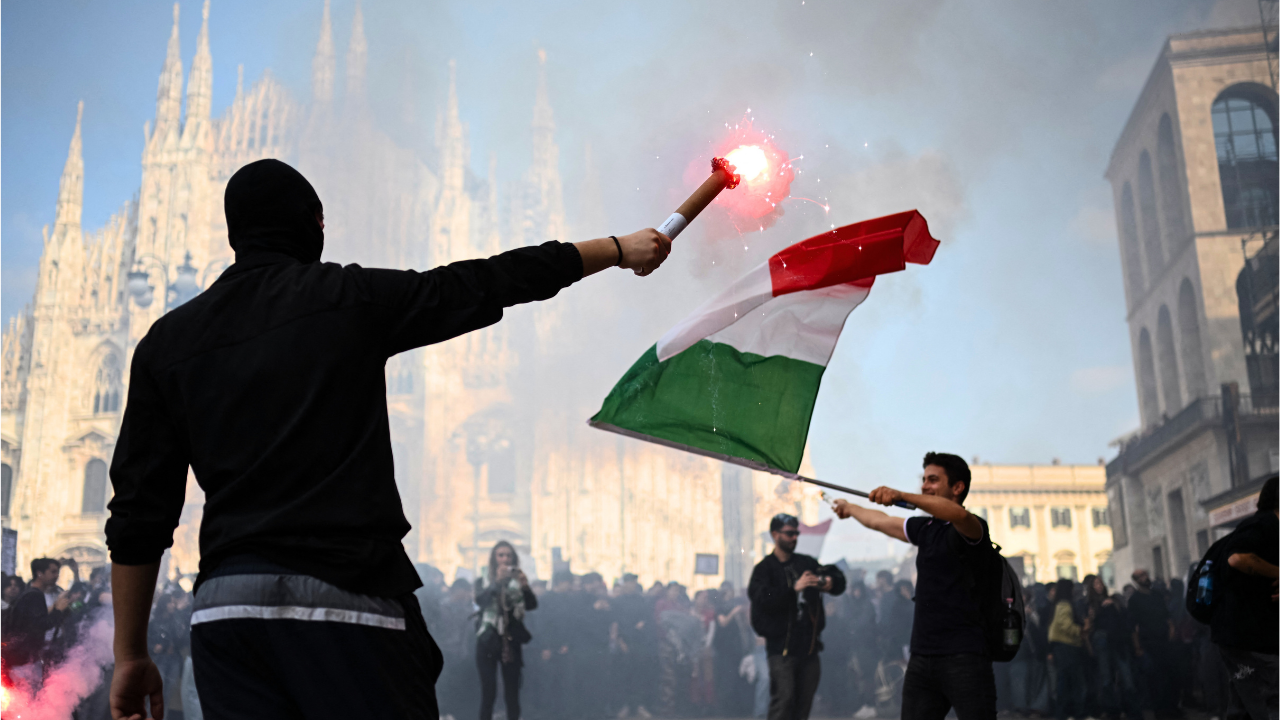
From mass arrests in France to troop deployments in Italy, European leaders are taking varied approaches to protests and clashes across the continent. The unrest began in France in mid-September with student demonstrations over school conditions, then spread to other countries, where protests have centered on local grievances.
President Donald Trump has used the unrest to press his hard-line immigration message, blaming France’s protests on immigration and urging the country to close its borders.
PHOTOS SHOW AFTERMATH OF RIOTS AS MASKED GROUPS CLASH WITH POLICE ACROSS FRANCE
French President Emmanuel Macron pushed back, calling foreign leaders’ comments «unacceptable and even stupid» and accusing them of exploiting France’s crisis for political gain.
Here’s how leaders across Europe are responding.
France vows to make rioters pay as cities assess damage
Demonstrators occupy the sculptures and ledges of the Monument a la Republique in Paris, France, on October 17, 2026. (Aruallan / Hans Lucas /AFP/Getty Images)
Macron has vowed that those who loot or destroy property will be held accountable and made to pay for the damage. French authorities deployed 70,000 police officers nationwide Saturday as demonstrations took place in Paris and other cities.
Some clashes broke out in several cities, including Paris, Lyon, Lille, Toulouse and Nantes. Police used tear gas, sound grenades and water cannons, and the Interior Ministry reported more than 1,300 arrests.
VIOLENCE ERUPTS AT FRANCE PROTESTS AS MACRON WARNS UNREST IS BEING EXPLOITED
Most union-organized marches were peaceful, though clashes broke out later in Paris and several other cities. Separately, a French intelligence assessment reportedly identified Antifa and other far-left groups as instigators of some of the violence, according to a French outlet.
Italy takes one of Europe’s toughest lines
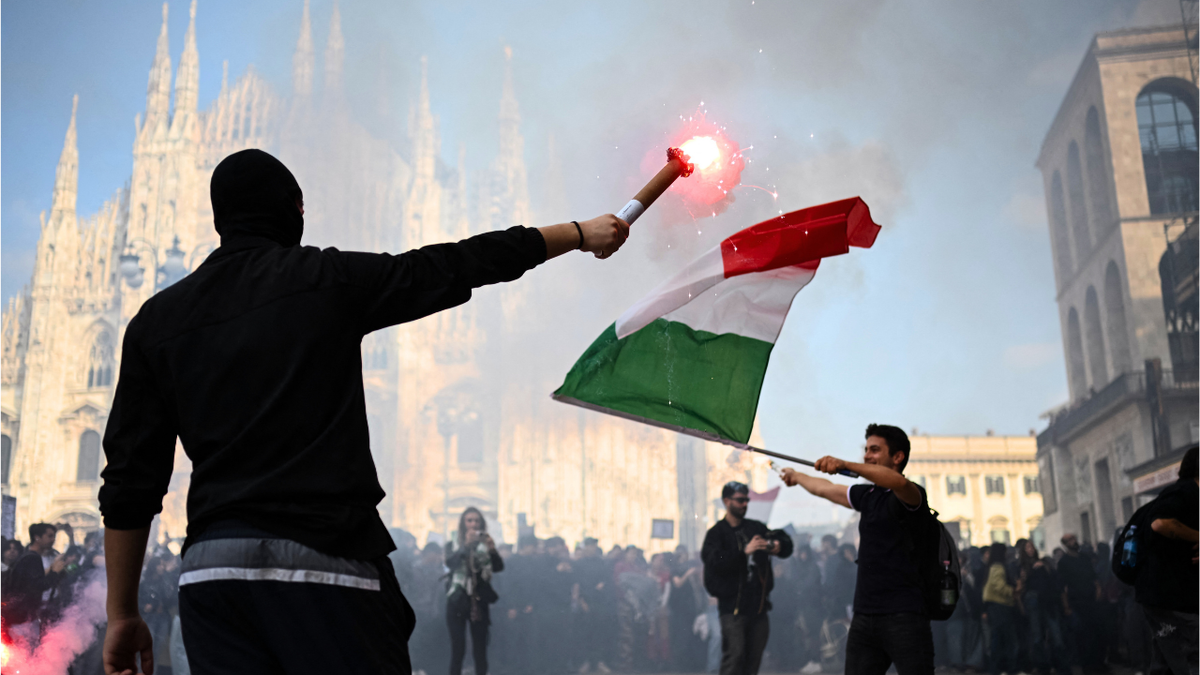
Demonstrators light flares during an anti-government protest organized by the Italia in Piazza movement, at Piazza Duomo in Milan, on October 17, 2026. (Piero Cruciatti/AFP/Getty Images)
Prime Minister Giorgia Meloni condemned what she called «gangs of thugs» who used demonstrations to «sow chaos,» and voiced support for police facing violence in several Italian cities.
Meloni moved quickly after the previous weekend’s looting and clashes, sending 500 additional soldiers to Milan and approving tougher penalties for minors involved in vandalism. She said destroying and stealing was a crime and that the state’s response would be firm.
The measures put Meloni among the European leaders taking the most visible steps to deter further violence.
Greek police maintain a visible presence
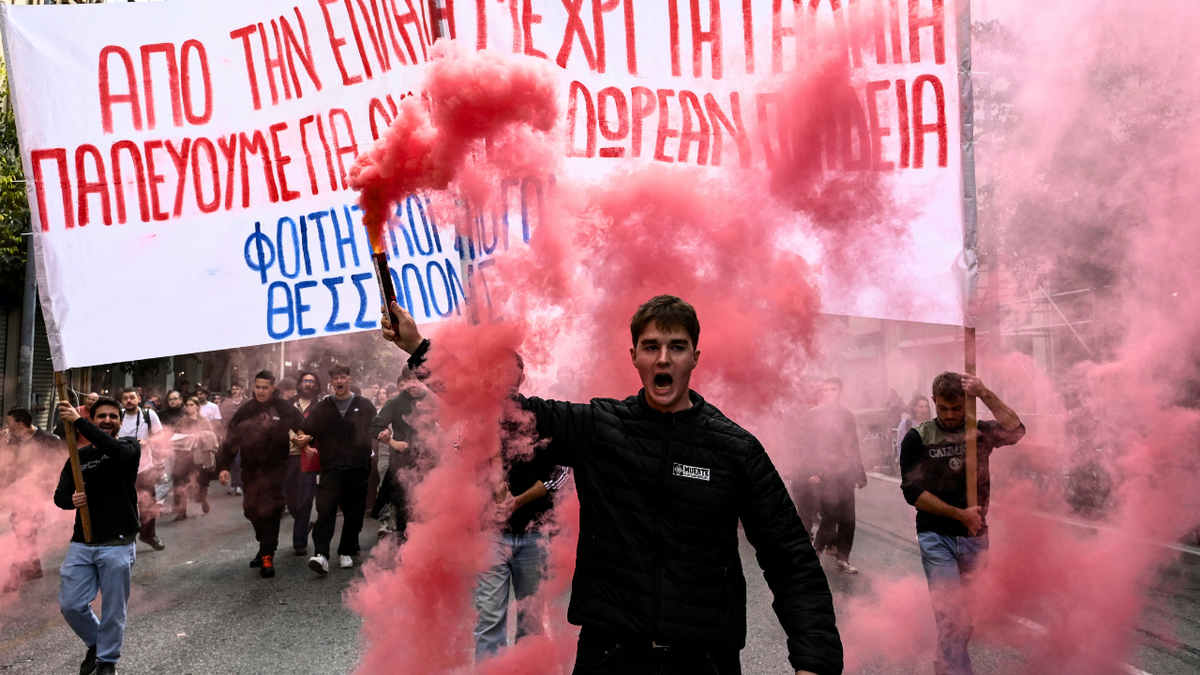
A protester holds a lit flare and shouts slogans as students, teachers and civil servants take part in a rally to protest against the high cost of living, saying they face the same problems that sparked violent demonstrations in France at the weekend, in Greece on October 21, 2026. (Sakis Mitrolidis/AFP/Getty Images)
While Greece has seen less unrest than France and other European countries, officials have been monitoring the risk of clashes as student and teacher demonstrations spread.
Government spokesperson Pavlos Marinakis said the right to protest must be respected as long as demonstrations remain lawful, while condemning violence, looting and occupations.
Police still kept a visible presence at demonstrations earlier in the week, which largely passed without major violence.
Belgium accuses Antifa-linked activists of stoking clashes
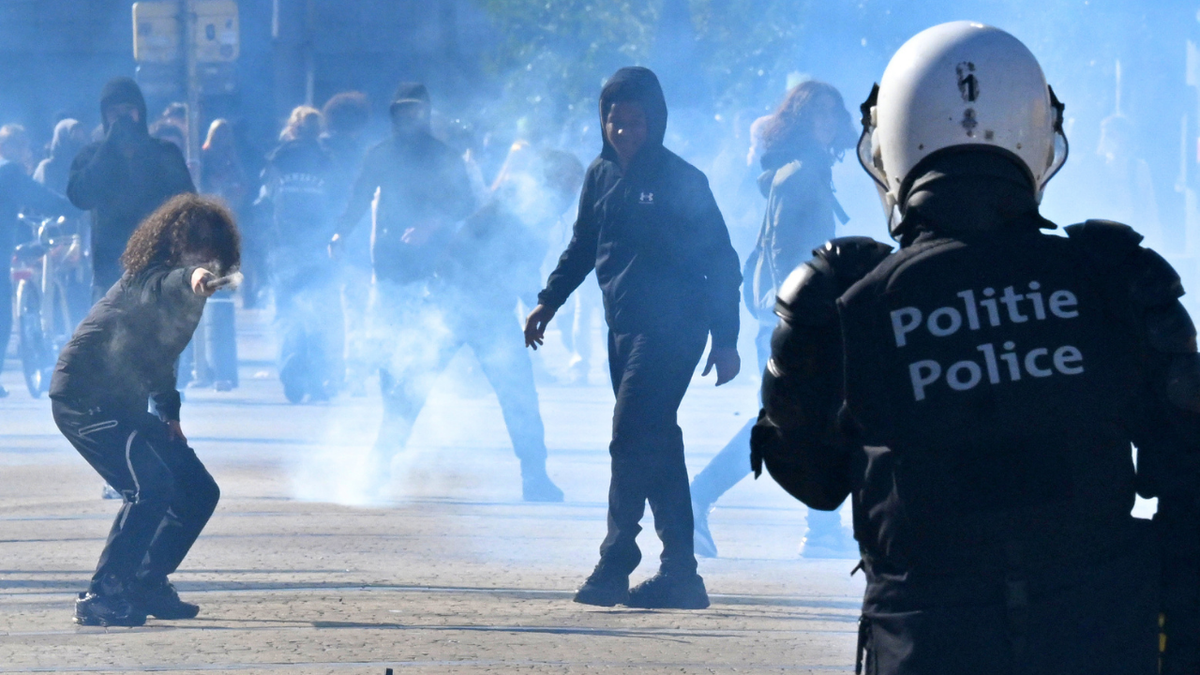
A Belgian police officer faces young protesters during clashes near Brussels-South railway station on October 12, 2026. (Nicolas Tucat/AFP/Getty Images)
Belgium’s demonstrations began over education reforms and budget cuts, with young protesters taking to the streets in Brussels and Liège. Earlier clashes injured police, damaged public areas and blocked roads. Nearly 200 people were arrested, according to Belgian officials.
Interior Minister Bernard Quintin accused far-left activists, including people linked to Antifa, of infiltrating demonstrations and encouraging young people to commit violence.
Albania clashes escalate as protesters demand prime minister’s ouster
In Albania’s capital, Tirana, student-led protests have grown into a broader challenge to Prime Minister Edi Rama, with demonstrators demanding his resignation and accusing his government of corruption and neglecting schools and public services.
US LAWMAKERS SOUND ALARM AS VIOLENCE GRIPS NATO ALLY ALBANIA AMID ANTI-GOVERNMENT PROTESTS
Police used tear gas and water cannons as more than 2,500 officers were deployed. Rama placed chairs outside his government headquarters and invited protesters to talk, but they rejected the gesture.
He said his government would address their concerns and warned that people responsible for violence could face criminal and financial consequences.
Spanish regional leaders vow consequences after Barcelona riots
In Spain, the unrest was largely concentrated in Barcelona, unlike France, where protests and clashes spread across multiple cities.
Police arrested 128 people in Barcelona after fires, vandalism and looting. Catalonia, the northeastern Spanish region that includes Barcelona, saw its regional president, Salvador Illa, condemn the violence and back the police response.
CLICK HERE TO GET THE APP
Meanwhile, Barcelona Mayor Jaume Collboni said the city would take legal action against those responsible and warned that parents or guardians could face consequences for damage caused by their children.
europe, politics, france, world, emmanuel macron, world protests

Foster children’s autism therapy at risk as Georgia lawmakers step into funding fight

Así fue la jornada de ciclismo de Juana Viale en Catamarca: naturaleza, sonrisas y diversión grupal

Milei sigue de cerca la elección en Brasil y apuesta a una internacional de derecha si gana Bolsonaro

Un historiador global calificó de “masacre” la motosierra y la política económica de Javier Milei

¿Dónde ver EN VIVO y ONLINE el Patronato vs. Agropecuario?

Aldosivi enfrenta a Belgrano con la obligación de sumar para lograr la permanencia en Primera División

Javier Milei y sus medidas, en vivo: el mandatario dijo que piensa un proyecto a “100 años” para la Argentina

Escándalo con Sancor Salud: Cuotas millonarias por un servicio nefasto que abandona a los pacientes en urgencias

Cuánto debería crecer la economía argentina en septiembre para no caer en recesión técnica

Estudiantes de La Plata busca su sexta final de Copa Libertadores: la tabla histórica del torneo y la disputa Argentina-Brasil que podría dirimir

 POLITICA3 días ago
Javier Milei y sus medidas, en vivo: el mandatario dijo que piensa un proyecto a “100 años” para la Argentina
- SOCIEDAD2 días ago
Escándalo con Sancor Salud: Cuotas millonarias por un servicio nefasto que abandona a los pacientes en urgencias
- INTERNACIONAL3 días ago
“Cualquier negociación sólo puede ocurrir después de liberar a los presos políticos”: la petición de 140 expresos cubanos al régimen