INTERNACIONAL
Dem insurgent turns on the charm with party establishment as Schumer leaves bitter feud hanging

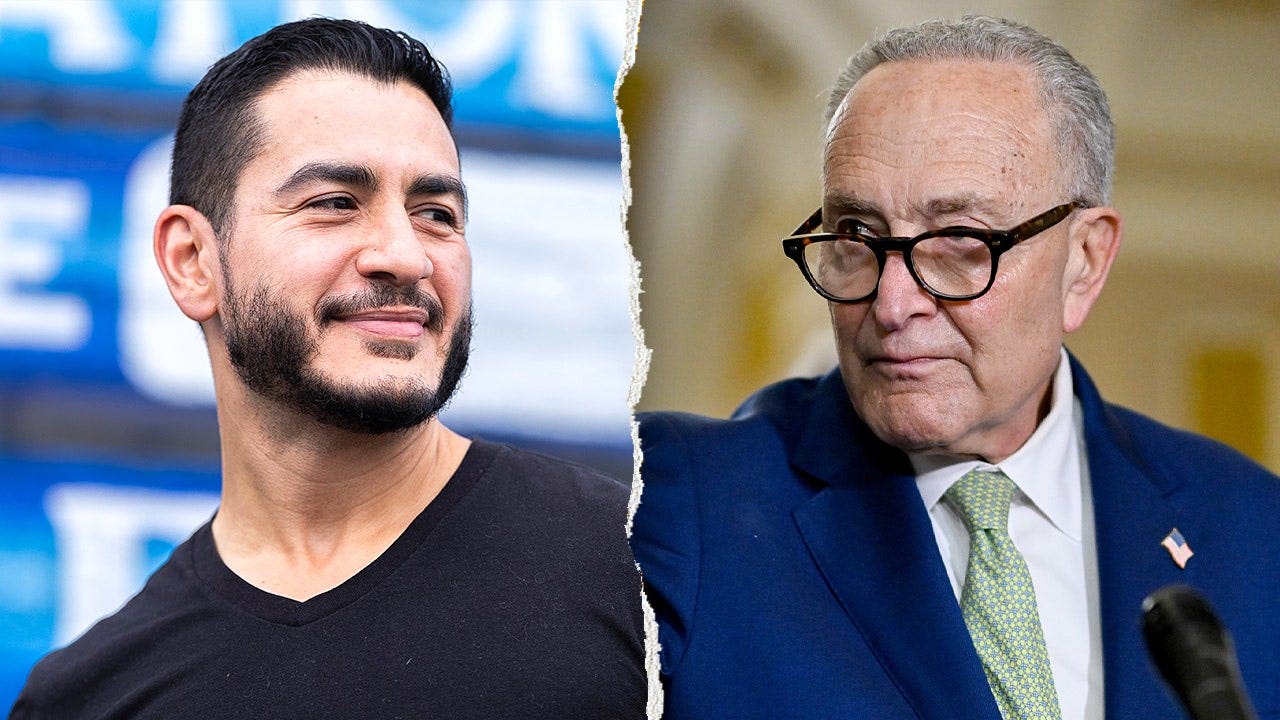
Michigan’s insurgent progressive Senate nominee ran as far as he could from Washington, D.C., but, on Wednesday, he traveled to the nation’s Capitol for a closed-door meeting with top Democratic brass as the race for power intensifies.
Abdul El-Sayed met with top Senate Democrats just hundreds of yards away from Congress, where lawmakers and the wunderkind candidate huddled to discuss his campaign and how to keep Michigan blue.
Many left boasting that the Wolverine State would not turn a shade of purple.
But few, including Senate Minority Leader Chuck Schumer, D-N.Y., would say whether the fences broken during El-Sayed’s primary fight had been mended.
SCHUMER DUCKS QUESTION ON CAMPAIGNING WITH SOCIALIST CANDIDATE WHO REFUSES TO BACK HIM AS LEADER
«Look, we have to win Michigan, and we had a great and friendly meeting,» Schumer said when asked by Digital if he and El-Sayed had moved on from their differences.
Still, El-Sayed held court with Democratic brass for hours at the Democratic Senatorial Campaign Committee’s (DSCC) headquarters in Washington, where a steady flow of lawmakers — both allies and skeptics of his Senate bid — milled in and out of the building throughout the day.
Schumer and Democrats are confident and determined that they can flip the Senate, which Republicans hold with a 53-47 margin. Losing Michigan to the GOP and former Rep. Mike Rogers would serve a mortal blow to that push.
«He’s gonna win,» Sen. Kirstin Gillibrand, D-N.Y., who is also the DSCC chair, said.
The key mission for Democrats is getting independents and Republicans on the fence. But few, including Schumer, said they would actually hit the campaign trail with El-Sayed.
It all comes after El-Sayed and Rep. Haley Stevens, D-Mich., locked horns in one of the most bitter Democratic primary fights of this cycle that pitted the Democratic old guard versus a progressive movement gaining steam across the country.
SEE IT: DEM SENATORS RALLY BEHIND EL-SAYED BUT DUCK QUESTIONS ON PROGRESSIVE AGENDA
Sen. Chris Murphy, D-Conn., who initially endorsed Michigan state Sen. Mallory McMorrow before she dropped out, told Digital, «Obviously, primaries can get really hot, and the Michigan primary got hot.
«This is what you do after a primary is you try to unite the party and then you do the work to reach out and cross over to independent voters and Republican voters,» Murphy added. «So, I don’t think anybody should be surprised that he’s trying to build bridges after a heated primary. That’s what good candidates, that’s what winning candidates do.»
Another McMorrow backer, Sen. Elizabeth Warren, D-Mass., painted a rosy picture of the closed-door session and noted it was «hard to hear in there because so many people were talking and laughing and wanted to hear about the campaign.
«He makes good connections because it’s a lot of people in there who are talking about, ‘What can we do next? What can we do to lower costs for families? What can we do to make this government work better for working people?’ So, it was a very enthusiastic, very cheerful group of people.»
Retiring Sen. Gary Peters, D-Mich., whose seat El-Sayed is gunning for, initially endorsed Stevens. Now, he’s shifting gears.
DEMS’ LEFTWARD LURCH GETS LEGS AS EL-SAYED’S MICHIGAN SENATE VICTORY SPARKS PARTY DEBATE
«I’m endorsing him, and he’s been getting support across the board in Michigan. The Democrats are coming together,» Peters said in response to a question about whether the Democratic establishment was uniting behind El-Sayed. «We understand how important this election is.»
Others were more keen to lend an assist to El-Sayed, including Murphy and Sen. Mark Kelly, D-Ariz., who said, «I’m gonna be in Michigan here in a couple of weeks.»
Sen. Ed Markey, D-Mass., who is running for re-election in deep blue Massachusetts, said that Democrats’ strategy heading into the final stretch was pitching an affordability agenda, and El-Sayed «is the answer.»
«I’m helping him. I think we’re all gonna help,» Markey said when asked if he would raise money for El-Sayed.
The specter of El-Sayed’s relationship with controversial Twitch streamer Hasan Piker, who helped to amplify his campaign in the primary battle, wasn’t something that Democrats focused on during their huddle.
«Hasan what?,» Senate Minority Whip Dick Durbin, D-Ill., told Digital when asked if he came up during the meeting. «I don’t even know who that is.»
When asked if Piker came up or if Democrats encouraged El-Sayed to further distance himself from him, Sen. Andy Kim, D-N.J., said, «Not in terms of the conversation. Like I said, I was just trying to get to know him.»
After initially dodging question on whether he would campaign with Piker, El-Sayed later told reporters, «This conversation is so far removed from what people are talking about.
«Everyday, in Michigan, people sit at their kitchen tables and ask, ‘How am I going to make this work next month?’ That’s not a middle, right, left issue, that’s a basic affordability issue.»
When further pressed, he countered that Michigan voters «really don’t care about that.»
«They really don’t,» El-Sayed said.
politics, abdul el sayed, chuck schumer, michigan, senate, midterm elections











INTERNACIONAL
Consecuencias nefastas de prácticas inmorales de la política moderna: el ataque de las “morsas” y los “gorilas”
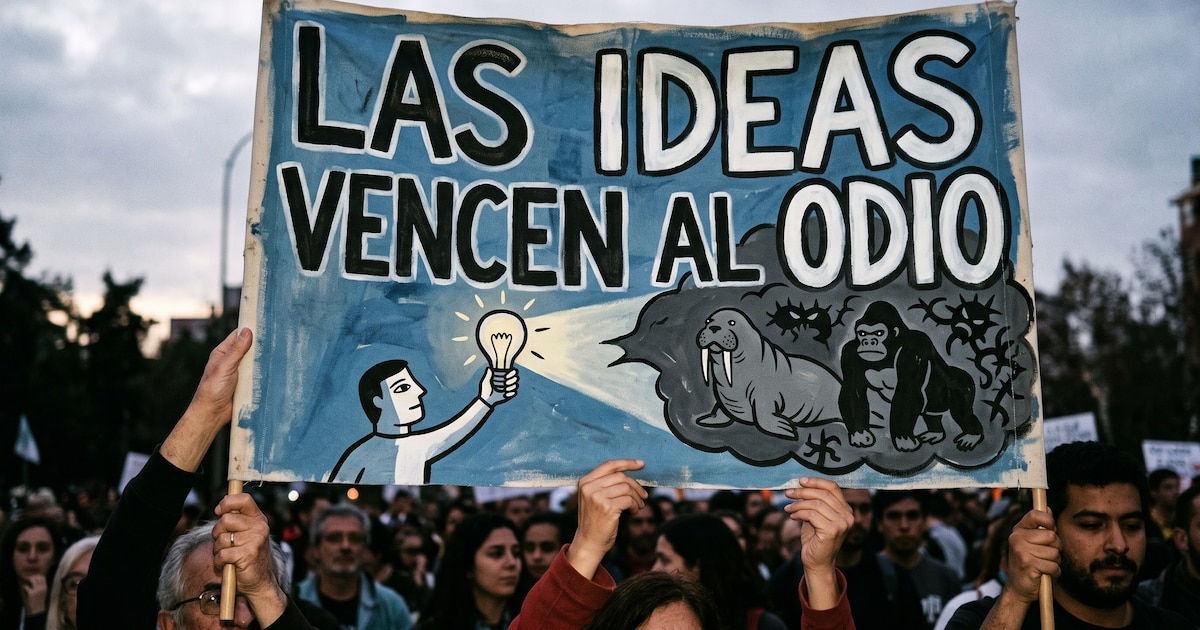
Porque “las ideas siempre vencen al odio”, lo peor es la indiferencia y el desconocimiento, en una sociedad que, lamentablemente, parece entregarse cada día un poco más a la estupidización colectiva.
El odio y el “votar contra” como idea jamás condujeron a solucionar los problemas en ningún país ni en el mundo; por el contrario, los empeoraron y sus consecuencias ocupan las páginas más negras de la historia. Una sociedad democrática debería estar movilizada por querer el bienestar del o de la compatriota, por la inquietud intelectual que nace de la lectura, de la escucha atenta a quienes la vida nos permite cruzarnos y saber más que uno y, naturalmente, de los aprendizajes que nos impone nuestra propia vida.
Lo que sucede en el mundo no son episodios aislados ni fenómenos inconexos. Son manifestaciones de procesos más profundos, pensados por unos pocos que, con un enorme poderío económico y a través de las pantallas, logran manipular las sociedades del hoy con éxito. Y en Uruguay, aunque casi todo llegue con cierto rezago, tarde o temprano también llega.
Días atrás vimos con preocupación una encuesta según la cual el 45% de quienes habitan este suelo no tendría inconvenientes en vivir bajo una dictadura si esta les solucionara sus problemas. Si el dato es correcto, no es una anécdota: es una señal inequívoca de algo que debería interpelarnos.
Cuando una sociedad comienza a relativizar el concepto de libertad, a despreciar el conocimiento y a sustituir las ideas por el resentimiento, el problema trasciende ampliamente una elección determinada. Son señales de un mundo que deja bastante que desear. Y deberían ocuparnos, al menos, si todavía lo que conservamos son dos dedos de frente.
La hostilidad insaciable del ser moderno irrumpe en las diferentes dimensiones urbanas y cumple actualmente con la responsabilidad de violar premisas de convivencia establecidas desde su juramento de ser políticamente correcto. El poder se enfrenta a profundos desafíos cuando debe construir permanentemente nuevas narrativas, en las que la verdad parece quedar subordinada a una realidad reductora que se teje en el sistema político. Imágenes, frases y expresiones visuales o auditivas vacías de significado intelectual terminan reduciendo el pensamiento a impresiones de satisfacción o insatisfacción.
Hubo un tiempo en que sostener una idea implicaba también estar dispuesto a someterla a prueba, confrontarla con los hechos y aceptar la posibilidad de que fuera refutada. Hoy, en cambio, muchas posiciones políticas funcionan de otra manera: la persona no necesariamente defiende una idea porque haya comprobado su validez, sino porque esa idea se ha convertido en parte de su identidad y de sus emociones. La realidad deja entonces de ser aquello que permite revisar nuestras convicciones y pasa a ser aquello que intentamos acomodar para confirmarlas.
Ya hemos visto cómo la humanidad asimiló el fascismo; también vimos cómo el comunismo se fascistizó desde la URSS a Cuba en el pasado y cómo esas variables dictatoriales y sus malas prácticas destruyeron la democracia en Venezuela y Nicaragua, pero también generaron imperfecciones estructurales en otras democracias regionales. Las “”” del siglo XXI introdujeron a la izquierda en una profunda confusión conceptual, constituyéndose en las dictaduras referidas o en el apoyo a ellas, lo cual le ha ocasionado este presente de costosas derrotas electorales.
Con el apoyo de Estados Unidos, los “gorilas” de los 70 dieron una serie de golpes de Estado y perpetraron las más horrendas violaciones de Derechos Humanos. Esa especie, de una manera u otra, se ha seguido reproduciendo, a veces en mayor cantidad, a veces en menor cantidad. Hoy varios sectores de la derecha de la región corren el riesgo de empantanarse en la imitación de las prácticas autoritarias del bukelismo, lo cual significaría también un golpe duro para la Democracia regional.
Ni las “morsas” representan a la izquierda ni los “gorilas” a la derecha, y las confusiones que el liderazgo político induce al respecto siempre son nefastas para la Democracia y los Derechos Humanos.
Estas diversas formas reducen mentalmente los conceptos a fragmentos aislados de un campo des-semantizado, en el que palabras y categorías como “crimenes de lesa humanidad”, “tortura”, “persecusión política” o “presos políticos” pierden su significado sustantivo en favor de prejuicios establecidos de antemano. Cuando el ataque contra los significados logra imponerse, las formas de conocimiento que de ellos se derivan quedan deslegitimadas, y con ellas, la posibilidad misma de construir una comprensión crítica de la realidad.
Como veremos, no es seguro que este sea el concepto o la idea central que “los nuevos juegos de la política” utilizan para atacar lo que se denomina “conciencia crítica”. Para explicar esa conciencia, podemos comenzar por un breve proceso mental que consiste en conceptualizar las diferencias, en lugar de convertirlas a priori en enemistades. Es posible imaginar así una confrontación política basada en el conocimiento y la argumentación, frente a otra que se transforma en un ataque directo, como una piedra lanzada contra el otro, mediante una descalificación que hace innecesaria toda argumentación conceptual. O cualquier otra forma de racionalización de las cuestiones sistémicas de la política que termine reducida a una lógica de discusión de tiempos escolares, cuando se intentaba hacer entender algo a otro niño que simplemente se tapaba los oídos y repetía, gritando: “leru leru”. Es en este punto donde resulta esencial reflexionar sobre lo que esto significa para el deterioro del discurso político, pero también para la elaboración ideológica y la gobernanza democrática.
Para visualizar el poder de la libertad debemos preguntarnos en qué sentido hace al funcionamiento sistémico y si el sistema apela realmente a la libertad de las personas para que tomen sus decisiones políticas. Con las nuevas lógicas mecanicistas se ejerce principalmente cómo influir o manipular a las personas, mientras principios y valores se pre condicionan ideológicamente. El resultado puede ser una forma de “comprensión ciega”: una manera de interpretar la realidad en la que los acontecimientos ya no se analizan por lo que son, sino por la reacción que producen. Si algo satisface nuestras expectativas, tendemos a justificarlo; si las contradice, tendemos a rechazarlo. En ese mecanismo reside uno de los mayores peligros de la política convertida en identidad: una persona puede terminar justificando una violencia, una dictadura o incluso un crimen de lesa humanidad simplemente porque proviene del lado que considera propio. Si una morsa o un gorila ataca, las demás “morsas” o “gorilas” aplaudirán en automático.
La verdad suele ser difícil de describir y comprender porque la instalación de narrativas es, precisamente, una forma de ataque político. Tal ataque se asimila a patrones de sociedad ideológica de prevalencia emocional, con una oscuridad total en la que no se ve, no se siente, no se oye ni se admite ninguna otra cosa: el NO absoluto a las demás formas de entender la política en una sociedad democrática.
La progresión emocional irracional y el ataque narrativo generan entonces “barreras de fuerza” ante la posibilidad de una decisión razonada. Para que exista una verdadera confrontación política vinculada a la libertad es necesario un medioambiente sano de Derechos Humanos. La lección política natural de que el mejor argumento debe prevalecer implica que las razones puedan ser expuestas y confrontadas en libertad. Para que la política y la gobernanza produzcan y trabajen ideas es necesaria una libertad igualitaria, una libertad para todos.
Según los actuales experimentos mentales de la política se demuestra que la mayoría de las personas en esta era digital tienen problemas para dominar la “comprensión conceptual”, requiriendo emociones claras a partir de emociones (generalmente negativas) preestablecidas o el conocimiento no comprendido que es dictado artificialmente. En el sistema político es necesario entonces trabajar siempre las diferencias entre las personas y agentes políticos en un marco en que no se controlan ni censuran ni los pensamientos ni la comprensión de las ideas y de las cosas. La posibilidad de cuestionar, criticar y disentir racionalmente hace siempre mejor al sistema, e igual resultado es el que genera la alternancia en el poder.
Uruguay,democracia,manifestación,pancarta
INTERNACIONAL
French PM rejects police brutality claims after teens severely injured in protests: ‘Accidents happen’
NEWYou can now listen to Fox News articles!
French Prime Minister Sébastien Lecornu defended the police response to student protests after one teenager lost a hand in an incident involving a police grenade and another lost sight in one eye after being struck by a projectile.
In parliament on Tuesday, Lecornu pushed back on accusations of police brutality or state repression, adding that the term «police brutality» implies that officers had been instructed to use force, according to Politico.
«What triggers police action is the occurrence of urban violence,» Lecornu said.
«Can accidents happen? The answer is yes,» he added.
FRANCE EXPLODES AGAIN AS STUDENTS RIOT OVER EDUCATION
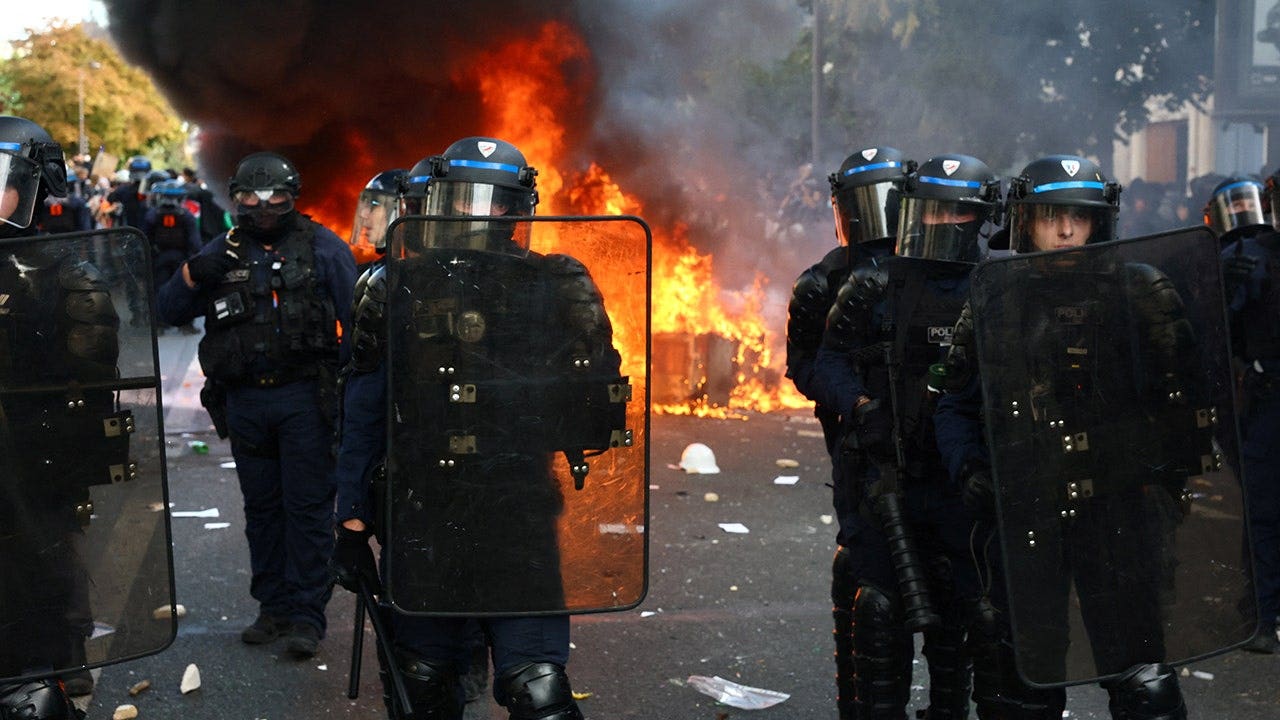
French riot police stand near burning objects during clashes with protesters in Paris on Tuesday, Oct. 6, 2026. (Reuters)
Lecornu and Interior Minister Laurent Nuñez have both argued that the police response was sparked by urban violence, arson and vandalism, while maintaining that officers have acted within their authority. Nuñez also called the police response proportionate in «almost all cases.»
The prime minister also accused opposition party France Unbowed of exploiting the student protests to sow chaos and score political points ahead of next year’s presidential election.
President Emmanuel Macron convened an emergency meeting with senior ministers to address the nationwide student protests and their potential political fallout.
The French government is facing mounting pressure after more than 6,500 people were arrested and hundreds were injured as students demand better funding and learning conditions in schools. Most of those arrested were minors, according to the Associated Press.
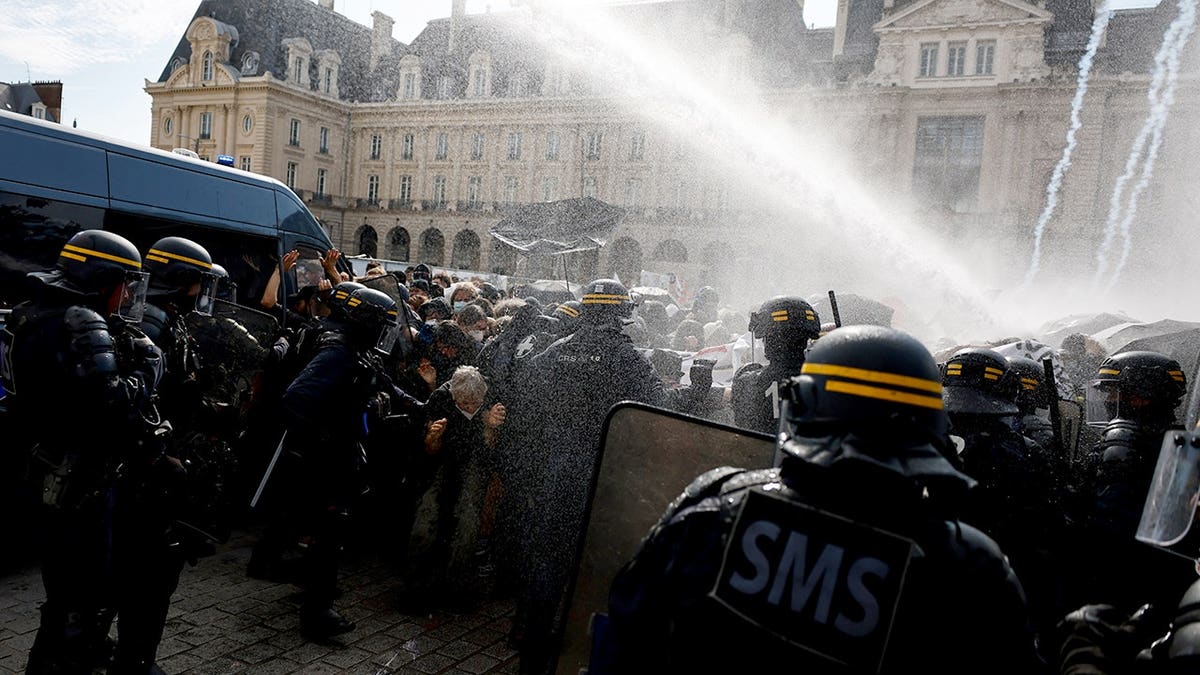
Riot police use a water cannon as they face students during a protest against under-resourced schools in Rennes, western France, on Tuesday, Oct. 6, 2026. (Jeremias Gonzalez/AP)
Lecornu said 215 students and 85 school staff members had been injured since the protests began, while his office said 715 police officers had also been injured.
«I hope we can provide a political response to a very real anxiety among high school students,» Lecornu acknowledged.
As Lecornu delivered his remarks on Tuesday, demonstrators from several French unions and teachers’ groups gathered with high school and university students. Members of France’s left-wing parties were also at the protest, according to Politico.
The Interior Ministry estimated that 266,000 people took part in demonstrations nationwide Tuesday, including 56,000 in Paris.
The Paris demonstration was largely peaceful, although smaller groups later clashed with riot police, according to the Associated Press.
The protesters’ movement began at high schools in the Paris region in mid-September before spreading nationwide.
TEEN’S HAND BLOWN OFF BY POLICE GRENADE DURING FRENCH STUDENT PROTESTS: REPORT
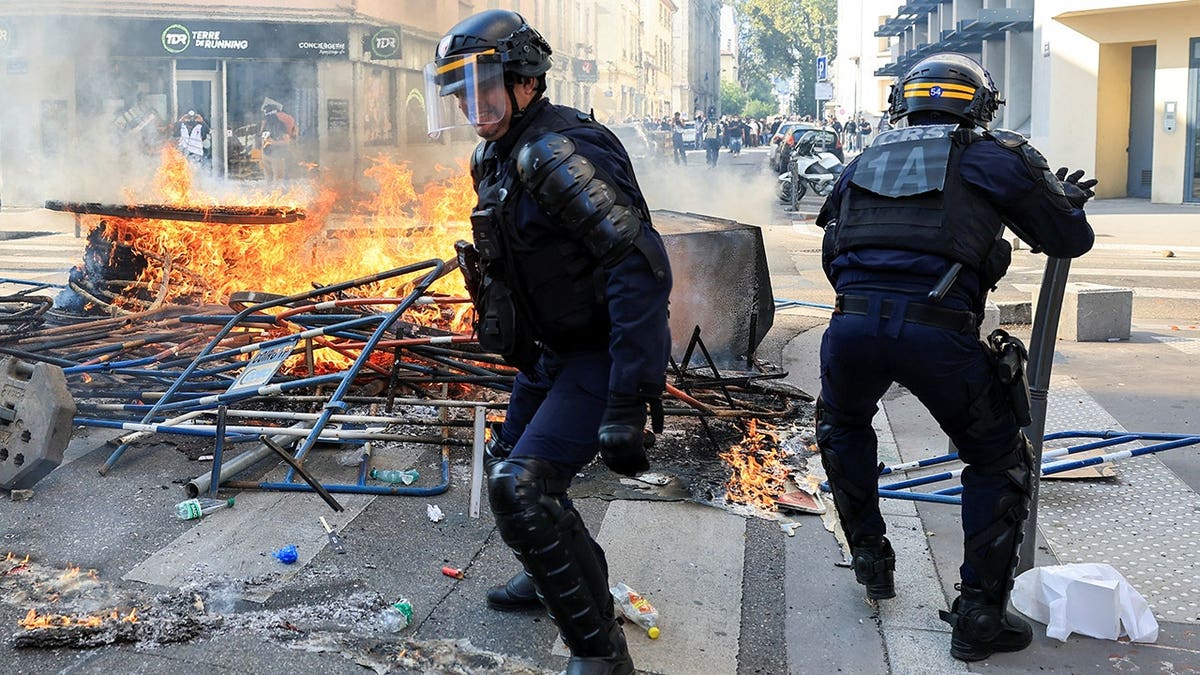
French riot police officers remove elements of a burning street barricade during a demonstration by French high school and university students in Lyon on Oct. 6, 2026. (Reuters)
On Monday, a 15-year-old boy in northern France lost a hand after a police grenade exploded during the protests, Politico reported. A prosecutor said he could not «say for certain whether the student picked up the grenade or whether it was thrown at him.»
In the city of Tours, a 16-year-old lost sight in one eye after being hit by a projectile, according to the outlet. The prosecutor said the projectile may have been fired from a sub-lethal riot-control weapon used by police.
Boris Vallaud, leader of the center-left Socialist group in parliament, said the group’s lawmakers would introduce legislation restricting the use of sub-lethal riot-control weapons at student demonstrations, warning that they can cause irreversible injuries, the outlet reported.
france, world protests, world, emmanuel macron, controversies education, police and law enforcement
INTERNACIONAL
Biden-era FBI’s ‘Nixonian’ Trump family surveillance draws scrutiny from unlikely corner
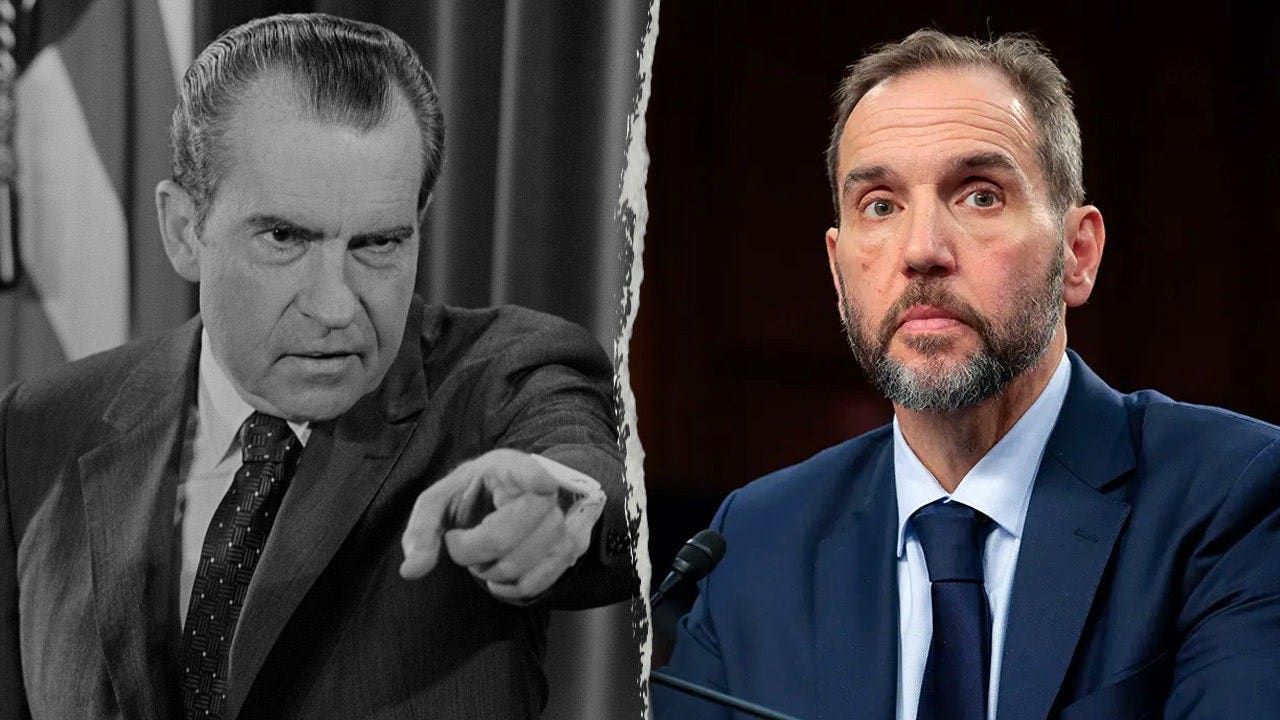
Revelations that the Biden-era FBI tracked Trump family travel and top aide Susie Wiles’ phone records received a blistering rebuke from a former top Democratic official who compared the behavior to Nixon-era abuses of federal power that surfaced amid the Watergate scandal.
The FBI investigation codenamed «Plasmic Echo,» later taken over by special counsel Jack Smith, examined Trump’s alleged improper retention of classified and national-defense material and possible obstruction. Records show agents tracked first lady Melania Trump’s and Barron Trump’s travel while planning the 2022 Mar-a-Lago search and later logged metadata from now-Chief of Staff Susie Wiles’ calls with attorneys, journalists and others.»
Julian Epstein, the former chief counsel for the House Judiciary Committee’s Democratic bench, compared the situation to the scandal that brought down President Richard Nixon.
JACK SMITH’S PROBE SWEPT UP NEWS, OTHER MEDIA COMMUNICATIONS WITH GOVERNMENT SOURCES
«It’s hard to think of good justifications for this. To me, it feels a little Nixonian,» said Epstein, who also served as staff director to Democrats on a second powerful panel, the House Oversight Committee.
«If this report is true, then it’s pretty bad. If true, then those in charge at the time better have some darn good explanations for surveillance of family members and advisors talking privately to lawyers or exercising their free-speech rights with the news media,» he said.
Nixon, a California Republican, maintained an «Enemies List» developed by White House aides around top adviser Charles Colson and later formalized by White House counsel John Dean. Dean – now a vocal critic of Republicans like Trump – once described it in a 1971 memo as intended to «use the available federal machinery to screw our political enemies.»
Epstein questioned what legal justification investigators had for monitoring the contacts, particularly those involving lawyers and journalists.
VETERAN DEM BREAKS PARTY LINE AS JACK SMITH SPYING SCANDAL GRIPS CAPITOL HILL
«[That] seems like a stretch,» he said.
Epstein appeared to be among the few prominent Democrats publicly criticizing the newly disclosed investigative tactics Tuesday, including the tracking of Melania and Barron Trump’s travel and the collection of Wiles’ call metadata.
SECRET PHONE-RECORD SEIZURE SPARKS PERSONAL LAWSUIT FROM GOP SENATOR
Digital reached out to Sen. Richard Blumenthal, a Connecticut Democrat who just months ago similarly broke party-silence to object to prior revelations from Smith’s probe.
Blumenthal told Digital in July that Republicans were right to be upset that some of their communications were subpoenaed without their notice.
«I think we need to have more facts. Look into it. Republicans are rightly concerned about the possible breach of norms and improper access to email,» Blumenthal said at the time.
In a separate disclosure on July 14, the GOP-led Senate Judiciary Committee released records showing that Smith’s 2020-election investigation obtained and reviewed text messages exchanged between Trump White House officials and 44 current and former members of Congress, including Republicans and Democrats.
Theo Wold, a former acting assistant U.S. attorney general under Trump who later served as Idaho’s solicitor general, said the new disclosures involving Melania, Barron and Wiles vindicate Republicans who have long warned of a so-called «Deep State.»
«But now we know that DOJ, the FBI, and the wider intelligence community have targeted Catholics, homeschool families, pro-life prayer warriors, and even the then-leading Republican Presidential candidate and his family,» Wold said.
«The Deep State is real. They have abused their authority for political gain. They have wielded government power against innocent Americans to coordinate their attack on opposition political figures and dissident movements.»
The White House also condemned the newly disclosed tracking of Trump family travel and collection of Wiles’ call metadata.
«Jack Smith’s surveillance operation was a disgraceful abuse of government power. Spying on political opponents is weaponization of law enforcement, plain and simple,» White House spokesperson Lauren Bis told Digital. «Those responsible must be held accountable.»
On one day in March 2023, documents showed investigators logged metadata for 39 calls made or received by Wiles.
Calls to and from multiple campaign contacts, a lawyer and an extension associated with Melania Trump were among those logged in Wiles’ phone metadata.
SIGN UP TO GET THE POLITICS NEWSLETTER
Former RNC official Elizabeth Pipko highlighted Wiles as someone that critics should be emulating, not celebrating the surveillance of.
«She managed a historic and victorious presidential campaign and became the first woman to serve as White House chief of staff. Her story should inspire young women. Instead, hatred from President Trump’s opponents teaches young people that if you work for the ‘wrong’ candidate, you and those around you can become targets,» Pipko told Digital.
The revelations come after Sen. Charles Grassley, R-Iowa, told Digital exclusively that Smith’s probe had also captured communications with dozens of journalists, including some from Fox News.
Digital reached out to counsel for Smith for comment.
fbi, first family, white house, barron trump, melania trump, national security, politics

Mateo, el hijo de Leo Messi, tuvo un gesto inolvidable en la despedida de su padre: “Admiración”

Ninguna otra fruta consigue que llames a los bomberos cuando aparece en una habitación. Lo llaman el rey de las frutas y en China mueve una industria multimillonaria

AFA: Casación rechazó el recurso del fiscal y la investigación sobre la mansión de Pilar seguirá en Campana

Las ausencias de los campeones del mundo en la despedida de Messi

El riesgo país cayó casi 90 puntos en dos días, pero la volatilidad de los bonos globales enciende una alerta

Así despidió el arco político a Messi tras su último partido con la Selección: “Llevaste nuestro país a lo más alto”

DHS exposes dilemma behind SCOTUS deportation fight: ‘We have two choices’

El Reino Unido anunció que las nuevas licencias de hidrocarburos en las Islas Malvinas requerirán su autorización final

El pedido de Abel Pintos que sorprendió a Guido Kaczka: “Necesito renovarlos”

El guiño de Cristina Kirchner a Uñac, las dudas en el PJ sobre las PASO y el mensaje de Kicillof al interior

 POLITICA2 días ago
¡Precios de Manhattan con sueldos de Argentina! Cómo los créditos hipotecarios inflaron las propiedades y congelaron el sueño de la casa propia
- POLITICA3 días ago
EEUU pidió “desescalar” la tensión entre Argentina y Reino Unido por Malvinas
- CHIMENTOS3 días ago
Ella tiene 40 años y su marido 59, pero se enamoró de un joven de 27 y se acaba de separar tras ser descubierta por su esposo siendo infiel: «Comenzó a…»