INTERNACIONAL
Denmark accuses Russia of plotting to kill Ukrainian American rapper on Danish soil


NEWYou can now listen to Fox News articles!
Denmark’s security and intelligence agency (PET) accused Russia of attempting to kill Ukrainian-American rapper Kyivstoner on Danish soil in September.
Authorities arrested two individuals on charges of attempted murder and assisting a foreign intelligence service.
As a result of the alleged plot, Denmark will expel Russia’s defense attaché from Copenhagen, the Danish foreign minister.
NATO MEMBER BOOTS 10 RUSSIAN DIPLOMATS
«We have just summoned the Russian ambassador to the Ministry of Foreign Affairs and notified him of the government’s decision to expel the Russian defense attaché from Denmark [within seven days],» foreign minister Lars Løkke Rasmussen said during a Friday press conference.
Danish Foreign Minister Lars Loekke Rasmussen holds a press conference at the Ministry of Justice in Copenhagen, Denmark, November 20, 2026. Two Danes are charged with the planned murder of a Ukrainian rapper. (Ritzau Scanpix/Emil Nicolai Helms/via REUTERS)
Russia denied any involvement in the alleged plot, calling the accusations «unsubstantiated» in a statement.
RUSSIAN SPIES ORCHESTRATED $40K MURDER PLOT IN NATION’S CAPITAL, US ALLEGES
Russia’s intelligence agency FSB accused Kyivstoner, real name Albert Vasilyev, of plotting a drone attack on Moscow in July, an accusation Vasilyev denied, according to Russian media outlet Meduza.
European Commission President Ursula von der Leyen reproached Russia for the alleged scheme.
SHE GREW UP UNDER SOVIET RULE. NOW EU’S TOP DIPLOMAT WARNS EUROPE AGAINST GIVING RUSSIA WHAT IT WANTS
«I strongly condemn the assassination attempt against a US-Ukrainian citizen in Denmark, orchestrated by Russian intelligence services,» she said in a statement.
«This was an attack on EU soil. And it is unacceptable,» she continued, adding, «Russia’s hybrid threats are becoming less and less hybrid, and more and more real.»
GERMANY BLAMES RUSSIA AFTER EXPLOSIVE-LADEN DRONE FOUND NEAR UKRAINIAN CARGO PLANES AT MAJOR AIRPORT

European Commission President Ursula von der Leyen looks on as she meets with Iceland’s Prime Minister Kristrun Frostadottir (not pictured), in Brussels, Belgium April 9, 2025. REUTERS/Yves Herman
Danish security services said the pair that tried to carry out the attempted hit were affiliated with the Danish gang Loyal to Familia, which is «known for extensive, serious and violent criminal activity,» according to PET.
Danish police stopped three individuals in a car near a music venue in Hellerup where Kyivstoner was performing in September. Inside the vehicle they found guns and knives. Both men Denmark charged pleaded guilty.
TRUMP SIDELINES SWEEPING RUSSIA SANCTIONS AS GOP ALLIES WARN PRESSURE ON PUTIN IS SLIPPING
Danish Prime Minister Mette Frederiksen said Denmark would issue fewer visas to Russians as a result of the incident.
«Toughen the sanctions against Russia, including a halt to all non-essential visas to Russian citizens, and these visas should only be valid in the issuing country,» Frederiksen said.

Denmark’s Justice Minister Nicolai Wammen and Danish Foreign Minister Lars Loekke Rasmussen hold a press conference at the Ministry of Justice in Copenhagen, Denmark, November 20, 2026. Two Danes are charged with the planned murder of a Ukrainian rapper. (Ritzau Scanpix/Emil Nicolai Helms/via REUTERS)
The foreign ministries for Ukraine, Russia and Denmark did not immediately respond to Fox News Digital for comment.
Reuters and the Associated Press contributed to this report.
russia, the european union, assassinations murders, ukraine












TONOPAH, Nev. — An Obama-era solar power plant once hailed as a «clean energy marvel» and backed by more than $1 billion in federal support has gone bankrupt for a second time and sold for just $7 million — with the estimated taxpayer tab potentially reaching $507.6 million.
Rising from the barren Nevada desert, the Crescent Dunes Solar Energy Project looks like a futuristic fortress in a vast, dusty wasteland, with more than 10,000 mirrors surrounding a giant central tower. The plant was designed to generate solar electricity even after sunset, using an emerging technology that promised to revolutionize green energy in America.
The Obama administration bet big on the project, backing it with a $737 million federal loan guarantee and around $275 million in Treasury grant awards as part of its broader $90 billion push to combat climate change and stimulate the economy following the 2008 financial crisis.
OBAMA-ERA ‘CLEAN ENERGY’ SOLAR POWER PLANT STILL USES FOSSIL FUELS – AND KILLS THOUSANDS OF BIRDS ANNUALLY
But the promise never matched the performance.
After operations began in late 2015, leaks and equipment failures repeatedly knocked the plant offline, production fell short and cheaper solar alternatives undercut its economics — driving the project into financial ruin and leaving taxpayers shouldering the cost.
The financial collapse comes 15 years after Solyndra, another Obama-backed solar company, went bankrupt and left taxpayers in the red for $528 million — a sum Crescent Dunes’ estimated taxpayer tab could nearly match.
«The Crescent Dunes solar project is a microcosm of what is wrong with Democrat governance: the Green New Scam, hundreds of millions in taxpayer dollars wasted, fraud, and a cover-up,» Rep. Lance Gooden, R-Texas, told Digital.
OBAMA-BACKED $2.2B GREEN ENERGY ‘BOONDOGGLE’ LEAVES TAXPAYERS ON THE HOOK
Crescent Dunes sits about 13 miles northwest of the old mining town of Tonopah, roughly halfway between Las Vegas and Reno.
The isolated facility, which Digital toured, is surrounded by miles of barren desert, scrubland and distant mountain ranges.
Across the 2,250-acre federal site, more than 10,000 giant mirrors surround a 640-foot tower — the centerpiece of a system designed to overcome one of solar power’s biggest limitations: darkness.
Unlike ordinary solar panels, which convert sunlight directly into electricity, Crescent Dunes focuses the sun’s rays onto a receiver atop the tower, heating molten salt to roughly 1,050 degrees Fahrenheit. The salt stores that heat in a massive insulated tank, allowing it to produce steam that drives an electricity-generating turbine long after sunset.
That combination made it the first commercial-scale U.S. solar tower to use molten salt to both collect and store the sun’s heat. DOE projected it would generate 482,000 megawatt-hours annually, with a maximum output of 110 megawatts — enough to supply more than 75,000 Nevada homes during peak periods.
American developer SolarReserve developed the project, while Spanish contractor Cobra, a subsidiary of construction giant ACS Group, built it.
Both held ownership stakes in the company that owned the plant, Tonopah Solar Energy.
Spanish banking giant Banco Santander also held an ownership stake in Tonopah Solar Energy.
Then-Senate Minority Leader Harry Reid, D-Nev., championed the project. In 2016, he called it an «engineering and clean energy marvel» and predicted that «Nevada will benefit for decades.»
The project reflected the Obama administration’s push to expand clean energy by using taxpayer-backed financing to help bring promising but commercially risky technologies to market.
But Crescent Dunes showed how expensive those gambles could become when they failed.
Crescent Dunes’ problems emerged almost immediately.
A major leak in its molten-salt storage tank occurred in October 2016 — less than a year after commercial operations began.
During that shutdown, Treasury approved a cash-grant payment in March 2017 under the Obama-era stimulus program — funding that later became the subject of serious fraud allegations.
It went back online in July 2017, but restarting the plant did not resolve its performance problems.
Even in 2018, its best full year through 2025, Crescent Dunes generated just 41% of the annual electricity output projected by DOE, according to federal energy records.
Then another tank failure halted generation in March 2019.
Seven months later, the repeated breakdowns and poor performance eventually cost Crescent Dunes its sole electricity customer when NV Energy terminated its 25-year agreement.
Without its long-term power contract, Crescent Dunes spiraled into financial trouble, culminating in its first bankruptcy in July 2020.
The 2020 restructuring handed ownership to ACS through its affiliate, Crescent Dunes Investment, with Cobra running the plant. The turnaround plan counted on extensive repairs restoring production to 400,000 megawatt-hours a year — more than twice its best annual output.
But the revival faltered.
The plant restarted in July 2021, only for further molten-salt-tank leaks in 2022 and 2023 to force additional shutdowns.
Although the plant resumed selling electricity under shorter-term agreements, it continued to lose money and relied on financial support from affiliated companies, court records show.
REGULATORS ALLOW OBAMA-ERA SOLAR PLANT TO KILL THOUSANDS OF BIRDS ANNUALLY, INVESTIGATION FINDS
By January 2026, it was back in bankruptcy court. This time, the billion-dollar plant went on the auction block.
Mississippi-based Sons of Liberty Construction, a company owned by three brothers, bought it for $7 million in July and are attempting to revive it.
The plant was generating electricity during Digital’s visit, although they said it remained well below its initial intended output. Their efforts to restore the troubled facility are examined in Part 3 of this series.
Behind that history of breakdowns and bankruptcies lies a dispute over what failed: the solar technology, the construction behind it, or a combination of both.
Bill Gould, SolarReserve’s co-founder and former chief technology officer, blamed the project’s Spanish construction contractor, ACS Cobra.
«It was a tragedy of mismanagement,» Gould told Bloomberg in 2020, accusing the contractor of delaying necessary work and designing a defective molten-salt tank.
An unnamed engineer who said he had worked at Crescent Dunes since its early development offered a similar account, blaming the tank failures on design and welding problems. He told SolarPACES in 2023 that the plant’s solar collection technology had experienced comparatively few problems.
«It’s just the old tech that’s having these troubles,» the engineer said, referring to the conventional thermal-power equipment.
The sheer size of the storage system posed a significant challenge, according to Oliver Hemmers, a physicist and energy researcher who formerly led the Harry Reid Center for Environmental Studies at the University of Nevada, Las Vegas.
«Ultimately, the larger you make those tanks that hold the molten salt, the harder the material science challenges become,» Hemmers told Digital.
Hemmers said temperature swings of hundreds of degrees can cause the metal to repeatedly expand and contract, eventually creating cracks and leaks. He had not reviewed the plant’s engineering plans but questioned whether the developers had sufficiently tested the tank design.
«You need to have alloys that can withstand that heat variation without moving much. Otherwise, when the walls move, the vessel breaks, cracks and leaks. So I’m not sure how much research they really put into the vessel design,» he said.
Hemmers noted that Crescent Dunes relied on a massive molten-salt storage tank, while other solar thermal facilities have used multiple smaller tanks to reduce the stresses caused by repeated heating and cooling.
Court records show how efforts to prevent further failures came at a cost.
When the plant resumed operations in July 2023, operators lowered the hot-salt tank’s temperature from its original design level of about 1,050 degrees Fahrenheit to about 850 degrees. They later raised it to as high as 900 degrees, but the lower temperatures still reduced electricity production and revenue.
As Crescent Dunes struggled to meet its production targets, competing solar technology was getting cheaper.
Falling prices for conventional solar panels, known as photovoltaic panels, including those manufactured in China, undercut the project.
Photovoltaic panels convert sunlight directly into electricity, offering a simpler and increasingly cheaper way to generate solar power.
Crescent Dunes, by contrast, uses more than 10,000 computer-controlled mirrors, called heliostats, to focus sunlight onto a receiver atop its central tower. The heat warms molten salt, which is then used to produce steam that drives turbines to generate electricity.
Crescent Dunes, however, has one key advantage: Its molten-salt storage system allows it to generate electricity even after sunset, something conventional solar panels cannot do without additional storage.
Those same economic pressures have battered California’s Ivanpah solar plant, another Obama-era project Digital reported on that uses thousands of heliostats to concentrate sunlight. Unlike Crescent Dunes, Ivanpah cannot store the sun’s heat to generate electricity after dark.
Digital contacted ACS Group and its attorneys but received no response.
The project was backed by more than $1 billion in federal loan guarantees and grants.
That included a $737 million Department of Energy loan guarantee. DOE said it resolved its financial interests in the project through the plant’s first bankruptcy settlement in 2020 in an effort to maximize taxpayer recovery and estimated its loss on the loan at $232 million — a figure the department confirmed to Digital on background.
The Trump administration’s Department of Energy blasted the handling of taxpayer money behind the project.
«It is unfortunate that previous administrations irresponsibly managed taxpayer dollars in their support of the Green New Scam. Since 2020, DOE has had no ownership, operational, or financial interest in the Obama-era project,» DOE assistant press secretary Caroline Murzin told Digital in a written statement.
The project also received a $275.6 million Treasury grant award, which, unlike the loan, was not intended to be repaid provided the project met the program’s requirements.
Combined, the Treasury grant awards and DOE’s estimated loan loss would put the total federal cost at approximately $507.6 million, although Treasury has not confirmed the full grant was disbursed and DOE has not provided a final accounting of its loan losses.
Digital has filed Freedom of Information Act requests with both the Energy and Treasury departments seeking a full accounting of the federal loans, grant payments and taxpayer losses associated with Crescent Dunes.
The Treasury grant also became the focus of a private investor-backed lawsuit alleging that companies involved in construction fraudulently secured the money. A judge dismissed the case at DOJ’s request and the investors are appealing.
The allegations and the fight over the dismissal are examined in Part 2.
Reid, who died in 2021, had championed Crescent Dunes as a showcase for government and private industry working together to build «the next generation of clean energy technology.»
Its financial collapse has sharpened the question behind that partnership: Should taxpayers bankroll commercially risky energy projects that private lenders are unwilling to fully finance?
«The government shouldn’t be picking winners and losers,» Véronique de Rugy, an economist at George Mason University’s Mercatus Center, told Digital.
«This is not the role of the government. The government is not good at actually picking projects that somehow the private sector is leaving on the sidewalk,» she said.
De Rugy argued that politicians take credit for publicly financed projects without facing the same consequences when they collapse. Unlike private investors, she said, politicians don’t personally bear the financial losses when their bets go wrong.
«So then they can go and do a ribbon cutting ceremony when the plant opens, and then they’re usually nowhere to be seen when the company goes under,» she said.
She also argued that many companies receiving government assistance would have succeeded without it, questioning why taxpayers should shoulder the risks of commercial investments.
«These subsidies go to projects that end up failing, right, then taxpayers have to shoulder the bill,» she said.
Nick Loris, president of the Conservative Coalition for Climate Solutions (C3 Solutions), a conservative energy and environmental policy think tank, offered a different perspective, arguing that government financing can sometimes justify the risks of developing new technologies.
«I wouldn’t call it a mistake. I think it took a risky bet on a potentially promising technology that aimed to solve one of the challenges with solar in its intermittency,» Loris told Digital.
He argued that federal financing can help promising technologies reach the market when private investors are reluctant to take the risk, and that failures such as Crescent Dunes should be weighed against successful projects and interest earnings across DOE’s broader loan portfolio.
One example is California’s Desert Sunlight, a 550-megawatt solar farm that uses panels instead of mirrors and molten salt. In a 2024 assessment, DOE said the project helped prove the viability of large-scale solar and was meeting its loan obligations.
Across the broader program, DOE reported in its fiscal 2027 budget justification that borrowers had paid nearly $5 billion in interest, compared with nearly $1 billion in default losses, through Sept. 30, 2025.
But Hemmers questioned whether Crescent Dunes ever made economic sense, arguing that the billion-dollar investment was a risky gamble from the outset.
«Right, we kind of say, okay, that was a boondoggle. It didn’t work. And so now we move on, right, do something else,» Hemmers said.
Asked whether Crescent Dunes deserved that label, he doubled down.
«I think so, yeah. I think from the get-go, it started off too expensive, and I think it was unfortunate, let’s say for the developer, that they run into all these technical issues on top of it,» he said.
«And as we can see from that project, it completely failed in the end.»
politics, nevada, energy in america, energy planet earth, energy, barack obama, climate, fox news investigates
INTERNACIONAL
Vencimiento de plazo obliga a dejar sin efecto la aprehensión del sospechoso de atacar residencia de periodista panameño

Una jueza de garantías ordenó dejar sin efecto la aprehensión de Eric Muñoz Pérez, sospechoso de haber lanzado un artefacto incendiario contra la residencia de Rolando Rodríguez, subdirector asociado del diario La Prensa, debido al vencimiento del plazo legal de 48 horas para resolver su situación.
La decisión no representa una absolución y la Fiscalía podrá solicitar nuevamente su captura cuando su condición médica permita continuar el procedimiento.
La jueza de garantías Yamileth Calderón determinó que se había excedido el plazo establecido para obtener un pronunciamiento judicial sobre la situación del investigado, quien permanece hospitalizado.
La fiscal superior de San Miguelito, Leyda Sáenz, explicó que la aprehensión inicial se realizó dentro del término legal, pero el tiempo transcurrido sin una resolución obligó al tribunal a dejarla sin efecto.
Muñoz Pérez fue aprehendido el miércoles 18 de noviembre en un centro comercial de Chilibre, cuando ya presentaba una herida en una pierna.

Posteriormente fue trasladado al Hospital Santo Tomás, donde fue sometido a una intervención quirúrgica la noche del jueves, circunstancia que complicó su participación en las diligencias judiciales programadas.
El Instituto de Medicina Legal y Ciencias Forenses certificó una incapacidad de 30 días para el sospechoso, según la información conocida durante el proceso.
Hasta ahora, las autoridades no han explicado públicamente cómo sufrió la lesión, ni han establecido si guarda alguna relación con el atentado ocurrido contra la vivienda del periodista.
Ante la decisión judicial, Sáenz anunció que el Ministerio Público solicitará vigilancia policial inmediata en el lugar donde permanece hospitalizado Muñoz Pérez, con el objetivo de mantenerlo localizado.
La fiscal adelantó que gestionará una nueva orden de aprehensión cuando existan condiciones médicas adecuadas, para someter nuevamente su situación al control de garantías.
La funcionaria precisó que la audiencia podría desarrollarse en el propio hospital, mediante conexión virtual o presencialmente en el tribunal, dependiendo de la evolución clínica del sospechoso.
La posibilidad de realizarla fuera de las instalaciones judiciales busca garantizar su participación y el respeto de sus derechos, sin paralizar indefinidamente la investigación penal.
La resolución de Calderón no significa que Muñoz Pérez haya quedado exonerado de responsabilidad, pues todavía no existe una decisión sobre su eventual culpabilidad.
El vencimiento del plazo afecta la legalidad de mantener vigente aquella aprehensión, pero no impide que la Fiscalía continúe reuniendo pruebas ni que solicite nuevas actuaciones conforme a la le

El atentado ocurrió la madrugada del sábado 14 de noviembre en Brisas del Golf, cuando un individuo descendió de un taxi y lanzó un artefacto contra la vivienda de Rodríguez.
La explosión provocó un incendio que destruyó dos vehículos y ocasionó daños materiales en el garaje y la parte frontal de la residencia.
En ese momento, Nadia de Rodríguez, esposa del periodista, se encontraba dentro de la vivienda y logró escapar sin lesiones físicas, mientras su esposo estaba fuera de la ciudad.
Las investigaciones establecieron que se utilizó gasolina como acelerante del fuego, según los resultados de los análisis químicos incorporados al expediente.
Por este mismo caso, Luis Adriel Valiente Ortega, de 50 años, permanece bajo detención provisional, después de que una jueza legalizara su aprehensión y admitiera la imputación por el delito de incendiarismo, en calidad de cómplice primario.

La Fiscalía lo señala como el conductor del taxi utilizado para transportar al presunto autor material hasta la residencia.
Entre los elementos presentados contra Valiente Ortega figuran grabaciones de cámaras de vigilancia que muestran a dos hombres comprando combustible antes de dirigirse hacia Brisas del Golf.
La Fiscalía sostiene que el vehículo llegó a las inmediaciones de la vivienda alrededor de las 2:18 de la madrugada, poco antes de producirse el ataque.
Rodríguez manifestó que la decisión sobre Muñoz Pérez responde al cumplimiento de garantías procesales y no significa impunidad, pues las investigaciones continúan.
El periodista reconoció que su familia mantiene una sensación de inseguridad después del atentado, especialmente por las afectaciones emocionales que ha sufrido su esposa, aunque aseguró que no ha recibido nuevas amenazas.

Rodríguez manifestó que la decisión sobre Muñoz Pérez responde al cumplimiento de garantías procesales y no significa impunidad, pues las investigaciones continúan.
El periodista reconoció que su familia mantiene una sensación de inseguridad después del atentado, especialmente por las afectaciones emocionales que ha sufrido su esposa, aunque aseguró que no ha recibido nuevas amenazas.
El subdirector asociado de La Prensa también señaló que analiza su participación como querellante en el proceso judicial, mientras las autoridades buscan esclarecer quiénes estuvieron detrás del ataque. La Fiscalía deberá mantener las diligencias para determinar las responsabilidades individuales, sin que hasta ahora se haya identificado públicamente a posibles autores intelectuales.
Crime,Law Enforcement,Crime,South America / Central America
INTERNACIONAL
Top Trump officials’ holiday emails to staff calling Jesus ‘our Savior’ went ‘too far,’ judge rules
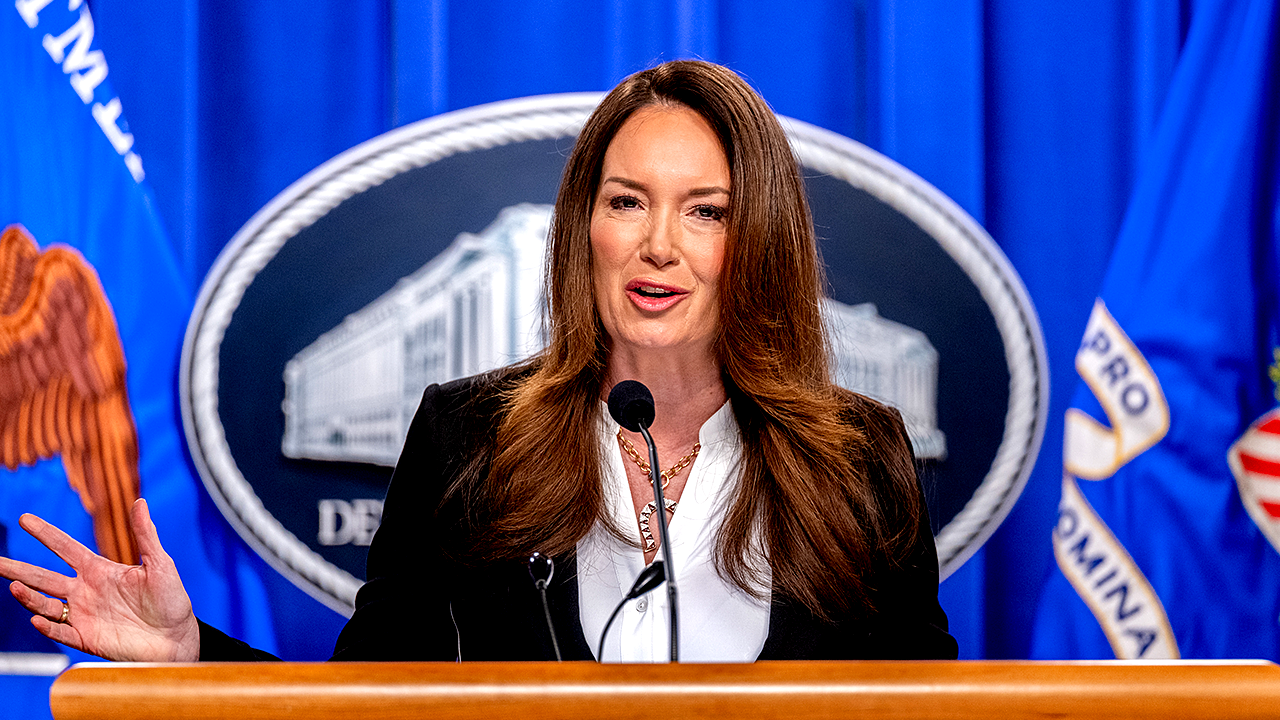
A Biden-appointed judge in California issued a preliminary injunction barring Agriculture Secretary Brooke Rollins from using her official email or authority to send unwelcome religious messages to employees, finding two of Rollins’ previous holiday messages promoting Christianity «go too far» and amounted to «coercive» pressure on nonbelieving employees .
The Thursday ruling from U.S. District Judge Trina Thompson comes as President Donald Trump’s administration has sought in his second term to expand religious expression protections for federal workers, including through 2025 Office of Personnel Management guidance allowing employees to display religious items and discuss their faith at work and the creation of a White House Faith Office.
However, Thompson found that two emails Rollins sent to all U.S. Department of Agriculture employees — which referred to Jesus Christ as «our Savior» and «our risen Lord» during the 2025 Christmas and 2026 Easter seasons — likely violated the First Amendment’s Establishment Clause .
FEDERAL EMPLOYEES ACCUSE USDA SECRETARY OF ‘CHRISTIAN PROSELYTIZING’ IN HOLIDAY EMAILS TO STAFF
«The wisdom of the Founders was in recognizing that independence requires freedom of conscience,» Thompson ruled. «The command of the Establishment Clause, thus, is to prohibit the government from using its authority to try to sway an individual’s decision about whether and how to practice their faith.»
The ruling stems from a lawsuit brought in May by the National Federation of Federal Employees and six multi-faith and nonreligious employees, who accused Rollins of excluding other religious groups by not acknowledging their holiday traditions in emails, creating a captive audience that couldn’t opt out and violating the USDA’s own policies on religious expression in the workplace .
«‘If there is any fixed star in our constitutional constellation, it is that no official, high or petty, can prescribe what shall be orthodox in politics, nationalism, religion, or other matters of opinion.’ Yet during her approximately fifteen months at the helm of USDA, Secretary Rollins has done just that,» the plaintiffs said in the lawsuit.
Thompson agreed with the plaintiffs’ concerns that Rollins’ language — in a Dec. 23, 2025, Christmas email sharing a video about the birth of Jesus and an April 5, 2026, Easter email recounting Jesus’ resurrection — treated those beliefs as if they spoke for everyone in the federal agency.
CHRISTIAN NURSE SAYS OREGON HOSPITAL TRIED TO FORCE EMPLOYEE GROUP TO GO ‘INTERFAITH’
«The Secretary’s use of ‘we,’ ‘us,’ and ‘our,’ along with her failure to recognize other religious holidays or acknowledge that other employees may have different beliefs, expresses a culture and environment within the USDA which ostensibly universally conforms with the Secretary’s beliefs,» Thompson wrote.
«Given the inclusion of first-person plural pronouns, there is no way of reading the challenged messages other than ascribing the Secretary’s particular religious view among all its recipients (that is, all USDA staff),» Thompson continued.
The order noted that one employee uncomfortable with the messaging asked to opt out, but was told it was «not possible» and that continuing to raise concerns would «create trouble» for her.
The order also noted previous public comments in which Rollins said she had been sued before for talking about Jesus too much, adding, «I’ll never stop talking about Jesus.»
National Federation of Federal Employees President Randy Erwin celebrated Thompson’s ruling.
«Federal employees are public servants, not an audience for their bosses’ personal religious beliefs,» Erwin said in a statement. » NFFE is proud to stand with the workers who brought this challenge and will continue to defend our members’ constitutional rights and their ability to serve the American people free from religious coercion.»
BISHOP ROBERT BARRON: MY YEAR WITH DOJ’S RELIGIOUS LIBERTY COMMISSION: WHY I SAID YES
Meanwhile, a spokesperson for the U. S. Department of Agriculture said it is considering its options, including an appeal.
«This is a completely unprecedented attempt to muzzle a Cabinet Secretary,» a spokesperson said in a statement to Digital.
SIGN UP TO GET THE POLITICS NEWSLETTER
A month after taking office, Trump established the White House Faith Office, which operates under the Domestic Policy Council, to coordinate with faith-based organizations and the attorney general’s office to identify gaps in enforcing federal religious liberty protections.
«Well, we want to bring religion back stronger, bigger, better than ever before — very important — and this is a good start,» Trump said during the February 2025 National Prayer Breakfast. «This is really good. We have to have religion, and it suffered greatly over the last few years, but it’s coming back. It’s coming back strong.»
politics, first amendment religion us, federal courts, religion, controversies

Mario Pergolini recordó un incómodo momento que vivió con su suegro: “Se levantó y se fue”

How a $1B Obama-era solar plant went bankrupt twice, leaving taxpayers with the tab

Denmark accuses Russia of plotting to kill Ukrainian American rapper on Danish soil
Las principales figuras de Atlético Mineiro que podrían complicarle la vida a Boca Juniors en la final de la Copa Sudamericana

Javier Milei busca suspender las PASO para evitar una interna con Bullrich y complicar a Kicillof – Nexofin

Briatore mostró su lado más exigente para calificar a sus pilotos y le dejó una advertencia a Colapinto: “Será crucial para él”

Javier Milei y sus medidas, en vivo: “Hoy discutimos si crecemos un punto más o menos”, dijo el Presidente

¿Dónde ver EN VIVO y ONLINE el Boca Juniors vs Banfield por la Copa Argentina?

El 92% de los jóvenes argentinos busca trabajo, pero menos de la mitad tiene empleo: cuáles son las principales barreras

Javier Milei destacó el desembarco de Tesla en el país y aseguró: “Esto también es devolverle la libertad a los argentinos”

 POLITICA2 días ago
Javier Milei y sus medidas, en vivo: “Hoy discutimos si crecemos un punto más o menos”, dijo el Presidente
- POLITICA16 horas ago
Javier Milei destacó el desembarco de Tesla en el país y aseguró: “Esto también es devolverle la libertad a los argentinos”
- INTERNACIONAL2 días ago
El brote de ébola está fuera de control en la República Democrática del Congo y crece el temor a una epidemia continental