INTERNACIONAL
Ecuador: detuvieron a Luisa González, la excandidata presidencial del partido “correísta” Revolución Ciudadana


La policía de Ecuador detuvo este jueves a la excandidata presidencial de izquierda Luisa González en una causa que investiga un presunto lavado de activos durante la campaña electoral de 2023, en la que fue electo el mandatario Daniel Noboa.
“Hemos llegado a una situación insostenible. La dictadura de Noboa no solo ha llevado a nuestro querido país al desastre económico, con una violencia y una corrupción totales, sino que el ataque a las libertades y la persecución política son una realidad permanente”, denunció González, integrante de la Revolución Ciudadana, el movimiento político del expresidente Rafael Correa (2002-2017).
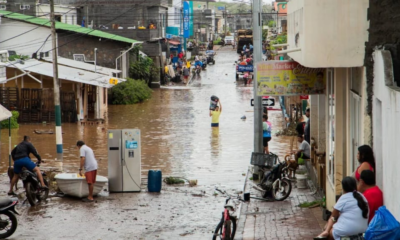
La excandidata presidencial fue detenida en Canuto, la localidad rural de la provincia costera de Manabí, en el oeste del país, donde se crió y creció,
El partido, que denuncia una persecución política, fue inhabilitado este año para participar en las elecciones de alcaldes y prefectos que se celebrarán en noviembre.
González, de 48 años, es el más reciente rostro de la Revolución Ciudadana que enfrenta procesos judiciales.
En una cárcel de máxima seguridad construida por Noboa están el alcalde de Guayaquil Aquiles Álvarez, condenado por la comercialización ilegal de combustible subsidiado, y el exvicepresidente Jorge Glas, quien paga una condena por corrupción.
Qué dijo la Fiscalía
La Fiscalía señaló que formulará cargos contra tres personas “investigadas por su presunta participación en el delito de #LavadoDeActivos”, y escribió en X las iniciales de los detenidos, entre ellos L.M.G.A. que coincide con los nombres y los apellidos de González.
La entidad “investiga presuntas irregularidades en el financiamiento político y el gasto electoral en publicidad durante la campaña presidencial de 2023, por inconsistencias en los aportes y el origen lícito de los recursos”, agregó.
Ese año, González perdió en segunda vuelta con 48% de los votos frente a Noboa. Ambos volvieron a enfrentarse en los comicios de 2025, en medio de una ola de violencia sin precedentes ligada al narcotráfico que golpea al país.
De acuerdo con fuentes de Revolución Ciudadana, la actual detención tiene su origen en “un proceso ya juzgado” en el Tribunal Contencioso Electoral (TCE) que se solucionó con el pago de una multa superior a los 6000 dólares.
La policía se limitó a reportar en su canal de Whatsapp que la excandidata “fue aprehendida”, sin precisar las razones.
“Estamos denunciando una arbitrariedad, un secuestro de una dirigenta política de este país, por lo tanto frente a eso nos vamos a movilizar hoy y las veces que sean necesarias”, señaló Gabriela Rivadeneira, presidenta del movimiento Revolución Ciudadana.
Noboa












INTERNACIONAL
Tehran threatens to ‘break legs’ as ‘Trump corridor’ prepares to launch on Iran’s border
NEWYou can now listen to Fox News articles!
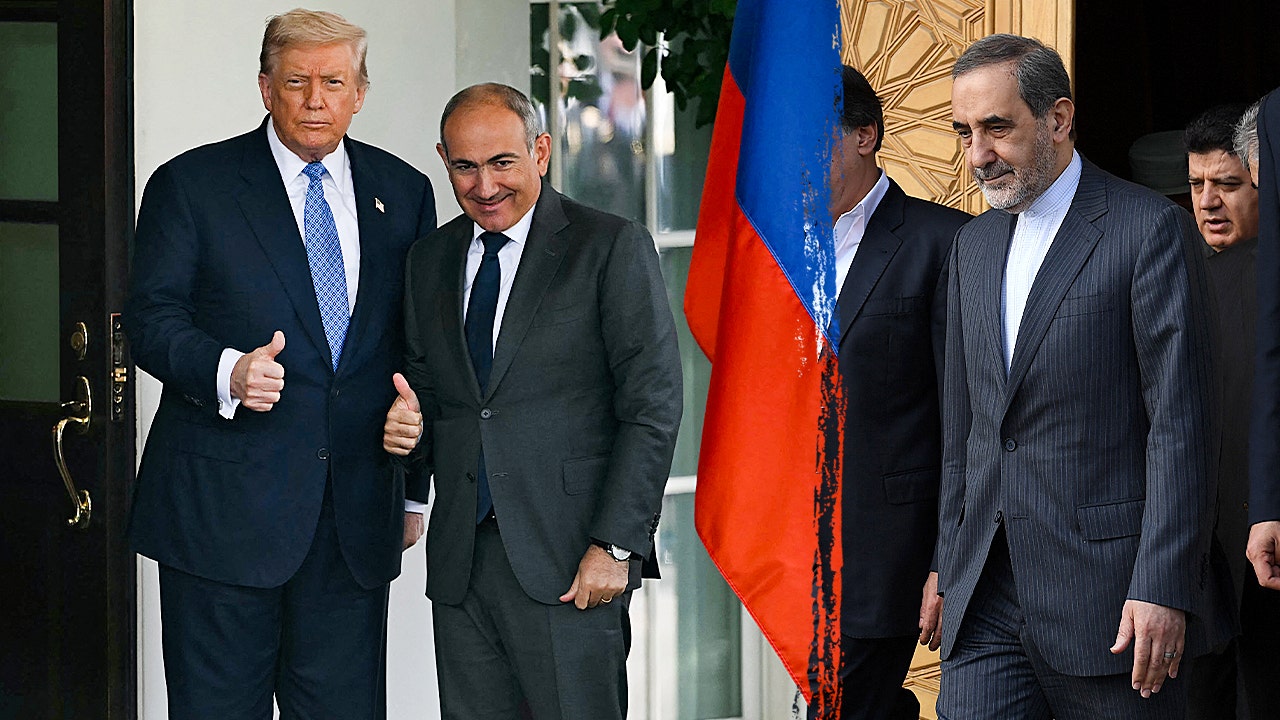
Armenia is set to launch a U.S.-backed transportation and energy project along Iran’s northern border Monday, despite warnings from a senior Iranian official that Tehran would «break their legs» if President Donald Trump and his allies crossed the Islamic Republic’s «red line.»
Armenian Prime Minister Nikol Pashinyan confirmed that the Trump Route for International Peace and Prosperity (TRIPP) project would launch Monday, advancing the plan to connect mainland Azerbaijan with its Nakhchivan exclave through southern Armenia and establish energy links with Turkey and Azerbaijan, Turkish media reported, citing Interfax.
The project, a centerpiece of a U.S.-brokered peace initiative between Armenia and Azerbaijan, would also expand American economic involvement in the South Caucasus, where Iran has warned against any development it believes could threaten its security or regional influence.
TRUMP’S FIRST IRAN WAR ESCALATION POST-MIDTERM LOSSES SEEKS TO CHOKE OFF TEHRAN’S TRADE
US President Donald Trump (C), Azerbaijani President Ilham Aliyev (L) and Armenian Prime Minister Nikol Pashinyan display the agreement they signed in the State Dining Room of the White House in Washington, DC on Aug. 8, 2025. US President Donald Trump said Friday that Armenia and Azerbaijan were committed to a permanent peace as he hosted a White House summit with the leaders of the two South Caucasus nations, which have fought for decades. (Photo by Andrew Caballero-Reynolds/AFP via Getty Images)
The corridor has also gained strategic significance amid the U.S.-Israeli war with Iran, as Tehran seeks to secure its northern trade routes and limit the U.S. security presence near its borders while Washington maintains its naval blockade and Task Force Iron Gate focuses on Iran’s borders.
Speaking at the DigiTec 2026 technology conference in Yerevan, Pashinyan said the new TRIPP initiative, also known as the «Trump Corridor,» would strengthen Armenia’s regional energy connections, according to Interfax.
«Tomorrow we will officially announce the launch of the TRIPP program, and energy and electricity transit will be an important component of it,» Pashinyan said during a public discussion on artificial intelligence.
«We will now connect our network to the electricity grids of Türkiye and Azerbaijan,» he added.
The announcement followed a warning from Ali Akbar Velayati, a senior foreign policy adviser to Iranian Supreme Leader Mojtaba Khamenei, who accused Armenia of disregarding Tehran’s security concerns over the proposed route.
«I told the Armenian ambassador the final word, clearly, that if Trump and his allies want to cross this Iranian red line, we will break their legs,» Velayati wrote in a Nov. 5 article published by the Iranian newspaper Ettelaat, according to Iran’s Tasnim News Agency.
TRUMP RETALIATES AFTER IRAN ATTACK AS EXPERT WARNS REGIME IS GROWING MORE DANGEROUS

A view from Armenia’s southern border reveals the Arax River, with Iran visible across the water on May 2025. This crossing is a vital lifeline for Armenia, facilitating essential trade and energy flows, especially as tensions rise over the proposed Zangezur Corridor. Iran strongly opposes the corridor, fearing it would sever its direct land access to Armenia and diminish its role as a regional transit hub. The corridor, intended to connect Azerbaijan to its Nakhchivan exclave through Armenian territory, has become a flashpoint in regional geopolitics. (Anthony Pizzoferrato/Middle East Images/AFP via Getty Images)
Velayati also warned that Iran would defend its security interests in the South Caucasus regardless of Russia’s involvement, pointing to Tehran’s longstanding opposition to the proposed route.
The roughly 26-mile corridor would run through Armenia’s southern Syunik province, near the Iranian border, connecting mainland Azerbaijan to Nakhchivan and providing an onward link to Turkey, a NATO member.
The route would include railways, roads, electricity transmission lines and fiber-optic cables, creating trade connections between Central Asia and Europe.
Iran has long opposed proposals for what Azerbaijan calls the «Zangezur Corridor,» particularly arrangements that Tehran fears could weaken Armenia’s control over the territory, disrupt Iran’s access to Armenia or expand the presence of outside powers near its borders.
In August 2025, Velayati had already warned that the corridor could become a «graveyard» for what he called Trump’s mercenaries, according to Al Jazeera.
«Such a corridor will turn into a graveyard of the mercenaries of Donald Trump, not a route owned by the U.S. president,» Velayati said, according to the outlet.
Velayati also argued that Iran would act to protect the South Caucasus regardless of Moscow’s position, while expressing his belief that Russia opposed the corridor on strategic grounds.
NO RETREAT AT HORMUZ — IRAN MUST NOT CONTROL THE WORLD’S ENERGY LIFELINE

Ali Akbar Velayati, a senior foreign policy adviser to Iranian Supreme Leader Mojtaba Khamenei, accused Armenia of disregarding Tehran’s security concerns over the proposed route. (Photo by Rouzbeh Fouladi/NurPhoto via Getty Images)
During a December 2025 meeting with Armenia’s ambassador to Tehran, Grigor Hakobyan, Velayati again raised concerns about the proposed route, according to Iran International.
The project emerged from a U.S.-brokered diplomatic initiative aimed at ending decades of conflict between Armenia and Azerbaijan over Nagorno-Karabakh, an internationally recognized part of Azerbaijan that was controlled for years by ethnic Armenian separatists before Azerbaijani forces retook the territory in 2023.
Trump had hosted Pashinyan and Azerbaijani President Ilham Aliyev at the White House in 2025, where the two leaders signed a joint declaration intended to advance peace, normalize relations and reopen regional transportation links.
The declaration established the basis for the TRIPP initiative, giving Washington a central role in developing infrastructure.
Under the implementation framework announced by Secretary of State Marco Rubio and Armenian Foreign Minister Ararat Mirzoyan in January, the TRIPP Development Company would oversee development of the infrastructure.
TRUMP MEETS KEY IRAN WAR MEDIATOR AS UAE REVEALS MAJOR OIL EXPORT SURGE DESPITE CONFLICT

Armenian Prime Minister Nikol Pashinyan confirmed that the Trump Route for International Peace and Prosperity (TRIPP) project would officially launch Nov. 23. (Photo by ANDREW CABALLERO-REYNOLDS/AFP via Getty Images)
The framework calls for a U.S.-controlled entity to hold a 74% ownership stake in the company, with Armenia retaining 26%.
The company would receive development rights for an initial 49-year period, with an option for a further 50-year extension. Under the proposed extension, Armenia’s ownership stake would increase to 49%.
Armenian authorities would retain jurisdiction over the territory, including responsibility for customs, immigration, law enforcement and border security.
The framework also provides for private operators to help facilitate trade and transit, while final customs and security decisions would remain with Armenian authorities.
On Oct. 28, Armenia’s parliament ratified the agreement by a vote of 63-32. Armenian President Vahagn Khachaturyan signed the ratification law Nov. 12.
The United States, Armenia and Azerbaijan also announced the launch of trilateral technical planning groups in November to advance the initiative.
world, iran, war with iran, foreign affairs, middle east foreign policy, donald trump, turkey, geopolitics
INTERNACIONAL
Hallan una falla tectónica activa bajo el desierto de Kalahari que podría cambiar el mapa geológico de África
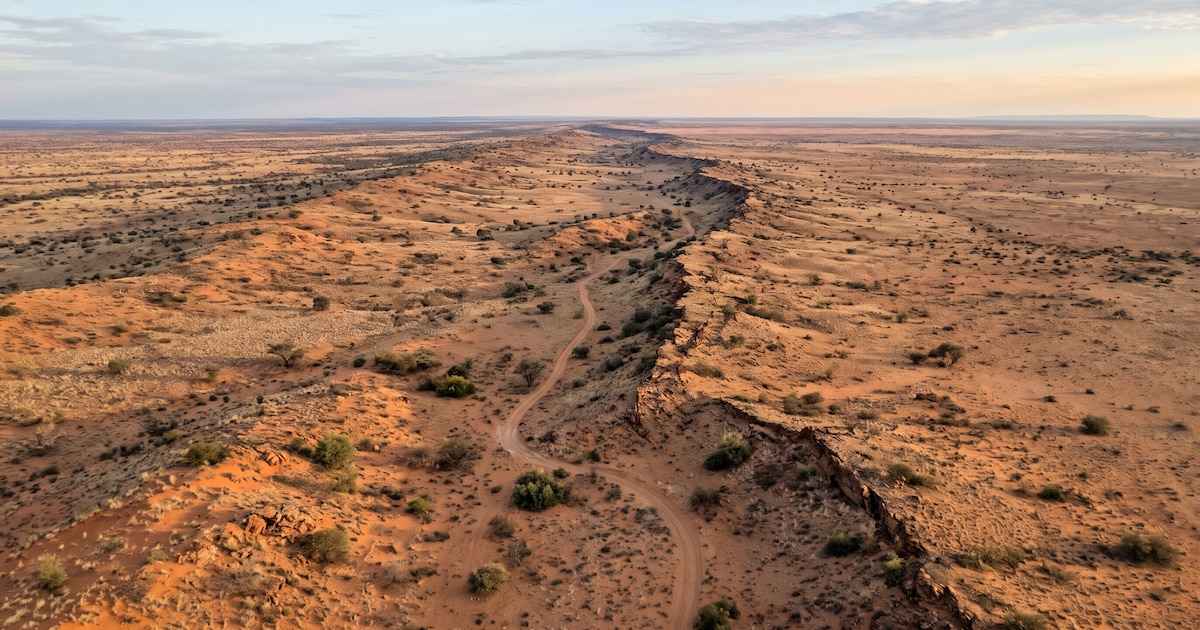
En el extremo oriental de Botsuana, bajo las arenas planas del Kalahari, una cicatriz geológica que parecía pertenecer a un pasado remoto volvió a dar señales de actividad. Un equipo de investigadores concluyó que una antigua falla jurásica se reactivó dentro del cratón de Kalahari, una de las porciones más viejas y rígidas de la corteza africana.
La investigación se publicó en la revista científica Tectonics y pone el foco sobre la falla Khurutshe, una estructura de unos 80 kilómetros que atraviesa el paisaje del sudeste botsuano. El estudio indica que esa fractura funcionó hace cerca de 180 millones de años, durante el Jurásico, quedó inactiva durante un largo período y volvió a registrar movimientos en tiempos geológicamente recientes.
El hallazgo modifica una idea extendida entre los geólogos: que los cratones, los núcleos más antiguos de los continentes, son demasiado fríos, gruesos y resistentes como para deformarse con facilidad. En Kalahari, esa aparente estabilidad muestra una fisura.
Un terremoto de 2017 llevó la atención al interior de Botsuana
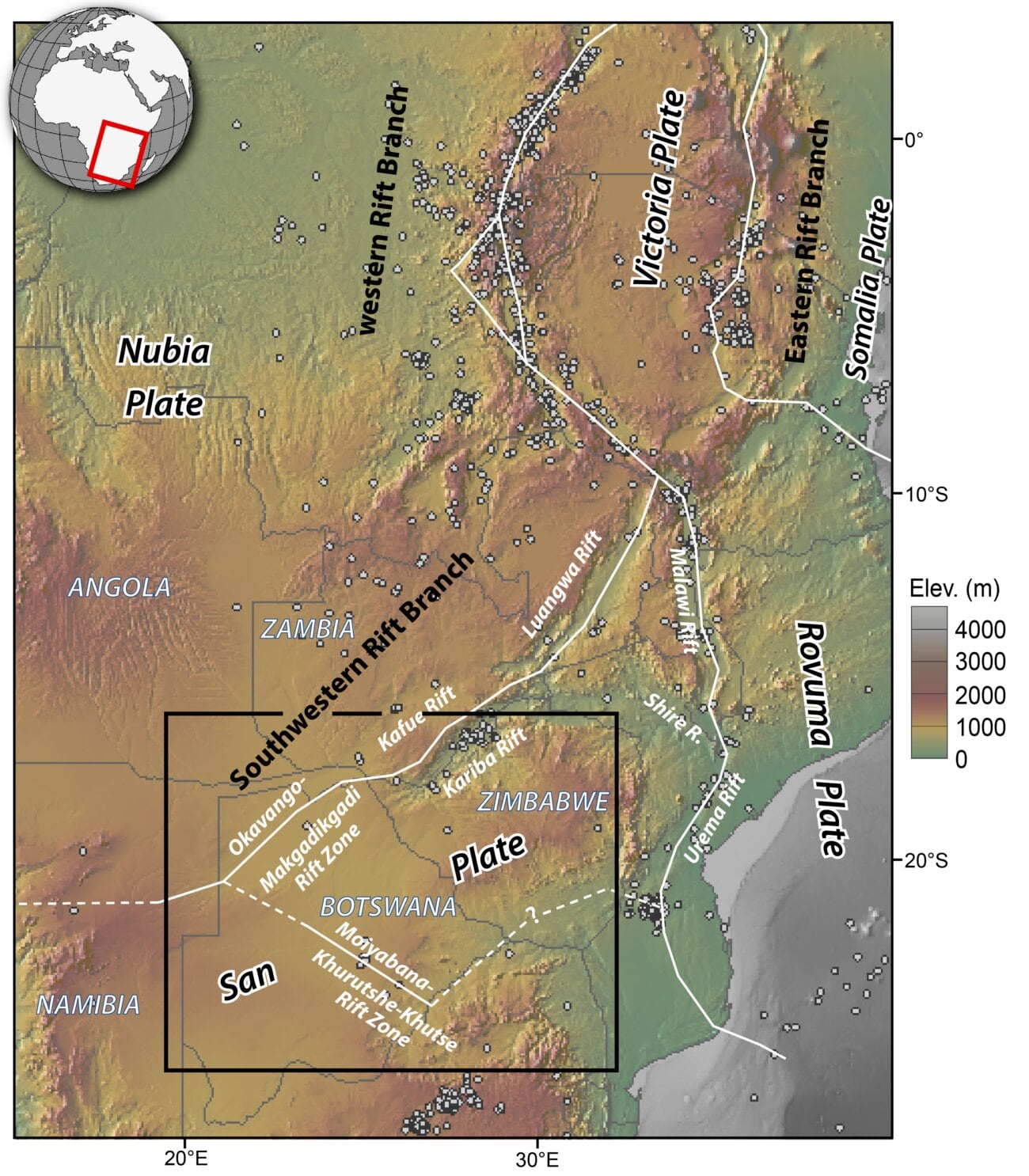
La investigación toma como punto de partida el terremoto de magnitud 6,5 que sacudió el sur de África en abril de 2017. El sismo se produjo en el este de Botsuana, lejos de los bordes activos de placas tectónicas donde suelen concentrarse los grandes terremotos.
Esa ubicación llamó la atención de los especialistas. El área se encuentra dentro del cratón de Kalahari, formado por bloques de corteza que alcanzan hasta 3.700 millones de años de antigüedad. En términos geológicos, es una parte profunda del continente que se consideraba poco propensa a abrirse o quebrarse.
Los análisis posteriores al sismo mostraron que las estructuras asociadas a la ruptura se extendían hacia el interior del cratón. La señal no apuntaba a un episodio aislado: sugería que las fuerzas que estiran el continente en el este africano podían estar alcanzando una zona que, hasta hace poco, parecía ajena a ese proceso.
La nueva investigación, encabezada por Boniface Kgosidintsi, de la Universidad Internacional de Ciencia y Tecnología de Botsuana, examinó en detalle la falla Khurutshe, ubicada a unos 80 kilómetros al sur del epicentro del terremoto de 2017.
Las capas del terreno conservan la historia de una fractura
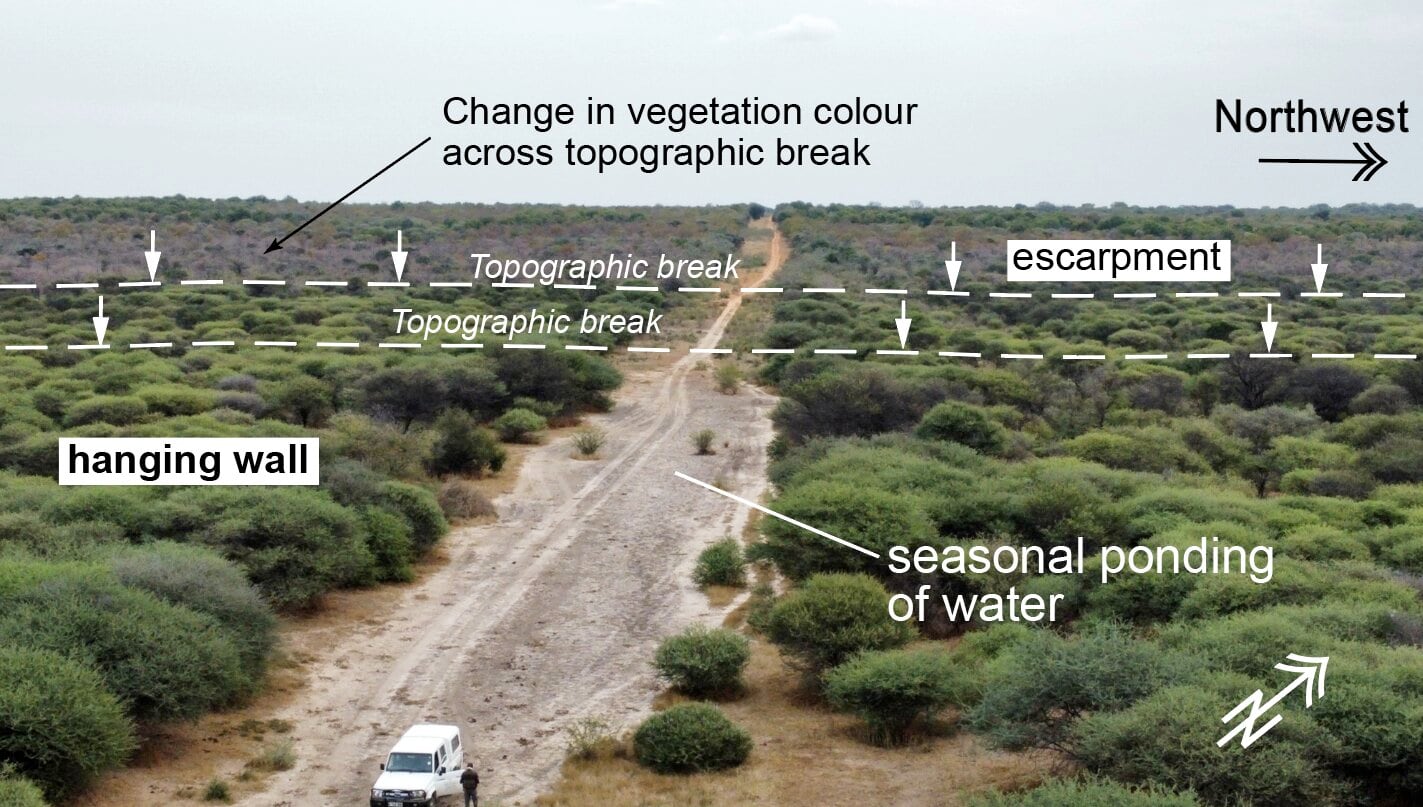
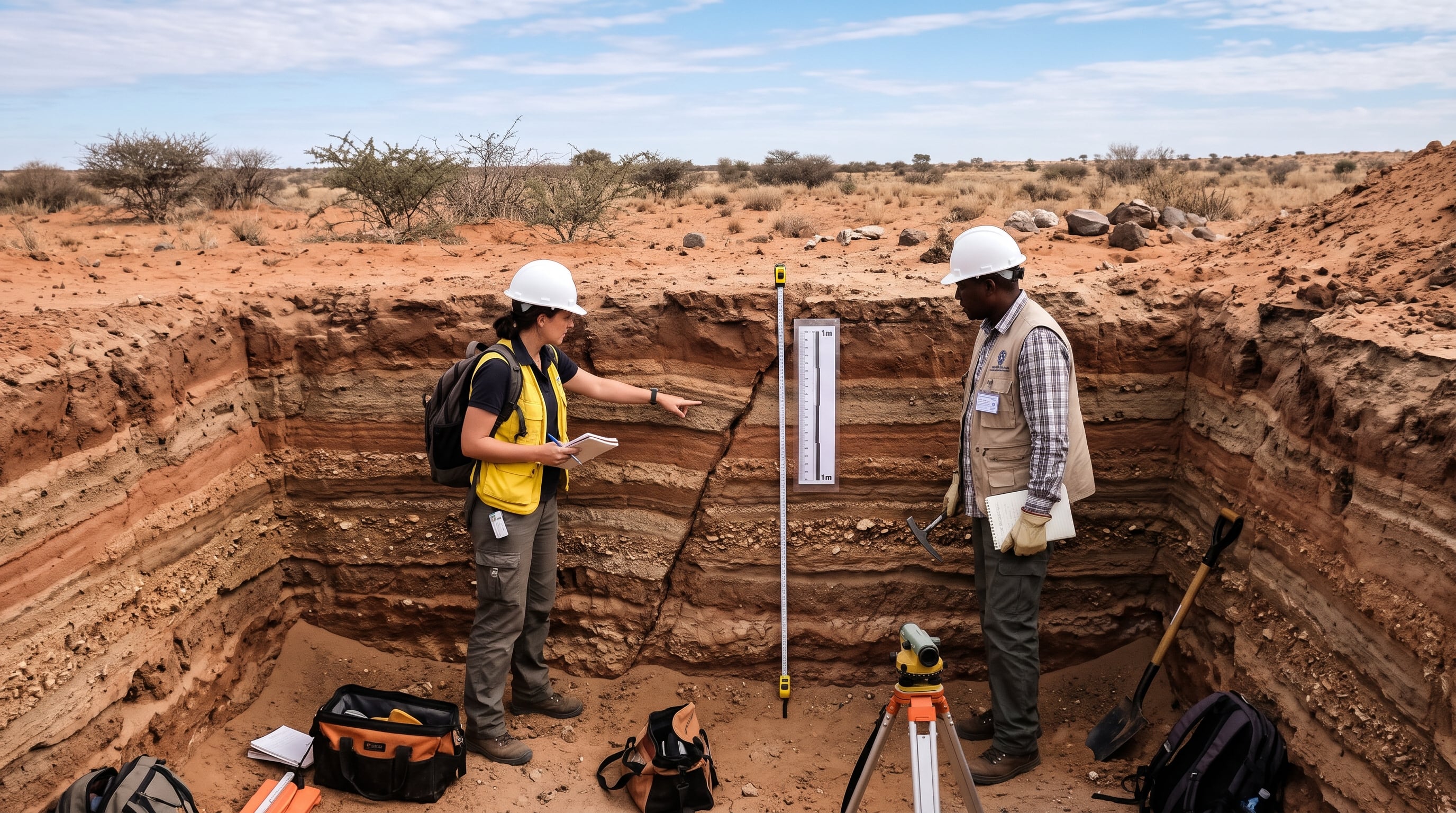
El equipo combinó imágenes de resistividad eléctrica del subsuelo, registros de perforaciones y observaciones de zanjas excavadas a través de la falla. Esas herramientas permitieron reconstruir el orden de las capas enterradas y observar cómo cambian a ambos lados de la estructura.
Los investigadores identificaron una capa superficial de alrededor de 10 metros de espesor, vinculada a la Formación Kalahari y depositada durante el Holoceno. Debajo aparece una secuencia de materiales del Jurásico, con basaltos y rocas sedimentarias, que alcanza unos 80 metros. Más abajo se encuentra el basamento precámbrico, la roca antigua que forma el corazón del cratón.
Las capas más jóvenes y las formadas durante el Jurásico se engrosan hacia la misma falla. Esa disposición es una huella de movimiento: cuando un bloque de terreno desciende respecto de otro a lo largo de una falla normal, se genera espacio para que se acumulen sedimentos y otros materiales.
En las zanjas, el grupo encontró superficies de deslizamiento en areniscas jurásicas endurecidas. Los mapas elaborados con datos de perforaciones también muestran que los estratos se hicieron más espesos hacia el lado hundido de la falla. Para los autores, ese patrón confirma que Khurutshe estuvo activa durante el episodio de extensión continental que afectó al sur de África en el Jurásico.
Después de aquella etapa, el sistema quedó inactivo. Sin embargo, la deformación de las arenas recientes indica que el movimiento se reanudó. El momento exacto de esa reactivación no está definido, aunque los depósitos afectados se formaron principalmente dentro de los últimos 2,6 millones de años.
El rift africano aprovecha una debilidad mucho más antigua
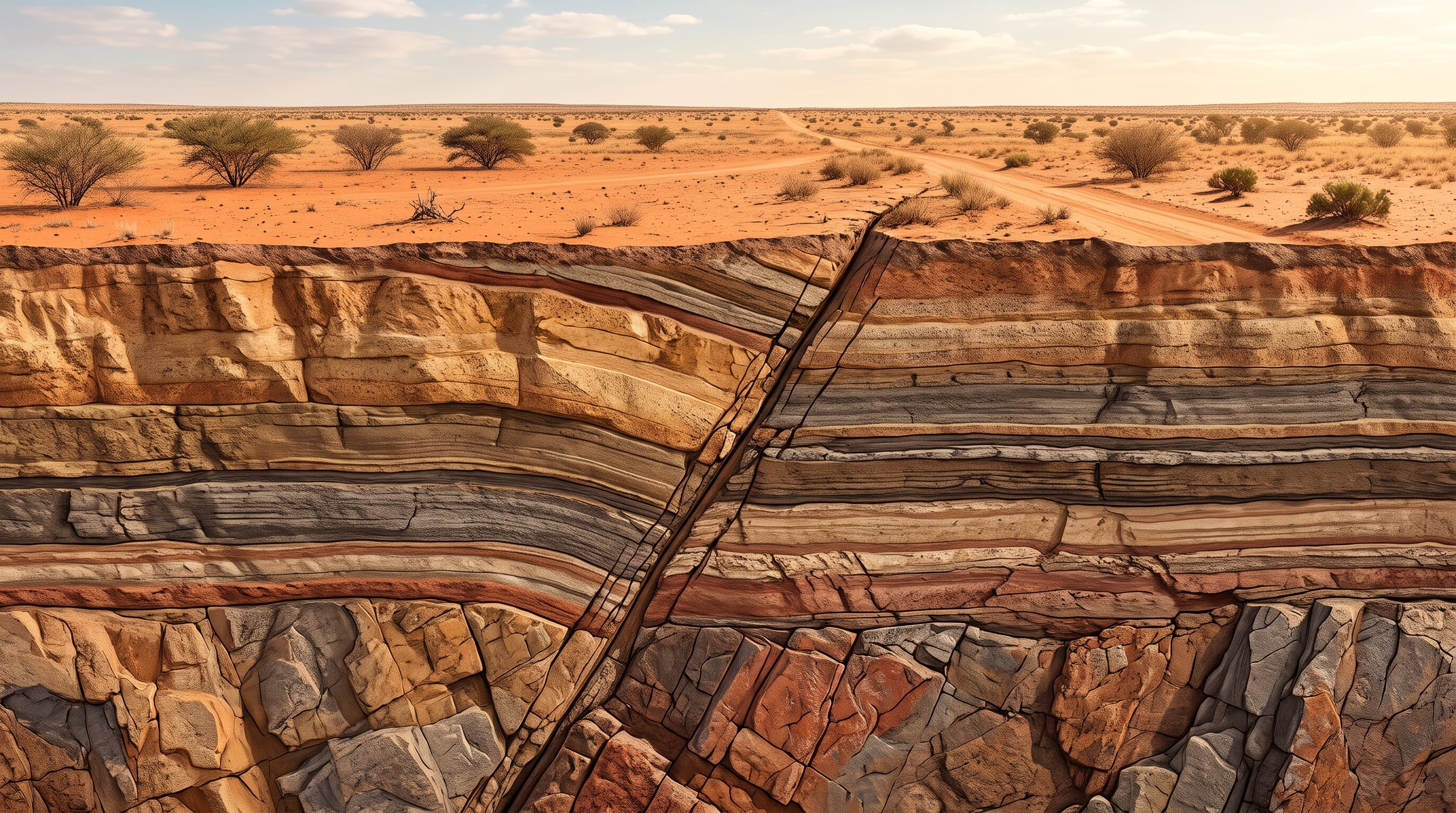
La palabra rift se utiliza para describir una región en la que la corteza terrestre se estira y se adelgaza. Si el proceso continúa durante millones de años, puede separar un continente y dar lugar a una cuenca oceánica. En África oriental, ese mecanismo se asocia con un extenso sistema de fracturas, volcanes y terremotos que atraviesa varios países.
La falla Khurutshe se sitúa en el extremo meridional del sistema de rifts africanos. Según el estudio, su reactivación responde a las tensiones que llegan desde el Rift del Sudoeste Africano, una prolongación de ese escenario tectónico.
El trabajo plantea que la ruptura actual sigue una antigua zona de unión entre piezas de la corteza. Esas uniones, o suturas, se formaron hace miles de millones de años, cuando distintos bloques geológicos chocaron y quedaron soldados. Aunque luego pueden permanecer estables durante períodos inmensos, conservan diferencias internas que las vuelven más vulnerables ante nuevas fuerzas.
La conclusión ofrece una explicación para un proceso que, de otro modo, resultaría inesperado. La corteza de un cratón puede ser rígida en su conjunto, pero no es completamente uniforme. Las fracturas heredadas, los contactos entre bloques y las estructuras enterradas pueden actuar como líneas de debilidad cuando vuelven a aplicarse tensiones de extensión.
En el caso de Botsuana, los autores sostienen que el antiguo rift mesozoico aprovechó esa debilidad estructural y que el sistema actual la utiliza otra vez. La actividad no implica una fractura inmediata del continente ni anticipa la creación de un océano en un plazo humano. Se trata de un fenómeno medido en millones de años, aunque sus manifestaciones sí pueden incluir terremotos.
Una región considerada estable entra en el mapa de las preguntas tectónicas
El estudio sitúa a la falla Khurutshe como un ejemplo de rifting incipiente dentro de un interior continental antiguo. La expresión “incipiente” señala que el proceso se encuentra en una fase temprana: existe extensión, hay estructuras activas y se observan fallas, pero la corteza no se ha dividido.
Para la geología africana, el caso permite seguir de cerca cómo reaparecen movimientos tectónicos sobre estructuras heredadas. También refuerza la necesidad de estudiar con mayor precisión los riesgos sísmicos en zonas continentales que durante décadas fueron clasificadas como especialmente estables.
El terremoto de 2017 mostró que el interior de Botsuana no está completamente inmóvil. El análisis del subsuelo aporta ahora una secuencia más larga: una falla que nació hace unos 180 millones de años, quedó dormida y volvió a moverse bajo tensiones que recorren el continente.
Los próximos estudios deberán precisar cuándo se reanudó la actividad, a qué velocidad se deforman los bloques de la región y qué relación mantiene la falla con otros segmentos del Rift del Sudoeste Africano. Por ahora, las capas enterradas bajo el Kalahari indican que la historia tectónica del cratón todavía no está cerrada.
desierto de Kalahari,Botsuana,falla tectónica,escarpe
INTERNACIONAL
$275M Obama-era solar fraud case could net taxpayers $1B, but Trump’s DOJ backs Biden dismissal

This article is Part 2 of a Digital exclusive series investigating the Crescent Dunes solar power plant in Nevada. You can read Part 1 here.
The Trump administration has made fighting fraud and rooting out government waste a top priority, even offering cash rewards to Americans who expose wrongdoing.
Yet investors in a failed Obama-era solar plant are questioning why President Donald Trump’s own Justice Department is fighting to squash their fraud lawsuit over a $275 million federal grant — a case they say could recover up to $1 billion for taxpayers.
The investors allege that Spanish construction giant ACS and companies to tied its former subsidiary Cobra, misled federal officials into approving the grant by claiming the troubled solar plant was ready for use, even though it had suffered major construction problems and was shut down for months following a molten-salt-tank failure.
The lawsuit centers on the beleaguered Crescent Dunes solar plant, a billion-dollar, government-backed project that began operating in Nevada in 2015 but was later plagued by engineering failures, repeated shutdowns and two bankruptcies before being sold for just $7 million in July.
HOW A $1B OBAMA-ERA SOLAR PLANT WENT BANKRUPT TWICE, LEAVING TAXPAYERS WITH THE TAB
The plant was built around an emerging solar technology that used thousands of mirrors to concentrate sunlight onto a towering receiver, heating molten salt that could be stored and used to generate electricity even after sunset.
In 2020, a group of private investors who had put $90 million into the project and suffered substantial losses filed a whistleblower lawsuit, alleging the companies had misled the federal government to secure the enormous grant.
But in November 2024, just two days after Trump’s re-election, Biden’s Justice Department moved to shut down the lawsuit, arguing that pursuing the case would burden federal agencies.
WHITE HOUSE LAUNCHES INTERACTIVE MAP TRACKING BILLIONS IN SUSPECTED FRAUD
DOJ UNVEILS NATIONWIDE TAX FRAUD CRACKDOWN INVOLVING 76 DEFENDANTS, NEARLY $500M IN ALLEGED LOSSES
The incoming Trump administration could have reconsidered that position in early 2025. Instead, its Justice Department defended the Biden-era dismissal in an April filing with a federal appeals court.
CMB, an investment group headed by Pat Hogan, is appealing the dismissal. Hogan is also urging Trump’s Justice Department to ask the court to reopen the case.
«It makes no sense,» Hogan told Digital in a video interview.
Hogan said he had contacted Trump’s Justice Department seeking help reviving the case but had received no commitment.
«The real problem here is, why isn’t the government asking for this?» he said. «All in all, I would say this has just been a fleecing of the federal government by a foreign entity. And we have the opportunity to fix it, and they’re doing nothing.»
Hogan argues that allowing the lawsuit to proceed could potentially net hundreds of millions of dollars for taxpayers.
Under the False Claims Act, which CMB used to bring its lawsuit, companies found liable can face damages of up to three times the government’s proven losses, plus additional penalties.
«This could be a billion dollars,» Hogan said.
Tonopah Solar Energy, the plant’s former owner and one of the defendants, has rejected CMB’s allegations as baseless in court filings. Other companies named in the lawsuit have also backed the Justice Department’s effort to dismiss the case.
In an April 2026 court filing, Trump’s Justice Department defended the Biden administration’s decision, making the same argument that continuing the lawsuit would drain government resources and that federal law gave it broad authority to shut down the case. In court filings reviewed by Digital, neither administration put a dollar figure on the cost of continuing the lawsuit.
The decision has left Hogan and his investors questioning why the government shut down the case — and what Treasury officials knew about the plant’s serious problems when they approved the $275 million grant.
At the heart of the lawsuit is a dispute over whether Crescent Dunes was properly completed — and whether its owner, Tonopah Solar Energy, was entitled to collect the $275 million Treasury grant.
The grant was part of a $26 billion program within the Obama administration’s broader $90 billion green-energy push, launched under the 2009 economic stimulus package to create jobs and turbocharge its green energy agenda.
Known as Section 1603, the program paid developers about 30% of their qualifying construction costs once their facilities were «placed in service» — meaning ready and available for their intended use. Treasury considered several factors in determining whether a plant met that standard, including whether it had passed critical tests, begun generating electricity and come under its owner’s control.
Crescent Dunes began generating electricity in 2015, but CMB alleges it had produced no more than 32% of its expected output through June 2016.
Then, in October 2016, a failure involving the plant’s hot molten-salt storage tank shut it down for months.
In December, while Crescent Dunes was still shut down, its builder, Cobra Thermosolar Plants, formally handed the plant over to its owner, Tonopah Solar Energy, under an arrangement known as «provisional acceptance.»
But first, they changed the construction contract to allow the handover despite major defects and unfinished repairs.
That agreement came just days before the year-end deadline for solar plants to be ready for use to qualify for the Treasury grants.
In a later court filing, CMB alleged that more than 9,000 defects had been identified and grouped into roughly 500 outstanding construction items, including seven major deficiencies. The investors argue the problems showed the plant was not ready to be handed over.
The December agreement itself acknowledged that repairs to the failed hot molten-salt storage tank were still needed. The tank was central to the plant’s operation, storing heat from the sun so electricity could be generated even after sunset.
CMB alleges the companies used the revised agreement to make Crescent Dunes appear ready for use and secure the Treasury grant, even though major problems remained unresolved.
Records reviewed by Digital show Treasury had questioned whether Crescent Dunes was ready for use months before approving the grant payment.
In September 2016, Treasury questioned a claim by Tonopah Solar Energy that Crescent Dunes had been ready for use since February of that year. The agency pointed to a July commissioning report suggesting the builder, Cobra Thermosolar Plants, had not yet formally handed control of the facility over to Tonopah.
In a Sept. 21 response to Treasury’s questions, Tonopah Solar Energy defended its claim, arguing that the plant had passed key tests and was capable of generating electricity. It also acknowledged an earlier extended shutdown caused by problems with the plant’s salt-piping system.
The following month, the plant’s hot molten-salt storage tank failed, forcing the plant offline for months.
Despite that breakdown, Tonopah and Cobra went ahead with the revised handover agreement in December.
On March 7, 2017, just weeks into the first Trump administration, Treasury approved a $243.7 million grant payment — even though Crescent Dunes remained shut down nearly five months after the tank failure.
The plant would not resume generating electricity until July 2017.
The approval letter said Treasury was still reviewing some of the project’s claimed costs before deciding whether to release additional money.
In February 2018, Treasury approved an additional $31.9 million, bringing the total grant awards to approximately $275.6 million, according to newly obtained federal records. The additional payment was scheduled for disbursement within seven business days.
But Treasury was not the only federal agency involved.
The Department of Energy, which had backed Crescent Dunes with a $737 million federal loan guarantee, also had a say in major construction decisions. DOE approved the revised December handover despite unfinished repairs. It also waived certain missed deadlines, allowing the plant to be formally recognized as operational under its loan agreement.
That approval did not automatically qualify Crescent Dunes for the separate Treasury grant.
A separate December 2016 financing agreement involving Tonopah Solar Energy and DOE required the Treasury grant money to go first toward repaying the project’s short-term federal borrowing, including principal and accrued interest.
Documents obtained by Digital show that Tonopah Solar Energy made a $218.9 million payment toward a federal loan in March 2017, shortly after Treasury approved its initial grant award.
«So in a sense, the federal government just paid themselves, right? So they’re still out the money, right,» Hogan told Digital.
On April 12, 2017, while Crescent Dunes was still offline, DOE published an article celebrating the plant as a breakthrough in solar technology without mentioning that it had been shut down for months.
What remains unclear is whether Treasury officials knew about the October breakdown, unfinished repairs and December contract changes when they authorized the initial grant payment — information that could have affected whether the plant qualified for the grant.
Digital has asked DOE and Treasury about the grant’s approval process, the plant’s condition and taxpayer losses, but neither agency has provided a full accounting.
In a statement, the Trump administration’s Department of Energy criticized previous administrations’ handling of the project, saying it had resolved its financial interests in Crescent Dunes in 2020.
«It is unfortunate that previous administrations irresponsibly managed taxpayer dollars in their support of the Green New Scam,» a DOE spokesperson said. «Since 2020, DOE has had no ownership, operational, or financial interest in the Obama-era project.»
Digital has also filed Freedom of Information Act requests seeking grant payment records, loan accounting and communications between the agencies.
In January 2020, Hogan’s investment group, CMB, which had lent $90 million to a company tied to Crescent Dunes developer SolarReserve, sued Tonopah Solar Energy and companies tied to Spanish construction giant ACS, accusing them of defrauding the federal government.
The lawsuit was filed under the False Claims Act, which allows private whistleblowers to sue on the government’s behalf and receive a share of any money recovered. Known as «qui tam» cases, the lawsuits can be taken over or dismissed by the Justice Department.
After investigating CMB’s allegations for more than three years, Biden’s Justice Department declined to take over the lawsuit in June 2023, leaving CMB to pursue it alone.
On Nov. 7, 2024, just two days after Trump’s election victory, Biden’s Justice Department moved to dismiss the lawsuit, arguing that continuing the case would burden the Treasury, Energy and Justice departments.
CMB challenged the move, arguing that Biden’s DOJ had failed to explain what had changed since it allowed the investors to proceed.
Then, in July 2025, six months into Trump’s second term, a federal judge granted DOJ’s request and dismissed the lawsuit without deciding whether the fraud allegations were true.
CMB appealed to the Ninth Circuit, where Trump’s Justice Department defended the dismissal in an April 2026 court filing.
Matt Dunn, an attorney at Covington & Burling who specializes in False Claims Act litigation, described DOJ’s decision to intervene after initially allowing the case to proceed as «unusual, but not extraordinary.»
Dunn said the government may have its own assessment of a lawsuit’s potential value that differs from the whistleblower’s.
«The government might privately have a different view of the merits of the case or the potential value of the case that it doesn’t necessarily share publicly,» Dunn said.
Dunn said the Supreme Court has given the government substantial discretion to dismiss such cases, describing the legal hurdle for whistleblowers seeking to overturn a dismissal as «an extraordinarily high bar for a relator to overcome.»
Hogan, meanwhile, has a financial stake in the outcome. He says his investors lost the $90 million they lent to the SolarReserve-linked company.
If the lawsuit is revived and CMB ultimately succeeds, the government theoretically could recover up to three times its proven damages under the False Claims Act, and CMB could receive a share, potentially offsetting its investors’ losses.
«That’s my job for my investors to leave no stone unturned to try to make sure that, in fact, I get their money back,» Hogan said.
The Ninth Circuit must now decide whether the lawsuit can move forward — potentially opening the door for the government to recover hundreds of millions of dollars in disputed funds — or whether DOJ’s decision to shut it down will stand.
The Justice Department’s handling of the case has also drawn scrutiny on Capitol Hill.
In February 2025, Reps. Lance Gooden, R-Texas, and Carol Miller, R-W.Va., urged Attorney General Pam Bondi to investigate why the Biden administration moved to shut down the lawsuit.
Gooden later urged Secretary of War Pete Hegseth to consider suspending federal contracts with companies tied to Spanish construction giant ACS, whose subsidiary Cobra built the plant and held a stake in Tonopah Solar Energy. He also called for an investigation into ACS and Banco Santander’s roles in the project’s financing and bankruptcy amid the allegations of fraud involving federal funds.
«When taxpayers are defrauded to a scale this massive, our government has a responsibility to get the facts and hold those responsible to account,» Gooden told Digital. «That is why I have asked Secretary Hegseth to pause contracts with ACS-affiliated entities until these allegations are fully reviewed and every avenue to recover taxpayer money has been pursued.»
One such contract involves a $2.84 billion Navy dry dock project at Pearl Harbor awarded to a joint venture involving ACS subsidiary Dragados. The project completion date has been delayed from September 2027 to March 2029, according to the Government Accountability Office. Dragados is not accused of fraud in the Crescent Dunes lawsuit.
Miller, meanwhile, also questioned how a project backed by nearly $1 billion in federal financing could end up selling for $7 million.
«That’s not good math,» Miller told Digital. She suggested another congressional letter could be warranted, saying that «if we can recover any of that taxpayer money, that would be wonderful.»
In April 2026, Senate Judiciary Committee Chairman Chuck Grassley, R-Iowa, a longtime defender of whistleblowers who helped strengthen the False Claims Act in 1986, demanded answers from DOJ over its handling of fraud lawsuits, particularly cases it shut down despite whistleblowers wanting to press ahead.
In a July 10 response obtained by Digital, DOJ revealed that Crescent Dunes was one of just 12 cases in which it moved to shut down a lawsuit after initially allowing it to proceed — fewer than 0.3% of nearly 5,000 whistleblower cases received between 2020 and 2025.
DOJ also confirmed that other federal agencies can push to have such lawsuits dismissed, including to avoid the burden of producing evidence. But it did not say whether Treasury or DOE pushed to kill the Crescent Dunes case — or what investigators found when they examined the fraud allegations.
The companies accused of fraud have backed DOJ’s effort to dismiss the lawsuit, arguing that federal law gives the government broad authority to shut down whistleblower cases.
Tonopah Solar Energy, which filed for bankruptcy in January 2026, has also fiercely rejected CMB’s allegations, accusing the investors of pursuing a «scorched earth mission» through repeated legal challenges against the company.
«The reality is there is no merit to CMB’s claims whatsoever,» the company argued in an April 2026 bankruptcy filing.
Tonopah Solar Energy made those arguments while winding down its affairs in bankruptcy, before selling the plant’s assets in July. The new owners had no involvement in the alleged 2016 fraud, and the bankruptcy sale generally shielded them from the former owner’s legal liabilities.
In a separate 2020 lawsuit, Hogan’s investors sought to recover an allegedly unpaid $90 million loan, suing companies tied to Crescent Dunes after SolarReserve failed to repay much of the money. They suffered a setback in 2024 when an arbitration panel rejected five of their claims and ordered them to pay $2.44 million in legal fees and costs.
The companies did not respond to Digital’s repeated requests for comment.
The dispute was separate from the whistleblower lawsuit alleging fraud involving the $275 million Treasury grant.
Despite years of investigation, the Justice Department has never publicly disclosed what it uncovered.
Nearly seven years after Hogan’s investors filed their lawsuit, the fraud allegations have never been tested at trial. And despite President Trump’s pledge to crack down on fraud and wasteful green-energy spending, his Justice Department is still defending the Biden administration’s decision to shut down the case.
«If we’re wrong, the evidence will show it,» Hogan said. «But don’t let a Biden-era dismissal prevent the merits from ever being heard.»
politics, investigations, justice department, fox news investigates, controversies environment, nevada, energy, energy in america, donald trump

Tehran threatens to ‘break legs’ as ‘Trump corridor’ prepares to launch on Iran’s border

El debut de Santilli en el Senado: más de 1.200 preguntas y el orden como eje de su informe de gestión

Robertito Funes maltrató a un empleado, exigió al jefe que lo despidieran y fue repudiado por la gente: «Bobo importante»

Lázaro Báez seguía controlando desde la cárcel sus casas en Pinamar

Insólito: el Villarreal tuvo que desmentir que un jugador haya tenido una lesión ocular por observar un eclipse

Diego Santilli dará su primer informe de gestión en el Senado, con la economía como principal eje

Javier Milei y sus medidas, en vivo: “Hoy discutimos si crecemos un punto más o menos”, dijo el Presidente

Javier Milei destacó el desembarco de Tesla en el país y aseguró: “Esto también es devolverle la libertad a los argentinos”

El brote de ébola está fuera de control en la República Democrática del Congo y crece el temor a una epidemia continental

Jeffries survives Dem vote to secure speaker position as progressive resistance clouds his chances

 POLITICA2 días ago
Javier Milei destacó el desembarco de Tesla en el país y aseguró: “Esto también es devolverle la libertad a los argentinos”
- CHIMENTOS10 horas ago
Agustín “Rada” Aristarán se despide de Chanta: “Con esta obra dejé de ser un impostor”
- INTERNACIONAL10 horas ago
NYC college put on notice after Jewish campus group shunned by student government: ‘rude awakening’