INTERNACIONAL
$275M Obama-era solar fraud case could net taxpayers $1B, but Trump’s DOJ backs Biden dismissal


This article is Part 2 of a Digital exclusive series investigating the Crescent Dunes solar power plant in Nevada. You can read Part 1 here.
The Trump administration has made fighting fraud and rooting out government waste a top priority, even offering cash rewards to Americans who expose wrongdoing.
Yet investors in a failed Obama-era solar plant are questioning why President Donald Trump’s own Justice Department is fighting to squash their fraud lawsuit over a $275 million federal grant — a case they say could recover up to $1 billion for taxpayers.
The investors allege that Spanish construction giant ACS and companies to tied its former subsidiary Cobra, misled federal officials into approving the grant by claiming the troubled solar plant was ready for use, even though it had suffered major construction problems and was shut down for months following a molten-salt-tank failure.
The lawsuit centers on the beleaguered Crescent Dunes solar plant, a billion-dollar, government-backed project that began operating in Nevada in 2015 but was later plagued by engineering failures, repeated shutdowns and two bankruptcies before being sold for just $7 million in July.
HOW A $1B OBAMA-ERA SOLAR PLANT WENT BANKRUPT TWICE, LEAVING TAXPAYERS WITH THE TAB
The plant was built around an emerging solar technology that used thousands of mirrors to concentrate sunlight onto a towering receiver, heating molten salt that could be stored and used to generate electricity even after sunset.
In 2020, a group of private investors who had put $90 million into the project and suffered substantial losses filed a whistleblower lawsuit, alleging the companies had misled the federal government to secure the enormous grant.
But in November 2024, just two days after Trump’s re-election, Biden’s Justice Department moved to shut down the lawsuit, arguing that pursuing the case would burden federal agencies.
WHITE HOUSE LAUNCHES INTERACTIVE MAP TRACKING BILLIONS IN SUSPECTED FRAUD
DOJ UNVEILS NATIONWIDE TAX FRAUD CRACKDOWN INVOLVING 76 DEFENDANTS, NEARLY $500M IN ALLEGED LOSSES
The incoming Trump administration could have reconsidered that position in early 2025. Instead, its Justice Department defended the Biden-era dismissal in an April filing with a federal appeals court.
CMB, an investment group headed by Pat Hogan, is appealing the dismissal. Hogan is also urging Trump’s Justice Department to ask the court to reopen the case.
«It makes no sense,» Hogan told Digital in a video interview.
Hogan said he had contacted Trump’s Justice Department seeking help reviving the case but had received no commitment.
«The real problem here is, why isn’t the government asking for this?» he said. «All in all, I would say this has just been a fleecing of the federal government by a foreign entity. And we have the opportunity to fix it, and they’re doing nothing.»
Hogan argues that allowing the lawsuit to proceed could potentially net hundreds of millions of dollars for taxpayers.
Under the False Claims Act, which CMB used to bring its lawsuit, companies found liable can face damages of up to three times the government’s proven losses, plus additional penalties.
«This could be a billion dollars,» Hogan said.
Tonopah Solar Energy, the plant’s former owner and one of the defendants, has rejected CMB’s allegations as baseless in court filings. Other companies named in the lawsuit have also backed the Justice Department’s effort to dismiss the case.
In an April 2026 court filing, Trump’s Justice Department defended the Biden administration’s decision, making the same argument that continuing the lawsuit would drain government resources and that federal law gave it broad authority to shut down the case. In court filings reviewed by Digital, neither administration put a dollar figure on the cost of continuing the lawsuit.
The decision has left Hogan and his investors questioning why the government shut down the case — and what Treasury officials knew about the plant’s serious problems when they approved the $275 million grant.
At the heart of the lawsuit is a dispute over whether Crescent Dunes was properly completed — and whether its owner, Tonopah Solar Energy, was entitled to collect the $275 million Treasury grant.
The grant was part of a $26 billion program within the Obama administration’s broader $90 billion green-energy push, launched under the 2009 economic stimulus package to create jobs and turbocharge its green energy agenda.
Known as Section 1603, the program paid developers about 30% of their qualifying construction costs once their facilities were «placed in service» — meaning ready and available for their intended use. Treasury considered several factors in determining whether a plant met that standard, including whether it had passed critical tests, begun generating electricity and come under its owner’s control.
Crescent Dunes began generating electricity in 2015, but CMB alleges it had produced no more than 32% of its expected output through June 2016.
Then, in October 2016, a failure involving the plant’s hot molten-salt storage tank shut it down for months.
In December, while Crescent Dunes was still shut down, its builder, Cobra Thermosolar Plants, formally handed the plant over to its owner, Tonopah Solar Energy, under an arrangement known as «provisional acceptance.»
But first, they changed the construction contract to allow the handover despite major defects and unfinished repairs.
That agreement came just days before the year-end deadline for solar plants to be ready for use to qualify for the Treasury grants.
In a later court filing, CMB alleged that more than 9,000 defects had been identified and grouped into roughly 500 outstanding construction items, including seven major deficiencies. The investors argue the problems showed the plant was not ready to be handed over.
The December agreement itself acknowledged that repairs to the failed hot molten-salt storage tank were still needed. The tank was central to the plant’s operation, storing heat from the sun so electricity could be generated even after sunset.
CMB alleges the companies used the revised agreement to make Crescent Dunes appear ready for use and secure the Treasury grant, even though major problems remained unresolved.
Records reviewed by Digital show Treasury had questioned whether Crescent Dunes was ready for use months before approving the grant payment.
In September 2016, Treasury questioned a claim by Tonopah Solar Energy that Crescent Dunes had been ready for use since February of that year. The agency pointed to a July commissioning report suggesting the builder, Cobra Thermosolar Plants, had not yet formally handed control of the facility over to Tonopah.
In a Sept. 21 response to Treasury’s questions, Tonopah Solar Energy defended its claim, arguing that the plant had passed key tests and was capable of generating electricity. It also acknowledged an earlier extended shutdown caused by problems with the plant’s salt-piping system.
The following month, the plant’s hot molten-salt storage tank failed, forcing the plant offline for months.
Despite that breakdown, Tonopah and Cobra went ahead with the revised handover agreement in December.
On March 7, 2017, just weeks into the first Trump administration, Treasury approved a $243.7 million grant payment — even though Crescent Dunes remained shut down nearly five months after the tank failure.
The plant would not resume generating electricity until July 2017.
The approval letter said Treasury was still reviewing some of the project’s claimed costs before deciding whether to release additional money.
In February 2018, Treasury approved an additional $31.9 million, bringing the total grant awards to approximately $275.6 million, according to newly obtained federal records. The additional payment was scheduled for disbursement within seven business days.
But Treasury was not the only federal agency involved.
The Department of Energy, which had backed Crescent Dunes with a $737 million federal loan guarantee, also had a say in major construction decisions. DOE approved the revised December handover despite unfinished repairs. It also waived certain missed deadlines, allowing the plant to be formally recognized as operational under its loan agreement.
That approval did not automatically qualify Crescent Dunes for the separate Treasury grant.
A separate December 2016 financing agreement involving Tonopah Solar Energy and DOE required the Treasury grant money to go first toward repaying the project’s short-term federal borrowing, including principal and accrued interest.
Documents obtained by Digital show that Tonopah Solar Energy made a $218.9 million payment toward a federal loan in March 2017, shortly after Treasury approved its initial grant award.
«So in a sense, the federal government just paid themselves, right? So they’re still out the money, right,» Hogan told Digital.
On April 12, 2017, while Crescent Dunes was still offline, DOE published an article celebrating the plant as a breakthrough in solar technology without mentioning that it had been shut down for months.
What remains unclear is whether Treasury officials knew about the October breakdown, unfinished repairs and December contract changes when they authorized the initial grant payment — information that could have affected whether the plant qualified for the grant.
Digital has asked DOE and Treasury about the grant’s approval process, the plant’s condition and taxpayer losses, but neither agency has provided a full accounting.
In a statement, the Trump administration’s Department of Energy criticized previous administrations’ handling of the project, saying it had resolved its financial interests in Crescent Dunes in 2020.
«It is unfortunate that previous administrations irresponsibly managed taxpayer dollars in their support of the Green New Scam,» a DOE spokesperson said. «Since 2020, DOE has had no ownership, operational, or financial interest in the Obama-era project.»
Digital has also filed Freedom of Information Act requests seeking grant payment records, loan accounting and communications between the agencies.
In January 2020, Hogan’s investment group, CMB, which had lent $90 million to a company tied to Crescent Dunes developer SolarReserve, sued Tonopah Solar Energy and companies tied to Spanish construction giant ACS, accusing them of defrauding the federal government.
The lawsuit was filed under the False Claims Act, which allows private whistleblowers to sue on the government’s behalf and receive a share of any money recovered. Known as «qui tam» cases, the lawsuits can be taken over or dismissed by the Justice Department.
After investigating CMB’s allegations for more than three years, Biden’s Justice Department declined to take over the lawsuit in June 2023, leaving CMB to pursue it alone.
On Nov. 7, 2024, just two days after Trump’s election victory, Biden’s Justice Department moved to dismiss the lawsuit, arguing that continuing the case would burden the Treasury, Energy and Justice departments.
CMB challenged the move, arguing that Biden’s DOJ had failed to explain what had changed since it allowed the investors to proceed.
Then, in July 2025, six months into Trump’s second term, a federal judge granted DOJ’s request and dismissed the lawsuit without deciding whether the fraud allegations were true.
CMB appealed to the Ninth Circuit, where Trump’s Justice Department defended the dismissal in an April 2026 court filing.
Matt Dunn, an attorney at Covington & Burling who specializes in False Claims Act litigation, described DOJ’s decision to intervene after initially allowing the case to proceed as «unusual, but not extraordinary.»
Dunn said the government may have its own assessment of a lawsuit’s potential value that differs from the whistleblower’s.
«The government might privately have a different view of the merits of the case or the potential value of the case that it doesn’t necessarily share publicly,» Dunn said.
Dunn said the Supreme Court has given the government substantial discretion to dismiss such cases, describing the legal hurdle for whistleblowers seeking to overturn a dismissal as «an extraordinarily high bar for a relator to overcome.»
Hogan, meanwhile, has a financial stake in the outcome. He says his investors lost the $90 million they lent to the SolarReserve-linked company.
If the lawsuit is revived and CMB ultimately succeeds, the government theoretically could recover up to three times its proven damages under the False Claims Act, and CMB could receive a share, potentially offsetting its investors’ losses.
«That’s my job for my investors to leave no stone unturned to try to make sure that, in fact, I get their money back,» Hogan said.
The Ninth Circuit must now decide whether the lawsuit can move forward — potentially opening the door for the government to recover hundreds of millions of dollars in disputed funds — or whether DOJ’s decision to shut it down will stand.
The Justice Department’s handling of the case has also drawn scrutiny on Capitol Hill.
In February 2025, Reps. Lance Gooden, R-Texas, and Carol Miller, R-W.Va., urged Attorney General Pam Bondi to investigate why the Biden administration moved to shut down the lawsuit.
Gooden later urged Secretary of War Pete Hegseth to consider suspending federal contracts with companies tied to Spanish construction giant ACS, whose subsidiary Cobra built the plant and held a stake in Tonopah Solar Energy. He also called for an investigation into ACS and Banco Santander’s roles in the project’s financing and bankruptcy amid the allegations of fraud involving federal funds.
«When taxpayers are defrauded to a scale this massive, our government has a responsibility to get the facts and hold those responsible to account,» Gooden told Digital. «That is why I have asked Secretary Hegseth to pause contracts with ACS-affiliated entities until these allegations are fully reviewed and every avenue to recover taxpayer money has been pursued.»
One such contract involves a $2.84 billion Navy dry dock project at Pearl Harbor awarded to a joint venture involving ACS subsidiary Dragados. The project completion date has been delayed from September 2027 to March 2029, according to the Government Accountability Office. Dragados is not accused of fraud in the Crescent Dunes lawsuit.
Miller, meanwhile, also questioned how a project backed by nearly $1 billion in federal financing could end up selling for $7 million.
«That’s not good math,» Miller told Digital. She suggested another congressional letter could be warranted, saying that «if we can recover any of that taxpayer money, that would be wonderful.»
In April 2026, Senate Judiciary Committee Chairman Chuck Grassley, R-Iowa, a longtime defender of whistleblowers who helped strengthen the False Claims Act in 1986, demanded answers from DOJ over its handling of fraud lawsuits, particularly cases it shut down despite whistleblowers wanting to press ahead.
In a July 10 response obtained by Digital, DOJ revealed that Crescent Dunes was one of just 12 cases in which it moved to shut down a lawsuit after initially allowing it to proceed — fewer than 0.3% of nearly 5,000 whistleblower cases received between 2020 and 2025.
DOJ also confirmed that other federal agencies can push to have such lawsuits dismissed, including to avoid the burden of producing evidence. But it did not say whether Treasury or DOE pushed to kill the Crescent Dunes case — or what investigators found when they examined the fraud allegations.
The companies accused of fraud have backed DOJ’s effort to dismiss the lawsuit, arguing that federal law gives the government broad authority to shut down whistleblower cases.
Tonopah Solar Energy, which filed for bankruptcy in January 2026, has also fiercely rejected CMB’s allegations, accusing the investors of pursuing a «scorched earth mission» through repeated legal challenges against the company.
«The reality is there is no merit to CMB’s claims whatsoever,» the company argued in an April 2026 bankruptcy filing.
Tonopah Solar Energy made those arguments while winding down its affairs in bankruptcy, before selling the plant’s assets in July. The new owners had no involvement in the alleged 2016 fraud, and the bankruptcy sale generally shielded them from the former owner’s legal liabilities.
In a separate 2020 lawsuit, Hogan’s investors sought to recover an allegedly unpaid $90 million loan, suing companies tied to Crescent Dunes after SolarReserve failed to repay much of the money. They suffered a setback in 2024 when an arbitration panel rejected five of their claims and ordered them to pay $2.44 million in legal fees and costs.
The companies did not respond to Digital’s repeated requests for comment.
The dispute was separate from the whistleblower lawsuit alleging fraud involving the $275 million Treasury grant.
Despite years of investigation, the Justice Department has never publicly disclosed what it uncovered.
Nearly seven years after Hogan’s investors filed their lawsuit, the fraud allegations have never been tested at trial. And despite President Trump’s pledge to crack down on fraud and wasteful green-energy spending, his Justice Department is still defending the Biden administration’s decision to shut down the case.
«If we’re wrong, the evidence will show it,» Hogan said. «But don’t let a Biden-era dismissal prevent the merits from ever being heard.»
politics, investigations, justice department, fox news investigates, controversies environment, nevada, energy, energy in america, donald trump










INTERNACIONAL
El Ironman 2027 agota sus 1.600 cupos y proyecta una derrama económica de más de USD 5 millones para Panamá

Panamá se consolida como centro de las actividades deportivas en América Latina, y como prueba de ello la competencia Ironman 70.3 agotó sus 1.600 cupos, proyectando una derrama económica superior a USD 5 millones.
El evento, a realizarse en febrero de 2027, atrae a atletas y acompañantes de Brasil, Estados Unidos, Costa Rica y Colombia, con impacto en la hotelería, la gastronomía, el transporte y el comercio local.
La organización prevé un operativo con más de 350 unidades de instituciones estatales y más de 100 agentes de seguridad privada especializada.
Participarán la Policía Nacional, la Autoridad del Tránsito y Transporte Terrestre, el Sistema Nacional de Protección Civil, el Servicio de Protección Institucional, el Servicio Nacional Aeronaval y la Seguridad Municipal.
El despliegue se coordinará con la Unidad Administrativa de Bienes Revertidos y las juntas comunales de San Francisco, Bella Vista y Parque Lefevre.

Según los organizadores, la articulación busca proteger a los competidores y espectadores durante el recorrido.
La prueba reúne 113 kilómetros de triatlón en 1,9 kilómetros de natación en el Canal de Panamá, 90 kilómetros de ciclismo por las principales vías del país y 21,1 kilómetros de carrera a pie, con llegada en la Calzada de Amador.
Razzpao Latam dirige el evento desde 2022 y atribuye su crecimiento a una planificación basada en la experiencia del atleta, la precisión técnica y la logística.
La empresa afirmó que busca “seguir elevando la vara en cada edición” con una competencia “segura, memorable y alineada con los más altos estándares de la industria del deporte internacional”.
Los organizadores agradecieron a los atletas inscritos y señalaron que cada cupo representa “un sueño, una meta y una historia personal” en Panamá.

El esquema de seguridad interinstitucional representa uno de los pilares que distingue a la competencia, de acuerdo con los organizadores.
La articulación busca garantizar una logística fluida y segura tanto para los competidores como para los espectadores que acompañen el recorrido.
Los organizadores extendieron su agradecimiento a cada atleta que se inscribió y eligió a Panamá como destino para la competencia.
Reiteraron que la consolidación del evento, impulsada por el flujo de visitantes internacionales, refuerza la posición de Panamá como destino para competencias deportivas de alcance mundial.
La edición Ironman 70.3 Panamá Latin American TriClub Championship 2026 dejó un impacto económico estimado en USD 5 millones, según información difundida por los organizadores del evento.
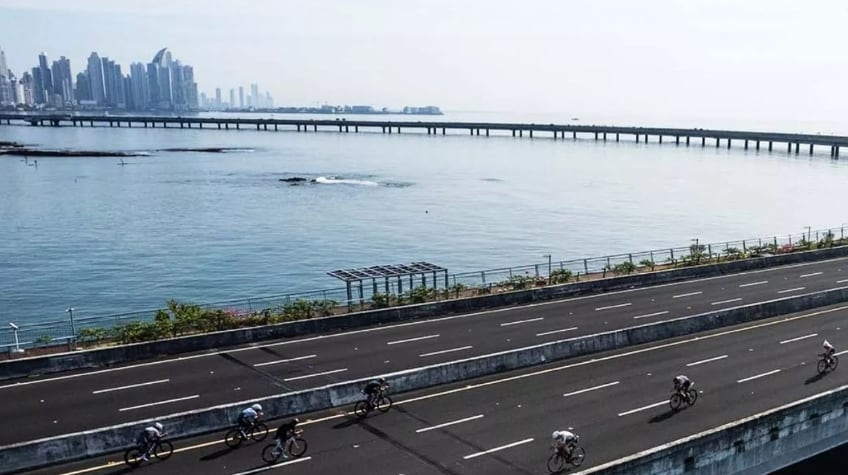
La cifra se tradujo en más de 4.000 noches de hotel reservadas durante el fin de semana de la competencia. El flujo de visitantes benefició directamente distintas actividades comerciales.
De los 1.500 deportistas inscritos en la edición 2026, 1.164 llegaron desde el extranjero. Brasil, Estados Unidos, Costa Rica y Colombia encabezaron la lista de países con mayor cantidad de competidores.
Los organizadores sostuvieron que esa proporción de participación extranjera refleja el posicionamiento creciente de Panamá dentro del circuito global de competencias de resistencia y turismo deportivo.
El Ironman 70.3 Panamá 2026 convocó a 1.500 triatletas, de los cuales 1.164 viajaron desde otros países.
El perfil de consumo turístico del evento se sostiene en la permanencia prolongada de los atletas. En promedio, cada participante pasó entre cuatro y cinco noches en Panamá, un período que supera la estadía habitual de otros eventos deportivos de un solo día.
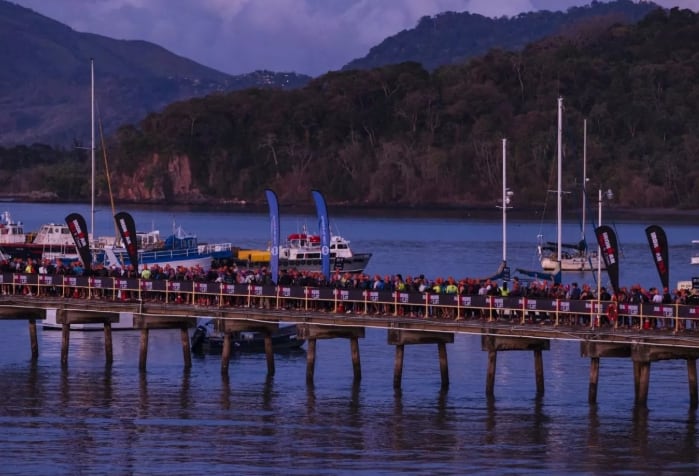
La edición 2026 también mostró un cambio en la composición de los participantes por género. La categoría femenina es la que más creció dentro de la prueba en los últimos años, de acuerdo con la organización.
Ese avance, indicaron, se suma a los datos de participación internacional y de impacto económico que la organización destacó tras el cierre de la edición 2026 del evento.
En ese momento, los hombres representaron entre el 65% y el 70% de los atletas inscritos en la actividad deportiva, mientras que las mujeres superon el 30% de participación.
INTERNACIONAL
‘Crazy’: Moderates fear Dem leadership promised far-left reparations and ICE demands in turn of votes
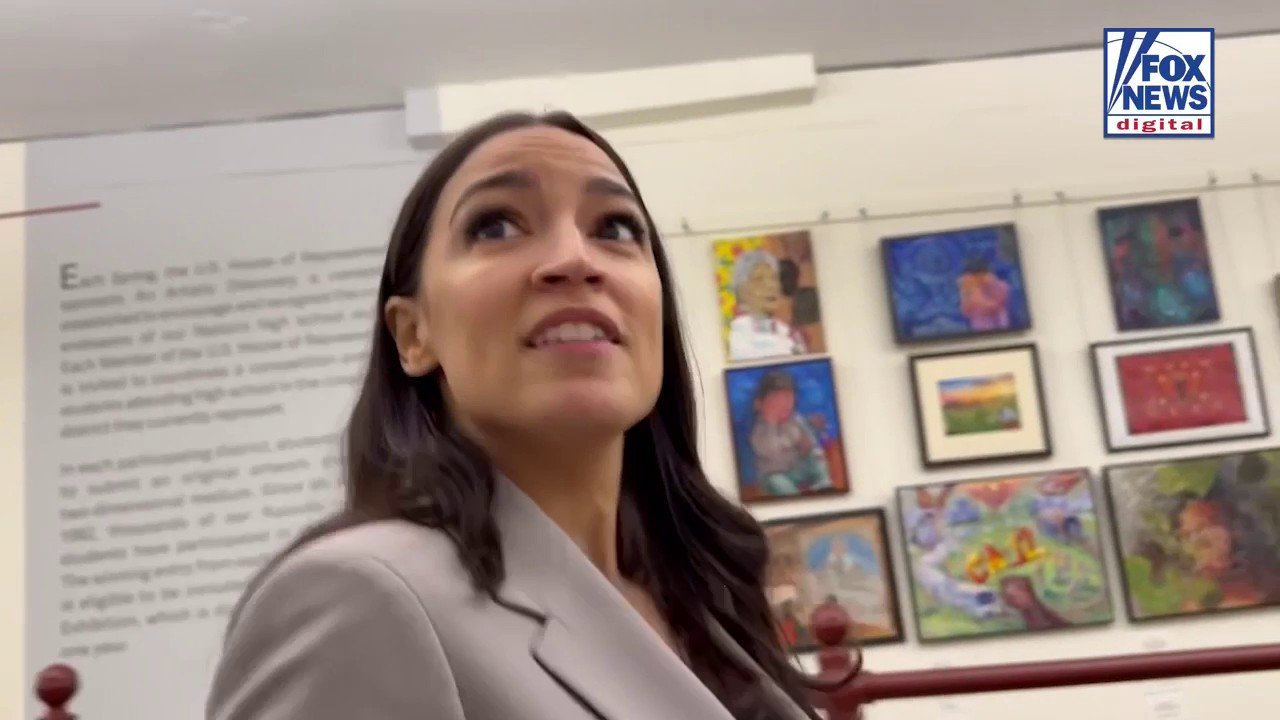
Progressive House Democrats believe party leaders could use their newly won majority to back their far-left agenda on such matters as reparations and abolishing ICE, despite pushback from moderates concerned about the party’s direction.
Newly elected Democratic Caucus Chairman Ted Lieu, D-Calif., and progressive lawmakers told Digital that proposals to abolish ICE, expand deportation protections and pursue slavery reparations will be part of the party’s legislative discussions under Speaker-nominee Hakeem Jeffries, D-N.Y., despite concerns from moderates that the agenda could distract from affordability.
‘SQUAD’ MEMBER ANNOUNCES ‘MAJORITY PRIORITIES’ INCLUDING REPARATIONS, ABOLISHING ICE AFTER BLUE WAVE
«Jeffries has been very clear, he wants to make sure everyone in the caucus is well represented,» Rep. Sara Jacobs, D-Calif., a member of the Congressional Progressive Caucus, told Digital.
Lieu told Digital that he is «excited» to have «discussions on everything» with members of the caucus, including proposals involving reparations and abolishing ICE.
The California Democrat said he would also be willing to consider other priorities of Rep. Ayanna Presley, D-Mass., including Medicare for All, «abortion justice» and extending Temporary Protected Status for Third World migrants.
‘SQUAD’ MEMBER URGES DEMS TO TAKE ADVANTAGE OF MIDTERM SWEEP BY PASSING FAR-LEFT POLICIES
Rep. Alexandria Ocasio-Cortez, D-N.Y., a prominent supporter of the Democratic Socialists of America (DSA), told Digital that progressives and Jeffries have found common ground on several priorities outlined in Pressley’s agenda, including expanding healthcare access and public housing.
«Of course, there are going to be areas where leader Jeffries and DSA are going to be in strong opposition, but there are also areas like expanding Medicaid, public housing, and housing issues in general, where there are shared values that unite everybody,» Ocasio-Cortez, a potential 2028 presidential contender, told Digital.
Ocasio-Cortez has also begun working with Democratic leadership on the House Energy and Commerce Committee to advance her healthcare priorities, a senior congressional democratic staffer told Digital.
However, moderate Democrats were skeptical that party leadership would embrace the progressive agenda, with some questioning whether Jeffries and other leaders had promised to consider those demands in exchange for support during the leadership elections.
«Our agenda is to focus on costs,» Rep. Josh Gottheimer, D-N.J., told Digital. «What’s clear is we had an overwhelming majority. I think some of my colleagues seem to be unhappy with winning in a place we’ve never won before.»
Gottheimer accused progressive colleagues of wanting to «squawk and complain and make their demands» rather than focus on the issues that helped Democrats win the midterm elections.
The New Jersey Democrat also rejected proposals to «defund police, have open borders, or get rid of the United States Senate,» arguing that neither he nor Democratic leadership would support such policies.
HAKEEM JEFFRIES REJECTS MEDICARE FOR ALL, DSA AGENDA AS RO KHANNA CALLS HEALTH PLAN ‘MOST IMPORTANT PRIORITY’
Gottheimer, an outspoken critic of the Democratic Socialists of America (DSA), suggested that Pressley’s priorities more closely resemble the organization’s platform than the broader Democratic Party’s agenda.
«The DSA, they have their own agenda,» Gottheimer said.
RADICAL SOCIALIST WING’S HUGE NIGHT REVEALS ASCENDING CLOUT WITHIN DEMOCRATIC PARTY
Another Democratic lawmaker, who requested anonymity, told Digital that they and a longtime colleague viewed the prospect of leadership adopting the progressive agenda as «crazy.»
The lawmaker also speculated that Lieu and Jeffries were expressing openness to progressive proposals to avoid opposition during Wednesday’s leadership elections.
Jeffries and Pressley did not respond to Digital’s requests for comment.
politics, democrats, democratic party, congress
INTERNACIONAL
Recta final de las elecciones en España: la derecha lidera las encuestas, pero necesitaría el apoyo de Vox para gobernar

Los partidos españoles entran en la recta final de campaña con el voto útil en juego, a una semana de las elecciones del domingo 29.
La estrategia difiere: la izquierda busca reforzar, diversificar y multiplicar sus mensajes para remontar la desventaja que marcan los sondeos, mientas la derecha intenta consolidar los electores ya convencidos y ganar otros.
El próximo jueves se realizará el último debate entre los candidatos Pedro Sánchez (PSOE, socialista) Alberto Núñez Feijóo (Partido Popular/PP, centroderecha), Santiago Abascal (Vox, ultraderecha) y Ada Colau (Frente Amplio, izquierda), a tres días de las elecciones.
Las encuestas publicadas este domingo confirman que los conservadores del Partido Popular (PP) ganarían las elecciones generales del 29 de noviembre, pero sin mayoría absoluta, así que necesitarían la colaboración de Vox (extrema derecha) para formar gobierno.
Un estudio de la consultora GAD3 reveló que Nuñez Feijóo lidera con el 31,5% de los votos contra 28% del PSOE del jefe de gobierno español. Vox araña el 19% y el Frente Amplio llega al 6%. Las demás fuerzas obtienen menos del 3%.
Los candidatos se centran en los temas más sensibles, como inmigración irregular, vivienda y derechos sociales, estado del ferrocarril y corrupción, entre propuestas programáticas, mensajes emocionales y ataques personales cruzados.
Qué pasa con la izquierda
A una semana de la votación, el líder socialista y presidente del Gobierno, Pedro Sánchez, perdería el poder, según las prospecciones electorales de varios periódicos. Quedaría en segunda posición y sin apoyos suficientes del Frente Amplio de izquierdas y de nacionalistas vascos y catalanes, como hasta ahora, para seguir al frente del Ejecutivo.
El Partido Socialista (PSOE), que capta parte de los electores situados más a la izquierda, pelea ahora por los indecisos y moderados, según algunos análisis, incluso para acercarse al PP o sobrepasarlo en número de votos, aunque no pudiera seguir gobernando.
“El resultado está muy ajustado en este momento”, argumentó Sánchez el sábado en una entrevista radiofónica.
El candidato socialista a la reelección presenta al PSOE como el único que puede frenar la “involución” de la “coalición reaccionaria” de PP y Vox, partidos que se presentan por separado.
Sánchez

La UBA, Santucho y un homenaje contra la democracia

$275M Obama-era solar fraud case could net taxpayers $1B, but Trump’s DOJ backs Biden dismissal

La sorprendente actuación de Lionel Scaloni en una tradicional competencia de ciclismo: el impensado logro que consiguió

Hernán Lacunza: “El Gobierno cambia el sistema electoral porque la paciencia social no le va a alcanzar”

Canales para ver el Rosario Central vs. Gimnasia (Mza.) por el Torneo Clausura

Quirno le respondió a Villarruel, la acusó de desinformar y negó gastos excesivos en Cancillería

Javier Milei y sus medidas, en vivo: “Hoy discutimos si crecemos un punto más o menos”, dijo el Presidente

Javier Milei destacó el desembarco de Tesla en el país y aseguró: “Esto también es devolverle la libertad a los argentinos”

El brote de ébola está fuera de control en la República Democrática del Congo y crece el temor a una epidemia continental

Jeffries survives Dem vote to secure speaker position as progressive resistance clouds his chances

 POLITICA2 días ago
Javier Milei destacó el desembarco de Tesla en el país y aseguró: “Esto también es devolverle la libertad a los argentinos”
- DEPORTE3 días ago
El burbujeante ping pong de Colapinto con un actor argentino: de la puja entre Senna y Riquelme a la comida que le falta a la Fórmula 1
- CHIMENTOS9 horas ago
Agustín “Rada” Aristarán se despide de Chanta: “Con esta obra dejé de ser un impostor”