INTERNACIONAL
Newsom’s bid to empty California’s death row collides with voters’ repeated rejection of abolition


A lawsuit challenging Democratic California Gov. Gavin Newsom’s plan to commute 548 death sentences is raising questions about the governor’s clemency powers, with a legal expert arguing Newsom is using his gubernatorial authority to circumvent the will of voters who have repeatedly rejected efforts to abolish capital punishment.
Newsom announced Nov. 5 that he intends to commute the death sentences of all 548 inmates on the Golden State’s death row to life imprisonment without the possibility of parole, a move that will take effect only after the necessary legal steps are completed.
The Criminal Justice Legal Foundation (CJLF) on Sunday filed a lawsuit at the California Supreme Court seeking to block Newsom’s proposed sweeping commutation, citing the governor’s «failure to provide legally required notice to district attorneys and his disregard for the rights of victims and their families to be notified and heard,» according to a news release.
Newsom may be using clemency to impose his own views on capital punishment despite voters repeatedly rejecting abolition, Zack Smith, a senior legal fellow for Courts and the Constitution at the Heritage Foundation, told Digital on Tuesday.
MICHAEL RUIZ: DA IDENTIFIES 49 LOCAL KILLERS SLATED FOR NEWSOM’S DEATH ROW CLEMENCY — AND THEIR CRIMES
«The death penalty remains on the books in California, and as you alluded to, California voters have repeatedly rejected efforts to abolish the death penalty,» Smith said. «So Californians understand that it can be an appropriate punishment in certain circumstances. Now, [Gov.] Newsom, he does have the ability to exercise the pardon, the commutation power, the contours of that obviously are being litigated, but I think what’s clear is that from a practical standpoint, [Gov.] Newsom is essentially using this to circumvent the clear will of the voters and impose his own views of the death penalty over those of … the California populace.»
«Now some of the specifics related to this suit challenging Gavin Newsom’s use of the commutation pardon, that is going to vary a little bit from state to state,» Smith added. «So this is going focus largely on issues of California state law and the issues specifically that I think will get the most attention is whether the California Supreme Court would essentially have to weigh in and more or less approve some of these repeat offenders before their sentences can be commuted.»
California voters notably defeated Proposition 34, a ballot initiative to ban capital punishment, in 2012, according to Ballotpedia. Voters in the Golden State similarly rejected Proposition 62, the Abolition of Death Penalty Measure, in November 2016, per Ballotpedia.
The lawsuit alleges that Newsom «has claimed to himself the unfettered power to decide how clemency should be granted, ignored the Legislature’s requirement of a referral to the Board of Parole Hearings for investigation and recommendation, ignored the role of the trial court and District Attorney in providing crucial factual input to the Board of Parole Hearings, ignored the limitation of the required notice to District Attorneys, and deprived the Legislature, the public, and this Court of the information needed to determine whether he has abused his authority.»
CJLF’s lawsuit also requests that «the Court immediately stay any issuance, implementation, recognition, or enforcement of the challenged commutations pending further order of the Court and pending determination of this petition on the merits.»
Anne Marie Schubert, president and CEO of CJLF, said in a statement that the lawsuit «is about protecting the constitutional rights of victims, defending the rule of law, and ensuring that no Governor is above the law.»
«The Governor’s clemency power does not authorize mass commutations that disregard constitutional safeguards, legally required procedures, or victims’ rights,» Schubert said, adding that «blanket commutation is not an exercise of discretion — it is an abandonment of it.»
CJLF and Newsom’s office did not respond to Digital’s request for comment.
The coalition suing Newsom is comprised of several law enforcement leaders and organizations, victims’ rights groups and multiple district attorneys, including Sacramento County District Attorney Thien Ho, who ran as a Democrat in the 2026 congressional primary.
Some of California’s most notorious serial killers are among the death row inmates whose sentences Newsom plans to commute, KTLA reported Nov. 8.
«Obviously, these are individuals who, again, have been convicted by a jury of their peers of committing particularly aggravated forms of murder,» Smith told Digital. «Again, many of these individuals tortured their victims and included sexual violence against their victims before they were ultimately killed. And so these are individuals that their own peers thought deserved the death penalty. And, so again, to see [Gov.] Newsom circumventing this through his commutation power is very, very troubling.»
Under the California Constitution, Newsom must obtain a recommendation from at least four California Supreme Court justices before commuting the sentences of 382 inmates who have been convicted of more than one felony.
The California Supreme Court has invited interested parties to weigh in on the proposed commutations, with legal briefs due Nov. 24 and Newsom’s response due Dec. 4. Attorney General Rob Bonta told the court Newsom will not formally commute any death sentences until the justices act, including those of inmates with only one felony conviction.
Newsom’s office has argued that the governor’s broad constitutional clemency authority allows him to initiate blanket commutations without following statutory procedures governing individual applications, while separately seeking the California Supreme Court’s required recommendation for inmates with multiple felony convictions.
CALIFORNIA DA SAYS GAVIN NEWSOM’S ‘CRUEL’ DEATH ROW CLEMENCY STABS CRIME VICTIMS ‘IN THE HEART’
«District attorneys have a legal responsibility to represent the people of California and protect the rights of crime victims,» Greg Totten, CEO of the California District Attorneys Association, said in a statement. «The Governor’s failure to provide legally required notice to prosecutors has deprived them of the opportunity to provide critical information and ensure that victims and their families are heard.»
‘BABY KILLERS, COP KILLERS’ HAVE AN ALLY IN NEWSOM, MURDERED GIRL’S FATHER SAYS AMID DEATH ROW CONTROVERSY
«No Governor should be permitted to circumvent the very safeguards designed to ensure that justice is served,» Totten added.
Newsom’s proposed commutations would mark the largest mass commutation of death sentences in American history, according to the Death Penalty Information Center.
Newsom also issued a March 2019 executive order establishing a moratorium on executions in California, leaving the state’s death penalty law and existing death sentences in place.
Democratic California Gov.-elect Xavier Becerra said in a May 28, 2026 X post that he plans to extend California’s moratorium on executions when he takes office.
«Governor Newsom’s death penalty moratorium represented an important step toward a more just criminal justice system,» Becerra wrote in the post. «As Governor, I will extend California’s moratorium on executions and continue moving our state away from a costly, flawed system that disproportionately impacts Black and brown communities and too often gets it wrong.»
Dan Dow, district attorney of San Luis Obispo County, California, blasted Newsom’s proposed commutation as «a sickening abuse of power» in a Nov. 5 statement.
«Governor Newsom just told the families of Rachel Newhouse, Aundria Crawford, Kesha Gurke and every other innocent victim of California’s 548 condemned killers that the killers’ lives matter more,» Dow asserted. «Juries chose justice case by case, voters chose it five times, and one outgoing governor is trying to erase it all with a pen. This is a sickening abuse of power.»
politics, gavin newsom, controversies state and local, california, judiciary, law











NEWYou can now listen to Fox News articles!
A massive fire tore through a three-story candy factory in Indonesia’s Banten province, killing at least three workers and likely more, and leaving dozens of others unaccounted for as emergency crews fought persistent hotspots into Sunday.
Indonesian police removed 24 body bags amid battling the smoldering fire and pausing a search for missing workers overnight, which will resume Monday morning. There were reportedly as many as 300 present for their Saturday shift, but the factory said 24 of the 65 workers involved had returned home, four were receiving medical treatment, 29 remained missing and the whereabouts of another eight had yet to be confirmed.
Body bags might contain remains from several people because the intensity of the fire had rendered the recovered victims unidentifiable, police said.
The fire broke out at 5 p.m. local time Saturday at the PT Fonusa Agung Mulia facility in the Cikande area of the Serang district, which borders the capital, Jakarta.
CHINA FIREWORKS FACTORY EXPLOSION: VIDEO CAPTURES DEVASTATING AFTERMATH OF BLAST THAT LEFT AT LEAST 26 DEAD
A falling roof from an Indonesian candy factory fire in Serang, Banten Province left search and rescue crews looking for 50 missing Sunday, Nov. 22, 2026. (Dziki Oktomauliyadi/AP)
«We have concluded that the victims of this fire cannot be identified through visual inspection,» Wahyu Hidayati, a police disaster victim identification official, said.
Authorities are collecting DNA samples from relatives and personal belongings of the missing workers. The identification process could take two to three weeks, Hidayati added.
WASHINGTON PAPER MILL CHEMICAL TANK IMPLODES, KILLING AT LEAST 1 AND LEAVING 9 MISSING

A massive, deadly fire has search and rescue crews searching for 50 missing, but in some cases only finding remains, some of them merely body parts burned beyond recognition in Serang, Banten Province, Indonesia, on Sunday, Nov. 22, 2026. (Dziki Oktomauliyadi/AP)
Flames engulfed the structure and sent thick black smoke billowing into the sky, leaving behind twisted metal and blackened, corrugated iron roofing.
FIRE ABOARD CARGO SHIP UNDERGOING REPAIRS AT BUSY CHINESE PORT LEAVES 25 PEOPLE DEAD, FIVE MORE INJURED

A drone view shows flames engulfing a factory at PT Fonusa Agung Mulia in Cikande, Serang Regency, Banten Province, Indonesia, on Nov. 21, 2026. The fire was so intense that victims were left burned beyond recognition, according to local authorities. (Reuters/Stringer)
«The figure of 50 refers to those whom we have not yet been able to account for, » the factory owner said during a news conference.
More than 12 hours after the fire started, 15 fire trucks backed by water cannons were still working to douse hotspots concentrated in the central and rear sections of the building. A joint response team comprising police, military personnel, the Indonesian Red Cross, and volunteers was there, though structural instability made their work difficult.
SEATTLE FIRE CREWS RESPOND TO 3-ALARM INDUSTRIAL DISTRICT WAREHOUSE FIRE, ROOF PARTIALLY COLLAPSES
«We are conducting sweeps in the areas that have already been brought under control, » Tubagus Mahfud, operations chief of the Serang fire department, said. «Parts of the structure had collapsed, while poor lighting conditions required firefighters to proceed cautiously.»
Mahfud warned that the factory’s production materials posed a high risk of reignition, making thorough cooling operations critical before crews can access the entire building.
MASSIVE CHEMICAL FIRE ERUPTS AT ELECTRICAL TRANSFORMER PLANT IN MISSISSIPPI, FORCING EVACUATION
«Authorities continue to coordinate with families and the company to determine the whereabouts of employees believed to have been inside the factory when the fire broke out,» the Banten Search and Rescue Agency’s Rizky Dwianto said.
While police said the cause of the fire remains under investigation, survivors told Indonesian media the flames originated from a cooling unit on the third floor.
The facility is part of Indonesia’s United Family Food company – founded in 1981 and employing roughly 5, 000 people – and manufactures Milkita, a popular Indonesian brand of milk-based candies and snacks. The tragedy adds to a string of deadly industrial fires in Indonesia in recent years that have raised ongoing concerns over workplace safety and emergency preparedness.
The Associated Press and Reuters contributed to this report.
fires disasters, disasters, missing persons
INTERNACIONAL
Caso Madeleine McCann: un preso aseguró que Christian Brueckner confesó haber secuestrado y asesinado a una nena en Portugal

Un excompañero de celda del Christian Brueckner, principal sospechoso por la desaparición de Madeleine McCann, aseguró que el hombre le contó detalles de un supuesto secuestro y asesinato de una nena en Portugal.
Según su testimonio, la confesión habría ocurrido en 2019, un año antes de que la policía alemana identificara públicamente a Brueckner como principal sospechoso del caso.
Madeleine McCann desapareció el 3 de mayo de 2007, cuando tenía tres años, durante unas vacaciones familiares en Praia da Luz, Portugal. Desde entonces, su búsqueda se convirtió en uno de los casos policiales más resonantes de Europa.
Brueckner, de 49 años, nunca fue acusado formalmente por la desaparición de la nena y siempre negó haber participado en el hecho.
Qué dijo el excompañero de prisión de Christian Brueckner
Laurentiu Codin, de 52 años, aseguró que compartió prisión con Brueckner cerca de Hannover, Alemania, en 2019. Según su relato, el sospechoso le habría contado cómo ingresó a un hotel de Praia da Luz con la intención de robar dinero y objetos de valor.
De acuerdo con la versión de Codin, Brueckner, afirmó haber descubierto una nena rubia dormida en una cama y se la llevó. Acto seguido, la trasladó durante 45 minutos en una camioneta camper.
McCann
INTERNACIONAL
Panamá se ubica entre los países con menor riesgo de América Latina tras mejorar su indicador financiero
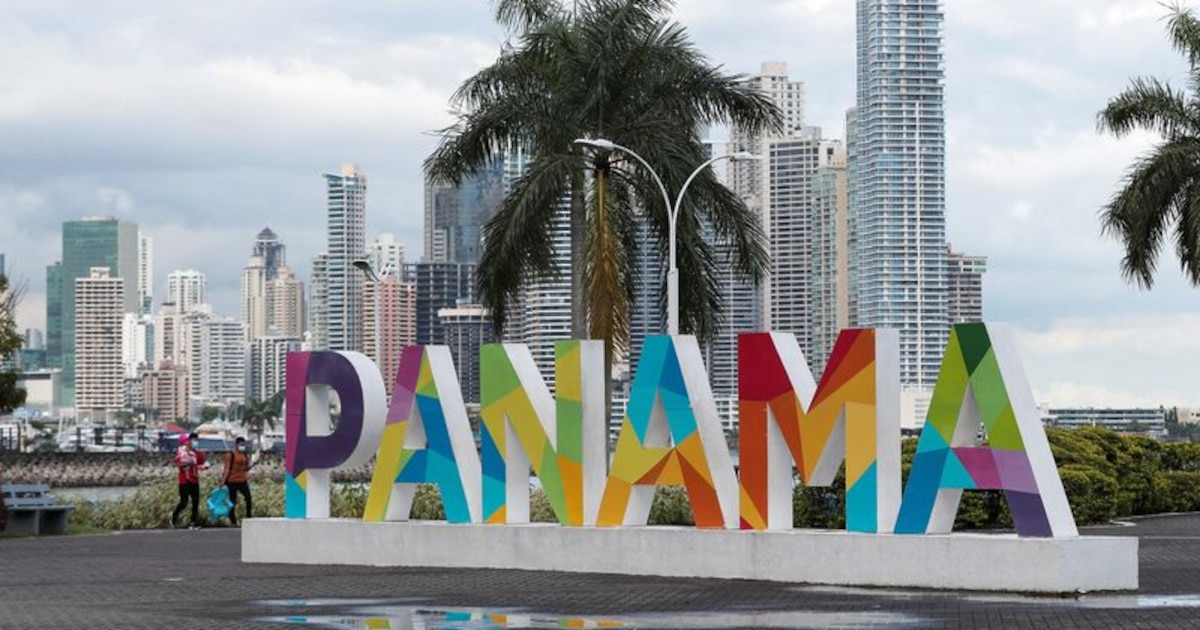
El riesgo país de Panamá se situó en 141 puntos básicos al 19 de noviembre de 2026, una reducción de 36 puntos frente al mismo período del año anterior y una mejora considerable respecto a los niveles registrados durante la crisis fiscal de 2024.
La evolución refleja una menor percepción de riesgo entre los inversionistas internacionales, aunque persisten desafíos relacionados con el endeudamiento y las finanzas públicas.
El indicador, conocido como EMBI (Índice de Bonos de Mercados Emergentes) y elaborado por J.P. Morgan, mide el diferencial de rendimiento entre los bonos soberanos de un país y los títulos del Tesoro estadounidense. Cuanto menor es la cifra, menor es la prima de riesgo exigida por los mercados para financiar al Gobierno.
En términos prácticos, 141 puntos básicos equivalen a 1,41 puntos porcentuales adicionales de rendimiento sobre la referencia estadounidense comparable.

Esta diferencia influye en el costo de emitir deuda y refinanciar obligaciones, aunque no representa automáticamente la tasa de interés que paga Panamá ni determina directamente las condiciones de los préstamos bancarios.
La trayectoria de los últimos cuatro años muestra un deterioro pronunciado seguido de una recuperación gradual. En noviembre de 2023, el indicador rondaba los 282 puntos básicos, en medio de las protestas contra el contrato minero y la incertidumbre provocada por su declaración de inconstitucionalidad. El conflicto elevó las preocupaciones sobre los ingresos fiscales y la estabilidad económica.
En noviembre de 2024, el riesgo país se situaba alrededor de 303 puntos básicos, más del doble del nivel actual. Ese año, Panamá enfrentó un déficit fiscal equivalente al 6,2% del producto interno bruto, mientras Fitch Ratings retiró al país el grado de inversión. Standard & Poor’s también redujo su calificación soberana a BBB-, el último escalón de esa categoría.
La presión no desapareció inmediatamente. Durante abril de 2025, el diferencial llegó a registrar aproximadamente 337 puntos básicos, uno de los niveles más elevados del período reciente. Las dudas sobre la sostenibilidad fiscal, las obligaciones del sistema de pensiones y la capacidad gubernamental para estabilizar las cuentas públicas continuaban influyendo en las decisiones de inversión.

Sin embargo, hacia noviembre de 2025, el indicador había retrocedido hasta aproximadamente 173 puntos básicos. La aprobación de la reforma de pensiones y los esfuerzos para reducir el desequilibrio fiscal contribuyeron a modificar las expectativas del mercado.
La recuperación también coincidió con una menor percepción de incertidumbre económica, aunque el país seguía bajo vigilancia crediticia.
La mejora continuó durante 2026. Panamá registró niveles cercanos a 113 puntos básicos en abril, antes de experimentar fluctuaciones durante los meses siguientes.
Al cierre de octubre, el diferencial rondaba los 135 puntos y el 12 de noviembre descendió a 124, aunque el 19 de noviembre repuntó hasta 141 puntos básicos, reflejando la volatilidad que todavía caracteriza al mercado de deuda.
En la clasificación latinoamericana del 19 de noviembre, Panamá ocupó el cuarto lugar entre los países con menor riesgo, superado únicamente por Uruguay (93 puntos), Chile (111) y Perú (132).

El país se mantuvo por debajo de Paraguay (147), Guatemala (150) y Costa Rica (160), así como del promedio regional de 222 puntos básicos. A comienzos de noviembre figuraba en la quinta posición, detrás de Paraguay.
En el balance de cuatro años, la reducción desde los 282 puntos de noviembre de 2023 hasta los 141 actuales alcanza 141 puntos básicos.
Frente a noviembre de 2024, la disminución es de aproximadamente 162 puntos, mientras que la comparación interanual con noviembre de 2025 muestra una caída cercana al 20%, según las referencias históricas recopiladas.
La evolución también coincide con la reciente decisión de Moody’s Ratings de mejorar la perspectiva de Panamá de negativa a estable, anunciada el 17 de noviembre. La agencia mantuvo la calificación Baa3, último escalón del grado de inversión, al considerar menos probable un deterioro sostenido de las finanzas públicas y proyectar un crecimiento económico cercano al 5% para 2026 y 2027.

Sin embargo, la mejoría no elimina las advertencias de las calificadoras internacionales. Moody’s señaló la limitada capacidad de recaudación, la elevada carga de intereses y la rigidez del gasto público.
Además, estima que la deuda se estabilizaría alrededor del 66% del PIB, siempre que continúe la consolidación fiscal.
El panorama crediticio sigue dividido: S&P Global Ratings mantiene a Panamá en BBB- con perspectiva estable, mientras Fitch Ratings conserva la calificación BB+, por debajo del grado de inversión.
Esta diferencia evidencia que la recuperación de la confianza todavía no equivale a una mejora generalizada de las notas soberanas.
Para los próximos años, el desafío será sostener la reducción del déficit y controlar el endeudamiento sin comprometer el crecimiento económico. La caída del riesgo país representa una señal favorable para el financiamiento estatal, pero su permanencia dependerá de resultados fiscales verificables, más allá de las fluctuaciones del mercado.

Juan Manuel Urtubey tomó distancia de una posible candidatura de CFK: “Es hacerle el juego al Gobierno”

Newsom’s bid to empty California’s death row collides with voters’ repeated rejection of abolition

Cámara a bordo: la fantástica maniobra de Franco Colapinto para superar en un movimiento a los dos McLaren en el GP de Las Vegas de F1

Indonesia candy factory fire leaves multiple dead, dozens missing

Un altar al aire libre, palabras de amor y Moria Casán en la pista: así fue la boda de Valentina Salezzi y Marcos Bozzolasco

El PSG y el peor parte para Doué: rotura del ligamento cruzado anterior, igual que Kvaratskhelia

Javier Milei y sus medidas, en vivo: “Hoy discutimos si crecemos un punto más o menos”, dijo el Presidente

Javier Milei destacó el desembarco de Tesla en el país y aseguró: “Esto también es devolverle la libertad a los argentinos”

El brote de ébola está fuera de control en la República Democrática del Congo y crece el temor a una epidemia continental

Jeffries survives Dem vote to secure speaker position as progressive resistance clouds his chances

 POLITICA2 días ago
Javier Milei destacó el desembarco de Tesla en el país y aseguró: “Esto también es devolverle la libertad a los argentinos”
- INTERNACIONAL3 días ago
El brote de ébola está fuera de control en la República Democrática del Congo y crece el temor a una epidemia continental
- DEPORTE3 días ago
El burbujeante ping pong de Colapinto con un actor argentino: de la puja entre Senna y Riquelme a la comida que le falta a la Fórmula 1