INTERNACIONAL
El antisemitismo del régimen iraní no es discurso: es una política de Estado

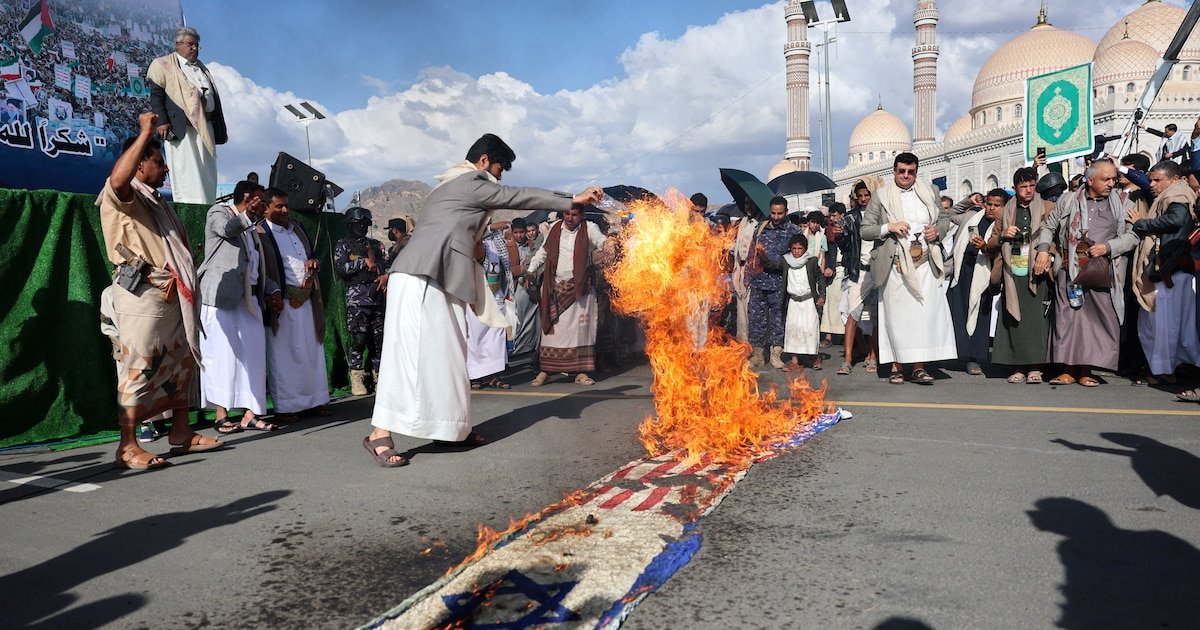
Mientras la República Islámica de Irán vuelve a situarse en el centro de una guerra regional cada vez más amplia, hay una realidad que merece más atención: el antisemitismo del régimen no es solo retórico ni ideológico. Es sistémico, patrocinado por el Estado y plenamente operativo.
Teherán no solo ha propagado el odio antijudío: lo ha institucionalizado dentro de sus fronteras y exportado al exterior mediante propaganda, incitación, terrorismo y violencia por delegación. Ese odio se ha traducido en política, propaganda y violencia.
La campaña antisemita del régimen comenzó inmediatamente después de la revolución de 1979. El 9 de mayo de 1979, el prominente líder de la comunidad judía y filántropo Habib Elghanian fue ejecutado por un pelotón de fusilamiento tras un juicio sumario de 20 minutos, acusado de “espionaje sionista” y de ser un “corruptor en la Tierra”. Su ejecución conmocionó a la comunidad judía iraní y desencadenó un éxodo masivo que redujo la población de aproximadamente 80.000 personas a menos de 10.000. Desde entonces, al menos 17 judíos iraníes han sido ejecutados por el régimen.
Los libros de texto estatales iraníes enseñan sistemáticamente contenidos antisemitas, presentando a los judíos como astutos enemigos conspirativos del islam y recurriendo a estereotipos sobre la supuesta codicia, deslealtad y conspiraciones de dominación mundial. En 2025, el régimen obligó a los judíos iraníes a asistir a manifestaciones progubernamentales para denunciar a Israel y al sionismo, mientras los medios estatales promovían simultáneamente la negación del Holocausto y citaban escritos de Adolf Hitler sobre los judíos.
La negación del Holocausto es una política oficial iraní. En diciembre de 2005, el entonces presidente Mahmoud Ahmadinejad calificó el Holocausto como “un mito”. En 2006, el Ministerio de Asuntos Exteriores iraní organizó una conferencia internacional de negación del Holocausto a la que asistieron 67 personas de 30 países. El régimen también ha patrocinado tres importantes concursos internacionales de caricaturas sobre el Holocausto en 2006, 2016 y 2020, organizados a través de instituciones culturales financiadas por el Estado.
El régimen opera medios de comunicación en varios idiomas para difundir el antisemitismo a nivel global. Press TV, fundada en 2007, apunta a audiencias de habla inglesa con teorías conspirativas antisemitas, negación del Holocausto y entrevistas con figuras como el líder del Ku Klux Klan, David Duke. Un informe de 2023 de ADL y el Center for Countering Digital Hate concluyó que el sitio web de Press TV recibe alrededor de un millón de visitas mensuales, con más de la mitad provenientes de países occidentales, y que su proyecto “Palestine Declassified” funciona como una “operación de odio de un Estado extranjero”.
En febrero de 2026, la ADL informó que HispanTV, el canal propagandístico en español de Irán con un alcance potencial de casi 600 millones de personas, intensificó de forma drástica su contenido antisemita tras el 7 de octubre de 2023. Según el informe, el medio recicló sistemáticamente teorías sobre el supuesto poder global judío, promoviendo conspiraciones sobre el control “sionista” de gobiernos y medios, y difundió libelos de sangre, equiparó el sionismo con el nazismo y glorificó a las organizaciones terroristas de Hamás y Hezbollah.
Las marchas anuales del Día de Quds, establecidas por el ayatolá Jomeini en 1979, sirven como plataforma global de incitación antisemita. En Teherán y en varias ciudades del mundo, estas manifestaciones incluyen consignas de “Muerte a Israel” y “Muerte a Estados Unidos”, la glorificación de grupos terroristas aliados del régimen y la difusión de teorías conspirativas antisemitas.
El denominado “Centro de Estudios Judíos” de Irán, fundado en 2016, ha publicado más de mil artículos, informes, columnas, libros y videos de carácter antisemita como parte de un intento por dar apariencia de legitimidad a la negación del Holocausto y a la ideología del régimen.
Pero el antisemitismo del régimen de los ayatolas va más allá que la retórica. A través de la Guardia Revolucionaria Islámica (IRGC) y su Fuerza Quds, Irán ha cultivado una red de grupos proxy cuya ideología incluye el antisemitismo, entre ellos Hezbollah en el Líbano, Hamás y la Yihad Islámica Palestina en Gaza, y los Hutíes en Yemen. En el período previo a los ataques del 7 de octubre 2023 y la guerra posterior, la República Islámica de Irán financiaba a Hezbollah con aproximadamente 700 millones de dólares anuales. Para estos grupos, el antisemitismo y la destrucción del Estado de Israel son principios fundamentales.
El antisemitismo y el terrorismo del régimen iraní no se limita a Israel. El 17 de marzo de 1992, la organización Yihad Islámica bombardeó la embajada de Israel en Buenos Aires, causando 29 muertes. Dos años después, el 18 de julio de 1994, un atacante suicida de Hezbollah, actuando bajo órdenes iraníes, destruyó la sede de la AMIA en Buenos Aires, causando 85 muertes y más de 300 heridos, en el peor atentado antisemita fuera de Israel desde el Holocausto. En 2024, la justicia argentina dictaminó que el régimen iraní dirigió ese ataque y lo calificó como un crimen de lesa humanidad.
Este terrorismo antisemita sigue hasta hoy en día. En 2024, la Guardia Revolucionaria estuvo detrás de ataques incendiarios contra un restaurante kosher en Sídney y una sinagoga en Melbourne, Australia. En Suecia, el régimen utilizó redes criminales para atacar blancos israelíes, y en el Reino Unido, el MI5 reveló al menos 20 complots vinculados a Irán entre 2022 y 2024, incluyendo operaciones de espionaje contra ciudadanos judíos.
El antisemitismo violento de la República Islámica de Irán no es incidental. Es estructural: está entretejido en su ideología fundacional, su sistema educativo, en su aparato mediático y su política exterior. Desde los concursos de caricaturas que niegan el Holocausto hasta los atentados contra centros comunitarios judíos y el incendio provocado de sinagogas, la evidencia es clara: durante casi cinco décadas, Teherán ha convertido el antisemitismo y la violencia contra los judíos en un pilar central de su política de Estado.
Mientras el mundo observa hoy su poder militar, no debería perder de vista otra amenaza global igual de persistente: la exportación sistemática del odio.
*Marina Rosenberg es la vicepresidenta sénior de Asuntos Internacionales de la Liga Antidifamación (ADL). @_MarinaRos
Civil Conflict,Demonstrations,Riots,Middle East,Civil Unrest









INTERNACIONAL
Federal appeals court rejects Trump bid to enforce mail ballot order ahead of midterm elections
Federal judge blocks Trump’s voter verification database
Fox News host Laura Ingraham and Ohio Congressman Jim Jordan discuss a federal judge’s decision blocking President Donald Trump’s voter verification database. Jordan criticizes the ruling, arguing it impedes election integrity by allowing non-citizens on voter rolls and goes against common sense. The segment highlights ongoing concerns about election security and judicial activism, particularly regarding voter ID laws.
NEWYou can now listen to Fox News articles!
A federal appeals court on Saturday refused to let the Trump administration enforce key parts of President Donald Trump’s executive order tightening mail-in voting rules in 23 Democratic-led states, a setback that could send the administration to the U.S. Supreme Court ahead of this year’s midterm elections.
In a 2-1 decision, the 1st U.S. Circuit Court of Appeals denied the Department of Justice’s (DOJ) request to pause a June ruling blocking several provisions of Trump’s March executive order while the administration appeals.
The DOJ previously told the court it could seek emergency relief from the Supreme Court if it did not prevail.
The administration argued the lawsuit was premature because federal agencies had not finalized the policies needed to implement the executive order. But the appeals court found the plaintiff states were already facing looming election deadlines and had begun preparing for potential changes.
OBAMA-APPOINTED JUDGE BLOCKS TRUMP’S ELECTION ORDER AS SAVE AMERICA ACT FIGHT INTENSIFIES
A federal appeals court has refused to let the Trump administration enforce key parts of President Donald Trump’s executive order tightening mail-in voting rules in 23 Democratic-led states. (Chris Kleponis/CNP/Bloomberg via Getty Image, File)
«As the district court reasoned, the (executive order) lays out a clear set of rapidly approaching deadlines by which states must coordinate with federal officials and comply with new voting procedures,» the majority wrote. «The Plaintiff States have no practical choice but to respond to the (order) now.»
Trump signed Executive Order 14399 in March as part of his election integrity agenda.
The order directs the Department of Homeland Security (DHS) to compile lists of confirmed U.S. citizens eligible to vote and provide them to states, instructs the U.S. Postal Service (USPS) to establish new standards for mail-in ballots and directs the Justice Department to prioritize investigations into state and local election officials who issue federal ballots to people deemed ineligible to vote.
‘ROGUE’ OBAMA JUDGE’S SMACKDOWN OF TRUMP ELECTION RULES PROVOKES OMINOUS WARNING FROM WHITE HOUSE DEPUTY

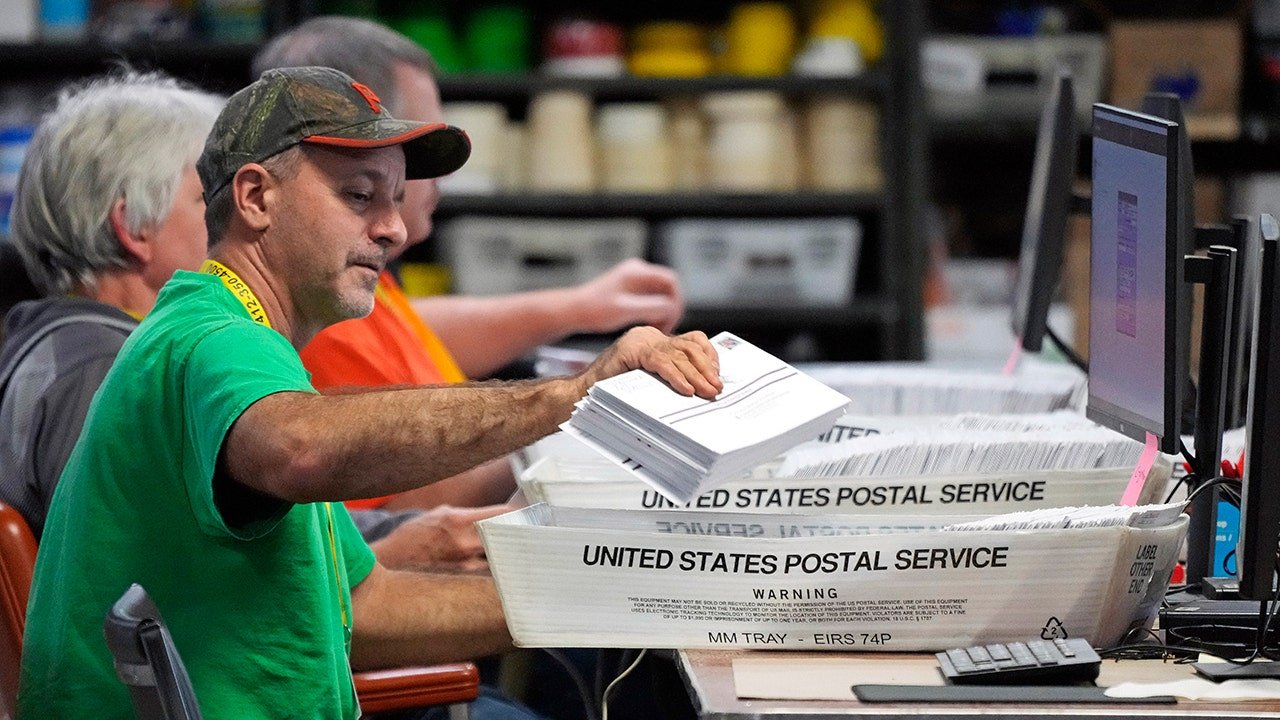
An elections office employee scans mail-in ballots in Pennsylvania. (Fox News, File)
The lawsuit was brought by 23 states, and the District of Columbia, led by California, Massachusetts, Nevada and Washington. The states argue the Constitution gives them primary responsibility for administering federal elections and that the president exceeded his authority by directing federal agencies to impose new voting requirements.
U.S. District Judge Indira Talwani agreed in June, ruling that several provisions of the executive order likely exceeded the president’s authority and blocking federal agencies from implementing them in the plaintiff states through the Nov. 3 federal elections.
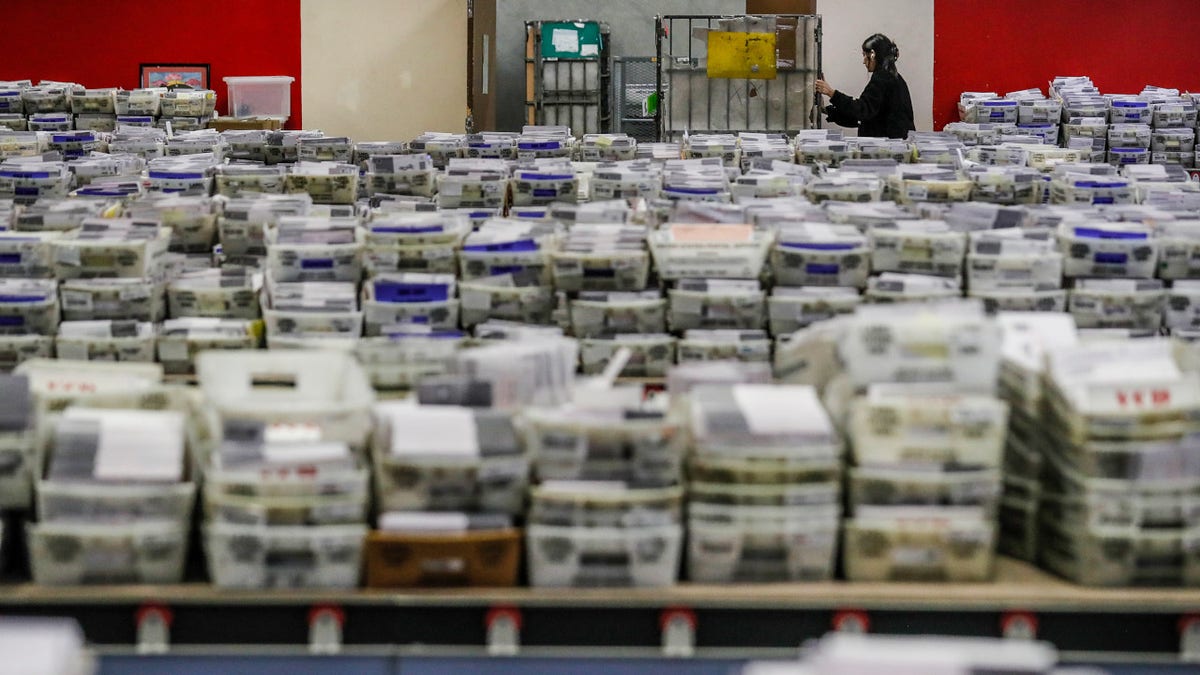
Ballots are received, sorted and verified at the Los Angeles County ballot processing facility in Industry, Calif. (Robert Gauthier/Los Angeles Times)
Saturday’s ruling does not resolve the underlying legal challenge, but leaves Talwani’s injunction in place while the appeal proceeds.
CLICK HERE TO DOWNLOAD THE FOX NEWS APP
The White House and the Justice Department did not immediately respond to Fox News Digital’s requests for comment.
voting, federal courts, donald trump, elections disputes, democratic party, midterm elections, politics
INTERNACIONAL
Brasil negó las visas a funcionarios de Estados Unidos que planeaban ir a cuestionar el sistema de voto electrónico

El gobierno de Donald Trump tenía previsto enviar a Brasilia a dos altos funcionarios del Departamento de Estado con el objetivo de cuestionar la confiabilidad del sistema de voto electrónico brasileño, cuando se lanzó de lleno la campaña para las elecciones presidenciales del 4 de octubre. Pero el Ejecutivo de Luiz Inácio Lula da Silva les negó las visas y no podrán entrar al país.
La cancillería de Brasil negó las solicitudes de visado presentadas por los diplomáticos Riley M. Barnes, secretario adjunto, y Samuel Samson, subsecretario adjunto del Departamento de Estado de los Estados Unidos, informó el sitio de noticias G1, de la red Globo, este sábado.
En un artículo publicado por The Washington Post, se mencionó a ambos como responsables de una estrategia para cuestionar la integridad y la fiabilidad del sistema electoral brasileño.
El viaje estaba programado para unas semanas antes de las elecciones presidenciales del país, previstas para el 4 de octubre. Según la información obtenida por G1, el gobierno brasileño fue informado de la naturaleza «inusual» de la misión de los dos funcionarios y decidió denegarles las visas.
Según fuentes diplomáticas, Brasil tiene la tradición de recibir observadores internacionales durante las elecciones, pero se considera que los estadounidenses no eran observadores; de hecho, tenían «otro papel».
Según The Washington Post, los funcionarios estadounidenses tenían previsto reunirse con referentes críticos del sistema de urnas electrónicas y recopilar información para elaborar un informe destinado a poner en duda la fiabilidad del mecanismo de votación utilizado en Brasil. Justamente, el candidato opositor Flávio Bolsonaro, hijo del ex presidente de ultraderecha Jair Bolsonaro, es uno de los críticos del sistema de urnas electrónicas, igual que su padre.
La solicitud de los funcionarios del Departamento de Estado fue presentada poco después de que el senador y candidato presidencial Flávio Bolsonaro afirmara sin presentar pruebas que las urnas electrónicas brasileñas fueron fabricadas por la empresa venezolana Smartmatic, durante una reunión con representantes de cerca de 40 países celebrada esta semana en Brasilia.
El Tribunal Superior Electoral (TSE) desmintió esa afirmación y aseguró que esa empresa nunca suministró urnas electrónicas ni programas utilizados en el sistema electoral brasileño.
La reunión se produjo bajo la sombra del antecedente sentado por el padre del senador cuatro años atrás.
El 18 de julio de 2022, el entonces presidente Jair Bolsonaro -hoy preso por golpismo- utilizó la residencia oficial del Palacio de la Alvorada y los medios de comunicación del Estado para convocar a decenas de embajadores extranjeros. En esa cita, Bolsonaro atacó la seguridad del voto electrónico y sembró sospechas de fraude.
Aquel episodio tuvo severas consecuencias judiciales: en junio de 2023, el TSE condenó a Jair Bolsonaro por abuso de poder político y uso indebido de los medios públicos, y lo declaró inelegible hasta 2030.
El gobierno de Lula da Silva considera la iniciativa como un intento de interferencia en el proceso electoral y aseguró que actuará para impedir cualquier efecto sobre los comicios. Dos altos diplomáticos brasileños calificaron la misión como «completamente incompatible con la democracia brasileña» y afirmaron que el Ejecutivo protegerá la integridad del proceso.
El Departamento de Estado confirmó el viaje de los funcionarios, pero evitó responder sobre el objetivo de la misión o sobre eventuales cuestionamientos a la integridad del sistema electoral brasileño.
La iniciativa se produce en un contexto de creciente tensión entre Washington y Brasilia, marcado por los recientes aranceles impuestos por Estados Unidos a productos brasileños y por el proceso judicial contra el expresidente Jair Bolsonaro por el presunto intento de impedir la asunción de Lula tras las elecciones de 2022.
La campaña electoral en Brasil está dominada por la polarización, las disputas sobre la transparencia del proceso electoral y las investigaciones judiciales que mantienen inhabilitado políticamente a Jair Bolsonaro, mientras el sistema de voto electrónico continúa siendo respaldado por el TSE y por observadores internacionales, que hasta ahora no han detectado evidencias de fraude en los comicios.

NEWYou can now listen to Fox News articles!
German authorities on Saturday canceled a popular pride festival after numerous people were injured and one killed when a white van rammed the festivities in Berlin.
«We are currently deployed with numerous police forces as well as rescue units from the Berlin Fire Department in the Großer Tiergarten,» Berlin Police said in a translated X post, after telling festivalgoers to leave the area.
Police said the injured were being treated by rescue personnel.
The incident occurred during the European city’s annual Christopher Street Day festival, an LGBTQ+ pride event.
GUNFIRE SHATTERS TORONTO LATIN STREET FESTIVAL, LEAVING AT LEAST 2 DEAD AND MULTIPLE WOUNDED
Police officers are on the scene following the cancellation of Christopher Street Day in Berlin on Saturday. (Fabian Sommer/DPA via AP)
«We are conducting an intensive manhunt for suspects,» police added, later clarifying that it could be one or more suspects.
Authorities haven’t released a possible motive.
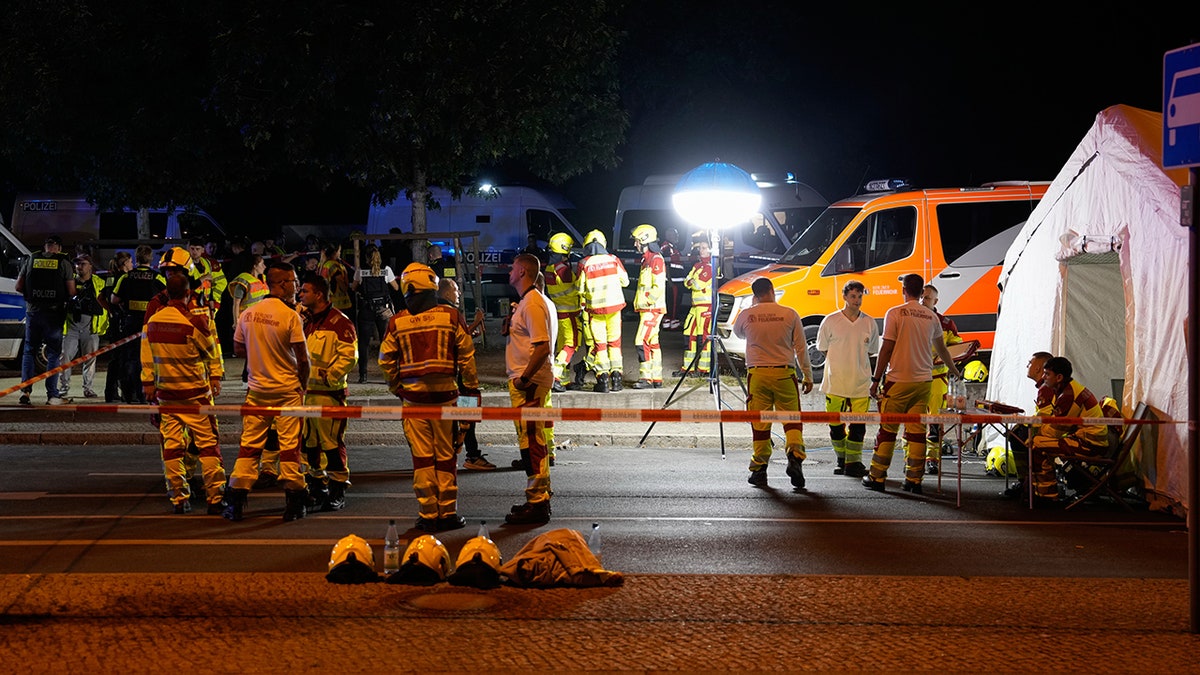
Emergency personnel gather in Berlin, early Sunday, July 26, 2026, following the cancellation of Christopher Street Day festivities. (AP Photo/Markus Schreiber)
In an update, the police said several of those injured have life-threatening injuries.
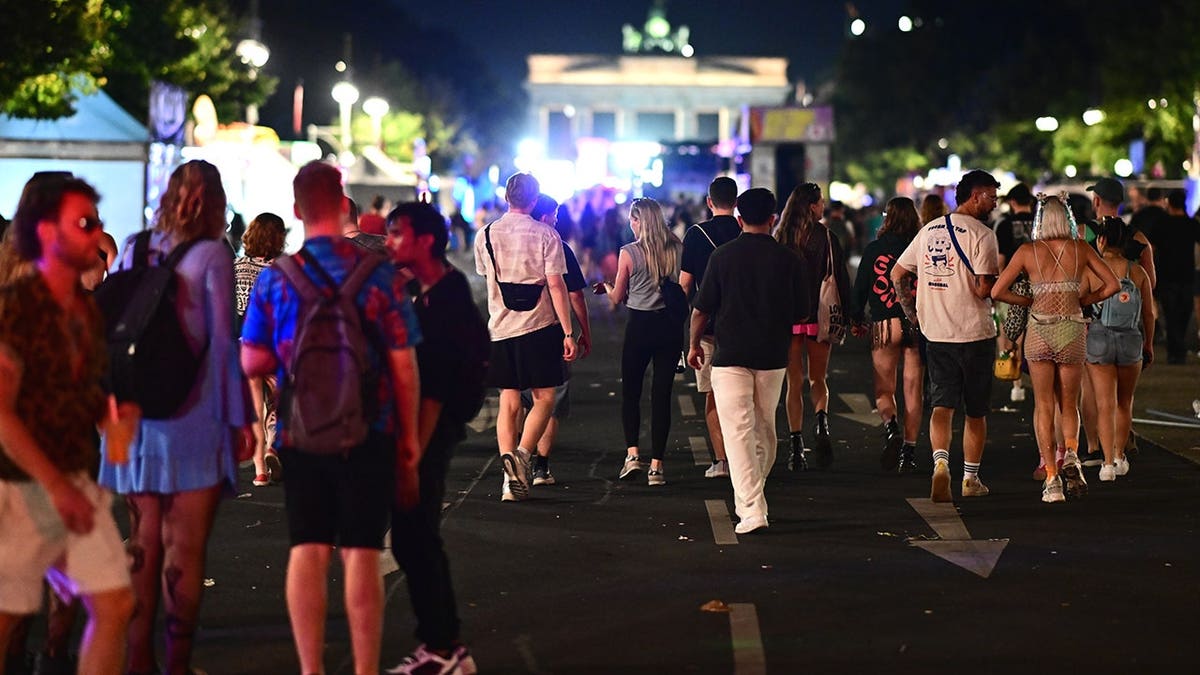
Crowds are seen at the Christopher Street Day festival in Berlin, which was canceled after police say several people were injured when a van rammed the festivities Saturday. (Fabian Sommer/DPA via AP)
CLICK HERE TO DOWNLOAD THE FOX NEWS APP
Hundreds of thousands of people turned out for the event, which included a parade and ended Saturday evening with a show at Tiergarten park near Brandenberg Gate.
world, events, europe, germany, fairs festivals, crime

Federal appeals court rejects Trump bid to enforce mail ballot order ahead of midterm elections

Dura crítica del partido de Lula da Silva a Milei por su discurso en Brasil: “No sorprende que se comporte de esa manera”

El polémico festejo de Neymar luego las críticas que recibió por jugar un torneo de poker…

Neuquén, Catamarca, Jujuy, Salta, San Juan: cómo cambiaron la geografía y la matriz exportadora argentina en los últimos 15 años

Sofía Aldrey mostró las primeras fotos de su hijo Marco y contó cómo la maternidad le cambió la vida

El Gobierno profundiza el traspaso de la gestión de rutas a las provincias mientras archiva la Ley de Lobby

Escándalo Mundial: Las presiones secretas, la amenaza de la FIFA por Malvinas y la verdad detrás del partido contra España

Jorge Berredo, general retirado de las FFAA, asumió como Secretario de Seguridad en San Isidro

Sin la anestesia mundialista, aflora la crisis del conurbano y Milei necesita reconectar con lo popular
Marc Stanley destacó el potencial de Vaca Muerta para “estabilizar la economía” y evitó hablar de política interna

 POLITICA3 días ago
Jorge Berredo, general retirado de las FFAA, asumió como Secretario de Seguridad en San Isidro
- POLITICA3 días ago
Sin la anestesia mundialista, aflora la crisis del conurbano y Milei necesita reconectar con lo popular
- POLITICA2 días ago
Marc Stanley destacó el potencial de Vaca Muerta para “estabilizar la economía” y evitó hablar de política interna