INTERNACIONAL
El Niño marca el pulso: qué regiones tendrán más lluvias y temperaturas más bajas, según el pronóstico trimestral

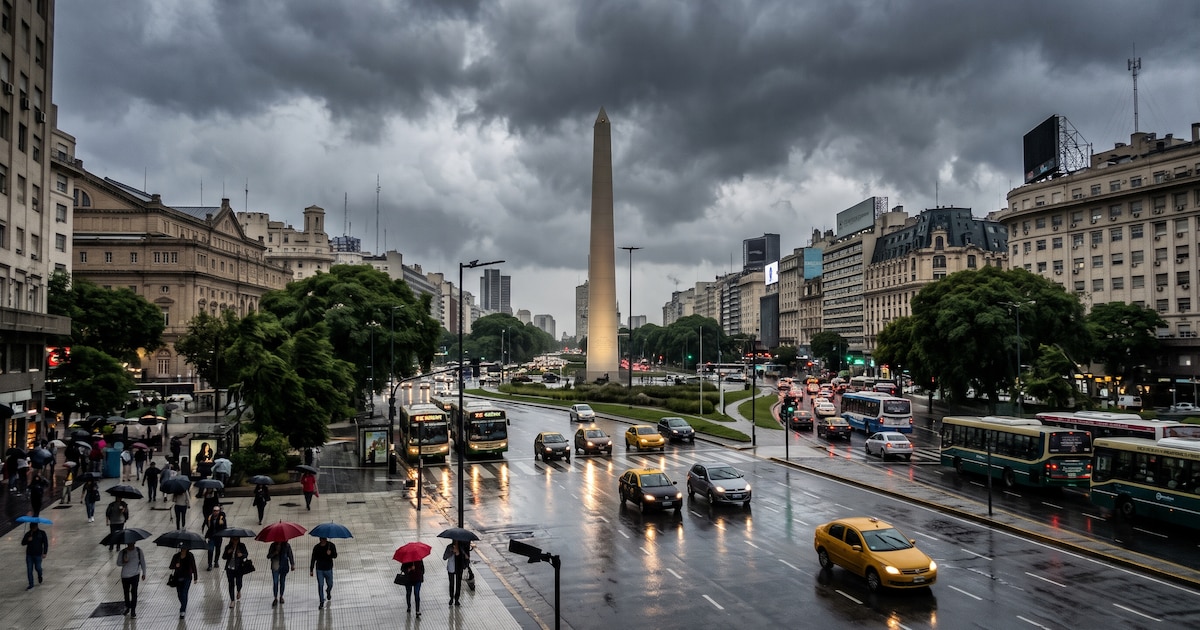
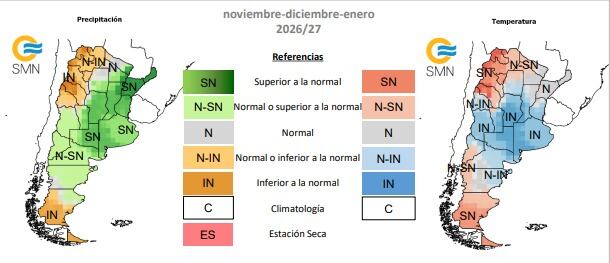
El mapa climático de los próximos tres meses dibuja un contraste sobre buena parte de Argentina: el Servicio Meteorológico Nacional (SMN) anticipa una mayor probabilidad de precipitaciones por encima de lo habitual y temperaturas medias más bajas en sectores del centro y noreste. Entre noviembre de 2026 y enero de 2027, el Litoral, Córdoba, el oeste de Santa Fe, el este de San Luis, La Pampa y áreas de Buenos Aires concentran las principales señales del informe. El escenario coincide con un El Niño que continúa fortaleciéndose y que tendría alta probabilidad de persistir hasta el trimestre enero-marzo de 2027.
La proyección no supone tres meses de lluvias continuas ni un descenso constante del termómetro. Se refiere a la tendencia promedio del período, aunque el SMN advierte que el cielo puede salirse del libreto: podrían registrarse eventos de lluvia localmente intensos, en especial en el centro y noreste del país. El informe no atribuye de forma directa esas condiciones al fenómeno del Pacífico, pero incorpora la evolución oceánica y atmosférica entre los elementos que analiza para elaborar sus previsiones.
La franja central concentra la tendencia a temperaturas inferiores a lo normal
La mayor probabilidad de temperaturas inferiores a lo normal abarca toda la franja central del país. El informe identifica una señal más marcada sobre Córdoba, el sudoeste de Santa Fe, el este de San Luis, el este de La Pampa y el oeste de la provincia de Buenos Aires.
La señal no anticipa tres meses de frío sostenido ni excluye jornadas de calor intenso. El pronóstico trabaja sobre promedios estacionales: cuando señala una temperatura inferior a lo normal, indica que los valores medios del período tendrían mayores chances de ubicarse por debajo de los registros habituales para esa época del año.
El Servicio Meteorológico Nacional (SMN) aclara que “esta previsión debe ser considerada sobre el valor medio del trimestre”. En otras palabras, puede haber días calurosos e incluso episodios de temperaturas altas, aunque el balance general del período tienda a resultar más fresco que lo esperado según los valores climatológicos.
La previsión también incluye al norte de Cuyo, el sur de Santiago del Estero y el noreste de la Patagonia dentro de la categoría “normal o inferior a la normal”. Esto supone que, para esas regiones, las probabilidades se inclinan entre valores cercanos a los promedios históricos y registros algo más bajos.
El noroeste y el sur patagónico tendrían temperaturas por encima del promedio
El panorama cambia hacia el norte y el sur. El Noroeste Argentino y el sur de la Patagonia son las áreas donde el pronóstico señala la mayor probabilidad de temperaturas superiores a lo normal durante el trimestre.
Para el SMN, la categoría superior a lo normal se aplica cuando los valores previstos se ubicarían por encima del límite alto del rango considerado habitual. Esa referencia se construye con datos históricos de cada zona, por lo que no equivale a un único número de grados para todo el territorio.
El centro-oeste de Chaco y Formosa, el este de Salta y el oeste patagónico se ubican en una situación intermedia. Allí, el organismo proyecta temperaturas “normales o superiores a la normal”, con una mayor chance de que los registros medios queden dentro de ese rango.
En el norte del Litoral, en tanto, la previsión apunta a valores normales. Esto comprende una temperatura media que se mantendría dentro de los parámetros usuales para los meses de noviembre, diciembre y enero, sin una inclinación marcada hacia uno u otro extremo.
Menor frecuencia de máximas muy altas en el centro y noreste
El SMN advierte que “no se descarta que predomine una menor amplitud térmica media”, sobre todo en la franja central y el noreste del país.
La amplitud térmica mide la diferencia entre las temperaturas máximas y mínimas. Una baja en ese indicador puede reflejar contrastes diarios menos marcados, aunque su expresión concreta varía según la localidad y los eventos de corta duración.
El organismo agrega otra precisión relevante: se esperan “mayores chances a registrar una menor frecuencia de temperaturas máximas muy altas”. La frase no descarta períodos calurosos durante el trimestre, pero sí plantea que esos picos extremos podrían ser menos frecuentes, especialmente en las provincias que integran el centro y noreste del país.
Cómo leer el mapa climático que anticipa el SMN
El pronóstico climático trimestral se elabora mediante un consenso entre modelos globales de simulación del clima, modelos estadísticos nacionales y el análisis de las condiciones oceánicas y atmosféricas. El resultado no representa un calendario del tiempo, sino una estimación probabilística para cada región.
Para presentar esas probabilidades, el SMN utiliza terciles. Se trata de una división de los datos históricos de temperatura y precipitación en tres partes iguales: inferior a lo normal, normal y superior a lo normal. Para la temperatura, el rango central contempla valores cercanos al promedio; por fuera de ese margen se ubican las otras dos categorías.
El organismo remarca que “el pronóstico no indica valores de la variable pronosticada ni su variabilidad a lo largo del trimestre”. Por eso, una tendencia a temperaturas inferiores al promedio no impide que haya jornadas con calor intenso, del mismo modo que una señal de temperaturas superiores no excluye ingresos de aire frío.
Las condiciones de escala diaria y semanal pueden modificar la experiencia concreta de cada período. Frentes, tormentas, bloqueos atmosféricos, olas de calor o irrupciones de aire frío son fenómenos que el pronóstico estacional no puede precisar con meses de anticipación.
Por esa razón, el organismo recomienda seguir los pronósticos diarios, la perspectiva semanal y el sistema de alertas tempranas. Esas herramientas permiten conocer con mayor precisión los eventos de alto impacto que pueden afectar a una localidad, aun cuando la tendencia trimestral general apunte a un escenario de temperaturas medias más bajas o más altas que las habituales.
Buenos Aires,Obelisco,avenida 9 de Julio,lluvia,tránsito








INTERNACIONAL
La trampa estaba servida: amor, explosivos y montajes en la historia sandinista en Nicaragua

El coronel retirado José Ramón Silva Reyes esperó cuatro años dentro de la Embajada de Guatemala en Managua. Había pedido refugio después del triunfo sandinista de julio de 1979 y aguardaba el salvoconducto que le permitiría abandonar Nicaragua.
La propuesta de fuga llegó de manos de otro supuesto asilado político. Aquel hombre decía tener contactos con una red capaz de sacar del país a los refugiados que seguían atrapados en la sede diplomática.
La salida de la embajada terminó en una desaparición forzada
El hombre que se presentaba como un perseguido aseguraba pertenecer a la antigua Oficina de Seguridad Nacional. Según el testimonio del exteniente Álvaro José Baldizón Avilés, recogido por Diario La Prensa, la Seguridad del Estado lo introdujo en la embajada en 1981.
Durante casi dos años ganó la confianza de Silva Reyes y otros refugiados. La fuga pareció posible cuando algunos antiguos guardias nacionales de menor rango lograron salir de la sede diplomática.
Silva Reyes y otros dos asilados aceptaron partir. Creían que serían trasladados fuera de Nicaragua, pero fueron capturados y desaparecieron al abandonar la representación.
El Ministerio del Interior informó que se habían fugado y que investigaba su paradero. La desaparición ocurrió el 31 de octubre de 1983.
En 2025, la Corte Interamericana de Derechos Humanos declaró responsable al Estado nicaragüense por la desaparición forzada de Silva Reyes. El caso mostró un método repetido en otras operaciones atribuidas al sandinismo: construir una situación creíble, atraer a la víctima y cerrar la trampa.
Una invitación privada dejó a Bismark Carballo ante las cámaras
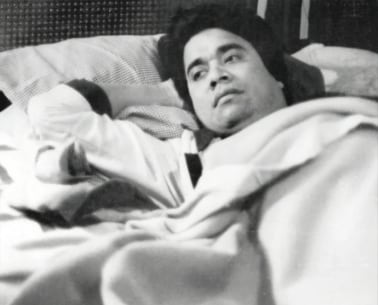
Bismark Carballo acudió a una casa de Las Colinas, Managua, tras una invitación para almorzar de Maritza Castillo, una mujer que antes le había pedido orientación espiritual.
El sacerdote era director de Radio Católica y portavoz de la Curia Arzobispal. El 11 de agosto de 1982 llegó a la vivienda sin saber que afuera había periodistas y fotógrafos preparados.
Un hombre lo golpeó dentro de la casa y lo obligó a quitarse la ropa. Cuando Carballo salió a la calle, desnudo, los medios oficialistas registraron la escena.
El diario Barricada publicó el episodio bajo el título “Triángulo pasional en Las Colinas”. Carballo denunció que era una operación para desacreditarlo y perjudicar al arzobispo Miguel Obando y Bravo.
El antiguo agente de Inteligencia Miguel Bolaños afirmó después que Tomás Borge y Lenín Cerna observaron la maniobra desde un vehículo con vidrios oscuros. La difusión de las imágenes provocó protestas de estudiantes católicos y agravó la crisis entre la Iglesia y el Gobierno.
En julio de 2004, Daniel Ortega ofreció disculpas públicas a Carballo por los atropellos sufridos. El sacerdote afirmó años después que antiguos participantes del montaje le habían pedido perdón.
El maletín comprometió al padre Luis Amado Peña
El sacerdote Luis Amado Peña solía pedir aventón para moverse por Managua. Un desconocido le ofreció llevarlo y, durante el trayecto, le pidió entregar un maletín a un hombre que lo esperaba en una acera.
Cuando Peña se acercó al destinatario, aparecieron policías y cámaras de la televisión sandinista. Los agentes abrieron el maletín y encontraron explosivos.
La escena permitió presentarlo como involucrado en actividades conspirativas contra el Gobierno. El escritor Humberto Belli reconstruyó el caso como una operación organizada por los servicios de Inteligencia.
El padre sostuvo después que había sido víctima de un montaje. El hecho ocurrió en 1984, durante la crisis entre el Gobierno y la Iglesia católica, y las protestas de religiosos fueron seguidas por la expulsión de diez sacerdotes.
Ese mismo año, el obispo venezolano Baltasar Porras nadaba junto a tres sacerdotes en la laguna de Xiloá cuando tres mujeres se desnudaron frente a ellos. Los religiosos se retiraron al sospechar una provocación y, poco después, llegó una patrulla policial.
Nora Astorga usó el interés de un general para atraerlo a una vivienda
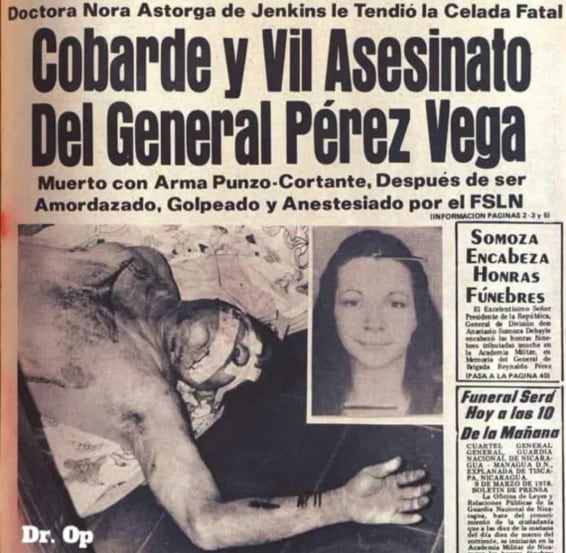
El general Reynaldo Pérez Vega, conocido como el Perro, acudió el 8 de marzo de 1978 a una casa de Managua por una invitación de Nora Astorga, una abogada que colaboraba clandestinamente con el Frente Sandinista de Liberación Nacional.
En la vivienda esperaban escondidos Hilario Sánchez, Walter Ferreti y Raúl Venerio. Los guerrilleros habían permanecido ocultos durante unos dos días.
El plan inicial consistía en secuestrar al militar para negociar un canje por presos políticos. Pérez Vega comenzó a desvestirse cuando los hombres salieron de su escondite, se resistió y murió durante el operativo.
El oficial era cercano a Anastasio Somoza Debayle y uno de los mandos principales de la Guardia Nacional. Estados Unidos rechazó la designación de Astorga como embajadora nicaragüense en Washington en 1984 por su participación en el asesinato.

Una antigua pareja llevó al comandante Bravo a una emboscada
Pablo Emilio Salazar, llamado comandante Bravo, sobrevivió a la caída de la Guardia Nacional. Tras pasar por Miami, volvió a Centroamérica para reorganizar a antiguos militares somocistas.
Su antigua pareja, Miriam Bar berena, fue utilizada para citarlo en una vivienda de Tegucigalpa. La reconstrucción sostiene que ella había sido detenida en Managua y obligada a colaborar mediante amenazas y ofrecimientos económicos.
Salazar llegó al aeropuerto de Toncontín con un maletín que contenía unos USD 200,000, destinados presuntamente a antiguos guardias nacionales refugiados en Honduras. En la vivienda encontró a sus ejecutores.
La investigación atribuyó la operación a un grupo argentino encabezado por Enrique Gorriarán Merlo, integrante del Ejército Revolucionario del Pueblo. El cadáver de Salazar fue hallado oculto debajo de una cama.
El comandante Bravo murió en octubre de 1979. La investigación de Diario La Prensa vinculó el crimen con una operación clandestina relacionada con los servicios sandinistas, aunque no estableció de forma documental la cadena completa de mando.
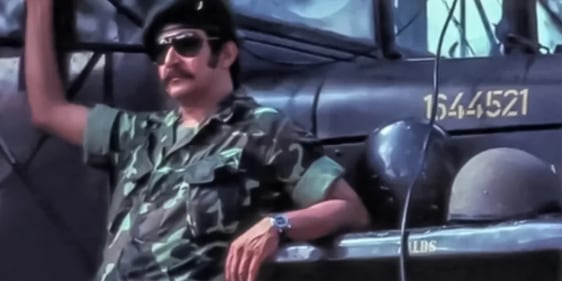
Jorge Salazar fue citado para recibir armas en El Crucero
El empresario Jorge Salazar Argüello llegó a una gasolinera de El Crucero convencido de que participaría en una entrega clandestina de armas. El encuentro había sido organizado con ayuda de Néstor Moncada Lau.
Salazar presidía la Unión de Productores Agropecuarios de Nicaragua y era vicepresidente del Consejo Superior de la Empresa Privada. Sus críticas al Gobierno lo habían convertido en una figura de la oposición empresarial.
Una patrulla del Ministerio del Interior abrió fuego cuando llegó al punto acordado y lo mató el 17 de noviembre de 1980. La versión oficial sostuvo que participaba en una conspiración contrarrevolucionaria y que murió durante un enfrentamiento.
Karla Salazar, hija del empresario, rechazó esa explicación y denunció que las armas atribuidas a su padre habían sido colocadas para justificar el asesinato. Moncada Lau recibió después entrenamiento de Inteligencia en Cuba y se convirtió en un operador del entorno de Daniel Ortega y Rosario Murillo.
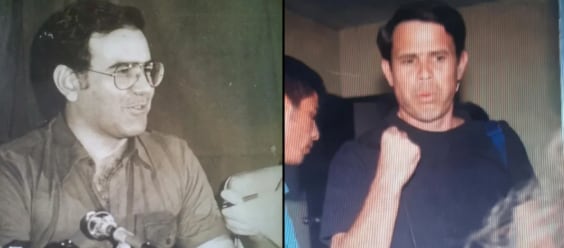
Un periodista falso detonó una bomba durante una conferencia de Edén Pastora
Un hombre que decía llamarse Per Anker Hansen se mezcló con los reporteros que cubrían una conferencia de Edén Pastora. Llevaba una cámara fotográfica y se presentaba como periodista danés.
La reunión se realizó el 30 de mayo de 1984 en La Penca, cerca de la frontera entre Nicaragua y Costa Rica. Pastora había roto con el FSLN y dirigía una organización armada contra el Gobierno.
El supuesto periodista detonó un artefacto explosivo durante la conferencia. Pastora sobrevivió, pero hubo muertos y heridos, incluidos reporteros que asistían a la actividad.
Las investigaciones posteriores identificaron al atacante como Roberto Vital Gaguine, un argentino vinculado con organizaciones revolucionarias clandestinas. Las pesquisas señalaron posibles nexos con estructuras de Inteligencia sandinistas, aunque la autoría intelectual siguió bajo controversia.
La coartada sobre Julio Iglesias precedió el asesinato de Somoza
El comando que asesinó a Anastasio Somoza Debayle en Paraguay utilizó identidades falsas y actividades comerciales aparentes. Una de las coberturas aludía a una gestión para conseguir alojamiento al cantante español Julio Iglesias.
El grupo estaba dirigido por Gorriarán Merlo y siguió durante semanas los recorridos del exdictador, exiliado en Asunción bajo la protección del gobierno de Alfredo Stroessner.
El 17 de septiembre de 1980, los atacantes dispararon armas automáticas y un lanzacohetes contra el vehículo blindado de Somoza. Murieron también su conductor y un acompañante.

Gorriarán Merlo reconoció su participación en la Operación Reptil. Distintas investigaciones mencionaron vínculos con estructuras políticas o de Inteligencia sandinistas, aunque la ejecución directa correspondió al comando argentino.
Baldizón murió después de revelar secretos del Ministerio del Interior
Baldizón desertó en julio de 1985 y cruzó a Honduras con documentos sobre torturas y ejecuciones investigadas por su oficina. En febrero de 1986, el Departamento de Estado de Estados Unidos publicó parte de sus revelaciones.
Entre ellas estaba la acusación de que Tomás Borge ordenó ejecutar a ocho prisioneros que se rindieron durante un motín en la cárcel de la Zona Franca. También aportó información sobre el montaje contra Carballo.
El 19 de junio de 1988, Baldizón fue hallado muerto en la habitación donde vivía en Los Ángeles. El certificado de defunción atribuyó el fallecimiento a un derrame cerebral.
Su familia sospechó que había sido envenenado. Rosana Baldizón relató que la noche anterior había cenado en un restaurante de comida colombiana y nicaragüense que abrió de forma repentina y cerró poco después.

Federal officials and Washington state Democrats are at odds after ICE officers arrested two prospective airline travelers – both accused of overstaying visas and one accused of throwing hot coffee at agents – on a Seattle airport jetway Saturday morning.
«This violence must end,» the Department of Homeland Security fired back on X, responding to Washington Gov. Bob Ferguson saying, «ICE is completely and totally out of control.»
The operation began around 8:05 a.m. PT as travelers boarded an Alaska Airlines flight, according to the Department of Homeland Security. DHS says ICE officers targeted Ricardo Larrondo Mendoza, whom the agency described as a Mexican national «who overstayed his visa.» During the arrest, other travelers began getting in the officers’ way, and one passenger threw hot coffee at the agents, DHS said.
TLAIB MOVES TO BLOCK ICE AIRPORT ARRESTS, SAYS TSA HELPING TARGET IMMIGRANTS
«The individual who threw the hot coffee was identified as Sofia Hernandez Mejia, an illegal alien from Mexico and visa overstay,» DHS wrote on X. «She was subsequently arrested as well. She will be charged with assaulting a federal officer.»
The post came in response to Ferguson, who claimed law enforcement removing suspected illegal immigrants from flights is «creating chaos in our communities.»
«ICE is completely and totally out of control,» Ferguson wrote on X, making no mention to the alleged assault of the officers. «Like many Americans, I’m outraged by masked agents, who do not identify themselves, dragging people off jetways as they board a flight, creating chaos in our communities.»
BORDER CZAR TOM HOMAN FIRES BACK AFTER DEMOCRAT CHRIS MURPHY CLAIMS ICE IS ‘TERRORIZING LITTLE KIDS’
Ferguson even suggested airlines should push federal immigration agents out of the airport, which has been under stress from this month’s nationwide ground stop and rooting out security threats during the busy holiday travel season.
«This morning, masked ICE agents terrorized our community, dragging at least one woman on the ground and arresting her as she was in line to board her flight,» Rep. Pramila Jayapal, D-Wash., wrote on X. «This behavior is totally unacceptable. Violent arrests are the hallmark of fascist states, not a democracy.»
At his Saturday news conference, Ferguson called video of the incident «horrific» and «chilling,» adding that he told Alaska Airlines representatives that «they need to call on ICE to get out of our airports.» He said he plans to make the same request of every other airline operating out of the Seattle and Tacoma airport.
DHS and Immigration and Customs Enforcement officials have been agitated by protesters and efforts to halt the Trump administration’s detention efforts, sometimes creating deadly circumstances and exchanges between federal officers and agitators.
DEMS SHAMED AS DHS BRINGS ICE SHOOTING RECEIPTS AFTER POLITICIAN CALLED ICE OFFICERS ‘LIARS WITH MASKS’
DHS defended the agents and pointed to what it described as a surge in violence against federal officers, citing DHS Secretary Markwayne Mullin’s directive on prosecutions.
«Assaulting and obstructing law enforcement is a crime and a felony,» the DHS X post continued. «Secretary Mullin has been clear: anyone who assaults or obstructs law enforcement will be prosecuted to the fullest extent of the fullest extent of the law. Our brave law enforcement is facing more than a 1, 600% increase in assaults, 3, 300% increase in vehicular attacks, and an 8,000% increase in death threats against them. This violence must end.»
Democrats ran on affordability in the midterm elections, but Jayapal vows to work to end immigration enforcement operations, taking the fight from American streets and airports to the House and Senate.
‘SQUAD’ DEMOCRAT SLAMMED BY TRUMP ADMIN FOR MOST ‘RADICAL’ PLAN TARGETING ICE YET
«Soon, Democrats will take back control of Congress and we will continue the critical work to rein in these out of control agents and hold them accountable,» her X post continued, expressing concern for the illegals who overstayed their visa versus the law enforcement officers attacked during an obstruction. «My heart goes out to those directly affected, and the passengers and airline workers whom ICE traumatized today.»
Seattle Mayor Katie Wilson, a democratic socialist, called efforts to enforce immigration law «un-American.»
«I am outraged by videos of masked ICE agents causing chaos and dragging a woman off the jetway at Sea-Tac airport,» she wrote Saturday on X. «These tactics are unacceptable and un-American.»
Rep. Adam Smith, D-Wash., called federal law enforcement «a profound threat to our community.»
«This morning, masked ICE agents detained at least one passenger waiting to board an Alaska Airlines flight at Sea-Tac Airport,» he wrote on X. «The masked agents forcibly dragged the individual off the jet bridge, taking them into custody. Let me be clear: this is absolutely unacceptable.
«ICE’s conduct across our country is putting people in harm’s way, undermining public trust, and stoking fear in our communities. I am incredibly concerned about the conduct of immigration enforcement and believe that ICE is operating as a paramilitary force that is a profound threat to our community. There is no question that this agency needs to be reined in before causing more chaos and fear.»
DEMOCRAT COMPARES ICE TO ‘DOMESTIC TERRORISTS’ AS 111 HOUSE DEMS DEMAND TEXAS DETENTION CENTER CLOSE
Alaska Airlines said it had no advance warning of the enforcement action and moved many affected passengers onto other flights.
«Alaska Airlines was not provided advance notice of the enforcement action and we are working to understand the circumstances surrounding what occurred,» the airline said in a statement, adding it is «concerned» by the federal action.
Union leaders representing airport workers also criticized the timing of the arrests ahead of a busy travel week. April Sims, president of the Washington State Labor Council, AFL-CIO, called the operation a «smash-and-grab» action that injected fear and chaos into the terminal.
«Just days after our nation experienced widespread disruptions to air travel and flights being grounded, federal agents chose to carry out this operation at one of our busiest airports, during one the busiest travel weeks of the year,» Sims wrote in a statement.
Reuters contributed to this report.
homeland security, illegal immigrants, police and law enforcement, enforcement, immigration, democrats, democratic party
INTERNACIONAL
Flavio Bolsonaro claims judge ordered passports seized just 7 minutes after Brazil election loss
NEWYou can now listen to Fox News articles!
Brazilian Sen. Flavio Bolsonaro accused his country’s political and judicial establishment of engineering his presidential election defeat, telling Fox News Digital in an exclusive interview that he fled to the United States amid what he described as a campaign of political persecution — and insisting he lost not to President Luiz Inacio Lula da Silva, but to «the system.»
Following a razor-thin election, in which incumbent Lula da Silva won 51.8% to 48.2%, the Brazilian Supreme Court immediately canceled Bolsonaro’s passports, prompting the senator and his family to flee the country in dramatic fashion, crossing the border into Argentina and flying into Miami, where President Donald Trump granted them political asylum.
Bolsonaro said that he fled for the sake of Brazil, to continue the fight against Alexandre de Moraes and the Brazilian Supreme Court, and alleging both election interference and political persecution.
SEN FLAVIO BOLSONARO FLEES BRAZIL FOR US AFTER ELECTION LOSS, WILL BE ISSUED VISAS: STATE DEPARTMENT
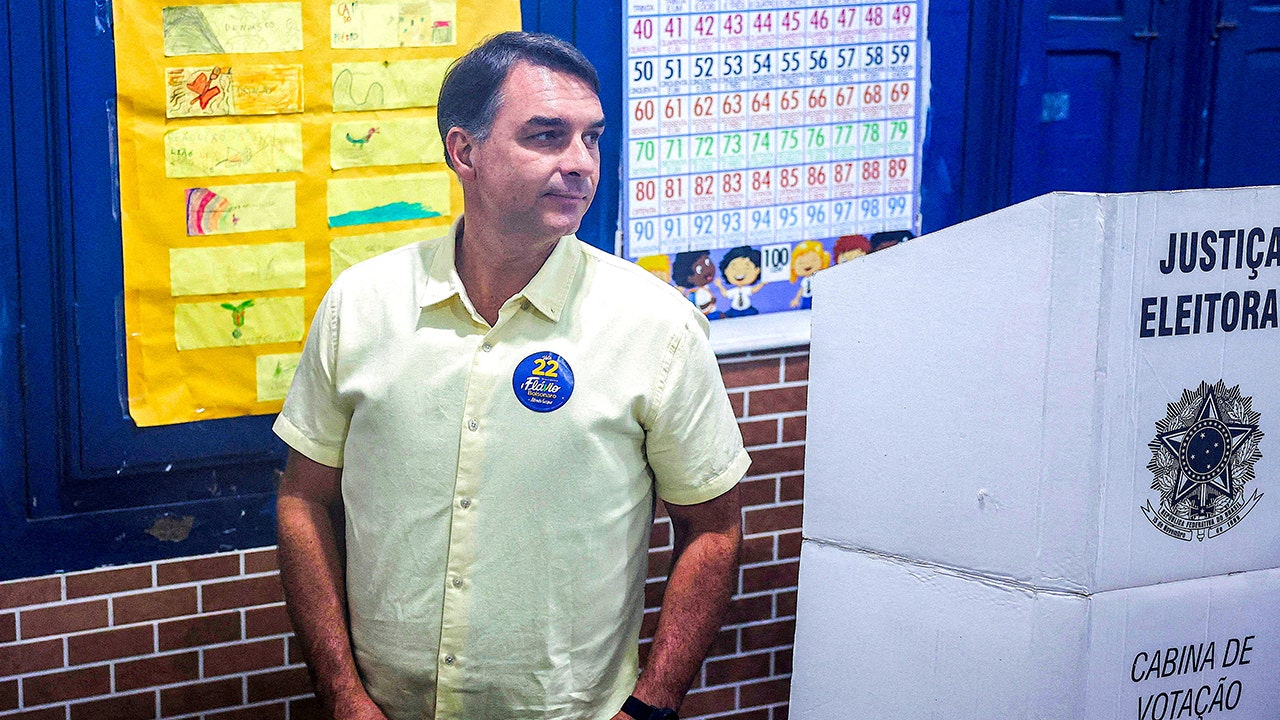
Presidential candidate Flavio Bolsonaro of the Liberal Party votes during the runoff election, in Rio de Janeiro, Brazil, Oct. 25, 2026. (Ricardo Moraes/Reuters)
«I did not leave Brazil to run away. I left for Brazil’s sake, and these accusations are completely unfounded. This is a case that began with ‘fake news,’ a false media report, and it’s a case that was artificially manufactured against me.
«This is the modus operandi, particularly of Alexandre de Moraes in Brazil, when he wants to persecute someone. So, he invented this case against me to leave a kind of sword hanging over my head, something he can use whenever he wants. He wakes up in a bad mood and decides to persecute someone, someone against whom he has artificially manufactured a case,» he claimed.
«And look, just a few days before the election, he opens this investigation to try to damage my reputation. It’s a way for him to interfere in the election to benefit my opponent. And what struck me most was that just seven minutes after the official election results were announced, he took action to seize my passports, to confiscate my passports and prohibit me from leaving the country.»
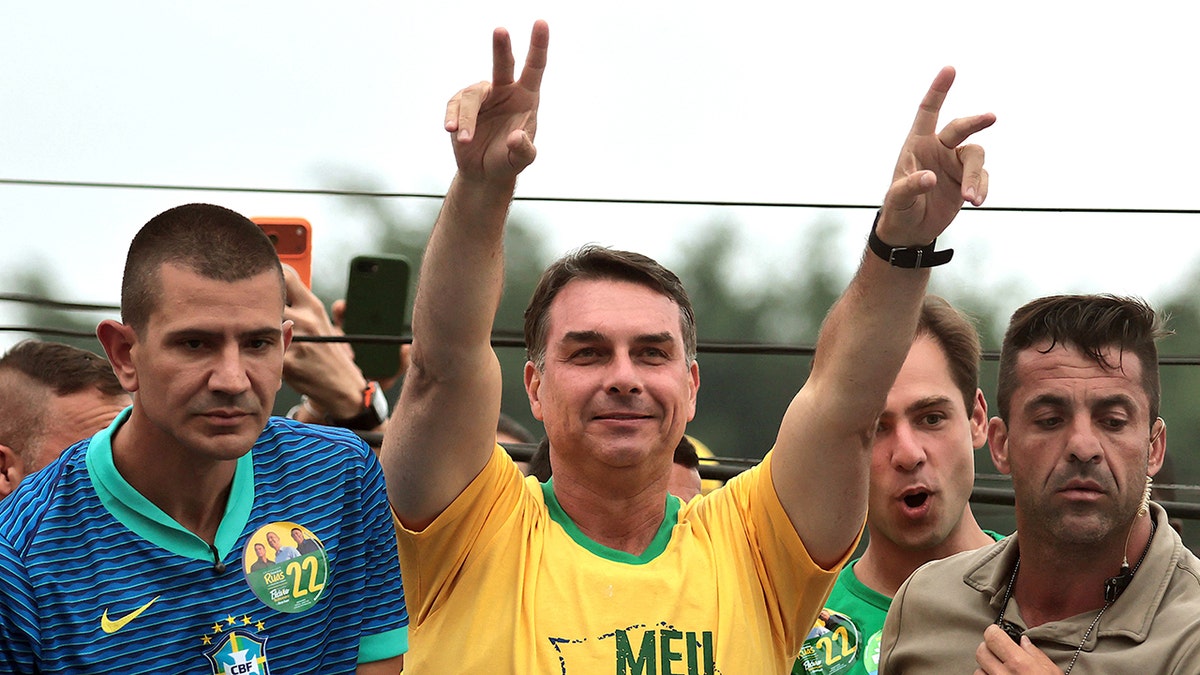
Flavio Bolsonaro gestures during a campaign rally on the eve of the general election, in Rio de Janeiro, Brazil on Oct. 3, 2026. (Douglas Shineidr/AFP via Getty Images)
Bolsonaro added,»Seven minutes. I emphasize that: just seven minutes after the election ended.»
He acknowledged he lacks evidence of fraud in the election, but alleged that the electoral system is flawed because it is impossible to demand a recount.
«Look, I don’t have proof because I’m prohibited from investigating. The elections in Venezuela were also recognized in the past. And everyone knows those elections were fraudulent,» he said.
«In the most recent elections in Venezuela, it was possible to prove that fraud occurred because they adopted a system that we had been asking Brazil to implement for the 2026 elections.»
BOLSONARO WINS FIRST ROUND OF BRAZILIAN PRESIDENTIAL ELECTION, AS TRUMP-BACKED CANDIDATES CONTINUE RED WAVE
Bolsonaro asked,»What is that system? Electronic voting with an individual printed record of each vote, ensuring the secrecy of the ballot while allowing the votes to be recounted. Let me ask you something: Does Brazil’s current system allow votes to be recounted? No,» he answered.
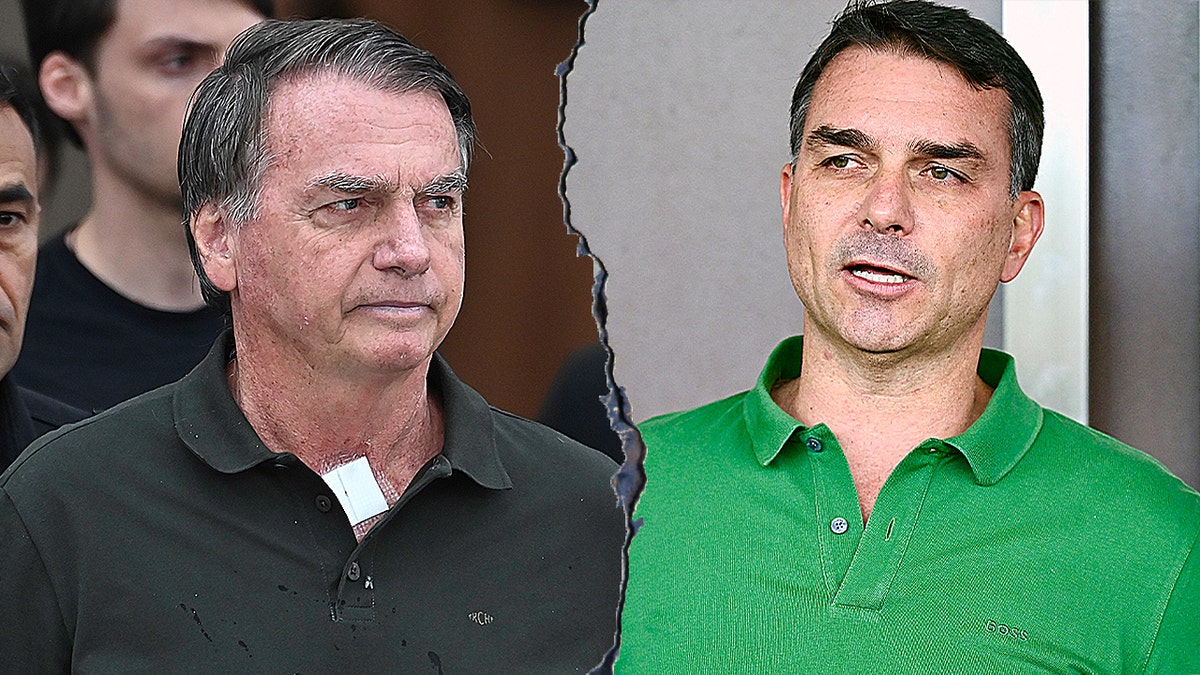
Former Brazilian President Jair Bolsonaro and Flávio Bolsonaro. (Ton Molina/Getty Images/ Evaristo Sa/AFP via Getty Images)
«What’s happening in Brazil is that the technology experts who have been there for years, through several elections, and who are themselves under suspicion, are simply taken at their word. Whatever they say becomes the truth,» he claimed.
«Nobody has any way to conduct an audit. If we ask for an audit, will it be authorized? No. So, whatever they say becomes the truth. They tell the Superior Electoral Court, the TSE, and the court repeats what they say without even fully understanding whether it’s true or not.»
With Bolsonaro in political exile in the United States, all eyes will turn to Sao Paulo Gov. Tarcisio de Freitas, who cruised to re-election last month, and stepped aside this election cycle to clear the field for Flavio Bolsonaro on the right.
Yet election experts disagree with Bolsonaro’s assessment over the safety of the nation’s voting system.
Karina Stange Calandrin, a political scientist and professor at Instituto Brasileiro de Mercado de Capitais (IBMEC), recently told Fox News Digital, «It is an extremely secure and safe system. The machines never connect to the Internet and even the central database system used to transmit tallied votes to TSE must match results issued physically and locally by each individual machine without human interference.»
Corrupting it, she, would require breaking the seal of each machine and installing software that wouldn’t match the TSE’s version, automatically disqualifying its tally — a scale of collusion so large that it «simply could not pass undetected.»
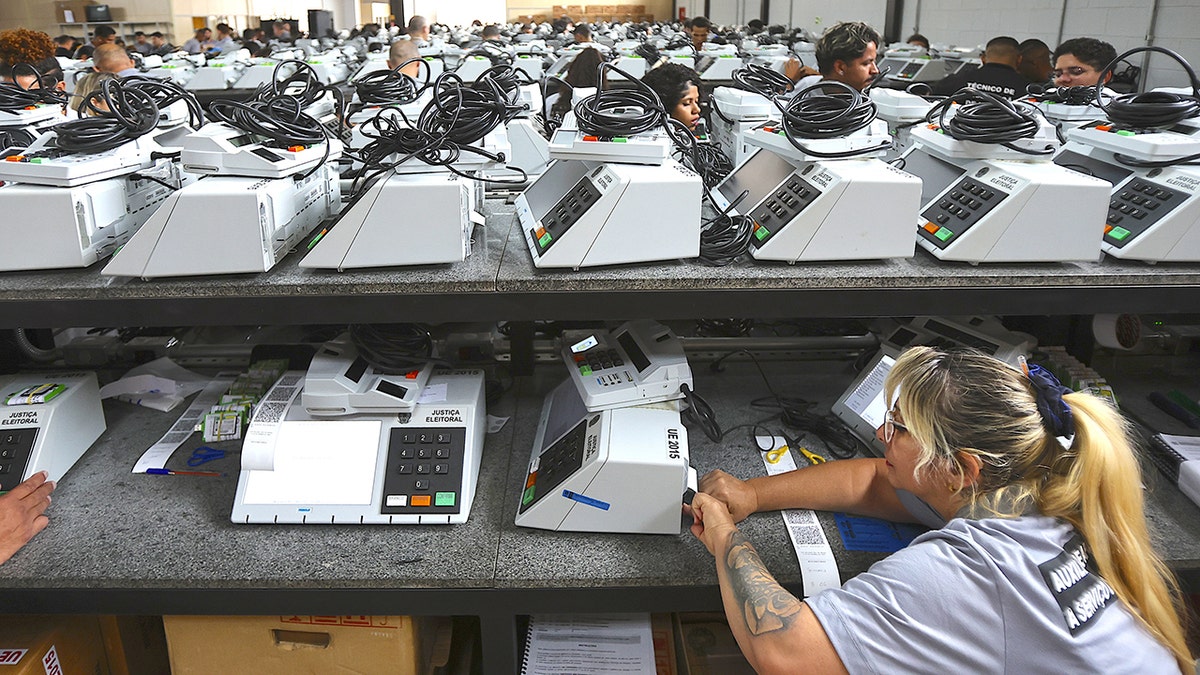
Election workers prepare and seal electronic voting machines ahead of the upcoming general elections in Brasilia, Brazil, on Sept. 23, 2026. (by Mateus Bonomi/Anadolu via Getty Images)
BRAZIL’S RAPID ELECTION COUNT PUTS SPOTLIGHT ON VOTING SECURITY AHEAD OF US MIDTERMS
While acknowledging the strength of a potential de Freitas candidacy, Bolsonaro is leaving the door open to running in 2030, provided that his father, former President Jair Bolsonaro, is still ineligible to run.
«Look, thanks to President Bolsonaro, the right in Brazil has many strong leaders with the potential to become president of the republic. Not just Tarcísio de Freitas, but several others.»
He said, «In a scenario in 2030 where President Jair Bolsonaro is still ineligible to run, I am a candidate. My name is on the table as a candidate for 2030, provided that Congress makes improvements to the electoral system.»
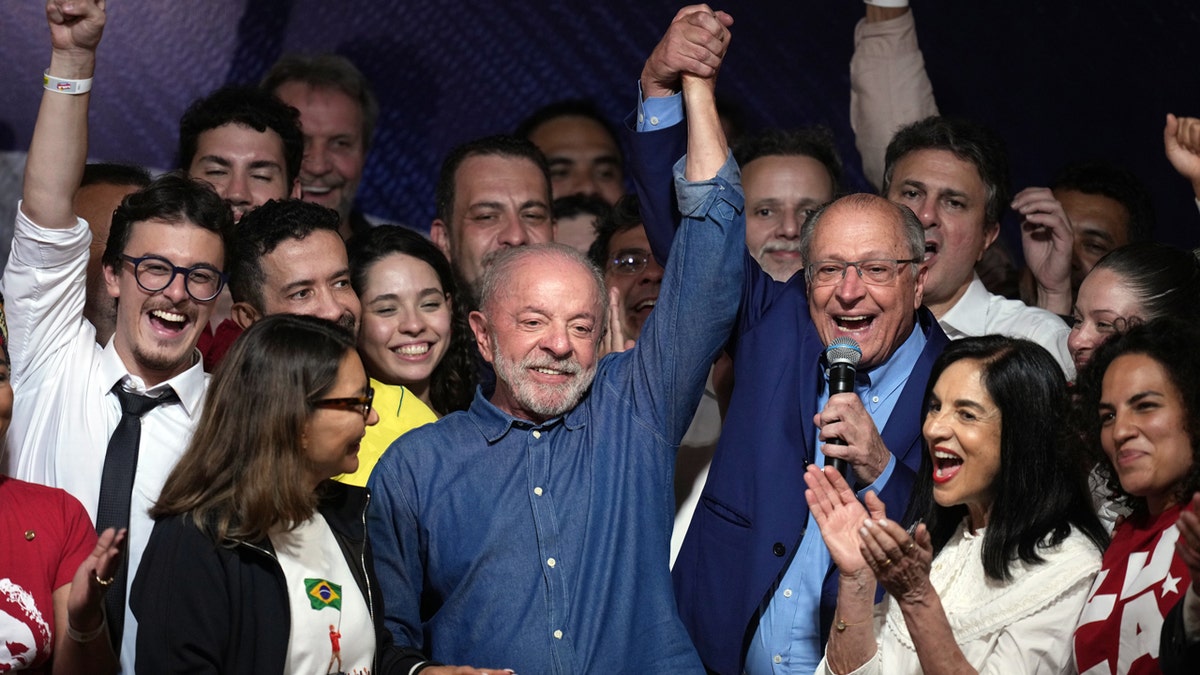
President Luiz Inacio Lula da Silva celebrates with his running mate Geraldo Alckmin after winning a fourth term in the presidential runoff in Brazil, Oct. 25, 2026. (Andre Penner/AP Photo)
He continued, «But that is still far in the future. In four years, a lot can happen in politics. With the two years remaining in Donald Trump’s presidency, a lot can happen. The political landscape could change completely. So it’s still much too early to make those plans.»
Bolsonaro said «the right has what I call a good problem. Imagine a soccer team with 11-star players ready to take the field. How does the coach decide which player to put in each position? The right has many stars. It has many qualified people, strong candidates capable of running in any election in Brazil.»
He added, «That’s not what happens on the side of evil, on the side of the left, on the side of communism. Over there, the only leader who still exists is the current president of the republic himself, who isn’t allowing any prominent figure to emerge as a possible successor.»
BOLSONARO DECLARES HIMSELF ‘LEADER’ OF BRAZIL AFTER FLEEING COUNTRY, ARRIVING IN MIAMI
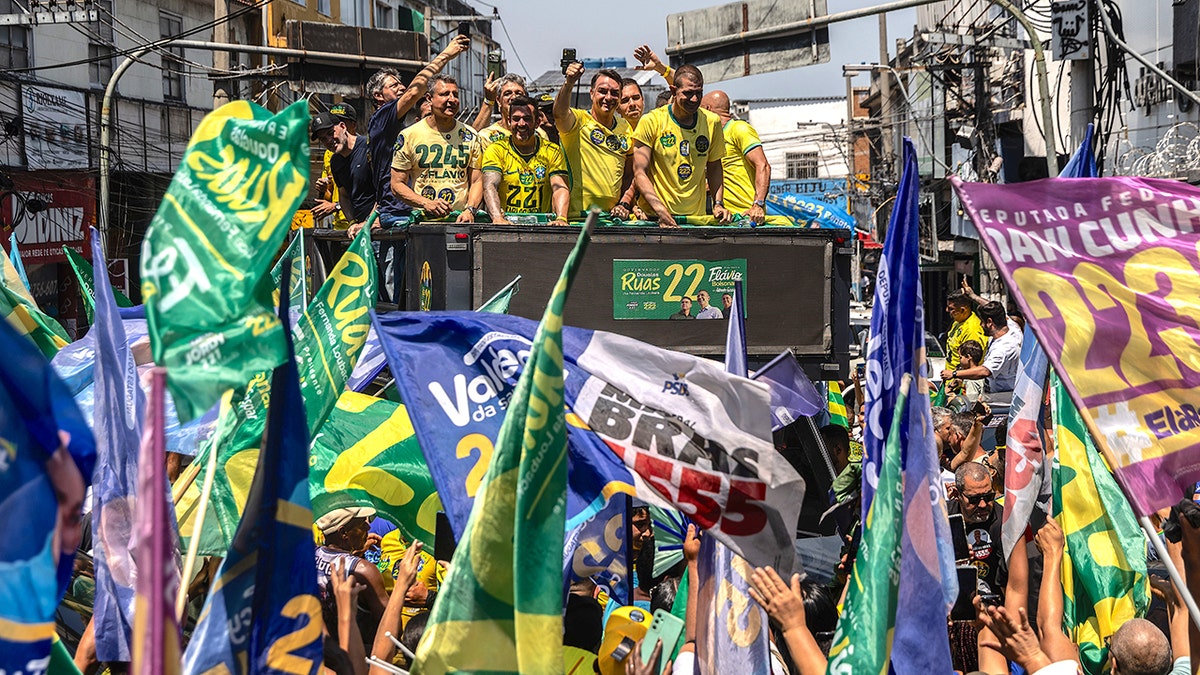
Flavio Bolsonaro, top center, during a campaign rally in Sao Joao de Meriti, Rio de Janeiro state, Brazil, on Sept. 26, 2026. (Dado Galdieri/Bloomberg via Getty Images)
Although the 2026 election saw right-wing candidates dominate in the Senate, Chamber of Deputies, and in gubernatorial races, Bolsonaro is calling on his supporters to oppose the re-election of the current speaker of Brazil’s lower chamber.
«Look, Hugo Motta was never someone from my political camp. He has always been a very pragmatic politician, including in his dealings with left-wing parties.»
He said, the «problem with Hugo Motta, and the reason I’m advocating against supporting his re-election as president of the Chamber of Deputies, is that two years ago, when he was elected with the support of my party, he promised, for example, to grant amnesty to those being persecuted in Rio de Janeiro. And did he keep that promise? No.»
He said, «Then they came up with an intermediate proposal, something called ‘dosimetria,’ or sentence recalculation. What is that? It’s a new process that doesn’t amount to an amnesty at all. It simply reduces, to some extent, the sentences of people who were convicted.»
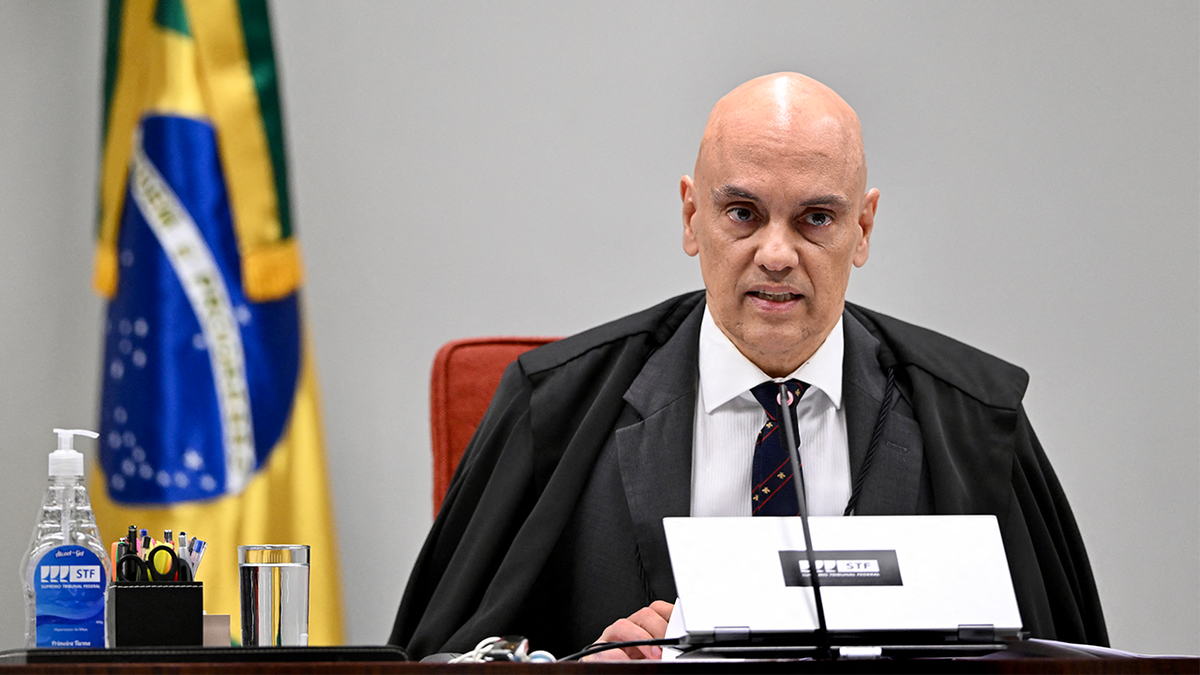
Brazilian Supreme Court Justice Alexandre de Moraes. (Evaristo Sa/AFP via Getty Images)
He said, «That was approved by the Chamber of Deputies, and the Supreme Federal Court simply suspended it with the stroke of a pen. And whose pen was it? Alexandre de Moraes. So he didn’t deliver what he promised.»
Bolsonaro said the political movement founded by his father is stronger than ever, while maintaining that the United States is the best place for him right now, because he can speak freely, while working with allies in the Brazilian Congress.
«The last hope we have is in the National Congress, especially the Federal Senate. Once again, this demonstrates the strength of the right and of the Bolsonaro movement. A lot of people said in the past that they had defeated the Bolsonaro movement… But the results of the 2026 elections, and the votes I officially received, nearly 60 million votes, almost 50% of the valid votes cast for president of Brazil, tell a different story. Look at the number of center-right deputies and senators we helped elect.»
He noted, «All of this shows that the right and the Bolsonaro movement are stronger than ever. But we’re facing a system that is working very hard to prevent Brazil from prospering and to stop the right-wing agenda from advancing.»
He added, «So, as I often say, I didn’t lose to my opponent. I lost the election to the system. And that’s what makes me so outraged. I’m going to remain here in the United States, continuing to speak out, saying exactly what I think, without holding anything back.»
He concluded, «I hope not only that God will intervene in our country to save Brazil from communism, but also that our institutions will return to functioning normally.»
Fox News Digitall’s Solly Boussidan and Sydney Finver contributed to this report.
brazil, jair bolsonaro, south america, foreign policy, latin america, world elections

“Tenemos una buena relación, pero me pongo nervioso antes de encontrarme con él”: Jayson Tatum habló sobre su vínculo con Michael Jordan

Benjamín Vicuña se encontró con la China Suárez y Mauro Icardi en el mismo casamiento: la foto que impactó a todos

Rosario Central vs. Gimnasia (M): formaciones, hora y dónde ver por tv

El Gobierno condenó las amenazas de Irán contra Rafael Grossi, el titular del organismo nuclear de la ONU: “Es inadmisible”

Otro accidente en los médanos de Pinamar: dos jóvenes volcaron con un UTV, iban sin casco y resultaron heridos

Boca campeón de la Sudamericana: ¿cuánto pagarán de impuestos el club y los jugadores por los premios?

Javier Milei y sus medidas, en vivo: “Hoy discutimos si crecemos un punto más o menos”, dijo el Presidente

Javier Milei destacó el desembarco de Tesla en el país y aseguró: “Esto también es devolverle la libertad a los argentinos”

El brote de ébola está fuera de control en la República Democrática del Congo y crece el temor a una epidemia continental

Jeffries survives Dem vote to secure speaker position as progressive resistance clouds his chances

 POLITICA2 días ago
Javier Milei destacó el desembarco de Tesla en el país y aseguró: “Esto también es devolverle la libertad a los argentinos”
- INTERNACIONAL3 días ago
El brote de ébola está fuera de control en la República Democrática del Congo y crece el temor a una epidemia continental
- DEPORTE3 días ago
El burbujeante ping pong de Colapinto con un actor argentino: de la puja entre Senna y Riquelme a la comida que le falta a la Fórmula 1