INTERNACIONAL
Flavio Bolsonaro claims judge ordered passports seized just 7 minutes after Brazil election loss

NEWYou can now listen to Fox News articles!
Brazilian Sen. Flavio Bolsonaro accused his country’s political and judicial establishment of engineering his presidential election defeat, telling Fox News Digital in an exclusive interview that he fled to the United States amid what he described as a campaign of political persecution — and insisting he lost not to President Luiz Inacio Lula da Silva, but to «the system.»
Following a razor-thin election, in which incumbent Lula da Silva won 51.8% to 48.2%, the Brazilian Supreme Court immediately canceled Bolsonaro’s passports, prompting the senator and his family to flee the country in dramatic fashion, crossing the border into Argentina and flying into Miami, where President Donald Trump granted them political asylum.
Bolsonaro said that he fled for the sake of Brazil, to continue the fight against Alexandre de Moraes and the Brazilian Supreme Court, and alleging both election interference and political persecution.
SEN FLAVIO BOLSONARO FLEES BRAZIL FOR US AFTER ELECTION LOSS, WILL BE ISSUED VISAS: STATE DEPARTMENT
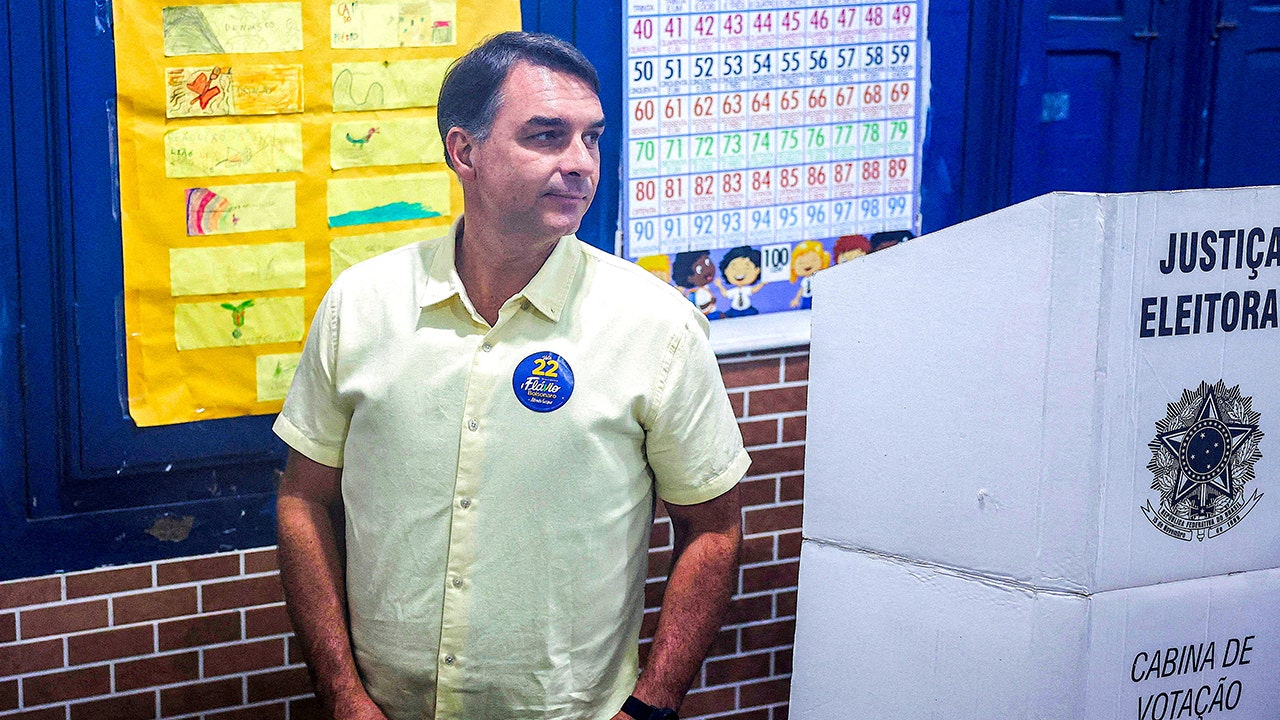
Presidential candidate Flavio Bolsonaro of the Liberal Party votes during the runoff election, in Rio de Janeiro, Brazil, Oct. 25, 2026. (Ricardo Moraes/Reuters)
«I did not leave Brazil to run away. I left for Brazil’s sake, and these accusations are completely unfounded. This is a case that began with ‘fake news,’ a false media report, and it’s a case that was artificially manufactured against me.
«This is the modus operandi, particularly of Alexandre de Moraes in Brazil, when he wants to persecute someone. So, he invented this case against me to leave a kind of sword hanging over my head, something he can use whenever he wants. He wakes up in a bad mood and decides to persecute someone, someone against whom he has artificially manufactured a case,» he claimed.
«And look, just a few days before the election, he opens this investigation to try to damage my reputation. It’s a way for him to interfere in the election to benefit my opponent. And what struck me most was that just seven minutes after the official election results were announced, he took action to seize my passports, to confiscate my passports and prohibit me from leaving the country.»
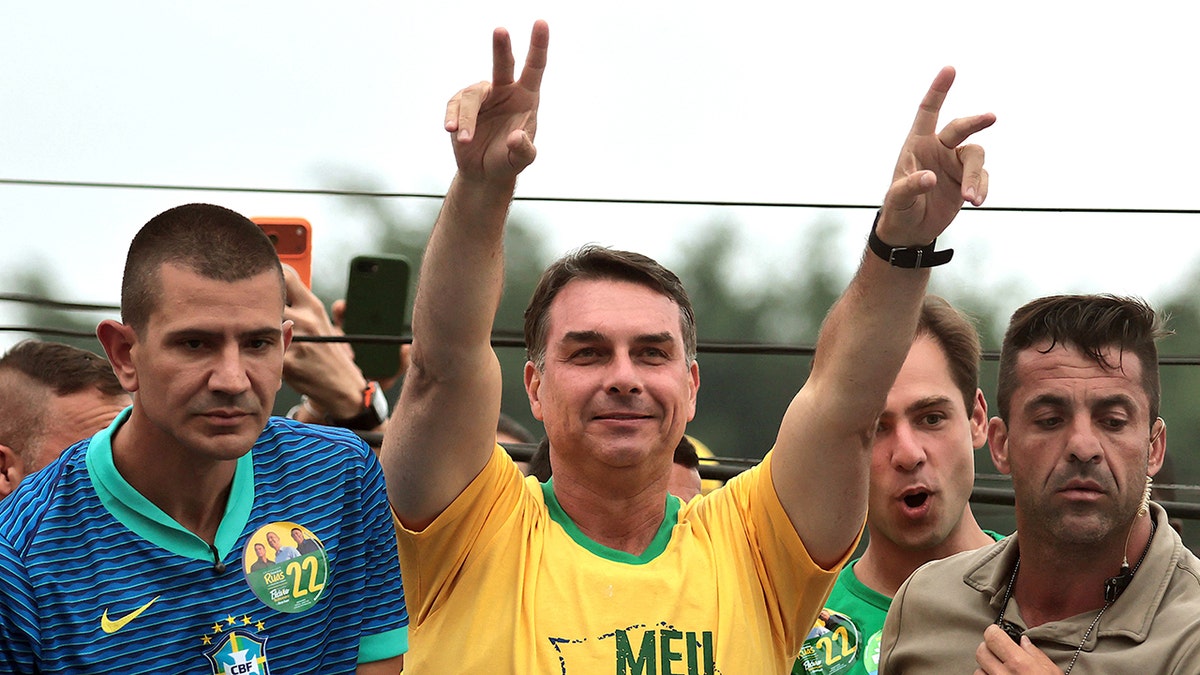
Flavio Bolsonaro gestures during a campaign rally on the eve of the general election, in Rio de Janeiro, Brazil on Oct. 3, 2026. (Douglas Shineidr/AFP via Getty Images)
Bolsonaro added,»Seven minutes. I emphasize that: just seven minutes after the election ended.»
He acknowledged he lacks evidence of fraud in the election, but alleged that the electoral system is flawed because it is impossible to demand a recount.
«Look, I don’t have proof because I’m prohibited from investigating. The elections in Venezuela were also recognized in the past. And everyone knows those elections were fraudulent,» he said.
«In the most recent elections in Venezuela, it was possible to prove that fraud occurred because they adopted a system that we had been asking Brazil to implement for the 2026 elections.»
BOLSONARO WINS FIRST ROUND OF BRAZILIAN PRESIDENTIAL ELECTION, AS TRUMP-BACKED CANDIDATES CONTINUE RED WAVE
Bolsonaro asked,»What is that system? Electronic voting with an individual printed record of each vote, ensuring the secrecy of the ballot while allowing the votes to be recounted. Let me ask you something: Does Brazil’s current system allow votes to be recounted? No,» he answered.
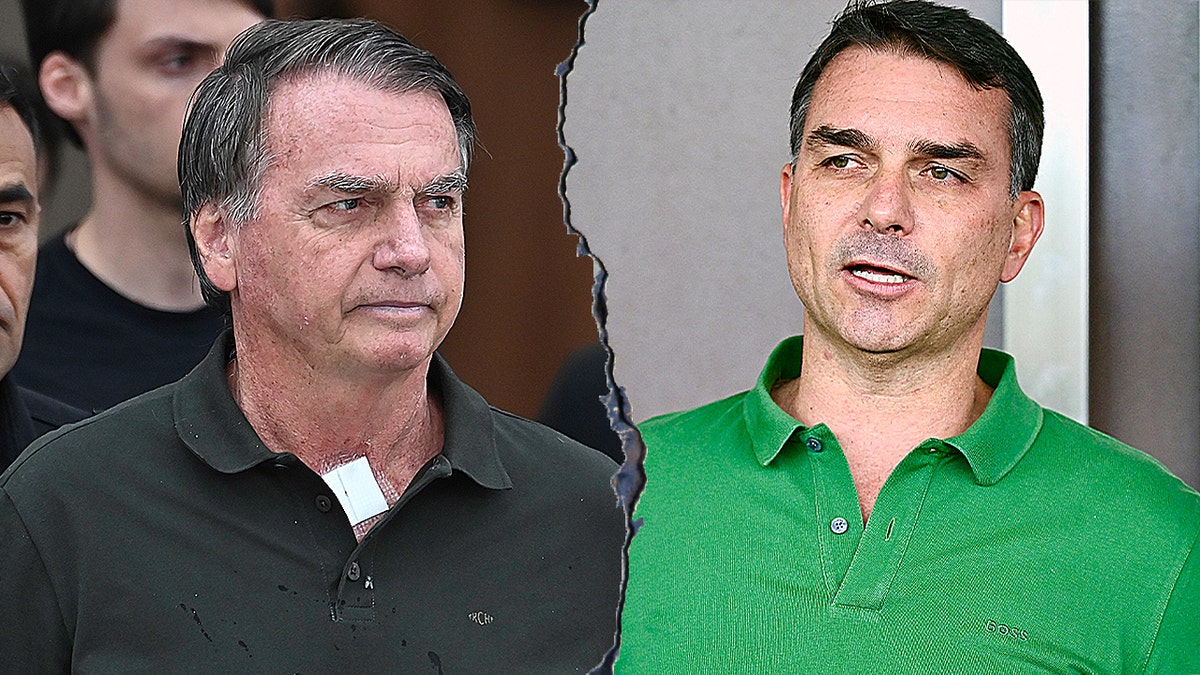
Former Brazilian President Jair Bolsonaro and Flávio Bolsonaro. (Ton Molina/Getty Images/ Evaristo Sa/AFP via Getty Images)
«What’s happening in Brazil is that the technology experts who have been there for years, through several elections, and who are themselves under suspicion, are simply taken at their word. Whatever they say becomes the truth,» he claimed.
«Nobody has any way to conduct an audit. If we ask for an audit, will it be authorized? No. So, whatever they say becomes the truth. They tell the Superior Electoral Court, the TSE, and the court repeats what they say without even fully understanding whether it’s true or not.»
With Bolsonaro in political exile in the United States, all eyes will turn to Sao Paulo Gov. Tarcisio de Freitas, who cruised to re-election last month, and stepped aside this election cycle to clear the field for Flavio Bolsonaro on the right.
Yet election experts disagree with Bolsonaro’s assessment over the safety of the nation’s voting system.
Karina Stange Calandrin, a political scientist and professor at Instituto Brasileiro de Mercado de Capitais (IBMEC), recently told Fox News Digital, «It is an extremely secure and safe system. The machines never connect to the Internet and even the central database system used to transmit tallied votes to TSE must match results issued physically and locally by each individual machine without human interference.»
Corrupting it, she, would require breaking the seal of each machine and installing software that wouldn’t match the TSE’s version, automatically disqualifying its tally — a scale of collusion so large that it «simply could not pass undetected.»
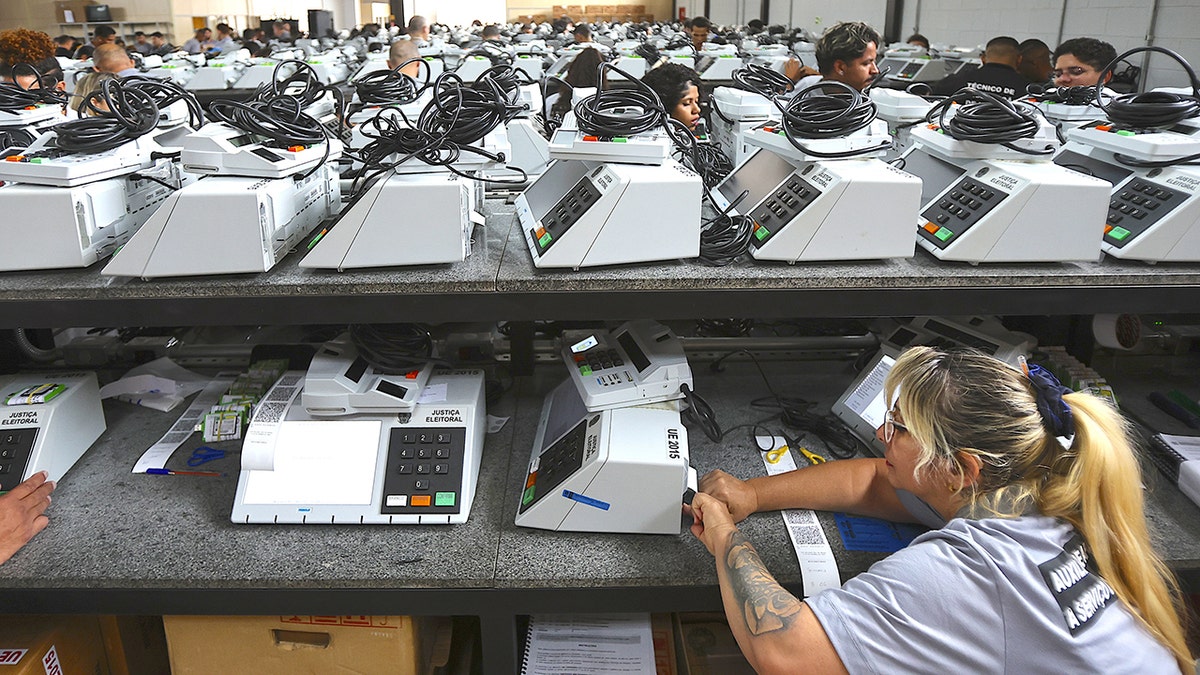
Election workers prepare and seal electronic voting machines ahead of the upcoming general elections in Brasilia, Brazil, on Sept. 23, 2026. (by Mateus Bonomi/Anadolu via Getty Images)
BRAZIL’S RAPID ELECTION COUNT PUTS SPOTLIGHT ON VOTING SECURITY AHEAD OF US MIDTERMS
While acknowledging the strength of a potential de Freitas candidacy, Bolsonaro is leaving the door open to running in 2030, provided that his father, former President Jair Bolsonaro, is still ineligible to run.
«Look, thanks to President Bolsonaro, the right in Brazil has many strong leaders with the potential to become president of the republic. Not just Tarcísio de Freitas, but several others.»
He said, «In a scenario in 2030 where President Jair Bolsonaro is still ineligible to run, I am a candidate. My name is on the table as a candidate for 2030, provided that Congress makes improvements to the electoral system.»
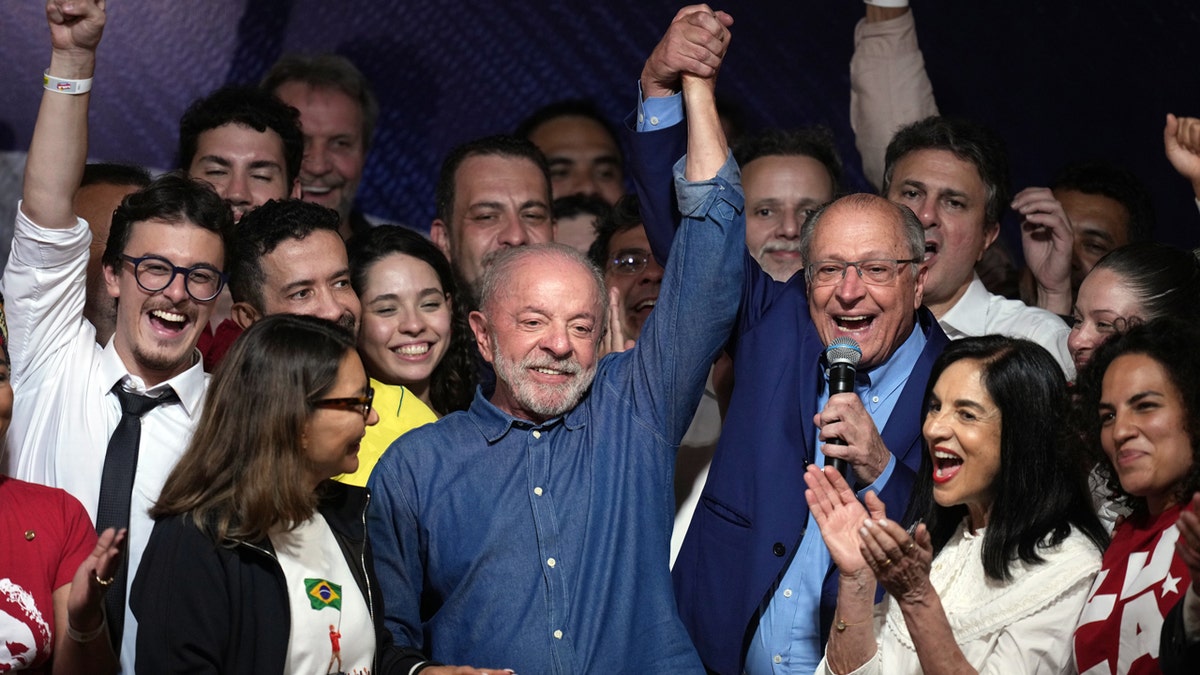
President Luiz Inacio Lula da Silva celebrates with his running mate Geraldo Alckmin after winning a fourth term in the presidential runoff in Brazil, Oct. 25, 2026. (Andre Penner/AP Photo)
He continued, «But that is still far in the future. In four years, a lot can happen in politics. With the two years remaining in Donald Trump’s presidency, a lot can happen. The political landscape could change completely. So it’s still much too early to make those plans.»
Bolsonaro said «the right has what I call a good problem. Imagine a soccer team with 11-star players ready to take the field. How does the coach decide which player to put in each position? The right has many stars. It has many qualified people, strong candidates capable of running in any election in Brazil.»
He added, «That’s not what happens on the side of evil, on the side of the left, on the side of communism. Over there, the only leader who still exists is the current president of the republic himself, who isn’t allowing any prominent figure to emerge as a possible successor.»
BOLSONARO DECLARES HIMSELF ‘LEADER’ OF BRAZIL AFTER FLEEING COUNTRY, ARRIVING IN MIAMI

Flavio Bolsonaro, top center, during a campaign rally in Sao Joao de Meriti, Rio de Janeiro state, Brazil, on Sept. 26, 2026. (Dado Galdieri/Bloomberg via Getty Images)
Although the 2026 election saw right-wing candidates dominate in the Senate, Chamber of Deputies, and in gubernatorial races, Bolsonaro is calling on his supporters to oppose the re-election of the current speaker of Brazil’s lower chamber.
«Look, Hugo Motta was never someone from my political camp. He has always been a very pragmatic politician, including in his dealings with left-wing parties.»
He said, the «problem with Hugo Motta, and the reason I’m advocating against supporting his re-election as president of the Chamber of Deputies, is that two years ago, when he was elected with the support of my party, he promised, for example, to grant amnesty to those being persecuted in Rio de Janeiro. And did he keep that promise? No.»
He said, «Then they came up with an intermediate proposal, something called ‘dosimetria,’ or sentence recalculation. What is that? It’s a new process that doesn’t amount to an amnesty at all. It simply reduces, to some extent, the sentences of people who were convicted.»
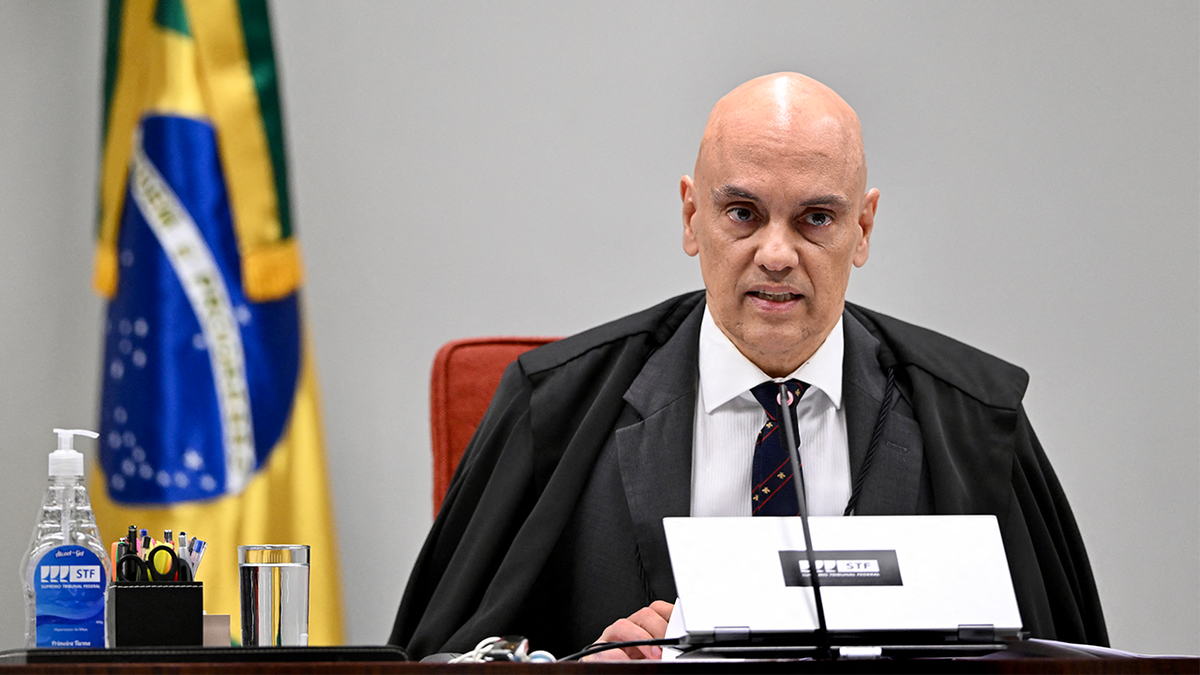
Brazilian Supreme Court Justice Alexandre de Moraes. (Evaristo Sa/AFP via Getty Images)
He said, «That was approved by the Chamber of Deputies, and the Supreme Federal Court simply suspended it with the stroke of a pen. And whose pen was it? Alexandre de Moraes. So he didn’t deliver what he promised.»
Bolsonaro said the political movement founded by his father is stronger than ever, while maintaining that the United States is the best place for him right now, because he can speak freely, while working with allies in the Brazilian Congress.
«The last hope we have is in the National Congress, especially the Federal Senate. Once again, this demonstrates the strength of the right and of the Bolsonaro movement. A lot of people said in the past that they had defeated the Bolsonaro movement… But the results of the 2026 elections, and the votes I officially received, nearly 60 million votes, almost 50% of the valid votes cast for president of Brazil, tell a different story. Look at the number of center-right deputies and senators we helped elect.»
He noted, «All of this shows that the right and the Bolsonaro movement are stronger than ever. But we’re facing a system that is working very hard to prevent Brazil from prospering and to stop the right-wing agenda from advancing.»
He added, «So, as I often say, I didn’t lose to my opponent. I lost the election to the system. And that’s what makes me so outraged. I’m going to remain here in the United States, continuing to speak out, saying exactly what I think, without holding anything back.»
He concluded, «I hope not only that God will intervene in our country to save Brazil from communism, but also that our institutions will return to functioning normally.»
Fox News Digitall’s Solly Boussidan and Sydney Finver contributed to this report.
brazil, jair bolsonaro, south america, foreign policy, latin america, world elections








INTERNACIONAL
States rally behind Catholic church in first-of-its-kind Supreme Court fight over prayer shrine
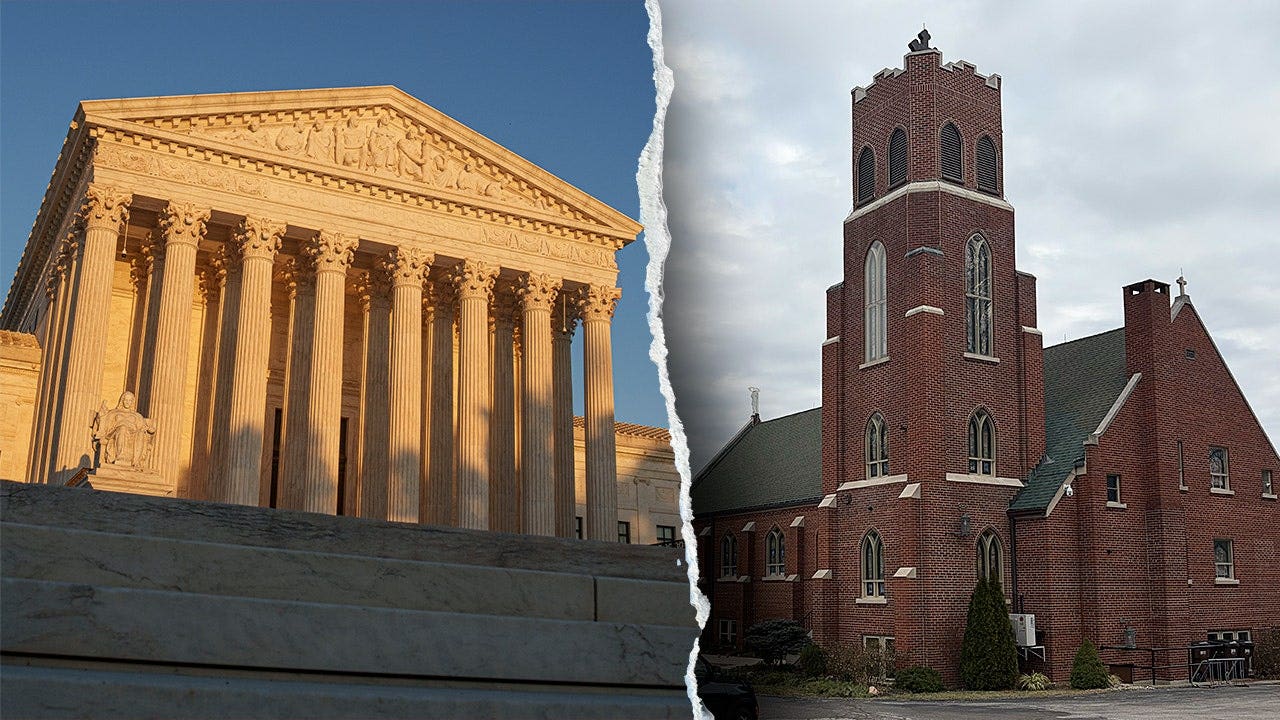
FIRST ON FOX: A Catholic religious community’s plans to build a small shrine to the Virgin Mary on its own property have triggered a years-long legal battle with two neighbors, drawing a coalition of state attorneys general into a potential landmark religious liberty showdown before the U.S. Supreme Court.
Kentucky Attorney General Russell Coleman is leading an 18-state coalition urging the justices to reverse a ruling that blocked the roughly 600-square-foot prayer grotto in Park Hills, Kentucky, despite the project initially receiving approval from local zoning officials.
The dispute pits the Missionaries of St. John the Baptist against neighboring property owners Joel and Elizabeth Frederic, who challenged the city’s approval of the outdoor shrine and ultimately prevailed in Kentucky’s appellate courts.
YOU SHOULDN’T NEED A PERMIT TO PRAY IN YOUR OWN HOME — THE SUPREME COURT SHOULD AGREE
«I’m proud to stand with other Attorney General colleagues from across the country in defense of these Kentuckians’ religious liberty,» Coleman said in a statement provided to Digital. «This fundamental American freedom cannot be brushed away simply by a heckler’s veto, and I’m confident the justices will agree.»
The coalition’s intervention comes as the Supreme Court prepares to consider whether blocking a religious structure on an organization’s property constitutes a «substantial burden» on religious exercise under the Religious Land Use and Institutionalized Persons Act (RLUIPA).
The case marks the first time the Supreme Court is considering the federal law’s land-use protections, according to Coleman’s office, raising the stakes for churches and religious organizations nationwide.
The controversy began in 2021 when the Missionaries sought permission to construct a 16-by-39-foot grotto honoring the Virgin Mary’s apparition to Saint Bernadette in Lourdes, France.
SUPREME COURT SHOWDOWN LOOMS OVER ST MICHAEL STATUE BLOCKED FROM PUBLIC SAFETY BUILDING
The proposed structure would include a shrine, plaza, walking path and retaining wall, offering a quiet place for prayer and meditation.
The church building has stood on the property for nearly a century, predating Park Hills’ zoning ordinance adopted in 1974, according to previous Digital reporting.
The Park Hills Board of Adjustment approved the project in April 2021. But the Frederics challenged the approval in court, arguing that the proposed construction violated local zoning requirements.
A trial court initially upheld the city’s decision before the Kentucky Court of Appeals reversed, finding that the zoning board exceeded its authority in granting the necessary permits.
SUPREME COURT TO HEAR CATHOLIC PARISH’S CHALLENGE AFTER COLORADO BARRED SCHOOLS FROM UNIVERSAL PRE-K PROGRAM
The Kentucky Supreme Court affirmed the rejection of the Missionaries’ federal religious land-use claim in December 2025.
Coleman previously defended the religious organization’s position before Kentucky’s highest court and led a 20-state effort in April urging the U.S. Supreme Court to take up the dispute.
The justices agreed in October to hear the case, with oral arguments scheduled for Jan. 20, 2027.
Ryan Gardner, senior counsel at First Liberty Institute, which represents the Missionaries, previously told Digital that the stakes extend far beyond the proposed Catholic shrine.
«This is a massive case for religious liberty because it has the potential to impact every single zoning law in this country,» Gardner said in an October Digital exclusive.
Gardner compared the grotto’s footprint to a swimming pool, underscoring the modest size of a project that has since reached the nation’s highest court.
«RLUIPA is at the intersection of two very critical rights in this country: the rights of religious liberty and property rights,» Gardner said.
Congress enacted RLUIPA in 2000 to protect religious institutions from certain burdens imposed through zoning and land-use regulations.
The Missionaries argue that preventing them from constructing a religious structure on their property substantially burdens their religious exercise.
The Frederics, however, have disputed that interpretation, arguing in their Supreme Court opposition brief that the religious organization failed to demonstrate why alternative locations for the grotto were unavailable.
They also challenged claims that lower courts are fundamentally divided over the legal standard for determining substantial burdens under RLUIPA.
The Supreme Court agreed to consider the substantial-burden question, rather than every issue raised in the underlying zoning dispute.
Kentucky Solicitor General Matt Kuhn, Principal Deputy Solicitor General Jack Heyburn and Deputy Solicitor General Jacob Abrahamson prepared the multistate brief, according to Coleman’s office.
What began as a proposal for a quiet place to pray has become a national battle over religious liberty, property rights and how far neighbors can go in challenging religious construction on private property.
first amendment religion us, supreme court, religion us, faith, kentucky, law
INTERNACIONAL
Russia could launch nuclear-capable satellite within weeks, Western intelligence warns: report
US confirms weapons deployed in space as Russia, China issue new warnings
Chief national security correspondent Jennifer Griffin joins ‘The Faulkner Focus’ to discuss the growing threat of orbital warfare after the U.S. confirmed it has deployed weapons in orbit. She examines the security implications as concerns over China and Russia’s space capabilities continue to mount.
NEWYou can now listen to Fox News articles!
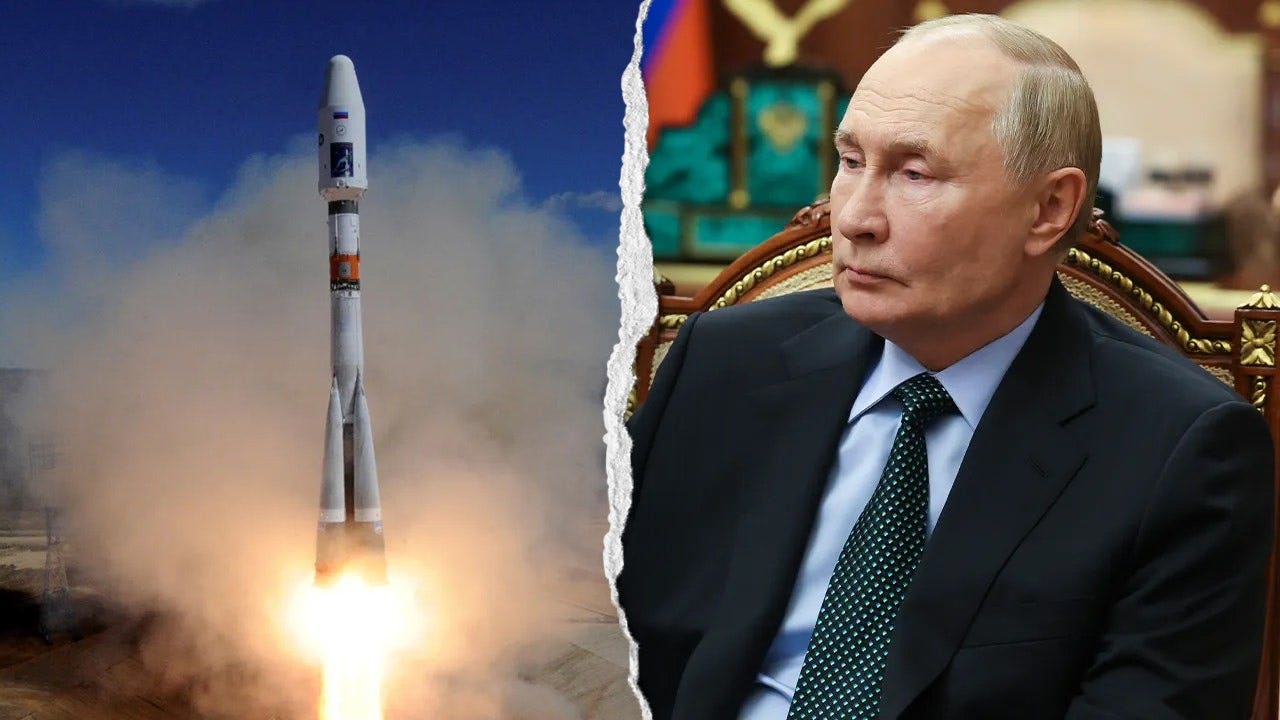
Russia could launch a nuclear-armed satellite into orbit within less than 60 days according to new Western intelligence assessments reported Monday, raising fears that Moscow is preparing to deploy a weapon capable of crippling thousands of satellites used by the United States and its allies.
The intelligence reports emerged just four days after President Donald Trump met with Russian President Vladimir Putin and Chinese President Xi Jinping at a high-profile summit in Shenzhen, China, where nuclear arms control was a central topic.
The three leaders issued a joint declaration affirming that nuclear war should never be fought, but stopped short of announcing binding arms-control commitments.
NEXT GENERATION OPIR GEO: BUILDING AMERICA’S GATEWAY TO THE FUTURE OF SPACE-BASED MISSILE WARNING AND TRACKING
Advanced satellite launch (Amazon)
On Monday, NATO Secretary General Mark Rutte and German Chancellor Friedrich Merz publicly addressed the reports, while the Kremlin dismissed the allegations.
According to a joint investigation published Nov. 23 by German broadcasters WDR and NDR and the newspaper Süddeutsche Zeitung, Western intelligence agencies believe Russia has assembled a satellite known as «Sputnik-S,» which has reportedly been stored in the Moscow region for several years.
Intelligence warnings shared among several NATO countries in early November indicated that the satellite, reportedly designed to carry a nuclear warhead, could be launched within 60 days. Germany’s military Space Command reportedly assessed that a December launch was possible.
The German investigation also reported that military officials had briefed senior government figures, including German Defense Minister Boris Pistorius, about the threat.
The reports prompted an immediate response from European leaders.
Speaking alongside Rutte in Berlin on Monday, Merz described the allegations as «shocking,» while noting that concerns about Russia’s nuclear space ambitions were not entirely new.
PUTIN LAUNCHES UKRAINE BARRAGE HOURS AFTER TRUMP MEETING AMID ALLEGED RUSSIAN MISSILE BREACH OF NATO AIRSPACE
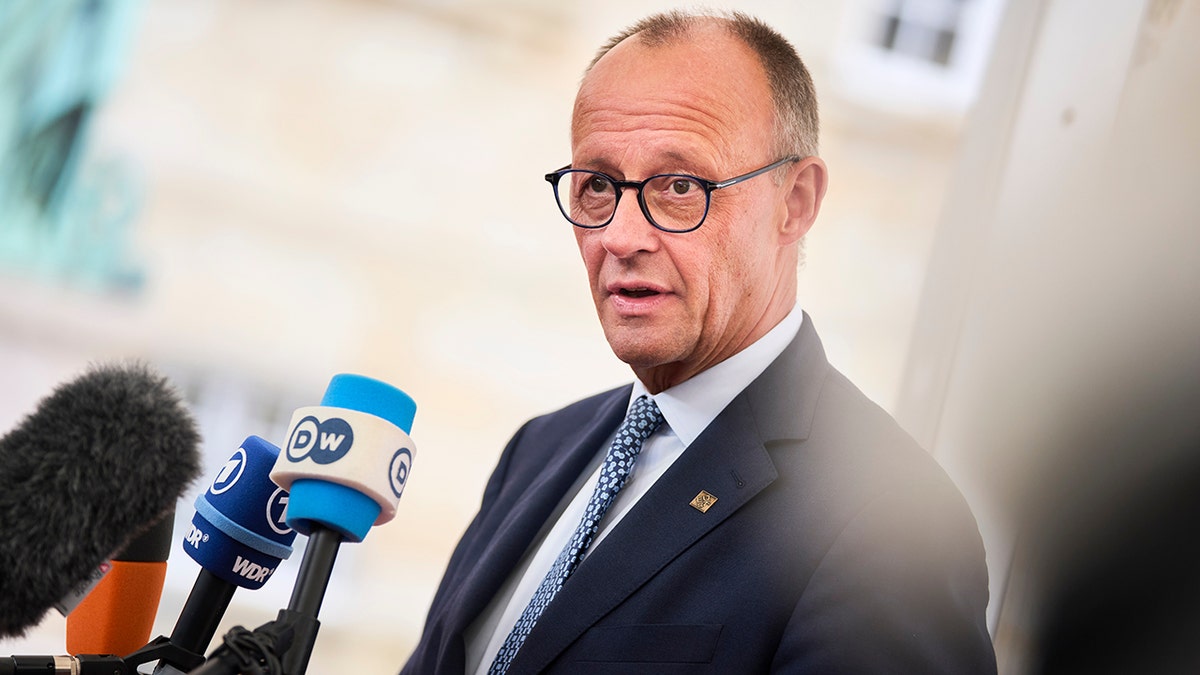
German Chancellor Friedrich Merz sparked backlash while remarking about the country’s migration policies. (Thomas Traasdahl/Ritzau Scanpix via AP)
Rutte, meanwhile, stressed that NATO was continually assessing its defensive capabilities.
«I can assure you, we will always make sure that we defend every inch of NATO territory,» Rutte said, according to Reuters.
He added that the alliance’s defense planning included threats in space and said NATO had response options that were not always visible to the public.
The Kremlin rejected the allegations. Russian presidential spokesperson Dmitry Peskov questioned the credibility of the intelligence reports, saying they contained numerous unsubstantiated claims that were «hardly worth taking seriously,» according to The Moscow Times.
«We haven’t seen the report. But there are so many ‘alleged’ and ‘possible’ claims in it, attributed to who knows whom, that it’s certainly hardly worth taking them seriously,» Kremlin spokesman Dmitry Peskov told reporters during a daily briefing.
Russia’s Embassy in Berlin separately dismissed the reporting as part of a propaganda campaign and maintained that Moscow’s space activities were peaceful and consistent with international obligations.
The latest warnings follow an earlier assessment by the U.S. Defense Intelligence Agency , which publicly identified Russia’s development of a nuclear-capable satellite in October. «Russia is developing a satellite designed to carry a nuclear weapon,» the DIA stated in its 2026 Challenges to Security in Space assessment.
NATO WARNS RUSSIA: ‘WE WILL BREAK’ FORCES, DESTROY ‘ANYTHING AND EVERYTHING’ IF YOU ATTACK
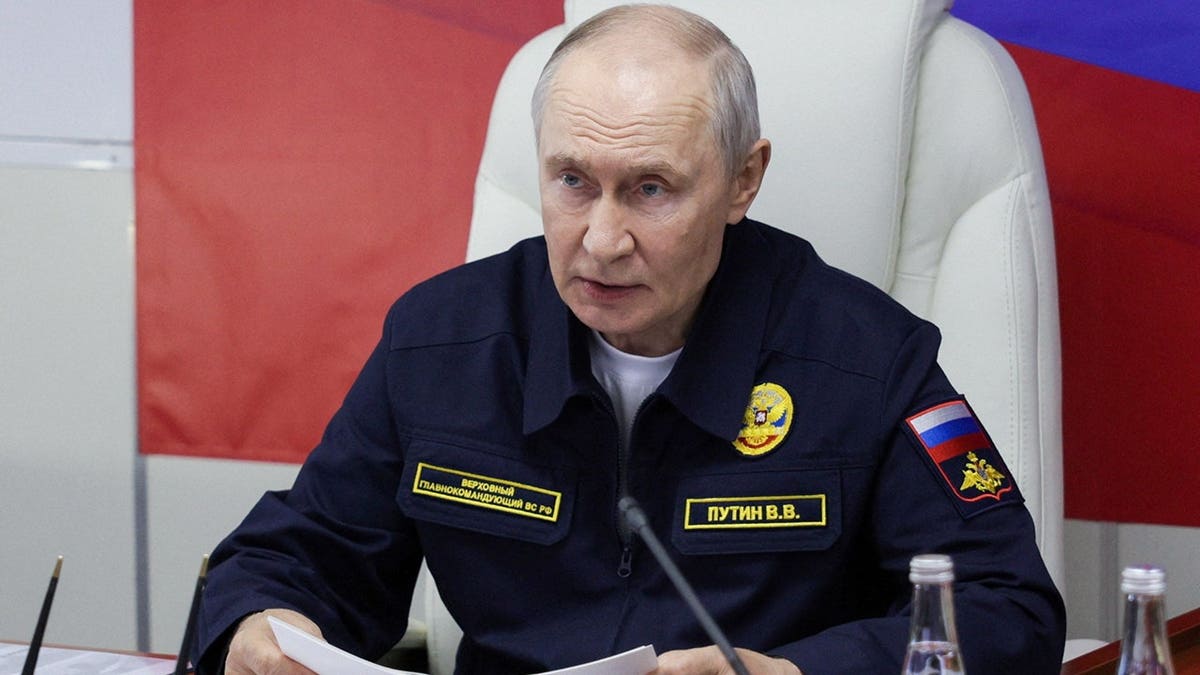
FILE – Russian President Vladimir Putin chairs a meeting aboard the missile cruiser Varyag in Russia’s far eastern Sakhalin region on Wednesday, Aug. 12, 2026. Putin previously said Russia is not waging a sabotage campaign against Europe. (Reuters)
As Fox News Digital reported on October 29, the agency warned that such a weapon could cause the rapid loss or degradation of thousands of satellites operated by governments and private companies.
Unlike a conventional anti-satellite weapon targeting an individual spacecraft, a nuclear detonation in orbit could potentially disable large numbers of satellites through radiation and electromagnetic effects.
The consequences could extend far beyond the military. Satellites support GPS navigation, international communications, financial transactions, weather forecasting and critical infrastructure.
The threat also has implications for Ukraine, whose military relies heavily on satellite communications, including SpaceX’s Starlink network, during its war with Russia.
The concern was initially addressed on February 2024 when the Biden administration publicly acknowledged that Russia was developing a troubling anti-satellite capability, although officials said at the time that no such weapon had been deployed.
Placing a nuclear weapon in orbit would violate the 1967 Outer Space Treaty, which prohibits stationing nuclear weapons or other weapons of mass destruction in space.
The latest German reporting suggests the threat could be approaching a more immediate stage, but critical questions remain unanswered, including whether the satellite already carries a nuclear warhead and whether Western intelligence has independently verified the reported launch preparations.
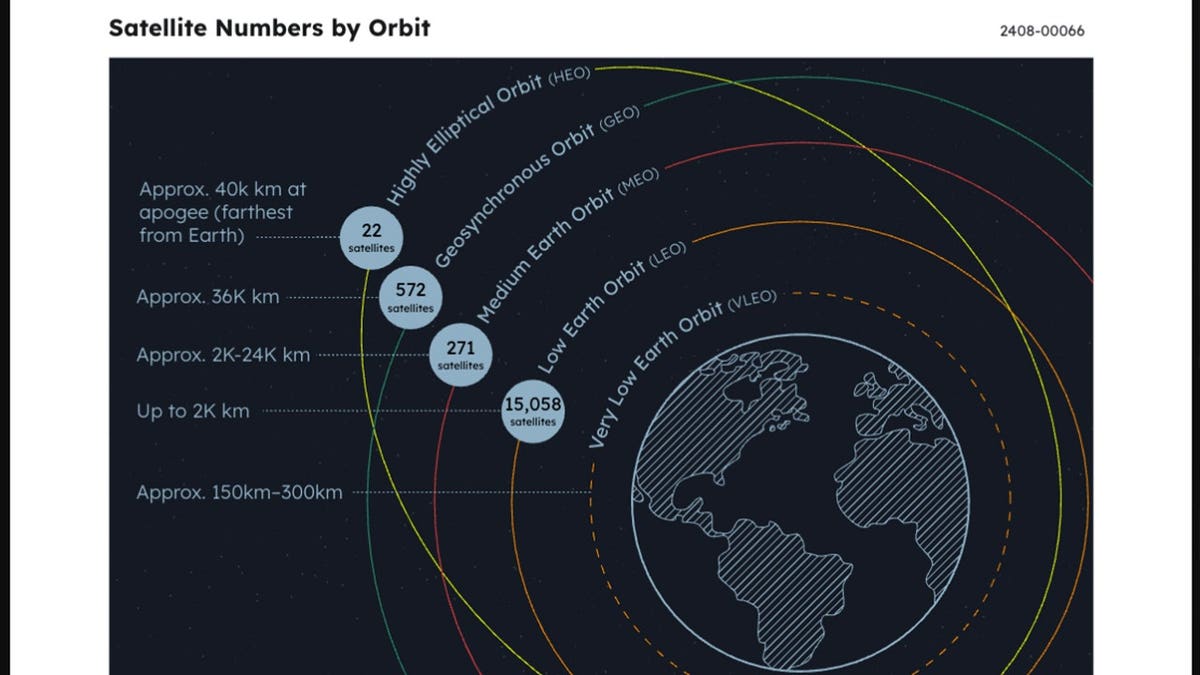
A Defense Intelligence Agency graphic shows the number of satellites operating at different orbital altitudes around Earth, including more than 15,000 in low-Earth orbit. (Defense Intelligence Agency)
Fox News Digital has reached out to the White House, Pentagon, U.S. Space Command and German Embassy for comment.
russia, air and space, nuclear proliferation, national security, nato
INTERNACIONAL
¿Qué países de Centroamérica y el Caribe se encuentran entre los trajes más votados de Miss Universo?

Nicaragua, Honduras, República Dominicana y Costa Rica figuran entre los 15 trajes nacionales más votados, según una publicación de Miss Universo. Las representantes de la región llevaron al desfile propuestas inspiradas en la paz, una leyenda hondureña, los símbolos patrios dominicanos y la biodiversidad costarricense.
La lista puso en escena cuatro identidades visuales distintas durante el certamen celebrado en Puerto Rico. Los diseños combinaron estructuras ornamentales, referencias históricas, elementos de la naturaleza y detalles vinculados con tradiciones de cada país.
La publicación de Miss Universo incluyó entre sus trajes nacionales más votados a las propuestas de Jasmine Blandford, Luisa Pineda, Melissa Núñez y Mariale Acosta. Cada atuendo representó una idea cultural particular: la paz en Nicaragua, la lluvia de peces de Yoro en Honduras, las tres raíces de República Dominicana y la riqueza natural de Costa Rica.
Nicaragua presentó El vuelo de la Paz
La representante de Nicaragua, Jasmine Blandford, desfiló con un traje típico titulado El vuelo de la Paz. La propuesta identificó la paz como el concepto central de su vestuario.
La imagen del vuelo funcionó como la representación visual elegida para acompañar el mensaje. El nombre del diseño reunió ambos conceptos durante la presentación de Blandford en la pasarela de trajes nacionales.
La propuesta nicaragüense fue una de las creaciones de Centroamérica y el Caribe que apareció entre los atuendos con mayor votación en la publicación del certamen. El material compartido no incluyó detalles sobre los componentes físicos de la pieza.
Honduras llevó la lluvia de peces de Yoro a la pasarela
La representante hondureña Luisa Pineda presentó una versión escénica de la lluvia de peces de Yoro, una de las historias populares más conocidas de Honduras. El diseño fue creado por el hondureño Franklin López.
El atuendo incorporó peces móviles, joyería, pedrería, canastas y detalles que evocaban las gotas de lluvia. Los zapatos de la concursante tenían aletas, mientras que sus brazos llevaban pequeñas cuentas colgantes para representar el agua durante una tormenta.
La propuesta retomó los relatos de habitantes del departamento de Yoro. Según esas narraciones, tras lluvias intensas entre mayo y junio aparecen cientos de peces pequeños sobre calles y terrenos de esa zona.
El departamento no tiene costa en el océano Pacífico ni en el Atlántico. Las versiones locales describen cielos oscurecidos, relámpagos, truenos, vientos fuertes y varias horas de precipitaciones antes de la aparición de los peces.
Las familias recogen los animales para utilizarlos como alimento, según la tradición. Las canastas que formaron parte del diseño aludieron a ese momento de recolección.
La leyenda también se vincula con el sacerdote español Manuel de Jesús Subirana. La tradición sostiene que el religioso rezó por alimentos para los habitantes de la región durante un período de escasez en el siglo XIX.
La creación de Pineda trasladó ese relato hondureño a un escenario internacional de belleza. Los tonos celestes, blancos y dorados, junto con el tocado estructurado y las plumas laterales, acompañaron los motivos alusivos a los peces.
República Dominicana reunió símbolos patrios y referencias culturales
La dominicana Melissa Núñez llevó un traje llamado Tres raíces, una nación, dedicado a la identidad de República Dominicana. La pieza reunió símbolos patrios, tradiciones y referencias culturales en una misma composición.
El diseño incorporó los colores de la bandera y una estructura central con el escudo nacional. También incluyó un faldón multicolor con motivos vinculados con el país, cadenas alrededor de la cintura, flores de cayena y estampados de tradiciones locales.
El vestuario sumó un turbante que cubría el cabello de la concursante. En la parte posterior apareció una Biblia abierta, integrada con las referencias patrióticas, religiosas y culturales de la creación.
El título aludió a la diversidad que forma parte de la construcción histórica y cultural dominicana. La propuesta mantuvo los emblemas nacionales como eje del atuendo.
Un tocado alto y un cetro decorado con el escudo complementaron la presentación de Núñez. La concursante mostró un vestido multicolor que utilizó los tonos de la bandera como parte de su identidad visual.
Costa Rica apostó por ranas, orquídeas y tonos dorados
La representante de Costa Rica, Mariale Acosta, presentó Goddess of the Golden Tropics, también denominado Diosa de los Trópicos Dorados. El traje se inspiró en la biodiversidad del país y puso el foco en especies animales y vegetales.
El mexicano Valencia Gonzaga elaboró el diseño junto con un equipo de artesanos. La propuesta incorporó referencias a la rana dorada, la rana de ojos rojos y la orquídea, flor nacional costarricense.
Los tonos verdes y dorados dominaron el vestuario. La pieza también incluyó bordados, cristales, una corona de gran tamaño y una estructura de flor rosada en la espalda.
Una figura de rana se convirtió en uno de los elementos centrales de la propuesta. La estructura partió de una base de alambre y fue elaborada manualmente.
El diseñador explicó que los bordados, las esculturas y las aplicaciones de cristales formaron parte del trabajo artesanal. El verde representó la vegetación y la vida natural de Costa Rica.
La orquídea rosa se integró como una referencia a una especie endémica. Las ranas, a su vez, funcionaron como emblemas de la fauna local y de una visión de poder femenino asociada con la diosa que dio nombre al traje.

En 2 días llega a Netflix una de las mejores películas bélicas de 2026 con el actor de IT. Una historia real de la Segunda Guerra Mundial

Quintela, Uñac y Capitanich se reunieron en Chaco, donde el PJ tendrá internas ante la quita de las PASO

Aún no hay sede confirmada para el duelo entre Instituto vs. River Plate ¿Dónde se jugará?

States rally behind Catholic church in first-of-its-kind Supreme Court fight over prayer shrine

Russia could launch nuclear-capable satellite within weeks, Western intelligence warns: report

Kicillof impondrá una nueva regulación a las empresas y generó rechazo: de qué se trata – Nexofin

Javier Milei destacó el desembarco de Tesla en el país y aseguró: “Esto también es devolverle la libertad a los argentinos”

El burbujeante ping pong de Colapinto con un actor argentino: de la puja entre Senna y Riquelme a la comida que le falta a la Fórmula 1

Agustín “Rada” Aristarán se despide de Chanta: “Con esta obra dejé de ser un impostor”

Financial Times duda de la economía argentina: riesgo país, financiamiento e imagen Milei

 POLITICA3 días ago
Javier Milei destacó el desembarco de Tesla en el país y aseguró: “Esto también es devolverle la libertad a los argentinos”
- CHIMENTOS1 día ago
Agustín “Rada” Aristarán se despide de Chanta: “Con esta obra dejé de ser un impostor”
- ECONOMIA20 horas ago
Financial Times duda de la economía argentina: riesgo país, financiamiento e imagen Milei