INTERNACIONAL
GOP eyes Senate comeback after Democratic bloodbath, but another political nightmare could await

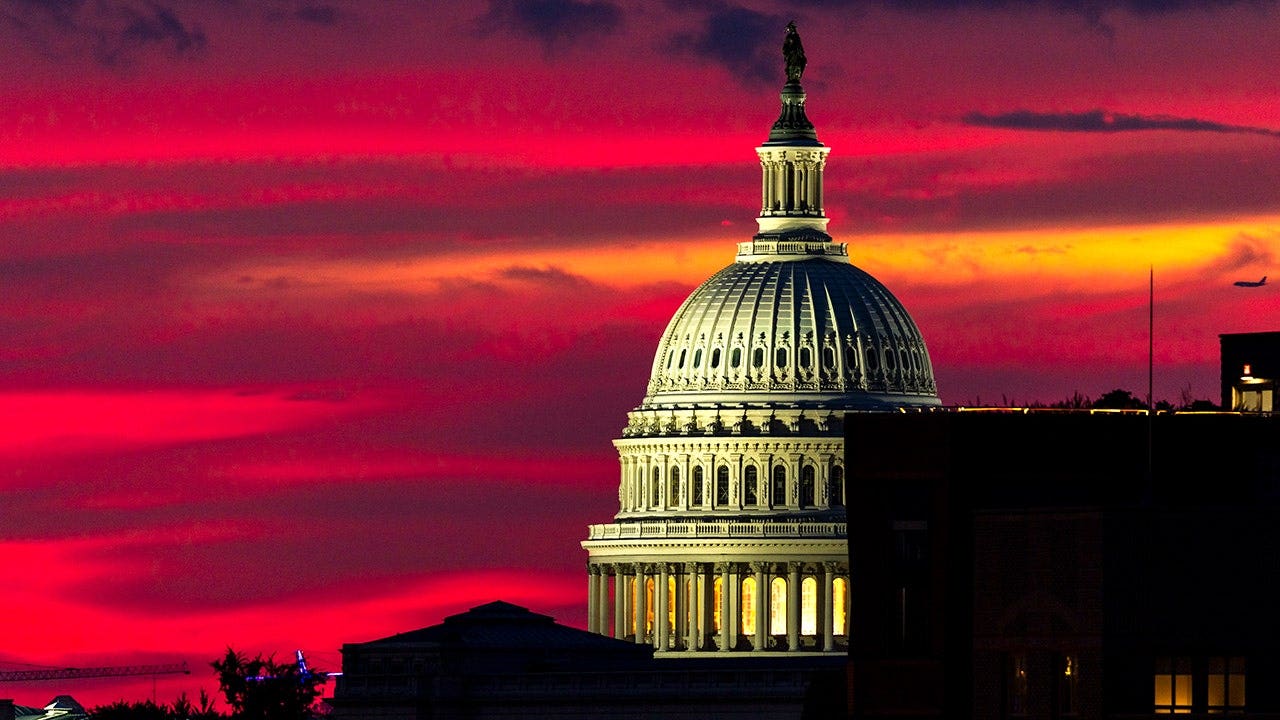
Republican control of the Senate could return as soon as the 2028 general election, but only if the party can pull off a series of crucial victories in competitive races, a possibility that seems distant following Tuesday night’s devastating Democratic sweep.
As of publication, Democrats and independents who caucus with them have secured 54 Senate seats, a total that could grow to as many as 56 pending election calls in Mississippi and Alaska.
Assuming Republicans hold the vice presidency in 2028, far from a guarantee, they would need to flip at least four seats during that election cycle to win the Senate back.
While there are ample pickup opportunities for Republicans in 2028 if the party can return to its typical national performance benchmarks, several vulnerable GOP-held seats could complicate their efforts to retake the upper chamber.
DEMS FLIPS YET ANOTHER SENATE SEAT IN TRUMP COUNTRY AMID SWEEPING GOP UPSETS
Iowa Sen. Chuck Grassley, for instance, turned 93 in September and faces a decision about whether to seek another term in 2028, when Republicans will be defending his seat in a state where Democrat Josh Turek just defeated Republican Ashley Hinson by roughly four percentage points. His departure before then could also give Iowa’s incoming Democratic governor the opportunity to appoint a temporary replacement.
Another possibility that could make the GOP’s path back to a majority even more uncertain is the admission of Puerto Rico and Washington, D.C., to the union as full states.
Such a move would likely require the Democratic-led Senate to abolish or overcome the legislative filibuster, something lawmakers representing more moderate or competitive states may balk at, as well as support in the House and either presidential approval or enough votes to override a veto.
CHUCK SCHUMER AFTER SWEEPING DEMOCRATIC MIDTERM VICTORIES: ‘I’LL BE RE-ELECTED AS MAJORITY LEADER’
Even if the filibuster is done away with, President Donald Trump could veto admittance bills. Democrats currently lack the numbers to override such a veto.
If Republicans lose the White House in 2028, however, Democrats could have a clearer path to advancing statehood for Puerto Rico and Washington, D.C., a move that would add four Senate seats and potentially complicate Republican efforts to win back the chamber, though significant political and legal obstacles would remain.
Assuming none of that happens, Democrats will be defending six Senate seats that could offer Republicans potential pickup opportunities in 2028.
Republicans will have pickup opportunities in New Hampshire, Nevada, Arizona, Georgia, Pennsylvania and Ohio that year. They will, however, be forced to defend vulnerable Senate seats in Wisconsin, Iowa and North Carolina.
Indiana, which saw a significant blue shift, also has a Senate seat up for contention in 2028, while Nebraska, where independent Dan Osborn mounted a competitive but unsuccessful challenge to Republican Sen. Pete Ricketts on Tuesday, will not hold another regularly scheduled Senate election until 2030.
While 2028 could deliver Republicans a majority if they play their cards right, another defeat on the scale of 2026 could put the Democratic Party dangerously close to the 60-vote threshold necessary to invoke cloture and counter a filibuster.
«It may be unlikely, but I do think it’s feasible,» Chip Wyatt, Heritage Action’s government relations director, told Digital. «We’re just as capable of having a night like the Democrats had on Tuesday in 2028.
«If anything, that election, the election we had on Tuesday, has shown us that two years is a very, very long time in politics. I think if you had told anybody in 2024 that this is what happened in 2028, they probably wouldn’t believe you.»
For Republicans to have a good night in 2028, Wyatt argued that conservatives would have to focus on affordability issues while Democrats overstep their mandate by allowing the fringes of their party to dictate its policy agenda.
Texas Sen. Ted Cruz took a similar line in reacting to Tuesday night’s election results.
«We will rebuild as a true blue-collar party, not by embracing socialism, but by being real free-market conservatives, the way we built the Texas economic miracle in the first place, and we will build and rebuild America as well,» he said.
«When the zealots overreach, and they will, we will stand ready to lead in the direction of freedom, of prosperity, of safety and security and common sense. We will return to a new dawn of freedom in America.»
The year 2030 features slightly fewer pickups for the GOP with a comparable number of states to defend. While Republicans will have pickup opportunities in Arizona, Nevada, Wisconsin and Michigan, they will also be forced to defend seats in Texas, Ohio and Pennsylvania.
MAJORITY LEADER THUNE SAYS SENATE GOP WON’T ‘STAND IDLY BY’ AS DEMOCRATS TAKE CONTROL OF CONGRESS
The 2032 election will feature the same regularly scheduled Senate seats contested in 2026, giving Republicans another opportunity to retake deep-red states they blundered this year, such as Kansas and South Carolina. Historically, however, some moderate Democrats have managed to hang on to statewide offices in typically red states, making a reversion far from a certainty.
Former West Virginia Sen. Joe Manchin, for instance, managed to survive multiple GOP challenges in the deep-red state. Kansas and Kentucky, similarly, have Democratic governors that survived Republican challenges in races that received national attention.
While many Republicans, and even some Democrats, have suggested liberal pickups in deep red states could be one-cycle wonders, Wyatt cautioned against complacency.
«We should always assume the politicians want to get re-elected, and, so, the senators in the deep red states that have been recently elected as Democrats are going to want to keep their seats. And, so, they’re going to be very strategic in how they vote and in what kind of bills they’re introducing,» Wyatt said.
«In some of these deep red states, it’s going to be difficult for [Democrats] to hold on to these seats. … Now, granted, I’ve already said two years is a long time, six years is an even longer time.
«So, who knows what kind of political landscape we’re looking at in 2032, but Republicans should definitely start off with a strong advantage in many of these states. … But it’s never wise to counter chickens before they hatch.»
Electoral politics is famously unpredictable. Nobody in 2024, for instance, envisioned South Carolina or Kansas sending Democrats to the Senate in 2026. It is possible that the Republican path to a Senate majority, or lack thereof, will be comparably surprising.
politics, midterm elections, senate, congress, republicans elections











NEWYou can now listen to Fox News articles!
Israeli Prime Minister Benjamin Netanyahu said Saturday that he was willing to temporarily relinquish power to Gadi Eisenkot, allowing his political rival to serve first as prime minister under a new rotating unity government.
In a statement posted on X, Netanyahu outlined a proposed power-sharing agreement between his Likud party and Eisenkot’s Yashar party that would see Netanyahu initially yield the premiership to his rival and serve as alternate prime minister before returning to the top post later in the term.
Netanyahu wrote in the social media post that he believes he should lead the Israeli government as head of the largest party, but said that «given the magnitude of the existential threat and the possibility that a government could be formed that isn’t able to deal with this danger,» his responsibility as a leader required that he «put everything aside.»
ISRAEL’S LEADING CONTENDER FOR PRIME MINISTER CLASHES WITH NETANYAHU OVER IRAN STRIKES
Israeli Prime Minister Benjamin Netanyahu proposed Saturday temporarily ceding power to political rival Gadi Eisenkot under a rotating unity government. (Nathan Howard – Pool/Getty Images)
The concession comes as Eisenkot — a former military chief — reportedly edges closer to forming an opposition-backed coalition that would oust Netanyahu from power.
Israel’s Oct. 27 legislative election left no bloc with a governing majority, leaving neither Netanyahu nor Eisenkot with a clear path to the premiership.
Eisenkot has since worked to turn an electoral opening into a governing coalition after Israeli President Isaac Herzog tasked him earlier this month with forming a government.
ISRAELI PRESIDENT TAPS NETANYAHU RIVAL TO FORM GOVERNMENT AS COALITION BATTLE LOOMS

Gadi Eisenkot, leader of the Yashar («Straight») party, waves an Israeli flag onstage following the release of the first exit poll results in Israel’s general election in Tel Aviv, Israel, Wednesday, Oct. 28, 2026. (Ariel Schalit/AP Photo)
He has until Dec. 6 to finalize a coalition, with the possibility of a 14-day extension.
This week, Eisenkot gained momentum from potential partners — including The Democrats, a left-wing party, and the right-wing Yisrael Beiteinu party — boosting his odds of assembling a parliamentary majority.

Israeli Prime Minister Benjamin Netanyahu offered to temporarily relinquish power to political rival Gadi Eisenkot as part of a proposed rotating unity government. (Amir Cohen/Reuters)
In response to Netanyahu’s proposal Saturday, Eisenkot said in a statement that his Yashar party’s negotiating team had been «trying to conduct a real, sincere, and accelerated negotiation» with Netanyahu’s Likud party but faced «refusal and evasion.»
He then invited Netanyahu to engage in serious negotiations with his party’s team on the «core lines and policy issues.»
Fox News Digital’s Efrat Lachter and Reuters contributed to this report.
world, benjamin netanyahu, politics, israel, middle east
INTERNACIONAL
Why Mamdani’s move to close infamous NYC jail could be ‘massive hit’ that reverberates for years: expert

Democratic New York City Mayor Zohran Mamdani announced that Rikers Island would be closed «once and for all» by 2032, a promise one crime expert said doesn’t add up and could release violent criminals back onto streets.
Mamdani pledged to replace the city’s largest jail with four smaller prisons across different boroughs, and corrections officers and criminal justice scholars have raised concerns that lowering the population of more than 6,000 inmates could carry lasting consequences.
Rafael Mangual, head of research for policing and public safety at the Manhattan Institute, told Digital there won’t be enough beds to accommodate a city of nearly 9 million people.
«If New York City gets this wrong, make no mistake, there will be a massive hit to public safety,» Mangual said.
MAMDANI IN HOT SEAT OVER POST MOURNING DEATH OF INMATE CHARGED WITH CALLOUS CRIME: ‘ABSOLUTELY SHAMEFUL’
The replacement jails in Manhattan, Brooklyn, Queens and the Bronx will have a capacity of 4,160 beds, with an additional 340 therapeutic beds for inmates with mental illnesses and other medical needs. They will be placed closer to public transit and courthouses.
Mamdani said the decision to push the closure of Rikers back by five years was because of «prior administration delays.» The city will also invest $146 million in support services.
The mayor’s office directed Digital to its Rikers Island closure plan and Mamdani’s remarks at a news conference last week, where he defended his position by saying, «We are making a conscious decision to advance a new model of a criminal legal system in our city, one that takes on that problem head-on.»
Mangual maintained the plan could lead to significant overcrowding and trigger more «violence and other kinds of contraband problems.»
«You can expect that the jails will continue to operate at 100% of capacity for as long as they exist if that project actually comes to fruition,» he said.
He added that the city’s jail population dropped below 4,000 in April 2020 during the COVID-19 pandemic. However, shootings and homicides spiked.
That year, there were 1,531 shootings, up 97% from 2019, and 462 murders, up from 319 in 2019, according to the New York City Police Department (NYPD).
HOUSE REPORT SAYS NYC PROSECUTORS TAILORED PLEA DEALS TO SHIELD ILLEGAL IMMIGRANTS FROM DEPORTATION
«The experiment is not going to be a pretty one, and that’s the thing that I think people need to be most concerned with,» he said. He added that Rikers had between 9,000 and 10,000 inmates during 2017 and 2018, which were some of the city’s safest years.
Despite the city seeing record-low murders and shootings so far this year, according to NYPD data, Mangual said other major crimes, like felony assaults, remain high.
«That’s a major problem that is only going to get worse,» he said.
He said previous efforts to bring down the jail population have posed additional risks to public safety, pointing to the city’s bail reform law and Manhattan District Attorney Alvin Bragg’s limits on low-level prosecutions that have made it easier to avoid jail.
«We certainly haven’t been able to get it down to where it is now without compromising public safety,» he said.
ILLEGAL IMMIGRANT SUSPECTS WITH LENGTHY CRIMINAL RECORDS ARRESTED IN STABBING OF OFF-DUTY NYPD DETECTIVE
Mangual said repeat offenders like Alexander Florentino could now be put back on the streets. Florentino, a homeless illegal immigrant, was arrested this month on a murder charge in the death of a 62-year-old woman inside her Chinatown apartment, one day after a judge released him without bail, according to the Department of Homeland Security (DHS) and court records.
Warning that reducing the jail population will only «erode the incapacitation benefits that incarceration provides,» Mangual said the city will be left with no other solutions.
«The idea that there’s an alternative to incarceration is one of the most misguided notions in criminal justice policy debates,» he said.
Rikers has faced years of controversy, with many inmates and activists criticizing harsh conditions, trial delays and limited access to family members and support services. The city’s goal is «to build a safer and more humane jail system,» according to a Nov. 20 press release.
But Mangual believes city officials still aren’t looking at the full picture, arguing that building multiple jails with the same systems, inmates and guards will not solve the problem and that some criminals are «simply too dangerous to coexist with the rest of society.»
«What they ought to have done was invest in refurbishing the jails that already existed, building new ones with adequate space, and then moving the inmate population around as required,» he said.
If the plan moves forward, Mangual said the city could see crime surge on a «much larger scale.»
«We’re already seeing what that could possibly look like when you have individuals who are out walking the streets with 30, 40, 50, 100 prior arrests, and they eventually kill somebody or shove somebody in front of a subway train,» he said.
Digital reached out to Bragg’s office for comment but did not receive a response before publication.
zohran mamdani, politics, new york city, blue city crime, immigration
INTERNACIONAL
British government confirms cyberattack on welfare department, systems pulled offline as precaution

Tech turmoil deepens as cyberattack breaches FBI crime database
Former White House Chief Information Officer Theresa Payton examines the national security implications of this hack. Payton outlines why seventeen government agencies remain highly vulnerable to sophisticated cyberattacks amid a wider string of high-profile technology outages.
NEWYou can now listen to Fox News articles!
The British government on Saturday confirmed that its Department for Work and Pensions was hit by a cyberattack this week, which prompted it to pull some of its systems offline as a safety precaution.
The department said there’s no evidence any personal information had been compromised and payments for pensions and benefits continued to be paid out as normal.
The attack was first identified on Thursday evening by the department which manages payments for retirees and those on welfare.
«We are working with the National Cyber Security Centre and Government Cyber Coordination Centre to understand the cause of an attempt to gain unauthorized access to our systems,» the department said in a release.
«We did the right thing by taking those systems offline because the top priority in these circumstances is to protect the public,» Work and Pensions Secretary Pat McFadden said a video posted to the department’s Facebook page.
SWIFT ASSURANCES FROM OFFICIALS AFTER WAVE OF NATIONWIDE OUTAGES RAISES QUESTIONS, EXPERT SAYS
A notice on a Department for Work and Pensions webpage informs users of disruption to some online services on a laptop in London on Friday. (Yui Mok/PA via AP)
«I understand people’s concern and distress if they didn’t receive a payment that they were expecting on Friday. We don’t believe any delays like that are to do with this cyberattack,» he said, adding that payments are cleared several days in advance.
The department handles 2.5 million payments every day, McFadden said.
The prime minister’s office said on Friday that there was no evidence that a «malicious actor» had targeted other government departments.
GROCERY STORE CYBERATTACKS ARE ‘PSYCHOLOGICAL WARFARE’ THAT COULD STRIKE US, FORMER FBI AGENT WARNS

The Department for Work & Pensions sign stands outside Caxton House in Whitehall, London. (Getty Images, File)
The attack comes on the heels of numerous others and outages in the U.K., the U.S. and other places, including the nationwide ground stop in the U.S. two weekends ago that was caused by an equipment upgrade, the government said, and a Microsoft outage. Neither of those appear to be connected to cyberattacks.
The Air Force, the FBI, the CIA, and the Treasury Department were all recently targeted in cyberattacks also.
COLLEGE BOARD HACKED AS CYBERATTACK EXPOSES USER DATA, DISRUPTS FINANCIAL AID SERVICE

The prime minister’s office said on Friday that there was no evidence that a «malicious actor» had targeted other government departments. (AFP via Getty Images, File)
Earlier this month and in October, a cyberattack on commercial refrigerators that use software in several European countries was targeted by hackers who heated them up, destroying millions worth of food.
U.K. meat suppliers were included in an early November attack, but the fridges were empty at the time, so nothing was destroyed.
The Associated Press and Reuters contributed to this report.
cybercrime, security, hackers, united kingdom, technologies, world

En un guiño al oficialismo, Macri se reunirá con Bullrich y ministros de Milei – Nexofin

A solas con Bruno Senna: cómo siente “la presencia de Ayrton”, su elogio a Franco Colapinto y la intimidad de la visita de Kimi Antonelli

Netanyahu offers to temporarily relinquish power in proposed unity government deal

La economía puede dejar atrás la recesión, pero el Gobierno arrancaría el año electoral sin un colchón de crecimiento

River Plate venció a Instituto con un gol de Montiel y se metió en semifinales

Leticia Brédice vuelve al teatro tras enfrentarse a sus propios miedos: “Esto me sana, esto es lo que soy”

Efecto reforma electoral: la suspensión de las PASO divide la estrategia de los “outsiders”

“Estoy preparada para ser presidenta”: fuerte desafío de Patricia Bullrich a Javier Milei

“Lo real es que estamos estancados”: el análisis de un economista tras la caída de la actividad

El juez retó a Chiqui Tapia y le subió el monto que debe pagar para salir del país

 POLITICA2 días ago
Efecto reforma electoral: la suspensión de las PASO divide la estrategia de los “outsiders”
- ECONOMIA2 días ago
Cerraron más de 50.000 kioscos en los últimos tres años y el sector perdió casi la mitad de sus locales
- POLITICA3 días ago
Presupuesto 2027: el oficialismo encamina el quórum en Diputados, pero persisten las diferencias por los fondos para discapacidad