INTERNACIONAL
Trump admin sued over bid to unmask ICE critics, including one who wrote ‘I want to kill ICE’

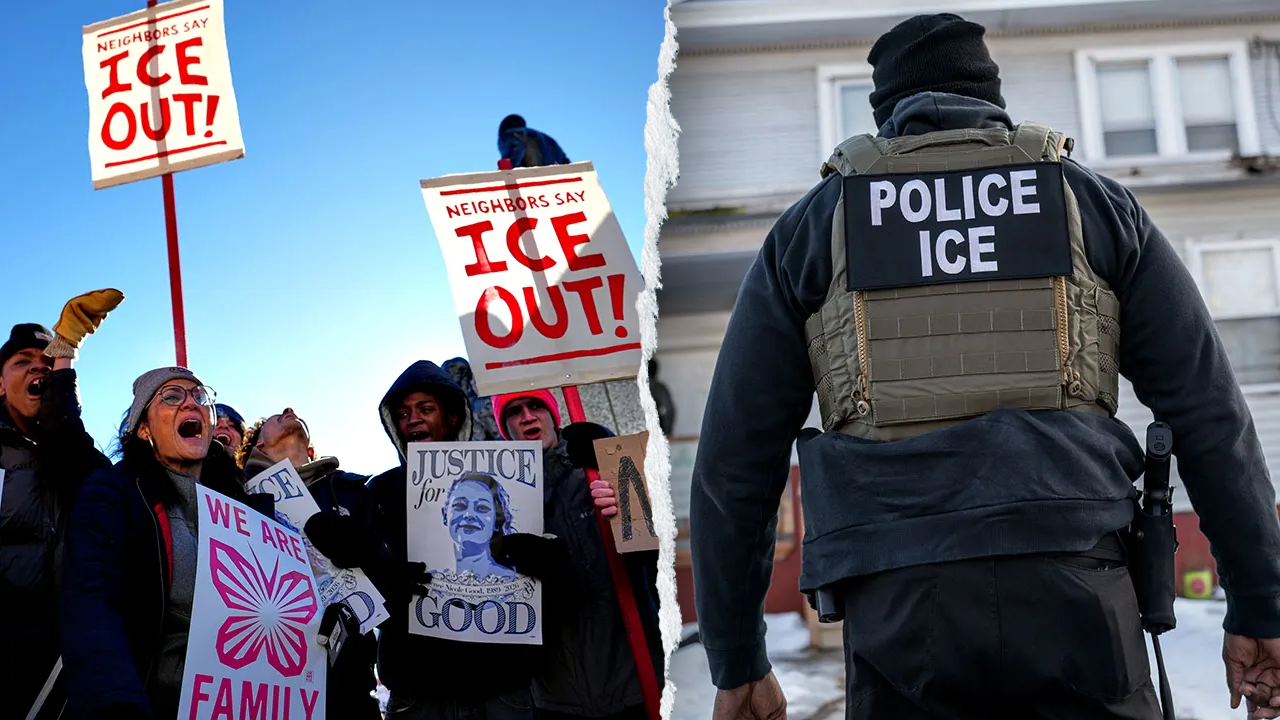
A new lawsuit accuses the Trump administration of weaponizing federal grand jury subpoenas to unmask anonymous social media users, including one who expressed a desire to kill Immigration and Customs Enforcement (ICE) officers and another who likened an agent to a «rabid dog» who should be «put down.»
The American Civil Liberties Union (ACLU) filed a lawsuit on behalf of four anonymous social media users seeking to shut down a federal investigation dubbed «Investigation 18,» alleging the government is violating Americans’ First and Fourth Amendment rights by investigating protected political speech.
U.S. District Judge James Boasberg ordered the lawsuit unsealed Wednesday, with the ACLU filing public versions of its court documents Friday. The lawsuit names Attorney General Todd Blanche, Homeland Security Secretary Markwayne Mullin and U.S. Attorney for the District of Columbia Jeanine Pirro as defendants.
At least 35 grand jury subpoenas have been issued under «Investigation 18,» according to ACLU’s lawsuit. The subpoenas seek information from social media companies, including users’ names, addresses, phone numbers, IP addresses and financial information, according to the complaint.
Among the plaintiffs is a retired Arizona prosecutor who took to Bluesky on Oct. 6 to express outrage over a video showing law enforcement officers dragging an elderly woman across the ground in Batesville, Texas.
NEW YORKER SUING ICE AFTER OFFICERS WENT TO HIS HOME TO WARN HIM OVER CRITICISM OF AGENCY
«Fact: more than once in my childhood I wanted to ‘kill’ my brother and sister for annoying me (Mom, he’s touching me). Now, as a senior citizen who pays attention, I want to kill ICE, the whole damn lot of them because of how they ‘touch’ humans, as seen in this video,» the retired prosecutor wrote.
Another plaintiff, a retired American living in Europe, commented on a June 5 Instagram post showing an ICE officer wielding a baton outside the Delaney Hall immigration detention facility in Newark, New Jersey.
«Looks like a rabid dog foaming at the mouth. Should be put down,» the user wrote, followed by a water gun emoji.
A state government employee represented in the lawsuit wrote on Bluesky on Oct. 8, «Burn ICE to the ground. Burn DHS to the ground. Salt the earth.»
The ACLU stated that the posts are constitutionally protected political speech and do not provide a legitimate basis for a criminal investigation, arguing that the subpoenas have already had a chilling effect on their First Amendment rights. The plaintiffs claimed they have begun censoring themselves online out of fear that further criticism of the administration could expose their identities or subject them to government scrutiny.
«The government is weaponizing the grand jury process to retaliate against people for expressing their political views online,» Laura Moraff, a staff attorney with the ACLU’s Speech, Privacy, and Technology Project, said in a statement. «The First Amendment guarantees our right to criticize the government, including anonymously, and no one should fear being investigated for disagreeing with the president. This crackdown on dissent is antithetical to our nation’s core values.»
CALIFORNIA ELECTION WORKERS HIT WITH CRIMINAL SUBPOENAS AS TRUMP DOJ TURNS UP HEAT IN VOTING SHOWDOWN
While the First Amendment protects anonymous political speech, including inflammatory criticism of the government, it does not protect true threats of violence. However, federal prosecutors are not required to establish probable cause that a crime has been committed before issuing a grand jury subpoena as part of a legitimate criminal investigation
DHS issued hundreds of administrative subpoenas to technology companies in late 2025 and early 2026 before federal authorities increasingly turned to grand jury subpoenas following legal challenges, according to the lawsuit.
Administrative subpoenas are issued by federal agents under certain laws, while grand jury subpoenas are typically issued by federal prosecutors investigating potential crimes. Neither generally requires a judge’s approval, but grand jury investigations are subject to secrecy rules.
The ACLU argued that by switching to grand jury subpoenas, the Trump administration has made it harder for the public to know who is being investigated and for social media users to challenge efforts to uncover their identities.
Some social media companies have already complied with subpoenas issued under the investigation, handing over identifying information about anonymous users, the lawsuit alleges.
The ACLU argued that allowing Investigation 18 to continue unchecked could discourage Americans beyond the four plaintiffs from speaking out against the administration.
The complaint also points to remarks made by White House border czar Tom Homan in January, when he expressed his desire to create a database to publicly identify individuals arrested for interfering with, impeding or assaulting ICE officers, vowing to «make them famous.»
TRUMP DOJ WITHDRAWS SUBPOENAS TARGETING NEW YORK TIMES JOURNALISTS AMID LEAK PROBE
The lawsuit comes amid mounting concerns over the safety of federal immigration officers carrying out nationwide enforcement operations—a centerpiece policy of President Donald Trump’s second term. The Department of Homeland Security (DHS) reported in September that assaults against ICE personnel had increased by more than 1,600%.
DHS recorded 647 assaults against ICE personnel between Jan. 20, 2025, and Sept. 20, 2026, compared with 37 during the equivalent period under the Biden administration.
Mullin attributed the influx in attacks on ICE agents to the «vicious lies» being spread by both politicians and anti-ICE activists, citing social media posts made by elected officials in a press release.
The plaintiffs are asking Boasberg to halt Investigation 18, block federal authorities from enforcing subpoenas issued as part of the investigation and purge records the government has already collected.
Boasberg is scheduled to hear arguments on the plaintiffs’ request for a preliminary injunction on Jan. 6.
Digital reached out Department of Justice, Department of Homeland Security and Pirro’s office for comment.
first amendment, bill of rights, federal courts, homeland security, justice department, attorney general, immigrant rights, tom homan, politics









INTERNACIONAL
Shapiro vows to put abortion rights in Pennsylvania’s Constitution as critics push back
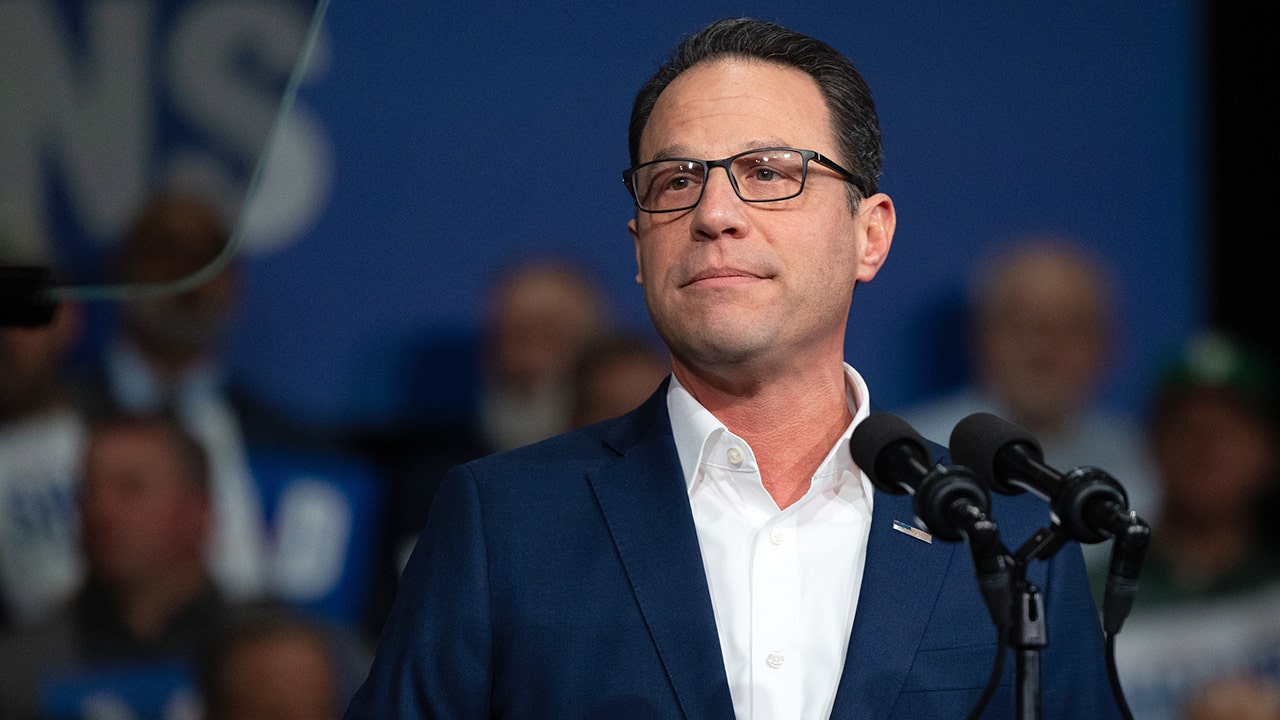
Pennsylvania Gov. Josh Shapiro is doubling down on his pledge to put abortion rights in the state Constitution, drawing fresh pushback after Democrats flipped the state Senate.
«I refuse to live in a world where women in Pennsylvania have fewer rights today than their moms and grandmoms had in previous generations,» Shapiro wrote on X.
«That’s why, with a Democratic trifecta, we’re going to codify the right to choose into our state Constitution — ensuring abortion remains safe, legal, and accessible for women now AND protecting reproductive health care access for future generations,» he added.
Democrats won a 26-24 majority in the Pennsylvania Senate in November, securing control of both legislative chambers beginning in January 2027.
GOP WIPEOUT GOES FROM BAD TO WORSE AS DEMS QUIETLY SCORE ANOTHER MAJOR WIN WITH BIG RAMIFICATIONS
Shapiro made the same pledge Nov. 21, taking aim at President Donald Trump and Vice President JD Vance.
«Donald Trump and JD Vance have not stopped attacking your reproductive freedom — but here in Pennsylvania, we’ve stood up and protected the right to choose,» Shapiro wrote. «And now, with a Democratic trifecta in Harrisburg, we’re going to enshrine abortion rights into our Constitution.»
GOV SHAPIRO SUES TRUMP ADMINISTRATION OVER ‘LIFESAVING REPRODUCTIVE CARE’ IN ESCALATING ABORTION BATTLE
The governor reiterated the promise the next day, saying he wanted it in the state Constitution «so no one can rip away a woman’s fundamental freedom to choose.»
Noah Brandt, executive vice president of the pro-life group Live Action, called Shapiro’s pledge «an embarrassment» and warned it could cost Democrats at the ballot box.
«If he believes this is why the people of Pennsylvania have entrusted his party with power, he is sorely mistaken,» Brandt said in a statement to Digital. «This would be a horrific abuse of that trust, and I suspect it will cost his party dearly at the ballot box.»
Shapiro has previously expressed support for Pennsylvania’s existing abortion law, although his recent posts did not specify whether a constitutional amendment would preserve the state’s current restrictions.
«The first and most fundamental freedom of every human being is the freedom not to be violently killed,» Brandt said. «Abortion deprives an innocent human being of that freedom by taking his or her life.»
Critics pushed back on Shapiro’s latest post, questioning what rights Pennsylvania women had lost and whether his proposal would expand access to abortions later in pregnancy.
«Please explain what rights women have lost?….I’ll wait,» one commenter wrote.
BOARD-CERTIFIED OBGYN WARNS NEW MASSACHUSETTS LATE-TERM ABORTION LAW EXPOSES MOTHERS TO DANGER
Shapiro did not say in the posts how an amendment would affect Pennsylvania’s current 24-week cutoff. State law generally allows abortions before 24 weeks and makes exceptions at or after that point to prevent the pregnant woman’s death or substantial and irreversible impairment of a major bodily function.
Democratic state Rep. Danielle Friel Otten introduced a proposed constitutional amendment Nov. 5 that would establish protections for reproductive liberty, including decisions about pregnancy, contraception and fertility care. The measure, House Bill 2857, was referred to the House Judiciary Committee.
The Pennsylvania House passed a separate reproductive rights amendment, House Bill 1957, in December 2025 by a 102-101 vote. The proposal would allow the state to regulate abortions after fetal viability but prohibit restrictions on abortions deemed medically necessary to protect the pregnant patient’s life or physical or mental health. Unlike the earlier measure, House Bill 2857 does not explicitly address fetal viability.
An amendment would need majority approval in both chambers in two consecutive legislative sessions before going to Pennsylvania voters for final approval.
NEONATOLOGIST SOUNDS ALARM OVER MASSACHUSETTS ABORTION LAW ALLOWING PROCEDURES UP TO BIRTH: ‘VERY DISTURBING’
Shapiro’s push follows a move by Democratic Massachusetts Gov. Maura Healey, who in August signed a law removing the state’s list of qualifying conditions for abortions at 24 weeks or later and allowing physicians to perform them based on their professional judgment. Massachusetts became the 10th state to remove gestational age limits on abortion.
At the signing, Healey said the law would allow families facing serious complications late in pregnancy to get care in Massachusetts without traveling out of state.
CATHOLIC GROUP DEMANDS MASSACHUSETTS GOVERNOR BE EXCOMMUNICATED OVER ABORTION LAW
«Abortion will remain safe. It will remain legal, and it will remain accessible here in Massachusetts,» she said.
SBA Pro-Life America President Marjorie Dannenfelser condemned the law and called on Republicans to pursue federal abortion restrictions.
PRO-LIFE LEADER SOUNDS ALARM AFTER DOCTOR GETS 6 MONTHS FOR FORCING ABORTION PILLS ON GIRLFRIEND
«We must do all we can to turn the page on America’s ugly chapter of late-term abortion,» she said.
Digital reached out to Gov. Shapiro’s office for comment.
Digital’s Bonny Chu contributed to this report.
politics, abortion, pennsylvania, state and local, constitution
INTERNACIONAL
La llamada ‘nueva Ley Monsanto’ que dividió Guatemala: un bloqueo en la capital, un amparo ante la CC y diputados retirando su firma
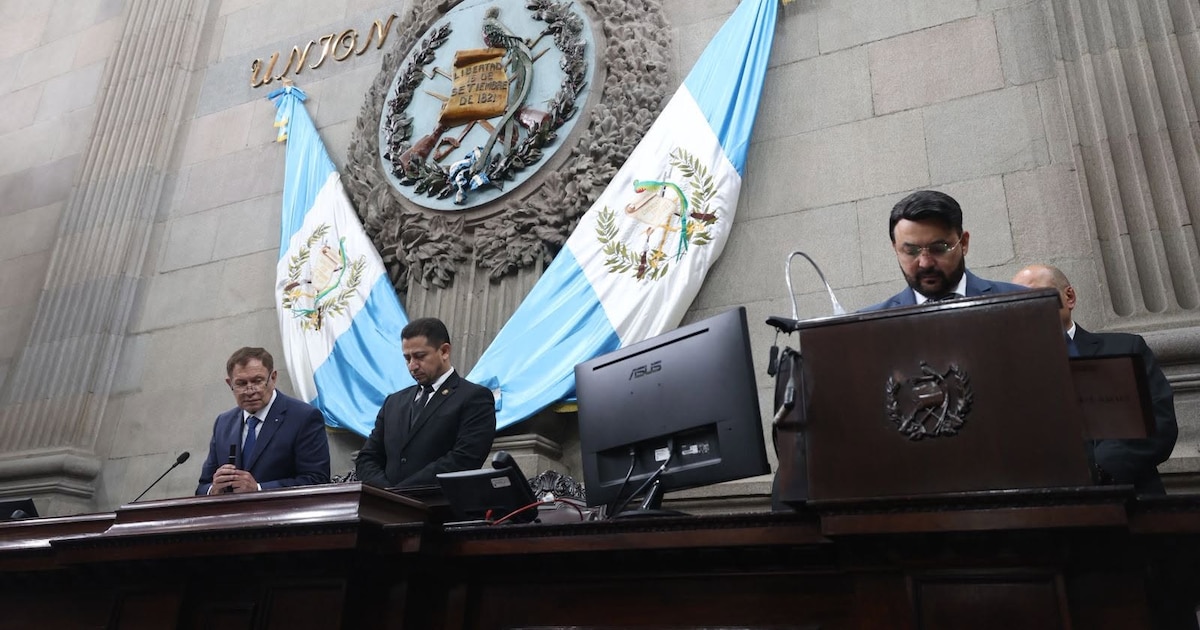
Un grupo de personas encapuchadas tomó este domingo un autobús para bloquear el carril que va de sur a norte sobre la calzada Raúl Aguilar Batres, en la 20 calle de la zona 12 de la Ciudad de Guatemala, en protesta contra la iniciativa 6882, conocida como Ley de Innovación Agrícola.
La Policía Municipal de Tránsito (PMT) habilitó de forma temporal uno de los carriles exclusivos del Transmetro para permitir el paso de vehículos afectados por la medida.
Según el vocero vial de la Municipalidad de Guatemala, Amílcar Montejo, los manifestantes repartieron volantes con mensajes de rechazo a la norma, a la que identifican como la nueva “Ley Monsanto”, en referencia a la ley que el Congreso aprobó y derogó en 2014 tras protestas masivas.
Hasta el momento no se identificó a qué organización pertenecen los encapuchados. La PMT recomendó a los automovilistas utilizar rutas alternas, entre ellas la Avenida Petapa, el Boulevard San Cristóbal, el Anillo Periférico y la avenida Carabanchel.
Autoridades indígenas rechazan la iniciativa en comunicados y pronunciamientos
El bloqueo se suma a una serie de pronunciamientos de autoridades indígenas y organizaciones campesinas contra la iniciativa 6882.
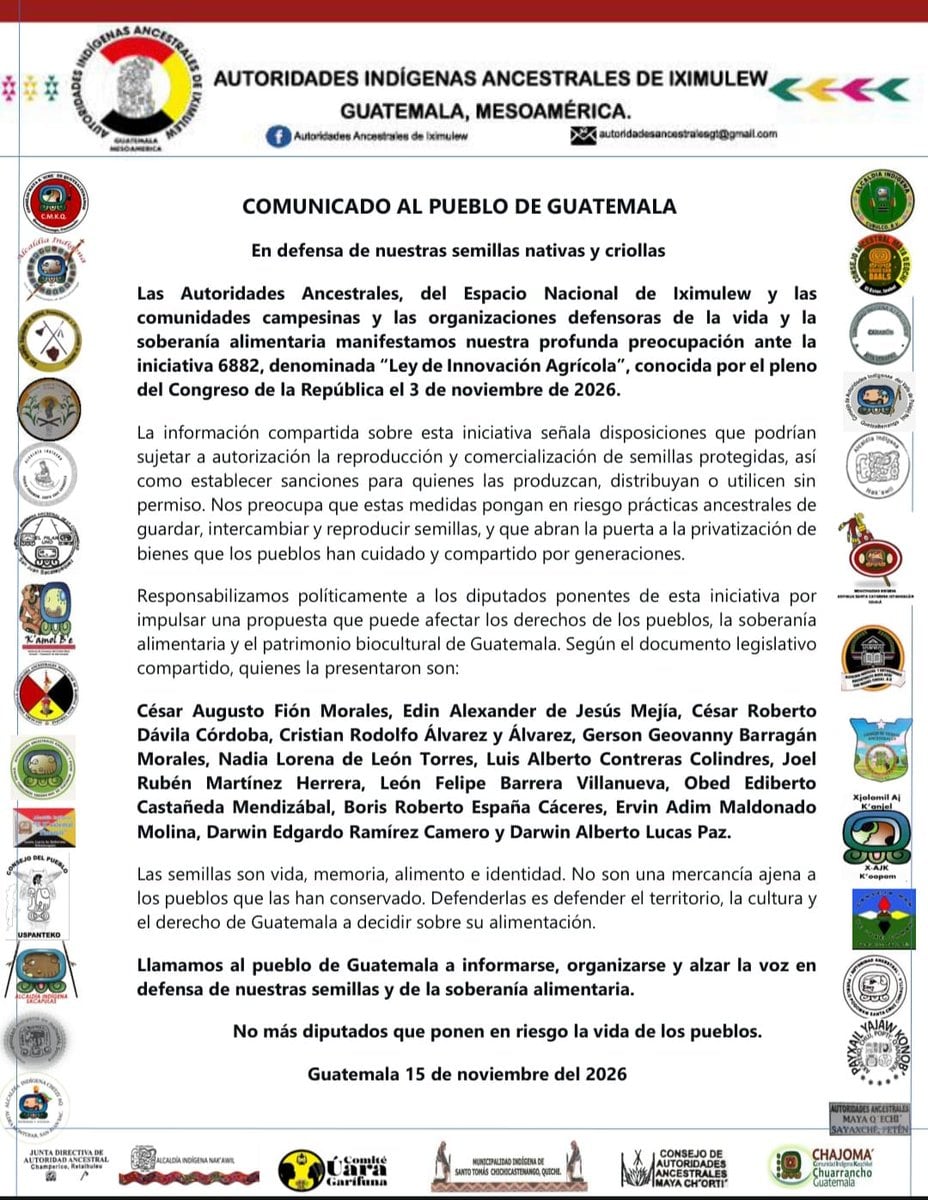
Las Autoridades Ancestrales del Espacio Nacional de Iximulew manifestaron, en un comunicado, su “profunda preocupación” porque la norma “podría sujetar a autorización la reproducción y comercialización de semillas protegidas”.
Responsabilizaron políticamente a los diputados ponentes por una propuesta que, señalaron, puede afectar “los derechos de los pueblos, la soberanía alimentaria y el patrimonio biocultural de Guatemala”.
Autoridades, comunidades y organizaciones del pueblo Q’eqchi’ de municipios de Alta Verapaz y Petén rechazaron el proyecto porque, afirmaron, “violenta los derechos a la consulta previae informada de los pueblos indígenas, como lo establece el convenio 169 de la OIT”.
Las autoridades indígenas ancestrales de Chisec, Alta Verapaz, calificaron la iniciativa de “ley Monsanto” y advirtieron que, de no ver resultados, verán “la necesidad de hacer una manifestación”.
El Comité Campesino del Altiplano (CCDA) cuestionó en un comunicado del 24 de noviembre: “¿Innovación para quién? ¿Quién controla? ¿Quién se beneficia?”.
El espacio maya mam Tja Mash, desde Chile Verde, calificó la propuesta como la Ley Monsanto “disfrazada” y pidió a los diputados archivarla, mientras el Frente Estudiantil Revolucionario “Robin García” (FERG) rechazó “convertir en propiedad privada lo que las comunidades han cuidado” durante generaciones.
También se pronunciaron en contra la Autoridad Ancestral de San José Poaquil, en Chimaltenango, y el Movimiento Agroecológico Nacional Q’anil.
La excandidata presidencial Thelma Cabrera señaló que la norma contempla penas de uno a cuatro años de cárcel y multas de entre Q380 mil y Q800 mil (USD 49 mil y USD 104 mil) para quien infrinja la ley, y advirtió: “Con esa ley nos prohíben nuestras semillas nativas”.
Un amparo preventivo busca frenar la discusión en el Congreso
El Bufete para los Pueblos Indígenas presentó el 27 de noviembre una acción de amparo con carácter preventivo. El abogado Juan Castro, integrante del bufete, explicó que el recurso responde a “la amenaza inminente” de que la iniciativa avance y la describió como “una copia idéntica” del decreto sobre obtentores vegetales derogado en 2014.
Castro agregó que, a su juicio, existe “un grupo de diputados que responden a una agenda internacional que busca legalizar los transgénicos en Guatemala” y pidió a la Corte de Constitucionalidad que exija “el debido proceso” y la realización de la consulta a los pueblos indígenas.
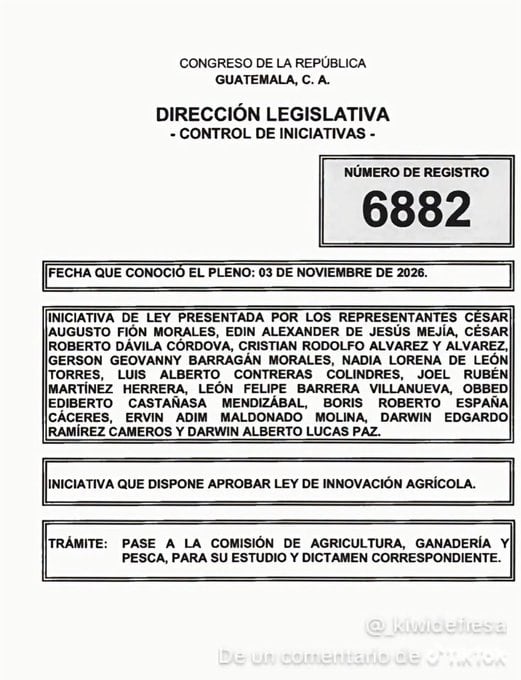
La iniciativa fue conocida por el pleno del Congreso el 3 de noviembre y remitida a la Comisión de Agricultura, Ganadería y Pesca, donde aún no cuenta con dictamen.
Diputados de la bancada Raíces precisaron que la propuesta no ha sido agendada para votación y que solo podría avanzar si la comisión emite un dictamen favorable, tras lo cual debería superar tres debates en sesiones distintas por no tratarse de una ley de urgencia nacional.
Qué establece la iniciativa 6882
El texto, presentado el 27 de octubre ante la Dirección Legislativa por catorce diputados, otorgaría derechos de propiedad por 20 años sobre nuevas variedades de semilla a quienes las registren ante el Ministerio de Agricultura, Ganadería y Alimentación (MAGA) y superen un examen técnico, bajo la figura de “obtentor”.
Quien produzca, venda o transporte semilla protegida sin autorización del titular enfrentaría penas de uno a cuatro años de prisión y multas de hasta 800.000 quetzales.
La norma se interpretaría conforme al Convenio Internacional para la Protección de las Obtenciones Vegetales (UPOV) de 1991, al que Guatemala se comprometió a adherirse en el marco del tratado de libre comercio con Estados Unidos (DR-CAFTA).
El artículo 2 excluye de forma expresa a las plantas silvestres y a los cultivos criollos no mejorados, como el maíz, el frijol, el chile y el ayote. Entre los firmantes de la propuesta figuran César Fión Morales y el presidente del Congreso para el período 2026-2027, Luis Contreras, ambos de la bancada Creo.

Analistas y organizaciones campesinas advierten que el riesgo no es inmediato sino de largo plazo: el eventual desplazamiento de las variedades nativas por las mejoradas y protegidas.
Señalan además un punto crítico no resuelto en el texto, vinculado a la polinización abierta del maíz, que podría cruzar variedades criollas con variedades protegidas sin intención de quien las siembra.
Diputados ponentes retiran su firma ante el rechazo social
Frente a la presión de las organizaciones indígenas y campesinas, parte de los legisladores que impulsaron la iniciativa comenzaron a desmarcarse de la propuesta, justo en una coyuntura cuando inicia el proceso electoral.
El diputado César Dávila, de la Unidad Nacional de la Esperanza (UNE), anunció el retiro de su firma: “Para su tranquilidad, retiraré mi firma de la iniciativa 6882, porque de ninguna manera vamos a afectar a los sectores más necesitados del país”, afirmó, y añadió que su decisión se mantendrá “hasta no existir consensos” entre los sectores involucrados.
El secretario general de Visión con Valores (VIVA), Armando Castillo, sostuvo que varios diputados de su bancada “firmaron de buena fe” para apoyar a agricultores exportadores de flores hacia Europa, pero que ya presentaron cartas para retirar su firma: “No la vamos a apoyar. Nadie en Viva va a apoyar algo que perjudique a los agricultores”, dijo.
Los retiros de firma se producen en un escenario marcado por la proximidad de las elecciones generales, en el que varios legisladores buscan distanciarse de una iniciativa que generó rechazo social organizado, antes de que la Comisión de Agricultura, Ganadería y Pesca emita un dictamen sobre el futuro de la propuesta.
Guatemala,combustibles,Congreso,diputados,bloqueos,precio gasolina
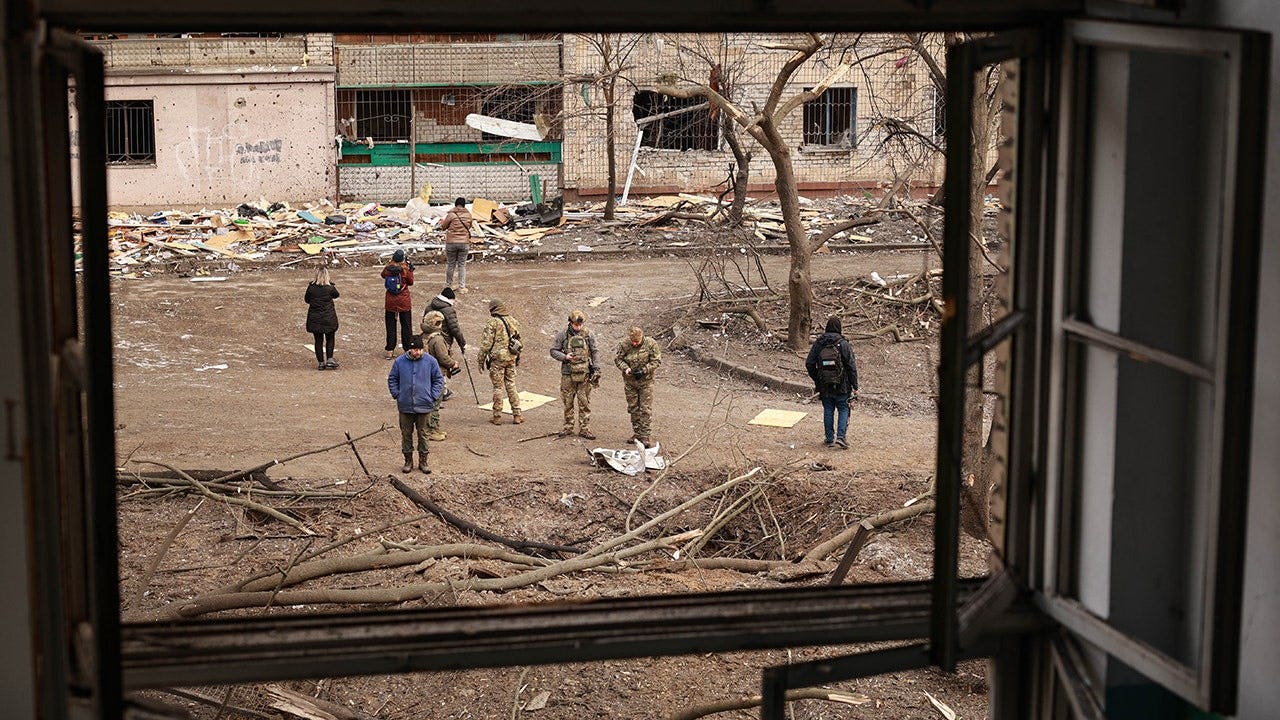
People look at a residential building damaged in a Russian airstrike in Zaporizhzhia, Ukraine, Sunday, Nov. 29, 2026. (AP Photo/Kateryna Klochko)
NEWYou can now listen to Fox News articles!
Russia claimed Sunday it shot down more than 1,000 Ukrainian drones for a second straight night as both sides traded deadly aerial strikes that killed at least four people despite ongoing U.S.-mediated peace talks.
Russia’s air defenses intercepted 1,017 Ukrainian drones overnight across 19 Russian regions and Russian-occupied Crimea, according to its Defense Ministry, which did not disclose how many drones were launched or reached their targets. The barrage followed a previous night in which Moscow claimed to have downed 1,246 Ukrainian drones, one of the highest totals reported since Russia launched its full-scale invasion nearly five years ago.
In Russia’s Belgorod border region, local officials reported one person killed and six wounded in Ukrainian drone attacks. Separately, Reuters reported that Ukrainian military intelligence announced on Telegram that its forces struck the KuibyshevAzot chemical plant in Togliatti, in Russia’s Samara region, alleging the facility manufactured raw materials for explosives and ammunition.
PUTIN LAUNCHES UKRAINE BARRAGE HOURS AFTER TRUMP MEETING AMID ALLEGED RUSSIAN MISSILE BREACH OF NATO AIRSPACE

Ukrainian servicemen collect bomb fragments in front of a residential building damaged in a Russian airstrike in Zaporizhzhia, Ukraine, Sunday, Nov. 29, 2026. (AP Photo/Kateryna Klochko)
In Ukraine, authorities said Russian strikes killed at least three people and wounded more than 20 as Moscow pressed an intensifying campaign against residential areas and energy infrastructure. Ukraine’s air force said Russia launched 140 drones overnight, with 101 shot down or suppressed, according to preliminary figures.
In the southern city of Zaporizhzhia, guided aerial bombs struck the city center amid residential buildings, killing a woman and wounding five people, Ukrainian President Volodymyr Zelenskyy posted on X. First responders from Ukraine’s State Emergency Service pulled the woman’s 14-year-old daughter alive from the rubble. Zelenskyy noted there were no military facilities nearby.
In the Odesa region, a drone strike ignited fires on the fourth and fifth floors of a 14-story apartment building, killing a woman and wounding three others, local authorities said. Separate strikes in the region damaged a farm and sparked a large fire at warehouses storing toys and household appliances, injuring two more people, Ukraine’s State Emergency Service reported.

A local school is damaged after a Russian airstrike on Zaporizhzhia, Ukraine, Sunday, Nov. 29, 2026. (AP Photo/Kateryna Klochko)
In central Ukraine’s Poltava region, a Russian drone struck the courtyard of an apartment building in Kremenchuk late Saturday, killing one person and injuring six, regional Gov. Vitalii Dyakivnych said.
ZELENSKYY COMPARES PUTIN TO HITLER AS TRUMP PAUSHES TO END UKRAINE WAR: ‘HE’S AN AGGRESSOR AND A KILLER’
Further north in Kharkiv, a Russian drone hit an industrial area, wounding nine people, Mayor Ihor Terekhov said. Meanwhile, Reuters reported via Russian news agency Interfax that Russia’s Defense Ministry claimed its troops struck facilities at the Philip Morris tobacco factory in Kharkiv, alleging the site was being used to produce ammunition for the Ukrainian army.

Windows in a school gym are shattered by the blast wave from a Russian airstrike in Zaporizhzhia, Ukraine, Sunday, Nov. 29, 2026. (AP Photo/Kateryna Klochko)
Zelenskyy said on X Sunday that Moscow launched more than 1,960 attack drones, over 1,600 guided aerial bombs and eight missiles against Ukraine over the past week alone. He accused Russia of trying to exploit approaching winter weather by hitting energy substations in the Vinnytsia, Kirovohrad, Rivne, Kharkiv and Odesa regions to cut off heating, light and running water.
Following a coordination call with Ukrainian diplomatic and defense officials Sunday, Zelenskyy thanked Norway for fulfilling air defense agreements and urged his foreign and defense ministers to press other partners to deliver promised support packages immediately.
«Additional financial and defense packages, first and foremost to strengthen air defense, mean lives saved,» Zelenskyy wrote.
The Associated Press contributed to this report.
ukraine, russia, wars, drones, world

Inteligencia Artificial: 7 recomendaciones para que los países en desarrollo no pierdan el tren

De Macri a Bullrich: la reacción de los políticos argentinos a los resultados de las elecciones en España

La sorpresa que Tamara Báez, la ex de L-Gante, recibió de su novio: así fue su emotivo pedido de casamiento

Javier Milei celebró el resultado de las elecciones de España: “Ganó la libertad, perdió el socialismo”

La reacción de Javier Milei al triunfo del PP y Vox en España: “Ganó la libertad, perdió el socialismo”

El show de Nico Paz en la goleada del Como ante la Juventus: joya de tiro libre y asistencia de lujo

Efecto reforma electoral: la suspensión de las PASO divide la estrategia de los “outsiders”

“Lo real es que estamos estancados”: el análisis de un economista tras la caída de la actividad

Quiénes son los jueces de Brasil y Chile que fallaron contra Argentina en el Tribunal del Mar

Cerraron más de 50.000 kioscos en los últimos tres años y el sector perdió casi la mitad de sus locales

 POLITICA3 días ago
Efecto reforma electoral: la suspensión de las PASO divide la estrategia de los “outsiders”
- POLITICA9 horas ago
Quiénes son los jueces de Brasil y Chile que fallaron contra Argentina en el Tribunal del Mar
- ECONOMIA3 días ago
Cerraron más de 50.000 kioscos en los últimos tres años y el sector perdió casi la mitad de sus locales