INTERNACIONAL
GOP lawmaker who defied blue wave reveals roadmap to win back Gen Z


Rep. Clay Fuller, R-Ga., said he knows how to get young voters back into the GOP fold.
«Since Charlie Kirk’s assassination, I think our side has kind of completely lost the ability to talk to younger Americans,» Fuller, who took over for Rep. Marjorie Taylor Greene, R-Ga., told Digital.
«I think when we talk to younger Americans, I want to talk directly to that young man or young woman who only has the ability to live in their parents’ home because they can’t afford a house. Do you know what the average age of a first-time homebuyer in the United States is? It’s 39. And that shouldn’t be where we are as a country.»
At 45 years old, Fuller skews on the younger end of Congress. He’s also one of the relatively few bright spots Republicans have seen since November — Fuller won his first full term on Nov. 3 by nearly 20 points, while the House GOP overall suffered significant losses.
BILLIONS SPENT BY KEY FEDERAL AGENCY HASN’T MADE AMERICAN DREAM OF HOMEOWNERSHIP ANY EASIER: REPORT
Fuller first came to Congress in mid-2026 via a special election when Greene abruptly resigned amid a public falling out with President Donald Trump.
FLORIDA CONGRESSMAN DIAGNOSES GOP’S BLUE TSUNAMI LOSSES: ‘WE FAILED TO MAKE THEM THINK WE CARED ABOUT THEM’
And unlike his predecessor toward the end, Fuller has not created divisions between himself and his fellow Republicans. But he’s calling on them to do more for America’s youth.
He lamented the «brain drain» plaguing both his northwest Georgia district and other parts of the U.S. far outside major cities. Young people leave after college to seek out urban centers with more opportunity, creating a seemingly neverending cycle that sees economic downturns drain the life out of small American communities.
I’M GEN Z: IF THE GOP WANTS MY VOTE, STOP THE SPEECHES AND FIX THE HOUSING CRISIS
«That’s the number one thing that I’m focused on every day, is making sure that we’re bringing that American dream back to being a reality,» Fuller said. «I want that to be true for young Americans, too. When they look at the town that they grew up in and their ancestors have been buried in, they know that they can stay there and have a career.»
Fuller himself built a career in his home state, serving in the military after graduating from college before working as a district attorney in northwest Georgia.
He said Republicans could have the high ground with young Americans if they doubled down on their economic policies, as well as the «larger philosophical outlook about who we are as a country and individual rights.»
«I want to talk to those young Americans to say, ‘Look, I know this isn’t your first choice of where you want to be. And you’re doing everything you can to achieve that American dream. That white picket fence should be a reality to you, and every policy that we should put in place, from immigration to economic policy to national security, should be focused on making sure that dream is more accessible to you than it was a couple of weeks ago,’» Fuller said.
«We just have to double down on supporting those policies and putting them in place and keeping that promise to the American voter, and they’ll turn back, especially once they see how crazy some of the people that got elected to the House and Senate are going to be.»
Young voters were among the key groups who turned away from the GOP en masse during the last election. Fox News’ Power Rankings cited disenchantment with the Iran war and Trump’s tariffs as key reasons for many Americans’ rejection of the right.
JUSTIN HASKINS: 3 HUGE REASONS REPUBLICANS LOST. HERE’S WHAT THEY NEED TO WIN IN 2028
Fuller argued that the next two years, however, will demonstrate that Democrats’ policies are not conducive to bringing the American dream back to reality.
«They know what was available to their great-grandparents and their grandparents. That’s all they want to see,» Fuller said. «I think we can put those economic policies in place, and those young Americans that felt like a house is too far out of reach … we can put the economic policies in place that makes that a reality. And I think at that point, yeah, people will support us because they know that socialism and communism, it doesn’t work.»
During his lengthy sitdown with Digital, Fuller maintained a focus on economic and health issues for his district — citing «forever chemical» like PFAS multiple times and his push to combat the high rates of cancer among his constituents — even when asked about his predecessor’s penchant for throwing verbal bombs at both Democrats and fellow Republicans.
He said he had no ill will toward Greene and even lauded her dedicated staff.
«I certainly had talked to her. There were people in our office who had been long-term staff members of hers and appreciated her opinion on both the district and the staff that we had, especially in our district office,» Fuller said when asked if Greene helped him with the transition. «She talked glowingly about everybody that worked there, and we have an incredible in-district team. But otherwise, again, I always know any position that I’m going to add to, I’ve got my own priorities, I’ve got my own focus. And from day one, that’s what I’ve been focused on.»
politics, meet the new congress, republicans elections, house of representatives politics











INTERNACIONAL
Este 29 de noviembre vence el plazo para que la diáspora registre su dirección y vote en 2027

El Registro Nacional de Personas Naturales (RNPN) fijó el término para la incorporación al registro de votantes de cara a los comicios generales de El Salvador en 2027. Durante una entrevista en el programa Punto de vista de Radio YSKL, el registrador nacional, Fernando Velasco, confirmó que el padrón electoral cerrará el 29 de noviembre tanto en territorio salvadoreño como en el exterior.
La medida marca el plazo definitivo para que las personas que tramiten su documento único de identidad (DUI) por primera vez queden facultadas para votar ante el Tribunal Supremo Electoral (TSE).
Quienes efectúen el trámite de expedición inicial después de la fecha límite recibirán su documento formal, pero no figurarán en las listas de sufragio para las elecciones del 28 de febrero de 2027.
Velasco remarcó la rigidez de esta disposición legal: “El ciudadano que quiere sacar su DUI por primera vez y que este sea incluido en el registro para el padrón electoral, tiene hasta el domingo para poder solicitar su documento único de identidad, tanto a nivel nacional como en el exterior”.

Por el contrario, las modificaciones de datos personales posteriores a esa fecha no suprimirán la posibilidad de votar, aunque obligarán al ciudadano a emitir su voto en la mesa asignada a su domicilio previo.
De forma complementaria al calendario comicial, el Estado concluyó la gratuidad para la renovación anticipada de identificaciones para este día sábado 28 de noviembre. Dicho beneficio fiscal estuvo dirigido a los ciudadanos con credenciales cuya vigencia expira entre el 29 de noviembre y el 28 de febrero.
A fin de absorber el flujo de solicitantes, las autoridades ampliaron la atención en las oficinas de los DUICentros en jornadas continuas hasta la medianoche en las sedes metropolitanas y departamentales más concurridas.
La diáspora define la modalidad de votación a través del cambio de domicilio
Para la comunidad radicada en el extranjero, el 29 de noviembre también representa la jornada final para consignar cambios de residencia en el documento. La modificación del domicilio determina la vía de sufragio que utilizará cada salvadoreño fuera de las fronteras nacionales: contar con una dirección foránea validada permite votar de forma remota a través de internet con cualquier dispositivo tecnológico.
Quienes conserven la dirección residencial de El Salvador deberán concurrir de manera presencial a los centros de votación que el TSE instale en las ciudades habilitadas.
“El tener actualizado su documento único de identidad con su domicilio del exterior les va a permitir, al momento de la fiesta electoral, poder realizar su voto de forma remota por internet”, explicó Fernando Velasco.
Tiene hasta mañana, sábado 28 de noviembre, para renovar gratis su Documento Único de Identidad (DUI), si vence entre el 29 de noviembre de 2026 y el 28 de febrero de 2027. El trámite puede realizarse en los DUICentro o en línea: https://t.co/PN8V5DhHzw
— Secretaría de Prensa de la Presidencia (@SecPrensaSV) November 27, 2026
Con el propósito de atender a los connacionales en Estados Unidos, México y Canadá, así como en España e Italia, los centros de atención consular y sedes de servicio extenderán sus turnos hasta la medianoche durante este fin de semana del cierre registral. En territorio estadounidense, la institución activó oficinas temporales en urbes como Saint Paul y Nashville para reforzar la capacidad operativa.
El registro nacional acumula más de 600 mil documentos vencidos
El titular del RNPN detalló que el sistema registra 5,409,306 documentos emitidos en El Salvador, de los cuales 4.790.812 permanecen vigentes y 618,494 carnés están vencidos. La entidad recordó que la vigencia del carné se extiende por ocho años, lo que originó un ciclo de caducidad concentrado que comenzó a inicios de 2026 y concluirá durante el primer trimestre de 2027, con un universo estimado de 1,6 millones de renovaciones.
Como parte de la modernización de los trámites, el RNPN habilitó la plataforma electrónica dui.sv, que contabiliza alrededor de 30 mil trámites de renovación y reposición mediante validación biométrica facial integrada con el sistema login.sv.
corresponsal:Desde San Salvador, El Salvador
INTERNACIONAL
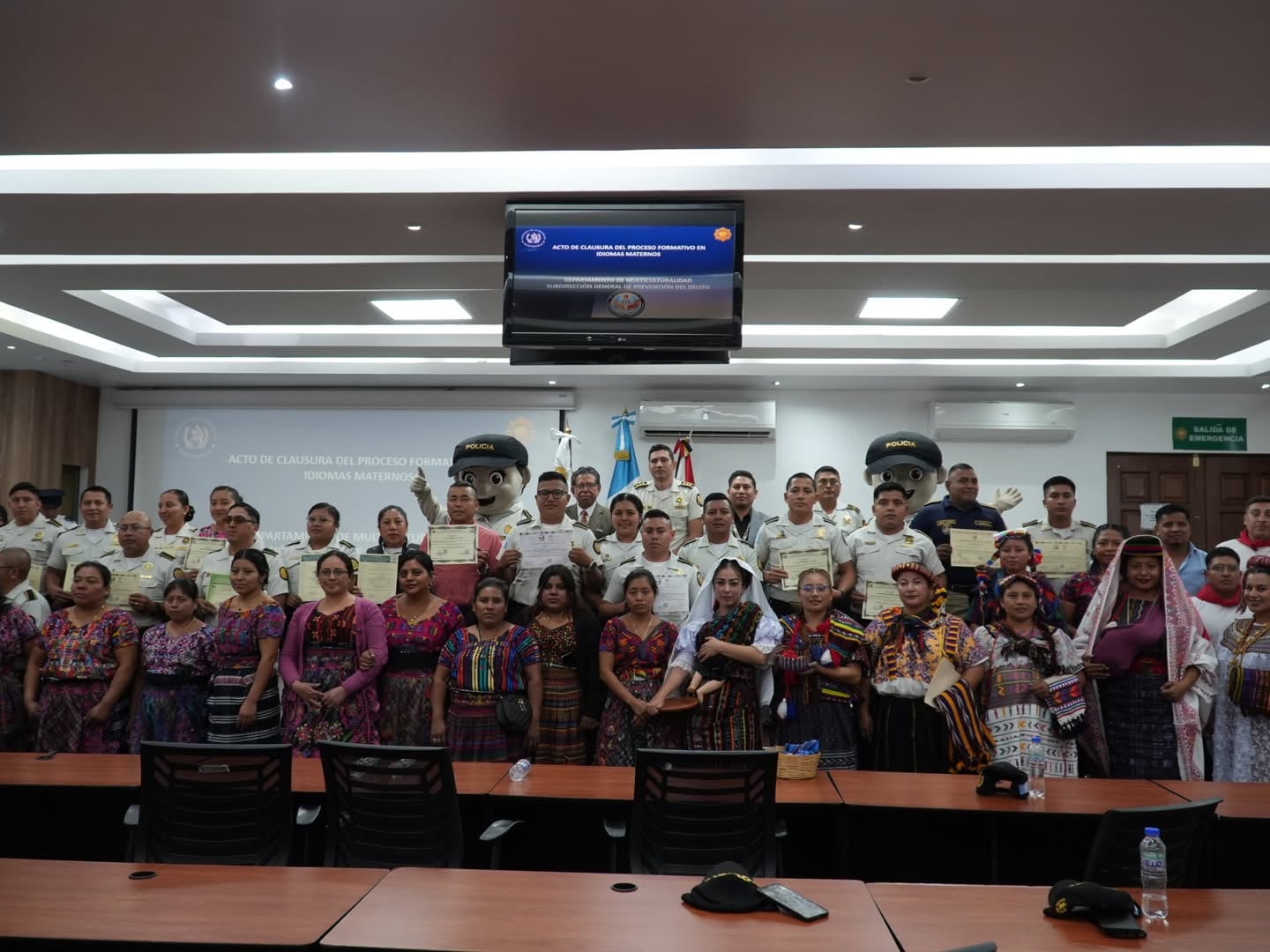
La Policía Nacional Civil de Guatemala capacita a 43 agentes para atender en siete idiomas mayas

La Policía Nacional Civil de Guatemala capacitó a 43 agentes durante siete meses en siete idiomas mayas para que puedan atender denuncias, pedidos de auxilio y conflictos comunitarios en la lengua materna de quienes recurren a la fuerza de seguridad. La formación busca reducir los obstáculos de comunicación que pueden alterar el relato de una víctima o impedir que una persona presente una denuncia.
El programa incluyó achi, kaqchikel, k’iche’, mam, poqomchi’, q’eqchi’ y sakapulteko. Estuvo a cargo del Departamento de Multiculturalidad de la Subdirección General de Prevención del Delito y concluyó con un acto en la Dirección General de la Policía Nacional Civil, ubicada en la zona 1 de la Ciudad de Guatemala.
Guatemala reconoce 22 idiomas mayas, además del garífuna y el xinka, mientras que el español es el idioma oficial y el de mayor uso en la administración pública. En numerosas comunidades, sin embargo, el español se aprende como segunda lengua o se utiliza principalmente para trámites, educación formal y contacto con las instituciones estatales.
La posibilidad de comunicarse en una lengua indígena puede ser determinante desde el primer contacto con un agente. Una persona que denuncia una amenaza, una agresión, un robo o un episodio de violencia necesita describir lugares, personas y hechos con precisión, y una diferencia en la interpretación de esos elementos puede modificar el sentido de su declaración.
Siete lenguas para atender conflictos y denuncias
Los policías que completaron el curso podrán intervenir en sedes policiales, operativos y puestos de control. La institución prevé que también actúen como facilitadores en conflictos locales, con la posibilidad de escuchar a las partes en el idioma que emplean en su vida cotidiana.
La iniciativa apunta a disminuir la dependencia de familiares, vecinos u otros terceros que traducen de manera informal. Esas mediaciones pueden dificultar la confidencialidad de una denuncia o introducir errores en situaciones que requieren una explicación exacta de lo ocurrido.
El achi tiene presencia en Baja Verapaz; el kaqchikel se habla en áreas del centro y occidente; el k’iche’ predomina en parte del altiplano occidental; y el mam está presente en departamentos como San Marcos y Huehuetenango. El q’eqchi’, por su parte, se utiliza en Alta Verapaz, Izabal y parte de Petén, entre otros territorios.
El q’eqchi’, el k’iche’, el mam y el kaqchikel figuran entre las lenguas mayas con mayor número de hablantes. También existen comunidades lingüísticas más pequeñas vinculadas con idiomas como el itzá, el mopán, el tektiteko y el uspanteko, una diversidad que limita el alcance de una única estrategia de atención estatal.
La obligación estatal de atender en idiomas nacionales
La Ley de Idiomas Nacionales, aprobada mediante el Decreto 19-2003, establece que los servicios públicos deben facilitar información y atención en los idiomas de las comunidades lingüísticas. Su artículo 15 incorpora a la seguridad entre las áreas prioritarias, junto con la salud, la educación y la justicia.
El reconocimiento legal de los idiomas nacionales no garantiza por sí solo la disponibilidad de intérpretes, funcionarios bilingües o documentos traducidos para cada procedimiento. La capacitación de los agentes representa una medida puntual dentro de una obligación más amplia para las instituciones presentes en territorios donde predominan las lenguas indígenas.
El sistema judicial cuenta con 120 intérpretes oficiales para las 22 lenguas mayas, según la información presentada por Guatemala ante el Comité para la Eliminación de la Discriminación Racial de las Naciones Unidas. Durante ese debate también se expusieron reclamos por dificultades de acceso a la justicia y por la falta de intérpretes en algunas instancias.
La formación policial adquiere relevancia antes de que un caso llegue a un fiscal o a un tribunal. Si la persona afectada no logra explicar lo sucedido con claridad ante una comisaría o un agente de su comunidad, la dificultad aparece desde el inicio del proceso.
La Policía Nacional Civil no informó en qué departamentos o comisarías serán asignados los 43 agentes ni si el programa tendrá nuevas cohortes para incorporar otros idiomas mayas, el garífuna o el xinka. Tampoco detalló si los participantes recibieron herramientas para redactar actas, orientar denuncias o intervenir en procedimientos policiales en esas lenguas.
Policía Nacional Civil,Guatemala,idiomas maternos,capacitación policial
INTERNACIONAL
Explosion near Afghan school kills at least 10, injures 110 as children rushed to hospital

NEWYou can now listen to Fox News articles!
An explosion at a school in northeast Afghanistan has killed at least 10 people and injured 110 more, according to a spokesperson for the Taliban’s Interior Ministry and the BBC.
Early reports indicate that the explosion happened at a building storing explosives for mining near the school, Taliban spokesman Abdul Mateen Qani said in a statement.
Qani claimed the explosion was caused by «negligence and carelessness at an explosives depot belonging to mining companies near the school.»
The explosion took place in Afghanistan’s Kunar province, a subdivision that borders Pakistan and is home to a significant mining operation, in the Asadabad district, which sits right on the Kunar River that separates western Pakistan from eastern Afghanistan.
TALIBAN REPORTEDLY STRIPS WOMEN OF THEIR NAMES IN AFGHAN PROVINCE, NOW BEING CALLED ‘GOAT’ OR ‘GRANDMOTHER’
FILE – An aerial view shows the Kunar river running past a hillside in Kunar province on September 14, 2025. (WAKIL KOHSAR/AFP via Getty Images)
Qani also said that authorities are investigating the explosion and will release more details following a government inquiry.
Chaotic video from the aftermath shows Afghans pulling bloodied children from cars and rushing them into Asadabad Provincial Hospital.

Afghan schoolchildren and other victims injured in an explosion receive medical treatment at a hospital in Asadabad, in Afghanistan’s Kunar province on Nov. 28, 2026. An explosion near a school in Afghanistan’s eastern Kunar province killed at least 10 people and injured at least 110 others, officials said. (Aimal Zahir / AFP via Getty Images)
Sami-ul-Haq Haq Bayan, director of information for the Kunar province, also confirmed the blast.
The incident marks the second such explosion in Afghanistan that impacted young students in recent months.
TALIBAN WIPES OUT DECADES OF PROGRESS AS 2.4M AFGHAN GIRLS REMAIN LOCKED OUT OF SCHOOL, UN AGENCY SAYS

Afghan men gather at the site of an explosion at Asadabad in Afghanistan’s Kunar province on Nov. 28, 2026. (Aimal Zahir / AFP via Getty Images)
In August, the Afghan capital Kabul was rocked by an explosion at a youth learning center that injured at least 42 children.
Reuters contributed to this report.
world, afghanistan, bombings, asia world regions, middle east

Este 29 de noviembre vence el plazo para que la diáspora registre su dirección y vote en 2027

Las reacciones de los medios británicos al fallo del Tribunal del Mar contra la Argentina por Malvinas

Rumbo a la gloria: los hinchas de Estudiantes se dirigen al Centenario cantando adentro del Río de la Plata

El devastador incendio en una propiedad de la leyenda de la NBA Chris Bosh valuada en más de 4 millones de dólares

GOP lawmaker who defied blue wave reveals roadmap to win back Gen Z

Moody’s Ratings dijo que «por el momento» no bajará la nota de Argentina pese al salto del riesgo país

Efecto reforma electoral: la suspensión de las PASO divide la estrategia de los “outsiders”

“Estoy preparada para ser presidenta”: fuerte desafío de Patricia Bullrich a Javier Milei

El economista Luis Secco cuestionó el programa económico de Milei: “Estamos estancados desde fines del primer trimestre de 2025″

“Lo real es que estamos estancados”: el análisis de un economista tras la caída de la actividad

 POLITICA1 día ago
Efecto reforma electoral: la suspensión de las PASO divide la estrategia de los “outsiders”
- ECONOMIA3 días ago
“Lo real es que estamos estancados”: el análisis de un economista tras la caída de la actividad
- POLITICA3 días ago
El juez retó a Chiqui Tapia y le subió el monto que debe pagar para salir del país