INTERNACIONAL
Greta Thunberg joins massive French student protests as cars burn, police fire tear gas


NEWYou can now listen to Fox News articles!
Climate activist Greta Thunberg joined student protesters in France on Tuesday after weeks of violent confrontations with police, thousands of arrests and widespread school closures over demands for education reform.
The 23-year-old Swedish activist appeared outside a high school in Saint-Denis, north of Paris, where students were demanding more teachers, better facilities and shorter school days, Reuters reported.
More than 6,800 people have been detained since the protests began in September, according to French authorities. Demonstrators have set fires, erected barricades and confronted riot police in cities across France, although many protests have remained peaceful.
FRANCE EXPLODES AGAIN AS STUDENTS RIOT OVER EDUCATION
Climate activist Greta Thunberg speaks with students outside a high school in Saint-Denis, near Paris, France, on Oct. 13, 2026, as nationwide protests over education reform continue. (JULIEN DE ROSA / AFP via Getty Images)
Thunberg, who rose to prominence organizing school strikes over climate change, criticized the French government’s response to the demonstrations.
«We are inspired by the young people who are demanding their basic rights,» Thunberg told reporters, according to Reuters. She also described the police response as «extremely violent.»
About 161,500 people marched across France on Tuesday, including 41,500 in Paris, according to Interior Ministry figures. The Education Ministry said 214 schools were closed.
FRENCH SCHOOL RIOTS DEEPEN AS EXPERTS POINT TO FAR-LEFT ALLIANCE FUELING ‘BROADER CONFRONTATION’
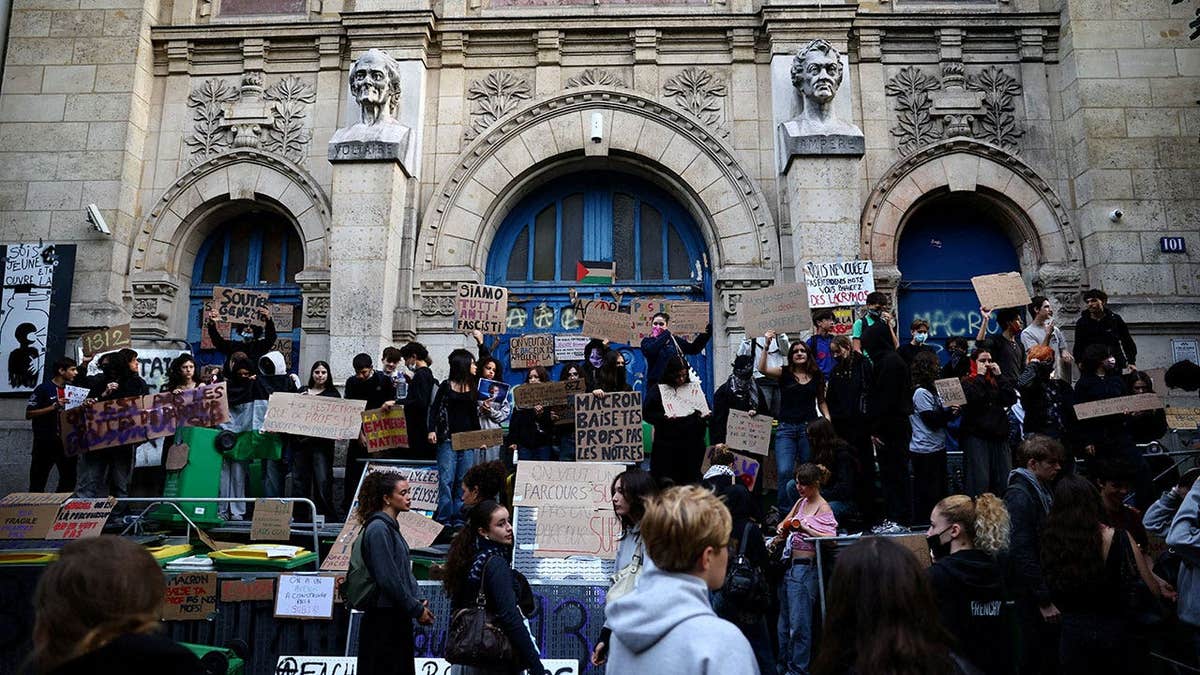
French high school students gather outside the Lycee Voltaire high school as part of nationwide protests to demand the hiring of substitute teachers, increased resources and better learning conditions, in Paris, as more than 400 schools remain closed following days of student protests that have escalated into violence in some places, France, October 2, 2026. (Sarah Meyssonnier/Reuters)
President Donald Trump weighed in on the turmoil last week, blaming mass migration rather than complaints about education.
«What’s happening in France is nothing less than out of control mass migration. This isn’t about schools, this is about Islam wanting to take over a once great Country!» Trump wrote on Truth Social on Oct. 6.
The demonstrations have become a political flashpoint ahead of France’s presidential election next May, with far-left presidential hopeful Jean-Luc Mélenchon accusing the government of excessive force against young protesters.
FRANCE IS DEVOURING ITSELF AS SCHOOL RIOTS REVEAL A CRISIS FAR BIGGER THAN BROKEN CLASSROOMS

Greta Thunberg meets with students in Saint-Denis, France, on Oct. 13, 2026, as demonstrations over school conditions and education funding enter their fourth week. (JULIEN DE ROSA / AFP via Getty Images)
Mélenchon joined demonstrators in Paris on Tuesday, while right-wing National Rally leader Marine Le Pen has condemned violence by protesters and called for those responsible for damaging schools to pay for repairs.
The police response has drawn criticism following an incident last week in which a 15-year-old boy lost his hand and part of his lower arm after picking up a police dispersal grenade that detonated during a demonstration in Lens.
French authorities subsequently suspended the use of the type of stun grenade involved in the incident.
French President Emmanuel Macron has called for restraint and dialogue as the demonstrations continue.
Students have complained about deteriorating buildings, teacher shortages and school days that can stretch from 8 a.m. to 6 p.m. French Prime Minister Sebastien Lecornu has asked ministers to address their demands.
Fox News Digital’s Greg Norman-Diamond contributed to this report.
greta thunberg, france, world protests, controversies education, world











INTERNACIONAL
El Niño ya cambia la vida bajo el océano: detectan especies tropicales inesperadas en el Pacífico
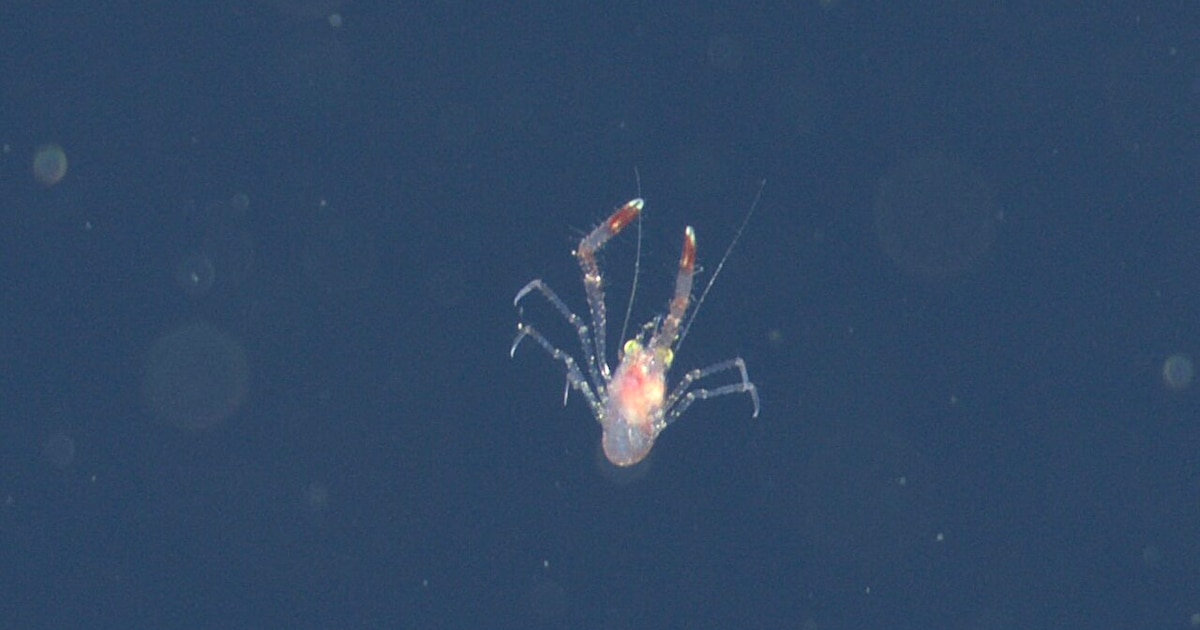
Medusas peine, sifonóforos, peces y cangrejos propios de aguas más cálidas comenzaron a aparecer frente a la costa central de California. Científicos del Instituto de Investigación del Acuario de la Bahía de Monterey (MBARI) vincularon esos avistamientos con el avance de un El Niño de gran intensidad, que ya modifica las condiciones del océano en el Pacífico.
El respaldo de esa transformación llegó desde una boya oceanográfica instalada frente a Monterey Bay: un instrumento situado a 60 metros de profundidad registró 18,18 ℃ (64,72 ℉), la cifra más alta en casi cuatro décadas de mediciones en ese punto.
El hallazgo combina una señal física —el aumento inusual de la temperatura— con otra biológica: la llegada de fauna que suele habitar latitudes tropicales o más australes. Para los investigadores, ambas observaciones muestran que el fenómeno ya está alterando el ecosistema marino de California.

El episodio adquiere relevancia más allá de las costas de California porque El Niño es un patrón del Pacífico con efectos sobre la atmósfera, el nivel del mar, las lluvias y los recursos marinos en distintos puntos del planeta. En Sudamérica, y particularmente en la Argentina, su evolución suele ser seguida por la incidencia que puede tener sobre los regímenes de precipitaciones, la producción agropecuaria y la planificación ante eventos climáticos extremos.
El agua profunda superó el máximo que había dejado El Niño de 1997
La serie de observaciones de MBARI comenzó en 1989. Desde entonces, una boya llamada M1 registra en forma casi continua datos del océano y la atmósfera en el centro de la Bahía de Monterey, sobre la entrada del cañón submarino del mismo nombre. El punto de anclaje se encuentra a unos 1.100 metros de profundidad, mientras que los instrumentos distribuidos a lo largo del cable miden temperatura, salinidad, oxígeno, clorofila, corrientes y otras variables.
El nuevo registro, obtenido a 60 metros bajo la superficie, superó la marca anterior del 19 de noviembre de 1997, durante otro evento fuerte de El Niño. De acuerdo con el científico senior Francisco Chávez, los valores se ubicaron más de 7 ℃ por encima del promedio de largo plazo y el calentamiento estuvo acompañado por un incremento de 16 centímetros en el nivel del mar local.
Chávez sostuvo que los instrumentos de la boya M1 confirman para Monterey Bay una previsión que ya anticipaba un evento excepcional en el Pacífico ecuatorial. “Los datos oceanográficos y las observaciones biológicas muestran con claridad que un El Niño fuerte llegó a la costa central de California”, señaló el especialista.
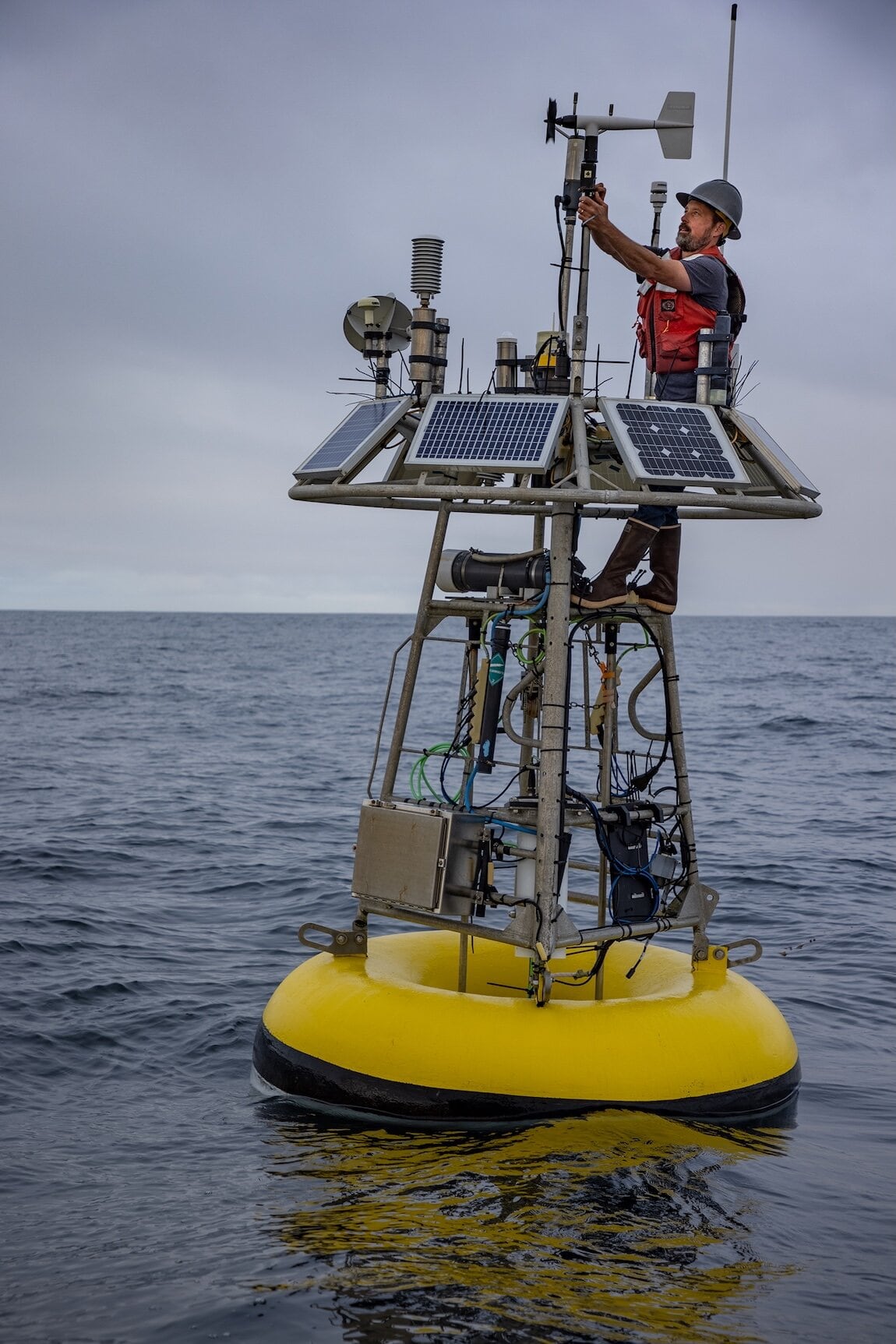
El aumento de temperatura en profundidad tiene una explicación física. Durante El Niño, se debilitan los vientos alisios que habitualmente empujan las aguas superficiales cálidas del Pacífico hacia Asia. Parte de esa masa de agua retorna hacia América y modifica la estructura vertical del mar. La termoclina —la franja que separa las capas más cálidas de las frías— se hunde, con consecuencias directas sobre la disponibilidad de nutrientes.
La menor llegada de nutrientes puede reducir el alimento en la cadena marina
En condiciones normales, el ascenso de aguas profundas y frías aporta nutrientes a la superficie, donde alimentan al fitoplancton. Esa base microscópica sostiene buena parte de la red alimentaria marina. Cuando la termoclina se profundiza, el aporte pierde fuerza y baja la productividad en superficie.

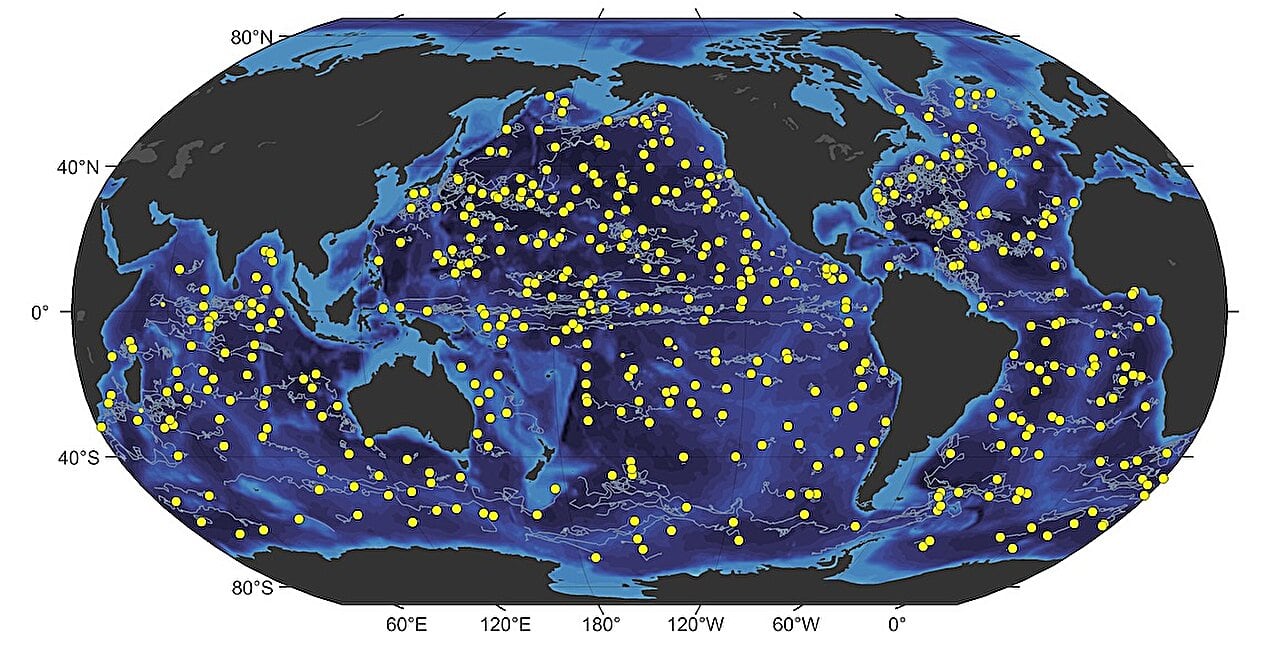
Los investigadores siguieron ese proceso con una red internacional de flotadores robotizados del programa Global Ocean Biogeochemistry Array (GO-BGC). Los dispositivos toman mediciones en tiempo real sobre la salud del océano y permitieron advertir, hacia fines de septiembre, una combinación que suele anticipar el fortalecimiento de El Niño: agua más cálida, menos dióxido de carbono disuelto y una reducción de nitratos.
A esos cambios químicos se sumó una caída pronunciada de la clorofila, utilizada como indicador de biomasa de fitoplancton. Ken Johnson, uno de los responsables de GO-BGC, explicó que los flotadores permiten comparar el estado de los ecosistemas antes, durante y después del fenómeno, una secuencia clave para comprender transformaciones de mayor alcance en el océano.
El efecto puede prolongarse varios meses. En Monterey, el calentamiento máximo suele coincidir con el invierno, cuando la productividad del mar ya es menor. Sin embargo, las consecuencias biológicas más marcadas pueden sentirse en primavera, cuando la escasez de nutrientes impacta sobre organismos que dependen de las floraciones de plancton.
Las especies tropicales ya comenzaron a aparecer frente a California
Los indicios biológicos fueron visibles antes de que el fenómeno alcance su punto máximo. En una expedición cerca del monte submarino Davidson, un equipo de MBARI observó una medusa peine alada del género Ocyropsis y un sifonóforo rosado, Athorybia rosacea. Son especies más frecuentes en aguas tropicales, como las de Hawái o México, y poco habituales frente a la costa central californiana.
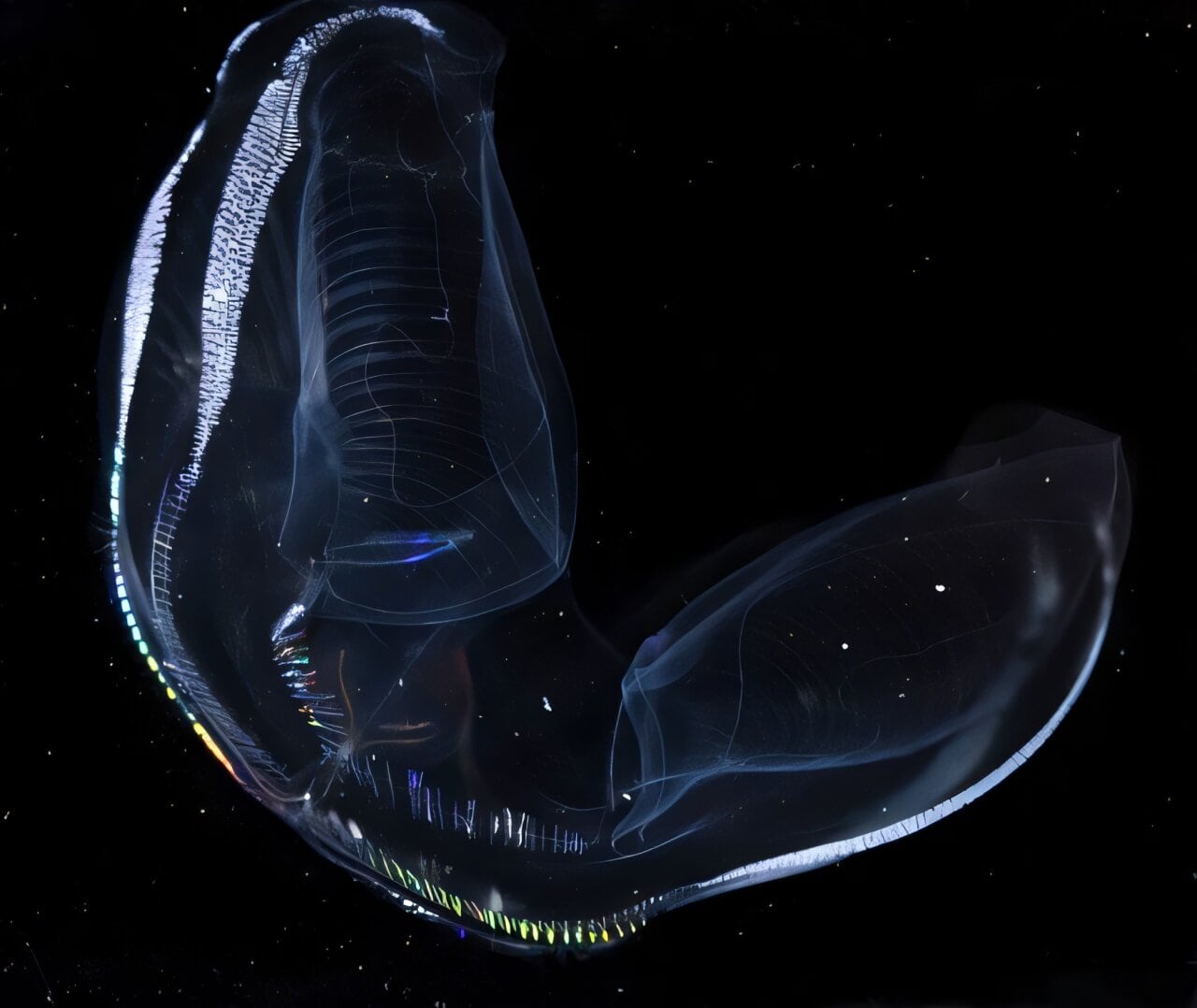
Durante tareas de mantenimiento de la boya M1, los buzos también encontraron cardúmenes de peces media luna, una especie asociada con mayor frecuencia al sur de California. A mayor profundidad, el vehículo operado a distancia Doc Ricketts detectó juveniles de cangrejo rojo pelágico, Grimothea planipes, una presencia que el equipo no había registrado tan al norte.
También hubo una observación breve de varios calamares de Humboldt. El desplazamiento de esa especie resulta relevante porque, en episodios anteriores, su expansión modificó la composición de la fauna pelágica y afectó poblaciones de merluza del Pacífico, de interés comercial. La llegada de aguas cálidas puede comprimir las áreas de alimentación de ballenas cerca de la costa y alterar la disponibilidad de presas para aves marinas.
Los cambios alcanzan incluso el fondo oceánico, según antecedentes de monitoreos realizados a unos 4.000 metros de profundidad frente a California. El alimento que llega a esas zonas —partículas orgánicas que descienden desde la superficie— depende de la productividad de las capas superiores. Por eso, una alteración iniciada en el fitoplancton puede trasladarse con el tiempo a comunidades de aguas profundas.
El Niño tiene efectos que exceden la biología marina. Las anomalías de temperatura y nivel del mar pueden aumentar los riesgos de inundaciones costeras, mientras que los cambios en distribución y abundancia de especies inciden sobre las pesquerías y las economías vinculadas al mar.
MBARI y otros sistemas de observación de California comenzaron a centralizar datos de boyas, planeadores submarinos e instrumentos costeros en un tablero específico sobre El Niño. La iniciativa reúne a investigadores de la costa norte y central californiana con el objetivo de aportar información actualizada a autoridades, planificadores costeros y comunidades pesqueras.
El Niño

Sen. Ted Cruz, R-Texas, delivered a scathing assessment on Wednesday of Republicans’ sweeping midterm election losses, describing the results as a «blue tsunami» and warning that his party had lost touch with voters, particularly in the Lone Star State.
In a lengthy post on X, Cruz acknowledged that Republicans had suffered historic defeats, losing control of both chambers of Congress while Democrats swept statewide races in Texas.
«2026 was not simply a blue wave; it was a blue tsunami. It was an ass kicking,» Cruz wrote. «It was not simply a bad 2006 midterm election. It was a Watergate-level repudiation.»
His blunt assessment came after a landmark Democratic breakthrough in traditionally Republican strongholds across the country, including in his home state, where Democrats won every statewide race, ending decades of Republican dominance.
FLORIDA’S DESANTIS DESCRIBES GOP MIDTERMS WIPEOUT AS ‘CLOSE TO AN EXTINCTION-LEVEL EVENT’ FOR REPUBLICANS
«Nowhere are the consequences of this election greater than Texas,» Cruz wrote. «In the Lone Star State, we lost every single statewide election.»
«Texas is blue. That is a hard sentence to utter. But Texas, today at least, is blue,» he continued.
Democrats scored two major victories in Texas, with James Talarico defeating Republican Attorney General Ken Paxton in the U.S. Senate race — marking the first Democratic Senate victory in the Lone Star State in nearly four decades — and state Rep. Gina Hinojosa unseating longtime Republican Gov. Greg Abbott, according to the Decision Desk.
TRUMP’S GAMBLE ON KEN PAXTON BACKFIRES AS DEMOCRAT PULLS OFF HISTORIC TEXAS SENATE UPSET
Cruz argued that Republicans’ political defeat stemmed from their failure to address growing frustration over the cost of living, as voters continued struggling with everyday expenses.
«Food is too high, gas is too high, diesel is too high, insurance is too high, life is too high,» he wrote.
«Understandably, people were pissed off, and elected Republicans didn’t do enough to address their very real pain,» Cruz said.
He also criticized tariffs and the prolonged war with Iran, arguing that both had contributed to voter frustration.
CONSERVATIVES STUNNED BY ‘CATASTROPHIC’ MIDTERM BLUE TSUNAMI, BLAME TRUMP’S IRAN WAR, HIGH GAS PRICES
He said Republicans had lost support among blue-collar workers, young voters, farmers, ranchers and Hispanic voters, while evangelical Christians failed to turn out with the same enthusiasm as in previous elections, concluding that his party had «alienated rural America.»
Cruz said he called Talarico after the election to congratulate him on his victory.
«Last night, I called James Talarico. I congratulated him on his very impressive victory,» Cruz wrote, adding that the two had a «pleasant conversation» and that he was willing to work with the Democrat on issues benefiting Texas.
Despite the sweeping losses, which also included Democratic wins in the state’s lieutenant governor and attorney general races, Cruz expressed optimism that Republicans could regain ground in Texas.
DEMS SEIZE THE SENATE AS BLUE TIDAL WAVE CRASHES DEEP INTO TRUMP COUNTRY, TOPPLES GOP STRONGHOLDS
«But hear me now: we will bring Texas back,» he wrote. «Texas will be red again.»
Throughout the campaign, Talarico cast himself as a moderate dedicated to representing Texans rather than Democratic interests in Washington.
Paxton, along with President Donald Trump and other national Republicans, labeled Talarico a «communist» and a vegan in barbecue-loving Texas, pointing to his support for the transgender community while in the Texas Legislature and a floor speech in which he said God was «nonbinary.»
«We have not suddenly become a bunch of tofu-eating, gun-banning, tutu-wearing pinko commie liberals,» Cruz wrote. «That ain’t us. Texas is still Texas.»
«We will rebuild as a true blue-collar party, not by embracing socialism, but by being real free-market conservatives,» he continued, predicting a political comeback for Republicans.
«It is dark right now, but it is always darkest before the dawn, and morning is coming,» he said.
Digital’s Alex Miller, Elizabeth Elkind and Amanda Macias contributed to this report.
politics, ted cruz, midterm elections, texas, greg abbott, republicans elections

Four fallen US service members honored at Dover Air Force Base
Fox News chief national security correspondent Jennifer Griffin and retired U.S. Marine Corps Col. Mike Jernigan explain the military mortuary affairs and dignified transfer process at Dover Air Force Base for the four fallen service members killed in action.
NEWYou can now listen to Fox News articles!
A U.S. Marine died Tuesday after an incident during training at Camp Schwab in Okinawa, Japan, military officials said.
The incident happened in Okinawa, on a Marine Corps base near the northeastern coast of Okinawa Prefecture.
The Marine, whose identity has not been released by the military, was with the 3rd Marine Division.
ALLEGED KILLING BY MARINE PROMPTS US MILITARY TO RESTRICT OFF-BASE LIBERTY IN OKINAWA
A U.S. Marine died following a training incident on a military base in Okinawa, Japan. (Yuichi YAMAZAKI / AFP via Getty Images)
«It is with heavy hearts that 3rd Marine Division announces the death of a Marine following a training incident at Camp Schwab, Okinawa, Japan, on Nov. 3, 2026,» the 3rd Marine Division said in a statement to ABC News.
«We express our deepest condolences to the family and loved ones of our Marine,» the statement continued.
The Marine’s death remains under investigation, the 3rd Marine Division said.

The Marine’s death remains under investigation. (Getty Images)
The Marine’s identity is expected to be withheld until 24 hours after their next of kin has been notified, Lt. Tyler Thomas, a spokesperson for the III Marine Expeditionary Force, told the outlet.
Military officials have not said whether the Marine died at Camp Schwab or after being transported to a hospital. Thomas also declined to tell ABC News whether anyone else was injured.
FOX News Digital has reached out to the 3rd Marine Division.
MARINE MISSING FROM USS ANCHORAGE NOW FOCUS OF RECOVERY MISSION OFF CALIFORNIA COAST

The Marine’s identity is expected to be withheld until 24 hours after their family has been notified. (Yuichi YAMAZAKI / AFP via Getty Images)
Roughly 50,000 U.S. troops are stationed in Japan, with most based on Okinawa. The island remained under U.S. control from the end of World War II until 1972.
Currently, nearly 80,000 Americans live on Okinawa, including about 30,000 active-duty service members from all four military branches, with the Marine Corps accounting for the largest presence there.
The Associated Press contributed to this report.
us marines, japan, military, world, pentagon

De ser una estrella del fútbol a montar un imperio de USD 12.000 millones: “Algunos jugadores prefieren la PlayStation, yo elegí aprender”

Fentanilo mortal: la Fiscalía rechazó los planteos de nulidad de García Furfaro y pidió continuar con la instrucción

¿Dónde ver EN VIVO y ONLINE el AEK Athenas vs Real Madrid por la Champions League?

El “efecto Lula” condiciona a los activos argentinos: por qué el mercado mira con cautela las elecciones de 2027

Robo y fuga: Lali Espósito sufrió un alarmante episodio a días de su casamiento con Pedro Rosemblat

Argentina Week 2027: el Gobierno confirmó la fecha de la próxima edición del encuentro de inversiones en Nueva York

Qué pasó con el Refugio de Eli y por qué hizo enfurecer a Santi Maratea: «Fue un desastre, él nunca más le contestó y le prohibió…»

La oposición cuestionó la suspensión de embargos a las pymes y criticó el plan económico: “Llegaron tarde”

Agustín Caulo: “El Gobierno sigue trabajando para que no se politice la visita de León XIV a la Argentina”

Milei parte nuevamente a España y en el gobierno dicen que no bajará el tono de sus críticas a Pedro Sánchez

 CHIMENTOS3 días ago
Qué pasó con el Refugio de Eli y por qué hizo enfurecer a Santi Maratea: «Fue un desastre, él nunca más le contestó y le prohibió…»
- POLITICA23 horas ago
La oposición cuestionó la suspensión de embargos a las pymes y criticó el plan económico: “Llegaron tarde”
- POLITICA1 día ago
Milei parte nuevamente a España y en el gobierno dicen que no bajará el tono de sus críticas a Pedro Sánchez