INTERNACIONAL
Israel bombardea Beirut y despierta fantasmas de guerra en la capital libanesa


Cuando al mediodía de este viernes, Israel lanzó su primera orden de evacuación para los suburbios meridionales de Beirut en cuatro meses del alto el fuego, Sawsan dormía plácidamente en su hogar, a apenas 400 metros del inmueble que el Ejército del país vecino amenazaba con bombardear.
El aviso, apenas hora y media antes de que dos misiles redujeran a escombros el edificio, despertó para muchos residentes del extrarradio del Dahye los fantasmas de un conflicto durante el que sus barrios fueron bombardeados cruentamente, casi siempre tras órdenes de evacuación como la de este viernes.
«Estaba durmiendo cuando el conserje llamó a la puerta para avisarme, me desperté, y vi que tenía muchas llamadas y mensajes de familiares alertándome (…) Puse ropa en una mochila y la primera explosión de aviso me atrapó en el departamento; todo tembló y entonces salí corriendo«, relata Sawsan a EFE.
Los cazas israelíes llevaron a cabo tres simulaciones de ataque a intervalos, hasta que, finalmente, el bombardeo real resonó con fuerza por toda la capital.
Video
Israel bombardea Beirut y despierta fantasmas de guerra en la capital libanesa
La mujer, de 30 años, explica que el ataque tuvo lugar unos 15 minutos después de que abandonara corriendo su casa en el barrio de Hadath y no esconde que está «asustada» mientras deja pasar el tiempo junto a otros evacuados congregados alrededor de una iglesia no muy lejos de lugar del ataque.
«Cuando escuché el sonido recordé lo que sentía durante la guerra y me sentí fatal. Estaba nerviosa, notaba como mi cuerpo temblaba», afirma la vecina.
Durante la cruenta ofensiva área israelí que golpeó el Líbano entre el 23 de septiembre y el 27 de noviembre de 2024, y que acabó convirtiendo el Dahye en un suburbio fantasma hasta la entrada en vigor de un alto el fuego, Sawsan dormía en el coche o en la calle.
«Ahora estamos otra vez aquí afuera esperando», lamenta.
Las últimas explosiones habían resonado en el Dahye la madrugada del 27 de noviembre, cuando el reloj se acercaba a la entrada en vigor del cese de hostilidades, y desde entonces el suburbio capitalino vivía en calma pese a la repetición de algunos ataques en zonas más meridionales.
Sin embargo, a primera hora de este viernes, dos cohetes fueron lanzados desde el Líbano hacia el norte de Israel, provocando en respuesta una serie de bombardeos contra el sur del territorio libanés, el más grave de los cuales causó al menos tres muertos y 18 heridos en Kfar Tebnit.
Al mediodía, llegó el ataque al lado de Beirut, disparando los miedos a una nueva espiral de violencia.
Farid, otro vecino de Hadath que este viernes tuvo que abandonar su hogar corriendo, reconoce que no se puede sacar de la cabeza la posibilidad de que se reactive la guerra y solo espera que este ataque no sea el inicio de un regreso a la situación que les tocó vivir hasta finales del pasado año.
«Si la guerra vuelve tengo que cuidar de mi mujer, de mis hermanas y padres. Tengo que estar pendiente de mi vida y de la suya, y me preocupa; si ahora pasase algo en mi casa no tendría otro hogar donde vivir», lamenta a EFE el joven, de 32 años.
«Durante la guerra dormíamos en el coche, solo entrábamos a casa de vez en cuando para ducharnos y volvíamos al coche», recuerda.
Por ello, al enterarse de la nueva orden de evacuación israelí lo primer que sintió fue «miedo» a tener que volver a pasar sus días de aquella forma. También le cruzó la mente un pensamiento claro: «No quiero vivir en un coche», comenta Farid.
Mostafa es cristiano, tiene 51 años y el caos de este viernes le dejó atrapado en la carretera de Hadath mientras iba a buscar a su hijo.
Después de que el Ejército israelí avisara en la red social X de que tenía planes de hacer volar por los aires un edificio en la zona, la población salió corriendo a las calles entre disparos al aire para avisar del peligro y las autoridades anunciaron la cancelación de clases en el área.
Sin embargo, pese a todo, Mostafa no comparte los miedos a un nuevo ciclo de violencia de envergadura, ya que está convencido de que el lanzamiento del cohete no tiene nada que ver con Hezbollah.
«No creo que la guerra vaya a volver a empezar, no estoy asustado, solo es una amenaza», zanja, mientras las autoridades libanesas tratan de establecer la autoría del ataque simbólico que despertó a los cazas israelíes.





INTERNACIONAL
Lluvias de fin de semana podrían dejar acumulados de hasta 125 milímetros de agua en República Dominicana

Las autoridades meteorológicas de República Dominicana han advertido sobre un escenario de lluvias intensas para este fin de semana, con acumulados que podrían oscilar entre 100 y 125 milímetros en las próximas horas. Esta situación ha llevado a que 10 provincias del país amanezcan bajo alerta meteorológica, ante la amenaza de precipitaciones persistentes y la posibilidad de eventos extremos como crecidas de ríos, inundaciones urbanas y rurales, y deslizamientos de tierra.
La directora del Instituto Dominicano de Meteorología (Indomet), Gloria Ceballos, informó en rueda de prensa desde el Centro de Operaciones de Emergencias (COE) que un sistema frontal activo, asociado a una vaguada, es el responsable de este patrón meteorológico inestable. Según Ceballos, los acumulados de lluvia podrían alcanzar valores superiores en algunas zonas del territorio nacional, debido a la combinación de la vaguada, la humedad aportada por los vientos del este-noreste y la persistencia de nubosidad sobre el país.
El pronóstico oficial del tiempo, presentado por Saddan Font-Frías, encargado del Centro Nacional de Pronóstico, advierte que los aguaceros serán de moderados a fuertes y podrán alcanzar intensidad torrencial en varias regiones. Las precipitaciones estarán acompañadas de tormentas eléctricas, ráfagas de viento y, de forma aislada, posibles granizadas. Este fenómeno se extenderá durante todo el fin de semana y podría mantenerse al inicio de la próxima semana laboral, con condiciones húmedas y lluvias frecuentes entre lunes y martes.
Las precipitaciones tendrán un impacto especialmente significativo en ciertas regiones. El informe del Indomet señala que las áreas más vulnerables corresponden a la cordillera Central, el suroeste y la franja fronteriza. Entre las localidades bajo mayor vigilancia se encuentran San Juan, Santiago, La Vega, Monte Plata y Elías Piña, así como municipios y comunidades de Hato Mayor, Sánchez Ramírez, Duarte, San José de Ocoa, Monseñor Nouel, Santiago Rodríguez, Dajabón, Puerto Plata, Espaillat y Valverde.
Un grupo de rescatistas y civiles unen fuerzas para evacuar a una persona en una camilla improvisada a través de calles completamente anegadas por el agua./Defensa Civil Dominicana
En estas zonas, el riesgo de inundaciones urbanas y rurales es elevado, así como el de crecidas de ríos, arroyos y cañadas. Además, la posibilidad de deslizamientos de tierra se incrementa en laderas y suelos inestables, especialmente debido a que las precipitaciones de los días anteriores ya han provocado una saturación significativa de los suelos.
El Indomet mantiene los niveles de alerta y aviso meteorológico en distintas demarcaciones, en coordinación con el Centro de Operaciones de Emergencias (COE) y los organismos de protección civil.
El incremento en la nubosidad y las lluvias inició desde la madrugada en la costa caribeña, incluyendo el Gran Santo Domingo, para luego intensificarse en horas de la tarde. Para el domingo y lunes, el sistema frontal continuará casi estacionario al norte del país, mientras los vientos del este-noreste seguirán aportando humedad. Por ello, se esperan episodios de lluvias dispersas durante la mañana, que se intensificarán en la tarde con aguaceros fuertes, tormentas eléctricas y la posibilidad de granizadas en zonas localizadas.
Llamado a la población
Ante este panorama, las autoridades han emitido un llamado enfático a la ciudadanía para que se mantenga atenta a los boletines oficiales y siga las recomendaciones de los organismos de protección civil. Entre las sugerencias principales destacan evitar cruzar ríos o cañadas con altos niveles de agua y tomar medidas preventivas para proteger vidas y propiedades.

El Indomet ha reiterado que continuará proporcionando actualizaciones oportunas sobre la evolución de este sistema atmosférico, para que la población y las entidades responsables puedan actuar con antelación ante cualquier eventualidad. Se recomienda a los residentes en zonas de riesgo permanecer informados y acatar las indicaciones, dada la vulnerabilidad incrementada por la saturación de los suelos y la persistencia de lluvias en los próximos días.
Impacto en la infraestructura y la vida cotidiana
El pronóstico de intensas lluvias y el estado de alerta en 10 provincias podrían afectar la movilidad, la actividad comercial y la prestación de servicios básicos en varias regiones del país. Las autoridades han dispuesto operativos de vigilancia y respuesta rápida ante posibles emergencias, con especial atención en las zonas rurales y urbanas identificadas como puntos críticos.
El llamado de las instituciones es a priorizar la seguridad y a no subestimar los riesgos asociados a las lluvias intensas, en un contexto donde la saturación de los suelos y la inestabilidad atmosférica aumentan la exposición de la población a desastres naturales.

Rusia y Ucrania anunciaron este sábado el canje de 350 prisioneros de guerra, 175 por cada bando, con la mediación de los Emiratos Árabes Unidos.
El anuncio, hecho casi simultáneamente por el ministerio de Defensa de Rusia y por el presidente ucraniano, Volodímir Zelensky, se produjo horas antes de que comience la tregua anunciada por las partes beligerantes con ocasión de la Pascua ortodoxa.
“Nuestros soldados están regresando a casa. 175 militares. Soldados de las Fuerzas Armadas, guardias nacionales, guardias de fronteras. Soldados rasos, sargentos y oficiales. Y siete civiles”, escribió Zelensky en sus redes sociales.
En el caso de los combatientes rusos, como en anteriores ocasiones, estos se encuentran en territorio de Bielorrusia, donde reciben asistencia médica y psicológica, según Moscú.
Además, añade la nota castrense rusa, Kiev devolvió a siete civiles de la región fronteriza rusa de Kursk, ocupada parcialmente por el ejército ucraniano durante menos de un año.
Moscú agradeció a las autoridades de los Emiratos “los esfuerzos humanitarios” realizados para consumar el intercambio.

Por su parte, Zelensky indicó que los militares ucraniano liberados habían sido capturados cuando defendían a Ucrania en diversos puntos del frente, por ejemplo la ciudad costera de Mariúpol (sur), tomada por Rusia en 2022, o la central nuclear de Chernóbil, así como en las regiones de Donetsk, Lugansk, Kharkiv, Khersón, Zaporizhzhia, Sumi y Kiev y en la región rusa de Kursk.
“Entre ellos hay heridos. La mayoría han estado cautivos desde 2022. Y ahora, finalmente, en casa”, subrayó Zelensky.
El presidente agradeció su trabajo a las unidades ucranianas que capturan soldados rusos, con los que amplían las reservas de prisioneros de guerra para canjear, y señaló la importancia de recuperar a todos los ucranianos cautivos en Rusia.
A pocas horas de la tregua pascual
Poco antes, Zelensky había reiterado el compromiso de su país con la tregua con ocasión de la Pascua ortodoxa que está previsto que comience en pocas horas con Rusia y advirtió de una respuesta “simétrica” en caso de que el enemigo infrinja el alto el fuego.
Además, insistió en que Ucrania está dispuesta a prolongar la tregua de dos días, a pesar de que el viernes Moscú volviera a rechazar esta posibilidad y justificara el alto el fuego temporal con la Pascua ortodoxa y con su “carácter humanitario”.

Este jueves el Kremlin anunció unilateralmente “un alto el fuego desde las 16:00 horas (13:00 GMT) del 11 de abril hasta el término del 12 de abril de 2026” sin previas consultas con Estados Unidos ni Ucrania, al que se sumó de inmediato Kiev.
Ambos bandos informaron el viernes sobre otro canje de los cadáveres de mil soldados ucranianos por 41 rusos. En línea con lo acordado el pasado año en Estambul, Moscú habría entregado en torno a 10.000 cuerpos de ucranianos caídos en acción y recibido cerca de 200.
Esta proporción se debe al avance ruso en el frente, que -aunque lento- no permite a los ucranianos recoger a sus caídos en el campo de batalla.
(Con información de EFE)
Europe,Military Conflicts
INTERNACIONAL
Russia, China veto UN resolution aimed at reopening Strait of Hormuz, hours before Trump deadline

NEWYou can now listen to Fox News articles!
Russia and China vetoed a U.N. Security Council resolution Tuesday aimed at reopening the Strait of Hormuz, just hours before President Donald Trump’s deadline for Iran to cease threatening the key waterway.
Trump has given Iran until 8 p.m. ET to reopen the Strait of Hormuz or face strikes against its power plants and bridges on Tuesday. The resolution received 11 votes in favor and two against, with abstentions from Pakistan and Colombia.
«No one should tolerate that they are holding the global economy at gunpoint, but today, Russia and China did tolerate,» U.S. Ambassador Mike Waltz said Tuesday. «They sided with a regime that seeks to intimidate the Gulf into submission, even as it brutalizes its own people during a national internet blackout for daring to imagine dignity or freedom.»
«Failing to adopt this resolution sends the wrong signal to the world, to the people of the world — the signal that the threat to international waterways can pass without any decisive action by the international organization responsible for the maintenance of international peace and security,» Bahrain’s foreign minister, Abdullatif bin Rashid Al Zayani, added following the vote.
US EMBASSIES IN BAHRAIN, EGYPT ISSUE WARNINGS AS IRAN THREATENS UNIVERSITIES ACROSS MIDDLE EAST
Members of the Security Council vote on a resolution to unblock the Strait of Hormuz at U.N. headquarters in New York on April 7, 2026. China and Russia vetoed the resolution. (Timothy A. Clary/AFP via Getty Images)
The vetoed resolution, which was introduced by Bahrain, «strongly encourages states interested in the use of commercial maritime routes in the Strait of Hormuz to coordinate efforts, defensive in nature, commensurate with the circumstances, to contribute to ensuring the safety and security of navigation across the Strait of Hormuz.»
The resolution also demanded that Iran immediately halt attacks on merchant and commercial vessels and stop impeding their freedom of navigation through the Strait of Hormuz and attacking civilian infrastructure.
The language of the resolution was significantly weakened to try to get Russia and China to abstain rather than veto it, according to The Associated Press.
The initial Gulf proposal would have authorized countries to use «all necessary means» — U.N. wording that would include military action — to ensure transit through the Strait of Hormuz and deter attempts to close it.
WHY THE STRAIT OF HORMUZ MATTERS AS TRUMP ISSUES FRESH ULTIMATUM TO IRAN
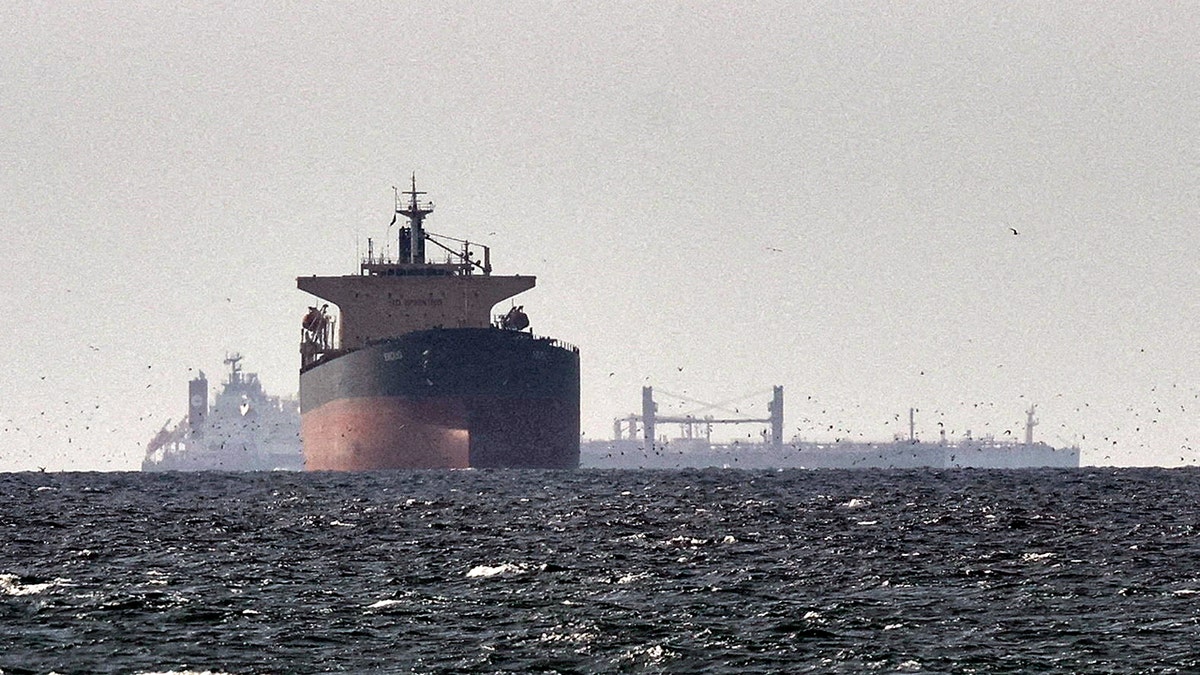
Cargo ships in the Gulf, near the Strait of Hormuz, as seen from northern Ras al-Khaimah, near the border with Oman’s Musandam governance, in United Arab Emirates, March 11, 2026. (Reuters/Stringer/File Photo/File Photo)
After Russia, China and France, all veto-wielding countries on the 15-member Security Council, expressed opposition to approving the use of force, the resolution was revised to eliminate all references to offensive action. It would have authorized only «all defensive means necessary.» A vote had been expected on Saturday.
But instead, the resolution was further weakened to eliminate any reference to Security Council authorization — which is an order for action — and limit its provisions to the Strait of Hormuz. Previous drafts had included adjacent waters.
«Let me be clear — this text would only embolden the United States and the Israeli regime to continue in their unlawful actions and atrocious crime, while shielding from accountability,» Iran’s ambassador to the U.N., Amir Saeid Iravani, said following the vote.
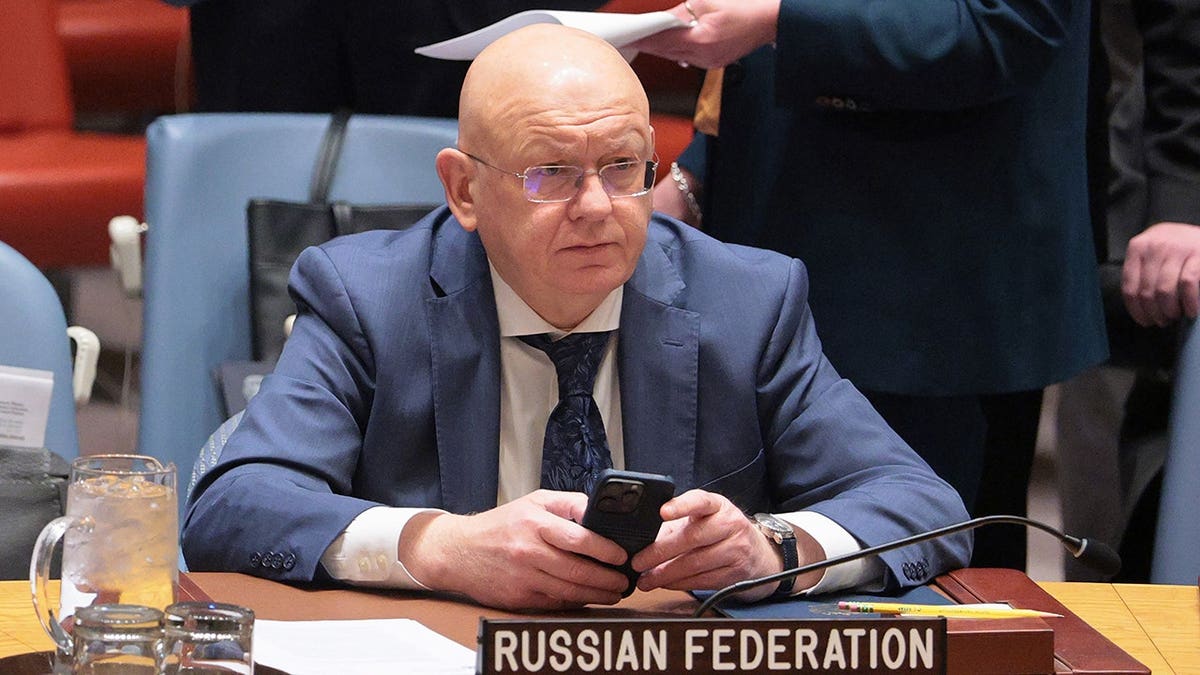
Ambassador Vassily Nebenzia, of Russia, waits for the start of a Security Council meeting at U.N. headquarters in New York City on April 7, 2026. (Michael M. Santiago/Getty Images)
CLICK HERE TO GET THE FOX NEWS APP
«The Iranian regime has until 8 p.m. Eastern Time to meet the moment and make a deal with the United States,» White House press secretary Karoline Leavitt told Fox News on Tuesday. «Only the president knows where things stand and what he will do.»
Fox News’ Patrick Ward, Anders Hagstrom and The Associated Press contributed to this report.
security council, middle east, united nations, war with iran, iran

Lluvias de fin de semana podrían dejar acumulados de hasta 125 milímetros de agua en República Dominicana

Una joven murió en Villa Devoto tras bajar del colectivo y ser atropellada: se le enganchó la mochila
La deuda de Argentina con el FMI creció un 36 % durante el primer año del nuevo programa Por EFE

Marcelo Gallardo reapareció en una cancha de fútbol tras su salida de River Plate: el motivo de su viaje

Ordenan liberar a los líderes de La Salada y se derrumba la causa de lavado de dinero

En plena tensión en Medio Oriente, Milei viajará a Israel y podría mostrarse junto a Netanyahu y Trump en un acto

Mario Kart Tour avanza su siguiente temporada de primavera con ciudades europeas – Nintenderos

Melania Trump’s forceful Epstein denial draws bipartisan support from lawmakers

Un gobernador presentó un amparo contra la reforma de la Ley de Glaciares y pidió suspender su aplicación

Trump blasts Biden admin for releasing illegal immigrant now charged in fatal hammer attack on Florida mother

 SOCIEDAD1 día ago
Mario Kart Tour avanza su siguiente temporada de primavera con ciudades europeas – Nintenderos
- INTERNACIONAL1 día ago
Melania Trump’s forceful Epstein denial draws bipartisan support from lawmakers
- POLITICA1 día ago
Un gobernador presentó un amparo contra la reforma de la Ley de Glaciares y pidió suspender su aplicación