INTERNACIONAL
Lawmakers say they are standing at the gates against ‘Trojan horses’ promoting malign foreign interests


WASHINGTON, D.C. — In a series of exclusive interviews with Digital, lawmakers on the House Foreign Affairs Committee sounded the alarm on a sprawling network of «Trojan horse» activists, nonprofits and social media influencers allegedly amplifying the hostile messages of foreign adversaries straight through the open gates of American democracy.
The warning came into sharp focus Tuesday when CodePink co-founder Medea Benjamin and two fellow activists walked into House Rayburn 2172 for a hearing on covert foreign influence operations, then strategically positioned themselves behind witnesses in T-shirts supporting the Islamic Republic of Iran and the Communist Party of Cuba.
About 30 minutes into the hearing, South and Central Asia Subcommittee Chairman Bill Huizenga, R-Mich., stopped the hearing and had Capitol Police escort them out.
LAWMAKERS THROW OUT ‘TROJAN HORSE’ ACTIVISTS THEY SAY ARE ENGAGED IN AMERICAN SUBVERSION
«They’re coming in, trying to look like one thing, but we know that once they’re inside the gates that those doors are going to spring open, and there’s a whole other motivation for what they’re trying to do,» Huizenga told Digital.
At the center of the controversy is communist tech tycoon Neville Roy Singham, who married CodePink co-founder Jodie Evans in a tropical wedding in Jamaica in 2017, soon after funneling $285 million to six pro-China, pro-communist, anti-American nonprofits in the U.S., including CodePink, according to a Digital investigation.
Lawmakers say the answer is transparency and following the money and exposing who finances the alleged «Trojan horse.»
In their series of interviews, Huizenga and other committee members explained how the modern «Trojan horse» isn’t made of wood but rather a network of activists, nonprofits, social media influencers and other ostensibly American voices that foreign governments and foreign-linked actors can allegedly fund, amplify or exploit to carry their messages through the open gates of American democracy.
«They’re coming in, trying to look like one thing, but we know that once they’re inside the gates that those doors are going to spring open and there’s a whole other motivation for what they’re trying to do,» Huizenga told Digital.
At the hearing, devoted to «Trojan Horses: Covert Foreign Malign Influence Operations in America,» lawmakers expressed concern about how the Communist Party of China, Russia, the Islamic Republic of Iran and the Communist Party of Cuba spread their propaganda and influence in the U.S.
The phrase «Trojan horse» comes from the ancient Greek story of soldiers concealed inside a wooden horse presented to the city of Troy. Once the horse was taken behind the city’s fortified walls, the soldiers emerged and opened the gates, destroying Troy.
Huizenga stressed that Americans can hold sincere beliefs while also having those messages funded or amplified by foreign actors without necessarily knowing it. He argued that the answer to foreign influence is exposing the origins of the messaging through transparency and robust debate.
Inside the hearing room, as Digital reported, Benjamin and her fellow CodePink activists offered a vivid illustration of the debate over how political messages are created and amplified.
They sat directly behind the witnesses, placing their T-shirts in the sight line of the official committee cameras.
Benjamin then turned toward a television monitor on the side of the hearing room displaying the official video feed. She pulled out her phone, zoomed in on the image of herself and a fellow activist appearing behind the witnesses and took photo after photo of the screen.
HOUSE PANEL PROBES FOREIGN ‘TROJAN HORSES’ AS SINGHAM SCRUTINY WIDENS
Huizenga said he viewed the episode as political theater designed for an audience beyond the committee room.
«This isn’t about discourse. This is about disruption,» Huizenga told Digital. «It’s all planned out. You see people in the crowd filming with their phones, getting ready. You knew something was going to happen because, all of a sudden, the phones would come out.
«It’s really about theatrics,» he added, arguing that confrontations can subsequently be circulated on social media to attract attention, donations and volunteers.
The episode captured the central tension running through the hearing: How does the United States expose genuine covert foreign influence without treating protected American political speech as foreign subversion?
«Transparency. Transparency is the watchword,» Huizenga told Digital. «We really need to make sure that people know not only the why, but the who is behind all this.»
Rep. Michael Baumgartner, R-Wash., told Digital that America’s open political system creates opportunities for foreign governments to try to influence legitimate domestic debates through social media, universities and other institutions.
«The American people need transparency and need to understand what is going on in these public policy discussions and whether it’s podcast hosts, certain actors on social media or things going on our college campuses,» Baumgartner said. «We need to know who’s behind it and what their motivations are.»
Baumgartner pointed to «clear transparency on this issue» as a solution, adding that if evidence showed organizations were acting on behalf of foreign governments without complying with applicable disclosure laws, the matter could potentially be referred to the Justice Department, which oversees the Foreign Agent Registration Act, or FARA. The law requires that people and organizations acting on behalf of foreign interests register with the Justice Department.
Other lawmakers said the modern Trojan horse doesn’t necessarily have to walk physically through the doors of Congress, but rather arrive via social media.
Rep. Randy Fine, R-Fla., described social media, influencers and protests as potential channels through which foreign governments influence American political debate. He said «it’s a real issue, whether it’s on social media, influencers, protests, these things are all designed to destabilize our country.»
Fine characterized what experts call «cognitive warfare» as «using our information platforms to try to poison people’s minds and to create division from within.»
Rep. Darrell Issa, R-Calif., focused on another battlefield: artificial intelligence.
«Trojan horses are things like the announcement that we should slow down on AI,» Issa told Digital, arguing that foreign adversaries can benefit when American political pressure slows U.S. technological development.
«We are in a war in which the other side uses all the clandestine tools,» Issa said. «They use their, quite frankly, their social media to our detriment.»
Huizenga similarly argued that Americans should view the organizations under examination not individually but as a network.
«It’s a network. It’s not independent organizations or even people,» he said. «You will see some of the same people at different organizations, rallies, or protests.»
At the center of much of the hearing were findings from a Digital investigation into Neville Roy Singham, an American-born communist tech tycoon who lives in Shanghai and has pumped $285 million into six nonprofits, including CodePink, the People’s Forum and other groups examined during the hearing.
Huizenga alleged in his official opening remarks that Singham uses his wealth and relationships in China to support organizations that promote communist ideology and destabilize American society. He explicitly described Singham, CodePink and a growing network of pro-communist, pro-China groups as «Trojan horses.»
‘TROJAN HORSES’ IN AMERICA: CONGRESS PROBES INFLUENCE NETWORKS TIED TO CHINA, IRAN AND CUBA
Singham and CodePink have denied taking direction from the Chinese government. Singham has said his activities reflect his own political beliefs, while Benjamin has said CodePink doesn’t receive money from the Chinese Communist Party.
As Digital reported in June, the Justice Department and the U.S. Attorney’s Office for the Southern District of New York have convened a grand jury investigation into alleged money laundering, bank fraud and wire fraud by Singham and the organizations he has funded.
No criminal charges have been filed against Singham or CodePink with respect to those allegations.
Huizenga argued that the funding relationships deserve scrutiny.
«Oftentimes, it’s frankly the origins aren’t organic, or if there is a part of it being organic, this is getting fed by outside organizations, oftentimes even outside countries,» Huizenga alleged.
Being escorted through the committee room doors didn’t end CodePink’s political theater.
Outside the hearing room, Benjamin positioned herself beside the House Foreign Affairs Committee placard and began recording another video, pulling out a comb first to straighten her hair.
When Rep. Fine emerged from the hearing, Benjamin followed him down the hallway firing questions as another member of her team recorded the encounter.
After Fine disappeared into an office, Benjamin returned to the committee entrance, straightened her hair with a comb and resumed recording.
HOUSE COMMITTEE PASSES FOREIGN FUNDING TRANSPARENCY ACT TO EXPOSE FOREIGN DONATIONS TO NONPROFITS
About two hours after Capitol Police escorted the activists from the hearing, CodePink posted a carefully edited video of the day’s confrontation on social media, where activists in the broader network began sharing it.
The physical protest was over, but the images it produced were just beginning to travel.
That sequence was precisely why lawmakers said Americans should look beyond the spectacle to who finances and amplifies political messaging.
«This is theater for many of these people,» Huizenga said. He said he wanted Americans, through «transparency and disclosure,» to understand «not just the what they are doing, but the who is financing them.»
The lawmakers gathered to investigate modern «Trojan horses» said the lesson of the ancient story wasn’t simply to keep the horse outside the gates but also to understand what — and who — might be inside.
«Transparency. Transparency is the watchword,» Huizenga said.
Lawmakers say ‘transparency and disclosure’ are the best defense against influence campaigns exploiting America’s democracy.
Digital’s Reagan Schroeder and Brooke Curto contributed to this report.
politics, foreign affairs, china, russia, iran, cuba








INTERNACIONAL
República Dominicana: El Ministerio Público solicita prisión preventiva para 22 detenidos por la Operación Rompeolas en La Altagracia

El Ministerio Público de República Dominicana solicitó prisión preventiva para 22 personas detenidas en la Operación Rompeolas, una investigación sobre una red acusada de trasladar drogas desde Colombia hacia Puerto Rico, con destinos finales en Estados Unidos y Europa. La audiencia fue fijada para el lunes 23 de noviembre de 2026 a las 14:00, en el distrito judicial de La Altagracia.
La solicitud también pide que el expediente sea declarado caso complejo. La Procuraduría General de la República informó los detalles de la etapa judicial, difundidos por Listín Diario.
El principal acusado es Fausto Candelario Ortiz, conocido como Pacha o el Brother, a quien los investigadores identifican como cabecilla de la organización. La medida alcanza además a Yovani Candelario Ortiz, alias Pachasito, Caco o Franklin el Hombre, señalado como coordinador operativo de la estructura.
Entre los detenidos figura Willy Manuel Zorrilla Domínguez, conocido como Willy Pachá, regidor del Partido Reformista Social Cristiano y aliado del Partido Revolucionario Moderno en Higüey. También fueron incluidos María del Rosario, Belkis; Marcial Castillo, Shaky o Chacabana; Cristian George del Rosario, Bebo Pachá; Alexander Algenis Candelario del Rosario, Alexander Pachá; Ryan Spencer del Rosario; Yolanda Candelario Ortiz; Andrea Candelario Ortiz, Justina, y Wander Alberto Núñez Mercedes, Philip.
Una red investigada por tráfico marítimo y lavado de activos
La petición de prisión preventiva comprende igualmente a Fernando de Jesús Concepción, Pepe o el Gordo; Diofrendy Domingo Reyes Cabrera; Diofeyni Reyes Morel; Tomás Aquino Manzueta de la Rosa, Pindo; Gustavo Adolfo Carpio Calderón; Teodoro Castillo, Adriano, y Fernando Guzmán Ventura, Fernan.
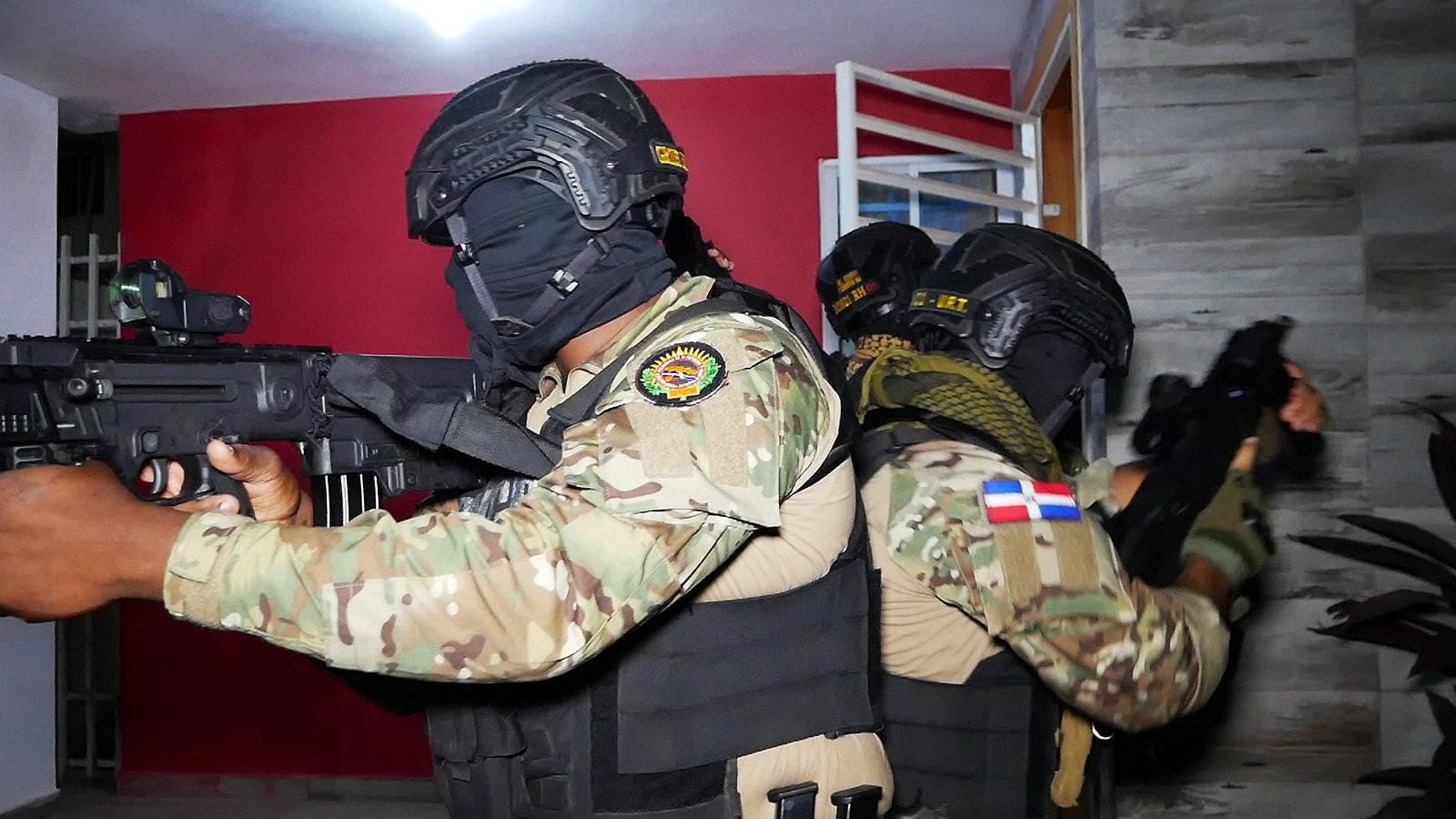
La lista se completa con Tauni Castillo Urbáez; Rosanny Amada Sarmiento Villavicencio, Rossy; Miguel Guerrero Cedeño, Mune, y Ángel Miguel Alfonso Guerrero, Miguelito o el Sobrino. La presentación fue realizada por la procuradora adjunta Sourelly Jáquez, titular de la Procuraduría Especializada contra el Tráfico Ilícito de Drogas Narcóticas, junto con los fiscales Gabriela Gómez y Andrés Mena Marte.
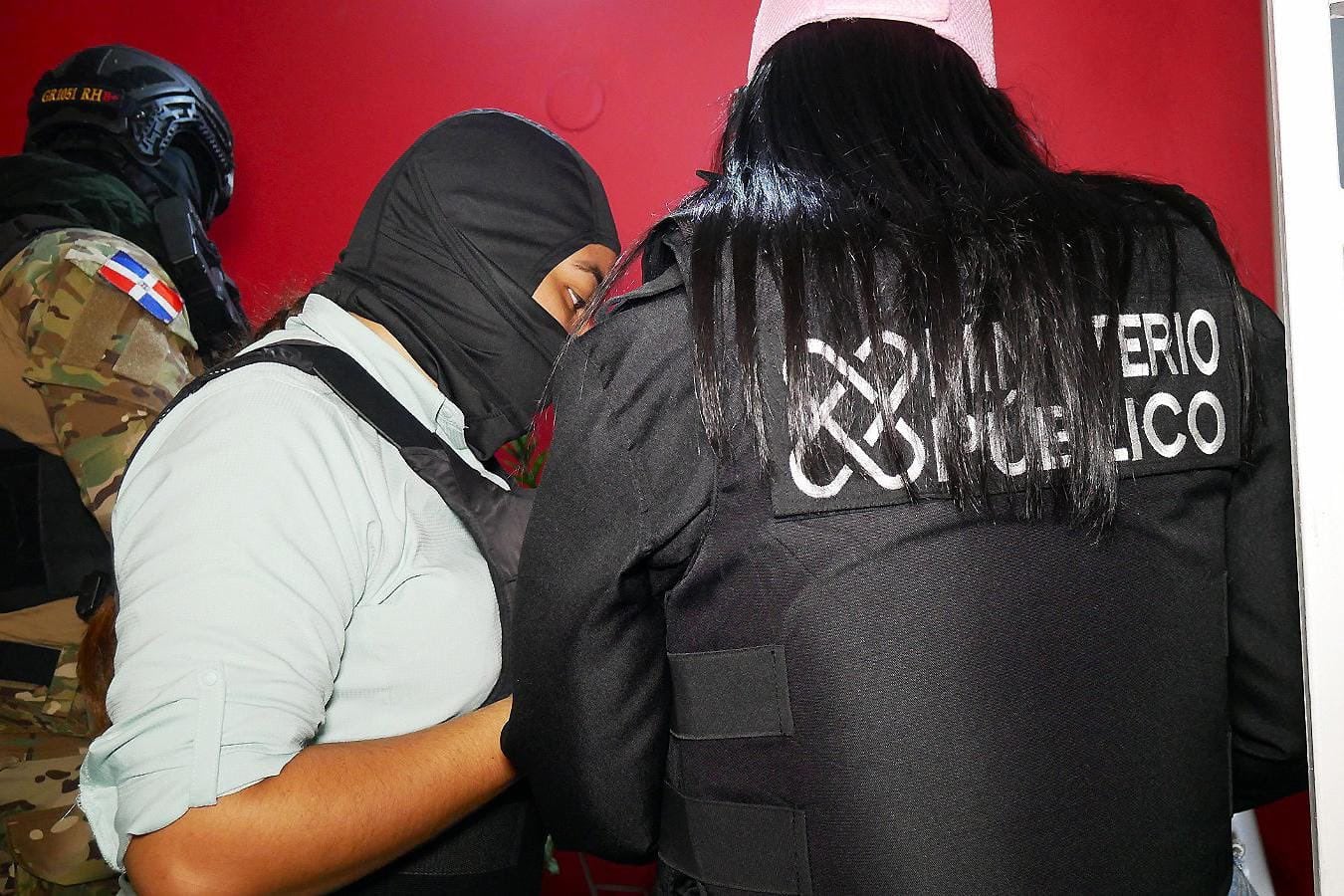
Los arrestos se efectuaron el jueves 19 de noviembre durante un operativo contra el narcotráfico transnacional y el lavado de activos. Las autoridades realizaron 65 allanamientos simultáneos e incautaron vehículos, armas, dinero y propiedades que atribuyen a la organización.
El despliegue movilizó a más de 80 fiscales y a aproximadamente 650 agentes de la Dirección Nacional de Control de Drogas y miembros de la Policía Nacional. Las acciones aéreas y terrestres abarcaron La Altagracia, El Seibo, Duarte, el Distrito Nacional y Santo Domingo Este.
La pesquisa identificó una división de tareas para recibir, almacenar, transportar y proteger cargamentos de drogas. La red utilizaba principalmente lanchas rápidas tipo Go-Fast, embarcaciones diseñadas para navegar a alta velocidad, y barcos de recreo para trasladar los cargamentos a Puerto Rico.
La estructura mantenía parte de sus operaciones en Higüey y Miches, donde presuntamente coordinaba la logística del tráfico internacional. Las autoridades también investigan a personas vinculadas a maniobras de lavado de activos para administrar recursos procedentes de las actividades ilícitas atribuidas al grupo.
La cooperación jurídica con Estados Unidos permitió además el arresto en Colombia de César Augusto Rodríguez Severino, conocido como Dondy, de 55 años. El detenido enfrenta cargos por asociación de malhechores, tráfico internacional de drogas y lavado de activos.
Rodríguez Severino fue detenido el 19 de noviembre en el barrio Normandía de Cali, tras un trabajo conjunto entre las oficinas de Interpol de Santo Domingo y Bogotá y las autoridades migratorias colombianas. La captura se realizó dentro del Proyecto de Apoyo de Interpol a EL PAcCTO 2.0, mediante una notificación roja emitida ese mismo día por las autoridades judiciales dominicanas.
INTERNACIONAL
17 major federal agencies flagged over cybersecurity gaps as watchdog warns of increased attack risk

A sweeping federal watchdog report found that 17 of 22 major civilian agencies failed to fully address key cybersecurity planning guidance, warning that the shortcomings could leave government systems more vulnerable to cyberattacks and operational disruptions.
The Government Accountability Office (GAO) released its findings this week, identifying gaps at the Department of Homeland Security (DHS), Department of Justice (DOJ), Department of State, Department of the Treasury and Department of Health and Human Services (HHS), among others.
The report examined whether agencies had incorporated selected federal guidance into their plans for implementing zero trust architecture, a cybersecurity approach requiring users, devices and systems to be verified before accessing protected networks.
RETIRED FBI AGENT WARNS NCIC BREACH COULD THREATEN POLICE SAFETY DURING TRAFFIC STOPS
Only five of the 22 agencies fully addressed the selected guidance as of August 2026, prompting GAO to issue 40 recommendations to the remaining 17.
«Agencies would therefore be at increased risk of cyberattacks that could interrupt operations or otherwise compromise agency resources,» GAO warned.
HHS received six recommendations, the most of any agency reviewed, after investigators found that it lacked a documented enterprise-wide zero trust implementation plan covering all its information systems.
Although individual divisions were pursuing cybersecurity improvements, GAO warned that the absence of a unified strategy could prevent department leadership from maintaining a coherent view of its security modernization efforts.
HHS agreed with the recommendations and said it planned to develop an actionable department-wide strategy by the second quarter of fiscal year 2027.
CHINESE HACKERS TARGET NASA AND KEY US AGENCIES, DOJ ALLEGES
The Department of Commerce received four recommendations after investigators identified shortcomings in its cybersecurity planning documentation.
Commerce officials told GAO that staffing losses had significantly constrained the department’s zero trust working group, limiting its ability to coordinate improvements and maintain comprehensive documentation.
At DHS, investigators found that the department had not fully documented cybersecurity maturity levels across all its high-value assets and high-impact systems. Officials attributed the incomplete assessments partly to lengthy government shutdowns during the preceding fiscal year.
DHS INVESTIGATES MASSIVE DATA BREACH EXPOSING 40,000 EMPLOYEES, INCLUDING ICE AND BORDER PATROL AGENTS
DOJ similarly cited resource constraints for incomplete assessments of critical systems, while State and Treasury were among the agencies that had only partially documented cybersecurity maturity levels.
GAO warned that incomplete assessments could leave agency leadership without the visibility necessary to determine where additional cybersecurity resources are needed.
Investigators also found that 11 agencies had only partially documented procedures for identifying actors within their IT environments, including certain non-person entities such as software applications and service accounts.
The watchdog warned that incomplete identification procedures could hinder efforts to ensure only authorized users and systems access government resources.
TRUMP’S NATIONAL CYBER DIRECTOR SEAN CAIRNCROSS FIRED AMID WIDESPREAD TECH OUTAGES
The findings come years after the Biden administration directed federal agencies to adopt zero trust cybersecurity principles through a 2021 executive order, followed by additional guidance in 2022 and 2024. Despite those directives, GAO found that 17 of 22 agencies still had not fully addressed selected cybersecurity planning requirements and guidance as of August 2026.
Thirteen agencies agreed with GAO’s 40 recommendations, while four neither agreed nor disagreed. The Nuclear Regulatory Commission, one of the four, provided documentation demonstrating that it had already addressed both recommendations, which GAO verified.
Digital reached out to the White House and all 17 agencies identified in the report for comment.
«Absent a full implementation of ZTA requirements and guidance, agencies will lack an appropriate roadmap to fully incorporate and maintain an effective zero trust architecture,» GAO concluded.
national security, security, technology, administration, public sector, cybercrime, politics
INTERNACIONAL
“Cristo viene pronto”: el mensaje de «La Muñeca de la Mafia» tras recibir detención judicial en Honduras
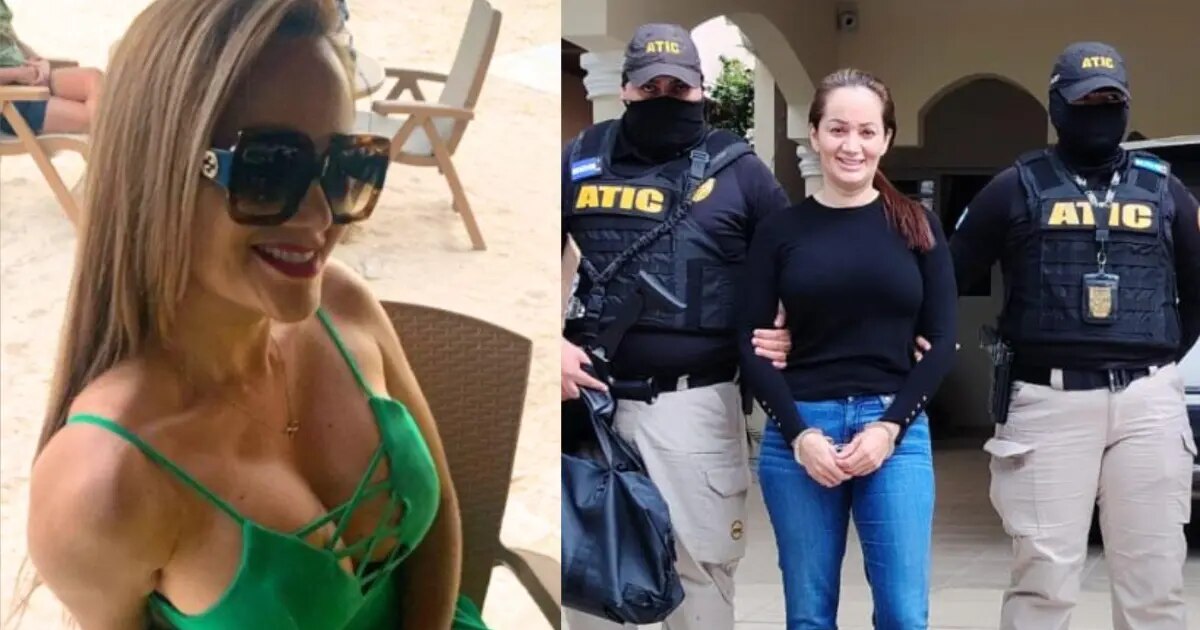
Kensy Iveth García Torres, conocida como «La Muñeca de la Mafia», recibió detención judicial en Honduras por suponerla responsable del delito de lavado de activos agravado, luego de comparecer ante un juez y protagonizar declaraciones en las que cuestionó las actuaciones de las autoridades y anunció que emprenderá acciones legales.
La resolución se produjo después de su captura el jueves 19 de noviembre en la residencial Cedritos, en San Pedro Sula, durante un allanamiento ejecutado por agentes de la Agencia Técnica de Investigación Criminal (ATIC) y fiscales del Ministerio Público.
Según las investigaciones, García Torres no habría podido justificar el origen lícito de más de 30 millones de lempiras, equivalentes a aproximadamente 1.1 millones de dólares, una cantidad que forma parte de los movimientos financieros bajo investigación. La acusación deberá ser sustentada por el Ministerio Público durante el proceso judicial.
Tras la audiencia de declaración de imputado, el juez determinó que permanezca bajo custodia mientras avanza el expediente. La audiencia inicial fue programada para el próximo 24 de noviembre, a las 8:30 de la mañana, diligencia en la que se conocerán los elementos presentados por la Fiscalía y la defensa.
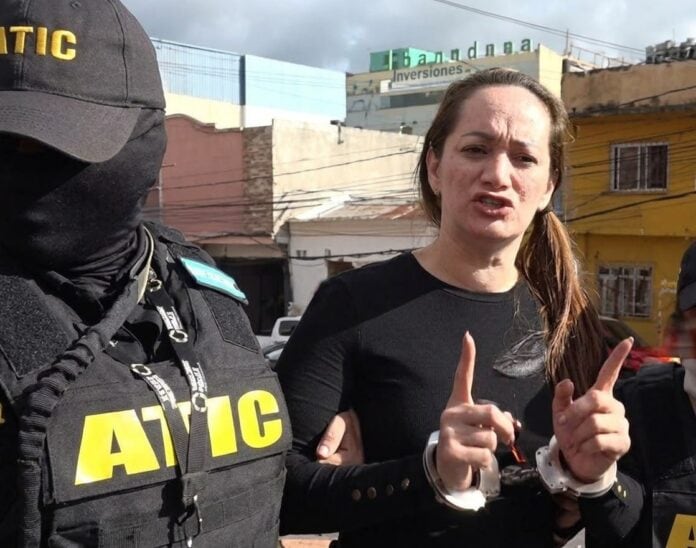
«30 millones es la demanda que les voy a poner por inútiles»
Antes de conocer la resolución, la hondureña ofreció declaraciones a los medios de comunicación a su llegada a los Juzgados de Criminalidad Organizada. En ese momento cuestionó el procedimiento en su contra y sostuvo que su detención estaría siendo utilizada para desviar la atención de otros problemas.
«Esto es una cortina de humo, hay que maquillar las ineptitudes de otros», manifestó ante las cámaras.
García Torres también anunció que pretende presentar una demanda por una cantidad equivalente a los 30 millones de lempiras que, según sus palabras, estaría relacionada con los daños que considera que le han ocasionado.
Sin embargo, no identificó a las personas o instituciones contra las que dirigiría la acción legal ni explicó los fundamentos de esa eventual reclamación.
«30 millones es la demanda que les voy a poner por inútiles», expresó durante el intercambio con los periodistas.
Sus declaraciones se produjeron en medio de la atención mediática que ha generado su captura, luego de que las autoridades hondureñas reactivaran las investigaciones sobre su patrimonio y las operaciones financieras que se le atribuyen.

«Arrepiéntanse, Cristo viene pronto»: su mensaje al salir de los tribunales
Al abandonar la comparecencia, los periodistas intentaron obtener una reacción sobre la acusación de lavado de activos y la decisión judicial. No obstante, García Torres respondió con un mensaje de carácter religioso.
«Que Dios les bendiga, Cristo les ama, arrepiéntanse, Cristo viene pronto. Yo también les amo», expresó ante las cámaras.
Cuando le preguntaron directamente por los señalamientos del Ministerio Público, evitó profundizar en los detalles del expediente y respondió: «Mi Padre celestial tiene la última palabra».
La frase se convirtió en uno de los momentos más comentados de su comparecencia, debido al contraste entre el mensaje religioso y la situación judicial que enfrenta. La resolución implica que continuará privada de libertad mientras se desarrolla la siguiente etapa del proceso.
El caso hondureño también vuelve a poner bajo atención los antecedentes de García Torres en Estados Unidos. La hondureña fue condenada en ese país por conspiración para lavar más de 1.8 millones de dólares procedentes del narcotráfico.
Ese antecedente corresponde a un proceso distinto del que ahora enfrenta en Honduras. En el expediente actual, el Ministerio Público investiga movimientos financieros cuyo origen, según la acusación, no habría sido debidamente justificado.

Por ahora, la detención judicial no representa una condena por el nuevo señalamiento. La Fiscalía deberá presentar los elementos que respalden la imputación y la defensa tendrá la oportunidad de responder durante las diligencias correspondientes.
La audiencia inicial del 24 de noviembre será clave para determinar si el caso avanza a la siguiente fase judicial. Mientras tanto, García Torres permanecerá bajo custodia y sus declaraciones sobre una eventual demanda forman parte de la controversia que rodea su captura.
corresponsal:Desde Tegucigalpa, Honduras

¡FIFPRO estalla contra el Bayern por Musiala! Denuncia una campaña de presión en su contra

Joaquín de la Torre advirtió que Milei puede salir perjudicado por la suspensión de las PASO: “Es un gran error”

República Dominicana: El Ministerio Público solicita prisión preventiva para 22 detenidos por la Operación Rompeolas en La Altagracia

Leandro Paredes se descompensó en medio de una entrevista tras ganar la Copa Sudamericana con Boca Juniors en Barranquilla

Incertidumbre turística: cuáles son los dos condicionantes que desalientan los viajes a un país vecino

17 major federal agencies flagged over cybersecurity gaps as watchdog warns of increased attack risk

Javier Milei y sus medidas, en vivo: “Hoy discutimos si crecemos un punto más o menos”, dijo el Presidente

Javier Milei destacó el desembarco de Tesla en el país y aseguró: “Esto también es devolverle la libertad a los argentinos”

El brote de ébola está fuera de control en la República Democrática del Congo y crece el temor a una epidemia continental

Jeffries survives Dem vote to secure speaker position as progressive resistance clouds his chances

 POLITICA3 días ago
Javier Milei y sus medidas, en vivo: “Hoy discutimos si crecemos un punto más o menos”, dijo el Presidente
- POLITICA1 día ago
Javier Milei destacó el desembarco de Tesla en el país y aseguró: “Esto también es devolverle la libertad a los argentinos”
- INTERNACIONAL2 días ago
El brote de ébola está fuera de control en la República Democrática del Congo y crece el temor a una epidemia continental