INTERNACIONAL
Liberal justices look for ‘escape hatch’ as high-stakes climate case lands at Supreme Court, experts say


Justices Ketanji Brown Jackson and Sonia Sotomayor’s repeated questions concerning whether the Supreme Court has jurisdiction to hear a high-profile climate case that could expose oil companies to lawsuits across the country steered conservative lawyers to believe that the liberal justices are seeking an «off-ramp.»
«The fact that they kept going back to trying to create a jurisdictional problem tells me they don’t feel confident that they have the votes in this space,» Carrie Severino, president of JCN, a conservative judicial group, told Digital. «Jackson and Sotomayor were looking for an escape hatch.»
The Supreme Court began its new term Monday, hearing its first oral arguments for Suncor v. Boulder, in which they will rule on whether state tort laws can be used to seek damages from oil companies for climate change, even when the alleged harms are occurring outside the state or continent. The justices will also rule on whether the Supreme Court has jurisdiction to hear this case now, as the case is still before the Colorado Supreme Court.
The case before the high court is in an unusual procedural posture, meaning the justices could resolve it without ever reaching the blockbuster state-versus-federal power fight at its center. That dispute centers on whether Colorado can use its own laws to seek damages for alleged harms caused by emissions from other states or whether it’s an issue for the federal government and Congress to regulate.
SUPREME COURT BEGINS NEW TERM WITH HIGH-PROFILE LOOK AT CLEAN AIR AND FEDERAL AUTHORITY
«The questions by Jackson and Sotomayor trying to say it would be premature for the court to issue an opinion are simply the liberal justices trying to find an off-ramp for the case because they are afraid they will be outvoted on the main issue: does federal law such as the Clean Air Act preempt all state claims like those asserted here,» Hans von Spakovsky, senior legal fellow with Advancing American Freedom, told Digital.
While questioning Suncor attorney Kannon Shanmugam, Jackson suggested the dispute may have reached the Supreme Court too soon, calling it «premature from the standpoint of this court exercising its jurisdiction.»
She also repeatedly questioned why the court couldn’t wait to hear the case, saying the court doesn’t «have the whole set of facts» and that the court doesn’t «really know enough to be confident» that the theories posed are applicable.
«It feels to me like the defendants … are bringing it back to federal court before the state courts have really had a chance to sort out who is the source, what is their allegation with respect to how this causation is happening,» Jackson told Principal Deputy Solicitor General Sarah Harris, who argued in support of Suncor.
Meanwhile, Sotomayor refused to drop her line of questioning on jurisdiction with Shanmugam, proposing that the Supreme Court send the case back to the Colorado Supreme Court.
«If we’re unsure of your characterization, because there’s certainly a number of amici brief who disagree with that characterization, shouldn’t we be certifying this question to the Colorado court instead of us deciding it? We have to be sure of our jurisdiction before we take it,» Sotomayor said.
Republican Alabama Attorney General Steve Marshall told Digital it was clear that the liberal justices were trying to cast doubt on whether they have jurisdiction.
SUPREME COURT CAN RESTORE SANITY AND STOP THE LEFT’S RADICAL CLIMATE AGENDA
«Well, I think you saw both Justice Jackson and Justice Sotomayor try to find an out for this court, basically saying the court doesn’t have jurisdiction at this stage of the case to be able to make a final ruling. I think that you saw the advocates on behalf of Suncor be able to distinguish that.»
If the Supreme Court declines to reach the federalism issue, the Colorado Supreme Court’s ruling allowing Boulder’s state-law claims to proceed would remain in place, leaving the broader question of how far states can use tort law to pursue climate claims against energy companies unresolved.
Chief Justice John Roberts pressed Boulder attorney Kevin Russell on whether a Boulder win could trigger similar lawsuits nationwide. Russell said there are legal limits, but acknowledged to Justice Clarence Thomas that Boulder’s theory could allow other fossil-fuel businesses to be sued.
«The chief justice and the court do not like issuing rulings with no limiting principles, rulings that could open up unlimited litigation and claims. Kannon Shanmugam, the lawyer for Suncor, emphasized this again at the very end of the oral argument when he pointed out that there are not only 90,000 political jurisdictions that could sue, but individuals could also sue claiming damages from global warming,» von Spakovsky said.
«And he also pointed out something the conservative majority frowns upon: that Boulder is trying to resolve a major policy issue in the courts instead of in the legislative branches,» von Spakovsky continued.
SUPREME COURT KICKS OFF NEW TERM WITH FRESH QUESTIONS OVER ITS LEGITIMACY AND ITS FUTURE
Supporters of Suncor say the lawsuits could «bankrupt» oil companies and cause the price for consumers to go up.
«It’s to basically create a carbon tax on both producers and emitters across the country, which would include, by the way, my cattlemen in Alabama producing beef for our country, those that are creating concrete to be able to build structures and be able to grow our economy,» Marshall told Fox News. «They ultimately want to bankrupt that industry to have their preferred climate change policies be in play.»
«They’re literally addressing behavior that takes place all over the world,» Utah Attorney General Derek Brown told Digital. «They want to regulate not just what happens in Colorado, but what happens in my state of Utah or in Saudi Arabia. That’s not the way the system works. So, really, this case comes down to one main issue and that is who gets to decide things like energy policy. And ultimately, under our system, it should be Congress.»
Meanwhile, Boulder alleged ExxonMobil and Suncor knew for decades about the climate risks associated with fossil fuels but misled the public about those risks. The communities estimate that taxpayers could face more than $100 million in costs to adapt to climate-related impacts, including wildfires, drought and damage to roads and other infrastructure.
Former Washington Gov. Jay Inslee, a Democrat and longtime advocate for aggressive action on climate change, argued those costs are already being felt by communities across the country.
«As governor, I’ve worked with so many families who’ve lost their homes,» Inslee told Digital. «So many communities have essentially burned down, and they ought to be able to have a day in court to hear the evidence, to determine whether the lies of the oil and gas industry legitimately, they make it so that they’re held accountable.»
The complaint pointed to a 1977 internal memo from ExxonMobil that circulated among the company’s highest-level managers. The memo reported that «current scientific opinion overwhelmingly favors» that fossil fuels contribute to the rise in CO2 emissions.
«Their own scientists knew that their product was dangerous, that it was going to cause more fires. And they knew this for decades, 1967, their own scientists told them it could be catastrophic, so they knew about it, they lied about it,» Inslee said. «Now it’s an American right to be in court. Nobody should bar an American from their day in court.»
supreme court, politics, federal courts, law, colorado, controversies state and local










INTERNACIONAL
Prohibido volver a casa: el nicaragüense que cruzó clandestino entre cafetales, vivió oculto en su propio país y pidió asilo en España

Manuel regresó clandestinamente a Nicaragua después de que el gobierno de Daniel Ortega le prohibió abordar en Madrid un vuelo de vuelta a su país tras unas vacaciones en España. Meses más tarde volvió a salir por una ruta irregular y solicitó asilo político en territorio español, según información de BBC Mundo.
La restricción migratoria no es un caso aislado. El Grupo de Expertos en Derechos Humanos sobre Nicaragua de la ONU documentó al menos 318 casos de denegación de entrada entre junio de 2018 y agosto de 2025; muchas de esas personas quedaron desterradas y pidieron asilo, mientras otras regresaron por pasos no habilitados y permanecieron en clandestinidad.
Manuel, un nombre ficticio utilizado por razones de seguridad, llegó al aeropuerto de Barajas con sus maletas y se acercó al mostrador de la aerolínea. La empleada le informó que las autoridades de su país no le permitían ingresar y le entregó un contacto del Ministerio del Interior de Nicaragua, según relató a BBC Mundo.
La reacción fue inmediata: sintió frío, taquicardia y una sensación de vacío en medio del bullicio del aeropuerto. “Me fui a un rincón y me senté en el suelo a llorar. Recuerdo que no hubo nadie que se me acercara y me preguntara: ‘¿Estás bien? ¿Qué pasó?’. Es una sensación horrible, de abandono”, recordó.
Una política respaldada por reformas legales
La Asamblea Nacional reformó en noviembre de 2024 la Ley de Migración y Extranjería para habilitar las negativas de ingreso, los destierros y las desnacionalizaciones. La norma otorgó a la Dirección General de Migración y Extranjería la potestad de autorizar o denegar entradas, revocar permanencias y cancelar residencias o nacionalidades nicaragüenses adquiridas.

La modificación también incorporó al Código Penal penas de dos a seis años de prisión para los nicaragüenses que entren, salgan o intenten salir de forma irregular con fines de “menoscabar la integridad, la independencia, la soberanía y la autodeterminación de la nación”.
En noviembre de 2025, la ministra de Interior, María Amelia Coronel, defendió la aplicación discrecional de esas restricciones para nicaragüenses y extranjeros a quienes el gobierno considere un riesgo para la seguridad nacional. “Nicaragua se reserva el derecho de admisión al país en diversos casos relacionados a la seguridad nacional, el orden público y la prevención de delito”, afirmó en un medio oficialista.
La decisión se añadió a la revocación de ciudadanía de 316 opositores en 2023 y a la medida aplicada contra 135 presos enviados a Guatemala en septiembre de 2024. En enero de 2025, otra reforma constitucional anuló el derecho a la doble nacionalidad.
Rosario Murillo, copresidenta de Nicaragua y esposa de Ortega, respondió por correo electrónico a una consulta sobre estas restricciones con una única frase: “Gracias por su interés”.
Manuel había participado en las manifestaciones de 2018, iniciadas por el rechazo a las reformas del sistema de seguro social y transformadas luego en una exigencia de renuncia para Ortega y Murillo. La represión de aquellas protestas dejó al menos 328 muertos, de acuerdo con la Comisión Interamericana de Derechos Humanos.

Después de ese año dejó de involucrarse políticamente. Antes de viajar a España revisó y eliminó sus cuentas de redes sociales, bloqueó su correo electrónico y borró información personal para evitar que las autoridades encontraran algún elemento que pudiera perjudicarlo durante el control migratorio.
Salió de Nicaragua sin inconvenientes y recorrió nueve ciudades españolas. Creía que, si tenía alguna restricción, se la comunicarían en el aeropuerto de Managua antes de partir.
El cruce por cafetales y platanales desde Honduras
Tras recibir la prohibición de embarque, Manuel regresó a Murcia, donde se encontraba con familiares. Aunque amigos y parientes le aconsejaron quedarse en España y solicitar protección internacional, decidió volver por sus vínculos familiares, su casa, sus mascotas y sus bienes en Nicaragua.
Consiguió contactos que organizarían su entrada desde Honduras y compró otro boleto aéreo. El segundo viaje le costó más de USD 1,000, una suma que, según dijo, influyó en su decisión de continuar el trayecto pese al temor.
Aterrizó de madrugada en Honduras y viajó durante varias horas hasta la frontera. Allí obtuvo un sello de salida hondureño, pero no se dirigió al puesto de control nicaragüense: siguió a un guía por un camino que se internaba en el monte.

Vestía jeans, camiseta y tenis, y llevaba un bolso con documentos, una maleta de mano y dos valijas grandes. No quiso abandonar los vinos, jamones y alfajores que había comprado para sus amigos y familiares.
El recorrido debía durar unos 20 minutos, pero una lluvia intensa de la noche anterior dejó el terreno cubierto de barro. Manuel avanzó entre cafetales y platanales, se hundía en el lodo, se sostenía de ramas y se quemó las manos con la savia de las plantas de plátano.
El trayecto se prolongó cerca de media hora después de un vuelo transatlántico de 10 horas y otras cinco horas de viaje por carretera. “Te da esa sensación de que te están tratando como criminal. Es tan denigrante. Te sentís como que no valés”, relató.
Al divisar la carretera entendió que ya estaba dentro de Nicaragua. Un familiar lo esperaba a pocos metros en una camioneta, pero el retorno no restableció su vida anterior.
La clandestinidad dentro del propio país
Durante las primeras semanas, Manuel dormía poco y se despertaba de madrugada con miedo de que la policía derribara el portón de su casa. Pasó un mes encerrado, revisando las cámaras de seguridad y buscando señales de movimientos extraños alrededor de su vivienda.

Después cambió de gimnasio, dejó de frecuentar restaurantes y comenzó a pedir comida a domicilio. Evitaba los lugares concurridos y redujo al mínimo sus salidas.
Yader Valdivia, coordinador de documentación del Colectivo de Derechos Humanos Nicaragua Nunca Más, afirmó que la organización ha identificado dos formas de retorno tras una negativa de ingreso. Una consiste en que empresarios envían cartas de disculpa al gobierno y pagan sumas de entre USD 6,000 y USD 9,000 para obtener autorización.
La otra modalidad comprende a quienes ingresan de manera irregular y viven ocultos porque el exilio tampoco representa una alternativa para ellos. Valdivia no precisó cuántos casos de este tipo han registrado.
Manuel permaneció varios meses en esa situación hasta que decidió salir nuevamente del país por una ruta clandestina. Su principal temor era ser detenido mientras permanecía sin una condición migratoria reconocida dentro de Nicaragua.
Ahora está otra vez en España y ha iniciado el trámite de asilo político. “Esta vez vine con el plan de reiniciar mi vida. Me duele haber dejado a mi familia, mis cosas, para venir a lo incierto”, dijo.
Nicaragua,cafetal,acuarela,café

Rep. Nick Begich, R-Alaska, won re-election to Alaska’s lone House seat Wednesday, surviving a Democratic wave that flipped both the Senate seat and the governor’s mansion.
Begich, who was endorsed by President Donald Trump, defeated independent challenger Bill Hill, a commercial fisherman and retired teacher backed by the Alaska Democratic Party, following the state’s ranked-choice voting tabulation.
Begich’s victory, called at 9:27 p.m. ET on Wednesday – more than two weeks after Election Day – stood in sharp contrast to the rest of Alaska’s top-of-the-ticket results, where voters handed Democrats major breakthroughs despite Trump winning the state by 13% in 2024.
HUNDREDS OF SUBPOENAS FLY IN DOJ’S ‘DECOY DAN’ PROBE AS DEMOCRAT PELTOLA DECLARED WINNER IN ALASKA
The race was among the final House contests called nationally after the Nov. 3 general election, offering a rare bright spot for Republicans in a midterm cycle that saw Democrats seize control of both chambers of Congress. Democrats thus far hold a 257-172 majority in the House, having flipped 46 seats to just three for Republicans. There are three races that remain too close to call.
«This process requires engagement, and the perspectives brought forward during the campaign added value for Alaskans as they made important decisions about their vote in this race,» Begich said in a statement after his victory.
Hill, who campaigned on lowering costs, curbing big money in politics and pushing back against billionaires, said he called Begich to concede and congratulate him.
«I wished him well as he continues representing Alaska in Congress, because all Alaskans have a stake in his success,» Hill said in a statement.
ALASKA DEM PELTOLA DEFEATS SULLIVAN, FLIPPING 9TH GOP SENATE SEAT AFTER ‘DECOY DAN’ UPROAR
One day before Begich’s race was called, Democrat Mary Peltola unseated second-term Sen. Dan Sullivan, R-Alaska. Peltola — who previously represented Alaska in the U.S. House before losing to Begich in 2024 — became the first Alaska native elected to the Senate and the first Democrat to win a Senate race in the state in nearly two decades. Her victory cemented a 56-44 Democratic Senate majority, the party’s largest since 2009.
«As a lifelong Alaskan who has dedicated my career to serving our state, there is no greater honor than having Alaskans’ support in our fight to take on corporate greed, lower costs, and put Alaska first,» Peltola wrote on X.
Democrats also secured the Alaska governor’s office for the first time in nearly 30 years, with Democrat Jonathan S. Kreiss-Tomkins winning the open-seat race to succeed term-limited Republican Gov. Mike Dunleavy.
Throughout the House campaign, Begich pitched himself as an effective advocate aligned with Trump’s push to expand oil, gas and resource development in Alaska. But the final stretch of the race was overshadowed by controversy surrounding Democrat Eric Hafner, a perennial candidate with no ties to Alaska who is currently serving a sentence in a federal prison in New York following a 2022 conviction for threatening to kill judges, police officers and others.
PELTOLA SAYS ALASKA ‘VOTED FOR CHANGE’ IN SENATE RACE
Hafner, whose state election booklet biography made no mention of his incarceration, captured nearly 8% of the first-round vote. In the closing weeks of the race, Hill’s campaign distributed stickers and yard signs branding Hafner a «fake ‘Democrat,’» while state party officials spent thousands of dollars on text messages to clarify that Hill was the party’s endorsed candidate after mysterious, unsourced texts circulated promoting Hafner.
Hafner’s mother, Carol «Kitty» Hafner — who also lacks ties to Alaska and finished sixth in the state’s August Senate primary — dismissed claims that her son was recruited as a spoiler, writing in an email to The Associated Press that his runs have been «entirely independent of any influencers» and adding, «Tell President Trump to Pardon Eric Hafner!»
Controversy over alleged ballot spoilers also marked the Senate race, where independent candidate Dan J. Sullivan Jr. drew suspicion due to sharing a name with the Republican incumbent. Following reports that members of Peltola’s team helped recruit Sullivan Jr. into the race, the U.S. Justice Department opened a criminal investigation and Gov. Dunleavy ordered a state inquiry. Peltola has repeatedly denied any involvement.
«I personally know that I am innocent, so I don’t spend a lot of time hand-wringing» about it, Peltola said Wednesday.
The Associated Press and Reuters contributed to this report.
alaska, midterm elections, house of representatives, gubernatorial, senate elections, politics
INTERNACIONAL
China watchdog warns Trump faces ‘2-on-1’ showdown with Xi, Putin as Taiwan risks mount

NEWYou can now listen to Fox News articles!
President Donald Trump faces a potentially dangerous «two versus one» negotiating scenario when he meets with Chinese President Xi Jinping and Russian President Vladimir Putin, two senior members of a congressional China watchdog warned Wednesday, raising concerns that Beijing could seek concessions on Taiwan while Moscow pushes for greater U.S. pressure on Ukraine.
«I think it is two versus one. We have China and China’s junior partner, Russia,» Randall Schriver, chairman of the U.S.-China Economic and Security Review Commission, told Fox News Digital in a Zoom interview. «Largely they come to the table as a team versus President Trump and the United States,» he said, citing China’s support for Russia’s war in Ukraine.
TRUMP ARRIVES IN PHILIPPINES AHEAD OF XI JINPING SUMMIT IN CHINA AFTER GOP MIDTERM LOSSES
President Donald Trump greets Russian President Vladimir Putin as President Xi Jinping watches, before the welcome banquet at the Asia-Pacific Economic Cooperation (APEC) summit in Shenzhen, China, Nov. 18, 2026. (Iori Sagisawa/Pool via Reuters)
The warning comes ahead of Thursday’s planned trilateral meeting in Shenzhen, China, on the sidelines of the Asia-Pacific Economic Cooperation summit. The high-stakes talks are expected to address issues such as the wars in Ukraine and Iran, trade and nuclear weapons.
Mike Kuiken, the commission’s vice chairman, echoed Schriver’s assessment, arguing that Moscow’s growing dependence on Beijing puts Trump at a disadvantage.
«Putin is a client state of Xi Jinping, and that essentially means that President Trump is in the room with a two against one scenario, and the stakes are significant,» Kuiken told Fox News Digital.
«China is fueling Russia’s war machine in Ukraine, and they are basically the lifeblood of the Russian economy at this point,» he added.
TRUMP TO CONFRONT XI AT HIGH-STAKES SUMMIT OVER CHINA BACKING FOR IRAN, RUSSIA

Vladimir Putin shakes hands with Xi Jinping at the Asia-Pacific Economic Cooperation Leaders’ Summit in Shenzhen, China, Nov. 18, 2026. (Sputnik/Sergei Bobylyov/Pool via Reuters)
The commissioners spoke as the bipartisan body released its 2026 annual report to Congress, detailing Beijing’s expanding military, technological and economic capabilities and the growing challenges they pose to American national security.
Asked what would constitute success or failure at the summit, Kuiken suggested Beijing would not have agreed to the meeting without assurances that its interests would be protected.
«My assessment is that the Chinese would never have agreed to this meeting if they had not had significant assurances that essentially nothing would happen,» Kuiken said.
Schriver warned that both Xi and Putin would seek opportunities to advance their strategic objectives. He suggested Beijing would pursue gains related to Taiwan, while Moscow would hope Trump emerged from the meeting prepared to increase pressure on Ukrainian President Volodymyr Zelenskyy.
CHINA’S XI SURPRISES TRUMP AT TARMAC, RECIPROCATING GESTURE SHOWN MONTHS AGO

President Donald Trump and Chinese President Xi Jinping meet at the Great Hall of the People on May 14, 2026, in Beijing, China. (Alex Wong/Getty Images)
«If Putin had his way, Trump would emerge from the meeting and put more pressure on Zelenskyy,» Schriver said.
He also questioned whether sufficient diplomatic groundwork had been laid for meaningful nuclear arms control discussions, one of the issues Trump has indicated he wants to address.
«President Trump would like to talk about nuclear disarmament, probably an agenda that makes sense. I’m just not sure we’ve done the front-end work when it comes to interagency work, bilateral or trilateral work, at a lower level to have a productive discussion there,» Schriver said.
Nevertheless, Schriver suggested that avoiding concessions could itself represent a successful outcome for Washington.
«I think holding ground and just a restatement of U.S. interests is probably a victory of sorts for us,» he said.
Responding to the commissioners’ warnings, a spokesperson for the Chinese Embassy in Washington defended the trilateral meeting as an opportunity for cooperation among the three powers. «The three presidents will have an in-depth exchange of views on safeguarding world peace and enabling strategic stability in major-country relations. The summit is of groundbreaking significance,» the spokesperson told Fox News Digital.
The spokesperson emphasized the three nations’ shared responsibilities as permanent members of the U.N. Security Council, arguing that closer communication would serve global stability. «It is in the interest of the three countries to strengthen communication, manage differences and maintain stable relations. This is also the expectation of the international community and is conducive to global stability and dialogue and cooperation,» the spokesperson said.
CHINA’S IRAN TIES COMPLICATE TRUMP-XI SUMMIT AS TENSIONS TEST US LEVERAGE

The Taiwan Semiconductor Manufacturing Company (TSMC) fabrication plant in Phoenix, Arizona, on March 3, 2025. (Rebecca Noble/Bloomberg via Getty Images)
TAIWAN: ‘WE’RE NOT DOING ENOUGH’
Beyond the summit, the commissioners warned that the United States faces mounting challenges as China approaches 2027, the benchmark year associated with Xi’s directive for the People’s Liberation Army to develop the capability to conduct a Taiwan military operation.
Asked whether Washington was doing enough to deter Chinese military action against the self-governing island, Schriver gave a blunt assessment.
«I think the short answer is no, we’re not doing enough,» he said.
Schriver pointed to a pause in congressional notifications for U.S. arms sales to Taiwan, saying the commission wants those notifications to proceed and supports stronger security assistance for the island.
He also warned that Beijing’s increasingly sophisticated coercion tactics extend beyond conventional military operations to include actions involving its coast guard.
«We do talk about counter coercion capabilities and blending not only military capabilities but law enforcement that the Chinese are doing, this sort of blended lawfare with their coast guard east of Taiwan,» Schriver said.
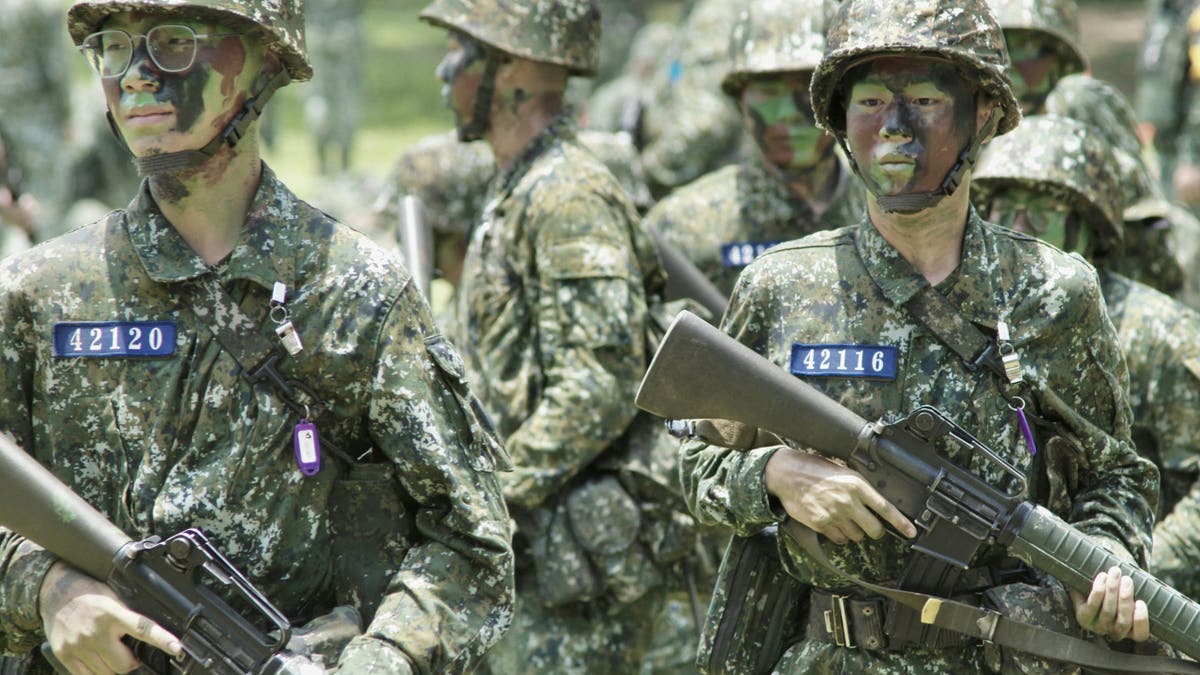
Taiwanese conscripts during a visit by Taiwan’s President Lai Ching-te to a military base in Taichung on June 28, 2024. (Sam YehAFP via Getty Images)
«It’s a tough challenge as we’re entering the benchmark year that Xi Jinping said of 2027. There should be more attention to this and there should be greater efforts to this.»
Kuiken emphasized Taiwan’s importance to the global technology supply chain, particularly its role in manufacturing advanced semiconductors used in artificial intelligence.
«Taiwan is the island at the center of the world. Xi Jinping is obsessed with it,» he said.
Pointing to Taiwan Semiconductor Manufacturing Company, or TSMC, Kuiken warned of the broader implications for American technological leadership if Beijing were to take military action against the island.
He urged Washington and its partners to develop a coordinated strategy to make an invasion or other Chinese coercive measures against Taiwan unattractive to Beijing.

President Donald Trump meets with delegations from Japan, India and Australia at the Solaire Hotel, on Nov. 17, 2026, in Manila, Philippines. (Win McNamee/Getty Images)
Responding to concerns about Taiwan, a U.S. official told Fox News Digital, «There is no change to our policy with respect to Taiwan.» Asked about the commissioners’ warnings, a White House official emphasized President Trump’s diplomatic approach to China and his plans to discuss nuclear arms reduction during the trilateral summit.
«Under President Trump’s leadership, U.S.-China relations have been refocused on what matters most – rebuilding the safety, security and prosperity of Americans. And as President Trump has said: much has been, and will be, accomplished, between the two leaders,» the official said.
«President Trump will conclude his visit to China with a trilateral meeting between the President of the United States, the President of the People’s Republic of China, and the President of the Russian Federation.»
«The President has made it clear that, among other topics, he will discuss the reduction of nuclear weapons in the world, whose proliferation President Trump believes is very dangerous,» the official added.
The Chinese Embassy rejected outside involvement in Taiwan’s future, reiterating Beijing’s claim of sovereignty over the self-governing island.
«There is only one China in the world. Taiwan is an inalienable part of China’s territory,» the spokesperson said. «The Taiwan question is China’s internal affair; how it is resolved is entirely a matter for the Chinese people themselves and brooks no interference from any external forces.»
The spokesperson added that the U.S. should «exercise extra caution in handling the Taiwan question».
TRUMP’S TAIWAN ‘NEGOTIATING CHIP’ REMARK SPARKS ALARM OVER HOW FAR HE’D SHIFT US-CHINA POLICY
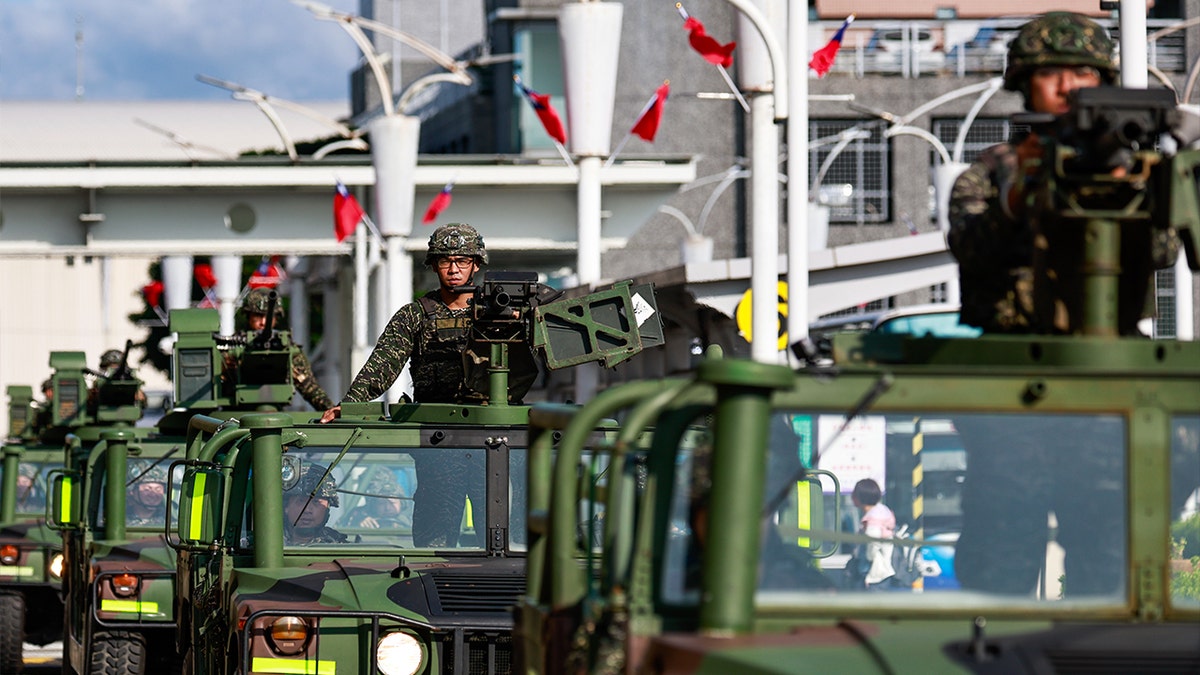
A procession of Taiwanese armed military vehicles patrols outside the Songshan Airport in the capital city following China’s announcement of the military exercise Joint Sword-2024B that encircles Taiwan, Oct. 14, 2024, in Taipei, Taiwan. (Daniel Ceng/Anadolu via Getty Images)
CHINA’S UNDERSEA THREAT
The commissioners also raised alarm about China’s rapidly expanding capabilities beneath the ocean, warning that Beijing could threaten the communications infrastructure on which the United States and its allies depend.
Asked whether China could disrupt critical American communications during a conflict, Kuiken was unequivocal. «Simple answer is absolutely yes,» he said.
«The Chinese have spent a long time studying the global communications network and they have absolutely developed the capabilities to sever undersea cables around the globe.»
Kuiken said he was confident China had probably conducted exercises involving such operations, although he did not identify specific exercises during the interview.
Schriver pointed to China’s advances in undersea warfare and ocean mapping as among the most concerning developments identified in the commission’s research.

Officers and soldiers in the Chinese People’s Liberation Army PLA Navy’s guided-missile destroyer Nanning wave as the ship enters the waters of the Hong Kong Special Administrative Region in south China, July 2, 2026. (Ji Peng/Xinhua via Getty Images)
He said the commission is urging Congress to strengthen protection of undersea communications cables through improved real-time threat detection, rapid repair capabilities and greater coordination with U.S. allies.
«So you need to be able to understand in real time when there’s a threat to those communication cables,» Schriver said.
The commission has separately warned that cables linking the United States with Taiwan, Japan and the Philippines are vulnerable to disruption, with damage potentially forcing communications onto slower and less direct routes.
The broader concern, Kuiken suggested, is the cumulative effect of China’s sustained investment in science and technology at a time when American innovation faces growing competitive pressure.
«I think what we are seeing is that the Chinese are starting to turn science, engineering and artificial intelligence into economic strength, national security and global influence,» he said.
The Chinese Embassy pushed back against framing undersea cable infrastructure as a security threat, arguing that doing so could undermine international connectivity. «Politicizing this issue and turning it into a security one will only disrupt normal international market rules, threaten global digital connectivity and cybersecurity, and serve no one’s interest,» the spokesperson said.
«China always supports international cooperation on submarine cables under the principles of fairness, justice, equality and inclusiveness, and stands ready to work actively with the rest of the world to promote the building and protection of submarine cables and other global information infrastructure.»
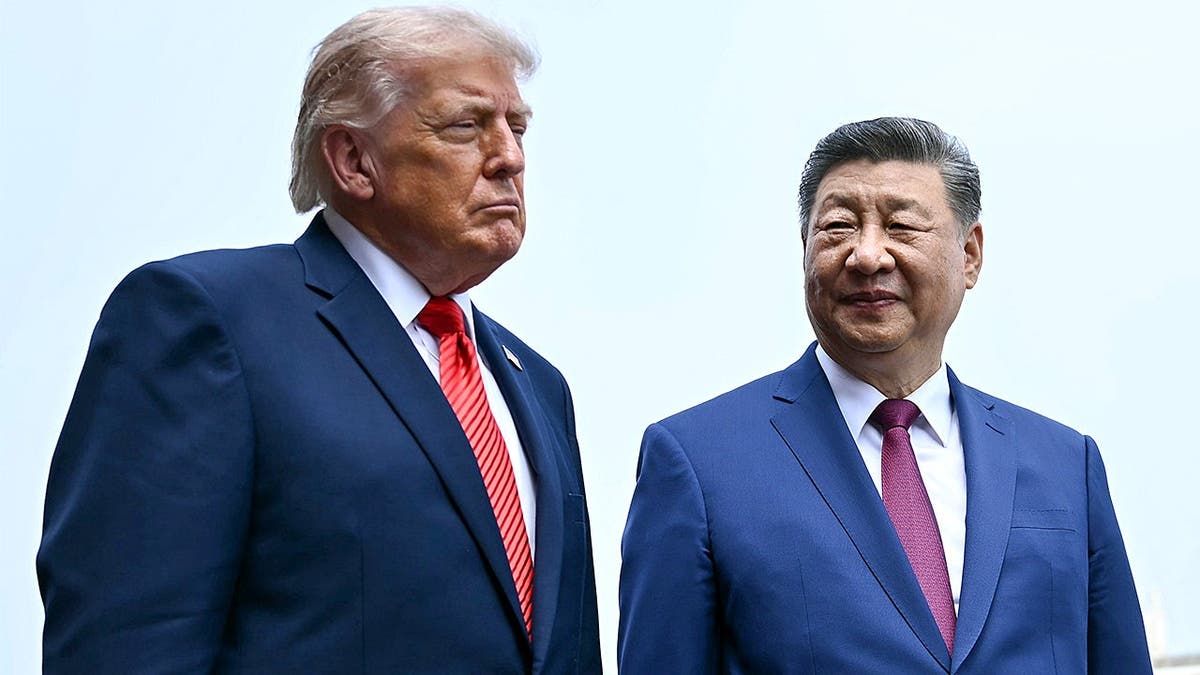
Chinese President Xi Jinping and President Donald Trump visit the Temple of Heaven on May 14, 2026, in Beijing. (Brendan Smialowski/Pool/Getty Images)
For the two commissioners, those developments underscore the stakes of Trump’s meeting with Xi and Putin: Washington faces not only an immediate diplomatic challenge but a longer-term competition with a Chinese leadership that is steadily building the capabilities to challenge American power.

Caputo enfrenta un dilema tras salto de brecha entre dólar oficial y el que usan empresas

La frase de Juan Sebastián Verón sobre Nico Paz: “Ciertas cosas solo se las vi hacer a Messi y Maradona”

El nuevo Consejo de la Magistratura debe empezar a funcionar y no logra completarse: hay seis bancas en disputa

Nelson Castro rompió el silencio en pleno conflicto feroz con el Vaticano, tras su escándalo en Perú: «El papa León XIV tiene…»

Paredes y gambetas: las claves de Boca para llegar a la final de la Sudamericana

Jorge Asís: "Es una vergüenza que el Gobierno que viene contra la casta necesite cancelar las PASO para subsistir"

La inflación de octubre: el dato que sorprendió a casi todos y la distancia que persiste con los parámetros internacionales

Milei dijo que el riesgo país sube por el miedo a "Orcolandia" y afirmó: "Los argentinos no van a votar hacia el pasado"

Se agudiza la suba de tasas y se complica la economía mundial

Encontraron muerto a un trabajador en el Observatorio de La Plata

 POLITICA3 días ago
Milei dijo que el riesgo país sube por el miedo a "Orcolandia" y afirmó: "Los argentinos no van a votar hacia el pasado"
- SOCIEDAD3 días ago
Encontraron muerto a un trabajador en el Observatorio de La Plata
- CHIMENTOS3 días ago
¡Bomba! Sofía Jujuy Jiménez confirmó su primer embarazo a los 35 años: tras pasar una escandalosa infidelidad, conoció a su nuevo novio y será mamá