INTERNACIONAL
Alleged Jalisco cartel leader accused of drug trafficking and fuel smuggling arrested in Mexico


NEWYou can now listen to Fox News articles!
Authorities in Mexico say they arrested a notorious member of the Jalisco drug cartel known as «The Tank» on Tuesday.
Mexican Security Secretary Omar Garcia Harfuch announced the arrest in a post on X, identifying the alleged cartel member as Iván Cazarín Molina.
Molina was the subject of sanctions by the U.S. in 2024 for his alleged role in fuel theft for the Jalisco New Generation cartel. Mexican authorities arrested him in Zapopan and were in contact with the U.S. Drug Enforcement Agency.
5 MEXICAN CARTEL BOSSES CHARGED IN WEAPONS, DRUG TRAFFICKING, TIMESHARE FRAUD SCHEMES, DOJ SAYS
Omar Garcia Harfuch, secretary of security and citizen protection, during a press conference in Mexico City on Feb. 23, 2026, following the death of Nemesio Oseguera Cervantes, alias »El Mencho,» leader of the Jalisco New Generation cartel. (Gerardo Vieyra/NurPhoto via Getty Images)
«Investigations link him to homicides, extortion, illegal deprivation of liberty, hydrocarbon theft, money laundering, and drug trafficking. He is also accused of his alleged involvement in the attack on a Mexican Army helicopter in Jalisco in 2015, in which members of the Army and the Federal Police lost their lives,» Harfuch said in a statement.
Authorities seized a vehicle, a firearm and various drugs during the arrest.
MEXICAN CARTEL BOSS LINKED TO INFLUENCER’S LIVESTREAMED MURDER ARRESTED, OFFICIALS SAY
«In September 2024, the United States Department of the Treasury sanctioned him for his ties to the CJNG and identified him as part of the inner circle of Nemesio Oseguera Cervantes, alias ‘El Mencho,’ which led to an exchange of information with [the DEA]. He will be placed at the disposal of the Specialized Prosecutor’s Office for Organized Crime Matters (FEMDO), where his legal situation will be determined in accordance with the law,» Harfuch added.

Investigative police officers guard the facilities of the Specialized Prosecutor’s Office for Organized Crime of the Attorney General’s Office in Mexico City, Mexico, on Feb. 22, 2026. (Gerardo Vieyra/NurPhoto via Getty Images)
The arrest comes roughly a week after the U.S. imposed a sweeping set of sanctions aimed at disrupting a Sinaloa cartel network accused of corrupting Mexican officials just across the U.S. border.
MEXICAN SENATOR ACCUSES SHEINBAUM OF SHIELDING ‘NARCO-POLITICIANS’ AFTER US CARTEL INDICTMENT
Los Mayos, a powerful faction of the Sinaloa cartel, and its U.S.-born leader are accused of funneling fentanyl and drug money through California and hiring hitmen to kill rivals on American soil.
The Treasury Department, according to material exclusively obtained by Fox News Digital ahead of their public release on Tuesday, will sanction 21 individuals and 25 entities in a crackdown against Los Mayos and their alleged illegal activity within U.S. borders.
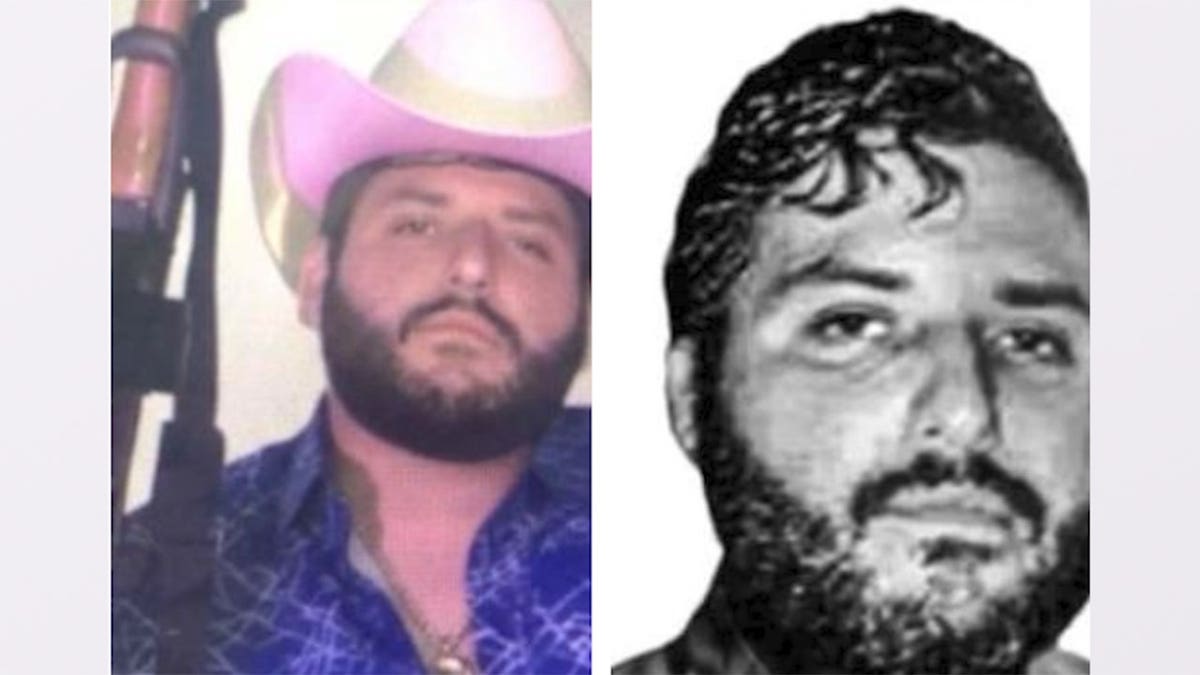
Treasury describes U.S.-born Ismael «Mayito Flaco» Zambada Sicairos as the «undisputed head» of the Sinaloa cartel’s Los Mayos faction following the arrest of his father, longtime kingpin Ismael «El Mayo» Zambada Garcia. (U.S. Department of the Treasury)
The targets of the sanctions include Ismael Zambada Sicairos, known as «Mayito Flaco,» a dual U.S.-Mexican citizen born in Anaheim, California, whom Treasury described as the «undisputed head» of Los Mayos.
Fox News’ Morgan Phillips contributed to this report.
mexico, mexican cartel violence, us, drugs, organized crime










INTERNACIONAL
Después de su prohibición, las plataformas de apuestas deportivas y los casinos en línea ya están fuera de servicio en Brasil

Las plataformas de apuestas deportivas y los casinos en línea, así como toda su publicidad, quedaron fuera de servicio este martes en Brasil, en medio de un creciente clima electoral de cara al balotaje del 25 de octubre.
La medida entró en vigencia unos diez días después que el presidente, Lula da Silva, dictó su prohibición.
Desde hoy, los usuarios que intentan entrar a estas plataformas son redireccionados a una web gestionada por el Gobierno que informa sobre el bloqueo de los servicios y la suspensión de todo tipo de anuncios publicitarios relacionados con el sector.
“Acceso bloqueado. La plataforma a la que usted intentó entrar está fuera de servicio por determinación de la Medida Provisoria nª 1.394/26, que prohíbe las apuestas deportivas y los casinos digitales en Brasil desde el 25 de septiembre de 2026″, se exhibe en letras grandes.
Brasil elegirá en el balotaje del 25 de este mes a su nuevo presidente entre Lula y su rival de ultraderecha Flávio Bolsonaro, ganador de la primera vuelta celebrada el domingo pasado.
Retiro voluntario de fondos
La pantalla ofrece enlaces directos para gestionar la devolución del dinero remanente de las cuentas, un canal para denunciar páginas irregulares que continúen activas y accesos al sistema público de salud para atender eventuales problemas derivados del juego.
El plazo para que los apostadores solicitaran el retiro voluntario de sus fondos venció este lunes.
Hasta el lunes, el Gobierno informó que había un saldo remanente de 1330 millones de reales (unos 266 millones de dólares) pendiente de rescate.
Asimismo, detalló que la inmensa mayoría de estas cuentas registran montos pequeños, pues cerca del 92 % tienen menos de 10 reales (2 dólares) y más del 96 % no superan los 25 reales (5 dólares).
Para recuperar estos fondos, el proceso continuará mediante una devolución coordinada entre las empresas, las instituciones financieras y las autoridades estatales.
EFE)
Brasil
INTERNACIONAL
Liberal justices look for ‘escape hatch’ as high-stakes climate case lands at Supreme Court, experts say
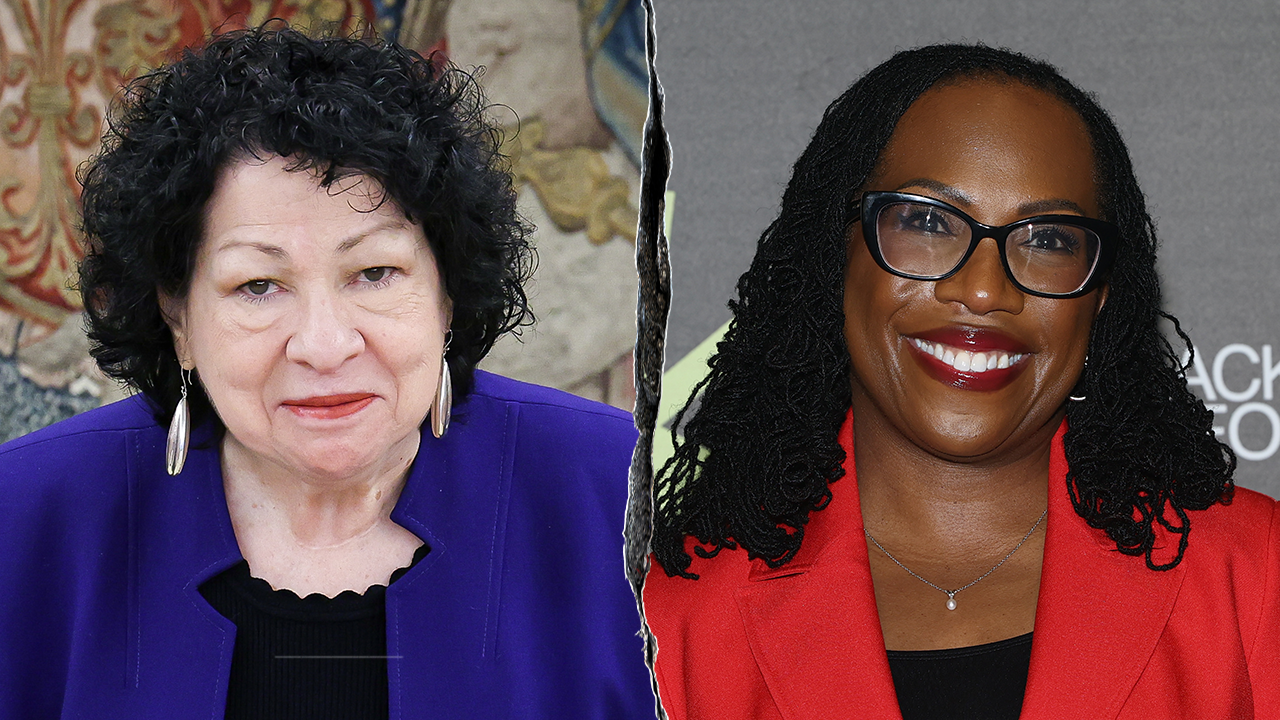
Justices Ketanji Brown Jackson and Sonia Sotomayor’s repeated questions concerning whether the Supreme Court has jurisdiction to hear a high-profile climate case that could expose oil companies to lawsuits across the country steered conservative lawyers to believe that the liberal justices are seeking an «off-ramp.»
«The fact that they kept going back to trying to create a jurisdictional problem tells me they don’t feel confident that they have the votes in this space,» Carrie Severino, president of JCN, a conservative judicial group, told Digital. «Jackson and Sotomayor were looking for an escape hatch.»
The Supreme Court began its new term Monday, hearing its first oral arguments for Suncor v. Boulder, in which they will rule on whether state tort laws can be used to seek damages from oil companies for climate change, even when the alleged harms are occurring outside the state or continent. The justices will also rule on whether the Supreme Court has jurisdiction to hear this case now, as the case is still before the Colorado Supreme Court.
The case before the high court is in an unusual procedural posture, meaning the justices could resolve it without ever reaching the blockbuster state-versus-federal power fight at its center. That dispute centers on whether Colorado can use its own laws to seek damages for alleged harms caused by emissions from other states or whether it’s an issue for the federal government and Congress to regulate.
SUPREME COURT BEGINS NEW TERM WITH HIGH-PROFILE LOOK AT CLEAN AIR AND FEDERAL AUTHORITY
«The questions by Jackson and Sotomayor trying to say it would be premature for the court to issue an opinion are simply the liberal justices trying to find an off-ramp for the case because they are afraid they will be outvoted on the main issue: does federal law such as the Clean Air Act preempt all state claims like those asserted here,» Hans von Spakovsky, senior legal fellow with Advancing American Freedom, told Digital.
While questioning Suncor attorney Kannon Shanmugam, Jackson suggested the dispute may have reached the Supreme Court too soon, calling it «premature from the standpoint of this court exercising its jurisdiction.»
She also repeatedly questioned why the court couldn’t wait to hear the case, saying the court doesn’t «have the whole set of facts» and that the court doesn’t «really know enough to be confident» that the theories posed are applicable.
«It feels to me like the defendants … are bringing it back to federal court before the state courts have really had a chance to sort out who is the source, what is their allegation with respect to how this causation is happening,» Jackson told Principal Deputy Solicitor General Sarah Harris, who argued in support of Suncor.
Meanwhile, Sotomayor refused to drop her line of questioning on jurisdiction with Shanmugam, proposing that the Supreme Court send the case back to the Colorado Supreme Court.
«If we’re unsure of your characterization, because there’s certainly a number of amici brief who disagree with that characterization, shouldn’t we be certifying this question to the Colorado court instead of us deciding it? We have to be sure of our jurisdiction before we take it,» Sotomayor said.
Republican Alabama Attorney General Steve Marshall told Digital it was clear that the liberal justices were trying to cast doubt on whether they have jurisdiction.
SUPREME COURT CAN RESTORE SANITY AND STOP THE LEFT’S RADICAL CLIMATE AGENDA
«Well, I think you saw both Justice Jackson and Justice Sotomayor try to find an out for this court, basically saying the court doesn’t have jurisdiction at this stage of the case to be able to make a final ruling. I think that you saw the advocates on behalf of Suncor be able to distinguish that.»
If the Supreme Court declines to reach the federalism issue, the Colorado Supreme Court’s ruling allowing Boulder’s state-law claims to proceed would remain in place, leaving the broader question of how far states can use tort law to pursue climate claims against energy companies unresolved.
Chief Justice John Roberts pressed Boulder attorney Kevin Russell on whether a Boulder win could trigger similar lawsuits nationwide. Russell said there are legal limits, but acknowledged to Justice Clarence Thomas that Boulder’s theory could allow other fossil-fuel businesses to be sued.
«The chief justice and the court do not like issuing rulings with no limiting principles, rulings that could open up unlimited litigation and claims. Kannon Shanmugam, the lawyer for Suncor, emphasized this again at the very end of the oral argument when he pointed out that there are not only 90,000 political jurisdictions that could sue, but individuals could also sue claiming damages from global warming,» von Spakovsky said.
«And he also pointed out something the conservative majority frowns upon: that Boulder is trying to resolve a major policy issue in the courts instead of in the legislative branches,» von Spakovsky continued.
SUPREME COURT KICKS OFF NEW TERM WITH FRESH QUESTIONS OVER ITS LEGITIMACY AND ITS FUTURE
Supporters of Suncor say the lawsuits could «bankrupt» oil companies and cause the price for consumers to go up.
«It’s to basically create a carbon tax on both producers and emitters across the country, which would include, by the way, my cattlemen in Alabama producing beef for our country, those that are creating concrete to be able to build structures and be able to grow our economy,» Marshall told Fox News. «They ultimately want to bankrupt that industry to have their preferred climate change policies be in play.»
«They’re literally addressing behavior that takes place all over the world,» Utah Attorney General Derek Brown told Digital. «They want to regulate not just what happens in Colorado, but what happens in my state of Utah or in Saudi Arabia. That’s not the way the system works. So, really, this case comes down to one main issue and that is who gets to decide things like energy policy. And ultimately, under our system, it should be Congress.»
Meanwhile, Boulder alleged ExxonMobil and Suncor knew for decades about the climate risks associated with fossil fuels but misled the public about those risks. The communities estimate that taxpayers could face more than $100 million in costs to adapt to climate-related impacts, including wildfires, drought and damage to roads and other infrastructure.
Former Washington Gov. Jay Inslee, a Democrat and longtime advocate for aggressive action on climate change, argued those costs are already being felt by communities across the country.
«As governor, I’ve worked with so many families who’ve lost their homes,» Inslee told Digital. «So many communities have essentially burned down, and they ought to be able to have a day in court to hear the evidence, to determine whether the lies of the oil and gas industry legitimately, they make it so that they’re held accountable.»
The complaint pointed to a 1977 internal memo from ExxonMobil that circulated among the company’s highest-level managers. The memo reported that «current scientific opinion overwhelmingly favors» that fossil fuels contribute to the rise in CO2 emissions.
«Their own scientists knew that their product was dangerous, that it was going to cause more fires. And they knew this for decades, 1967, their own scientists told them it could be catastrophic, so they knew about it, they lied about it,» Inslee said. «Now it’s an American right to be in court. Nobody should bar an American from their day in court.»
supreme court, politics, federal courts, law, colorado, controversies state and local
INTERNACIONAL
“No me voy a rendir hasta encontrarlo”: La lucha incesante de las madres salvadoreñas que buscan a sus hijos desaparecidos
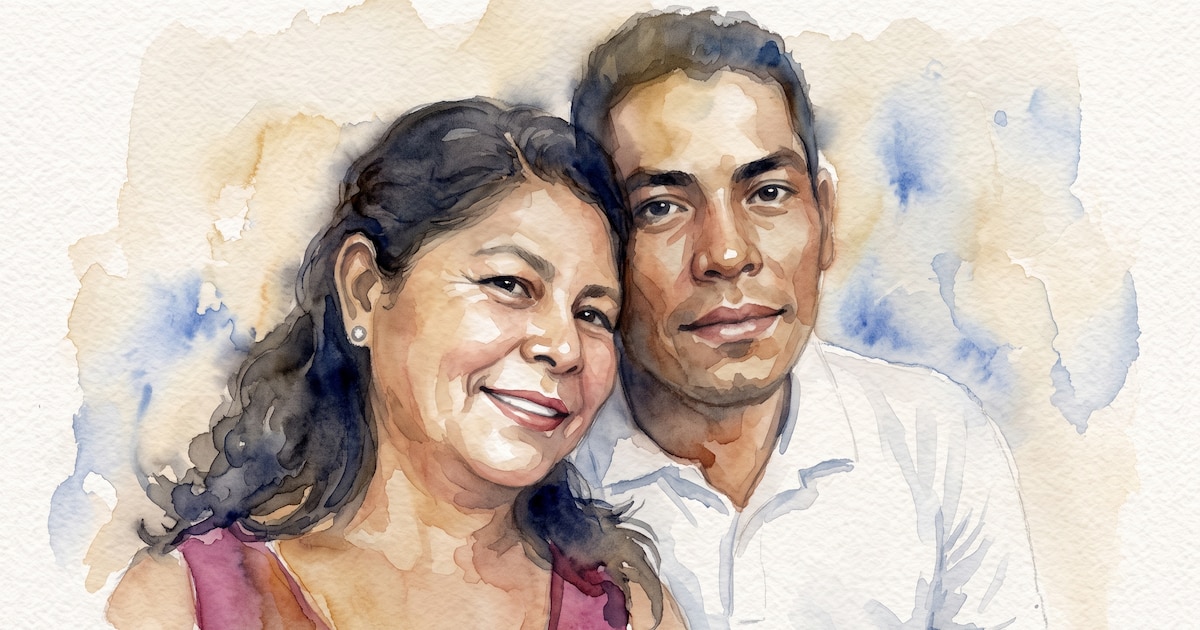
El dolor de la ausencia no da tregua en El Salvador. La incertidumbre de no saber dónde está un ser querido convierte las horas en un peso insoportable y la rutina en una constante interrogante.
Ante la disolución de diversas organizaciones de apoyo humanitario y el agotamiento de recursos para acompañar a las víctimas, el Bloque de Búsqueda de Personas Desaparecidas se ha consolidado como una trinchera de resiliencia, articulación comunitaria y dignidad.
En entrevista exclusiva con Infobae, Josefa Mejías López y Guadalupe Beatriz Hernández Balzar reconstruyen la memoria de sus hijos, denunciando los obstáculos burocráticos y reafirmando un compromiso inquebrantable: no dejar que el olvido se borre sus nombres.
El sábado 14 de abril de 2018, la rutina de la familia Mejía se fracturó para siempre. Juan Antonio Mejía Mejía, de 26 años, trabajaba repartiendo agua embotellada en el municipio de Ilopango. Llevaba puesto su uniforme de trabajo, sus botas de hule y cargaba un bolso negro donde guardaba ropa de cambio y mangas de tela para protegerse del sol.
Aquel día era decisivo en la vida del joven. Padre de dos niños que en ese momento tenían tres y seis años, Juan Antonio había tomado la decisión de separarse de su pareja e irse a vivir con su madre, Josefa Mejías López, a la colonia La Selva. Quería ahorrar esa última semana de trabajo para actualizar su currículum y buscar un empleo nuevo que le permitiera seguir pagando la vivienda que había adquirido a través del Fondo Social para la Vivienda.
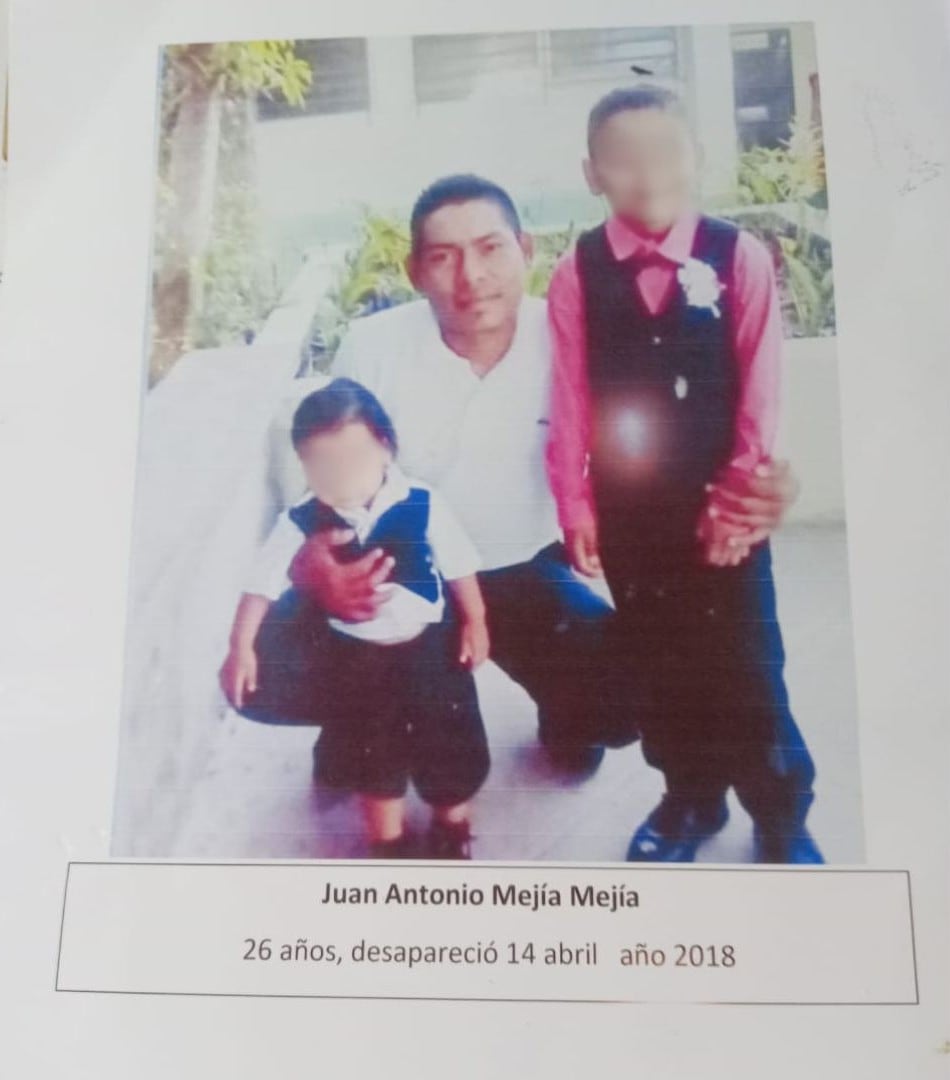
Sin embargo, al terminar la tarde, el joven no llegó ni a la casa que dejaría ni a la de su madre. La desesperación de Josefa comenzó a marcar la hora desde la 1:00 p.m. Al no tener noticias, empezó una búsqueda que no se ha detenido un solo día. “Empezó la angustia, el dolor, el deseo de encontrarlo. Lo he buscado yo como mamá, en que nadie me hizo caso, ni las autoridades. Yo lo busqué bajo de puentes, en los montes, en los tubos de agua, en las colonias, en los hospitales”, relató Josefa a Infobae.
Las primeras horas estuvieron marcadas por la falta de empatía institucional, cuando le indicaron que debía esperar 72 horas para interponer formalmente la denuncia. Durante dos años acudió de forma periódica a la Fiscalía General de la República, donde era sometida a entrevistas repetitivas sin obtener avances sobre las bitácoras telefónicas.
A lo largo de los años, Josefa ha recorrido comandancias, centros penales, la morgue de Medicina Legal, el Seguro Social e instalaciones de las Fuerzas Armadas. Días antes de su desaparición, Juan Antonio le había expresado temores sobre situaciones de riesgo en sus rutas de reparto, mencionando presiones por cobro de extorsión o “renta” en zonas como Las Margaritas en Soyapango, así como conflictos personales en su entorno cercano.
A pesar de haber sido citada para pruebas de ADN tras el hallazgo de restos en Cumbres de San Bartolo que vestían prendas similares a las de su hijo, resultado que finalmente no arrojó coincidencia, Josefa exige la creación de un banco genético unificado para que las muestras no se pierdan.
Tras unirse al Bloque de Búsqueda, sostiene su fe con firmeza: “Yo no quisiera morirme pensando que a mi hijo no lo pude encontrar, ni siquiera su cuerpo. Nosotros, lo que queremos es que nos ayuden a darnos esa ley para ser respaldadas. Si hubiera un banco, mi sangre estuviera guardada”.
Guadalupe Beatriz Hernández y la herida abierta por su hija y yerno
En la costa del departamento de La Libertad, el dolor de Guadalupe Beatriz Hernández Balzar se mantiene intacto desde el 19 de abril de 2021. Ese día, su hija Marcela Jacqueline Rojas Hernández, de 22 años, desapareció sin dejar rastro en la capital.
Marcela trabajaba elaborando arreglos florales en un negocio del mercado San Miguelito en San Salvador. Para evitar los largos trayectos diarios desde La Libertad, la joven alquilaba un cuarto en un mesón de la zona de Don Rúa, en San Salvador.
Marcela compartía su vida con su pareja, Ricardo Alfredo Durán, también de 22 años, quien trabajaba en el mismo sector del mercado. La mañana de aquel lunes 19 de abril, ambos salieron del mesón con dirección a sus labores a las 5:00 a.m., pero ninguno se presentó a trabajar ni volvió a la habitación. A las 5:00 p.m., la familia fue alertada de que la pareja no daba señales de vida.
Guadalupe inició una travesía desesperada acudiendo a centros asistenciales, morgues, hospitales y dependencias de la Policía Nacional Civil. Al consultar en la Procuraduría para la Defensa de los Derechos Humanos (PDDH), se encontró con la frialdad de las respuestas institucionales. “Aún hasta fui a la PDH y mejor me dijeron de que cuidara a mi hijo que tenía vivo, que ya no anduviera buscando a alguien que ya estaba muerto”, recordó Guadalupe en entrevista con Infobae.

La desaparición de la pareja dejó un vacío profundo y una enorme responsabilidad sobre los hombros de Guadalupe, quien tuvo que asumir de forma absoluta la crianza, educación y sostenimiento de los dos hijos de Marcela, que hoy enfrentan la infancia sin su madre. Con escasos recursos y enfrentando problemas de salud en su entorno familiar, la carga económica y emocional ha sido devastadora.
A pesar del temor y de las sospechas familiares sobre las presiones de pandillas y conflictos del pasado que rodeaban el entorno de los jóvenes, Guadalupe encontró una luz en el camino un año después de la desaparición, al incorporarse al Bloque de Búsqueda de Personas Desaparecidas. El colectivo le brindó asesoría jurídica y un espacio seguro para hablar sin miedo.
“Uno sabe lo que nosotros sufrimos a diario. Yo antes ni hablar de esto podía”, confesó a Infobae, destacando cómo el apoyo de sus compañeras de lucha le ha devuelto las fuerzas para exigir que el Estado no abandone a las familias ni a los niños que han quedado en la orfandad. “Yo en lo personal quisiera que nos apoyaran, aún hasta con los niños que ella ha dejado. Nosotros solo pedimos ser escuchados”.
acuarela,retrato,clavel,memoria

Después de su prohibición, las plataformas de apuestas deportivas y los casinos en línea ya están fuera de servicio en Brasil

Marcha contra la Corte: sectores del PJ, la izquierda, gremios y piqueteros protestan por el fallo que libera la venta de tierras para extranjeros

El Gobierno defendió el DNU 70/23 frente a la avanzada opositora en Diputados: las normas que volverían atrás

El dólar siguió estable, pero mejoró la competitividad cambiaria por la suba del real brasileño

Akio Otsuka, Solid Snake en Japón, a Konami: "Hagamos un Metal Gear más"

A la sombra de Bergoglio: el Vaticano buscó reforzar la identidad de León XIV en el diseño de su visita a la Argentina

DHS exposes dilemma behind SCOTUS deportation fight: ‘We have two choices’

El Reino Unido anunció que las nuevas licencias de hidrocarburos en las Islas Malvinas requerirán su autorización final

El pedido de Abel Pintos que sorprendió a Guido Kaczka: “Necesito renovarlos”

El guiño de Cristina Kirchner a Uñac, las dudas en el PJ sobre las PASO y el mensaje de Kicillof al interior

 POLITICA1 día ago
¡Precios de Manhattan con sueldos de Argentina! Cómo los créditos hipotecarios inflaron las propiedades y congelaron el sueño de la casa propia
- POLITICA3 días ago
En la antesala de la discusión electoral, el peronismo buscará un gesto de unidad en la Legislatura bonaerense
- POLITICA3 días ago
El Senado se prepara para el último tramo de sesiones ordinarias: cuáles son los desafíos para el oficialismo