INTERNACIONAL
DHS exposes dilemma behind SCOTUS deportation fight: ‘We have two choices’

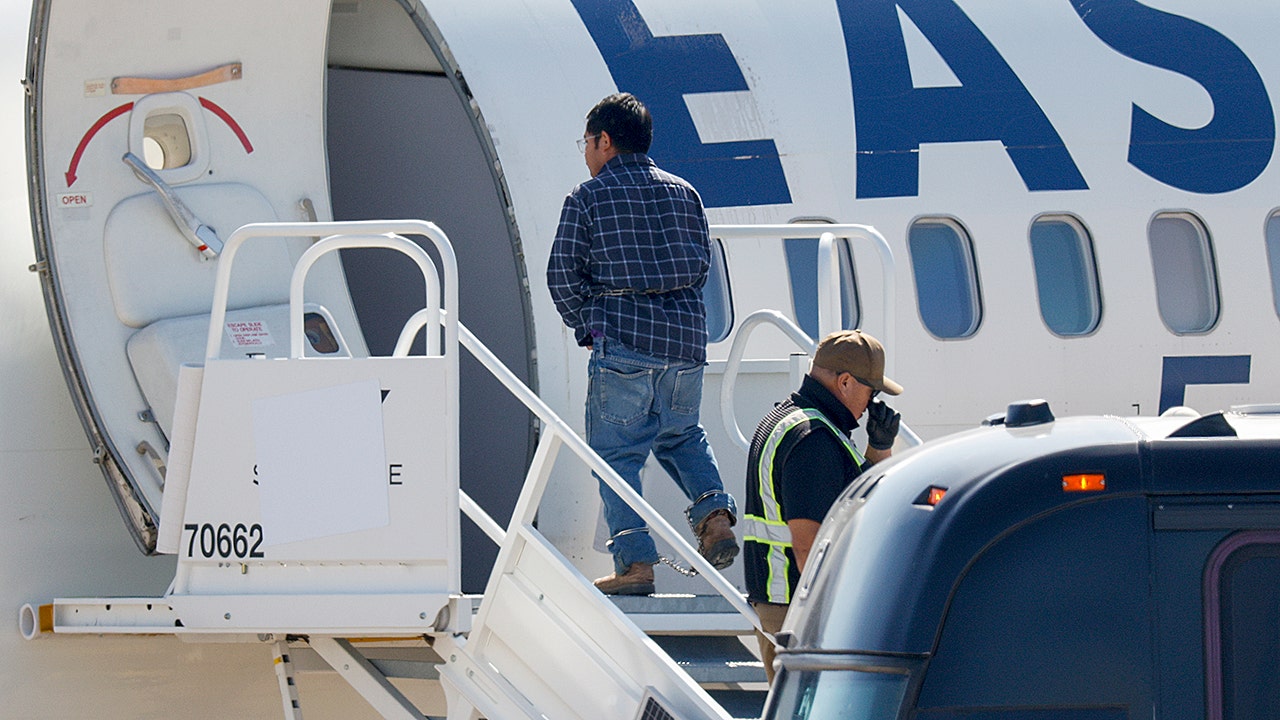
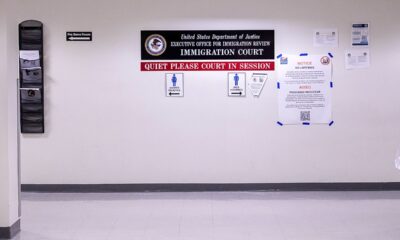
The Supreme Court temporarily cleared the Trump administration to continue its third-country deportation policy this week, as DHS’ top lawyer mounts a public defense of an immigration authority the administration says previous presidents largely left dormant.
DHS has increasingly used so-called «third-country» removals when a removable alien cannot be returned to their home country or that country refuses to take them back — part of what agency General Counsel James Percival describes as a broader Trump strategy of reviving immigration authorities already on the books.
«Imagine going to a country and saying, hey, we’ve got a guy, he’s not your guy, and he’s a rapist, but can he please live there?» Percival told Digital.
«That’s not an easy ask. It requires significant diplomatic energy… Norway is not taking a rapist from Cuba.»
TRUMP’S SPECIAL STRATEGY TO DEPORT ILLEGALS GIVES HIM ANOTHER TOOL FOR ENFORCEMENT
The justices on Tuesday stayed a lower-court judgment restricting DHS’s policy, allowing the administration’s guidance to remain in effect while the Court considers the case on the merits. Arguments are set for December over whether agency procedures comply with federal immigration law, due process and safeguards against torture.
The case does not squarely challenge DHS’s underlying authority to conduct third-country removals, but rather the procedures it must follow beforehand.
«It’s in the statute expressly that we can do this,» he said. «If you go back and read most of the immigration laws, there’s a lot of really good tools in there that people just haven’t used.»
The third-country provision was included in a major immigration reform package passed by Congress and signed by President Bill Clinton in 1996: the Illegal Immigration Reform and Immigrant Responsibility Act (IIRIRA).
«A lot of people in government sort of treat their authority like fine china,» Percival remarked.
«They’re afraid if they ever actually use it, someone will take it away. And if you’ve ever owned fine china, it’s like you can find yourself at the end of your life and you were so afraid you would break it you never used it.»
TRUMP’S FIGHT OVER RARELY USED 18TH-CENTURY DEPORTATION LAW LIVES ON IN LATEST COURT CLASH
But Percival’s strategy has not come without blowback from human rights advocates, who pointed most recently to allegations that deportees were beaten by authorities in Equatorial Guinea, a tiny nation on Africa’s Atlantic coast that has been under the control of President Teodoro Obiang since 1979.
Obiang’s government received $7.5 million from Washington as part of an agreement with Malabo to accept third-country deportations.
«I’d rather live in the United States than Equatorial Guinea too, but I’m an American citizen and I haven’t killed anybody,» Percival said.
The detention issue traces in part to the Supreme Court’s 2001 decision in a case involving a stateless legal resident whom the government ordered deported due to his criminal record. Kestutis Zadvydas was born to Lithuanian parents in a German displaced- persons camp, but neither Lithuania nor Germany would accept him.
The court held that six months of post-removal detention is presumptively reasonable, after which continued detention can be challenged if removal is not reasonably foreseeable.
Percival is making that case publicly through his «Daily Deportee» series on X, highlighting criminal deportees whose home countries will not accept them.
SIGN UP TO GET THE POLITICS NEWSLETTER
«If the person is a child rapist and serves 20 years, we have two choices: Find a third country — or let the child rapist go live in an American community,» he said, adding that the effort is intended to shape public understanding of the issue and highlight its stakes.
Percival cited Burmese national Kyaw Mya, whose home country won’t take him back.
Percival said another case he plans to feature involves a migrant who committed a violent crime, was not removed by the Bush administration after serving time and then allegedly reoffended after his release:
«[He] tried to kill somebody, the gun misfired, so he pistol-whipped them instead. He served time for that. He got out,» Percival explained.
As DHS continues seeking to use underutilized tools in the IIRIRA and other laws, Percival pointed illegal immigrants and criminal resident aliens to another oft-repeated option that Homeland Security Secretary Markwayne Mullin continues to keep on the table:
«It’s not too late to get $3,000 and a flight home.»
illegal immigrants, homeland security, deportation, politics, immigration, federal courts, international law, supreme court oral arguments







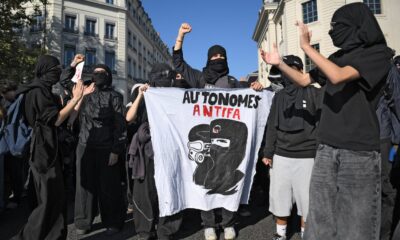

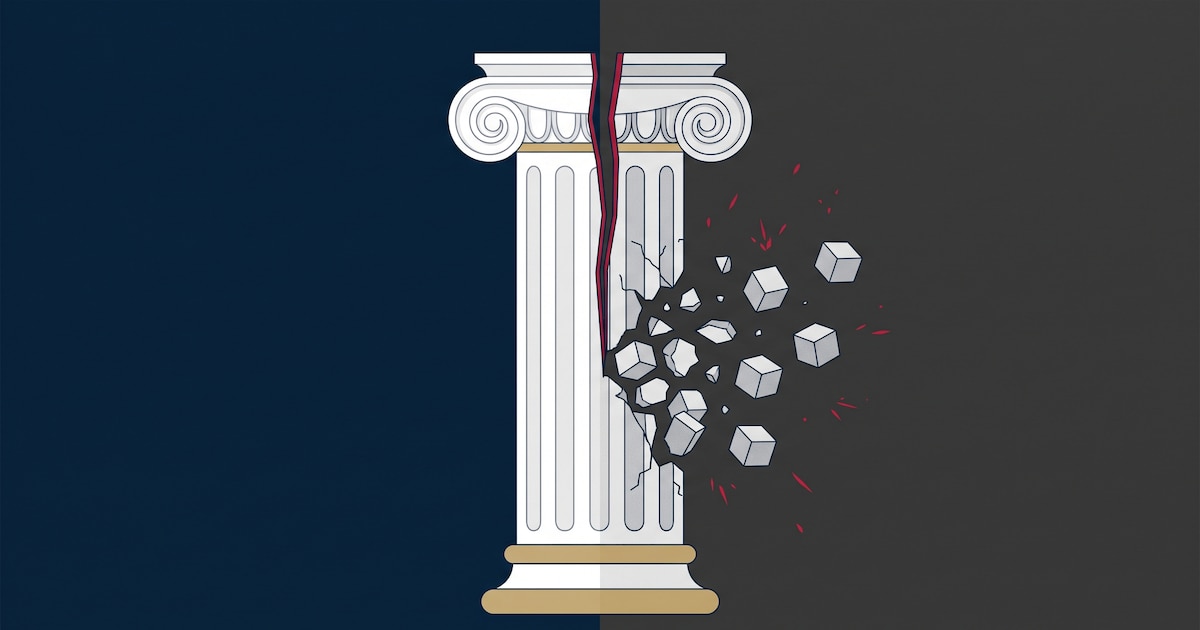
Las postales recientes de París y Roma no son meras crónicas de la disconformidad social; son síntomas nítidos de una fractura estructural que amenaza la arquitectura misma de Occidente.
El espectáculo de calles históricas cubiertas de humo, adoquines transformados en proyectiles y monumentos republicanos vandalizados bajo consignas de protesta expone una realidad incómoda: la deriva de la manifestación legítima hacia el nihilismo delictivo.
Para quienes observamos la realidad con la urgencia de decodificarla, estas acciones no representan un hecho aislado, sino la manifestación superficial de corrientes subterráneas mucho más profundas que exigen un diagnóstico sociológico preciso y, sobre todo, una respuesta política firme.
Para orientar la toma de decisiones en el espacio público y civil, el primer imperativo es identificar con precisión a los actores de esta violencia.
No nos encontramos ante la clásica masa obrera de las revoluciones industriales, ni ante un movimiento estudiantil homogéneo buscando reformas programáticas.
Los grupos remanentes que hoy capitalizan la agitación en las capitales europeas se componen de una amalgama compleja: minorías radicalizadas, facciones anarquistas tácticas y sectores marginalizados que han encontrado en la destrucción un fin en sí mismo.
Su accionar no busca la reforma, sino la impugnación total del sistema. Al arremeter contra el mobiliario urbano y los símbolos estatales, no atacan a un gobierno de turno; atacan el concepto mismo de comunidad y el patrimonio colectivo que sostiene la identidad ciudadana.
Al rastrear las causas profundas de este fenómeno, emergen con claridad los choques culturales de nuestra era. Vivimos en sociedades hiperconectadas pero profundamente atomizadas.
El origen de estas manifestaciones radica en una peligrosa combinación de frustración socioeconómica, la erosión de las instituciones intermedias —como la familia, la escuela y los partidos políticos tradicionales— y una crisis de integración cultural.
La falta de asimilación de ciertos sectores a los valores fundacionales de la civilización occidental ha creado “guetos ideológicos” y geográficos donde el resentimiento hacia el Estado se cultiva de forma sistemática.
Cuando el contrato social se rompe y los deberes ciudadanos son suplantados por una demanda ilimitada de derechos sin contraprestación, el terreno queda abonado para que la intolerancia reemplace al debate.
Si analizamos las tendencias de cara al futuro, el panorama proyecta una preocupante inercia si no se interviene a tiempo.
El vandalismo, cuando es tolerado o minimizado por la corrección política, tiende a ramificarse.
De no mediar un cambio de rumbo, asistiremos a una balcanización del espacio público, donde las calles dejarán de ser el lugar del encuentro democrático para convertirse en campos de batalla intermitentes.
La violencia simbólica y material de hoy corre el riesgo de institucionalizarse como el único lenguaje válido de negociación para colectivos que se autoperciben al margen de la ley, erosionando irreversiblemente la predictibilidad política y la paz civil necesarias para el desarrollo económico y social.
Ante este escenario, la construcción de soluciones requiere una claridad estratégica fundamental: es inviable construir consensos desde la claudicación.
El diálogo democrático es una herramienta poderosa, pero posee una condición de posibilidad ineludible: el desarme y el acatamiento del marco legal.
No se puede, bajo ninguna circunstancia, negociar desde la violencia. Conceder demandas bajo la presión del chantaje callejero no apacigua a los radicalizados; por el contrario, convalida sus métodos y deslegitima a las mayorías silenciosas que canalizan sus disidencias a través del voto y los mecanismos constitucionales.
La resiliencia institucional exige trazar una línea roja infranqueable entre la protesta pacífica y el delito común.
Para encauzar este conflicto hacia una resolución sostenible, la propuesta debe articularse en torno a tres ejes de acción que preserven los valores tradicionales, la república, el orden y la democracia:
Restauración del principio de autoridad y el orden público: El Estado debe ejercer el monopolio legítimo de la fuerza con determinación y sin complejos. La ley debe aplicarse con todo su rigor sobre los responsables materiales e intelectuales del vandalismo. Identificar, juzgar y sancionar estos actos no es autoritarismo; es la defensa elemental de la libertad de los ciudadanos que desean vivir, trabajar y transitar en paz. El orden no es el opuesto de la democracia, sino su principal garantía.
Reivindicación de los valores republicanos y cívicos: Es urgente revitalizar la pedagogía de los deberes ciudadanos. Las democracias occidentales han descuidado la transmisión transgeneracional de sus principios fundacionales: el respeto a las instituciones, la tolerancia, el laicismo y el valor de la ley. La integración cultural debe pasar de ser una expresión de deseos a un requisito de convivencia: quien habita el suelo republicano debe respetar sus leyes y sus símbolos.
Apertura de canales de diálogo institucionales (sin ceder posiciones): Lograr consensos legítimos implica escuchar las demandas socioeconómicas de fondo —como las reformas en educación, empleo o infraestructura urbana— pero procesándolas exclusivamente a través de los parlamentos, las mesas de concertación técnica y los canales democráticos establecidos. El consenso se busca con los ciudadanos que respetan las reglas del juego, jamás con aquellos que pretenden prender fuego el tablero.
Para el ciudadano, el empresario y el tomador de decisiones que lee estas líneas con la mirada puesta en el mediano plazo, la conclusión es inequívoca: la estabilidad futura dependerá de la firmeza con la que hoy defendamos las reglas de juego.
Las crisis en París y Roma nos recuerdan que la civilización es un logro frágil que requiere cuidado constante. La toma de decisiones estratégicas en los meses venideros no debe guiarse por el temor a las calles encendidas, sino por la convicción de que los valores de la República —la libertad bajo la ley, el respeto mutuo y el orden democrático— son innegociables.
Permitir que la violencia dicte la agenda pública sería el principio del fin de la convivencia democrática; recuperar la autoridad de la ley es el único camino para garantizar nuestra libertad.
* El autor es Director de Latin America Invest.-
columna jónica,ilustración editorial,crisis institucional,polarización
INTERNACIONAL
France on edge with 70,000 police deployed for unrest as authorities probe suspected terror attack near Paris
NEWYou can now listen to Fox News articles!
A suspected terrorist attack near Paris Friday added to tensions across France as the nation prepares for more potential violence Saturday.
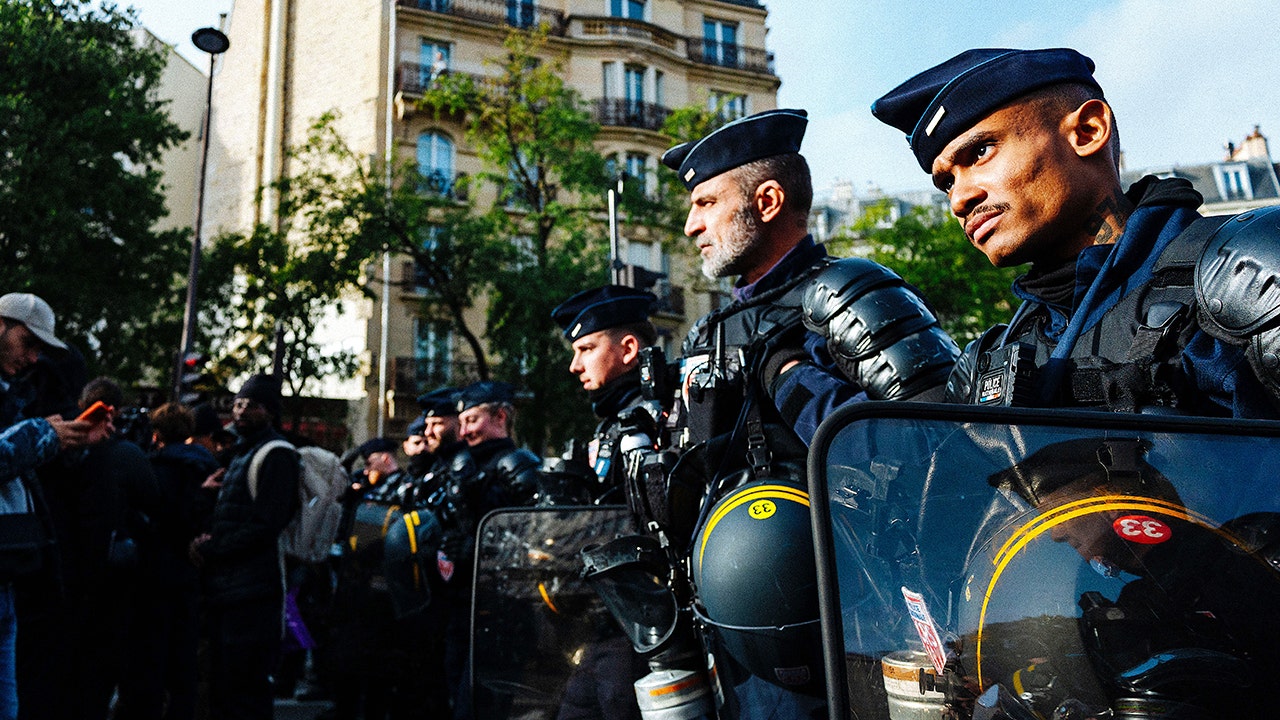
Seventy thousand law enforcement officers, along with helicopters, armored vehicles and water cannons, will be deployed across France as President Emmanuel Macron’s government tries to ward off another weekend of violent protests.
«The strategy adopted for the coming days is to ban protests requested by individuals or groups with no legitimate authority,» Macron said ahead of the weekend after canceling his planned trip to Nigeria and Senegal originally scheduled for next week.
«The rules are simple, and I think they’re just common sense,» Macron added. «The general recommendation is that there should be no demonstrations in the coming days.»
FRANCE’S MACRON BLAMES PROTESTS ON ‘ULTRA-LEFT GROUPS WHOSE AIM IS TO BRING DOWN THE REPUBLIC’
Protesters marched through central Paris amid clashes, fires and heavy police deployment during nationwide demonstrations against rising living costs in Paris, France, Oct. 17, 2026 (Firas Abdullah/Anadolu via Getty Images)
«Where trade unions submit requests to hold demonstrations, prefects will examine them in accordance with the law,» he added, «but alternative routes will be proposed» to protect city centers, businesses and public buildings.
Adding to security concerns, a suspected terrorist attack occurred in the city of Trappes, west of Paris. A 39-year-old man was arrested by police after one person was killed and four others, including a 12-year-old girl, were wounded in what was originally said to be a «relatively random» shooting.
Interior Minister Laurent Nuñez has since told local media, «The motive may be racist. The investigation is ongoing, but this is clearly a terrorist crime.»
The AFP reported the suspect appeared to fire randomly from a vehicle, and the mayor told reporters the dead victim and at least one of the wounded were «of African origin.»
Macron said «the nation is standing with» the victims of this «terrible ordeal.»
FRANCE COULD FACE EVEN WORSE DESTRUCTION WITH SECOND WEEKEND OF PLANNED RIOTS, STATE DEPT WARNS
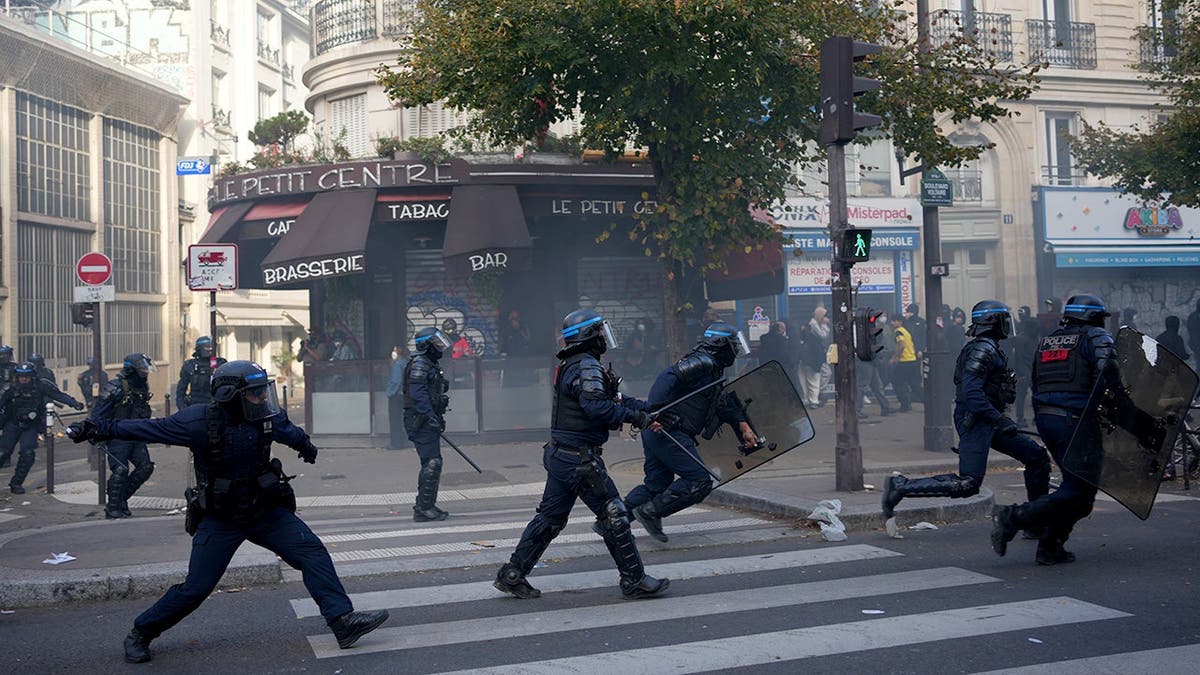
Riot police officers run across a street during protests in Paris, France, Oct. 17, 2026. (Bruno Camillo/Reuters)
Ahead of Saturday’s protests and after acknowledging that police had «lost control» during last weekend’s unrest, Nuñez, the interior minister, said his ministry is «ready for tomorrow. We will be extremely vigilant, extremely firm, and we will let absolutely nothing pass.»
Reuters reports that the Union Nationale des Étudiants de France, or UNEF, one of the nation’s oldest student unions, has said its planned rallies will go on as scheduled despite police rejecting their permit requests. Police have so far only approved a union demonstration in Paris, Reuters reported, while denying requests from UNEF and the «Yellow Vest» movement, an anti-establishment force that first emerged in 2018.
Macron also took aim at those he says are behind the violence, saying, «Last Saturday, we had political and seditious acts by ultra-left groups whose aim is to bring down the Republic.»
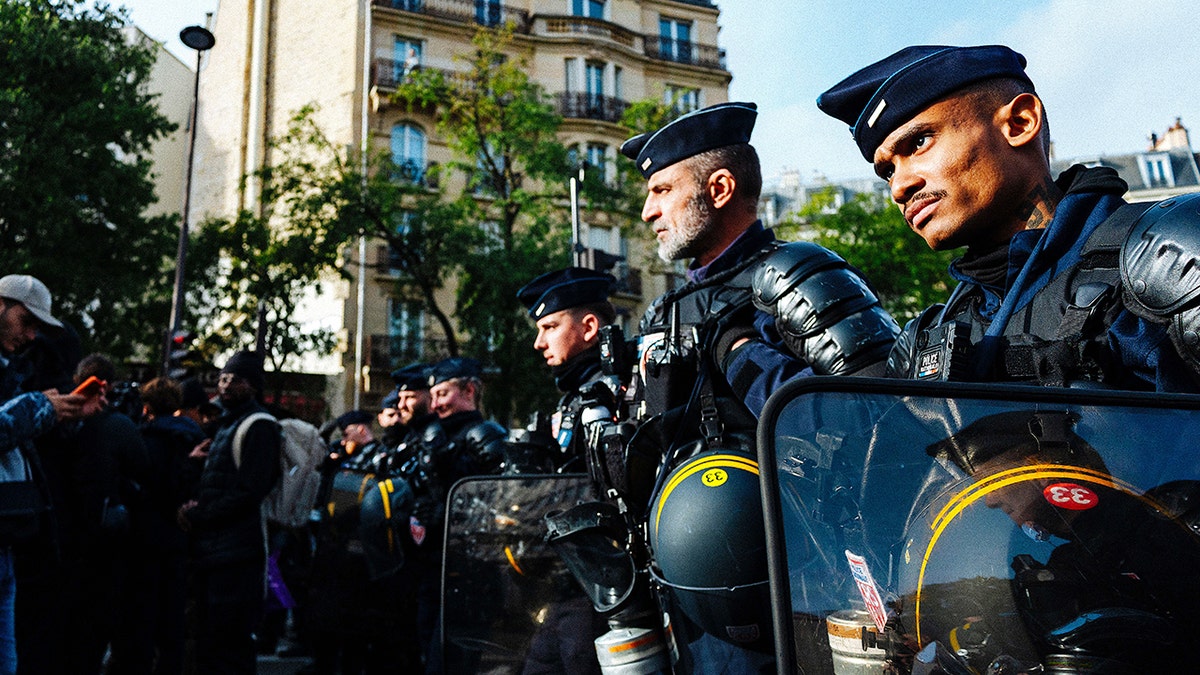
Riot police stand together outside the Pitié-Salpêtrière hospital (13th arrondissement) in Paris on Thursday, Oct.22, 2026, (Jan Schmidt-Whitley/Le Pictorium via Reuters)
Earlier this week, Fabian Vanhemelryck, secretary general of the Alliance Police Nationale union, said political figures deserved blame because of «those who excuse the inexcusable, justify violence and prefer to overwrite police officers rather than condemn those who attack them.»
He also said the «state that abandons its police officers in the face of increasingly uninhibited violence, while demanding that they accept, remain(s) silent and continue(s) to hold the line.»
Major French institutions, like the Louvre and the Musée d’Orsay, will be closed in anticipation of Saturday’s planned protests, and 24 Metro stations across Paris will be closed. A Ligue 1 soccer match between Paris Saint-Germain and Olympique Lyonnais, scheduled for Sunday night at Parc des Princes in the capital, has also been postponed to Monday evening.
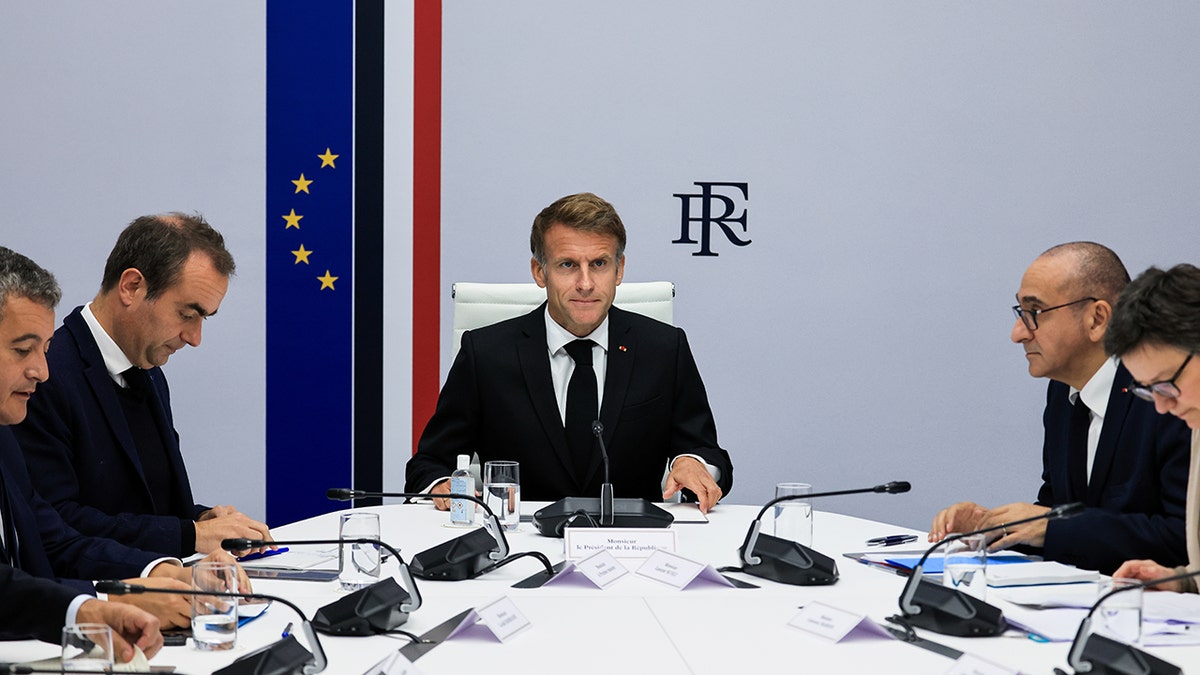
French President Emmanuel Macron, center, hosts an Interministerial Crisis Meeting at the Elysee Presidential Palace in Paris Sunday, Oct. 18, 2026, the day after nationwide riots. (Ludovic Marin/Pool Photo via AP)
The NFL game between the Pittsburgh Steelers and the New Orleans Saints, scheduled for Sunday afternoon at Stade de France just north of central Paris, is still set to be played as scheduled, yet some weekend events around the game have been canceled.
The Stade de France is the same stadium that hosted an international soccer match between France and neighboring Germany during the Nov. 13, 2015 terror attacks.
Explosions were heard outside the stadium during the game that night, with then-French President François Hollande in attendance. Fans were held inside the stadium for hours while authorities dealt with the attacks unfolding around Paris that night.
The Associated Press and Reuters contributed to this report.
france, emmanuel macron, world protests, terrorism
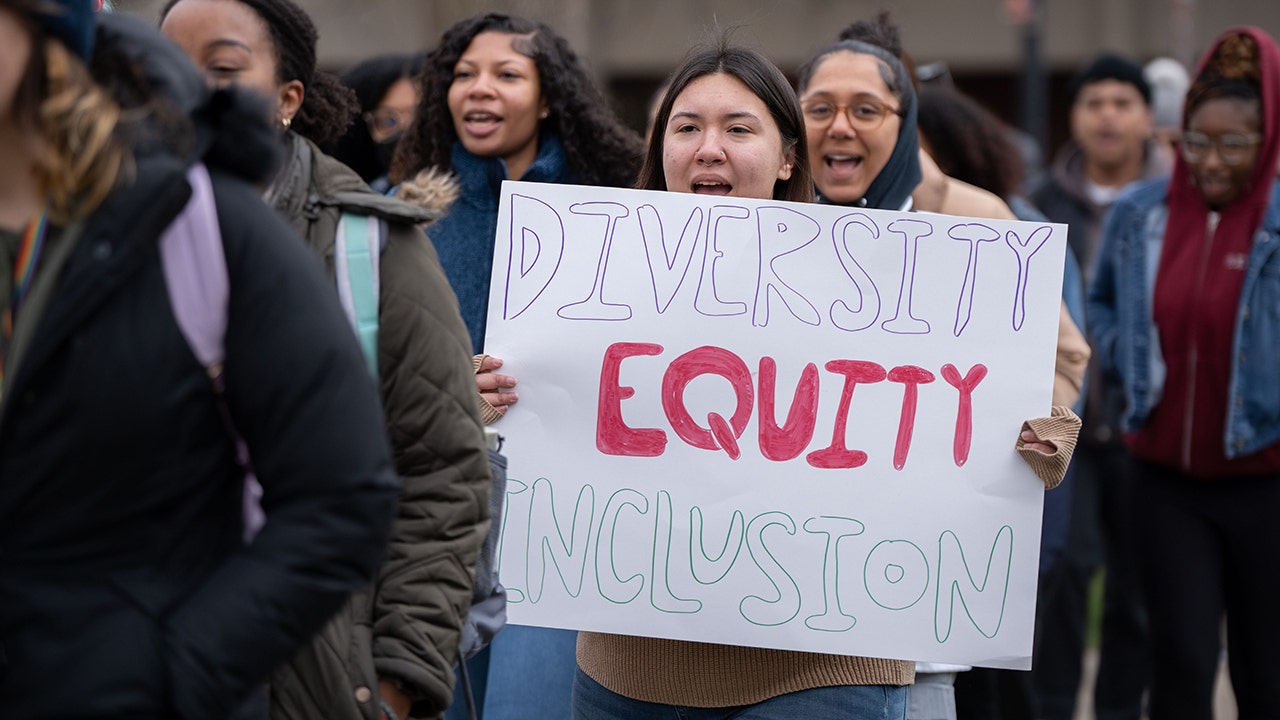
A federal judge was removed from a challenge to Mississippi’s anti-DEI law after the Fifth Circuit blasted his handling of the case as a «botch job,» pointing to orders riddled with factual errors, an apparent AI-hallucinated case citation and faulty applications of Supreme Court precedent.
In an opinion penned by Judge Jerry Smith, a Reagan appointee, the appeals court vacated Reagan-appointed Judge Henry Wingate’s preliminary injunction blocking the law and ordered the case reassigned to a different judge — an «extraordinary» and «rarely invoked» move.
«This district judge carelessly exercised his Article III power by issuing sloppy edicts based on falsehoods and fabrications,» Smith wrote, adding that «the district court—or perhaps, being charitable, its AI agent—ignored and manipulated governing law, apparently to satisfy a policy agenda.»
The controversy surrounding Wingate’s handling of the case began with serious errors in a temporary restraining order he issued in July after a group of teachers, parents and students sued, arguing that a Mississippi state law restricting DEI-related practices in public schools and universities violated the First and Fourteenth Amendments.
TRUMP ADMINISTRATION PROPOSES STRIPPING TAX-EXEMPT STATUS FROM SCHOOLS USING RACE-BASED PROGRAMS
Wingate replaced the order just two days later after Mississippi officials flagged major factual errors, including 11 individuals and organizations identified as plaintiffs who were never a part of the case, two officials incorrectly named as defendants and unsupported claims that three schools had already canceled DEI programs because of the law.
The original TRO also cited purported declarations from four people who did not appear anywhere in the record and «may not even exist,» according to the Fifth Circuit. It also attributed language to the bill that does not appear in the law, including references to «race or sex stereotyping,» «race or sex scapegoating,» «critical race theory» and «institutional bias.»
«We are grateful—and, indeed, lucky—that the defendants provided a copy of the original TRO as an exhibit in their July 28 motion, ECF 58-1, given that Judge Wingate kept it from public view,» Smith wrote.
Even the corrected TRO contained errors, including a citation to a nonexistent case that the Fifth Circuit called «an apparent AI hallucination.» Wingate cited the purported case while discussing the relationship between temporary restraining orders and preliminary injunctions, leading Smith to conclude that the fabricated citation was «arguably part of the shoddy reasoning of the preliminary injunction, too.»
Wingate later acknowledged that a law clerk had used artificial intelligence to assist in drafting the TRO, following accusations of AI use surfacing publicly. Wingate said the errors were «clerical» and did not affect the court’s «core legal reasoning or the ultimate judgment on the merits.»
The Fifth Circuit pushed back on that explanation, questioning «how so many mistaken facts could not at least marginally ‘affect’ ‘core legal reasoning’ or support for the judgment on the merits.»
The Fifth Circuit found major flaws in Wingate’s legal reasoning, accusing the judge of misinterpreting Supreme Court rulings on free speech challenges, exceeding the limits of court injunctions and mishandling legal protections for government and public-employee speech.
The panel zeroed in on the Supreme Court’s 2024 decision in Moody v. NetChoice, which sets a two-step test for courts considering First Amendment challenges seeking to strike down a law entirely.
DOJ MOVES TO BOOT FEDERAL JUDGES FROM IMMIGRATION CASES OVER NYT INTERVIEW
Under the Moody analysis, a court can strike down an entire law on First Amendment grounds only if its unconstitutional applications substantially outweigh its constitutional ones. The appeals court took issue with Wingate describing the Moody framework as «supposedly» required.
«That Judge Wingate twice refers to the Moody framework as ‘supposedly’ required calls into question whether he even tried in good faith to follow the law,» Smith wrote.
«The district court’s laxity in observing the binding authority of the Supreme Court is yet another reason to doom the preliminary injunction,» Smith continued.
The appeals court also faulted Wingate for his reasoning in granting preliminary relief, pointing to his ruling that the court «should pause when faced with an unsettled area with such dire possible consequences.»
«That gets the entire law of injunctive relief completely backwards,» Smith wrote.
«A preliminary injunction cannot stand just because there is a possibility of success on the merits,» Smith continued.
The appeals court also accused Wingate of misreading the Supreme Court’s 2025 decision in Trump v. CASA, which limits judges from issuing orders that go beyond what is needed to protect the people who filed the lawsuit.
Wingate cited CASA in concluding that injunctions like the one before him «should be all-or-nothing renditions.»
SIGN UP TO GET THE POLITICS NEWSLETTER
«That is almost exactly the opposite of what CASA says,» Smith wrote. «The quoted portion was the Supreme Court’s cautioning against overbroad relief and urging judges to tailor relief to what is absolutely necessary and nothing more.»
The Fifth Circuit sent the case back to the Southern District of Mississippi, where a new judge will consider it.
judiciary, federal courts, appeals, law, first amendment, critical race theory, in court, supreme court

La historia de Serú Girán, la banda que cambió el rock argentino: innovación, masividad y censura en plena dictadura

Cristian Buttié analizó la posible candidatura presidencial de Bullrich: “Es muy raro esto de mileísmo sin Milei”

Las reacciones al sobreseimiento de los Milei en la causa $LIBRA: del insulto de Santiago Caputo a las críticas de la oposición

La caída de la sociedad occidental

Eiji Aonuma recibe en persona la Orden de las Artes y las Letras de Francia casi 3 años después de ser distinguido – Nintenderos

El bonito gesto de Araujo con una pequeña aficionada del Liverpool

Javier Milei y sus medidas, en vivo: el mandatario dijo que piensa un proyecto a “100 años” para la Argentina

Contratar pensando en el futuro: qué cambia en la selección y el liderazgo con la IA en el mercado silver

La joven cantante que provocó la separación de Julieta Prandi y Ortega contó detalles muy íntimos: “Es una persona amorosa y muy…”

“Dios me puso ahí”: fue quien le dejó su lugar a Maradona el día de su debut y desde hace 42 años trabaja en una inmobiliaria

 POLITICA16 horas ago
Javier Milei y sus medidas, en vivo: el mandatario dijo que piensa un proyecto a “100 años” para la Argentina
- ECONOMIA2 días ago
Cuáles son las condiciones que enfrentan las pymes para financiarse en el mercado de capitales
- INTERNACIONAL2 días ago
Honduras: DAET niega detenciones de policías tras operativo en San Pedro Sula y alerta sobre posible atentado