INTERNACIONAL
Lula da Silva libra su batalla final para un nuevo mandato en Brasil entre interrogantes y grandes desafíos





INTERNACIONAL
Trump administration accuses prestigious law school of favoring Black applicants over White, Asian peers
NEWYou can now listen to Fox News articles!
The Trump administration on Wednesday blasted the University of California, Berkeley, School of Law for allegedly favoring Black applicants while discriminating against Asian and White students, marking its latest federal action targeting race-conscious admissions policies at universities.
The Department of Justice (DOJ), along with the Department of Education, found Berkeley Law in violation of Title VI of the Civil Rights Act of 1964, which prohibits racial discrimination in programs and activities receiving federal funds.
«The data produced by Berkeley Law demonstrates a strong bias against Asian and White applicants, with a corresponding bias in favor of Black applicants,» the DOJ said.
The findings came after officials launched a compliance review of Berkeley Law in March 2025, roughly two years after the Supreme Court struck a major blow to affirmative action programs many universities used in admissions for decades. California had already banned affirmative action in public education under Proposition 209, enacted in 1996.
JUSTICE DEPARTMENT ZEROES IN ON UCLA FOR ALLEGED ILLEGAL DEI ADMISSIONS AS ELITE SCHOOL CRACKDOWN EXPANDS
FILE — A sign marks Berkeley Law in Berkeley, Calif., on June 4, 2021. Federal officials allege Black applicants had higher admission odds than comparable White applicants at Berkeley Law. (David Paul Morris/Bloomberg via Getty Images)
According to the DOJ’s analysis, Black applicants in 2025 had «5.8 times higher odds of admission than comparable white applicants.»
An analysis of LSAT scores for admitted students in 2024 and 2025 found that 37% of Black admitted applicants scored below 99% of admitted White applicants.
In addition, half of the school’s admitted Black applicants had LSAT scores «below 95% of the admitted white applicants.»
According to figures cited by the DOJ, median LSAT scores from 2021 through 2025 showed a persistent disparity between racial groups, with Black admits scoring around 165. Asian and White admits scored around 172, while Hispanic admits had median scores around 169.
«The median Black admit consistently has an LSAT score about 5 points lower than the median white or Asian admits,» the department said in a letter to attorney Tania Faransso, who is representing the law school.
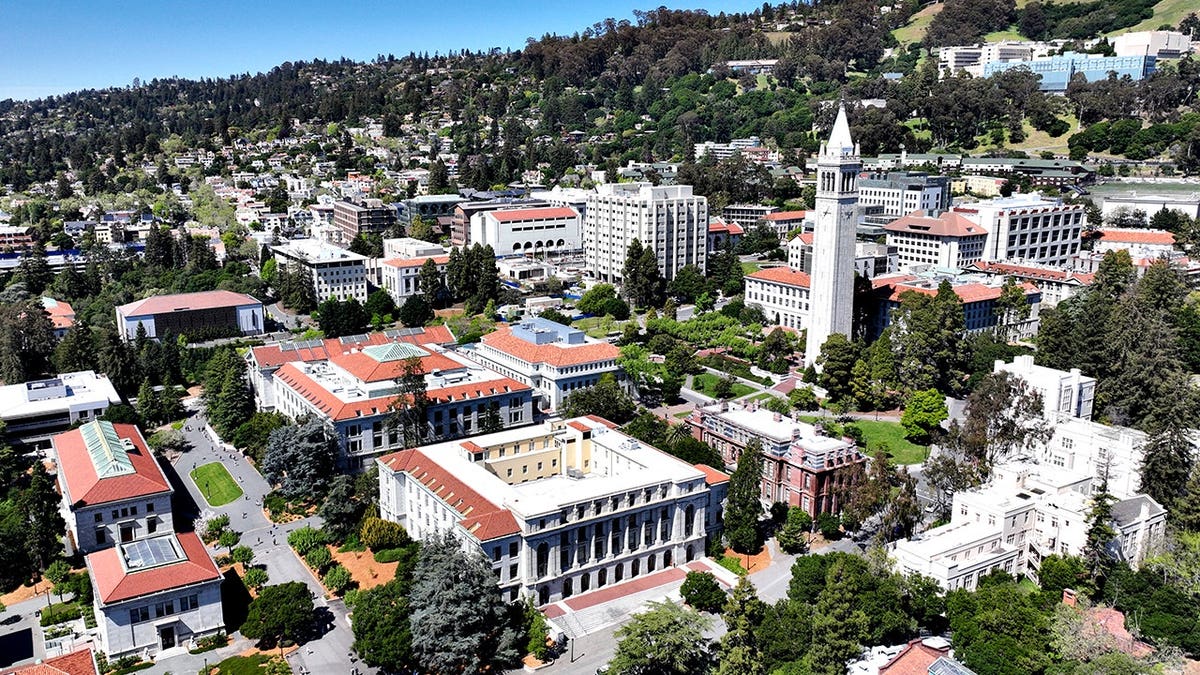
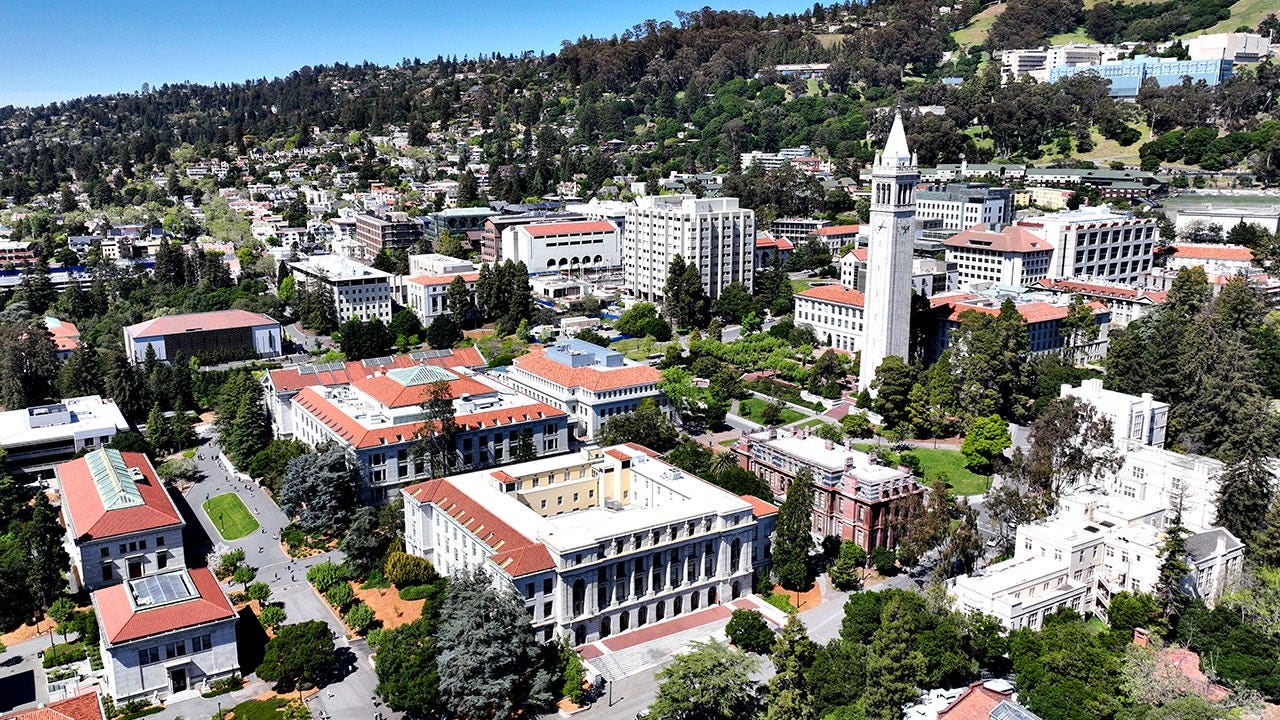
FILE — An aerial view of the University of California, Berkeley, campus in Berkeley, Calif., on May 2, 2024. The DOJ cited LSAT score disparities among law school admits. (Jane Tyska/Digital First Media/East Bay Times)
DOJ OPENS PROBE INTO PRESTIGIOUS COLLEGE OVER ALLEGED DISCRIMINATION FAVORING MINORITY STUDENTS
As of October 2025, Berkeley Law had 1,128 students enrolled. Of those, 516 were White, 293 were Asian, 51 were Black and 130 were Hispanic.
In a statement to Fox News, Berkeley Law firmly rejected the allegations, saying its admissions decisions comply with federal law and Proposition 209.
However, the school noted that the laws still allow institutions to build diverse student bodies by considering race-neutral factors, which can include socioeconomic status and personal experiences.
«Our admissions policy is clear that race is not considered in any way in admissions decisions,» the school said. «Proposition 209, federal statutes, and the Supreme Court’s decisions do not preclude schools from pursuing diversity so long as they give no preferences based on race. Berkeley Law does not do so.»
UC Berkeley’s central administration also said the school is «committed to ensuring that every student is admitted based on their merit, and not on their race, sex, color, ethnicity, or national origin.»

FILE — Students walk past Sather Gate at the University of California, Berkeley, on Feb. 19, 2026. The school maintains that it complies with California’s Proposition 209 and federal law. (Christina House / Los Angeles Times via Getty Images)
«UC Berkeley will spare no effort to provide ample evidence showing that the university complies with all relevant laws, policies and rules governing admissions,» the school said.
education, california, administration, diversity
INTERNACIONAL
El parque temático Puy du Fou reaviva la batalla cultural en Francia en medio del avance de la ultraderecha

En un parque temático situado entre los campos de trigo del occidente rural de Francia, barcos vikingos y pianos emergen de estanques y caballeros montan a caballo. Ahora el parque temático más popular de Francia, detrás del Disneyland cerca de París, ha abierto una sede en España y tiene el objetivo de construir una en Inglaterra pronto.
Pero muchos en Francia odian el parque, llamado el Puy du Fou.
Los críticos lo han llamado un difusor de “propaganda de extrema derecha”, una acusación que ha adquirido resonancia a medida que los ultraconservadores se acercan al poder por primera vez desde la Segunda Guerra Mundial. Los críticos lo acusan de usar la historia como arma para popularizar los valores de su fundador, Philippe de Villiers, un exlegislador que apoya a políticos de extrema derecha y ha hecho campaña durante mucho tiempo contra la Unión Europea, el islam, el matrimonio homosexual y la inmigración.
Él escribió hace poco que el parque es parte de una “batalla cultural” más amplia por el alma del país, y que “las victorias culturales preceden a las victorias políticas”. Pero su hijo Nicolas, que ha dirigido el parque desde 2012, dijo que su única ambición es “crear espectáculos que hagan que la gente ame a Francia”, y agregó, “para mí, esa es mi única batalla cultural”.
El parque está a cuatro horas al suroeste de París en auto. Con miles de árboles que crecen entre ríos y estanques artificiales, el Puy du Fou parece más un parque nacional que un parque de diversiones. No hay atracciones de feria y hay pocos vendedores. En su lugar, caminos de tierra llevan a los visitantes a escenarios inmersivos, así como a representaciones, en su mayoría sobre historia francesa, que se presentan en grandes escenarios al aire libre y teatros bajo techo y que por lo general duran alrededor de media hora.
El atractivo, para la mayoría, no son solo las míticas historias francesas, sino los espectaculares efectos especiales y los animales.
En una función sobre los romanos, los aurigas compiten con yuntas de caballos engalanados alrededor de un obelisco egipcio que más tarde se transforma en una galera gigante. En otro espectáculo, más de 300 aves vivas, incluyendo buitres y águilas calvas, dan vueltas sobre las cabezas de los espectadores.
“La ingeniería mecánica es increíble”, dijo Arido Agrifoglio, de 69 años, un médico jubilado de Suiza, mientras hacía fila con su esposa, Sylvie, para ver su noveno espectáculo del día. La noche anterior habían visto uno en el que bailarines, un pianista y un piano emergieron de un estanque.
“A menudo me pregunto ‘¿cómo hicieron eso?’”, dijo Agrifoglio.
Antes de que existiera el parque de 101 hectáreas, Philippe de Villiers lanzó un solo espectáculo en 1978 junto a un castillo en ruinas llamado Puy du Fou, que según él significa “colina de hayas” en francés antiguo y latín.
Philippe de Villiers, que en ese entonces estudiaba en la universidad de élite del país para funcionarios públicos, escribió el guión para un espectáculo sobre la sangrienta experiencia de la región durante la Revolución francesa, cuando los lugareños tomaron las armas contra el nuevo gobierno y fueron masacrados. Como Philippe de Villiers no podía pagar a actores ni a tramoyistas, miembros de la comunidad se ofrecieron como voluntarios. Desde entonces, el espectáculo –llamado la Cinéscénie– ha crecido, y aún es montado en el verano por miles de voluntarios.
Leé también: Juicio por la muerte de Federico Aramburu: revelaron qué pasó en la sala cuando se mostraron los videos del momento del crimen
Philippe de Villiers pasó a convertirse en el secretario de Estado de Cultura del país, y en un legislador electo. En 1989, después de un viaje a Walt Disney World Resort en Orlando, Florida, vio el potencial de negocio. Creó un nuevo parque junto a la Cinéscénie, con personal profesional. Se propuso escribir los guiones para nuevos espectáculos que ofrecerían al país lo que llamó su “narrativa fundacional”.
“Debemos devolver a los franceses su pasado”, escribió en su libro de 2025 Populicide, que decía que la inmigración estaba causando un colapso civilizatorio en Francia, donde el libro fue un éxito de ventas.
Hoy en día, el parque tiene alrededor de 3000 trabajadores que atienden unos 20 espectáculos, cinco hoteles de temática histórica y 26 restaurantes. La empresa ganó aproximadamente 350 millones de dólares en 2025 con un récord de tres millones de visitantes, dijo Nicolas de Villiers. En 2021, abrió un parque en Toledo, España, centrado en la historia de España, y en 2025 solicitó abrir una versión británica cerca de Oxford. (Proyectos planeados para Rusia, la Crimea ocupada por Rusia y Estados Unidos nunca se concretaron).
Con su creciente éxito, el parque ha sido objeto de intensas críticas por parte de políticos de izquierda e historiadores, quienes durante años han señalado imprecisiones en sus espectáculos, y lo han acusado de distorsionar la historia por razones políticas. Esa crítica se amplificó en 2022, cuando cuatro historiadores publicaron un libro mordaz llamado Le Puy du Faux, o El Puy de la falsedad, que dice que se trata de un parque “ideológico” donde los visitantes “no aprenderán nada”.
“Es el borrado de la Revolución francesa y el elogio del cristianismo. Justo ahí está la receta del Puy du Fou”, dijo Florian Besson, uno de los autores y un historiador medieval.
Muchos de los espectáculos se centran en el catolicismo. Los vikingos saqueadores dispuestos a atacar una aldea cristiana son detenidos por un santo fantasmal y se convierten rápidamente. Los romanos son retratados como crueles amos paganos que perseguían a los galos cristianos, hasta que también se convirtieron.
“Es una inversión completa de la historia: el cristianismo llegó a Galia desde Roma, sin embargo, allí se presenta exactamente de la manera opuesta”, dijo Pauline Ducret, otra historiadora y coautora del libro.
El parque presenta una “Francia eterna” que está bajo ataque, dijo Ducret, si no por vikingos, entonces por un ejército revolucionario o alemanes; un eco de las posturas antiinmigración del mismo de Villiers.
Luego están las elecciones de qué partes de la historia francesa presentar. No hay nada, señalan los críticos, sobre los momentos más oscuros de Francia: la esclavitud, el colonialismo o Vichy, el gobierno durante la Segunda Guerra Mundial que colaboró con los nazis.
Philippe de Villiers no respondió a las solicitudes de entrevista. Pero su hijo Nicolas, de 46 años, habló con nosotros dos veces, una en una habitación arriba de un restaurante en el parque donde los camareros cantan canciones folclóricas francesas. Dijo que atribuir objetivos políticos al parque era “ridículo”.
“¿Los vikingos son de derecha o de izquierda? ¿Los romanos eran de derecha o de izquierda?”, dijo. “Esa pregunta no tiene nada que ver con los espectáculos que presentamos”.
Pero él sí ve que el parque ayuda a construir la memoria colectiva del país. “Si queremos como pueblo en Francia tener un destino común, necesitamos recuerdos comunes”, dijo. Y no pidió disculpas por omitir ciertos capítulos históricos.
“Siempre preferimos la gloria frente a la vergüenza”, dijo.
Nicolas de Villiers dijo que creía que la reciente avalancha de críticas sobre el parque estaba motivada por los celos, en particular de la élite de izquierda que dijo que controla la escena teatral en París.
François Ruffin, un candidato presidencial de izquierda, ofreció otra teoría. El escrutinio, dijo Ruffin, aumentó con la suerte del partido de extrema derecha Agrupación Nacional, cuya líder, Marine Le Pen, tiene una gran posibilidad de ganar la presidencia el próximo año.
Cuando Philippe de Villiers construyó el Puy du Fou, era “un foco de resistencia, manteniendo viva la llama del neoconservadurismo”, dijo Ruffin en una entrevista. “Hoy se han vuelto dominantes, la mayoría, y posiblemente están listos para tomar el poder el próximo año”, agregó Ruffin.
El Puy du Fou es solo una parte de una creciente constelación cultural de derecha, dijo, impulsada por el multimillonario francés Vincent Bolloré, cuyas propiedades incluyen editoriales, productoras de cine y un canal de televisión de derecha, CNews, en el cual Philippe de Villiers tiene un programa los viernes por la noche.
Esa constelación está ganando ahora la “guerra cultural” de Francia, dijo Ruffin.
Él ha llamado a la creación de un Puy du Fou de izquierda que monte espectáculos sobre la Revolución francesa y la resistencia francesa durante la Segunda Guerra Mundial.
Hace poco, un día sofocante, las familias se apresuraban para ir de un espectáculo al siguiente.
Algunos dijeron que les gustaba el mensaje histórico del parque. Los críticos solo “lo odian porque es francés”, dijo Laurent Smirnow, de 53 años, un guardia de seguridad.
Pero muchos dijeron que habían venido por el entretenimiento, no por las lecciones de historia ni la política.
Valérie Billet, de 57 años, tomó un descanso bajo un árbol con sus suegros y sus hijos adultos.
Su hermana se negó a ir al parque debido a las políticas de de Villiers, dijo.
“Cuando vengo aquí, desvinculo al parque del hombre que lo creó”, dijo Billet, una profesora de inglés. Sentada cerca, su hija Nolwenn, de 28 años, murmuró que los sesgos del parque eran difíciles de ignorar. “Es algo que definitivamente puedes sentir”, dijo la hija.
Aun así, ella había regresado con su familia cuatro veces.
*Por Catherine Porter y Giulia Imbert.
The New York Times, Francia
INTERNACIONAL
Iran-backed terror group’s latest territorial grab threatens second global shipping chokepoint

NEWYou can now listen to Fox News articles!
Iran-backed Houthi forces seized Yemen’s strategic port city of Mocha on Thursday and pushed toward positions overlooking the Bab el-Mandeb Strait, opening a potentially dangerous new front for global trade as shipping through the Strait of Hormuz remains severely constrained.
The advance threatens the southern gateway to the Red Sea just as Saudi Arabia has increasingly relied on that route to bypass Hormuz — putting pressure on critical shipping lanes on both sides of the Arabian Peninsula and raising the risk of further disruptions to oil and commercial traffic through a key global trade choke point.
«Now you have Iran on one side of the Arabian Peninsula controlling Hormuz, and now the Houthis controlling Bab el-Mandeb on the other side of the peninsula,» Hisham Al-Omeisy, senior Yemen advisor at the European Institute of Peace, told Fox News Digital. «Which basically is going to drive prices — oil prices, goods and everything else — up exponentially.»
IRAN-BACKED TERROR PROXY HOUTHIS THREATEN FRESH ATTACKS AFTER YEMEN AIRPORT STRIKE
A vehicle burns after being attacked by Houthis during fighting with Saudi-backed forces at a location given as Al Jawf, Yemen, in this still image taken from a handout video released Sept. 9, 2026. (Al Masirah/Handout via Reuters)
On background, a senior administration official told Fox News Digital: «The United States is focused on protecting our core national security interests — such as ensuring freedom of navigation in the Red Sea — while empowering our regional partners to take the lead in managing and resolving regional security challenges. We are in continuous dialogue with Saudi Arabia and the Republic of Yemen Government regarding regional stability.»
Yemeni government sources said Thursay the Houthis captured Mocha and reached the Hanish Islands, while Saudi-backed Yemeni government forces withdrew south toward Dhubab, which sits directly on the Bab el-Mandeb opposite the strategic island of Perim. Control of Dhubab and Perim would be critical to gaining a stronger hold over the strait, Yemeni government sources told Reuters on Sept. 10.
Bab el-Mandeb is only about 18 miles wide at its narrowest point and connects the Indian Ocean and Gulf of Aden with the Red Sea and, farther north, the Suez Canal. It is a major artery for goods moving between Asia and Europe as well as energy shipments.
Its importance has grown dramatically during the Iran conflict.
WHO CONTROLS THE STRAIT OF HORMUZ RIGHT NOW? HERE’S WHAT THE SHIP TRAFFIC ACTUALLY SHOWS

Members of the Saudi-backed Yemeni government forces react during what they say are clashes with Yemen’s Iran-aligned Houthis in a location given as near Al-Hazm, Yemen, in this screen grab obtained from a handout video released Sept. 9, 2026. (Media Centre Of The Yemeni Armed Forces/Handout via Reuters)
The U.S. Energy Information Administration reported Sept. 9 that crude oil and petroleum liquids moving through Bab el-Mandeb averaged 8.1 million barrels per day in the second quarter of 2026, up from 5.4 million barrels per day in the final quarter of 2025. At the same time, flows through Hormuz plunged from 21.6 million barrels per day to just 4.9 million. The EIA attributed the increase at Bab el-Mandeb in part to Saudi Arabia rerouting crude through its East-West pipeline to the Red Sea port of Yanbu to avoid Hormuz.
Al-Omeisy said the danger extends beyond the Houthis’ geographical gains. He said retreating government forces left behind military materiel that could strengthen Houthi forces on other fronts.
«People are focused on taking Mocha and those outposts on the Red Sea,» Al-Omeisy said. «But the military side is terrible, particularly the equipment, the munitions, the vehicles, the drones that were at those military camps, which they can now, in turn, use against the government forces elsewhere.»
RUBIO ACCU.S.ES IRAN OF FLYING IRGC PERSONNEL INTO YEMEN AS HOUTHI THREAT ESCALATES

Members of the Saudi-backed Yemeni government forces fire a tank during what they say to be clashes with Yemen’s Iran-aligned Houthis in a location given as near Al-Hazm, Yemen, in this screen grab obtained from a handout video released Sept. 9, 2026. (Media Centre Of The Yemeni Armed Forces/Handout via Reuters)
Reuters separately reported Thursday that Iranian arms and direct guidance from Iran’s Revolutionary Guards helped the Houthi advance, citing Yemeni government, Iranian and regional sources. Two Iranian sources told Reuters that Tehran had instructed the Houthis to intensify attacks on Saudi Arabia and promised additional funding, weapons and senior officers. Iran has publicly denied directing Houthi operations.
The seizure comes amid what conflict-monitoring organization ACLED described Sept. 9 as the most serious escalation between the Houthis and the Saudi-backed camp since hostilities resumed in mid-July.
ACLED recorded at least 276 fatalities between Sept. 3 and 7 as clashes spread across al-Dali, al-Bayda, Marib, Shabwa, al-Jawf, al-Hudayda and Taizz, according to an analysis published Sept. 9.
Sherwan Hindreen Ali, ACLED’s Middle East research manager, said fighting along the Red Sea coast had become particularly intense as both sides sought control over territory with direct strategic importance to Bab el-Mandeb.
«Fighting will remain focused on the fronts of the Red Sea coast in al-Hudaydah and Taizz, where both the Houthis and the Saudi Arabia/IRG have a vested interest in claiming the whole territory to deprive the other side of effective control of the strait of Bab el-Mandab,» Ali said in an analysis.
Saudi Arabia itself has also become more deeply involved.
EXPERT WARNS OF ‘GENERAL ESCALATION’ OF FIGHTING IF HOUTHIS RESUME RED SEA CAMPAIGN

Houthi fighters gesture as they celebrate in front of the Security Directorate building in Hays, Yemen, in this screengrab taken from social media video released on Sept. 10, 2026. (Social Media/via Reuters)
Ali said Saudi forces launched at least 15 strikes against the Houthis between Sept. 3 and 7, mostly around Taizz, marking the highest number of Saudi strikes since Riyadh resumed military engagement against the Houthis in July.
The Houthis responded Sept. 8 with what Ali described as their largest wave of direct attacks on Saudi territory since March 2022, launching dozens of drones and ballistic missiles toward Abha, Jizan, Najran and Khamis Mushait. Ali said the attacks injured 73 people.
The widening fighting is now posing an early test for a new joint defense agreement between Saudi Arabia, Pakistan and Turkey.
Al-Omeisy said the international response allowed the Houthis to exploit divisions among their opponents.
«The Houthis are also good in exploiting divisions and delays, they move rapidly on the ground to force a status quo while the international community debates merits, responsibilities and costs of an intervention.»
The escalation also raises questions about Saudi Arabia’s newly signed defense agreement with Pakistan and Turkey.
IRAN-BACKED HOUTHI THREAT IN RED SEA COULD LEAD TO MAJOR US POLICY SHIFT, ANALYSTS SAY
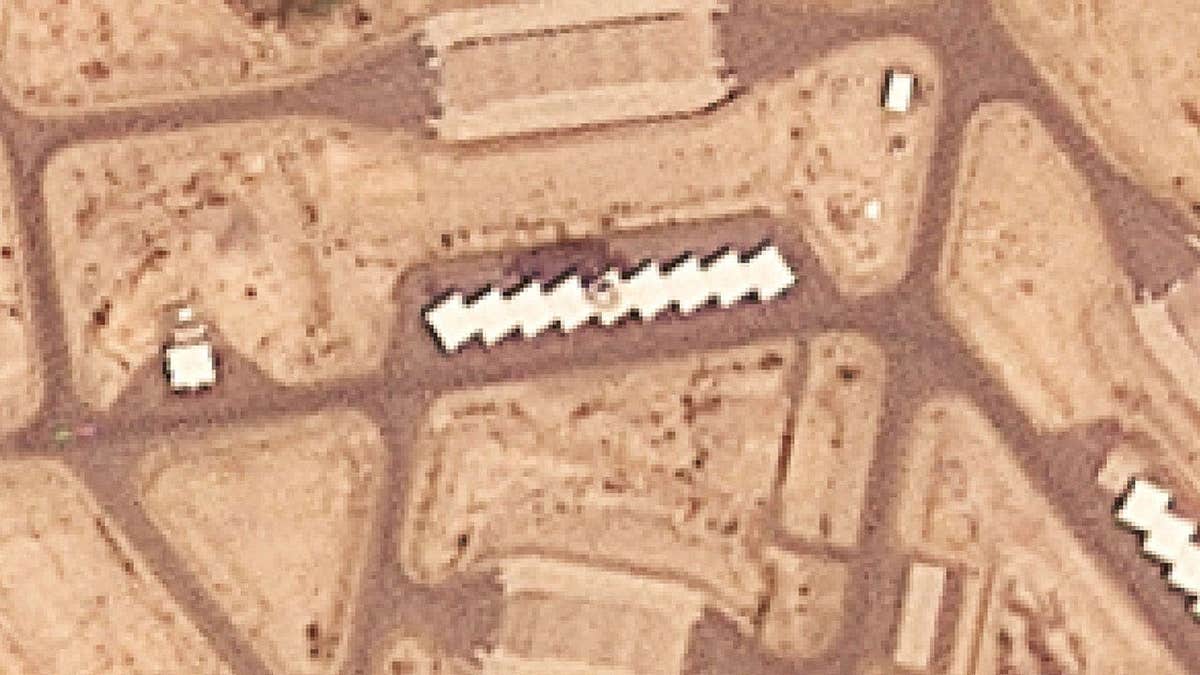
A satellite image appears to show damage to the King Khalid Airbase at Saudi Airbase that Houthis claimed to have attacked on Sept. 8, in this handout picture obtained by Reuters on Sept. 9, 2026. The Saudi government’s media office did not immediately respond to a request for comment. (2026 Planet Labs PBC/Handout via Reuters)
The agreement, signed last month in Mecca, states that an armed attack against one member will be considered an attack against all three, Reuters reported Sept. 10. But after Houthi drones and ballistic missiles struck Saudi cities and energy infrastructure this week, Pakistan said Thursday that no military response under the pact was currently being discussed.
«There is no such thing under discussion right now,» Pakistani Foreign Ministry spokesperson Sajjad Haider Khan said, according to Reuters. «When time comes [we] will act under the agreement.»
The Houthis, meanwhile, have said international navigation through the Red Sea and Bab el-Mandeb remains safe, while maintaining that Saudi vessels are subject to their previously announced blockade, Reuters reported Thursday.
Al-Omeisy warned that reversing the Houthis’ latest territorial gains could become increasingly difficult.
«The Houthis are really good at capturing a position, they entrench really well,» he said. «They send these massive reinforcements, and then it’s going to be extremely difficult to push them out of those areas.»
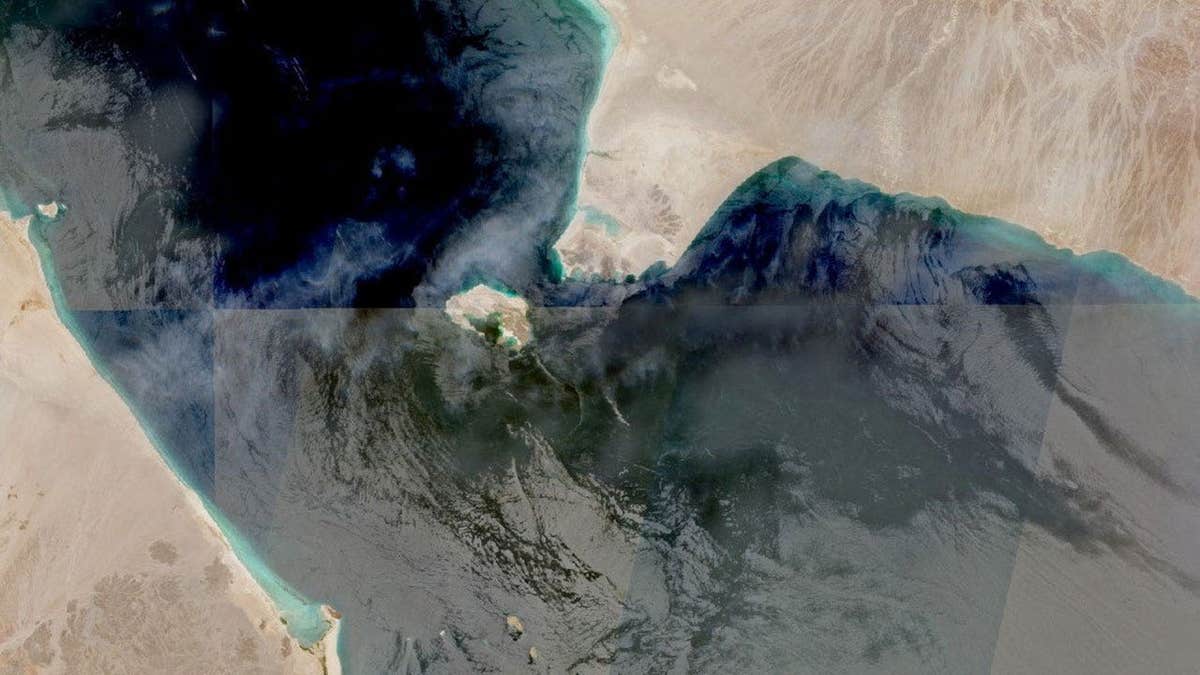
A satellite imagery shows Bab el Mandeb Strait, as Iran threatens using Yemen’s Houthi allies to shut this gateway to the Red Sea, in this handout picture dated July 12, 2026. (Nasa Worldview/Handout via Reuters)
Oil markets were already responding to the widening regional threat Thursday. Brent crude jumped more than 5% to $106.60 a barrel by late Thursday morning, while U.S. crude climbed above $100 for the first time since May, according to Reuters.
Reuters contributed to the story.
middle east, iran, saudi arabia, world, foreign affairs, foreign policy

Vence el plazo para que Manuel Adorni justifique su patrimonio y en la Justicia no descartan que pida una nueva prórroga

Sobreseyeron al embajador Fernando Iglesias en una denuncia por enriquecimiento ilícito

Trump administration accuses prestigious law school of favoring Black applicants over White, Asian peers

Eye black, la pintura negra del fútbol americano: para qué sirve y por qué la NFL la regula

Sueldos están por ganarle a la inflación y Milei sueña con la reactivación del consumo

El terrible susto que vivió Juana Repetto junto a su bebé, Timoteo: “Se incendió el edificio”

El gobierno de Kicillof retendrá un 2% en los premios de las apuestas online

Femicidio brutal en Merlo: un jubilado de 64 discutió con su esposa y la asesinó a puñaladas

El rotundo cambio de Julián Álvarez en una foto presentación del Atlético de Madrid tras quedarse en el club

Los alimentos aumentan un 0,8% en septiembre y ya anticipan una inflación de 1,8%

 POLITICA2 días ago
Patricia Bullrich cuestionó a la jueza que frenó la ley penal juvenil en la provincia de Buenos Aires: “No le corresponde decidir”
- POLITICA17 horas ago
La intendenta de José C. Paz criticó a Kicillof por la inseguridad tras el crimen de un joven de 23 años
- CHIMENTOS1 día ago
Así se anunció la muerte de Chiche Gelblung: la tradicional placa negra de Crónica y las lágrimas de Mercedes Ninci