INTERNACIONAL
Maryland recurre a los comedores escolares para frenar al bagre azul, el depredador invasor que colonizó toda la bahía de Chesapeake

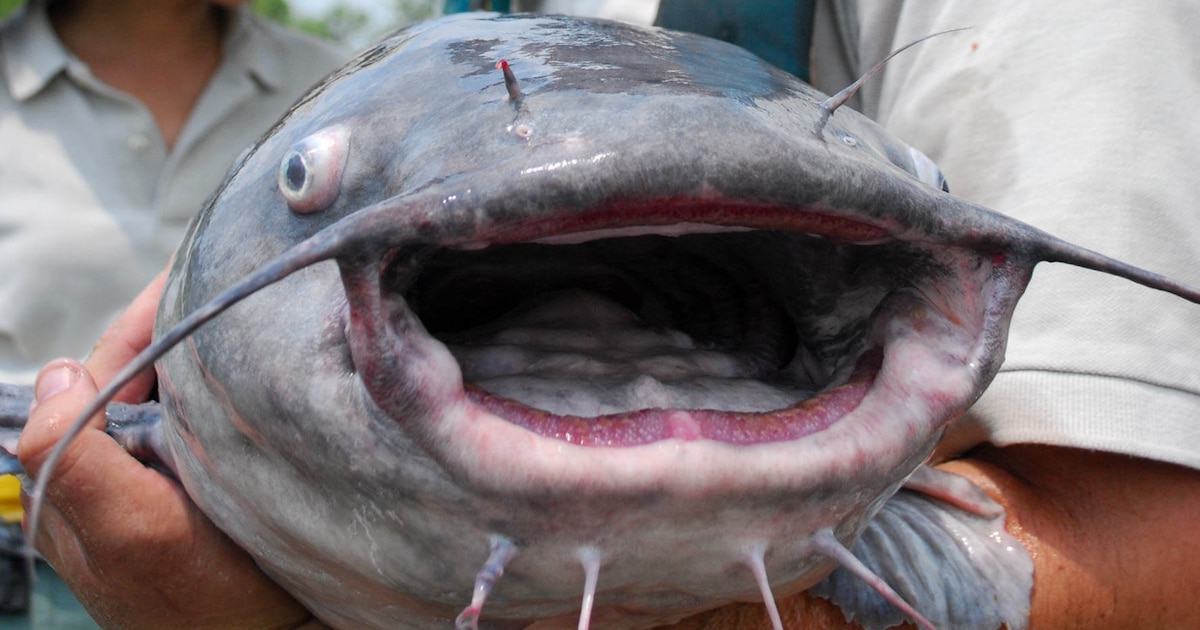
Un pez de agua dulce introducido en Virginia hace medio siglo para la pesca deportiva alteró el equilibrio ecológico de la bahía de Chesapeake al expandirse por sus ríos y alimentarse de fauna local.
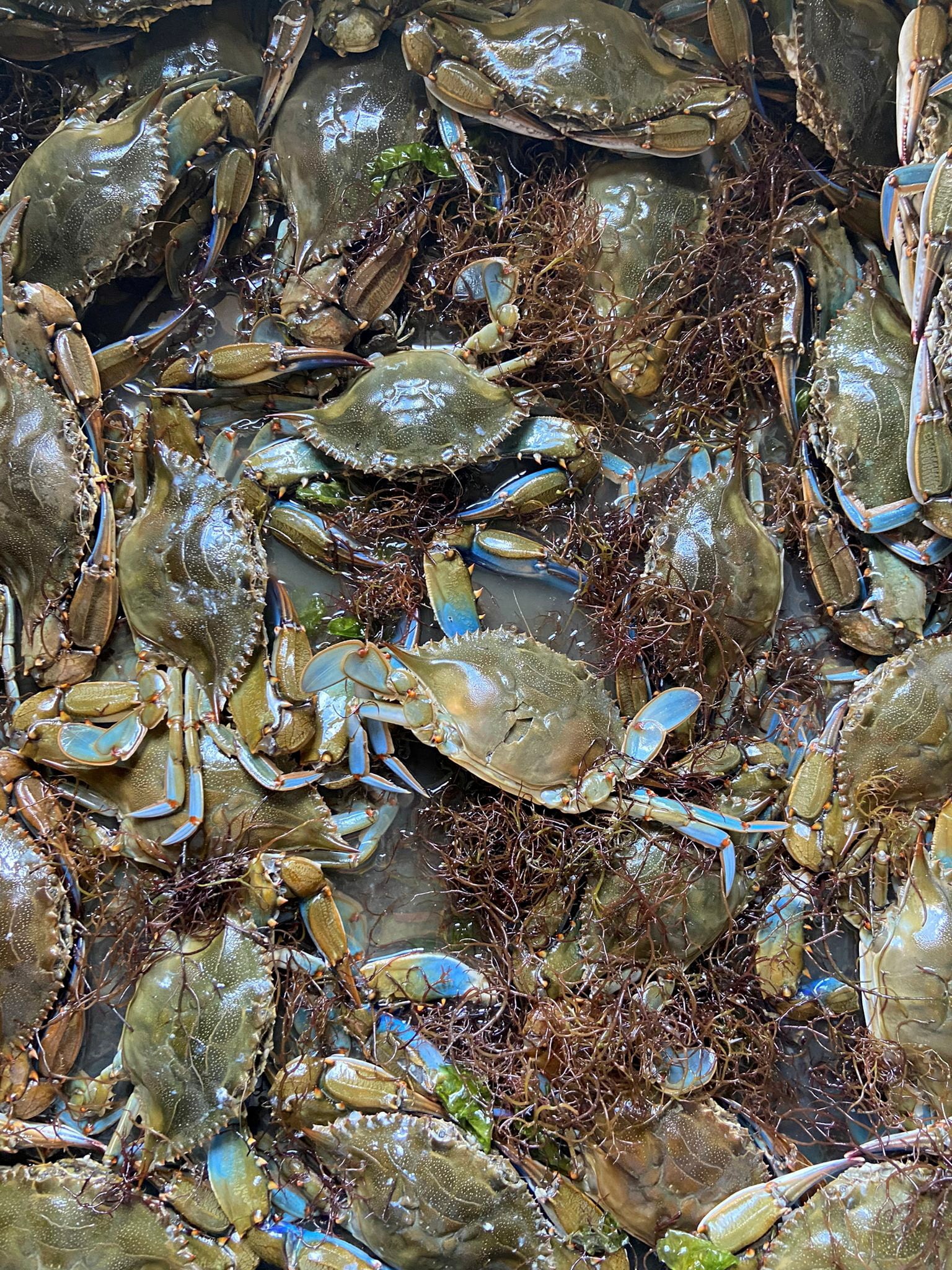
El impacto alcanza a una región cuya economía y cultura están ligadas al cangrejo azul. Sin depredadores naturales en el estuario, el ser humano es la única herramienta de control efectiva. Y las autoridades estatales encontraron un aliado inesperado para ponerlo en práctica: los comedores de las escuelas públicas.
En el condado de Caroline, en la costa este del estado, Beth Brewster, supervisora de servicios alimentarios del distrito escolar, desarrolló junto a su equipo de chefs una croqueta de bagre azul bautizada como “catty patty”, inspirada en las tradicionales tortas de cangrejo.
La receta, que cuenta con aprobación del Departamento de Agricultura de Estados Unidos (USDA), ya se sirve en varios distritos de Maryland y Virginia, y puede distribuirse en cualquier escuela del país.
“Sabe tan bien porque se come todo lo que nos encanta: cangrejos, róbalo y todo tipo de cosas que nos gusta comer”, afirmó Brewster en declaraciones recogidas por NPR.
De dónde viene y cómo llegó hasta aquí
Originario del medio oeste de Estados Unidos, el bagre azul fue llevado a ríos de Virginia durante la década de 1970 con fines recreativos.
La premisa era sencilla: al tratarse de un pez de agua dulce, el agua salobre de la bahía de Chesapeake lo mantendría confinado en unos pocos afluentes.
“Son un pez de agua dulce; deberían quedarse en las porciones de agua dulce del río”, explicó Branson Williams, director del Programa de Peces Invasores del Departamento de Recursos Naturales de Maryland. Pero el cálculo falló: la especie tolera ciertos niveles de salinidad.
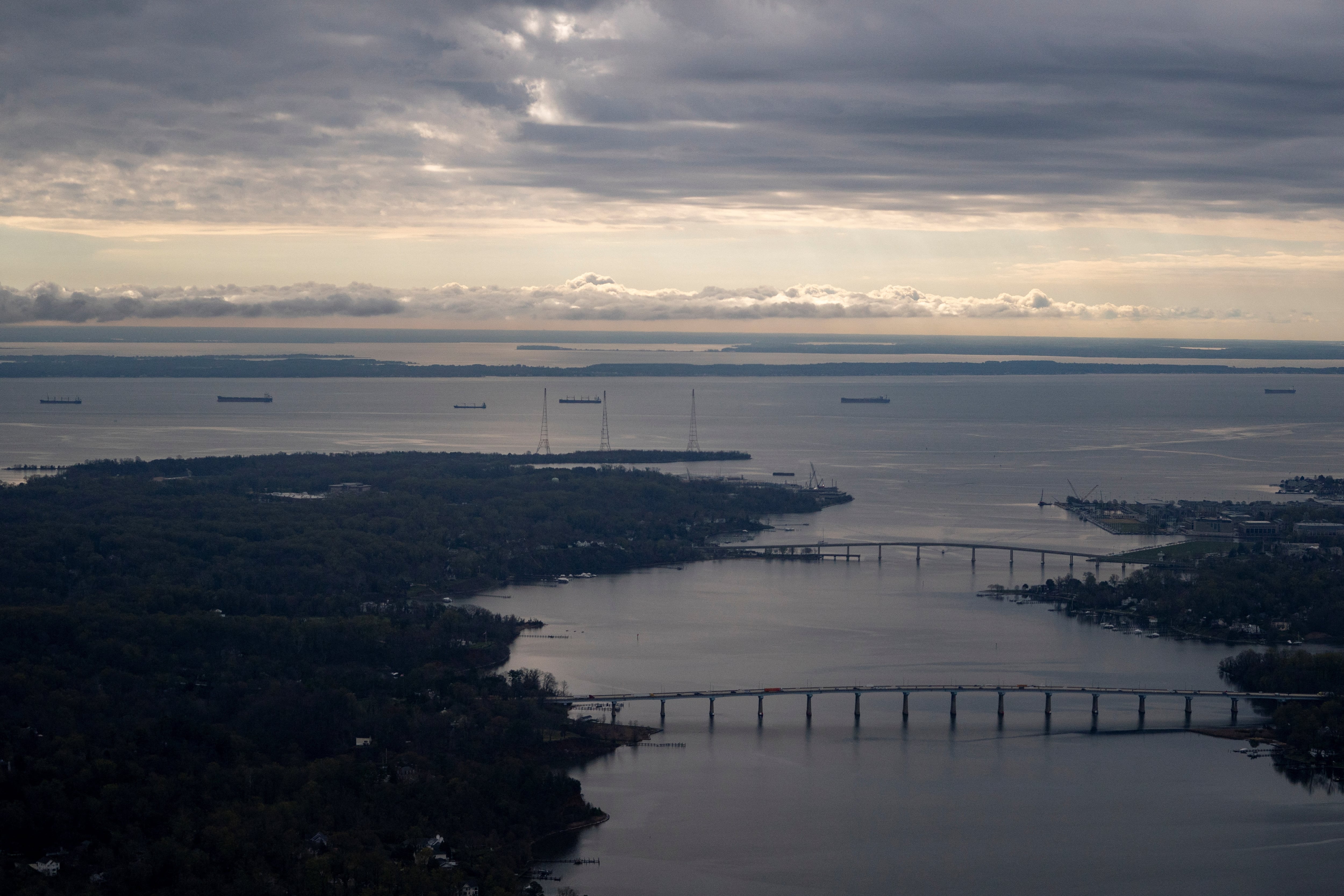
En 2018, lluvias récord en Virginia y Maryland volcaron enormes volúmenes de agua fresca sobre el estuario, lo que permitió al bagre azul abandonar sus ríos originales y colonizar nuevos hábitats.
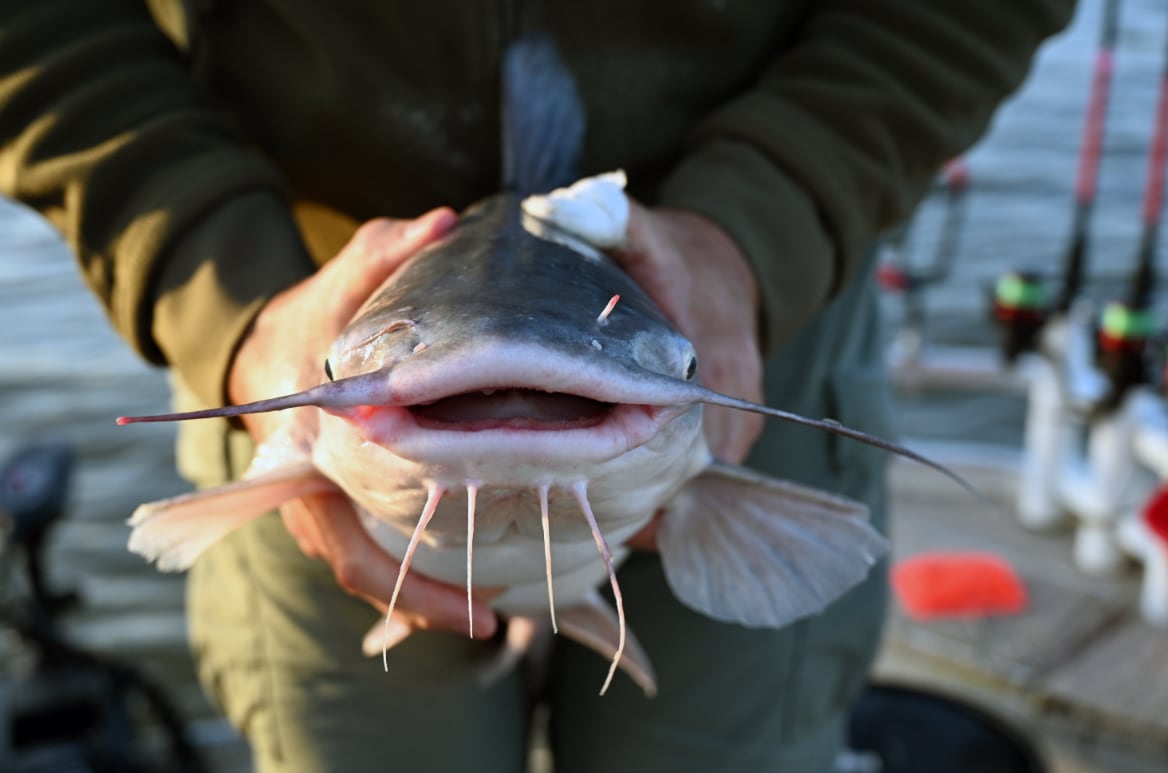
El animal puede superar los 45 kilogramos (100 libras) de peso y consume peces forrajeros como el menhaden, además de ejemplares jóvenes de cangrejo y otras especies autóctonas.
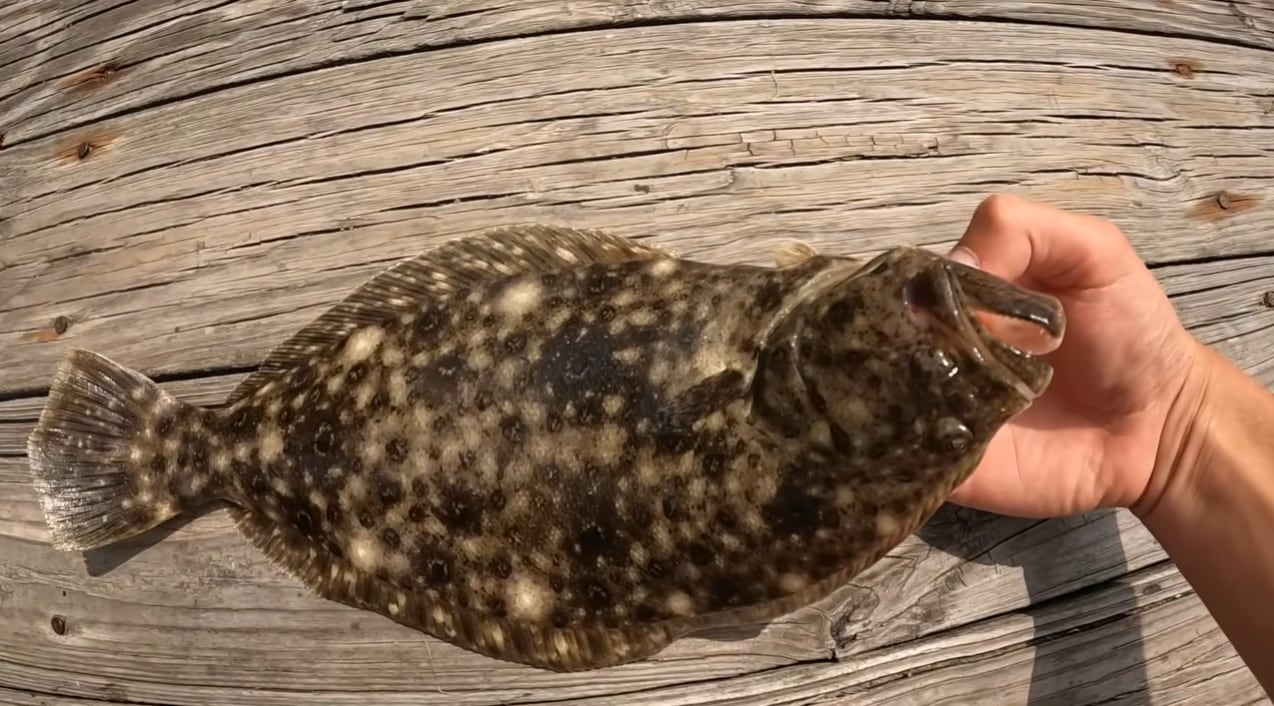
Las autoridades de Virginia advirtieron que su expansión compromete poblaciones tradicionales, entre ellas el lenguado.
El origen de la receta
Karen Fedor, administradora de Programas Agrícolas y Alimentarios del Departamento de Agricultura de Maryland, fue quien contactó a Brewster con la propuesta inicial. Fedor la describió como una “pensadora creativa” capaz de diseñar recetas que atraigan a los niños y cumplan con los requisitos dietéticos federales.
Su equipo experimentó hasta dar con una croqueta de carne blanca y sabor suave, sin el gusto fuerte asociado a otros pescados.
La pandemia retrasó el avance del proyecto, pero el impulso regresó cuando Brewster supo que Virginia colaboraba con Bay2Tray, un programa con sede en California que conecta productos del mar con comedores escolares. Brewster se comunicó con un mensaje directo: “Tengo un pescado para ustedes”.

La pesca en el río
En el bajo río Potomac, Rocky Rice, un pescador de cuarta generación en Maryland, convirtió al bagre azul en el centro de su actividad. Tres días por semana sale a revisar sus trampas de aro y regresa con un promedio de entre 540 y 680 kilogramos (1.200 a 1.500 libras) de pescado.
“Lo que empezó como algo para llenar el tiempo entre temporadas se convirtió en mi trabajo principal”, reconoció Rice en el reportaje de NPR.
Al tratarse de una especie foránea sin protección, no existen temporadas de veda ni límites de tamaño para su captura.
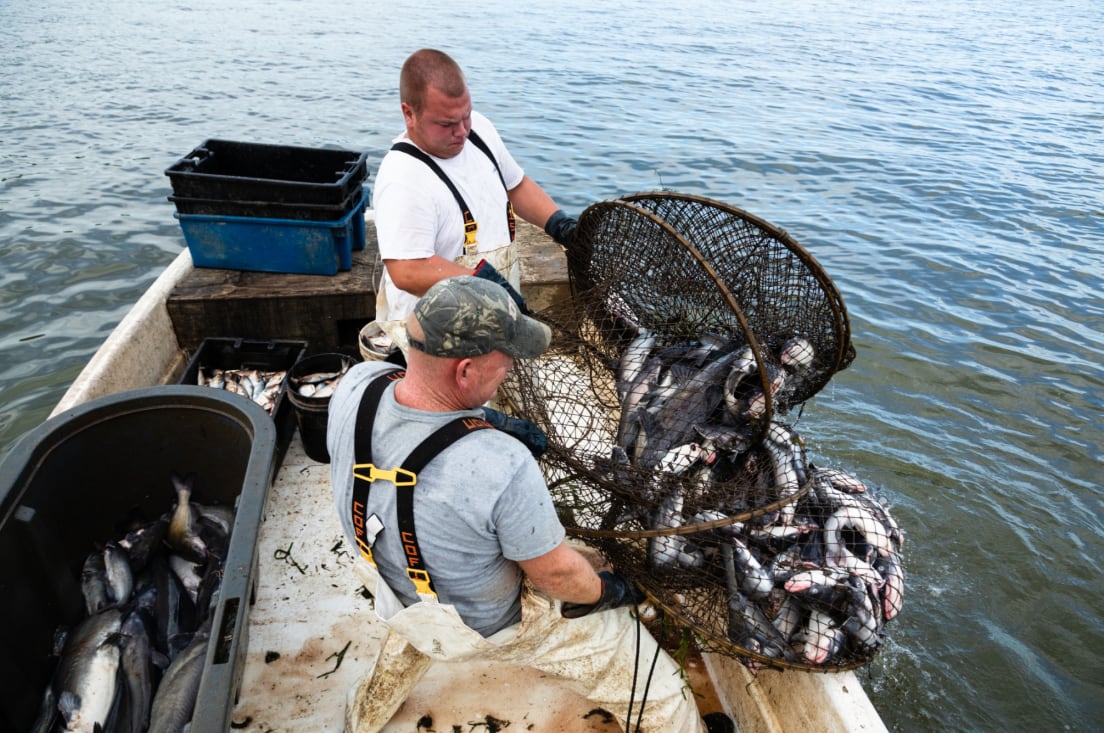
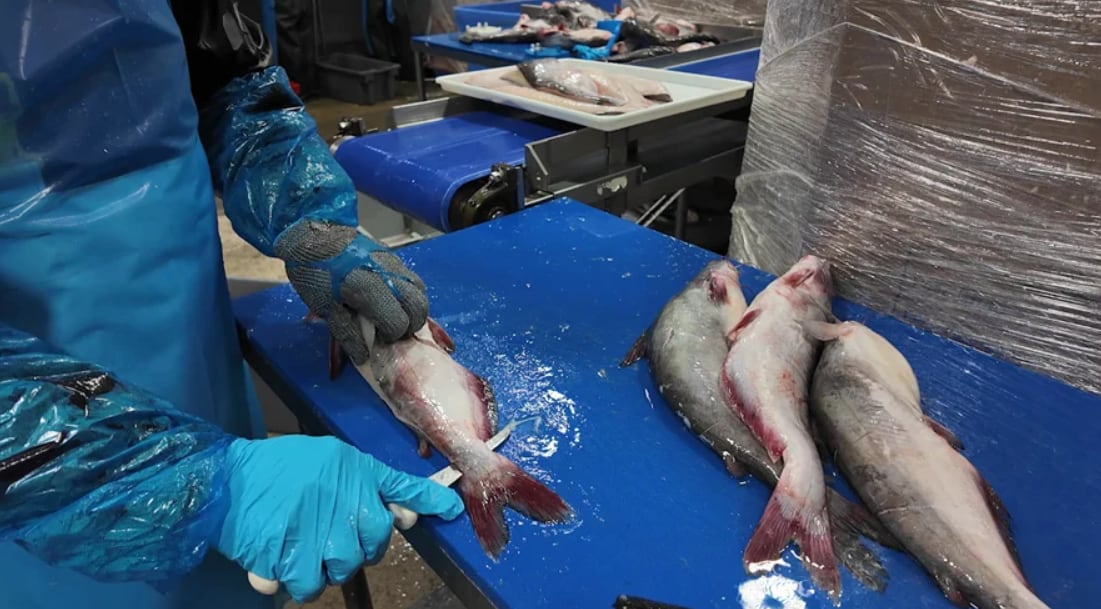
Rice vende su pesca a procesadores, pero allí surge un cuello de botella: el bagre es el único pescado en Estados Unidos que requiere inspección obligatoria del USDA, una norma diseñada para proteger el mercado de importaciones baratas.
Obtener un inspector en planta demanda tiempo y dinero, por lo que solo cuatro procesadores en Maryland están habilitados para manejar la especie, según Williams.
Una batalla a largo plazo
Pese a las dificultades logísticas, el bagre azul llega ya a supermercados, restaurantes y bancos de alimentos en distintos puntos del país.
Jenn Lovewell, directora de nutrición de Real Good Fish —la empresa que opera Bay2Tray—, indicó que recientemente envió un cargamento del pescado a una universidad en Texas.
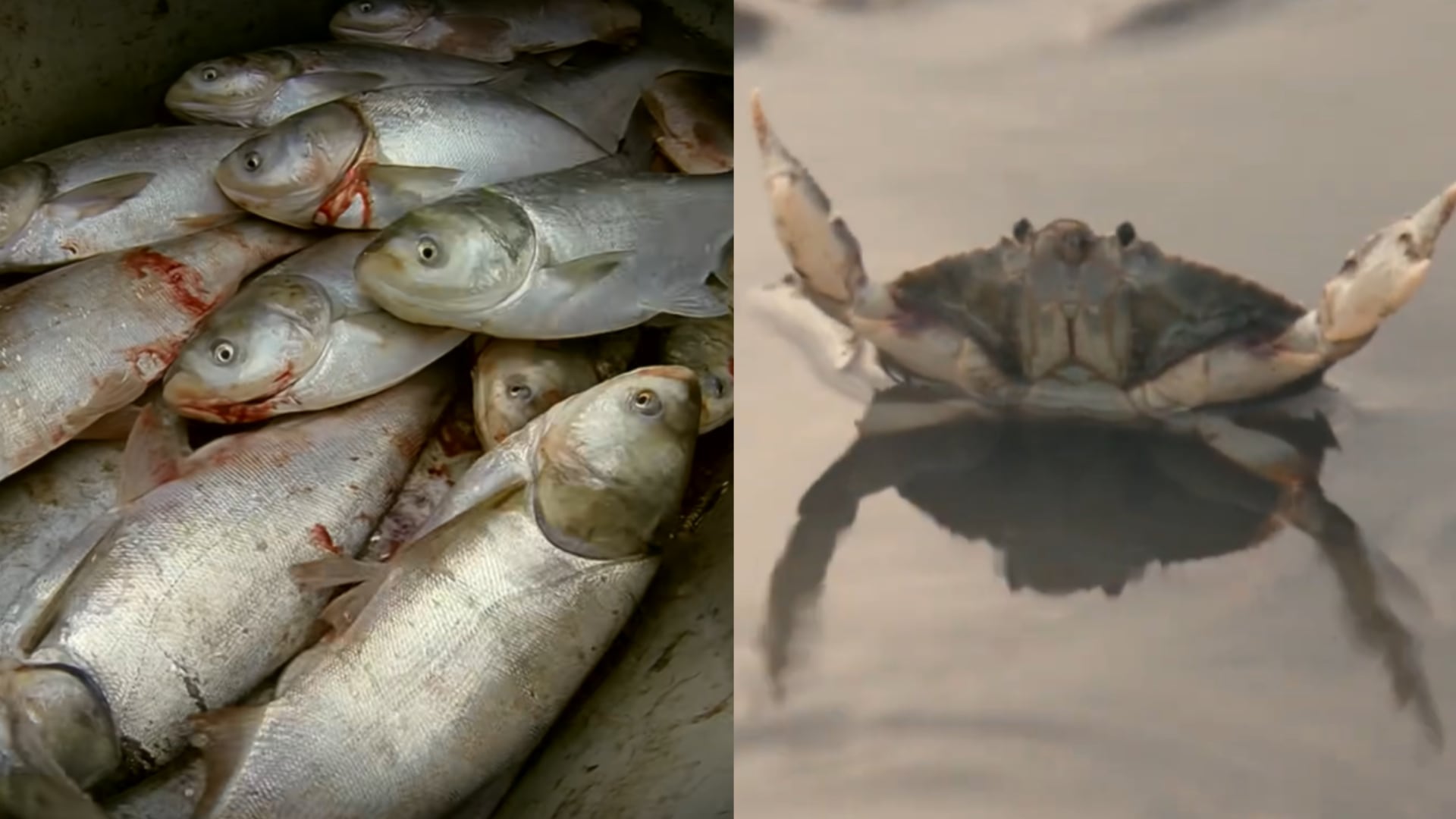
Maryland no es el único estado que apuesta por convertir a los ciudadanos en depredadores de especies no nativas. Kentucky e Illinois aplican estrategias similares contra la carpa asiática, mientras que Maine y el estado de Washington combaten al cangrejo verde invasor.
Estudios de la Universidad de Maryland y del Instituto de Ciencias Marinas de Virginia (VIMS) determinaron que los filetes de bagre azul de tamaño estándar —entre 38 y 91 centímetros (15 a 36 pulgadas)— presentan niveles de mercurio y bifenilos policlorados (PCB) muy por debajo de los límites de seguridad establecidos por la Administración de Alimentos y Medicamentos (FDA).
Sin embargo, los ejemplares más grandes y viejos pueden acumular mayores concentraciones de contaminantes, por lo que las autoridades sanitarias de Maryland y Virginia recomiendan retirar la grasa del pescado antes de cocinarlo y respetar las guías de consumo locales, que varían según el tramo del río donde fue capturado.
Tanto Lovewell como Brewster coinciden en que se necesitan capturar millones de kilogramos al año solo para mantener la situación actual.
“Nunca será erradicado”, advirtió la supervisora escolar, que insta a consumidores y restaurantes a buscar el producto en el mercado.
En la escuela primaria de Preston, una pequeña comunidad rural junto al río Choptank, los alumnos hacen su parte con entusiasmo. “Sabe como a cangrejo, pero en versión pescado. Es muy, muy bueno”, resumió Raelynn Truitt, estudiante de quinto grado, mientras comía su croqueta de bagre.
bagre azul,bahía de Chesapeake,especies invasoras,pesca comercial


NEWYou can now listen to Fox News articles!
A high-speed train slammed into the rear of another train that had stopped, derailing two cars and killing at least 10 people on Wednesday in central Spain, authorities said.
Esther Padilla, spokeswoman for the Castilla La Mancha region, said authorities can confirm 10 deaths, but added «that number will surely rise.»
It was the second major train accident in Spain this year.
Spain’s rail system operator ADIF said the crash occurred Wednesday morning in the province of Toledo. Rail service was suspended between Madrid, Ciudad Real and Andalusia.
CRASH INVOLVING SPEEDING TRAIN, MINIBUS IN BELGIUM LEAVES 4 DEAD INCLUDING 2 CHILDREN
Padilla told state broadcaster TVE that the accident was between two high-speed trains carrying hundreds of passengers and heading in the same direction from the capital Madrid to Seville in southwestern Spain. One ran into the tail of the other that had stopped, knocking two of its cars off the track. She said the cause of the crash was not known.
Emergency services attend to victims at the scene of a collision between two trains in Urda, Spain, on Wednesday, Oct. 28, 2026. (Juanma Jiménez/Europa Press via AP)
The crash, which occurred in a flat stretch surrounded by fields in between the towns of Urda and Los Yébenes, left one car shredded into bits of metal and other material, scattering debris down a gravel slope.
Spanish Health Minister Mónica García told TVE that emergency workers were focusing on rescuing survivors and bodies from the two most damaged train cars. She said that the injured are being sent to different hospitals in the area.
«It was a high-speed impact, so we are expecting this to be a tragedy,» García said.
BYSTANDER VIDEO CAPTURES NORFOLK SOUTHERN TRAIN T-BONING SEPTIC TRUCK AT VIRGINIA RAILROAD CROSSING
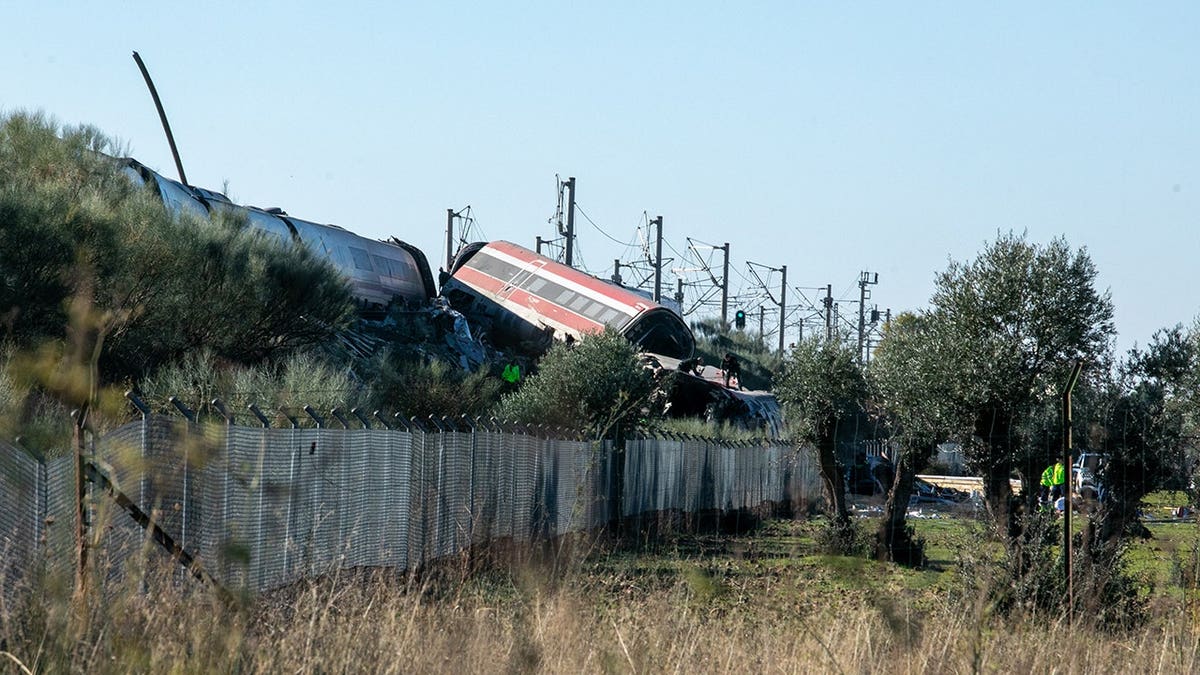
The scene of a collision between two trains in Urda, Spain, on Wednesday, Oct. 28, 2026. (Juanma Jimenez/Europa Press via AP)
The accident involved a train from Spain’s state-owned RENFE company and the private rail company IRYO. It appeared the RENFE train rammed the IRYO train, Spanish media reported. Trains from those two companies were also involved in a deadly crash in January.
Padilla said that 397 passengers were in the RENFE train and 147 passengers in the IRYO train.
IRYO, an Italian-owned company, said in a statement that it has «activated its security protocols and is closely working with authorities.»
The mayor of the nearby town of Urda, Manuel Galán, told Spanish state broadcaster TVE that civil protection authorities had asked his town hall to prepare a sports pavilion to attend to injured passengers.
A military emergency brigade was deployed to help emergency services, firefighters and police to the crash site.

Passengers wait at Santa Justa station in Seville, Andalusia, Spain, following a train accident near Urda, Toledo, on Oct. 28, 2026. The collision between a Renfe AVE train and an Iryo train suspended services on the Madrid-Andalusia high-speed line, causing two carriages of the Iryo train to derail. (Europa Press via Getty Images)
Spanish Prime Minister Pedro Sánchez cancelled his agenda to focus on the crash. He wrote on X that he was «dismayed by the serious train accident in Toledo.»
«Emergency services are working on site to attend to the affected passengers,» wrote Sánchez, who faces a national election next month. «All my thoughts are with the victims and their families.»
The regional president of Castilla La Mancha, Emiliano García-Page, wrote on X that he was on his way to the crash site.
In January, 45 people died in southern Spain when a train jumped the track and hit an oncoming train. The crash was the deadliest in Spain since a 2013 crash that killed 80 people. The January incident shook the confidence the European country has in its extensive high-speed rail network.
spain, disasters, transportation, europe, world
INTERNACIONAL
China encroaches dangerously close to US land as a single ship breakdown exposes major vulnerability
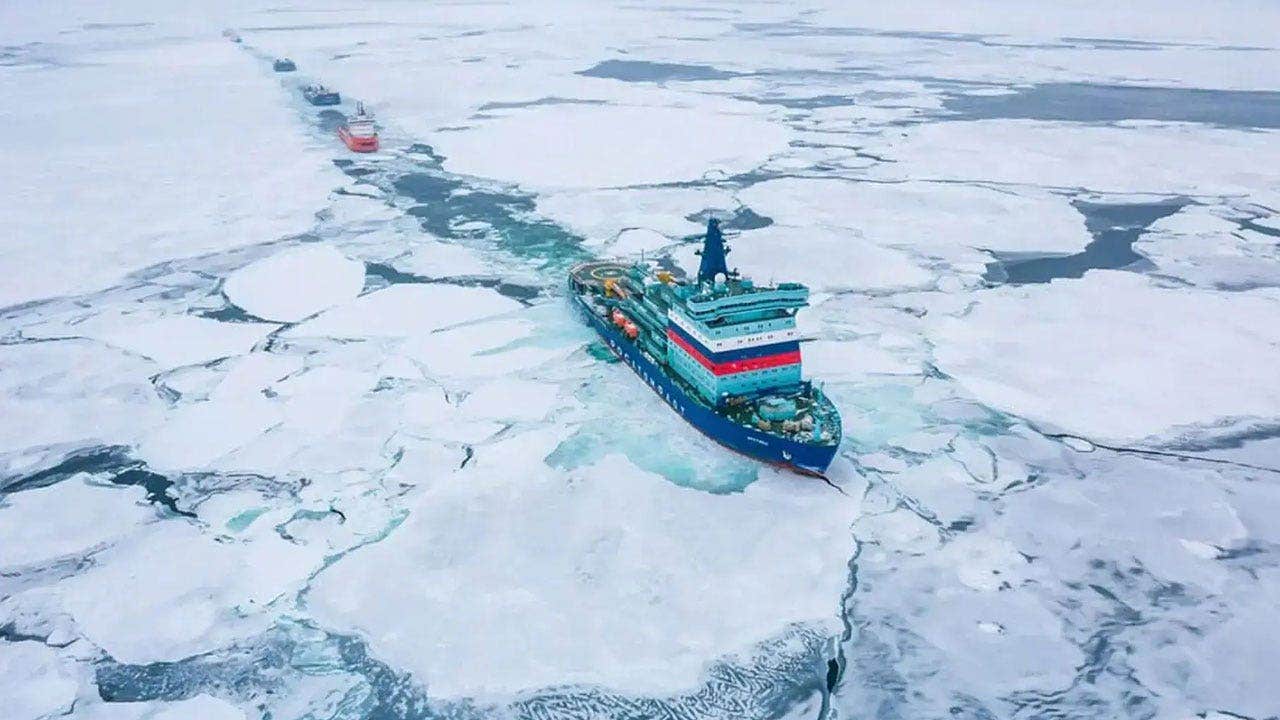
America’s ability to maintain a presence in the Arctic remains thin enough that a single mechanical failure cut the Coast Guard’s icebreaking capability in the region in half this summer.
And the breakdown comes as Chinese vessels are expanding their activity around Alaska.
Rear Adm. Bob Little, commander of the Coast Guard’s Arctic District, told Digital the failure of Coast Guard Cutter Healy left him with just one of two icebreakers that had been slated to operate in the ice. Meanwhile four Chinese research vessels were operating in the region.
«Healy’s unexpected mechanical failure cut in half my capability to operate up in the ice,» Little said.
ARCTIC POWER PLAY GIVES TOP US ADVERSARY NEW OPENING WITH RUSSIA AS US STAKES GROW
The shortfall comes as the U.S. faces a growing need to maintain a presence in waters that can take days to reach. Chinese research vessels are gaining experience in the Arctic and collecting data that can also have military applications, including for submarine operations, while Russia’s much larger icebreaker fleet gives Moscow greater ability to move ships and supplies through the region.
The Coast Guard is now racing to add ships, aircraft and surveillance capabilities as shrinking sea ice opens more of the Arctic to navigation. But its next generation of icebreakers is still years away.
«I can’t get those icebreakers soon enough, given the operational environment,» Little said.
Little said nearly $25 billion in recent funding will support 11 new Arctic Security Cutters, with the first expected to arrive in the region as early as 2028.
The buildup comes as the Coast Guard’s operating area is effectively growing. Declining sea ice is opening more navigable water around Alaska, bringing more commercial and military activity into areas that were once harder to reach.
«As that new operational area becomes accessible, we see an increase in human activity for economic development, for military advancement,» Little said. «And that activity is creating a need for additional Coast Guard mission.»
China has become an increasingly regular presence in those waters. Little said Chinese research activity has grown from as few as one vessel appearing episodically in the Arctic to five last year, while four operated there this year.
Those vessels are not necessarily violating international rules. The Coast Guard Cutter Munro recently returned from a 112-day Arctic patrol that included monitoring Chinese research ships, and Little said the Coast Guard did not observe activity on the surface that fell outside customary law or international norms.
RUSSIA PULLED BACK FROM THE ARCTIC, FOR NOW. NATO MUST ACT BEFORE THOSE TROOPS RETURN
The concern, he said, is what China can learn simply by operating there.
«Any research vessel that operates in the Arctic has the ability to conduct both scientific research,» Little said. «It could be economic research that could be for future exploitation of critical minerals and scarce resources.»
«And then all of that research helps aid in military activity if you’re trying to identify seabed floors and navigate subsurface assets,» he added.
Troy Bouffard, director of the Center for Arctic Security and Resilience at the University of Alaska Fairbanks, said China’s research activity gives Beijing experience operating in an environment where it has historically had little.
«They’re pretty desperate to gain operational experience and knowledge in terms of their growing military capabilities,» Bouffard told Digital.
The research vessels collect legitimate scientific data, he said, but that information can have other applications, «especially when it comes to submarine warfare planning.»
For the U.S., Bouffard said the challenge is about more than the number of icebreakers. Unlike the North Atlantic, where the U.S. and its allies have decades of infrastructure and experience, the North Pacific side of the Arctic has far less infrastructure to support a sustained presence.
«If we can’t have presence, surface presence in an area, it’s very difficult to manage issues that may escalate,» Bouffard said.
The distances compound the problem. Getting a ship from Kodiak, Anchorage or Seattle into the Bering Sea can take several days, Bouffard said.
Russia already holds a substantial advantage in its ability to maintain access through its much larger icebreaker fleet.
«Advantage certainly falls in their favor,» Little said.
Russia’s fleet allows it to maintain access, sea lanes and logistical routes for commercial and military purposes, he said.
«Certainly, as we look at the military advantage, there is a need for the United States to keep up and to ensure that we have ice presence and ice capability,» Little said.
The Coast Guard is also watching cooperation between Moscow and Beijing. Little said the service has observed joint Russian-Chinese military surface groups, cooperation between their coast guard forces and Chinese research vessels collaborating with Russia and «likely sharing information.»
«Either of them alone are worth paying attention to,» Little said. «But anytime they’re working together, we’re watching closely to see if they pose any threat to homeland security or a military risk to the United States.»
china, coast guard, politics, geopolitics, national security, russia, alaska, homeland security
INTERNACIONAL
What’s next for Ilhan Omar? Former immigration judge breaks down legal risks amid federal probes

MINNEAPOLIS — A former federal immigration judge says Rep. Ilhan Omar, D-Minn., who is under investigation, could face both criminal charges and denaturalization.
There are two federal probes ongoing into the congresswoman — the first into alleged immigration fraud and the second involving her financial disclosures and a sharp discrepancy reported just one year apart.
«If somebody who’s a naturalized citizen — which I believe Ilhan Omar is — is convicted of a crime, that doesn’t automatically mean that they face denaturalization or anything like that,» Nathan Hansen, an attorney of 23 years, told Digital. «They would be handled by any type of other normal punishment that would come from the court.»
Hansen was appointed by former Attorney General Pam Bondi to serve as an immigration judge earlier this year. He served in the role for four months.
GREGG JARRETT: ILHAN OMAR COULD FACE INDICTMENT, DENATURALIZATION AND DEPORTATION
Denaturalization proceedings are separate from any criminal case that could arise from the federal investigation into Omar, whose «real name,» according to sources familiar with the investigation, is Ilhan Nur Said Elmi. Omar is under investigation for alleged immigration fraud related to the way she or her late father filled out her citizenship paperwork.
«A denaturalization proceeding, or somebody to strip somebody of their naturalization, is another proceeding, which would be a civil proceeding brought by the Department of Justice, presumably maybe on behalf of the Department for Homeland Security, who handles most of these things,» said Hansen.
HOMAN SAYS ILHAN OMAR COULD BE STRIPPED OF NATURALIZATION, DEPORTED IF IMMIGRATION FRAUD IS PROVEN
«If there was some sort of nexus between the criminal conviction and somebody’s citizenship, It might be more likely that The Department of Justice would bring a denaturalization proceeding,» Hansen continued. «But I think it would be a discretionary matter within the people who are running the Justice Department.»
Omar’s Washington, D.C. home was raided by Homeland Security Investigations (HSI), the principal investigative arm of the Department of Homeland Security (DHS), in the early morning hours of Oct. 12.
During the raid, investigators reportedly seized the congresswoman’s phone, passport and computer. later confirmed that authorities are in possession of her DNA.
Regarding the case, observers have speculated that if indeed Omar has broken the law, statutes of limitations could hinder a prosecution. Hansen has seen those claims, but doesn’t believe them to be valid.
«My view of that is generally that fraud stops any statute of limitations. In other words, if something isn’t disclosed or something’s hidden, then it would be unfair to the other party to toll a statute of limitations against them,» said Hansen. «That’s just sort of a general principle of law.»
FEDERAL AGENTS SEIZE PHONE OF REP ILHAN OMAR IN RAID TIED TO IMMIGRATION FRAUD PROBE
Asked about the prevalence of immigration fraud in general, Hansen pointed to the sheer number of pending immigration and removal cases across the country an in Minnesota.
«I think I would take it from a 30,000 foot view of just the amount of cases that the United States is facing right now of people coming here,» he said. «It’s got to be in the tens of millions of people coming here, I think, but certainly millions.»
He said that in Minnesota alone, there are 20,000 to 30,000 removal cases pending that do not have a scheduled court date, due to a massive backlog of immigration-related cases.
«Whether you want to call it fraud or whatever, it’s like an overwhelming of the system and the system is not being used in the way in which it was intended,» he explained.
Bogus asylum claims are also contributing to the backlog, Hansen explained.
ILHAN OMAR’S TURBULENT WEEK EXPLAINED: THE DUELING PROBES THAT THREW THE SOMALI-BORN PROGRESSIVE INTO CHAOS
«Asylum relief has to do with protected grounds,» he said. «The most common ones are that, ‘I was persecuted at the acquiescence or directly at the behest at the government I am fleeing from based upon my race, my religion, my ethnicity [or] my political views.’ These are common claims.»
Hansen said that during the time when he was an immigration judge, he frequently saw claims that «just totally didn’t add up,» or documents provided by the applicant were «clearly fake.»
«There were other asylum applications that just clearly lacked merit under existing law,» he continued. «I mean, people would — I’ve seen cases where people would say, ‘well, people insulted me in my country.’ And my response to that is, ‘your country probably provides more protection against insults than the United States. In the United States we have freedom of speech, and for the most part, you can be as rude as you want to someone and insult them, and it’s not a crime.’»
ilhan omar, politics, naturalization, homeland security, justice department, investigations

Spain high-speed train crash kills at least 10

China encroaches dangerously close to US land as a single ship breakdown exposes major vulnerability

Atlético Tucumán y Platense definirán al primer finalista de la Copa Argentina: hora, TV y formaciones

Donald Trump respaldó un posible asilo para Flávio Bolsonaro: “Creo que son buena gente”

Boca y River estrenarán una pelota especial en el Superclásico: cómo es y qué homenaje tiene

El mensaje de Migraciones sobre Flavio Bolsonaro: “Ingresó a la Argentina con documentación hábil sin ningún impedimento legal”

CFK, Axel Kicillof, Sergio Massa y otros referentes del PJ celebraron el triunfo electoral de Lula da Silva

Medios brasileños afirman que Flávio Bolsonaro escapó del país y está en vuelo a Estados Unidos

Julián Álvarez le dio el triunfo al Atlético Madrid y terminó con otra extensa racha negativa: el gesto de los fanáticos

El gobierno de Milei apuesta al triunfo de Bolsonaro y el peronismo, a la “resurrección” de Lula da Silva

 POLITICA2 días ago
CFK, Axel Kicillof, Sergio Massa y otros referentes del PJ celebraron el triunfo electoral de Lula da Silva
- INTERNACIONAL18 horas ago
Medios brasileños afirman que Flávio Bolsonaro escapó del país y está en vuelo a Estados Unidos
- SOCIEDAD3 días ago
Edgerunners 2 ha vuelto a poner a David Martinez en el centro de la conversación. Su showrunner tiene algo que aclarar sobre su destino