INTERNACIONAL
Michigan man doxxed after exposing his city’s booming Islamic surge takes defiant stand: ‘Not gonna stop’

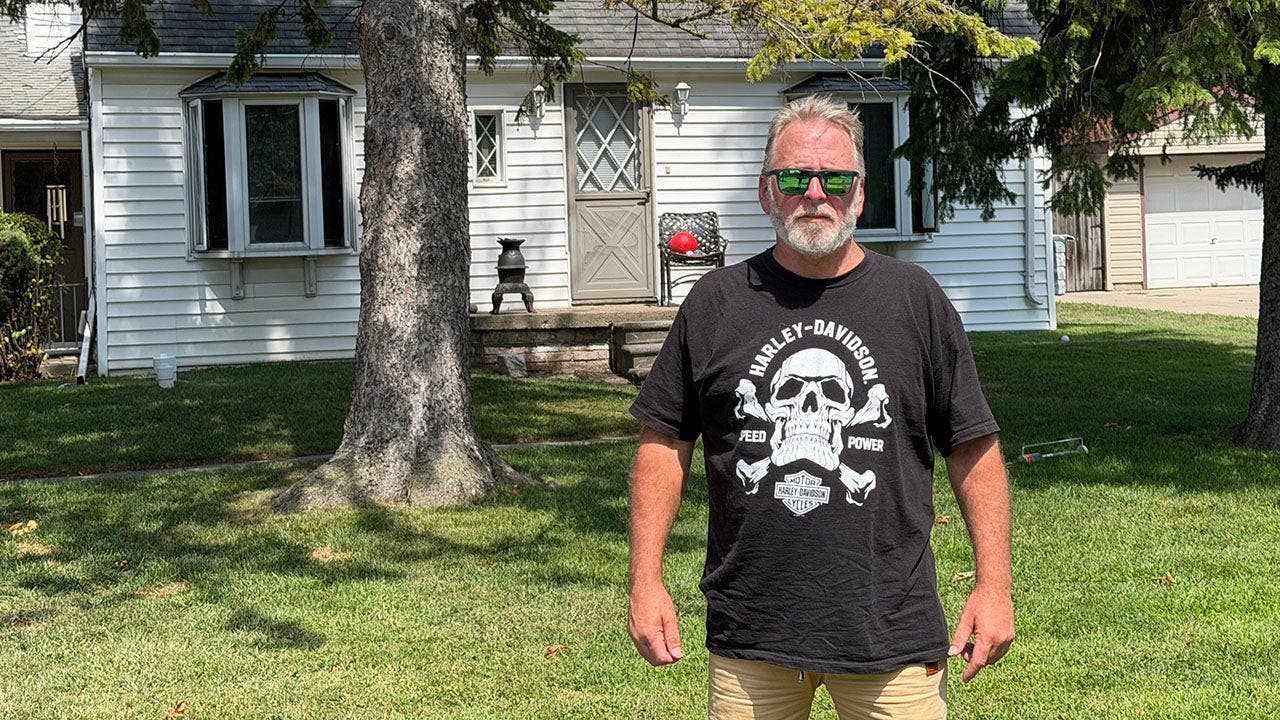
A Michigan man who is facing backlash for speaking out against the growing Islamic population in his town refused to back down during an interview with Digital.
«This is my home, this is where I was born and raised, this city, this state,» said Justin Tye, 57, of Warren, Michigan.
Tye’s address was doxxed in the wake of a Digital story where he described how his town and neighborhood have been transformed by mostly Muslim immigrants over the past decade or so. He said he’s received some hate mail, including a package addressed to «Justin Tye, Bigot at Large.»
WORKING-CLASS AMERICANS SAY THEIR TOWN IS THE NEXT DEARBORN — AND THEY’VE HAD ENOUGH
One package contained stickers reading «F— Trump and f— you for voting for him,» along with a box of feminine hygiene products.
But Tye isn’t afraid of any backlash.
«Some things are worth the trouble, and this is worth the trouble that could come from it,» he said. «Being doxxed, I’m not afraid. I kind of figured this was gonna come with the territory.»
He also vowed to keep speaking out.
BILL MAHER RIPS IMMIGRANTS WHO REFUSE TO ADAPT, SAYS AMERICAN VALUES ARE ‘NOT NEGOTIABLE’
«I’m not gonna stop. I mean, you come here from another country and you disrespect the people who have lived in this neighborhood for decades, and in many cases like myself, there’s several people I went to school with that bought their parents’ homes and live back here,» he said, adding that he is speaking up for his neighbors too.
«And that’s what I’ve been hearing mainly is, ‘finally a voice,’» he said. «These people here, these Muslims … you need to respect the people, the Americans that are here. Stop disrespecting the people that lived here for decades.»
Tye said he’s received encouragement from residents around town.
«I’m getting a lot of support,» he said. Like I was out, I had to go do some shopping. I went to Meijer, I went to the bank, and then I stopped at a pizza place to get a pizza, and all three places I was stopped by people, asked if I was the Justin that was interviewed by Fox, and I said ‘yes.’ And the support I’m getting is incredible.»
Tye and several of his neighbors spoke to Digital several weeks ago in Warren.
PASTOR UNLEASHES ON DEARBORN AS RELIGIOUS TENSIONS ERUPT AT CITY COUNCIL MEETING: ‘ENOUGH IS ENOUGH’
«It all started when they bought the mosque, roughly six years ago,» said Tye.
«After Ramadan, they would have their [Eid al-Fitr] prayer service. It was unannounced. We didn’t know anything,» he continued. «All of a sudden, we were just woken up to 100-plus people behind the mosque, with an imam on a podium with big amplifier speakers, belting out his prayer service. So it woke up the whole neighborhood.»
TRUMP INAUGURATION PASTOR SAYS DEARBORN CHRISTIANS ‘AFRAID’ TO SPEAK OUT IN MUSLIM-MAJORITY CITY
He described his neighborhood now as «chaos.»
He also took Digital on a guided tour of Warren, and pointed out five new mosques built or under construction within a seven-mile radius of his house.
SWING STATE MAYOR SUED AS CITY’S MUSLIM HOLIDAY DISPLAYS IGNITE RELIGIOUS-FAVORITISM FIGHT
An old industrial machinery business is now a mosque, as is a former Baptist church. Another towering mosque is under construction in the area.
«Seems like every restaurant that closes up — American restaurant — there’s a Muslim restaurant that opens up. I’ve seen four or five of them so far,» one of Tye’s neighbors told Digital.
«I’m normally laid back. Things don’t bother me,» said another. «But it’s like, this is my neighborhood and they’re just taking it over, and that’s what bothers me. And they don’t care.»
After the initial story was published, the city released a message on social media titled, «One Warren: Stronger Together, No Room for Hate.»
Friday afternoon, the city responded to Tye’s doxxing, and unequivocally denounced the practice.
«Every Warren resident deserves to feel safe in their own community. No one should have to fear being threatened, harassed, or intimidated, simply because they chose to speak up or raise a concern.»
«Targeting someone at their home crosses a line,» the statement said. «A person’s home should be a place of safety and privacy, never a place where they are made to feel unsafe because of their views. Regardless of where we stand on an issue, every resident deserves dignity and respect.»
The city noted that while not everyone will always see eye to eye, «disagreement should never become an excuse for personal attacks, intimidation, or retaliation.»
«There is room for everyone in Warren. There is room for disagreement, debate, protest, and advocacy. But there is no room for threats, harassment, intimidation, or hate. We should hold ourselves and one another to a standard that protects both the safety of our neighbors and the freedom to speak openly.»
politics, michigan, controversies state and local, islam, religion











INTERNACIONAL
La pelea que vio en un bar, tres días y medio de escritura frenética y el estudio que casi deja pasar otra obra maestra: así nació ‘Rocky’

Yo soy Rocky, el relato cómico y diseñado para complacer al público de Peter Farrelly sobre la realización de “Rocky”, podría parecer un doble golpe de nostalgia pura. Se cumplen casi exactamente 50 años desde que el clásico de boxeo que lanzó a Sylvester Stallone llegó por primera vez a los cines. Bastan unos escalones de Filadelfia o un grito de “¡Adrian!” para evocar una presencia cultural que sigue siendo omnipresente.
Sin embargo, aunque Yo soy Rocky no escatima sentimentalismo, apunta más al presente de lo que aparenta. La industria cinematográfica actual es tan corporativa y reacia al riesgo que la recuperación de “Rocky” a cargo de Farrelly resulta más disfrutable como recordatorio de que el cine es una empresa quijotesca, incluso disparatada. Algunas de sus mejores películas parten de ideas inherentemente malas.
El milagro de “Rocky” reside, en realidad, en que alguien aceptó hacerla. Stallone, con poco más de 20 años, apenas tenía en su haber algunas películas pornográficas de bajo presupuesto. Había pocos indicios de que el público reclamara un drama de boxeo. Y, sin embargo, Stallone, pese a su modesta posición en Hollywood y a su particular forma de hablar, no quería limitarse a vender el guion: insistía en protagonizarlo.
Por eso, aunque la convincente interpretación de Anthony Ippolito como Stallone está en el centro de Yo soy Rocky, la película pertenece a sus escépticos productores y a sus ejecutivos indignados. Tracy Letts interpreta a Sandy Maddox, el jefe de United Artists, un personaje compuesto. Los productores de “Rocky”, Irwin Winkler y Robert Chartoff, son encarnados por P. J. Byrne y Toby Kebbell, respectivamente. Todos quedan atónitos cuando Stallone, que había estado recientemente sin hogar, rechaza una suma que hoy equivaldría a millones, firme en su exigencia: “Yo interpreto a Rocky”.
Esta es la propia historia de superación de Stallone, una que refleja con precisión el improbable ascenso de Rocky Balboa. Pero la convicción de la película de que el cine desafía los algoritmos es lo que convierte a Yo soy Rocky en un entretenimiento divertido, aunque ligero.
Farrelly, que pasó su carrera haciendo comedias como “Dumb and Dumber” y “There’s Something About Mary” antes de pasar a filmes más dramáticos como la ganadora del Óscar a mejor película “Green Book”, realiza Yo soy Rocky con parte de ese mismo espíritu. Encadena escenas ágiles, casi improvisadas, y renuncia al preciosismo en favor de un ritmo de comedia disparatada. Según sugiere Yo soy Rocky, el cine debería ser una aventura.

El obstinado ascenso de Stallone, convertido ya en un mito, se condensa con ligereza en el guion de Peter Gamble. La historia comienza en Nueva York, donde Sylvester aún es Mike Stallone y avanza poco en las escasas audiciones que consigue. Pero sus sueños de triunfar en el espectáculo son sinceros. Esa sinceridad probablemente explica que Sasha, una empleada de taquilla interpretada por AnnaSophia Robb, acepte salir con él. Ella se convierte en la primera esposa de Stallone y, cuando ambos se mudan a Los Ángeles, en la mecanógrafa de sus guiones.
Y hay muchos guiones. Stallone escribió más de una docena antes de “Rocky”. El éxito no llegó de la noche a la mañana, y esa perseverancia vuelve entrañable su historia. ¿Cuántos aspirantes a protagonista musculoso en Hollywood, entonces o ahora, han trabajado tanto?
La base real de los hechos beneficia a “I Play Rocky”, que a veces se inclina hacia el cuento de hadas. Ippolito, conocido antes sobre todo por interpretar a Al Pacino en “The Offer”, reproduce los gestos y la voz de Stallone sin caer en la caricatura, una proeza si se considera la cantidad de imitaciones de Stallone que han surgido y desaparecido durante 50 años. Pero la interpretación resulta demasiado dulce y angelical. Stallone debió de ser algo más que un ingenuo dotado para lograr lo que consiguió. Ippolito interpreta a Rocky, no a Stallone.

Después de ver en un bar la pelea a 15 asaltos entre Muhammad Ali y Chuck Wepner, Stallone vuelve tambaleándose a casa y, en solo tres días y medio, “Rocky” brota de él. “Ese soy yo en la página”, dice agotado.
“I Play Rocky” finalmente llega al rodaje de la película, pero para entonces empieza a perder impulso. El eje del filme es la negociación por el guion, con Winkler y Chartoff como intermediarios que trasladan ofertas de un lado a otro. Stallone trabaja estacionando autos cuando rechaza USD 360.000, una cifra cuatro veces mayor que la oferta inicial, para ceder una opción sobre el guion sin que él fuera elegido para el papel.
Byrne y Kebbell son notables como dos productores veteranos y astutos que apenas pueden creer en el proyecto al que han apostado, aunque mantienen la fe. El jefe del estudio interpretado por Letts, todavía resentido por haber dejado pasar “The Godfather”, otro éxito de los años 70 que al principio parecía un fracaso anunciado, atraviesa sus escenas con una furia memorable.
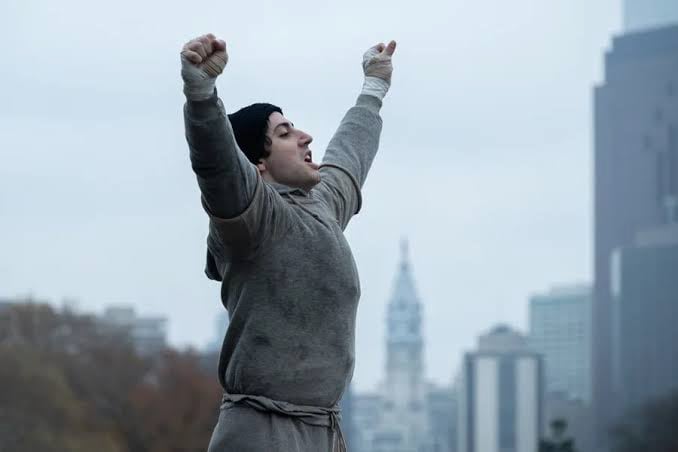
Finalmente acuerdan una cifra mucho menor y un presupuesto muy reducido, de USD 1 millón, para “Rocky”. Eso implica una producción austera que se traslada a Filadelfia para evitar a los sindicatos de Nueva York. El célebremente eficiente John G. Avildsen, interpretado por Jay Duplass, es convocado para dirigir.
Una vez que las cámaras empiezan a rodar, incluido, como reconoce la película, uno de los primeros usos de la Steadicam, “I Play Rocky” se orienta más hacia la recreación nostálgica. Pero aún se percibe el afecto de Farrelly por un cine guiado por el instinto. En ese sentido, “I Play Rocky” no es tan distinta de otro drama sobre la realización de una película: Nouvelle Vague, de Richard Linklater, sobre el iconoclasta francés Jean-Luc Godard y Breathless, de 1960.
Un chiste recurrente consiste en que los actores exageran sus capacidades para conseguir un papel. Cuando Carl Weathers, interpretado por Stephan James, llega para hacer de Apollo Creed, termina por admitir que no sabe boxear, una confesión que también debe hacer Stallone. Que aquello se convierta en la película más taquillera del año hace de “I Play Rocky” una afectuosa referencia a la frase, citada con frecuencia y olvidada a menudo, de William Goldman: “En el cine, nadie sabe nada”.
Fuente: AP
Arts,Culture,Entertainment,Arts / Culture / Entertainment,North America

FIRST ON FOX: A new analysis from a conservative AI safety group found that deep-red counties with large data centers or proposed projects shifted further toward Democrats in last week’s midterm elections than comparable counties without such projects.
Humans First’s analysis, obtained by Digital, examined public election returns and data-center project records in 1,540 counties across 16 states. The memo used several comparisons to measure what the group describes as a «data center penalty.» Across all counties examined, those hosting large data centers shifted an additional 2.2 percentage points toward Democrats compared with non-host counties in the same states. The pattern appeared in 14 of the 16 states and 25 of the 27 governor and Senate races examined.
Restricting the analysis to deep-red counties — those President Donald Trump won by at least 20 points in 2024 — produced a 2.1-point raw gap between counties hosting large data centers and comparable counties without projects.
Among deep-red counties with projects still in the proposal stage, the gap was 1.1 percentage points after accounting for past voting patterns, rural or urban status, population size, racial and ethnic makeup and recent voting trends.
TEA PARTY FOUNDER LAUNCHES NATIONWIDE ‘DATA CENTER REVOLT’ AGAINST AI DATA CENTER EXPANSION
The group identified 114 proposed large data center projects across 92 deep-red counties, potentially setting up more local fights.
The memo found that Republican vote totals fell an additional 1.1% in deep-red host counties compared with comparable counties without large data centers, while Democratic vote totals showed no significant change.
The memo cautioned that its findings show an association rather than proof that data centers caused voters to change their behavior. County-level results also cannot determine whether Republicans switched their votes or simply stayed home.
«Our analysis looked at how counties with data centers voted and how those counties moved to the left,» Humans First Chairwoman Amy Kremer told Digital.
«I think this happened for the reason I’ve been warning conservatives and Republicans about for some time: People engage politically when issues affect them personally. There’s nothing more personal than your pocketbook, your health care, your kids and family, your home and your community. A data center involves all of those things, which is why I believe these counties moved away from Republicans,» she continued.
Humans First’s September «Data Center Revolt» bus tour made 35 stops in 27 states, including 14 stops in the states covered by the analysis. Nine of those stops were in deep-red counties, all of which hosted a large data center project. Those nine counties shifted 2.2 points further toward Democrats after the analysis accounted for its controls, compared with a 0.75-point shift among deep-red host counties overall. The group said those same nine counties showed no comparable gap from 2020 to 2024.
The findings do not establish whether the group’s visits influenced voting behavior or whether those counties already had stronger opposition to data center development.
Separately, voters favored restrictions on data center development or rejected measures supporting such projects in 46 of 47 local data center ballot measures in 2026, according to Ballotpedia. The measures included different types of proposals, including restrictions on development and advisory questions.
Kremer said this is a local control issue, stressing that Republicans should focus on protecting property rights and ensuring people have control over how things affect their lives.
«Whether you’re talking about AI technology or the infrastructure needed to build AI data centers, the American people have not had a seat at the table,» Kremer said. «They haven’t had a say in how the technology affects them or how the data center buildout affects their communities. In many places across the country, developers and companies have gone in and cut deals behind closed doors, under a cloak of darkness, using nondisclosure agreements and shell companies. By the time people in the community find out about the project, it’s too late to stop it.»
«These projects affect the quality of life and how much money people have. They can increase the cost of electricity and water, while tax abatements are given to trillion-dollar companies — some of the wealthiest companies in the world. That is money coming out of the pockets of the American people,» she continued.
Kremer added, «When you talk about Iran and gas prices, tariffs and now the AI data center buildout, all of these costs are coming out of people’s pockets. That’s when people engage politically, and I think that’s what we saw last Tuesday.»
The concerns come amid a broader debate over how data centers should pay for the electricity and grid infrastructure they require. The Energy Department estimates data centers used 4.7% of U.S. electricity in 2024 and, in its reference case, could account for 11.8% by 2030. The Federal Energy Regulatory Commission has directed regional grid operators to address safeguards against shifting the costs of serving large electricity users onto other customers. Those developments do not establish that data centers caused higher household rates in the counties examined by Humans First.
Tax incentives also vary by state. The National Conference of State Legislatures reported that at least 38 states offer incentives specifically for data centers, including equipment-tax exemptions and, in some states, exemptions involving electricity or property taxes. The Data Center Coalition, an industry trade group, says such incentives are similar to those offered to other capital-intensive industries and argues that data centers generate jobs, investment and tax revenue.
Humans First does not support a nationwide or statewide moratorium on data centers, but Kremer said individual communities should be free to approve or reject projects.
DATA CENTERS FORGOT THE CONSUMER — AND THAT COULD COST AMERICA THE AI RACE
«If a community comes together and votes for a moratorium, that is its prerogative. If a community wants a data center, that is its prerogative as well. It is all about local control,» she said.
Kremer said she learned that people engage more when it comes to issues that affect them personally, noting that data centers «encompass all of those issues.»
«Whether you’re talking about pocketbook issues, health care, kids and family, or your home and community, the data center battle is a physical manifestation of all those concerns,» she said. «When it comes to the economic impact on their communities, I think data centers absolutely played a role in the election.»
«I hope we can get on the right page and give local control back to communities. People should have a say in how they live and what goes into their communities. That is very personal, and I hope we can move in that direction,» Kremer added.
artificial intelligence, elections, politics, technology, midterm elections, republicans elections, voting
Los demócratas recuperaron el Senado y la Cámara de Representantes, incluso con victorias en estados tradicionalmente republicanos. Pesaron el costo de la vida, la guerra con Irán y el rechazo a decisiones del gobierno en turno, pero también importa cómo el Partido Demócrata escuchó ese descontento y construyó su respuesta.
Chuck Schumer, dirigente demócrata en el Senado, explicó en The Daily, de The New York Times, dos decisiones clave. La primera fue buscar candidaturas adecuadas para cada estado. No un molde ideológico aplicado a rajatabla. Una pediatra en Carolina del Sur, un pastor en Kansas, un exsenador en Ohio, un maestro de primaria en Texas: trayectorias distintas capaces de hablar con sus propias comunidades.
La dirigencia reclutó perfiles con mucha atención y los votantes decidieron en sus primarias de forma directa, sin nada en medio que distorsionara esa voluntad popular. No todo salió como los líderes preferían, pero ellos entendieron algo esencial: la política es el arte de lo posible porque, primero, es el arte de poner atención y dedicar tiempo a la auscultación y la investigación. Escuchar y respetar las singularidades no es renunciar a los principios. Es tomarse en serio a la gente.
La segunda decisión fue hablar de lo que pesaba en el bolsillo y en la vida cotidiana. Schumer resumió el mensaje en tres C: costos, caos y corrupción. Costos: la despensa, la vivienda, la salud, la electricidad. Caos: los sobresaltos de la administración en materia comercial y de política exterior. Corrupción: la exigencia de que el poder sirva a la ciudadanía, no a intereses particulares. Tres palabras fáciles de recordar porque nombran preocupaciones reales.
Pero hubo una tercera lección, quizá la más importante: no basta con tener el mensaje correcto. Hay que tener a la persona adecuada para transmitirlo.
Los demócratas abrieron espacio a nuevos rostros, trayectorias distintas y liderazgos que no parecieran simples reediciones de una clase política desgastada. No todos los vencedores eran nuevos ni jóvenes, pero representaban una renovación respecto a candidatos repetidos o de las familias o dinastías de siempre en cada región.
Sobre todo, los demócratas comprendieron la importancia de la integridad personal. Porque resulta difícil hablar contra la corrupción cuando quien lo hace arrastra cuestionamientos sobre su propia conducta. La honestidad exige coherencia entre las palabras, la trayectoria y los hechos. La integridad no se improvisa en una campaña. Se construye durante toda una vida.
La novedad tampoco es cuestión de edad. Significa ofrecer una forma distinta de ejercer el liderazgo, sin reproducir automáticamente los mismos personajes, los mismos conflictos y las mismas prácticas que han agotado la confianza pública.
Hay algunas afinidades entre distintas agendas demócratas (proteger el acceso a la salud, contener los costos y cuestionar una economía que concentra beneficios) y la prosperidad compartida que propone Morena, pero no son partidos ni países idénticos. Precisamente por eso debemos aprender del método y no copiar la receta.
Nuevo León merece esa atención a lo particular. Somos un estado industrial, emprendedor, universitario y trabajador. ¿Qué puede ofrecerle la Transformación a Nuevo León? Inversión con certeza, empleo, seguridad, movilidad, agua, aire limpio y oportunidades para todas las colonias. ¿Y qué espera Nuevo León de la Transformación? Honestidad para cuidar los recursos, capacidad para ejecutar, cercanía para escuchar y carácter para cumplir.
La Presidenta, la Dra. Claudia Sheinbaum Pardo, ha trazado con el Plan México una ruta de industrialización y crecimiento con justicia. Nuestro reto es darle identidad norteña, recuperar la tradición del Capitalismo Social y traducirla en resultados. Gobernando Escobedo aprendí que atraer empresas y fortalecer el tejido social son tareas que se complementan, no que compiten y lo he repetido por más de 5 años.
En cualquier caso, la enseñanza estadounidense no es que exista una fórmula mágica para ganar. Es que un proyecto puede tener principios nacionales y escuchar las necesidades de cada territorio, renovar sus liderazgos y exigir integridad a quienes lo representan.
Porque la política no consiste en ponerle el mismo traje a todos los estados. Consiste en entender qué necesita cada uno y encontrar personas con la honestidad, la capacidad y la cercanía para cumplirle. Eso es política real.
*Andrés Mijes es presidente municipal de General Escobedo, Nuevo León, y maestro en Ciencias Políticas por la Universidad Autónoma de Nuevo León.

Detuvieron en Chaco a un hombre acusado de abusar de una nena de 12 años

“Es indudable”: Chicho Serna enumeró los puntos de comparación entre Arruabarrena y Carlos Bianchi tras el título de Boca

La pelea que vio en un bar, tres días y medio de escritura frenética y el estudio que casi deja pasar otra obra maestra: así nació ‘Rocky’

Mica Viciconte contó el inconveniente de pareja que tiene con Fabián Cubero: “Él me picantea y yo me recaliento”

Córdoba recibe hoy a casi un millón de personas en la segunda misa histórica de León XIV en la Argentina

Zidane convoca a un jugador de la segunda división alemana para paliar la baja de Kalulu

Así fue el saludo entre Javier Milei y el papa León XIV en Aeroparque tras la llegada a la Argentina

Artemis IV: los detalles de cómo será la misión de la NASA que busca llevar astronautas a la superficie lunar en 2028

Racing sigue en la busqueda de un nuevo entrenador para el 2027 y hay tres nombres apuntados

Canales para ver el Tigre vs. Sarmiento por el Torneo Clausura

 POLITICA1 día ago
Así fue el saludo entre Javier Milei y el papa León XIV en Aeroparque tras la llegada a la Argentina
- DEPORTE3 días ago
Gimnasia de Mendoza vs Independiente Rivadavia: formaciones, hora y dónde ver por tv
- DEPORTE3 días ago
Franco Colapinto le hizo probar mate a Lewis Hamilton en un evento durante el GP de Brasil: la reacción del piloto de Ferrari