INTERNACIONAL
Muñeki77a, la última víctima


Otra vez, la misma historia. Un espectáculo diferente, un lugar distinto, unos protagonistas nuevos y, sin embargo, la vieja, resiliente, perversa, destructiva historia. Esta vez la protagonista se llama Naomi Preizler y nació en Buenos Aires hace 32 años en una familia judía. A los 15 años fue descubierta y pronto empezó a desfilar para las grandes marcas, Chanel, Givenchy, Balenciaga, Marc Jacobs, Jean-Paul Gaultier, traslado a Nueva York, posado en Vogue: el glamour de su belleza. Con 26 decidió dejar la moda, estudió Bellas Artes y empezó a crear su proyecto musical, Muñeki77a, con música inspirada en la cultura japonesa y el cine de terror. Pronto llegaron sus primeros fans, sus álbumes musicales e incluso hizo de telonera de Dua Lipa. El último proyecto de Muñeki77a, su álbum “Etapa FOLCORE”, donde ha integrado el metal, el tango, la zamba y el malambo argentino. Por el camino, ha tenido tiempo de diseñar su propia línea de ropa.
Y así, construyendo su trayectoria paso a paso, consiguió llegar a su gran oportunidad: abrir el rutilante concierto de Garbage en el Zócalo, la gran Plaza de la Constitución de Ciudad de Méjico que acoge los acontecimientos más emblemáticos del país. Tocar con la famosa banda de rock alternativo representaba el espaldarazo a su proyecto musical lentamente cimentado. Ella misma lo ha explicado: “era una oportunidad muy importante para mi carrera, fruto de años de trabajo y dedicación”. Y todo estaba preparado, las piezas que interpretaría, el emblemático espacio, la publicidad del espectáculo, su mensaje a los fans: “nos vemos en la plaza más importante de México para acompañar a la banda más icónica del rock alternativo @garbage. Lleguen temprano!!! 18hs nos subimos”. A su lado, los 18 trabajadores mexicanos de distintas creencias religiosas que integraban su equipo y ella había financiado personalmente.
Y entonces…, a pocas horas del estreno, llegó el monstruo. Desde que se había anunciado su presencia, habían buscado en sus redes, allí donde la memoria es imperecedera e implacable, y cuando descubrieron que Naomí tenía opinión propia sobre el 7 de Octubre y que detestaba a los terroristas que habían perpetrado el intento de progrom en Israel, empezó la cacería. De golpe, Muñeki77a dejó de ser una creadora creativa y sugerente, a ser Naomi Preizler, una sionista despreciable a la que había que señalar, denunciar y finalmente silenciar. Había tenido la osadía de tener una opinión divergente contra la furibunda marea antiisraelí que imponía el dogma inapelable del genocidio, y ese pecado de defender a Israel le grababa la estrella de David en el brazo y la condenaba al ostracismo .
Acusaciones, difamaciones, ataques en redes, amenazas contra los organizadores, el ruido atronador del odio, y al final el objetivo buscado: la cancelación. Una cancelación que era integral, porque no solo la expulsaba de su sueño de tocar con la gran Garbage, sino que la marcaba para siempre: era una sionista, lo más miserable, lo más perverso. Solo podía haber una expiación: pedir perdón, rectificar, justificarse y humillarse. Lo hizo, escribió su carta, pidió perdón, bajó la mirada, asumió el estigma.
En el concierto, la cantante Shirley Manson pidió a sus fans que dejaran de atacarla –“desear un futuro seguro para Palestina no significa perder el amor y el respeto hacia el pueblo judío”- y tuvo palabras de solidaridad, pero ya no importaba: se había perpetrado con precisión letal la cultura de la cancelación y Noemí solo saldría del ostracismo y volvería a ser Muñekita77a si nunca más levantaba su voz libre. Es decir, si nunca más se atrevía a pensar más allá del rebaño.
¿Cuántas casos Noemí estamos dispuestos a sufrir? Y, ¿hasta cuándo soportaremos esta dictadura del pensamiento que impone dogmas, ataca disidencias, estigmatiza personas y sin ninguna piedad, destruye las vidas, los proyectos y las ilusiones de aquellos que se atreven a tener una mirada propia cuando Israel está en la ecuación? Convertido en el chivo expiatorio de todas las miserias y despojado de razón alguna, sus defensores se convierten en parias, en apestados, en la letra escarlata de este tiempo oscuro. No nos equivoquemos: está ganando el odio. Es un odio sinuoso, que se agazapa detrás de grandes palabras, solidaridad, justicia, amor, pero es una simple mutación, una nueva forma de tiranía. Ha empezado con Israel y con los judíos, los eternos expiadores de los pecados de la historia, pero es una mancha de aceite que llegará a todos los recodos, contaminando el debate público y negando el derecho a pensar. Y por el camino, destruirá vidas.
Hoy le tocó a Noemí. Desde este humilde rincón, que le llegue un abrazo completo, profundo, de esos que las yidishe mame saben hacer cuando abrazan de verdad. Un abrazo de complicidad, la complicidad de quienes somos Muñekita77a, cuando el odio oscurece nuestro mundo. Pero también un abrazo de combate, plantado en medio de la arena pública, gritando su verdad, orgulloso y honesto. Pensar libremente no es un derecho, es un acto radical de supervivencia.
X: @RaholaOficial
Web: https://pilarrahola.com
Instagram: pilar_rahola/

INTERNACIONAL
Pritzker accused of turning education tax credit into partisan fight by opting out of program: ‘Sad to see’

Illinois Gov. JB Pritzker, a Democrat, is being accused of putting partisan politics over kids’ educational needs after he decided to opt out of the Federal Scholarship Tax Credit program, prompting criticism from parents and education advocacy groups.
Pritzker announced on Tuesday that his state will not opt into the program, which was signed into law by President Donald Trump last year as part of the One Big Beautiful Bill Act. The governor described the program as a school voucher, while advocacy groups argued that he mischaracterized the plan.
«At a time when public school education needs investments more than ever, we should not siphon money from public schools for private education – especially as the Trump Administration’s policies decimate education,» Pritzker said in a statement. «We have a responsibility to do right by all of our students. Taxpayer funding should not subsidize donations to private schools that could discriminate based on religion, sexual orientation, or other characteristics.»
The program allows people to receive federal tax credits for donations up to $1,700 to authorized scholarship-granting organizations (SGOs), which distribute the donated scholarship funds to eligible families to be used on private or public educational expenses, including private school tuition, tutoring services, textbooks and more.
GOV HOCHUL’S PLAN TO OPT NEW YORK INTO FEDERAL SCHOOL CHOICE PROGRAM DRAWS UNION OPPOSITION
In an interview with Digital, Teach Coalition CEO Sydney Altfield said her advocacy group is «extremely disappointed» in the governor for opting out of the program.
«Not only did he opt kids out of his state and families out of his state from receiving scholarships, but the program allows for Illinois residents to still claim the tax credit. And what that means is that money that should have and could have gone to students and families in Illinois will now just move over the border and flow out of state — over about $2 billion in estimated scholarship money that could have stayed in the state,» she explained.
Pritzker said in his announcement that his opt-out reaffirms his commitment to strengthening the state’s public schools by ensuring federal taxpayer resources remain available to the students and communities they are intended to serve.
But Altfield took issue with Pritzker describing the program as a voucher, contending that it does not take money from public schools.
«In the same vein of him opting out, he completely misrepresented this program, saying that it is a voucher scheme. It is by definition not a voucher. It does not take a dollar from [the] public school systems. All it does is incentivize taxpayers to use their tax dollars, their federal tax dollars, not their state tax dollars, but federal tax dollars for scholarship money. And instead of it helping families in Illinois, it will now help families outside,» Altfield said.
TRUMP EDUCATION OFFICIAL SAYS SCHOOL CHOICE PROGRAM WILL PUT PRESSURE ON DEM-LED STATES
«Public school students are able to take this money,» she added. «And we know that the vast majority of Illinois students go to public schools. That means the vast majority of taxpayers in the state send their kids to public schools. So we will see the vast majority of taxpayers designating their tax dollars to help support SGOs that will, in turn, support public school kids and students.»
Altfield also accused Pritzker of putting children in the crossfire of partisan politics over an issue that she believes has an opportunity for a rare showing of bipartisanship.
Three other Democrats — Colorado Gov. Jared Polis, New York Gov. Kathy Hochul and New Mexico Gov. Michelle Lujan Grisham — joined dozens of Republicans in opting their states into the program. However, some states that have already opted in will have a new Democratic governor in January, such as Colorado, where Gov.-elect Phil Weiser has already signaled plans to withdraw.
Kansas, Kentucky and North Carolina all have Democratic governors who did not want to join the program, but GOP legislatures in those states overrode the governors’ vetoes.
«I think it’s really sad to see — to put kids in the middle of partisan politics,» Altfield said of Pritzker’s opt-out. «Many blue state governors — Gov. Hochul, Gov. Polis in Colorado and the New Mexico governor — have put politics aside and have put kids first. And I think that if governors can peel back whatever misconceptions they are reading and they can read the program for what it is, it is bipartisan. It will have bipartisan support because education, kids, families are the ones that are going to be successful in this.»
«I think we’re going to see, and I hope we’re going to see, more Democratic governors opting into this program before Jan. 1,» she added.
Altfield also noted that the program could benefit families who may be struggling financially amid concerns in Illinois and across the nation about affordability.
«We all know that affordability is the number one issue that Democrats and everyone is running on and everyone is feeling a pinch of the penny across the country. And this is a real opportunity that has money flowing into the state of Illinois that could have helped families that are pinching every dollar. For the working mom of two or three or four, she may have one or two jobs, three jobs. Where is she sending her kid after school? Is she paying for after-school care? The tax credit program could have offered her a scholarship to help cover those costs,» Altfield said.
«We talk about teachers paying out of pocket. It’s been estimated that teachers pay well over $800 out of their pocket for school supplies. Imagine if every low-income kid came to school with all of the school supplies needed. That teacher would not have to pay out of pocket. It’s small things like this that really add up in a pocketbook that are now not available to the families and the students in Illinois,» she continued.
politics, jb pritzker, illinois, education, donald trump, controversies education
INTERNACIONAL
Los rostros de las presas políticas en Nicaragua: 14 de 16 mujeres permanecen desaparecidas
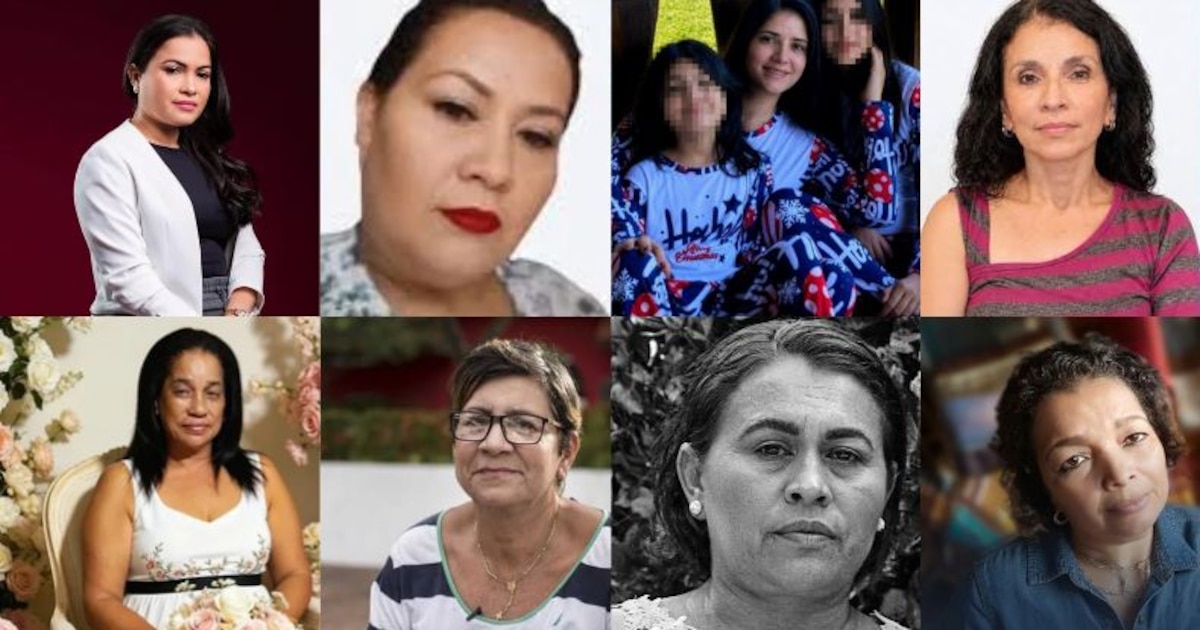
Al 23 de octubre de 2026, 14 de las 16 mujeres detenidas por razones políticas en Nicaragua documentadas por la Asociación Memoria y Justicia (AMJ) permanecen en condición de desaparición forzada.
La cifra fue difundida este 25 de noviembre, Día Internacional de la Eliminación de la Violencia contra la Mujer. Ante ello, la AMJ reclamó información sobre el paradero de las detenidas, pruebas de vida, atención médica, comunicación con sus familias y su liberación.
El listado, elaborado por el Mecanismo para el Reconocimiento de las Personas Presas Políticas, registró 72 personas encarceladas por motivos políticos. Dieciséis son mujeres, aunque el documento solo permite identificar de manera pública a 10 de ellas.
Diez nombres que permiten dimensionar la prisión política contra las mujeres
Las mujeres identificadas son Angélica Patricia Chavarría Altamirano, Aurora Marina Chavarría Cordero, Elvia Junieth Flores Castillo, María Dolores González Martínez, Alda López Bryan, Salvadora del Socorro Martínez Aburto, Thelma del Rosario Montenegro Centeno, Claudia Magaly Munguía Mayorga, Glenis Criesa Pantin Coleman y Florencia Sarmiento Alejandro.
La planilla ubica a Chavarría Altamirano y González Martínez en el Sistema Penitenciario La Esperanza, en Tipitapa. Las ocho restantes figuraban como desaparecidas.
Entre los casos que AMJ destacó está el de Elvia Junieth Flores Castillo, de 38 años. La organización informó que Flores Castillo y sus dos hijas menores de edad se encontraban en desaparición forzada.
Según AMJ, la Corte Interamericana de Derechos Humanos (CIDH) dictó medidas de protección para la madre y las niñas, además de ordenar acciones destinadas a esclarecer su paradero. El listado señala que Flores Castillo fue detenida el 21 de marzo de 2025 en Managua.
La falta de información sobre una persona detenida impide a sus familiares conocer dónde permanece, cuáles son sus condiciones de reclusión y si recibe atención médica. En el caso de madres detenidas, AMJ advirtió que la separación de sus hijos forma parte de las afectaciones diferenciadas que enfrentan las mujeres privadas de libertad por razones políticas.

Dos adultas mayores figuran entre las desaparecidas
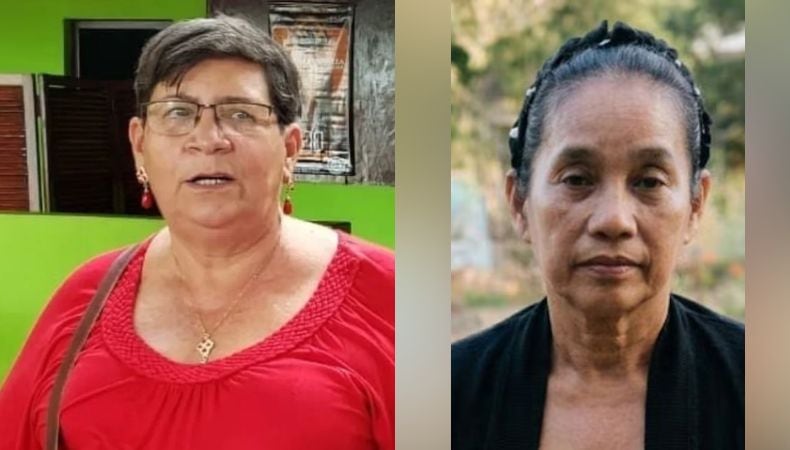
El registro también incluye a Salvadora del Socorro Martínez Aburto, de 69 años, y a Alda López Bryan, de 64. Las dos aparecían como desaparecidas al 23 de octubre.
Martínez Aburto fue detenida el 14 de agosto de 2025 en Jinotepe, departamento de Carazo. López Bryan fue capturada el 31 de mayo de 2026 en Puerto Cabezas, en la Región Autónoma de la Costa Caribe Norte.
AMJ señaló que la edad profundiza los riesgos para ambas mujeres, ante la imposibilidad de sus familias de verificar su estado de salud, las condiciones de detención y el acceso a tratamientos médicos.
Una mujer con cáncer de pulmón entre los casos reportados
La asociación también alertó por la situación de Claudia Magaly Munguía Mayorga, de 55 años. AMJ indicó que fue diagnosticada este año con cáncer de pulmón.
Munguía Mayorga fue detenida el 14 de julio de 2026 en Chinandega y, según el listado, permanecía desaparecida. La organización sostuvo que las personas con enfermedades que requieren tratamiento especializado enfrentan riesgos adicionales cuando las autoridades no informan dónde se encuentran ni permiten el acceso de familiares o médicos independientes.
La organización afirmó que la prisión política tiene expresiones de violencia diferenciadas contra las mujeres, entre ellas amenazas vinculadas a la maternidad, aislamiento prolongado, castigos y afectaciones psicológicas.

AMJ sostuvo que la desaparición forzada agrava esas condiciones, porque impide que las detenidas tengan contacto con sus familias y que sus allegados accedan a datos verificables sobre su situación.
En el Día Internacional de la Eliminación de la Violencia contra la Mujer, la asociación pidió conocer el paradero de las 14 mujeres desaparecidas, recibir pruebas de vida, garantizar asistencia médica y restablecer la comunicación familiar. También exigió la liberación de todas las mujeres presas políticas por el régimen.
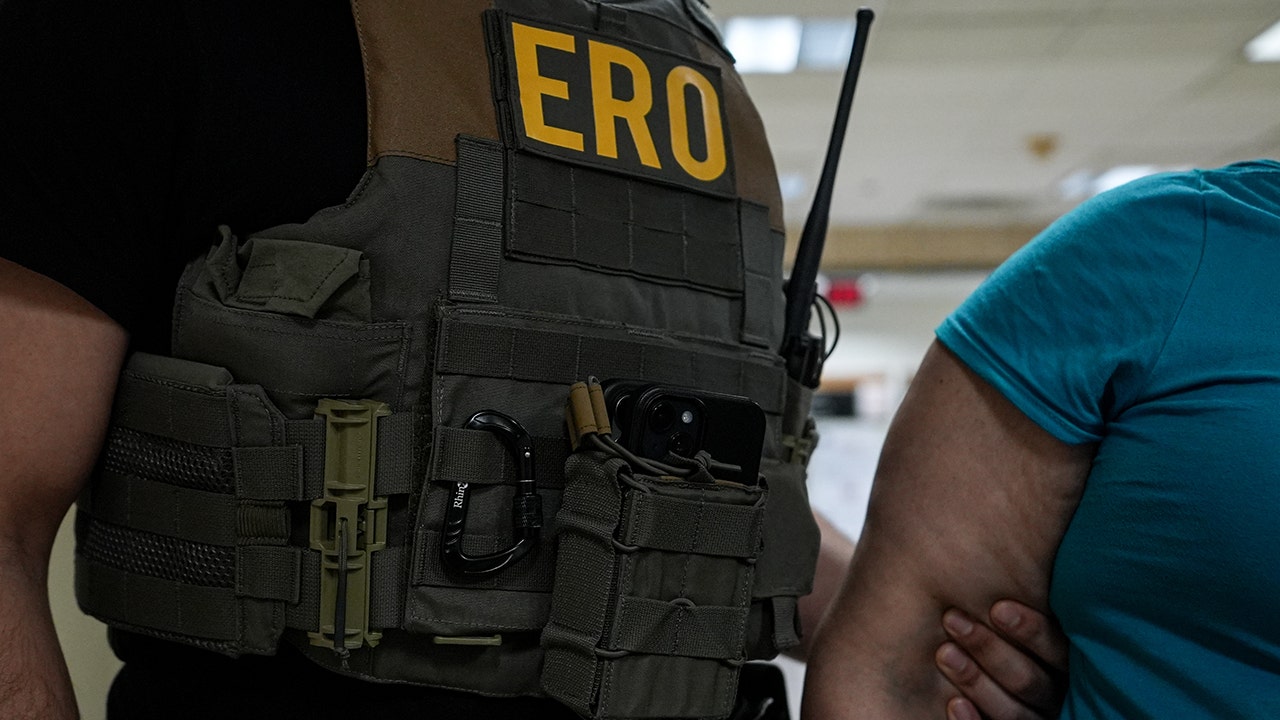
Attorney General Todd Blanche is mobilizing civil litigators across the Justice Department in an all-hands-on-deck push to fight tens of thousands of legal filings by detained migrants asking federal courts to review whether their imprisonment is lawful.
Blanche issued a three-page memo Tuesday calling on attorneys working outside of immigration issues to assist in the lawsuits described by Blanche as «frivolous» and an attempt to «thwart President Trump’s promise to the American people to prioritize their safety and security.»
The pre-Thanksgiving memo comes as the Justice Department has been hit with 97, 000 habeas corpus petition filings since January 2025, including close to 10,000 new petitions filed since October. Typically, the Justice Department faces only a few hundred habeas corpus cases a year.
As President Donald Trump has made mass deportations a centerpiece of his second administration, with Department of Homeland Security figures showing nearly 1.2 million illegal immigrants removed to date, the Justice Department has seen a wave of petitions.
DHS TOUTS HIGHEST ICE DEPORTATIONS IN HISTORY, AS MULLIN SAYS AGENCY HAS BEEN ‘UNLEASHED’
The surge in lawsuits comes after the Trump administration changed its detention policy to deny bond hearings to migrants arrested inside the U.S. — even those who have lived in the country for years. Without access to bond hearings before immigration judges, detainees have turned directly to federal district courts to challenge their confinement.
In a post on X sharing the memo, Blanche accused judges who have granted detained immigrants’ habeas corpus petitions of being «corrupt» and seeking to «release criminal aliens back into communities and avoid deportation.»
«Many of the Department’s U.S. Attorneys’ Offices have been overwhelmed by the influx of petitions and impracticable procedures set by the courts,» Blanche wrote. «That is why it is imperative that all Department attorneys who litigate civil matters support prosecutors who have shouldered the burden of habeas petitions for nearly two years.»
SUPREME COURT TO SCRUTINIZE KEY PILLAR OF TRUMP DEPORTATION MACHINE IN BLOCKBUSTER CASE
Blanche’s memo calls on attorneys from four civil litigation divisions — Antitrust, Civil Rights, Civil, and Environment and Natural Resources — as well as the U.S. Trustees Program and senior leadership offices, including those of the attorney general, deputy attorney general and associate attorney general, to assist. Within the next 30 days, leadership from the respective divisions must submit an «aggressive appellate strategy» for tackling the habeas corpus claims and deploy attorneys to high-volume districts. The memo does not explicitly state how many of the department’s roughly 2,000 civil litigators will be utilized.
Blanche acknowledged that divisions are already carrying «a significant workload in light of personnel reduction.»
TRUMP IMMIGRATION WIN COULD STRENGTHEN ADMIN’S HAND IN LOOMING SUPREME COURT FIGHT
SIGN UP TO GET THE POLITICS NEWSLETTER
«I also know that many attorneys have already volunteered or offered support in litigating habeas matters,» Blanche wrote. «By ensuring that attorneys are assigned no more habeas matters than each attorney can adequately and zealously defend, combined with providing jurisdiction-specific resources, I hope to mitigate any significant disruption to attorneys’ current dockets.»
Blanche’s memo drew criticism from immigration attorneys, including Reza Mazaheri, who called the attorney general’s characterization of judges as «corrupt» «slander.»
«If I walk into a courtroom and accuse a judge I disagree with of corruption, I would undoubtedly face disciplinary action,» Mazaheri wrote on X. «In the public service sphere, the word ‘corruption’ has a distinct meaning.»
Meanwhile, Bridget Pranzatelli, a staff attorney at the National Immigration Project, told Newsweek that the influx of habeas corpus petitions is the result of a change in how the Trump administration interprets bond hearing statutes.
«Many of them would have gotten a bond hearing before this administration suddenly changed its interpretation of a decades-old law to fill beds that private prison companies get paid for,» Pranzatelli said in a statement.
The memo comes as the U.S. Supreme Court prepares to hear arguments in early 2027 in Rhoney v. Barbosa da Cunha, a high-stakes challenge to the administration’s mandatory detention policy. In October, the justices agreed to review a second U.S. Circuit Court of Appeals ruling that struck down ICE’s policy of denying bond hearings to illegal immigrants who have lived in the U.S. for years. The court’s decision — expected by late June or early July 2027 — will resolve a split among federal appeals courts and determine the fate of tens of thousands of pending habeas petitions.
todd blanche, attorney general, justice department, federal courts, law, homeland security, supreme court, judiciary, politics

Pritzker accused of turning education tax credit into partisan fight by opting out of program: ‘Sad to see’

Santilli ratificó la política del Gobierno sobre Malvinas y pidió que se apruebe la Ley de Defensa de la Soberanía Nacional

Muñeki77a, la última víctima

Palmeiras llegó a Montevideo en busca de la Copa Libertadores

La industria mostró algunos indicios positivos en octubre, pero la mayoría de los sectores se mantiene en terreno negativo

Los insólitos errores de José María Muscari en Ahora Caigo que enojaron a Darío Barassi: «¿Sos boludo?»

“Estoy preparada para ser presidenta”: fuerte desafío de Patricia Bullrich a Javier Milei

Financial Times duda de la economía argentina: riesgo país, financiamiento e imagen Milei

El economista Luis Secco cuestionó el programa económico de Milei: “Estamos estancados desde fines del primer trimestre de 2025″

Agustín “Rada” Aristarán se despide de Chanta: “Con esta obra dejé de ser un impostor”

 POLITICA17 horas ago
“Estoy preparada para ser presidenta”: fuerte desafío de Patricia Bullrich a Javier Milei
- ECONOMIA1 día ago
El economista Luis Secco cuestionó el programa económico de Milei: “Estamos estancados desde fines del primer trimestre de 2025″
- ECONOMIA8 horas ago
“Lo real es que estamos estancados”: el análisis de un economista tras la caída de la actividad