INTERNACIONAL
Neandertales en Barcelona: lanzas, mazas y paravientos de madera documentados en 20.000 años de ocupación


Un equipo arqueológico reveló la colección de madera neandertal más diversa de la prehistoria, hallada en el abrigo rocoso de Abric Romaní, en Capellades, Barcelona: lanzas de hasta 2,45 metros, una maza tallada de una sola pieza y bandejas de corteza que apuntan a una vida doméstica mucho más organizada de lo que se suponía.
El estudio, liderado por Palmira Saladié, investigadora del Institut Català de Paleoecologia Humana i Evolució Social (IPHES-CERCA) y la Universitat Rovira i Virgili, analizó 597 especímenes de madera recuperados en 16 niveles arqueológicos fechados entre aproximadamente 62.000 y 40.000 años atrás. De ese total, 13 piezas presentan evidencias claras de modificación intencional. Los resultados fueron publicados en la revista Science Advances.

Los moldes de carbonato de calcio conservaron formas imposibles de otro modo
Lo que hace singular a Abric Romaní en el panorama arqueológico mundial es su geología. El agua rica en carbonato de calcio que goteaba constantemente por el abrigo rocoso cubría los objetos abandonados por los neandertales antes de que se descompusieran, formando moldes minerales que reprodujeron sus contornos con una precisión inusual. En algunos casos, la resolución llega al nivel celular, lo que permitió confirmar que se trata de trazas de madera y no de otro material orgánico. Esta preservación contrasta con los yacimientos de Alemania, Italia y Grecia, donde la madera sobrevivió gracias al barro, y donde los hallazgos se limitaban mayormente a lanzas y palos cavadores.
El análisis mostró que el pino silvestre representó más del 90% del carbón identificado en los hogares, lo que lo convierte en el combustible predominante. Pero los neandertales también lo usaron para fabricar herramientas resistentes. Para los recipientes domésticos, en cambio, optaron por la corteza de enebro, más flexible y fibrosa: una elección que implica conocimiento específico de las propiedades de distintas especies vegetales.

Lanzas, una maza y una estructura de palos sobre el fuego
Entre los 13 objetos modificados identificados, dos lanzas procedentes del nivel R destacan por su estado de conservación. Una mide 2,45 metros y la otra preserva 1,99 metros en tres fragmentos; ambas presentan los ramales laterales eliminados y marcas de preparación deliberada. La segunda apareció asociada directamente a restos de ciervo, herramientas de piedra y estructuras de combustión, lo que el equipo interpreta como una instantánea congelada de una jornada de caza y procesamiento de carne.
El objeto que más interés generó entre los investigadores es una maza tallada de una sola pieza de madera, hallada en el nivel P. Tiene un mango de 16 centímetros y una cabeza asimétrica en forma de media luna con un extremo ensanchado y apuntado, cuya superficie muestra surcos de raspado paralelos y controlados. Saladié señaló que las hipótesis sobre su función van desde instrumento para rematar presas o herramienta tipo martillo hasta objeto con valor simbólico, posiblemente indicador de estatus dentro del grupo. “Son posibilidades, no usos que podamos demostrar”, aclaró la investigadora en declaraciones recogidas por IFLScience.

También se documentó un poste de 5,10 metros de largo, completamente despojado de ramas y trabajado, que habría servido como soporte principal de estructuras tipo trípode, así como paravientos para protegerse de las corrientes de aire. Sobre uno de los hogares, se identificó una estructura de palos cruzados que pudo funcionar como parrilla o plataforma elevada para ahumar y conservar carne.
Las bandejas de corteza y los espacios para dormir completan el cuadro doméstico
Cuatro piezas de corteza carbonizada y aplanada, ubicadas en torno a los hogares, habrían cumplido la función de bandejas o recipientes. Según Saladié, estos contenedores pudieron usarse para aislar alimentos del suelo, recolectar vegetales o miel e, incluso, para transportar bebés. El registro también incluye pequeñas herramientas como punzones de madera diseñados para perforar materiales blandos como cuero o pieles animales.

El conjunto apunta además a una organización deliberada del espacio habitado: había zonas reservadas exclusivamente para dormir, equipadas con pequeños hogares que funcionaban como braseros individuales para mantener el calor corporal durante la noche.
“Abric Romaní nos da razones para pensar que la tecnología de la madera era importante, diversa y flexible, adaptada a las necesidades que tenían… desde la caza hasta la preparación de alimentos”, sintetizó Saladié. “Esa versatilidad práctica y adaptabilidad son cualidades que podemos reconocer fácilmente en nosotros mismos.”
El estudio reconoce sus límites: los moldes de travertino complican la reconstrucción de las etapas de fabricación, y la evidencia vinculante entre herramientas de piedra específicas y trabajos de carpintería es parcial. Aun así, la secuencia de 20.000 años de ocupaciones documentadas en Capellades convierte a Abric Romaní en el registro continuo más largo de uso doméstico de madera por parte de neandertales conocido hasta la fecha.
neandertal,Pleistoceno,caza,herramientas de piedra



INTERNACIONAL
Pentagon’s top spies tasked with ‘no-fail’ mission as Hegseth puts foreign midterm meddling in crosshairs
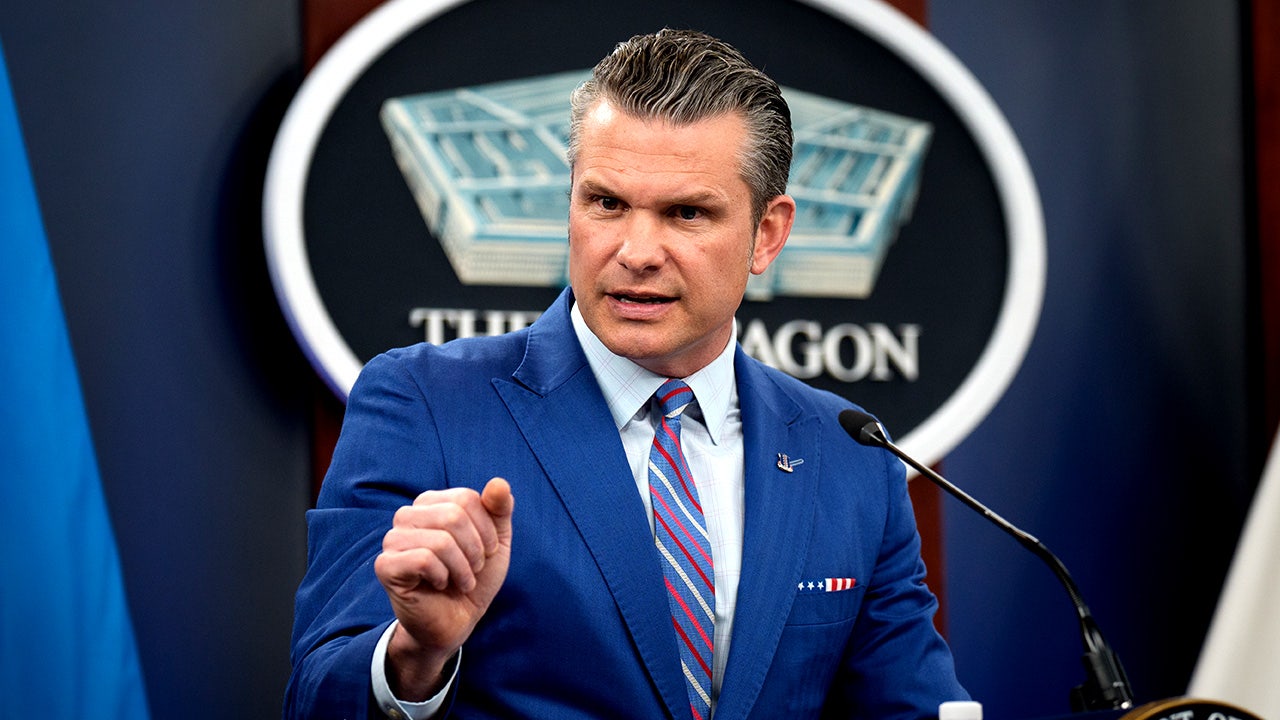
Ever since the 2016 presidential election that first got President Donald Trump elected and the ensuing Russiagate scandal, there has been increased scrutiny on foreign meddling in U.S. elections and threats to the American voting system.
Now, 10 years later, Secretary of War Pete Hegseth is directing his entire intelligence and spy forces to ensure foreign adversaries do not interfere in Tuesday’s midterms.
The Pentagon chief has ordered America’s military intelligence and cyber agencies to mobilize against foreign threats to the 2026 elections by directing his department’s sprawling intelligence apparatus to make election security a priority in what he calls a «no-fail mission.»
The September directive reaches beyond U.S. Cyber Command and the National Security Agency, instructing the entire Defense Intelligence Enterprise — including agencies responsible for military and geospatial intelligence — to «mobilize every authorized asset, capability, and partnership» against foreign election threats.
HOW TO WATCH CRITICAL 2026 MIDTERM ELECTION RACES IN TX, OH, MI, WI, GA, IA, NV, ME AND FL
The order puts some of the military’s most sophisticated intelligence capabilities behind a mission that has grown considerably since Russia’s interference in the 2016 presidential election. But with Americans preparing to vote, the extent to which Hegseth’s directive has changed the Pentagon’s existing election-security operations remains unclear.
The Department of War declined to provide Digital with additional details about how the order is being implemented. Cyber Command separately declined an interview request about its election-security efforts.
In practice, the directive can mean military intelligence agencies are tasked with identifying foreign hackers or influence operations overseas, warning civilian agencies about threats headed toward U.S. targets and, when authorized, Cyber Command taking action against the foreign actors or infrastructure behind them.
The military’s role largely stops at the U.S. border: state and local officials run elections, while agencies such as the FBI and Department of Homeland Security handle the domestic side.
The Pentagon’s election security mission is not new. Cyber Command and NSA have spent years tracking and disrupting foreign threats around American elections, including operations targeting Russian actors during previous election cycles.
The effort began taking its current shape ahead of the 2018 midterms, when the agencies formed a «Russia Small Group» focused on foreign interference. It later evolved into a joint Election Security Group, combining NSA’s intelligence-gathering capabilities with Cyber Command’s ability to conduct operations against foreign cyber threats.
By 2022, then-Cyber Command and NSA chief Gen. Paul Nakasone was describing election security as an «enduring, no-fail mission» — language echoed by Hegseth four years later.
«Rest assured, we were doing operations well before the midterms began, and we were doing operations likely on the day of the midterms,» Nakasone said after the 2022 election, describing the military’s role as «understanding your foreign adversaries and operating outside the United States.»
The agencies again established an Election Security Group for the 2024 presidential election, but whether that structure was recreated for this year’s midterms has been less clear.
Gen. Joshua Rudd, the current head of Cyber Command and NSA, told lawmakers in April that foreign interference was «reasonable to expect based on what we’ve seen in the past» and said his command was «postured and ready to support as required or tasked.» He said at the time that he was unsure whether the Election Security Group had been reconvened.
CHINA-LINKED HACKERS INFILTRATED US GOVERNMENT NETWORKS BEFORE FBI TAKEDOWN
Five months later, Hegseth issued his department-wide directive, addressed not only to Cyber Command and NSA but also to the directors of the Defense Intelligence Agency and National Geospatial-Intelligence Agency.
The order instructs military intelligence agencies to collect and analyze intelligence on foreign election threats while directing Cyber Command to use its existing authorities and capabilities to counter potential foreign cyber activity in coordination with the Department of Homeland Security.
It does not publicly grant new authorities or establish a new election-security organization, instead reinforcing a mission the military has increasingly treated as an enduring responsibility.
U.S. intelligence officials, meanwhile, say they have seen no evidence that a foreign adversary has attempted to interfere with voting machines, physical election infrastructure or the counting of votes ahead of Tuesday’s midterms.
Rep. Jim Himes, D-Conn., the ranking member of the House Intelligence Committee, said last week that intelligence officials continue to see nothing contradicting that assessment, but urged Americans to remain «on high alert» for foreign disinformation, particularly as artificial intelligence makes such campaigns easier to spread.
But officials continue to track foreign influence efforts from Russia, China and Iran, with Russia remaining the most active foreign influence threat, CNN reported Sunday.
U.S. elections are attractive targets for foreign adversaries because the stakes extend far beyond who wins office: influencing American voters or undermining confidence in the process can shape U.S. policy, weaken public support for policies they oppose and deepen divisions without ever touching a voting machine.
Lawmakers briefed on classified intelligence last month said Russia was using disinformation to target candidates and undermine confidence in the election, while China’s influence efforts were more narrowly focused on candidates viewed as hostile to Beijing.
The Pentagon’s role focuses on threats originating overseas, while state and local officials administer elections and civilian federal agencies lead domestic election-security efforts.
Hegseth’s directive makes that overseas mission a priority across the broader military intelligence enterprise, though the Pentagon has not disclosed whether it has resulted in additional personnel, resources or organizational changes ahead of Election Day.
pentagon defense, politics, midterm elections, defense, national security, pete hegseth
INTERNACIONAL
Poland’s constitutional crisis deepens as Prime Minister Tusk faces accusations of power grab
NEWYou can now listen to Fox News articles!
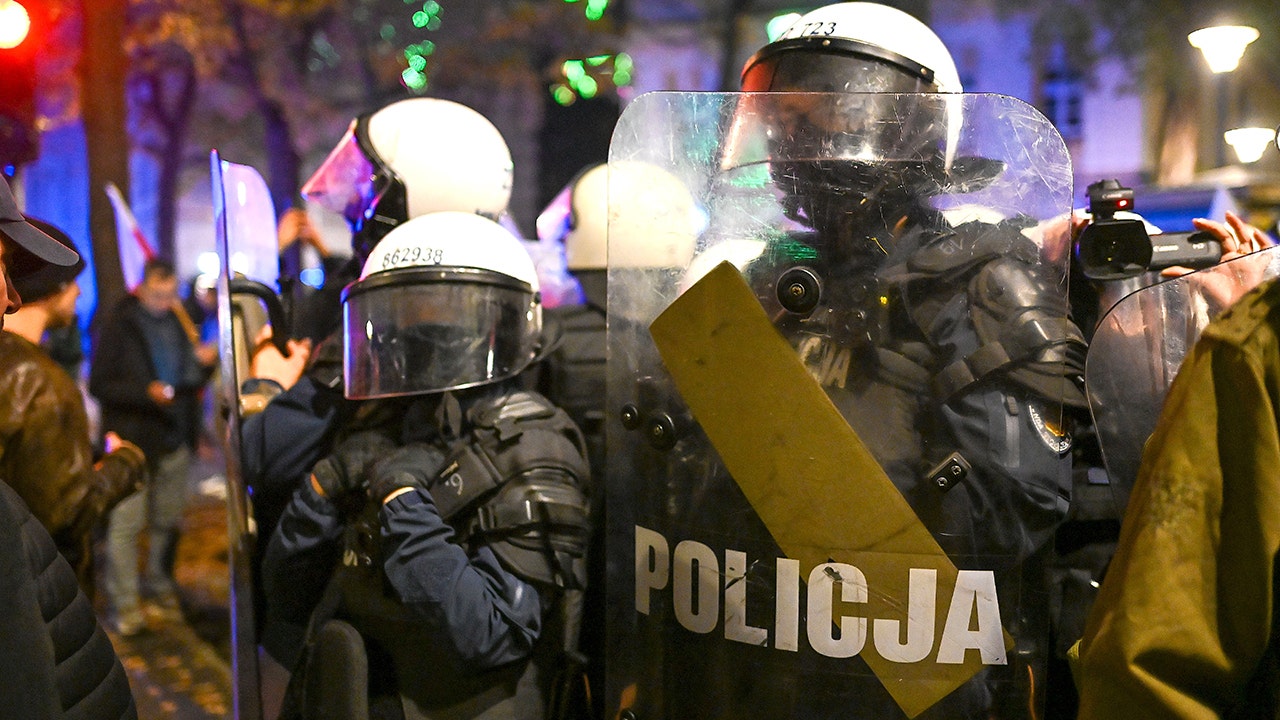
Friday’s late-night confrontation at Poland’s Constitutional Tribunal, which drew riot police and protesters and prompted President Karol Nawrocki to turn his plane around and return to Warsaw, has reignited a bitter debate over whether Prime Minister Donald Tusk is restoring the rule of law or overstepping constitutional limits.
The dispute erupted after the tribunal announced the suspension of its president, Bogdan Święczkowski, a move that supporters of Tusk’s government described as necessary to restore judicial independence, while critics denounced it as an unconstitutional power grab.
Marcin Przydacz, the head of the International Policy Bureau in Nawrocki’s office, took to European TV Monday morning denouncing Tusk’s actions, saying, «Even lawyers who are close to the Tusk government say that there’s absolutely no legal basis for such behavior.»
POLISH PRESIDENT TURNS PLANE AROUND AFTER ‘COUP’ AT NATION’S TOP COURT
Donald Tusk, Poland’s prime minister, during the Polish Army Parade in Warsaw on Aug. 15, 2025. (Damian Lemanski/Bloomberg via Getty Images)
The dispute is also triggering diplomatic fallout, with at least three Polish ambassadors resigning in protest. Przydacz, a former parliament member of the now-opposition Law and Justice (PiS) party, says Poland’s permanent representative to the U.N. since 2021, Krzysztof Szczerski, resigned Monday, which followed the resignations over the weekend of the ambassadors to China and Romania.
«This crisis didn’t begin on Friday,» said Simone Rodan‑Benzaquen, senior envoy to Europe at the Foundation for Defense of Democracies. «Poland has been living with a deeply compromised Constitutional Tribunal for more than a decade.»
Rodan-Benzaquen said the confrontation cannot be understood in isolation. Parliament has continued appointing judges under Poland’s constitution, but several of those appointments have been blocked from taking office amid a years-long standoff between the government, the presidency and the tribunal itself.

Presidential candidate Karol Nawrocki, a conservative historian backed by the right-wing Law and Justice party, second right, greets supporters at his headquarters after the presidential election runoff in Warsaw, Poland, June 1, 2025. (AP Photo/Czarek Sokolowski)
«This isn’t simply a case of Tusk deciding to pack a functioning, independent court ahead of an election,» Rodan-Benzaquen tells Fox News Digital. «There is a genuine institutional crisis that predates his government, and a legitimate question of how to resolve it.»
That underlying conflict exploded into public view Friday after Judge Anna Korwin-Piotrowska suspended Święczkowski and his deputy, triggering protests outside the tribunal and prompting Nawrocki to abandon a trip to Senegal. Police detained three people after some demonstrators clashed with officers outside the court complex.
HUNGARY AND POLAND DEFEND TOUGH MIGRATION POLICIES AS FRANCE REELS FROM VIOLENT UNREST
Rodan-Benzaquen cautioned that concerns about Friday’s actions are not limited to supporters of the opposition, saying they «raise serious questions about the legality and proportionality of the methods being used.»
Critics of the government have described Friday’s events as an unprecedented assault on Poland’s constitutional order. «My former boss, Margaret Thatcher, would have been absolutely appalled by what we’re witnessing in Poland,» Nile Gardner, director of the Margaret Thatcher Center for Freedom at the Heritage Foundation told Fox News Digital. «This is clearly a crisis for Poland and an attempted coup by Donald Tusk.»
«This has all the hallmarks of a Soviet-style coup operation,» added Gardner, who said Tusk waited until Nawrocki was traveling out of the country, accusing the prime minister of undermining the tribunal and further destabilizing Poland ahead of next year’s election. «It’s the sort of thing you’d expect actually from a third world dictator.»
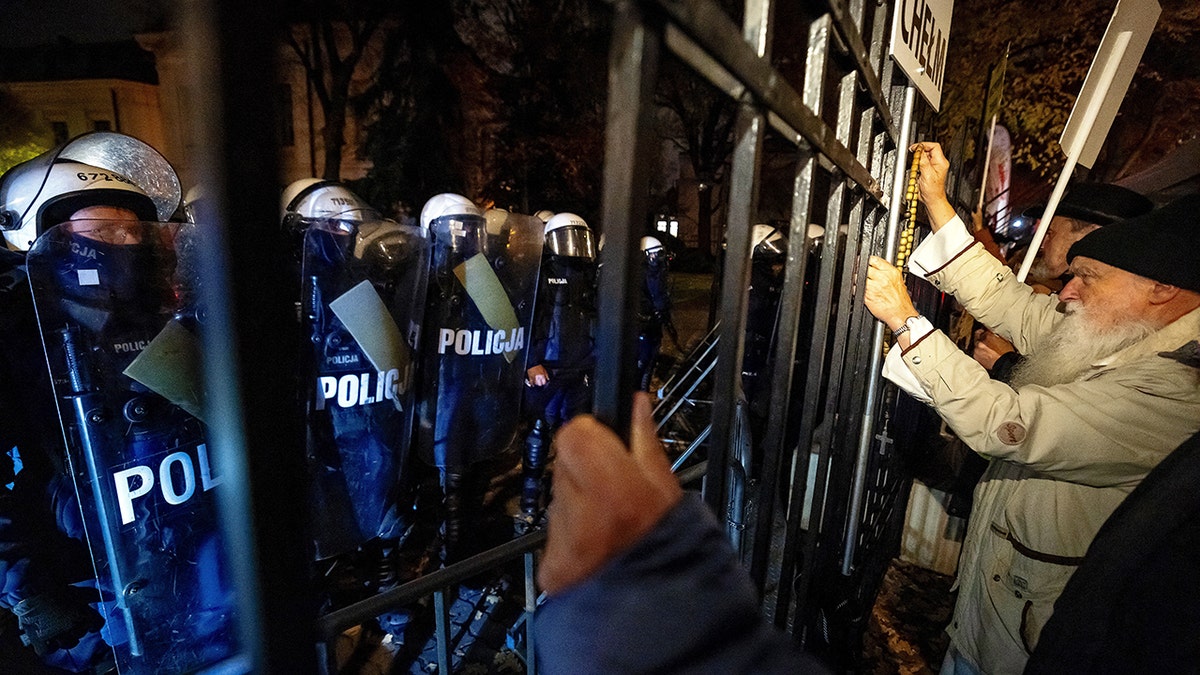
Protesters gather outside the headquarters of Poland’s Constitutional Tribunal in Warsaw after police blocked access to the court building on Oct. 30, 2026 (Wojtek Radwanski/AFP via Getty Images)
Others reject the coup characterization. Boštjan Udovič, chair of international relations at the University of Ljubljana, says the dispute centers on the government’s attempt to restore judicial arrangements that critics of the previous PiS government say were inconsistent with both Poland’s constitution and European legal standards.
«Tusk wants to restore the situation as required by the constitution and the international institutions,» Udovič said. «I think that he hoped the transition would be easier.»
Tusk defended his government’s actions as part of an effort to restore the rule of law, accusing both the president and the tribunal of improperly blocking judges elected by parliament from taking office. «The solution to the conflict is simple,» he said on Monday. «The president recognizes the judges legally elected by [parliament], because that is what the Constitution stipulates.» He accused Nawrocki of «choosing forceful confrontation, which could cost Poland very dearly. A democratic state under the rule of law cannot yield to violence.»
POLAND ARRESTS RUSSIAN ALLEGEDLY HIRED TO KILL UKRAINIAN-AMERICAN WHO WAS ‘INCONVENIENT TO THE PUTIN REGIME’
«Restoring the rule of law is essential,» Rodan-Benzaquen says, warning against viewing the dispute purely through a partisan lens. «But the legitimacy of that restoration depends not only on its objectives, but also on the legality of the means used to achieve it.»
The divide in Poland has increasingly been reflected abroad, with European institutions and political leaders offering sharply different interpretations of the crisis.
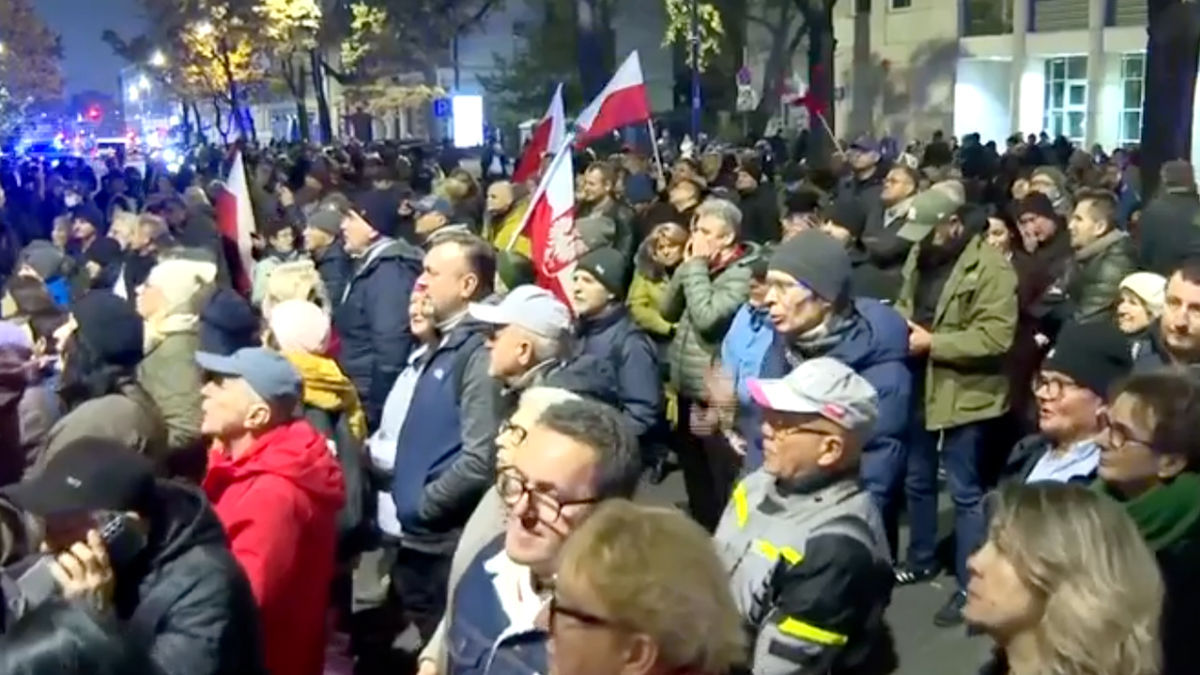
Protesters rally outside Poland’s top court as tensions between President Karol Nawrocki and Prime Minister Donald Tusk’s government intensify. (AP)
The European Commission has largely backed the Polish parliament’s authority to appoint judges. European Commissioner Michael McGrath said selecting new judges lies within the powers of Poland’s parliament.
French opposition leader Marine Le Pen, meanwhile, accused Brussels of applying a double standard. «One cannot claim to defend democracy and the rule of law while remaining silent when the constitutional balance of a member state is gravely threatened,» she posted on X. «The proliferation of such strong-arm tactics within the European Union itself is beginning to raise serious questions.»
«America is on Poland’s side,» U.S. Ambassador to Poland Tom Rose posted to X, urging restraint. «Our concern is for the stability, security, and democratic future of a country we are proud to call our friend and ally… Poland has come too far and accomplished too much to let political differences, no matter how strongly felt, put any of that at risk.»
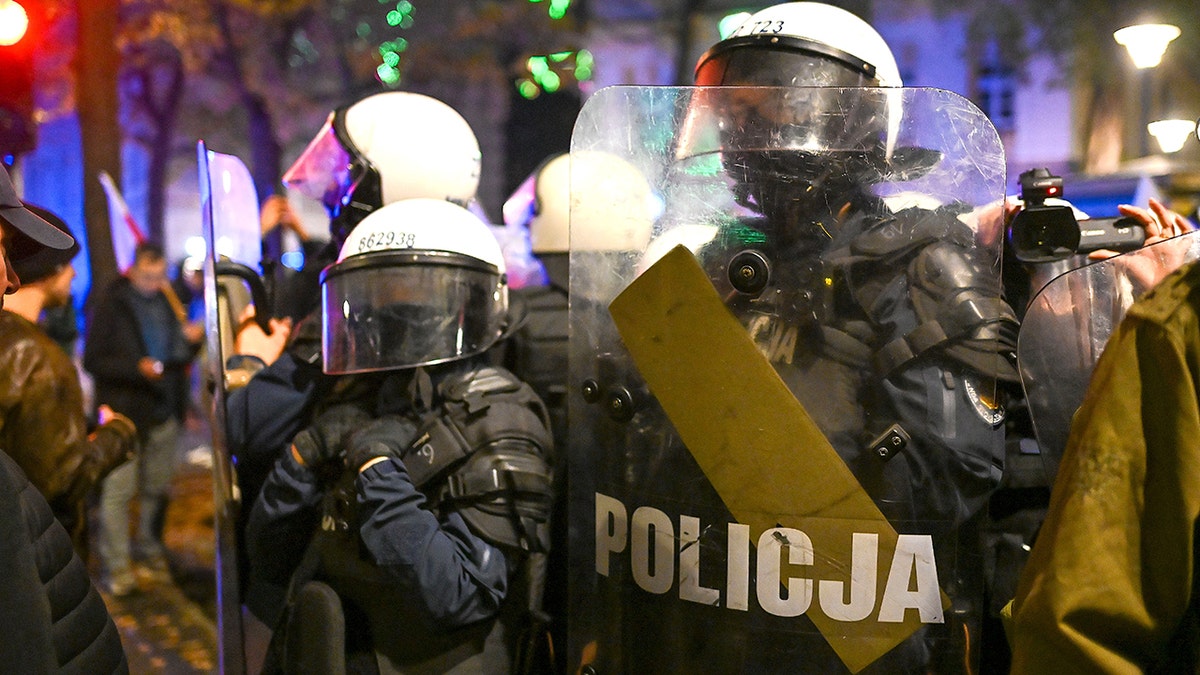
Police were deployed outside the Constitutional Tribunal after Judge Anna Korwin-Piotrowska, elected by the Parlament in March 2026, issued an order suspending Tribunal President Bogdan Swieczkowski and Vice President Bartlomiej Sochanski from their duties for one month. (Kai Taller/Arena Akcji/Sipa USA)
For Rodan-Benzaquen, the larger issue extends far beyond the events of Friday night. «One side claims to be defending constitutional order against the abuses of the other, while the institutions that should arbitrate the dispute have themselves become the object of the dispute,» she said.
With parliamentary elections in Poland only a year away, the battle over who gets to define the rule of law may prove more consequential than the confrontation that unfolded this weekend.
Calling Tusk’s tactics «straight out of the Putin playbook,» Gardner warns Poland is in «an incredibly dangerous situation right now, and the blame is squarely at the door of Donald Tusk and his government.»
The Associated Press and Reuters contributed to this report.
europe, foreign affairs, world protests, the european union
INTERNACIONAL
Las familias de dominicanos en la guerra rusa exigen respuestas al Gobierno y a la embajada


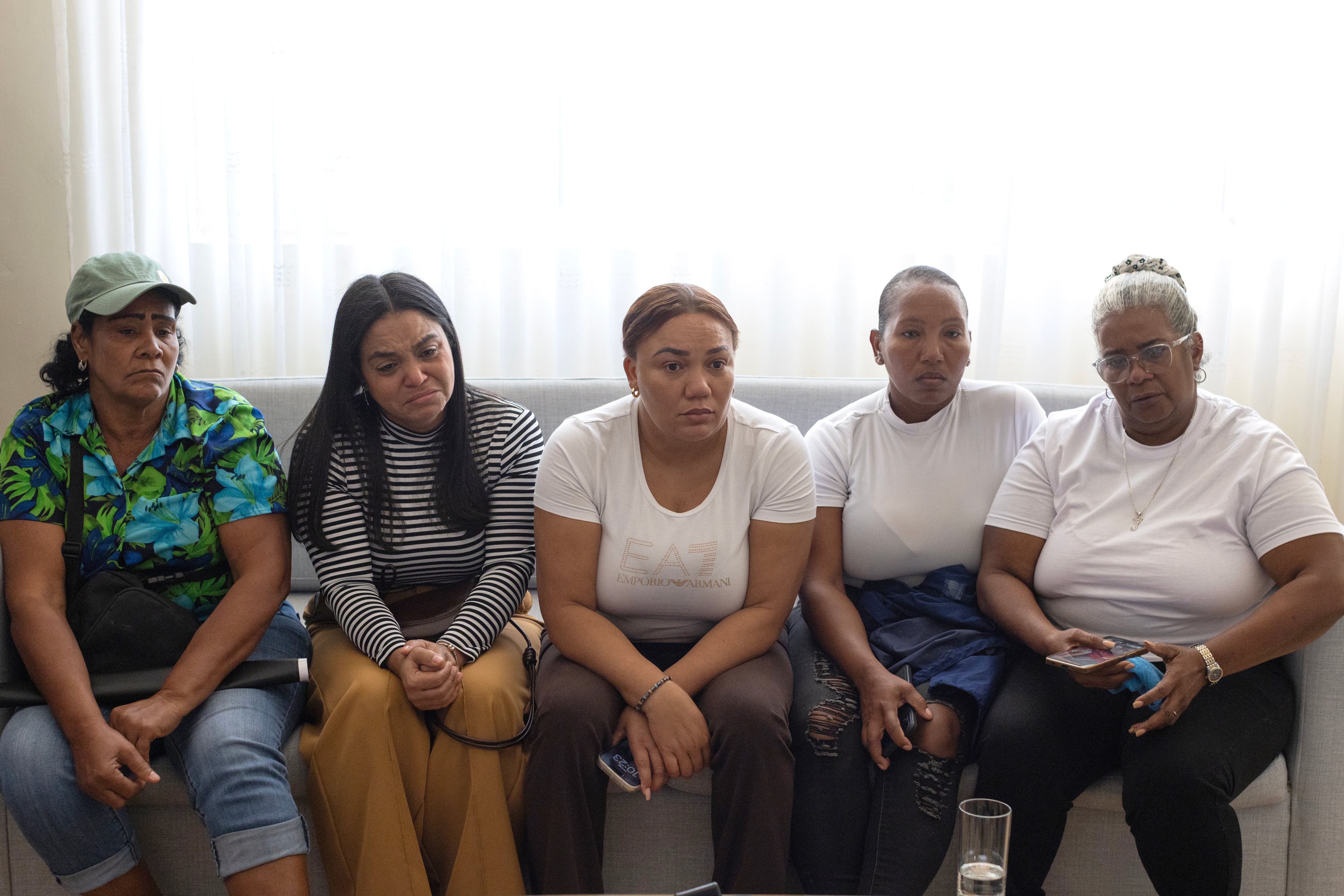
Decenas de dominicanos permanecen en el frente de guerra ruso y sus familias exigen una respuesta del Gobierno: ese fue el reclamo que un grupo de parientes llevó este lunes hasta la embajada de Rusia en Santo Domingo, según informó la agencia EFE.
El encuentro reemplazó a la vigilia de oración que los manifestantes habían convocado originalmente frente a la sede diplomática. El embajador ruso, Alexey Victorovich Serendin, decidió recibirlos antes de que la protesta comenzara.
Entre las voces que se escucharon ese día estuvo la de Beatriz Melo. Su familiar, Juan Ramírez, mecánico de oficio, lleva más de dos meses en Rusia.
“La última vez que nos escribió fue hace cuatro días y dijo que ya estaba preparado para la guerra. Nosotros lo que queremos es que nos lo traigan”, declaró Melo a EFE.
¿Cuántos dominicanos combaten en las filas rusas?
Según Carlos Sánchez Díaz, coordinador del Comité Dominicano de los Derechos Humanos en la Región Sur, unos 150 dominicanos combaten actualmente en la guerra de Rusia contra Ucrania. El activista, que asesora a las familias, precisó ante EFE que más de 50 de ellos quieren regresar al país, mientras que otro grupo afirma sentirse bien en el frente.

Sánchez Díaz pidió que se esclarezca la situación contractual de cada uno. Planteó revisar “qué validez puede tener ese contrato de cara al derecho internacional y al Estado dominicano”.
Melo describió el miedo que sentía su familiar antes de partir. “Tenía miedo porque pasan hambre y los maltratan, el frío los está matando. Esos muchachos nunca han peleado, nunca han sido guerrilleros”, relató a la agencia.
El reclamo apunta directamente a Abinader
Melo reprochó la falta de contacto del presidente, Luis Abinader, con los familiares. “Hay otros países que han ido a buscar su gente, pero Abinader no ha hecho nada. No nos ha recibido”, afirmó tras la reunión con el embajador.

El diplomático ruso respondió a las denuncias de engaño con una defensa del procedimiento contractual. Serendin aseguró, según EFE, que el Ministerio de Defensa de su país “no engaña a nadie”, sino que “presenta el contrato y en el contrato está todo estipulado” antes de la firma.
El embajador matizó, sin embargo, que “otra cosa es cómo” estos dominicanos fueron atraídos a Rusia. Ese comentario dejó abierta la posibilidad de irregularidades en la etapa previa al reclutamiento, durante el proceso de captación.
Serendin remarcó que “las puertas de la embajada siempre están abiertas” para las familias. Añadió que su misión diplomática mantiene contacto permanente con la Cancillería dominicana, la cual, según sus palabras, “trabaja de manera intensa” en el caso.

Las gestiones oficiales ya lograron cuatro regresos
El mes pasado, el Gobierno dominicano contrató asesoría legal en Rusia para evaluar la situación jurídica de sus ciudadanos. Ese mismo mes, la Cancillería gestionó el regreso de cuatro connacionales que, ya en territorio ruso, decidieron no suscribir el contrato con el Ministerio de Defensa.
Un informe reciente de la Comisión Internacional Independiente de Investigación sobre Ucrania, presentado ante Naciones Unidas, identificó a República Dominicana entre 29 países cuyos ciudadanos habrían sido víctimas de trata de personas para integrarse a las fuerzas armadas rusas, según consignó El Día, diario dominicano. El documento detalla que, desde 2024, extranjeros fueron engañados o coaccionados tras responder a ofertas de empleos civiles que aparentaban ser legítimas.
Ante ese informe, el embajador Serendin advirtió que su país no tolerará “calumnias ni difamaciones” y cuestionó el mandato de la comisión, que Rusia no reconoce, de acuerdo con el mismo diario.
El canciller dominicano, Víctor “Ito” Bisonó, confirmó que su cartera mantiene gestiones diplomáticas para facilitar el retorno de quienes deseen regresar. El funcionario explicó al diario que las autoridades se reunieron con el canciller ruso y luego convocaron al embajador para abordar el tema, además de contratar a un abogado ruso que ofrece asesoría jurídica.
“¿Cuál es el trabajo de Cancillería? Rescatarlos, buscarlos, darles apoyo”, expresó Bisonó, citado por El Día.
Según Diario Libre, diario dominicano, el esquema de captación suele ofrecer salarios elevados para trabajar como soldadores, mecánicos o electricistas. Las cancillerías de República Dominicana, Colombia y Perú, entre otros países, advirtieron a sus ciudadanos sobre los riesgos de aceptar este tipo de propuestas laborales sin verificar antes la identidad del empleador y las condiciones reales del contrato.
República Dominicana,Rusia,trinchera,uniforme militar

El Vaticano y el Gobierno se reúnen para ultimar los detalles ante la inminente llegada del papa León XIV a la Argentina

En el juicio de Hotesur-Los Sauces, la acusación describió cómo regresaba dinero de empresarios “amigos” a los Kirchner

Bronca en Estudiantes: volaron las plateas para la final de la Libertadores y explotó la reventa al triple

Thiago Messi cumplió 14 años y Antonela Roccuzzo lo emocionó con fotos inéditas y un mensaje lleno de amor

Pentagon’s top spies tasked with ‘no-fail’ mission as Hegseth puts foreign midterm meddling in crosshairs

El polémico lugar que un medio inglés le dio a Franco Colapinto en su ranking del GP Ciudad de México de Fórmula 1

Qué pasó con el Refugio de Eli y por qué hizo enfurecer a Santi Maratea: «Fue un desastre, él nunca más le contestó y le prohibió…»

El “efecto Lula” sigue pegando en Argentina: los bonos sintieron el impacto, pero el tipo de cambio aguantó

Darío Barassi reveló el nombre que había elegido en caso de tener un hijo varón: «Tiene personalidad»

El secretario de Culto dijo que Milei recibirá al Papa en el aeropuerto y habló de una cadena nacional

 CHIMENTOS14 horas ago
Qué pasó con el Refugio de Eli y por qué hizo enfurecer a Santi Maratea: «Fue un desastre, él nunca más le contestó y le prohibió…»
- ECONOMIA2 días ago
El “efecto Lula” sigue pegando en Argentina: los bonos sintieron el impacto, pero el tipo de cambio aguantó
- POLITICA3 días ago
Milei visita Neuquén para inaugurar una iglesia evangélica: tensiones internas y señales de cara a las elecciones 2027