INTERNACIONAL
Noboa oficializa un nuevo toque de queda en cinco provincias de Ecuador desde el 1 de noviembre de 2026


El presidente de Ecuador, Daniel Noboa, oficializó un nuevo toque de queda que comenzará a las 00:00 del domingo 1 de noviembre y se aplicará durante diez días en cinco provincias de la región Costa. La decisión, adoptada mediante el Decreto Ejecutivo 519, firmado el 15 de octubre en Manta, establece restricciones a la libertad de tránsito entre la medianoche y las 05:00 como parte de las operaciones de seguridad contra el crimen organizado.
La disposición comprende las provincias de Guayas, Manabí, Los Ríos, El Oro y Esmeraldas, territorios donde operan organizaciones criminales vinculadas al narcotráfico y otras actividades ilícitas. Según la información publicada por Primicias, el Gobierno confirmó que Santa Elena, también ubicada en la Costa, no estará incluida en la restricción. Tampoco se aplicará el toque de queda en Pichincha ni en Santo Domingo de los Tsáchilas, aunque ambas provincias permanecen bajo estado de excepción.
La medida entrará en vigor durante el feriado nacional por el Día de los Difuntos y la Independencia de Cuenca, una de las fechas de mayor desplazamiento turístico y comercial del calendario ecuatoriano. Las restricciones afectarán la circulación nocturna en ciudades como Guayaquil, Manta, Portoviejo, Machala, Babahoyo y Esmeraldas, donde las autoridades desplegarán controles militares y policiales.

El nuevo decreto modifica el artículo 4 del Decreto Ejecutivo 498, emitido en septiembre, y mantiene como fundamento jurídico la grave conmoción interna. Según la información recogida por El Comercio, el documento incorpora informes de inteligencia militar, policial y de seguridad que advierten sobre la persistencia de hechos violentos y la capacidad de adaptación de las organizaciones criminales.
Entre el 17 de septiembre y el 13 de octubre de 2026, la Policía Nacional contabilizó 483 víctimas de homicidios intencionales en Ecuador. De ese total, 281 asesinatos, equivalentes al 58,18 %, ocurrieron entre las 18:00 y las 05:59. En las cinco provincias donde se aplicará la nueva restricción se registraron 33 homicidios entre la medianoche y las 05:00 durante ese período.
El informe policial señala que Guayas concentró 15 de esos asesinatos, seguida de El Oro, con nueve; Manabí, con seis; Los Ríos, con dos; y Esmeraldas, con uno. Además, el Sistema Integrado de Seguridad ECU 911 reportó 12.468 emergencias relacionadas con seguridad ciudadana durante la franja de madrugada en esas jurisdicciones.
El presidente Noboa había anticipado la decisión el miércoles 14 de octubre, durante una entrevista radial en Ambato. Según Ecuavisa, el mandatario anunció una nueva serie de operaciones especiales entre el 1 y el 10 de noviembre. Posteriormente, el ministro del Interior, John Reimberg, explicó que la restricción busca facilitar las intervenciones de las fuerzas de seguridad y reducir el riesgo de afectaciones a la población civil.
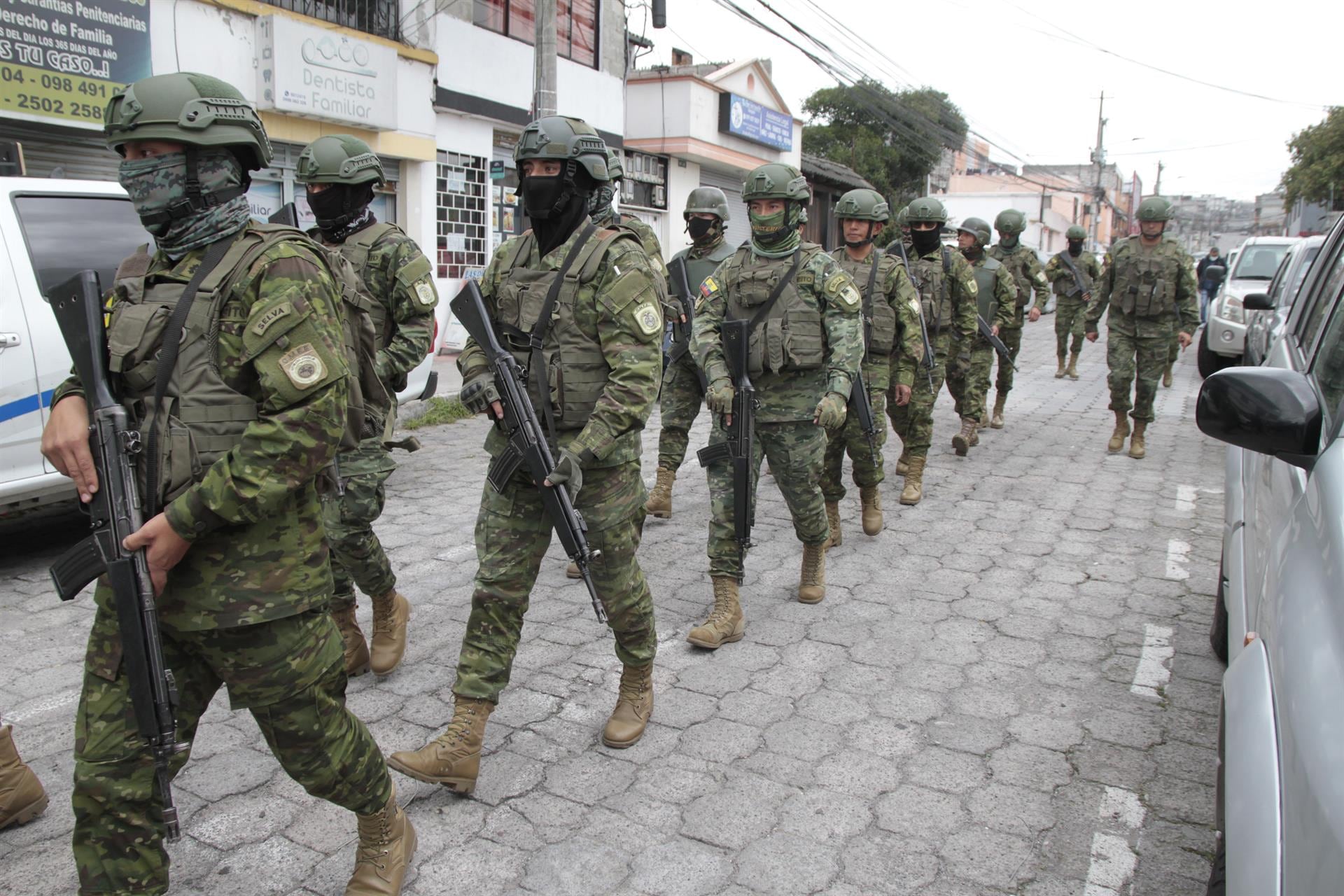
El Gobierno también presentó los resultados del toque de queda aplicado entre el 17 y el 30 de septiembre en cuatro provincias. Durante ese período, las Fuerzas Armadas ejecutaron 1.673 operaciones y reportaron 216 capturas, además del decomiso de armas, municiones, explosivos y sustancias ilícitas. Las autoridades consideran que estos resultados respaldan la continuidad de las restricciones nocturnas.
El decreto contempla excepciones para personal sanitario, servicios de emergencia, sectores estratégicos, funcionarios de justicia, periodistas y organismos internacionales acreditados. También dispone que los controles se ejecuten de manera racional y proporcional, considerando las circunstancias particulares de quienes necesiten movilizarse.
La nueva disposición constituye el cuarto toque de queda aplicado en Ecuador durante 2026. Su implementación coloca bajo restricciones nocturnas a cinco provincias costeras, mientras el Gobierno mantiene sus operaciones contra las estructuras criminales responsables de una parte significativa de la violencia armada que afecta al país.
conflict,government,politics,tourism













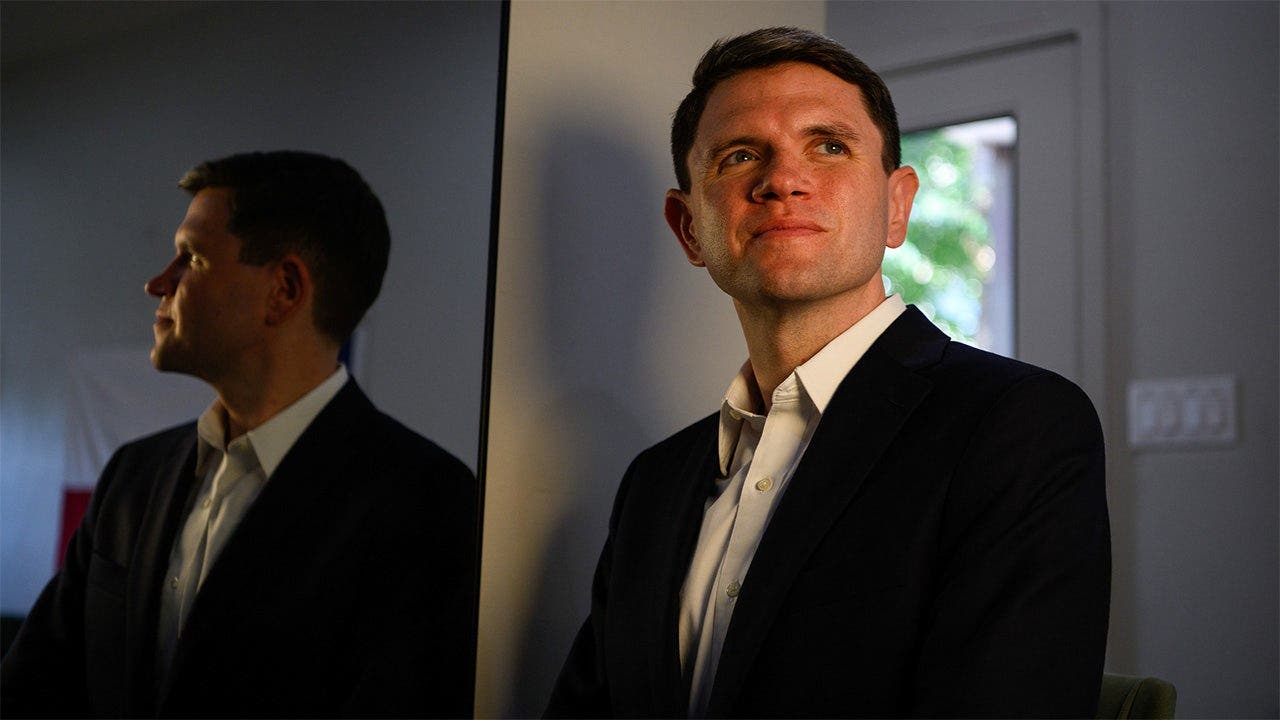
Texas Democratic Senate nominee James Talarico is facing lingering frustration from inside his own political backyard over the cancellation of an event that was supposed to take place on Oct. 5 with a Black civic-service group.
The Central Texas African American Civic Engagement Symposium (CT-AACES) expressed deep frustration in an email, sent to the Talarico campaign and obtained by Digital, after the campaign cancelled an event – which had 325 confirmed registrants – during Talarico’s two-week absence from the campaign trail due to illness.
CT-AACES said the cancellation left them with «irrecoverable financial loss,» and that Talarico’s campaign had not engaged in rescheduling efforts
«While we understand Representative Talarico’s health required priority, we are deeply disappointed by the campaign’s decision to issue a flat cancellation rather than committing to a rescheduled date,» the email reads. «It was a missed opportunity for Representative Talarico to directly address community skepticism and demonstrate the sincerity of his commitment to Central Texas African Americans.»
The cancellation is the most recent instance of the tensions that Talarico’s campaign has faced with the Black community. It also casts doubt on the effectiveness of his efforts to reach Black voteBlack voters through a $25 million outreach pledge aimed at mobilizing black voters is fully reaching the ground.
TALARICO DISAPPEARANCE HAS DEM VOLUNTEERS WORRYING AND TRUMP ASKING, ‘WHAT IS GOING ON?’
The frustration isn’t isolated to CT-AACES.
At least one Austin-area Democratic operative who has met directly with Talarico told Digital that she remains frustrated by what she described as uneven follow-through on outreach to Black Democrats and candidates further down the ballot.
«Black voters aren’t a monolith,» the source cautioned, rejecting any blanket assertion that Black Texans distrust Talarico outright. «I think that there are pockets that do. There’s a pocket that doesn’t. And then there’s the pocket that’s really unsure,» she said.
The operative, who previously ran for Talarico’s prior state House seat and spoke to Digital, is particularly familiar with the nominee and the Democratic organizing landscape in the Austin region.
Asked about a $25 million investment to focus on door-knocking in Black neighborhoods, in-person community events and engagement with Black churches, the source said those investments haven’t manifested yet.
«We haven’t received the money, but we’re being told it’s coming,» she said of some accounts she has heard from the ground. «We received, you know, one or 2% of what we were told we were going to get. And then it’s been silence since,» she said.
DAVID MARCUS: HOW CROCKETT’S LAST STAND IN TEXAS COULD BRING DOWN TALARICO
The comments come after Talarico appeared on a Black voter coalition Zoom last week, delivering brief remarks about «put[ting] in the money … time … and effort to win» before his feed disappeared from the call reportedly without a public question-and-answer session. At the July Houston town hall where Talarico announced the $25 million pledge, nurse Kandice Webber confronted him as the event approached its scheduled end and demanded that he remain to answer questions. «Black people don’t trust you for this reason,» she said, according to the Texas Tribune .
«And you cannot win without us, so you stay here and you answer our questions, or you suffer the consequences,» Webber said.
During his primary, Talarico also encountered controversy over the black vote when reports surfaced the he had characterized rival candidate and former NFL linebacker Collin Allred as a «mediocre Black man.» «He had the audacity to say to a Black woman that he had signed up to run against a mediocre black man,» Allred said in a video response posted to X.
«We should say ‘thank you.’ Thank you for taking off the mask. Thank you for telling us who you really are and what you really think… keep my name out of your mouth while you’re at it.»
Talarico, for his part, described the wording as a mischaracterization, stating that he «described Congressman Allred’s method of campaigning as mediocre» and that he would «never attack him on the basis of race.»
Talarico also received criticism from Rep. Jasmine Crockett, D-Texas, his primary opponent in the Senate primary, after she accused him of darkening her skin in campaign ads against her.
«And you know, I’ve been asked a couple of times about it. And you know, I look at this specifically as a civil rights lawyer, and I see when they’re sending out ads and they’re darkening my skin. And I’m just like, I know what this is, right?» Crockett said at a press conference.
The operative said she personally pressed Talarico during a June meeting to do more to endorse and support down-ballot Democrats after hearing from campaigns that donors had already exhausted their political giving on his Senate bid and were asking whether he had endorsed those candidates.
POLL: IT’S A LONE STAR SENATE SHOWDOWN BETWEEN TALARICO AND PAXTON
«He was very gracious. He said he understood,» she told Digital. «I followed up with his staff multiple times and to this day have still not heard anything, which has been really frustrating to me.»
Digital reached out to the Talarico campaign for a response to the characterizations and comments.
politics, campaigning, texas, democrats senate
INTERNACIONAL
Democrats call for gun control after Oregon school shooter reportedly uses shotgun purchased by his mother
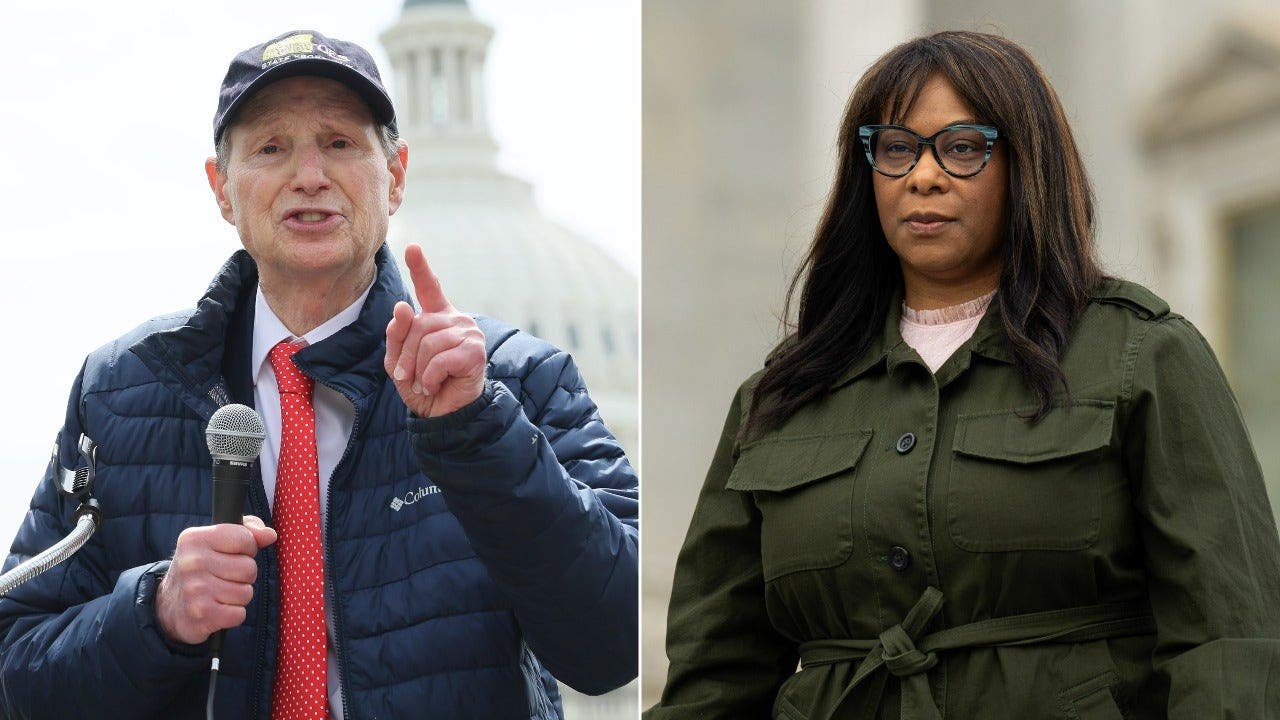
Several high-profile Democratic lawmakers renewed calls for gun control after a teenager broke into an Oregon elementary school Thursday and fatally shot three children and a teacher before being killed by an armed bystander.
Sen. Ron Wyden, who has represented Oregon in the Senate since 1996, made one of the most explicit calls for tighter gun laws following the shooting at Silver Rail Elementary School in Bend, where the 16-year-old attacker used his mother’s shotgun, according to The Associated Press.
«The best way to honor these victims is to at long last pass common-sense gun laws that reduce the risks of more children, parents, teachers and staff forced to live in fear of similar nightmares for their schools,» Wyden said in a statement.
Suzanne Bonamici, D-Ore., said Thursday night that «the epidemic of gun violence in schools across America must come to an end.»
GEORGIA HIGH SCHOOL SHOOTING SUSPECT COLT GRAY CHANGES PLEA TO GUILTY, NOW FACES LIFE IN PRISON
«No parent should have to wonder if their child will come home at the end of the day,» Bonamici said. «Children deserve to feel safe — and be safe — in school.»
Democratic Rep. Janelle Bynum represents Oregon’s 5th Congressional District, which includes Bend. She attended a nighttime vigil for the teacher and children — aged 5, 8 and 11 — who were killed in the shooting.
«When are we going to step up and say enough of killing our babies? When are we going to say that we need safe schools, that we need to make sure that people who should not have firearms don’t have them? When are we going to stop making excuses? When are we going to practice that same bravery that that bystander had?» Bynum told KTVZ 21, a local NBC station in Bend, at the event.
Statements from Sen. Jeff Merkley, D-Ore., and the state’s Democratic governor, Tina Kotek, stopped short of calling for new regulation on guns, but both made it clear gun violence should have no place in American schools.
FEDERAL APPEALS COURT UPHOLDS CONTROVERSIAL ILLINOIS BAN ON SEMIAUTOMATIC GUNS
Democrats outside of Oregon appeared a bit freer to express support for going further on gun control, especially in the early aftermath of the shooting, which also left another child, 7, and a teacher, 54, critically injured.
Sen. Martin Heinrich, D-N.M., said the gun reforms Congress passed after the Uvalde school shooting — including enhanced background checks for buyers under 21 — did not go far enough.
«Much more must be done. Not a single child should be lost to gun violence. Ever,» Heinrich said in a statement posted to social media.
Sen. Elizabeth Warren, D-Mass., who supports federal red-flag laws and universal background checks, had a similar message.
«No family should ever have to suffer like this—and there have been over 50 school shootings just this year,» she wrote on social media. «Congress must do much more to prevent gun violence.»
DOJ TARGETS SPANBERGER, NEWSOM GUN LAWS WITH TWIN LAWSUITS AFTER SCOTUS AFFIRMS SECOND AMENDMENT RIGHTS
The reactions from lawmakers came as authorities in Bend continue to piece together how the deadly attack unfolded and how the teenage gunman obtained the weapon he used.
Police said they did not know if the shooter knew anyone at the school or if he had attended when he was younger.
The first emergency call came at 12:59 p.m. from a person in a vehicle who reported being shot at multiple times by someone carrying a long gun, Bend Police Chief Mike Krantz said Thursday. Dispatchers then received dozens of calls reporting that a shooter had entered the school.
Officers arrived within three minutes of the first emergency call. Moments later, an officer reported that a «community member» had shot the teenage suspect.
Silver Rail Elementary School, which is about 125 miles southeast of Portland, has a total of 467 students this academic year. It serves students in kindergarten through fifth grade.
After the shooting, students were bused to a nearby church that served as a family reunification center, where relieved parents embraced their children and walked them to their cars, some carrying stuffed animals and other comfort items they had brought from home, The Associated Press reported.
The Bend-La Pine school district canceled classes, sporting events and extracurricular activities Friday across all 32 of its schools.
The Associated Press contributed to this report.
oregon, democratic party, democrats, mass shootings, politics, democrats senate
INTERNACIONAL
Trump’s Capitol Hill whisperer reveals secrets to president’s dealmaking as he heads for exit
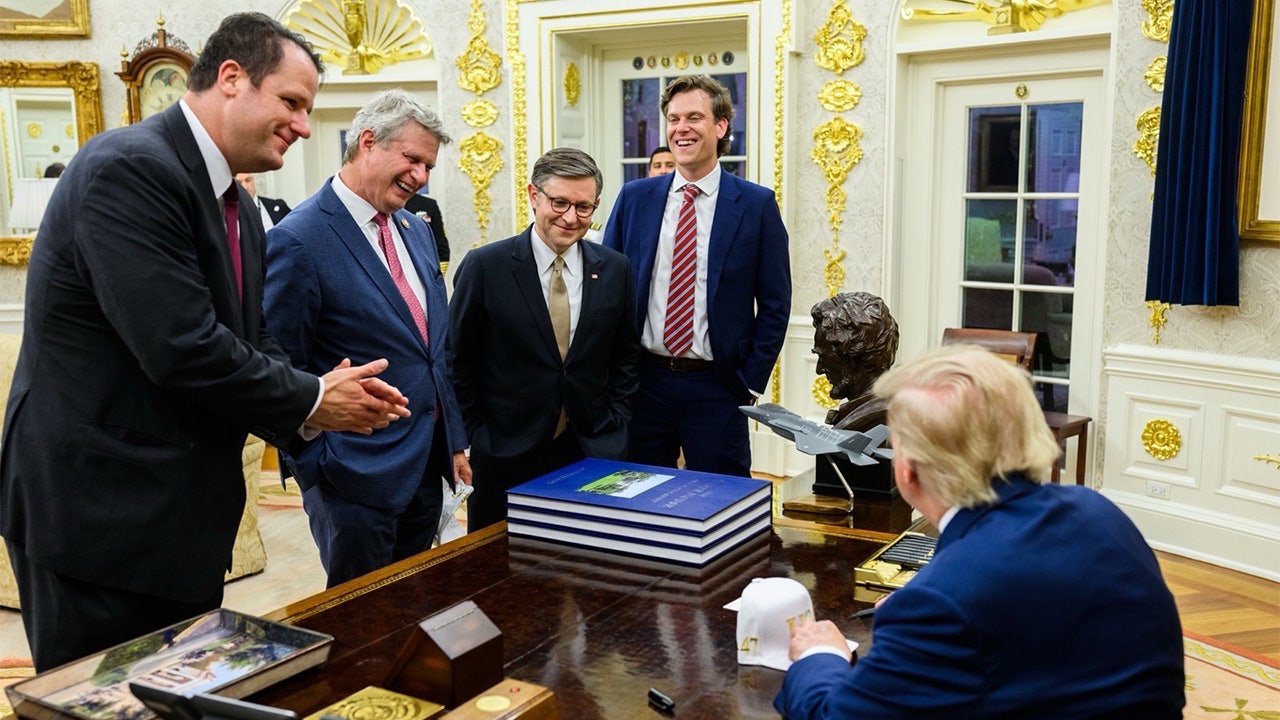
EXCLUSIVE: There are few people in the United States who have more significantly shaped the course of American history over the last two years, while remaining as little-known as James Braid.
Millions of Americans across the country may not be familiar with the name, but in Washington, D.C., Braid is hard to miss both literally and figuratively. At 6 feet, 6 inches tall, he cast a tall shadow during his days at the White House and on Capitol Hill pushing President Donald Trump’s legislative agenda.
And that shadow has been responsible for helping push numerous legislative successes for Trump over the finish line, from rolling back Biden-era policies to passing Trump’s signature tax policy bill, until Tuesday — which marked Braid’s last day as director of the Office of Legislative Affairs. The «stock-in-trade» of the job, he told Digital in a rare interview, «is cautious optimism in the face of all odds.»
From the outside, being Trump’s whisperer on Capitol Hill does not look like an easy job, particularly when the president is known to personally call out lawmakers who oppose his agenda. Recently, for example, he publicized the personal phone number of Sen. Tom Cotton, R-Ark., over his opposition to a bill making daylight saving time permanent.
TRUMP DROPS REPUBLICAN SENATOR’S PHONE NUMBER IN SOCIAL POST OVER FURY ON STALLED BILL
But Braid insisted that Trump’s people skills ultimately meant those dust-ups came out of the wash and lauded «his extraordinary capacity to have a tough conversation one day and play a round of golf the next.»
«There’s always a give-and-take in any relationship with a legislator, and sometimes there’s a give as a result of, you know, tension,» Braid said. «But you know … one errant Truth [Social post], or one critical Truth, does not a relationship make.»
But some Republicans’ relationships with the president never seemed to recover, like in the case of Sen. Mitch McConnell, R-Ky., who has no love lost with Trump.
Braid said the key to working with people was always being straightforward about what the White House wants.
«We’ve been able to be honest brokers and deliver for a lot of these members in different ways,» he said.
But Trump’s presence still looms large in Congress whether he’s there in person or not.
A senior administration official familiar with Braid’s work told Digital that ultimately, «No one speaks for President Trump except for President Trump.»
The official said Trump is known to be «hands-on at every critical legislative juncture» that pushes his agenda forward.
And Braid revealed that he keeps tabs on certain votes, as well.
«He always wants to know how people are voting after every major vote. He knows where people are,» Braid said, adding that Trump «ultimately knows that Republicans in Congress overwhelmingly vote with him.»
But Braid admitted he has faced long odds over his last two years, particularly with the vast tax-and-policy package nicknamed the Big, Beautiful Bill.
MILLIONS TAP TRUMP TAX CUTS THIS FILING SEASON AS REFUNDS TOP $3,400
He recalled sitting in his office one day, «I looked at the quad on the TV, and every single chyron is some variation of ‘GOP megabill in trouble.’ And yeah, I mean, there’s certainly, at every moment, it was tenuous. At every moment, the thread was fraying.»
One specific scenario he recalled took place at Sterling Golf Club in Virginia, where he, Trump, Office of Management and Budget (OMB) Director Russell Vought and then-deputy chief of staff James Blair were meeting with Senate Republican holdouts on the legislation.
GOP FISCAL HAWK SOUNDS ALARM ON ‘OUT OF CONTROL’ FEDERAL SPENDING, SAYING ‘BOTH PARTIES HAVE FAILED US’
«We’re sitting there with [Sen. Rand Paul, R-Ky.], [Sen. Ron Johnson, R-Wis.], [Sen. Rick Scott, R-Fla.], me, Blair, Russ and the president, and they’re bringing out these heaps of food,» Braid recalled. «I think there’s something like four pizzas on the table and maybe 22 hot dogs for five guys, none of them were eating. And it’s just, I mean, we, I think we argued about the administration’s overall funding strategy for two hours as the afternoon wore on.»
Ultimately, however, the bill passed the House and Senate — for which Braid credited both administration officials and congressional leaders.
«The level of commitment that was there and present from the leadership across the Republican Party to get this thing done, basically willed it into being,» he said.
He referenced the day Trump signed the bill when asked about his best day on the job over the last two years: «I would say July 4th in the White House with my son and the speaker of the House in the summer sunshine, watching the president sign the most significant piece of Republican domestic policy legislation.»
Top congressional leaders hailed Braid as a critical champion of the GOP agenda.
«James is a total pro and one of House Republicans’ greatest teammates,» House Majority Whip Tom Emmer, R-Minn., said. «He took the time to get to know our members and master the unique dynamics of the House Republican Conference.»
Senate Majority Leader John Thune, R-S.D., called Braid a «tremendous partner» for his conference.
«I’m grateful for his dedicated service to our country, and I wish him and his family all the best with their next chapter,» Thune said.
Vought called Braid a «lion for the president in delivering his agenda on the Hill.»
And Vice President JD Vance, who hired Braid as his legislative director before both ascended to the White House, told Digital that he is «incredibly brilliant, effective and a hard worker without compare.»
«He has been with me since the start of my Senate term, where he was with me for every fight and brought his talents to the president’s second term, where he has played a central role in every single policy effort since,» Vance said.
Now that he is departing, the senior administration official who spoke with Digital said they expect Braid to find work outside the government after years of grinding on Capitol Hill and the White House.
As for Braid, he said of his next move, «It’s hard for me to even think about not doing this job, but at the end of the day, I know [Katie Bailey is] going to do great … but yeah, I’ll take a little time and try to figure out what’s next.»
Bailey, Braid’s former deputy director of the Office of Legislative Affairs, is now taking over the job.
He summed up his advice to his successor in two bullet points.
«Number one, you have to be ruthless in what you’re focused on and tune out the distractions to get the issue of the day over the line and onto the president’s desk,» he said. «Number two, invariably, the situation feels pretty grave, but usually we muddle through, and to remain optimistic.»
politics, donald trump, congress, white house, senate, house of representatives politics

Leandro Paredes pretende jugar la revancha con Vasco da Gama: la postura de Boca y qué otro jugador volvería a estar disponible

Las expensas aumentaron hasta 4,9% en CABA y GBA y rozaron los $380.000 en la Ciudad

Lula usó de ejemplo la motosierra de Milei en la recta final de la campaña contra Bolsonaro

Marco Rubio habló con Milei para avanzar en una agenda de comercio bilateral y seguridad regional

Canales para ver el Racing vs. Belgrano por el Torneo Clausura

«Hoy esa frase tiene otro sentido»: así fue la última aparición de Fernando Confessore en TN antes de su muerte

Más de 2.000 islas sin hospitales: así funciona la red de clínicas flotantes de India

La angelita de LAM que reveló la peor infidelidad que sufrió en un matrimonio: «Encontré mensajes con otras mujeres y…»

Autos chinos en Argentina: el caso de Noruega reaviva las alertas por espionaje y riesgos para la seguridad nacional

Milei tildó a Lula de comunista, ratificó su alineamiento con Trump y pidió “defender el legado de occidente”

 CHIMENTOS3 días ago
La angelita de LAM que reveló la peor infidelidad que sufrió en un matrimonio: «Encontré mensajes con otras mujeres y…»
- POLITICA2 días ago
Autos chinos en Argentina: el caso de Noruega reaviva las alertas por espionaje y riesgos para la seguridad nacional
- POLITICA2 días ago
Milei tildó a Lula de comunista, ratificó su alineamiento con Trump y pidió “defender el legado de occidente”