INTERNACIONAL
Afghan withdrawal refugees had ‘free rein’ on US bases in 2021, sources said, leaving in Ubers untracked


NEWYou can now listen to Fox News articles!
The tragic Wednesday shooting of two West Virginia National Guardsmen in Washington, and President Donald Trump’s call to reexamine green card holders from «countries of concern» including Afghanistan, was predated by a warning from Fox News host Laura Ingraham about the Biden administration’s announcement amid the withdrawal that they were vetting evacuees on the «back end.»
The identification of a suspect has raised concerns again about the chaotic 2021 Kabul evacuation and previous reports of misconduct by evacuees on U.S. military bases.
Rahmanullah Lakanwal, 29, originally of Afghanistan and once part of a CIA-linked team fighting the Taliban, was identified as the main suspect in the shooting, which has since claimed the life of West Virginia National Guard Spc. Sarah Beckstrom of Nicholas County, West Virginia.
On Friday, «Ingraham Angle» host Laura Ingraham told Fox News Digital she and other conservatives have been sounding the alarm on failures of Biden-era vetting following the withdrawal ever since the Fox News host exclusively broke the story in September 2021 that members of Congress brought concerns over chaos at Army bases holding refugees directly to the State Department.
TRUMP ORDER PUTS THOUSANDS OF AFGHAN ALLIES WAITING FOR US RESETTLEMENT IN LIMBO
«Soon after the Biden administration’s disastrous withdrawal, it was obvious that their intent was to bring as many Afghans into the U.S. as possible,» Ingraham wrote in an email Friday.
«Conservatives, including myself, raised serious concerns about the cost, the difficulty of assimilation and potential threats posed to no avail,» she said. «The Biden team didn’t care.
«We kept hearing, ‘But we promised,’ — Americans didn’t promise anything — and they shouldn’t be forced to keep paying for previous presidents’ horrendous mistakes.»
In September 2021, Ingraham reported exclusively that a top Republican demanded answers from then-Secretary of State Antony Blinken over the reports out of Fort Pickett in Blackstone, Virginia, depicting chaos and unvetted, unaccounted for evacuees.
As Ingraham pointed out, Blinken had said the State Department tried to «get as many people out as fast as we can, while we had the airport functioning. We focused on doing just that, and we’re doing accountings on the back end as people arrive in the United States.»
«That’s your Secretary of State admitting that he didn’t care about vetting these folks before we brought them to U.S. Soil,» Ingraham said at the time.
«And if you thought they would be securely held on US military bases, well, think again.»
Then-Rep. Mark Green of Tennessee exclusively provided Ingraham with a letter he wrote demanding answers from Blinken.
«I’ve recently been made aware from someone at Fort Pickett, Virginia, that Afghan evacuees basically have free rein of the complex and have even been allowed to leave, despite not having completed the vetting process,» Green wrote.
VETERANS GROUPS URGE TRUMP ADMIN TO CONTINUE AFGHAN ALLY SUPPORT PROGRAM AMID BUDGET CUT CONCERNS
«My sources made shocking allegations, including multiple incidents of sexual assault and several evacuees have been picked up by Uber drivers without any permission from authorities or being cleared to leave.»
Green called upon his own combat service in Afghanistan as an Army special operations flight surgeon to request confirmation or denial of the allegations made by the source, telling Blinken the reports pose an obvious national security risk.
At the time, Ingraham contrasted Green’s letter with Blinken’s public statements. During a news conference at the time, Blinken said that in the administration’s effort to get «as many people out (of Afghanistan) as fast as we can, while we had the (Hamid Karzai) Airport functioning, we focused on doing just that.
DEMS’ RESPONSE TO ISIS LEADER ARREST ‘DISTURBING,’ SAYS FATHER OF MARINE KILLED AT ABBEY GATE
Evacuees pack a Boeing jet from Afghanistan in 2021. (Universal History Archive/Universal Images Group via Getty Images)
«We’re doing accountings on the back end as people arrive in the United States,» Blinken told reporters at the time.
«If you thought they would be securely held on U.S. military bases, think again,» Ingraham said of Green’s revelation.
DOZENS OF HOUSE LAWMAKERS RALLY AROUND FUNDING AFGHAN VISA PROGRAM AS TRUMP VOWS MAJOR SPENDING CUTS
Ingraham added Friday in comments to Fox News Digital that Afghan evacuees from Biden’s withdrawal not only come from a culture hostile to Western values, but they are often «all too dependent on the U.S. taxpayers to support them and their families.»
«This must end — (it’s) yet another calamitous Biden mistake President Trump is forced to address,» she said.
In his discussion with Ingraham after the withdrawal, Green, a member of and later chairman of the House Homeland Security Committee who left public life earlier in 2025, said he was hearing similar reports from bases beyond Fort Pickett, Virginia.
NAVAL OFFICER SENTENCED IN AFGHAN SIV BRIBERY SCHEME AMID SCRUTINY OF VISA PROGRAM AFTER TERROR PLOT EXPOSED
«DOD is getting its directions on how to handle these situations by the State Department,» Green claimed. «And the State Department is failing to give them adequate information. They’re letting them leave. They can catch an Uber and actually leave the base. They don’t know exactly how many are even there.
«So, they can’t account for someone if they don’t return.»
Green said officials warned evacuees that if they leave the base their visa processing would stop but that such a warning appeared to have little effect on those who may have left.
JD VANCE CLASHES WITH CBS ANCHOR OVER UNVETTED REFUGEES: ‘I DON’T WANT THAT PERSON IN MY COUNTRY’
«Then you get the shocking allegations of harassment and sexual assault, and it’s just horrific,» he said.
At the time, Ingraham reported many of the evacuees on the planes out of Kabul came with no personal documentation at all, and she questioned how any «vetting» could be done of people who couldn’t begin to prove their own identity.
When contacted by Fox News at the time, the Biden State Department said, as a general rule, it did not comment on communications with Congress.
HEGSETH ORDERS PENTAGON TO LAUNCH COMPREHENSIVE REVIEW INTO ‘CATASTROPHIC’ 2021 AFGHANISTAN WITHDRAWAL
Alejandro Mayorkas, Homeland Security Secretary at the time, told CBS News that the administration was dealing with «very few» evacuees who had given «any cause for concern.»
CBS anchor Norah O’Donnell followed up by pressing the secretary whether he could guarantee none of «thousands» of prisoners released by the Taliban would be coming to America.
«I can guarantee you that we are doing everything possible to make sure that they don’t,» Mayorkas said.
FOUR YEARS AFTER ABBEY GATE, VETERANS WHO SAVED CIVILIANS DEMAND ACCOUNTABILITY
By one year after the Afghanistan withdrawal, lawmakers were still focusing on fallout from the apparent chaos.
Rep. Tom Tiffany, R-Wis., said on Fox News in September 2022 he had heard similar reports out of Fort McCoy, Wisconsin, in his home state as Green had out of Virginia.
«Should it be any surprise to the American people that they were misled? This is no different than the Southern border when Secretary Mayorkas came before the (House) Judiciary Committee and lied to us and said the border is secure. A year ago, President Biden said ‘inflation is transitory’. And now, a year later, we find out that they did not vet them,» Tiffany said.
HOMELAND SECURITY COMMITTEE SAYS ‘NATIONAL SECURITY BLUNDERS’ OF PAST 4 YEARS HAVE EMBOLDENED TERRORISTS
Fox News Digital reached out to the Department of Homeland Security for comment.
Tiffany said he was at Fort McCoy in Tomah, Wisconsin, when the first 2,000 refugees arrived there.
CLICK HERE TO DOWNLOAD THE FOX NEWS APP
«None of them had gone through the SIV (Special Immigrant Visa) process,» he said. «I asked about it.
«People could walk right off from the base without any authorization from the commanding officer. We sounded the warning bell on that. And now, finally, the inspector general of the Department of Homeland Security is talking about this and saying this is a threat to national security and to our local communities.»
afghanistan,terrorism,military,state department,national security,ingraham angle








INTERNACIONAL
Inside Joe Kent’s abrupt fall as GOP backlash grows over antisemitism accusations, FBI probe
NEWYou can now listen to Fox News articles!
Joe Kent rose on the right as a combat veteran turned political insurgent — a former Green Beret and CIA officer who channeled his battlefield experience into a critique of America’s «endless wars» and the D.C. establishment that sustained them.
A vocal ally of President Donald Trump and a participant in post-2020 election challenges, Kent became a prominent voice in the populist wing of the GOP.
Now, his recent resignation as director of the National Counterterrorism Center — and his accusation that the war in Iran was driven by «pressure from Israel» — has triggered a swift GOP backlash, leaving Kent isolated from parts of the political movement that once embraced him.
TRUMP RESURFACES OLD TWEET FROM INTEL OFFICIAL WHO RESIGNED
Kent’s Tuesday resignation letter laid out a direct challenge to the Trump administration’s justification for the Iran War, stating that «Iran posed no imminent threat to our nation» and arguing that the conflict was driven by «pressure from Israel and its powerful American lobby.»
He also alleged that a «misinformation campaign» by Israeli officials and U.S. media had pushed the United States toward war, claims that quickly drew condemnation from lawmakers in both parties.
After Kent’s abrupt resignation, it came to light that he had been under investigation by the FBI for weeks for allegedly leaking classified information.
Director of National Intelligence Tulsi Gabbard was unaware of the probe, a senior intelligence official told Fox News Digital Thursday.
Administration officials also told Fox News Kent had been cut out of planning meetings for the current Iran mission, known as Operation Epic Fury, as well as the president’s daily briefings.
Kent’s resignation, now shadowed by a reported FBI investigation into alleged leaks, has thrust a once-rising figure in Trump’s orbit into the center of a growing clash over the administration’s Iran strategy, how intelligence is used in decisions on military action, and internal tensions within the national security team.
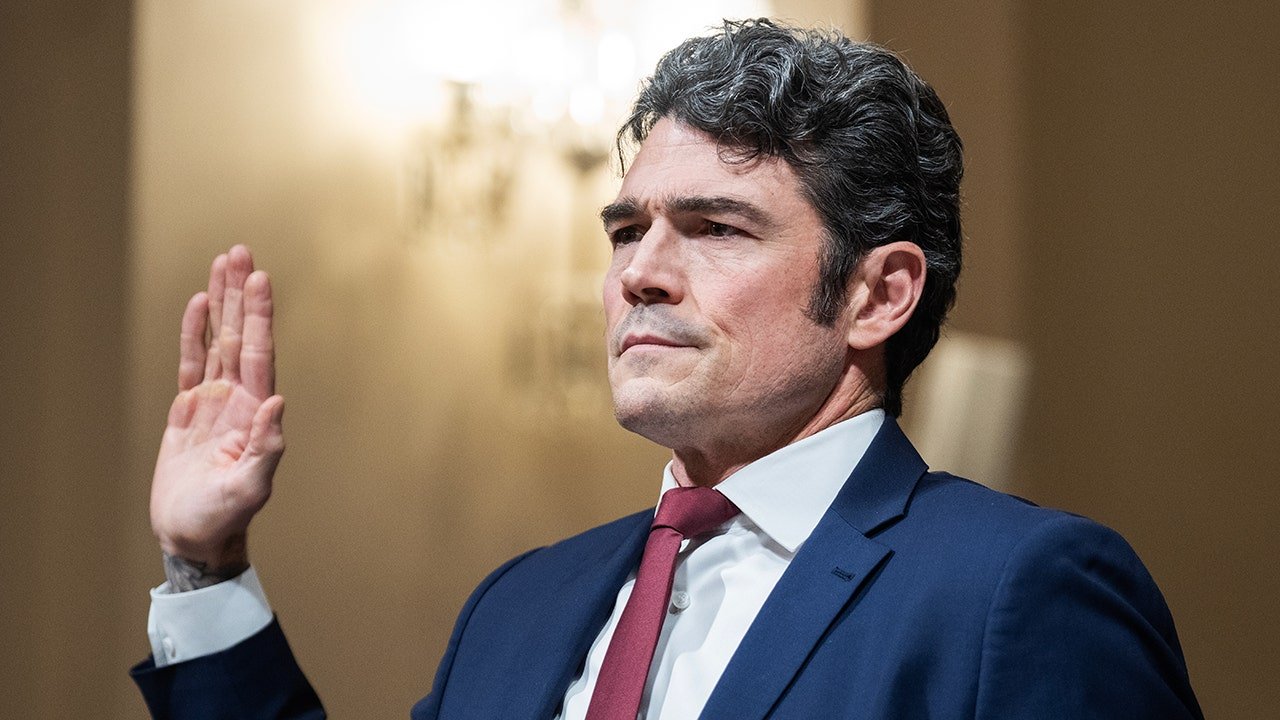
Joe Kent, former director of the National Counterterrorism Center, is sworn in to the House Homeland Security Committee hearing titled «Worldwide Threats to the Homeland,» Dec. 11, 2025. (Tom Williams/CQ-Roll Call, Inc via Getty Images)
A combat veteran turned political figure
Kent’s rise in conservative circles was shaped as much by his military career as by personal loss.
A 20-year Army Special Forces veteran and former CIA paramilitary officer, he served in multiple combat deployments before entering public life.
His profile grew significantly after the 2019 death of his first wife, Navy Senior Chief Shannon, who was killed in a suicide bombing in Syria.
Kent frequently has cited her death as a turning point for him, fueling his criticism of what he describes as failed U.S. foreign policy and «endless wars» in the Middle East.
He later entered politics, running for Congress in 2022 and 2024 in Washington state as a Republican aligned with President Donald Trump’s «America First» movement.
Kent secured Trump’s endorsement during his campaigns and became a prominent voice in the populist wing of the party, combining a hardline stance on national security with opposition to prolonged military interventions.
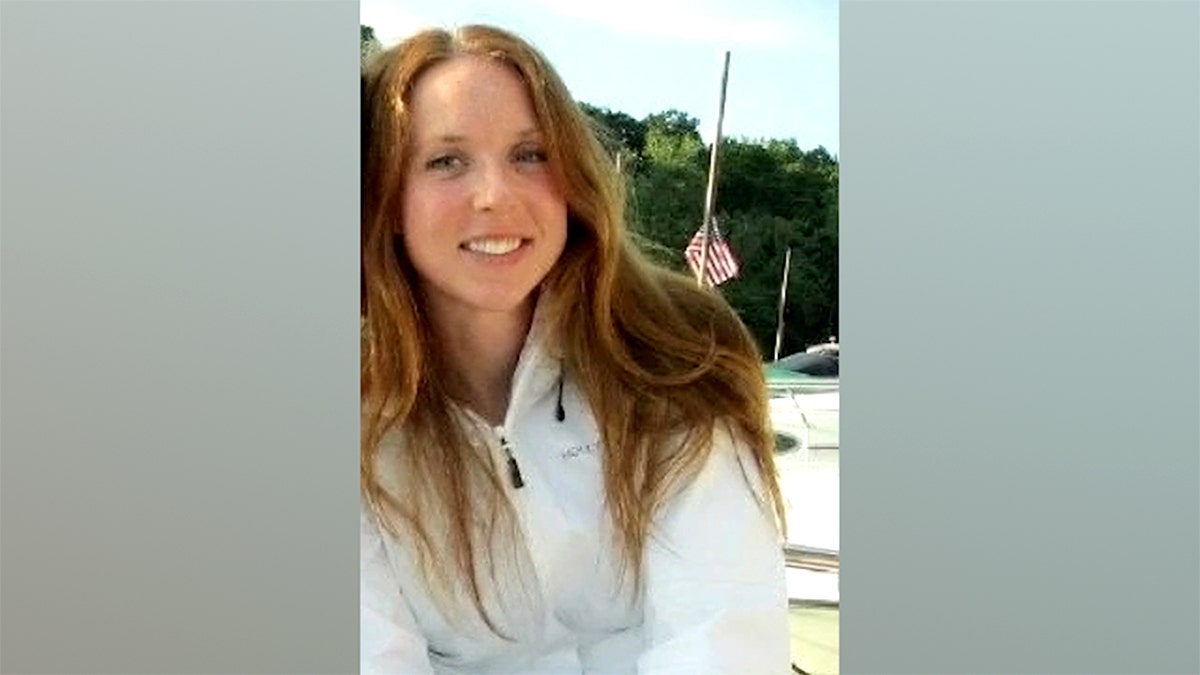
Kent was killed in an ISIS bombing in Syria in 2019. (US Navy )
Signs of tension inside the intelligence community
Kent’s recent departure has raised questions about internal dynamics within the Trump administration’s national security team, particularly as differences emerge over Iran strategy and the intelligence used to justify it.
While Gabbard has long aligned herself with a more restrained approach to foreign policy, the White House has taken a more aggressive posture toward Iran, raising the possibility of a widening divide over both strategy and the intelligence used to justify it.
Gabbard has responded cautiously in the days since Kent’s resignation, avoiding a direct defense of his claims while emphasizing the role of the president in making final decisions.
In a statement on Iran threats following Kent’s departure, Gabbard did not mention him by name, instead stressing that intelligence agencies provide assessments but that «the president is responsible for determining what is and is not an imminent threat.»
Pressed by senators in a worldwide threat hearing Wednesday over whether she agreed with the White House that Iran posed an imminent threat to the U.S. prior to strikes that began Feb. 28, she repeatedly declined to say so, arguing it was up to the president to make such a determination.
During a parallel hearing in the House Thursday, Rep. Elise Stefanik, R-N.Y., read portions of Kent’s resignation letter — including his claim that Israeli officials and U.S. media had pushed the United States toward war — and asked whether Gabbard agreed with the statement.
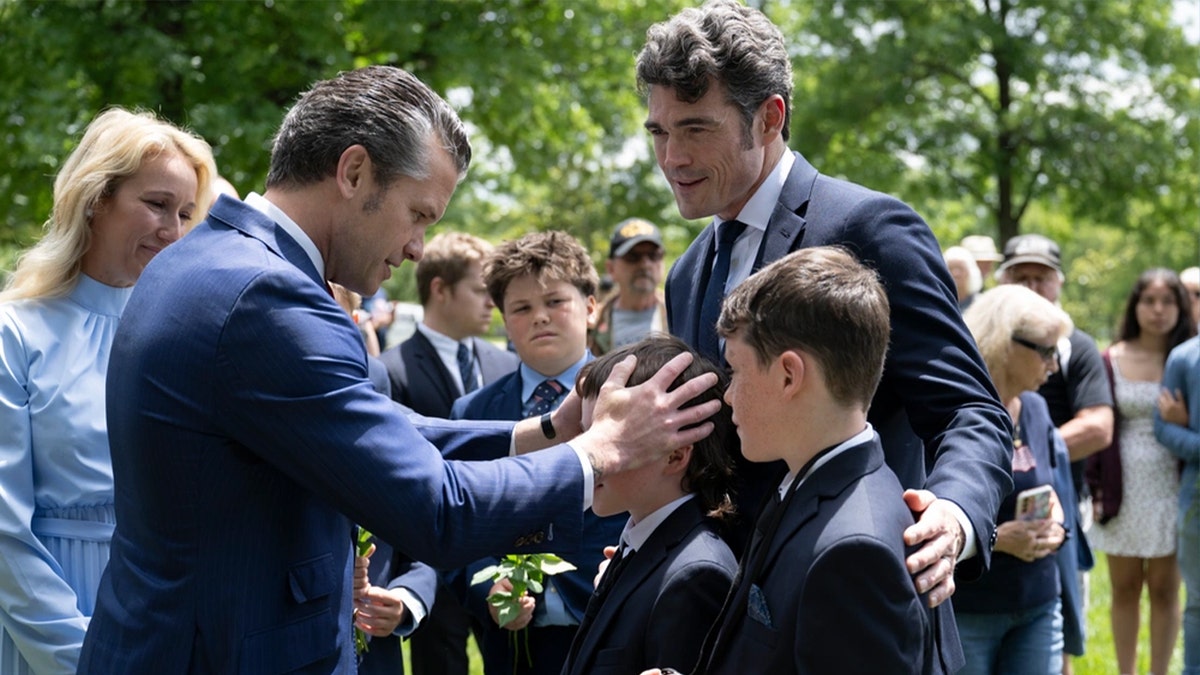
War Secretary Pete Hegseth greets one of Joe Kent’s sons. The former National Counterterrorism Director is a father of two and a Gold Star spouse. (U.S. Army photo by Elizabeth Fraser / Arlington National Cemetery)
«He said a lot of things in that letter,» Gabbard responded, adding that the president «makes his own decisions based on the information that’s available to him.»
When asked whether Kent’s comments concerned her, Gabbard replied simply: «Yes.»
TOP COUNTERTERRORISM OFFICIAL RESIGNS IN PROTEST OF US WAR AGAINST IRAN
Kent’s remarks also have drawn sharp criticism from senior Republicans.
Senate Republican leader Mitch McConnell described the language in Kent’s resignation letter as «virulent anti-Semitism,» calling it «baseless and incendiary conspiracies» and saying such views have «no place» in government.
In early March, Gabbard’s chief of staff, Matt Baker, left his role, though a senior intelligence official told Fox News Digital Baker’s departure was a long-planned return to the private sector.
Gabbard also has recently brought on Dan Caldwell, an outspoken advocate of a more restrained foreign policy. Caldwell previously was the subject of a Pentagon leak probe during his time working with War Secretary Pete Hegseth, though the results of that probe have not been publicized and Caldwell insists they are unsubstantiated.
A source familiar with that move said Caldwell will be doing administration work rather than shaping policy.
Gabbard’s office could not immediately be reached for comment.
Non-interventionist Republicans praised Kent after his departure.
«Another insider sees what we see: no imminent threat, just lobby pressure. This is why we need to defund and debate,» said Rep. Thomas Massie, R-Ky.
«Joe Kent is a GREAT AMERICAN HERO. God bless him and protect him! He just exposed that the war with Iran is AMERICA LAST and we voted against it,» said former Rep. Marjorie Taylor Greene, R-Ga.
A shift in his views on Iran
Kent’s past comments on Iran reflect a more nuanced position than his resignation might suggest.
During his congressional campaigns, he consistently portrayed Iran as a real and ongoing threat and warned against allowing it to expand its influence across the region.
At times, Kent’s rhetoric went further, reflecting a willingness to use direct force against Iran when he viewed it as necessary.
In a 2020 social media post following the U.S. strike that killed Iranian Gen. Qassem Soleimani, commander of the elite Quds Force responsible for operations outside Iran. Kent urged the administration to «wipe Iran’s ballistic capability out,» while still calling for U.S. troops to be withdrawn from the region.
The comments highlighted a tension that has defined his foreign policy views —support for aggressive, targeted action against adversaries alongside a deep opposition to prolonged military entanglements.
CLICK HERE TO DOWNLOAD THE FOX NEWS APP
By 2024, Kent had coalesced around a doctrine of what he described as «peace through strength,» praising Trump-era policies that combined sanctions, targeted strikes and diplomacy while avoiding large-scale military commitments.
In a Newsweek op-ed that year, he argued that sending U.S. troops to confront Iran or its proxies would be «a huge mistake,» advocating instead for withdrawing forces from vulnerable positions while continuing to strike adversaries from a distance.
His resignation marks a sharper break: not just opposing escalation, but rejecting the premise that Iran posed an imminent threat at all.
Kent could not be reached for comment.
Fox News Digital reached out to the FBI for comment on its ongoing investigation.
White House press secretary Karoline Leavitt has called the claims in Kent’s resignation letter «false» and «laughable.»
«There are many false claims in this letter, but let me address one specifically: that ‘Iran posed no imminent threat to our nation.’ This is the same false claim that Democrats and some in the liberal media have been repeating over and over,» she wrote on X.
«The absurd allegation that President Trump made this decision based on the influence of others, even foreign countries, is both insulting and laughable.»
war with iran,tulsi gabbard,counter terrorism,homeland security
Escenarios
¿Podría la guerra de Trump tener un final feliz?
Objetivo
¿Qué demonios debería hacer Trump?
INTERNACIONAL
La inteligencia de Israel cree que el nuevo líder supremo de Irán no controla al régimen: “Una entidad vacía”

El nuevo líder supremo de Irán, Mojtaba Khamenei, no ejerce control efectivo sobre el régimen y es considerado una figura sin poder real, según fuentes de seguridad nacional israelíes citadas este miércoles por Fox News Digital.
“El nuevo líder es una entidad vacía”, dijo Kobi Michael, analista de defensa del Instituto de Estudios de Seguridad Nacional, al medio estadounidense. “Mojtaba Khamenei no aparece en público, pero también tenemos información confiable de que no controla ni lidera el régimen ni lo que queda de él. El liderazgo iraní actual está roto, confundido y casi en mal funcionamiento”, agregó.
Mojtaba asumió el cargo tras la muerte de su padre, el ayatolá Ali Khamenei, en un ataque israelí el 28 de febrero. Según un audio filtrado al diario The Telegraph, correspondiente a una reunión del 12 de marzo, el hijo escapó por minutos al haber salido a caminar justo antes del impacto del misil. El jefe de protocolo de la oficina de Khamenei, Mazaher Hosseini, es supuestamente escuchado en la grabación informando a altos líderes que Mojtaba sufrió “una lesión menor en la pierna”.

Desde que fue designado líder supremo, Mojtaba no ha realizado ninguna aparición pública. Sus comunicados han sido leídos por terceros en la televisión estatal iraní, donde advirtió sobre represalias y llamó a las naciones del Golfo a cerrar las bases militares estadounidenses en la región. Otros reportes lo situaron en estado crítico o incluso en coma, aunque funcionarios iraníes insistieron en que se encuentra en buen estado de salud.
Este miércoles, Mojtaba prometió venganza tras la muerte del alto funcionario de seguridad Ali Larijani, eliminado en un ataque israelí en las afueras de Teherán. “Tales actos de terror solo reflejan la hostilidad de los enemigos y fortalecerán la determinación de la nación islámica. Sin duda, se hará justicia”, rezó el comunicado emitido en su nombre.
Las declaraciones sobre el estado del liderazgo iraní llegan en medio de una escalada en el conflicto. Irán intensificó sus ataques contra instalaciones energéticas del Golfo Pérsico en represalia por un ataque israelí contra South Pars, el mayor yacimiento de gas del mundo, compartido con Qatar.
Las ofensivas iraníes alcanzaron refinerías en Arabia Saudita, Kuwait y los Emiratos Árabes Unidos, y causaron daños severos en la planta de gas natural licuado de Ras Laffan, en Qatar, la mayor instalación de exportación de GNL del mundo. El precio del petróleo Brent trepó hasta los 118 dólares el barril, más de un 60% por encima de los valores previos al inicio del conflicto el 28 de febrero, mientras que el gas natural europeo duplicó su precio en el último mes.
Israel también ha eliminado en días recientes a otros altos mandos iraníes, incluido el jefe de la milicia Basij, Gholamreza Soleimani. El secretario de Defensa estadounidense, Pete Hegseth, advirtió que podrían seguir más bajas entre la cúpula del régimen.
Para Michael, la eliminación sistemática de figuras clave del régimen no es un hecho aislado sino parte de una estrategia deliberada. “Esto no es una nueva fase, sino un esfuerzo continuo, muy exitoso e impresionante, y un componente crucial de la estrategia destinada a debilitar el régimen iraní”, señaló el analista. “En un grado tal que no podrá reconstituirse ni volver a convertirse en una amenaza grave y desestabilizadora para el Medio Oriente en general”, agregó.
Michael apuntó que tanto Washington como Tel Aviv tienen un objetivo más ambicioso que el meramente militar. “Al debilitar el régimen y paralizar sus capacidades, Estados Unidos e Israel están facilitando las condiciones necesarias para que el pueblo iraní derribe al régimen. Esa es la victoria final a sus ojos”, sostuvo.
El conflicto, que ya lleva más de 1.300 muertos en Irán y al menos 13 militares estadounidenses caídos, entró en su tercera semana sin señales de distensión. El presidente Donald Trump afirmó que Israel no volverá a atacar South Pars, pero amenazó con destruir “la totalidad” del yacimiento si Irán continúa golpeando la infraestructura energética de Qatar.
Military Conflicts

El día que María Becerra estalló de furia contra Emilia Mernes: la actitud que habría desatado la pelea

Se agrava la crisis láctea: otra empresa dejó de pagar sueldos y hay preocupación por el futuro de sus 80 trabajadores

Las preguntas de Senegal luego de que le quitaran el título de la Copa Africana de Naciones: ¿Deberá devolver el trofeo y el dinero del premio?

Mauricio Macri: “Pro jamás va a ser un obstáculo al cambio; no vamos a ser oposición”

Manuel Passaglia: “El PRO ya eligió a Javier Milei como candidato a Presidente”

Otro conflicto con Pro: Ritondo no presidirá la Comisión Bicameral de Inteligencia por la pelea entre Karina Milei y Santiago Caputo

TRAICIÓN Y ÉXODO: La promesa rota de Monteoliva que desató una ola masiva de bajas en la Policía Federal

Adorni se disculpó por el viaje de su esposa: “Fue una pésima decisión, más allá de que no generó gasto para el Estado”

Horacio Rodríguez Larreta reapareció y lanzó “Metrópolis”, su nuevo espacio en la Ciudad de Buenos Aires

Insólito: un esquiador británico terminó la Copa del Mundo de Oslo bajo los efectos del alcohol

 POLITICA3 días ago
TRAICIÓN Y ÉXODO: La promesa rota de Monteoliva que desató una ola masiva de bajas en la Policía Federal
- POLITICA3 días ago
Adorni se disculpó por el viaje de su esposa: “Fue una pésima decisión, más allá de que no generó gasto para el Estado”
- POLITICA3 días ago
Horacio Rodríguez Larreta reapareció y lanzó “Metrópolis”, su nuevo espacio en la Ciudad de Buenos Aires