INTERNACIONAL
Appeals court says federal judge must reconsider blocking WH ballroom, weigh national security concerns

NEWYou can now listen to Fox News articles!
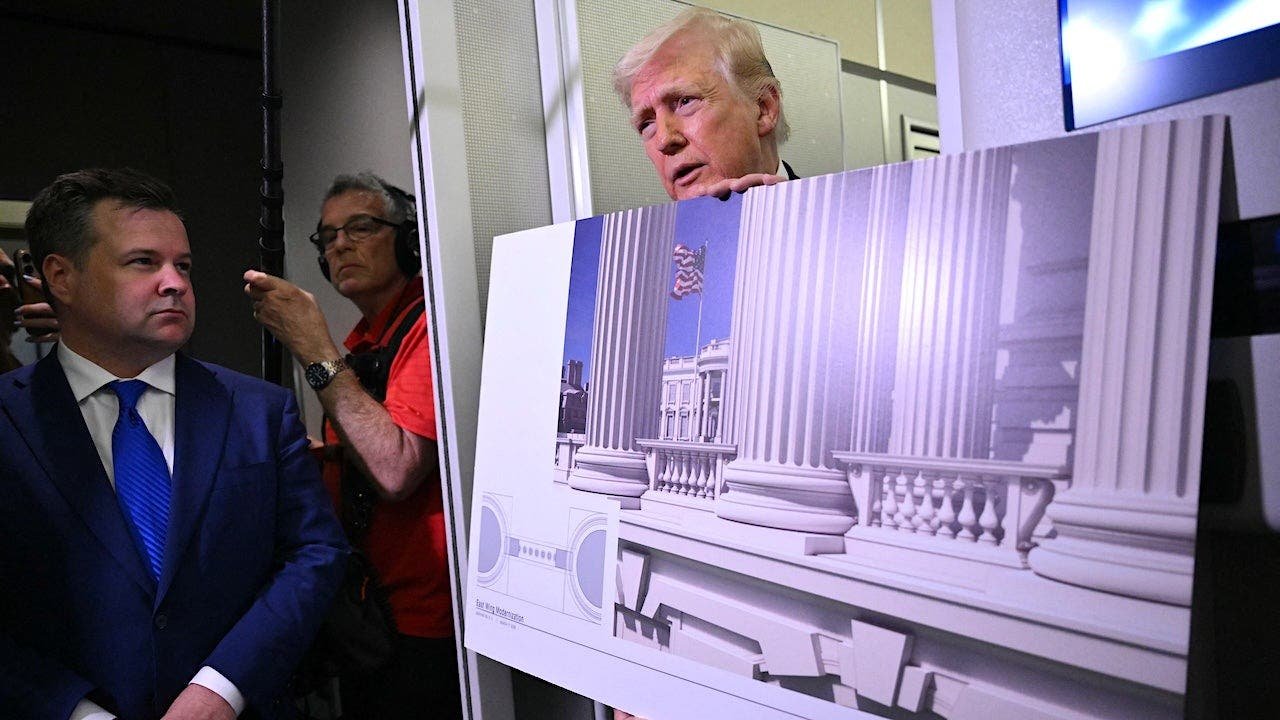
President Donald Trump’s $400 million White House ballroom construction will be able to continue for at least a little while longer, after an federal appeals court instructed a District Court judge to reconsider the situation.
A three-judge panel for the U.S. Court of Appeals for the D.C. Circuit ruled Saturday that construction can proceed until Friday, April 17, giving the president time to seek a Supreme Court review as the Trump administration is claiming delaying the prospect leaves the construction site exposed and risks the security of the president and his staff.
The panel instructed U.S. District Judge Richard Leon to clarify whether — and how — his injunction interferes with the administration’s claims over safety and security.
Government lawyers argued that the project includes critical security features to guard against a range of possible threats, such as drones, ballistic missiles and biohazards and that holding up construction «would imperil the president and others who live and work in the White House.»
DEMS MOVE TO SET LIMITS ON TRUMP’S DONOR-FUNDED WHITE HOUSE BALLROOM, CLAIMING ‘BRIBERY IN PLAIN SIGHT’
President Donald Trump holds a rendering of the White House ballroom in an Air Force One media scrum. (Mandel Ngan/AFP)
Trump had also made the case that the U.S. military was installing a «heavily fortified» facility under the ballroom, including bomb shelters and a medical facility.
The National Trust for Historic Preservation (NTHP) sued in December, a week after the White House finished demolishing the East Wing for a 90,000-square-foot (8,400-square-meter) ballroom.
The group claimed Trump exceeded his authority when he demolished the dated East Wing — built in 1902 during Theodore Roosevelt’s presidency and expanded in 1942 — arguing the president needed congressional authorization.
TRUMP SAYS IT ‘IS TOO LATE’ TO STOP THE WHITE HOUSE BALLROOM CONSTRUCTION AMID LAWSUIT
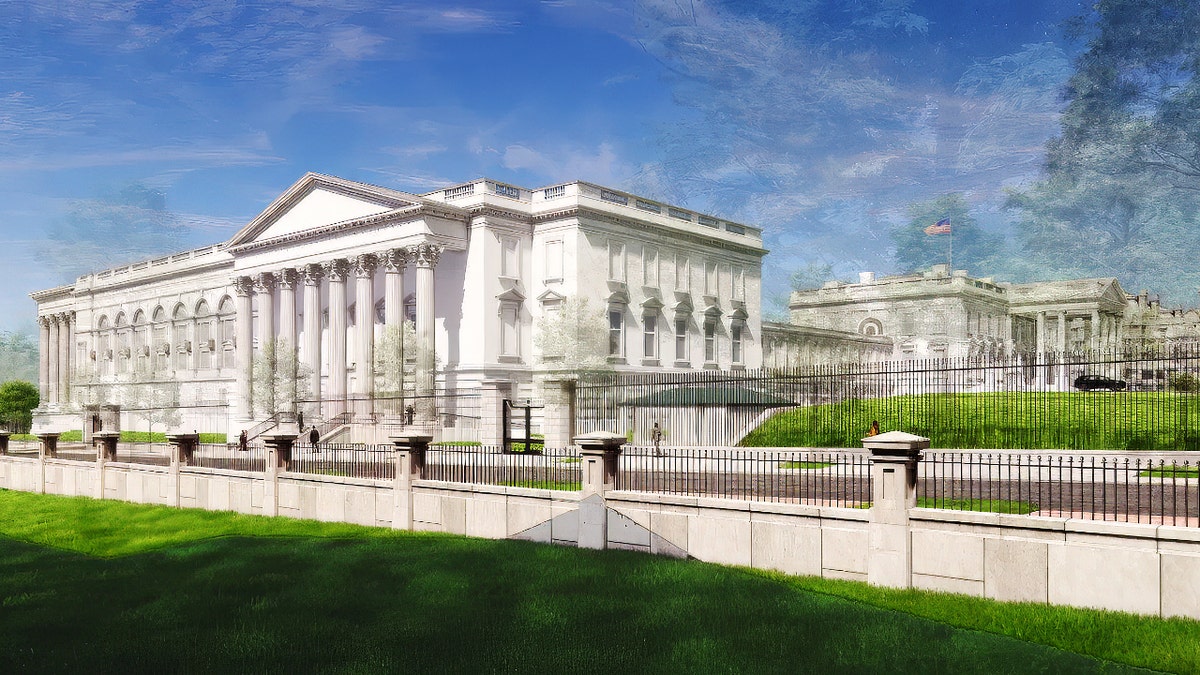
A rendering of the proposed White House ballroom shared by President Donald Trump on Truth Social on Feb. 3, 2026. (Copyright Donald Trump/Truth Social)
Trump has said the president has historically had say over the White House remodeling, and has long noted Congress does not have to pay for the privately funded project.
A lower court had issued a March 31 injunction to halt ballroom construction, but it also paused that injunction to allow for an appeal.
The White House has argued that the injunction left the White House «open and exposed,» threatening security for the building, the president and his family and staff.
TRUMP UNVEILS NEW RENDERING OF SPRAWLING WHITE HOUSE BALLROOM PROJECT

A McCrery Architects rendering provided by the White House of the new ballroom. (McCrery Architects/White House)
NTHP CEO Carol Quillen said in a statement that the organization awaited further clarification from the district court.
She said the group was committed «to honoring the historic significance of the White House, advocating for our collective role as stewards, and demonstrating how broad consultation, including with the American people, results in a better overall outcome.»
Judge Leon exempted any construction work necessary to ensure the safety and security of the White House, but said he reviewed material the government privately submitted before determining that a halt would not jeopardize national security.
«We cannot fairly determine, on this hurried record, whether and to what extent the district court’s ‘necessary for safety and security’ exception addresses Defendants’ claims of irreparable harm, insofar as it may accommodate the Defendants’ asserted safety and security need for the ballroom itself or other temporary measures to secure the safety and security of the White House, the President, staff, and visitors while this appeal proceeds,» the D.C. Circuit said in its ruling.
WARREN-LED INQUIRY DRAWS NEW DETAILS ON TRUMP BALLROOM DONATIONS FROM MAJOR CORPORATIONS

A McCrery Architects rendering provided by the White House of the new ballroom. (White House)
The appeals panel noted that much of the government’s concerns focused on that below-ground security work, which the White House argued was «distinct from construction of the ballroom itself and could proceed independently.»
The White House is making the case now that those security upgrades are «inseparable» from the project as a whole, the appeals court said, making it unclear «whether and to what extent» moving forward with certain aspects of the ballroom is necessary for the safety and security of those upgrades.
TRUMP PUSHES BACK AFTER MICHELLE OBAMA KNOCKS EAST WING RENOVATION, CALLING OLD ARRANGEMENT ‘A DISASTER’
Although Trump’s project is funded by private donations, public money is paying for construction of underground bunkers and security upgrades.
The three-judge appeals court panel was made up of Judges Patricia Millett, Neomi Rao and Bradley Garcia. Millett was nominated by former President Barack Obama, Rao by Trump and Garcia by President Joe Biden.
Rao wrote a dissenting opinion, which cited a statute that allows the president to undertake improvements to the White House.
CLICK HERE TO DOWNLOAD THE FOX NEWS APP
«Importantly, the government has presented credible evidence of ongoing security vulnerabilities at the White House that would be prolonged by halting construction,» Rao wrote, adding that such concerns outweigh the «generalized aesthetic harms» presented in the lawsuit.
Reuters and The Associated Press contributed to this report.
administration, national security, congress, white house, appeals






NEWYou can now listen to Fox News articles!
Israeli forces say they discovered a Hezbollah weapons stash inside a hospital in Lebanon this weekend.
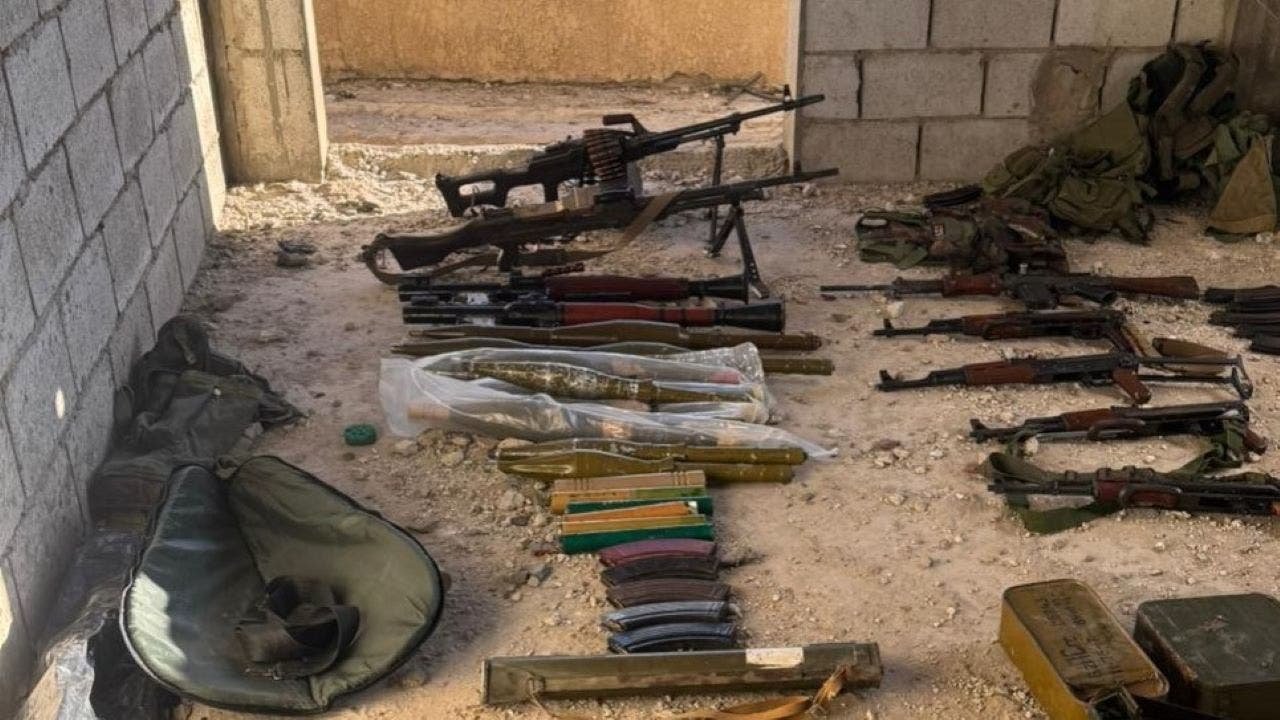
The Israel Defense Forces carried out the operation in Lebanon’s Bint Jbeil municipality. Images shared with Fox News show weapons, ammunition and explosives that Israel says were found within a hospital in the area.
The IDF says it eliminated «approximately 20 terrorists» inside the hospital compound after Hezbollah was detected conducting surveillance and firing upon IDF troops from a window of the hospital.
«The Hezbollah terrorist organization systematically and repeatedly used the hospital compound and its immediate surroundings for military purposes, constituting a serious violation of international law,» the IDF said in a statement.
VANCE WARNS IRAN WILL ‘FIND OUT’ TRUMP IS ‘NOT ONE TO MESS AROUND’ IF CEASEFIRE DEAL FALLS APART
Israeli forces uncovered Hezbollah forces using a hospital for cover in Lebanon. (IDF)
«The IDF operates in accordance with international law, and clarified prior to the operation to the relevant Lebanese authorities that all military activity within hospitals in Lebanon must cease, and disseminated these warnings through various channels. Despite this, Hezbollah continued to use the hospital for military activity,» the IDF said in a statement.
Israel has continued operations against Hezbollah in Lebanon amid a ceasefire between the U.S. and Iran this week.
GEN JACK KEANE ‘SKEPTICAL’ THAT IRAN CEASEFIRE WILL HOLD, WARNS TEHRAN WILL ‘DELAY AND OBFUSCATE’
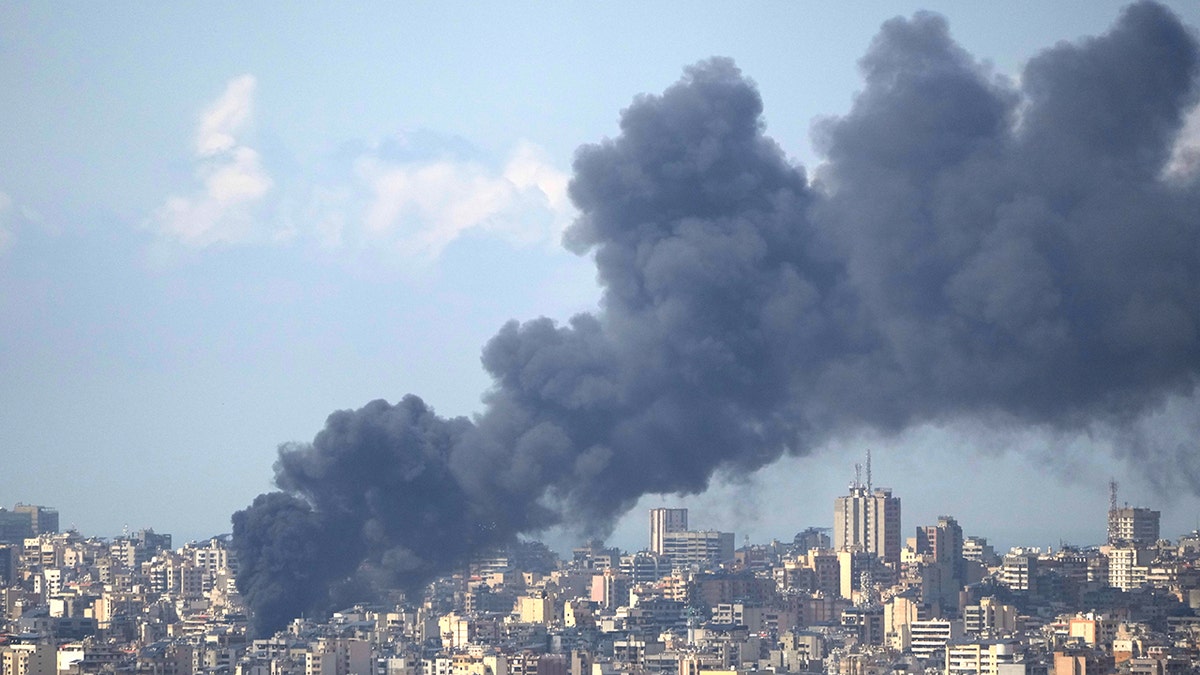
Smoke rises following an Israeli airstrike on a building in Beirut, Lebanon, Wednesday, April 8, 2026. (Hassan Ammar/AP Photo)
The operation comes after U.S. talks with Iranian officials failed to make progress this weekend in Pakistan.
Speaking during a press conference from the Serena Hotel in Islamabad, Pakistan, Vice President JD Vance said Iran has «chosen not to accept our terms.»
«The bad news is that we have not reached an agreement,» Vance said. «And I think that’s bad news for Iran much more than it’s bad news for the United States of America.»

Vice President JD Vance delivers remarks on April 8, 2026, in Budapest, Hungary. (Jonathan Ernst – Pool/Getty Images)
The vice president said talks with Iranian officials lasted 21 hours, describing them as «substantive discussions,» but adding the U.S. was unwilling to compromise on its «red lines.»
«So we go back to the United States, having not come to an agreement. We’ve made very clear what our red lines are, what things we’re willing to accommodate them on and what things we’re not willing to accommodate them on,» Vance added. «And we’ve made that as clear as we possibly could, and they have chosen not to accept our terms.»
CLICK HERE TO DOWNLOAD THE FOX NEWS APP
Fox News Digital asked Vance if he had been in contact with President Donald Trump during the talks, and the vice president said he had been «consistently.»
«I don’t know how many times we talked to him — a half dozen times, a dozen times over the past 21 hours,» Vance said, adding that the U.S. team was also communicating with other members of the Trump administration, including Secretary of State Marco Rubio and Secretary of War Pete Hegseth.
Fox News’ Preston Mizell contributed to this report.
israel, lebanon, world
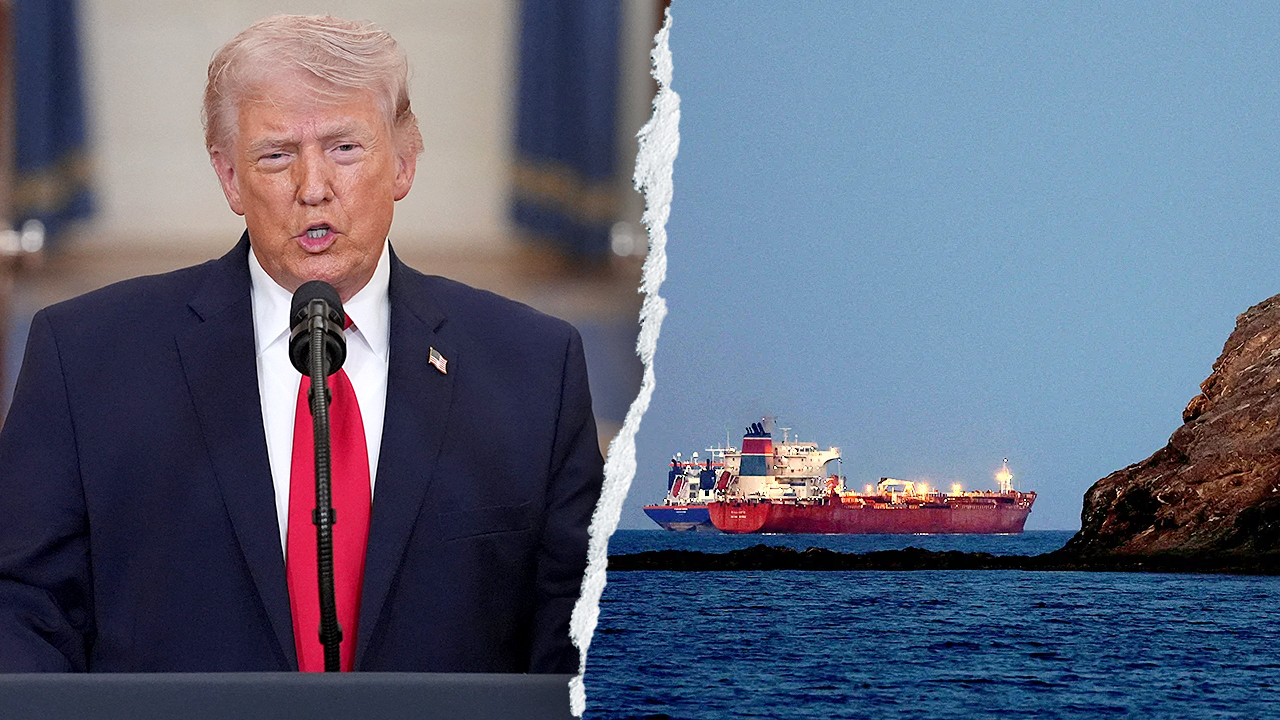
Trump’s ultimatum to Iran: Reopen Hormuz or face infrastructure strikes
Shervin Pishevar, advisor to HRH Reza Pahlavi, analyzes President Trump’s ultimatum to Iran to reopen the Strait of Hormuz. Pishevar praises Trump’s «doctrine of preemption,» arguing decisive action today prevents future threats from Iran’s developing nuclear, drone, and ICBM programs. He criticizes past US administrations for «Chamberlaining» the Iranian regime.
NEWYou can now listen to Fox News articles!
President Donald Trump said the U.S. Navy will begin a blockade of the Strait of Hormuz and interdict vessels that have paid a toll to Iran, after U.S. peace talks with Tehran ended in a stalemate.
«Effective immediately, the United States Navy, the Finest in the World, will begin the process of BLOCKADING any and all ships trying to enter or leave the Strait of Hormuz,» Trump posted on Truth Social. «At some point, we will reach an ‘ALL BEING ALLOWED TO GO IN, ALL BEING ALLOWED TO GO OUT’ basis, but Iran has not allowed that to happen… THIS IS WORLD EXTORTION.»
He said the U.S. would deny safe passage to vessels that paid the toll and begin clearing mines.
«I have also instructed our Navy to seek and interdict every vessel in international waters that has paid a toll to Iran,» he wrote. «No one who pays an illegal toll will have safe passage… We will also begin destroying the mines… Any Iranian who fires at us… will be BLOWN TO HELL!»
WHY THE STRAIT OF HORMUZ MATTERS AS TRUMP ISSUES FRESH ULTIMATUM TO IRAN
Iran’s closure of the strait has triggered global economic turmoil, and reopening it was a key condition in U.S. efforts to reach a deal.
In a second post, Trump reiterated the demand: «They better begin… getting this INTERNATIONAL WATERWAY OPEN AND FAST!»
A satellite image shows the Strait of Hormuz, a key maritime passage connecting the Persian Gulf to the Gulf of Oman, vital for global energy supply. (Amanda Macias/Fox News Digital)
Trump’s warning raises the stakes in the narrow but vital waterway, a critical artery for global energy supplies.
The strait, which lies between Iran, Oman and the United Arab Emirates, is one of the world’s most critical energy choke points, carrying roughly 20 million barrels of oil a day along with about one-fifth of global liquefied natural gas.
The strait is also a vital artery for refined fuels, including products like jet fuel.
The latest threat builds on a pattern of deadlines Trump has imposed on Tehran over the strait. Here is a timeline of those demands:
March 21
In a Truth Social post, Trump declared that if Iran did not «FULLY OPEN» the strait within 48 hours, the United States would «obliterate their various POWER PLANTS, STARTING WITH THE BIGGEST ONE FIRST!»
Ali Mousavi, Iran’s permanent representative to the International Maritime Organization, responded by saying that the Strait of Hormuz was «open to everyone» except Tehran’s enemies. Meanwhile, other Iranian officials warned that attacks on energy infrastructure would amount to an attack on the Iranian people and would be met with retaliation.
SAN FRANCISCO BECOMES FIRST US CITY WHERE DIESEL PRICES TOP $8 A GALLON
March 23
Two days later, Trump wrote in a Truth Social post that the U.S. had had «productive» conversations with Iran and that he had ordered the Pentagon to delay any strikes on Iranian power plants and energy infrastructure for five days.
Iranian officials publicly denied that any talks were taking place.
March 26
Trump again extended his deadline — this time by 10 days, to April 6 at 8 p.m. Eastern — saying in a social media post that he was «pausing the period of Energy Plant destruction» at the Iranian government’s request.
WHERE GAS PRICES ARE RISING FASTEST AS TRUMP ISSUES FRESH WARNING TO IRAN
March 30
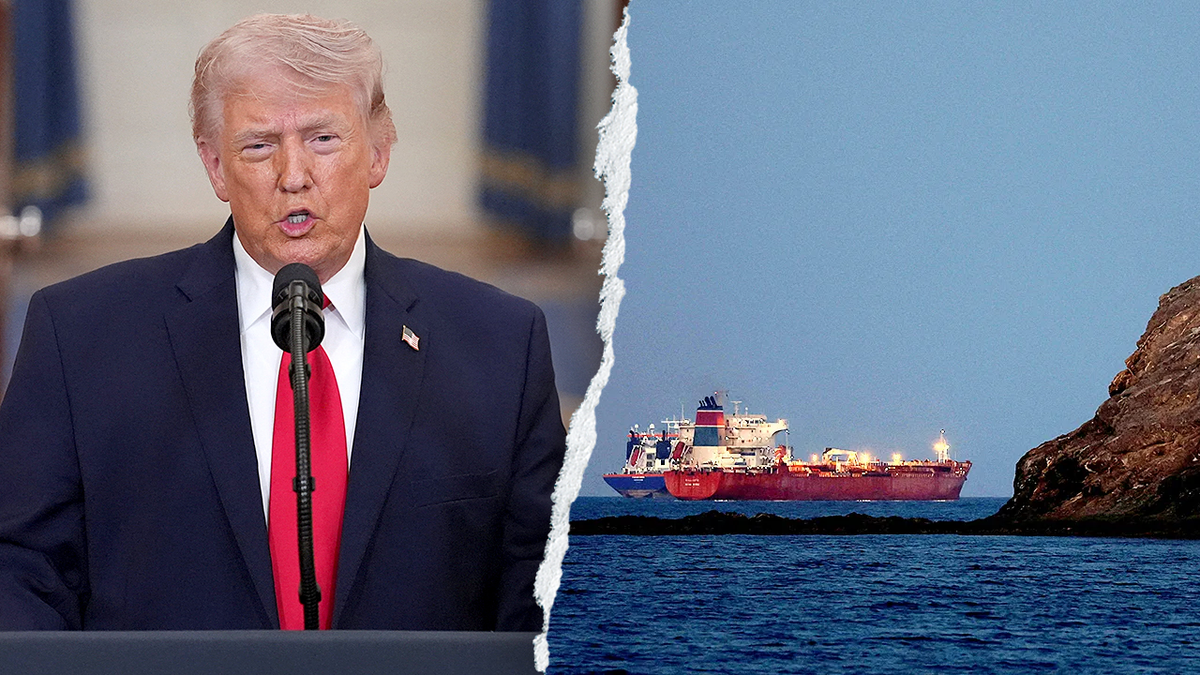
President Donald Trump called on the nations of the world to summon some «delayed courage» and «just take» the Strait of Hormuz. (Alex Brandon/Pool via Reuters; Benoit Tessier/Reuters)
Trump wrote in a Truth Social post that «great progress» had been made in negotiations to end the conflict. At the same time, he warned that if a deal was not reached and the Strait of Hormuz was not «immediately» opened, the United States would destroy Iran’s power plants, oil wells, Kharg Island — the country’s main oil export hub — and «possibly all» desalination plants.
April 1
Trump said Iran requested a ceasefire, a claim Iran’s foreign ministry spokesperson called «false and baseless,» according to the state news agency IRIB.
In a social media post, Trump said the United States would consider a ceasefire only once the strait was «open, free and clear,» adding: «Until then, we are blasting Iran into oblivion or, as they say, back to the Stone Ages!!!»
WHERE GAS PRICES ARE RISING FASTEST AS TRUMP ISSUES FRESH WARNING TO IRAN
April 4
Trump warned in a Truth Social post that «time is running out — 48 hours before all Hell will reign down on them.»
The post followed several conflicting statements in previous days, in which he alternately criticized allies for not acting to reopen the strait and suggested it would reopen on its own.
April 5
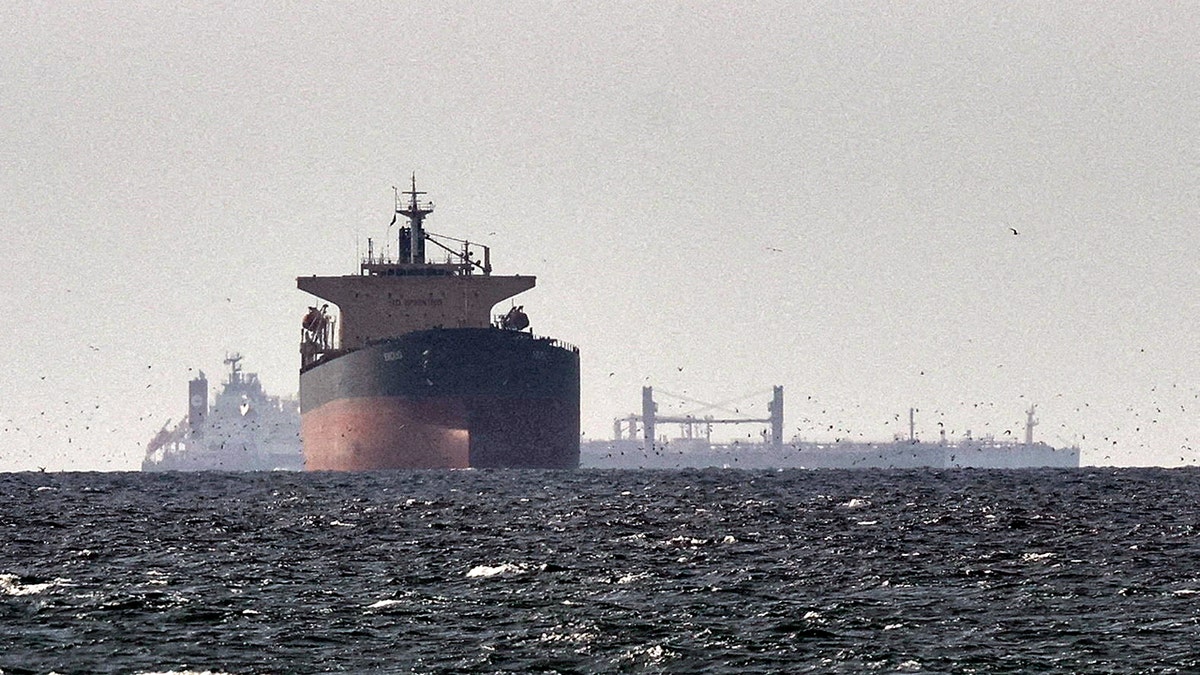
Cargo ships in the Gulf, near the Strait of Hormuz, as seen from northern Ras al-Khaimah, near the border with Oman’s Musandam governance, amid the U.S.-Israeli conflict with Iran, in United Arab Emirates, March 11, 2026. (Reuters/Stringer/File Photo/File Photo)
In a profanity-laced post on Truth Social on Sunday, Trump wrote: «Tuesday will be Power Plant Day, and Bridge Day, all wrapped up in one, in Iran.
«There will be nothing like it!!! Open the F—–’ Strait, you crazy b——-, or you’ll be living in Hell – JUST WATCH! Praise be to Allah.»
«Tuesday, 8:00 P.M. Eastern Time!» he wrote in a second post.
April 7
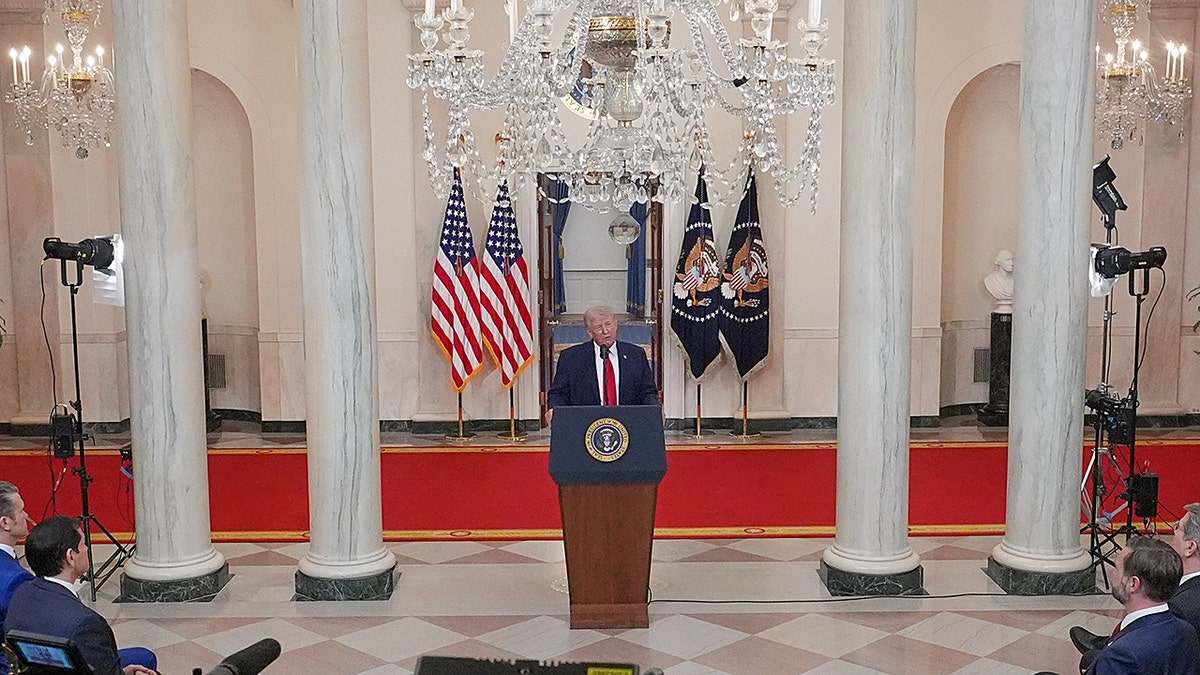
President Donald Trump speaks about the Iran war from the Cross Hall of the White House on Wednesday, April 1, 2026, in Washington. (Alex Brandon/AP)
Two days later, Trump issued a fresh ultimatum to Iran, demanding that it allow all vessels to transit the Strait of Hormuz or face strikes on critical infrastructure. The warning came after weeks of escalating threats and missed deadlines.
CLICK HERE TO DOWNLOAD THE FOX NEWS APP
«A whole civilization will die tonight, never to be brought back again. I don’t want that to happen, but it probably will,» Trump wrote in a Truth Social post. «We will find out tonight — one of the most important moments in the long and complex history of the world,» he added, referencing his 8 p.m. ET deadline for Iran to agree to a ceasefire and reopen the strait.
A ceasefire was called a few hours before the 8 p.m. deadline.
us navy, energy, war with iran, iran, sanctions
INTERNACIONAL
Aves en peligro en los pastizales pampeanos: qué descubrieron los científicos sobre su futuro

En 1892, el escritor William Henry Hudson publicó su libro El Naturalista en La Plata y describió a los pastizales de la región pampeana de la Argentina como “una gran llanura cubierta de hierba, donde la tierra y el cielo parecen unirse en el horizonte”.
Destacó la importancia de esos pastizales como refugios para numerosas especies de aves y mamíferos. Sin embargo, hoy enfrentan una fuerte reducción y fragmentación debido a la agricultura y la ganadería intensiva.

Esa transformación de los pastizales pone en riesgo también a las aves muy vulnerables como el tachurí canela, el cauquén colorado, el espartillero enano, el espartillero pampeano, la loica pampeana y el ñandú.
Ahora, científicos del Instituto de Investigaciones Marinas y Costeras (IIMyC), que depende de la Universidad Nacional de Mar del Plata (UNMdP) y el CONICET, y el Instituto de Limnología Dr Raúl Ringuelet de La Plata descubrieron cómo la conservación de pastos altos y la gestión ganadera adecuada pueden ser fundamentales para revertir esa tendencia y ofrecer un futuro más seguro a las especies amenazadas que dependen de la integridad del ecosistema de pastizal.
Los pastizales altos que tapizan la región pampeana son mucho más que paisajes: representan la base de vida para miles de aves que dependen de su refugio para criar y sobrevivir.
Revelaron que la clave para que los nidos prosperen está en la presencia de matas de pastos nativos altos. “Los nidos rodeados por más matas de pastos altos nativos tienen mayor éxito de anidación”, contó a Infobae la bióloga y primera autora del estudio Sofía Martín-Sirito.

El resultado es contundente: cuando el ganado reduce la altura de la vegetación, las aves pierden esa capa protectora esencial contra depredadores y el clima.
No se trata solo del pisoteo directo, sino de la transformación completa del hábitat. El manejo ganadero puede inclinar la balanza entre la vida y la desaparición de muchas especies.
Detrás de esos resultados estuvieron también Stella Román, Martin Colombo, Daniel Cardoni y Juan Pablo Isacch. Publicaron los resultados en la revista Journal of Ornithology, una de las revistas más reconocidas en el mundo de la biología de aves.
Por qué importan los pastizales pampeanos

Los campos pampeanos cambiaron radicalmente en las últimas décadas. La agricultura y la ganadería recortaron la extensión de pastizales naturales y desdibujaron la variedad de especies que los habitaban.
Esta región se volvió un mosaico de cultivos y potreros. En ese contexto, las aves que dependen del camuflaje y el resguardo de la vegetación ven cómo su mundo se achica.
Para ellas, una mata de pasto alto puede ser la diferencia entre criar con éxito o perder la nidada. La presión sobre estos ambientes crece cada año.

Los investigadores quisieron entender cómo la pérdida de cobertura vegetal y los diferentes tipos de manejo ganadero afectan la supervivencia de los nidos. Compararon zonas con pastoreo y otras donde el ganado no ingresa.
Dos especies sirvieron como modelos: el Misto (Sicalis luteola) y el Pico de Plata (Hymenops perspicillatus). Se plantearon como hipótesis si la supervivencia de los nidos sería menor en áreas pastoreadas debido a la reducción de la cobertura de pastos altos.
Qué encontraron

El trabajo se desarrolló en el sudeste de la región pampeana, en la Pampa Deprimida. Se eligieron dos campos sin pastoreo dentro de la Reserva de Biosfera Mar Chiquita y dos predios privados donde el ganado rota entre potreros.
Durante tres temporadas de cría, el equipo de científicos recorrió los pastizales y localizó los nidos de las dos especies elegidas.
Se tomaron notas precisas sobre la altura de los pastos, la cantidad de matas nativas, la ubicación y el momento del año en que empezaba cada nidada. Se analizaron 68 nidos en sitios pastoreados y 42 en áreas protegidas.
Tras analizar los datos, los resultados mostraron que la cobertura de pastos altos y la altura de la vegetación aumentan las posibilidades de que los nidos lleguen a buen puerto.
“Nuestro estudio dejó en claro que el porcentaje de cobertura de pastos altos a escala de paisaje tuvo un efecto positivo significativo sobre la supervivencia diaria de los nidos de ambas especies estudiadas”, resaltó la bióloga Martin-Sirito.

En los campos con ganado, la vegetación alta escasea y la tasa de éxito disminuye. El modelo estadístico más sólido confirmó que “la supervivencia diaria de los nidos fue significativamente mayor en los sitios sin pastoreo”.
La principal causa de fracaso, tanto en potreros ganaderos como en la reserva, fue la depredación, que afectó más del 60% de los nidos.
El trabajo también exploró cómo los depredadores y el microambiente influyen en la elección del sitio del nido.
Uno de los resultados destacados fue que los mistos pueden enfrentar una mayor presión de depredación por aves. Eso favorece que los nidos estén ubicados más bajos dentro del rango observado, pero protegidos por vegetación alta.
Qué hacer, qué falta saber y por qué importa

Los investigadores piden que se conserven parches de pastos altos en los campos, y se ajusten la carga de ganado para que la vegetación tenga tiempo de recuperarse.
El manejo rotativo y la reducción de la presión ganadera permiten que la producción y la conservación vayan de la mano.
Conservar entre el 30% y el 50% de la superficie total del campo con pastos altos resulta fundamental para mantener la estructura del pastizal y favorecer la supervivencia de las aves.

Admitieron que el tamaño de los parches y la presencia de depredadores pueden variar en otras zonas. Hace falta investigar más para definir “valores umbral” de cobertura vegetal y conocer cómo afecta a otras especies de aves.
La conclusión de los investigadores es sencilla pero poderosa. “Proteger la estructura y la diversidad de los pastizales es fundamental para que las aves de la región puedan seguir criando y por ende se asegure su supervivencia”, enfatizó el doctor Isacch, en diálogo con Infobae.
Con su equipo, recalcaron que la cobertura de pastos altos “es una característica crítica del hábitat que debe priorizarse en el manejo ganadero”.

En tanto, consultado por Infobae, Pablo Grilli, coordinador del Programa Pastizales de la organización no gubernamental Aves Argentinas, comentó: “Este estudio confirma que, cuando se conserva una matriz de pastos altos, aumenta la cantidad de pichones que logran dejar el nido”. En cambio, en campos donde el pasto está bajo por el sobrepastoreo ganadero, el éxito reproductivo es menor.
“Muchas aves especialistas de pastizal requieren esa cobertura alta para anidar o refugiarse. Si el pastizal desaparece, su reproducción se ve afectada negativamente. Los científicos aportaron pruebas concretas de que esa relación también se da en el misto y el pico de plata”, concluyó Grilli.
aves,pastizal pampeano,dimorfismo sexual,macho,hembra,ornitología,biodiversidad,Argentina,naturaleza,fauna

Economistas recalculan a la baja el volumen de importaciones: ¿señal de enfriamiento de la economía?

Preocupación para Scaloni: Cuti Romero recibió un fuerte golpe y fue reemplazado entre lágrimas en el partido del Tottenham

Con guiños de la UCR, Mauricio Macri arranca una gira por el interior del país para reconstruir al PRO

Análisis de las patentes Nintendo vs Palworld tras el último fallo judicial de 2026 – Nintenderos

IDF uncovers Hezbollah weapons stash inside hospital in Lebanon

Trump orders a blockade in the Strait of Hormuz as tensions with Iran soar

Russia seizes control of US-linked firm as it pushes for renewed ties with Washington

Participantes for export: Furia Scaglione y Coty Romero volverán a convivir en un reality español

Netanyahu afirmó que Israel destruyó el programa nuclear y de misiles de Irán: “Ahora luchan por su supervivencia”

Turismo en Buenos Aires: la aldea secreta que nadie te contó

 INTERNACIONAL21 horas ago
Russia seizes control of US-linked firm as it pushes for renewed ties with Washington
- CHIMENTOS21 horas ago
Participantes for export: Furia Scaglione y Coty Romero volverán a convivir en un reality español
- INTERNACIONAL21 horas ago
Netanyahu afirmó que Israel destruyó el programa nuclear y de misiles de Irán: “Ahora luchan por su supervivencia”