INTERNACIONAL
Russia seizes control of US-linked firm as it pushes for renewed ties with Washington


NEWYou can now listen to Fox News articles!
A Pennsylvania-linked manufacturer has been stripped of control over its Russian operations under a Kremlin order, raising fresh risks for Western companies as Moscow courts renewed economic ties with the United States.
CANPACK, a global aluminum beverage can manufacturer owned by a Pennsylvania-based holding company, operates in multiple countries across Europe and North America and said its Russian business — valued at roughly $700 million — was placed under state «external administration» by a Dec. 31, 2025, decree signed by President Vladimir Putin, effectively transferring control of 100% of its shares to state-appointed managers.
CEO Peter Giorgi said the company lost all operational authority after administrators arrived in mid-January.
«I’m only a nominal shareholder,» Giorgi said in an interview with Fox News Digital. «I lose all control of the company.»
BIPARTISAN SENATORS PROBE KREMLIN-LINKED DELEGATION’S MEETINGS WITH US OFFICIALS
The case underscores the risks facing Western companies that remained in Russia during the war, even as Moscow signals interest in rebuilding economic ties with Washington as part of potential peace negotiations.
Putin’s envoy for foreign investment, Kirill Dmitriev, is in the United States meeting with officials in President Donald Trump’s administration to discuss a potential Ukraine peace deal and future economic cooperation, according to Reuters.
Analysts say the move is part of a broader shift in Russia’s handling of foreign-owned assets since the Ukraine War.
«Let’s not be U.S.-centric about that,» said Alexander Kolyandr, a fellow at the Center for European Policy Analysis. «CANPACK is not alone.»
Russian President Vladimir Putin delivers a speech during a meeting of the Federal Security Service board in Moscow, Russia, on Feb. 24, 2026. (Mikhail Metzel/Sputnik/Pool/Reuters)
CANPACK has operated in Russia for nearly 30 years and held an estimated 35%–40% share of the country’s aluminum beverage can market, according to the company, underscoring the scale of the takeover.
The company has had no direct access to, or communication with, its Russian operations since the move, according to a person familiar with the matter, and several senior executives — including the general manager and chief financial officer — were removed following the takeover.
Company officials say executives in Russia have faced pressure from state-appointed administrators, including demands to approve financial decisions under threat of dismissal or other consequences.
The situation has not changed in recent months, according to the officials. The company’s Russian operations remain under external administration, with no restoration of control or ownership as of April.
The move falls under a legal framework introduced in 2023 allowing the Russian government to place certain foreign-owned assets under temporary state control.
The decree identified a company called Stalelement as the entity overseeing the assets, which company representatives describe as a shell entity with ties to the Russian government.
The company has raised the issue with U.S. officials, but no formal action has been taken.

The Kremlin has seized a U.S.-linked company operating in Russia under temporary external administration, barring its owners from access. (Kremlin Press Office / Handout/Anadolu Agency via Getty Images)
Russian business daily Vedomosti reported in February that CANPACK’s Russian division donated approximately 500 million rubles to a pro-Kremlin fund supporting Russia’s war effort in Ukraine.
The company believes roughly $18 million was directed to state-linked funds supporting Russian operations, with an additional approximately $6 million sent to a Russian Orthodox church, based on Russian media reports and information relayed by former executives. Fox News has not independently verified those claims.
The estimated transfers represent a small portion of the company’s overall value, but underscore how quickly financial control can shift under external administration.
The company continued operating in Russia after Moscow’s full-scale invasion of Ukraine in 2022, even as many Western firms exited the market.
Giorgi said the company considered leaving but faced challenges unwinding decades of investment and could not find a buyer at a fair price.
«We decided to stay the course,» he said, adding that the company hoped conditions would eventually stabilize.
The same December 2025 decree also targeted the Russian subsidiary of Danish insulation manufacturer Rockwool. Other Western companies, including France’s Danone and brewer Carlsberg, have faced similar actions by Russian authorities in recent years.
«We are talking about dozens of companies,» Kolyandr said.
Kolyandr said U.S.-linked companies have in some cases been treated more cautiously than their European counterparts.
«American companies fared much better than the European ones,» he said, pointing to Moscow’s interest in preserving the possibility of improved ties with Washington.
He said the trend accelerated after Russia’s full-scale invasion of Ukraine in 2022, when Western companies began suspending operations or exiting the market.
«It all started in earnest with the beginning of the war,» he said, adding that it became easier for authorities to take control of assets.
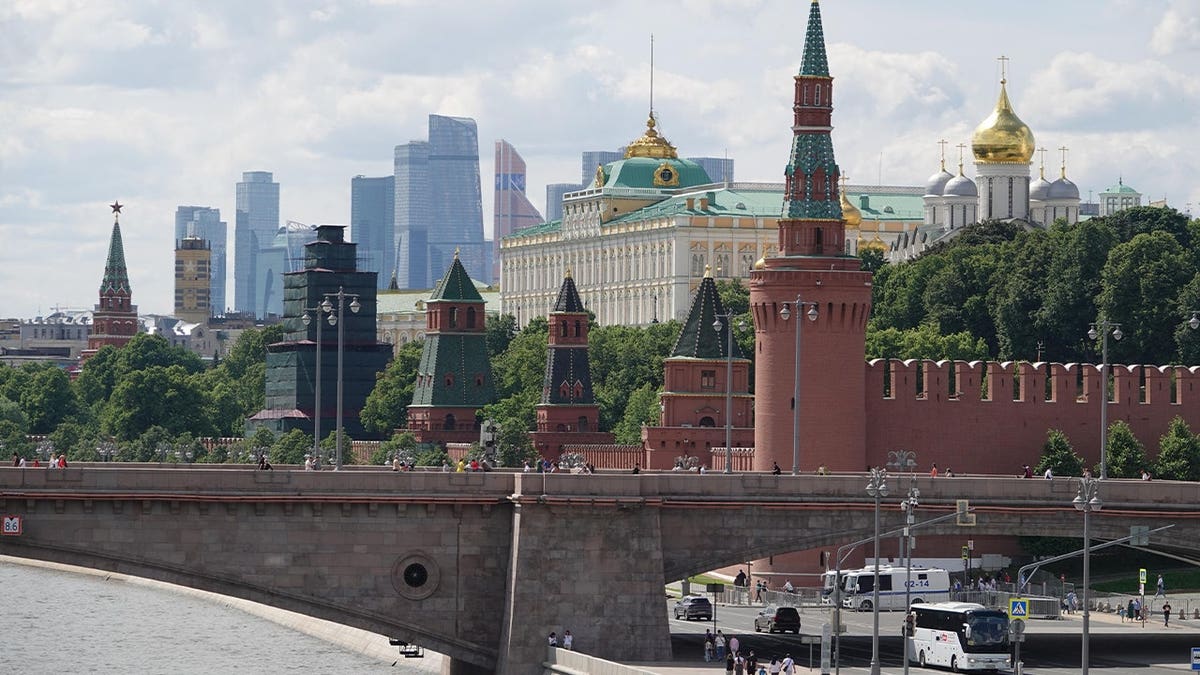
From the Moskva River, the Kremlin and the high-rise and business district of Moskva City (background) can be seen behind the bridge. (Ulf Mauder/picture alliance via Getty Images)
Kolyandr said the policy reflects a wider redistribution of property aimed at bringing profitable or strategic assets under closer state influence.
«It sends a signal across the system that if you do not toe the line, your property may be taken away,» he said.
He added that while the process may generate some revenue for the state, funding the war is unlikely to be the primary driver.
CLICK HERE TO DOWNLOAD THE FOX NEWS APP
«On the one hand, it helps to generate a bit of cash for the budget,» he said. «But I don’t think it’s the main reason.»
The Russian Embassy in Washington and the Russian foreign ministry did not respond to requests for comment.
companies, ukraine, vladimir putin, foreign affairs, russia









INTERNACIONAL
Trump jokes about security concerns, mic problems and Dr Oz during freewheeling Florida speech

NEWYou can now listen to Fox News articles!
President Donald Trump turned a microphone problem into a comic riff during remarks at The Villages in Florida, asking staff to «turn the mic up please» before joking he was «screaming my a– off because the mic is no good.»
The moment came during a wide-ranging, joke-heavy speech before the Florida retirement community, where Trump bounced between policy remarks, crowd work and off-the-cuff riffs, and, at one point, quipping, «What’s more secure than The Villages?» as he played to the audience.
Trump first flagged the audio issue while discussing immigration and inflation under former President Joe Biden.
«Tell them to turn up the microphone,» Trump said. «Will you please turn up the mic?»
TRUMP HIT IN THE FACE WITH MICROPHONE, QUIPS OPERATOR ‘BECAME A BIG STORY’
President Donald Trump arrives to speak at The Villages Charter School in The Villages, Fla., on Friday. He discussed economic development, his administration’s tax plan and Social Security. (Roberto Schmidt/Getty Images)
«You pay these guys a lot of money, and then you get up, and the mic isn’t on properly. And then they want their money,» he continued. «And I don’t believe in paying people to do a bad job.
«I’m screaming my a– off because the mic is no good,» he added. «Turn the mic up please.»
Trump opened the speech by joking about why he chose to appear at The Villages despite recent security concerns after the White House Correspondents’ Association (WHCA) dinner shooting Saturday night.
TRUMP JOKES HE’D LOOK ’20 POUNDS HEAVIER’ IN A BULLETPROOF VEST, SAYS HE DOESN’T THINK ABOUT THREATS
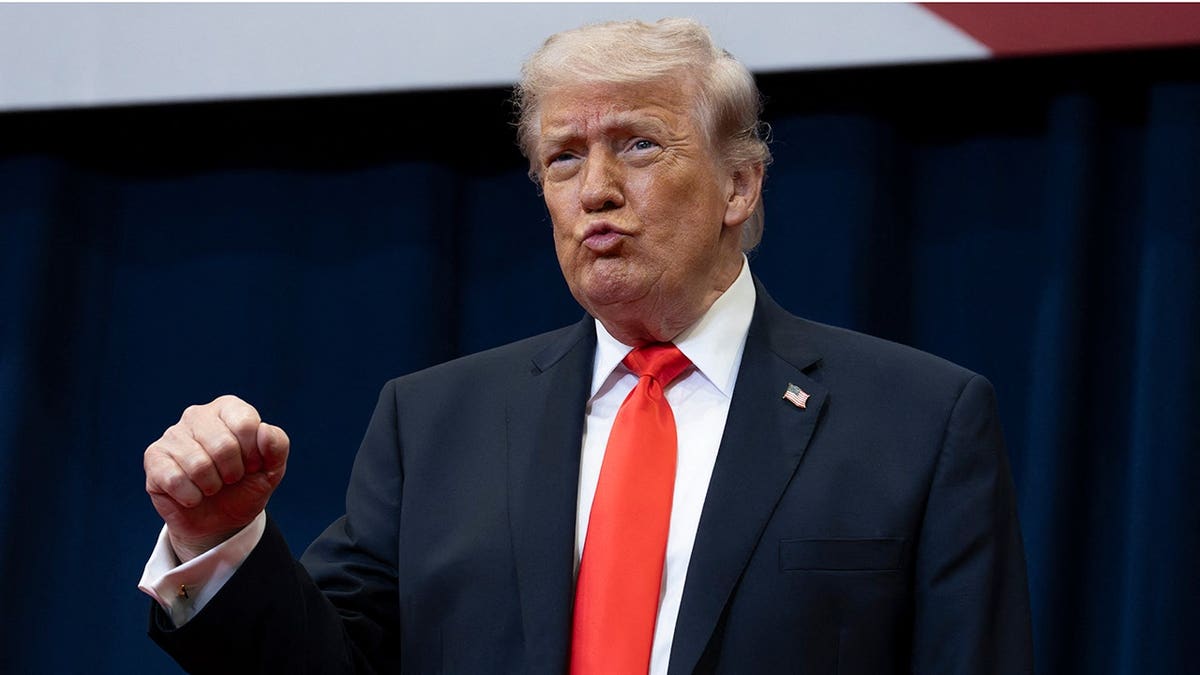
President Donald Trump arrives to give a speech about taxes and Social Security at The Villages, Fla. (Jim Watson/AFP)
«They say on my life I should be indoors at a secure facility where I can quietly, beautifully and safely play out my term,» Trump said. «I said, what’s more secure than The Villages?»
He also praised the Florida community as «the single largest community of seniors anywhere in the world,» before joking about the size of the overflow crowd.
«They have an overflow room that’s bigger than this,» Trump said. «Why the h— didn’t I go there? To start off.»
He repeatedly teased the crowd about age while arguing his administration had delivered for seniors.
«I don’t happen to be a senior,» Trump said. «I’m much younger than you. I’m a much younger man than you. Look at you old guys.
«But I feel I can relate to you anyway.»
TRUMP SAYS ‘LEGENDARY’ CROWD REACTION AT UFC 314 SHOWS THE ADMINISTRATION IS ‘DOING A GOOD JOB’
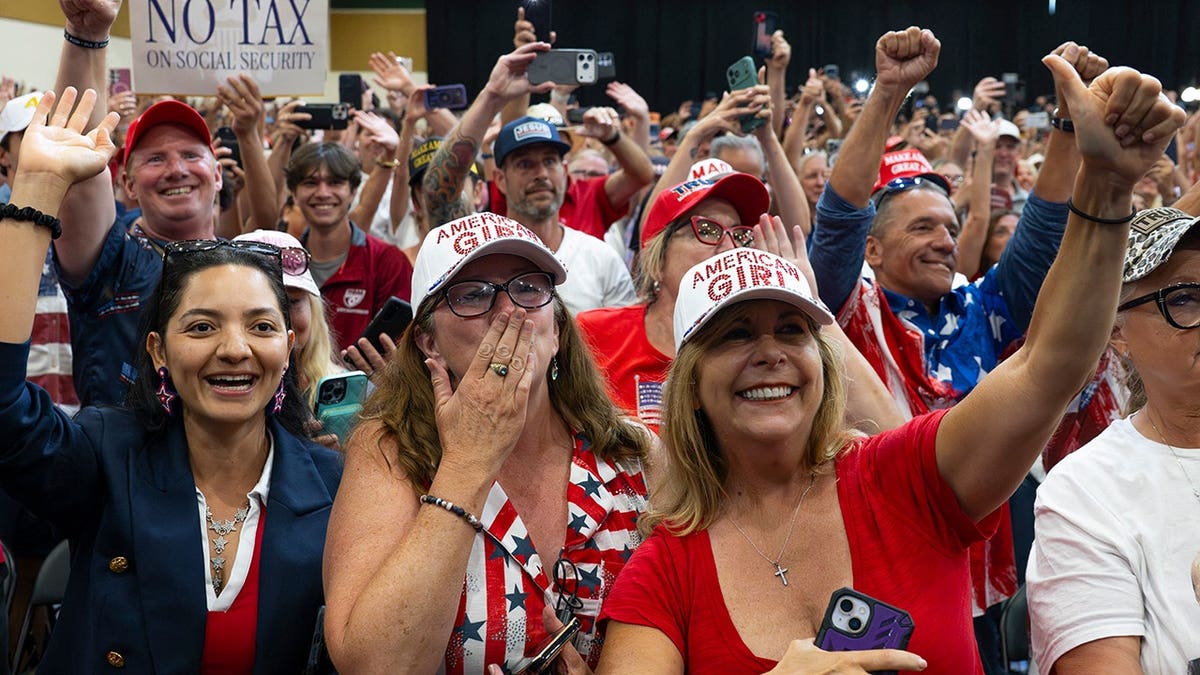
Supporters cheer as President Donald Trump arrives to give a speech about taxes and Social Security at The Villages in Florida. (Jim Watson/AFP)
Trump also singled out his regular rally supporters near the stage, calling them «front row Joes.»
«They’re all over. I can’t get rid of them,» Trump said. «They are sick individuals, but we love them.»
At another point, Trump defended what he calls «the weave,» his term for jumping between topics mid-speech.
«I love the weave because the weave is great,» Trump said. «Someday, I won’t come back, and they’ll say, ‘all right, he shot.’ That’s the weave. I call it the weave because you get a lot of stories into one little sentence.»
Trump later joked about traveling with Dr. Mehmet Oz while discussing Medicare and Medicaid.
TRUMP CLAIMS WHITE HOUSE DOCTORS REPORT HIM IN ‘PERFECT HEALTH,’ SAYS HE ‘ACED’ THIRD STRAIGHT COGNITIVE EXAM
«We have a man here who knows more about Medicaid, Medicare, medical crap than any human being,» Trump said.
«It’s the most boring trip I’ve ever made,» he added. «He’s telling me about Medicare, Medicaid. All I want to do is take care of you. I don’t care, I said, ‘You work out the details.’»
While discussing prescription drug costs, Trump also recounted a conversation with what he described as a wealthy friend seeking cheaper weight loss medication overseas.
CLICK HERE TO DOWNLOAD THE FOX NEWS APP
«He called it the fat shot,» Trump said. «I’ve given it that name, the fat shot.»
The microphone complaint was ultimately one of several unscripted moments as Trump moved between policy and personal banter, delivering a speech that, at times, resembled a stand-up-style riff more than a traditional political address.
donald trump, florida, mehmet mz, geriatric health, politics, social security
INTERNACIONAL
Honduras se retira de la Corte Centroamericana de Justicia y alega ineficiencia y ahorro económico
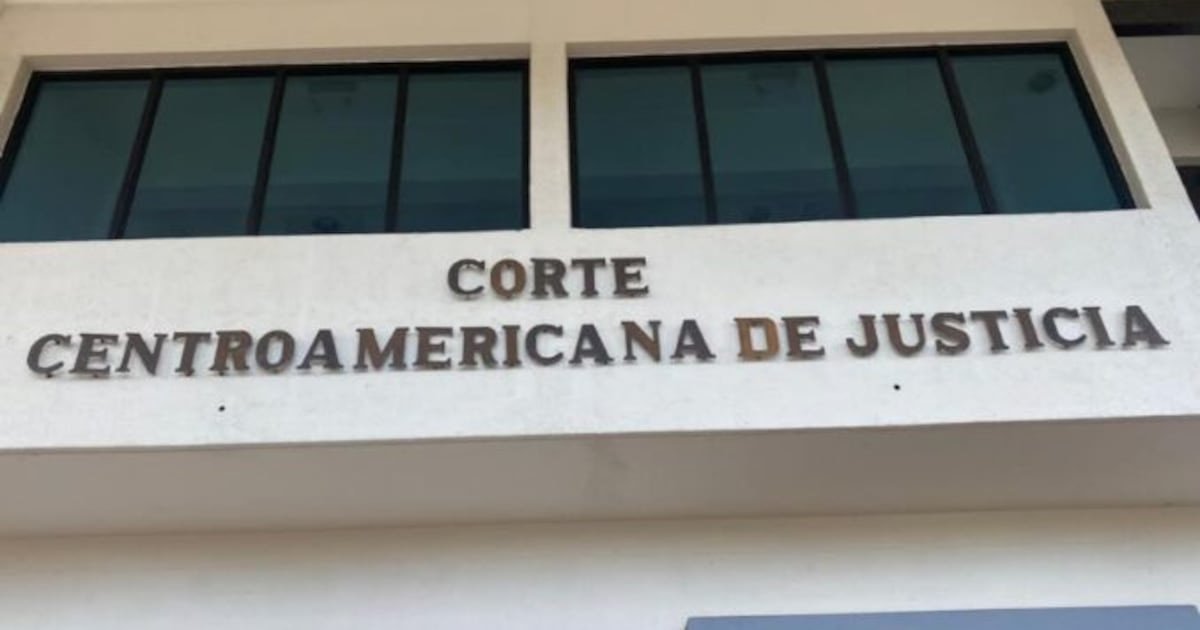
El Gobierno de Honduras oficializó su retiro “con efecto inmediato” del Convenio de la Corte Centroamericana de Justicia (CCJ), en una decisión que marca un giro en su política institucional y regional.
La medida fue comunicada por la Secretaría de Relaciones Exteriores y Cooperación Internacional, que justificó la salida en el ejercicio pleno de la soberanía nacional y en el marco del derecho internacional.
Según el comunicado oficial, el país centroamericano abandona el instrumento suscrito el 12 de diciembre de 1992, argumentando que las condiciones actuales del tribunal han cambiado significativamente respecto a las que motivaron su creación.
En ese sentido, la Cancillería señaló que la Corte Centroamericana de Justicia operaba únicamente con dos Estados parte, lo que afecta su carácter multilateral y limita su funcionalidad.
El Gobierno hondureño sostuvo que esta situación ha reducido la operatividad y representatividad del organismo regional, restándole efectividad como instancia judicial dentro del Sistema de Integración Centroamericana (SICA).
En esa línea, las autoridades destacaron que la decisión también responde a un proceso de revisión institucional más amplio, enfocado en mejorar la eficiencia del Estado.
La salida del convenio se enmarca en las prioridades de la Agenda Presidencial 2026-2030, orientada al reordenamiento institucional y al saneamiento de las finanzas públicas.
Uno de los principales argumentos expuestos por el Ejecutivo es el impacto económico de esta decisión. Con el retiro, Honduras dejará de erogar aproximadamente 720,946.71 dólares anuales, recursos que serán liberados y reasignados a lo que el Gobierno denomina “prioridades ciudadanas”.
La Cancillería indicó que estos fondos podrán ser utilizados en áreas estratégicas para la población, aunque no detalló de inmediato los sectores específicos que se verán beneficiados.
No obstante, la medida ha sido presentada como parte de un esfuerzo por optimizar el uso del gasto público en un contexto de desafíos económicos.
Este no es el primer movimiento de Honduras en relación con la Corte Centroamericana de Justicia. El país ya se había retirado anteriormente en mayo de 2004, durante la administración del expresidente Ricardo Maduro, para luego reincorporarse en octubre de 2006.
La Corte Centroamericana de Justicia, con sede en Managua, Nicaragua, es el órgano judicial principal del sistema de integración regional, encargado de resolver controversias entre los Estados miembros y garantizar la aplicación del derecho comunitario centroamericano.

Sin embargo, la falta de participación activa de varios países ha sido señalada como uno de los factores que han debilitado su funcionamiento en los últimos años, lo que ha generado cuestionamientos sobre su eficacia y relevancia en el escenario regional.
Con esta decisión, Honduras se suma a una serie de movimientos recientes en su política exterior, orientados a reforzar una postura más autónoma y enfocada en intereses nacionales.
Analistas consideran que el retiro también refleja una tendencia hacia la reconfiguración de su participación en organismos internacionales.
Mientras tanto, el Gobierno reiteró que continuará actuando conforme al derecho internacional y reafirmó su compromiso con los mecanismos de integración regional, aunque bajo criterios que garanticen eficiencia, representatividad y beneficio directo para la población hondureña.
La medida abre un nuevo capítulo en la relación de Honduras con las instancias regionales, en un contexto donde la optimización de recursos y la redefinición del rol del Estado se han convertido en ejes centrales de la agenda gubernamental.
corresponsal:Desde Tegucigalpa, Honduras
NEWYou can now listen to Fox News articles!
President Donald Trump informed Congress Friday that a ceasefire with Iran has ended hostilities and reset the clock on congressional war powers limits, but legal experts say ongoing military operations complicate that claim.
«For War Powers Resolution purposes, the hostilities that began on Saturday, February 28 have terminated,» a senior administration official told Fox News Digital.
«Both parties agreed to a 2-week ceasefire on Tuesday, April 7 that has since been extended,» the official went on. «There has been no exchange of fire between U.S. Armed Forces and Iran since Tuesday, April 7.»
The White House formally notified Congress in a letter Friday under the War Powers Resolution that it considers hostilities to have ended following the ceasefire.
LIVE UPDATES: IRAN THREATENS ‘LONG AND PAINFUL STRIKES’ ON US POSITIONS AS TRUMP FACES WAR POWERS DEADLINE
U.S. Marines aboard USS New Orleans (LPD 18) stand watch in the Arabian Sea during naval blockade operations against Iran. As of today, 44 commercial vessels have been directed to turn around or return to port, according to U.S. Central Command. (U.S. Central Command)
«Despite the success of United States operations against the Iranian regime and continued efforts to secure a lasting peace, the threat posed by Iran and its proxy forces remains significant. Accordingly, the Department of War continues to update its force posture in the AOR in select areas to counter Iranian proxy forces’ threats and to protect the United States and its allies and partners,» Trump wrote in a letter to Congress Friday.
«As the situation evolves, I will continue to update the Congress on noteworthy changes in the United States Armed Forces presence, consistent with the War Powers Resolution.»
For decades, presidents of both parties have pushed the limits of the War Powers Resolution, seeking flexibility to conduct military operations without being hindered by a congressional vote.
The law requires the president to end the use of U.S. forces within 60 days of entering hostilities unless Congress authorizes the operation, with a limited extension allowed for withdrawal.
The more than two-month conflict has exposed sharply different interpretations of the law and whether the White House must seek congressional approval. Bombing ceased on April 7, but U.S. forces continue enforcing a naval blockade in the Strait of Hormuz — an operation widely considered an act of war.
«A ceasefire does not automatically suspend the War Powers 60-day clock,» said John Bellinger, who served as legal adviser to the State Department and National Security Council under President George W. Bush.
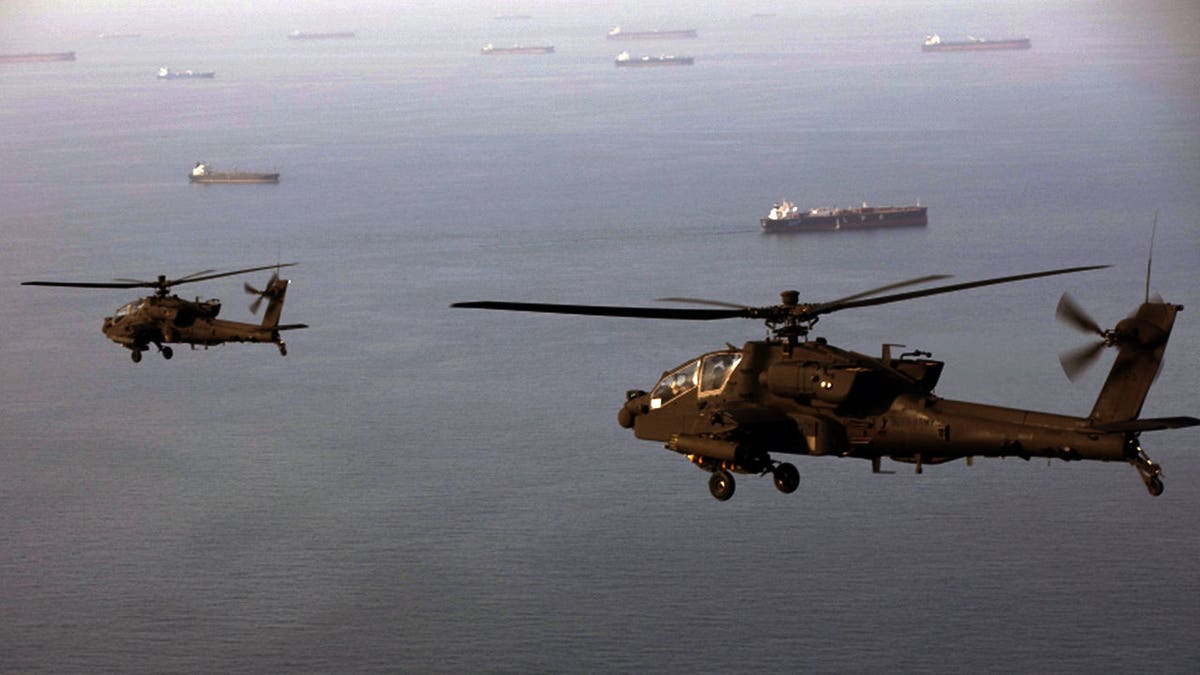
The U.S. military has been enforcing a naval blockade in the Strait of Hormuz, even during the ceasefire. (U.S. Central Command)
He pointed to the continued presence of U.S. warships and thousands of troops enforcing a blockade in the Strait of Hormuz, arguing American forces «are clearly still conducting military operations and are in potential danger.»
U.S. forces have continued boarding and seizing vessels suspected of violating the blockade, at times using force to disable ships before Marines conduct inspections.
Stephen Pomper, policy chief at the International Crisis Group and a former senior National Security Council official, was more direct.
«I don’t think it’s a very credible interpretation. It’s certainly not based on the text of the statute,» Pomper said.
«There’s still an enormous American deployment. There’s an active blockade, which is an act of war.»
Trump is far from the first president to test the limits of the War Powers resolution, experts noted.
During the late 1980s «Tanker War» with Iran, the George H.W. Bush administration argued that individual naval engagements did not amount to sustained hostilities. In 1999, the Clinton administration maintained that congressional funding for the Kosovo campaign effectively constituted authorization.
More recently, the Obama administration argued that U.S. involvement in Libya did not rise to the level of «hostilities» under the War Powers Resolution, even as American forces supported air operations. The Biden administration made similar arguments in defending certain U.S. deployments tied to Yemen.
«We have seen Republican and Democratic administrations alike bypass the act in creative ways,» Nicholas Creel, Associate Prof. of Business Law at Georgia College and State University told Fox News Digital.
PELOSI’S WAR POWERS FLIP-FLOP EXPOSED IN RESURFACED OBAMA-ERA CLIP CONTRADICTS TRUMP CRITICISM ON IRAN
Congress has periodically challenged similar interpretations in past conflicts but has rarely forced a withdrawal of U.S. forces. Courts have also largely stayed out of War Powers disputes, leaving presidents with significant latitude to define the scope of hostilities.
If Congress does not act, the administration could continue operations without new authorization.
CLICK HERE TO DOWNLOAD THE FOX NEWS APP
«It’s really up to Congress, and as often as not, Congress doesn’t want to push back,» Pomper said.
Matt Zierler, an international relations professor at Michigan State University, told Fox News Digital that Congress likely does not have the «real will» to fully execute the War Powers Act because other powers, such as passing appropriation bills that would restrict defense spending, would be more effective. Even so, Zierler said sequestration measures could come at a political loss.
«It’s a big political loss, potentially for Congress, if they start cutting off funding,» Zierler said, suggesting that the president could claim the cut in funds by Congress is hurting troops and national security.
«It is a political or symbolic game, but it’s not necessarily something that most members of Congress want to play, because, you know, they don’t have all the intelligence,» Zierler said. «They don’t know what’s going on, and it can get really messy.»
Asked about the 60-day clock on Thursday, Senate Armed Services Committee Chairman Roger Wicker, R-Miss., told reporters: «I have not spent a great deal of time worrying about that.»
wars, conflicts, congress, armed forces, war with iran, politics

De los escenarios de Nueva York al corazón de Franco Colapinto: el presente soñado de Maia Reficco

Las condiciones de vida mejoraron para 7,1 millones de personas y se deterioraron para 5,2 millones

Milei se enrosca con “la cadena del desánimo” mientras crece un reclamo interno de los ex PRO

Los árbitros de la fecha 4 de la Sudamericana: Roldán a la final de Racing en Brasil y un paraguayo para River

Hay alerta naranja y amarilla por tormentas y vientos para este sábado 2 de mayo: las provincias afectadas

Trump jokes about security concerns, mic problems and Dr Oz during freewheeling Florida speech

Milei cruzó a una diputada de la izquierda que interrumpía a Adorni: “¡Ustedes son los asesinos!”

A la salida del Congreso, Javier Milei evitó las preguntas de los periodistas y los calificó de “chorros”

Maratónica defensa de Manuel Adorni en Diputados: “No voy a renunciar”

La escandalosa separación de Diego Maradona Jr. y su esposa: “Ella estaría de novia con el mejor amigo de él”

 POLITICA3 días ago
Milei cruzó a una diputada de la izquierda que interrumpía a Adorni: “¡Ustedes son los asesinos!”
- POLITICA2 días ago
A la salida del Congreso, Javier Milei evitó las preguntas de los periodistas y los calificó de “chorros”
- POLITICA2 días ago
Maratónica defensa de Manuel Adorni en Diputados: “No voy a renunciar”