
INTERNACIONAL
Trump aims to reset war powers clock with controversial bid to bypass Congress

NEWYou can now listen to Fox News articles!
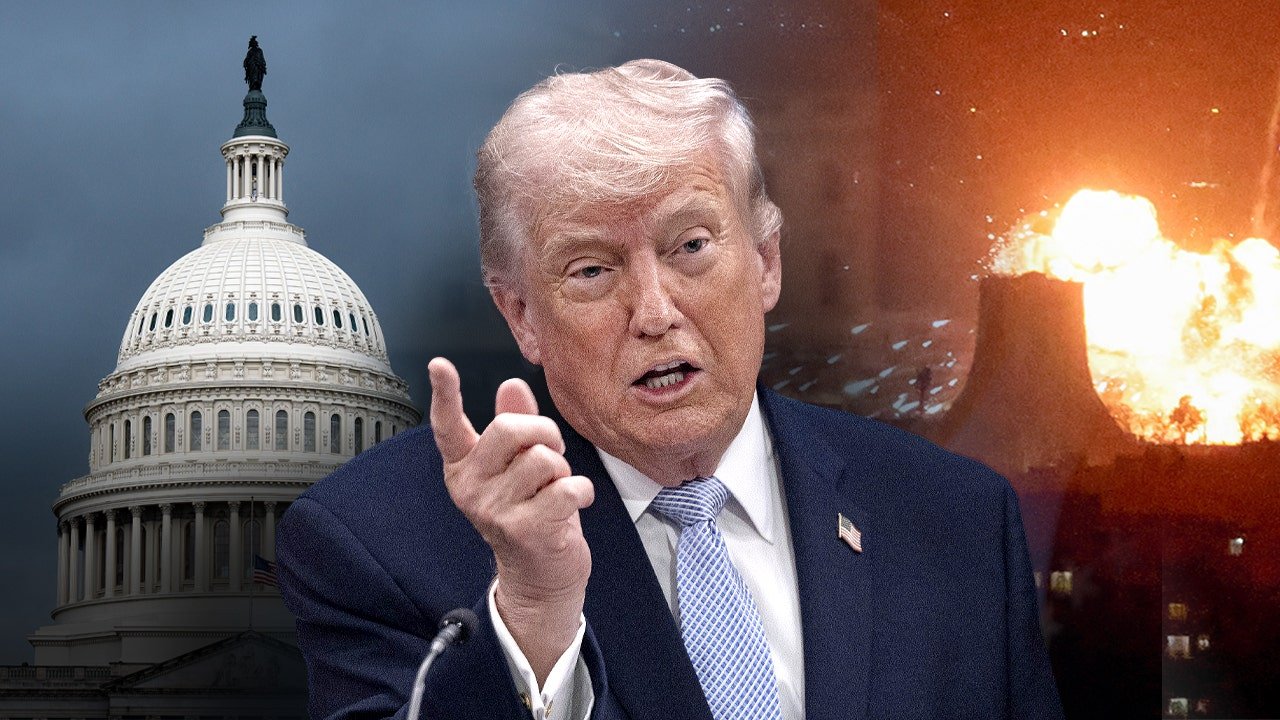
President Donald Trump informed Congress Friday that a ceasefire with Iran has ended hostilities and reset the clock on congressional war powers limits, but legal experts say ongoing military operations complicate that claim.
«For War Powers Resolution purposes, the hostilities that began on Saturday, February 28 have terminated,» a senior administration official told Fox News Digital.
«Both parties agreed to a 2-week ceasefire on Tuesday, April 7 that has since been extended,» the official went on. «There has been no exchange of fire between U.S. Armed Forces and Iran since Tuesday, April 7.»
The White House formally notified Congress in a letter Friday under the War Powers Resolution that it considers hostilities to have ended following the ceasefire.
LIVE UPDATES: IRAN THREATENS ‘LONG AND PAINFUL STRIKES’ ON US POSITIONS AS TRUMP FACES WAR POWERS DEADLINE
U.S. Marines aboard USS New Orleans (LPD 18) stand watch in the Arabian Sea during naval blockade operations against Iran. As of today, 44 commercial vessels have been directed to turn around or return to port, according to U.S. Central Command. (U.S. Central Command)
«Despite the success of United States operations against the Iranian regime and continued efforts to secure a lasting peace, the threat posed by Iran and its proxy forces remains significant. Accordingly, the Department of War continues to update its force posture in the AOR in select areas to counter Iranian proxy forces’ threats and to protect the United States and its allies and partners,» Trump wrote in a letter to Congress Friday.
«As the situation evolves, I will continue to update the Congress on noteworthy changes in the United States Armed Forces presence, consistent with the War Powers Resolution.»
For decades, presidents of both parties have pushed the limits of the War Powers Resolution, seeking flexibility to conduct military operations without being hindered by a congressional vote.
The law requires the president to end the use of U.S. forces within 60 days of entering hostilities unless Congress authorizes the operation, with a limited extension allowed for withdrawal.
The more than two-month conflict has exposed sharply different interpretations of the law and whether the White House must seek congressional approval. Bombing ceased on April 7, but U.S. forces continue enforcing a naval blockade in the Strait of Hormuz — an operation widely considered an act of war.
«A ceasefire does not automatically suspend the War Powers 60-day clock,» said John Bellinger, who served as legal adviser to the State Department and National Security Council under President George W. Bush.
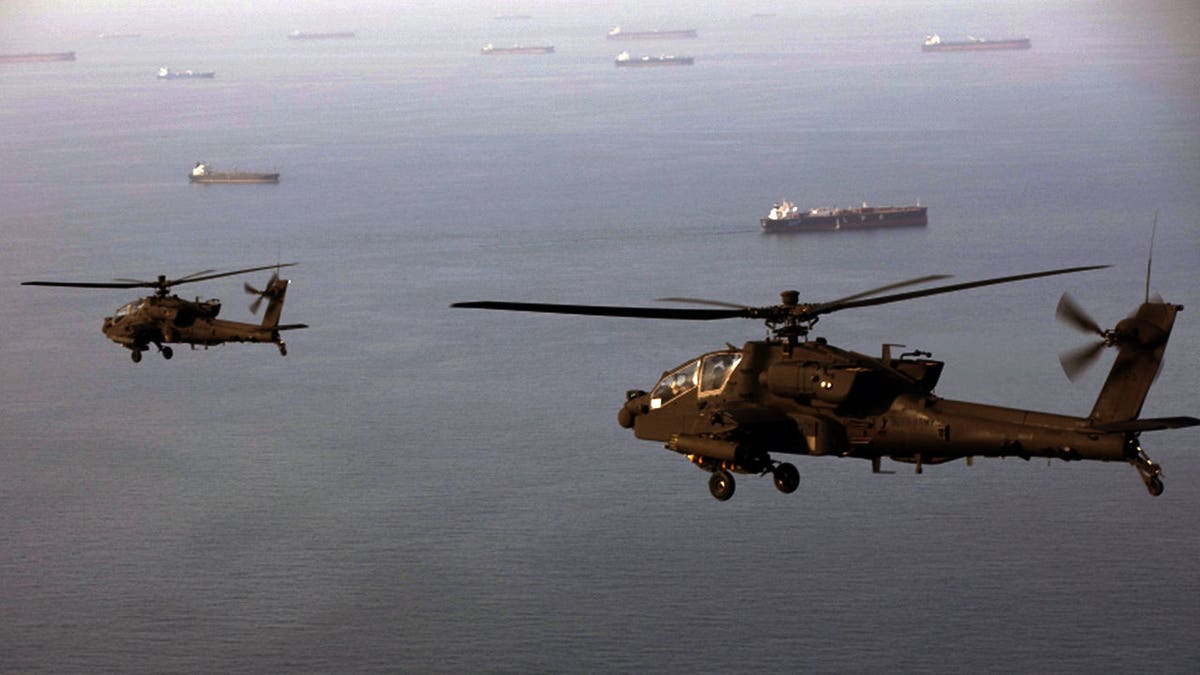
The U.S. military has been enforcing a naval blockade in the Strait of Hormuz, even during the ceasefire. (U.S. Central Command)
He pointed to the continued presence of U.S. warships and thousands of troops enforcing a blockade in the Strait of Hormuz, arguing American forces «are clearly still conducting military operations and are in potential danger.»
U.S. forces have continued boarding and seizing vessels suspected of violating the blockade, at times using force to disable ships before Marines conduct inspections.
Stephen Pomper, policy chief at the International Crisis Group and a former senior National Security Council official, was more direct.
«I don’t think it’s a very credible interpretation. It’s certainly not based on the text of the statute,» Pomper said.
«There’s still an enormous American deployment. There’s an active blockade, which is an act of war.»
Trump is far from the first president to test the limits of the War Powers resolution, experts noted.
During the late 1980s «Tanker War» with Iran, the George H.W. Bush administration argued that individual naval engagements did not amount to sustained hostilities. In 1999, the Clinton administration maintained that congressional funding for the Kosovo campaign effectively constituted authorization.
More recently, the Obama administration argued that U.S. involvement in Libya did not rise to the level of «hostilities» under the War Powers Resolution, even as American forces supported air operations. The Biden administration made similar arguments in defending certain U.S. deployments tied to Yemen.
«We have seen Republican and Democratic administrations alike bypass the act in creative ways,» Nicholas Creel, Associate Prof. of Business Law at Georgia College and State University told Fox News Digital.
PELOSI’S WAR POWERS FLIP-FLOP EXPOSED IN RESURFACED OBAMA-ERA CLIP CONTRADICTS TRUMP CRITICISM ON IRAN
Congress has periodically challenged similar interpretations in past conflicts but has rarely forced a withdrawal of U.S. forces. Courts have also largely stayed out of War Powers disputes, leaving presidents with significant latitude to define the scope of hostilities.
If Congress does not act, the administration could continue operations without new authorization.
CLICK HERE TO DOWNLOAD THE FOX NEWS APP
«It’s really up to Congress, and as often as not, Congress doesn’t want to push back,» Pomper said.
Matt Zierler, an international relations professor at Michigan State University, told Fox News Digital that Congress likely does not have the «real will» to fully execute the War Powers Act because other powers, such as passing appropriation bills that would restrict defense spending, would be more effective. Even so, Zierler said sequestration measures could come at a political loss.
«It’s a big political loss, potentially for Congress, if they start cutting off funding,» Zierler said, suggesting that the president could claim the cut in funds by Congress is hurting troops and national security.
«It is a political or symbolic game, but it’s not necessarily something that most members of Congress want to play, because, you know, they don’t have all the intelligence,» Zierler said. «They don’t know what’s going on, and it can get really messy.»
Asked about the 60-day clock on Thursday, Senate Armed Services Committee Chairman Roger Wicker, R-Miss., told reporters: «I have not spent a great deal of time worrying about that.»
wars, conflicts, congress, armed forces, war with iran, politics









NEWYou can now listen to Fox News articles!
New York City Mayor Zohran Mamdani’s game plan for government-run grocery stores faced criticism Monday after a city official told reporters a «library-card-esque system» may be employed to prevent abuse of the 30% discounted markets.
Mamdani took a question from a reporter who asked about preventing bulk purchases of groceries at the artificial discount from being re-sold at MSRP or higher.
The mayor responded that the government grocery Request-for-Proposal makes clear «this is a program for New Yorkers to be able to put food on the table, not a program for people to be able to make a quick buck through reselling. I’m going to pass it over to our EDC head, Jeanny Pak, to add some additional details.»
MAMDANI’S CITY GROCERY PLAN COULD LEAVE TAXPAYERS PAYING FOR EVERY BANANA
New York City Mayor Zohran Mamdani holds up bananas as he speaks at a food distribution center on July 27, 2026, in the Brooklyn borough of New York City. (Spencer Platt/Getty Images)
It was Pak’s follow-up that raised eyebrows, given Mamdani and many Democrats’ staunch opposition to voter ID and Republicans’ SAVE America Act moving through Congress.
«[W]e are looking to make sure that we target New Yorkers, whether it be a sort of a library card-esque thing, and also we manage who’s buying and that is focused on everyday New Yorkers,» Pak said.
«So, we are mindful of that, and so we’re going to make sure that we have all the things in place to ensure that that does not happen.»
SEN MARK WARNER CALLED OUT IN ABC INTERVIEW FOR INACCURATE VOTER ID CLAIMS
When asked about the apparent divergence between Pak’s response referencing a possible ID card-type system and opposition to voter ID, a Mamdani spokesperson said it was an apples-to-oranges contrast.
«Comparisons to voter ID laws or the SAVE Act simply do not apply. This is not an identification system, nor is it a mechanism to verify who someone is, where they live, or how much they earn,» Mamdani’s spokesperson said.
«It is a practical inventory management tool to ensure affordable groceries remain available for the people who need them instead of being cleared off shelves for resale.»
EXPERTS SCORCH MAMDANI’S GROCERY PLAN AS AN ‘ILLUSION’ THAT WILL HAVE TAXPAYERS FOOTING THE BILL
The spokesperson pointed to the mayor’s comments specifically regarding bulk-buying concerns, saying that was the premise of the reporter’s question — not whether people from Pennsylvania, New Jersey or upstate New York would be able to shop at the subsidized outlets.
«To be absolutely clear: NYC Grocery stores will be open to everyone,» the spokesperson said.
«There will be no system to verify identity, residency, or income, and no one will be asked to show ID to shop.»
Instead of an «ID,» the spokesperson said the stores may employ a «customer card» similar to loyalty programs at other grocers like ShopRite, Food Lion or Weis.
The «customer card» would be designed by the «private operator» of the city-run store to «help manage supply and prevent people from buying large quantities of discounted staples for resale» and is strictly intended to «make sure the savings reach families putting food on the table.»
SIGN UP TO GET THE POLITICS NEWSLETTER

La Marqueta, a Latino marketplace in East Harlem, is chosen as the site of the first city-owned grocery store announced by NYC Mayor Zohran Mamdani, on April 14, 2026. (Kendall Rodriguez/Newsday RM/Getty Images)
Customers will not need to apply through City Hall or any agency, the spokesperson added.
Critics were unconvinced.
«ID for government cheese,» said Philadelphia radio host Rich Zeoli.
«After all, we have to make sure no one crosses the border and if they do, the police will be called. So it’s good to see Mamdani now supports ID (just not for voting), border control, and law enforcement,» Zeoli tweeted.
Former Texas congressional candidate Nick Plumb commented on X that «Mamdani wants to protect taxpayer funded grocery store[s] from non-NYC residents they’ll need an ID card to enter. You can[t] make this up.»
Former Virginia Attorney General Jason Miyares, a supporter of voter ID who also opposed the Old Dominion’s recent failed attempt to redraw congressional lines to Democrats’ advantage, also criticized the mayor.
«So let me get this straight: Taxpayer-funded grocery store? Better show a valid ID or you can’t buy milk,» Miyares said.
«Voting for the people who decide how those taxes get spent? A valid ID is somehow ‘racist’ and ‘oppressive’. Unbelievable,» he said.
When asked whether the mayor’s office believed the loyalty card system constituted a form of identification, a Mamdani spokesperson directed Fox News Digital to a paragraph in the Request for Proposal (RFP) that prospective store operators must follow:
«The Operator(s) will create a voluntary free-to-access membership card program to monitor sales activity, and implement the discount program and any associated demand management measures. The savings card shall not be required for physical access to N.Y.C. Groceries site(s) and shall be made easily available to any individual requesting one,» the section read.
«Make it make sense,» added FOX News host Sean Hannity.
New York Republican Congresswoman Claudia Tenney added: «So ID for government grocery stores to stop people abusing the system is fine, but requiring ID to vote not? Got it.»
SAVE Act supporter Sen. Jim Banks, R-Ind., added on X that the hypocrisy must «stop.»
«Democrats: Are fighting to ensure you don’t have to show an ID before voting in our elections. Also Democrats: Want you to show an ID before entering a supermarket.»
«Oh, the irony is too much,» said X CEO Elon Musk.
zohran mamdani, state and local, domestic policies, grocery deals, new york city, socialism, voter fraud concerns, voting
INTERNACIONAL
Masacre en el Mar Negro: un ataque ucraniano con drones provoca siete muertos en una playa de Rusia
INTERNACIONAL
Moscow bombing exposes potential security gaps around Putin’s military elite, expert says
NEWYou can now listen to Fox News articles!
Russian President Vladimir Putin’s drive to project «normalcy» in Moscow may have created a dangerous security blind spot, giving adversaries like Ukraine greater opportunities to target the Kremlin’s military elite, an analyst said Monday.
The assessment came after a deadly explosion ripped through an upscale Moscow restaurant on Aug. 1, where a senior Russian general was reportedly attending a private celebration. Several Russian media outlets claimed the bombing targeted Col. Gen. Alexander Chaiko, who led the troops that made a botched attempt to storm the Ukrainian capital in 2022 and recently was appointed the chief of Russia’s aerospace forces. The claims could not be independently verified.
If Chaiko was indeed at the restaurant, «that would establish a compelling motive for Ukraine,» Dr. Mark Episkopos, a Eurasia research fellow at the Quincy Institute for Responsible Statecraft, told Fox News Digital. «But there has been an ongoing discourse inside Russia that, despite numerous such attacks, Russian elites and even military figures continue to flout [operational security] best practices by holding parties like this in the first place.»
The Russian Embassy in Rome accused Kyiv of carrying out the attack and said in a statement Aug. 2 that the attack was «evidence that the Ukrainian terrorist contagion is already beginning to spread.»
MAYOR CALLS UPSCALE RESTAURANT BOMBING A ‘BRUTAL TERRORIST ACT’
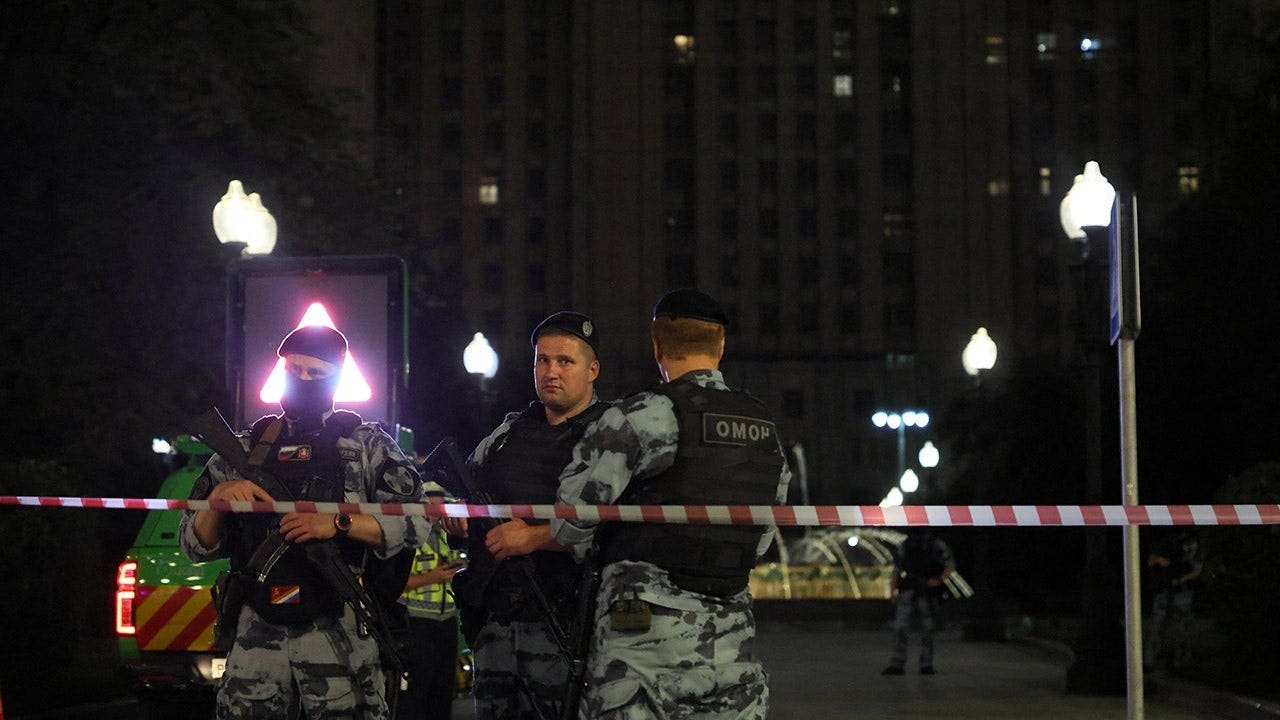
Law enforcement officers and emergency services personnel stand near the site of an explosion at a restaurant in central Moscow, Russia, on Aug. 1, 2026. (REUTERS)
«The other factor here is that Putin has done his best to preserve a sense of ‘normalcy’ in Moscow and St. Petersburg, cultivating a facade of stability that Ukraine has been able to exploit,» Episkopos added.
Russia’s National Anti-Terrorism Committee said an unidentified woman carried an improvised explosive device to the Balzi Rossi restaurant. The committee said the woman was stopped by security before the bomb was detonated near the restaurant’s entrance. The Russian Embassy in Rome on Monday said five people were killed and 19 were injured in the attack.
UKRAINE LAUNCHES WHAT APPEARS TO BE ONE OF ITS LARGEST DRONE ATTACKS AGAINST RUSSIA: REPORT
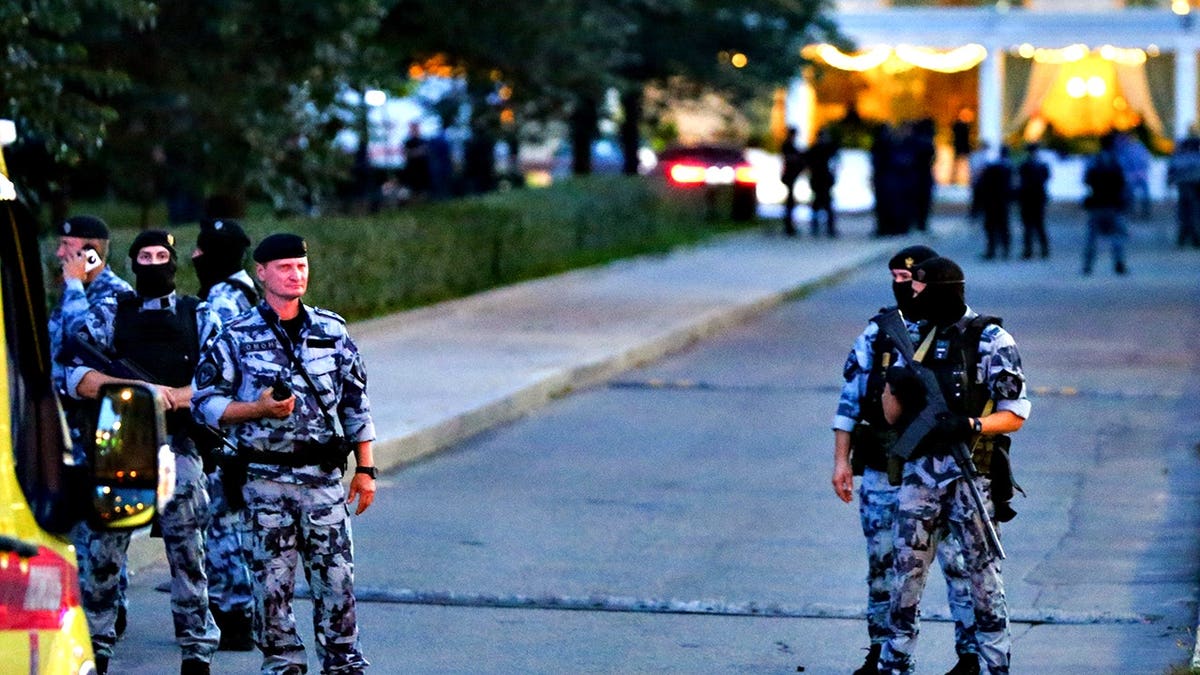
Police block an area near a deadly explosion at a restaurant in Moscow, Saturday, Aug. 1, 2026. (Sergei Vedyashkin/Moscow News Agency via AP)
«This particular event did seem to have a substantial level of security, which is why the person carrying the explosive was reportedly stopped and questioned at the entrance,» Episkopos noted.
Russian investigators suggested the courier may not have known she was transporting explosives and said the device was detonated remotely.
Moscow Mayor Sergei Sobyanin condemned the «brutal terrorist attack,» vowing that those responsible would be punished, according to Deutsche Welle.
‘A NEW KIND OF WAR’: INSIDE UKRAINE’S HIDDEN FACTORIES MASS-PRODUCING COMBAT DRONES
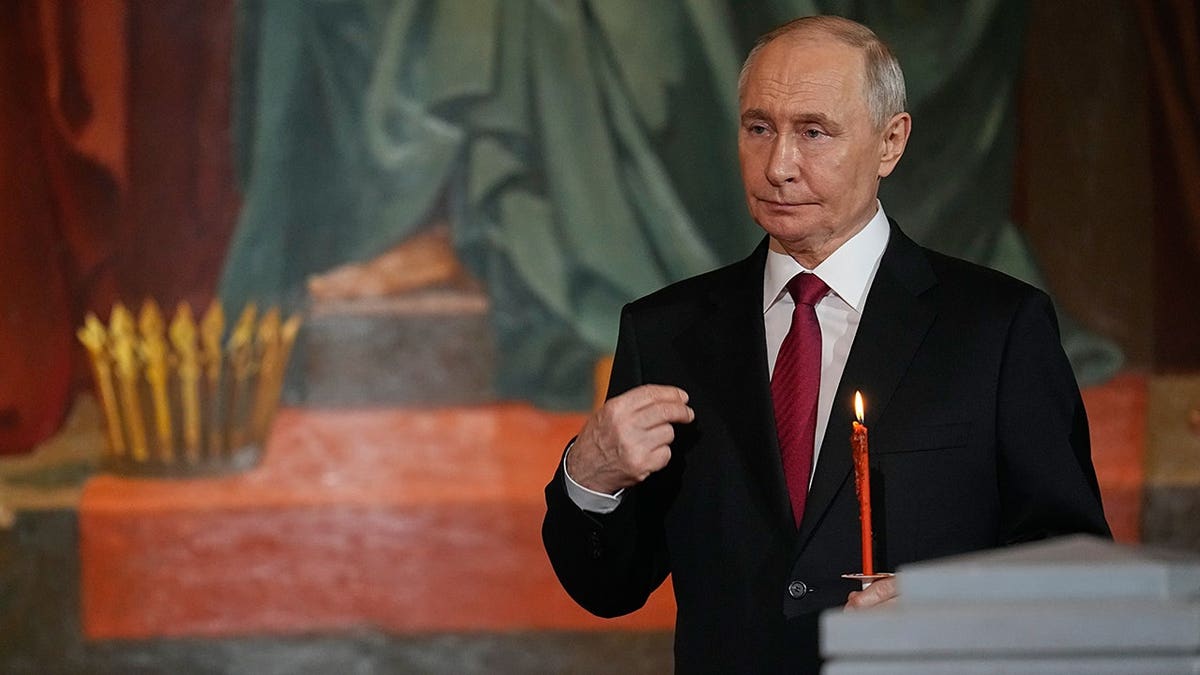
Russian President Vladimir Putin crosses himself during the Orthodox Easter service at the Cathedral of Christ the Saviour in Moscow on April 12, 2026. (Alexander Zemlianichenko/AP)
«The means by which this attack was executed — a remotely detonated explosive device delivered on-site by a civilian — are also consistent with other assassinations deep inside Russian territory previously attributed to Ukraine,» Episkopos said.
«These include those of Lt. Gen. Igor Kirillov, Lt. Gen. Yaroslav Moskalik, Lt. Gen. Fanil Sarvarov, pro-Kremlin blogger Vladlen Tatarsky and others,» he said.
Ukraine had not publicly commented on the restaurant bombing as of Monday afternoon, and no group had claimed responsibility.
Since Russia’s full-scale invasion of Ukraine in 2022, Moscow has repeatedly accused Kyiv of targeting senior military officers, pro-war figures and Russian-installed officials.
MOSCOW, TALIBAN FORGE MILITARY ALLIANCE IN POWER GRAB AFTER US AFGHANISTAN EXIT: REPORTS
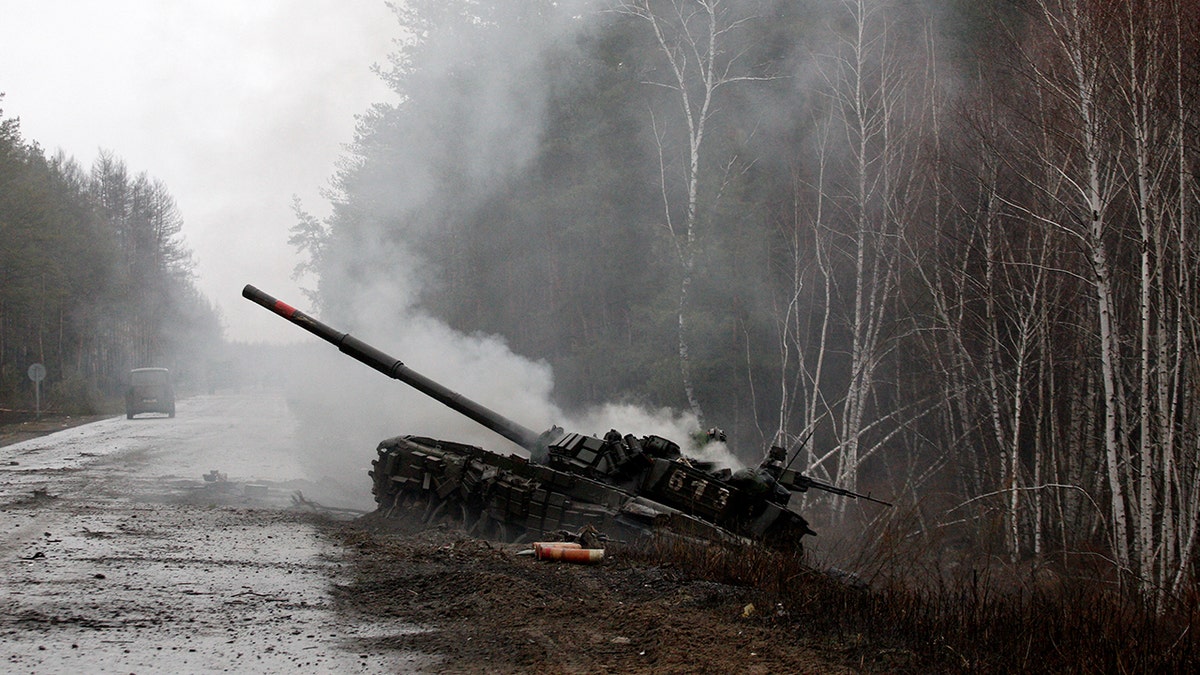
Smoke rises from a Russian tank destroyed by Ukrainian forces, on the side of a road in Lugansk region on February 26, 2022. (ANATOLII STEPANOV/AFP via Getty Images)
Episkopos noted that Kyiv has increasingly used unconventional tactics to offset Russia’s superiority in conventional manpower and firepower.
«Ukraine has pioneered a new style of asymmetric warfare that plays to its strengths and Russia’s weaknesses — relatively porous borders and vast territory that’s difficult to monitor, let alone defend,» he said. «Ukraine’s interior is smaller and comparatively better controlled, and the intelligence it receives from Western partners plays a role here.»
NATO MEMBER SCRAMBLES FIGHTER JETS AS RUSSIAN ATTACK ON UKRAINE KILLS 8
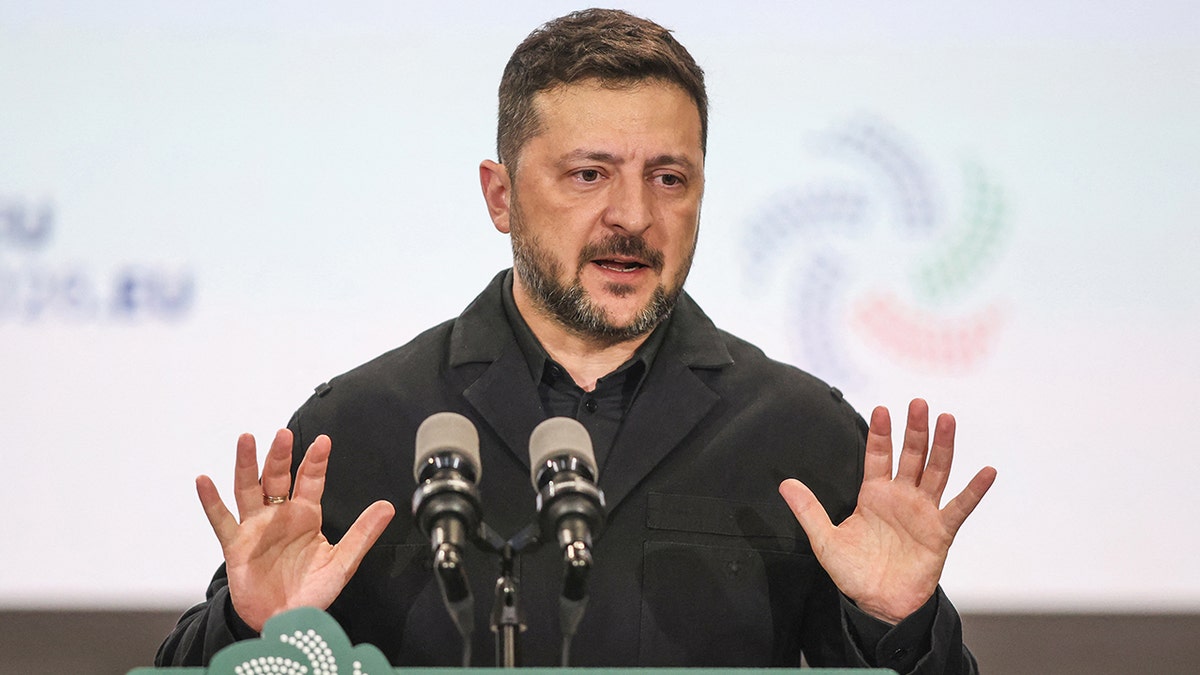
Ukraine’s President Volodymyr Zelensky speaks at a press conference after meetings with the heads of the EU and Ireland, following a formal ceremony to mark the launch of Ireland’s eighth EU presidency, at Dublin Castle in Dublin on July 1, 2026. (Paul Faith / AFP via Getty Images)
Episkopos added: «This makes operations like this more difficult to pull off. Russia has generally relied on its advantage in raw firepower to conduct airstrikes, as opposed to covert assassinations, against high-value Ukrainian targets.»
The Associated Press contributed to this report.
russia, vladimir putin, volodymyr zelenskyy, bombings, assassinations murders, ukraine

Al igual que Jordania: otra selección que enfrentó a Argentina en el Mundial se quedó sin entrenador

Los números de las encuestas para 2027 que preocupan al Gobierno

Mamdani’s grocery giveaway hits ID snag as critics cry foul: ‘Make it make sense’

Rosalía recreó el meme de “vas en contramano” y enloqueció a sus fans en su segundo show en Buenos Aires

Masacre en el Mar Negro: un ataque ucraniano con drones provoca siete muertos en una playa de Rusia

$LIBRA: Novelli pidió precios de un BMW, dos Rolex y propiedades de lujo el día en que juntó a Hayden Davis con Milei

“Vamos a acelerar con todo”: el objetivo del Gobierno por las reformas y la agenda electoral de cara al 2027

Reelecciones indefinidas: el oficialismo bonaerense niega que busque ampliar la Legislatura como parte de una reforma política para beneficiar a los intendentes

“Casta”, “parásito” y “sea democrático”: fuerte respuesta de Victoria Villarruel a Diego Santilli

¡Chau Luck Ra! La salida de soltera de La Joaqui, muy bien acompañada, a días de su separación
-
 POLITICA2 días ago
“Vamos a acelerar con todo”: el objetivo del Gobierno por las reformas y la agenda electoral de cara al 2027
-
 POLITICA1 día ago
Reelecciones indefinidas: el oficialismo bonaerense niega que busque ampliar la Legislatura como parte de una reforma política para beneficiar a los intendentes
-
 CHIMENTOS1 día ago
¡Chau Luck Ra! La salida de soltera de La Joaqui, muy bien acompañada, a días de su separación