INTERNACIONAL
Russia built global recruitment pipeline targeting vulnerable migrants for Ukraine war: report

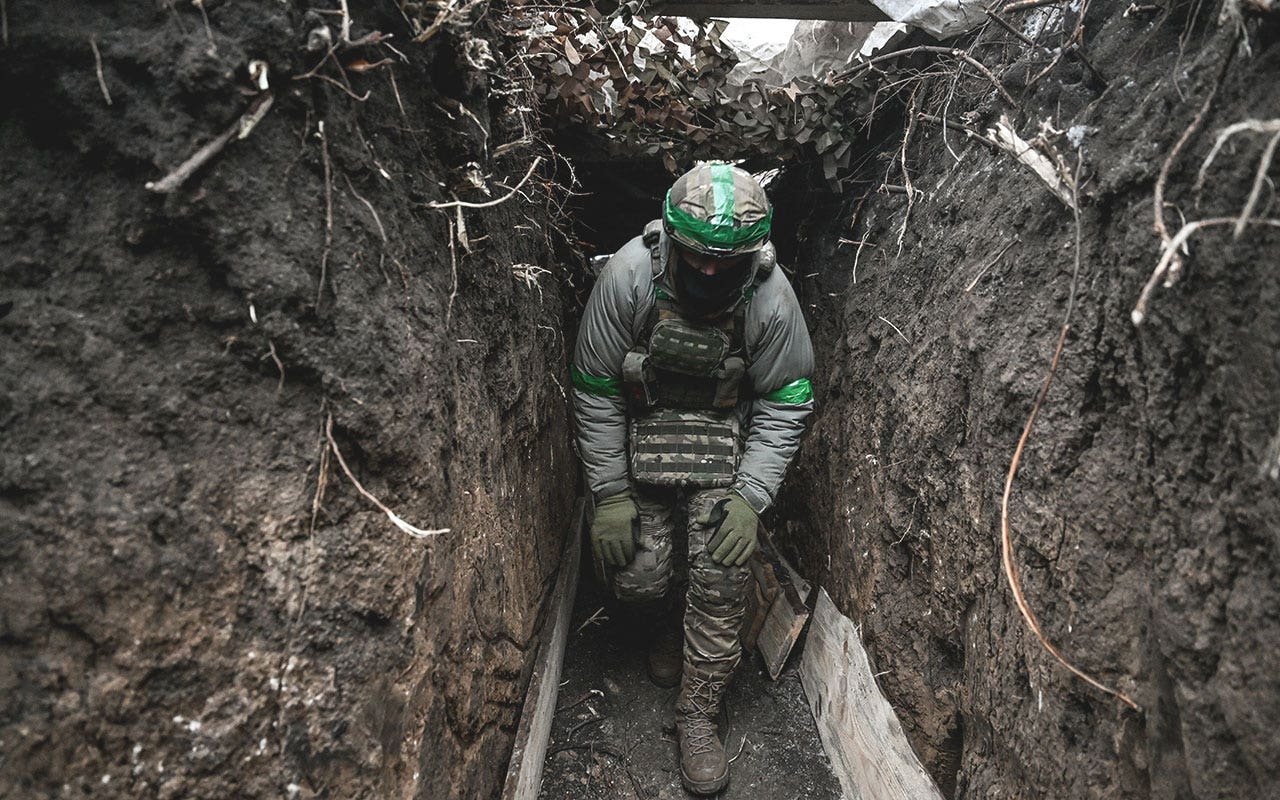
NEWYou can now listen to Fox News articles!
Russia has built what human rights investigators describe as a global pipeline recruiting vulnerable foreign nationals into its war against Ukraine, drawing tens of thousands from more than 130 countries through what groups allege are coercive, deceptive and in some cases trafficking-like practices.
After suffering major battlefield losses and seeking to avoid another politically risky domestic mobilization, Moscow institutionalized a worldwide recruitment system targeting some of the world’s most vulnerable populations to sustain its war machine, a new report by the International Federation for Human Rights (FIDH), Truth Hounds and the Kazakhstan International Bureau for Human Rights argues.
Russia has recruited at least 27,000 foreign nationals since February 2022 from countries across Central and South Asia, Africa, the Middle East and Latin America, according to the report. Ukrainian authorities cited in the report project that Russia could recruit another 18,500 foreign nationals in 2026 alone, which would mark the highest annual total since the full-scale invasion began.
AS WAR LOSSES NEAR 2 MILLION, RUSSIA ACCUSED OF TRAFFICKING FOREIGN RECRUITS FROM AFRICA, ASIA
Nationals of African countries sit in a section of a detention center holding foreign fighters captured while serving in the Russian army on the Ukrainian front in western Ukraine on Nov. 26, 2025. (Genya Savilov/AFP via Getty Images)
«This report highlights something fundamental: that the use of foreign fighters by Russia is neither a marginal nor a spontaneous phenomenon. Russia has built a global recruitment system that deliberately targets the most vulnerable populations — undocumented migrants, detainees, precarious workers, or even foreign students — across dozens of countries in Asia, Africa, and Latin America,» said Alexis Deswaef, president of the International Federation for Human Rights.
«Many of these men knew in some capacity what they were signing up for. But some were also deceived or coerced. But in all cases, it is a State that has instrumentalised them as part of its war machine and sent them to the most dangerous positions on the frontline.»
The report’s central allegation is that Russia’s recruitment apparatus extends far beyond traditional mercenary networks and instead functions as a state-enabled global system that exploits poverty, legal vulnerability and migration insecurity.
Investigators say recruitment evolved from relying primarily on ideologically motivated volunteers early in the war to a broader institutionalized model by mid-2023, after Russia expanded legal eligibility for foreign nationals, eased language and residency requirements, and offered citizenship and financial incentives in exchange for service.
NORTH KOREAN LABORERS DESCRIBE BRUTAL FORCED LABOR IN RUSSIA: «WORKING LIKE A COW, EARNING NOTHING»
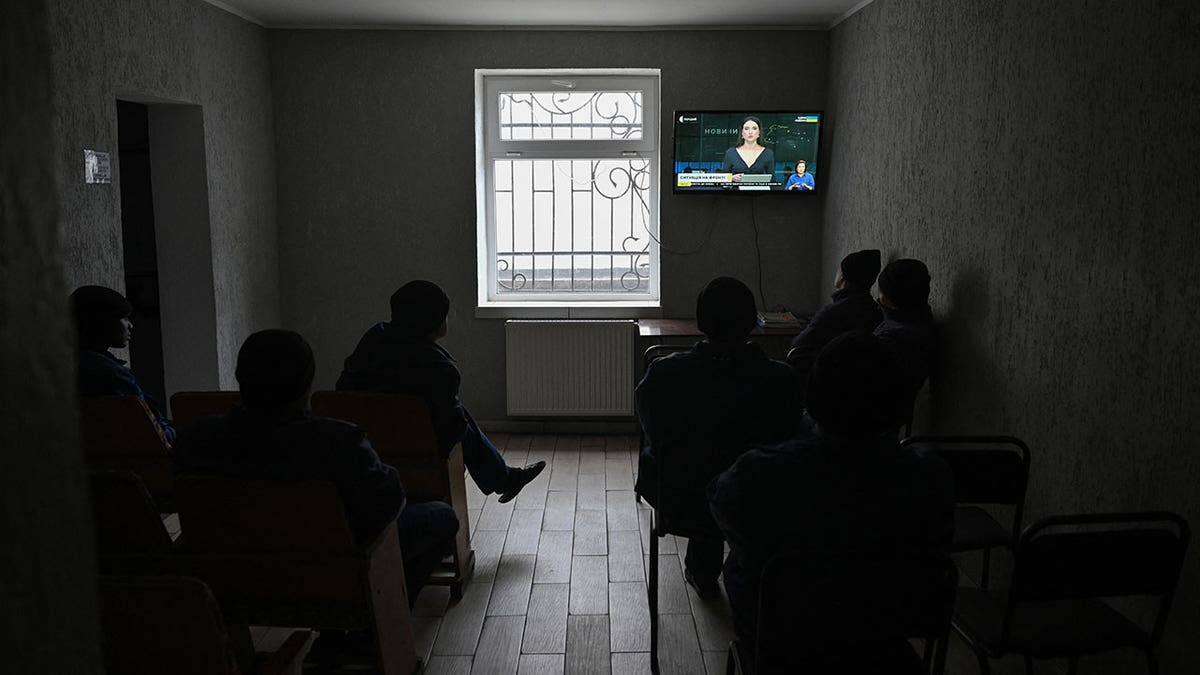
Nationals of African countries watch television in a detention center in western Ukraine holding foreign fighters captured while serving with Russian forces on the Ukrainian front on Nov. 26, 2025. (Genya Savilov/AFP via Getty Images)
In some cases, according to the report, migrants inside Russia were allegedly pressured to enlist through raids, detention threats, document confiscation, fabricated criminal charges and abuse. Outside Russia, recruits were often allegedly lured through promises of civilian jobs, noncombat positions or pathways to Europe, only to be routed into military contracts they often could not read.
Of 16 prisoners of war interviewed for the report, 13 said they were told they would not be required to fight, but were later deployed to frontline positions, often within weeks.
The report also alleges many foreign recruits were funneled into so-called «meat assaults» — high-risk frontal attacks associated with severe casualty rates. Ukrainian estimates cited in the report say at least 3,388 foreign fighters have been killed, with some estimates suggesting one in five recruits may not survive deployment.
HEGSETH WARNS RUSSIA AS SIGNS POINT TO MOSCOW SHARING INTEL WITH IRAN
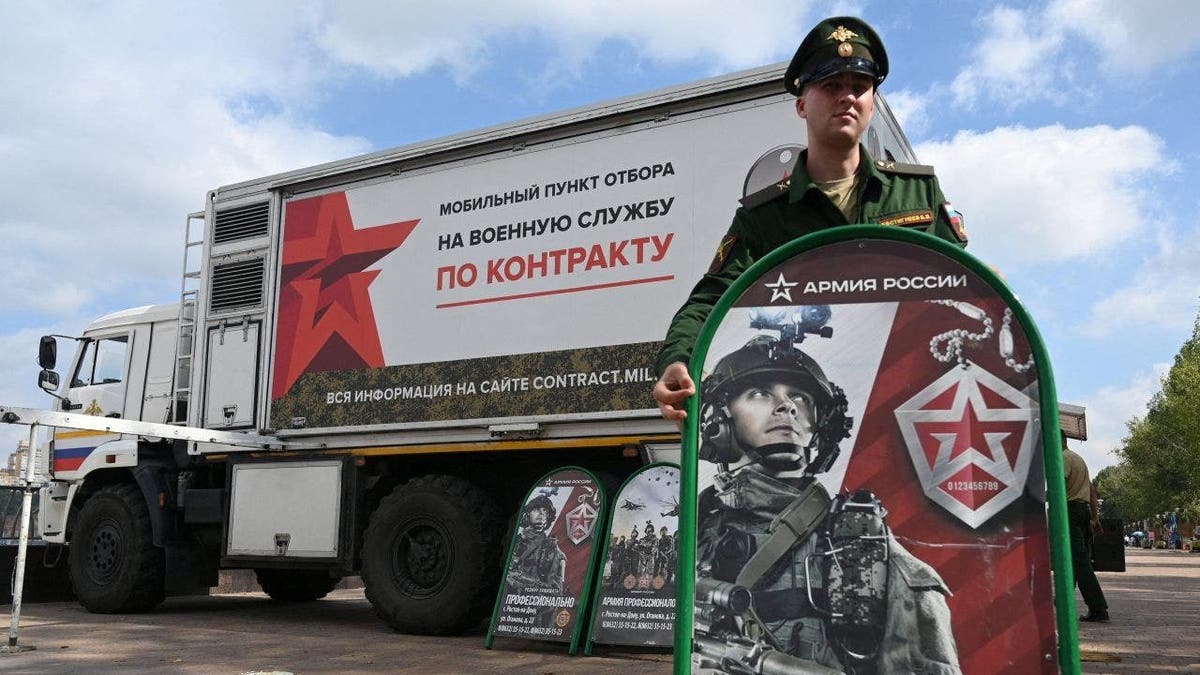
A Russian service member stands next to a mobile recruitment center for military service under contract in Rostov-on-Don, Russia, Sept. 17, 2022. (Sergey Pivovarov/Reuters)
«Despite the fact that many states are taking measures to curb recruitment, and although Russia claims it is no longer recruiting citizens from certain countries, the predatory recruitment continues. Ukrainian authorities predict that in 2026 Russia will engage more 18,500 foreign nationals, marking the highest annual figure since 2022,» said Maria Tomak, associated researcher and advocacy expert at Truth Hounds.
«This underscores the continued relevance of our report. Our primary objective remains clear: to halt recruitment and to compel Russia to repatriate those already recruited.»
The report stops short of claiming every foreign fighter was trafficked, noting some enlisted voluntarily for financial gain, but concludes there are reasonable grounds to believe at least some cases meet international definitions of trafficking in persons through deception, coercion and exploitation.
For investigators, the broader concern is that Russia’s war effort may now depend in part on a transnational manpower pipeline that weaponizes global inequality, drawing economically desperate men from around the world into one of Europe’s deadliest conflicts.
CLICK HERE TO DOWNLOAD THE FOX NEWS APP
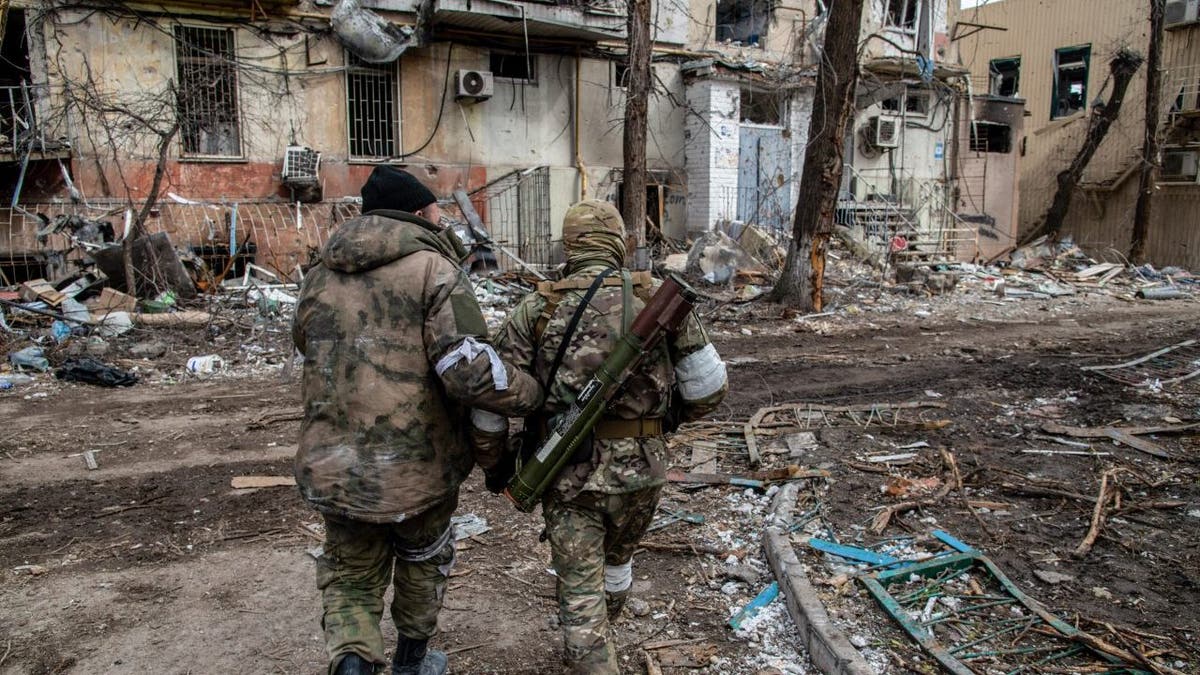
Russian and Chechen soldiers in a devastated Mariupol neighborhood close to the Azovstal frontline. (Maximilian Clarke/SOPA Images/LightRocket via Getty Images)
The report calls on governments, international organizations and Ukraine’s allies to crack down on recruitment networks, pressure Moscow diplomatically and push for repatriation of foreign nationals already caught in Russia’s military system.
Fox News Digital reached out to the Russian Embassy in Washington, D.C., and Russia’s Defense Ministry for comment but did not receive a response.
russia, conflicts, ukraine, russia investigation, human rights united nations, recruitment, wars











NEWYou can now listen to Fox News articles!
A gunman fired at the U.S. Consulate in Toronto on Monday, marking the second time this year someone shot at the building, according to authorities.
A single shell casing was found at the scene, and there was damage to the building’s facade.
No injuries were reported in the incident.
«The U.S. Embassy and Consulates in Canada are open and operating normally, though some routine U.S. citizen services in Toronto are being rescheduled,» the consulate said in a statement.
GUNFIRE SHATTERS TORONTO LATIN STREET FESTIVAL, LEAVING AT LEAST 2 DEAD AND MULTIPLE WOUNDED
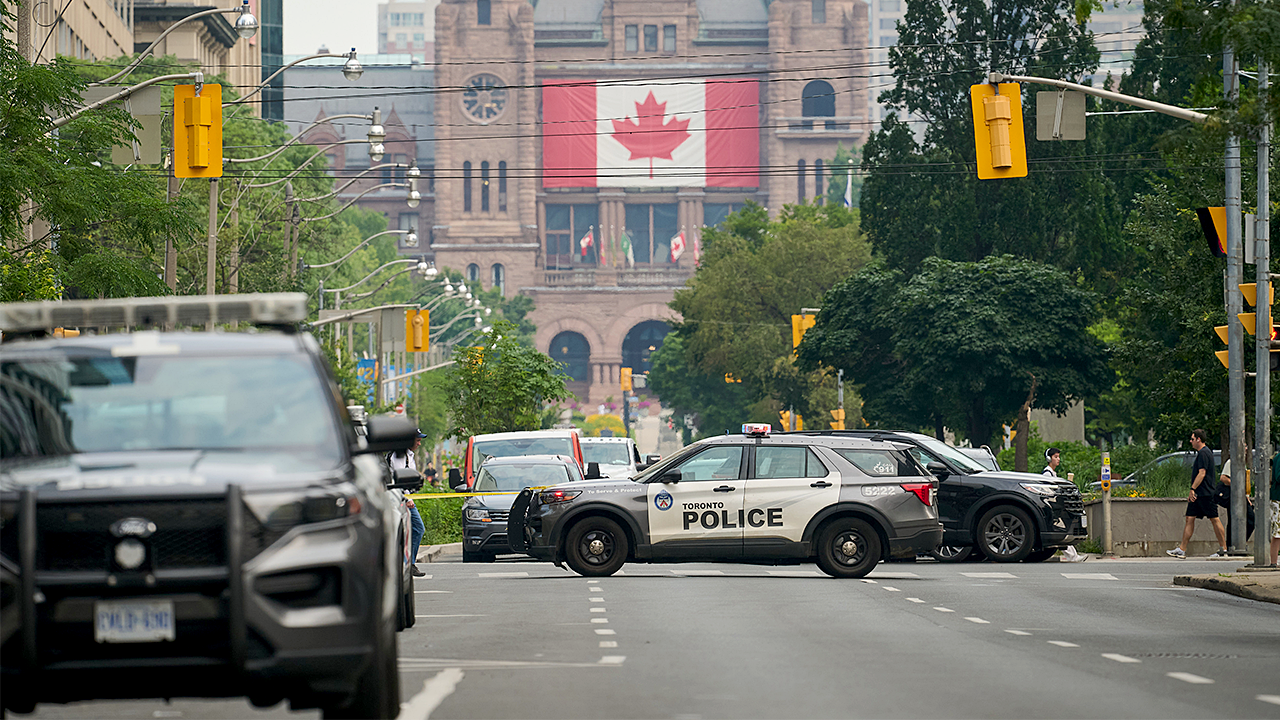
Police at the scene of a shooting outside the US Consulate in Toronto, on Monday, July 27, 2026. (Sammy Kogan/The Canadian Press via AP)
Toronto Deputy Police Chief Frank Barredo said there was a high-speed chase after the shooting that lasted an hour. However, no arrest was made and Barredo committed to continuing the search for those involved.
«We will approach this investigation with great seriousness,» Barredo said at a news conference. «We will bring the people responsible for this to justice.»
Toronto Mayor Olivia Chow described the shooting as a «brazen attack.»
«I want to say to the person or persons responsible, we will get you,» she said.
This was the second shooting targeting the U.S. Consulate this year, with the first coming on March 10, when two suspects allegedly fired multiple shots at the building before driving away in a stolen vehicle.
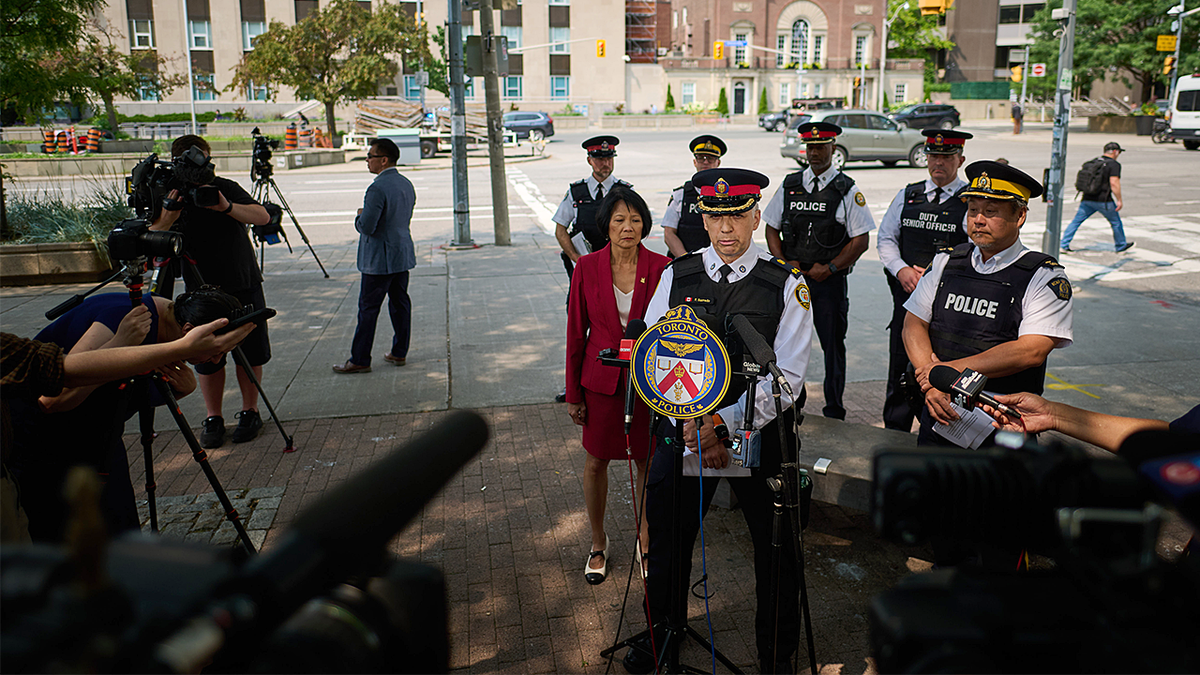
Toronto Police Deputy Chief Frank Barredo at a press conference after a shot was fired at the U.S. Consulate in Toronto, on Monday, July 27, 2026. (Sammy Kogan/The Canadian Press via AP)
Sheldon Tracy-Stewart, 18, and Zara Jabbi, 19, were arrested last month and charged with multiple offenses in connection with the March shooting. The allegations have not been tested in court.
A police presence has been seen at the consulate since the first shooting.
Barredo said a patrol vehicle was outside the consulate with its lights on when the shooting happened. Two security personnel were also in the building.
Last month, police said they believed multiple shootings, including the one in March, could be tied to «multilayered» gun-for-hire networks that have also targeted Toronto synagogues.
Two popular Jewish-owned bakeries were targeted by gunfire over the weekend.
US CONSULATE IN TORONTO STRUCK BY GUNFIRE, POLICE SAY; NO INJURIES REPORTED
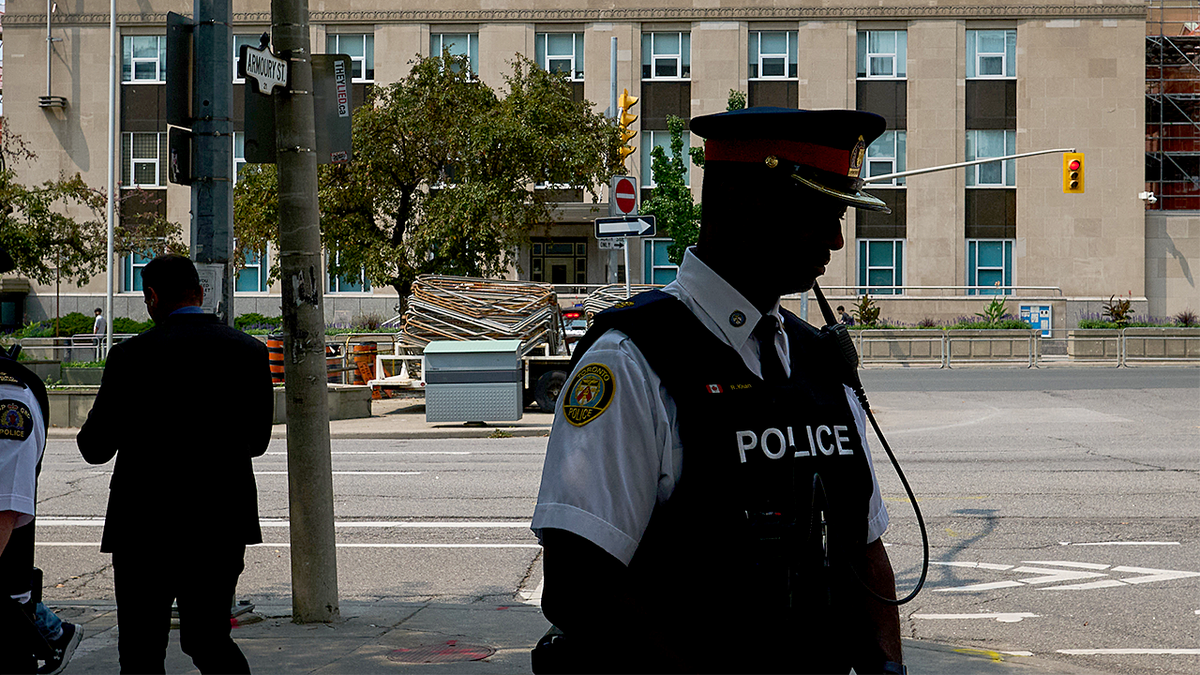
Police investigating after a shot was fired at the U.S. Consulate in Toronto, on Monday, July 27, 2026. (Sammy Kogan/The Canadian Press via AP)
CLICK HERE TO DOWNLOAD THE FOX NEWS APP
Barredo said police had not ruled out a connection between Monday’s consulate shooting and the attacks on the bakeries. The motive for the consulate shooting remains under investigation.
«Investigators will follow the evidence to where it leads,» he said.
Doug Ford, the premier of Ontario, said he was «disgusted» by the recent violence in Toronto.
«I’m totally disgusted by the shootings and vandalism that took place in Toronto over the last few days, including at two Jewish-owned businesses over the weekend and near the U.S. Consulate this morning,» he said on X. «In all cases, active police investigations are underway. I expect all those responsible to be found, prosecuted and punished to the fullest extent of the law.»
The Associated Press contributed to this report.
toronto, world, foreign affairs, national security, us, crime, canada
INTERNACIONAL
Netanyahu se reúne con Trump en la Casa Blanca para abordar la guerra con Irán, Gaza y el acuerdo de seguridad con Líbano
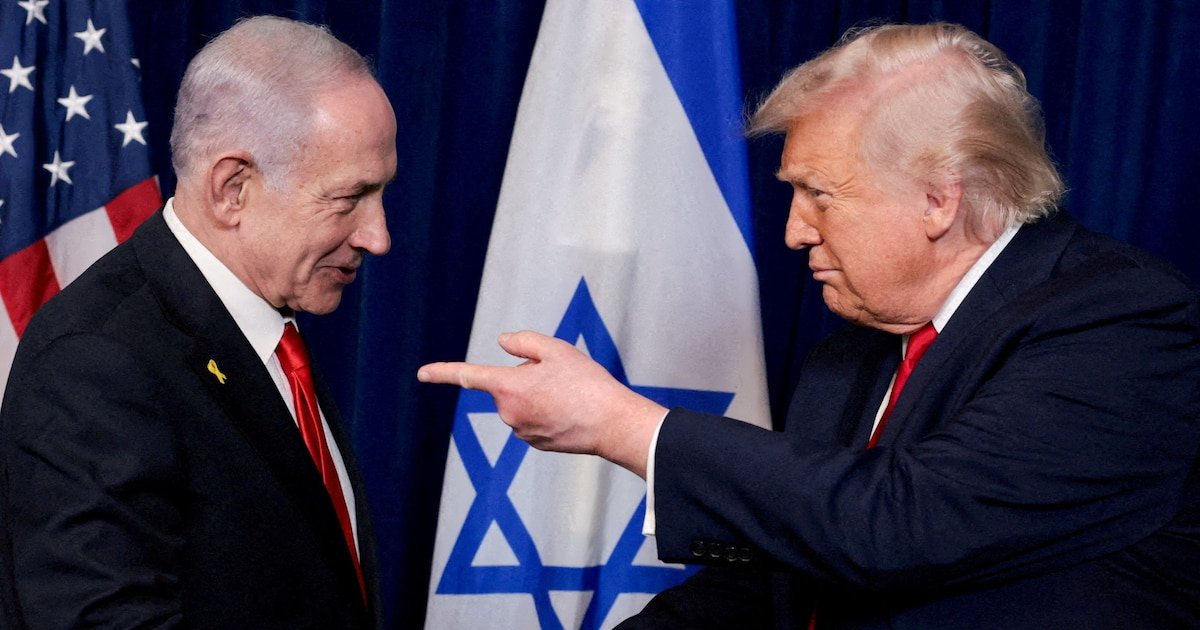
Netanyahu se reúne este martes con el presidente de Estados Unidos, Donald Trump, en la Casa Blanca para analizar la guerra con Irán, la situación en Gaza y la implementación del acuerdo de seguridad entre Israel y Líbano, en el primer encuentro presencial entre ambos desde el inicio del conflicto con Teherán.
La reunión marcará el octavo encuentro entre los dos dirigentes desde el regreso de Trump a la presidencia el año pasado y tendrá lugar después de meses en los que la relación bilateral atravesó momentos de tensión pública, aunque ambos buscaron reducir las diferencias.
Antes de partir hacia Washington, Netanyahu definió la visita como una oportunidad clave para la seguridad de Israel. “Es un gran privilegio, pero también una gran responsabilidad”, afirmó el primer ministro israelí.
También anticipó que Irán ocupará el primer lugar de la agenda. “Abordaremos todos los temas previstos y, ante todo, Irán. Naturalmente, nuestro objetivo es proteger nuestra seguridad y también ampliar el círculo de paz que nos rodea”, sostuvo.
El encuentro se celebrará en un contexto marcado por la guerra entre Estados Unidos e Irán, que comenzó tras los ataques conjuntos estadounidenses e israelíes contra objetivos iraníes a finales de febrero. Washington sostiene que busca dar espacio a una salida negociada, mientras Israel no participó en la fase más reciente de las hostilidades entre ambos países, que estalló este mes después del colapso del alto el fuego alcanzado en abril.

Las diferencias entre Trump y Netanyahu quedaron expuestas durante las negociaciones para ese cese de las hostilidades. En ese período, el mandatario estadounidense lanzó duras críticas contra el primer ministro israelí y posteriormente lo calificó en una entrevista como “un tipo muy difícil”.
Por su parte, Netanyahu restó importancia a esos cruces y los describió como “desacuerdos tácticos”, al considerar que ambos mantienen los mismos objetivos estratégicos respecto del conflicto.
Además de Irán, los mandatarios analizarán la aplicación del marco de seguridad patrocinado por Estados Unidos que Israel y Líbano firmaron el mes pasado. La implementación del acuerdo enfrenta dificultades sobre el terreno y constituye uno de los principales asuntos bilaterales de la reunión.
La situación en Gaza también formará parte de las conversaciones. Los esfuerzos diplomáticos para impulsar la reconstrucción del enclave palestino permanecen estancados, mientras la guerra entre Israel y Hamas se acerca a su tercer año.
En ese escenario, la situación humanitaria continúa deteriorada y las fuerzas israelíes mantienen operaciones militares contra personas que, según el Ejército, pertenecen a grupos armados.
Especialistas consideran que uno de los principales objetivos políticos de la visita consiste en exhibir una imagen de unidad entre Washington y Jerusalén después de las versiones sobre un enfriamiento de la relación.

El experto en relaciones internacionales de la Universidad Hebrea de Jerusalén, Yonatan Freeman, sostuvo que la reunión busca transmitir un mensaje tanto a los aliados como a los adversarios regionales. “Creo que la cuestión principal es mostrar al mundo, mostrar a Irán y también a Líbano y a otros, que no existe una ruptura ni ningún desacuerdo importante entre Estados Unidos e Israel”, declaró a AFP.
Freeman también consideró que las coincidencias entre ambos dirigentes superan ampliamente las diferencias. “Existe más acuerdo entre los dos líderes que desacuerdo”, afirmó. Según el analista, las discrepancias se concentran en los métodos, los plazos y la intensidad de las operaciones militares, pero no en los objetivos finales de la estrategia regional.
El especialista además estimó que Trump buscará concentrar las conversaciones en dos prioridades: Irán y la ampliación de los Acuerdos de Abraham, promovidos durante su primer mandato para normalizar las relaciones entre Israel y varios países árabes.
Esos acuerdos permitieron el establecimiento de relaciones diplomáticas formales entre Israel y Emiratos Árabes Unidos, Barhéin y posteriormente Marruecos, bajo la mediación estadounidense.
La visita de Netanyahu además coincide con el inicio de la etapa previa a las próximas elecciones nacionales en Israel, en las que buscará un nuevo mandato. Las encuestas recientes muestran al primer ministro por detrás de otros dirigentes políticos, mientras persiste el malestar de parte de la opinión pública por la respuesta del Gobierno al ataque de Hamas del 7 de octubre de 2023, hecho que desencadenó la guerra en Gaza.
(Con información de AFP)
North America
INTERNACIONAL
‘Shame on you’: Sherrill knew voter-roll bombshell was coming when she called Trump a liar, DOJ official says
NEWYou can now listen to Fox News articles!
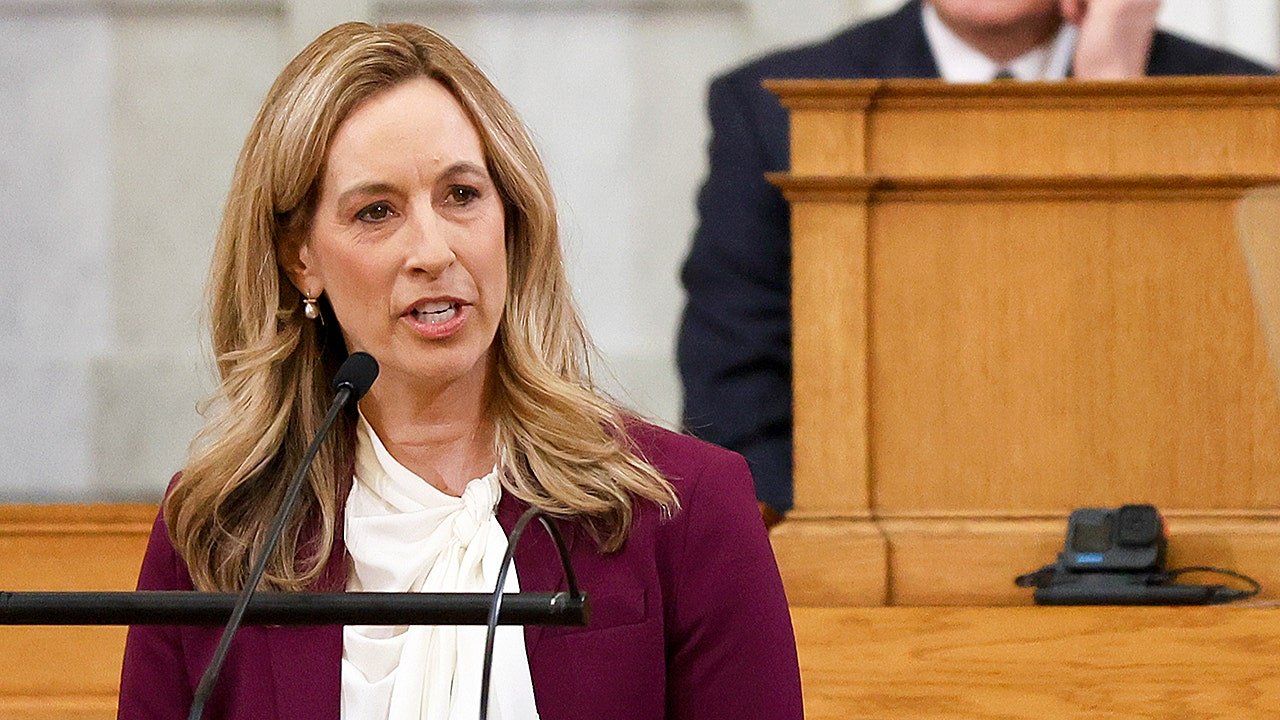
The Justice Department’s top Civil Rights official accused New Jersey Gov. Mikie Sherrill of criticizing President Donald Trump’s election integrity claims even though she already knew her administration was about to disclose a major voter registration problem.
In his July 16 address, Trump accused China of acquiring sensitive voter data and said U.S. intelligence agencies hid that revelation from the public while also alleging several Democrat-run states, including New Jersey, have large numbers of noncitizens registered to vote.
Department of Homeland Security data released in concert with the speech found more than 35,000 potential noncitizens are on the Garden State’s rolls.
«When the president came out with his Primetime speech last Thursday, I believe in the sequencing of events that has been laid out, she already knew that this revelation was forthcoming,» Assistant Attorney General Harmeet Dhillon said.
‘SHADOW GOVERNMENT’: TRUMP CLAIMS INTEL COMMUNITY BRAGGED ABOUT HIDING CHINESE MEDDLING
Rep. Mikie Sherrill, D-N.J., speaks during an interview in New York City on May 2, 2025. (Victor J. Blue/Bloomberg via Getty Images)
«She knew it, and she still went online and called the president a liar and said he was exaggerating – Shame on you, governor.»
Dhillon said governors willing to cooperate with the DOJ would receive assistance but warned states refusing to do so could face lawsuits.
«It’s a bipartisan problem, actually. And I’m really looking forward to helping everyone who will work with us fix this problem. And if they won’t work with, we’ll sue them and we’ll still fix the problem.»
Following Trump’s address, Sherrill signed on to a statement with 23 other Democratic governors attempting to throw cold water on the president’s wide-ranging claims, calling him a liar, as Dhillon said.
«It’s deeply alarming that President Trump continues to try to undermine free and fair elections. No amount of lies and conspiracy theories can change the fact that our country’s elections have repeatedly been proven to be safe and secure,» read the rebuke, formally led by Kentucky Gov. Andrew Beshear.
TONY DOKOUPIL CLASHES WITH MARK WARNER AFTER THE SENATOR RIPPED CBS FOR AIRING TRUMP SPEECH ‘AS NEWS’
Sherrill’s co-signed statement went on to accuse Trump of trying to «intimidate and silence voters» while claiming Democrats are the ones «actually making life better for American families by lowering costs, creating jobs and protecting our freedoms.»
«Ours is a winning message, which is why he is trying to undermine democracy.»
Dhillon said Sherrill and all other governors should join with DOJ to investigate every substantive claim of election integrity violations, warning it is their own citizens who stand to be hurt.
«Every single person who voted illegally canceled out the vote of a New Jersey voter; that is shameful,» she said.
«And instead of pointing fingers at the president, which is what Governor Sherrill did… she should be raising her hand to work with the federal government to clean this up ASAP because that’s the vow she took when she ran for office and she got sworn in as the governor of her state is to protect her citizens, and her citizens have a right to vote.»
SIGN UP TO GET THE POLITICS NEWSLETTER
Dhillon’s letter gave Sherrill five business days, expiring Tuesday, to turn over voter data in the case. Meanwhile, Sherrill indicated to WCBS that she wouldn’t be complying.
«It is not a surprise… the Trump administration wants to immediately weaponize this against people as opposed to focusing on making sure we’re running free and fair elections,» the Democrat said.
Asked about the accusation Sherrill knew about her own state’s motor-voter scandal when she accused Trump of being a liar, Sherrill spokesman Sean Higgins pointed Fox News Digital to comments she made after touring a grocery store in Essex County to sign unrelated legislation.
NEW JERSEY REMOVES 6,600 PEOPLE FROM VOTER ROLLS WHO WERE ELIGIBLE TO CAST A BALLOT FOR 2024 ELECTION
In response to a reporter’s question on the scandal, Sherrill said her administration is moving quickly because Jerseyans deserve transparency.
CLICK HERE TO DOWNLOAD THE FOX NEWS APP
«We’re running an independent investigation right now to get to the bottom of exactly how this happened and what’s going on, but it is not a surprise to me that the federal government that the Trump administration wants to immediately weaponize this against people as opposed to focusing on making sure that we’re running free and fair elections,» Sherrill said.
Pennsylvania, New York and several other states have also resisted DOJ requests for voter registration data, arguing federal law and state privacy protections limit what information can be shared.
The DOJ has also sued officials in some of the states over the election integrity crisis, including New Jersey Lt. Gov. Dale Caldwell.
mikie sherrill, voter fraud concerns, new jersey, justice department, voting, donald trump

En agosto comenzará la temporada alta de protestas sindicales: estatales, docentes y marcha a San Cayetano, en la agenda

Gonzalo Morales, jugador que pertenece a Boca Juniors, es denunciadopor violencia de género

Tesla, cada vez más cerca: cuándo empezará a vender autos eléctricos en la Argentina la marca de Elon Musk

Ángel de Brito mostró imágenes de la reunión de Nico Occhiato para sacar a Flor Peña de Luzu para siempre

Causa Cuadernos: el exfuncionario Juan Carlos Santos declarará luego de que citaran por error a otra persona con su mismo nombre

Pasaron 36 años y la misma coincidencia: la curiosa decisión que se repitió en las finales perdidas por Argentina

Vocero de Milei dijo que un dólar a $1.800 es «posible» y la City alerta por fin de la paz cambiaria

Polémica por el proyecto que busca desregular los planes de ahorro de autos 0 km: qué podría cambiar

Convivencia pacífica o tensión administrada: el PRO define cómo pararse frente al gobierno de Milei rumbo a 2027

Panorama internacional: Brasil, una batalla electoral no solo de los brasileños

 POLITICA22 horas ago
Crisis entre Milei y Lula: la trama política, personal y geopolítica detrás del mayor choque diplomático entre Argentina y Brasil
- POLITICA2 días ago
Cuentapropismo emocional en lo profundo del conurbano
- SOCIEDAD1 día ago
San Isidro: la ballena que quedó varada en un banco de arena murió pese al operativo de rescate