INTERNACIONAL
‘America First’ immigration overhaul bill would codify Trump’s campaign promises once and for all

NEWYou can now listen to Fox News articles!
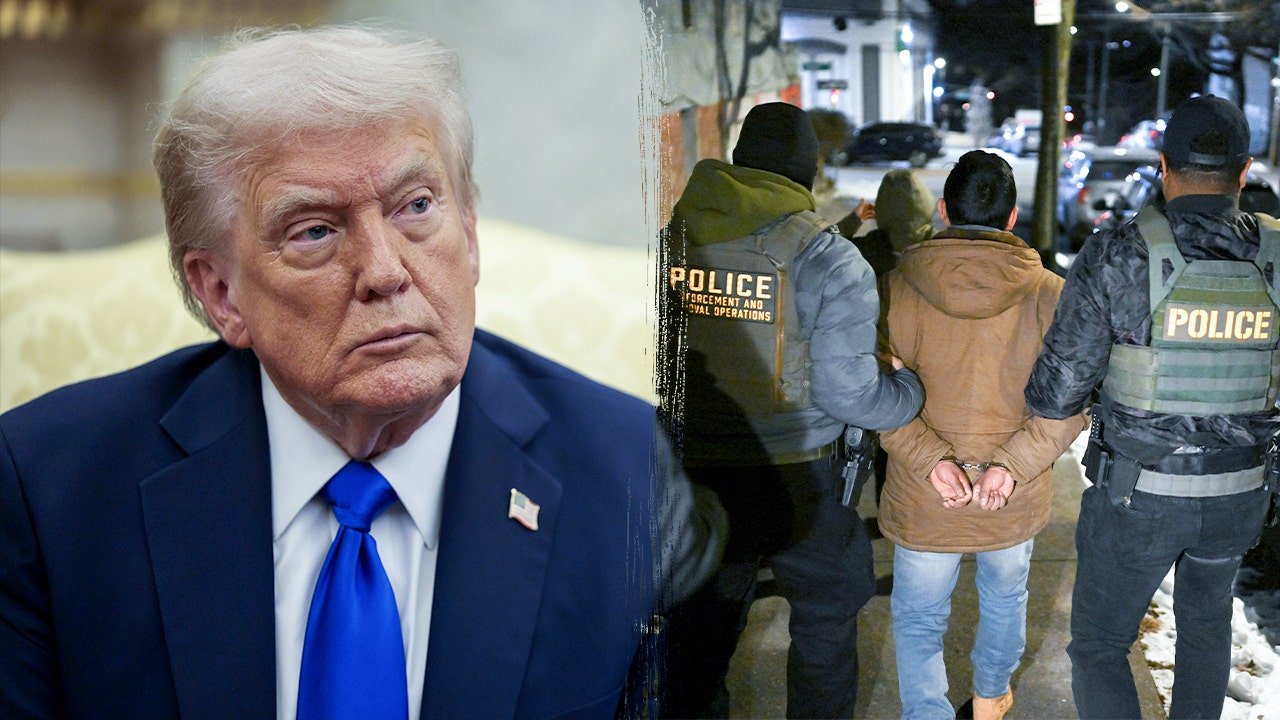
FIRST ON FOX: President Donald Trump’s ‘America First’ immigration overhaul would be codified into law under a House Republican bill that would significantly narrow legal immigration pathways by shifting the system toward high-skilled workers, eliminating most family sponsorship categories and ending the diversity visa lottery.
Immigration — both illegal and legal — remains a contentious topic in Washington, with Democrats pushing to expand pathways for migrants to obtain citizenship, while Trump and his Republican allies are seeking to restrict migration, including proposals such as ending birthright citizenship.
Rep. Barry Moore, R-Ala., introduced the Americans First Immigration Act, which would amend several key provisions in the Immigration and Nationality Act, in an effort to «putting American citizens first.»
«My bill draws a hard line – the days of putting illegals, random diversity lotteries and foreign labor ahead of American workers are over,» Moore said in a statement to Fox News Digital. «Our immigration system should serve the American people, not undercut them, and that means selecting individuals who will strengthen our economy, respect our laws, and share our values.»
FEDERAL JUDGE THROWS OUT BIDEN ADMIN PROGRAM TO LEGALIZE ILLEGAL IMMIGRANT SPOUSES OF US CITIZENS
Rep. Barry Moore, R-Ala., participates in the House Judiciary Committee organizing meeting in the Rayburn House Office Building on Feb. 1, 2023. (Bill Clark/CQ-Roll Call, Inc. via Getty Images)
The 70-page bill seeks to codify many of the actions already taken by the Trump administration to tighten legal immigration pathways. In December 2025, President Donald Trump paused the green card lottery program in the wake of two shootings on college campuses, and last September, Trump signed an executive order placing restrictions on the issuance of H1B1 visas, a work visa offered for specialty occupations.
«If you want to come to the United States, you should earn it through merit, not diversity lotteries or loopholes. The Americans First Immigration Act restores fairness and accountability by protecting American jobs, prioritizing the nuclear family and ensuring that every immigrant admitted is prepared to contribute and succeed,» Moore told Fox News Digital.
While Moore’s bill seeks to end the diversity lottery visa, it includes a provision to ensure that the allotment of visas for religious workers, equal to 3,000 a year, is preserved.

President Donald Trump signed two executive orders in the Oval Office at the White House in Washington, D.C., on Sept. 19, 2025. The orders established the «Trump Gold Card» visa program and introduced a $100,000 fee for H-1B visas. The «Trump Gold Card» allows foreign nationals permanent residency and a pathway to U.S. citizenship for a $1 million investment in the United States. (Andrew Harnik/Getty Images)
‘SHAMEFUL’: LEGAL IMMIGRANTS FACE UPHILL BATTLE AMID ONGOING BORDER CRISIS
Julie Kirchner, a senior advisor at the America First Policy Institute, supports Moore’s bill, particularly the measure to eliminate lottery visas.
«The Visa Lottery has a long, documented history of fraud and national security concerns and should be abolished. Under a merit-based, America First system, any immigrant would have to demonstrate their skills, ability to assimilate, and how they will contribute to the U.S.,» Kirchner told Fox News Digital.
One of the other provisions in Moore’s bill seeks to put «American workers first» by overhauling the current employment-based immigration visa program and replacing it with a points-based merit system. Under the new points-based system, applicants are ranked and will receive points on factors such as their level of English proficiency, education, their level of compensation, military service and age. All applicants must have a salary that is at least 200% above the median wage of the state they’ll reside in, and they must meet English proficiency requirements.
REPORTER’S NOTEBOOK: GOP PUSHES ELECTION SECURITY BILL DESPITE SLIM ODDS, AS TRUMP PRESSURE LOOMS
Employers must also prove that they «took good faith steps» in recruiting American workers for the job offered to the foreign worker for equal compensation. The legislation also requires employers to share with the government the name and contact information of American workers who were offered the job and their offered wage. The Department of Labor will oversee and investigate compliance.
And migrants offered a visa are required to sign a petition pledging they support the U.S. Constitution and its values. The pledge also includes a requirement to disavow political groups or social groups that partake in honor killings, female infanticide or genital mutilation.

The Trump administration says foreign student visa vetting will be a continued process rather than a one-time check. (iStock)
«Ideally the government has the information in advance to bar these people from immigrating to the U.S.,» Kirchner said. «However, if a newly-arrived immigrant engages in behavior that demonstrates the statements he made to our immigration agencies were false, that can become the basis for deportation or denaturalization.»
The act would also curtail family-sponsored immigration to only be accessible to spouses of U.S. citizens, minor children, spouses of green card holders and children of green card holders. Parents, siblings, and adult children of U.S. citizens are barred.
CLICK HERE TO DOWNLOAD THE FOX NEWS APP
«What the bill does is eliminate the ability of extended family members to get a preference under the law,» Kirchner said. «Extended family members can still apply – but they would have to do so based on their own skills, merit, and ability to assimilate.»
congress, legislation, immigration, bills, republicans, politics








NEWYou can now listen to Fox News articles!
Dr. Anthony Fauci ran point as the COVID-19 explainer-in-chief under two different administrations, steering policy and messaging on the virus that rattled the country and world for years.
But there is one thing in all of his media appearances, profiles, interviews and congressional hearings that Sen. Rand Paul, R-Ky., contended Fauci never said: that he was sorry.
«I mean, I’d like to hear him say he’s sorry,» Paul said. «Can he say he is sorry for funding — the research was dangerous research in China? Almost everybody agrees with that.»
EXCLUSIVE: BIDEN PARDON WON’T SHIELD FAUCI IF HE LIES TO CONGRESS, COMER SAYS
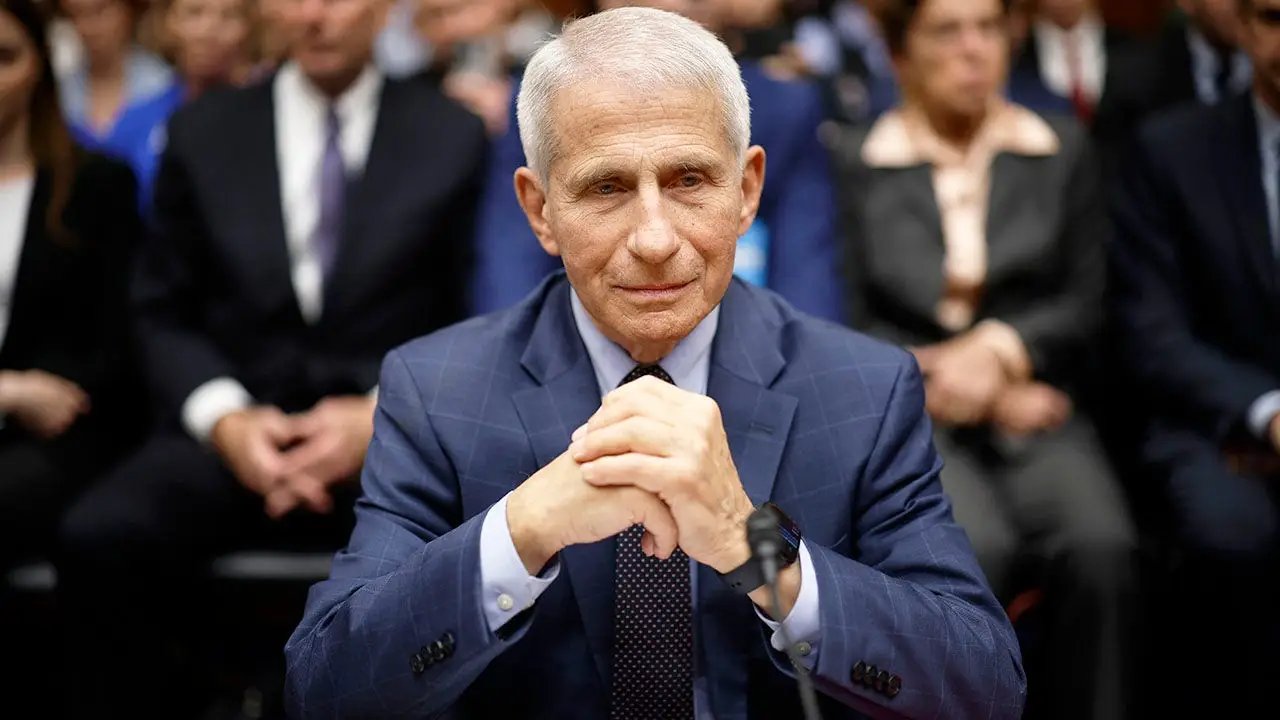
Dr. Anthony Fauci, former Director of the National Institute of Allergy and Infectious Diseases, arrives to testify before the House Oversight and Accountability Committee Select Subcommittee on the Coronavirus Pandemic at the Rayburn House Office Building on June 3, 2024, in Washington, D.C. (Getty Images)
«Now he says, ‘Oh, well, it didn’t meet this definition or this definition, it was dangerous research,» he continued. «It was a judgment error. It was a profound judgment error.»
Paul and Fauci are set to square off Wednesday morning in the Homeland Security and Governmental Affairs Committee, the panel that Paul leads, in a clash that has been years in the making.
In the lead up to Wednesday’s hearing, Paul unveiled over 1,000 pages of Fauci’s diary, providing his own color commentary online about Fauci’s motivations leading up to and during the pandemic.
WATCH: RAND PAUL SAYS FAUCI LOBBIED FOR $1M PRIZE WHILE LEADING COVID RESPONSE
The lawmaker has had his sights set on Fauci since the beginning of the COVID-19 pandemic and accused him of funding research in China that led to the eventual outbreak of the virus.
And though Fauci has been out of the public spotlight since 2022, when he stepped down from his role as director of the National Institute of Allergy and Infectious Diseases at the National Institutes of Health (NIH), the two will finally get the chance to square up and settle the feud.
«I think he actually could do better in the hearing if he’d come forward and apologize for funding this research,» Paul said. «No one’s ever heard an apology from him. All they hear is sort of the idea that he never did anything wrong and that there’s nothing wrong with that.»
HARVARD TOPS NATION IN FOREIGN CASH HAUL AS COTTON DEMANDS PROBE INTO CHINA FUNDING
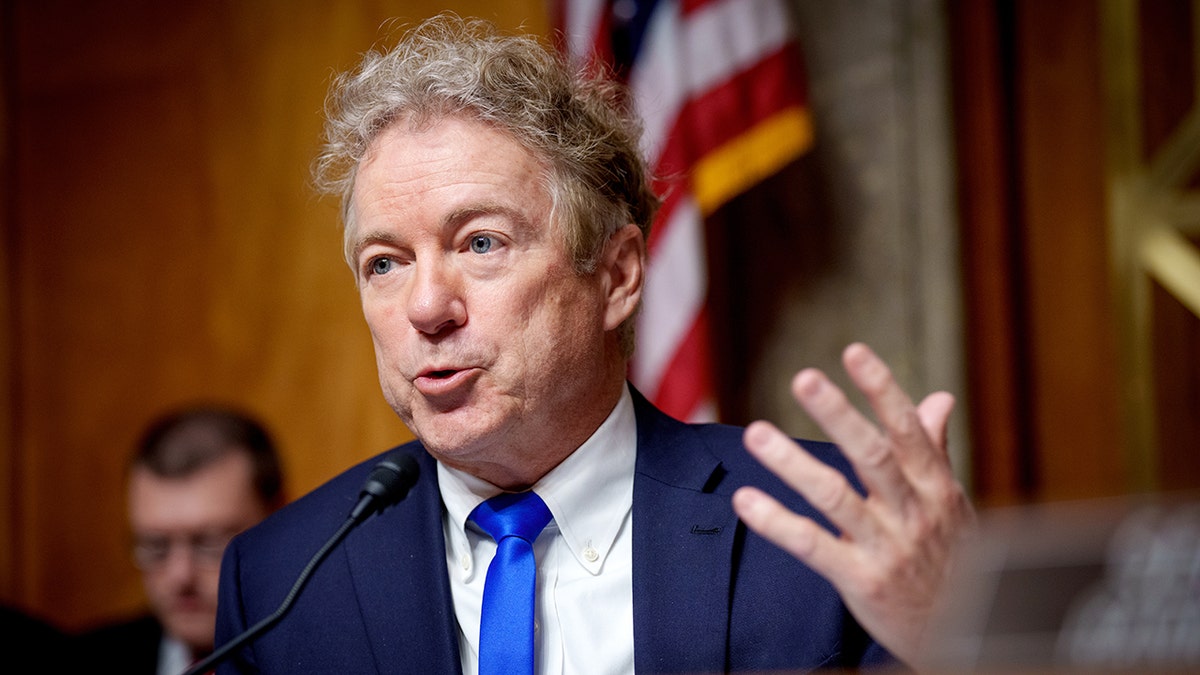
Sen. Rand Paul, R-Ky., leads the Homeland Security and Governmental Affairs Committee. (Andrew Harnik/Getty Images)
Paul has said that the former chief medical advisor to the president deserves to be in prison for his alleged role in funding gain-of-function research, and warned that his pardon from former President Joe Biden wouldn’t hold up.
Notably, Fauci’s former top advisor at the National Institute of Allergy and Infectious Diseases, Dr. David Morens, was indicted by the Justice Department earlier this year on charges of allegedly conspiring to evade public records laws, hide communications regarding the origins of COVID-19, and destroy federal records.
Gain-of-function research, or work that enhances a virus’s transmissibility or lethality, and Fauci’s alleged role in funding that type of research through his position at the Wuhan Institute of Virology in China has been Paul’s focal point for years in his crusade against the former COVID-19 czar.
And he argued that the issue of researching the spread of a virus, or its killing potential, predates the pandemic.
CLICK HERE TO DOWNLOAD THE FOX NEWS APP
Paul charged that in 2010, research conducted by Ron Fouchier, a Dutch virologist, produced a version of H5N1, commonly known as bird flu, that was transmissible «through the air between mammals.»
«And half the scientific community said, ‘Oh my God, this could be the end of the world. We’re doing this s—,’» Paul said.
«And Fauci was on the other side, and he said at the time in a Washington Post op-ed that even if a pandemic should occur from a scientist being bitten or somehow infected, the knowledge is worth the risk,» he continued. «That needs to be debated by the country. Is the knowledge of creating viruses that could kill the world worth the risks? And I don’t think it is.»
politics, rand paul, anthony fauci, senate elections, china
INTERNACIONAL
Jacques Derrida, filósofo franco- argelino: “La democracia es el único sistema en el que se tiene el derecho a criticarlo todo públicamente, incluida la idea de democracia”
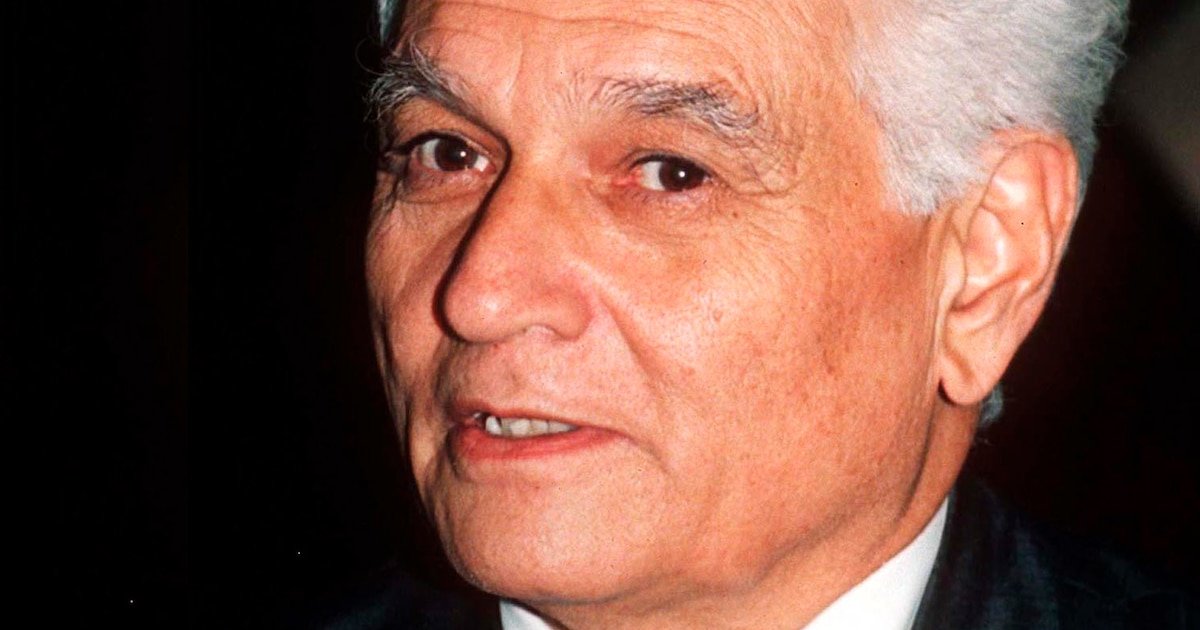
¿Puede un sistema político albergar en su propio seno las herramientas para su propia destrucción? La respuesta que el pensamiento del siglo XXI arroja sobre esta mesa es afirmativa, compleja y perturbadora. En el año 2003, Jacques Derrida escribió: “La democracia es el único sistema, el único paradigma constitucional en el que, en principio, se tiene o se arroga uno el derecho a criticarlo todo públicamente, incluida la idea de democracia, su concepto, su historia y su nombre”.
Desgastado por la enfermedad pero con una lucidez que arañaba el hueso de la época, dejó escrita una de las definiciones más punzantes sobre la libertad moderna. Pero esta frase no es una mera defensa de la libertad de expresión. Es la radiografía de un abismo ético y político que nos interpela de manera directa en un presente global dominado por la polarización, los discursos extremos y las crisis de representatividad. Es una contradicción que puede ser leída como obstáculo o potencia.
Para dimensionar el peso de este axioma, es obligatorio retroceder a los primeros años del nuevo milenio. El mundo occidental procesaba el trauma de la caída de las Torres Gemelas y asistía a la invasión de Irak. Los gobiernos democráticos, liderados por figuras como George W. Bush, comenzaban a recortar libertades civiles internas y a justificar la violencia exterior en nombre de la defensa de los valores de la libertad. En esa bisagra histórica Jacques Derrida dictaba seminarios y conferencias.

Esas clases darían vida a su célebre libro Canallas: Dos ensayos sobre la razón, publicado originalmente en francés bajo el título Voyous. El pensador observaba cómo los estados que se autoproclamaban campeones de la democracia actuaban de manera totalitaria contra otros pueblos, convirtiéndose ellos mismos en “estados canallas” (rogue states). Su análisis no buscaba destruir la democracia, sino deconstruirla: desnudar sus ficciones jurídicas para entender cómo opera en la realidad.
Canallas: Dos ensayos sobre la razón se ubica en la cúspide de lo que la academia denomina el “giro político y ético” de Derrida. Aunque el filósofo ya había dinamitado la historia del pensamiento occidental en 1967 con De la gramatología y La escritura y la diferencia, en esta obra tardía decide aplicar sus herramientas lingüísticas a los problemas carnales del poder, la soberanía y el derecho internacional. En Canallas introduce un concepto clave para entender nuestro presente: la “autoinmunidad”.
Tomando una metáfora de la biología, explica que la democracia —el concepto de participación política pero también el sistema de representación— es un organismo que, en su afán por protegerse de las amenazas externas (como el terrorismo o el autoritarismo), genera anticuerpos tan violentos que terminan atacando y destruyendo a sus propias células sanas (las libertades civiles). Allí demuestra que la exclusión y la represión suelen habitar secretamente en el corazón de las constituciones libres.

¿Cuánto de la idea de esta frase resume el pensamiento de su autor? Prácticamente todo su andamiaje filosófico. La deconstrucción, el método que hizo famoso a Derrida, consiste precisamente en demostrar que las grandes verdades e instituciones de Occidente no son puras ni monolíticas, sino que están construidas sobre contradicciones internas. Al afirmar que la democracia permite criticar a la democracia misma, señala que este sistema es el único que tolera su propia contradicción.
No exige una fe ciega como una teocracia, ni una obediencia muda como una dictadura. Sin embargo, esta virtud es también su mayor debilidad. Al dar libertad absoluta, la democracia abre la compuerta para que discursos antidemocráticos utilicen las herramientas de la ley —el voto, las elecciones, las plazas públicas— para llegar al poder y abolir el sistema desde adentro. Es un orden político que lleva el riesgo del suicidio inscripto en su propio código genético. Su obstáculo y su potencia.
Por eso, para Derrida, la democracia nunca es un estado de cosas acabado ni un trofeo ganado. Él prefería hablar de “la democracia por venir” (la démocratie à venir). No como una utopía inalcanzable, sino como una promesa urgente que nos obliga a ensanchar los márgenes de la justicia en el día a día. En un escenario contemporáneo donde las herramientas democráticas de comunicación digital son utilizadas para propagar la desinformación y horadar las instituciones, la tesis de Derrida cobra una vigencia feroz.
La frase de hoy nos recuerda que la salud de una sociedad libre no se mide por la ausencia de debates o por la clausura del disenso, sino por su capacidad de resistir la autocrítica más feroz sin caer en la tentación totalitaria. El pensamiento de Jacques Derrida, fallecido en 2004, sobrevive en estas páginas como un recordatorio indispensable: la democracia es frágil, peligrosa y perfectible; pero es el único espacio donde el pensamiento aún conserva el derecho a cuestionar su propio horizonte.

Jacques Derrida (nacido bajo el nombre de Jackie Derrida en 1930 en El Biar, Argelia, y fallecido en París en 2004) fue uno de los filósofos más revolucionarios, debatidos y leídos de la segunda mitad del siglo XX. De origen judío sefardí, su infancia estuvo marcada por los traumas de la Segunda Guerra Mundial y el régimen de Vichy, que lo expulsó del liceo argelino debido a las leyes antisemitas de la época, una experiencia de exclusión que sellaría su sensibilidad hacia las minorías y los márgenes del discurso.
Tras mudarse a Francia, se formó en la prestigiosa Escuela Normal Superior de París bajo la tutela de figuras como Louis Althusser y entabló un fructífero diálogo crítico con contemporáneos como Michel Foucault. Su irrupción en el panorama intelectual internacional se consolidó a finales de la década de 1960, dando origen a la corriente conocida internacionalmente como el “posestructuralismo” y convirtiéndose en un ícono académico indiscutido en las universidades de los Estados Unidos.
Entre sus obras capitales destacan De la gramatología (1967), La voz y el fenómeno (1967), Espectros de Marx (1993), La hospitalidad (1997) y Canallas: Dos ensayos sobre la razón (2003). Su figura, que inspiró el aclamado filme documental Derrida (2002) dirigido por Kirby Dick y Amy Ziering, sigue siendo un faro ineludible y polémico para el arte, el derecho y la teoría política contemporánea, legando una ética que prohíbe la complacencia intelectual y nos obliga a responsabilizarnos por la voz del otro.
Jacques Derrida,Canallas,ensayo,razón,filosofía,Editorial Trotta

NEWYou can now listen to Fox News articles!
A shocking new report says 2025 was the deadliest year for antisemitic attacks worldwide since 1994.
The J7 Large Communities’ Task Force Against Antisemitism released its second annual report, which tracks antisemitic hatred in the seven countries outside of Israel where over 90% of Jews live. According to the report, 20 people were killed in antisemitic attacks in 2025. All of the deadly attacks took place in J7 countries.
The Anti-Defamation League (ADL) is one of two organizations representing the Jewish diaspora in the U.S. in the J7, which includes similar organizations from Australia, Canada, Argentina, the U.S., the U.K., Germany and France.
CHRISTIAN LEADERS HOLD EMERGENCY SUMMIT IN JERUSALEM TO CONFRONT GLOBAL RISE IN ANTISEMITISM
Police cordon off an area at Bondi Beach after a terrorist attack at a Hanukkah celebration in Sydney, Australia, on Dec. 14, 2025. (Mark Baker/AP Photo)
The ADL’s Senior Director of Global Research and Diplomatic Affairs, Aykan Erdemir, told Fox News Digital that the report’s findings show «there’s no time to waste» in combating hate.
«This isn’t a warning sign anymore, it’s already happening,» Erdemir said. «If governments let antisemitism take root and perpetrators walk free, the violence won’t stop with Jewish communities. History shows Jews are the canary in the coal mine: when hatred against Jews rises unchecked, it’s an early warning that everyone’s safety and rights are at risk.»
The J7 report finds that there were over 23,000 antisemitic incidents in J7 countries throughout 2025 – this represented a 97% increase in violent incidents and a 136% increase in total antisemitic incidents since 2022.
The Hamas terror attacks of Oct. 7, 2023, sent antisemitic hate skyrocketing worldwide.
GERMAN OFFICIALS WARN ISLAMIST, FAR-LEFT RHETORIC DRIVING SPIKE IN ANTISEMITIC ATTACKS

Firefighters are seen tackling a blaze at Highfield Road in the Golders Green neighborhood of London, following an arson attack on four charity ambulances belonging to the Jewish Community volunteer Ambulance Service. (PA/PA Images via Getty Images)
According to the report, each of the countries face an environment where antisemitism is «no longer confined to the fringes.» Countries are witnessing anti-Zionism associated with the conflict in Gaza becoming «a vehicle for antisemitic expression» and educational institutions becoming an «acute flashpoint» for hatred. Combined with growing online extremism, Jewish people «across the globe report hiding their Jewish identity in public» and question «whether they have a future in their home countries.»
Individually, the report shows how countries face their own unique challenges in quashing hatred.

A member of the public leaves the scene with her child, who is covered in an emergency blanket, after a terrorist attack at a Hanukkah celebration at Bondi Beach on December 14, 2025, in Sydney, Australia. Two terrorists dressed in black fired several shots at Sydney’s world-famous Bondi Beach, that led to the deaths of 15 people and many others injured. (Photo by George Chan/Getty Images)
Australia, which has seen a 270% increase in antisemitic incidents since 2021, was home to the Bondi Beach terror attack in December 2025, during which 15 people were killed. The report says that both Islamist and left-wing extremist threats in the country «need to be prioritized, and dealt with effectively.»
In Germany, a 215% increase in antisemitic incidents has been coupled with the highest per capita rate of incidents, with 69.8 incidents per 1,000 Jewish residents in 2025 for a total of 8,725 incidents.

Antisemitic hate on display at an anti-Israel protest in London. Antisemitism in the UK is hitting record levels since the Hamas terror attacks on Oct. 7 (Campaign Against Antisemitism on X)
The report said that normalization of hate «remains the most pressing challenge» in Germany, with the rise in incidents attributed to the «confluence of far-right ethno-nationalism, left-wing anti-Zionism, and Islamist extremism simultaneously.»
In Canada, which has experienced a 60% rise in antisemitic incidents since 2021, there is a concern that «foreign state interference» is at play, in addition to «the exploitation of domestic institutions by extremist networks.»
SIGN UP FOR ANTISEMITISM EXPOSED NEWSLETTER

Temple Emanu-El in Toronto, Canada was shot at on March 3, 2026. No injuries were reported. (Nick Lachance/Toronto Star via Getty Images)
The U.S. has had a 131% increase in antisemitic incidents since 2021. Though antisemitic incidents declined significantly from 2024, the 6,274 antisemitic incidents tracked in 2025 included 300 reports of physical assault.
France has witnessed a rise in antisemitic incidents of 124% since 2021. The report notes that there is «a growing climate of discrimination» where Jews in France report being refused service, denied contracts and excluded from events.
In the U.K., which has experienced a 64% increase in antisemitic incidents since 2021, 48% of 3,700 antisemitic incidents were motivated by anti-Zionism, and 53% included references to the conflict involving Gaza.

London, UK, Dec 9 2023, anti-Israel protesters hold a banner saying «From the river to the sea..» Andy Soloman/UCG/Universal Images Group via Getty Images (Andy Soloman/UCG/Universal Images Group via Getty Images)
Though the government in Argentina is pro-Israel, the country «has generated conspiratorial antisemitic backlash from the left and from fringe nationalist movements,» the report said. Since 2021, Argentina has seen a 46% increase in antisemitic incidents.
The J7 report also added a special chapter on antisemitism in Ireland, which is not a J7 country. While Ireland has only a 2,200-person Jewish community, it has reported 143 incidents of antisemitism. Despite antisemitism in Ireland taking hold «primarily in everyday settings,» unlike J7 countries, Ireland has no national plan for combating antisemitism and no security funding for the Jewish population.
CLICK HERE TO DOWNLOAD THE FOX NEWS APP

An FBI team is investigating an attack on demonstrators calling for the release of Israeli hostages held in Gaza, at the scene on Pearl Street in Boulder, Colorado, on June 1, 2025. Several people suffered burns and other injuries June 1st in the US state of Colorado in what the FBI called a «targeted terror attack» against demonstrators seeking the release of Israeli hostages held in Gaza. Police in the city of Boulder said a man was taken into custody. They were more cautious in presuming a possible motive for the attack, which multiple sources said was committed against members of the Jewish community during a peaceful gathering. (ELI IMADALI/AFP via Getty Images)
Erdemir said that «the most urgent priority for every government should be protecting Jewish communities and institutions before they’re attacked, not after.» He called on law enforcement to «hold perpetrators fully accountable,» but said that «the real goal has to be stopping attacks before they happen and preventing Jews from being driven out of public spaces, not just responding once the damage is done.»
Erdemir said, «Governments can’t rely on security alone. It takes a whole-of-society effort, government, business, schools, civil society and everyday citizens, to root out the hate targeting Jewish communities worldwide. And because this hate crosses borders, so must the response: governments, international bodies and NGOs around the world need to work together, not in isolation.»
anti semitism, hate crime, terrorism, united kingdom, australia, canada

El deslumbrante cambio de look de Guillermina Valdes: “Como la vida misma”

El Gobierno ratificó sus diferencias ideológicas con Lula da Silva, pero negó que la tensión escale al plano diplomático

River Plate buscará su primer triunfo en el Torneo Clausura ante Gimnasia en La Plata: hora, TV y formaciones

La carta abierta que publicó Cristina Kirchner en la que habló sobre su condena por Vialidad

Los productos de supermercado que los argentinos compran cada vez menos

WATCH: Rand Paul says there’s one thing Americans have never heard from Fauci

Crisis entre Milei y Lula: la trama política, personal y geopolítica detrás del mayor choque diplomático entre Argentina y Brasil

Cuentapropismo emocional en lo profundo del conurbano

Joaquín Furriel contó cómo fue ver la final del Mundial con su novia española: “Una situación incómoda”

San Isidro: la ballena que quedó varada en un banco de arena murió pese al operativo de rescate

 POLITICA2 días ago
Crisis entre Milei y Lula: la trama política, personal y geopolítica detrás del mayor choque diplomático entre Argentina y Brasil
- SOCIEDAD3 días ago
San Isidro: la ballena que quedó varada en un banco de arena murió pese al operativo de rescate
- POLITICA3 días ago
Milei cruzó al aire a De Mendiguren, exministro de Duhalde: “Vos, sí, ladrón”