
INTERNACIONAL
Trump jokes about security concerns, mic problems and Dr Oz during freewheeling Florida speech


NEWYou can now listen to Fox News articles!
President Donald Trump turned a microphone problem into a comic riff during remarks at The Villages in Florida, asking staff to «turn the mic up please» before joking he was «screaming my a– off because the mic is no good.»
The moment came during a wide-ranging, joke-heavy speech before the Florida retirement community, where Trump bounced between policy remarks, crowd work and off-the-cuff riffs, and, at one point, quipping, «What’s more secure than The Villages?» as he played to the audience.
Trump first flagged the audio issue while discussing immigration and inflation under former President Joe Biden.
«Tell them to turn up the microphone,» Trump said. «Will you please turn up the mic?»
TRUMP HIT IN THE FACE WITH MICROPHONE, QUIPS OPERATOR ‘BECAME A BIG STORY’
President Donald Trump arrives to speak at The Villages Charter School in The Villages, Fla., on Friday. He discussed economic development, his administration’s tax plan and Social Security. (Roberto Schmidt/Getty Images)
«You pay these guys a lot of money, and then you get up, and the mic isn’t on properly. And then they want their money,» he continued. «And I don’t believe in paying people to do a bad job.
«I’m screaming my a– off because the mic is no good,» he added. «Turn the mic up please.»
Trump opened the speech by joking about why he chose to appear at The Villages despite recent security concerns after the White House Correspondents’ Association (WHCA) dinner shooting Saturday night.
TRUMP JOKES HE’D LOOK ’20 POUNDS HEAVIER’ IN A BULLETPROOF VEST, SAYS HE DOESN’T THINK ABOUT THREATS
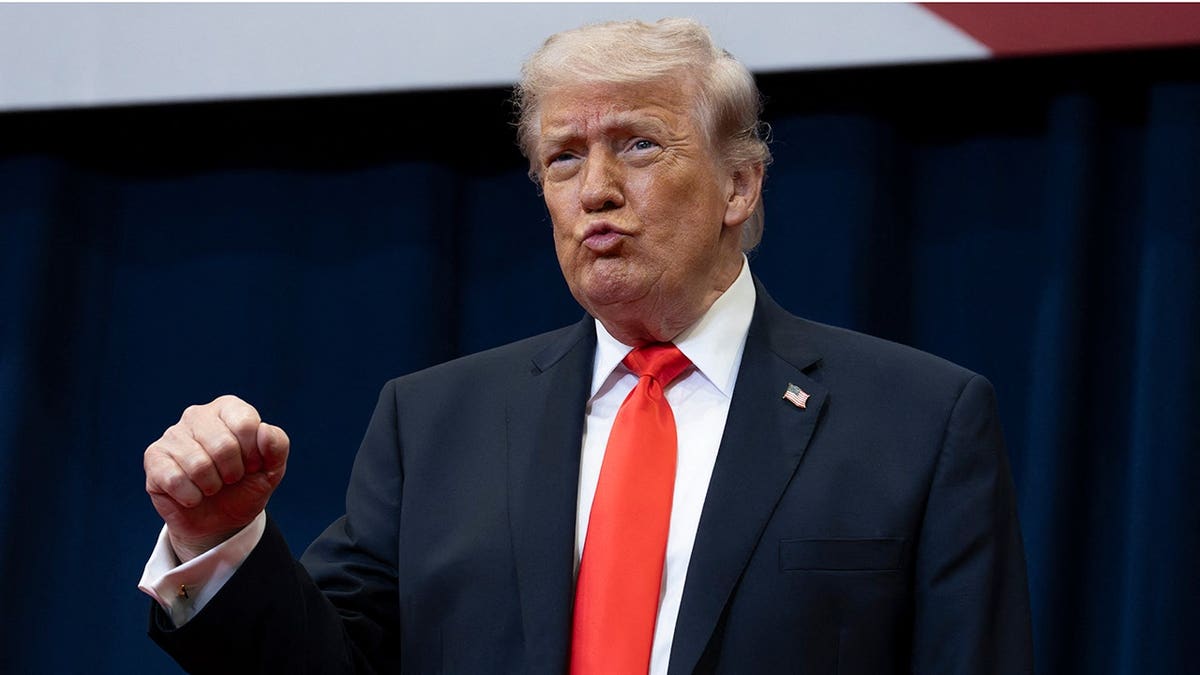
President Donald Trump arrives to give a speech about taxes and Social Security at The Villages, Fla. (Jim Watson/AFP)
«They say on my life I should be indoors at a secure facility where I can quietly, beautifully and safely play out my term,» Trump said. «I said, what’s more secure than The Villages?»
He also praised the Florida community as «the single largest community of seniors anywhere in the world,» before joking about the size of the overflow crowd.
«They have an overflow room that’s bigger than this,» Trump said. «Why the h— didn’t I go there? To start off.»
He repeatedly teased the crowd about age while arguing his administration had delivered for seniors.
«I don’t happen to be a senior,» Trump said. «I’m much younger than you. I’m a much younger man than you. Look at you old guys.
«But I feel I can relate to you anyway.»
TRUMP SAYS ‘LEGENDARY’ CROWD REACTION AT UFC 314 SHOWS THE ADMINISTRATION IS ‘DOING A GOOD JOB’
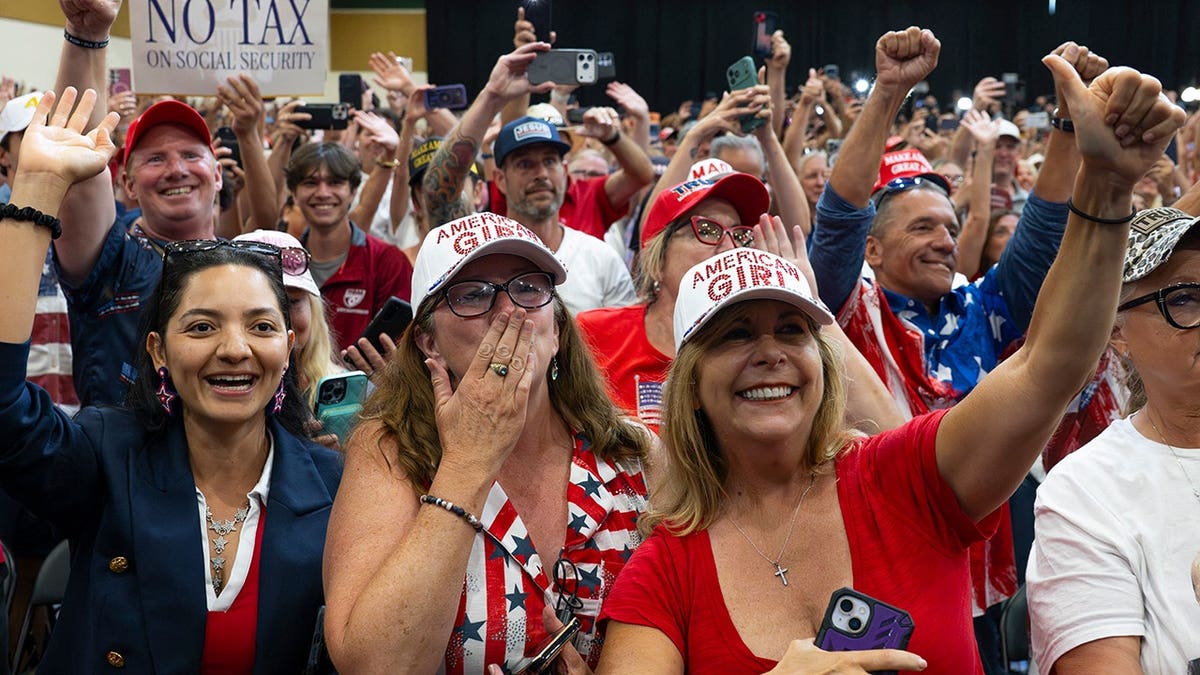
Supporters cheer as President Donald Trump arrives to give a speech about taxes and Social Security at The Villages in Florida. (Jim Watson/AFP)
Trump also singled out his regular rally supporters near the stage, calling them «front row Joes.»
«They’re all over. I can’t get rid of them,» Trump said. «They are sick individuals, but we love them.»
At another point, Trump defended what he calls «the weave,» his term for jumping between topics mid-speech.
«I love the weave because the weave is great,» Trump said. «Someday, I won’t come back, and they’ll say, ‘all right, he shot.’ That’s the weave. I call it the weave because you get a lot of stories into one little sentence.»
Trump later joked about traveling with Dr. Mehmet Oz while discussing Medicare and Medicaid.
TRUMP CLAIMS WHITE HOUSE DOCTORS REPORT HIM IN ‘PERFECT HEALTH,’ SAYS HE ‘ACED’ THIRD STRAIGHT COGNITIVE EXAM
«We have a man here who knows more about Medicaid, Medicare, medical crap than any human being,» Trump said.
«It’s the most boring trip I’ve ever made,» he added. «He’s telling me about Medicare, Medicaid. All I want to do is take care of you. I don’t care, I said, ‘You work out the details.’»
While discussing prescription drug costs, Trump also recounted a conversation with what he described as a wealthy friend seeking cheaper weight loss medication overseas.
CLICK HERE TO DOWNLOAD THE FOX NEWS APP
«He called it the fat shot,» Trump said. «I’ve given it that name, the fat shot.»
The microphone complaint was ultimately one of several unscripted moments as Trump moved between policy and personal banter, delivering a speech that, at times, resembled a stand-up-style riff more than a traditional political address.
donald trump, florida, mehmet mz, geriatric health, politics, social security










Investigación con resultados variados

Preocupaciones por la población más joven

¿Demasiado pronto?
Recibí en tu mail todas las noticias, historias y análisis de los periodistas de Clarín
QUIERO RECIBIRLO

NEWYou can now listen to Fox News articles!
President Donald Trump’s kingmaker status in Republican primaries was on the line Tuesday in Michigan’s GOP gubernatorial nomination showdown – and the president passed the test.
Republican Rep. John James, a two-time U.S. Senate nominee in the crucial Great Lakes battleground state who was endorsed by Trump in late June, topped multimillionaire businessman Perry Johnson to win the GOP primary, the Associated Press reported.
The West Point graduate and Army Ranger who served multiple combat tours as an Apache helicopter pilot in the Iraq war will face off in a high-stakes and expensive general election battle with two-term Michigan Secretary of State Jocelyn Benson, the Democrats’ gubernatorial nominee, in the race to succeed term-limited Gov. Gretchen Whitmer.
DEMOCRACY ’26: STAY UP TO DATE WITH THE FOX NEWS ELECTION HUB
Rep. John James of Michigan, a Republican candidate for governor, speaks to a voter at a campaign event in Harrison Township, Michigan, on August 3, 2026. (Luke Trevisan/Fox News)
James preached party unity in his victory speech.
«The primary is over now. We come together. One team, one fight, one mission to save Michigan. To those who supported me. Thank you. And for those who did not, I’m going to work every single day to earn your trust,» he told supporters.
The GOP primary between James and Johnson, a former gubernatorial and presidential candidate, turned combative. Johnson, who is White, referred to James, one of the few Black Republicans in Congress, as a «DEI candidate» and in a recent debate accused James of playing the «race card.» James, meanwhile, called Johnson «desperate.»
Johnson, who shelled out millions of his own money into his campaign, dramatically outspent James in the primary showdown.
CHECK OUT THE FOX NEWS POWER RANKINGS IN THE 2026 RACES FOR GOVERNOR
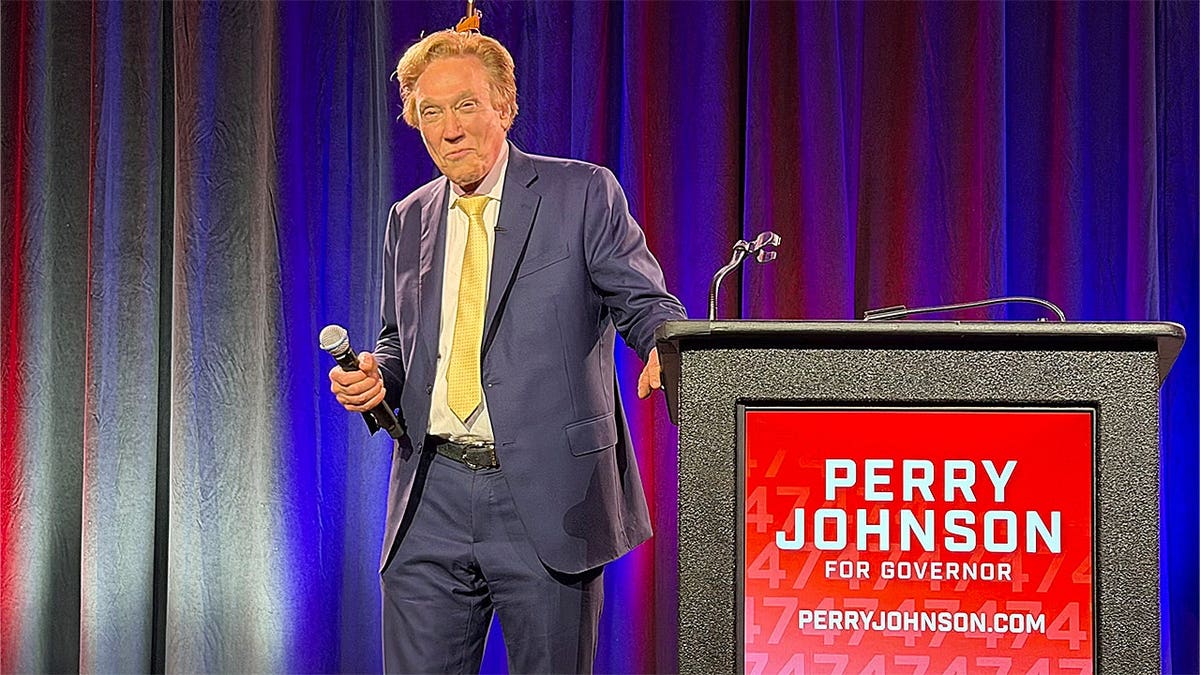
Republican gubernatorial candidate Perry Johnson campaigns on eve of the Michigan primary at a campaign event on August 3, 2026 in Novi, Michigan. (Luke Trevisan/Fox News)
But James told Fox News on the eve of the primary that «nobody outworks a ranger,» and «money isn’t the only thing. People want someone who resonates with them, someone who has the proven leadership capability to turn the state around.»
James and Johnson were the final two Republican candidates in a nomination race that previously included former Michigan Attorney General Mike Cox and state Senate Republican leader Aric Nesbitt. They both suspended their GOP gubernatorial campaigns, but their names remained on the primary ballot.
SIGN UP TO GET THE POLITICS NEWSLETTER

Michigan Secretary of State Jocelyn Benson, a Democrat, is running for governor in the 2026 race to succeed term-limited Gov. Gretchen Whitmer. (Bill Pugliano/Getty Images)
Trump gave James a boost last month as he campaigned with the congressman at a rally in Michigan.
The brute force of the president’s endorsement power has been on display in GOP primaries this spring and summer, with his candidates ousting incumbents he targeted in showdowns in Indiana, Kentucky and Texas, as well as the Louisiana primary.
But Trump’s endorsement streak in statewide and congressional Republican primaries was snapped in early June when his last-minute endorsement of Republican Rep. Randy Feenstra of Iowa in the race to succeed retiring GOP Gov. Kim Reynolds wasn’t enough to propel the three-term congressman to victory.
Feenstra was narrowly edged by Zach Lahn, a businessman, farmer and former political strategist who was backed by the political wings of MAHA — the acronym for the Make America Healthy Again movement aligned with Trump’s Health Secretary Robert F. Kennedy Jr. — and Turning Point USA, the powerful conservative organization co-founded by the late Charlie Kirk.
Trump-backed candidates won two of the three top races in key GOP primary runoff elections in Georgia and Alabama in June, with the one setback coming against billionaire businessman Rick Jackson, who shelled out over $100 million of his own money to boost his campaign.

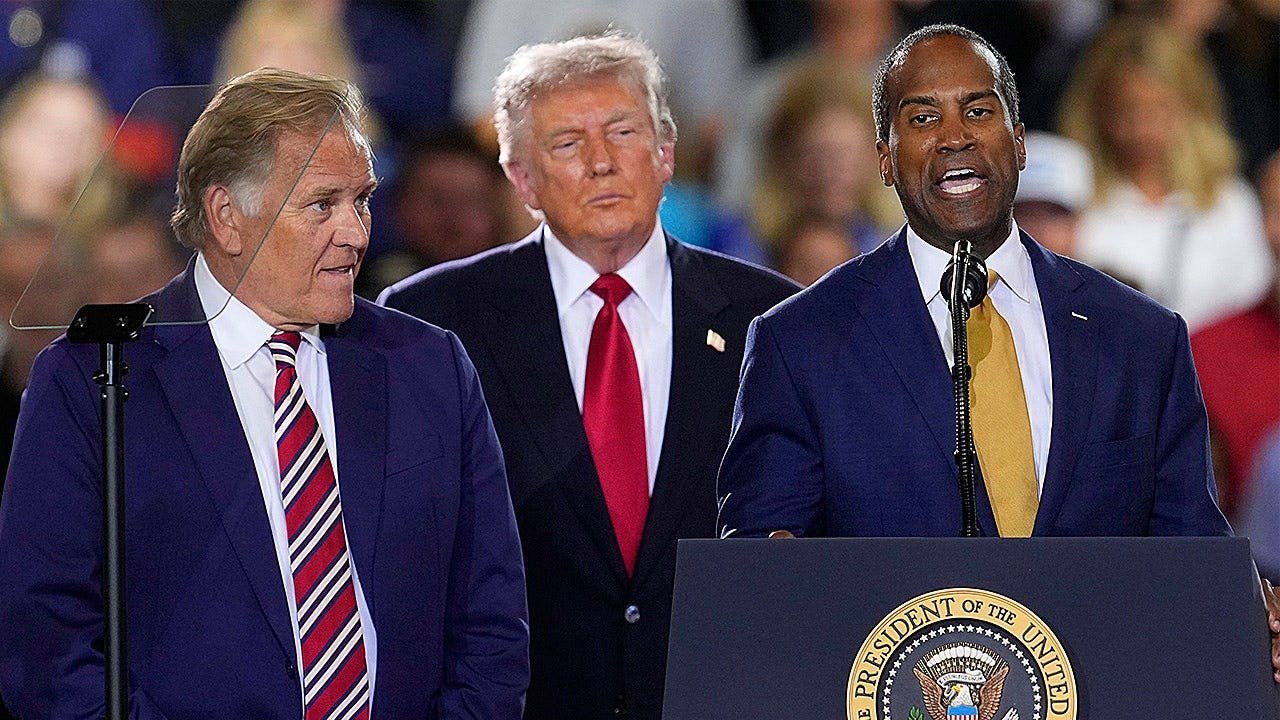
President Donald Trump, center, and GOP Senate candidate former Rep. Mike Rogers, left, listen as Rep. John James, a Republican gubernatorial candidate, speaks at an event at the General Motors Proving Ground Monday, July 27, 2026, in Milford, Mich. (Paul Sancya/AP Photo)
A week later, Trump-backed first-time candidate Anthony Constantino, a businessman and former boxer, defeated Robert Smullen, a retired Marine Corps colonel and New York assemblyman who had the backing of the state party, in the upstate New York race to succeed retiring GOP Rep. Elise Stefanik.
Meanwhile, in South Carolina’s Republican gubernatorial runoff, Trump couldn’t lose.
That’s because, besides backing Lt. Gov. Pamela Evette a few weeks earlier, he also gave a last-minute endorsement to state Attorney General Alan Wilson, who ended up winning the late June showdown in a landslide.
The president also enjoyed victory in Louisiana, where Sen. Bill Cassidy, who voted to convict Trump in his 2021 impeachment trial, was ousted as he sought renomination. Trump-backed Rep. Julia Letlow ended up winning the nomination in the runoff election.
And last month, Trump-backed Rep. Andy Biggs, a former House Freedom Caucus chair, won Arizona’s primary for governor in a landslide.
gubernatorial, state and local primaries, michigan, donald trump, politics, republicans, midterm elections
INTERNACIONAL
Panamá se sometió a una evaluación técnica de organismos internacionales para reforzar la seguridad de la navegación

En aras de contribuir a modernizar los servicios hidrográficos del país y reforzar la seguridad de la navegación, el sector marítimo de Panamá fue evaluado por la Organización Hidrográfica Internacional (OHI) y por la Asociación Internacional de Ayudas a la Navegación Marítima y Autoridades de Faros (IALA).
Ambas organizaciones prepararán un informe sobre la situación actual de la hidrografía y la cartografía náutica panameña, junto con recomendaciones técnicas orientadas a fortalecer las capacidades nacionales y ajustarlas a los estándares internacionales.
Entre los temas principales tratados figuró la adopción del estándar internacional S-100, identificado como la próxima generación de cartografía náutica digital.
Esta innovación permitirá integrar información marítima más precisa y actualizada, con el objetivo de mejorar la seguridad y la eficiencia en la navegación.
Asimismo, la agenda incluyó aspectos como la gestión de zonas costeras, la infraestructura geoespacial, la vigilancia marítima y los servicios hidrográficos existentes en el país.

La misión se realizó en el marco de la incorporación oficial de Panamá como Estado Miembro de la OHI, tras la aprobación de la Ley 479 de 2025.
Este proceso permitirá afianzar la cooperación técnica internacional, incorporar nuevas tecnologías y avanzar en la modernización de la infraestructura de información marítima panameña.
Durante cuatro jornadas, expertos de ambas organizaciones y de la Autoridad Marítima de Panamá (AMP) evaluaron las capacidades nacionales en hidrografía, cartografía náutica, ayudas a la navegación y gestión de información marítima.
Como parte de la agenda, mantuvieron reuniones técnicas y visitaron instituciones clave asociadas al desarrollo hidrográfico.
Con un registro mercante superior a 8,000 embarcaciones, lo que representa cerca del 13% de la flota mercante mundial, Panamá culminó esta evaluación técnica de alto nivel, que contribuirá a modernizar sus servicios hidrográficos y a reforzar la seguridad de la navegación.

Por otra parte, la entidad informó que el comportamiento del mercado laboral marítimo también mostró una tendencia positiva.
Entre el 1 de julio de 2024 y el 1 de julio de 2026, la Autoridad Marítima de Panamá registró 2,029 contratos de trabajo para gente de mar panameña.
Solo entre el 1 de julio de 2025 y el 1 de julio de 2026 se recibieron 1,096 contratos, lo que representa un incremento del 17.5 % respecto al mismo período del año anterior.
Asimismo, entre el 1 de julio de 2024 y el 1 de julio de 2025 se registraron 933 contratos, un 5.31 % más que en el período precedente, cuando se recibieron 886 contratos.
De acuerdo con la entidad gubernamental, estos resultados responden, en parte, al fortalecimiento de las inspecciones laborales y al acompañamiento brindado a las empresas del sector, lo que ha favorecido una mayor presentación de contratos para su revisión y registro conforme a la normativa vigente.

Durante ese período, la entidad igualmente tramitó 653 repatriaciones, atendió 788 quejas laborales marítimas, realizó 598 inspecciones laborales, brindó 407 consultas especializadas y concretó 39 conciliaciones, fortaleciendo los mecanismos de atención y defensa de los derechos de la gente de mar.
De acuerdo con la Autoridad Marítima de Panamá, estos resultados responden, en parte, al fortalecimiento de las inspecciones laborales y al acompañamiento brindado a las empresas del sector, lo que ha favorecido una mayor presentación de contratos para su revisión y registro conforme a la normativa vigente.
Como autoridad competente en materia laboral marítima, sostiene que una de sus dependencias verifica, registra y custodia los contratos de trabajo de la gente de mar, además de orientar a trabajadores y empleadores sobre el cumplimiento de la legislación laboral marítima aplicable.
Corresponsal:Desde Panamá

En el Senado bonaerense es habitual la participación virtual en sesiones, como solicita Sagasti a nivel nacional

Boca Juniors vs. Estudiantes: formaciones, hora y dónde ver por tv

Se conoció quién ganó la casa de esta temporada en Gran Hermano: “Para mi papá que jugaba a la timba”

¿Tendríamos que hacer permanente el horario de verano?

“Nobleza obliga”: el inesperado reconocimiento de Mayra Mendoza a Victoria Villarruel

Javier Milei: “Las reformas apuntan al corazón de la decadencia argentina de los últimos 91 años”

“Vamos a acelerar con todo”: el objetivo del Gobierno por las reformas y la agenda electoral de cara al 2027

Javier Milei cruzó a Victoria Villarruel y elevó la tensión: “Es una opositora, replica los argumentos kirchneristas”

Reelecciones indefinidas: el oficialismo bonaerense niega que busque ampliar la Legislatura como parte de una reforma política para beneficiar a los intendentes

¡Chau Luck Ra! La salida de soltera de La Joaqui, muy bien acompañada, a días de su separación
-
 POLITICA3 días ago
“Vamos a acelerar con todo”: el objetivo del Gobierno por las reformas y la agenda electoral de cara al 2027
-
 POLITICA1 día ago
Javier Milei cruzó a Victoria Villarruel y elevó la tensión: “Es una opositora, replica los argumentos kirchneristas”
-
 POLITICA2 días ago
Reelecciones indefinidas: el oficialismo bonaerense niega que busque ampliar la Legislatura como parte de una reforma política para beneficiar a los intendentes