INTERNACIONAL
As Trump’s Gaza deal nears, family warns Israel not to free another Sinwar

NEWYou can now listen to Fox News articles!
As President Donald Trump moves to finalize his 20-point plan to end the Gaza war, Israel faces a pivotal decision that could reshape the conflict’s aftermath. The framework envisions a phased Israeli withdrawal from Gaza, the return of all hostages, and a major prisoner exchange. In return, Hamas would commit to disarmament and allow a technocratic transitional authority to manage Gaza’s reconstruction.
Part of the agreement involves releasing hundreds of convicted Palestinian terrorists, a clause that has already triggered backlash from the families of victims.
Dr. Michael Milshtein, head of the Moshe Dayan Forum at Tel Aviv University and one of Israel’s foremost experts on Hamas, told Fox News Digital that the list of roughly 250 prisoners contains names that represent what he called «a real strategic danger.»
TRUMP UNVEILS 20-POINT PLAN TO SECURE PEACE IN GAZA, INCLUDING GRANTING SOME HAMAS MEMBERS ‘AMNESTY
Palestinian Hamas terrorists stand guard on the day of the handover of hostages held in Gaza since the deadly Oct. 7, 2023 attack, as part of a ceasefire and a hostages-prisoners swap deal between Hamas and Israel, in Rafah in the southern Gaza Strip, Feb. 22, 2025. (Reuters/Hatem Khaled/File Photo)
«These are not low-level activists,» Milshtein said. «Among them are people who built power and influence inside prison. When released, they will return as leaders.»
He cited several examples that, he said, demonstrate the risk of past exchanges. Among the prisoners now under discussion are Abbas al-Sayed, convicted for the 2002 Park Hotel bombing in Netanya that killed 30 people; Ibrahim Hamed, former Hamas military commander in the West Bank, serving more than 40 life sentences; Abdullah Barghouti, who produced explosives for a series of large-scale suicide bombings and Hassan Salameh, convicted for orchestrating multiple bus attacks in the 1990s.

Ibrahim Hamed, a former head of the Hamas terrorist movement in the West Bank, looks on as he arrives for sentencing at the Ofer military court near Ramallah, West Bank, on July 1, 2012. The Israeli military court sentenced Hamed to 54 life terms after convicting him of ordering attacks that killed dozens of Israelis, the army said.
«These are people with dozens of life sentences,» Milshtein explained. «We’ve already seen what happens when such figures are freed. Many of those who carried out the Oct. 7 massacre were prisoners released in the 2011 Gilad Shalit deal.»
ISRAELI VICTIMS OF TERROR CONCERNED WITH MURDERERS’ RELEASE FROM PRISON, RELIEVED 7 HOSTAGES BACK HOME
Milshtein noted that several recently released prisoners have quickly rejoined Hamas’s leadership abroad. He pointed to Abdel Nasser Issa, a Hamas operative convicted in 1995 who was released earlier this year and soon relocated to Turkey, where he began appearing in podcasts as part of the group’s senior political echelon. «That is the model,» Milshtein said. «They enter prison as operatives and emerge as decision-makers.»
Among the most concerning names, he added, is Jamal Al-Hur, who he described as «one of the five most dangerous.» Al-Hur, deeply connected to Hamas’s hierarchy, has served nearly three decades in prison and now acts as a key liaison between jailed operatives and the group’s external leadership. «He didn’t enter as a leader but became one inside,» Milshtein said. «If released, he will re-establish himself quickly—just as others did before him.»
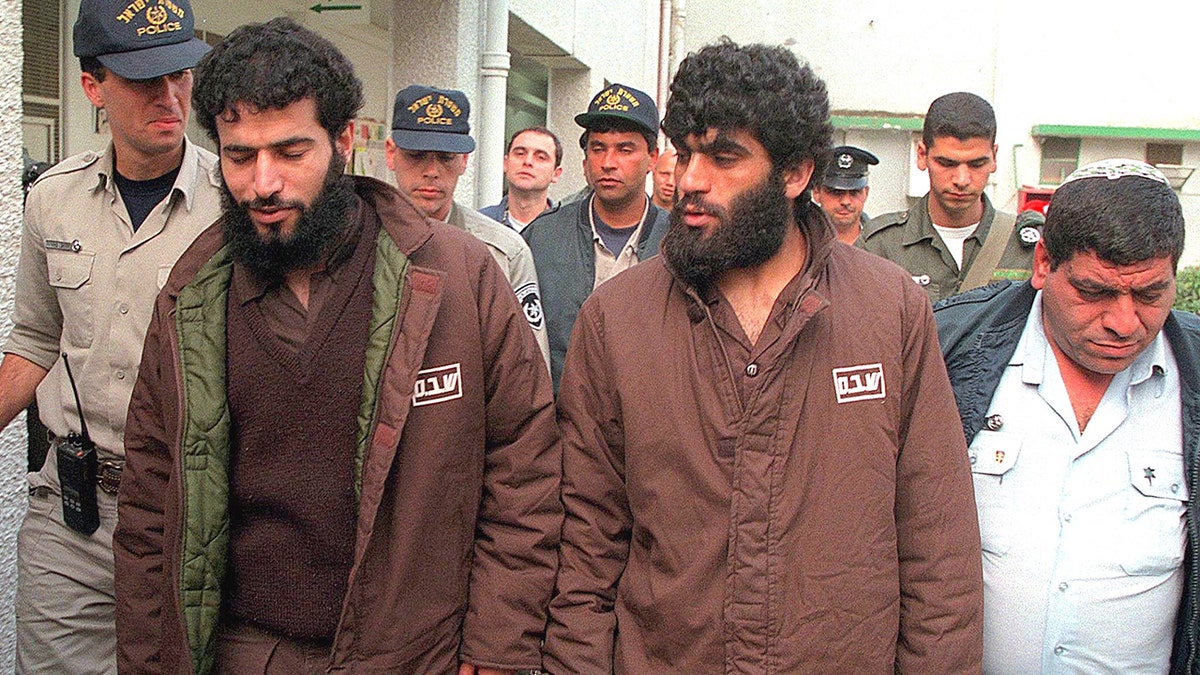
Jamal al-Hur, left, and Rahman Ismael Ranimat, right, are led into an Israeli military court in Lod, Israel, on Feb. 5, 1998. An Israeli military tribunal charged the two with multiple counts of murder in the slayings of 13 Israelis in a series of Hamas attacks. (Danni Salomon/Yedioth/AFP via Getty Images)
The Edri family’s warning
The inclusion of Al-Hur on the draft list has renewed anguish for the family of Sharon Edri, the Israeli soldier he helped kidnap, torture, and murder in 1996. Al-Hur was also convicted for the 1997 Apropo Café bombing in Tel Aviv that killed 13 civilians. Twice before, his name appeared on proposed release lists and was removed after public pressure.
«I know what it’s like not to know where your brother is for seven months,» said Danielle Edry Karten, Edri’s sister, who lives in New York. «There’s nothing that makes me happier than knowing families will soon be reunited with the hostages. But this man shouldn’t be released—not because of my brother alone, but because of the danger he still poses.»

Sharon Edri is seen here with his sister, Danielle Edri Karten. Edri Karten opposes the release of her brother’s killer.
«He kidnapped, mutilated, tortured my uncle,» said Izzy Karten, Edri’s nephew, in an interview with Fox News Digital from New York. «He went to jail, was released, and went on to commit the Apropo Café bombing. Later, he helped organize the kidnapping of the three boys that started the 2014 war. Now he’s a senior Hamas leader inside prison—that’s why we call him the next Sinwar.»

Banners with the photograph of Yahya Sinwar, the Hamas terrorist leader who was killed in an Israeli attack, are hung on the streets in Tehran, Iran on Oct. 19, 2024. (Fatemeh Bahrami/Anadolu via Getty Images)
Karten added: «We’re not against the peace deal. We’re praying for the hostages to come home. We just need to make sure they don’t trade them for the worst of the worst.»
ISRAEL’S ARMY WILL ‘ADVANCE READINESS’ FOR FIRST PHASE OF TRUMP PLAN TO RELEASE HOSTAGES
The family launched a new petition this week calling on the Israeli government to block Al-Hur’s release and to bar any future swaps involving convicted murderers.

Sharon Edri, an Israeli soldier abducted and killed by Hamas terrorist Jamal al-Hor in 1996, is shown in a family photo provided by the Edri family, who oppose the planned release of his killer as part of a potential prisoner exchange. (Edri Family)
At Sharon Edri’s funeral nearly three decades ago, Netanyahu vowed to the family, «We are telling the killers—you won’t break the people and the family. We will not forget him and your daughter Hana. We will end the terror and will bring peace.» The family now fears that the promise may be undone.
The Nukhba dilemma
Beyond the list of notorious prisoners, another issue threatens to derail the negotiations: Hamas’s demand to release about 90 members of its elite «Nukhba» force, the commandos who spearheaded the most horrific atrocities on the Oct. 7 attack on Israeli communities.
Milshtein, who visited the section of Ramla Prison where some of these terrorists are held, said they remain unrepentant. «I spoke with them,» he told Fox News Digital. «They are fanatical—completely committed. They show no remorse. The only thing they regret is not having killed more people.»

Hamas terrorists killed civilians, including women, children and the elderly, when they attacked Israel on Oct. 7, 2023. (Israel Defense Forces via AP)
He described the Nukhba detainees as the most ideologically extreme and operationally capable among Hamas’ ranks. «They are like a special-forces division with a radical worldview,» he said. «Releasing them would be like setting loose the people who planned and executed the worst day in Israel’s history.»
CLICK HERE TO GET THE FOX NEWS APP
Despite the risks, Milshtein acknowledged that Israel may have no alternative. «It’s a terrible dilemma,» he said. «But strategically, this may be one of those bitter compromises Israel will have to make to bring its citizens home.»
israel,terrorism,conflicts,middle east










NEWYou can now listen to Fox News articles!
President Donald Trump said he wants to keep the Strait of Hormuz open, saying it would be an «honor» to do so in an effort to help other nations that rely on the vital Middle East waterway.
Trump was speaking with reporters in Florida on Monday, when he was asked about the global energy choke point, which has been disrupted amid back-and-forth attacks between Iran and Israel and the United States.
IRAN SEIZES OIL TANKERS, THREATENS ‘MASSACRE’ IN STRAIT OF HORMUZ HOURS BEFORE US TALKS
People mourn slain Iranian Supreme Leader Ayatollah Ali Khamenei, Thursday, in Isfahan, Iran. (Payman Shahsanaei/ISNA via AP)
At about 21 miles wide at its narrowest point, the Strait of Hormuz is between Iran and Oman and carries roughly 20 million barrels a day and about one-fifth of global liquefied natural gas, making it a top-value target when conflict in the region erupts.
«We’re really helping China here and other countries because they get a lot of their energy from the Straits,» Trump said. «We have a good relationship with China. It’s my honor to do it.»
US POSITIONS AIRCRAFT CARRIERS, STRIKE PLATFORMS ACROSS MIDDLE EAST AS IRAN TALKS SHIFT TO OMAN
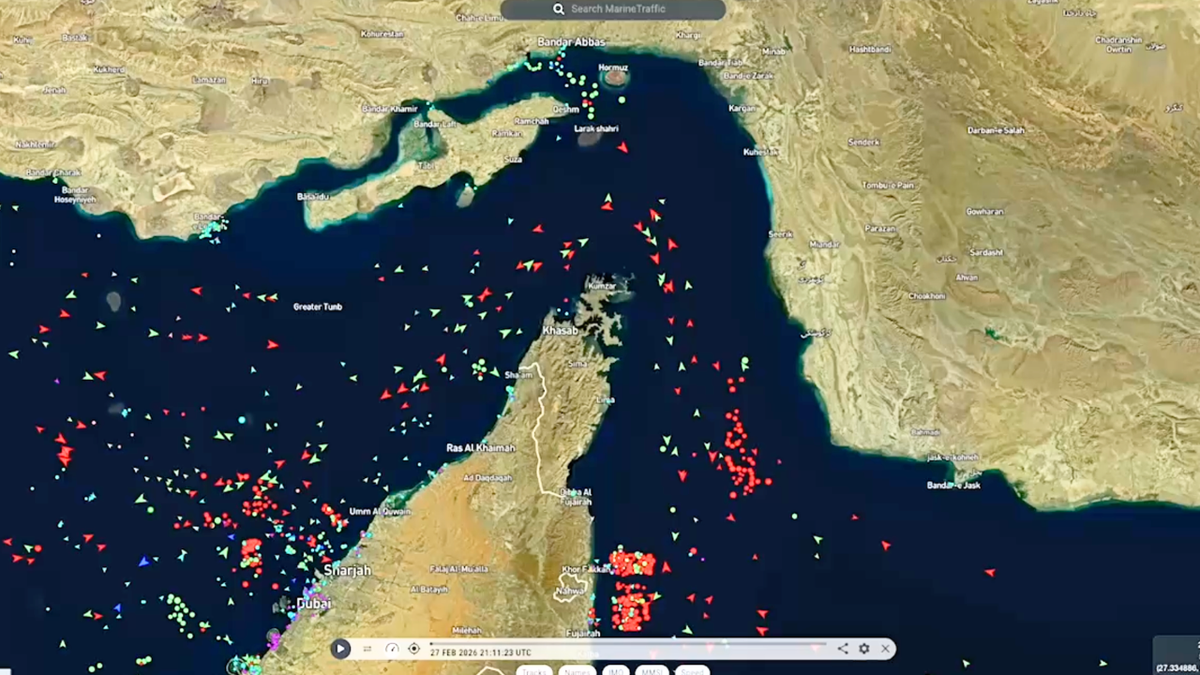
A screenshot of a marine traffic terminal showing vessels in the Strait of Hormuz on March 4. (Kpler/Marine Traffic)
Trump is slated to meet with Chinese leader Xi Jinping later this month. While touting the United States’ new energy partnership with Venezuela, Trump noted that China gets its oil through the strait.
«I mean, we’re doing this for the other parts of the world, including countries like China,» he said. «They get a lot of their oil through the straits.»
«We have a very good relationship with President XI (Jinping) and China,» he added. «I’m going there in a short period of time, and we’re protecting the world from what these lunatics are trying to do, and very successfully I might add.»
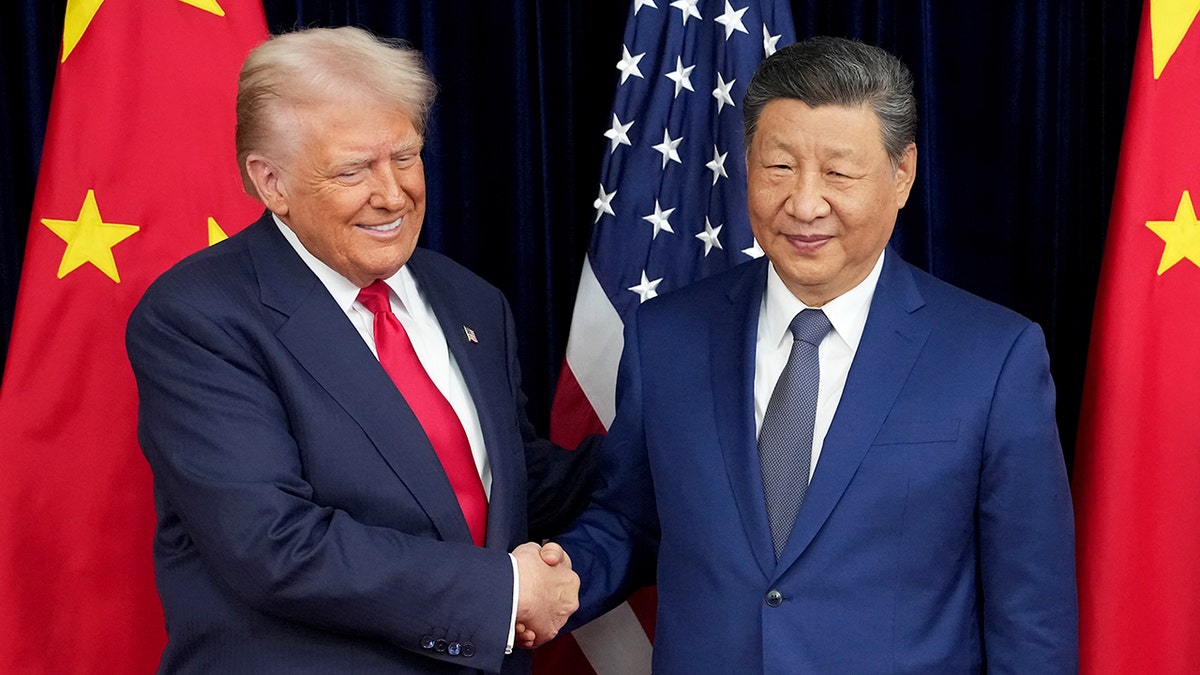
President Donald Trump greets Chinese President Xi Jinping ahead of a bilateral meeting at Gimhae Air Base on Oct. 30, 2025, in Busan, South Korea. Trump said he wants to keep the Strait of Hormuz open in the Middle East for countries, including China. ( Andrew Harnik/Getty Images)
The U.S. will also waive all oil-related sanctions on some countries in an effort to reduce energy prices amid the conflict in the Middle East, Trump said.
Later, Trump reaffirmed his position on the strait in a fiery Truth Social post.
CLICK HERE TO DOWNLOAD THE FOX NEWS APP
«If Iran does anything that stops the flow of Oil within the Strait of Hormuz, they will be hit by the United States of America TWENTY TIMES HARDER than they have been hit thus far. Additionally, we will take out easily destroyable targets that will make it virtually impossible for Iran to ever be built back, as a Nation, again — Death, Fire, and Fury will reign upon them — But I hope, and pray, that it does not happen!,» he wrote.
«This is a gift from the United States of America to China, and all of those Nations that heavily use the Hormuz Strait. Hopefully, it is a gesture that will be greatly appreciated. Thank you for your attention to this matter!»
war with iran,iran,donald trump,china,world,politics,geopolitics

Trump demands Congress pass the SAVE Act
Fox News chief congressional correspondent Chad Pergram reports on President Donald Trump calling on Congress to pass the SAVE America Act and the DHS funding battle on ‘Special Report.’
NEWYou can now listen to Fox News articles!
Passage of the SAVE Act is of paramount importance to President Trump and many congressional Republicans.
In his State of the Union speech, the president implored lawmakers «to approve the SAVE America Act to stop illegal aliens and other unpermitted persons from voting in our sacred American elections.»
The House approved the plan to require proof of citizenship to vote last month, 218-213. But, as is often the case, the hurdle is the Senate. Specifically the Senate filibuster.
So some Republicans are trying to save the SAVE Act.
TRUMP PUSHES CONGRESS TO PASS SAVE ACT DURING STATE OF THE UNION; NO MEDDLING WITH TARIFFS
The SAVE Act has become the Trump administration’s latest congressional cause célèbre. (Emma Woodhead/Fox News Digital)
It’s important to note that President Trump never called for the Senate to alter the filibuster in his State of the Union address. But in a post last week on Truth Social, President Trump declared that «The Republicans MUST DO, with PASSION, and at the expense of everything else, THE SAVE AMERICA ACT.»
Again, the president didn’t wade into questions about overcoming a filibuster. But «MUST DO» and «at the expense of everything else» is a pretty clear directive from the Commander in Chief.
That’s why there’s a big push by House Republicans and some GOP senators to alter the filibuster – or handle the filibuster differently in the Senate.
TRUMP VOWS BLOCK ON SIGNING NEW LAWS UNTIL SAVE AMERICA ACT PASSES SENATE
It’s rare for members of one body of Congress to tell the other how to execute their rules and procedures. But the strongest conservative advocates of the SAVE Act are now condemning Senate Republicans if they don’t do something drastic to change the filibuster to pass the SAVE Act.
Some Senate Republicans are ready to push for changes. Or, at the very least, advocate that Senate Republicans insist that Democrats conduct what they’re referring to as a «talking filibuster» and not hold up the legislation from the sidelines. It takes 60 votes to terminate a filibuster. The Senate does that by «invoking cloture.» The Senate first used the cloture provision to halt a filibuster on March 8, 1917. Prior to that vote, the only method to end a filibuster was exhaustion – meaning that senators finally just run out of gas and quit debating.
So let’s explore what a filibuster is and isn’t – and dive into what Republicans are talking about when they’re talking about a talking filibuster.
The Senate’s leading feature is unlimited debate. But ironically the «debate» which holds up most bills is not debate. It’s simply a group of 60 lawmakers signaling to their leaders offstage that they’ll stymie things. No one has to go to the floor to do anything. Opponents of a bill will require the majority tee up a cloture vote even if legislation has 60 yeas. Each cloture vote takes parts of three to four days to process. So that inherently slows down the process – and is a de facto filibuster.
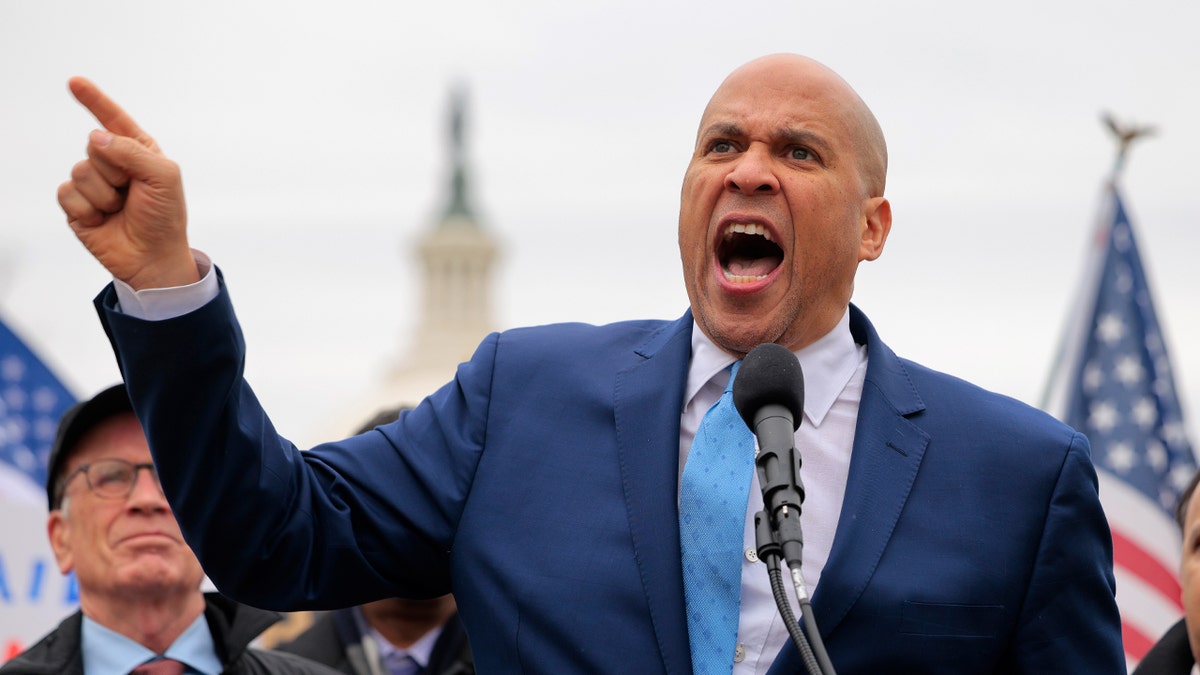
Sen. Cory Booker, D-N.J., gave a record-breaking, 25-hour speech last year – however, it wasn’t necessarily a «filibuster» in the truest sense of the word. (Chip Somodevilla/Getty Images)
But what about talking filibusters? Yes, senators sometimes take the floor and talk for a really long time. Hence, the «unlimited debate» provision in the Senate. Senators can generally speak as long as they want, unless there’s a time agreement, greenlit by all 100 members.
That’s why a «filibuster» is hard to define. You won’t find the word «filibuster» anywhere in the Senate’s rules. And since senators can just talk as long as they want, they might argue that suggesting they are «filibustering» is pejorative. They’re just exercising their Senate rights to speak on the floor.
However, a true filibuster is a delay. For instance, the record-breaking 25 hour and 8 minute speech last year by Sen. Cory Booker, D-N.J., against the Trump administration was technically not a filibuster. Booker began his oratory on the evening of March 31, ending on the night of April 1. Once Booker concluded, the Senate voted to confirm Matt Whittaker as NATO Ambassador. The Senate was supposed to vote on the Whitaker nomination on April 1 anyway. So all Booker’s speech did was delay that confirmation vote by a few hours. But not much.
FETTERMAN EXPECTS DHS SHUTDOWN AMID PARTISAN FUNDING FEUD, BREAKS WITH DEMOCRATS ON VOTER ID
In 2013, Sen. Ted Cruz, R-Texas, held the floor for more than 21 hours, in his quest to defund Obamacare. But despite Cruz’s verbosity (and a recitation of «Green Eggs and Ham» by Dr. Suess), the Senate was already locked in to take a procedural vote around 1 pm the next day. That automatically ended Cruz’s speech. Thus, that truly wasn’t a filibuster either.
So, this brings us to the «talking» filibuster which actually gums up the Senate gearboxes. A talking filibuster is what most Americans think of, thanks to the iconic scenes with Jimmy Stewart in the Frank Capra classic, «Mr. Smith Goes to Washington.»
Most senators «filibuster» by forcing the Senate to take two cloture votes – spread out by days – to handle even the simplest of matters. That elongates the process by close to a week. But if advocates of a given bill have the votes to break the filibuster via cloture, the gig is up.

Sen. Ted Cruz, R-Texas, held the floor for more than 21 hours back in 2013. (Kayla Bartkowski/Getty Images)
But what happens if a senator – or a group of senators – delays things with long speeches? That can only last for so long. And it could potentially truncate the Senate’s need to take ANY cloture vote, needing 60 yeas.
Republicans who advocate for passage of the SAVE Act believe they can get around cloture – and thus the need for 60 votes – by making opponents of the SAVE Act talk. And talk. And talk.
And once they’re done talking, the Senate can vote – up or down – on the SAVE Act. Passage requires a simple majority.
Senate Rule XIX (19) states that «no senator shall speak more than twice upon any one question in debate on the same legislative day.»
TRUMP, THUNE CLASH ON VOTER ID ULTIMATUM AS GOP REMAINS DIVIDED ON PATH FORWARD
Easy enough, right? Two speeches per day. You speak twice on Monday, then you have to wait until Tuesday? Democrats would eventually run out of juice with 47 senators who caucus with their party.
But it’s not that simple. Note the part about two speeches per «question.»
Well, what’s a «question,» in Senate parlance? That could be the bill itself. It could be an amendment. It could be a motion. And just for the record, the Senate usually cycles through a «first degree» amendment and then a «second degree» amendment. So, if you’re scoring at home, that could be six (!) speeches per senator, per day, on any given «question.»
Questions?
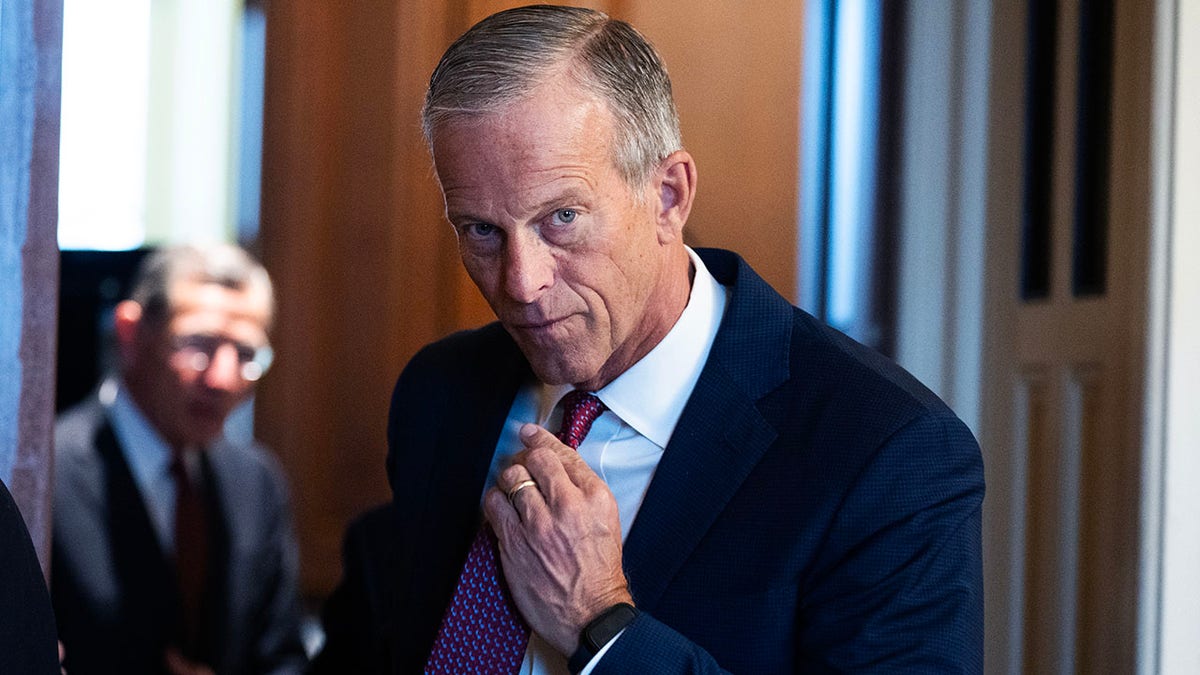
It may be up to Senate Majority Leader John Thune, R-S.D., whether the Senate «adjourns» or «recesses.» (Tom Williams/CQ-Roll Call, Inc via Getty Images)
But wait. There’s more.
Note that Rule XIX refers to a «legislative day.» A legislative day is not the same as a calendar day. One basic difference is if the Senate «adjourns» each night versus «recessing.» If the Senate «adjourns» its Monday session, then a new legislative day begins on Tuesday. However, the legislative day of «Monday» carries over to Tuesday if the Senate «recesses.»
It may be up to Senate Majority Leader John Thune, R-S.D., whether the Senate «adjourns» or «recesses.» The creation of a new «legislative day» inhibits the GOP effort.
Moreover, talking filibuster proponents could object to a request by Thune to adjourn. If the Senate votes to stay in session, that forces the legislative day of Monday to bleed over to Tuesday.
SCHUMER ONCE BLOCKED TRUMP’S MOVE TO FILL THE NATION’S OIL RESERVES, NOW HE WANTS THEM OPENED
Pro tip: watch to see if the adjournment vs. recess scenario unfolds. If a talking filibuster supporter tries to prevent the Senate from adjourning, that could signal whether the GOP has a shot at eventually passing the SAVE Act. If that test fails, the SAVE Act is likely dead in the water.
We haven’t even talked about a custom practiced by most Senate Majority Leaders to lock down the contours of a bill when they file cloture to end debate.
It’s a Senate custom to recognize the Senate Majority Leader first on the floor for debate. So Thune and his predecessors often «fill» what’s called the «amendment tree.» The amendment tree dictates how many amendments are in play at any one time. Think of the underlying bill as a «trunk.» A «branch» is for the first amendment. A «sprig» from that branch is the second amendment. Majority leaders often load up the amendment tree with «filler» amendments, not changing the subject of the bill. He then files cloture to break the filibuster.
That tactic curbs the universe of amendments. That blocks the other side from engineering controversial amendments to alter the bill. But if Thune doesn’t file cloture to end debate, then the Senate must consider amendment after amendment, repeatedly filling the tree and voting on those amendments. This scenario unfolds during a «talking» filibuster. Not when Thune is controlling the process by filing cloture and «filling the tree.»
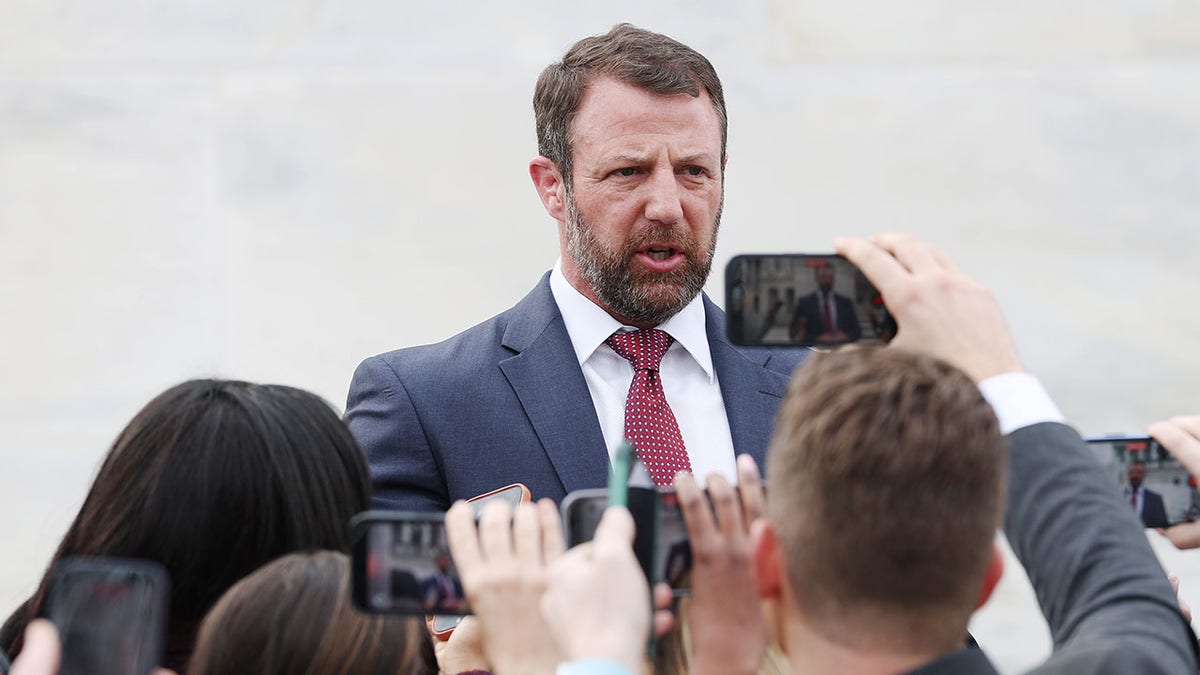
Forcing a talking filibuster may well preclude the confirmation of Sen. Markwayne Mullin, R-Okla., as Secretary of Homeland Security. ( Anna Moneymaker/Getty Images)
This is why Thune is skeptical of a talking filibuster to pass the SAVE Act.
«This process is more complicated and risky than people are assuming at the moment,» said Thune.
In fact, the biggest «benefit» to filing cloture may not even be overcoming a filibuster, but blocking amendments via management of the tree. Republicans are bracing for amendments Democrats may offer.
«If you don’t think Democrats have a laundry list of amendments, talking about who won the 2020 election, talking about the Epstein files – if you don’t think they have a quiver full of these amendments that they’re ready to get Republican votes on the record, then I’ve got a bridge to sell you,» said George Washington University political science professor Casey Burgat.
Plus, forcing a talking filibuster for days precludes the Senate from passing a DHS funding bill. That’s to say nothing of confirming Sen. Markwayne Mullin, R-Okla., as Homeland Security Secretary.
CLICK HERE TO DOWNLOAD THE FOX NEWS APP
That’s why there’s a reluctance by some Republicans to push the talking filibuster. And it could come at the expense of the SAVE Act – despite the president’s push.
congress,senate,voting
INTERNACIONAL
Donald Trump afirma que la guerra contra Irán está “prácticamente terminada” y frena la estampida del precio del petróleo

Lunes severamente agitado para los mercados del mundo, especialmente en relación al precio del petróleo. El crudo alcanzó casi los 120 dólares, el barril en el arranque de la jornada, un valor sin precedentes incluso desde la pandemia de covid en abril de 2020. Pero esos valores revirtieron rápidamente primero a 99 dólares y luego aún más hasta US$84,5 para el Brent de referencia en Europa y similar para el WTI de Estados Unidos, después de que el presidente norteamericano Donald Trump dijera que la guerra terminará pronto, al revés de anuncios en sentido contrario de Israel el domingo.
En declaraciones a CBS News el lunes por la tarde, Trump afirmó que “creo que la guerra está prácticamente terminada. No tienen armada, ni comunicaciones, ni fuerza aérea. Sus misiles están dispersos”, y que Estados Unidos está “muy adelantado” respecto a los plazos previstos por el ejército. Sin embargo luego corrigió y en un discurso a sus legisladores afirmó que si bien “ganamos en diferentes niveles… no es suficiente” y hay aún mucho por hacer.
El domingo el jefe del Estado Mayor del ejercito israelí, Ayel Zamir, anunció que “la guerra puede durar mucho”, un criterio que había señalado anteriormente el presidente francés, Emmanuel Macron.
La declaración de Trump dejó dudas respecto a si implicaba que se analiza la salida de EE.UU. del conflicto, dejando solo a Israel o se trato de un comentario urgido por el alza del crudo y las naftas en su país. El temor a una prolongación del conflicto se alimenta además en la decisión en Irán de Mujtaba Khamenei como nuevo Líder Supremo, un duro dirigente, hijo del líder asesinado en el primer día de la guerra, y que esta asociado a los halcones de la Guardia Revolucionaria lo que cierra la posibilidad de una salida negociada. Trump advirtió que “no estoy contento” con la designación. Ya antes lo había descalificad como “un peso ligero”.
El mandatario norteamericano no dio detalles para su anuncio respecto a la evolución de la guerra. Este día el combustible norteamericana estaciones de servicio norteamericana registró un alza adicional de 17%, un dato de enorme importancia policía. La declaración habría tenido el propósito de evitar un mayor impacto en los valores después de que el Grupo de los Siete, las naciones más industrializadas del planeta, decidieran en una reunión de sus ministros de finanzas no liberar aunque solo por el momento sus enormes reservas de crudo.
“La señal esta dada”, dijo The Wall Street Journal. En un comunicado, estos países afirmaron estar dispuestos a tomar las “medidas necesarias” para apoyar el suministro mundial de energía, incluyendo esa liberación, pero no ahora. Se supone que el anuncio podría producirse este martes “No es que alguien estuviera en contra, es solo una cuestión de tiempo. Se necesita más análisis”, añadió.
Este martes habrá otro encuentro. La fuente dijo que es posible que “la decisión final la tomen los líderes”, añadió. El G7 está compuesto por Estados Unidos, Canadá, Japón, Italia, Reino Unido, Alemania y Francia.
La trepada a 119 dólares en la apertura de los mercados había alarmado porque implicaba un alza de 28 por ciento de sus valores previos en el caso del Brent y 31% de alza respecto al WTI, una calamidad para la economía global.
Los jerarcas iraníes reconocen que el caos económico forma parte de su arsenal en el conflicto. El presidente del parlamento iraní escribió en la aplicación X, “las consecuencias económicas de esta guerra, que se extenderán a la infraestructura de la región y del mundo, serán enormes y duraderas. Los precios del petróleo podrían mantenerse en tres dígitos durante un tiempo. El probable desenlace de esta guerra es el estancamiento de las economías globales”.
El ministro de Asuntos Exteriores de Irán, Abbas Araghchi, a su vez, se jactó en redes sociales del alza de los precios del petróleo y calificó los ataques contra su país como “Operación Error Épico”. Por el nombre de “Furia Epica” que le dieron al ofensiva EE.UU. e Israel. Añadió: “Nosotros también tenemos muchas sorpresas guardadas”. “A nueve días de la ‘Operación Error Épico’, los precios del petróleo se han duplicado mientras todas las materias primas se disparan. Estados Unidos está conspirando contra nuestras instalaciones petroleras y nucleares con la esperanza de contener el enorme impacto inflacionario”, afirmó subrayando que “Irán está totalmente preparado”.
En otra publicación en X señaló: “Irán no quiere perjudicar a los estadounidenses comunes, que en su gran mayoría votaron para poner fin a la implicación en costosas guerras extranjeras”.
“La culpa del aumento del precio de la gasolina, de las hipotecas más caras y de la caída de los planes de jubilación recae directamente en Israel y sus aliados en Washington”, añadió.
Mientras el conflicto se adentraba en su décimo día, los ataques estadounidenses e israelíes en Irán habían matado a unas 1.300 personas, según funcionarios iraníes, mientras que los ataques iraníes en Oriente Medio causaron más de 30 muertes. El ejército israelí afirmó haber matado a más de 1.900 iraníes.
En el Líbano, los ataques israelíes han matado a casi 500 personas, según informaron los medios estatales, y más de 600.000 personas han sido desplazadas, según el presidente Joseph Aoun. En respuesta al lanzamiento de cohetes por parte de Hezbollah, respaldado por Irán, las fuerzas israelíes avanzaron hacia el sur del Líbano y bombardearon bastiones de Hezbollah. Un misil balístico lanzado desde Irán tuvo como objetivo Turquía antes de ser derribado por las defensas de la OTAN, según informó el Ministerio de Defensa turco. Fue el segundo anuncio de este tipo en seis días. Las autoridades indicaron que un ataque iraní anterior, el 4 de marzo, tuvo como objetivo la base aérea de Incirlik, en el sur de Turquía, miembro relevante de la OTAN.

Trump says it’s an ‘honor’ to keep Strait of Hormuz open for China and other countries

Muni Seligmann reveló que su bebé de 10 meses sufrió una fractura de cráneo: “Se cayó del cambiador”

Un estudio reveló qué hábito cotidiano puede perjudicar la calidad del sueño

The Hitchhiker’s Guide to the ‘talking filibuster’ and the SAVE Act

Cancillería informó que otros 97 argentinos fueron repatriados desde Emiratos Árabes: ya son más de 300 los que salieron de Medio Oriente

Chaco: fuerte contrapunto en redes entre el senador Jorge Capitanich y el gobernador Leandro Zdero

Javier Milei habló de la crisis con la vicepresidenta: “No quiero la renuncia de Victoria Villarruel”

La cruda confesión de Amalia Granata por el trastorno que sufre su hijo Roque: “Le hicimos estudios y salió que tiene TDAH, dislexia y disgrafia”

Wanda Nara involucrada en la separación de su hijo Valentino: su ex nuera contó toda la verdad

El Gobierno promulgó la reforma laboral: desde cuándo rige y las claves

 CHIMENTOS1 día ago
La cruda confesión de Amalia Granata por el trastorno que sufre su hijo Roque: “Le hicimos estudios y salió que tiene TDAH, dislexia y disgrafia”
- POLITICA2 días ago
Trump anunciará la creación del Escudo de las Américas, una alianza regional que integrará Milei para enfrentar al narcoterrorismo y a China
- ECONOMIA1 día ago
El mercado le está corriendo el arco a Caputo y el riesgo país no baja: en la City palpitan medidas