INTERNACIONAL
Deadly blasts at market and hospital raise fears of renewed Boko Haram insurgency in Nigeria

NEWYou can now listen to Fox News articles!
Nigeria suicide bombings killed at least 23 people and wounded more than 100 others in Maiduguri, officials said Tuesday, as a Christian nonprofit leader warned the violence highlights ongoing religious persecution.
The Associated Press reported that one of the deadliest attacks on Maiduguri in recent history involved explosions in crowded areas on Monday night, including a major market in the capital of Borno state and the entrance to the University of Maiduguri Teaching Hospital.
Borno police spokesperson Nahum Kenneth Daso said in a statement that the wounded «sustained varying degrees of injuries,» blaming the attacks on suspected suicide bombers.
President Bola Tinubu, who departed Nigeria on Tuesday for a two-day state visit to the United Kingdom, offered condolences to the victims and instructed security chiefs to «take charge of the situation» in Maiduguri.
AFRICA’S CHRISTIAN CRISIS: HOW 2025’S DEADLY ATTACKS FINALLY DREW GLOBAL ATTENTION AFTER TRUMP’S INTERVENTION
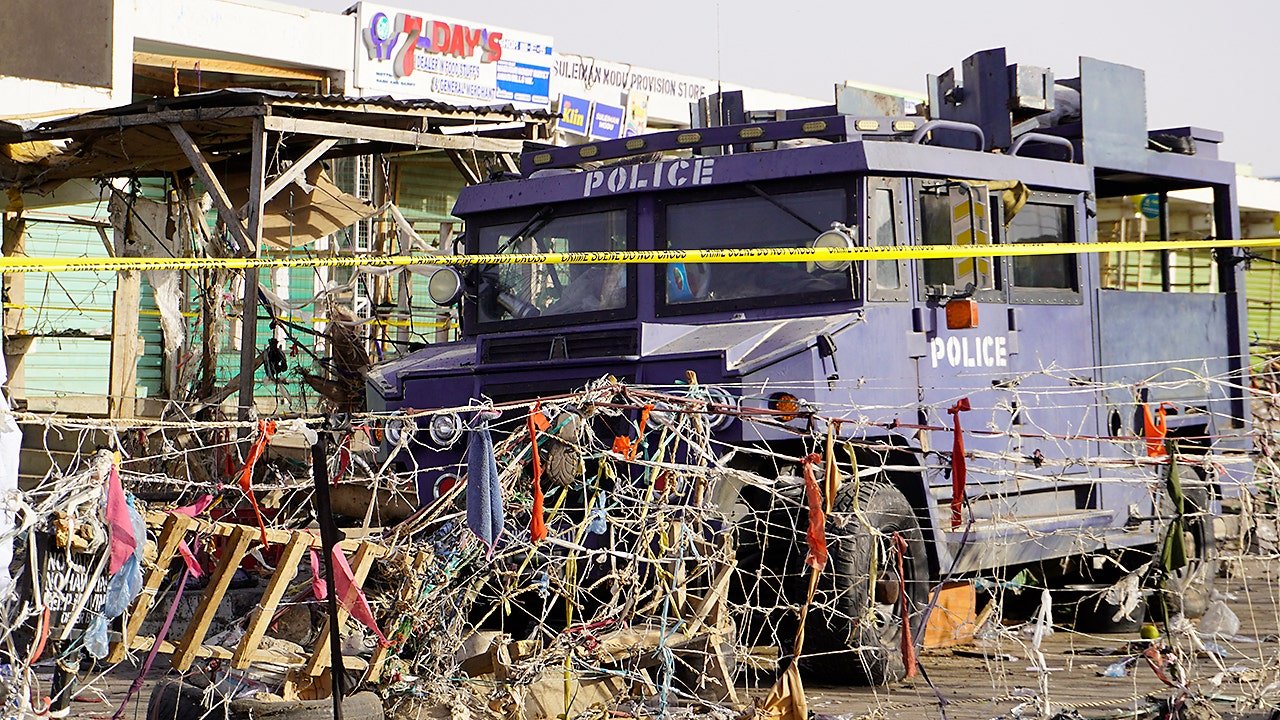
A general view of an armored police vehicle at a market in Maiduguri on March 17, 2026, a day after blasts in the city. Coordinated blasts by suspected suicide bombers tore through a busy market and other areas in the Nigerian city of Maiduguri, killing at least 23 people and wounding more than 100 others, in one of the worst recent attacks on the capital of Borno state. Three blasts detonated on the evening of March 16, 2026, just after people in the Muslim-majority city broke their Ramadan fasts, striking a main market, the entrance of Maiduguri’s largest teaching hospital and a post office. (Photo by AFP via Getty Images)
«The Monday attacks were desperate acts of the evil-minded terrorist groups,» Tinubu said. «Our gallant military and civilian task forces will curtail and put them down.»
While no group has claimed responsibility, the AP reported suspicion has fallen on the Boko Haram jihadi group, which launched an insurgency in northeastern Nigeria in 2009 to enforce its radical interpretation of Shariah law.
Since launching its insurgency, Boko Haram has grown stronger, with thousands of fighters and multiple factions, some aligned with the Islamic State group.
NIGERIA’S FIRST LADY SAYS US STRIKES WERE A ‘BLESSING,’ WELCOMES COLLABORATION WITH TRUMP
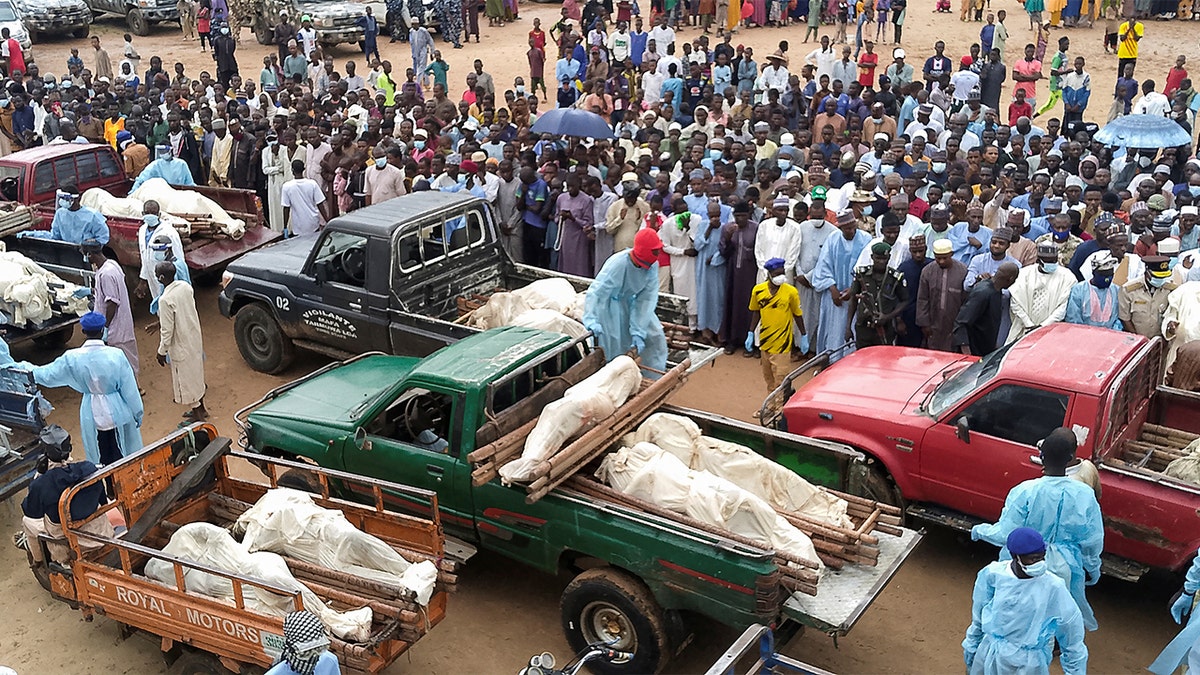
Funeral for Boko Haram victims in Yobe, Nigeria (Stringer/Reuters)
The explosions on Monday night began at about 7:30 p.m. at the entrance of the teaching hospital. A few minutes later, a second and third blast followed at the Monday Market and a nearby post office hub, both about 2.5 miles from the hospital.
Caleb Jonah, who survived the explosion at the hospital entrance, told the AP he suffered injuries to his legs and hands.
«I was coming to the hospital to check (in on) a patient when I saw two men struggling with the security men at the gate,» Jonah said. «Before I could process what was going on I heard the deafening blast and I passed out.»
CHRISTIANS TARGETED IN SYSTEMATIC KIDNAPPING CAMPAIGN IN NIGERIA BY JIHADI HERDSMEN, EXPERTS SAY
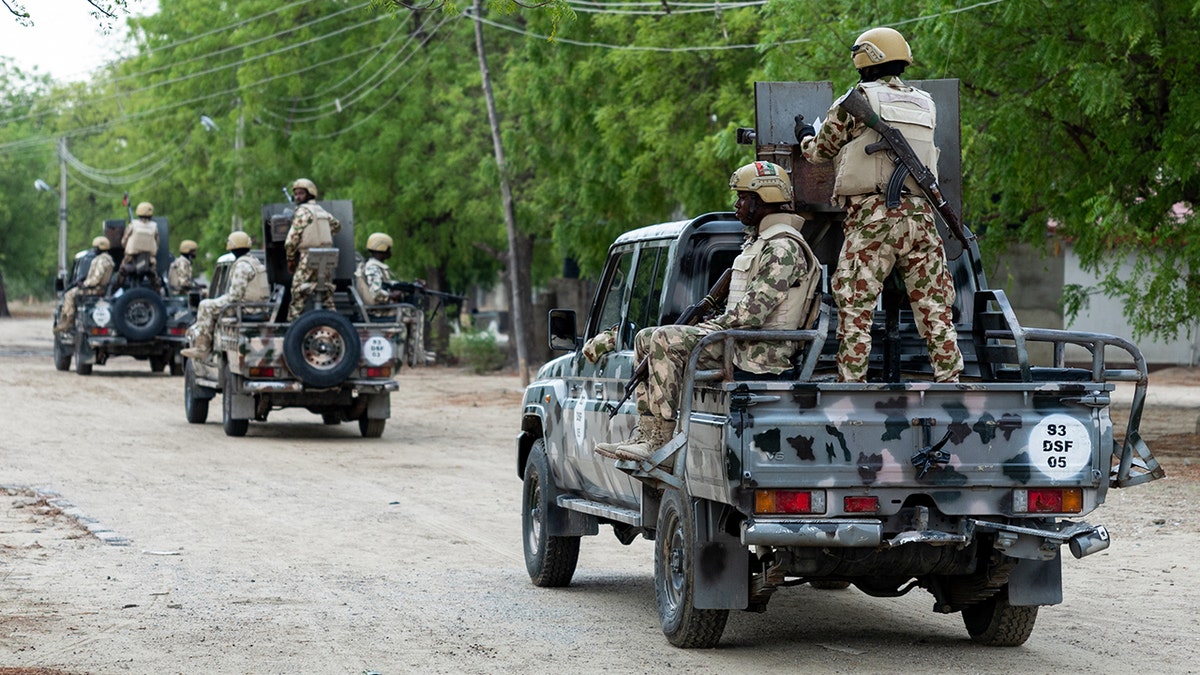
Nigerian soldiers drive around in pick-ups during training at a military base in Borno state, Nigeria, on July 5, 2025. (Joris Bolomey/AFP via Getty Images)
Brad Brandon, CEO and founder of Across Nigeria, said the attack was personal. His organization is committed to transforming Nigeria and the surrounding regions by sharing the love of God through Jesus Christ, according to the group’s website.
«As the CEO and founder of Across Nigeria, these recent attacks in Maiduguri are personal and a stark reminder that the devastating violence continues in northern Nigeria,» he said in a statement. «This is the result of radical Islamic groups that are allowed to operate unchecked. The only question is, how many more must be killed, before the world wakes up to the genocide that slaughters thousands of Christians every year.»
«We condemn these violent acts and the perpetrators who commit them,» he added. «We also call on the U.S. Government to intervene and the media to embrace their role in bringing light to the hidden things of darkness.»
TRUMP LAUNCHES CHRISTMAS NIGHT AIRSTRIKES ON ISIS ‘TERRORIST SCUM’ IN NIGERIA AFTER KILLINGS OF CHRISTIANS
While Maiduguri has been at the center of deadly violence in Nigeria, it has experienced relative peace in recent years, even as extremists batter the countryside.
Monday’s attack took place less than 24 hours after the Nigerian military repelled attacks by militants outside Maiduguri.
CLICK HERE TO DOWNLOAD THE FOX NEWS APP
By Tuesday morning, heavy security had been deployed to the affected locations and along major roads.
The Associated Press contributed to this report.
africa,conflicts,persecutions,bombings,terrorism





NEWYou can now listen to Fox News articles!
As the U.S.–Iran war enters a new phase, the range of options now being discussed stretches from hitting Iran’s economic and oil lifeline at Kharg Island to the far more dangerous prospect of a ground invasion, or a narrower operation focused on Iran’s nuclear material.
The urgency comes as recent U.S. strikes have degraded parts of Iran’s military infrastructure without collapsing the regime, raising pressure on the Trump administration to decide what comes next.
Each option carries significant risks: disrupting Kharg Island could shock global oil markets, a ground invasion could draw the U.S. into a prolonged regional war, and operations targeting nuclear material could trigger escalation while still failing to eliminate the threat.
TOP IRANIAN OFFICIAL, COMMANDER KILLED IN STRIKE, ISRAEL DEFENSE MINISTER SAYS
What happens next could determine not only the trajectory of the conflict with Iran, but also the stability of global energy supply and the future of Tehran’s nuclear program.
Recent U.S. strikes already hit military targets on Kharg Island, a small island in the Persian Gulf that serves as Iran’s main oil export terminal that has emerged as a central pressure point in the conflict, while sparing its oil infrastructure, underscoring just how consequential the next move could be.
Seizing or neutralizing Kharg Island
Kharg Island is the centerpiece of Iran’s oil export system. The island handles about 90% of Iran’s oil exports, and Iran recently has been exporting roughly 1.1 million to 1.5 million barrels of oil per day, mostly to China.
Recent U.S. strikes on Kharg targeted military installations while leaving key oil facilities intact — a sign that Washington is trying to preserve a major pressure point without immediately detonating global oil markets.
Abdullah Aljunaid, a Bahraini analyst, told Fox News Digital that after Iran’s military capabilities were weakened, the U.S. focus could shift to economic pressure on Iran.
«The Iranian military capacity and offensive abilities have been totally degraded, so we need to probably do something else,» Aljunaid said.
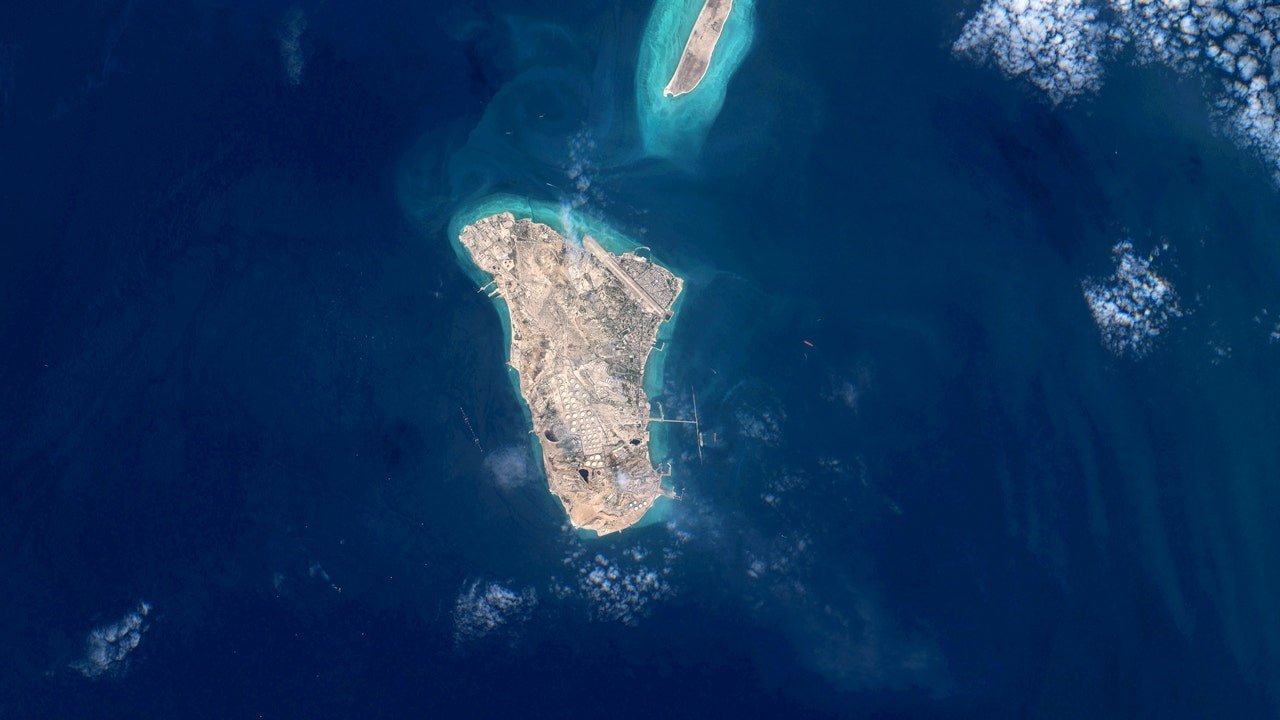
A satellite image shows the Strait of Hormuz, a key maritime passage connecting the Persian Gulf to the Gulf of Oman, vital for global energy supply. (Amanda Macias/Fox News Digital)
Aljunaid pointed to key strategic sites, including Bushehr — a coastal city in southern Iran on the Persian Gulf that hosts the country’s only operational nuclear power plant and a key port — and Kharg Island, Iran’s main oil export hub.
«We need to take certain strategic assets — geography — like Bushehr and Kharg, out of the equation,» he said. «Those two, especially Kharg, represent the jewel of the crown, and without that, Iran’s economic ability to finance itself is going to be dead.»
He added that control over key maritime choke points could further shift the balance.
«If the U.S. decided to take Bushehr at the mouth of the Strait of Hormuz, then I believe we can really see a different equation, forcing the Iranians to come to the negotiating table on our terms — the U.S. terms, and probably the rest of the world.»
Retired Gen. Jack Keane has argued that the U.S. could take Iran’s main oil export hub if it chose to do so, but so far has chosen «not to take that now,» he said on Fox News’ «Sunday Morning Futures.»
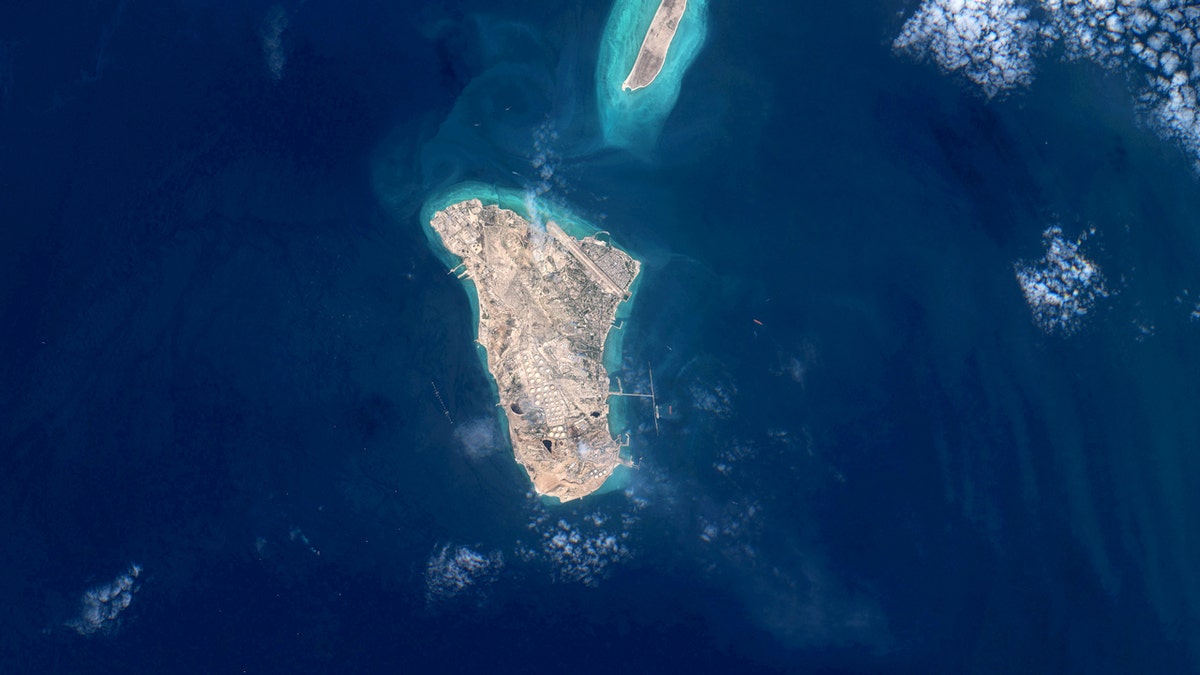
Satellite view of Kharg Island, located in the Persian Gulf off the coast of Iran. (Gallo Images/Orbital Horizon/Copernicus Sentinel Data 2024)
Keane said such a move would effectively put the Iranian regime in «checkmate,» given how heavily its economy depends on the island.
«Now we (would) own all of their major assets,» Keane said. «It’s 50% of their budget, 60% of the revenue, 80, 90% of the distribution points for their oil.»
That view reflects the logic behind a Kharg scenario: disable the regime’s cash flow without launching a full-scale war across Iran’s interior. At the same time, the fact that Kharg’s oil infrastructure was reportedly spared suggests Washington thinks taking the island fully offline could send energy prices sharply higher and shake global markets.
Kharg’s facilities include major storage capacity and any serious disruption there could remove up to roughly 2 million barrels a day from global supply.
There also is a nonkinetic version of this scenario.
In an analysis shared with Fox News Digital, Rick Clay, who served as a senior deputy advisor in Iraq from 2003 to 2009, argued that maritime insurance can function as a strategic choke point.
His argument is that a tanker without recognized coverage cannot easily dock, finance cargo or operate in compliant markets, meaning the United States could pressure Iran’s export system financially even without physically seizing the island.
IRAN MOVES HUNDREDS OF MILLIONS IN CRYPTO DURING NATIONWIDE INTERNET BLACKOUT, REPORT REVEALS
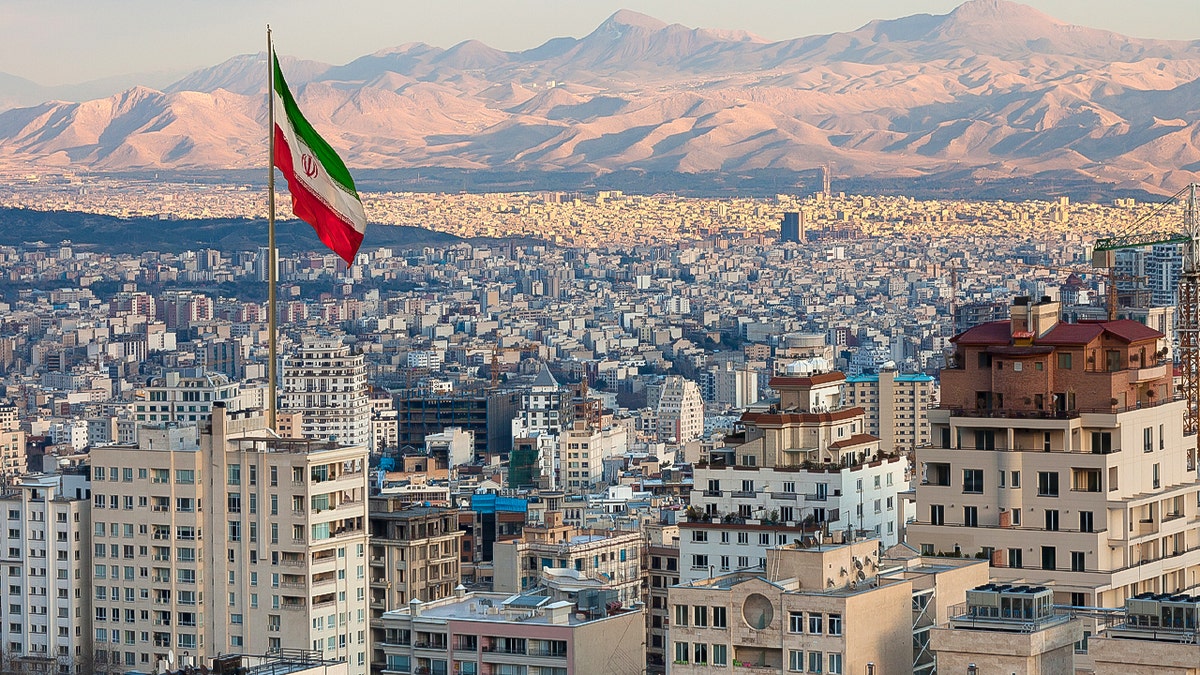
The next phase of the war may depend on which of those risks Washington is willing to take. (istock)
A ground invasion of ‘Fortress Iran’
Public analyses have long described Iran’s geography as deeply unfavorable to invading armies, with mountain barriers and desert terrain complicating any large-scale advance.
Historical comparisons often point to Iraq’s failed 1980 invasion of Iran, which turned into a long and bloody war rather than the quick victory Saddam Hussein expected.
The term «Fortress Iran» is often used by analysts to describe the country’s natural defenses — a combination of vast mountain ranges, including the Zagros and Alborz, along with deserts and difficult terrain that have historically made invasion and occupation extremely challenging.
For those reasons, analysts say a ground invasion remains the most extreme — and least plausible — path, given Iran’s size, terrain and history.
Aljunaid made a similar point, noting that even the 1991 liberation of Kuwait required more than half a million troops, and warning that a war inside Iran would be exponentially more complicated.
That concern is reinforced by the current state of the conflict.
Despite sustained U.S.-Israeli strikes and heavy damage to Iran’s military infrastructure, the regime itself remains intact and more hardline, The Washington Post reported, with the Islamic Revolutionary Guard Corps consolidating power rather than collapsing.
In other words, air superiority has not translated into regime collapse, which makes the leap to occupation even harder to imagine.
TRUMP SAYS US «TOTALLY DESTROYING» IRAN: «WATCH WHAT HAPPENS TO THESE DERANGED SCUMBAGS TODAY»
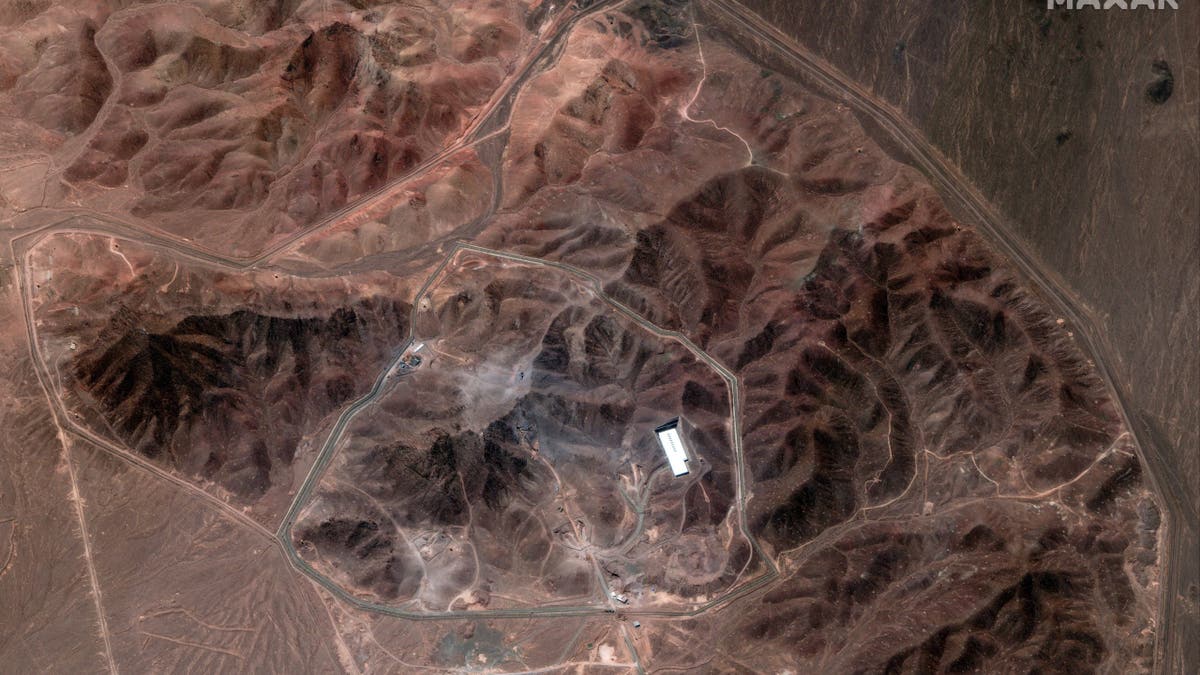
Maxar Technologies imagery captures the aftermath of U.S. and Israeli strikes on Iran’s Fordow uranium facility, revealing damaged tunnels and repair operations underway. (Maxar Technologies)
«We’re not going to put troops on the mainland,» Clay said. «The only troops you might see, if anything, would be to take out those three islands. That’s it.»
He added that there is «no appetite» for a sustained ground presence inside Iran, arguing that any internal change would ultimately depend on the Iranian people.
«It’s going to be in the Iranians’ hands at that point — the Iranian people — whether they rise up,» he said. «We’ve done damage. We’re still going to do some more damage. We’re not done.»
Pointed ops to secure uranium
A third scenario would aim not at occupying territory, but at Iran’s nuclear program itself.
A narrower operation likely would involve targeting Iran’s enriched uranium stockpiles and deeply buried facilities — potentially including efforts to locate, secure or disable nuclear material that cannot be destroyed from the air.
Although President Donald Trump said the June 2025 U.S. strikes had «obliterated» key nuclear sites, analysts note that critical elements of Iran’s program — particularly enriched uranium stockpiles and deeply buried facilities — likely remain intact.
Iran is believed to possess roughly 440.9 kilograms of uranium enriched to 60%, according to the International Atomic Energy Agency (IAEA), with more than 200 kilograms likely stored in the underground Isfahan tunnel complex, Reuters reported March 9.
That matters because the material is small enough to hide and move, unlike oil infrastructure, and some of these deeply buried facilities are believed to have survived conventional air attacks — raising the possibility that securing or neutralizing nuclear material could require more targeted, specialized operations.
CLICK HERE TO DOWNLOAD THE FOX NEWS APP
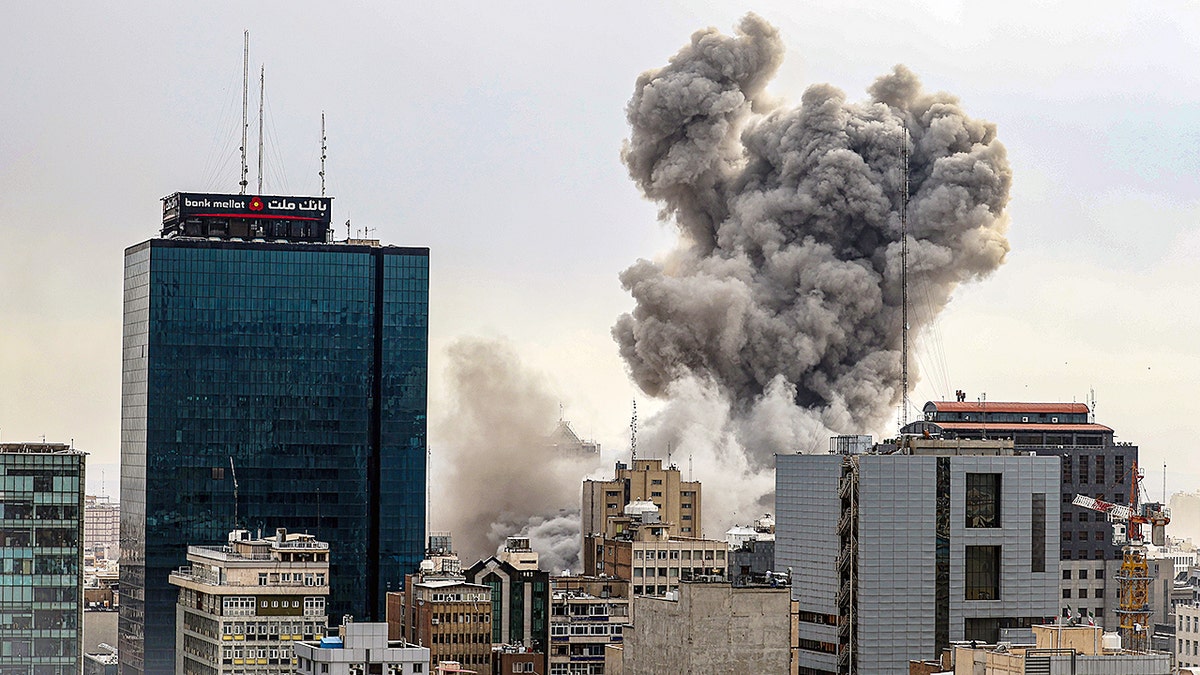
Smoke rises after explosions were reported in Tehran, Iran, March 2, 2026. (Contributor/Getty Images)
Kharg Island offers a way to squeeze Iran’s economy. A ground invasion offers the possibility of a decisive force at extraordinary cost. Targeted operations against nuclear equipment offer a narrower path, but one with high operational risk and no guarantee of finality.
The next phase of the war may depend on which of those risks Washington is willing to take.
White House spokesperson Anna Kelly told Fox News Digital, «President Trump and the administration have clearly outlined the goals of Operation Epic Fury: destroy Iran’s ballistic missiles and production capacity, demolish their navy, end their ability to arm proxies, and prevent them from ever obtaining a nuclear weapon.»
«This effort will continue until President Trump, as commander in chief, determines that the goals of the operation, including for Iran to no longer pose a military threat, have been fully realized,» she added.
The Pentagon chose not to provide a comment.
Reuters contributed to this report.
war with iran,military,iran
INTERNACIONAL
White House slams ‘fake narrative’ that Vance is absent from Iran strikes amid Operation Epic Fury
NEWYou can now listen to Fox News articles!
White House officials balked at reporting that Vice President JD Vance had been distant from Operation Epic Fury as strikes continued from both Iran and U.S.-Israeli forces in the Middle East Tuesday.
Critics have claimed that Vance has intentionally distanced himself from public appearances and potentially negotiations related to U.S. active military engagement in Iran and the Middle East.
«This fake narrative is absolutely laughable to every single person who is in the know in Washington,» a White House official told Fox News Digital. «It’s a classic mainstream media creation.»
ABC News had reported that a senior White House official punched back at the idea that Vance wasn’t present during the early days of the strikes, saying the national security team had been huddled «all day» and «was deliberate on letting the president’s statements and addresses to the nation stand as the operation unfolded.»
EX-NAVY SEAL WARNS WITHDRAWING FROM IRAN NOW WOULD HAND ‘VICTORY’ TO REGIME
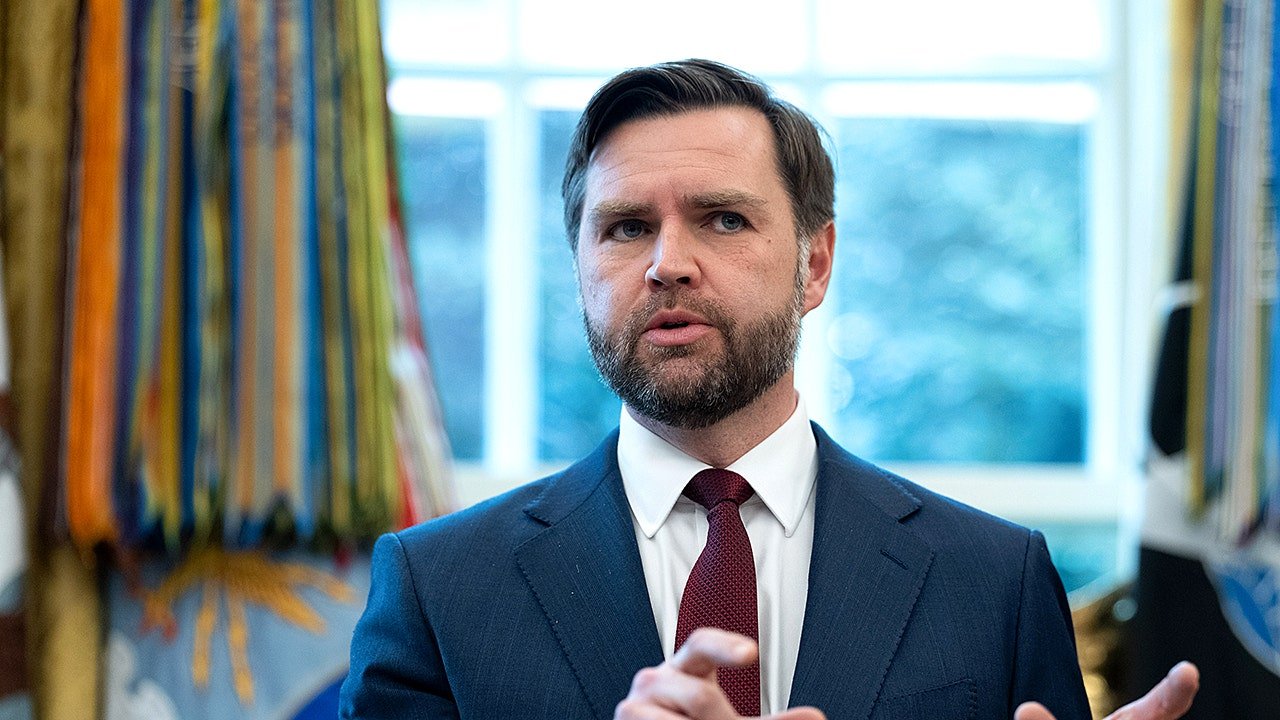
Officials say Vice President JD Vance has remained actively involved in national security discussions despite criticism that he has kept a low public profile during the Iran strikes. (Alex Wong/Getty Images)
«The vice president and other administration officials conducted multiple media interviews and will continue to do so,» the senior White House official told ABC. «The national security team also held multiple briefing calls with members of the press and key stakeholders after the operation began.»
Vance appeared on Fox News’ «Jesse Watters Primetime» March 2, making him the first Trump administration official outside of President Donald Trump’s pre-recorded announcement to speak on live TV about the strikes. The interview was one of nine reported public appearances Vance has made since the beginning of Operation Epic Fury.
During the interview, Vance emphasized the White House’s reasoning behind striking Iran and addressed the idea of an unnecessary, elongated war.
KT MCFARLAND: OPERATION EPIC FURY PROVES IT IS BOTH AMERICA FIRST AND PROUDLY MAGA
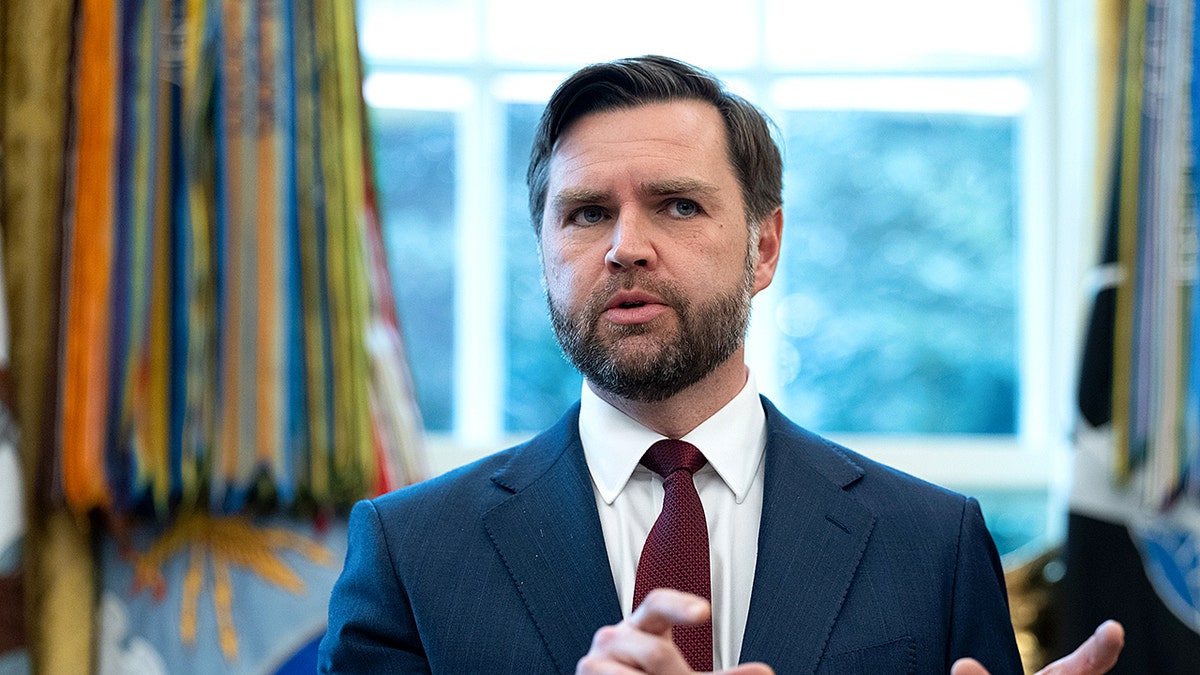
The White House pushed back on reports that Vice President JD Vance has been absent from Operation Epic Fury, calling the narrative false and media driven. (Aaron Schwartz/UPI/Bloomberg via Getty Images)
«President Trump will not get the United States into a years-long conflict with no clear objective,» Vance told Watters.
«The vice president hasn’t been keeping a low profile,» a spokesperson for Vice President Vance’s office told Fox News Digital. «He’s attended two dignified transfers at Dover Air Force Base, went on primetime TV after the start of Operation Epic Fury, held a press gaggle and delivered two speeches in which he discussed the heroic sacrifice of America’s service members.»
Dignified transfers at Dover Air Force Base in Delaware took place after American soldiers were killed during the beginning days of the U.S. military operation against Iran.
TOP COUNTERTERRORISM OFFICIAL RESIGNS IN PROTEST OF US WAR AGAINST IRAN
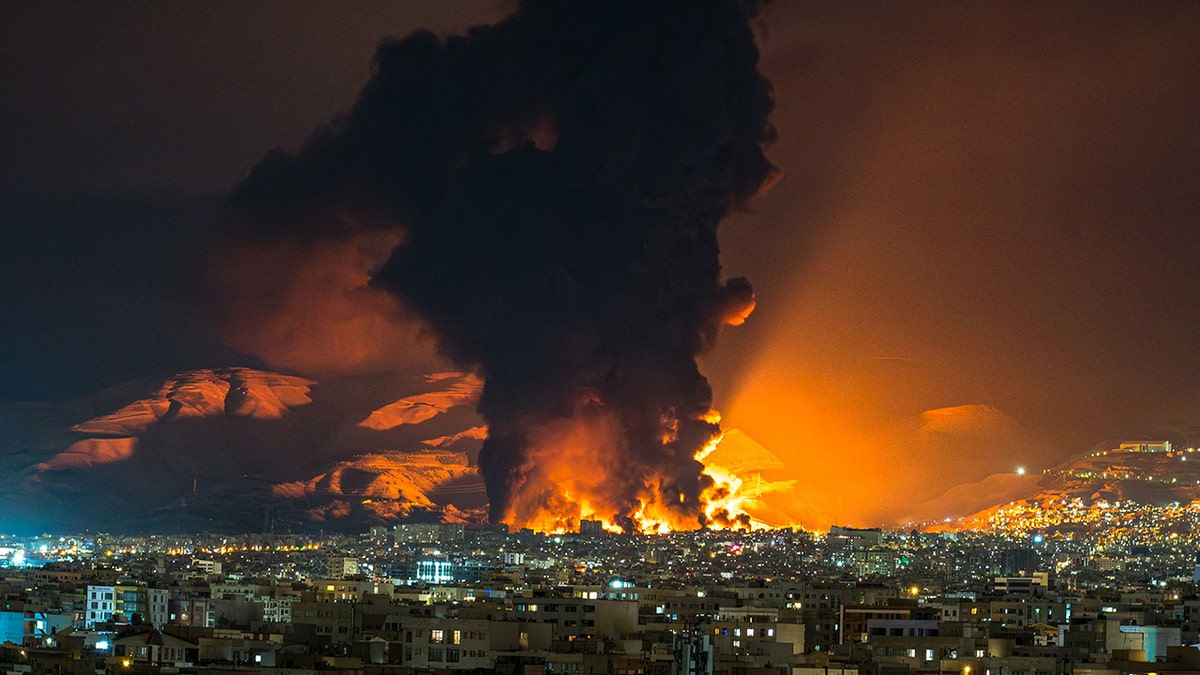
Smoke and flames rise at the site of airstrikes March 7 on an oil depot in Tehran, Iran. (Sasan/Middle East Images/AFP via Getty Images)
Reports have also indicated that Vance has been averse to the idea of a war with Iran and alluded to comments the former Ohio senator made about some of the basis for his support for Trump stemming from Trump not having started a war during his first presidential term.
Vance joined Bill Hemmer on Fox News’ «America’s Newsroom» for a State of the Union reaction on Feb. 25, days before the strike on Iran, and Vance echoed the president’s condemnation of the Middle Eastern country obtaining nuclear weapons.
«You can’t let the craziest and worst regime in the world have nuclear weapons,» Vance told Hemmer. «That’s what the president is accomplishing. That’s what the president has set as our goal. He’s going to try to accomplish it diplomatically.
MIKE PENCE PRAISES TRUMP FOR ‘DECISIVE LEADERSHIP’ ON IRAN AFTER BIDEN ‘SQUANDERED’ US DETERRENCE
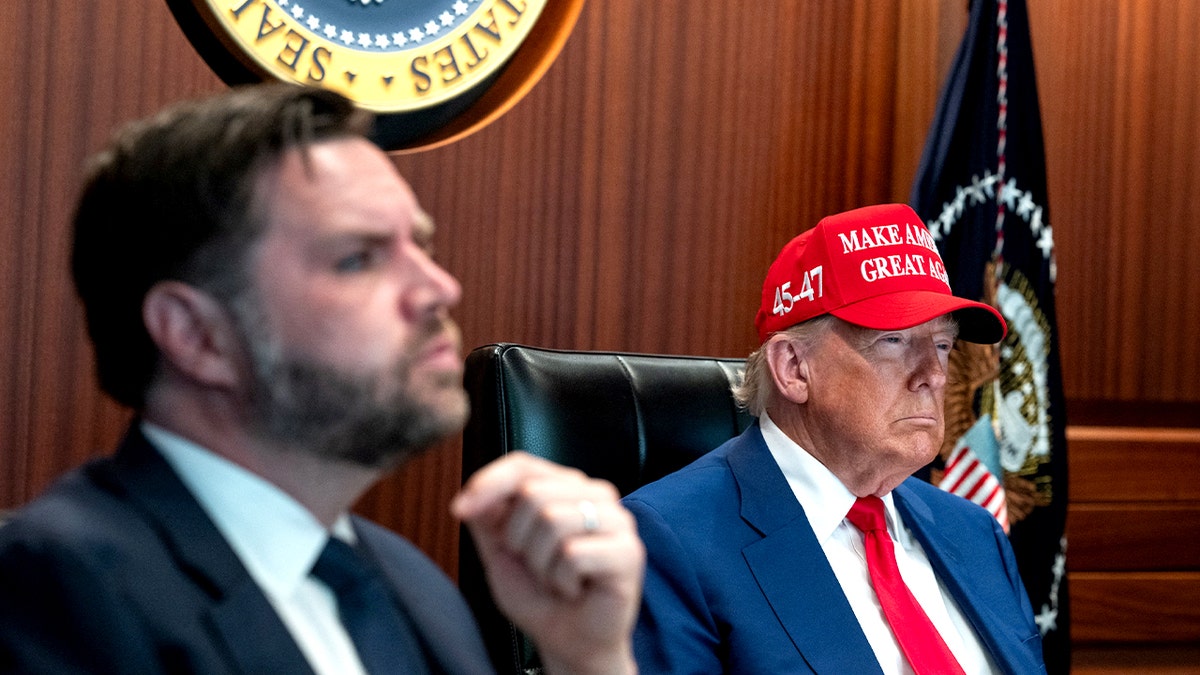
President Donald Trump holds a meeting alongside Vice President JD Vance in the Situation Room June 21, 2025, at the White House in Washington, D.C. (The White House/Handout via Reuters)
«The president has a number of other tools at his disposal to ensure this doesn’t happen,» Vance continued. «He’s shown a willingness to use them, and I hope the Iranians take it seriously in their negotiations tomorrow, because that’s certainly what the president prefers.»
With regard to the status of the ongoing conflict and his involvement with strategy itself, Vance addressed reporters at an event in Rocky Mount, North Carolina, Friday, saying negotiations among White House officials are classified but noting he has been involved with discussions.
CLICK HERE TO DOWNLOAD THE FOX NEWS APP
«I sit there with [Secretary of War] Pete Hegseth and [Joint Chiefs Air Force] Gen. [Dan] Caine and [Secretary of State] Marco Rubio and the entire White House team, and the president and I and the entire senior team are talking about the options and about what we need to do and about how we must best protect the American people,» Vance told reporters.
«I’m not going to show up here and in front of God and everybody else, tell you exactly what I said in that classified room, partially because I don’t want to go to prison and partially because I think it’s important for the president of the United States to be able to talk to his advisors without those advisors running their mouth to the American media.»
Preston Mizell is a writer with Fox News. Story tips can be sent to Preston.Mizell@fox.com and on X @MizellPreston
jd vance,war with iran,white house,iran,donald trump,defense,military
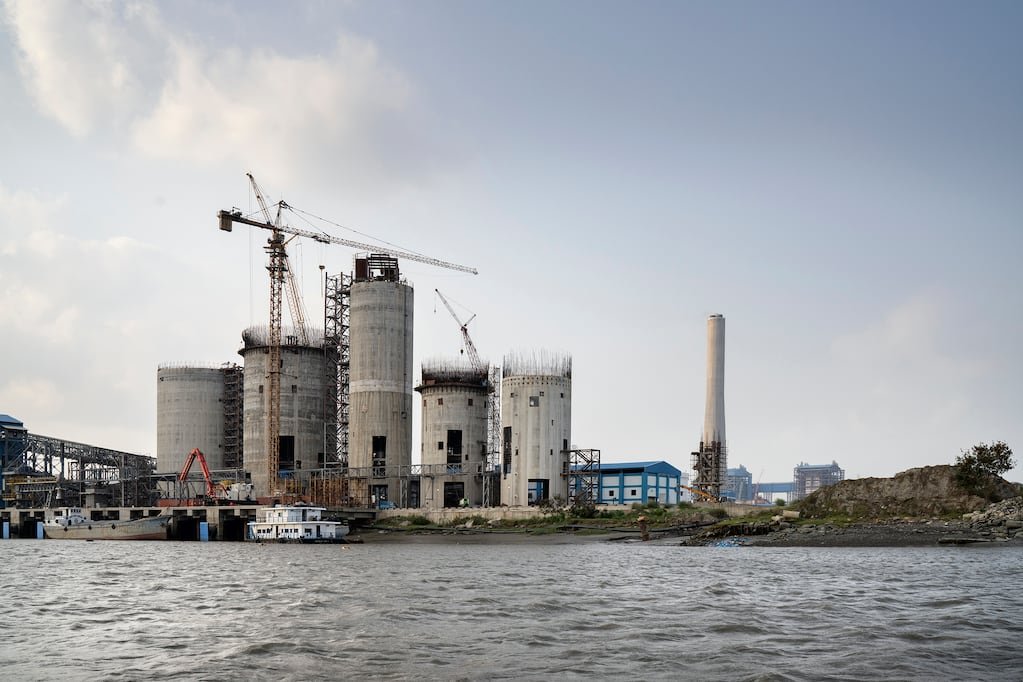
Las últimas vacaciones del Ramadán comenzaron antes para los estudiantes universitarios de Bangladesh, el 9 de marzo, pero por motivos muy desafortunados. Las principales escuelas del país anunciaron que las clases se cancelaban, con efecto inmediato, hasta finales de mes. El gobierno cerró los campus para ahorrar electricidad, una respuesta drástica a la crisis energética mundial provocada por la guerra en el golfo Pérsico.
“A mí no me parecen vacaciones”, dijo Abdullah Al Mahmud Mehedi, de 23 años, quien está cursando una maestría en Ciencias Sociales en la Universidad de Daca.
Leé también: Sin la OTAN y con críticas internas, Trump busca cómo abrir el estrecho de Ormuz y terminar la guerra en Irán
Al igual que otros países, Bangladesh está preocupado por su suministro de crudo y gas natural. El acceso al gas es especialmente preocupante. Aproximadamente la mitad de la electricidad de Bangladesh procede de instalaciones generadoras de electricidad que queman gas. Casi un tercio de ese gas procede de Qatar, y la guerra en el Golfo prácticamente ha bloqueado su flujo.
Además de cerrar las universidades, el gobierno ha empezado a imponer apagones temporales y otras medidas para conservar la electricidad. Si se acaba el gas, también se acaba la electricidad que enciende las luces y alimenta las fábricas que son cruciales para la economía bangladesí, que está orientada a la exportación.
Todo esto tiene como telón de fondo la delicada situación política de Bangladesh. El país votó un nuevo gobierno hace apenas un mes, el primero en ser elegido desde que el reinado de Sheikh Hasina se derrumbó en agosto de 2024. Tarique Rahman, el nuevo primer ministro, tomó posesión de su cargo en febrero y declaró que su victoria “pertenece a la democracia”, pero advirtió que el país “comienza nuestro viaje” con una economía frágil.
Leé también: Mientras escala la guerra en Medio Oriente, Irán lanzó una dura advertencia contra Javier Milei
Hasina fue derrocada, tras 15 años en el poder, por un movimiento dirigido por estudiantes que aprovechó un profundo sentimiento de indignación por una crisis financiera. El modelo económico de Bangladesh combina la dependencia de la fabricación de prendas de vestir –casi el 85 por ciento de sus exportaciones– con la importación de combustible y otros bienes esenciales.
Ese modelo expone a Bangladesh a fuerzas más allá de sus fronteras. Cuando Rusia invadió Ucrania y perturbó el comercio e hizo subir el precio de los alimentos y el petróleo, la economía bangladesí se tambaleó. La industria textil del país sobrevivió a esa crisis y al caos político que la siguió, así como se rehizo tras el derrumbe de una fábrica en 2013, que causó la muerte de 1134 trabajadores y ahuyentó a los compradores extranjeros.
Ahora, la resistencia de las fábricas bangladesíes se enfrenta a otra prueba. Bangladesh está tomando medidas para ahorrar electricidad, que sus fábricas necesitan para seguir confeccionando la ropa de todo el mundo. (Fabeha Monir/The New York Times)
Mohiuddin Rubel, exdirector de la Asociación de Fabricantes y Exportadores de Prendas de Vestir de Bangladesh, quien dirige varias fábricas propias, atribuyó la vulnerabilidad del país a su tendencia al encasillamiento.
“Los bangladesíes son muy buenos para hacer una sola cosa, como ropa confeccionada”, dijo. “No estamos diversificados”. Y lo mismo ocurre con su red eléctrica, que, en su opinión, utiliza muy poca energía renovable.
Shafiqul Alam, analista del Instituto de Economía Energética y Análisis Financiero de Daca, dijo que le preocupaba la inminente escasez de gas y la necesidad de mantener las fábricas en funcionamiento.
Bangladesh ya utiliza lo que se denomina desconexión de carga, o apagones programados, normalmente de un par de horas de duración, para reducir la tensión de las sobrecargadas centrales eléctricas. Son el azote de las fábricas modernas, que no pueden permitirse dejar inactivos a miles de trabajadores. La mayoría tienen preparados enormes generadores diésel para cubrir los cortes de suministro.
Estos generadores son un sustituto caro de las centrales térmicas de gas, pero Bangladesh tiene fuentes alternativas de diésel, como Singapur y Malasia.
Otra preocupación es el calor del verano, que llega temprano a Bangladesh. El gobierno podría tener que empezar a reducir la carga en abril, cuando se espera que el pico de demanda supere los 18.000 megavatios, dijo Alam. “Pero deben planificarlo adecuadamente para que el sector industrial no se vea afectado negativamente”, añadió.
La forma de hacerlo, dijo Alam, es que los bangladesíes ahorren electricidad en casa. Los hogares consumen el doble que todas las fábricas juntas. “El gobierno tiene que concientizar a la población sin provocar el pánico”, dijo. Por ejemplo, podría señalar cuánto dinero podría ahorrarse un hogar con aire acondicionado al cambiar el termostato de 24 a 25 grados Celsius.
Puede haber una oportunidad diplomática oculta en la crisis. Las relaciones entre Bangladesh y su vecina India han sido difíciles desde 2024, cuando Hasina se refugió en Nueva Delhi. Pero Aninda Islam Amit, funcionario del Ministerio de Energía de Bangladés, dijo: “Se espera que lleguen de India un promedio de 13.60o toneladas de diésel al mes”.
Y, dijo Amit, “apoyar a un vecino durante una crisis es una cuestión de cortesía”.
En el principal centro industrial bangladesí, la Zona de Procesamiento de Exportaciones de Daca, el suministro de electricidad está garantizado, y las fábricas de Rubel tienen un lugar privilegiado en su interior. La zona, creada en 1993, es un ejemplo de la gran prioridad que Bangladesh ha dado a su industria de la confección. Las máquinas de coser de su interior serían las últimas en sufrir por un apagón.
Pero Rubel sabe que muchos bangladesíes, incluidos muchos de sus colegas, están dolorosamente expuestos a la escasez. Todos tienen generadores de diésel. “Fuera de la zona”, dijo, “la gente suele necesitarlos a menudo”.
*Por Alex Travelli, corresponsal del Times en Nueva Delhi, donde se ocupa de asuntos económicos y empresariales en la India y el resto del sur de Asia.
The New York Times, Bangladesh

Jornada financiera: repuntaron las acciones argentinas y el riesgo país perforó los 600 puntos

Cesc: ‘Entre un joven español y uno italiano, elegiría italiano… ¡pero no hay!’

Caso $LIBRA | Los pagos que exponen cómo Mauricio Novelli forjó su relación con los Milei en el camino al poder

Juanchi Zabaleta: “Fuimos un Gobierno que fracasó en todo sentido y nadie pidió perdón”

Next US move on Iran: Seize Kharg Island, secure uranium or risk ground war escalation

White House slams ‘fake narrative’ that Vance is absent from Iran strikes amid Operation Epic Fury

TRAICIÓN Y ÉXODO: La promesa rota de Monteoliva que desató una ola masiva de bajas en la Policía Federal

La fuerte exigencia a Mauro Icardi para poder ver a sus hijas con Wanda Nara: “A Maurito se lo va a multar si no lleva a las menores al colegio”

BOMBAZO – Guerra abierta: Feinmann y Rossi contraatacan tras la denuncia de Victoria Villarruel

Insólito: un esquiador británico terminó la Copa del Mundo de Oslo bajo los efectos del alcohol

 POLITICA1 día ago
TRAICIÓN Y ÉXODO: La promesa rota de Monteoliva que desató una ola masiva de bajas en la Policía Federal
- INTERNACIONAL1 día ago
Insólito: un esquiador británico terminó la Copa del Mundo de Oslo bajo los efectos del alcohol
- POLITICA1 día ago
Horacio Rodríguez Larreta reapareció y lanzó “Metrópolis”, su nuevo espacio en la Ciudad de Buenos Aires