INTERNACIONAL
Democrat lawmaker blasts Senate colleagues for caving in shutdown deal


NEWYou can now listen to Fox News articles!
Rep. Melanie Stansbury, D-N.M., ripped into the reasoning that led eight Senate Democrats to seal the fate of the government shutdown on Sunday.
As the top Democrat on the House Oversight Subcommittee overseeing government efficiency, Stansbury said the bill’s promise of job protections for federal employees was a safeguard that Congress should not have needed to spell out.
«While I appreciate the bipartisan effort that provided additional protection for our federal workers in the bill, it shouldn’t have been necessary in the first place,» Stansbury said.
SENATE VOTE TO END GOVERNMENT SHUTDOWN IGNITES DEMOCRAT CIVIL WAR
Melanie Stansbury, D-N.M., departs a closed-door meeting with some of Jeffrey Epstein’s accusers at the U.S. Capitol in Washington, Sept. 2, 2025. (Kayla Bartkowski/Getty Images)
Stansbury, like many Democrats, has opposed the Trump administration’s blanket dismissal of federal employees as a way to cut government spending through the Department of Government Efficiency (DOGE), arguing that the orders violate employment laws.
«The president’s actions in conducting mass firings during the shutdown and threatening to withhold back pay are both illegal under current law,» Stansbury said.
Her comments highlight ongoing Democrat division over the shutdown’s end and the party priorities that went unresolved.
With key Democrats’ help, the Senate overcame the threat of a filibuster on Sunday before finally passing the short-term spending deal on Monday evening in a 60-40 vote. That bill, which now heads to the House of Representatives, will end the ongoing 42-day government shutdown if passed.
The package would fund the government through Jan. 30 of next year. It includes three of the government’s 12 spending bills: appropriations for the legislative branch, agriculture and Veterans Affairs and military construction.
Notably, its language also forbids the Trump administration from conducting mass reductions in force (RIFs) and would reinstate federal employees fired during the shutdown with back pay. Just hours before Sunday’s vote, the language on RIFs clinched the needed support for the package’s success.
Sen. Tim Kaine, D-Va., was one of the eight Democrats who helped advance the bill over the possibility of a filibuster. When asked if the government shutdown had been worth it, Kaine said he thought so, pointing to its language on federal workers.
«To federal employees who are not going to be traumatized by RIFs going forward? Yeah,» Kaine said.
MIKE JOHNSON SPEAKS OUT AFTER SENATE BREAKTHROUGH ON GOVERNMENT SHUTDOWN
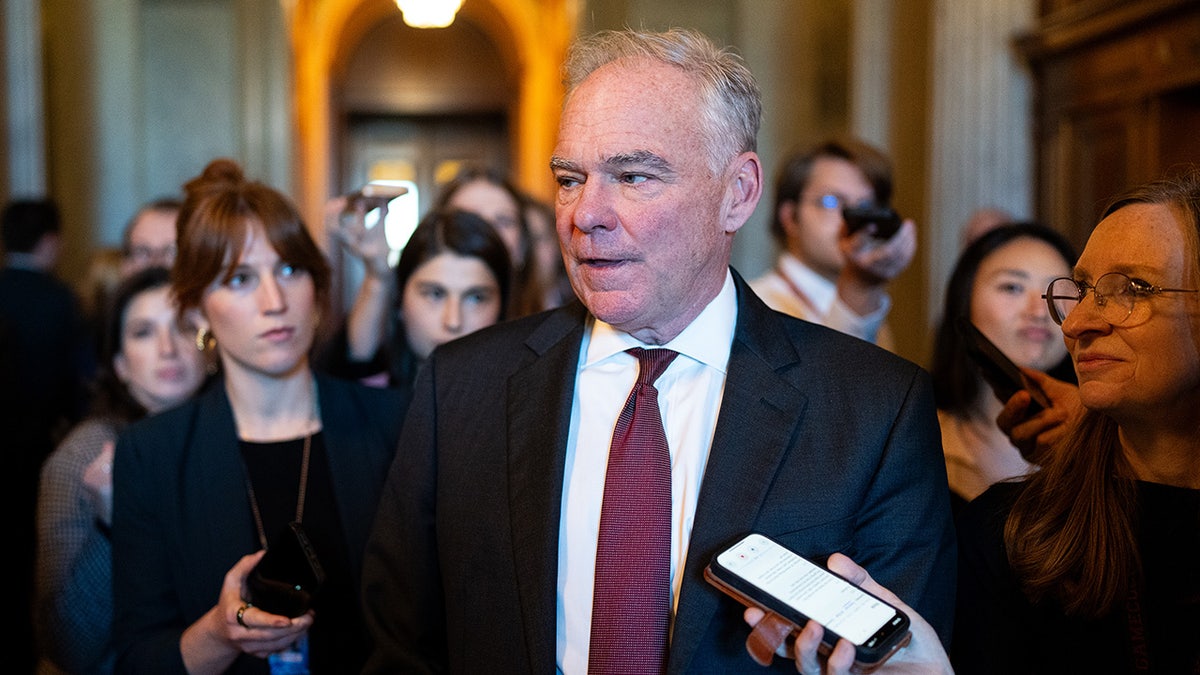
Sen. Tim Kaine, D-Va., speaks to reporters outside the Senate Democrats’ caucus lunch meeting in the U.S. Capitol on Nov. 6, 2025. (Bill Clark/Getty Images)
Kaine, who helped secure the inclusion of that language, said that some sort of deal on federal employees had been a key consideration for him since the outset of the shutdown on Oct.1.
«I went to Sen. Schumer at the start of this and told him, ‘Here’s where I am, and here’s where I’m likely to be. I’m with you for a long time, but if there’s a path forward that can help this federal workforce, which is so huge in Virginia, you [have to] know I’m going to be real sensitive to that.’»
Virginia has the country’s third-largest concentration of federal workers, according to the Library of Congress.
Stansbury, who has also outspokenly opposed the Trump administration’s mass firings as a way to cut government funding, disagreed sharply with Kaine and argued that the fight over federal workforces — and healthcare for that matter — could have taken place outside a shutdown.
«This shutdown and the impending healthcare crisis were both completely avoidable,» Stansbury said. «The president and GOP careened us towards a shutdown with the passage of the Big Ugly Bill this summer,» she added, referring to the One Big Beautiful Bill Act.
MERKLEY NEARLY BREAKS BOOKER’S FILIBUSTER RECORD, WINS HIS PRAISE FOR FIGHTING ‘TRUMP’S AUTHORITARIAN TACTICS’
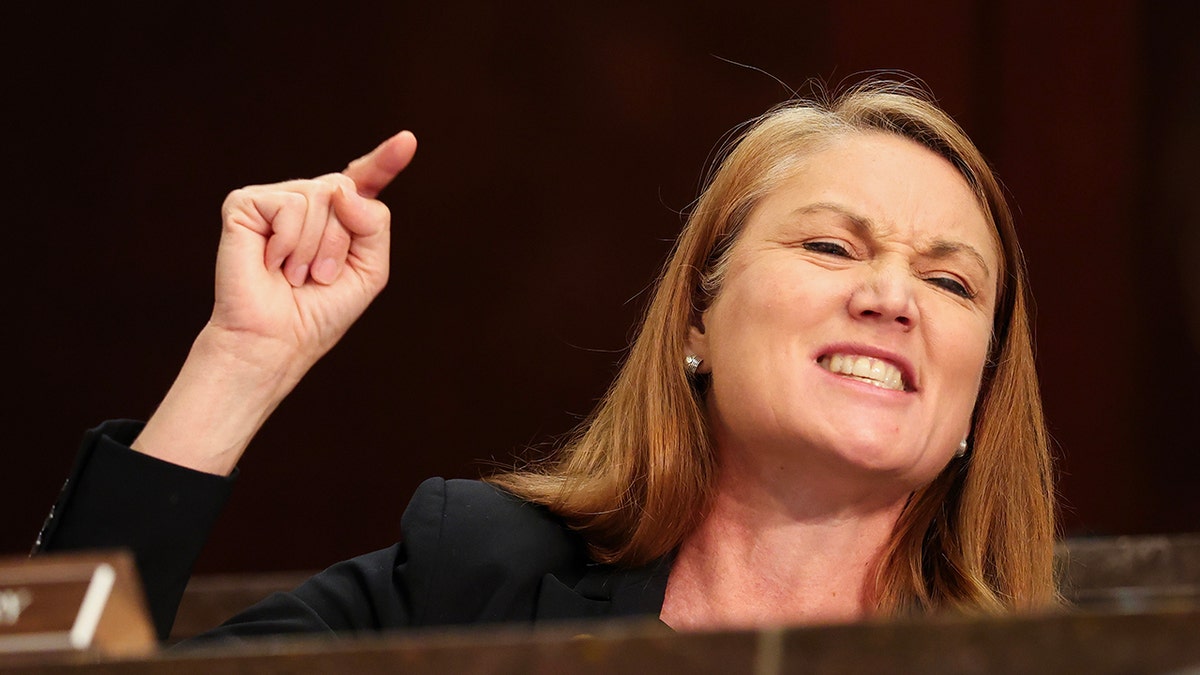
Rep. Melanie Stansbury, D-N.M., speaks during the House Oversight And Government Reform Committee meeting at the U.S. Capitol on Mar. 25, 2025 in Washington. (Kayla Bartkowski/Getty Images)
She noted that the key demand Democrats had made during the shutdown, an extension of COVID-era Obamacare healthcare subsidies, had gone completely unaddressed — even in the wake of over a month of gridlock.
«A failure to pass appropriations bills, an unwillingness to negotiate and six weeks of a complete lockout of the House have failed to resolve the healthcare crisis as millions of Americans are facing the prospect of losing their health insurance or being able to put a roof over their head,» Stansbury said.
CLICK HERE TO GET THE FOX NEWS APP
With the spending bill having cleared the Senate, the House of Representatives will likely consider the Senate spending bill on Wednesday.
politics,congress,democrats senate










INTERNACIONAL
Una explosión nuclear, casas intactas y una evacuación masiva: el día que Prípiat se convirtió en una ciudad fantasma por Chernobyl
En la madrugada del 26 de abril de 1986, el mundo fue testigo de uno de los mayores desastres de la historia contemporánea: la explosión del reactor número cuatro de la central nuclear de Chernobyl, en la entonces Unión Soviética (actual Ucrania).
Este accidente liberó enormes cantidades de radiación, afectando a millones de personas y dejando tras de sí una huella imborrable de contaminación y tragedia. Sin embargo, el epicentro humano de esta catástrofe no fue solo la planta nuclear, sino una ciudad que representaba el orgullo del progreso soviético: Prípiat, un lugar que, tras aquel fatídico día, quedó congelado en el tiempo.
Prípiat nació oficialmente el 4 de febrero de 1970. Su construcción respondía a un propósito estratégico: ser el asentamiento destinado a los científicos, ingenieros y obreros de la cercana central nuclear Vladímir Ilich Lenin. Ubicada en la región de Kiev, a tan solo tres kilómetros del complejo nuclear y a poco más de 100 kilómetros de la capital ucraniana, fue concebida como una “ciudad del futuro”.
La planificación urbana priorizó avenidas amplias, edificios modernos y una infraestructura envidiable, con escuelas equipadas con tecnología avanzada, centros culturales, un estadio, el restaurante Polesie, el cine Prometeo y hasta una piscina olímpica.

(Wikipedia)
Para mediados de 1986, Prípiat albergaba a unos 50.000 habitantes, en su mayoría familias jóvenes con niños, atraídas por las condiciones laborales, la cercanía a la capital y un entorno natural privilegiado, rodeado de ríos y bosques. “Cada habitante de la Unión Soviética soñaba con vivir en este asentamiento”, destacó un informe histórico de Trips to Chernobyl.
La ciudad prescindió deliberadamente de casas individuales, apostando desde el inicio por grandes edificios de apartamentos de uno a cinco dormitorios, con ascensores amplios y entradas espaciosas, un símbolo de la arquitectura soviética de la época.
El núcleo urbano de Prípiat reflejaba el ideal socialista: en la plaza central se cruzaban las dos principales avenidas, Lenin y Kurchatov (en honor al fundador del programa nuclear soviético). El Palacio de la Cultura Energetik, la sede del comité del partido y la administración local eran el corazón de la vida pública.
Paradójicamente, nunca se alcanzó a instalar un monumento a Vladímir Lenin, como era habitual en otras ciudades soviéticas, debido a la premura de los acontecimientos posteriores.

La madrugada del 26 de abril de 1986 marcó un antes y un después en la historia de Prípiat. Un ensayo técnico fallido en el reactor RBMK-1000 de la central nuclear de Chernobyl —que utilizaba grafito como moderador y agua común como refrigerante— llevó a la pérdida de control del reactor, desencadenando una explosión que voló el techo del edificio y liberó grandes cantidades de radiación a la atmósfera.
De acuerdo con el Organismo Internacional de Energía Atómica (OIEA), “millones de personas fueron expuestas a la radiación y alrededor de 200.000 fueron reubicadas tras el accidente”.
A pesar de la magnitud del evento, los habitantes de Prípiat no fueron informados con inmediatez sobre el peligro. Solo 36 horas después de la explosión, las autoridades ordenaron la evacuación total de la ciudad. “Las familias tuvieron apenas unas horas para empacar lo indispensable, creyendo que volverían en pocos días, pero ese regreso nunca ocurrió”, señaló un reportaje de National Geographic.
El éxodo fue rápido y masivo: en las semanas y meses posteriores, otras 67.000 personas de áreas contaminadas también fueron obligadas a abandonar sus hogares. La ciudad quedó vacía, pero intacta, como si sus habitantes hubieran desaparecido de un día para otro.

Prípiat es el retrato fiel de una “cápsula del tiempo”. Recorrer sus calles es adentrarse en una ciudad detenida en la primavera de 1986: libros abiertos en los pupitres de las escuelas, juguetes esparcidos en los patios, platos servidos en las cocinas, vitrinas de comercios aún con objetos en exhibición.
La vegetación, que ha recuperado el espacio, crece a través del asfalto y los árboles asoman por las ventanas de los edificios abandonados. El único sonido es el viento golpeando las puertas metálicas oxidadas.
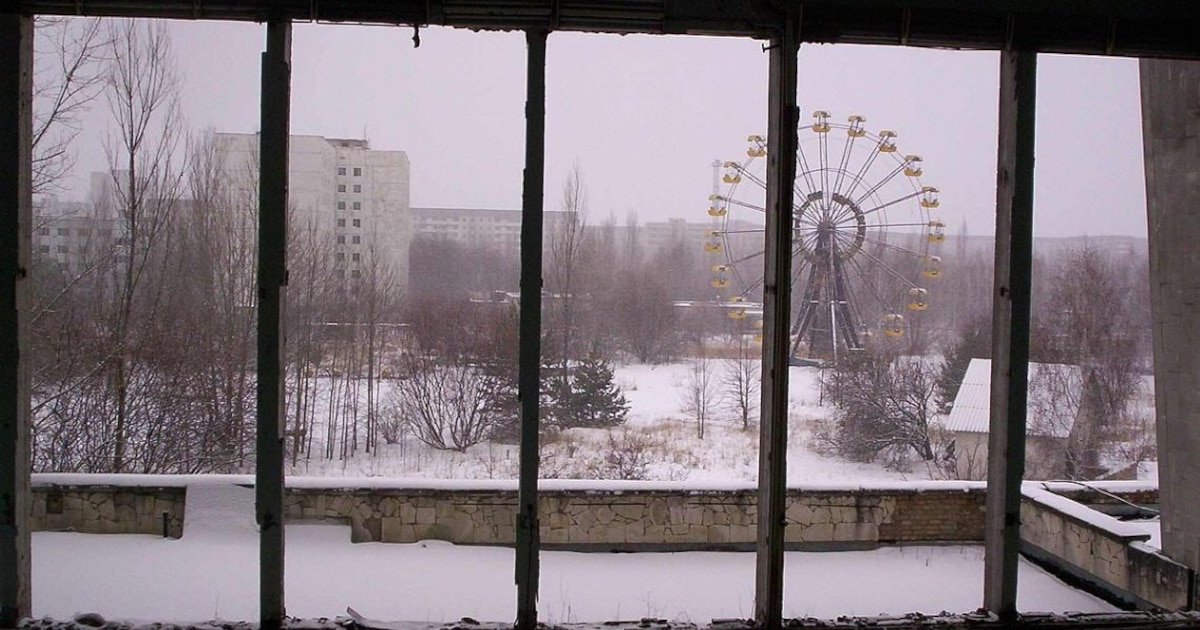
El símbolo más impactante de este abandono es la noria de metal amarillo, que debía inaugurarse para las celebraciones del 1 de mayo de 1986. El accidente la dejó inmóvil, convirtiéndola en un monumento al silencio y al olvido. Actualmente, la ciudad permanece dentro de la Zona de Exclusión, un área de más de 2.600 kilómetros cuadrados que fue ampliada posteriormente a más de 4.000 km² y que sigue siendo, esencialmente, inhabitable, según la Organización de las Naciones Unidas.
La radiación en la zona no es uniforme, y aunque existen recorridos turísticos organizados con estrictos controles de seguridad, nadie puede vivir allí de forma permanente. Casi 34 años después del desastre, la Asamblea General de la ONU reconoció que las consecuencias a largo plazo persisten y que las comunidades desplazadas aún enfrentan numerosas dificultades.

En la actualidad, Prípiat atrae a miles de visitantes cada año, cautivados por su atmósfera postapocalíptica y la resonancia histórica de la tragedia.
“La ciudad fantasma que ahora se utiliza para estudiar los patrones de la lluvia radiactiva”, explica el OIEA, se ha transformado en un laboratorio natural único. Sin la presencia humana, la fauna ha regresado con fuerza: lobos, caballos salvajes, zorros, ciervos, linces y hasta especies que se creían extintas en la región, como el águila pescadora, habitan hoy las inmediaciones.
Sin embargo, la vida cotidiana previa a la catástrofe nunca volvió. El proceso de descontaminación y recuperación ambiental es tan lento que, según estimaciones científicas, pasarán al menos 20.000 años antes de que la zona sea completamente segura para el asentamiento humano. Mientras tanto, más de 2.500 personas trabajan en el mantenimiento y supervisión de la central y de la infraestructura de seguridad, pero solo pueden permanecer en turnos limitados debido a la radiación.
INTERNACIONAL
Government shutdown hits DHS after Democrats blow up bipartisan funding deal over immigration uproar
NEWYou can now listen to Fox News articles!
The third government shutdown in under half a year has officially begun just after midnight on Saturday after Democrats and Republicans spent recent weeks battling over President Donald Trump’s immigration crackdown.
Just one area of government has been left without federal funding as of midnight — the Department of Homeland Security (DHS). Congress has completed roughly 97% of its yearly government spending responsibilities, but a deal on DHS has proved elusive after Democrats walked away from an initial bipartisan plan released last month.
Now DHS, the third-largest Cabinet agency with nearly 272,000 employees, will see key areas of operation limited or paused altogether. Some 90% of DHS workers will continue on the job during the funding lapse, many without pay, according to the department’s Sept. 2025 government shutdown plan.
Established in 2003 after the Sept. 11, 2001 terror attacks, DHS has jurisdiction over a wide array of agencies and offices. That includes Immigration and Customs Enforcement (ICE), Customs and Border Protection (CBP), the Transportation Security Administration (TSA), the Federal Emergency Management Agency (FEMA), the U.S. Coast Guard, and the U.S. Secret Service, among others.
DHS SHUTDOWN LOOMS AS JOHNSON NAVIGATES GOP DIVIDE OVER STOPGAP SOLUTIONS
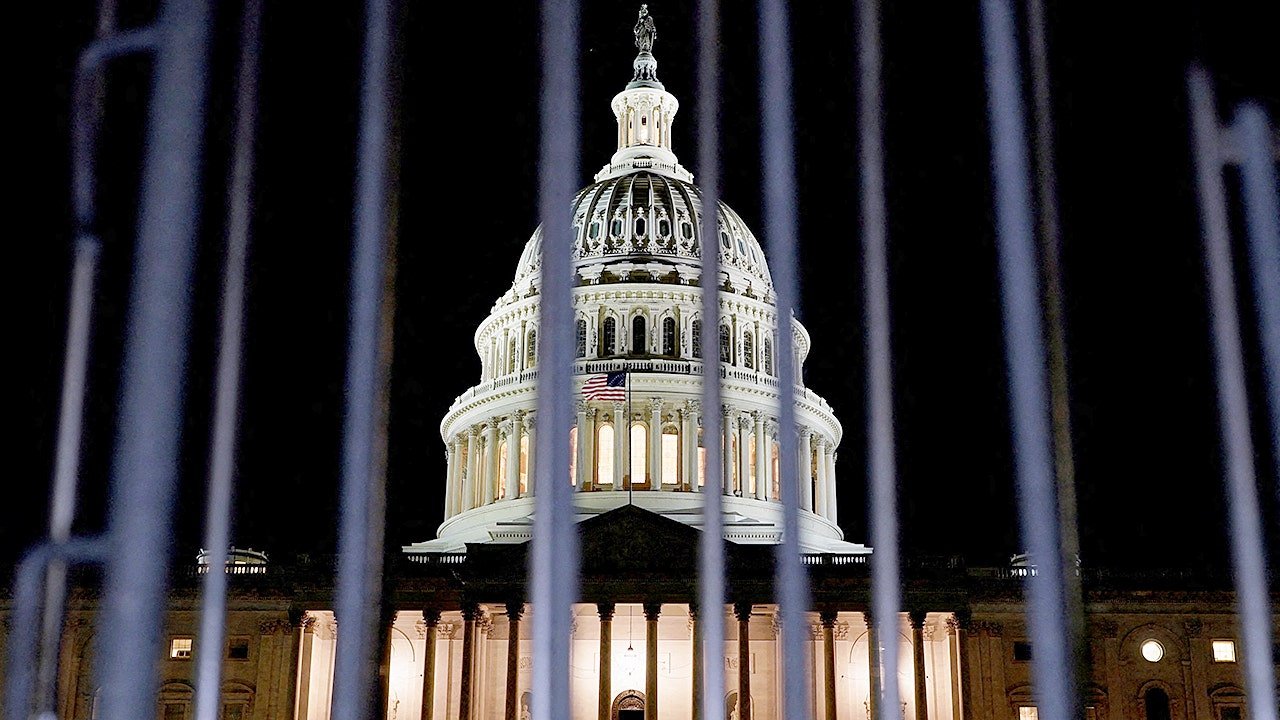
The U.S. Capitol is pictured in Washington, D.C., Sept. 30, 2025. (Elizabeth Frantz/Reuters)
Among those working without pay will be some 64,000 TSA agents and 56,000 active-duty, reserve, and civilian Coast Guard personnel. Those people and others are expected to receive back pay when the shutdown is over.
But as of Friday afternoon, it does not appear the two parties are any closer to an agreement despite the Trump White House sending a potential compromise offer on Wednesday night.
«It’s our expectation that we will respond to the unserious offer that Republicans have made that clearly omits things that need to happen,» House Minority Leader Hakeem Jeffries, D-N.Y., said during a press conference.
«There are a variety of different areas where clearly the administration has fallen short of doing things that make things better for the American people. Until that happens, unfortunately, it appears that Donald Trump and the Republicans have decided to shut down other parts of the Department of Homeland Security.»
NOEM SLAMS DEMS BLOCKING DHS FUNDING BILL CITING TSA, FEMA, COAST GUARD: ‘I HOPE THEY COME TO THEIR SENSES’
Democrats blew up bipartisan negotiations over DHS funding last month after federal law enforcement agents killed two U.S. citizens in Minneapolis during anti-ICE demonstrations there.
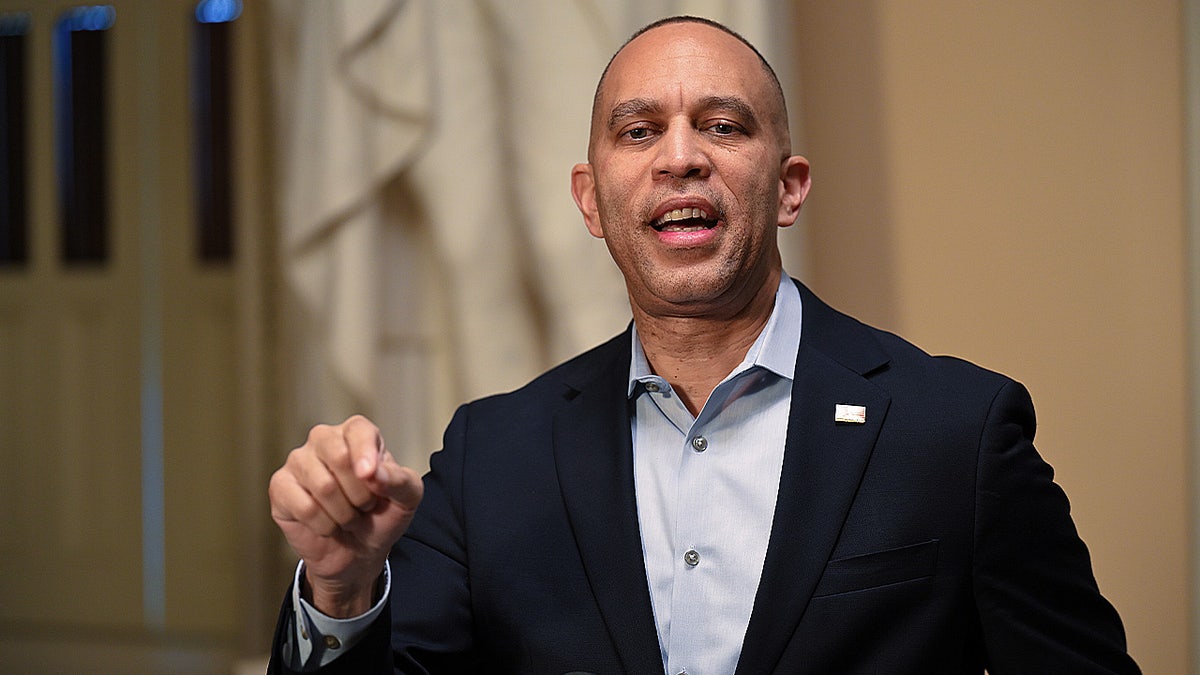
House Minority Leader Hakeem Jeffries speaks during a press conference on Capitol Hill on Nov. 3, 2025, in Washington, D.C. (Roberto Schmidt/Getty Images)
They are now demanding significant reforms to rein in ICE and CBP, many of which Republicans in Congress have long panned as non-starters, including banning ICE agents from wearing masks and requiring them to obtain judicial warrants before pursuing suspected illegal immigrants.
What happens next will be up to Senate Democrats and the White House, who are expected to continue negotiating through the weekend and into next week if need be.
SCHUMER, JEFFRIES MEND RIFT, PRESENT UNITED FRONT ON DHS REFORMS AS DEADLINE NEARS
Both sides have traded proposals and legislative text on a compromise DHS funding bill, but Senate Minority Leader Chuck Schumer, D-N.Y., and his caucus remained steadfast in their position that the GOP’s offer didn’t go far enough.
Meanwhile, the majority of House and Senate lawmakers left Washington on Thursday and are not currently expected to return until Feb. 23.
Senate Majority Leader John Thune, R-S.D., said that he would give lawmakers 24 hours’ notice to return to Washington, D.C., should there be a breakthrough, and remained optimistic that there was a path forward despite Democrats’ blockade.
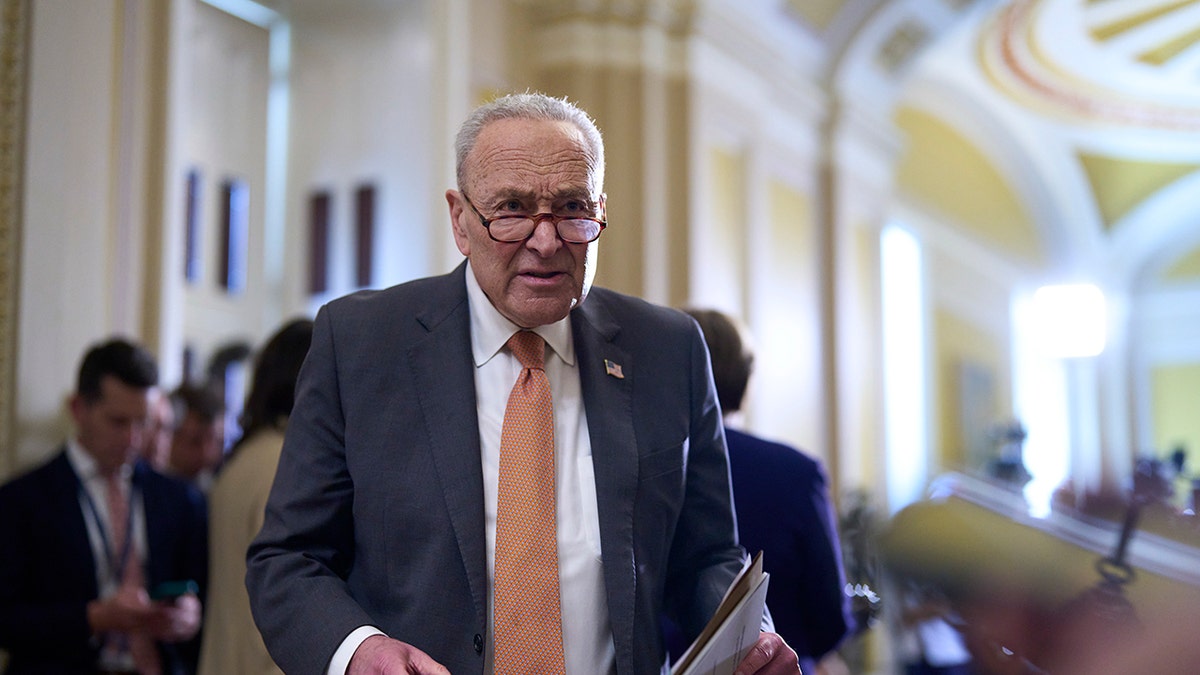
Senate Minority Leader Chuck Schumer, D-N.Y., turns to an aide during a news conference at the Capitol in Washington, June 3, 2025. (J. Scott Applewhite/AP Photo)
«Every iteration of this gets a step closer, because I think the White House is giving more and more ground on some of these key issues,» Thune said. «But so far, they’re not getting any kind of response to Democrats, even allowing us to continue this, allowing [the] government to stay open.»
CLICK HERE TO DOWNLOAD THE FOX NEWS APP
But Democrats have reiterated several times that they believe their demands are simple.
«Again, the only — the fundamental ask is that ICE abide by the same principles and policies of every other police force in the country, and if we can get there, then we can resolve the problem,» Sen. Angus King, I-Maine, said.
Meanwhile, Speaker Mike Johnson, R-La., gave House lawmakers his blessing to leave Washington with a 48 hours’ notice to return pending Senate action, two sources told Fox News Digital.
congress,homeland security,politics,government shutdown
INTERNACIONAL
Donald Trump hace campaña con los soldados que participaron de la captura de Nicolás Maduro
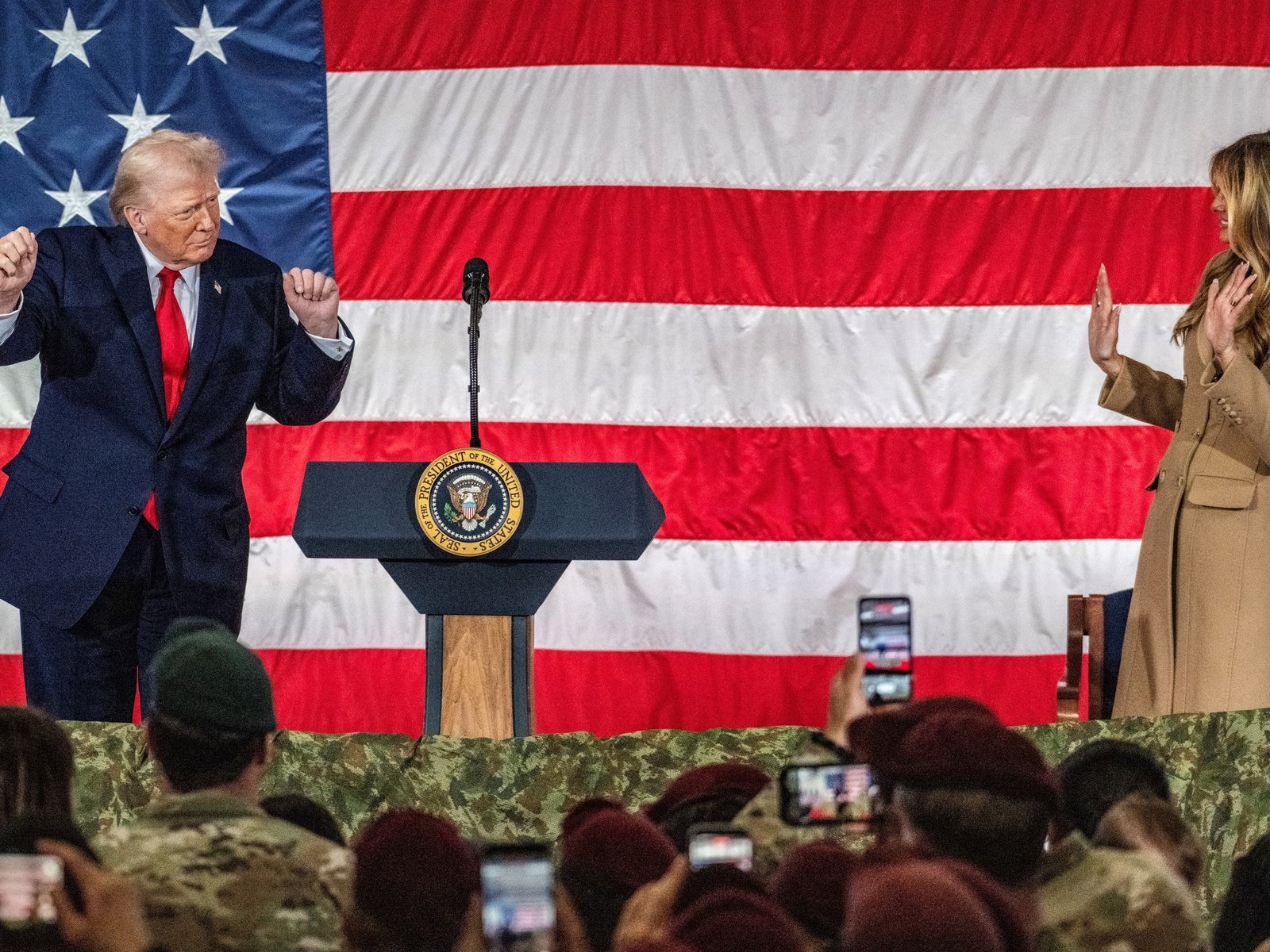
El presidente Donald Trump visitó y elogió públicamente a los miembros de las fuerzas especiales estadounidenses que capturaron al dictador venezolano Nicolás Maduro en su bunker en Caracas, y dijo que la audaz ofensiva del mes pasado significa que «todo el mundo vio lo que puede hacer el poder militar» de EE.UU. y que así se aseguraron de “ser temidos” por posibles enemigos en todo el mundo.
En un discurso ante soldados y sus familias en Fort Bragg, una de las bases militares más grandes del mundo, en Carolina del Norte, Trump declaró: «Su comandante en jefe les apoya totalmente.» Luego, inspirándose en uno de sus lemas de campaña, los arengó: «Cuando sea necesario, van a luchar, luchar, luchar. ¡Van a ganar, ganar, ganar!»
Trump dio su mensaje justo el día en que se conoció que el portaviones estadounidense USSFord, el más grande del mundo, que desde el Caribe ayudó en la operación en Caracas, será relocalizado en Oriente Medio, en medio de las tensiones con Irán.
«Estados Unidos vuelve a ser respetado. Y, quizás lo más importante, somos temidos por los enemigos de todo el mundo», dijo el presidente a sus soldados. «No me gusta decir miedo», agregó. «Pero, a veces, hay que tener miedo porque eso es lo único que realmente solucionará la situación.»
El presidente y la primera dama Melania Trump también se reunieron en privado con familias de militares de las fuerzas Delta, una unidad de operaciones especiales de élite especializada en misiones antiterroristas, rescate de rehenes y operativos encubiertos, que fueron las que encabezaron la ofensiva para la captura de Maduro en Caracas el 3 de enero.
Ante las tropas, en un escenario que parecía más bien un acto de campaña, Trump festejó: «Lo que hicimos recientemente en Venezuela, nadie había visto algo así».
El presidente aseguró que el asalto, que incluyó una infiltración de varios helicópteros de ataque y transporte militar en Caracas, «terminó, literalmente, en un minuto». Y que «todos huyeron”. “Tenemos el Ejército más fuerte del mundo, por lejos», celebró Trump.
Maduro y la ex primera dama venezolana, Cilia Flores, fueron transportados ese mismo día a una prisión federal de Nueva York, donde aguardan juicio bajo acusaciones de narcoterrorismo y conspiración.
Trump relató algunos detalles del asalto a Fuerte Tiuna, en Caracas, donde se refugiaba el dictador: «Era una gran base, una de las más grandes de Sudamérica, donde (Maduro) vivía, y en cuestión de minutos lo sacaron de allí en helicóptero. Tuvieron que atravesar puertas de acero. El acero era como papel maché».
El jefe de la Casa Blanca hizo referencia también al sistema armamentístico que se conoció como «descombobulador» y que asegura es un desarrollo secreto que se empleó en la operación en Venezuela. «Hablan del descombobulador porque (las tropas venezolanas) nunca lograron disparar”, dijo.
Y se ufanó del poder de esa tecnología: “El equipamiento (de defensa) ruso no funcionó. El equipamiento chino no funcionó. Todos intentan averiguar por qué no funcionó. Algún día lo descubrirán, pero no funcionó. Es agradable poder volar sin que te disparen», dijo.
El propio Trump había mencionado esta supuesta arma o sistema secreto, que no está registrada formalmente entre las que posee EE.UU. Más que un arma identificable, el “descombobulador” parece ser más bien un término informal asociado a capacidades de guerra electrónica o ciberataque.
«Esa noche, todo el mundo vio de lo que es capaz el poder militar completo del ejército estadounidense», dijo el presidente. «Fue tan preciso, tan increíble.»
Trump también prometió: «Mientras yo sea presidente, seremos la fuerza de combate mejor dirigida, mejor entrenada, mejor equipada, más disciplinada y más élite que el mundo haya visto jamás» y señaló sobre posibles adversarios estadounidenses: «Todo el mundo lo sabe.»
«Saben exactamente a qué se enfrentarían. Esperemos que nunca tengamos que ponerlos a prueba y, gracias a nuestra fortaleza y a lo que hacemos, probablemente no tendremos que ser puestos a prueba», advirtió Trump.
El presidente recordó a la su vez que «tres pilotos de helicóptero estadounidenses «resultaron gravemente heridos en las piernas al aterrizar» y que hubo francotiradores apostados en estos helicópteros que neutralizaron las ametralladoras que hirieron a estos pilotos.
«Esos pilotos fueron increíbles y realmente valientes”, remarcó.
El ataque a Venezuela dejó unos cien muertos, entre ellos 32 agentes cubanos que formaban parte del anillo de seguridad de Maduro, sin que se registraran bajas estadounidenses.

El Gobierno trabaja en los detalles del acuerdo comercial con EEUU pero se dificulta su tratamiento en sesiones extraordinarias

Bad Bunny hizo vibrar y bailar al estadio River Plate en su primera noche: la emoción por volver al país y el homenaje a Soda Stereo

Una explosión nuclear, casas intactas y una evacuación masiva: el día que Prípiat se convirtió en una ciudad fantasma por Chernobyl

“¿Y las formas?”: Javier Milei expuso a Luis Novaresio por un exabrupto contra un diputado libertario

Empresa de seguros, bajo la lupa: tiene 15 días para demostrar que puede pagar sus deudas

Video: Felipe Loyola le marcó al Milan su primer gol en Europa

Acuartelamiento policial en Santa Fe: reclamo salarial y temor a un conflicto nacional de seguridad

La advertencia de ATE a los gobernadores que apoyan la reforma laboral: “Firmarán su sentencia de muerte”

Cuánto le cuesta a la clase media llenar el changuito y cómo varían los precios de los alimentos entre provincias

A quién afecta la Reforma laboral: estos son los puntos clave del proyecto de Milei

 POLITICA2 días ago
A quién afecta la Reforma laboral: estos son los puntos clave del proyecto de Milei
- ECONOMIA2 días ago
Cayeron 20% las ventas de automóviles en China y el régimen impone medidas para regular el mercado
- POLITICA2 días ago
Reforma laboral: la modificación sobre accidentes o enfermedades ajenas al trabajo