INTERNACIONAL
Evergrande: este es el fin de la otrora más poderosa empresa inmobiliaria de China


El momento pasó sin pena ni gloria. China Evergrande, una promotora inmobiliaria que alguna vez representó la cumbre del poderío económico de China, fue formalmente eliminada de la Bolsa de Hong Kong el lunes.
Evergrande, que hizo su debut financiero en Hong Kong hace 16 años, había sido en un momento la promotora inmobiliaria de más rápido crecimiento en un país rebosante de promesas de ganancias para los inversores. Será recordada como una de las empresas más endeudadas del mundo, cuyo colapso llevó al sistema financiero de China al límite.
La empresa puso a prueba la antigua política de Beijing de «demasiado grande para quebrar» hacia sus compañías más grandes. Rompió su tolerancia al endeudamiento descontrolado por parte de corporaciones gigantes. Y el colapso de Evergrande en 2021, con más de $300 mil millones en deuda, expuso las vulnerabilidades de la economía de China y su dependencia del sector inmobiliario como motor de crecimiento.
Ahora lo que queda es el esqueleto de un gigante corporativo: 1.300 proyectos inmobiliarios aún sin terminar en más de 280 ciudades y cientos de miles de compradores de viviendas que siguen esperando sus departamentos.
Luego está la larga fila de acreedores, desde empresas en China que trabajaban para Evergrande hasta inversores en Londres y Nueva York que apostaron por ella, que aún esperan ser reembolsados.
El año pasado, un juez de Hong Kong ordenó que Evergrande fuera desmantelada. Designó a Alvarez & Marsal, una firma que se especializa en quiebras y que una vez ayudó a disolver a Lehman Brothers, para que se encargara de la tarea.
Un año y medio después de comenzar el trabajo, los liquidadores, dos ejecutivos de Alvarez & Marsal, han dado pequeños pasos para ayudar a los acreedores extranjeros a obtener pequeñas porciones de lo que se les debe.
Los últimos documentos divulgados públicamente por Evergrande demuestran los desafíos.
Los acreedores han realizado cientos de acciones legales contra los proyectos de Evergrande en China y docenas de activos han sido congelados. En algunos casos, los inversores o los gobiernos locales se han hecho cargo de las promociones. Ya es difícil para los liquidadores de Hong Kong recuperar activos para otros acreedores debido a la compleja estructura empresarial de Evergrande con miles de filiales.
Para extraer dinero de lo que queda de Evergrande, los liquidadores tienen que hacerse cargo de cada filial una por una. Alvarez & Marsal ha tomado hasta ahora el control de más de 100 empresas y activos por un valor de alrededor de $3.5 mil millones.
Pero solo se han conseguido alrededor de $255 millones de los $45 mil millones que los acreedores en Hong Kong afirman que se les debe. Y los liquidadores han advertido que incluso el valor de algunos de los activos incautados está en duda, lo que genera «serias dudas sobre las cantidades, si las hay, que en última instancia se puedan obtener en beneficio de los acreedores de la empresa».
Los liquidadores están siguiendo otra vía legal para tratar de extraer dinero de Evergrande: ir tras el expresidente, Hui Ka Yan, su esposa, Ding Yu Mei, y el ex director ejecutivo de Evergrande, Xia Haijun.
Un caso que tiene lugar en Hong Kong, con audiencias a puerta cerrada, ha puesto en la mira activos por valor de $6 mil millones que Hui y otros ejecutivos se pagaron a sí mismos en los años posteriores a la salida a bolsa de Evergrande en Hong Kong.
Es un estudio del exceso de una época pasada en la que la industria inmobiliaria china era más libre. Hasta ahora, el caso se ha centrado principalmente en la esposa de Hui y en Xia. Hui fue detenido en 2023 y las autoridades lo han multado desde entonces con $6.5 millones y lo han acusado de «organizar un fraude».
Una presentación judicial reciente afirmó que Xia, quien fue multado con $2 millones y vetado de los mercados financieros por un importante regulador chino por fraude de valores, está ocultando activos por valor de $24 millones en varias casas y coches de lujo en California.
Una de esas propiedades, en Irvine, tiene un valor de $6.3 millones y fue comprada en abril de 2022, un mes después de que Evergrande retrasara repentinamente sus resultados anuales de 2021 y dijera que los bancos habían incautado préstamos por valor de $2 mil millones, según muestran los documentos judiciales. Varios meses después, Xia renunció por lo que la empresa dijo que había sido un plan para desviar $2 mil millones a una de sus empresas cotizadas en Hong Kong desde una filial.
Apenas unos meses antes de que Xia fuera multado en marzo de 2024, su esposa gastó $14.5 millones en una enorme mansión en Newport Beach, California, según los documentos judiciales. Él ha declarado ante el tribunal que no posee nada que valga más de $6.400.
c.2025 The New York Times Company

INTERNACIONAL
Russia agrees to abide by expired New START nuclear arms limits — as long as US does the same
NEWYou can now listen to Fox News articles!
Russia has reportedly agreed to abide by the limits of a nuclear arms pact it reached with the U.S. years ago after the agreement expired last week — as long as Washington does the same.
The New START Treaty’s expiration, which occurred on Feb. 5, leaves the nations with the two largest atomic arsenals with no restrictions for the first time in more than a half-century, The Associated Press reported. The expiration has fueled fears of a possible unconstrained nuclear arms race.
In September, President Vladimir Putin said Russia would abide by the nuclear arms deal for another year after its expiration date as long as the U.S. followed suit, the AP reported. However, President Donald Trump has said he wanted China to be part of a new pact, something that Beijing has rejected, according to the AP.
«Rather than extend ‘NEW START’ (A badly negotiated deal by the United States that, aside from everything else, is being grossly violated), we should have our Nuclear Experts work on a new, improved, and modernized Treaty that can last long into the future,» Trump wrote on Truth Social upon the treaty’s expiration.
WORLD ENTERS UNCHARTED ERA AS US-RUSSIA NUCLEAR TREATY EXPIRES, OPENING DOOR TO FASTEST ARMS RACE IN DECADES
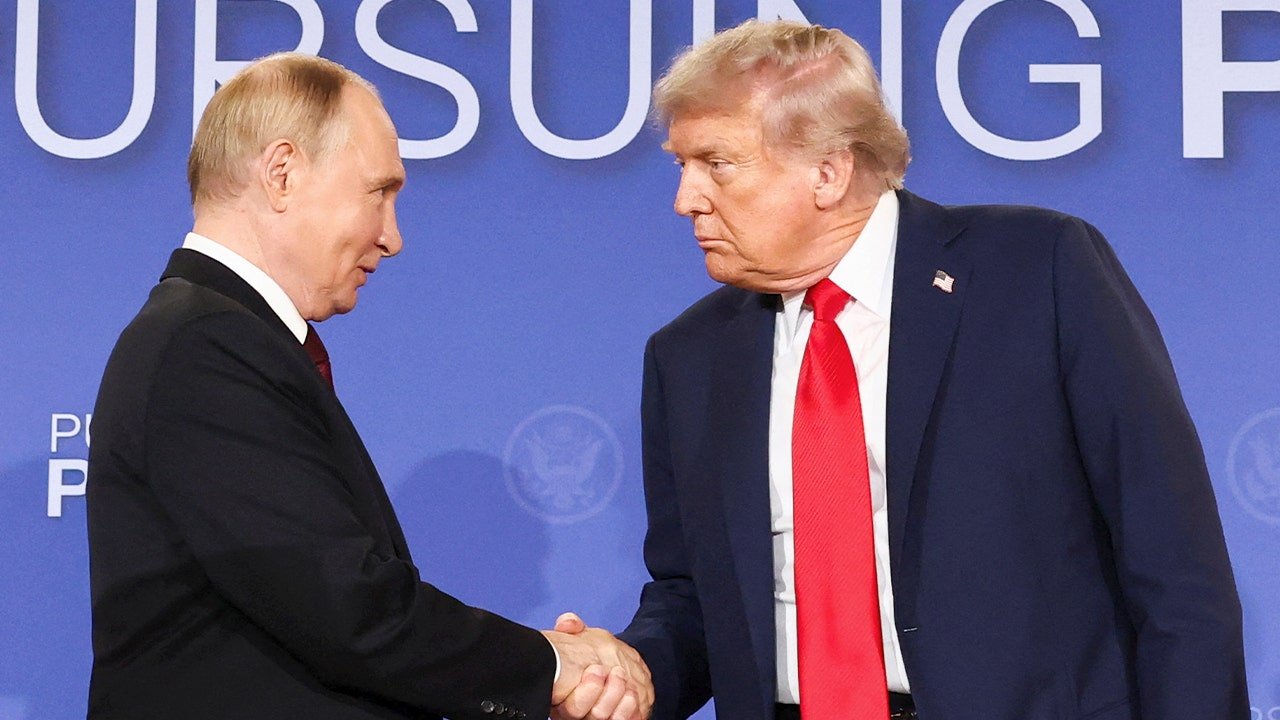
President Donald Trump and Russian President Vladimir Putin meet in Anchorage, Alaska. (Reuters/Kevin Lamarque)
In response to Fox News Digital’s request for comment on the now-expired treaty, the White House pointed to the president’s Truth Social post.
Russian Foreign Minister Sergey Lavrov spoke to lawmakers about the treaty, saying Moscow would «act in a responsible and balanced way on the basis of analysis of the U.S. military policies,» the AP reported.
Lavrov added that «we have reason to believe that the United States is in no hurry to abandon these limits and that they will be observed for the foreseeable future.»

A rocket is launched as part of a ground-based intercontinental ballistic missile test at the Plesetsk facility in Russia on Dec. 9, 2020. (Russian Defense Ministry Press Service via AP, File)
«We will closely monitor how things are actually unfolding,» Lavrov said. «If our American colleagues’ intention to maintain some kind of cooperation on this is confirmed, we will work actively on a new agreement and consider the issues that have remained outside strategic stability agreements.»
TRUMP CALLS FOR NUCLEAR EXPERTS TO WORK ON ‘NEW, IMPROVED, AND MODERNIZED TREATY’
The New START Treaty was signed in 2010 by President Barack Obama and his Russian counterpart, Dmitry Medvedev, and was entered into force on Feb. 5, 2011.
The treaty gave the U.S. and Russia until Feb. 5, 2018, to meet the central limits on strategic offensive arms. The treaty caps each side at 700 deployed ICBMs, SLBMs and nuclear-capable heavy bombers; 1,550 deployed warheads; and 800 deployed and non-deployed launchers and bombers. The parties were then obligated to maintain the limits as long as the treaty remained in force, which it did until last week.
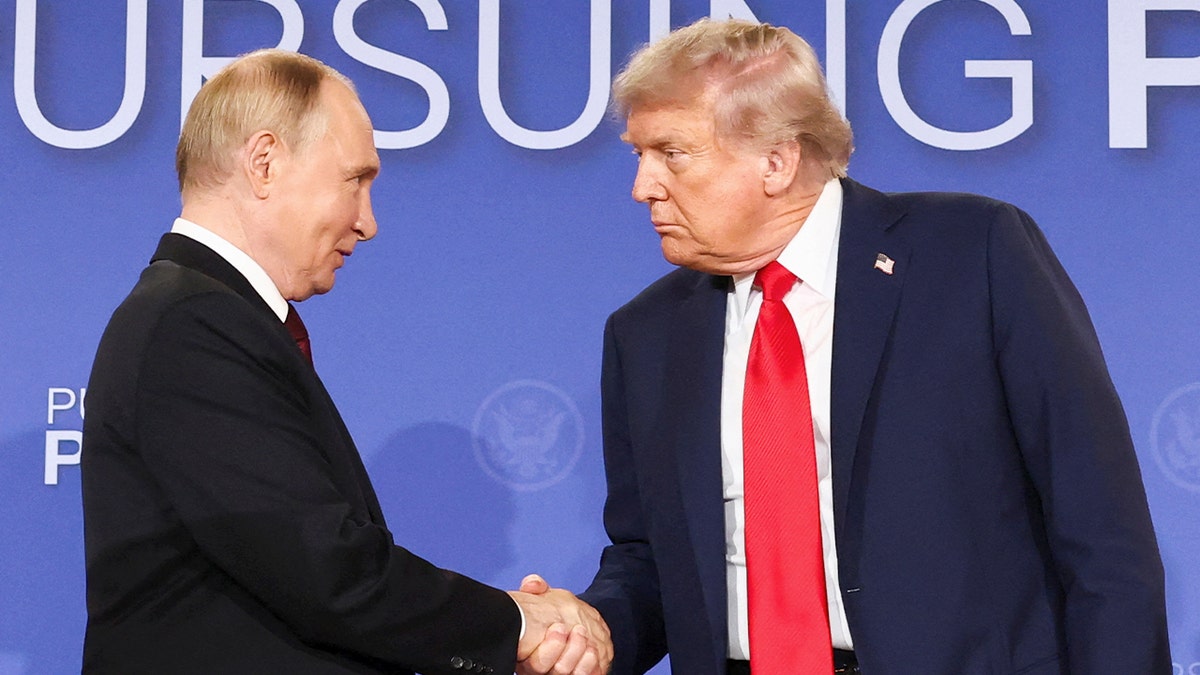
President Donald Trump and Russian President Vladimir Putin shake hands during a press conference following their meeting on Ukraine, in Anchorage, Alaska,, Aug. 15, 2025. (Kevin Lamarque/Reuters)
CLICK HERE TO DOWNLOAD THE FOX NEWS APP
The expiration of the treaty comes just after a meeting involving U.S. and Russian officials in Abu Dhabi. Axios previously reported that the two nations were closing in on a deal to observe the treaty for at least six months after its expiration. The outlet added that during the six-month period there would be negotiations for a new deal.
The State Department did not immediately respond to Fox News Digital’s request for comment.
world,russia,nuclear proliferation,donald trump,vladimir putin
INTERNACIONAL
Energía renovable gana peso en Panamá, Gobierno busca aumentar su participación en la matriz energética
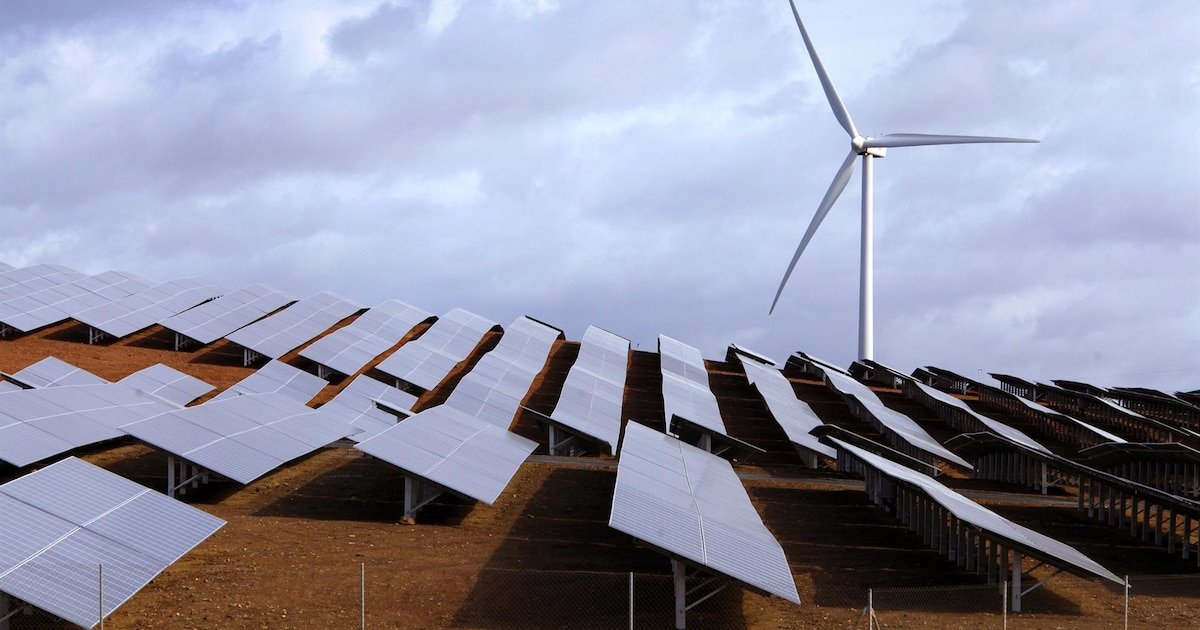
Panamá aspira a que más del 85% de su generación eléctrica provenga de fuentes renovables en los próximos años, una meta que, según las autoridades, debe construirse sin descuidar la seguridad energética ni la estabilidad del sistema.
Así lo afirmó el secretario nacional de Energía, Rodrigo Rodríguez J., durante el Foro de Energía organizado por la Asociación Panameña de Ejcutivos de Empresa (APEDE), al señalar que actualmente el país registra cerca de 65% de su matriz energética basada en fuentes limpias, principalmente hidroeléctricas.
Rodríguez explicó que, aunque el objetivo es elevar progresivamente la participación de las energías renovables, Panamá no puede prescindir completamente de un componente térmico que respalde el sistema en momentos de baja generación solar, ausencia de viento o períodos de sequía que afecten a las hidroeléctricas.
“No todo el parque puede ser renovable”, sostuvo, al subrayar que la confiabilidad del suministro sigue siendo una prioridad para el Estado.
El funcionario detalló que, en términos regionales, Panamá parte de una posición favorable, ya que su matriz histórica ha sido mayoritariamente limpia en comparación con otros países.
Entre el 60% y 65% de la generación anual proviene de fuentes renovables tradicionales, especialmente plantas hidroeléctricas de embalse y de pasada. Sin embargo, reconoció que el desafío está en diversificar esa base con solar, eólica y almacenamiento energético.

Durante el encuentro, la presidenta de APEDE, Giulia De Sanctis, destacó que el tema energético es fundamental no solo para las empresas, sino también para los hogares y la competitividad del país.
Afirmó que el foro permitió debatir sobre redes, hubs y el potencial de Panamá como un centro energético regional, así como los retos regulatorios y tecnológicos que enfrenta el sector.
De Santis subrayó que uno de los ejes centrales de las discusiones fue el desarrollo de licitaciones públicas con reglas claras, transparencia y criterios técnicos actualizados. “No basta con los avances tecnológicos, también se necesita seguridad jurídica y procesos confiables”, indicó, al referirse a la importancia de atraer inversión privada en proyectos de generación y transmisión.
En ese contexto, Rodríguez confirmó que el Gobierno prepara dos licitaciones clave: una para plantas nuevas, principalmente eólicas e hidroeléctricas, y otra para plantas existentes.
La primera está prevista para inicios de marzo y la segunda para finales del mismo mes. Según el secretario, existe un alto nivel de interés empresarial, tanto de inversionistas locales como extranjeros.

El funcionario señaló que estas licitaciones forman parte de una estrategia para fortalecer la capacidad instalada, reducir la volatilidad tarifaria y mejorar la resiliencia del sistema eléctrico. Añadió que los procesos se han diseñado para garantizar competencia sana, participación abierta y criterios técnicos acordes con las nuevas demandas del mercado.
Otro de los ejes abordados fue el impulso al bioetanol como parte de la transición energética. Rodríguez recordó que el Ejecutivo presentó en octubre pasado un proyecto de ley ante la Asamblea Nacional para establecer una mezcla obligatoria del 10% de etanol en las gasolinas. De aprobarse la iniciativa, el país podría iniciar la producción local y la mezcla comercial hacia finales de 2027.
“El proceso legal es clave”, afirmó el secretario, al indicar que el proyecto se encuentra en manos de la Comisión de Comercio, donde se desarrollan consultas con los sectores involucrados. Estimó que, si el cronograma se cumple, la primera producción nacional de etanol podría concretarse entre 2027 y 2028, marcando un hito en la política energética.

De acuerdo con estimaciones del sector azucarero, la puesta en marcha del programa de bioetanol implicaría una inversión inicial cercana a los $500 millones, destinada a la compra de tierras, construcción de destilerías e instalación de infraestructura. También se requeriría ampliar la superficie cultivada de caña en unas 22 mil hectáreas para abastecer el 10% de la demanda.
El gremio azucarero ha señalado que el proyecto podría generar más de 30 mil empleos directos e indirectos, principalmente en el interior del país. Además, destacó que el financiamiento multilateral y bancario ya ha mostrado interés, condicionado a la estabilidad normativa y al respeto de los plazos legales.
Desde APEDE, De Santis respaldó el enfoque del bioetanol como una oportunidad para fortalecer la autosuficiencia energética y reducir la dependencia del petróleo importado. No obstante, insistió en que cualquier política pública debe construirse con consenso, claridad regulatoria y garantías para los inversionistas y consumidores.

En materia de planificación, Rodríguez adelantó que en marzo se lanzará oficialmente el proceso para elaborar el nuevo Plan Energético Nacional 2026-2040, cuya formulación tomará alrededor de 18 meses. El documento definirá las metas de generación, transmisión, almacenamiento y eficiencia energética para las próximas dos décadas.
El secretario también se refirió a los avances en la digitalización del sistema eléctrico, incluyendo procesos tarifarios y operativos. Explicó que la modernización debe realizarse de forma escalonada, para evitar impactos abruptos en las tarifas, especialmente en un contexto de transición tecnológica.
Rodríguez respondió además sobre los estudios para explorar posibles hidrocarburos en aguas del Caribe panameño, desarrollados en cooperación con Colombia. Ante la pregunta de Infobae sobre el tema, el funcionario indicó que el tema está siendo retomado, aunque por ahora no existe ninguna decisión concreta. “Se hicieron análisis preliminares, pero estamos en fase de revisión”, precisó.
El funcionario aclaró que cualquier avance en esta materia estará sujeto a evaluaciones técnicas, ambientales y económicas, y que no se trata de un proyecto inmediato. La eventual exploración, dijo, deberá alinearse con los compromisos de sostenibilidad y transición energética del país.
Para el sector privado, la combinación entre energías renovables, respaldo térmico, biocombustibles y planificación de largo plazo será determinante para mantener la competitividad. De Santis destacó que Panamá cuenta con una base legal sólida, pero necesita fortalecer la ejecución y el seguimiento de las políticas públicas.
Corporate Events,Energy Markets,Europe
INTERNACIONAL
Reporter’s Notebook: Clintons call for open Epstein files hearing after months of defying subpoenas
NEWYou can now listen to Fox News articles!
Since there was such a tempest over Bad Bunny’s Super Bowl halftime show, perhaps there’s a solution at hand. This compromise would satisfy both red and blue America. And the exhibition would transfix the country: Have former President Bill Clinton and President Donald Trump testify at halftime about the Epstein files.
Republicans believe former President Clinton has something to hide about Jeffrey Epstein. Democrats think the same about President Trump. The House Oversight Committee subpoenaed the former president and Hillary Clinton to testify about the Epstein files. After a lot of wrangling, the Clintons are due to appear for closed-door depositions later this month.
But both Bill and Hillary Clinton are now calling for open sessions. And Democrats believe that such an appearance at a public session — by a former President — would establish a precedent to lug in President Trump to answer questions about what he knew about Epstein.
GHISLAINE MAXWELL TO APPEAR BEFORE HOUSE OVERSIGHT COMMITTEE LAWMAKERS FOR EPSTEIN PROBE DEPOSITION
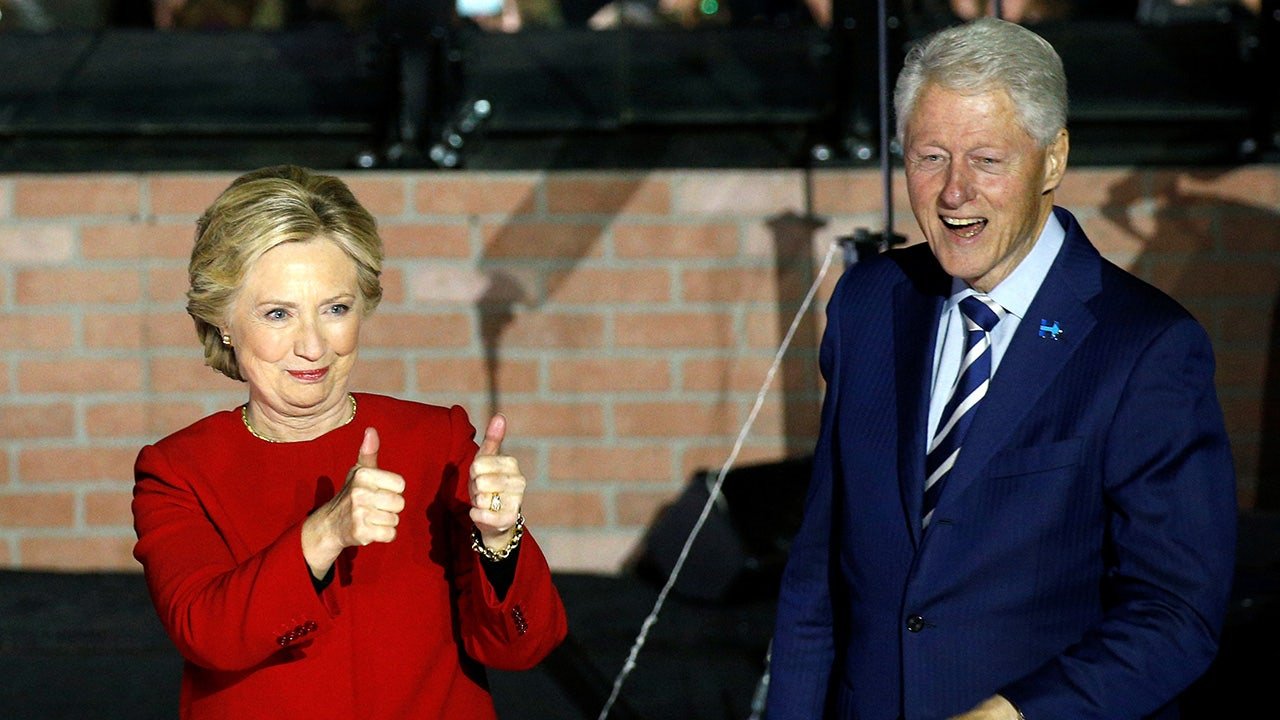
Hillary Clinton addresses her staff and supporters about the results of the U.S. election as her husband, former U.S. President Bill Clinton, applauds at a hotel in the Manhattan borough of New York, Nov. 9, 2016. (Reuters/Carlos Barria)
One architect of the law compelling the release of the Epstein files, applauded demands last week by the former First Couple to testify at a televised open hearing. Rep. Ro Khanna, D-Calif., said the former president is an important witness.
«As long as [the hearing is] focused on Epstein, and it’s not a wild goose chase — it’s not trying to score political points or embarrass either President Clinton or President Trump, it is asking legitimate questions about what they knew took place and who they knew were participating in heinous acts,» said Khanna. «That should be a legitimate point of inquiry.»
After agreeing to a closed-door deposition later this month, Hillary Clinton took to X. She wrote to Oversight Committee Chairman James Comer, R-Ky., saying, «If you want this fight let’s have it in public.»
Former President Clinton echoed his wife the next day on X, also calling for a public session. The former commander-in-chief declared that he won’t be used «as a prop in a closed door Kangaroo Court.»
A spokeswoman for Comer accused the former first couple of «moving the goalposts.» Comer was always open to a hearing. But after a closed-door deposition.
«Depositions have historically been much more substantive than hearings,» said Comer. «Hearings unfortunately, have become more of an entertainment thing.»
It’s hard to track exactly what the Clintons wanted.
The House Oversight Committee voted on a bipartisan basis last August to subpoena both Bill and Hillary Clinton for depositions — along with a host of other prominent figures like former Attorney General Bill Barr. After a lot of haggling, the committee subpoenaed them to appear at dates in October. The Clintons defied those. Then the committee assigned them dates just before Christmas. But neither showed then because of a funeral. The committee requested that the Clintons give them dates for January appearances. They didn’t. The committee then assigned them additional dates for January testimony. They skipped out on those. That’s when Comer threatened to hold the Clintons in contempt of Congress if they didn’t appear in January. The Oversight Committee voted — in bipartisan fashion — for contempt. The House Rules Committee planned last week to prep a measure to force the entire House to vote on contempt — and send criminal referrals for the Clintons to the Justice Department for prosecution after they defied the subpoenas.
REVEALED: TRUMP CALLED POLICE CHIEF TO SUPPORT EPSTEIN PROBE, AND LAWMAKERS NAMED 6 MEN SHIELDED FROM EXPOSURE
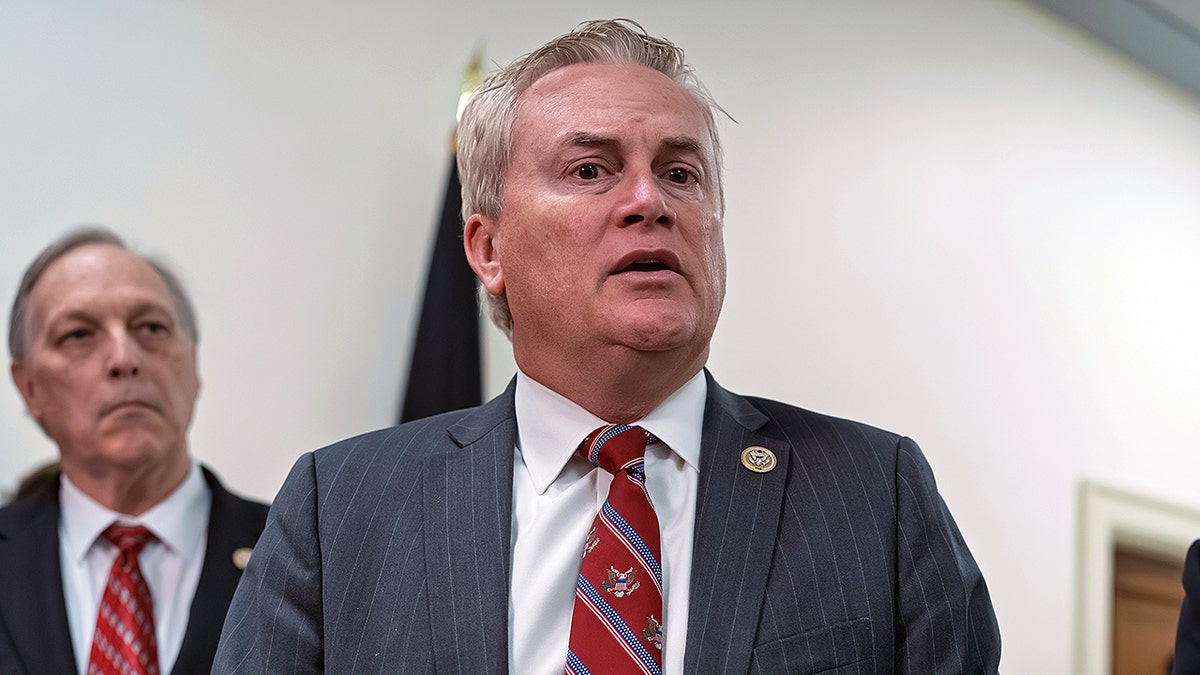
House Oversight Committee Chairman James Comer, R-Ky., alongside Rep. Andy Biggs, R-Ariz., left, speaks to reporters after a closed-door deposition with Ghislaine Maxwell, the former girlfriend and confidante of sex trafficker Jeffrey Epstein, at the Capitol in Washington, D.C., on Feb. 9, 2026. (AP Photo/J. Scott Applewhite)
But the Clintons finally agreed to depositions at the end of this month. And once that was on the calendar, the duo began calling for public hearings.
There is a method behind this madness. There isn’t a loyalty among younger Congressional Democrats to the Clintons. In fact, former House Speaker Nancy Pelosi, D-Calif., was steamed at some Democrats for wanting the Clintons to appear. Younger Democrats don’t have the same reverence for the Clintons as older Democrats. Hillary Clinton ran for president a decade ago. She hasn’t been a senator since 2009. She last served as Secretary of State in early 2013. President Clinton left the Oval Office more than a quarter-century ago.
However, this is the Democrats’ gambit:
If former President Clinton appears about the Epstein files, it may be tough to make the case that President Trump shouldn’t appear.
«Certainly it does set the precedent. President Trump was subpoenaed during the January 6th investigations and didn’t come in. He cited some form of executive privilege. And so we’re kind of forcing the Clintons to come in with the threat of criminal contempt. Then that is a precedent that we are setting,» said Rep. Suhas Subramanyam, D-Va. «In other countries, like the UK, the Prime Minister regularly comes before the Parliament. And so it’s not like it’s unprecedented around the world.»
Granted, that’s a parliamentary system where the prime minister is a member of Parliament in the United Kingdom. British Prime Minister Keir Starmer regularly appears for «Prime Minister’s Questions» every Wednesday at noon in London. Members of Parliament usually pepper the prime minister with questions and scoff in a scene which resembles something out of Monty Python.
But the American and British systems are fundamentally different.
Getting a sitting or former President — and even first lady — before Congress is rare but not unheard of.
BONDI TO FACE GRILLING IN HOUSE JUDICIARY COMMITTEE OVER EPSTEIN FILES, WEAPONIZATION ALLEGATIONS
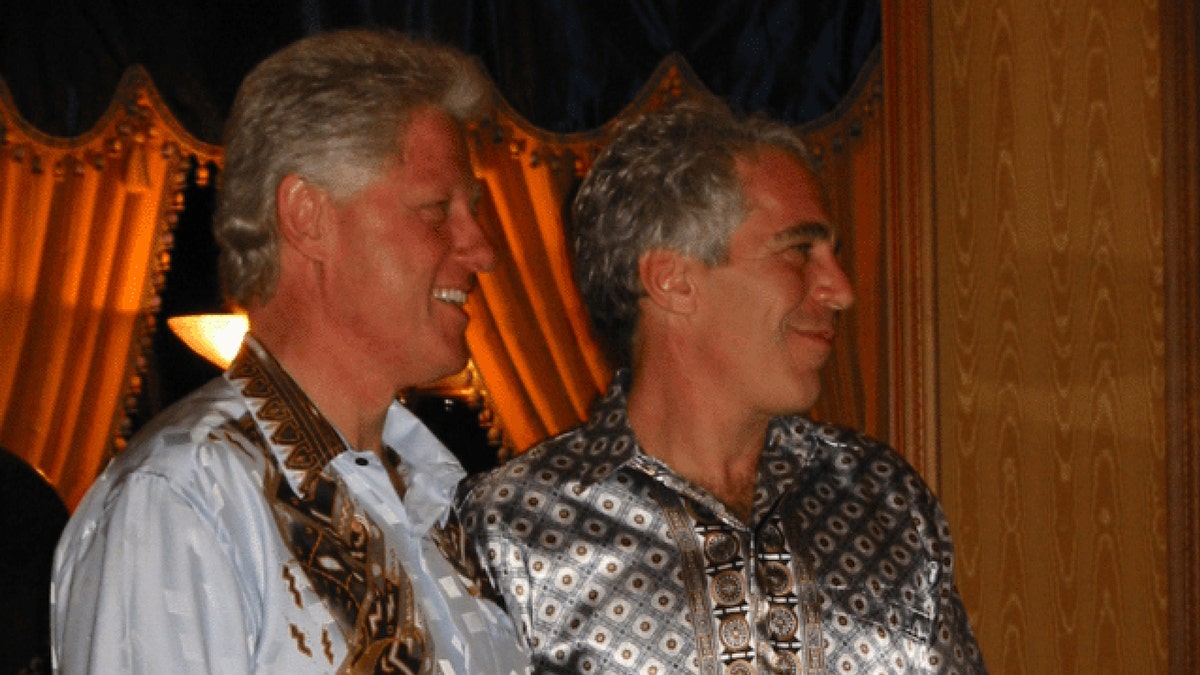
Former President Bill Clinton was seen in photos with Jeffrey Epstein as part of a DOJ Epstein files release on Friday, Dec. 19. (Department of Justice)
There are three prominent examples of sitting Presidents appearing before Congress. President Abraham Lincoln testified voluntarily before the House Judiciary Committee in 1862. The New York Herald published his «State of the Union» message to Congress just before it was sent to Capitol Hill. Presidents sent written «reports» in those days. They did not give speeches to Congress. Lawmakers probed the leak of the message to Congress. It was speculated that Herald reporter Henry Wikoff got the message ahead of time thanks to his friendship with Mary Todd Lincoln. The House Sergeant at Arms briefly held Wikoff — and released him after the president spoke to the Judiciary Committee.
President Woodrow Wilson appeared before the Senate Foreign Relations Committee in 1919 to discuss a treaty with Germany and establishing the League of Nations. Wilson’s push for the League of Nations failed. The Senate rejected the Treaty of Versailles.
President Gerald Ford had been in office two-and-a-half months before he appeared voluntarily before the House Judiciary Committee in the fall of 1974. Ford told lawmakers that his pardon of former President Richard Nixon wasn’t something they bargained about. Ford told the committee that he pardoned Nixon because his physical and mental health fell into a steep decline.
Former President Harry Truman appeared before the Senate Foreign Relations Committee in 1955 to testify about the United Nations Charter.
Ford came back as a former president in 1983 for a Senate hearing on the bicentennial of the Constitution.
And there are examples of both sitting and former first ladies testifying, too.
Eleanor Roosevelt testified twice as first lady. Once about labor issues. Then, about the organization of volunteers for the civilian defense agency before World War II.
Rosalynn Carter testified about mental health as first lady.
Hillary Clinton famously testified about her husband’s health care plan — even though it was dubbed (often derisively) «Hillarycare» in the fall of 1993. She testified multiple times as Secretary of State. Most notably in early 2013 regarding Benghazi.
And, first lady Laura Bush was en route to Capitol Hill to testify before a Senate panel about early childhood education on 9/11. The committee cancelled the hearing after the attacks in New York and at the Pentagon.
CLICK HERE TO DOWNLOAD THE FOX NEWS APP
So, many Republicans are game to hear from the Clintons about the Epstein files. Frankly, some were more interested in just holding them in contempt than actually gleaning anything about Epstein. But it looks like the Clintons will at least sit for depositions in a few weeks. Whether there’s a hearing or not is unclear. Some Republicans may even push for that. But caveat emptor. An open session for the Clintons will only intensify the push by Democrats — and some GOPers — to hear from President Trump.
Their testimony might not come during the Super Bowl halftime show. But open testimony by a former President and a sitting President would be a political Super Bowl.
politics,the clintons,jeffrey epstein,republicans,house of representatives politics,congress,william barr

Ariel Lijo quedó a cargo de la causa que investiga la presunta corrupción en la Agencia Nacional de Discapacidad

Russia agrees to abide by expired New START nuclear arms limits — as long as US does the same

Coto se achica en CABA: el supermercado que abrirá en un mega local que dejó vacante

La CGT marcha al Congreso contra la reforma laboral mientras el Senado debate el proyecto

El gran debut de Tiziano Gravier en los Juegos Olímpicos de Invierno y la emoción de su madre Valeria Mazza en la tribuna

Colocar monedas debajo de la almohada: para qué sirve y cuándo conviene hacerlo

El sector industrial advierte que la apertura económica exige eliminar las distorsiones internas

Mirtha Legrand se quebró desconsolada al hablar de la renuncia de Jimena Monteverde a su mesaza

Acuartelamiento policial en Santa Fe: reclamo salarial y temor a un conflicto nacional de seguridad

Mercados: subió la Bolsa argentina y cortó una serie negativa de siete ruedas consecutivas

 POLITICA1 día ago
Acuartelamiento policial en Santa Fe: reclamo salarial y temor a un conflicto nacional de seguridad
- POLITICA1 día ago
La advertencia de ATE a los gobernadores que apoyan la reforma laboral: “Firmarán su sentencia de muerte”
- ECONOMIA1 día ago
Cuánto le cuesta a la clase media llenar el changuito y cómo varían los precios de los alimentos entre provincias