INTERNACIONAL
Handful of Republicans sink Trump’s ‘big, beautiful bill’ in key House committee


President Donald Trump’s «big, beautiful bill» failed to pass the House Budget Committee on Friday, in what appears to be a massive blow to House GOP leaders’ plans to hold a House-wide vote next week.
Republican Reps. Chip Roy of Texas, Josh Brecheen of Oklahoma, Andrew Clyde of Georgia, and Ralph Norman of South Carolina, all voted against the legislation.
A fifth House Republican, Rep. Lloyd Smucker of Pennsylvania, also switched his vote from «yes» to «no,» though it was a procedural maneuver that allows him to bring the legislation up again. Smucker told reporters he was «quite confident» in the bill’s success.
House Budget Committee Chairman Jodey Arrington, R-Texas, said the panel would likely not meet again on Friday, and could reconvene on Monday.
The committee met to mark up and debate the bill, a massive piece of legislation that’s a product of 11 different House committees’ individual efforts to craft policy under their jurisdictions. The result is a wide-ranging bill that advances Trump’s priorities on the border, immigration, taxes, energy, defense and raising the debt limit.
ANTI-ABORTION PROVIDER MEASURE IN TRUMP’S ‘BIG, BEAUTIFUL BILL’ COULD SPARK HOUSE GOP REBELLION
House Speaker Mike Johnson, left, and President Donald Trump. (Getty Images)
Emotions ran high in the hallway outside the House Budget Committee’s meeting room from the outset, however, giving the media little indication of how events would transpire.
Rep. Brandon Gill, R-Texas, who had been at home with his wife and newborn baby, surprised reporters when he arrived at the Cannon House Office Building after he was initially expected to miss the committee meeting.
His appearance gave House GOP leaders some added wiggle room, allowing the committee to lose two Republican votes and still pass the bill, rather than just one.
But at least four House Republicans went into the meeting warning they were opposed to the bill.
Shortly before the meeting was expected to begin, Roy, Norman, Clyde and Brecheen abruptly left the room while saying little to reporters on the way out.
BROWN UNIVERSITY IN GOP CROSSHAIRS AFTER STUDENT’S DOGE-LIKE EMAIL KICKS OFF FRENZY
Each came back a short while later and criticized the legislation in their opening remarks.
The fiscal hawks are frustrated about provisions curbing Medicaid in the bill not going into effect until 2029, and had similar issues with the delay in phasing out green energy subsidies from former President Joe Biden’s Inflation Reduction Act.
«Only in Washington are we expected to bet on the come that in five years, then everything will work. Then we will solve the problem,» Roy said during debate. «We have got to change the direction of this town. And to my colleagues and other side of the aisle, yes, that means touching Medicaid.
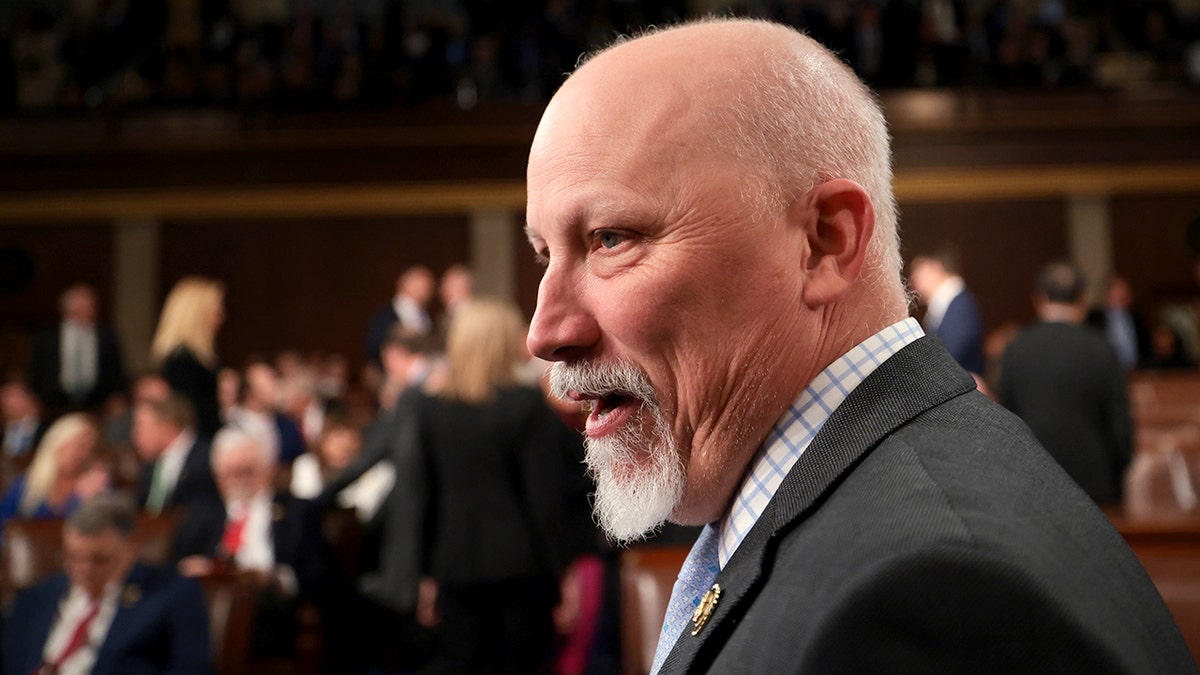
Rep. Chip Roy (R-TX) attends U.S. President Donald Trump’s address a joint session of Congress at the U.S. Capitol on March 04, 2025 in Washington, DC (Win McNamee/Getty Images)
At one point, Norman came out of the room and called for the committee to recess in order to work through the fiscal hawks’ concerns.
«If they call for a vote now, it’s not going to end well,» he said, adding he was still waiting on commitments from House GOP leaders.
Minutes later, House Majority Leader Steve Scalise, R-La., who is not a member of the committee but had been meeting with holdouts, told reporters he wanted the legislation to advance through the Budget panel «as soon as possible.»
When asked about Norman’s comments, he said, «I just walked out of the meeting with him a few minutes ago as well. We’re working on some questions that Ralph and others have, and we’re going to be getting them answers as soon as we get them back from the Trump administration.»
Roy said on X, formerly Twitter, after the vote, «We were making progress, but the vote was called, and the problems were not resolved, so I voted no. I am staying in Washington this weekend to deliver.»
«Medicaid Work requirements must start NOW not 2029 & the Green New Scam must be fully repealed, as President Trump called for,» Roy wrote on X.
Earlier, Trump took to Truth Social where he suggested those opposing the bill were «grandstanders» and he pressed Republicans to unite behind it.
His message appeared to have little effect on the rebels, however – though it’s notable Trump is not in Washington, and is currently en route back from a diplomatic trip to the Middle East.
House Republicans are working to pass Trump’s agenda via the budget reconciliation process, which allows the party controlling the House, White House, and Senate to pass broad pieces of legislation while completely sidelining the minority party.
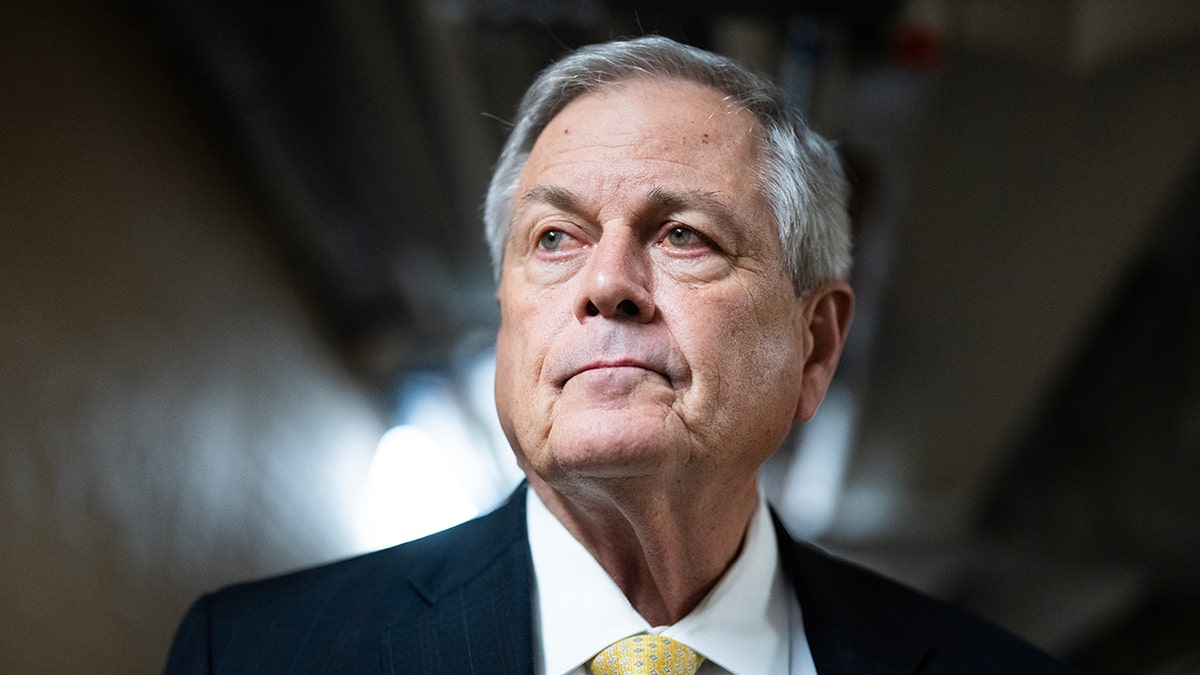
Rep. Ralph Norman, R-S.C., talks with reporters after a meeting of the House Republican Conference in the U.S. Capitol on Wednesday, February 5, 2025 (Tom Williams/CQ-Roll Call, Inc via Getty Images)
It does so by lowering the Senate’s threshold for passage from 60 votes to 51, provided the legislation deals with spending, taxes, or the national debt.
Speaker Mike Johnson, R-La., has said he wants the legislation to pass the House by Memorial Day, with a goal of syncing up with the Senate and getting a bill to Trump’s desk by the Fourth of July.
CLICK HERE TO GET THE FOX NEWS APP
That’s still possible if Republicans on the House Budget Committee strike an agreement to advance the legislation on Monday.
Afterwards, it would head to the House Rules Committee for any potential changes, before a House-wide vote sometime later in the week.
But Republican senators have already indicated they want to see some changes to the bill, meaning the House will need to hash out their differences with their counterparts in the upper chamber before the legislation is finished.
The House Freedom Caucus, which the bill’s four Budget Committee opponents belong to, has said its members would stay in Washington through the weekend to continue working.
«We are continuing to negotiate. We are not leaving right now. We have been making progress and are continuing to work on the legislation,» a Freedom Caucus spokeswoman told Fox News Digital.
House Of Representatives,Republicans,Donald Trump











Tradición
Problemas

NEWYou can now listen to Fox News articles!
Gaza’s Rafah border crossing with Egypt resumed limited operations Monday under the terms of the Israeli-Hamas ceasefire agreement, reopening a critical gateway that had been largely closed for nearly two years.
The reopening comes with tight restrictions. Only a small number of people will be permitted to travel in either direction and commercial goods will not be allowed to pass through the crossing, officials said.
Egyptian authorities said the first day of operations will allow up to 50 Palestinians to cross in each direction, a figure that reflects the narrow scope of the initial reopening rather than a full return to prewar travel.
Health officials in Gaza say tens of thousands of residents with urgent medical needs are seeking evacuation through Rafah, underscoring the pressure on the crossing even as access remains tightly controlled. Thousands of Palestinians currently outside Gaza are also hoping to return.
US MILITARY TO OVERSEE NEXT PHASE OF PEACE DEAL FROM COORDINATION BASE IN ISRAEL
Ambulances line up to enter the Egyptian gate of the Rafah crossing on the way to the Gaza Strip, in Rafah, Egypt, Sunday, Feb. 1, 2026. (AP Photo/Mohamed Arafat)
Before the war, Rafah served as Gaza’s primary passage to the outside world. All other crossings into the territory are shared with Israel. Under the ceasefire framework that took effect in October, Israeli forces continue to control the corridor between the crossing and the areas where most Palestinians live.
Israel and Egypt are vetting travelers, and the crossing is being overseen with international involvement, officials said, as part of efforts to prevent weapons smuggling while allowing limited humanitarian movement.

A crane enters the Egyptian gate of the Rafah crossing to the Gaza Strip, in Rafah, Egypt, Sunday, Feb. 1, 2026. (AP Photo/Mohamed Arafat)
Egypt has said the crossing must function in both directions and has pushed back against any use of Rafah as a mechanism to permanently displace Palestinians from Gaza.
US ENVOY WITKOFF SAYS HIGH-LEVEL MIAMI TALKS FOCUSED ON ‘UNIFIED GAZAN AUTHORITY’ AS ISRAEL CEASEFIRE ADVANCES
Elsewhere in the territory, fighting-related incidents continued despite the ceasefire. Gaza hospital officials accused an Israeli navy vessel of firing on a tent camp near the southern city of Khan Younis, killing a 3-year-old Palestinian boy. Israel’s military said it was reviewing the report.
Egyptian authorities said roughly 150 hospitals across the country are prepared to receive patients evacuated from Gaza, while the Egyptian Red Crescent has set up support areas on the Egyptian side of the crossing.

A truck carrying humanitarian aid at the Rafah border on the Egyptian side, in Rafah, Egypt, on Thursday, Jan. 29, 2026. (Reuters)
Israel seized control of the Rafah crossing in May 2024, describing the move as part of its campaign against Hamas smuggling routes. The crossing was briefly opened for medical evacuations during a short-lived ceasefire in early 2025.
The U.S.-brokered ceasefire that took effect on Oct. 10 halted more than two years of fighting that began with the Hamas-led terror attacks on southern Israel on Oct. 7, 2023. The ceasefire’s initial phase focused on hostage exchanges, increased humanitarian aid and a limited Israeli pullback.
CLICK HERE TO DOWNLOAD THE FOX NEWS APP
A second phase envisions a new Palestinian governing arrangement for Gaza, the deployment of an international security force, the disarmament of Hamas and steps toward reconstruction — goals that remain unresolved.
The Associated Press contributed to this report.
middle east,israel,world
INTERNACIONAL
Las contradicciones de la economía brasileña: entre el déficit y el récord de inversiones extranjeras

La economía brasileña atraviesa una fase marcada por grandes contradicciones y por incertidumbres que podrían tener un fuerte impacto en 2027, cuando quienquiera que sea el nuevo presidente deberá enfrentarse a una situación fiscal crítica. La semana pasada, el Banco Central confirmó la tasa Selic en el 15%. Se trata del tipo de interés de referencia fijado por el Banco Central de Brasil, que sirve como ancla para todos los demás tipos de interés, como préstamos, hipotecas, tarjetas de crédito y títulos públicos. Con este nivel, la tasa real, que incluye la inflación prevista para los próximos 12 meses, se mantiene en torno al 10,6%, el nivel más alto desde mayo de 2006, cuando era del 10,7%.
La semana pasada, el Tesoro reveló además que las cuentas del Ejecutivo en 2025 registraron un déficit de 61.700 millones de reales (11.738 millones de dólares), casi el doble del límite fiscal tolerado y un 32% superior al déficit de 2024, que fue de 42.900 millones de reales (8.161,3 millones de dólares). El ministro de Hacienda, Fernando Haddad, quien ya ha anunciado que dejará su cargo este mes, declaró, sin embargo, que la meta fiscal fue cumplida. En realidad, para llegar a esta afirmación —según los expertos—, el ministro no incluyó algunos gastos relacionados con sentencias y acciones judiciales en los ámbitos de la sanidad, la educación y la defensa nacional, así como los reembolsos por deducciones indebidas del Instituto Nacional de la Seguridad Social (INSS).
En un editorial titulado “Como en los tiempos de Dilma”, en referencia a las pedaladas fiscales del gobierno de Dilma Rousseff que condujeron a la peor recesión económica de la historia brasileña, el diario O Estado de São Paulo critica las declaraciones de Haddad. “El gobierno alcanza su meta fiscal mediante una maniobra para excluir gastos del cálculo, pero los números no mienten: la deuda galopa y Lula parece decidido a revivir la pesadilla de su delfina”. “Durante el desastroso gobierno de Dilma Rousseff, una táctica similar se conoció como ‘contabilidad creativa’ y fue uno de los factores que condujeron a su proceso de impeachment. Es importante reconocer una diferencia significativa: en la era Dilma, el déficit se ocultaba mediante fuertes manipulaciones; en la administración de Lula, la maniobra para alcanzar el objetivo se realiza a la luz del día”, concluye O Estado de São Paulo.

Las proyecciones incluidas en el último Informe de Proyecciones Fiscales del Tesoro Nacional, que analiza la evolución de las cuentas públicas brasileñas en la próxima década y fue presentado la semana pasada, advierten que el gobierno de Lula deberá conseguir 14.000 millones de reales (2.663,4 millones de dólares) adicionales este año para alcanzar el objetivo fiscal, que prevé un superávit primario del 0,25% del PIB (equivalente a 34.300 millones de reales, es decir, 6.525 millones de dólares). Las necesidades de mayores ingresos serán aún más elevadas en 2027, cuando, según las estimaciones, faltarán 46.000 millones de reales (8.751 millones de dólares), para alcanzar el objetivo de un superávit del 0,5% del PIB (73.000 millones de reales, o sea 13.888 millones de dólares).
En el tercer mandato de Lula, la deuda pública como porcentaje del PIB saltó del 71,7% al momento de su asunción al 78,7% a finales del año pasado. El Tesoro prevé que alcanzará el 83,6% en 2026. Se trata de un aumento de casi 12 puntos porcentuales en un solo mandato, que recuerda a los datos del gobierno de Dilma Rousseff, cuando entre 2011 y 2015 la deuda pública pasó del 51% al 65% del PIB.
También las cuentas de las principales empresas estatales del país están en rojo. El déficit registrado en 2025 fue de 5.870 millones de reales (1.117 millones de dólares), según los datos divulgados por el Banco Central el viernes pasado. Es el segundo peor resultado desde el inicio de la serie histórica en 2001, solo por detrás del récord de 8.100 millones de reales (1.541 millones de dólares) en 2024. En el cálculo se excluyen únicamente la petrolera estatal Petrobras y los bancos públicos como el Banco do Brasil y la Caixa Econômica Federal. En particular, pesa de forma significativa la crisis de Correos, que acumuló pérdidas por 6.100 millones de reales (1.160 millones de dólares) en los primeros nueve meses de 2025, casi el triple de las registradas el año anterior, cuando el resultado negativo fue de 2.100 millones de reales (400 millones de dólares).

También preocupa el clima de tensión dentro del Instituto Brasileño de Geografía y Estadística (IBGE), responsable del cálculo del Producto Interno Bruto (PIB). El dato correspondiente a 2025 se dará a conocer el próximo 3 de marzo, pero los enfrentamientos entre el presidente de la institución, Marcio Pochmann, y parte del personal técnico hacen temer discrepancias en la elaboración de los datos. El pasado 19 de enero fue despedida la investigadora Rebeca Palis, hasta entonces responsable de la Coordinación de Cuentas Nacionales, el área encargada del cálculo del PIB. En señal de solidaridad, al menos otros tres directivos del área que ella coordinaba presentaron su dimisión. La semana pasada, además, otra directiva fue destituida de la Gestión de Sistematización de Contenidos Informativos (GECOI). Según el sindicato del sector, Pochmann está llevando a cabo “una caza de brujas contra los empleados públicos que defienden la posición técnica, institucional e histórica del IBGE”.
A pesar de este escenario tan complejo, en 2026 el Ibovespa, la bolsa brasileña, alcanzó máximos históricos, superando los 183.000 puntos, impulsado principalmente por un fuerte flujo de capitales extranjeros. Solo en enero, las inversiones foráneas ya superaron más de la mitad del total registrado en todo 2025, favorecidas por un dólar más débil y por valoraciones aún atractivas de la Bolsa brasileña, a pesar de los riesgos asociados a los altos tipos de interés, al contexto fiscal y a las incertidumbres electorales. Hasta el 23 de enero de este año, los extranjeros invirtieron 17.728 millones de reales (3.373 millones de dólares) en el mercado bursátil brasileño, frente a los 25.473 millones de reales (4.846 millones de dólares) de todo 2025.
Otro dato positivo es la caída de la tasa de desempleo. Con una media anual del 5,6% a finales de 2025, alcanzó el nivel más bajo de la serie histórica. Al menos cinco factores explican este resultado. En primer lugar, Brasil está envejeciendo y, con el envejecimiento, aumenta el número de personas que salen del mercado laboral sin ser sustituidas en la misma proporción, lo que reduce la tasa de desempleo. Además, el aumento de la escolarización ha hecho que en los últimos años los jóvenes dediquen más tiempo al estudio, retrasando su entrada en el mercado laboral, lo que también tiene un impacto directo en el desempleo. Otro fenómeno decisivo ha sido la expansión de las aplicaciones de reparto y transporte de pasajeros. “Esto ha contribuido a reducir la tasa de desempleo, porque una persona despedida que de otro modo estaría desempleada puede encontrar rápidamente trabajo como conductor o repartidor. Es una forma de seguir siendo productivo para la economía”, declaró al diario O Globo Bruno Imaizumi, economista de 4Intelligence.
El año 2026 será, por tanto, no solo el de las elecciones presidenciales en Brasil, sino también el de una crucial prueba económica, cuyo impacto será determinante para el mandato del próximo presidente. Desde el empleo hasta la deuda pública, el nuevo gobierno deberá navegar con extrema cautela entre datos y políticas económicas para no llevar al país a una nueva recesión.
Business,International Relations,Corporate Events,Diplomacy / Foreign Policy,South America / Central America

Los ingresos petroleros de Rusia, el alma de su maquinaria de guerra, se desploman

Rocío Marengo abrió las puertas de la habitación de Isidro: cuna tejida y caballitos

Vista se quedó con los activos de Equinor en Vaca Muerta en una operación de USD 712 millones

Gaza’s Rafah border crossing partially reopens under ceasefire deal

El Gobierno anticipó un nuevo llamado a licitación por tubos de acero y dejó un mensaje para Techint

Barracas Central vs. Deportivo Riestra: formaciones, hora y dónde ver por tv

La escandalosa prohibición de María Susini: por qué no quiere que Facundo Arana se acerque a sus hijos

A qué hora puede llover hoy en CABA, según el Servicio Meteorológico Nacional

Julieta Díaz contó por qué no funcionó su noviazgo con Luciano Castro en medio de la separación con Griselda Siciliani

Maximo Kirchner propuso que Axel Kicillof presida el PJ Bonaerense

 CLIMA NOTICIAS3 días ago
A qué hora puede llover hoy en CABA, según el Servicio Meteorológico Nacional
- CHIMENTOS3 días ago
Julieta Díaz contó por qué no funcionó su noviazgo con Luciano Castro en medio de la separación con Griselda Siciliani
- POLITICA3 días ago
El New York Times asegura que la Argentina podría firmar un acuerdo con EE.UU. para recibir deportados