INTERNACIONAL
House advances bill to end government shutdown with hours until final vote


NEWYou can now listen to Fox News articles!
The record-breaking U.S. government shutdown appears to be on a path to finally ending after 43 days.
Federal funding legislation aimed at opening the government survived a key test vote in the House later Wednesday, teeing it up for final passage in a matter of hours.
That means the bill could hit President Donald Trump’s desk as soon as Wednesday night, likely ending what has been the longest shutdown in U.S. history.
The White House announced that Trump would sign the bill in a statement of administration policy obtained by Fox News Digital.
AIR TRAFFIC CONTROLLERS ISSUE DESPERATE PLEA AS FAMILIES STRUGGLE WITHOUT PAYCHECKS
Speaker Mike Johnson holds the gavel during the first session of the 119th Congress in the House Chamber of the U.S. Capitol in Washington Jan. 3, 2025. (Kent Nishimura/Bloomberg via Getty Images)
«The Administration urges every Member of Congress to support this responsible, good faith product to finally put an end to the longest shutdown in history,» the statement said.
The bill advanced through a procedural hurdle known as a rule vote, which is where lawmakers decide whether to allow legislation to get debated before a final vote on passage.
Rule votes generally fall along partisan lines and are not an indication of whether a bill will be bipartisan.
THE 5 LONGEST GOVERNMENT SHUTDOWNS IN HISTORY: WHAT HAPPENED, HOW THEY ENDED
The vast majority of House Democrats still oppose the bill, but it’s possible that at least several moderates will defy their leaders to support it.
House Minority Leader Hakeem Jeffries, D-N.Y., reiterated to reporters hours before the vote that Democrats were frustrated the bill did not do anything about COVID-19 pandemic-era healthcare subsidies under Obamacare, also known as the Affordable Care Act (ACA). Those enhanced tax credits expire this year.
«House Democrats are here on the Capitol steps to reiterate our strong opposition to this spending bill because it fails to address the Republican healthcare crisis, and it fails to extend the Affordable Care Act tax credit,» Jeffries said.
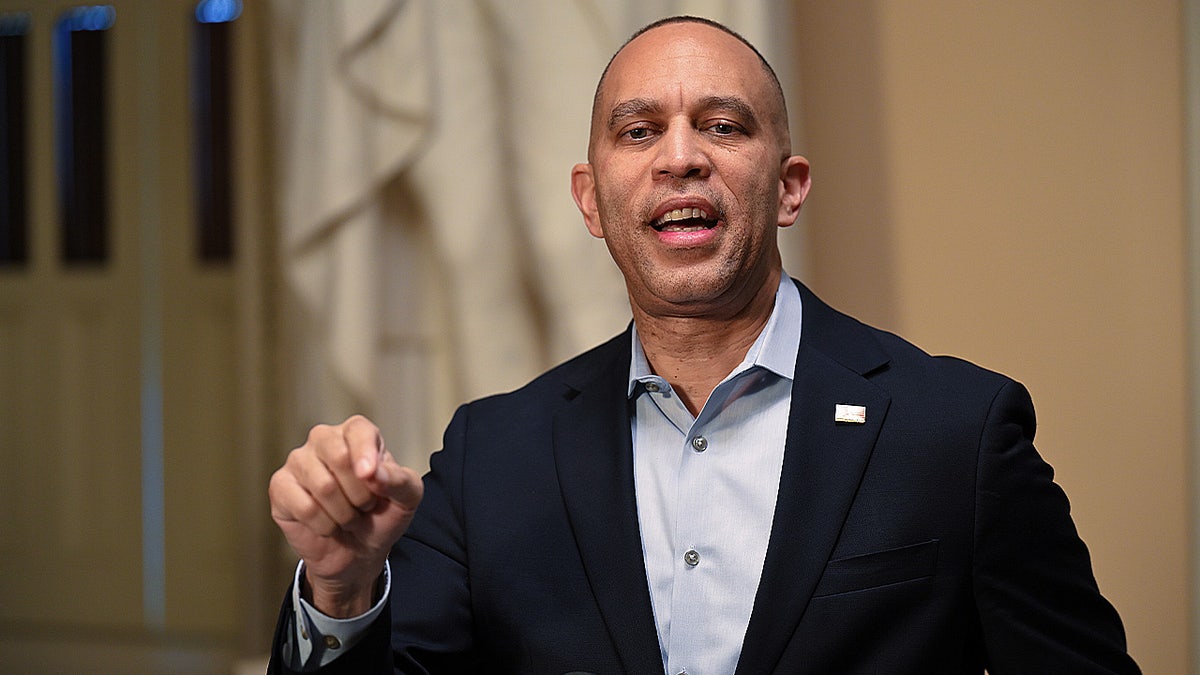
House Minority Leader Hakeem Jeffries speaks during a press conference on Capitol Hill in Washington Nov. 3, 2025. (Roberto Schmidt/Getty Images)
House Speaker Mike Johnson, R-La., sounded optimistic in comments to reporters Wednesday morning ahead of the vote.
«I wanted to come out and say that we believe the long national nightmare will be over tonight,» Johnson said. «It was completely and utterly foolish and pointless in the end.»
Meanwhile, the shutdown’s effects on the country have grown more severe by the day.
Many of the thousands of air traffic controllers and Transportation Security Administration (TSA) agents who had to work without pay were forced to take second jobs, causing nationwide flight delays and cancellations amid staffing shortages at the country’s busiest airports. Millions of Americans who rely on federal benefits were also left in limbo as funding for critical government programs ran close to drying out.
At the heart of the issue was Democratic leaders’ refusal to back any funding bill that did not also extend the enhanced Obamacare subsidies. Democrats argued it was their best hope of preventing healthcare price hikes for Americans across the U.S.
Republicans agreed to hold conversations on reforming what they saw as a broken healthcare system, but they refused to pair any partisan priority with federal funding.
In the end, a compromise led by the Senate — which saw eight Democrats in the upper chamber join colleagues to pass the bill in a 60 to 40 vote — included a side deal guaranteeing the left a vote on extending the enhanced subsidies sometime in December.
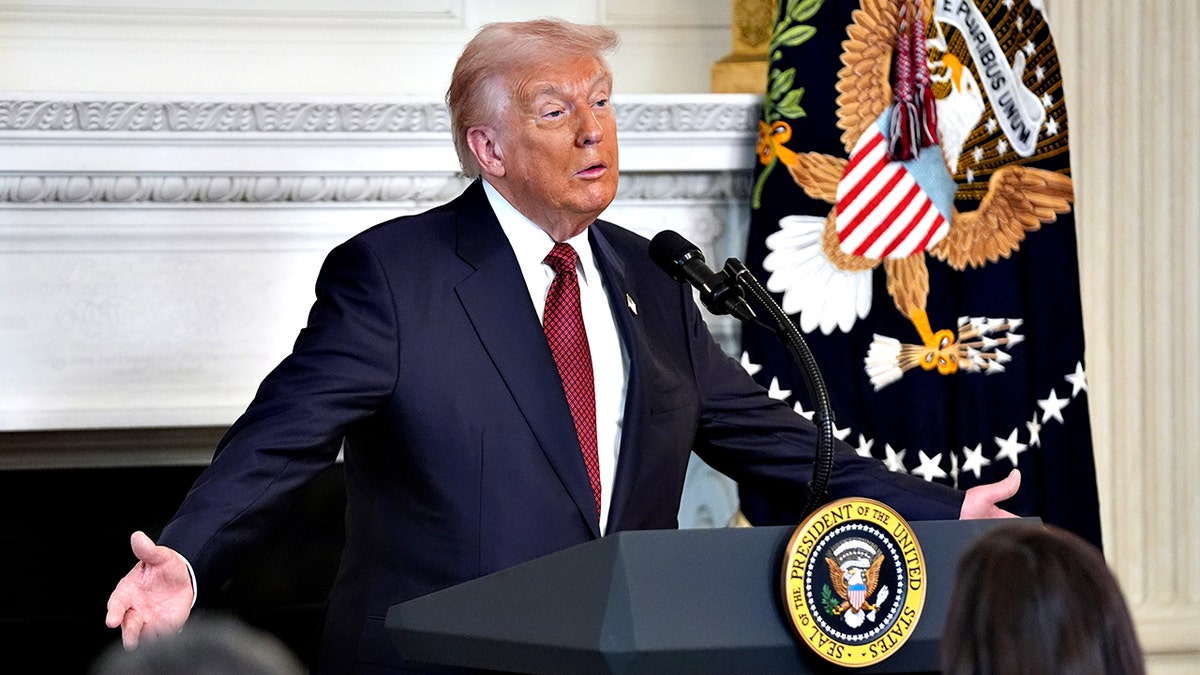
President Donald Trump speaks during a breakfast with Senate and House Republicans in the State Dining Room of the White House in Washington Nov. 5, 2025. (Evan Vucci/AP Newsroom)
Johnson has made no such promise in the House, however.
And the lack of a guarantee on extending those subsidies has angered progressives and Democratic leaders.
CLICK HERE TO DOWNLOAD THE FOX NEWS APP
«What were Republicans willing to give in the end, other more than a handshake deal to take a future vote on extending the healthcare subsidies?» Rep. Shomari Figures, D-Ala., said Wednesday. «We all know that a future vote is the equivalent of asking two wolves and a chicken to vote on what’s for dinner. It is dead on arrival.»
The full House will now vote on the legislation during the 7 p.m. hour.
The bill kicks the current federal funding fight to Jan. 30, by which point House GOP leaders said they were confident they’ll finish work on a longer-term deal for fiscal year 2026.
«There are nine remaining bills, and we’d like to get all of those done in the next few weeks. And, so, [House Appropriations Committee Chairman Tom Cole, R-Okla.] and his appropriators will be working overtime,» House Majority Leader Steve Scalise, R-La., told Fox News Digital.
Asked if he thought they’d get it done by that date, Cole said, «I think we can.»
house of representatives politics,politics,government shutdown











INTERNACIONAL
Caso Andrés: la policía peina cada rincón de su antigua mansión tras el operativo supersecreto para detenerlo

Una operación secreta
Un convoy discreto hasta Sandringham

Como un sospechoso ordinario
Huellas dactilares y foto

NEWYou can now listen to Fox News articles!
The Pentagon is deploying the USS Gerald R. Ford to the Middle East, creating a rare two-carrier presence in the region as tensions with Iran rise and questions swirl about possible U.S. military action.
The Ford will reinforce the USS Abraham Lincoln already operating in theater, significantly expanding American airpower at a moment of heightened regional uncertainty.
While officials have not announced imminent action, the dual-carrier presence increases the Pentagon’s flexibility — from deterrence patrols to sustained strike operations — should diplomacy falter.
The largest aircraft carrier in the world
The Gerald R. Ford is the largest and most advanced aircraft carrier ever built.
Commissioned in 2017, the nuclear-powered warship stretches more than 1,100 feet and displaces more than 100,000 tons of water. It serves as a floating air base that can operate in international waters without relying on host-nation approval — a key advantage in politically sensitive theaters.
Powered by two nuclear reactors, the ship has virtually unlimited range and endurance and is designed to serve for decades as the backbone of U.S. naval power projection.
The world’s largest aircraft carrier, USS Gerald R. Ford, steams alongside the replenishment oiler Laramie. (U.S. Naval Forces Central Command / U.S. 6th Fleet / Handout via Reuters)
WORLD’S LARGEST AIRCRAFT CARRIER HEADS TO MIDDLE EAST AS IRAN NUCLEAR TENSIONS SPIKE DRAMATICALLY
How much airpower does it carry?
A typical air wing aboard the Ford includes roughly 75 aircraft, though the exact mix depends on mission requirements.
Those aircraft can include F/A-18 Super Hornets, stealth F-35C Joint Strike Fighters, EA-18G Growler electronic warfare jets, E-2D Hawkeye early warning aircraft and MH-60 helicopters.
In a potential conflict with Iran, several of those platforms would be central.
The F-35C is designed to penetrate contested airspace and carry out precision strikes against heavily defended targets. The Growler specializes in jamming enemy radar and communications — a critical capability against Iran’s layered air defense systems.
The E-2D extends surveillance hundreds of miles, helping coordinate air and missile defense.
Together, they give commanders options ranging from deterrence patrols to sustained strike operations.
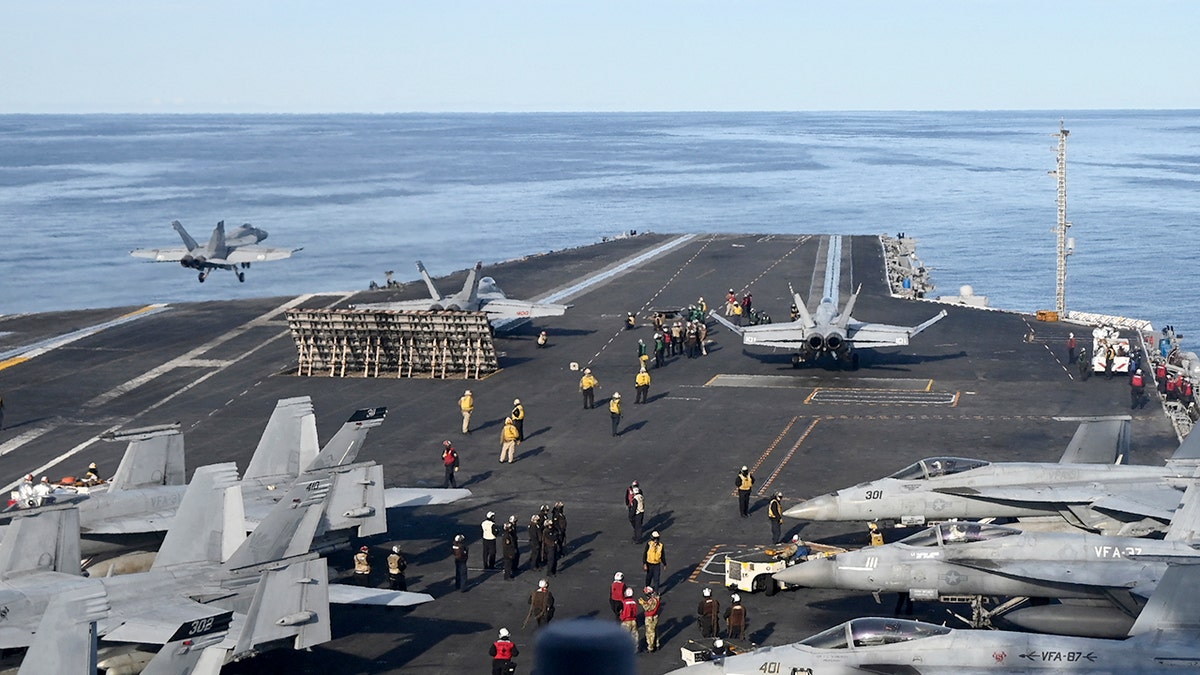
An F-18E fighter jet takes off from the aircraft carrier USS Gerald R. Ford as it sails during NATO Neptune Strike 2025 exercise on Sept. 24, 2025, in the North Sea. (Jonathan Klein/AFP via Getty Images)
Built for higher combat tempo
What separates the Ford from earlier carriers is its ability to generate more sorties over time.
Instead of traditional steam catapults, it uses an electromagnetic aircraft launch system, or EMALS, allowing aircraft to launch more smoothly and at a faster pace. The system is designed to reduce stress on jets and increase operational tempo.
The ship also features advanced arresting gear and a redesigned flight deck that allows more aircraft to be staged and cycled efficiently.
In a high-intensity scenario — particularly one involving missile launches or rapid escalation — the ability to launch and recover aircraft quickly can be decisive.
How it compares to the Lincoln
While both the Ford and the Abraham Lincoln are 100,000-ton, nuclear-powered supercarriers capable of carrying roughly 60 aircraft to 75 aircraft, they represent different generations of naval design.
The Lincoln is a Nimitz-class carrier commissioned in 1989 and part of a fleet that has supported decades of operations in the Middle East. The Ford is the Navy’s next-generation carrier and the lead ship of its class.
The key difference is efficiency and output.
The Ford was built to generate a higher sustained sortie rate using its electromagnetic launch system, along with a redesigned flight deck and upgraded power systems. In practical terms, both ships bring substantial strike capability — but the Ford is designed to launch and recover aircraft faster over extended operations, giving commanders greater flexibility if tensions escalate.
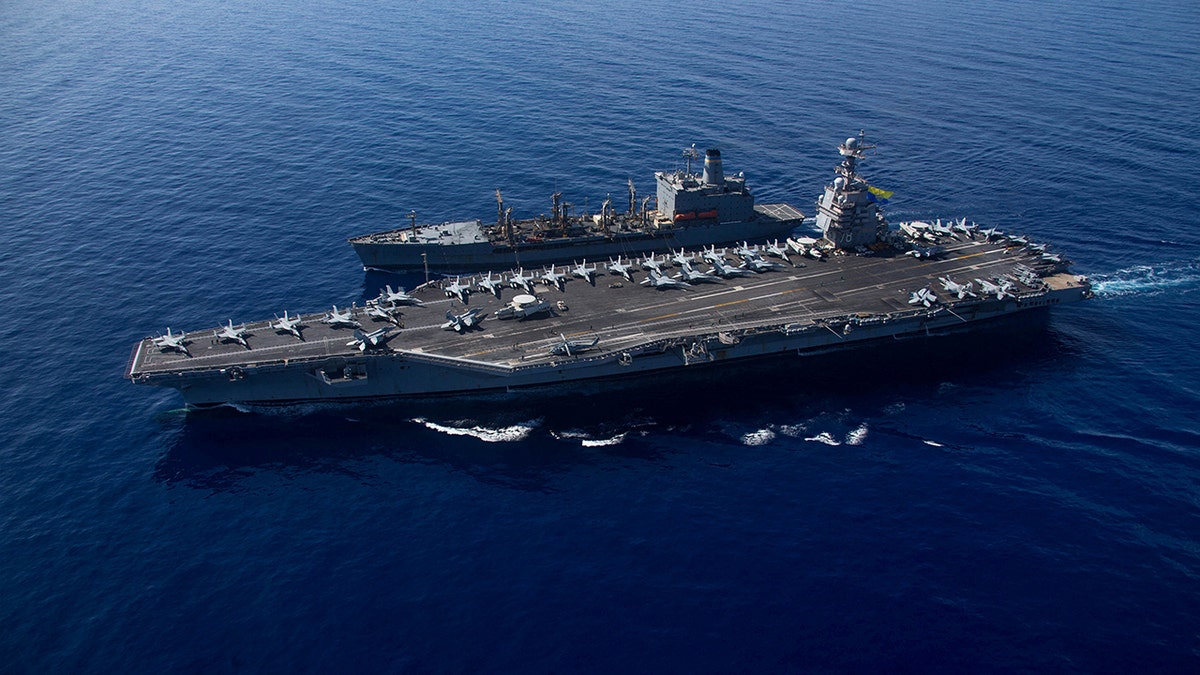
USS Gerald R. Ford pictured in the Mediterranean Sea. (U.S Naval Forces Central Command / U.S. 6th Fleet / Handout via Reuters)
IRAN SIGNALS NUCLEAR PROGRESS IN GENEVA AS TRUMP CALLS FOR FULL DISMANTLEMENT
How it defends itself
The Ford does not sail alone. It operates as the centerpiece of a carrier strike group that typically includes guided-missile destroyers, cruisers and attack submarines.
Those escort ships provide layered air and missile defense, anti-submarine protection and additional strike capability.
The carrier itself carries defensive systems including Evolved Sea Sparrow Missiles, Rolling Airframe Missiles and the Phalanx Close-In Weapon System — designed to intercept incoming threats at close range.
That defensive posture is especially relevant in the Middle East.
Iran has invested heavily in anti-ship ballistic missiles, cruise missiles, armed drones, naval mines and fast-attack craft operated by the Islamic Revolutionary Guard Corps. The Gulf region presents a dense and complex threat environment, even for advanced U.S. warships.

The world’s largest warship, U.S. aircraft carrier USS Gerald R. Ford, on its way out of the Oslofjord at Nesodden and Bygdoy, Norway, Sept. 17, 2025. (NTB/Lise Aserud via Reuters)
Why two carriers matter
With both the Ford and the Lincoln in theater, commanders gain more than just added firepower. Two carriers allow the U.S. to sustain a higher tempo of operations, distribute aircraft across multiple areas, or maintain continuous presence if one ship needs to reposition or resupply.
Dual-carrier deployments are relatively uncommon and typically coincide with periods of heightened regional tension.
CLICK HERE TO DOWNLOAD THE FOX NEWS APP
The timing — as negotiations with Tehran continue — underscores the strategic message. Carriers are often deployed not only to fight wars, but to prevent them.
By positioning both ships in the region, Washington is signaling that if diplomacy falters, military options will already be in place.
conflicts defense,us navy,iran,middle east,pentagon
INTERNACIONAL
Trump dijo que desclasificará la información secreta del Gobierno de EE.UU. sobre «los extraterrestres y ovnis»
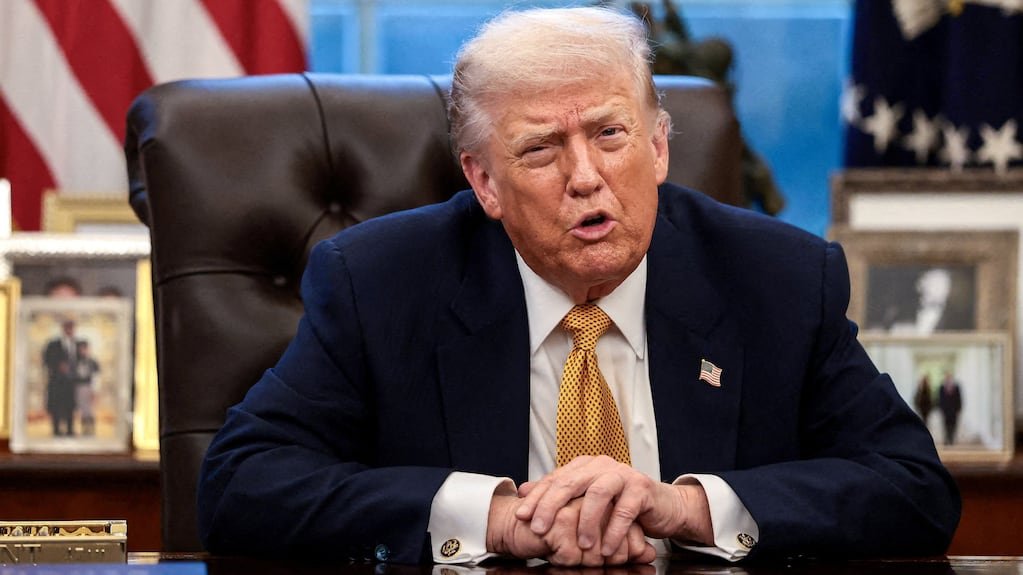
Donald Trump anunció que ordenará a las agencias federales de Estados Unidos publicar documentos clasificados sobre “vida extraterrestre” y “ovnis”.
El presidente eligió su red social, Truth, para lanzar la promesa y aseguró que el proceso incluirá archivos sobre fenómenos aéreos no identificados (UAP) y objetos voladores no identificados (UFOs), además de cualquier otra información relevante.
Leé también: Trump aseguró que Obama reveló información clasificada cuando habló de la existencia de extraterrestres
“En vista del gran interés mostrado, ordenaré al secretario de Defensa, Pete Hegseth, y a otros departamentos y agencias relevantes que inicien el proceso de identificación y publicación de archivos gubernamentales relacionados con vida extraterrestre, fenómenos aéreos no identificados y objetos voladores no identificados, así como cualquier otra información relacionada con estos asuntos altamente complejos, pero extremadamente interesantes e importantes”, escribió Trump en su mensaje.
Cruce con Obama y acusaciones de información clasificada
Horas antes, Trump apuntó contra Barack Obama y lo acusó de revelar información clasificada sobre alienígenas durante una entrevista en un popular podcast. “Son reales, pero no los he visto y no los tienen guardados en… el Área 51”, le dijo al presentador Brian Tyler Cohen al referirse a esa instalación secreta y que es centro de muchas teorías conspirativas sobre los ovnis.
El expresidente demócrata Barack Obama causó revuelo al decir en un podcast que los extraterrestres «son reales». (Foto: EFE/EPA/Micheal Reynolds)
“No hay una instalación subterránea. A menos que exista una conspiración enorme y se lo hayan ocultado al presidente de Estados Unidos”, agregó.
Las declaraciones de Obama generaron revuelo en redes sociales y alimentaron la expectativa de quienes creen en la existencia de vida fuera de la Tierra.
El exmandatario demócrata intentó bajar el tono y, en un comunicado, sostuvo: “El universo es tan vasto que hay muchas probabilidades de que contenga otras formas de vida. Pero las distancias entre los sistemas solares son tan grandes que la probabilidad de que hayamos sido visitados por extraterrestres es baja, y durante mi presidencia no vi ninguna evidencia de que extraterrestres hayan contactado con nosotros. ¡De verdad!”.
Al ser consultado por periodistas a bordo del Air Force One, Trump insistió en que Obama “proporcionó información clasificada; y se supone que no debe hacerlo”.
Sin embargo, evitó responder si eso significa que los alienígenas existen y deslizó que podría “sacar de apuros” a su antecesor desclasificando los archivos, aunque no dio detalles sobre cómo ni cuándo lo haría.
Una promesa en medio de sospechas y cortinas de humo
Como suele ocurrir con Trump, no está claro si cumplirá con su promesa ni de qué manera piensa hacerlo. Tampoco se sabe cuánto de “cortina de humo” hay en el anuncio, justo cuando otros temas sensibles, como el caso Epstein, dominan la agenda mediática en Estados Unidos.
Lo cierto es que el interés por los ovnis y la vida extraterrestre creció en los últimos años. Según una encuesta de YouGov de noviembre pasado, el 56% de los estadounidenses cree que “los alienígenas visitaron la Tierra”.
El Congreso y los testimonios sobre ovnis
El tema no es nuevo en la política estadounidense. El Congreso realizó varias audiencias sobre ovnis, y en el verano de 2023 escuchó a testigos clave como David Fravor (comandante retirado de la Marina), Ryan Graves (expiloto de la Armada) y David Grusch (exoficial de inteligencia de la Fuerza Aérea), quien afirmó que el Pentágono tiene partes de naves alienígenas y “restos no humanos”.
Leé también: Así cayó el príncipe Andrés: su vínculo con Epstein, títulos reales perdidos y un arresto histórico
El objetivo de esas audiencias fue presionar al Pentágono para que difunda información clasificada, bajo el argumento de que se trata de una cuestión de seguridad nacional.
Algunos legisladores, como Tim Burchett (Tennessee), insisten en que los UAP pueden ser naves extraterrestres, pero también globos espía, artefactos de potencias rivales como China y Rusia, chatarra aeroespacial, satélites de Elon Musk o simples ilusiones ópticas.
Una fascinación que viene de lejos
La obsesión de Estados Unidos por los ovnis se remonta a 1947, cuando el piloto Kenneth Arnold describió una cadena de objetos brillantes sobre el Monte Rainier, en Seattle, y popularizó el término “platillo volador”, según re4cordó el diario El País.
En 2017, un artículo de The New York Times reveló la existencia de un programa secreto del Pentágono que desde 2007 estudia los avistamientos militares de UAP. Tras esa publicación, el Departamento de Defensa decidió en 2020 divulgar videos de encuentros de pilotos militares con objetos voladores no identificados, que ya circulaban por internet.
Donald Trump, ovnis, extraterrestres, Barack Obama

Reforma Laboral: el Senado aceptó el cambio introducido por Diputados y la ley sería sancionada la semana próxima

La reacción de Milei tras la votación en Diputados: “Histórico, Argentina será grande nuevamente”

Carry en dólares +16%: por qué el dólar hoy es el ancla y dónde puede aparecer el riesgo

Wanda Nara le arruinó el cumpleaños: la furia de Mauro Icardi por una fuerte foto de Martín Migueles con una de sus hijas

Defensa y Justicia vs. Belgrano: formaciones, hora y dónde ver por tv

El error que pocos conocen al empezar a hacer ejercicio: “Es lo más importante”

Reforma laboral bomba: menos indemnización, más horas y despidos más fáciles — el cambio que puede sacudir el empleo en Argentina

Cristian Ritondo: “Vamos a apoyar la ley de modernización laboral, pero no el régimen de licencias por enfermedad”

El dólar no sólo cae en la Argentina: qué pasa con otras monedas emergentes y cuáles son las causas

Tras el anuncio de la CGT, también habrá paro total de los medios de transporte de pasajeros en el país

 POLITICA3 días ago
Reforma laboral bomba: menos indemnización, más horas y despidos más fáciles — el cambio que puede sacudir el empleo en Argentina
- ECONOMIA2 días ago
Ayuda Escolar Anual: a cuánto asciende, donde se tramita y quien puede cobrarla
- POLITICA3 días ago
El Gobierno endurece las medidas de seguridad y control en la marcha prevista contra la reforma laboral en el Congreso