INTERNACIONAL
House Republicans split with Trump team over ‘very frustrating’ funding fight as shutdown looms

NEWYou can now listen to Fox News articles!
House Republicans on the Appropriations Committee are at odds with the Trump administration and some conservatives over how long a stopgap spending bill should last, with just weeks left to avert a government shutdown.
Congress is currently marking up fiscal 2026 spending levels, but some in the administration are pressing to bypass the process and instead extend current levels through a year-long continuing resolution (CR).
Republicans broadly agree some form of CR will be needed to avoid a partial shutdown when fiscal 2025 ends on Sept. 30, but the length of that CR has become a point of friction, frustrating appropriators who argue their work is being undermined.
A Trump administration official told Fox News Digital that appropriators’ complaints were «nonsense,» arguing they are simply unhappy with the funding levels the administration had proposed.
FAR-LEFT FIREBRAND SAYS SHE ‘NEVER HAD A CONCERN’ ABOUT BIDEN’S MENTAL STATE AS HOUSE PROBE HEATS UP
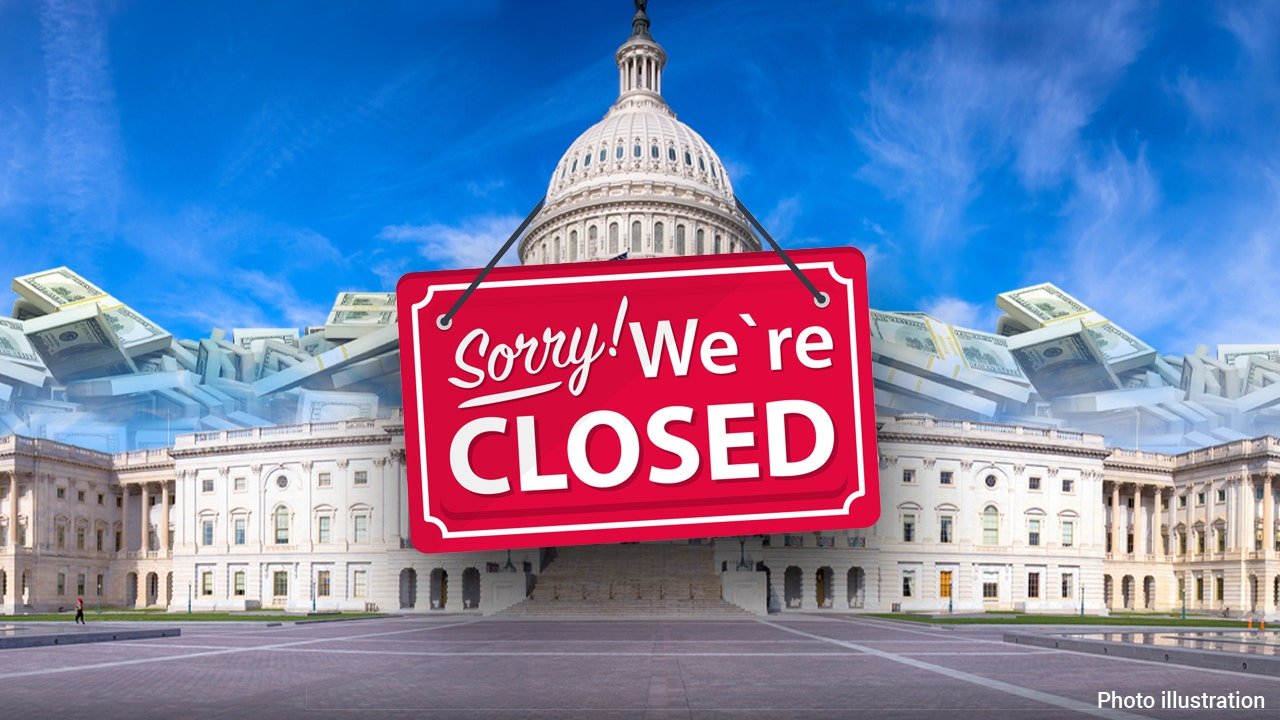
Republicans in Washington are divided over a government funding strategy as the Sept. 30 deadline to avert a shutdown looms large. (Fox News Digital photo illustration)
The White House is in favor of a clean CR stretching into the new year, while one House lawmaker said appropriators would like a stopgap that was «as short as possible.» Some conservative lawmakers have even argued for a bill lasting at least the full fiscal year.
Committee member Rep. Ryan Zinke, R-Mont., called the idea of a long-term measure «very frustrating.»
«As a member of Appropriations, where you do an enormous amount of work, and it leads to a continuing resolution because that’s easier…I’m deeply concerned that we will roll over and not do our job,» Zinke told Fox News Digital.
Senior appropriator Rep. Mario Diaz-Balart, R-Fla., predicted «a very short-term CR,» but he warned a year-long measure «would be devastating for the country.»
«The concept that Republicans control the House, Senate and the White House, and we would somehow be stuck with the last Biden [budget] for a second year, to me, is preposterous,» Diaz-Balart said, adding that the push for a year-long measure «is not coming from appropriators.»
Other committee Republicans echoed those concerns and issues with what they saw as a lack of direction from top officials on a top-line spending number.
The Trump administration official said accusations that House appropriators were not given enough direction from leaders are «completely false,» however, and said the White House was engaged in monthly and weekly conversations with lawmakers relevant to the process.
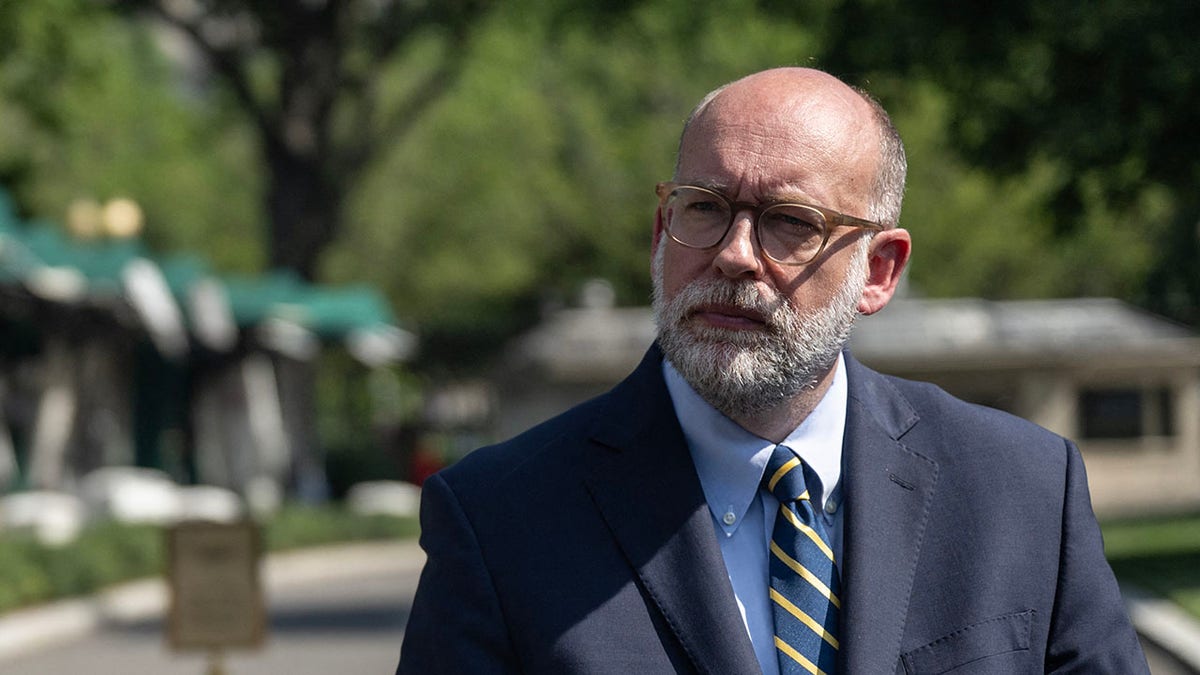
Russ Vought, director of the Office of Management and Budget (OMB), speaks to reporters outside the West Wing of the White House on July 17, 2025, in Washington, D.C. (ANDREW CABALLERO-REYNOLDS)
«The frustrating part is we don’t have a top line yet,» Rep. John Rutherford, R-Fla., said.
One GOP lawmaker, granted anonymity to speak candidly, said, «We’re sort of flying blind right now, trying to get something done and across the finish line without really having a direction on what leadership wants, or frankly, what the president wants.»
Another House Republican pointed to Russ Vought, director of the Office of Management and Budget (OMB), accusing him of delaying the administration’s proposed budget until early May to build support for a year-long CR.
«That’s what Russ Vought wants. He wants a year-long CR,» that lawmaker said. «There’s enough appropriators who won’t allow that. That will fail.»
It’s not uncommon for administrations to unveil their budget proposals after the traditional early February deadline, however. The Biden administration similarly let its budgets slip past the Feb. 15 deadline, including fiscal 2022, when its proposal was not released until late May.
In 2018, during the Obama administration, no White House budget was proposed at all.
House Freedom Caucus Chair Andy Harris, R-Md., told Fox News Digital he supports going even further with a CR that stretches into December 2026.
«Why put us through the misery next September?» Harris said. «The American people shouldn’t be subjected to the question of whether or not Chuck Schumer wants to shut down the government for the election.»
GOP LAWMAKERS CLASH OVER STRATEGY TO AVERT GOVERNMENT SHUTDOWN CRISIS
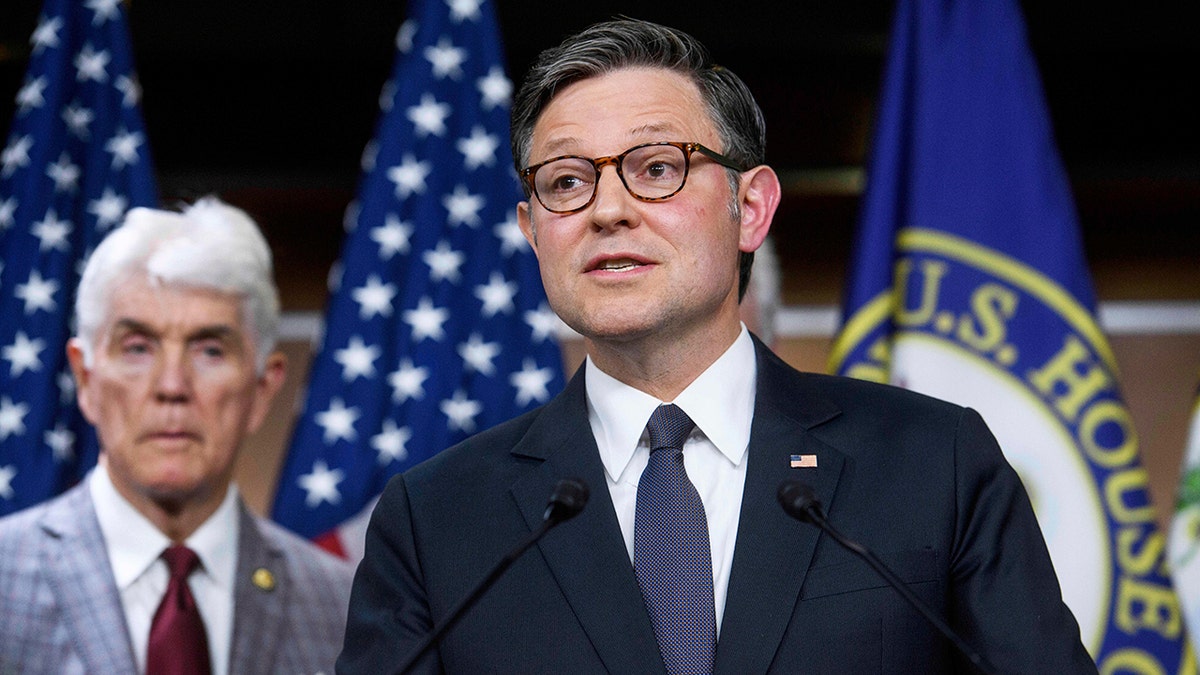
House Speaker Mike Johnson, R-La., speaks during a news conference at the Capitol on May 6, 2025, in Washington. (AP Photo/Rod Lamkey, Jr., File)
House Appropriations Committee Chair Tom Cole, R-Okla., for his part, said he would like to see a CR into November. And while he said there were «a lot of people» who could share blame for the current situation, he was hesitant to single any one party out.
«The top-line number, that wasn’t done this year, the president’s budget was late in arriving, and I think Democrats are still flustered by President Trump and aren’t sure whether they should deal with him or fight him at every step,» he said.
Cole also said of the White House’s proposal, «There’s some discussion about going as far as the first quarter. That’s not coming from the appropriators, but it is coming out of the White House. I’m willing to work within any time frame my leadership gives me. I don’t want a government shutdown. I want a bipartisan deal.»
In March, with the White House’s support, Congress passed a CR through Sept. 30 that extended fiscal 2024 spending levels, with some increases for defense funding.
The White House has since acted to rescind some of those funds, chiefly aimed at foreign aid and public broadcasting.
It’s soured bipartisan government spending talks with Democrats, who have warned they will not agree to any spending deal without assurances that more funding rescissions would not happen.
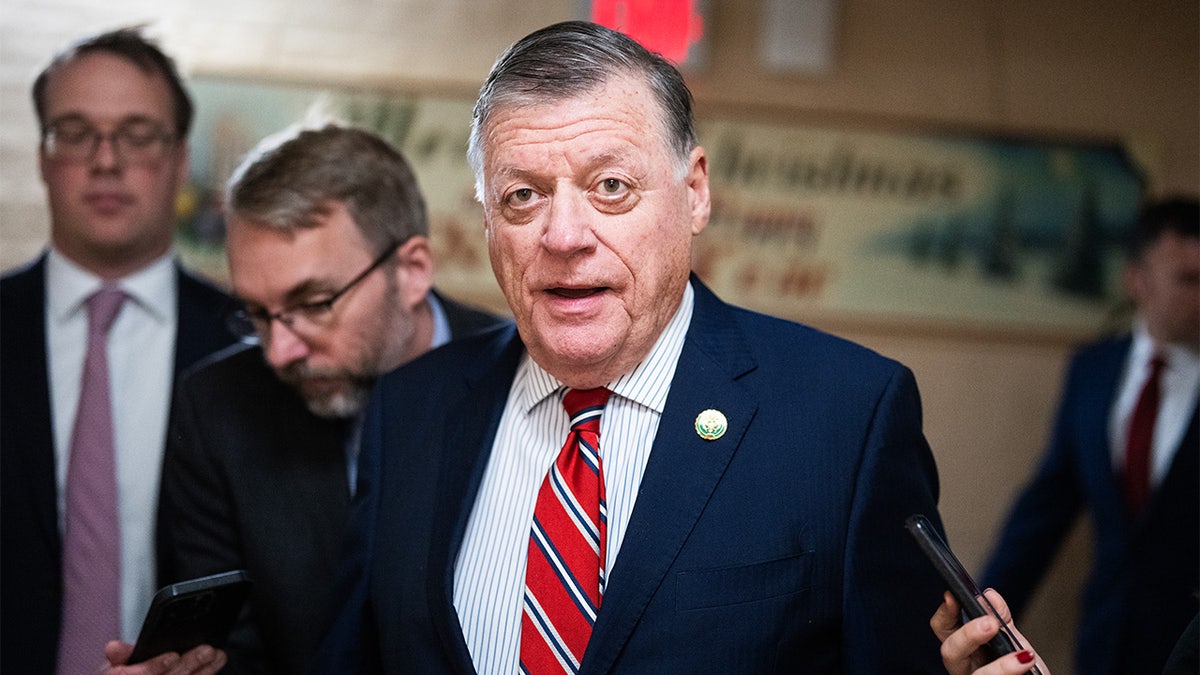
House Appropriations Committee Chair Tom Cole said he would want to see a CR into November. (Getty Images)
A White House official told reporters on a recent call, however, that they believed a clean CR for «however length» would put Democrats in a politically tricky situation and pin the blame for a shutdown on them if they reject the measure.
Speaker Mike Johnson, R-La., has privately signaled support for a short-term clean CR, two sources told Fox News Digital. Democrats have indicated openness to that approach.
CLICK HERE TO GET THE FOX NEWS APP
When reached for comment, a spokesperson for Johnson pointed Fox News Digital to recent comments in Punchbowl News that he understood both sides of the argument. «There are reasonable people on both sides who understand this is a basic function and responsibility of the government, so we’re working towards that,» he said.
House Minority Leader Hakeem Jeffries, D-N.Y., said Tuesday he had an «opening conversation» with Johnson on funding.
With just 11 joint House and Senate working days left before the Sept. 30 deadline, lawmakers are racing to avoid another shutdown showdown.
politics,government shutdown,house of representatives politics











INTERNACIONAL
HHS wipes out 36,000 pages of ‘regulatory dark matter’ in sweeping child welfare office purge
NEWYou can now listen to Fox News articles!
EXCLUSIVE: The Administration for Children and Families (ACF), an agency within the Department of Health and Human Services (HHS) overseeing the well-being of children, eliminated thousands of pages of regulatory guidance that had been languishing on the books as far back as 1976, Fox News Digital learned.
The Administration for Children and Families is a Health and Human Services agency charged with promoting the economic and social well-being of kids and their families via overseeing programs such as the Head Start school readiness program, child support enforcement, foster care and adoption services, and managing unaccompanied minors.
The office rescinded 35,781 pages of guidance documents after an agencywide review found 74% of its «sub-regulatory footprint» was obsolete. The documents included technical bulletins, program instructions, action transmittals and dear colleague letters — letters from federal agencies or members of Congress that typically inform colleagues on new guidance or legislation — that had accumulated across the past 50 years.
The Administration for Children and Families emphasized that the rescinded documents were not erased, but instead archived online along with a detailed list of current guidance documented on the Department of Health and Human Services’ website.
DOGE ERA OVERHAUL: GSA TOUTS $60B IN SAVINGS AS TRUMP SHRINKS GOV’T FOOTPRINT: ‘RESULTS SPEAK FOR THEMSELVES’
The Department of Health and Human Services’ Administration for Children and Families rescinded 35,781 pages of guidance documents after an agencywide review found 74% of its «sub-regulatory footprint» was obsolete. ( Andrew Harnik/Getty Images)
The Administration for Children and Families officially was established in 1991, but its origins and work stretch back decades, inheriting programs and guidance from earlier Health and Human Services offices — including major initiatives that date to the mid-1970s.
«President Trump’s regulatory reform agenda is unparalleled in U.S. history,» the Administration for Children and Families Assistant Secretary Alex J. Adams said in a statement to Fox News Digital.
«ACF is proud to do our part to advance the President’s agenda by taking the first of many planned actions, namely removing 36,000 pages of obsolete sub-regulatory guidance that had quietly accumulated over decades and shining a brighter spotlight on what remains,» he added. «In essence, ACF has brought our regulatory dark matter to light.»
SMALL BUSINESS ADMINISTRATION UNVEILS NEW INITIATIVE TO ROLL BACK FEDERAL REGULATIONS
The rescinded guidance included program-specific documents such as a memo on filing the June 1999 Child and Family Services Plan and Final Report, 2005 avian flu guidance and a 2010 staffing-change notice for the now-defunct Division of Energy Assistance.

The US Department of Health and Human Services building is shown in Washington, D.C. (Saul Loeb/AFP)
The Administration for Children and Families directed its Office of Legislation and Budget to compile a comprehensive list of guidance documents considered active — a process that took three weeks just to catalog the files, the agency said. The inventory produced more than 4,000 documents totaling about 55,776 pages, dating back to 1976.
TRUMP ADMINISTRATION BANS ILLEGAL IMMIGRANTS FROM TAXPAYER-FUNDED SERVICES, INCLUDING HEAD START
Each program office was required to justify whether the individual documents were still needed, and ordered to provide written rationale if guidance was deemed obsolete or necessary. Obsolete documents were considered ones that related to old funding cycles, guidance superseded by newer rules, duplicate statutes or documents related to programs that no longer list, Fox News Digital learned.
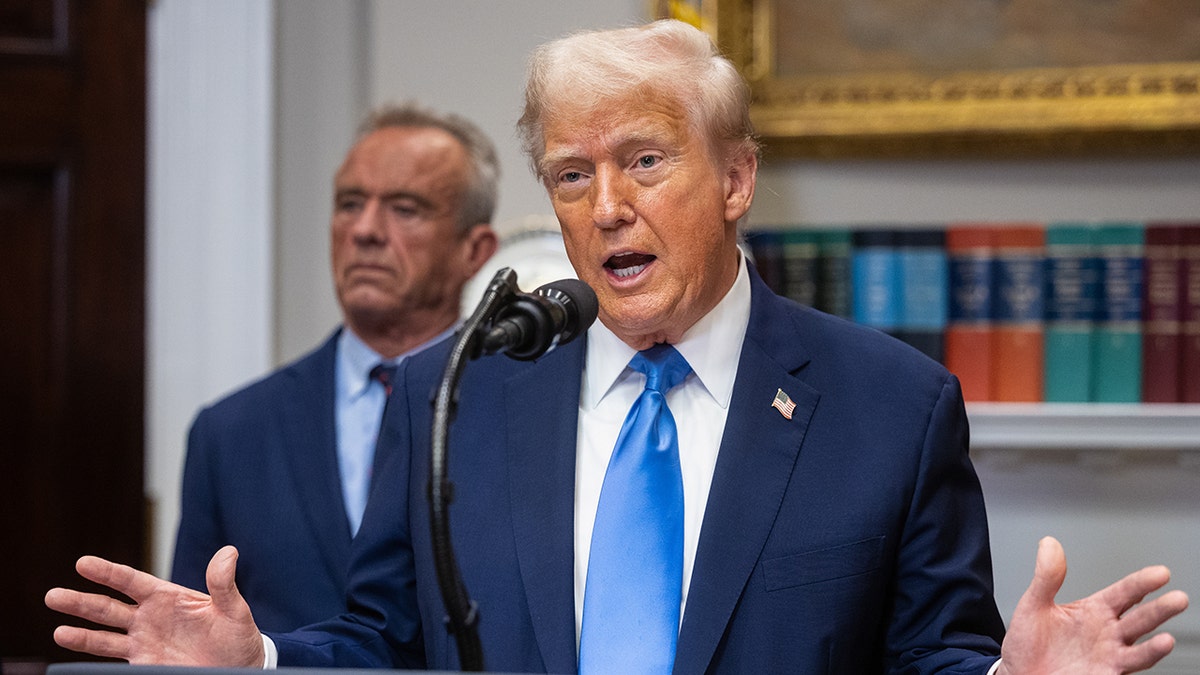
US President Donald Trump, right, and Robert F. Kennedy Jr., US secretary of Health and Human Services (HHS), in the Roosevelt Room of the White House in Washington, DC, US, on Monday, Sept. 22, 2025. (Francis Chung/Politico/Bloomberg via Getty Images)
The Administration for Children and Families said the goal of cleaning up the office with outdated guidance is to reduce confusion and allow grant recipients to focus resources on «delivering outcomes for American children and families,» rather than navigating tens of thousands of pages of outdated documentation.
The move aligns with the Trump administration’s broader push to pare back regulations and cut what it calls bureaucratic red tape.
CLICK HERE TO GET THE FOX NEWS APP
The Federal Communications Commission, for example, took a hatchet to outdated policies in a sweeping deregulation effort in 2025, including doing away with outdated guidance on the use of telegraphs, rabbit-ear TV receivers and phone booth rules in July 2025.
health,kids,childrens health,robert f kennedy jr,politics,donald trump

La reducción del déficit fiscal en Panamá durante 2025 fue presentada por el gobierno como una señal de corrección de las finanzas públicas y de recuperación tras años de presiones presupuestarias.
Las cifras oficiales muestran que el balance fiscal mejoró de forma significativa, apoyado en mayor recaudación, control del gasto y operaciones de manejo de deuda que permitieron reducir pagos de intereses. .
Sin embargo, el panorama fiscal todavía enfrenta desafíos estructurales, especialmente por el ritmo de crecimiento de la deuda y la necesidad de consolidar el ajuste sin afectar inversión y servicios públicos.
En ese contexto, el análisis más reciente de Fitch Ratings introduce un matiz relevante: la calificadora reconoce la caída del déficit, pero advierte que la mejora no es suficiente para frenar el aumento del endeudamiento ni garantizar la estabilización de la relación deuda/PIB.

Fitch sostiene que el ajuste fiscal de 2025 se apoyó en factores puntuales y en decisiones con margen limitado de repetición, lo que mantiene abiertas interrogantes sobre la sostenibilidad de las finanzas públicas.
Según el informe, el déficit del Sector Público No Financiero (SPNF) se redujo a 3.7% del PIB en 2025, desde 6.2% en 2024, e incluso por debajo de la meta gubernamental de 4.0%.
El resultado confirma un ajuste significativo, pero Fitch subraya que parte de la mejora responde a elementos transitorios, como el menor pago de compromisos acumulados del año previo y el repunte de ingresos del Canal de Panamá tras la sequía.
En términos prácticos, el informe explica que en 2024 el Estado tuvo que enfrentar una mayor carga de pagos pendientes acumulados, lo que elevó el déficit de ese año.
En 2025, al reducirse esa presión, el resultado fiscal mejoró automáticamente, sin que ello implique necesariamente una transformación estructural del gasto público. Fitch considera que esta dinámica ayuda a entender por qué el déficit bajó, pero no elimina la necesidad de ajustes permanentes.

Otro factor relevante fue el impacto contable de la reforma previsional de la Caja de Seguro Social (CSS), que reclasificó como ingresos de la institución recursos que antes se registraban en cuentas individuales.
Esta modificación contribuyó a mejorar la medición del déficit, aunque Fitch advierte que el efecto es principalmente contable y no sustituye una consolidación fiscal estructural.
El informe también destaca el comportamiento de los ingresos Fitch reconoce un repunte de 9% en la recaudación tributaria, apoyado en mayor fiscalización y actividad económica, pero señala que el resultado convivió con una caída en las contribuciones de planilla a la CSS, pese a mayores aportes del lado empleador tras la reforma previsional.
Para la calificadora, este comportamiento refleja debilidad del mercado laboral y niveles elevados de informalidad, factores que limitan la sostenibilidad del ajuste fiscal.
La principal advertencia del análisis se centra en la deuda. . A pesar de la reducción del déficit, la deuda pública bruta aumentó en $5,500 millones y alcanzó $59,400 millones, situándose en 66% del PIB, por encima de la proyección oficial.
En otras palabras, Fitch concluye que el ajuste fiscal no se tradujo en una desaceleración del endeudamiento, lo que mantiene el riesgo sobre la trayectoria fiscal de mediano plazo.

Parte de la explicación está en el Gobierno Central, cuyo déficit alcanzó 5.2% del PIB, muy por encima del 3% previsto en el presupuesto. Fitch agrega que el endeudamiento neto fue aún mayor, situándose en 6% del PIB, con un financiamiento neto de 6.6% del PIB, lo que evidencia presiones de liquidez que no se reflejan plenamente en el resultado fiscal del SPNF.
El ministro de Economía y Finanzas, Felipe Chapman, ha señalado que el déficit del Sector Público No Financiero se ubicó en 3.68% del Producto Interno Bruto, una disminución cercana al 40% respecto al año anterior, equivalente a más de 2,069 millones de dólares.
El titular de Economía explicó que este resultado se alcanzó gracias a una combinación de disciplina fiscal, reducción del gasto, mejor recaudación y fortalecimiento institucional. Chapman señaló que esta mejora se tradujo en una disminución directa de las tasas de interés que paga el Estado y, de forma progresiva, en mejores condiciones crediticias4 para empresas y ciudadanos.
Como resultado, el país generó ahorros acumulados cercanos a 475 millones de dólares en el servicio de la deuda, recursos que ahora pueden destinarse a áreas prioritarias.
De acuerdo con el ministro, estos ahorros permiten cubrir una parte significativa del subsidio a las pensiones de la Caja de Seguro Social, uno de los compromisos centrales del actual Gobierno. Explicó que el objetivo ha sido garantizar el pago a los jubilados actuales y fortalecer el sistema para las futuras generaciones sin recurrir a endeudamiento excesivo ni a medidas traumáticas.

La calificadora también introduce preocupaciones sobre la transparencia fiscal y la calidad del proceso presupuestario. . Fitch señala que las necesidades adicionales de financiamiento respondieron a pagos de obligaciones no contempladas inicialmente, y advierte que este tipo de eventos podría repetirse, generando incertidumbre en los mercados sobre la previsibilidad de las cuentas públicas.
Uno de los pilares del ajuste fiscal de 2025 fue la reducción de la inversión pública, que cayó a 4% del PIB, su nivel más bajo en dos décadas. Fitch advierte que el margen para profundizar este recorte es limitado, dado el descontento ciudadano por la calidad de servicios de educación, salud y agua.
Además, una parte del ajuste se explica por el aplazamiento de pagos del proyecto llave en mano del Metro de Panamá, lo que reduce el gasto en 2025-2026 pero incrementará desembolsos entre 2027 y 2030.
En paralelo, el gobierno ha intentado mejorar su perfil financiero con operaciones de manejo de pasivos y nuevas emisiones. Una reciente transacción permitió reducir el saldo de deuda en $204 millones y generar ahorros anuales en intereses cercanos a $30 millones, con una demanda internacional superior a $13,000 millones.
La operación incluyó emisiones con vencimientos en 2034 y 2038, con tasas de 5.2% y 5.6%, respectivamente, lo que el Ejecutivo considera una señal de confianza de los mercados.
Fitch, sin embargo, insiste en que la estabilización de la deuda requerirá mayor consolidación fiscal estructural, combinando medidas de ingresos, control del gasto y mejoras en transparencia.

La calificadora observa que el gobierno no contempla una reforma tributaria y apuesta por medidas administrativas para elevar la recaudación, mientras evalúa cambios en aumentos salariales automáticos y en la regla que fija el presupuesto educativo en 7% del PIB.
El informe identifica además la posible reapertura de la mina Cobre Panamá como una fuente potencial de ingresos adicionales. . Aunque las perspectivas han mejorado, el proceso sigue sujeto a auditorías ambientales, negociaciones con la empresa First Quantum y posibles tensiones sociales, lo que introduce incertidumbre sobre su impacto fiscal.
En síntesis, Fitch plantea un diagnóstico de doble lectura: Panamá logró una mejora fiscal relevante en 2025, pero el desafío clave permanece en la trayectoria de la deuda y en la necesidad de consolidar el ajuste con medidas permanentes.
El escenario para 2026 se perfila como un equilibrio entre disciplina fiscal, crecimiento económico y presiones sociales, en un contexto donde la credibilidad del manejo presupuestario será determinante para la percepción de riesgo soberano.
americas,buildings,business news,central american,cityscape,containers,copper,economy,industries,latam,latin, latam,marine transport,markets,mines,mining,natural resources,panama,panamanian,port of balboa,sea ports and terminals,skyline,skyscrapers,transportation and logistics,urban scene

El despliegue militar estadounidense

Arrancan las lluvia y vuelven las nubes: así estará el pronóstico del clima este fin de semana en el AMBA

Hay alerta amarilla por tormentas en 8 provincias para hoy, jueves 19 de febrero

El Senado aprobó dictamen para la designación de Fernando Iglesias como embajador ante Bélgica y la Unión Europea

Crece el rechazo a Milei entre los trabajadores sindicalizados, según una encuesta

Banco de top de Brasil apuesta por el Merval: las 5 acciones que pone al frente de su cartera

Donnarumma se sincera sobre su relación con Messi en su etapa en el PSG: ‘Lo que me sorprendió fue la increíble persona que es. Es el mejor de todos’

Reforma laboral bomba: menos indemnización, más horas y despidos más fáciles — el cambio que puede sacudir el empleo en Argentina

Cristian Ritondo: “Vamos a apoyar la ley de modernización laboral, pero no el régimen de licencias por enfermedad”

El dólar no sólo cae en la Argentina: qué pasa con otras monedas emergentes y cuáles son las causas

Uno de los jefes de la CGT adelantó que convocarán a un paro general por la reforma laboral: “Trabajaremos para que sea una gran huelga”

 POLITICA2 días ago
Reforma laboral bomba: menos indemnización, más horas y despidos más fáciles — el cambio que puede sacudir el empleo en Argentina
- POLITICA3 días ago
Cristian Ritondo: “Vamos a apoyar la ley de modernización laboral, pero no el régimen de licencias por enfermedad”
- ECONOMIA3 días ago
El dólar no sólo cae en la Argentina: qué pasa con otras monedas emergentes y cuáles son las causas