INTERNACIONAL
Irán amenazó con un ataque “letal” a bases militares de EE.UU. en medio de la nueva escalada de tensión

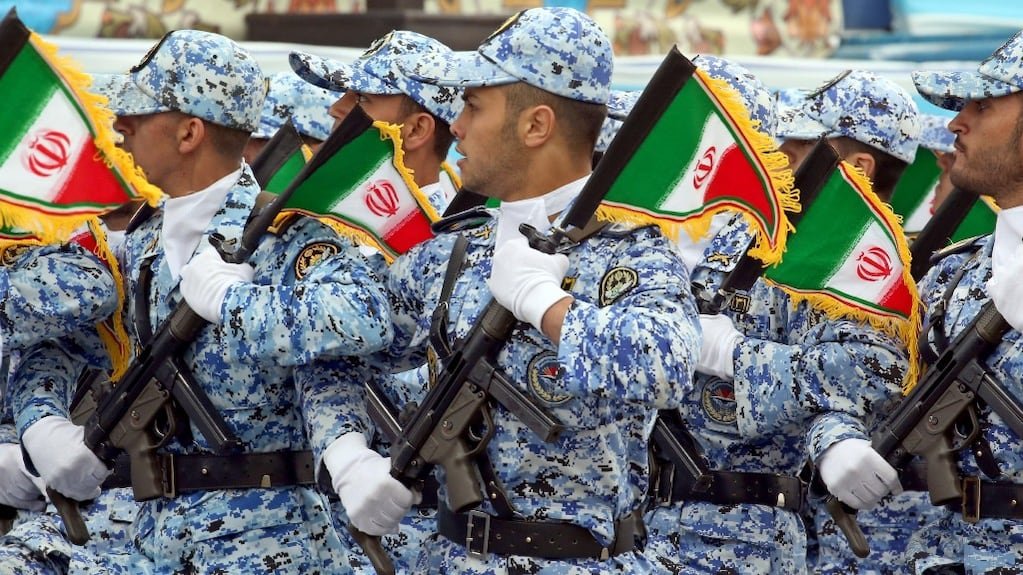
Irán advirtió que responderá con un ataque “letal y disuasorio” contra las bases militares de Estados Unidos en Medio Oriente en caso de ser atacado, en medio de una escalada de tensión marcada por amenazas cruzadas, movimientos militares estadounidenses y nuevas sanciones de Washington contra Teherán.
La advertencia fue formulada este viernes por el general de la Guardia Revolucionaria Islámica (IRGC) Esmail Kowsari, actual legislador e integrante de la comisión de seguridad nacional y política exterior del Parlamento iraní.
“En caso de que Estados Unidos cometa algún error, sus bases en Asia Occidental serán blanco de ataques”, afirmó Kowsari, al tiempo que subrayó que esas instalaciones figuran entre los principales objetivos militares de Irán.
Leé también: Donald Trump anunció que una “enorme” flota militar de Estados Unidos navega hacia Irán
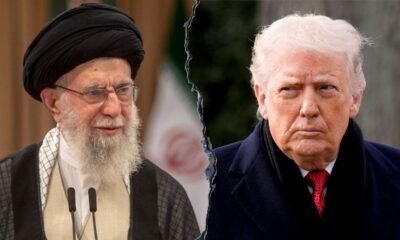
Según el dirigente iraní, la respuesta de Teherán sería “letal y disuasoria”, en línea con las advertencias realizadas en los últimos días por otros altos mandos de la Guardia Revolucionaria. En declaraciones difundidas por la televisión estatal, jefes militares actuales y retirados del IRGC coincidieron en que el presidente estadounidense Donald Trump “solo habla” y ha “elegido el camino equivocado” frente a la República Islámica.
Un video transmitido por la emisora estatal mostró al jefe aeroespacial del IRGC, Majid Mousavi; al comandante naval Alireza Tangsiri; y al presidente del Parlamento, Mohammad-Bagher Ghalibaf —excomandante de la Guardia Revolucionaria—, quienes reforzaron el mensaje de advertencia hacia Washington.
Leé también: El nuevo “plan maestro” de Trump para reconstruir Gaza: avenidas arboladas y 180 rascacielos frente al mar
Estas declaraciones se producen en un contexto de creciente presión de Estados Unidos sobre Irán.
El presidente de Estados Unidos, Donald Trump (Foto: Jonathan Ernst/REUTERS)
El presidente Donald Trump aseguró el jueves que una “flota enorme” de la Armada estadounidense se dirige a aguas cercanas a Irán, en referencia a movimientos reportados por expertos militares, entre ellos el despliegue del portaaviones de propulsión nuclear USS Abraham Lincoln y su grupo de ataque desde el mar de China Meridional hacia el océano Índico y Oriente Medio.
“Preferiría que no pasara nada, pero los estamos vigilando muy de cerca”, afirmó Trump a bordo del Air Force One, mientras reiteraba que Washington mantiene la opción militar sobre la mesa, aunque sin cerrar la puerta al diálogo. “Irán quiere hablar, y hablaremos”, sostuvo el mandatario durante su participación en el Foro Económico Mundial de Davos.
En paralelo, Estados Unidos anunció este viernes nuevas sanciones contra lo que denominó la “flota fantasma” iraní, apuntando a nueve buques y a empresas con sede en Emiratos Árabes Unidos, India y Omán, acusadas de facilitar exportaciones petroleras por cientos de millones de dólares. Según el Departamento del Tesoro, esos ingresos son utilizados para financiar programas armamentísticos, grupos armados regionales y la represión interna.
La escalada coincide con una grave crisis interna en Irán, donde organizaciones de derechos humanos denunciaron más de 5000 muertes durante la represión de protestas iniciadas a fines de diciembre por el aumento del costo de vida y derivadas en un amplio movimiento contra el régimen teocrático. Las autoridades iraníes, en cambio, reconocieron 3.117 fallecidos. El prolongado apagón de internet, que ya supera las dos semanas, dificulta la verificación independiente de las cifras.
Vuelos cancelados en Medio Oriente
Por otra parte, esta nueva escalada de tensiones de Irán y Estados Unidos ya impactó en el tráfico aéreo internacional. Varias aerolíneas europeas, entre ellas Lufthansa, Air France, KLM y Swiss, cancelaron vuelos previstos para el viernes por la noche y el sábado hacia distintos destinos de Medio Oriente, incluidos Israel, Emiratos Árabes Unidos y Arabia Saudita, ante el temor de un conflicto de mayor alcance que involucre a Teherán, según información publicada en sitios web aeroportuarios.

Aviones de Lufthansa estacionados en el aeropuerto de Frankfurt, Alemania (Foto: Kai Pfaffenbach/REUTERS/Archivo)
KLM informó que suspendió sus operaciones hacia Israel, Arabia Saudita y Emiratos Árabes Unidos “hasta nuevo aviso” debido a la “situación geopolítica”, convirtiéndose en una de las primeras grandes aerolíneas europeas en interrumpir simultáneamente vuelos a varios destinos de la región.
Air France, por su parte, canceló sus servicios hacia Tel Aviv y Dubai por el deterioro de las condiciones de seguridad y señaló que aún no definió una fecha de reanudación, mientras que British Airways anunció la suspensión de sus vuelos nocturnos a Dubai y aseguró que sigue de cerca la evolución del escenario para evaluar posibles cambios adicionales en sus rutas.
(Con información de AFP y EFE)
Estados Unidos, Irán










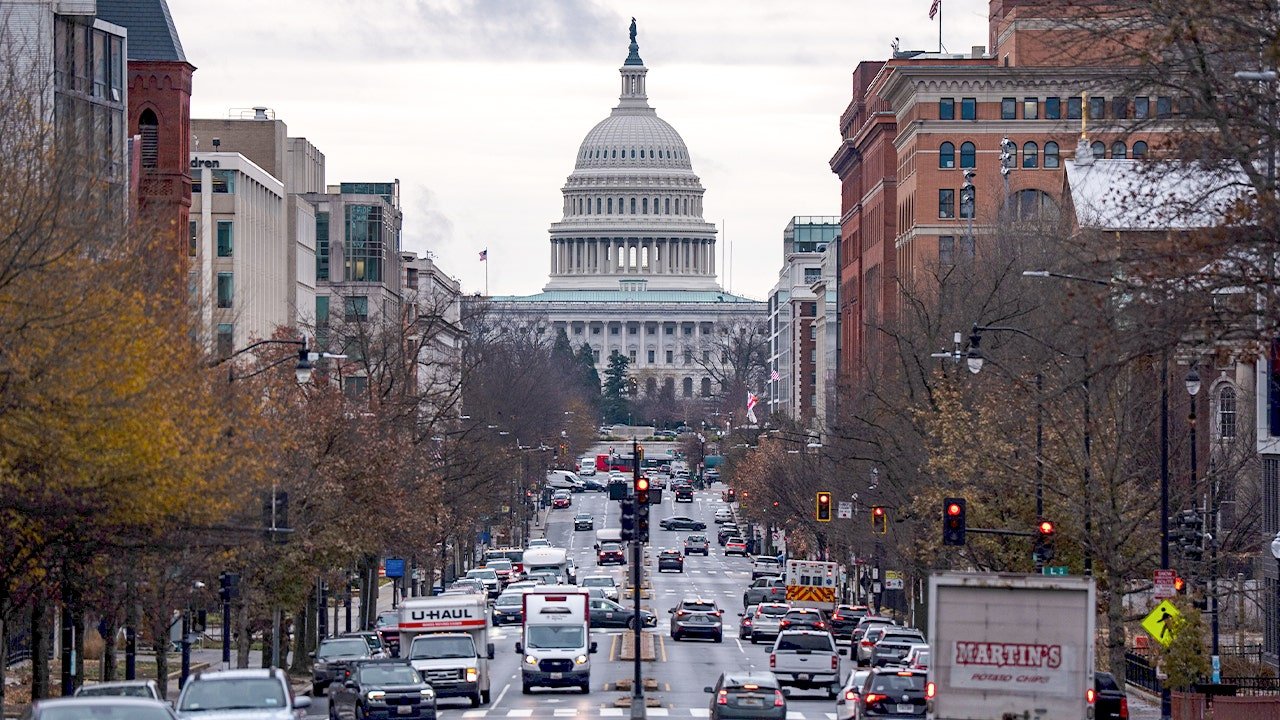
NEWYou can now listen to Fox News articles!
Funding for the Department of Homeland Security was already a question for some Democrats before the killing of Alex Pretti.
But Saturday’s killing by federal agents gave Democrats who were on the fence about supporting the upcoming government funding plan a reason to solidify their opposition. And the killing only hardened those who were opposed to funding DHS before.
From a political standpoint, Democrats are compelled to fight this. Otherwise, their base will balk. Senate Minority Leader Chuck Schumer, D-N.Y., endured brickbats from the liberal base last March when he and a group of other Democratic senators helped Republicans clear a filibuster to avoid a shutdown.
Progressives raged at Schumer. And the Senate’s top Democrat suddenly found himself crossways with House Democratic leaders who expected him to mount more of a fight over government funding.
CONGRESS UNVEILS $1.2T SPENDING BILL AS PROGRESSIVE REVOLT BREWS OVER ICE FUNDING
Lawmakers are teetering on the edge of a partial government shutdown with Homeland Security funding at the forefront of a heated debate. (Kent Nishimura/Bloomberg via Getty Images)
The liberal base certainly got that this fall as Democrats withheld their votes to fund the government and fought over expiring Obamacare subsidies. The government shuttered for 43 days. But Democrats never earned a restoration of Obamacare subsidies. The Senate took a vote related to restoring the subsidies. Nothing happened. The House actually passed a bill re-upping the subsidies for three years. But the issue remains at an impasse.
Despite the fall brawl, Democratic congressional leaders faced a narrow path to walk for this funding round. They still felt pressure from the left to oppose money for DHS, long before the killing of Renee Good and Pretti. But Schumer and House Minority Leader Hakeem Jeffries, D-N.Y., did not go to the mat to oppose funding this time. They wanted to finesse this, believing that a shutdown was bad politics for them after the fall experience. After all, Democrats never scored precisely what they wanted. By the same token, Schumer and Jeffries didn’t wade deeply into the funding fight, perhaps afraid of breaking a fragile truce on spending bills.
That all changed Saturday. Democrat after Democrat published statements that they wouldn’t vote to fund DHS. Sen. Angus King, I-Maine, caucuses with the Democrats. He was one senator instrumental to helping re-open the government last fall. King said he couldn’t support funding this time around.
MORE THAN HALF OF HOUSE DEMOCRATS BACK IMPEACHMENT PUSH AGAINST DHS CHIEF KRISTI NOEM
So unless something changes by 11:59:59 p.m. ET on Friday, Jan. 30, 78% of the federal government will lack money to operate. The six-bill, $1.2 trillion spending package doesn’t only fund the Department of Homeland Security, but it also provides money for the Pentagon, Health and Human Services, Labor & Housing programs, Transportation and Education.
The DHS bill was radioactive in the House. So the House broke that bill off from the rest of the package. The House approved the DHS funding measure 220-207 with seven Democratic yeas. The House approved the remaining bills 341-88.
The House then married the six bills together in one package, sent it to the Senate and left town.
There was some grumbling from senators that this was a «take it or leave it» package.

Sen. Angus King, I-Maine, announced he won’t support the DHS funding bill following the fatal shooting in Minneapolis and as federal agents enter his home state. (Andrew Harnik/Getty Images)
And after the shooting, all bets were off. On Saturday, Schumer declared that «Senate Democrats will not provide the votes to proceed to the appropriations bill if the DHS funding bill is included.»
Democrats implored Senate Majority Leader John Thune, R-S.D., to break off the DHS funding bill from the rest of the spending package and handle that separately. Otherwise, they would oppose the entire plan.
On Monday, Schumer signaled that «Senate Democrats have made clear we are ready to quickly advance the five appropriations bills separately from the DHS funding bill before the January 30th deadline.» He also said that «Republicans will again be responsible for another government shutdown.»
$174B SPENDING PACKAGE TO AVERT SHUTDOWN CLEARS KEY HURDLE IN SENATE
Well, this is an amalgamated appropriations bill sent over from the House. Not a Kit-Kat bar. You just can’t break off one piece of it.
In short, what Schumer is proposing would spark a government shutdown. It’s not clear that there are the votes to do what Schumer is suggesting. And doubtful that the Senate would have the time. That’s to say nothing of getting the House on the same page before the deadline. Moreover, the House would just have to magically accept the new Senate position. That’s probably not going to happen considering what the House went through just to pass that minibus spending bill.
And we have not even mentioned that most of the money that Democrats are crowing about for DHS is already out the door. In the One Big Beautiful Bill, Republicans approved $75 billion for border security and ICE through 2029. In that measure, Republicans converted «discretionary spending» (which Congress controls) into a «mandatory appropriation» through 2029. Yes, this tactic agitates Members of the Appropriations Committee. But this has been done before, notably by Democrats when approving Obamacare.
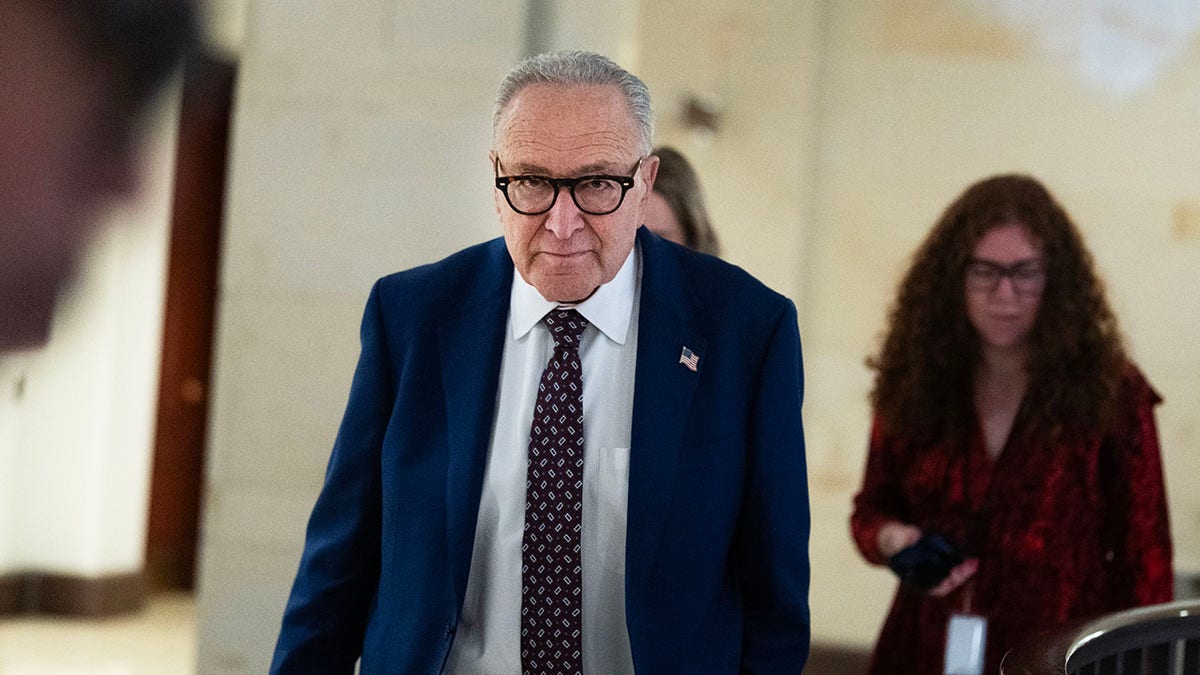
What Senate Minority Leader Chuck Schumer, D-N.Y., is proposing would, in essence, trigger a shutdown. (Tom Williams/CQ-Roll Call, Inc via Getty Images)
So going after DHS right now would have little impact on the funding for ICE. However, Democrats could demand certain «guardrails» and changes in policy for ICE.
From a parliamentary standpoint, ripping the six-bill package apart is a mess. First of all, the Senate must agree on a «motion to strike» the DHS section from the six-bill combo package. The Senate would have to vote on this. Or, in the interest of time, do this via unanimous consent. But because the «motion to strike» by itself is debatable, the issue could set up a possible filibuster. Sixty votes are needed to cut off debate on just that question alone – stripping the DHS provision from the rest of the overall bill.
It’s important that a motion to strike the DHS money from the rest of the bill does not mean that the remaining five bills are ready to go. The Senate would have to agree that this is the new bill. Senators would then have to overcome a filibuster once and then vote to pass the bill. Those floor mechanics get you well past the early Saturday morning deadline.
REPORTER’S NOTEBOOK: GOP REBELS DEFY TRUMP AS CONGRESSIONAL GRIP CONTINUES TO WEAKEN ACROSS MULTIPLE VOTES
Then the Senate must tangle with passing the standalone DHS funding bill by itself. That certainly isn’t going to be done by Saturday morning.
Moreover, none of these scenarios even addresses the House. If the Senate did approve the revamped five-bill spending package and the solitary DHS bill, the measures must return to the House. The House would have to vote on a «motion to concur» on the five-bill minibus. And then separately, on the solo DHS measure. That’s probably untenable in the House. Anything under this plan wouldn’t meet the early Saturday morning deadline. In addition, the House could glue the bills together another way and send it back to the Senate. Or, the House could even move to go to a conference committee and try to blend the bills into one.
There is no easy way out of this at such a late date. And that’s why you likely have a partial government shutdown at 12:00:01 a.m. ET on Saturday.
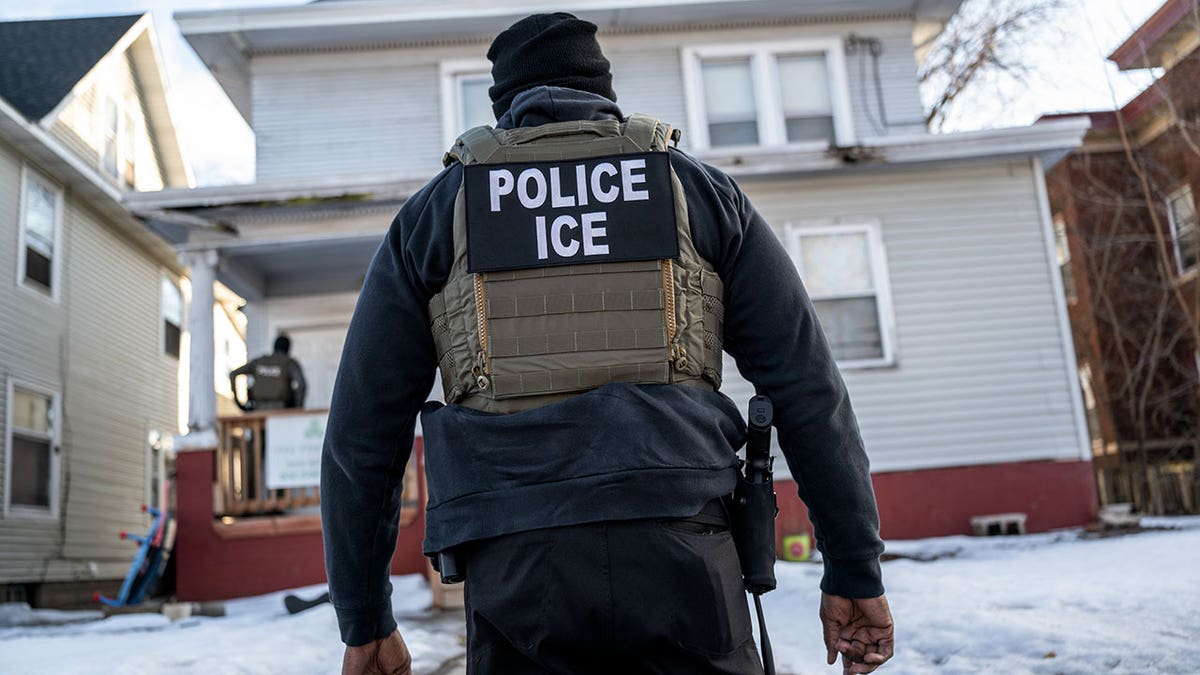
Despite ICE being funded by One Big Beautiful Bill, disruptions to other services loom ahead. (Victor J. Blue/Bloomberg via Getty Images)
Even though ICE is funded thanks to the One Big Beautiful Bill, there’s a big penalty and disruption and other services. TSA agents are unpaid again. That’s a major problem considering what they went through this fall – and coming on the heels of the monster winter storm which swept across the country in the past few days. Air traffic controllers would again face the lack of a paycheck as part of the transportation spending bill.
CLICK HERE TO DOWNLOAD THE FOX NEWS APP
Then, there are the politics. Who gets blamed? Republicans are concerned about losing support from voters based on the tactics of ICE. That’s why some Republicans are searching for some changes – but not ready to nuke the spending bill. Meantime, if the government shuts down thanks to Democrats withholding their votes, that may resonate with progressives. But it may hurt the party if Democrats are viewed as the party responsible for another shutdown.
This is a tough situation all around. And there’s not an obvious off-ramp.
congress,senate,house of representatives politics,government shutdown,immigration
INTERNACIONAL
Iran regime reportedly issued nationwide shoot-to-kill orders as protest death toll surges
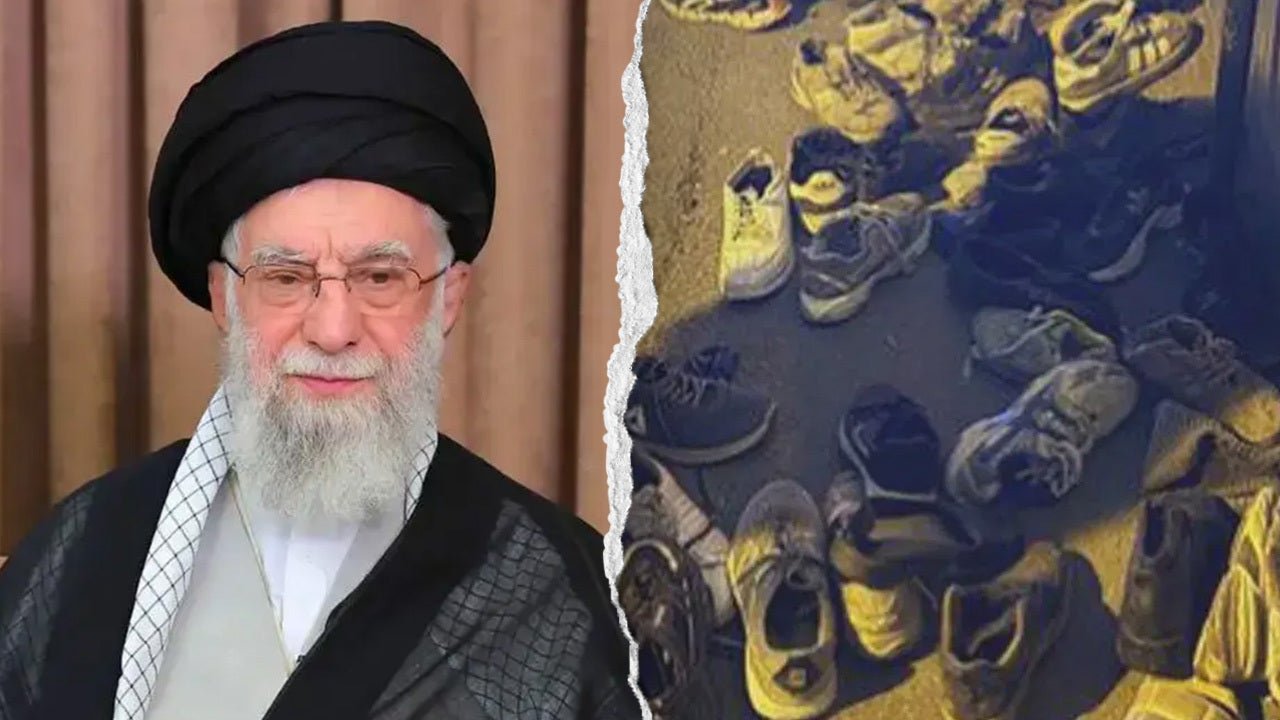
NEWYou can now listen to Fox News articles!
More and more brutal evidence of the Iranian regime’s crackdown on its own people is circulating online, as the true number of those killed in Iran’s protests remains hotly contested amid internet blackouts and state intimidation. Estimates range from the thousands confirmed dead to the tens of thousands feared killed, according to activists, media reports and medical data.
Fatemeh Jamalpour, an Iranian journalist who has covered every major protest movement over the past two decades, said the latest crackdown represents a turning point in the regime’s use of force. «The regime’s level of violence has increased dramatically, and with the internet crackdown, it is difficult to know the true scale of the killing.»
«The new thing I have seen in these protests, something we have not seen before, is that starting on the night of January 8, the regime issued shoot-to-kill orders to the IRGC, the Basij and the riot police, authorizing direct fire,» Jamalpour told Fox News Digital.
INSIDE TRUMP’S IRAN WARNING — AND THE UNEXPECTED PAUSE THAT FOLLOWED
Iranian security forces allegedly killed detainees and burned bodies during protests, with clashes continuing in Kermanshah, Rasht and Mashhad despite government claims. (NCRI)
«In previous protests, military-grade weapons were used mainly in minority provinces such as Kurdistan and Baluchestan,» she added. «This time they were used across the entire country… Health Ministry officials told us they ran out-of-body bags for the dead.»
The most widely cited baseline comes from the Human Rights Activists News Agency, or HRANA, a U.S.-based group that tracks deaths by name and location.
As of January 25, HRANA reported 5,848 people confirmed killed. Of these, 5,520 were protesters, 77 were children under 18, 209 were government-affiliated forces and 42 were non-protesters or civilians. The number of deaths still under investigation stands at 17,091.
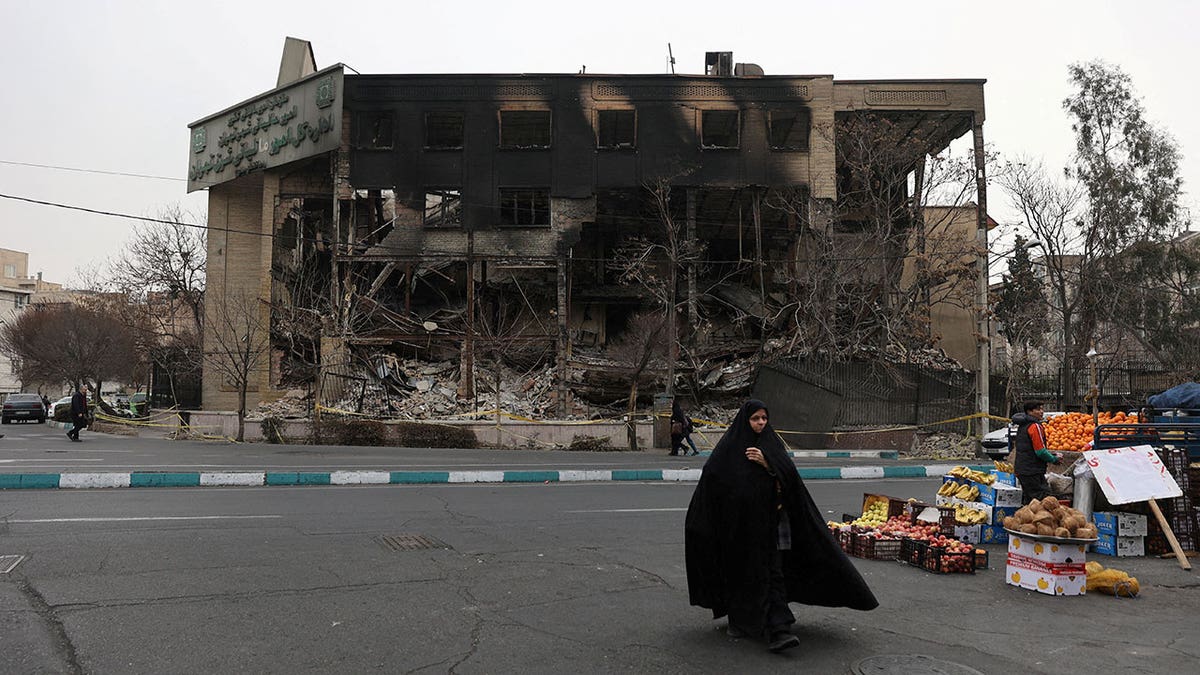
The state tax building burned during Iran’s protests, on a street in Tehran, Iran, Jan. 19, 2026. (Majid Asgaripour/WANA (West Asia News Agency) via Reuters)
The group has emphasized that its confirmed tally reflects only cases that could be independently documented, and that its overall figures are expected to rise as information continues to emerge.
According to The Associated Press, Iranian authorities have offered only one official count, 3,117, and have not updated it publicly in the last five days. Authorities have not released names, locations, or documentation to support that figure.
Beyond human rights tallies, a separate medical working paper reviewed by Fox News Digital suggests the death toll may be far higher.
US AMBASSADOR WARNS IRAN AT EMERGENCY UN MEETING THAT TRUMP IS ‘MAN OF ACTION,’ ‘ALL OPTIONS ARE ON THE TABLE’
The report by Munich Med Group, authored by professor Dr. Amir-Mobarez Parasta, compiles hospital-registered fatalities from multiple Iranian cities and applies what the author describes as a conservative extrapolation model to account for underreporting during the communications blackout.
Using that methodology, the paper estimates a nationwide death toll of approximately 33,130 people as of January 23. The author stresses the figure is not a verified count, but a lower-bound estimate based on partial medical data and stated assumptions.
Iran International published its own investigation, claiming it reviewed documents indicating that more than 36,500 people were killed during two days of protests on January 8 and 9 alone. The outlet said the documents were provided by sources inside Iran, but the claims have not been independently verified.
KHAMENEI CALLS TRUMP A ‘CRIMINAL,’ BLAMES HIM FOR DEADLY PROTESTS SWEEPING IRAN
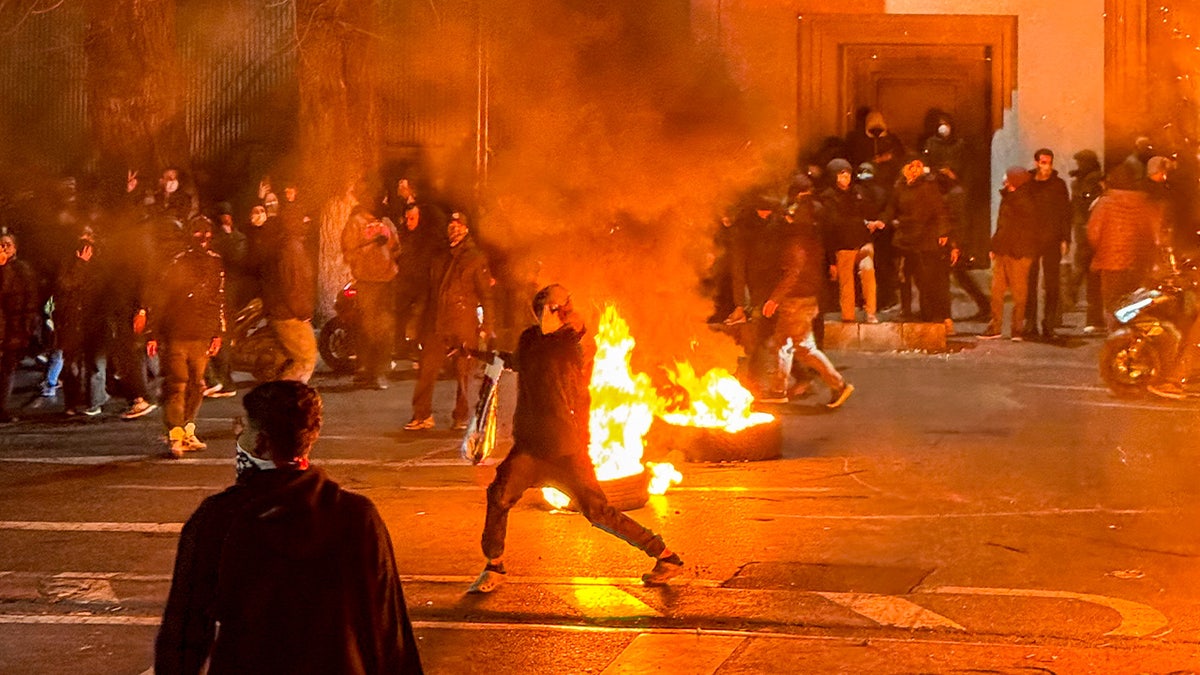
Iranians gather while blocking a street during a protest in Tehran, Iran on Jan. 9, 2026. (MAHSA / Middle East Images / AFP via Getty Images)
The wide gap between confirmed counts and higher estimates reflects not only the scale of violence, but also the conditions under which it occurred.
According to Jamalpour, despite the internet shutdown, doctors and medical workers attempted to document what they were seeing using limited satellite connections.
«Many doctors and medical staff tried to send us their accounts and documentation through small Starlink connections,» she said. «Medical workers say protesters were often shot in the head and neck, with intent to kill. Many were killed by multiple bullets. Some were shot from behind while trying to flee.»
Jamalpour said the victims she documented reflected a generation the regime appeared determined to crush. «Among the dead are children and a 67-year-old man, but most are young people under 30,» she said.
TRUMP THREATENS IRAN WITH CRUSHING RESPONSE AS TEHRAN DENIES HALTING PROTEST EXECUTIONS
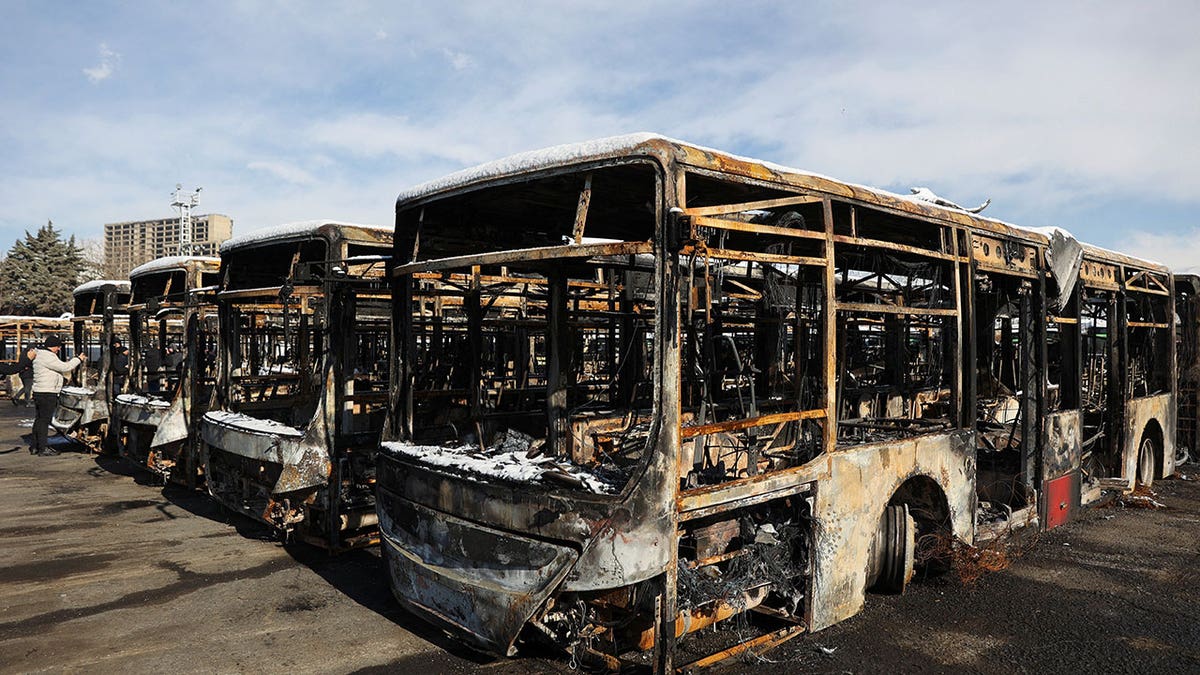
Buses that were burned during Iran’s protests, in Tehran, Iran, Jan. 21, 2026. (Majid Asgaripour/WANA (West Asia News Agency) via Reuters)
Jamalpour described the killing of Mehdi Khanmohammadi, a 67-year-old retired army colonel and pilot. «He was killed on Friday, January 9, in Saadat Abad by two bullets,» she said. «In a video, his daughter stands over his lifeless body and says, ‘Can you open your eyes and wake up?’»
She said scenes like that have left the country in collective mourning. «These days, Iranians are in shock,» Jamalpour said. «There is grief everywhere.»
At the same time, she warned that the crackdown is far from over. «Lawyers and human rights organizations are deeply concerned about more than 20,000 protesters who have been detained and are at risk of execution,» she said.
CLICK HERE TO DOWNLOAD THE FOX NEWS APP
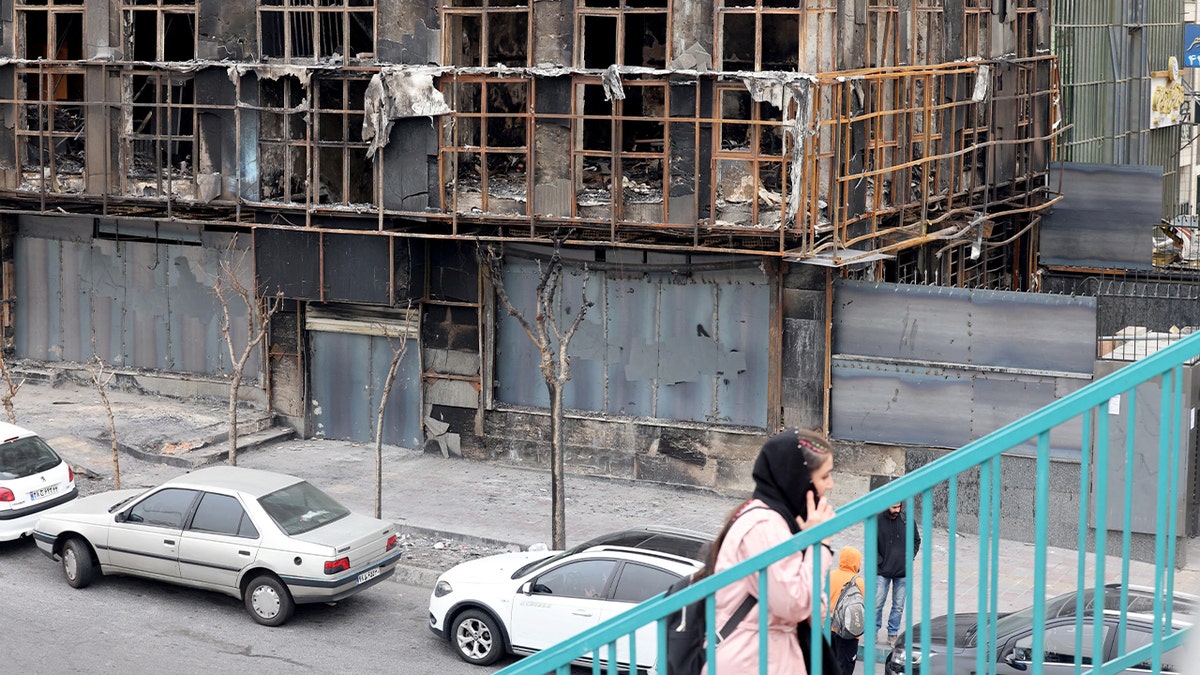
A woman walks up an overpass staircase beside a burned-out building damaged during recent protests in Tehran on Jan. 19, 2026. (Atta Kenare/AFP via Getty Images)
Yet even amid the fear, Jamalpour said she hears something new inside Iran. «In my conversations from inside the country, I hear people’s hope for Trump’s help in freeing Iran,» she said. «And a determination to change the regime, now intertwined with anger and grief.»
iran,world protests,human rights,terrorism

El pedido que realizó Facundo Arana en medio de su separación de María Susini

Atento River Plate: un grande de Italia, tras los pasos de Agustín Ruberto

Pese a que no puede competir, La Cámpora insiste con una candidatura de Cristina Kirchner para condicionar las aspiraciones de Kicillof

Se alinean los planetas para Caputo: más reservas, menos riesgo país y un inminente salto al mercado

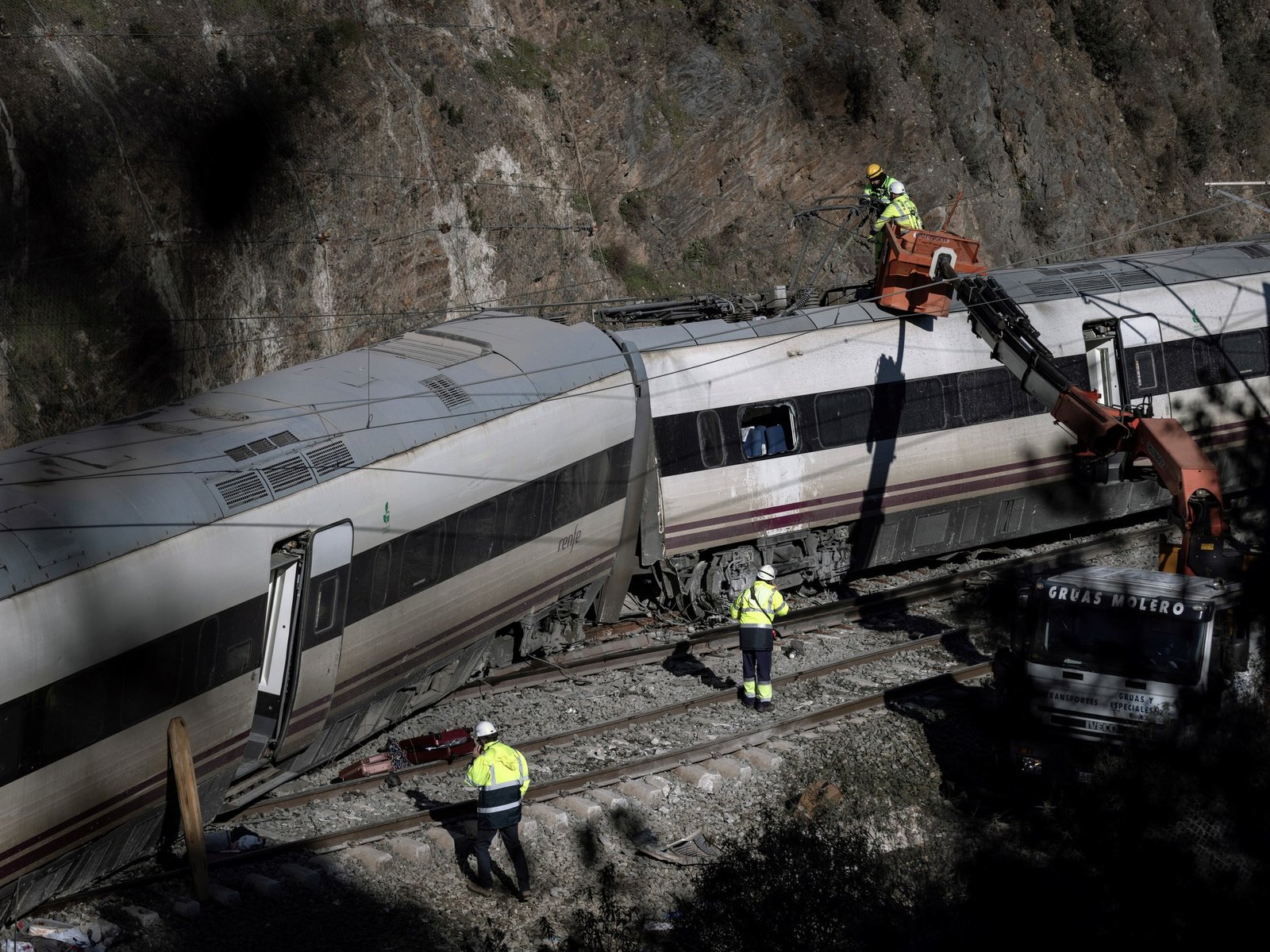
Cómo un fotógrafo se topó con una imagen clave del choque de trenes en España

La contundente banca del presidente del Atlético de Madrid a Julián Álvarez

Carlos Pagni habló sobre las preocupaciones de Cristina Kirchner: “Tiene miedo porque sabe que se viene algo malo”

Mientras Quilmes arde, Mayra Mendoza viaja a Bogotá para defender a Cristina Kirchner

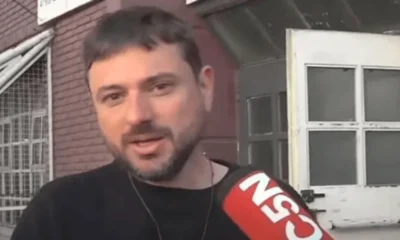
Juan Grabois contó que le pidieron plata para ir a un programa de C5N

El terrible accidente de Marcela Tauro en Intrusos que causó preocupación: “No puedo caminar ni…”

 POLITICA3 días ago
Mientras Quilmes arde, Mayra Mendoza viaja a Bogotá para defender a Cristina Kirchner
- POLITICA2 días ago
Juan Grabois contó que le pidieron plata para ir a un programa de C5N
- POLITICA3 días ago
La apuesta del Gobierno por la “Argentina Week” en Nueva York: los funcionarios y líderes de sectores estratégicos que asistirán