INTERNACIONAL
Iran reportedly developing chemical, biological missile warheads as protests spread over collapsing economy

Huckabee says Iran’s ‘ultimate goal is to destroy the US’
U.S. Ambassador to Israel Mike Huckabee, speaking at the Israel National Security Studies conference, says President Donald Trump has been clear that Iran will not be allowed to go nuclear. (Video: Israel National Security Studies.)
NEWYou can now listen to Fox News articles!
Iran is reportedly developing chemical and biological warheads for its ballistic missiles, even as the country faces mounting domestic unrest fueled by a collapsing currency and soaring inflation, according to an exclusive report published by Iran International on Sunday.
The outlet, citing unnamed military and security sources, reported that Iran’s Islamic Revolutionary Guard Corps has accelerated work on unconventional missile payloads alongside upgrades to command-and-control systems. If confirmed, the developments would raise serious alarms in Washington and Israel, particularly as Tehran struggles to contain growing anger at home.
The report comes as Israeli Prime Minister Benjamin Netanyahu meets with President Donald Trump on Monday, with Iran’s missile program and broader regional security threats expected to be high on the agenda, according to Israeli and U.S. officials familiar with the discussions. The talks are also expected to address the war in Gaza, amid U.S. officials’ concerns that Netanyahu has delayed advancing a postwar framework and ceasefire-related steps.
IRAN FIRES BALLISTIC AND CRUISE MISSILES AT SIMULATED TARGETS NEAR PERSIAN GULF
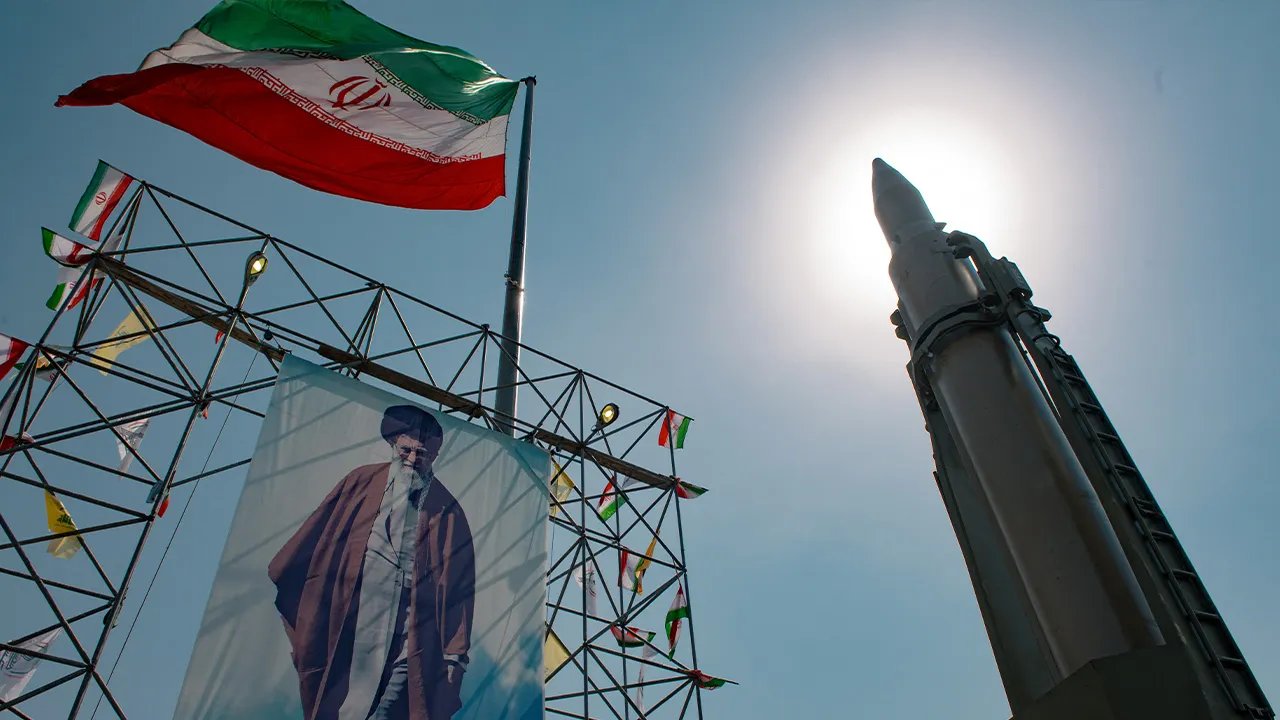
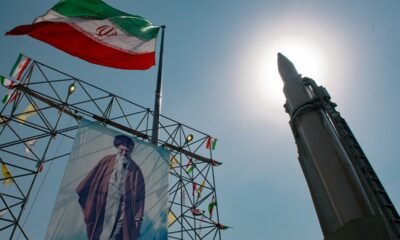
A military truck carries a missile past a portrait of Iran’s Supreme Leader Ayatollah Ali Khamenei during an annual military parade. (Atta Kenare/AFP/GettyImages)
According to Iran International, missile infrastructure has been repositioned and expanded, with some launch assets reportedly moved to eastern Iran to reduce vulnerability. The report claims the IRGC is exploring nonconventional warhead configurations for long-range missiles.
Tehran has long denied pursuing chemical or biological weapons, insisting its missile program is defensive. Iran is a signatory to the Chemical Weapons Convention, though Western governments have repeatedly accused the Islamic Republic of violating international norms.
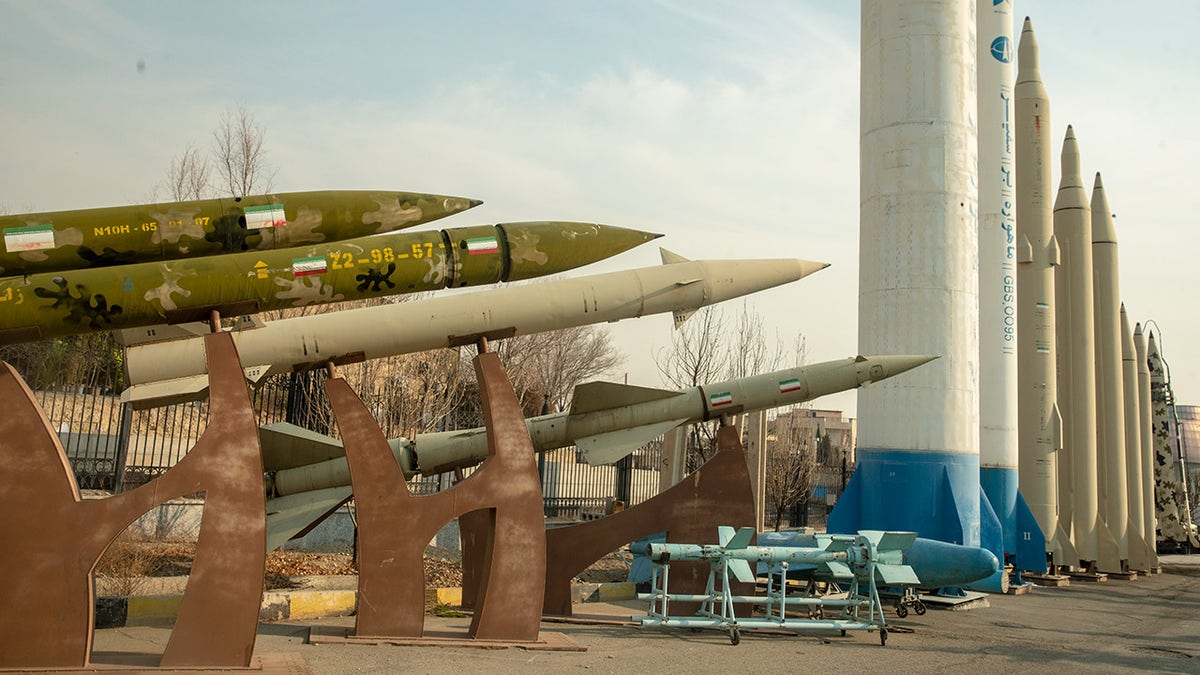
Iranian missiles exhibited in a park on Jan. 20, 2024 in Tehran, Iran. Iran has been a key player in several overlapping regional conflicts, with its recent airstrikes in Iraq, Syria and Pakistan, and its support of Hamas in Gaza, Hezbollah in Lebanon, and the Houthi movement in Yemen. (Majid Saeedi/Getty Images)
The missile report coincides with escalating economic unrest inside Iran. Iran International reported Monday that shopkeepers in Tehran shut down major markets for a second consecutive day, protesting inflation and the collapse of the national currency.
FROM GAZA TO IRAN: WHAT’S AT STAKE IN TRUMP-NETANYAHU MAR-A-LAGO TALKS?
A video from Tehran posted on Simay Azadi’s TV X page on Monday showed a large crowd marching in the streets and chanting slogans against the regime.
An Iranian opposition group, the National Council of Resistance of Iran, said the strikes spread across multiple commercial districts, including the Gold Bazaar and central arcades, with crowds gathering in surrounding streets. The group also claimed security forces linked to the IRGC were placed on heightened alert in Tehran, with additional units on standby in nearby provinces. The claims could not be independently verified.
CLICK HERE TO DOWNLOAD THE FOX NEWS APP
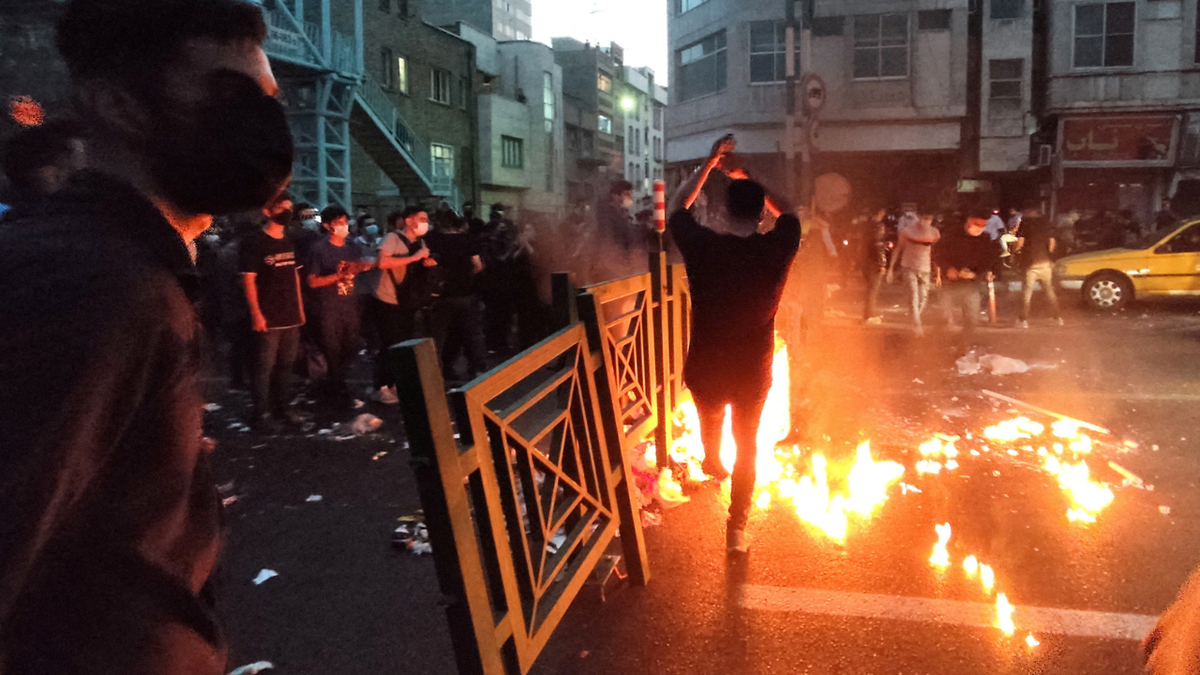
People light a fire during a protest over the death of Mahsa Amini, a woman who died after being arrested by the Islamic republic’s «morality police», in Tehran, Iran, on Sept. 21, 2022. (West Asia News Agency)
In a statement, Maryam Rajavi, NCRI president-elect, said the protests reflected public anger over high prices, inflation and political repression, and called on Iranians to support the striking merchants.
The Iranian rial has fallen to a new record low against the U.S. dollar. Official data show year-on-year inflation reached 52.6% in December, while average annual inflation was 42.2%. Videos circulating online show chants against government officials and growing frustration among merchants, a group traditionally viewed as a key pillar of regime support.
iran,israel,donald trump,world protests,terrorism,conflicts






INTERNACIONAL
Meet Iran’s hardline speaker who threatened to burn US forces — reportedly Tehran’s point man for talks

NEWYou can now listen to Fox News articles!
The man reportedly being floated by the Trump administration as a possible interlocutor with Iran is also one of the regime’s most hardline figures — Iranian parliament speaker Mohammad Bagher Ghalibaf. The longtime Revolutionary Guards commander is widely described by experts as a loyal «yes man,» with a record of threats against the United States and deep ties to the system’s inner circle.
That contradiction underscores the central question facing U.S. policymakers: Even if Washington is speaking to the «right people,» as President Donald Trump has claimed, can someone like Ghalibaf actually deliver?
«Ghalibaf doesn’t have an independent line. His strength is that he is a ‘yes man,’» said Beni Sabti, an Iran expert at the Institute for National Security Studies. He added, «If he is told to shake hands with Special Envoy Steve Witkoff, he will do it. If he is told to escalate, he will. It is not about moderation, it is about who gives the orders.»
AS AIRSTRIKES RAIN DOWN ON THE IRANIAN REGIME, CAN A FRACTURED OPPOSITION UNITE TO LEAD IF IT FALLS?
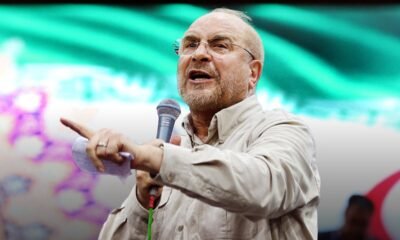
Parliament Speaker Mohammad Bagher Ghalibaf speaks during a public event in Iran in 2024 (Hossein Beris/Middle East Images/Middle East Images via AFP)
Regime Insider
Ghalibaf, 64, is a product of Iran’s security establishment.
He rose through the ranks of the Islamic Revolutionary Guard Corps during the Iran-Iraq War, eventually becoming commander of the IRGC air force.
«He even completed flight training abroad, which was not unusual at the time, with France reportedly assisting at one stage. Until recently, he was still conducting training flights in France,» said Sabti.
He later served as Iran’s national police chief, overseeing internal security forces responsible for suppressing protests, including the 1999 student uprising, alongside Qassem Soleimani.
After transitioning into politics, Ghalibaf attempted to run for president multiple times but failed. He instead built his career through loyalty to the system, serving as Tehran’s mayor for more than a decade before becoming speaker of parliament in 2020.
«Ghalibaf went on to serve in senior national roles and is now speaker of parliament. He has consistently aligned himself with the supreme leader and follows directives rather than setting his own independent positions,» Sabti said.
«His name has also been linked to multiple corruption allegations, including misuse of oil revenues and sanctions evasion networks involving his family. His sons have reportedly been involved and are under sanctions,» Sabti said, adding, «There have also been public scandals involving family members traveling abroad and making luxury purchases, including widely circulated images of them arriving with numerous high-end Gucci suitcases.»
IRAN’S NEW SUPREME LEADER IS ‘HIS FATHER ON STEROIDS,’ EXPERTS WARN OF HARDLINE RULE
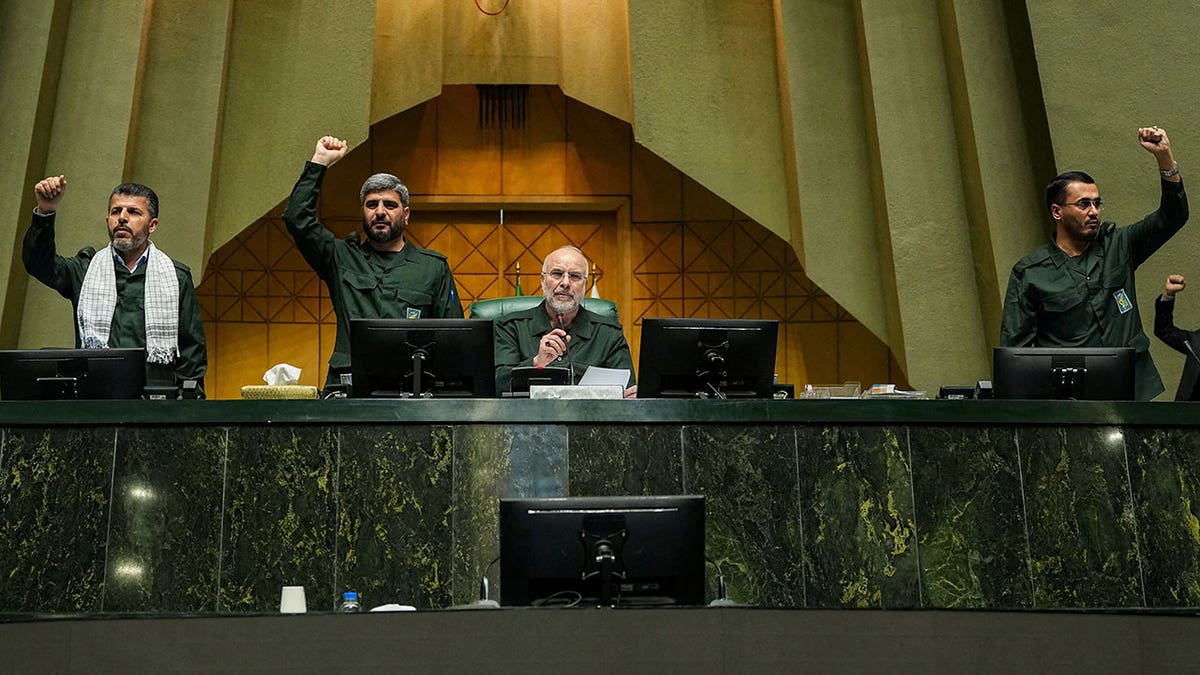
Speaker Mohammad-Bagher Ghalibaf listens as parliament members chant in support of the IRGC in Tehran, Iran, Feb 1, 2026. (Hamed Malekpour/Islamic consultative assembly news agency/West Asia News Agency/Handout via Reuters)
Limited Authority
Ghalibaf’s wartime statements reflect a hardening tone inside Iran’s leadership.
He has rejected ceasefire terms, declaring Iran would continue fighting «until the enemy truly regrets its aggression.»
He has also warned that attacks on Iranian infrastructure would trigger retaliation across the region, including against energy targets.
At the same time, he has publicly denied any negotiations with the United States, calling reports of talks «fake news» and accusing Washington of manipulating markets.
In remarks aired on Iranian television on Jan. 12, 2026, he warned that U.S. forces would face catastrophic consequences if they confronted Iran. «Come, so you can see what catastrophe befalls American bases, ships and forces,» he said, adding that American troops would be «burned by the fire of Iran’s defenders.»
In the same remarks, broadcast and translated by MEMRI, he described the U.S. president as «delusional and arrogant,» and framed Iran’s ideology as a growing global movement.
More recently, he escalated further. He warned that «the blood of American soldiers is the personal responsibility of Trump,» and vowed Iran would «settle accounts with the Americans and Israelis,» adding that «Trump and Netanyahu crossed our red lines and will pay the price.»
He has also threatened retaliation against regional energy infrastructure, signaling a willingness to expand the conflict beyond direct military confrontation.
Not the Decision-Maker
«He’s considered relatively moderate in the current Iranian context, but he’s not the one calling the shots. He’s not the leader himself,» Danny Citrinowicz, Middle East, national security and intelligence expert, told Fox News Digital, adding that Ghalibaf may serve as a channel to Iran’s leadership, but not as the ultimate authority.
«If you want to speak to someone in Iran, he’s probably the point of contact,» he said. «But he’s not deciding anything. Even if he wants to do something, he has to get approval from the IRGC and the supreme leadership.»
Sabti said, «Some point to periods during Rouhani’s presidency when he appeared to align with Rouhani and describe him as somewhat moderate, but that is misleading.»
TRUMP SAYS IRAN WANTS TO TALK BUT WHO WILL LEAD AFTER KHAMENEI?
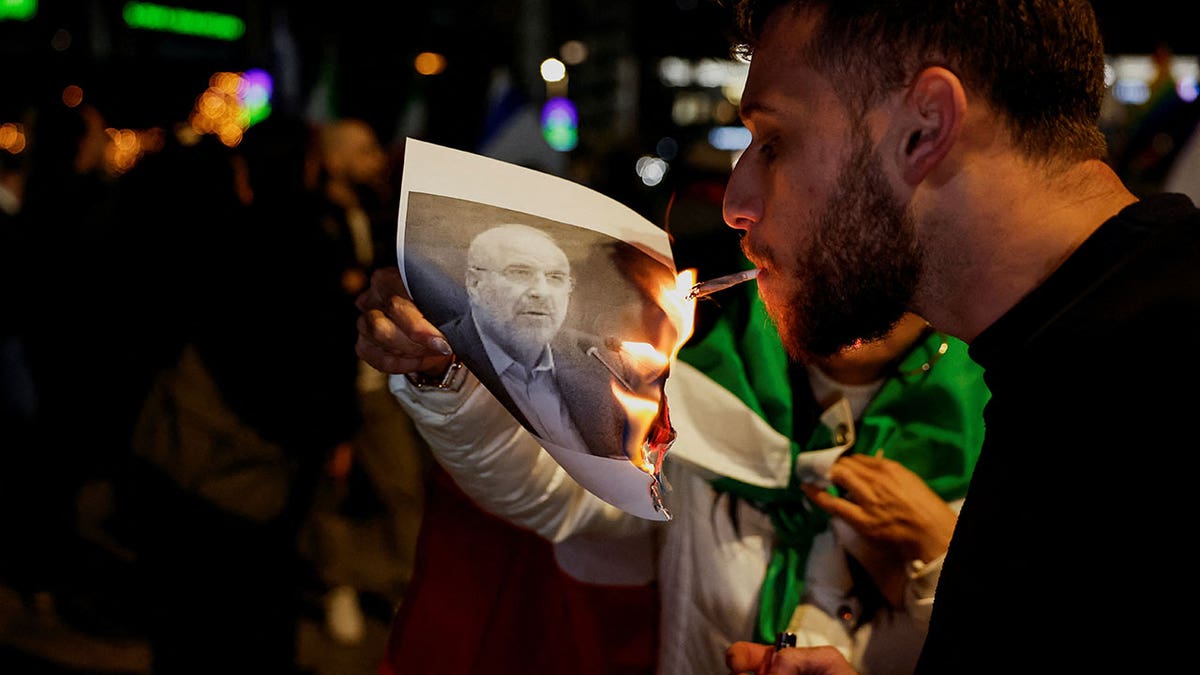
A man lights a cigarette with fire from a burning picture of Iranian Parliament Speaker Mohammad Bagher Ghalibaf, as Israelis rally in support of the nationwide protests happening in Iran, in Holon, Israel, Jan. 14, 2026. (Ammar Awad/Reuters)
A System That Makes Deals Harder
Analysts say the bigger issue is not Ghalibaf himself, but the system he operates within.
Behnam Ben Taleblu, a senior fellow at the Foundation for Defense of Democracies, said: «Those who see the ascendance of someone like Ghalibaf, who is an IRGC veteran, as extending power outside his traditional civilian role have missed how personality, not profession, has been the driving force in Iranian politics for decades. Those who focus on IRGC backgrounds in the Supreme National Security Council may also overlook that recent secretaries — Shamkhani, Larijani and Ahmadian — all had IRGC backgrounds.»
«The system today is more radicalized and decentralized,» Citrinowicz agreed. «It’s not one person. It’s multiple actors you need to coordinate with, which makes it much harder to negotiate.»
«I’m not saying it’s impossible, because this is still the Middle East, but it will be very difficult to reach an agreement with them, let alone one that reflects the same demands the U.S. was making before the war. There is no way they are going to agree to that,» he added.
CLICK HERE TO DOWNLOAD THE FOX NEWS APP
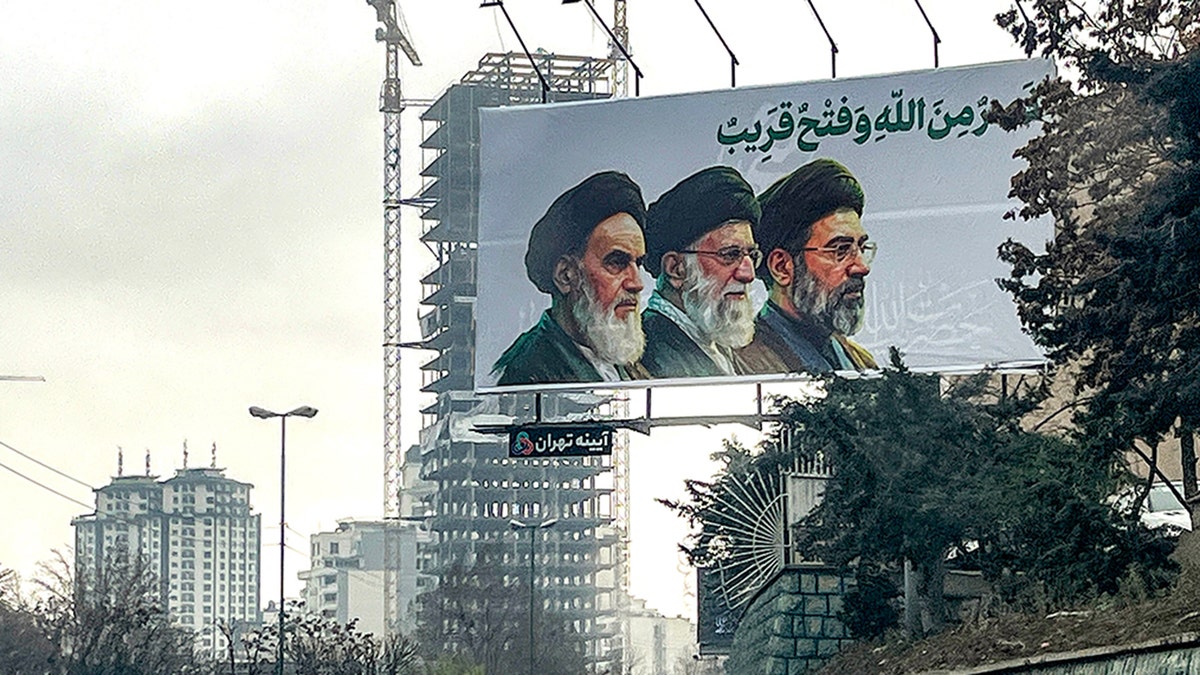
A billboard depicting Iran’s supreme leaders is displayed above a highway in Tehran on March 10, 2026. (AFP/Via Getty Images)
Citrinowicz said the regime sees themselves as prevailing. «From Iran’s perspective, they are winning, not losing. They are using their strategic capabilities and effectively threatening a choke point in the global economy, namely the Strait of Hormuz. That only reinforces the radicalization taking place inside the regime. Under those conditions, they will be the ones making demands of Trump, not the other way around.»
Even if talks were to take place, he said, Ghalibaf would not be able to commit Iran without broader approval.
war with iran, mojtaba khamenei, iran, terrorism, wars

NEWYou can now listen to Fox News articles!
Interior Secretary Doug Burgum said Iran could have hit Washington, D.C., and other major U.S. cities with intermediate-range ballistic missiles through proxies in Venezuela if the administration had not intervened in both countries.
Speaking at the CERAWeek oil and energy conference in Houston on Wednesday, Burgum pushed back on the narrative that Iran and Venezuela do not represent an imminent threat to the U.S. and global supply chains. He said the threat was demonstrated by Iran’s attempt to strike the U.S. military base Diego Garcia in the central Indian Ocean, more than 2,000 miles from the Middle Eastern country.
«That means, you know, Venezuela was a hotbed of Iranian-funded terror groups, including Hamas. If there was an Iranian ballistic missile placed in Venezuela, it could not just reach Houston; it can reach Washington, D.C.,» said Burgum.
«So, again, the actions that the United States is taking to make the world safer is lowering the risk premium that I think was missing from the [oil and energy] market. Because, maybe, the market wasn’t recognizing the risk.»
WHITE HOUSE WARNS IRAN AGAINST BALKING AT DEAL: TRUMP READY TO ‘UNLEASH HELL’
Left: Israeli air defense systems are activated to intercept Iranian missiles over Tel Aviv on June 16, 2025. Right: The U.S. Capitol in Washington, D.C. (Menahem Kahanna/AFP via Getty Images; Kent Nishimura/Bloomberg via Getty Images)
Burgum accused Iran, whose government he said is in shambles following intense U.S.-Israeli bombardment, of lying to the world about its missile capability.
«They said during negotiations last year, they told the international agencies, they said it right before the negotiations broke down, ‘Oh, don’t worry, we could only go 1,200 miles.’ And then they launched two missiles at Diego Garcia at 2,400 miles. That means they can hit London,» he explained.
The Islamic Republic of Iran escalated its conflict with the U.S. by launching two intermediate-range ballistic missiles Friday toward Diego Garcia, a key U.S.-U.K. military base in the Indian Ocean. Targeting Diego Garcia, roughly 2,500 miles from Iran, suggests Tehran’s missile capabilities may exceed previously acknowledged limits.
IRAN-LINKED INFLUENCE CAMPAIGN PUSHES ANTI-ISRAEL MESSAGING DISGUISED AS US VOICES: REPORT
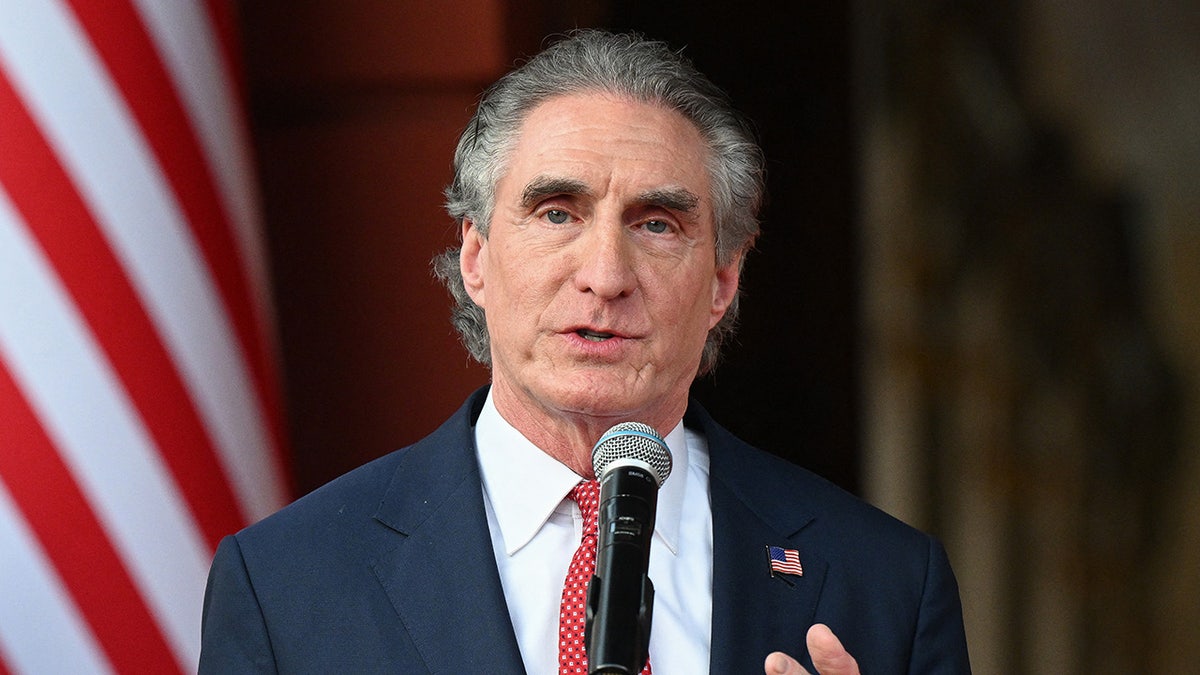
Interior Secretary Doug Burgum speaks after meeting with Venezuela’s interim president, Delcy Rodriguez at the Miraflores Presidential Palace in Caracas on March 4, 2026. (Federico Parra/AFP via Getty Images)
Houston, where Burgum was speaking, is roughly 2,200 miles from Venezuela, while the nation’s capital is just over 2,000 miles away, placing both cities within range of intermediate-range ballistic missiles fired from Venezuela. Other major U.S. cities within range include Miami, roughly 1,300 miles away; New York City, about 2,100 miles; and possibly Chicago, slightly more than 2,600 miles.
On Jan. 3, Trump launched a covert military operation in Venezuela that resulted in the arrest of former Venezuelan leader Nicolás Maduro.
Burgum said that, because of the administration’s military action, Venezuela is no longer a serious missile threat to the U.S. and is now a potentially significant oil and energy partner.
TRUMP ENERGY CZAR SAYS IRAN CONFLICT GAS SPIKE IS ‘TEMPORARY BLIP’ AS DRILLING PUSH RAMPS UP
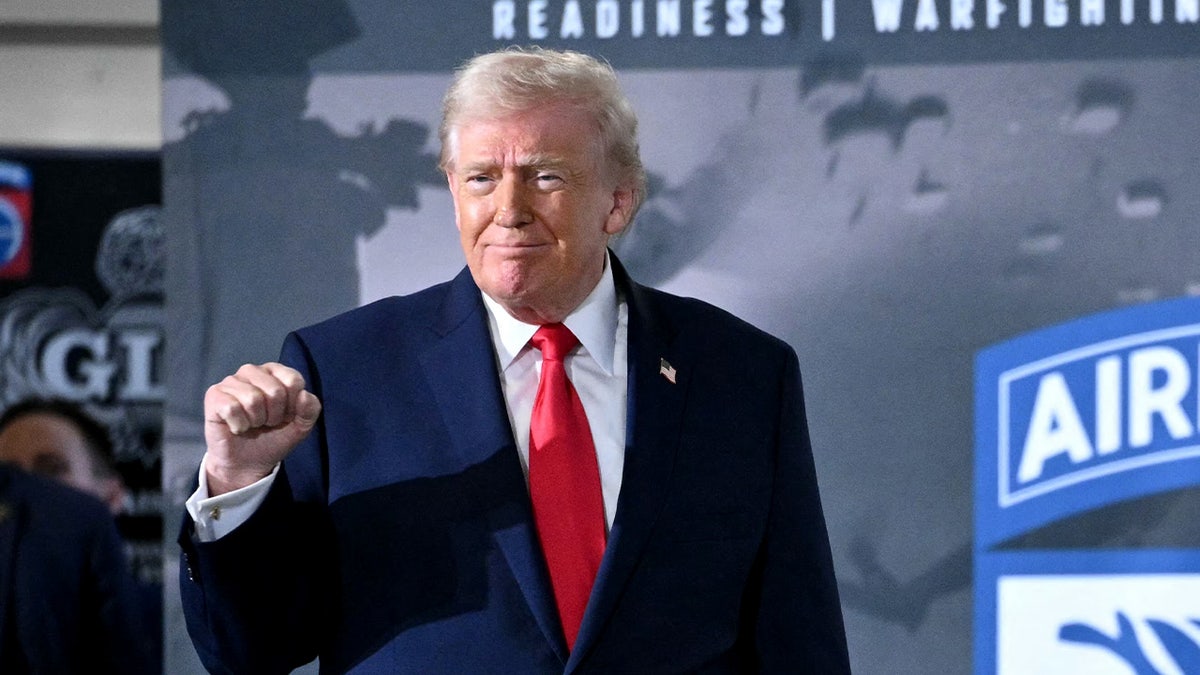
President Donald Trump with military members after the capture of Venezuela’s Maduro in January. (Mandel Ngan/AFP via Getty Images)
The secretary said that during a recent trip to Venezuela with oil executives, interim President Delcy Rodríguez signaled the country has the capacity and is eager for U.S. investment in developing its oil and gas reserves.
CLICK HERE TO DOWNLOAD THE FOX NEWS APP
«The resources there are quite amazing,» he said. «And from that trip we did… we were able to bring home $100 million of gold, physically, the gold, to bring back for U.S. refiners for commercial and consumer purposes. So, the level of cooperation is going.»
war with iran, iran, venezuelan political crisis, conflicts, donald trump, washington dc
INTERNACIONAL
Ministro de Economía advierte que frenar de golpe el crecimiento de la deuda sería traumático para Panamá

El ministro de Economía y Finanzas, Felipe Chapman, advirtió que, aunque el fenómeno inflacionario y el encarecimiento del combustible responden a factores externos, el impacto sobre la economía panameña podría intensificarse si se prolonga el conflicto en Medio Oriente entre Irán, Estados Unidos e Israel, obligando al Estado a incrementar el gasto en subsidios para evitar un golpe directo al costo de vida.
Según explicó, se trata de una situación que exige prudencia fiscal, disciplina en el manejo del presupuesto y evitar decisiones impulsivas que comprometan la sostenibilidad económica.
Chapman fue claro en que el país no debe caer en medidas desesperadas ni en desviaciones de su hoja de ruta económica, insistiendo en que Panamá mantiene una estrategia definida para reducir el déficit y desacelerar el crecimiento de la deuda.
“No es una sorpresa que la deuda haya alcanzado ciertos niveles, forma parte de un plan estructurado”, sostuvo, al reiterar que la prioridad es reducir gradualmente su ritmo de crecimiento sin provocar un choque abrupto en la economía.
Para febrero de 2026 la deuda alcanzó cerca de $60,059 millones, lo que implicó un incremento de más de $8,100 millones en poco más de año y medio.
Este aumento, aunque menor en ritmo frente al registrado en el quinquenio anterior, evidencia que la presión fiscal sigue presente y que la estrategia actual se ha centrado más en reordenar el perfil de la deuda que en reducir su saldo de forma inmediata.

El titular del MEF explicó que el conflicto internacional ya está teniendo efectos concretos en el país, especialmente en el costo de los combustibles, lo que obliga al gobierno a aumentar el subsidio al transporte público, incluyendo MiBus y el Metro de Panamá, así como al tanque de gas de 25 libras, utilizado por la mayoría de los hogares.
“Si el Estado no absorbe ese impacto, el costo del pasaje subiría y también el precio del gas y la electricidad”, advirtió, dejando claro que el gasto público ya está aumentando para contener esos efectos.
En años recientes, el subsidio al transporte público ha representado más de $300 millones anuales, considerando los aportes al Metro de Panamá y al sistema MiBus, mientras que el subsidio al tanque de gas de 25 libras ha superado los $80 millones al año, dependiendo del comportamiento del precio internacional del petróleo.
Bajo el escenario actual, estas cifras podrían incrementarse de forma significativa si el conflicto geopolítico se extiende y presiona aún más los mercados energéticos.
Chapman enfatizó que el costo de estos subsidios es altamente variable y depende directamente del precio del petróleo, el cual puede cambiar de forma drástica en cuestión de días.

“No es lo mismo un barril a $80 que a $120 o $150”, explicó, subrayando que el Estado no puede proyectar con precisión el gasto total en este contexto. En ese sentido, insistió en que sería irresponsable fijar cifras estáticas cuando el entorno internacional es tan volátil.
En cuanto al crecimiento económico, el ministro señaló que antes del estallido del conflicto, proyecciones de entidades internacionales situaban el crecimiento del Producto Interno Bruto (PIB) de Panamá alrededor del 5% para 2026, pero reconoció que ese escenario ahora debe ser revisado. Aunque mantiene una visión moderadamente optimista, admitió que el resultado final dependerá de la duración del conflicto y su impacto sobre la inflación y la economía global.
Sin embargo, Chapman también advirtió que un crecimiento económico demasiado acelerado podría ser contraproducente. “Si Panamá crece por encima del 6%, se podría generar inflación interna, y el país no cuenta con herramientas monetarias para contenerla”, explicó.
Por ello, planteó que el rango óptimo para la economía panameña se sitúa en un crecimiento superior al 5%, pero por debajo del 6%, lo que permitiría expandir la actividad sin presionar excesivamente los precios.
El ministro defendió que la estrategia del gobierno es mantener un equilibrio entre crecimiento y estabilidad, evitando medidas populistas como aumentar el déficit fiscal sin respaldo.

“No vamos a prometer cosas que no se pueden cumplir”, sostuvo, al referirse a propuestas de ampliar subsidios sin un sustento financiero claro. En ese sentido, reiteró que cualquier apoyo adicional deberá estar acompañado de recortes en otras áreas del gasto público, ya que los recursos del Estado son limitados.
Además, señaló que el gobierno ya ha logrado incrementar los ingresos en cerca de 14%, lo que forma parte del esfuerzo por mejorar la sostenibilidad fiscal. No obstante, insistió en que el crecimiento económico sigue siendo clave para mejorar la calidad de vida de la población, incluso si sus efectos no se perciben de forma inmediata.
“Si la economía no crece, la situación sería peor”, afirmó, al reconocer que muchos ciudadanos aún no sienten los beneficios de esa expansión.
En paralelo, Chapman descartó escenarios de desabastecimiento de combustible en Panamá, asegurando que en el continente americano existe suficiente oferta para cubrir la demanda. No obstante, reiteró que el verdadero riesgo no es la disponibilidad, sino el precio, que seguirá sujeto a la evolución del conflicto en Medio Oriente y a las tensiones en los mercados internacionales.
Finalmente, el ministro subrayó que el país debe mantenerse en una línea de cautela, disciplina y planificación, evitando decisiones improvisadas en un contexto global incierto. A su juicio, el reto no es solo enfrentar el impacto inmediato del alza en los combustibles, sino garantizar que las finanzas públicas se mantengan sostenibles en el mediano plazo, sin comprometer la estabilidad económica ni trasladar el costo de la crisis a los ciudadanos.

Las palabras de Felipe Chapman se dieron durante su intervención en el Foro Económico 2026, organizado por la Asociación Panameña de Ejecutivos de Empresa (APEDE), un espacio que reunió a autoridades, expertos y líderes empresariales para analizar el rumbo de la economía panameña en un contexto marcado por cambios geopolíticos, desafíos estructurales y nuevas oportunidades de inversión.
Desde este escenario, se planteó la necesidad de tomar decisiones estratégicas que permitan sostener el crecimiento en los próximos años.
La presidenta de APEDE, Giulia De Sanctis, subrayó que este tipo de foros son clave para elevar la calidad del debate económico en el país y generar propuestas concretas.
A su juicio, Panamá tiene el potencial de seguir creciendo, pero advirtió que ese crecimiento debe traducirse en bienestar real para la población, lo que requiere decisiones basadas en datos, instituciones sólidas y una visión de largo plazo que fortalezca la confianza y promueva la inversión.
En la misma línea, el presidente de la Comisión de Asuntos Económicos y Finanzas Nacionales de APEDE, Jorge Nicolau, explicó que el foro buscó abrir un espacio de análisis informado y diálogo técnico que permita identificar oportunidades reales para el país.
El enfoque, según indicó, está en orientar decisiones económicas sostenibles, tomando en cuenta un entorno global cada vez más dinámico y competitivo, donde Panamá debe redefinir su posicionamiento.
El evento también incorporó una agenda enfocada en temas clave como la inversión extranjera directa, las perspectivas económicas y el rol de Panamá en la región, incluyendo la participación de expertos nacionales e internacionales.
North America

Meet Iran’s hardline speaker who threatened to burn US forces — reportedly Tehran’s point man for talks

El consumo masivo tuvo una fuerte caída en febrero: cuál fue el único sector que no bajó

Javier Milei asistirá al informe de gestión que Manuel Adorni brindará en la Cámara de Diputados

Más problemas en Gran Hermano: una participante abandonó la casa en medio de un escándalo

Iranian missiles could have hit DC from Venezuela before Trump move, Burgum warns

Liverpool y Xabi Alonso, cuestión de tiempo

»¡VAN A FUNDIR A MEDIO PAÍS!»: El lapidario diagnóstico de Roberto Cachanosky sobre el plan de Milei

ALERTA FINANCIERA: 4 de cada 10 argentinos ya no pueden pagar sus deudas. ¡Caputo debe actuar ya!

El mensaje de Milei sobre la “traición” que llamó la atención en el Gobierno y también en la oposición

El Gobierno apunta a una sindicalista por la filtración del video de Manuel Adorni en un vuelo privado

 POLITICA2 días ago
El mensaje de Milei sobre la “traición” que llamó la atención en el Gobierno y también en la oposición
- POLITICA1 día ago
24 DE MARZO: La historia completa que el relato omitió sobre el golpe de 1976 y el Juicio a las Juntas
- ECONOMIA2 días ago
A cuánto llegará el dólar en abril de 2026, según los principales analistas de mercado