INTERNACIONAL
Iran’s Khamenei lashes out at protesters as nationwide anti-regime unrest grows

NEWYou can now listen to Fox News articles!
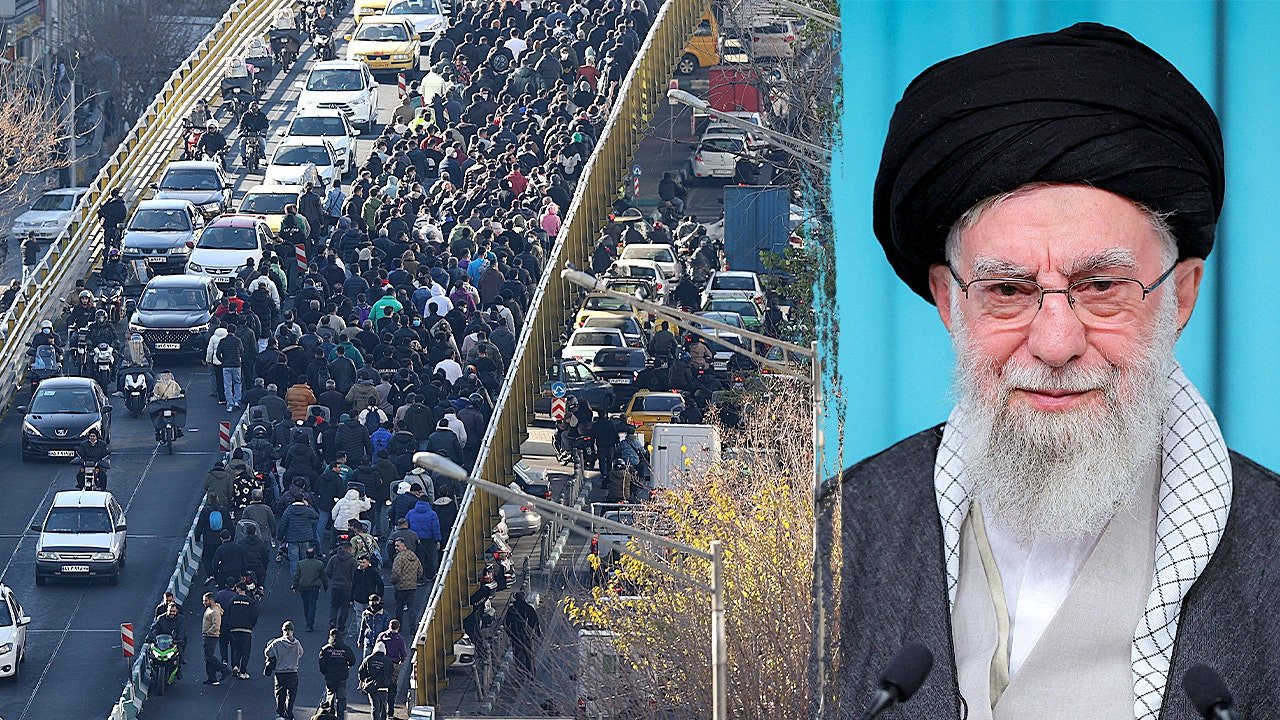
The ruling Ayatollah of the Islamic Republic of Iran, Ali Khamenei, on Saturday issued an angry response to the unfolding nationwide demonstrations against his regime’s political and economic corruption.
The 86-year-old Khamenei, in his first public speech since the strikes and social unrest rocked his fragile regime seven days ago declared, «A number of agitated people, enemy mercenaries, had positioned themselves behind bazaar merchants and chanted slogans against Islam, against Iran and against the Islamic Republic.
«Protest is legitimate, but protest is different from rioting.» He warned that «officials should speak with protesters. Speaking with a rioter is pointless. Rioters must be put in their place.»
IRAN PROTESTS TURN DEADLY AS ANTI-REGIME DEMONSTRATIONS ENTER FIFTH DAY
Khamenei’s branding of the pro-democracy activists as «rioters» follows President Trump’s unprecedented message of solidarity to the demonstrators on Friday.
«If Iran shots [sic] and violently kills peaceful protesters, which is their custom, the United States of America will come to their rescue. We are locked and loaded and ready to go,» Trump wrote on Truth Social.
According to information supplied to Fox News Digital from the National Council of Resistance of Iran (NCRI), an organization that seeks to topple Khamenei’s regime, Khamenei’s security forces again opened fire on protesters.
In Malekshahi, Ilam province, young people demonstrated, and the regime’s forces shot peaceful activists, resulting in deaths and injuries.
In this photo released June 26, 2025, by the official website of the office of the Iranian supreme leader, Supreme Leader Ayatollah Ali Khamenei speaks in a televised speech under a portrait of the late revolutionary founder Ayatollah Khomeini. (Office of the Iranian Supreme Leader via AP)
As of Saturday, the regime has killed at least ten people. The U.S.-based Human Rights Activists News Agency said demonstrations unfolded in more than 100 locations in 22 of Iran’s 31 provinces. The NCRI said 30 protesters in Malekshahi were shot and were in critical condition.
The dissident group also said that the people of Kazerun demonstrated Saturday in the city’s Shohada Square, where security fired live ammunition at the protesters. Young anti-regime demonstrators in the Golshan district of Shiraz blocked the road by setting tires on fire.
IRANIAN PRESIDENT SAYS HIS COUNTRY IS AT ‘TOTAL WAR’ WITH THE US, ISRAEL AND EUROPE: REPORTS
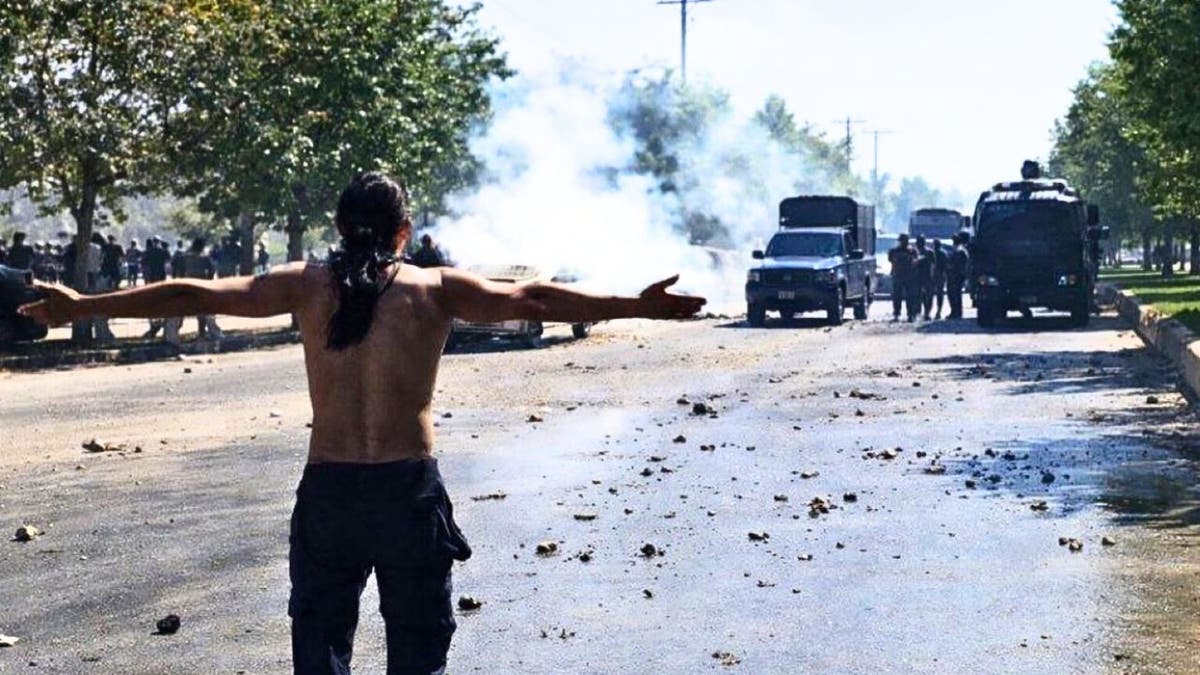
A protester faces Iranian security forces during clashes amid nationwide unrest, according to images released by the Iranian opposition group, the National Council of Resistance of Iran. (NCRI )
Students at Shahrood University of Technology chanted, «Students will die but not accept humiliation.» And students at Allameh University’s Hemmat dormitory in Tehran declared, «Death to the dictator.»
NCRI leader Maryam Rajavi’s response to Khamenei on Saturday noted that «Khamenei is right; 80 million Iranians are his enemy. They have only one message for him: pack up his rule and remove his scourge from the Iranian people. Better still if he comes to his senses and leaves of his own accord. Khamenei must know that threats, bluster, and repression cannot stop the uprising. A nation who has taken to the streets will not stand down until democracy and popular sovereignty are achieved.»
Reza Pahlavi, the son of Iran’s last Shah, wrote on X, «Ali Khamenei, fearing the growing waves of this national uprising, has emerged from his hiding place to threaten the people of Iran. Khamenei: We, the people of Iran, will pull you down from your teetering perch like Zahhak the despot and will free our beloved Iran from you and your regime.
CLICK HERE TO DOWNLOAD THE FOX NEWS APP
«To the military and law enforcement forces: do not tie your fate to the sinking ship of the Islamic Republic. Join the people and separate yourselves from this corrupt system. Your weapons are for defending the nation, not suppressing it. Those who fire bullets at the people should be certain that they will be identified and punished. Fellow countrymen: do not abandon the streets; increase your presence. The world sees your resistance and bravery and supports you.»
iran,world protests,donald trump,terrorism









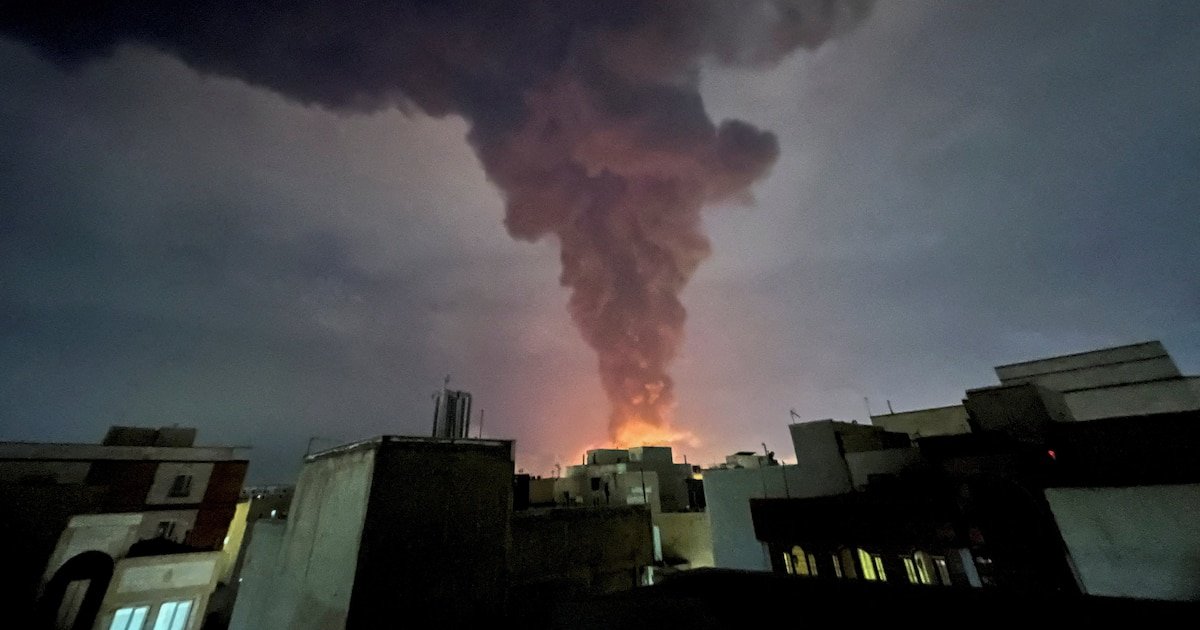
El Ejército israelí informó en un comunicado el inicio de la ofensiva en ambas ciudades y afirmó que está dirigida contra la “infraestructura terrorista” de Hezbollah y del régimen iraní
Una oleada de ataques con drones y cohetes tuvo como objetivo la embajada de Estados Unidos en Bagdad a primera hora del martes, según informaron fuentes de seguridad iraquíes. Describieron el ataque como el más intenso desde el inicio de la escalada, con el uso de al menos cinco drones, informó Reuters.
En paralelo, Israel lanzó una “ola masiva” de ataques contra objetivos en Teherán y Beirut. El ejército israelí indicó que inició “una amplia ola de ataques” contra infraestructura del régimen iraní en la capital, y agregó que también comenzó “una ola adicional de ataques contra infraestructura terrorista de Hezbollah en Beirut”.
Por su parte, el presidente de Estados Unidos, Donald Trump, anunció que pronto dará a conocer los países que accedieron a ayudar a reabrir el estrecho de Ormuz y criticó a aliados como la OTAN y el Reino Unido por negarse a participar, mientras que estos respondieron que “esta no es una guerra de la OTAN” y la Unión Europea sostuvo que “no tiene ningún interés” en ampliar su misión naval en la zona. Trump también afirmó que la guerra “terminaría” pronto y que, aunque no sería esta semana, “no tardaría mucho”.
A continuación, la cobertura minuto a minuto:
Israel informó que 3.530 personas resultaron heridas desde el incio de la guerra
El Ministerio de Salud de Israel informó que 3.530 personas resultaron heridas y fueron trasladadas a hospitales desde el inicio de la guerra.
Actualmente hay 86 personas hospitalizadas, incluidas ocho en estado grave, según la autoridad sanitaria.
Israel emitió nuevas alertas en el Líbano
Israel intensificó sus ataques contra el Líbano y emitió una advertencia urgente a los residentes del sur del país, “específicamente en la aldea de Arab al-Jal”, para que evacúen ante nuevas operaciones contra Hezbollah, según informó el ejército.
“El Ejército de Defensa atacará la infraestructura militar perteneciente al grupo terrorista Hezbollah en un plazo próximo”, señaló un portavoz de las Fuerzas de Defensa de Israel en una publicación en X.
En paralelo, medios estatales libaneses informaron que ataques aéreos israelíes alcanzaron tres barrios de Beirut a primera hora del martes, según AFP, mientras que Israel confirmó en Telegram que llevó a cabo “una nueva oleada de ataques contra la infraestructura terrorista de Hezbollah en Beirut”.
El príncipe heredero de Irán anunció la creación de un nuevo comité para sentar las bases de una futura comisión de la verdad

El hijo exiliado del último sha de Irán, Reza Pahlavi, anunció la creación de un nuevo comité para sentar las bases de una futura comisión de la verdad en el país y designó a la premio Nobel de la Paz Shirin Ebadi para dirigirlo, según informó AFP.
Pahlavi, residente en Estados Unidos y sin cargo oficial, señaló que el comité de justicia transicional elaborará “reglamentos para una comisión y un tribunal de investigación de la verdad” y afirmó que el equipo buscará justicia para las “víctimas de injusticia, tortura y represión por parte de la República Islámica”.
En un mensaje publicado en X, indicó que el comité estará integrado por “expertos iraníes con amplia experiencia, que abarca cuatro generaciones diferentes”, e incluirá al profesor Afshin Ellian, al activista Iraj Mesdaghi y a la doctora Leila Bahmani.
El régimen de Irán arrestó a 10 personas acusadas de ser “espías extranjeros”
La Guardia Revolucionaria de Irán anunció el martes el arresto de 10 “espías extranjeros” en el marco de la continuidad de la guerra con Israel y Estados Unidos, según informó la agencia de noticias ISNA.
“Diez mercenarios traidores fueron identificados y arrestados”, declaró la organización de inteligencia de la Guardia Revolucionaria en la provincia nororiental de Razavi Khorasan, sin precisar las nacionalidades de los detenidos.
La fuerza indicó que cuatro de los arrestados recababan información “sobre lugares sensibles e infraestructura económica”, mientras que otros estaban vinculados a un “grupo terrorista monárquico”.
El petróleo aumentó más de un 5%
El precio del petróleo subió más de un cinco por ciento el martes, en medio del rechazo de varios países a la exigencia del presidente de Estados Unidos, Donald Trump, de ayudar a asegurar el estratégico estrecho de Ormuz, mientras Irán arremetió contra sus vecinos productores de crudo.
Alrededor de las 06:15 GMT, el crudo de referencia estadounidense West Texas Intermediate (WTI) avanzó un 5,16%, hasta los 98,32 dólares por barril, en una jornada marcada por la volatilidad en los mercados energéticos.
En paralelo, el crudo Brent también superó el cinco por ciento de alza antes de retroceder ligeramente, en un contexto de tensiones geopolíticas que mantienen la atención de los inversores sobre la región del Golfo.
Escombros de un misil interceptado causaron la muerte de una persona en Abu Dhabi
La caída de escombros de un misil interceptado causó la muerte de un ciudadano pakistaní en Abu Dhabi, informó el martes la oficina de medios del gobierno.
El hecho ocurrió en la zona de Bani Yas, “tras la intercepción de un misil balístico por las defensas aéreas”, precisó la Oficina de Medios de Abu Dhabi.
Las autoridades no difundieron más detalles sobre la identidad de la víctima ni sobre el alcance de los daños en el área afectada.
La Organización Marítima Internacional advirtió que los escoltas navales no garantizan la seguridad en Ormuz
El jefe de la Organización Marítima Internacional (OMI) advirtió que las escoltas navales en el estrecho de Ormuz no aseguran completamente el tránsito de buques y consideró que esa asistencia militar no resuelve el problema a largo plazo, en un contexto en el que la vía permanece en gran parte cerrada y tensiona los mercados energéticos.
Arsenio Domínguez señaló que las escoltas no “garantizarán al 100 por ciento” la seguridad de los barcos que intenten cruzar el estrecho, según declaraciones publicadas por el Financial Times. Además, afirmó que la asistencia militar “no era una solución a largo plazo ni sostenible” para reabrir la ruta marítima, por donde circula cerca del 20% del petróleo y del gas natural licuado del mundo.
El cierre impulsa subas en los precios de la energía y aumenta los temores inflacionarios, al tiempo que obliga a una reconfiguración rápida y costosa de las cadenas de suministro. Empresas logísticas redirigen buques, trasladan cargas por tierra y buscan evitar pérdidas de productos perecederos.
“Somos daños colaterales de un conflicto cuyas causas profundas no tienen nada que ver con el transporte marítimo”, declaró Domínguez, quien agregó que la OMI observa con preocupación la situación de barcos atrapados en el Golfo sin alimentos ni suministros suficientes para sus tripulaciones.
El Consejo del organismo se reunirá en sesión extraordinaria en Londres para tratar el impacto del conflicto sobre el transporte marítimo y la gente de mar.
La federación iraní de fútbol “negocia” con la FIFA trasladar sus partidos del Mundial a México
Irán busca trasladar sus partidos del Mundial fuera de Estados Unidos y disputarlos en México, según indicó el lunes el jefe del fútbol iraní, Mehdi Taj, tras las declaraciones del presidente Donald Trump que pusieron en duda el viaje del equipo iraní a territorio estadounidense.
Taj afirmó que la federación mantiene conversaciones con la FIFA para reubicar los encuentros. “Cuando Trump ha declarado explícitamente que no puede garantizar la seguridad de la selección nacional iraní, ciertamente no viajaremos a Estados Unidos”, expresó en un mensaje difundido a través de la cuenta en X de la embajada iraní en México.
La postura iraní se conoce días después de que el ministro de Deportes del país señalara que no sería posible la participación del equipo en Estados Unidos tras los ataques aéreos de Estados Unidos e Israel contra Irán.
Qatar interceptó un ataque con misiles del régimen de Irán

Qatar informó el martes que interceptó un ataque con misiles en medio de la campaña de represalias de Irán tras los ataques de Estados Unidos e Israel. Un periodista de AFP escuchó varias explosiones en Doha.
Qatar, al igual que varios países del Golfo, estuvo bajo ataque de drones y misiles en los últimos días. “El Ministerio de Defensa del Estado de Catar anuncia que las fuerzas armadas han interceptado un ataque con misiles dirigido contra el Estado de Catar”, publicó el Ministerio de Defensa en la red social X.
Un petrolero fue alcanzado por un “proyectil desconocido mientras estaba anclado” en Emiratos Árabes
Un petrolero reportó que fue alcanzado por un “proyectil desconocido mientras estaba anclado” la noche del lunes cerca del puerto petrolero emiratí de Fujairah, informó el martes el centro de Operaciones de Comercio Marítimo del Reino Unido (UKMTO).
La autoridad marítima responsable de la región indicó que el buque fue impactado en el golfo de Omán, a 23 millas náuticas al este de Fujairah, y sufrió daños estructurales menores. No se registraron heridos entre la tripulación ni daños ambientales.
El petrolero atacado se convirtió en el vigésimo primer buque que reporta un incidente en el golfo Pérsico, el estrecho de Ormuz o el golfo de Omán desde el inicio del conflicto, según cifras previas del UKMTO.
Civil Conflict,Demonstrations,Domestic Politics,Riots,North America,Government / Politics,Civil Unrest

NEWYou can now listen to Fox News articles!
You’ll hear volumes from congressional Republicans about the importance of passing the SAVE America Act in the coming days. The bill requires proof of citizenship to vote.
«We need to make it easy to vote and hard to cheat in America,» said Sen. Jon Husted, R-Ohio.
«The SAVE America Act is an important bill,» said Sen. Rick Scott, R-Fla., on Fox News. «So we’ve got to figure out how to get it passed.»
TRUMP-BACKED VOTER ID BILL FACES GOP RESISTANCE AS TILLIS VOWS TO STOP IT
Sen. Rick Scott, R-Fla., said that Senate Democrats wouldn’t take the shutdown seriously until flight delays and cancellations started to stack up. (Bill Clark/CQ-Roll Call, Inc. via Getty Images)
And that is the conundrum facing Senate Republicans — figuring out how to get it passed.
The SAVE America Act is the touchstone of President Donald Trump’s legislative agenda. In fact, the president warned he wouldn’t sign any other bill into law — except perhaps a DHS funding measure — until Congress aligns with his demands.
Republicans agree on the importance of the SAVE America Act, but Senate Majority Leader John Thune, R-S.D. is promising everything but passage.
«I will be bringing the SAVE America Act to the floor, and we will be having a full and robust debate,» said Thune.
That’s because Republicans can’t break a Democratic filibuster.
«This is one of the worst things we’ve seen in America in a very long time,» said Senate Minority Leader Chuck Schumer, D-N.Y.
SCHUMER SWINGS AT HEGSETH OVER KING CRAB MEALS FOR THE TROOPS, BUT BIDEN-ERA RECEIPTS SHOW SIMILAR TAB
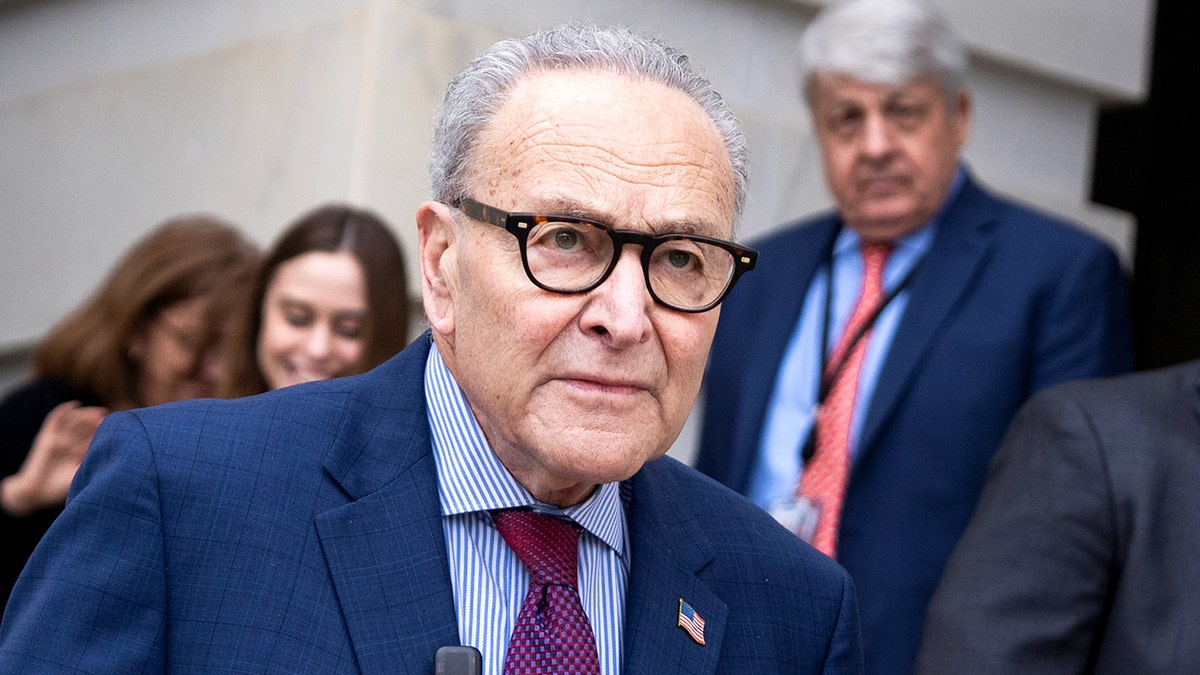
Senate Minority Leader Charles Schumer, D-N.Y., arrives for a news conference outside the U.S. Capitol on March 5, 2026. (Tom Williams/CQ-Roll Call, Inc. via Getty Images)
«The real reason this president wants this bill to pass is to reduce the number of people voting in the November election,» said Senate Minority Whip Dick Durbin, D-Ill.
It takes 60 votes to break a filibuster. Republicans only have 53 votes in the Senate. So some Republicans advocate parliamentary ballistics to obliterate the filibuster.
«I would nuke the filibuster to pass the SAVE America Act,» said Sen. Roger Marshall, R-Kan.
Cold War rhetoric permeates this entire debate. In fact, conservatives implored Thune to launch a pre-emptive first strike to terminate the filibuster before Democrats again win control of the Senate — be it this fall or a decade from now.
«It’s really about the only way I can see preventing them from nuking the filibuster once they gain the majority in the Senate,» said Sen. Ron Johnson, R-Wis.
Other Republicans want to force Democrats to filibuster the old-fashioned way — until they’re exhausted.
«They should have to go hold the floor like it used to be in the old days. They can go and talk as much as they want. But sooner or later they’re going to run out of time,» said Sen. Josh Hawley, R-Mo.
If everyone finally fades after days or weeks of debate, then the Senate doesn’t need a test vote to break a filibuster — needing 60 yeas. That means they can pass the bill with a simple majority: 51.
Lots of Republican senators are now invoking the 1930s Frank Capra classic «Mr. Smith Goes to Washington.» That’s where Jimmy Stewart plays an idealistic senator who filibusters until he collapses in the Senate chamber.
«They should have to go out there, hours on end, like a Jimmy Stewart moment,» said Sen. Eric Schmitt, R-Mo.
But most Republicans reject the Jimmy Stewart approach. They’re not so much worried about unlimited debate during a talking filibuster, but the unlimited amendment process.
«The talking filibuster, I think will be a goat rodeo. I mean, it could take two or three weeks. The Democrats will tee up all kinds of problematic votes,» predicted a skeptical Sen. Thom Tillis, R-N.C. «I haven’t had anybody describe to me the project plan. Here are the number of days. This is how we counter people. We’ve got all of our political flanks covered. And this is how we succeed at the end.»
But there won’t be an unlimited amendment process. While Thune will allow the debate to go on for a while (Fox is told perhaps a week or more, perhaps around the clock), he will maintain «ball control.» Thune won’t immediately tee up a test vote to end debate, needing 60 yeas. But Thune will immediately block all amendments from both sides.
Like everything on Capitol Hill, it’s about the math. And while there will be a lot of talking about the SAVE Act and the talking filibuster, there’s not enough support on the GOP side of the aisle to unspool the Senate’s filibuster rules and precedents.
«Many of us don’t believe that we should undo the filibuster because it holds the rights of the majority. And one day we’ll be back in the minority,» said Sen. Shelley Moore Capito, R-W.Va. «It’s a real splitter here.»
Capito added that there was a «will» to deal with the SAVE America Act. But the parliamentary machinations it would take to blow up the filibuster to pass the bill do not exist.
«There’s not enough numbers to get it done,» observed Capito.
Trump and other conservatives are starting to dial up pressure on Thune.
THUNE GUARANTEES VOTER ID BILL TO HIT THE SENATE DESPITE SCHUMER, DEM OPPOSITION: ‘WE WILL HAVE A VOTE’
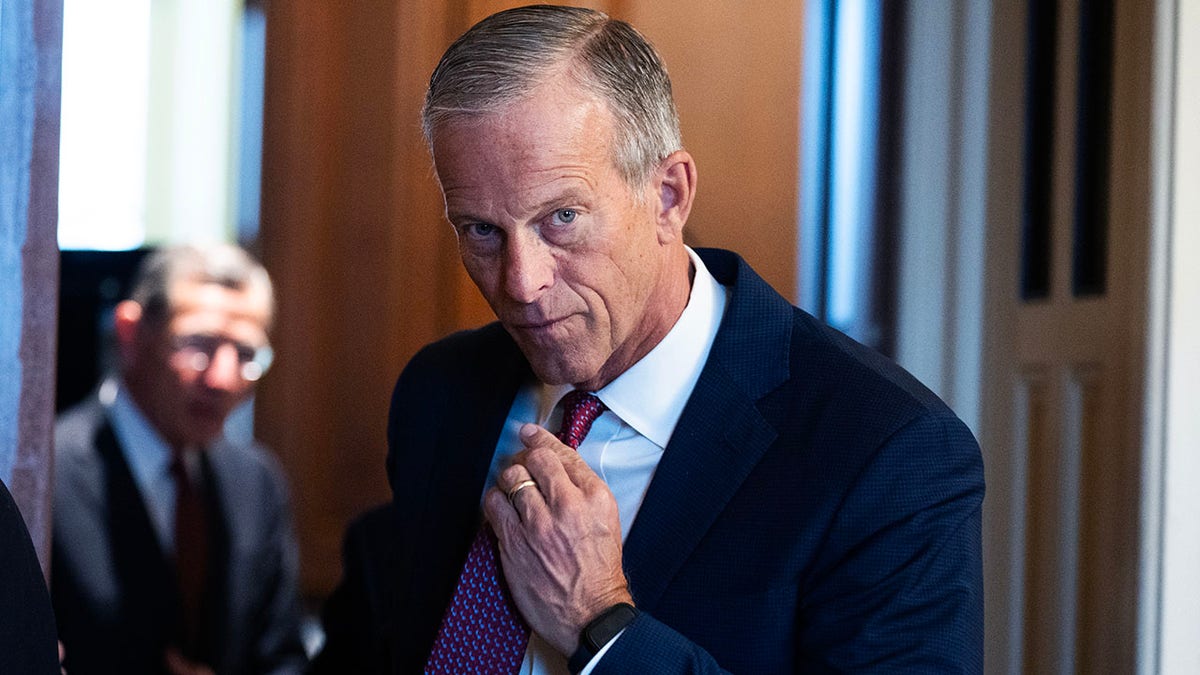
Senate Majority Leader John Thune, R-S.D., argued that Democrats were continuing their push to keep DHS closed because it was «politically advantageous.» (Tom Williams/CQ-Roll Call, Inc. via Getty Images)
«I think he’s a wonderful person. I do,» the president said of the South Dakota Republican on Fox News Radio. «But it’s not that he doesn’t want to do it. He doesn’t think he can do it. And that’s bad.»
Despite criticism directed at Thune, some Republicans are defending him.
«It’s not John Thune that’s killing it. It’s members of the Republican Party that are not convinced that a talking filibuster can be used to pass this,» said Sen. Cynthia Lummis, R-Wyo. «It will be an infliction of tremendous delays on other matters before the U.S. Senate without the positive results of passage of the SAVE Act.»
It’s significant that the president has not called out Thune over his reluctance to end the filibuster to pass the SAVE America Act. However, Trump routinely demanded that former Senate Majority Leader Mitch McConnell, R-Ky., do just that during his first term. The president often lambasted McConnell’s stewardship of the Senate, despite the Kentucky Republican establishing a new precedent to inhibit filibusters of Supreme Court nominees. McConnell’s maneuver on the filibuster assured the confirmations of Supreme Court Justices Neil Gorsuch, Brett Kavanaugh and Amy Coney Barrett.
But so far, no sharp criticism of Thune.
Still, some Republicans believe Senate magic could salvage the SAVE America Act.
«I’ve seen John Thune pull rabbits out of his hat before,» said Lummis. «And I’m hoping there’s a rabbit in his hat on this one.»
The Senate takes a test vote just to start debate on the bill Tuesday afternoon. That needs a simple majority. It’s possible that Vice President JD Vance may need to break a tie to launch debate on the bill.
CLICK HERE TO DOWNLOAD THE FOX NEWS APP
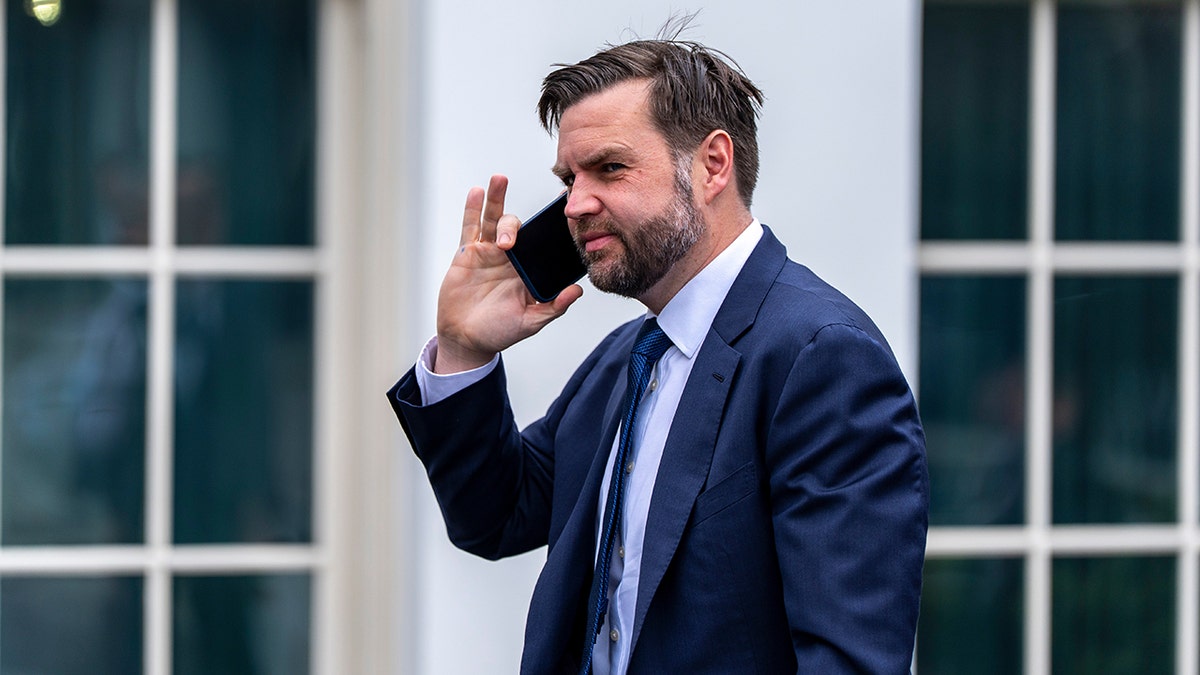
Vice President JD Vance talks on his phone as he walks to the West Wing of the White House, March 6, 2026, in Washington. (Alex Brandon/AP Photo)
But the Senate doesn’t have the votes to blow up the precedents like McConnell did with the Supreme Court in order to pass the SAVE America Act, nor are there the votes to execute a full-blown «talking filibuster,» bypassing the need for 60 yeas.
Consider the firestorm that could rain down on Senate Republicans from their base if the GOP fails to pass the SAVE America Act. Trump has held his tongue so far, but it’s possible there could be recriminations from him, too.
politics,congress,senate,democratic party,republicans,donald trump
INTERNACIONAL
Europa se planta: rechazó el reclamo de Donald Trump para que entre en la guerra y libere el Estrecho de Ormuz
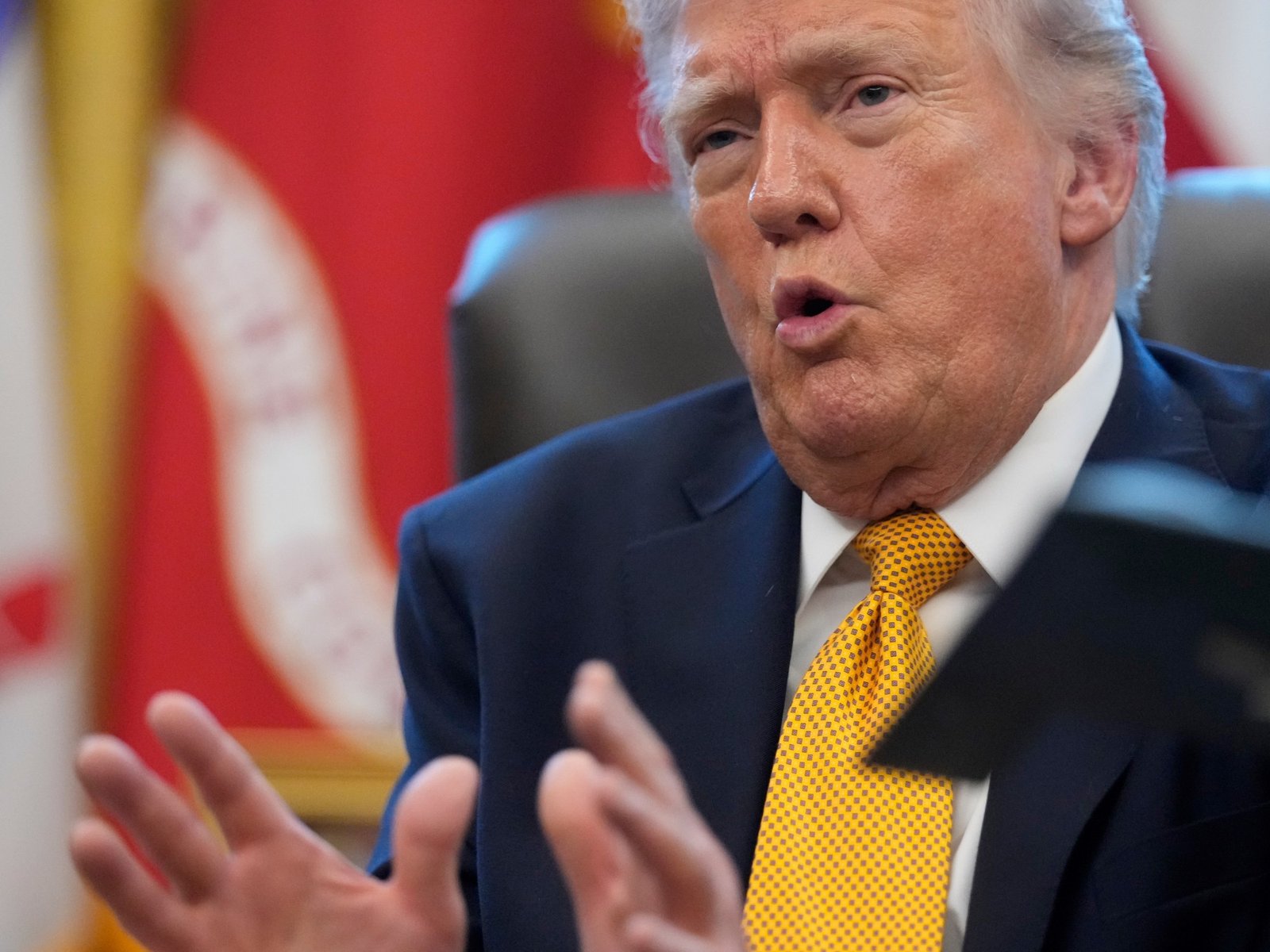
“Esta no es nuestra guerra”, dijo la canciller europea Kaja Kallas tras unas pocas horas de debate. La Unión Europea no cede al chantaje estadounidense y rechaza enviar una misión naval militar para reabrir el Estrecho de Ormuz, cerrado por la amenaza iraní de atacar los buques que lo atraviesen. O, como dijo el jefe del Gobierno alemán Friedrich Merz, “esta no es una misión de la OTAN”.
El presidente Donald Trump dijo el domingo en una entrevista al diario británico ‘Financial Times’ que la OTAN, paraguas de seguridad europeo frente a Rusia, tendría “muy mal futuro” si los europeos se negaban a ayudar a Estados Unidos enviando sus buques de guerra a Ormuz. Las normas de la OTAN prevén que todos sus miembros ayuden al miembro atacado (no si él ataca sin acuerdo de los demás) y sólo en el espacio europeo y americano del Atlántico Norte.
Desde primera hora de la mañana todos los diplomáticos y funcionarios consultados veían el pedido de Trump como un chantaje inadmisible. Recordaban que el año pasado Estados Unidos dio por derrotado a Irán y que la semana pasada volvió a darlo por derrotado. Ahora ven cómo las fuerzas estadounidenses en el Golfo Pérsico son incapaces de mantener abierto el Estrecho de Ormuz, esencial para la economía mundial porque por él pasa alrededor del 20% del petróleo mundial.
Las mismas fuentes recordaban que Trump había iniciado la guerra sin un plan para manejar Irán, sin una estrategia de salida, sin probablemente los medios necesarios ya dispuestos y sin consultar -ni siquiera avisar- a sus supuestos socios europeos. “Y ahora quiere que le arreglemos el problema”, según un diplomático.
Las instituciones europeas, temiendo que los cancilleres del bloque, que se reunieron este lunes en Bruselas, arrastraran los pies y dejaran la decisión para los líderes, que tienen su cumbre de inicio de primavera este jueves y viernes, lanzaron un globo sondo a primera hora.
Kallas dijo a su llegada a la reunión que la Unión Europea podría enviar esa misión, cuando ya no hubiera combates, como una especie de fuerza de mantenimiento de la paz y la seguridad en el Estrecho de Ormuz. No ahora. Kallas adelantó que podría copiarse el modelo de la misión europea para permitir la salida del cereal ucraniano por el Mar Negro. Y recordó a Trump que la OTAN no tiene que activarse en este caso porque Ormuz está fuera del ámbito de actuación de la Alianza Atlántica.
Kallas sí reconocía, antes de que los cancilleres le hicieran cambiar de opinión, que “el cierre del Estrecho de Ormuz beneficia a Rusia para financiar esta guerra. Así que definitivamente tenemos que hacer más al respecto. Y ahí el principal tema será cómo mantener abierto el Estrecho de Ormuz”. Kallas respondía así a las declaraciones de Trump, que en la entrevista con el diario británico también había dicho que los europeos «tendrían que estar ahí porque su energía pasa por el Estrecho». En realidad, el 85% del petróleo que sale del Golfo Pérsico por Ormuz va a Asia y el Índico.
Una alternativa europea podría haber sido ampliar o cambiar el mandato de la Operación Aspides, la que mantiene Europa en el Mar Rojo para asegurar la navegación ante las amenazas de los hutíes. No es una misión de ataque, sólo protege buques. Pero tampoco aceptaron eso este lunes los cancilleres.
Los gobiernos fueron rechazando desde la noche del domingo la idea de una misión militar. El presidente francés Emmanuel Macron dijo ya el domingo que “no se dan las condiciones”. Francia es quien lleva la voz cantante europea porque es quien más medios navales puede movilizar.
París envió su portaaviones de propulsión nuclear y un grupo de combate con varios buques de guerra al este del Mediterráneo, donde le acompañan fragatas griegas, holandesas o españolas. Se trata de mostrar presencia militar cerca de la región, pero no en el Golfo Pérsico. Y de proteger, en caso de necesidad, a la isla de Chipre, miembro de la Unión Europea, con unas Fuerzas Armadas escuálidas y que recibió ataques con drones porque tiene una base militar británica.
El canciller francés Jean Noel Barrot, dijo que no había planes para ir al Golfo Pérsico: “El grupo de ataque del portaaviones francés permanece en el Mediterráneo oriental. La postura de Francia no ha cambiado, es defensiva y protectora. Dejen de sembrar el pánico”.
El canciller alemán Johan Wadephul dijo que su país “no participará en este conflicto. Queremos participar en las negociaciones, porque la seguridad del Estrecho de Ormuz y del Mar Rojo sólo se logrará mediante una solución negociada y eso requerirá dialogar con los iraníes”.
La jefa del Gobierno italiano, Giorgia Meloni, que se juega la próxima semana buena parte de su capital político en un referéndum sobre una reforma judicial que según los sondeos podría perder, también se mostró contraria.
El español José Manuel Albares dijo: “No hay que hacer nada que añada todavía más tensión, más escalada. Lo que hay que hacer es que cesen los bombardeos, que cesen los lanzamientos de misiles sobre todos los países de Oriente Medio y que volvamos a la mesa de negociación”.

Cantó en Es mi sueño, emocionó al recordar a su abuelo y Jimena Barón fue rotunda: “Naciste con un micrófono en la mano”

EN VIVO: Israel lanzó una “ola masiva” de ataques contra objetivos en Teherán y Beirut

Vaca Muerta necesita USD 22.000 millones de inversión para sostener el salto exportador, según un informe privado

El argentino Nico Varrone, tras su impactante debut en la Fórmula 2: “Hay potencial para pelear adelante”

Tras la llegada de Mahiques, continúan los cambios en el Ministerio de Justicia

Reporter’s Notebook: GOP weighs ‘nuking’ filibuster to pass Trump’s SAVE Act

La fuerte exigencia a Mauro Icardi para poder ver a sus hijas con Wanda Nara: “A Maurito se lo va a multar si no lleva a las menores al colegio”

BOMBAZO – Guerra abierta: Feinmann y Rossi contraatacan tras la denuncia de Victoria Villarruel

Milei llegó a Madrid para participar de un foro ultraliberal organizado por expertos en criptomonedas

Video: así fue el feroz temporal que azotó Tucumán y causó inundaciones, rutas cortadas y suspensión de clases

 CHIMENTOS2 días ago
La fuerte exigencia a Mauro Icardi para poder ver a sus hijas con Wanda Nara: “A Maurito se lo va a multar si no lleva a las menores al colegio”
- POLITICA3 días ago
BOMBAZO – Guerra abierta: Feinmann y Rossi contraatacan tras la denuncia de Victoria Villarruel
- CHIMENTOS2 días ago
El escalofriante dato de Ángel de Brito sobre Luciana de Gran Hermano tras su detención por viuda negra: “No fue el único ilícito, también había rodado otros hombres”