INTERNACIONAL
Iran’s war against the US and Israel is being fueled by North Korean weapons, expert warns


NEWYou can now listen to Fox News articles!
The Islamic Republic of Iran’s vast missile system is the brainchild of the U.S.-designated state-sponsor of terrorism, the communist North Korea regime, which works hand in glove with Iran, according to one of the world’s leading experts on the Iran-North Korea strategic alliance.
«The missile launched at Diego Garcia was a Musudan. The Iranians bought 19 of these from the North Koreans and took delivery in 2005. They have had this capability since 2005 — and this is no ‘secret weapon,»’ Bruce Bechtol, who co-authored with Anthony Celso the groundbreaking book «Rogue Allies: The Strategic Partnership Between Iran and North Korea,» told Fox News Digital.
Fox News Digital reported last week that Iran significantly escalated its war effort against the U.S. with its launch of two intermediate-range ballistic missiles toward Diego Garcia—roughly 2,500 miles from Iran.
TRUMP PROVEN RIGHT ON IRAN’S LONG-RANGE MISSILE CAPABILITY AS REGIME TARGETS US-UK BASE, EXPERTS SAY
Kim pictured visiting a major munitions depot in an image released in December 2025. (KCNA via Reuters )
Bechtol said, «The most important threat from Iran as the war with the United States and Israel has evolved has been the ballistic missiles, launched not only at U.S. facilities and Israeli cities, but also at neighboring Islamic countries. Thus, it is important to consider this capability and where Iran got it.»
He said, «The short-range ballistic missiles that Iran has launched at key U.S. facilities and at neighboring Arab states include a key system – the «QIAM.» The QIAM was developed and improved with North Korean assistance… North Korea has proliferated a lot to Iran that we are seeing right now in the war.»

Here is the launch of an Iranian Revolutionary Guard Shahab-3 medium-range missile during a test at an undisclosed location on Monday, Sept. 28, 2009. (AP Photo)
The joint U.S.-Israeli war against Iran’s regime, the world’s worst state-sponsor of terrorism, according to the U.S. State Department, has entered its fifth week of combat.
Bechtol, who is a professor of political science in the Department of Security Studies at Angelo State University in Texas, noted that, according to the Wisconsin Project, North Korea had constructed a large missile test facility at Emamshahr, a city in the Fars Province in Iran, and a tracking facility at Tabas in South Khorasan province.
He said that North Korea aided Iran with crucial technology «for targets farther away from Iran.»
«The North Koreans proliferated around 150 No Dong systems to Iran in the late 1990s. The Iranians were apparently very happy with the missiles the North Koreans provided them, and, following the earlier precedent of the Scud C factory, contracted with Pyongyang to build a No Dong facility in Iran.
AFTER THE STRIKES, HOW WOULD THE US SECURE IRAN’S ENRICHED URANIUM?
Bechtol continued, «The Iranians called this «new» missile the Shahab-3. The Shahab-3 is almost an exact copy of the No Dong. Once the Shahab-3 was up and running, the North Koreans moved forward with the Iranians in improving its range and lethality.»
He said, «With assistance from the North Koreans, the Iranians were then able to produce (at the No Dong facility) the Emad and the Ghadr. The Emad has a range of 1,750 kilometers (approx 1,087 miles) and the Ghadr has a range of 1,950 kilometers (approximately 1,212 miles.) The Iranians have used these two systems to target not only Israel, but their Arab neighbors (including U.S. bases located in these countries) throughout the ongoing first stages of this conflict.»

A Ghadr-H missile, center, a Sejjil missile and a portrait of the Iranian Supreme Leader Ayatollah Ali Khamenei are on display for the annual Defense Week, marking the 37th anniversary of the 1980s Iran-Iraq war, at Baharestan Sq. in Tehran, Iran, Sunday, Sept. 24, 2017 (AP)
Bechtol said that the North Koreans spawned an Iranian missile warhead that weighs a ton and a half to two tons on the powerful Khorramshahr-4. «There is another system capable of hitting Israel that has been even more lethal than any of the systems described thus far. This system is called the ‘Khorramshahr,’ and the fourth version of this system, appropriately called the ‘Khorramshahr-4,’ has been proven to carry a warhead larger than any other in Iran’s missile inventory, armed with what appears to be cluster munitions,» he said.
He described the strategic partnership, noting: «North Korea is the seller and Iran is the buyer. North Korea proliferates weapons systems, technology, parts and components, technicians, engineers and specialists and military capabilities (such as the building of underground facilities) to Iran. Iran pays North Korea with cash and oil. Simple as that.»
CLICK HERE TO DOWNLOAD THE FOX NEWS APP
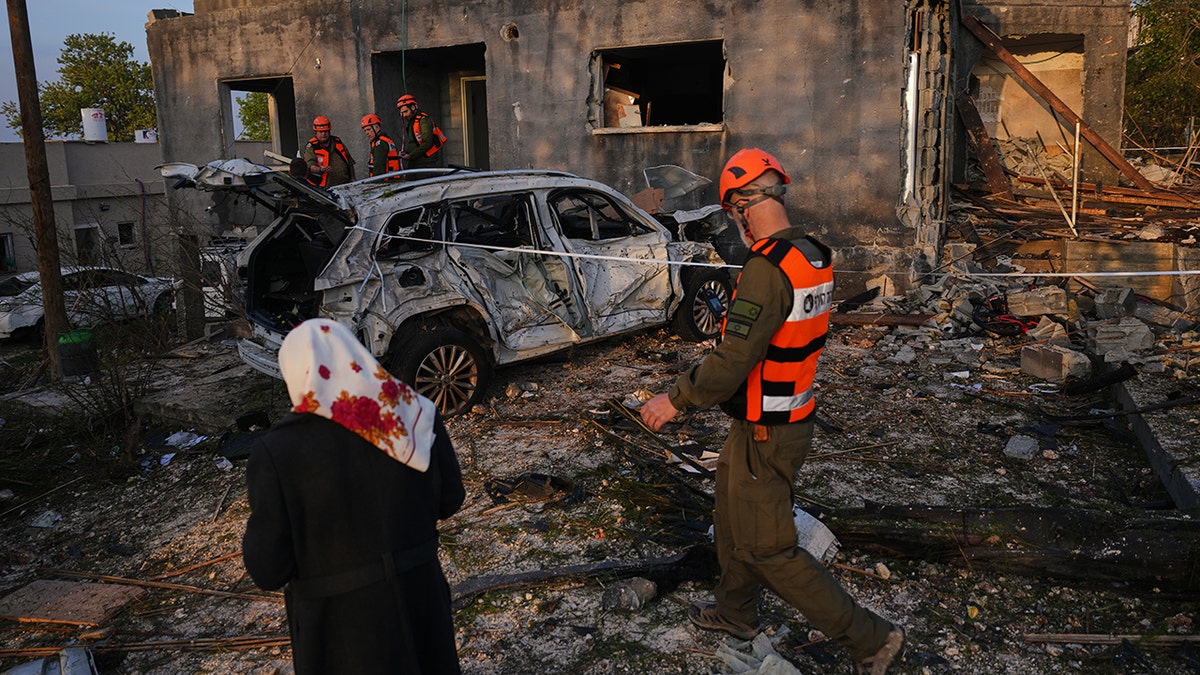
Residents and officers from Israel’s Home Front Command inspect a house destroyed by an Iranian missile strike in Zarzir, northern Israel, Friday, March 13, 2026. (Ariel Schalit/AP Photo)
Bechtol said the only way to stop this is through sanctions enforcement against North Korea. «The sanctions that are needed are already on the books. But the USA and our key allies need to robustly enforce them. We need to go after banks, front companies and cyber entities in order to squeeze the money and contain or destroy the supply chain.»
He said, «More emphasis needs to be placed, and more action needs to be taken using the Proliferation Security Initiative — an underused aspect of preventing North Korea’s arms from flowing to rogue nations and terrorist groups. If you cut off the supply chain, you cut off the proliferation.»
war with iran, north korea, kim jong un, mojtaba khamenei, israel, conflicts











NEWYou can now listen to Fox News articles!
St. Paul, MINN. – From Times Square to here in Minnesota’s state capital, communist and socialist activists at the nationwide «No Kings» protests escalated their anti-America campaign and openly called for a nationwide economic strike on May 1, an international communist holiday known as May Day, as key Democratic activists joined their call.
At the rally here in St. Paul, organizers, speakers and activists distributed communist literature, waved flags from socialist governments and revolutionary movements, and urged demonstrators to transform the day’s protests into a nationwide shutdown of work, school and commerce.
By early Sunday, Press TV, the propaganda arm of the Islamic Republic of Iran, leveraged news of the protests to tell readers, «Regime change begins at home’: No Kings, No War protests held across US.»
As Fox News Digital reported, about 500 organizations with an estimated combined annual revenue of about $3 billion sponsored and organized the demonstrations, creating a centralized protest apparatus even while organizers tried to market the activists as «grassroots.»
The network included traditional Democratic advocacy organizations, like Indivisible, MoveOn and the American Federation of Teachers, alongside openly socialist and communist groups such as the Party for Socialism and Liberation, Freedom Road Socialist Organization and local chapters of the Communist Party USA, including the Twin Cities Communist Party USA club, which endorsed the St. Paul rally.
500 GROUPS WITH $3B IN REVENUES ARE BEHIND THE #NOKINGS PROTESTS AND COMMUNIST CALL FOR ‘REVOLUTION’
Kevin Dwire, a candidate for the U.S. Senate from the Socialist Workers Party, holds «The Militant» newspaper during the «No Kings» protest in St. Paul, Minn., on March 29, 2026. (Derek Shook for Fox News Digital)
Offstage at the celebrity-filled «No Kings» protest in St. Paul, activists with the Party for Socialism and Liberation sold a manifesto, «Socialist Reconstruction: A Better Future for the United States,» filled with Marxist teachings.
Yards away, near the main stage, Kevin Dwire a candidate for the U.S. Senate from the Socialist Workers Party, sold copies of the «Communist Manifesto» by Karl Marx and Friedrich Engels, the 1847 work that would transform the next century’s global politics. The group says it is «part of the continuity of revolutionary Marxism,» tracing back to Marx, Vladimir Lenin and Leon Trotsky.
In the middle of the lawn, flags for the Islamic Republic of Iran, Venezuela and Cuba flew next to a flag of the Freedom Road Socialist Organization, a self-described Marxist group.
In the back of the lawn, a young man who identified himself only as «Mason» championed the teachings of the Revolutionary Communists of America. A young woman nearby sold copies of Socialist Alternative, which describes itself as a «revolutionary organization working to build a movement for a democratic, socialist society.»
‘NO KINGS’ CALLS ITSELF LEADERLESS, BUT ITS OWN INTERNAL DOCUMENTS TELL A VERY DIFFERENT STORY
Across the country, from Los Angeles to New York City, pro-communist Americans marched alongside traditional center-left Democrats in an alliance that many mainstream media outlets largely portrayed simply as anti-Trump protests.
The ideological adherents themselves, however, were not shy about their beliefs.
In Times Square, members of the Revolutionary Communists of America chanted: «There is only one solution — communist revolution,» while waving red flags bearing the hammer and sickle.
The common refrain from these groups was a call for a nationwide strike on May 1, the traditional May Day holiday long embraced by communist and socialist movements as a day of mass political action.
At the St. Paul rally, that call received support from the stage.
Ezra Levin, the co-founder of Indivisible, the protest’s key organizer, joined the communist call for a national strike and urged protesters to prepare for economic disruption on May Day, similar to a shutdown that saw limited success in Minneapolis during protests on Jan. 23 against Immigration and Customs Enforcement.
«I want everyone here to put this on their calendar… It is a tactical goal, an escalation… It is an economic show of force, inspired by Minnesota’s own day of truth and action,» Levin told the crowd.
Levin continued: «On May 1, on May Day, we are saying, ‘No business as usual.’ No work, no school, no shopping. We’re going to show up and say, ‘We’re putting workers over billionaires and kings.’»
While Indivisible has participated in May Day coalitions before, the prominence of socialist organizations in the protest ecosystem illustrates the growing influence of the far left within networks that overlap with mainstream Democratic political organizing.
Indivisible Project, a nonprofit whose work is often marketed with just the first word of the group’s name, has received $5 million in recent years from billionaire George Soros’ Open Society philanthropy arm.
POWER COUPLE OF CHAOS: HOW A TYCOON AND ACTIVIST BUILT A ‘REVOLUTIONARY BASE’ AT THE HOUSE OF SINGHAM

Members of the Freedom Road Socialist Organization, a Marxist group, raise their flag over the «No Kings» protest at the Minnesota State Capitol in St. Paul, Minn,, on March 28, 2026. (Derek Shook for Fox News Digital)
Meanwhile, some of the openly pro-communist groups marching alongside Democratic activists are connected to a global activist network funded by Neville Roy Singham, an American-born tech tycoon now based in Shanghai, promoting messaging critical of U.S. democracy and sympathetic to China’s political model.
That network includes media and organizing hubs such as the People’s Forum, BreakThrough BT Media Inc.’s BreakThrough News, CodePink, the ANSWER Coalition and the Party for Socialism and Liberation, which have received funding and support through the Singham network.
Over the years, Singham, who sold his tech company for approximately $800 million in 2017, has provided $22.4 million to People’s Forum, $1.3 million to CodePink and $1.1 million to BreakThrough BT Media Inc. The ANSWER Coalition and Party for Socialism and Liberation have received support through their relationships with the People’s Forum.
The network has funded conferences, media outlets and activist organizations promoting narratives that portray the United States as a «fascist» and «hyper-imperialist» power while defending the authoritarian governments of China, North Korea, Venezuela, Cuba and the Islamic Republic of Iran.

Socialist and communist political literature sits on a table during a No Kings protest in St. Paul, Minnesota, March 29, 2026. (Derek Shook for Fox News Digital)
The theme echoed throughout the protests, where demonstrators warned of rising «fascism» in the United States.
In the hours after the protests ended, the activist networks celebrated the demonstrations online. In Los Angeles, CodePink posted video showing its banner in the middle of a protest where demonstrators chanted: «Hey, hey, ho ho, Donald Trump has got to go.»
BreakThrough News shared videos from protests in San Francisco, Washington, D.C., Houston and Gainesville, Florida, declaring: «Massive demonstrations took place as part of the ‘No Kings Day.’»
The outlet blasted what it described as Trump’s «right-wing agenda of endless wars and deportations.»
The ANSWER Coalition circulated video showing Indivisible, CodePink and the Party for Socialism and Liberation marching together in Chicago, writing that the «people of Chicago take the streets to stand against Trump’s agenda.»
Indivisible Chicago responded with three fire emojis, revealing the emerging synchronicity between traditionally Democratic groups and openly pro-communist organizations.
The ANSWER Coalition operates out of the People’s Forum in New York City, which also celebrated the demonstrations online with the caption, putting its stamp on the day: «No Kings Day NYC.»
Leaders tied to some of these activist groups, including CodePink co-founders Jodie Evans and Medea Benjamin, have participated in delegations to Venezuela, Cuba, Iran, North Korea and China, strengthening relationships with governments frequently at odds with U.S. foreign policy. Evans married Singham in 2017, as he started funding this network in the U.S.

A demonstrator leaned a Party for Socialism and Liberation sign against the porta-toilet at the end of the «No Kings» protest in St. Paul, Minn. (Asra Q. Nomani/Fox News Digital)
Back in St. Paul, even some socialist activists expressed skepticism about those alliances.
Dwire, the Socialist Workers Party leader selling copies of Marx’s manifesto, shook his head when discussing China’s political system. «China socialism is capitalism,» he said.
The young activist from the Revolutionary Communists of America also distanced himself from China’s government, describing it as a betrayal of communist ideals, while he openly embraced communist ideology. «We are against imperialism,» he told Fox News Digital.

Protester organizers dump American flags in the trash after the «No Kings» demonstration in St. Paul. (Asra Q. Nomani/Fox News Digital)
As the rally wound down and crews dismantled stage equipment, the protest grounds began to empty.
A demonstrator propped a Party for Socialism and Liberation sign against a porta-toilet.
Nearby, two American flags lay discarded in the grass beside a heap of garbage bags, an emptied bag of Cheez-It visible among the trash.
Kyle Schmidbauer contributed to this report.
politics, us protests, minnesota fraud exposed, socialism
INTERNACIONAL
Quién es la científica argentina que fue detenida en Brasil acusada por el robo de un virus peligroso

Mientras la justicia brasileña avanza en la investigación acerca del robo de un peligroso virus, se conocieron detalles acerca de la científica argentina que fue detenida y está siendo acusada.
Soledad Palameta Miller, de 36 años, es especialista en Virología y Bacteriología de los Alimentos. Se desempeñaba como docente, investigadora y coordinadora del área afectada dentro del Instituto de Biología de la Universidad Estatal de Campinas (Unicamp), en el estado de San Pablo, desde 2022.
Según confirmaron medios locales y fuentes oficiales, fue arrestada en una primera etapa de la investigación, aunque días después recuperó la libertad bajo condiciones judiciales, mientras continúa imputada. Su familia negó las acusaciones y asegura que la denunciaron para perjudicarla.
Palameta Miller se recibió de licenciada en Biotecnología de la Universidad Nacional de Rosario. Su carrera la desarrolló, en gran parte, en Brasil, donde trabajó en el Laboratorio Nacional de Biociencias en proyectos vinculados a vectores virales, inmunomodulación y anticuerpos monoclonales dirigidos a terapias contra el cáncer, informó Clarín.
A la par hizo un posdoctorado en virología y participó en investigaciones relacionadas con el desarrollo de vacunas y pruebas diagnósticas.
La científica rosarina Soledad Palameta Miller fue detenida y luego liberada en el caso de la presunta sustracción de material biológico en un centro de investigación de alta seguridad de Brasil. (Foto: NA)
En la actualidad, coordinaba un laboratorio enfocado en la vigilancia epidemiológica y en el desarrollo de diagnósticos y terapias vinculadas a virus transmitidos por alimentos y agua de la Facultad de Ingeniería de Alimentos.
Soledad y su marido, un ciudadano estadounidense identificado como Michael Miller, son socios en la empresa Agrotrix Biotech Solutions, cuya actividad principal es la investigación y el desarrollo experimental en ciencias físicas y naturales.
Leé también: Israel impidió que un cura pueda celebrar la misa del Domingo de Ramos en la iglesia de Jerusalén: “Fue la primera vez en siglos”
Desde la universidad brasileña involucrada emitieron varios comunicados donde informaron que iniciaron una investigación interna para esclarecer lo sucedido. Al mismo tiempo, remarcaron que el caso está en manos de la Justicia.
La Unicamp explicó que se trató de un episodio aislado y que se actuó enseguida para detectar el material desaparecido. Asimismo, indicó que los laboratorios involucrados operan bajo estrictos protocolos de bioseguridad y que todo el material incautado quedó bajo custodia de las autoridades, encargadas de realizar las pericias para determinar con precisión qué tipo de virus es.
Cómo se descubrió el caso
El episodio se remonta al 13 de febrero, cuando se detectó la desaparición de material biológico almacenado en un laboratorio de nivel 3, uno de los más estrictos en términos de bioseguridad. Este tipo de instalaciones manipula agentes que pueden provocar enfermedades graves o incluso mortales, con capacidad de transmisión aérea, lo que elevó de inmediato la preocupación de las autoridades.
El caso se mantuvo en reserva durante varias semanas, hasta que el rectorado de la universidad lo hizo público el 23 de marzo a través de un comunicado oficial. Allí se informó que, ante la gravedad del hecho, se dio intervención a la Policía Federal de Brasil y a la Agencia Nacional de Vigilancia Sanitaria (Anvisa), que colaboró con asistencia técnica en la investigación.
Ese mismo día, los primeros avances derivaron en la detención en flagrancia de un sospechoso vinculado al robo. En paralelo, se llevaron adelante dos allanamientos ordenados por la Justicia federal de Campinas, que permitieron recuperar el material sustraído. Las muestras fueron posteriormente enviadas al Ministerio de Agricultura y Ganadería para su análisis.

El robo ocurrió dentro de la Unicamp. (Foto: Unicamp)
Desde la universidad evitaron brindar detalles sobre la naturaleza específica de los virus y bacterias involucradas, argumentando que revelar esa información podría comprometer el curso de la investigación. No obstante, remarcaron que todo el material recuperado se encuentra actualmente bajo custodia de las autoridades federales.
Palameta Miller, en tanto, fue trasladada a una unidad penitenciaria femenina en San Pablo y liberada al día siguiente. Según el informe de la Policía Federal, enfrenta cargos por hurto agravado, fraude procesal y transporte ilegal de organismos genéticamente modificados.
La defensa de la investigadora sostiene que no existen pruebas concluyentes de un robo y argumenta que la utilización del laboratorio respondía a la falta de instalaciones propias para sus investigaciones. En ese sentido, el caso también abrió un debate sobre las condiciones de trabajo en el ámbito científico.
Mientras tanto, los investigadores no descartan la posible participación de otras personas, entre ellas el entorno cercano de la acusada. La causa sigue abierta y bajo estricta reserva.
Brasil, Detenida, Virus
INTERNACIONAL
George Simenon, el gran escritor belga de novela negra cuya obra nunca se agota: su personaje del comisario Maigret vuelve a la carga

El legado de Georges Simenon ha sido indiscutible para la literatura universal y, particularmente, para el género negro. Entre novelas protagonizadas por el comisario Maigret, relatos firmados bajo casi una treintena de seudónimos y obras que exploran las contradicciones del alma humana, la figura del autor belga sigue generando interrogantes a más de tres décadas de su fallecimiento. La multiplicidad de ángulos desde los que se ha abordado su biografía y su obra, así como el éxito editorial sostenido de sus títulos, reflejan las paradojas que rodean al hombre y al mito.
Las cifras asociadas a la trayectoria de Simenon configuran una dimensión que escapa a lo habitual en el mundo de las letras: el autor alcanzó los 550 millones de ejemplares vendidos de sus libros y vio sus obras traducidas a 55 lenguas y publicadas en 44 países. Entre sus más de 190 novelas y numerosas colecciones de relatos, destaca la serie de Maigret, con un total de 75 novelas, 28 novelas cortas y multitud de adaptaciones cinematográficas y televisivas. Esta desbordante productividad ha convertido a Simenon en el escritor belga más traducido y en uno de los nombres esenciales de la literatura de misterio.
La infancia y juventud de Simenon transcurrieron en Lieja, ciudad a la que mantuvo un vínculo ambivalente de pertenencia y extrañeza. Según narra Pierre Assouline en la biografía considerada referente sobre el escritor, la vida de Simenon permanece “intocada por la investigación biográfica” y está marcada por el enigma, un rasgo visible desde su nacimiento, ya que su madre le registró como nacido un día antes para esquivar la superstición sobre el viernes 13. Creció bajo la influencia de una familia de clase media, rodeado por una burguesía conservadora, y experimentó desde niño la distancia emocional respecto a su entorno, lo que él mismo vinculaba con el origen de su vocación literaria.
De los ambientes marginales a icono del ‘noir’
En su adolescencia, Simenon se vio obligado a trabajar para sostener a la familia tras la enfermedad de su padre, adoptando el seudónimo de G. Sim en sus primeros artículos como reportero de sucesos en La Gazette de Liège. El contacto con ambientes marginales y bohemios resultó clave en su formación y alimentaría después el universo heterogéneo de personajes y escenarios en su narrativa. En aquellos años se unió al círculo artístico de La Caque, donde conocería a su primera esposa, Régine Renchon, denominada Tigy, y escribiría su primera novela, En el puente de los Arcos, en 1920.

A comienzos de los años veinte, Simenon y Tigy se trasladaron a París con el compromiso mutuo de sacrificar sus carreras en favor de quien triunfase antes. El desembarco en la capital francesa resultó decisivo para la consolidación del joven autor. Experimentó distintos formatos, desde relatos cortos hasta novelas populares escritas a un ritmo vertiginoso (se ha señalado que llegaba a producir ochenta páginas al día y dictaba a su secretaria, Boule), lo que le garantizó no solo éxito comercial sino también una capacidad narrativa fuera de lo común.
La forja del personaje de Maigret, central en la obra del autor, tuvo lugar al borde de los muelles holandeses, mientras Simenon vivía y escribía a bordo de una gabarra llamada Osthrogoth. Aunque la leyenda ha atribuido la creación del comisario a una sola inspiración, la realidad, según la biografía de Assouline, es más difusa: el nombre aparece inicialmente en una novela sentimental bajo seudónimo y solo después se concreta el perfil del corpulento inspector de policía.

Maigret ha sido descrito como alguien ajeno al cliché: no es un genio deductivo ni violento, sino un hombre paciente, serio y dado más a ponerse en la piel del otro que a brillar en la sala de interrogatorios. Su método vital se asemeja a su propio ethos diario: jornadas estructuradas, paseos matinales buscando ideas, un proceso introspectivo en el que el autor anotaba los rasgos de sus personajes y la trama antes de escribir.
George Simenon y el cine
La presencia de Simenon en la cultura popular ha sido sostenida tanto por la fuerza del personaje de Maigret como por la adaptación de sus obras a otros medios. Solo en Francia, más de cincuenta filmes han trasladado a la pantalla su universo y los actores que han encarnado al comisario (desde Jean Gabin o Bruno Cremer a Rowan Atkinson), han contribuido a fijar el perfil del personaje en el imaginario colectivo. La televisión ha producido series en Francia, Reino Unido, Italia y Estados Unidos, mientras que las editoriales han continuado reeditando su obra: en 2021, Acantilado y Anagrama unieron esfuerzos para lanzar ediciones traducidas y cuidadas del catálogo de Simenon.
Ahora se estrena en nuestro país la película Maigret y la muerte, del director francés Pascal Bonitzer, en la que Denis Podalydès encarna al célebre personaje en una intriga en la el comisario será llamado con urgencia al Quai d’Orsay después de encontrar acribillado a un ex embajador.
Otros intérpretes, como Gérard Depardieu, ya dieron vida al comisario, en este caso a las órdenes de Patrice Leconte en 2022. También directores tan importantes como Claude Chabrol, adaptaron sus obras (en Betty o Los fantasmas del sombrerero), también Bertrand Tavernier en El relojero de Saint-Paul o el mítico Jean-Pierre Melville en El guardaespaldas o incluso Jean Renoir en La noche de la encrucijada. En España, el director Agustí Villaronga lo abordó también en su película El pasajero clandestino.

El hijo de Arnold Schwarzenegger debutó en una competencia de fisicoculturismo y la diferencia con su padre causó furor

Communists, Democrats use #NoKings rally to call for May Day strike: ‘Shut it down’

Las prepagas vuelven a subir en abril: cuánto subirán las cuotas y qué empresas ya lo confirmaron

Quién es la científica argentina que fue detenida en Brasil acusada por el robo de un virus peligroso

La Coalición Cívica busca modificar las PASO en la provincia de Buenos Aires para que dejen de ser obligatorias

Por qué Carmiña Masi odia a Georgina Barbarossa tras su expulsión de Gran Hermano: “La más…”

Máximo Kirchner salió al cruce de Milei y Macri tras el fallo por YPF a favor de la Argentina

Ian Lucas contó que Maxi López le advirtió sobre su romance con Evangelina Anderson: “No seas bol…”

La secretaria del piloto denunció que el amigo de Adorni la hostiga y la justicia dispuso medidas

¡DERIVA ECONÓMICA Y SOBERBIA POLÍTICA! El abismo entre el «relato oficial» y la realidad de una clase media que no aguanta más

 POLITICA2 días ago
Máximo Kirchner salió al cruce de Milei y Macri tras el fallo por YPF a favor de la Argentina
- POLITICA2 días ago
La secretaria del piloto denunció que el amigo de Adorni la hostiga y la justicia dispuso medidas
- POLITICA3 días ago
¡DERIVA ECONÓMICA Y SOBERBIA POLÍTICA! El abismo entre el «relato oficial» y la realidad de una clase media que no aguanta más