INTERNACIONAL
ISIS soldiers behead Christians in Mozambique, burning church and homes: ‘Silent genocide’

NEWYou can now listen to Fox News articles!
International observers are reporting that ISIS-aligned soldiers are beheading Christians and burning churches and homes in central and southern Africa – with some of the most brutal attacks happening in the nation of Mozambique.
The Middle East Media Research Institute (MEMRI) – a counter-terrorism research nonprofit based in Washington, D.C. – is sounding that alarm about what it describes as a «silent genocide» taking place against Christians.
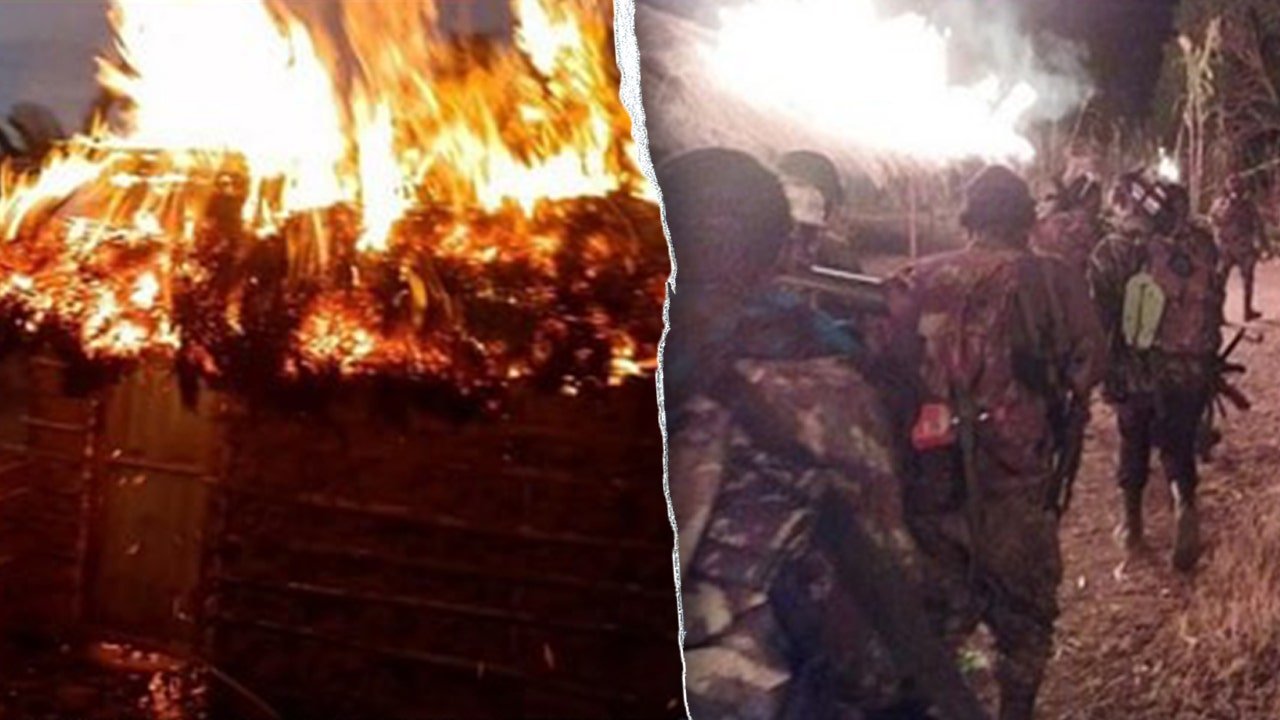
The Islamic State Mozambique Province (ISMP) recently released 20 photos boasting of four attacks on «Christian villages» in the Chiure district, in Mozambique’s northern Cabo Delgado province, according to MEMRI.
MEMRI said the photos show ISIS operatives raiding villages and burning a church and homes. The images also allegedlydepict the beheadings of a member of what the jihadists consider «infidel militias» and two Christian civilians. Rampaging jihadist groups celebrated the killings. Photos also showed the corpses of several members of those so-called «infidel militias,» according to the institute’s analysis.
«What we see in Africa today is a kind of silent genocide or silent, brutal, savage war that is occurring in the shadows and all too often ignored by the international community,» MEMRI Vice President Alberto Miguel Fernandez told Fox News Digital.
ISLAMIST TERRORISTS KILL 49 CHRISTIANS IN AFRICAN CHURCH MASSACRE; EYEWITNESS REVEALS HORRIFIC DETAILS
ISIS operatives raided Christian villages and burned homes in Mozambique. (Middle East Media Research Institute)
«That jihadist groups are in a position to take over not one, not two, but several countries in Africa – take over the whole country or most of several countries – is dangerous,» Fernandez, a former U.S. diplomat, said. «It’s very dangerous for the national security of the United States let alone the security of the poor people who are there – Christians or Muslims or whoever they are.»
The Islamic State Central Africa Province (ISCAP) also recently released several photos of their own documenting a July 27 attack against the Christian village of Komanda in the Democratic Republic of the Congo’s Ituri province. Islamic State-affiliated soldiers opened fire at a Catholic Church and set fire to homes, stores, vehicles and possessions. At least 45 people were killed, according to MEMRI. The photos show burning facilities and the corpses of Christians.
Fernandez explained to Fox News Digital that the goal of these jihadist groups is «eliminating Christian communities,» as they push down from safe havens and Muslims are «given a choice: ‘either join us or you too will face killing and annihilation.’»
«Christians, of course, are not going to be asked to join,» Fernandez told Fox News Digital. «Christians are going to be targeted and destroyed.»
The United Nations migration agency said Monday that attacks by insurgents in Mozambique’s northern Cabo Delgado province displaced more than 46,000 people in the span of eight days last month.
The International Organization for Migration said nearly 60% of those forced from their homes were children.
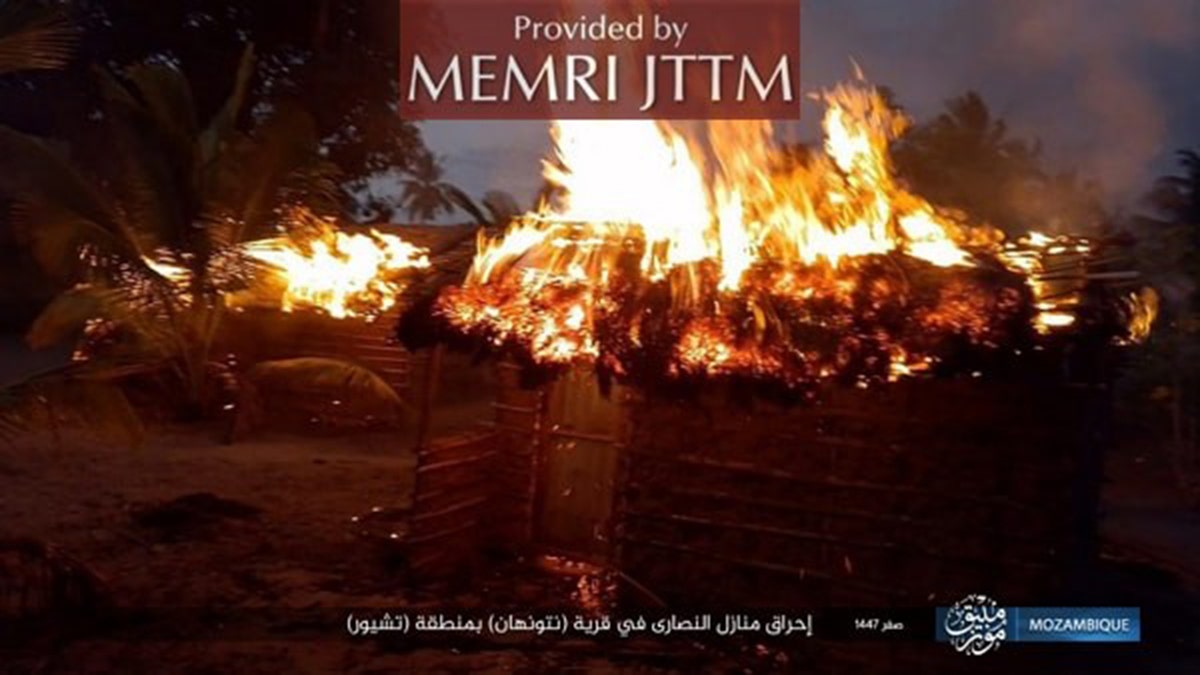
ISIS fighters set fire to Christian villages in Mozambique. (Middle East Media Research Institute)
In a separate report, the U.N.’s humanitarian office said the wave of attacks between July 20 and July 28 across three districts in Cabo Delgado caused the surge in displacements.
While the United Nations references attacks, its reporting has not detailed deaths or specified the targets. At least nine Christians in the Cabo Delgado province were reportedly killed in separate attacks by Islamic insurgents during that timeframe.
«I’m no fan of the United Nations in general, but I think what they’re doing is kind of the lowest common denominator,» Fernandez told Fox News Digital. «It’s kind of easy to be vague like that. The fact that some of this and some of the worst of it is happening because of a deep anti-Christian animus, hatred of Christians, religiously-based hatred of Christians is something that the UN usually doesn’t like to talk about.»
Fighters from Islamic State Mozambique allegedly captured and beheaded six Christians in the village of Natocua in the Ancuabe district of Mozambique’s Cabo Delgado Province on July 22, according to MEMRI.
POPE LEO XIV CONDEMNS BRUTAL MACHETE ATTACK THAT KILLED 49 CHRISTIANS DURING PRAYER IN DR CONGO
Barnabas Aid, an international Christian charity, pointed to reporting by the Terrorism Research & Analysis Consortium claiming another three Christians were slaughtered in the Chiure district in attacks on July 24 and 25.
The southern African nation has been fighting an insurgency by Islamic State-affiliated militants in the north for at least eight years. Rwandan soldiers have been deployed to help Mozambique fight them.
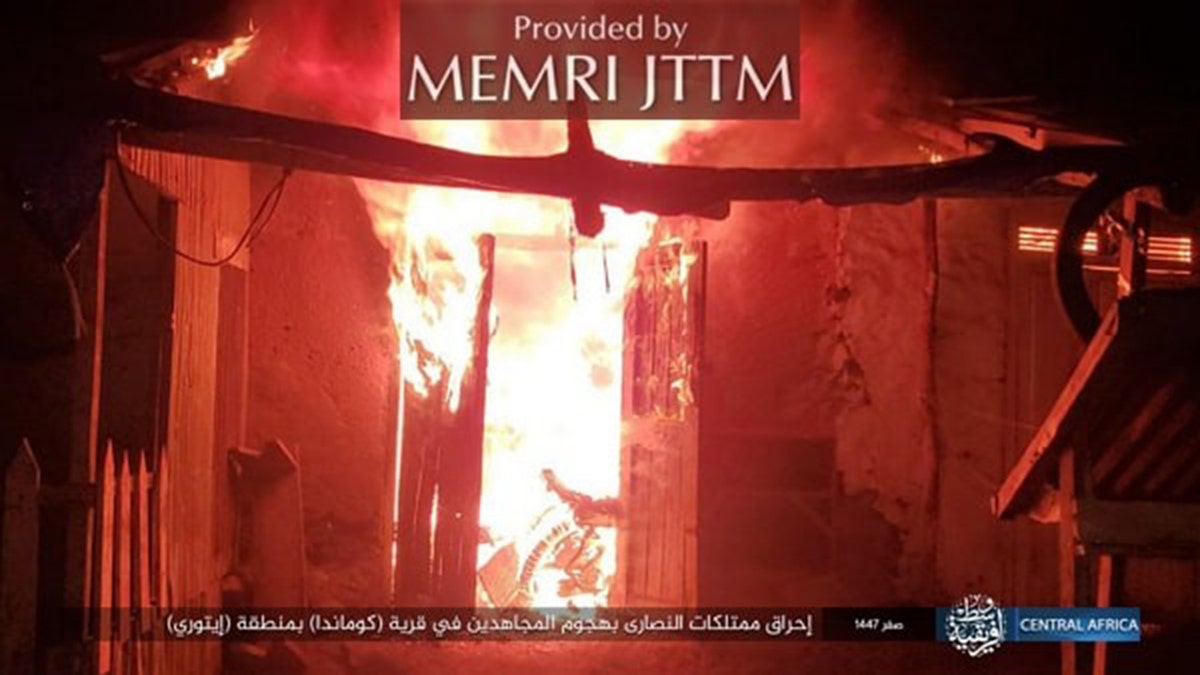
Structures burned in Mozambique ISIS attacks. (Middle East Media Research Institute)
The jihadist groups have been accused of beheading villagers and kidnapping children to be used as laborers or child soldiers. The U.N. estimates that the violence, and the impact of drought and several cyclones in recent years, has led to the displacement of more than 1 million people in northern Mozambique.
Fernandez said that he feels the Trump administration «has refreshingly been tough and strong when it comes to jihadist terrorism» – but what’s happening in Africa typically does not receive as much attention compared to the Middle East. He pointed to how Trump’s intervention in the U.S. brokering a ceasefire deal between Rwanda and the Democratic Republic of Congo helps offset jihadist groups that take advantage of security vacuums and ungoverned spaces to expand control.
Fernandez also warned about the threat of jihadist ideology. After the Islamic State was «very strongly defeated» in the Middle East during Trump’s first administration, he said branches are now looking to weaker territories to expand their influence.
«It’s kind of like a whack-a-mole situation,» Fernandez said, explaining that the Islamic State not long ago controlled a pseudo-state the size of the United Kingdom between Syria and Iraq. «What we need to see is them to be utterly defeated in Africa, so people will say, people on the sidelines or people on defense will say, ‘Well obviously these people did not have the mandate of Allah, the mandate God, they were losers, they lost.’ That’s what we need.»
Doctors Without Borders said it has launched an emergency response to help thousands of recently displaced people who now live in camps in Chiure district.
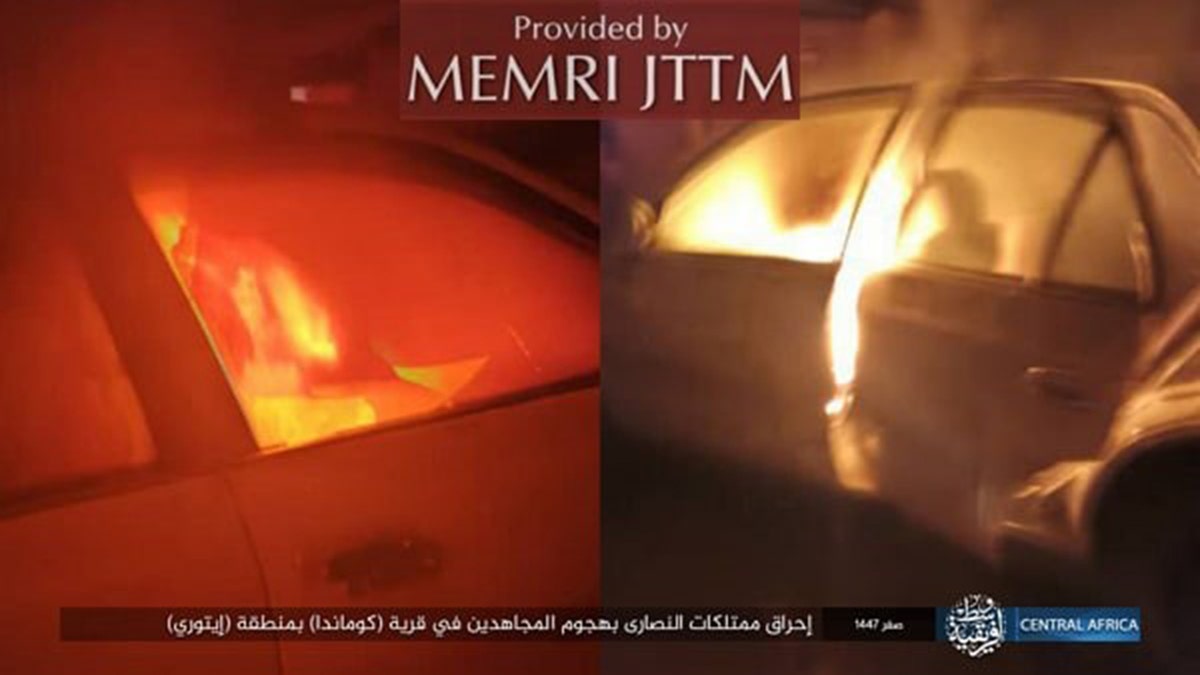
Vehicles set on fire by ISIS soldiers in Africa. (Middle East Media Research Institute)
Cabo Delgado has large offshore natural gas reserves, and the insurgency caused the suspension of a $20 billion extraction project by French company TotalEnergies in 2021.
CLICK HERE TO GET THE FOX NEWS APP
Meanwhile, the Congolese army said last month that attacks in the village of Komanda in the conflict-battered region were carried out by the Allied Democratic Force, which is backed by the Islamic State. The group has mostly targeted villagers in eastern Congo and across the border in Uganda. ADF leaders pledged allegiance in 2019 to the Islamic State and have sought to establish an Islamic caliphate in Uganda.
The Associated Press contributed to this report.
africa,christianity religion,terrorism





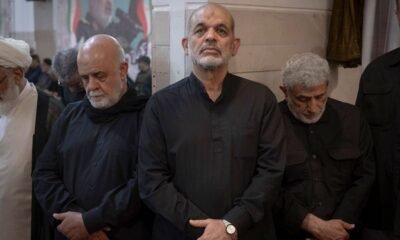


El precio del petróleo se disparó y las acciones se desplomaron el jueves después de que el presidente Donald Trump, en un discurso desde la Casa Blanca, dijo que la guerra contra Irán estaba “cerca de concluir”, pero no ofreció un calendario concreto y se comprometió a realizar más ataques.
En un discurso de 19 minutos pronunciado el miércoles por la noche, Trump dijo que las fuerzas estadounidenses golpearían a Irán “con extrema dureza en las próximas dos o tres semanas”. Los inversores que esperaban señales más claras de una desescalada del conflicto se sintieron decepcionados.
Leé también: Trump echó a la fiscal general de EE.UU. en medio de la polémica por la gestión del caso Epstein
La guerra, que ya ha entrado en su quinta semana, ha provocado una crisis energética que amenaza con elevar el costo de vida en los países ricos y privar a las regiones vulnerables de productos básicos como la electricidad y el combustible para cocinar.
Los precios del petróleo se disparan
- El precio del crudo Brent, la referencia mundial del petróleo, saltó a unos 108 dólares el barril para entrega en junio, un 7 por ciento más. El martes se situaba en 101,16 dólares.
- El crudo West Texas Intermediate, la referencia estadounidense, rondaba los 106 dólares el barril para entrega en mayo, un 6 por ciento más. El martes se situaba en 100,12 dólares.
- Los inversores y analistas han seguido enfocados en el estrecho de Ormuz desde que comenzaron los enfrentamientos hace más de un mes. La estrecha vía fluvial entre Irán y Omán es una ruta comercial vital para el petróleo y el gas natural, por la que normalmente fluye hasta una quinta parte del suministro mundial de petróleo.
Las acciones caen drásticamente
- Las bolsas de toda Asia, donde los países importan grandes cantidades de petróleo y gas, bajaron el jueves, invirtiendo la fuerte subida del día anterior. El Nikkei 225 de Japón descendió un 2,4 por ciento. Las acciones de Corea del Sur fueron las que peores resultados obtuvieron, con una caída del 4,5 por ciento.
- Las Futures del S&P 500 apuntaban a un descenso del 1,3 por ciento cuando se reanudaran las operaciones bursátiles en Estados Unidos el jueves. El S&P 500 subió 0,7 por ciento el miércoles.
- Los futuros del S&P 500 apuntaban a un descenso del 1,3 por ciento cuando se reanudaran las operaciones bursátiles en Estados Unidos el jueves. El S&P 500 subió 0,7 por ciento el miércoles.
- Las bolsas europeas bajaron el jueves. El Stoxx 600, un amplio índice europeo, y el DAX alemán cayeron más de 1 por ciento. El FTSE 100 británico cayó menos del 1 por ciento.
Los precios de la gasolina subieron
- Los precios de la gasolina en Estados Unidos volvieron a subir el jueves hasta una media nacional de 4,08 dólares el galón, según el club automovilístico AAA. El costo para los conductores ha subido un 37 por ciento desde que empezó la guerra.
- Los precios de la gasolina no se mueven al compás del crudo, sino que suelen ir unos días por detrás de las subidas o bajadas.
- Los precios del gasóleo han aumentado aún más rápidamente, llegando a 5,51 dólares el jueves, un 47 por ciento más desde el comienzo de la guerra.
Lo que dicen: una guerra prolongada podría obligar a un racionamiento ‘económicamente destructivo’
- Chris Wright, secretario de Energía de Estados Unidos, dijo en las redes sociales tras el discurso de Trump que el “trastorno a corto plazo de los mercados energéticos es temporal”.
- Los analistas de la industria energética han advertido que el impacto, especialmente en Asia, donde los países dependen en gran medida de las importaciones de petróleo y gas, podría durar mucho más que el fin de los combates. El tráfico marítimo que sale del golfo Pérsico a través del estrecho se ha interrumpido en la práctica desde que comenzó la guerra el 28 de febrero, y se han dañado infraestructuras energéticas cruciales. Restablecer un flujo constante de suministros llevará tiempo.
- La empresa de investigación Oxford Economics indicó en un informe publicado el miércoles que la guerra ya ha provocado un déficit del 10 por ciento entre la oferta y la demanda mundial de petróleo. Una guerra prolongada que corte aún más las fuentes de energía obligaría a los países a cambiar su forma de utilizar y producir energía, lo que daría lugar a un mayor uso del carbón y a trastornos en las cadenas de suministro de las economías emergentes.
- “Cuanto más dure la interrupción, más se desplazará el ajuste hacia el racionamiento, el resultado económicamente más destructivo”, decía el informe.
The New York Times, Donald Trump
INTERNACIONAL
Putin lanzó una ofensiva de Viernes Santo: al menos seis muertos por un ataque a Ucrania con misiles y drones
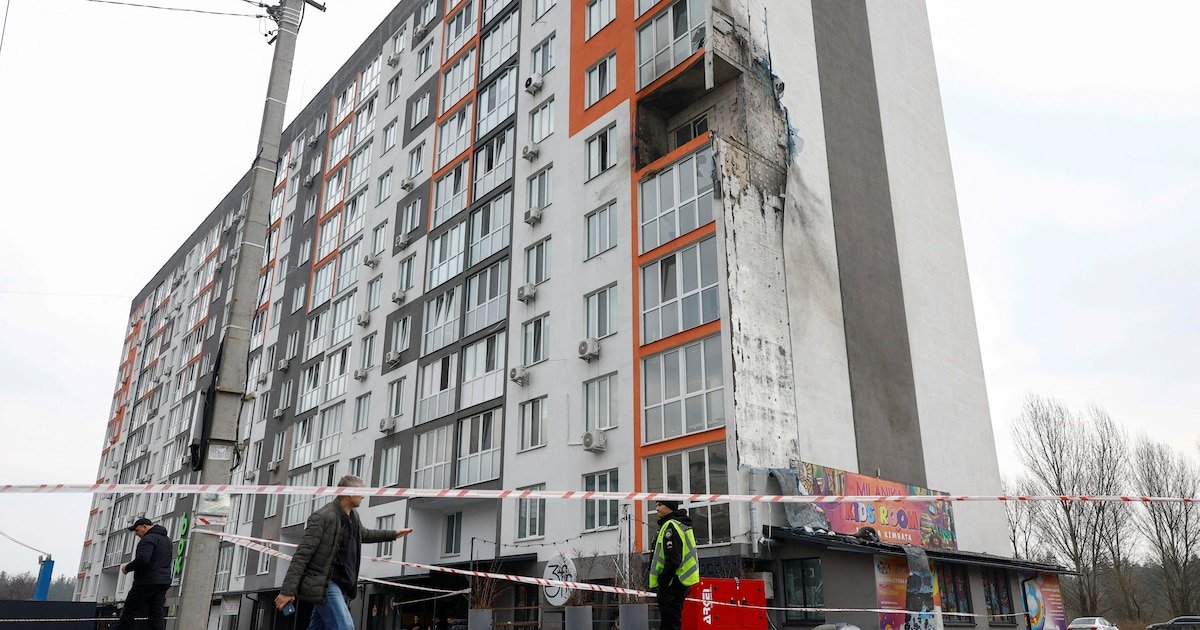
El Ejército ruso lanzó este viernes por la mañana misiles y drones contra varias regiones de Ucrania situadas sobre todo en el centro del país, según ha informado la Fuerza Aérea ucraniana, que da cuenta en tiempo real de este ataque masivo poco habitual llevado a cabo a plena luz del día por las fuerzas del Kremlin.
Una de las primeras administraciones regionales en informar de los efectos del ataque ha sido la de Kiev.
Según dijo el gobernador de la región capitalina en Telegram, que calificó el ataque ruso de “masivo”, al menos una persona ha muerto y otra ha resultado herida a consecuencia del bombardeo en la región. Luego se confirmó que la cifra total del país alcanza al menos a seis víctimas mortales.

Durante una conversación telefónica con el papa León XIV, el presidente ucraniano Volodimir Zelensky afirmó que Rusia intensificó sus ataques y convirtió “lo que debería haber sido silencio en los cielos en una escalada de Pascua”.
Según el mandatario, el ataque ocurrió mientras ambos dialogaban. Previamente, Zelensky había expresado la disposición de Kiev para una tregua durante las festividades de Pascua, aunque el Kremlin indicó que no había recibido ninguna propuesta en ese sentido.

La empresa nacional ucraniana de electricidad, Ukrenergo, había informado previamente de cortes de electricidad en seis regiones de Ucrania a consecuencia del ataque con drones que Rusia lanzó por la noche.
Rusia suele atacar la retaguardia con drones y misiles de larga distancia. En las últimas semanas, sin embargo, las fuerzas rusas han llevado a cabo sin contar el de hoy dos bombardeos diurnos, dirigidos, sobre todo, contra regiones del oeste y el centro de Ucrania.
Por otra parte, un avión militar ruso Su-30 se estrelló hoy en la anexionada península ucraniana de Crimea durante un vuelo de entrenamiento, la segunda catástrofe aérea ocurrida en esta región en los últimos tres días, tras el siniestro de un transporte militar con 30 ocupantes.
“Hoy alrededor de las 11:00 hora de Moscú (08:00 GMT) en la República de Crimea se accidentó un avión Su-30 durante un vuelo de entrenamiento”, informó el Ministerio de Defensa de Rusia.
Según el mando militar ruso, “el avión no portaba armamento”.
“La tripulación se catapultó y fue evacuada por un equipo terrestre de búsqueda y rescate. La vida de los dos pilotos no corre peligro”, concluyó Defensa.


El pasado miércoles un avión de transporte militar ruso An-26 se estrelló contra un acantilado en Crimea, provocando la muerte de las 30 personas que estaban a bordo.
La península de Crimea, una región estratégica por su acceso al mar Negro, fue anexionada ilegalmente por Rusia en 2014 tras un controvertido referéndum no reconocido por la comunidad internacional y Ucrania.
El Ministerio de Defensa ruso descartó posteriormente que el transporte militar hubiese sido derribado por el Ejército ucraniano y atribuyó el hecho a una “violación de las normas de vuelo”
El Kremlin desmintió este viernes que haya impuesto a Ucrania un plazo para la retirada de tropas del Donbás, pero señala que ello ayudaría para alcanzar un acuerdo de paz.

“No hay plazos. Eso es completamente falso”, respondió el portavoz del Kremlin, Dmitri Peskov, en su rueda de prensa telefónica diaria.
Sin embargo, admiten que una decisión así ayudaría para resolver el conflicto cumpliendo las demandas rusas, por lo que el presidente ucraniano, Volodimir Zelenski, “debe asumir la responsabilidad política y tomar la decisión adecuada”.
Peskov insistió en que Rusia ha afirmado en diversas ocasiones que para poner fin a la guerra “Ucrania debe retirar sus tropas del Donbás”.
“Esto debe hacerse. Ello facilitaría verdaderamente la transición hacia una solución política y diplomática del conflicto”, añadió.
Al mismo tiempo, el portavoz del Kremlin subrayó que la posición actual que mantiene Rusia es “continuar con la operación militar especial hasta que se alcancen todos los objetivos establecidos”.
(Con información de EFE)
War,Europe,Military Conflicts
NEWYou can now listen to Fox News articles!
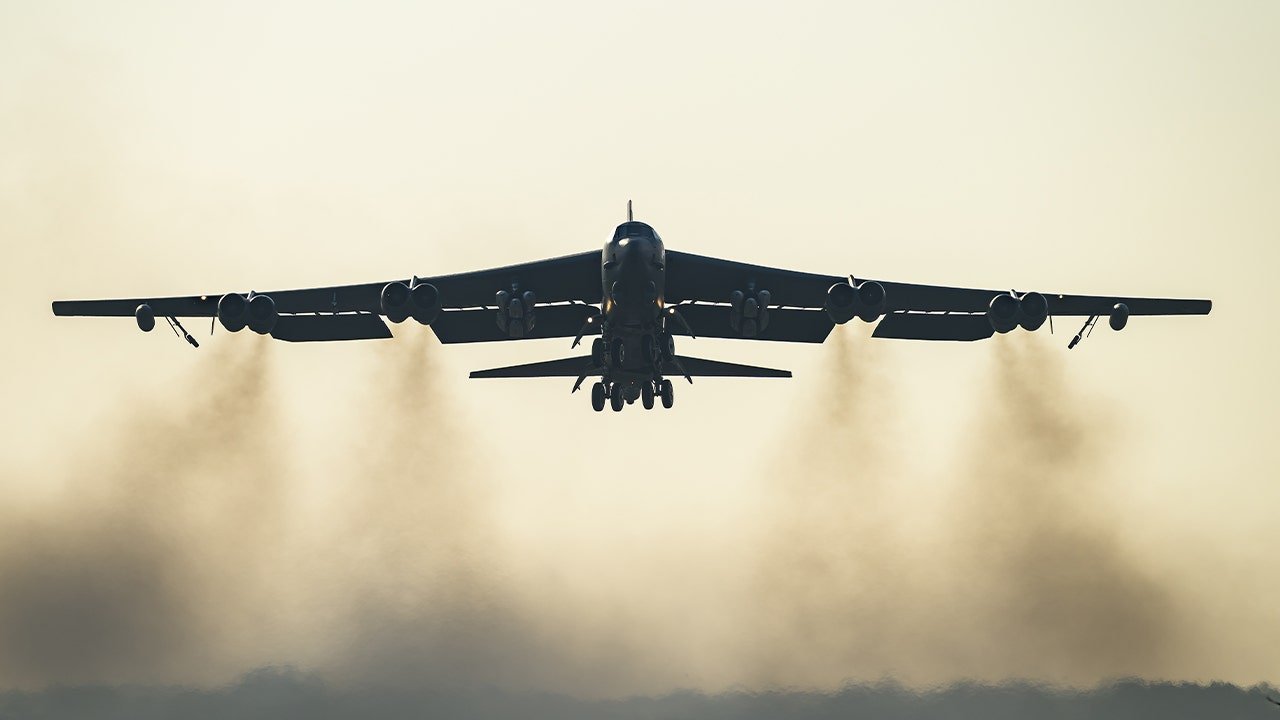
The U.S. is now flying B-52 bombers over Iran — an operational shift that signals American forces have achieved air superiority inside parts of the country after weeks of strikes degraded Tehran’s defenses.
Chairman of the Joint Chiefs of Staff Gen. Dan Caine said in a briefing Tuesday the missions began «given the increase in air superiority,» as U.S. forces expand operations inside Iranian territory.
President Donald Trump said during an address to the public Thursday night that Iran’s air defenses had been «annihilated,» calling U.S. forces «unstoppable.»
«We are in this military operation … for 32 days,» he said. «And the country has been eviscerated and essentially is really no longer a threat.»
TRUMP SAYS IRAN ‘NO LONGER A THREAT’ AFTER 32 DAYS — OUTLINES NEXT PHASE OF US WAR
The bomber, first used during the Cold War and flown for about 70 years, allows the U.S. to expand the pace and flexibility of its strikes. Unlike earlier stand-off attacks focused on fixed targets, B-52s can remain over the battlefield and hit multiple targets in a single mission, including mobile systems and hardened sites, Mark Gunzinger, a retired Air Force colonel and former B-52 command pilot, told Fox News Digital.
The development signals the U.S. has moved beyond the initial phase of degrading Iran’s air defenses and is now able to operate more freely inside the country’s airspace, allowing for sustained, higher-volume strikes as the campaign enters a potentially more intense phase.
The aircraft can carry up to 70,000 pounds of ordnance — more than any other bomber in the U.S. arsenal — and deliver a mix of precision-guided bombs and long-range cruise missiles in a single mission.
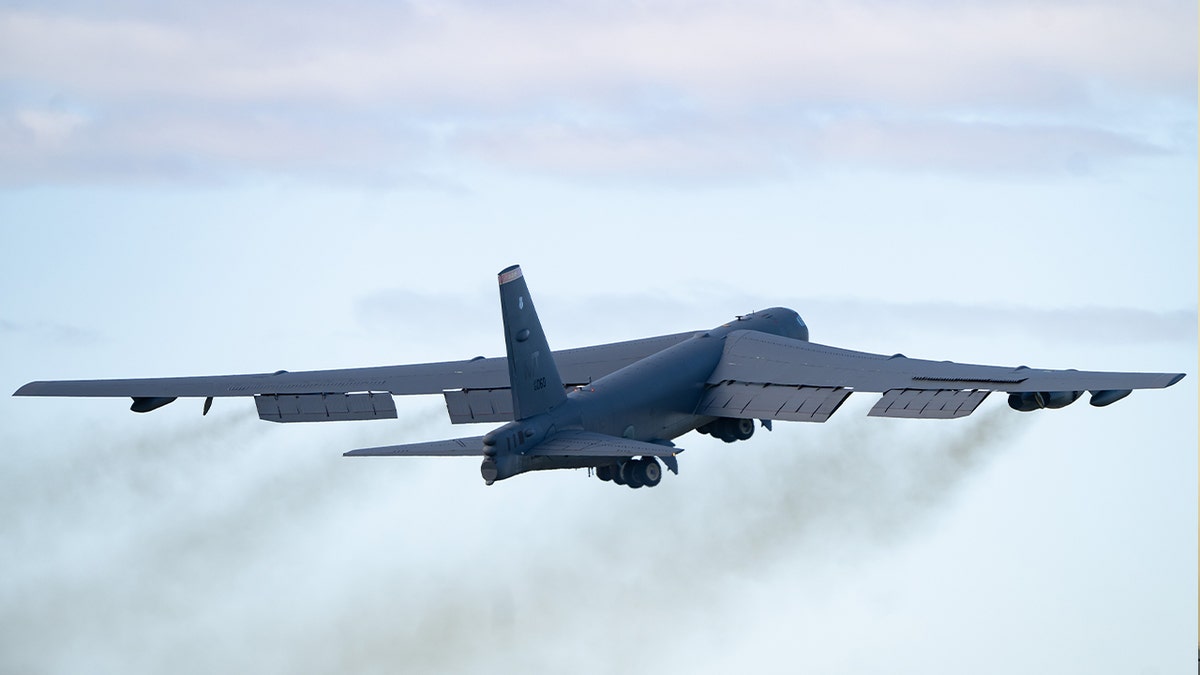
The bomber, first used during the Cold War and flown for about 70 years, allows the U.S. to expand the pace and flexibility of its strikes. (Leon Neal/Getty Images)
But the bomber is slower than modern aircraft and lacks stealth, making it more vulnerable to radar and air defenses — conditions that would typically keep it out of contested airspace.
«The fact that these B-52s are now flying over Iran is clear evidence that we have air superiority — and even air dominance over parts of Iran,» Gunzinger said.
Gunzinger said that level of control allows U.S. forces to operate more freely over Iran, including remaining over the battlefield and striking targets as they emerge rather than relying solely on pre-planned, long-range attacks.
While U.S. officials have emphasized growing control of the skies, air superiority does not eliminate all threats. Iran still retains missile and drone capabilities, and has relied on asymmetric tactics throughout the conflict to continue attacks despite losses to its air defenses.
Early in the campaign, B-52s fired long-range cruise missiles from outside Iranian airspace. More recently, bombers operating from U.S.-operated UK base Royal Air Force Fairford have been seen carrying precision-guided bombs — a shift that reflects growing U.S. control of the skies and the move toward closer-range strikes.
«B-52s flying in Iran’s airspace shows America’s complete air dominance — and guaranteed, there are also F-22s and F-35s at high altitude on overwatch,» Rebecca Grant, a military analyst, told Fox News Digital. «They bring the big bomb payload for direct attacks on Iran’s drone and missile factories, plus underground targets.»
The Pentagon could not immediately be reached for comment.
During the June 2025 strikes on Iran’s nuclear facilities, stealth B-2 bombers led the assault, dropping massive bunker-buster bombs on hardened sites like Fordow and Natanz.
B-52s, meanwhile, were deployed to the region as part of the broader U.S. buildup — positioned to support sustained operations if needed.
MORE THAN 90% OF IRANIAN MISSILES INTERCEPTED, BUT A DANGEROUS IMBALANCE IS EMERGING
Chairman of the Joint Chiefs of Staff Gen. Dan Caine said the missions began «given the increase in air superiority,» as U.S. forces expand operations inside Iranian territory. (Matthew Horwood/Getty Images)
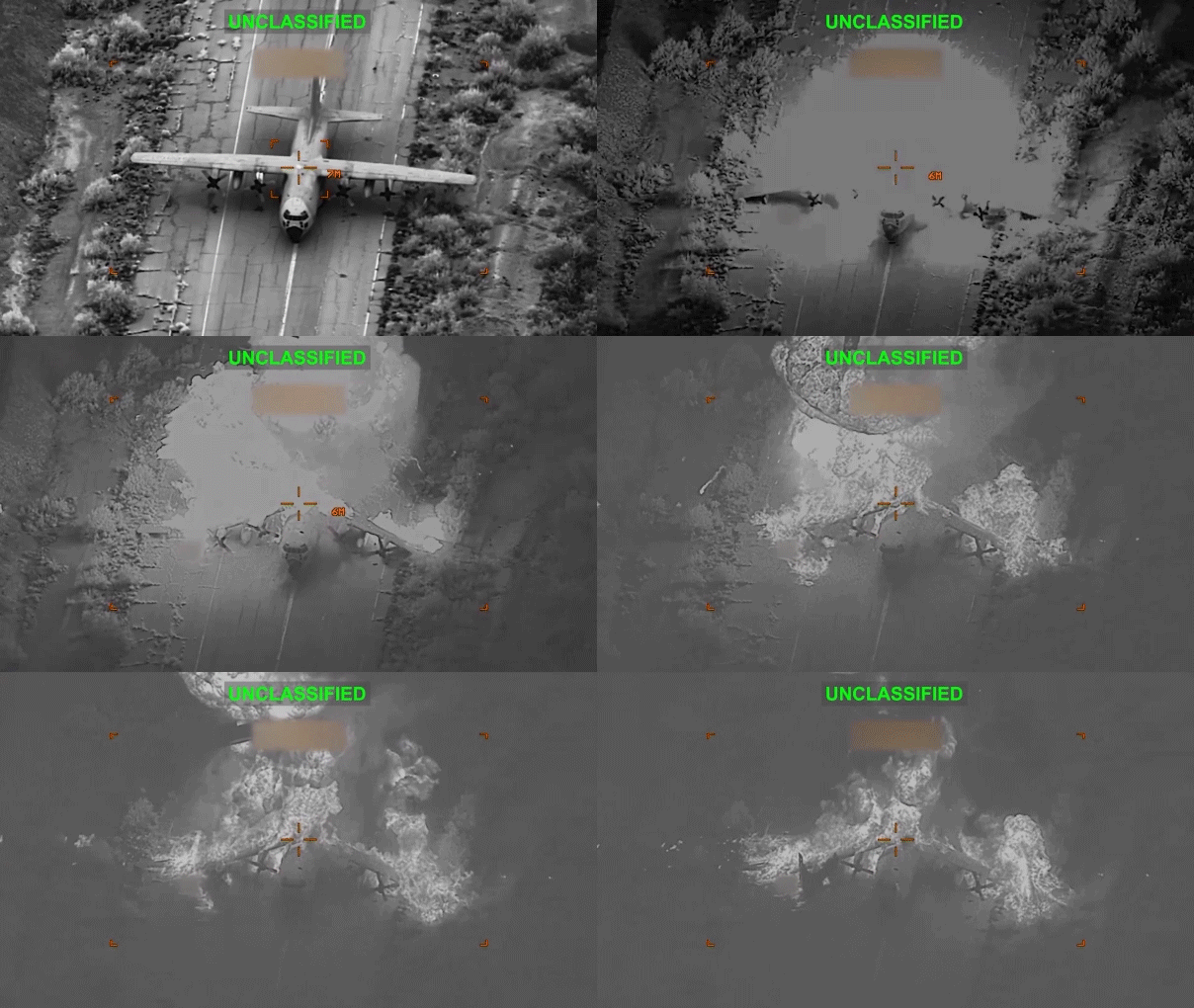
CENTCOM shared footage of strikes against airplanes amid the Iran war. (U.S. Central Command on X)
The latest development signals the U.S. has moved beyond the initial phase of degrading Iran’s air defenses and is now able to operate more freely inside the country’s airspace, allowing for sustained, higher-volume strikes as the campaign enters a potentially more intense phase.
The expanded freedom of action could become more important as the campaign enters what Trump has described as its final phase, with U.S. officials signaling that strikes could intensify in the coming weeks.
«If you really want to devastate Iran’s ability to continue to launch missiles and drones, you would want to use bombers to do that,» Gunzinger said.
Gunzinger added that the U.S. is using a significant portion of its combat-ready bomber fleet to sustain operations, underscoring the scale of the campaign as it enters what could be its most intense phase.
«Our bomber force now totals 140 aircraft,» he said, referring to B-2s, B-52s and B-1Bs. «If you scale that down to how many are ready to go to combat today, you’re probably at less than 50.»
«That is a dramatic change since the end of the Cold War era, where we had over 400 bombers, so we’re using a good percentage — I’d say a majority — of our combat capable bombers for this fight, to sustain this fight.»
CLICK HERE TO DOWNLOAD THE FOX NEWS APP
Built in the early 1960s for nuclear war against the Soviet Union, the B-52 Stratofortress was never designed to operate inside modern, heavily defended airspace — making its current use over Iran a reflection of how much those defenses have been degraded.
While U.S. officials have emphasized growing control of the skies, air superiority does not eliminate all threats. Iran still retains missile and drone capabilities, and has relied on asymmetric tactics throughout the conflict to continue attacks despite losses to its air defenses.
conflicts defense, air and space, air force, war with iran

Trump promete más ataques a Irán y el petróleo sube de precio y la bolsa cae

Se cancela oficialmente la versión prevista para Nintendo Switch de Ratatan y sus responsables explican por qué – Nintenderos

Ahora sí, Artemis II ya va directo a la Luna tras una maniobra clave: cuándo llegará

El ministro Mahiques se anotó en dos concursos para ser fiscal en Comodoro Py

Simeone sobre los cantos racistas en España: «Es un problema social, se perdió el respeto»

Gremio de gastronómicos cerró aumento de sueldo para rama clave

Dos jubiladas que le habrían prestado dinero a Manuel Adorni negaron conocerlo

Quiénes son las dos acreedoras del préstamo con el que Adorni compró su departamento en Caballito

El Gobierno reevalúa la estrategia de comunicación por el caso Adorni y mide el impacto en la imagen de Milei

Milei se pone al frente de la defensa de Adorni y lo suma a un acto por Malvinas en una nueva muestra de respaldo

 POLITICA2 días ago
El Gobierno reevalúa la estrategia de comunicación por el caso Adorni y mide el impacto en la imagen de Milei
- POLITICA1 día ago
Milei se pone al frente de la defensa de Adorni y lo suma a un acto por Malvinas en una nueva muestra de respaldo
- POLITICA18 horas ago
AFAgate: el juez Armella le derivó la causa a su colega González Charvay, como pretendían Tapia