
INTERNACIONAL
La belleza de la semana: las raras formas del anonimato


Tríptico del Maestro de Delft
En el año 2016, cuando el Museo del Prado celebró los quinientos años de la muerte de El Bosco —el flamenco nacido como Jheronimus van Aken—, los curadores pusieron como apertura de la exposición el óleo Mercado de telas de Bolduque. Aquella postal vertical —la plaza del pueblo copada por el mercado de paños— tenía una referencia insoslayable a su autor: entre las casas que se ven recortando el horizonte, en la séptima, empezando por la derecha, vivió El Bosco. En esa plaza jugaba todos los días.
Además de ser un registro histórico muy específico, la historiadora del arte Pilar Silva Maroto explicaba en el catálogo de la muestra que se trataba de una escena religiosa: en el primer plano, San Francisco, “patrono de los pañeros”, reparte telas entre los pobres. También destacan la gama de colores, la escala de representación, los detalles, y cuando se empezaban a agotar las capas de sentido, se supo, por fin, la verdad: esa pintura no era de El Bosco, sino de alguien desconocido. Una obra anónima.
El registro más antiguo de una firma es de hace 5 mil años. Siglo XXXIII antes de Cristo. En Uruk, una antigua ciudad de Mesopotamia, esa zona histórica entre los ríos Tigris y Éufrates, en la actual Irak, un tal Kushim dejó su nombre grabado junto al conteo de granos. En aquel pasado remoto, durante el comienzo de la Edad de Bronce en el Antiguo Oriente Próximo, el tal Kushim escribió en una tabla de arcilla que habían entrado 29.086 medidas de cebada en 37 meses. Sobre el final, su firma.

¿Qué pasaba a su alrededor? La ilusión óptica parece decirnos que eran épocas intrascendentes, olvidables, anónimas; no, la marea del tiempo borró sin piedad los dibujos en la arena. Los registros existían; simplemente desaparecieron. Quizás ocurra lo mismo dentro de miles de años con este presente. Con suma excepcionalidad, este tal Kushim, un comerciante sumerio con alguna habilidad para la contabilidad, atravesó las gruesas paredes del tiempo —54 siglos— y llegó hasta esta extrañísima actualidad.
“La identificación de cada individuo es el pilar sobre el que se apoya la actual organización del mundo”, escribe el español Álex Grijelmo en La perversión del anonimato. “A partir de aquel hecho primigenio, la humanidad ha construido toda una cultura en torno al nombre, símbolo y requisito de una evolución compleja y firme, la esencia de la civilidad. Un fenómeno que se ha dado en todas las agrupaciones humanas, sin excepción; próximas o lejanas, cultivadas o salvajes”.
En el arte, la firma aparece recién con el Renacimiento, aquella bisagra entre la Edad Media y la Edad Moderna, entre el feudalismo y el capitalismo, entre el mundo religioso y el mundo secular, etcétera, etcétera: siglos XV y XVI. Claro, el ser humano adquiría un rol protagonista en el progreso, pero también se puede pensar el asunto desde lo más cotidiano y elemental: ¿por qué, para qué, un artista que acaba de terminar un tapiz, un grabado, una pintura, necesitaría escribirle, en un rincón, su nombre?
En aquel entonces, en Occidente, no se pintaba mucho por fuera de la gran temática religiosa: escenas sagradas, personajes clásicos, santos, ángeles, Dios. Una sociedad —una civilización, dirán después—, en una época y un tiempo específicos, que guiaban la mano bendecida del artista para celebrar sus creencias. Obras fabulosas surfearon el tiempo sin develar la identidad de su autor. La mayoría, justo antes del Renacimiento. La historiografía del arte llamó a estos misteriosos “maestros anónimos”.

A los “maestros anónimos” se los llamó por una cualidad distintiva. Se usó un “nombre convenido” o “de emergencia”. Por ejemplo, al Maestro de la leyenda de Santa Úrsula, un flamenco activo en el siglo XV, se lo definió así por un políptico que representa escenas de Santa Úrsula. También ocurría que se asociaba rápido a un pintor ya existente. Cuando Theodore Thore reunió sesenta obras de Vermeer; al final se validó la mitad. Muchos aprovecharon el malentendido para vender cuadros carísimos.
Al Maestro de Artés se lo conoce así porque hizo una obra encomendada por la familia Artés para decorar la capilla de los cartujos de Porta Coeli. Hizo varias, en todas prevalece su estilo característico. Estuvo activo en Valencia en el siglo XV y se lo considera uno de los grandes articuladores de las culturas pictóricas flamenca, italiana y provenzal. La fecha de aquella obra pedida es la única referencia cronológica. Algo similar ocurre con el Maestro de Delft. Apenas un dato; lo demás es sombra y silencio.

¿Por qué una firma en el rincón del cuadro? La respuesta se bifurca en dos líneas, siempre pensadas para el futuro: o como marca, para posicionarse en el mercado, o como registro, para la posteridad. En ambos casos, lo que aparece es una subjetividad nueva, una especulación concreta: una operación que no solo certifica la originalidad frente al escribano, también pone a la figura del artista por encima de la obra misma, incluso de la sociedad que lo cincela y de la época que lo esculpe.
El 22 de febrero de 1969 Michel Foucault da una conferencia en la Sociedad Francesa de Filosofía titulada ¿Qué es un autor? donde dice que “si estamos acostumbrados a presentar al autor como genio, como surgimiento perpetuo de novedad, es porque en realidad lo hacemos funcionar de un modo exactamente inverso”. De este modo, el autor, dice Foucault, es “la figura ideológica mediante la que se conjura la proliferación del sentido”, lo que “rarifica” la ficción. Pero, ¿ganaría la obra si el autor se oculta?
Sin embargo, la anulación de la autoría es un fenómeno bastante presente. La cultura como un eterno scrolleo donde se ven productos culturales disímiles, fugaces, persuasivos, es una forma de ocultar algo que ya decía Marx con su fetichismo de la mercancía, donde las cosas adquieren tanto énfasis que se borra el trabajo que hay detrás, como si fueran puestas en la góndola por parte de magia, como si no estuvieran sujetas a determinados modos de explotación, como si fueran “naturales”.

Si es como dice Foucault, que “desde el siglo XVIII el autor ha jugado el papel de regulador de la ficción, papel característico de la era industrial y burguesa, de individualismo y propiedad privada”, ¿cambió su rol en este capitalismo acelerado, financierizado y digital? En esa conferencia de 1969, el filósofo francés deslizaba que “no hay ninguna necesidad de que la función-autor permanezca constante en su forma, en su complejidad o en su existencia”. Auguraba su desaparición.
En el scrolleo frenético aparecen cosas hechas con inteligencia artificial. Aunque torpe, vago, limitado, hay un autor desarrollando esas construcciones estéticas. ¿O detrás de esos textos esquemáticos y reciclados no hay un humano guiando a la máquina? ¿O detrás de esas imágenes de líderes fascistas hipertrofiados no hay un fan susurrándole al oído deseos al algoritmo? ¿Qué estatuto tiene el autor ahí? ¿Una variante del sueño foucaultiano? ¿Y la obra?: la referencia de una referencia de una referencia.
Lo que hoy existe envuelto en la tónica de lo normal, mañana será un monstruo a decodificar. ¿Qué pensarán los ciborgs del siglo XXX cuando analicen la cultura que ahora, en este momento, estamos engendrando? Desde el fondo del pasado, y sin un contexto claro, los signos nos acechan malignos. Lo que ayer se talló con la imaginación diaria, el futuro lo mira con extrañeza, como algo salido, ya no de otra época, sino de otro mundo. Habrá quienes digan: un mundo peor. Yo no estaría tan seguro.

Tríptico del Maestro de Delft
Cuando el alemán Max Friedländer encontró el retablo de la Virgen de la Iglesia de Santa María de Lübeck no supo qué pensar. Era el año 1915, aún no había llegado el nazismo, no había tenido que exiliarse en Ámsterdam, faltaba para todo eso, había tiempo para imaginar. Buscó nombres, escuelas, ciudades, corrientes: nada. Todo era diferente. Algunos decían que era Georges Marlier, otros Jan van Dornicke, pero no, él sabía que eso era imposible, que había algo muy singular en esa obra.
Friedländer recolectó varias, armó un corpus; los historiadores lo continuaron. Los especialistas dicen que este enigmático pintor introdujo “una nueva tridimensionalidad plástica y espacial”. Cuando Friedländer examinó aquel retablo encontró un número tallado en la madera: 1518. “Lo llamaré, momentáneamente, Maestro de 1518″, pensó. Y así lo llamamos hoy: Maestro de 1518. Apenas un número. Al final, todos, artistas o no, somos eso: un número. La historia determinará cuáles suman y cuáles restan.

NEWYou can now listen to Fox News articles!
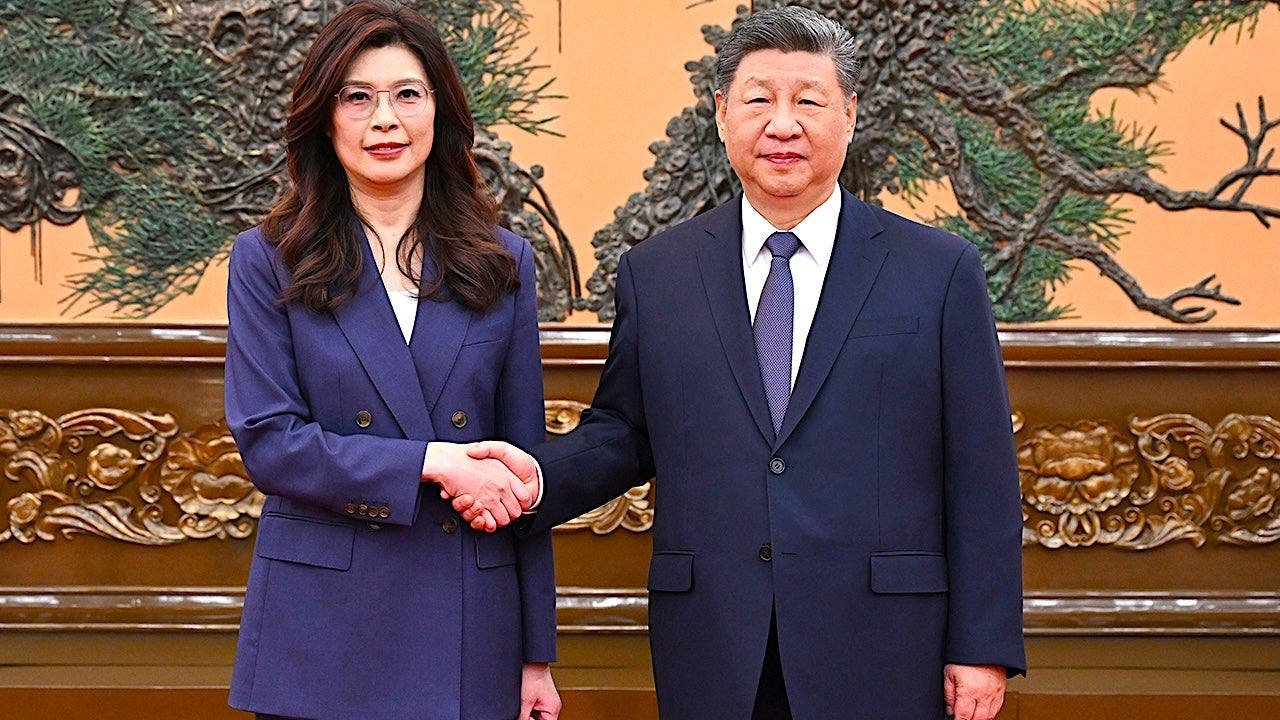
KAOHSIUNG – Taiwan: For the first time in nearly a decade, the People’s Republic of China (PRC) supreme leader and the head of the communist party, Xi Jinping, held a meeting with the chairperson of Taiwan’s main opposition party. Cheng Li-wun, chairwoman of the Chinese Nationalist Party (also known as the Kuomintang, KMT), met Xi in Beijing on Friday.
Before their closed-door meeting the pair posed for pictures . Xi said that Taiwan is historically a part of China and remains an «inalienable» and «inseparable» part of Chinese territory. He said the «rejuvenation of the Chinese nation» was a «broader trend» that will not change. China’s state-controlled media and government officials often repeat these party lines, even though, after its establishment in 1949, the communist regime has not ruled Taiwan for a single day.
The two met in their capacities as heads of their respective political parties. China refuses to speak to the democratically elected government of Taiwan, led by President Lai Ching-te of the Democratic Progressive Party (DPP). The DPP won Taiwan’s presidential elections in 2016, 2020, and 2024, although in 2024 it narrowly lost control of the parliament to an opposition coalition led by the KMT.
TAIWAN ‘WILL NOT ESCALATE, BUT WILL NOT YIELD’ TO CHINESE INTIMIDATION, FOREIGN MINISTER WARNS
In this photo released by Xinhua News Agency, Chinese President Xi Jinping, right shakes hands with Kuomintang (KMT) party leader Cheng Li-wun in Beijing on Friday, April 10, 2026. (Xie Huanchi/Xinhua via AP)
The meeting came as Taiwan is mired in a dispute over defense spending, with the opposition coalition blocking President Lai’s proposed $40 billion special defense budget. During a recent visit to Taipei, Sen. Jim Banks, R-Ind., said approval of the package would send a clear message that Taiwan is prepared to invest in its own defense and «peace through strength.»
Hours before Cheng and Xi smiled for the cameras, Lai did not directly mention the Beijing meeting, but said on social media that any compromise with an authoritarian regime would damage Taiwan’s sovereignty. There are also concerns that if the special budget isn’t approved soon, the willingness of President Donald Trump to sell weapons to Taiwan could change should Trump decide to strike some kind of deal with Xi at a possible meeting in May.
Xi’s term «rejuvenation of the Chinese nation,» which was repeated by Cheng, is a reference to the goal of China becoming a – if not the – major world power by 2049, the centennial of the founding of the communist PRC.

Taiwanese President Lai Ching-te, center, walks before an offshore anti-terrorism drill at the Kaohsiung harbor in Kaohsiung, southern Taiwan, Sunday, June 8, 2025. (Chiang Ying-ying/AP)
In comments that are sure to evoke controversy in Taiwan, Cheng repeated much of Xi’s phrasing, claiming that in the more than 100 years of interactions between the KMT and the CCP, «all we ever wanted is to guide the Chinese nation out of decline and toward rejuvenation.» Cheng went on to say, «The great Chinese rejuvenation involves people on both sides of the strait. It is about the reawakening and resurgence of Chinese civilization.»
That’s not how many here in Taiwan see things. Rose Chou, 45, works as an administrator in one of the biggest primary schools in Kaohsiung, southern Taiwan’s largest city and a major port. Chou told Fox News Digital it was time for Taiwan to dump any connection to being China or a part of China. «Yes, I want a Republic of Taiwan. I have an 18-year-old son. And yes, I realize we may have to fight. I’m willing to fight.»
US LAWMAKERS WARN TAIWAN TO ‘MEET THE MOMENT’ AS CHINA STAGES INVASION-STYLE DRILLS
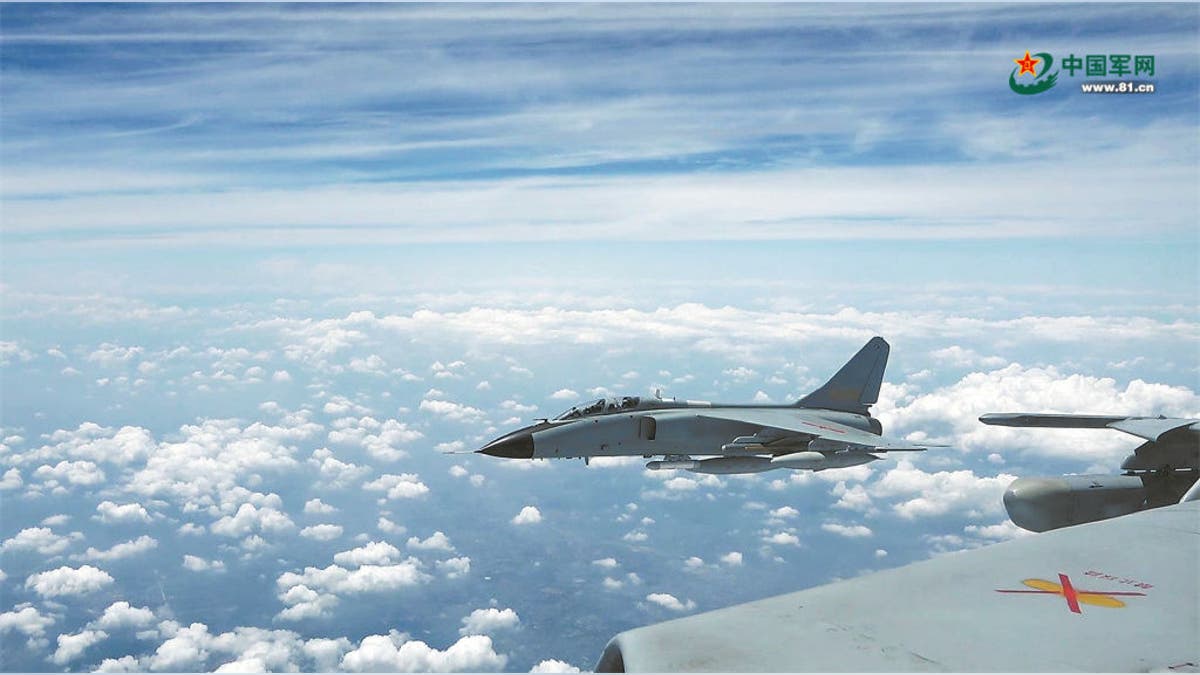
A screen grab captured from a video shows the Chinese People’s Liberation Army’s Eastern Theater Command launching large-scale joint military exercises around Taiwan with naval vessels and military aircraft in China on May 24, 2024. Led by the People’s Liberation Army (PLA), «integrated operations inside and outside the island chain are being conducted to test the command’s capabilities to jointly take battlefield control and launch joint strikes, and to seize control of crucial areas,» Li Xi, the spokesman for the PLA Eastern Theater Command, said. (Photo by Feng Hao / PLA / China Military/Anadolu via Getty Images) (Feng Hao/PLA/China Military/Anadolu via Getty Images)
Chou readily admitted that most people she knows favor maintaining the status quo. A very small number, she said, are committed to the idea of unification – but under what terms they hope that could occur, Chou said she didn’t know.
Under the status quo that dates from the end of the Chinese civil war in 1949, Taiwan’s official name remains the Republic of China, to nominally indicate that Taiwan is a part of China, just not «Red China.» This formula previously satisfied the communist regime in Beijing, but – especially since Xi Jinping’s rise – Beijing has pushed Taiwan towards outright submission.
A meeting between the head of the KMT and the CPP hasn’t happened in almost a decade, but there is precedent. A KMT chair met Xi in 2015, and again in 2016, and separately, in 2015, then-Taiwan president Ma Ying-jeou met Xi in Singapore, during which each addressed the other as «Mister,» and titles used were «Leader of Taiwan» and «Leader of Mainland China,» respectively.
In a statement after the meeting, a spokesperson for the American Institute in Taiwan, the de facto U.S. embassy in Taipei, said, «The United States supports cross-Strait dialogue. We expect cross-Strait differences to be resolved by peaceful means, free from coercion, in a manner acceptable to the people on both sides of the Strait. Meaningful cross-Strait exchange should focus on dialogue between Beijing’s leadership and Taiwan’s democratically elected authorities without preconditions, while also including engagement with all other political parties in Taiwan.»
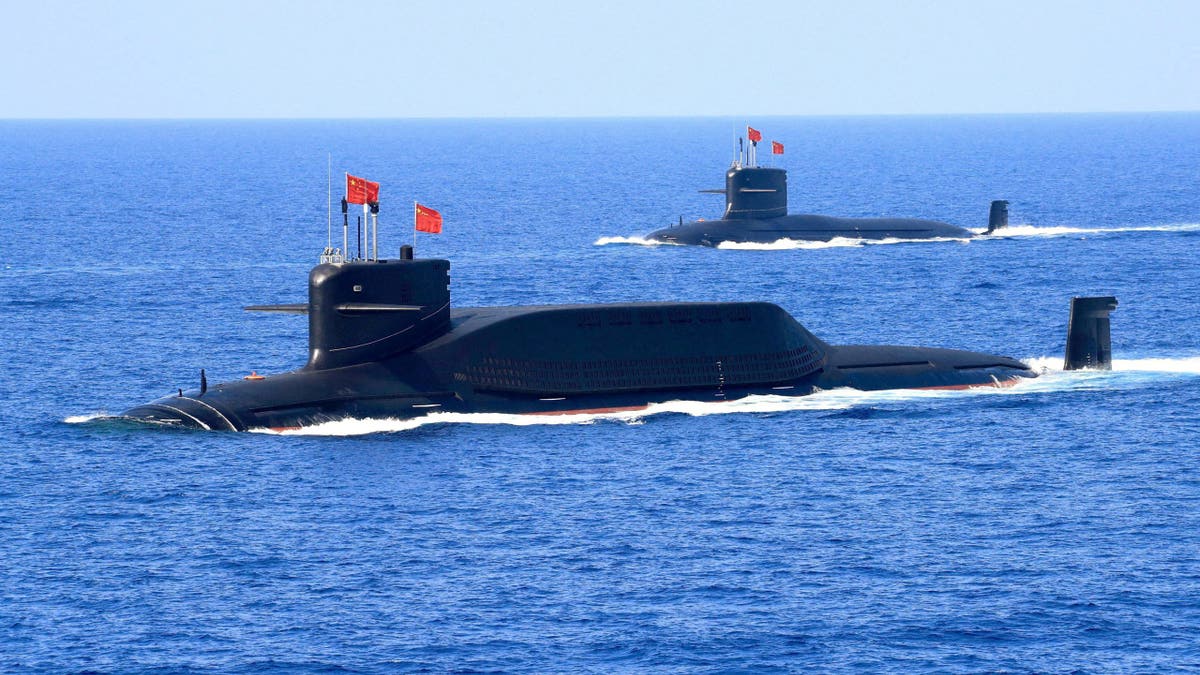
A nuclear-powered Type 094A Jin-class ballistic missile submarine of the Chinese People’s Liberation Army (PLA) Navy is seen during a military display in the South China Sea April 12, 2018. (Reuters/Stringer)
Elizabeth Freund Larus, a Taiwan Fellowship Scholar in Taipei told Fox News Digital the KMT’s traditional China approach no longer connects with much of Taiwan’s electorate. «KMT Chair Cheng’s trip is trying to replicate Ma Ying-jeou’s approach to cross-Strait relations,» Larus said. «But that approach is 30-years old and no longer appeals to the Taiwanese. As a result, many people in Taiwan are critical of her China trip.»
Larus said Beijing is also likely to use the visit for domestic propaganda, presenting it as proof that Taiwan embraces cultural and social affinities with mainland China while casting the government in Taipei as an outlier. «Cheng may be welcomed in Beijing,» Larus said, «but her party may receive a less enthusiastic reception» in local elections later this year and in the next presidential and legislative elections in 2028.
CLICK HERE TO DOWNLOAD THE FOX NEWS APP
Taipei-based political risk analyst and Tamkang University assistant professor Ross Feingold told Fox News Digital, «President Lai’s DPP has a savvy media team, which for many years has successfully shaped public opinion towards China. Following today’s meeting, Cheng and the KMT will be portrayed as traitors willing to sell out Taiwan.»
He concluded by noting, «Ultimately, though, the success or failure of Cheng’s visit to China and meeting with Xi will be determined by Taiwan’s voters, despite efforts from China and the United States to influence events. For the Trump administration, though, its near-term priority in Taiwan remains legislative approval to purchase billions of dollars of American weapons and speedy implementation of Taiwan’s commitment to invest $250 billion in the United States.»
china, taiwan, other parties, xi jinping, foreign affairs
NEWYou can now listen to Fox News articles!
The Navy is canceling a long-delayed overhaul of the USS Boise after costs ballooned to nearly $3 billion, with Secretary of the Navy John Phelan saying the submarine no longer made financial or strategic sense to repair.
In an exclusive interview with Fox News Digital, Phelan said the Los Angeles-class attack submarine had already consumed roughly $800 million and would require another $1.9 billion to complete — despite offering only about 20% of its remaining service life. Instead, the Navy plans to redirect funding and skilled labor toward building and delivering newer Virginia- and Columbia-class submarines, part of a broader push to accelerate ship production and overhaul troubled acquisition programs.
«At some point, you just cut your losses and move on,» Phelan said.
The Navy originally awarded a roughly $1.2 billion contract in 2024 under the Biden administration to overhaul the submarine, nearly a decade after it was first slated for repairs, but updated estimates later showed the total cost to complete the work had surged far beyond initial projections.
«The Boise has been pier-side since 2015, cost nearly $800 million already, and it’s only 22% complete — the math really does not work,» he added.
TRUMP UNVEILS MARITIME ACTION PLAN AS CHINA DOMINATES GLOBAL SHIPBUILDING
The decision comes as the Navy faces mounting pressure to expand and maintain its fleet amid growing competition with China, which has built the world’s largest navy by number of ships. U.S. officials have increasingly emphasized the need to speed up shipbuilding and submarine production to keep pace with rising global demands.
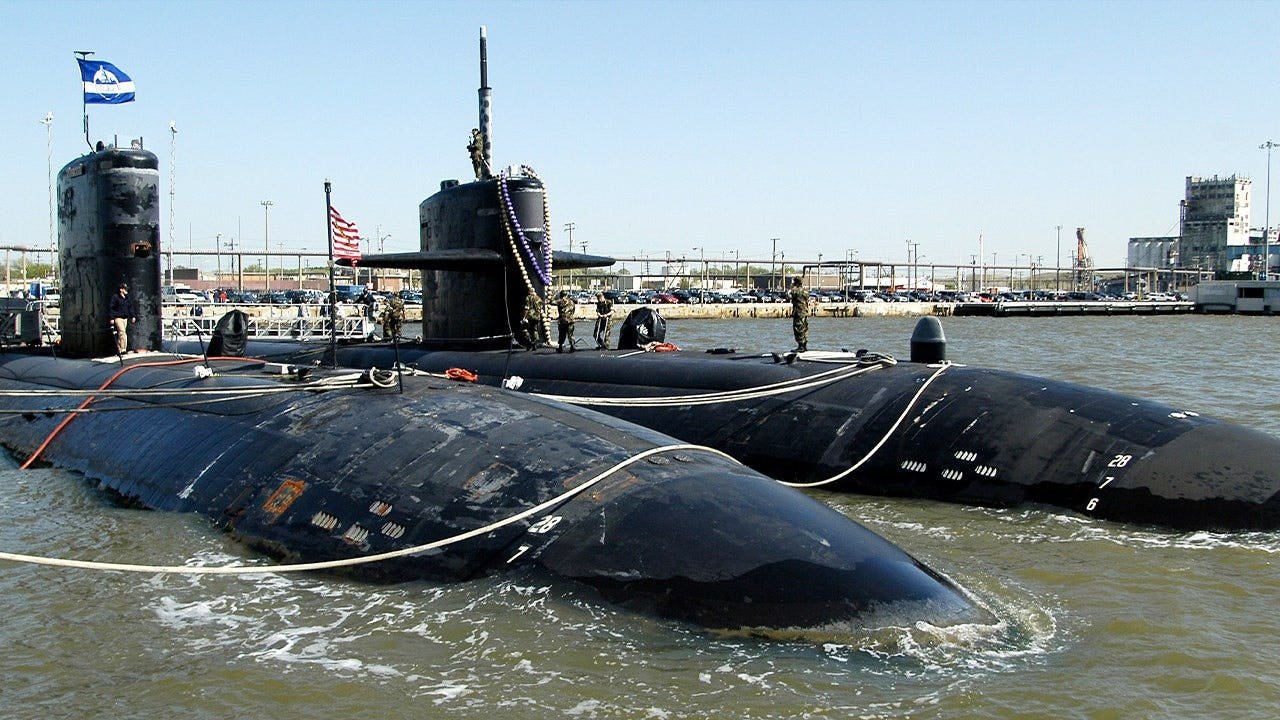
USS Newport News (right) secures itself next to its sister Los Angeles-class submarine USS Boise (left) after returning to Norfolk Naval Station in Norfolk, Virginia, April 23, 2003. (Mike Heffner/Getty Images)
Boise’s problems long predate the canceled contract.
The submarine last deployed in 2015 and was slated to begin a routine overhaul the following year, but delays at Navy shipyards left it waiting years for an available dry dock.
As maintenance was pushed back, the situation worsened. The submarine lost its full operational certification in 2016 and its ability to dive in 2017, effectively sidelining it from combat operations.
Despite being a frontline attack submarine, Boise remained tied up at port for years as the Navy struggled with a growing backlog of repairs across its fleet, driven by limited dry dock space, workforce shortages and competing maintenance priorities.
The overhaul originally was planned to begin in 2016 but was repeatedly delayed for nearly a decade before the Navy finally awarded a contract in 2024 — by which point the submarine had already spent years out of service.
US TO EXPEDITE NUCLEAR-POWERED SUBS TO AUSTRALIA THAT WILL SIT NEAR CHINA’S DOORSTEP
Even after work began, the timeline stretched further, with repairs not expected to be completed until 2029 — meaning the submarine would have spent roughly 15 years inactive by the time it returned to sea.
Over time, Boise became one of the clearest examples of the Navy’s broader maintenance and shipyard challenges, frequently cited by lawmakers and defense analysts as a case study in delays, rising costs and declining readiness.
Phelan said a key factor in the decision was freeing up scarce shipyard labor and engineering talent currently tied up in the Boise overhaul, which he said could be better used to accelerate construction of newer submarines.

Navy Secretary John Phelan described the program’s failure as the result of multiple factors for more than a decade, including engineering challenges, shifting priorities and strain on the Navy’s industrial base. (Meg McLaughlin/The San Diego Union-Tribune)
«One of our big constraints in our shipyards, particularly in submarine building, is labor and engineering talent,» Phelan said. «We have a lot of that dedicated to this, which we could free up and put onto the Virginia-class submarine or Columbia and try to shift the schedule left on those.»
He argued the overhaul no longer made sense from a return-on-investment perspective, comparing the cost of repairing the aging submarine to building a new one.
«The Boise represents 65% of the cost of a new Virginia-class submarine, yet it only delivers 20% of the remaining service life,» Phelan said, adding that equates to roughly three deployments.
The Boise, commissioned in 1992, is a Cold War-era attack submarine designed primarily for open-ocean combat, while newer Virginia-class submarines are quieter, more versatile and better suited for modern missions, including intelligence gathering, special operations and operating in contested coastal environments.
«Is it time we just simply pull the plug on that one?» Sen. Mike Rounds, R-N.D., asked during a confirmation hearing in June 2025.
Chief of Naval Operations Adm. Daryl Caudle called the situation «an unacceptable story» and «like a dagger in the heart» for the submarine force.
No public criticism immediately surfaced after the decision was announced Friday.
Phelan described the program’s failure as the result of multiple factors over more than a decade, including engineering challenges, shifting priorities and strain on the Navy’s industrial base.
«I can’t point to one thing that killed it,» he said. «I think it was a combination … the complexity of the engineering, COVID impacts, and pressure on the industrial base.»
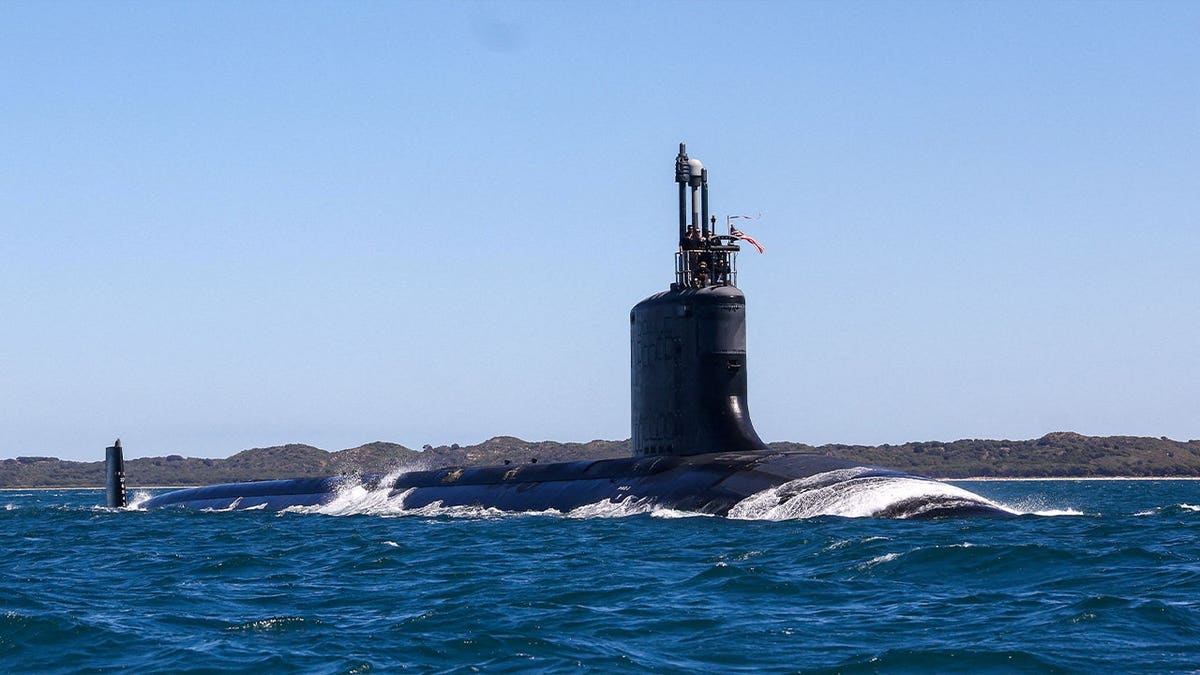
Navy Secretary John Phelan said the Navy will reprioritize resources to the newer Virginia-class submarines. (Colin Murty via Reuters)
The cancellation is part of a broader effort by Navy leadership to reevaluate underperforming programs and change how the service approaches acquisitions, Phelan said.
«We’re reviewing every program,» he said, adding the Navy is pushing for «radical transparency» and a shift away from what he described as a culture of accepting delays and rising costs.
CLICK HERE TO DOWNLOAD THE FOX NEWS APP
Phelan said the decision reflects a broader push to prioritize speed and efficiency in delivering war-fighting capability to the fleet.
«We need to be more disciplined and move out faster,» he said. «The president wants things yesterday.»
navy, costs, us navy, spending, secretary of defense
INTERNACIONAL
Un misil lanzado por el grupo terrorista Hezbollah dañó instalaciones deportivas de la ciudad israelí de Nahariya
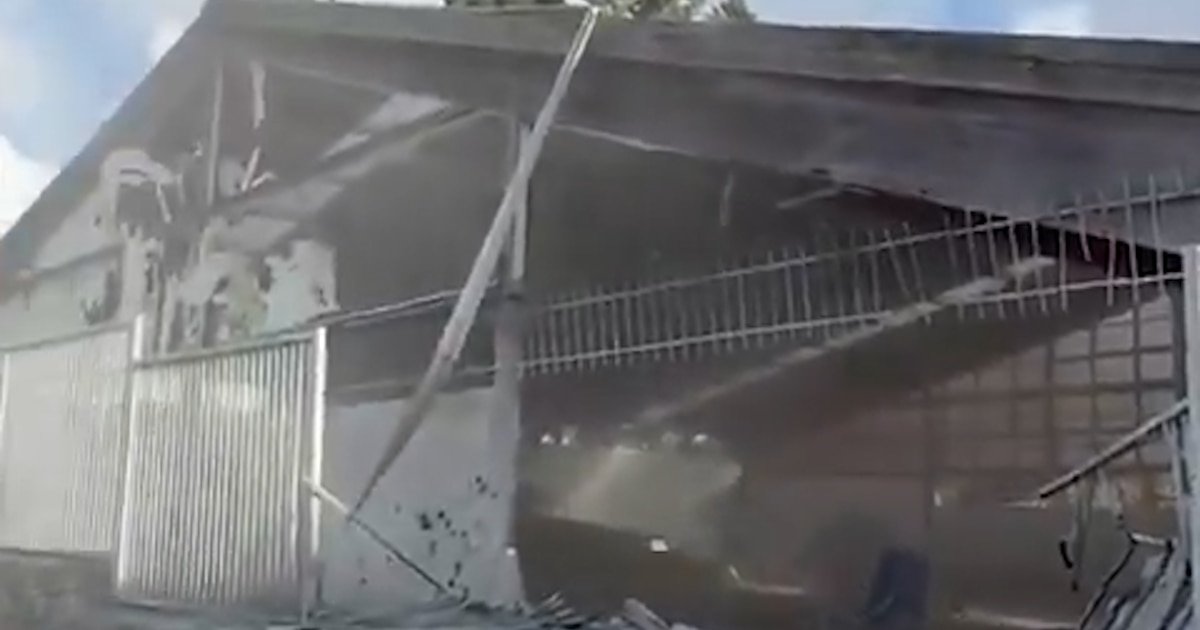
Un misil de Hezbollah dañó instalaciones deportivas de Nahariya
En la ciudad de Nahariya, ubicada en el norte de Israel, un misil lanzado por el grupo terrorista Hezbollah impactó contra un edificio en una cancha deportiva, provocando daños materiales pero sin dejar víctimas, según informaron los servicios de rescate.
El ataque se produjo en medio de una nueva escalada de violencia a lo largo de la frontera norte israelí.
De acuerdo con las Fuerzas de Defensa de Israel (FDI), desde la mañana de este viernes, Hezbollah disparó aproximadamente 30 cohetes desde territorio libanés hacia la región septentrional de Israel.
Tanto las autoridades militares como los servicios de emergencia confirmaron la serie de lanzamientos y detallaron que, pese al alcance de los ataques, no se reportaron heridos.
Un portavoz de los servicios de rescate en Nahariya indicó que el proyectil que alcanzó el complejo deportivo causó daños estructurales en la edificación. Las operaciones de evaluación y control de la zona continuaron durante la jornada, bajo estrictas medidas de seguridad.
Las FDI atribuyeron la responsabilidad de los ataques a Hezbollah y reforzaron la presencia militar en varias localidades del norte. Las autoridades locales instaron a la población a mantener la calma y seguir las instrucciones de protección civil.
Según la información recogida por medios locales, el intercambio de fuego entre Israel y Hezbollah ha intensificado la tensión en la frontera, donde persiste un alto nivel de alerta ante nuevos posibles bombardeos.
JD Vance habló antes de iniciar el viaje a Pakistán
En otro orden, el vicepresidente estadounidense, JD Vance, dijo este viernes que esperaba un resultado “positivo” al partir de Washington rumbo a las conversaciones de paz con Irán que se celebran en Pakistán.
“Vamos a intentar mantener una negociación positiva”, declaró a los periodistas antes del despegue desde la Base Conjunta Andrews.
“Si los iraníes están dispuestos a negociar de buena fe, nosotros, desde luego, estamos dispuestos a extender la mano abierta. Si intentan engañarnos, el equipo negociador no será muy receptivo”, advirtió.
La propuesta de Washington, de 15 puntos, se centra en el uranio enriquecido de Irán y la reapertura del estrecho de Ormuz. Teherán ha respondido con un plan de 10 puntos que exige el control del estrecho, un peaje para los buques que lo crucen, el cese de todas las operaciones militares regionales y el levantamiento de todas las sanciones.
Líbano también constituye un punto de fricción importante. Israel continuó sus ataques en el país contra Hezbollah —tras la entrada en vigor del alto el fuego—, y el primer ministro israelí, Benjamin Netanyahu, rechazó la afirmación del primer ministro Shehbaz Sharif de que la tregua incluía a Líbano.
El vicepresidente estadounidense adoptó un tono más conciliador, afirmando que podría haber habido un “malentendido legítimo“ por parte de Irán respecto a la inclusión de Líbano en la tregua. Fuentes iraníes también han declarado a los medios locales que Teherán no asistirá a las conversaciones a menos que se establezca un alto el fuego en el Líbano.
El presidente iraní, Masoud Pezeshkian, advirtió en X que los ataques israelíes contra el Líbano hacían que las negociaciones carecieran de sentido.
Irán también se ha negado durante mucho tiempo a ceder ante las exigencias de Washington sobre su programa nuclear.
Islamabad bajo confinamiento
Las conversaciones se celebrarán en la capital pakistaní, Islamabad.
El gobierno ha mantenido la información en secreto, sin confirmar el lugar de la reunión, pero el Hotel Serena, ubicado junto al Ministerio de Asuntos Exteriores en la Zona Roja de alta seguridad de la capital, pidió a sus huéspedes que desalojaran el recinto el miércoles.
Ese mismo día, las autoridades de la capital anunciaron un feriado público de dos días, jueves y viernes.
Se espera que las conversaciones sean indirectas: las dos delegaciones se reunirán en salas separadas, con funcionarios pakistaníes intercambiando propuestas entre ellas, replicando el formato utilizado en rondas anteriores mediadas por Omán.
En el exterior, las calles de Islamabad están repletas de personal de seguridad armado con uniformes militares, desvíos de tráfico y controles policiales. La capital, ya de por sí tranquila, lo estaba aún más el viernes.
International,Relations,Asia / Pacific,Diplomacy / Foreign Policy

Mercados: suben las acciones y los bonos argentinos mientras vuelve a caer el riesgo país

El cinematográfico video con el que Endrick anunció que será papá primerizo a los 19

La pregunta sin filtro de Moria Casán a los hijos de Alberto Olmedo y Jorge Porcel: “¿Ustedes viven del apellido?»

Taiwan opposition leader meets Xi in Beijing as Taiwan defense fight intensifies

El recorte de la era Milei: las provincias resignaron US$18.000 millones en fondos nacionales en dos años

En los primeros meses del año, los ministros del Gabinete recibieron un aumento de 123%

Mario Kart Tour avanza su siguiente temporada de primavera con ciudades europeas – Nintenderos

Melania Trump’s forceful Epstein denial draws bipartisan support from lawmakers

Un gobernador presentó un amparo contra la reforma de la Ley de Glaciares y pidió suspender su aplicación

Trump blasts Biden admin for releasing illegal immigrant now charged in fatal hammer attack on Florida mother
-
 SOCIEDAD9 horas ago
Mario Kart Tour avanza su siguiente temporada de primavera con ciudades europeas – Nintenderos
-
 INTERNACIONAL9 horas ago
Melania Trump’s forceful Epstein denial draws bipartisan support from lawmakers
-
 POLITICA8 horas ago
Un gobernador presentó un amparo contra la reforma de la Ley de Glaciares y pidió suspender su aplicación