INTERNACIONAL
Medical NGO that slammed Israel’s anti-terror raid now quits Gaza hospital over armed operatives


NEWYou can now listen to Fox News articles!
The increasingly controversial medical nongovernmental organization Medecins Sans Frontieres (MSF), which has been accused of anti-Israel rhetoric, shocked many when it recently announced that it had ceased operations at the Nasser Hospital in Khan Younis, Gaza, due to the presence of gunmen using the hospital it had constantly accused Israel of raiding.
MSF said its teams had «reported a pattern of unacceptable acts, including the presence of armed men, intimidation, arbitrary arrests of patients, and a recent situation of suspicion of movement of weapons,» and said the «incidents pose serious security threats to our teams and patients.»
Salo Aizenberg, director of media watchdog group HonestReporting, told Fox News Digital, «MSF buried its acknowledgment of seeing armed gunmen at Nasser Hospital at the very end of a 2,500-word Gaza projects update, but still wouldn’t name who those gunmen were. Hamas.»
STEFANIK ASKS AG BONDI TO PROBE MEDICAL CHARITY OVER HAMAS PROPAGANDA CLAIMS
Hamas terrorists stand guard at Nasser Hospital during a hostage release in Khan Yunis, Gaza, on Oct. 13, 2025. (Doaa Albaz/Anadolu via Getty Images)
The terrorist group’s continuing operations highlight another challenge: the need to disarm Hamas, as required by the ceasefire currently in place.
In a statement to Fox News Digital, the Israel Defense Forces said it «possesses intelligence indicating that Nasser Hospital is being used as a headquarters and military post for senior Hamas commanders and operatives in the southern Gaza Strip. For two years, the IDF and the defense establishment has warned about the cynical use by terrorist organizations in the Gaza Strip of hospitals and humanitarian shelters as human shields to conceal terrorist activity.»
While noting that MSF’s decision was «important,» the IDF said it «comes too late. This is further proof that reinforces the necessity for the disarmament of the Hamas terror organization.»
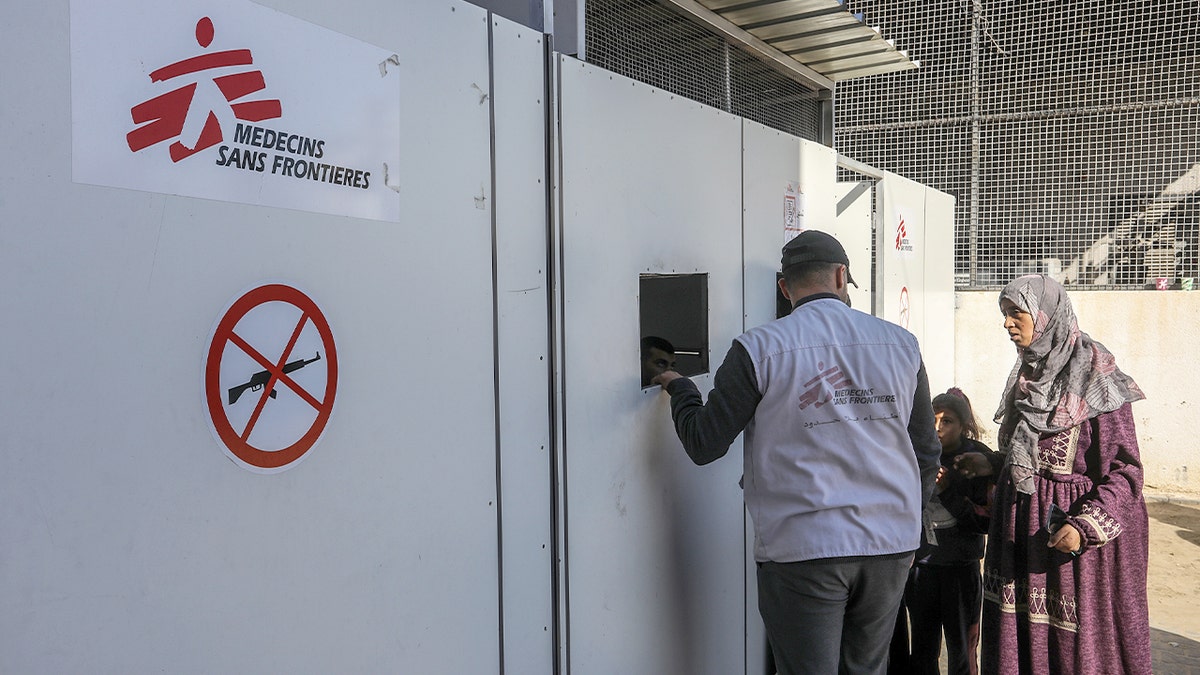
Médecins Sans Frontières (MSF) ceased operations at Nasser Hospital over what it said were «unacceptable acts, including the presence of armed men,» at the medical center in Khan Yunis, Gaza. (Abed Rahim Khatib/Anadolu via Getty Images)
Fox News Digital asked the White House whether the presence of armed fighters in Nasser Hospital is a violation of the ceasefire. A White House official stated, «We can’t confirm Medecins Sans Frontieres’ claims, but any threatening presence of Hamas is one of the reasons why we continue to emphasize that Hamas must disarm.»
US-BACKED GAZA AID GROUP SLAMS DOCTORS WITHOUT BORDERS, ACCUSES IT OF SPREADING ‘FALSE’ CLAIMS
MSF has previously stated that it has been «operational out of Nasser Hospital since before the conflict escalated in October 2023.»
Aizenberg said MSF’s discourse is a change from prior statements. «When the IDF raided Nasser Hospital in February 2024, saying Hamas operatives and hostages were believed to be there, it was condemned as an illegal attack on a medical facility,» Aizenberg said. «MSF now confirms the hospital was used by combatants and for weapons movement. The IDF was right all along.»
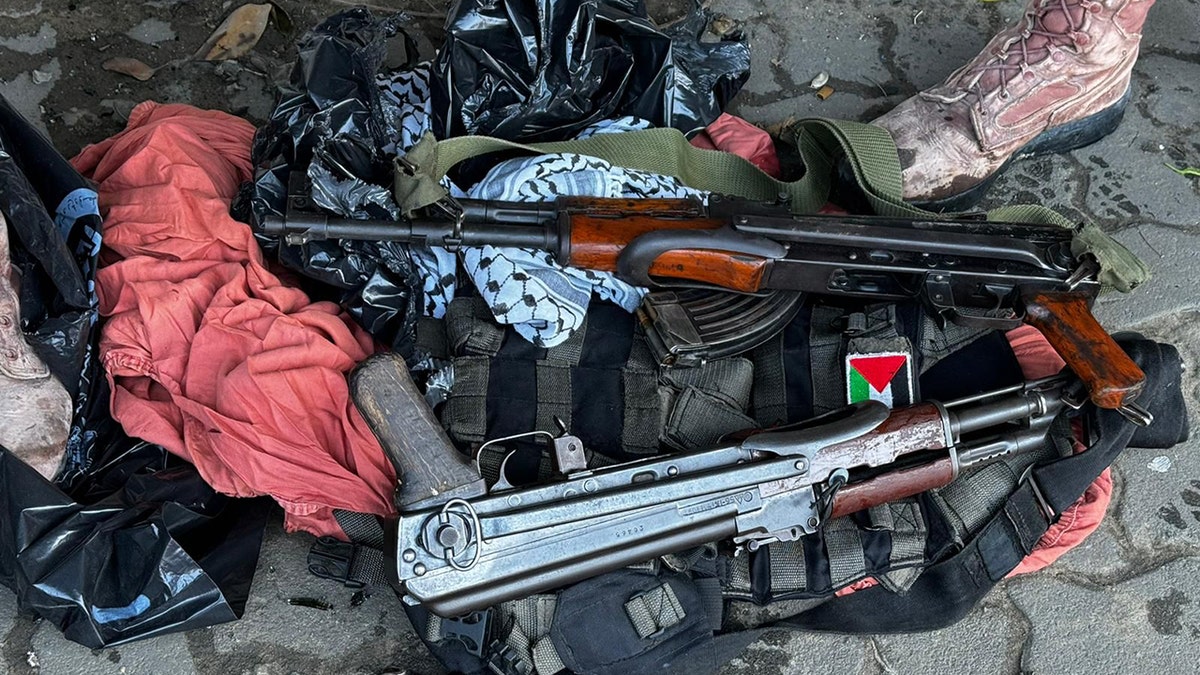
IDF troops located a large cache of weapons, some of which were found hidden inside a vehicle used by Hamas terrorists in carrying out the Oct. 7 terror attack against Israel. Feb. 18, 2024. (IDF)
Concerns have also come from the U.S.-backed Gaza Humanitarian Foundation (GHF), which provided over 187 million meals to Gazans between May 26 and late November 2025. In September, GHF told Fox News Digital that Nasser Hospital routinely issued «false reports» of civilian deaths at GHF sites to the media.
FORMER DOCTORS WITHOUT BORDERS LEADER CALLS GROUP ‘ACCOMPLICES OF HAMAS’ OVER GAZA WAR RESPONSE
MSF did not respond to Fox News Digital’s questions about their failure to address the presence of armed gunmen at Nasser Hospital previously, whether the armed gunmen at the hospital are members of Hamas and why they chose to include their change in operations at the end of a lengthy statement alleging «intimidation, pressure and smear campaigns» regarding MSF from Israeli authorities.
The IDF banned MSF from operating in Gaza beginning on March 1, citing the organization’s failure to provide a list of all Palestinian staff, according to the Times of Israel.
MSF has come under fire in the U.S., with Rep. Elise Stefanik, R-N.Y., sending a letter to Attorney General Pam Bondi in September requesting that she investigate the organization under the Anti-Terrorism Act because it «mirror[ed] propaganda continuously pushed by Hamas.»
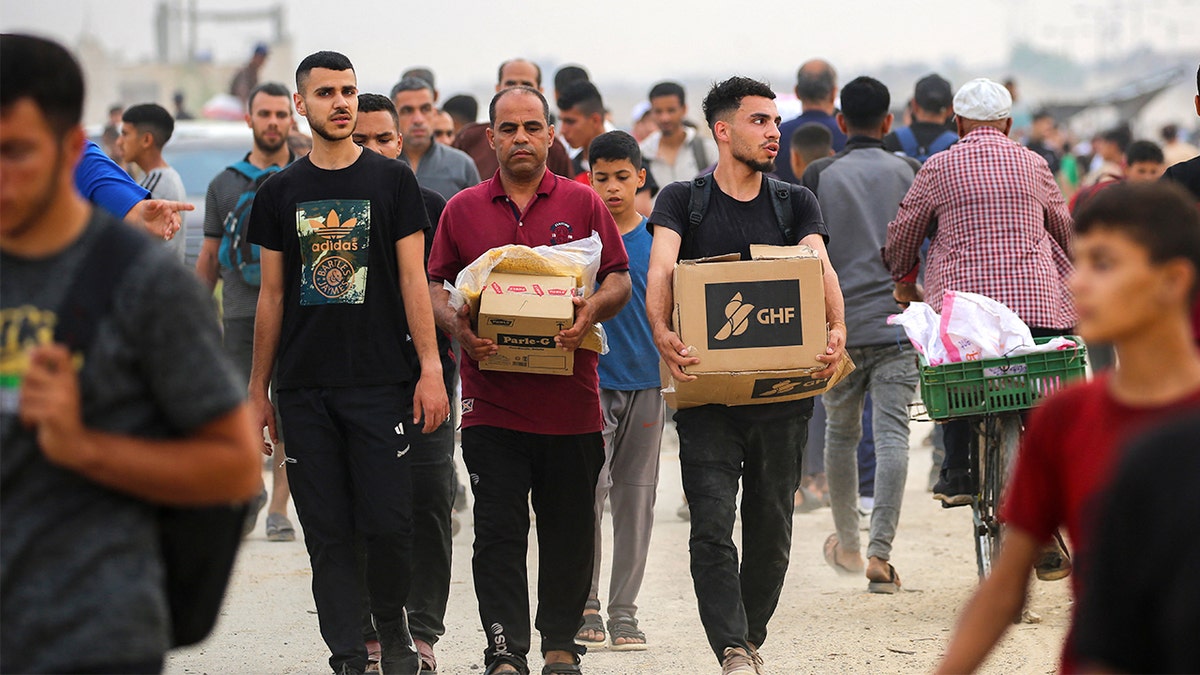
People carry boxes of relief supplies from the Gaza Humanitarian Foundation, a private U.S.-backed group, at an aid distribution center in the central Gaza Strip on June. 8 (Eyad Baba/AFP via Getty Images)
As the ceasefire brokered by the Trump administration takes hold, other anti-Israel NGOs also seem to be coming to terms with their obsession with Israel. Former Oxfam in the U.K. CEO Dr. Halima Begum is taking the charity to court for accusations of sexism, racism and antisemitism. She told the U.K.’s Channel 4 News that «it always felt as though we were disproportionately working around the crisis in Gaza.»
Addressing Begum’s remarks, Israeli cabinet minister Amichai Chikli said she has «been a vocal critic of the State of Israel. Therefore, when she testifies about the level of antisemitism within the organization and levels these accusations herself, her remarks should resonate around the world all the more.»
CLICK HERE TO DOWNLOAD THE FOX NEWS APP
On Monday, Israel’s news agency TPS-IL reported that Oxfam will no longer be permitted to operate in Gaza beginning Feb. 28, the Ministry for Diaspora Affairs and Combating Antisemitism has ruled.
Watchdog organization NGO Monitor told Fox News Digital that the confluence of news stories demonstrates that «slowly, superpower NGOs are being exposed from the inside – their anti-Israel rot bared for all to see. A major return to founding principles is required to ensure that human rights once again become driving ideals inside the world’s most influential NGOs.»
israel,hamas,terrorism,conflicts,anti semitism











INTERNACIONAL
EN VIVO: El ejército de Israel lanzó un nuevo ataque contra la infraestructura del régimen iraní en Teherán
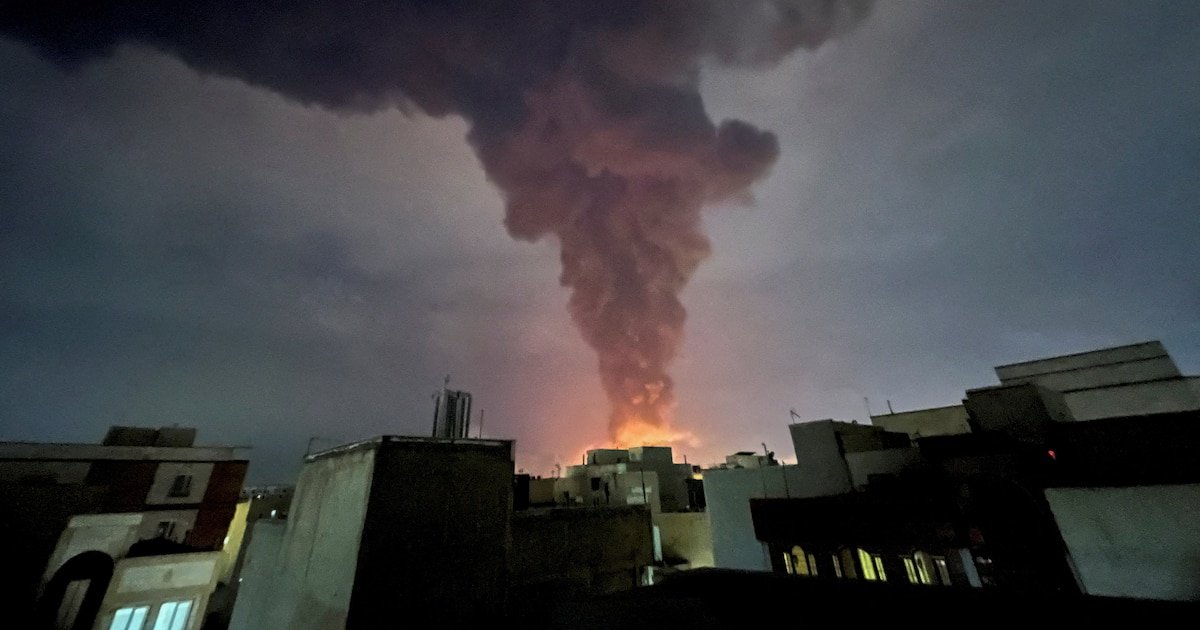
Por medio de un comunicado publicado en X, las FDI informaron que están “atacando actualemente” distintos objetivos en todo el territorio de la capital persa. En paralelo, Irán también llevó a cabo ataques contra Tel Aviv, Kuwait y Arabia Saudita
El presidente de Estados Unidos, Donald Trump, planteó la posibilidad de que fuerzas estadounidenses se apoderen de la isla iraní de Kharg, principal terminal petrolera en el Golfo Pérsico, en una entrevista publicada el domingo por la noche por Financial Times. “Tal vez tomemos la isla Kharg, tal vez no. Tenemos muchas opciones”, afirmó. “Eso también significaría que tendríamos que estar allí (en la isla Kharg) durante un tiempo”.
En la misma entrevista, Trump sostuvo que Irán accedió a permitir el paso de 20 barcos que transportan petróleo a través del estrecho de Ormuz desde la mañana del lunes y durante los próximos días, “como muestra de respeto”. “Solo diría que nos está yendo extraordinariamente bien en esa negociación, pero con Irán nunca se sabe, porque negociamos con ellos y luego siempre tenemos que destruirlos”, declaró.
En paralelo, Pakistán anunció que acogerá conversaciones entre Estados Unidos e Irán, aunque no hubo confirmación inmediata de Washington ni de Teherán y no quedó claro si serán directas o indirectas. El presidente del Parlamento iraní, Mohammad Bagher Qalibaf, desestimó la iniciativa y la calificó de “tapadera” tras la llegada a Oriente Medio de unos 2.500 marines estadounidenses entrenados en desembarcos anfibios.
Durante la madrugada del lunes, Israel lanzó un ataque contra infraestructura del régimen iraní en varios puntos de Teherán, mientras que Irán llevó a cabo ataques contra Tel Aviv, Kuwait y Arabia Saudita.
A continuación, la cobertura minuto a minuto:
Tres soldados israelíes resultaron heridos en ataques de Hezbollah en el sur del Líbano
Tres soldados de las Fuerzas de Defensa de Israel resultaron gravemente heridos y varios más sufrieron heridas leves en ataques de Hezbollah y otros incidentes ocurridos el domingo en el sur del Líbano, según informó el ejército israelí.
De acuerdo con los militares, dos soldados resultaron gravemente heridos por un misil guiado antitanque en un incidente registrado por la tarde. En otro hecho, un soldado sufrió heridas graves y dos resultaron con lesiones leves tras el impacto de un dron de Hezbolá cerca de fuerzas israelíes desplegadas en la zona.
Además, otro soldado presentó heridas de gravedad moderada en un “accidente operacional” en el sur del Líbano, añadió el ejército. Todos los heridos fueron trasladados a hospitales para recibir tratamiento y las autoridades notificaron a sus familias.
El Brent alcanzó los 115 dólares

El petróleo Brent para entrega en mayo ronda este lunes los 115 dólares por barril, en el inicio del segundo mes de la guerra y en medio de un aumento de la presencia militar de Estados Unidos en Oriente Medio.
El crudo de referencia en Europa se ubica en 114,92 dólares por barril hacia las 4.15 GMT durante la sesión asiática, con una suba del 2,09%. El viernes, el Brent cerró en 112,57 dólares, su nivel más alto desde julio de 2022, en un mercado sin señales de distensión en el Golfo Pérsico.
Australia reducirá 50% el impuesto a combustibles por la suba de precios causada por la guerra en Medio Oriente

Australia reducirá a la mitad el impuesto a los combustibles durante tres meses para aliviar el impacto del alza de los precios provocada por la guerra en Medio Oriente, informó este lunes el primer ministro Anthony Albanese. La medida surge tras una reunión con los líderes de estados y territorios, donde acordaron un plan para enfrentar la escasez de combustible en el país.
El impuesto, que actualmente es de 52 centavos por litro de nafta, se reducirá a la mitad, con un costo estimado de 1.750 millones de dólares (2.550 millones de dólares australianos) para el gobierno. “Estamos abaratando el combustible hoy porque entendemos que los australianos están bajo una presión seria”, afirmó Albanese. El gobierno también buscó llevar tranquilidad al asegurar que continúan llegando envíos de combustible y atribuyó la escasez en zonas rurales a compras por pánico y problemas de distribución.
En paralelo, los estados de Victoria y Tasmania dispusieron transporte público gratuito, mientras el primer ministro instó a reducir el consumo de combustible. “Cuanto menos combustible usemos en las ciudades, más podremos redirigir a las zonas regionales que están bajo presión”, señaló en Canberra.
El Kospi cae más del 4%
El principal índice de la Bolsa de Seúl, el Kospi, registró una caída superior al 4% en la apertura de este lunes, en un contexto de preocupación por un agravamiento del conflicto entre Israel y Estados Unidos contra Irán y sus posibles efectos sobre el suministro de crudo.
Tras los primeros cuarenta minutos de negociación, el indicador descendía un 4,21%, equivalente a 228,97 puntos, hasta situarse en 5.209,90 enteros, después de cerrar la sesión previa con una baja del 0,40 %. En paralelo, el índice Kosdaq, que agrupa a empresas tecnológicas y de mediana capitalización, retrocedía un 3,56%, o 40,60 puntos, hasta las 1.100,91 unidades, en una jornada marcada por temores a una escalada en la guerra en Oriente Medio.
Entre los principales valores, Samsung Electronics caía alrededor del 3 %, mientras SK Hynix registraba un descenso cercano al 5 % en el sector de semiconductores. En el rubro automotor, Hyundai Motor bajaba más del 3,50 % y Kia sufría una caída superior al 5 %, en línea con la tendencia negativa generalizada del mercado.
El Nikkei cae más de 4,5% en la apertura por temores a una escalada en Oriente Medio y su impacto energético

El principal índice de la Bolsa de Tokio, el Nikkei, abrió este lunes con una caída superior al 4,5% ante la preocupación por una escalada en el conflicto en Oriente Medio y su impacto en el suministro energético.
Veinte minutos después del inicio de la sesión, el indicador, que agrupa a los 225 valores más representativos, cedía un 4,52%, equivalente a 2.414,80 puntos, hasta situarse en 50.958,27 enteros.
En paralelo, el índice Topix, que incluye a las firmas de mayor capitalización, retrocedía un 4,27%, o 155,97 puntos, hasta las 3.493,72 unidades, en un contexto marcado por tensiones derivadas del conflicto entre Israel y Estados Unidos contra Irán y reportes sobre un posible aumento de tropas estadounidenses en la región.
Entre los valores destacados, el fabricante de vehículos Toyota caía más del 5%, mientras Honda perdía alrededor del 4%. En el sector de semiconductores, Advantest se desplomaba más del 7%, Tokyo Electron cedía cerca de un 3% y Disco registraba un retroceso similar.
El ejército israelí lanzó un ataque contra la infraestructura del régimen iraní en Teherán
El ejército israelí anunció el lunes por la mañana que estaba atacando infraestructura militar iraní en toda la capital de la república islámica. Las fuerzas israelíes están “atacando actualmente la infraestructura militar del régimen terrorista iraní en todo Teherán”, según se informaron en Telegram y en X.
Trump anunció que el ejército de EEUU destruyó “muchos objetivos largamente buscados” en Irán en las últimas 24 horas

Por medio de un comunicado publicado en Truth Social, el presidente de Estados Unidos, Donald Trump, afirmó que “muchos objetivos largamente buscados han sido eliminados y destruidos” por el ejército estadounidense en Irán durante el último día.
North America
INTERNACIONAL
US allows Russian oil tanker to reach Cuba amid blockade as Trump says island ‘has to survive’
NEWYou can now listen to Fox News articles!
The U.S. government will allow a Russian tanker full of crude oil to reach Cuba, effectively easing a blockade that has pushed the island into an energy crisis, according to a report.
The Russian-flagged tanker, the Anatoly Kolodkin, was headed for Cuba on Sunday, carrying an estimated 730,000 barrels of oil, The New York Times reported, citing a U.S. official who had been briefed on the matter.
The tanker Anatoly Kolodkin was just off the eastern tip of Cuba on Sunday, ship tracking data showed.
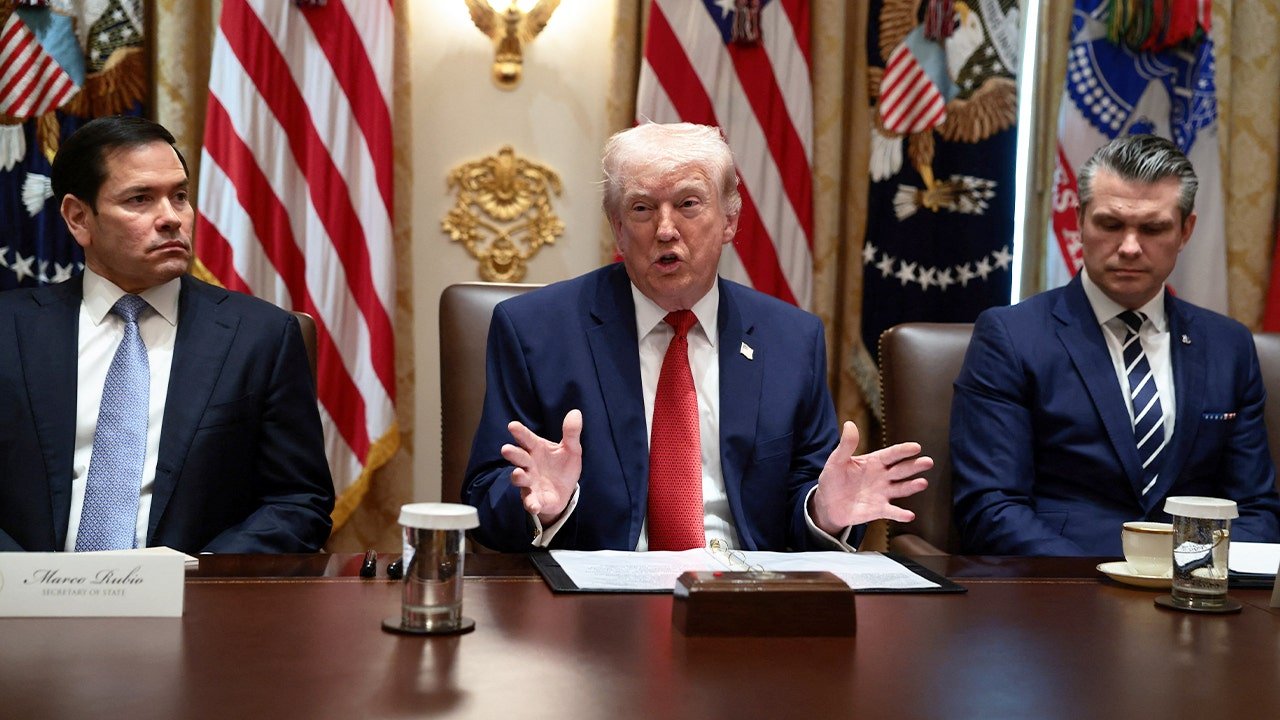
«We have a tanker out there. We don’t mind having somebody get a boatload, because they need … they have to survive,» President Donald Trump told reporters on Sunday when asked about the report.
CUBA’S ENTIRE ELECTRICAL GRID COLLAPSES, LEAVING WHOLE ISLAND WITHOUT POWER
The U.S. government will allow a Russian tanker full of crude oil to reach Cuba. (Evelyn Hockstein/Reuters)
«If a country wants to send some oil into Cuba right now, I have no problem whether it’s Russia or not,» he added.
Trump had sought to restrict oil shipments to Cuba in an effort to pressure its government.
The U.S. government has temporarily eased some sanctions on Russian oil shipments to help stabilize global energy markets amid disruptions in the Strait of Hormuz following U.S. and Israeli military strikes on Iran that began last month.
CUBAN OFFICIAL REVEALS MILITARY ‘PREPARING’ FOR CONFLICT AFTER TRUMP CONSIDERS ‘TAKING’ ISLAND
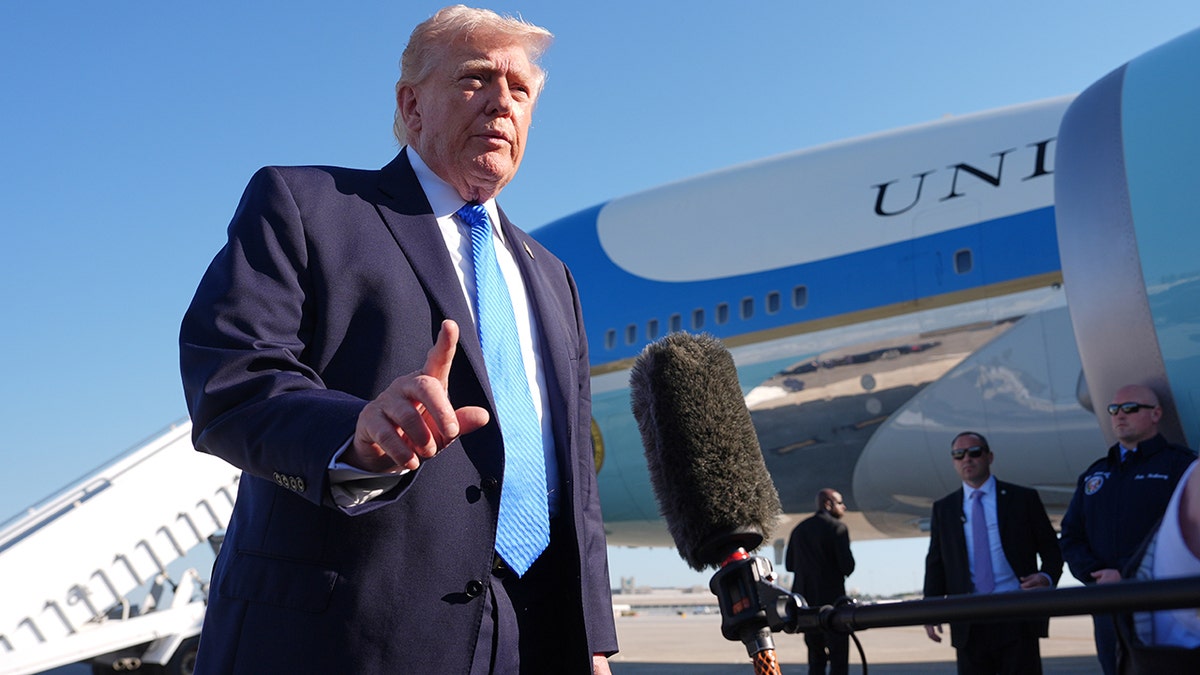
President Donald Trump had sought to restrict oil shipments to Cuba in an effort to pressure its government. (Mark Schiefelbein/AP Photo)
The Anatoly Kolodkin, which departed from Primorsk, Russia, could soon dock at the Matanzas port in Cuba if it remains on its current path, according to tracking services MarineTraffic and LSEG.
The oil would provide significant relief to Cuba, where President Miguel Díaz-Canel has said fuel shortages have persisted for months, forcing strict gas rationing and deepening the island’s energy crisis.
The U.S. capture of then-Venezuelan leader Nicolás Maduro in January stripped a key Cuban ally who had been providing oil to the island on favorable terms.
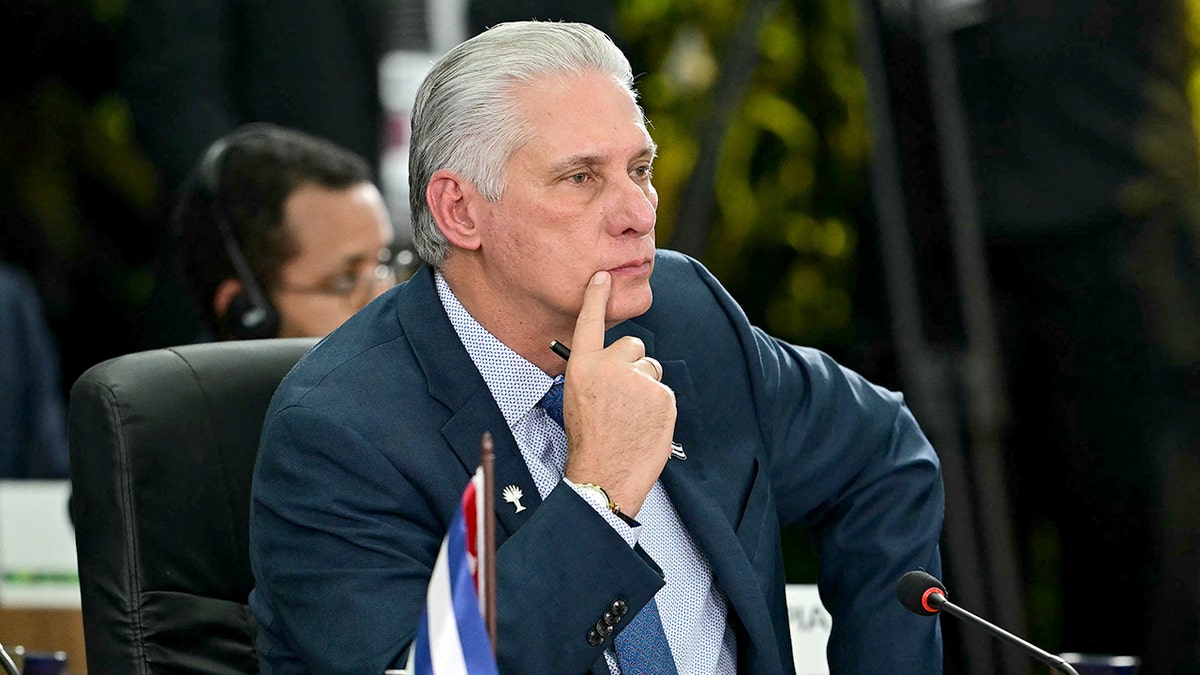
Cuban President Miguel Díaz-Canel has said fuel shortages have persisted for months. (PABLO PORCIUNCULA/AFP via Getty Images)
CLICK HERE TO DOWNLOAD THE FOX NEWS APP
The Trump administration then blocked all Venezuelan oil shipments to Cuba and vowed to impose punitive tariffs on any third country that supplied shipments to the island, forcing Mexico to stop its exports to Cuba.
Another ship, the Hong Kong-flagged Sea Horse, was also carrying about 200,000 barrels of Russian fuel to Cuba, but was rerouted to Venezuela.
world, cuba, russia, war with iran, donald trump, politics
INTERNACIONAL
Habló el Patriarca tras impedirle oficiar la misa del Domingo de Ramos en el Santo Sepulcro: «Era solo una breve y pequeña ceremonia»


Netanyahu y los próximos eventos religiosos durante la guerra
Quién es el patriarca Pierbattista Pizzaballa, el cardenal que sonó para suceder a Francisco


Lorenzo tras la derrota de Colombia: de «dos partidos muy exigentes» a «nos dejará aprendizaje»

EN VIVO: El ejército de Israel lanzó un nuevo ataque contra la infraestructura del régimen iraní en Teherán

Por qué el precio de la carne no baja pese a la caída del consumo en Argentina

El estudio de South of Midnight está contratando personal para una nueva IP – Nintenderos

¡A los gritos y sin piedad! Andrea del Boca y Solange se dijeron de todo y llevaron su pelea al límite

US allows Russian oil tanker to reach Cuba amid blockade as Trump says island ‘has to survive’

Máximo Kirchner salió al cruce de Milei y Macri tras el fallo por YPF a favor de la Argentina

Ian Lucas contó que Maxi López le advirtió sobre su romance con Evangelina Anderson: “No seas bol…”

La secretaria del piloto denunció que el amigo de Adorni la hostiga y la justicia dispuso medidas

¡DERIVA ECONÓMICA Y SOBERBIA POLÍTICA! El abismo entre el «relato oficial» y la realidad de una clase media que no aguanta más

 POLITICA1 día ago
Máximo Kirchner salió al cruce de Milei y Macri tras el fallo por YPF a favor de la Argentina
- POLITICA2 días ago
La secretaria del piloto denunció que el amigo de Adorni la hostiga y la justicia dispuso medidas
- POLITICA3 días ago
¡DERIVA ECONÓMICA Y SOBERBIA POLÍTICA! El abismo entre el «relato oficial» y la realidad de una clase media que no aguanta más