INTERNACIONAL
Reporter’s Notebook: GOP eyes DHS deal funding ICE probes, but not removals, as shutdown drags

NEWYou can now listen to Fox News articles!
This is cobbled together talking to senior Senate Republican sources.
Senate Republicans are developing a plan to fund most aspects of DHS — leaving out controversial programs like certain ICE operations — to end the five-and-a-half week partial government shutdown. This emerged after a meeting at the White House last night. There is a lot to sort out at the GOP Conference luncheon at the Capitol today.
However, Fox is told that the Senate could start to move forward on a plan to end the DHS shutdown «as early as tonight.»
SCHIFF, BOOKER DEFLECT ON SHUTDOWN BLAME AMID TERROR CONCERNS, THOUSANDS OF DHS WORKERS WITHOUT PAY
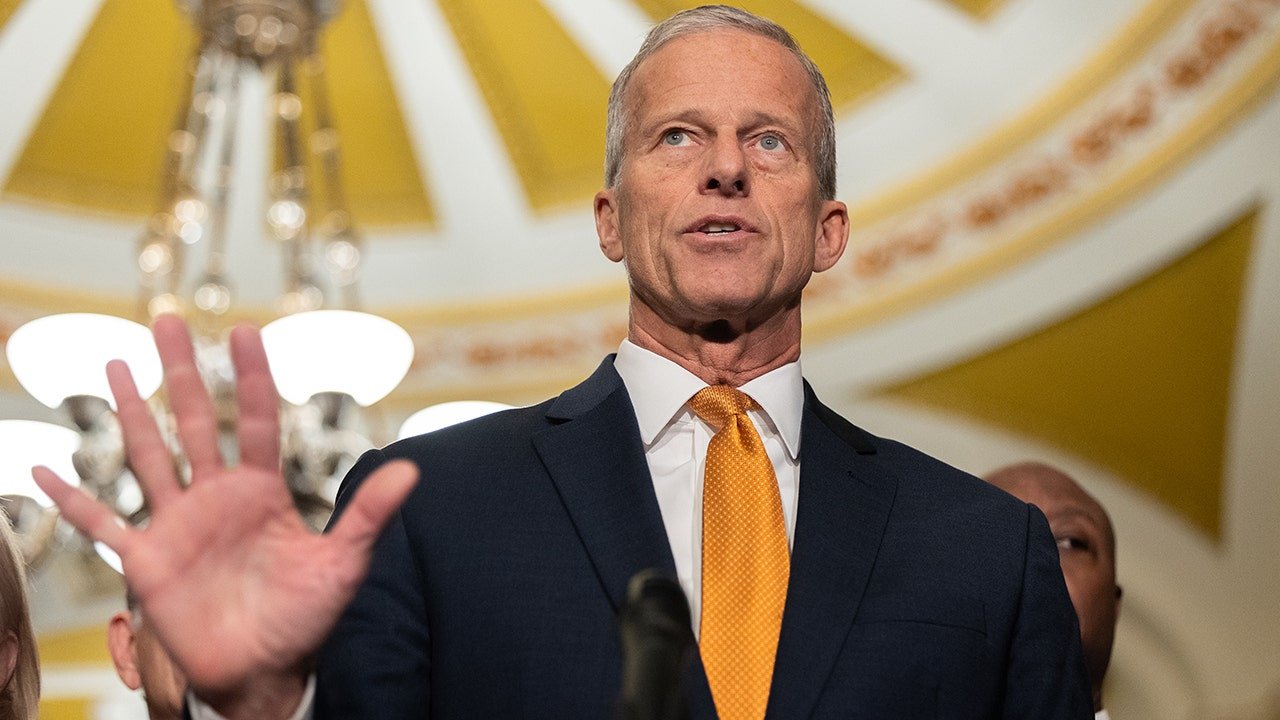
Senate Majority Leader John Thune, R-S.D., speaks at a press conference with other members of Senate Republican leadership following a policy luncheon in Washington, D.C., on Oct. 28, 2025. (Nathan Posner/Anadolu via Getty Images)
The new plan would fund ICE investigations — like cartels, traffickers and child predators. But they will leave unfunded programs for «enforcement and removal.»
Ironically, this idea would mirror what Democrats have tried to do on multiple occasions. Democrats have asked unanimous consent on the floor to pass bills to fund DHS — sans ICE.
So, Republicans have come around to the position that this is the only way out of this cul-de-sac — even if it reflects the Democratic position.
Still, Republicans contend they are «calling the Democrats bluff.»
«We’re going to have to move forward and give them what they want,» said one Senate Republican source, referring to the Democrats.
THUNE REVEALS REASON DEMOCRATS ARE ‘SCARED’ TO REOPEN DHS
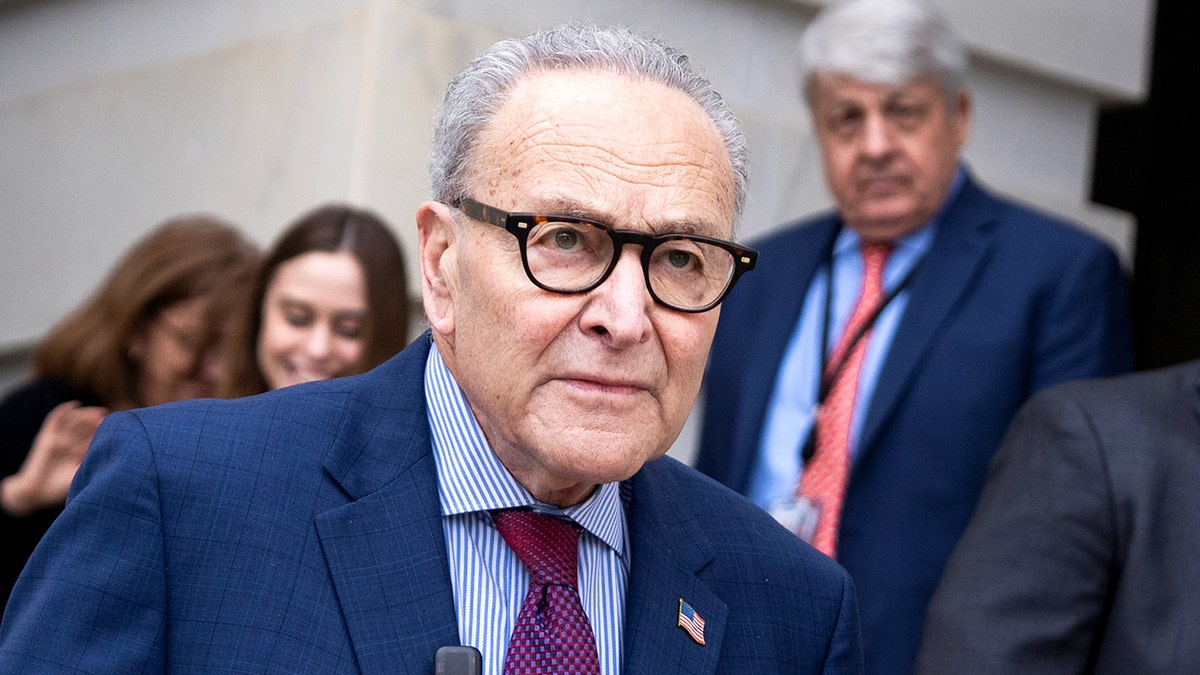
Senate Minority Leader Charles Schumer, D-N.Y., arrives for a news conference outside the U.S. Capitol after President Donald Trump selected Sen. Markwayne Mullin, R-Okla., to replace Kristi Noem as the Department of Homeland Security secretary on Thursday, March 5, 2026. (Tom Williams/CQ-Roll Call, Inc via Getty Images)
But the question is whether Democrats will balk — especially since this was their idea. Regardless, this approach would still need Democratic buy-in and need 60 votes to clear a filibuster.
Fox is told that this is NOT pre-baked with House Republicans. The House and Senate would have to sync up to end the shutdown. Lawmakers on both sides are increasingly freaked out about the possibility of a terrorist attack — to say nothing of watching lengthy lines at airports.
Now the question is what Republicans can do with the SAVE America Act.
SEN KENNEDY SAYS HE WOULD ACCEPT DEMOCRATS’ OFFER TO ‘OPEN UP EVERYTHING’ BUT ICE

ICE agents arrive at JFK airport in New York City, N.Y., on Monday, March 23, 2026. The agents are being brought in to assist TSA agents amid staffing shortages due to the government shutdown. (David Dee Delgado for Fox News)
Fox is told that Republicans hope to extract a promise from Sen. Mike Lee, R-Utah, to come off the SAVE America Act — and resume that debate after the Easter/Passover recess.
But that bill lacks the votes to pass.
In addition, Republicans are looking at stuffing some provisions from the SAVE America Act into a budget reconciliation package. By nature, a reconciliation package is NOT subject to a filibuster and only needs a simple majority to pass. However, reconciliation requires bills be fiscal in nature and deal with numbers, not policy.
CLICK HERE TO DOWNLOAD THE FOX NEWS APP
It is possible Republicans could fund the enforcement and removal programs at ICE under budget reconciliation. But portions of the SAVE America Act are dicey. Fox is told that Republicans could try to focus on the «money» aspects of the SAVE America Act — such as withholding dollars from states which don’t require photo ID, et al. But getting those provisions past the Senate umpire, Parliamentarian Elizabeth MacDonough, is challenging. MacDonough could rule out of order policy provisions pertaining to the SAVE America Act in a reconciliation measure.
politics, congress, homeland security, senate, government shutdown, republicans












INTERNACIONAL
‘Americas Counter Cartel Coalition’: Inside the US strategy to combat narco terror, confront China, other foes
NEWYou can now listen to Fox News articles!
FIRST ON FOX: The United States is advancing a sweeping hemispheric security strategy aimed at dismantling transnational criminal organizations and countering the growing footprint of geopolitical rivals across Latin America, according to Joseph M. Humire, acting assistant secretary of War for Homeland Defense and Americas Security Affairs.
At the center of this effort is the «Shield of the Americas,» a multi-layered initiative designed to integrate military, intelligence, and law enforcement capabilities across partner nations in the Western Hemisphere.
«Shield of the Americas is a presidential framing to form an alliance in the Western Hemisphere. The Americas Counter Cartel Coalition fits within it, but it’s not exclusive to it. We now have 18 members in the coalition. And in the Shield, there are 13 countries,» Humire said.
CARTELS FEAR US RETALIATION AS TRUMP-ERA PRESSURE RESHAPES STRATEGY: ‘THEY FEAR THE UNITED STATES’
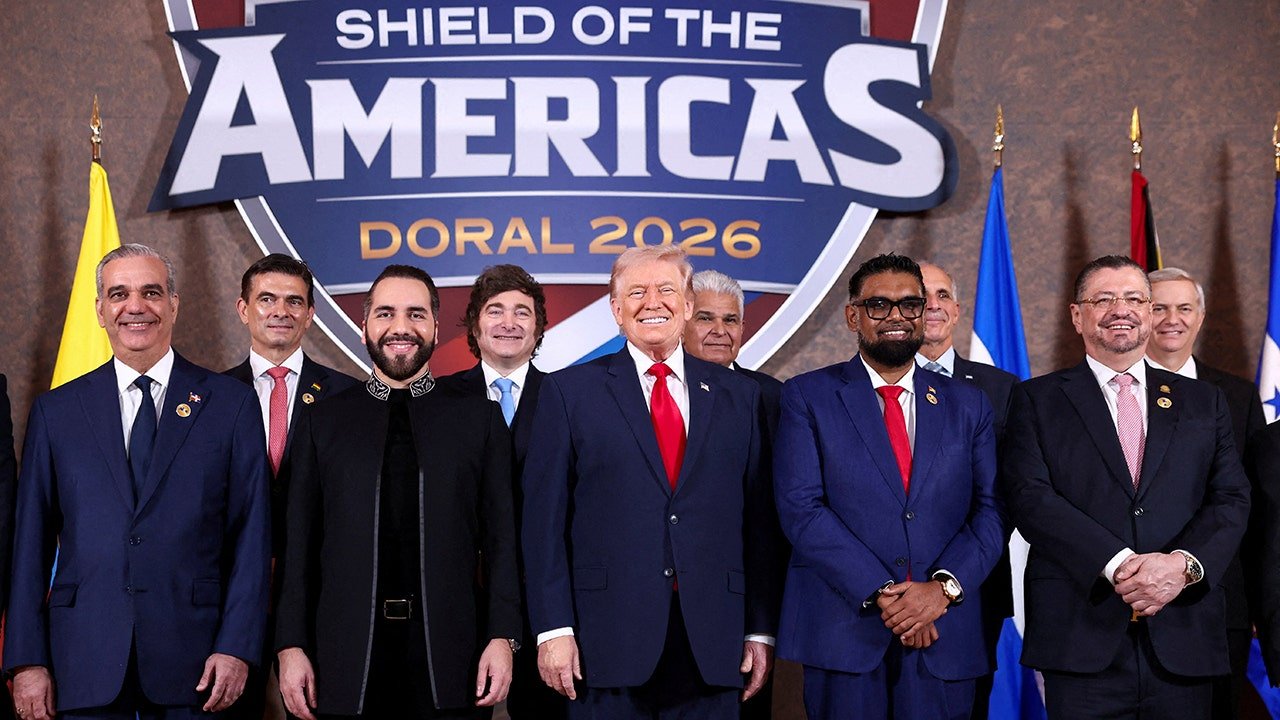
President Donald Trump speaks during the «Shield of the Americas» Summit at Trump National Doral in Miami, Florida, March 7, 2026. (SAUL LOEB / AFP via Getty Images)
«The proclamation that President Trump signed on March 7, was centered around the coalition, and the coalition is centered around having partner nations in Latin America start looking at partner-led, deterrence-focused operations against cartel infrastructure and targets inside their sovereign territory, both on land and in the maritime territory.»
Humire said, «In the past, we would provide training, capacity building and a bunch of different things to our partners so that they could go after the cartels. What is different in this administration is we are now accompanying our partners to go after the shared threats. In some cases, we’ve already gotten permission to do that, like in Ecuador, where we have permission from President Daniel Noboa to not just advise and assist his military as they engage in counter-narcotic terrorist operations, but also accompany his military forces when they engage in those operations.»

A soldier stands guard by a charred vehicle after it was set on fire in Cointzio, Michoacán state, Mexico, Sunday, Feb. 22, 2026, after the death of the leader of the Jalisco New Generation Cartel, Nemesio Rubén Oseguera Cervantes, known as «El Mencho.» (AP Photo/Armando Solis)
Humire says, «The second difference to previous administrations is that we are leaning in on deterrence-focused operations, which means we are encouraging our partners to use hard power to send a signal to the cartels to complement interdiction. We are still seizing narcotics. We’re still arresting major cartel members. We are also now destroying cartel infrastructure and, in some cases, taking out cartel members. That’s something that is new.»
Mexico
«Mexico is not a member of the coalition. We are encouraged by Mexico’s recent operation against El Mencho. That was an offensive operation against a high-value individual tied to a major cartel. We look forward to Mexico becoming a member in the future. Our relationship with Mexico is very strong military-wise. We have done a lot of training and capacity building with Mexico. But as of today, we still don’t have U.S. forces accompanying Mexico inside the sovereign territory of the country,» he said.
«Mexico, like many countries, saw what happened in Venezuela and now understand that there’s a partner of preference inside the Western Hemisphere and in the world, which is the United States, not China, Russia or Iran.»
Pentagon actions under this framework include the deployment of additional surveillance assets, enhanced maritime patrol operations, and the integration of cyber capabilities to track and disrupt illicit networks. It has also prioritized capacity-building efforts to strengthen partner nations’ ability to sustain long-term counter-cartel operations.
CRUZ WARNED MEXICO OFFICIALS ‘PRESIDENT TRUMP WAS GOING TO’ ACT IF THEY DIDN’T FIGHT CARTELS

President Donald Trump, Mexican President Claudia Sheinbaum and Canadian Prime Minister Mark Carney hold their countries’ cards during the draw for the 2026 soccer World Cup at the Kennedy Center in Washington on Dec. 5, 2025. (Stephanie Scarbrough, Pool/AP Photo)
Humire continued, «This is a historic effort to put the Western Hemisphere as a top regional priority for U.S. national security in ways we have never done before. President Trump has made a monumental shift in U.S. foreign policy and national security.»
Beyond cartel activity, the initiative reflects growing concern over the influence of China, Russia and Iran in the region.
Expanding Chinese infrastructure investments with dual-use potential, Iranian-linked networks tied to illicit finance and proxy activities and Russian disinformation campaigns are key threats to regional stability.
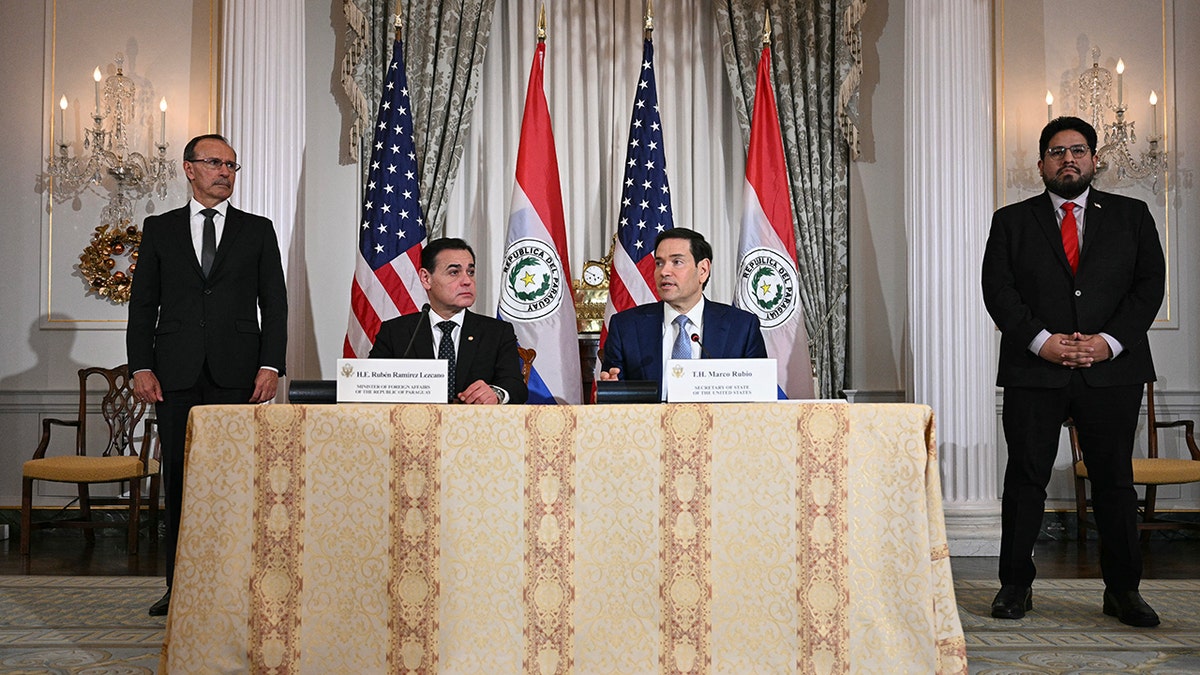
Secretary of State Marco Rubio (Center-R) meets with Paraguay’s Foreign Minister Ruben Ramirez Lezcano (Center-L) at the State Department in Washington, D.C., on Dec. 15, 2025 as Paraguay’s Minister of Defense General Óscar Luís González Cañete (L) and Deputy Assistant Secretary of Defense for Americas Security Affairs Joseph Humire (R) look on. (Jim Watson/ AFP via Getty Images)
To counter these efforts, the Pentagon has increased intelligence cooperation with allied governments, expanded joint cybersecurity initiatives, and supported efforts to secure critical infrastructure from foreign control or exploitation. Military-to-military engagements have also been scaled up to reinforce alignment with U.S. strategic priorities.
Panama
«Since Secretary Hegseth and Secretary Rubio went to Panama last year, China has had significantly less influence inside that country. They lost access to the ports and are no longer advancing their investments,» Humire said.
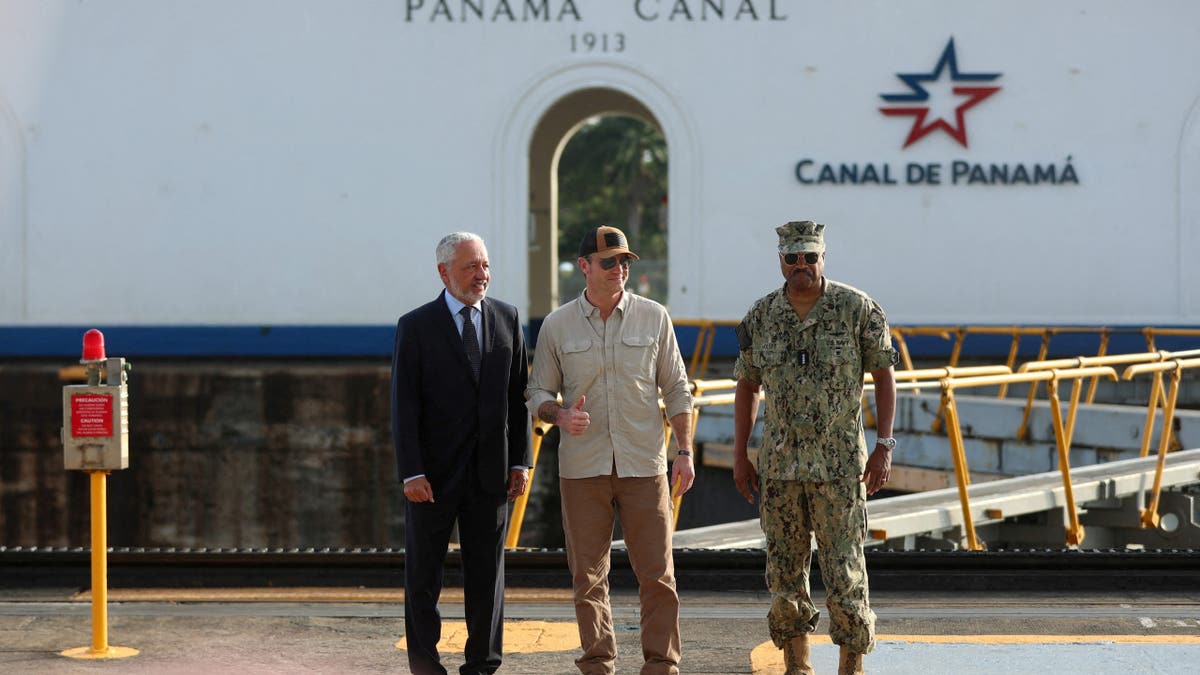
Secretary of War Pete Hegseth, Panama Canal Authority Administrator Ricaurte Vasquez and Commander of the U.S. Southern Command Adm. Alvin Holsey pose during a tour of the Miraflores Locks, in Panama City, Panama, April 8, 2025. (Aris Martinez/Reuters)
«China also had a lot of influence over the Panamanian government. That influence is no more. Panama has withdrawn from the Belt and Road Initiative, becoming the first country in Latin America to do so. From the Department of War, we have partnered with Panama to build up an enduring presence on the Panama Canal which includes a jungle operations school on the Atlantic side, and a joint security operation group on the Pacific side. This is all to advance security of the Panama Canal.»
KAROLINE LEAVITT WARNS CARTELS TO ‘NOT LAY A FINGER’ ON AMERICANS OR PAY ‘SEVERE CONSEQUENCES’
Venezuela
Humire continued, «The stabilization efforts in Venezuela are going well. Despite Maduro’s very close relationship with Iran, China and Russia, this was not enough to defend him. In the aftermath of Operation Absolute Resolve, we have seen tension among these different external actors, because while they had levels of cooperation, they don’t have the same exact interests.»
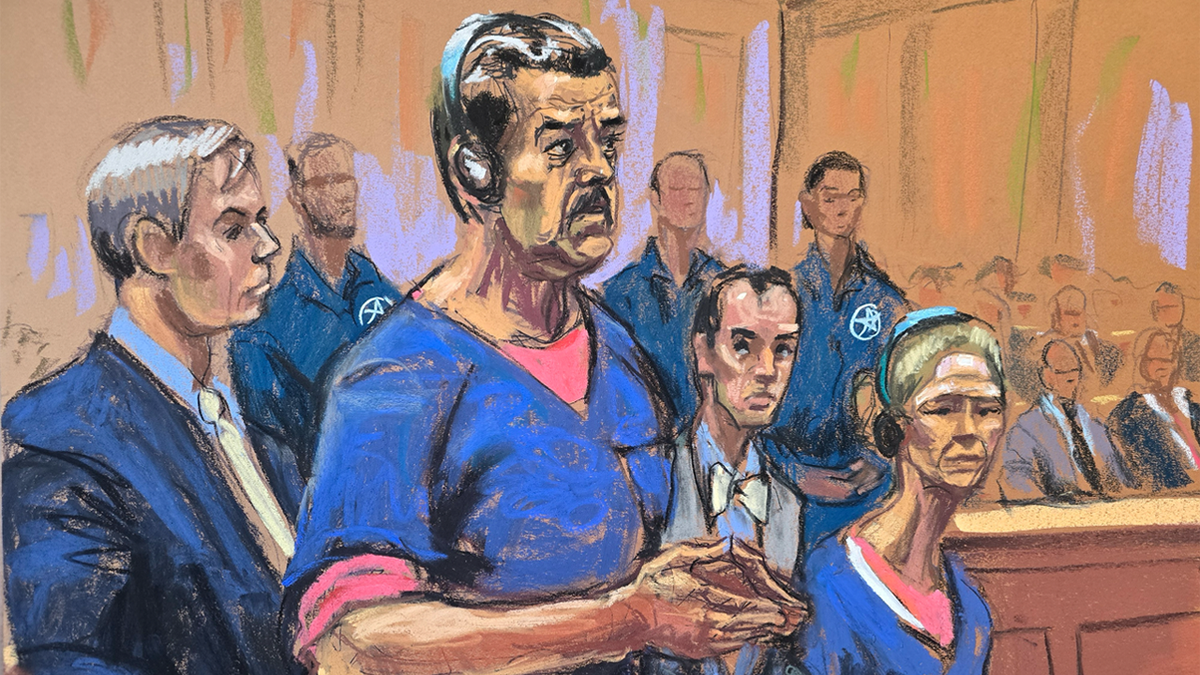
Captured Venezuelan leader Nicolás Maduro and his wife, Cilia Flores, appear with their attorneys Barry Pollack and Mark Donnelly at their arraignment in a federal court in New York City on Monday, Jan. 5, 2026. (Jane Rosenberg)
«This is evidenced by the fact that before, during and after Operation Absolute Resolve, neither Russia, China, or Iran, or even Cuba for that matter, were able to do anything to keep Nicolas Maduro in power. They might have sent some equipment and armament, but that didn’t defend Maduro from that operation, and the Cuban security that was with him wasn’t able to defend him. Russia, China, Iran or Cuba could not stop a very successful U.S. military action in support of U.S. law enforcement.»
«The message to all the countries in Latin America, and frankly the world, is that they need to think twice when they partner with Russia, China or Iran because that partnership does not produce results,» Humire said.
Cuba
As part of its broader hemispheric strategy, the administration is also recalibrating its policy toward Cuba, viewing the island as a persistent security concern due to its ties with U.S. adversaries.
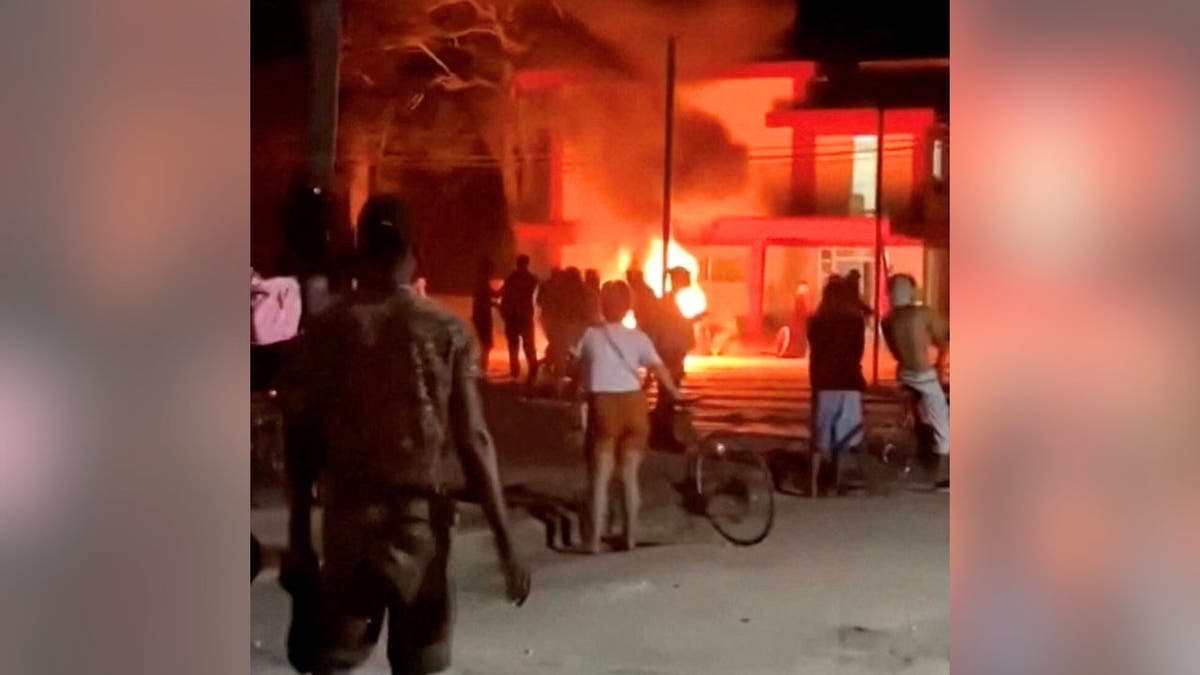
Protesters gather outside a Communist Party headquarters in Morón, Cuba, as a fire burns in the street during overnight unrest. Video obtained by Fox News Digital appeared to show demonstrators attempting to set fire to the building amid protests linked to widespread blackouts. (Reuters)
«The White House is leading conversations with Cuba in the aftermath of Venezuela. Cuba was reliant on subsidized oil from Venezuela, in exchange for security services. But those security services didn’t do much for Venezuela when it mattered, so I believe there is a bit of a friction between the Cuban and Venezuelan governments,» he said.
CLICK HERE TO DOWNLOAD THE FOX NEWS APP
«The Western Hemisphere is our neighborhood; it is intricately tied to U.S. homeland defense. Hemispheric defense is and always has been a key part of U.S. homeland defense. Acknowledging this is why the Western Hemisphere is now a top priority for the Trump administration and especially for the Department of War, as reflected by official policy in the 2025 National Security Strategy and 2026 National Defense Strategy,» Humire told Fox News Digital.
americas, donald trump, pentagon, cuba, venezuelan political crisis, location mexico, mexican cartel violence
INTERNACIONAL
Millones de personas bajo alerta por tormentas severas en EEUU con riesgo de vientos destructivos y granizo
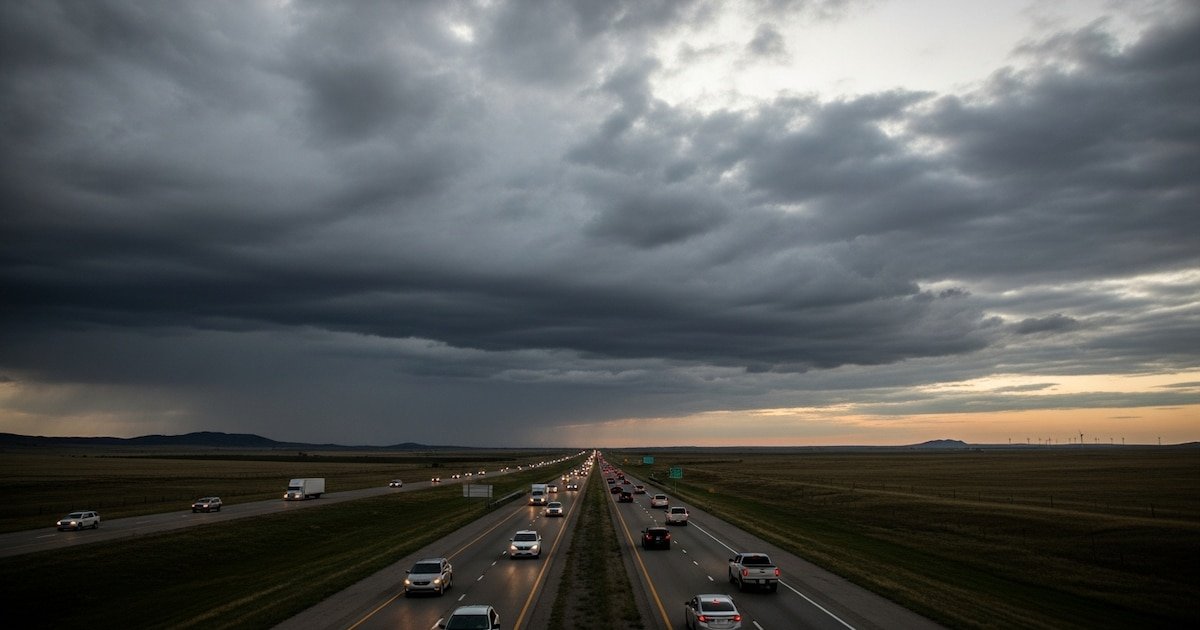
El Servicio Meteorológico Nacional de Estados Unidos (National Weather Service, NWS) ha emitido advertencias para millones de habitantes en el Valle de Ohio y el Midwest, ante la llegada de un sistema atmosférico que podría provocar tormentas intensas, vientos fuertes y caída de granizo a partir del jueves 26 de marzo de 2026. Las autoridades meteorológicas consideran que el fenómeno podría afectar el tránsito, la infraestructura y las actividades cotidianas en áreas urbanas y rurales.
De acuerdo con el Storm Prediction Center (SPC), brazo especializado del NWS, la alerta incluye una franja que abarca los estados de Illinois, Indiana, Ohio, Kentucky y Tennessee, donde se prevé la formación de una línea de tormentas capaz de generar ráfagas de viento superiores a 120 kilómetros por hora (75 millas por hora), así como granizo de tamaño considerable. Según la Administración Nacional Oceánica y Atmosférica (National Oceanic and Atmospheric Administration, NOAA), el sistema se desplaza de oeste a este y podría intensificarse a medida que interactúa con aire cálido y húmedo procedente del Golfo de México.
Las condiciones previstas para marzo de 2026 recuerdan episodios recientes de clima intenso que han impactado el centro y este de Estados Unidos, con perturbaciones similares registradas en la misma región durante la segunda semana del mes. El último gran evento causó daños materiales y afectó el suministro eléctrico en varias localidades, según reportes de la cadena meteorológica internacional Weather Channel, considerada referencia en el sector.
El NWS reporta que el evento se caracteriza por la formación de una línea de tormentas (squall line) asociada a un frente frío, que crea un entorno favorable para el desarrollo de vientos dañinos y granizo grande. El Storm Prediction Center advierte: “el riesgo principal son los vientos fuertes, aunque no se descarta la formación aislada de tornados, principalmente en zonas de Indiana y el oeste de Ohio”.
Según la National Oceanic and Atmospheric Administration, la temperatura en ciudades como St. Louis, Indianápolis y Cleveland podría descender abruptamente tras el paso del sistema, con máximas previstas de entre 8 y 12 °C (46 y 54 °F) para el jueves y viernes. En tanto, el Climate Prediction Center señala un aumento en la probabilidad de precipitaciones intensas, lo que podría provocar anegamientos temporales en áreas bajas.
La Weather Channel informa que el sistema podría afectar a más de 8 millones de personas, con interrupciones en servicios y posibles retrasos en el transporte terrestre y aéreo. Entre los factores que agravan la situación se encuentra la saturación del suelo debido a lluvias previas, lo que incrementa el riesgo de caída de árboles y cortes de energía.

De acuerdo con el Storm Prediction Center, el área de mayor riesgo se extiende desde el centro de Illinois hasta el sur de Ohio y el norte de Kentucky, región donde los modelos de predicción muestran condiciones propicias para tormentas organizadas. El informe destaca que las ciudades con mayor probabilidad de impacto incluyen St. Louis, Indianápolis, Columbus y Louisville.
El NWS detalla que el avance del frente frío y la presencia de aire cálido y húmedo facilitarán la formación de celdas convectivas, algunas de las cuales podrían evolucionar en superceldas aisladas. El boletín meteorológico especifica: “La posibilidad de vientos superiores a 100 km/h (62 mph) y granizo de más de 2 centímetros (1 pulgada) es significativa en el sector central del Valle de Ohio”.
En su actualización matutina del lunes, la National Oceanic and Atmospheric Administration precisó: “El seguimiento de la situación continuará en tiempo real mediante radares y sistemas de alerta, con el objetivo de informar a la población ante la potencial ocurrencia de tornados breves, aunque estos no constituyen la amenaza principal en esta ocasión”.
Las autoridades locales y estatales han activado protocolos de emergencia y coordinan acciones con los servicios de protección civil. El NWS recomienda a la población “mantenerse atenta a los avisos oficiales, preparar refugios temporales y evitar desplazamientos innecesarios durante el paso de las tormentas”. Se han emitido advertencias específicas para sectores vulnerables como escuelas, hospitales y centros de atención a personas mayores.
Según la Administración Federal de Emergencias (Federal Emergency Management Agency, FEMA), se ha reforzado la comunicación con los gobiernos estatales de Illinois, Ohio y Kentucky para garantizar la rápida respuesta ante posibles cortes de energía o daños en la infraestructura. Un portavoz de FEMA, citado por la Weather Channel, remarcó: “La prevención y la preparación son fundamentales para mitigar los efectos de este tipo de eventos”.
Las aerolíneas han emitido comunicados anticipando posibles retrasos y cancelaciones en vuelos con origen o destino en ciudades bajo alerta. Además, las empresas de transporte terrestre monitorean el desarrollo del sistema para ajustar rutas y horarios según la evolución de las condiciones meteorológicas.

El NWS proyecta que, tras el avance de la línea de tormentas, el frente frío provocará un descenso generalizado de las temperaturas en el centro y este de Estados Unidos. El Climate Prediction Center estima que las máximas estarán entre 6 y 15 °C (43 a 59 °F) por debajo de los valores habituales para la época, especialmente en el noreste y la región de los Grandes Lagos.
De acuerdo con la Weather Channel, la estabilización de las condiciones se produciría entre viernes y sábado, aunque podrían mantenerse lluvias residuales y temperaturas bajas en partes del noreste. Las autoridades llaman a la población a mantenerse informada mediante los canales oficiales y a seguir las recomendaciones de seguridad, en espera de nuevas actualizaciones.
El impacto de este fenómeno podría sentirse en las actividades escolares, laborales y comerciales, así como en la logística y el transporte, según los reportes de la National Oceanic and Atmospheric Administration y el National Weather Service. El monitoreo permanente y la difusión de alertas permitirán ajustar las medidas de prevención y respuesta a medida que evolucione la situación.
Grandes Llanuras,autopista,tormenta,nubes,tráfico,vehículos,carretera,clima,paisaje,atardecer
INTERNACIONAL
La Casa Blanca dice que los contactos con Irán siguen siendo «fluidos», pero el precio del petróleo vuelve a subir a más de US$100
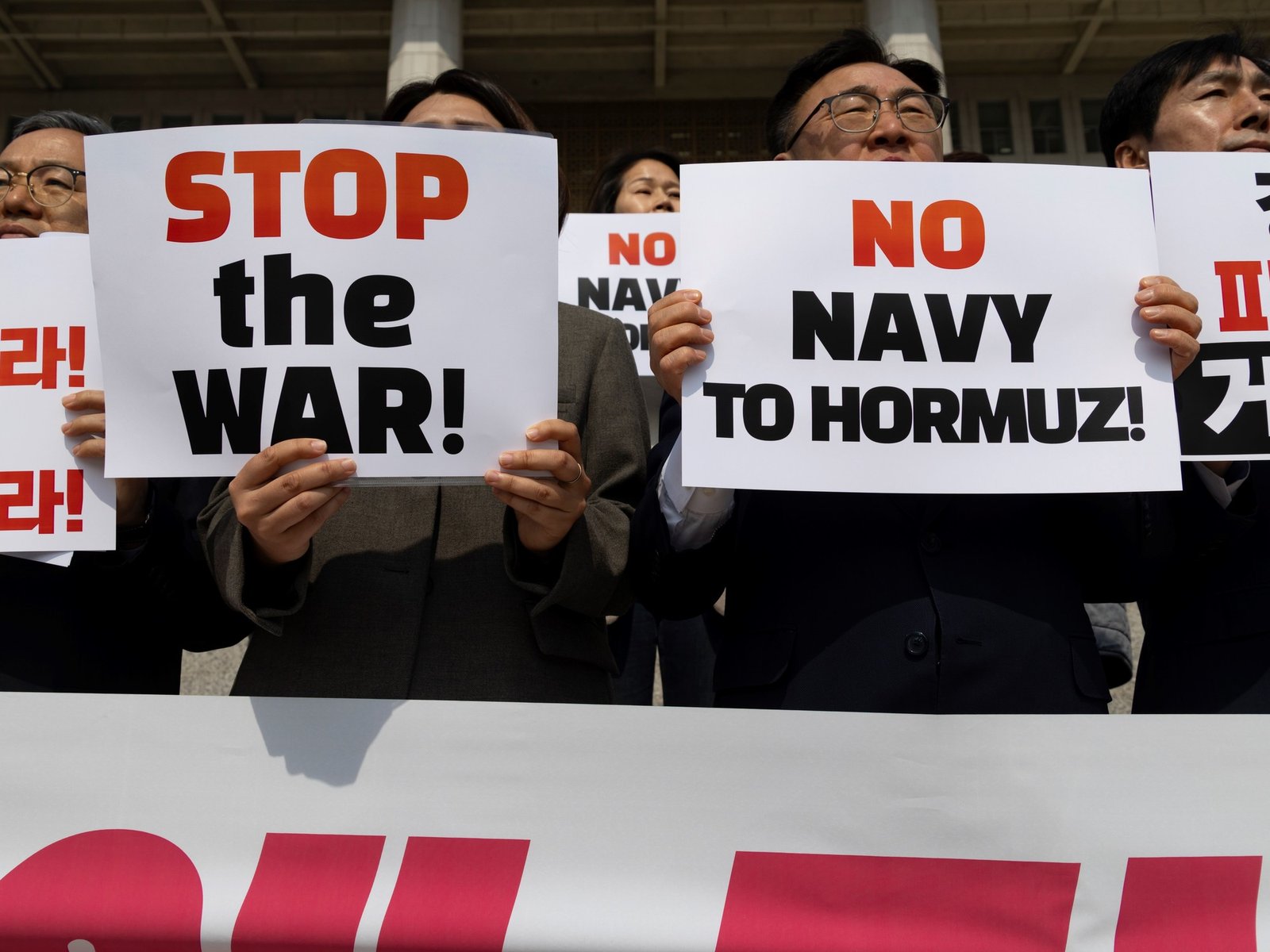
La Casa Blanca ha comunicado a la BBC que los planes para entablar conversaciones con Irán siguen siendo «fluidos», añadiendo que cualquier especulación «no debe considerarse definitiva», cuando la guerra en el Golfo cumple este martes 25 días.
Esto ocurre después de que Trump y el presidente del Parlamento iraní dieran versiones contradictorias sobre posibles diálogos entre ambos países respecto a la guerra en curso.
Trump afirmó anteriormente que había pospuesto los ataques amenazados contra centrales eléctricas iraníes tras mantener conversaciones «productivas» con Teherán.
Irán calificó dichas afirmaciones sobre las conversaciones de «noticias falsas» (fake news).
Según CBS, socio de la BBC en EE. UU., un funcionario del Ministerio de Asuntos Exteriores de Irán afirma que Teherán ha recibido «puntos de parte de EE.UU.» a través de mediadores, como un posible precursor de las discusiones.
Mientras tanto, el precio del petróleo volvió a subir por encima de los 100 dólares por barril, tras haber caído el lunes cuando Trump publicó por primera vez sobre las conversaciones entre EE.UU. e Irán.
El petróleo subió en una sesión volátil —reduciendo la fuerte caída del lunes— ante la preocupación de que la guerra en Oriente Medio pueda intensificarse, ya que el flujo de crudo a través del estratégico estrecho de Ormuz hacia los mercados mundiales sigue interrumpido.
El Brent superó los 100 dólares por barril, tras desplomarse un 11% el lunes, después de que el presidente Donald Trump aplazara durante cinco días su amenaza de atacar la infraestructura energética de Irán. El crudo de referencia estadounidense, el West Texas Intermediate (WTI), avanzó cerca de un 2%.
El crudo Brent ha subido cerca de un 40% este mes ante el temor de que las hostilidades entre Estados Unidos, Israel e Irán, que han sacudido Oriente Medio, desencadenen una crisis energética mundial e impulsen la inflación. La guerra ha obstaculizado el tránsito por el Estrecho de Ormuz, obligando a los productores del Golfo Pérsico a recortar millones de barriles de su producción diaria de petróleo. Los productos derivados, como el diésel y el combustible para aviones, han subido incluso más que el crudo, presionando a los consumidores e inquietando a los gobiernos.
Las consecuencias siguieron extendiéndose. Chile se dispone a aumentar los precios de los combustibles hasta un 50%, mientras que en Asia, Japón ordenó una revisión de toda su cadena de suministro de productos petrolíferos y se dice que el país ha realizado consultas a los participantes del mercado sobre una posible intervención en el mercado de futuros de crudo.
En otros lugares, Tailandia aumentó el precio del diésel, el mayor refinador de petróleo de China afirmó que daría prioridad al suministro local y Filipinas advirtió que la inmovilización de aviones debido a la escasez de combustible para reactores era una posibilidad real.
«Una pregunta fundamental es si el mercado mundial del petróleo puede mitigar la interrupción en el Estrecho de Ormuz», señalaron en una nota analistas de Macquarie, entre ellos Vikas Dwivedi. «Nuestro análisis sugiere que la respuesta es afirmativa, pero solo si se despliegan diversas medidas de mitigación sin los retrasos burocráticos habituales».
Aliados de Estados Unidos, como Arabia Saudita y los Emiratos Árabes Unidos, han endurecido sus posturas contra Teherán debido al bombardeo de sus territorios. Riad comunicó a Estados Unidos que estaba dispuesta a atacar a Irán si sus propias plantas de energía y agua eran blanco de la República Islámica, según personas con conocimiento del asunto.
Los aliados de Estados Unidos en el Golfo Pérsico se acercaban poco a poco a contribuir a la lucha, informó el Wall Street Journal. Entre ellos, el príncipe heredero saudí, Mohammed bin Salman, está ahora ansioso por restablecer la disuasión y se encuentra cerca de tomar la decisión de unirse a los ataques, según el periódico, que cita a personas familiarizadas con la situación.
Con información de BBC News y Bloomberg

El testimonio de la periodista que entrevistó a Videla: las confesiones del dictador sobre los desaparecidos y las Madres

Caputo anticipó una cosecha récord para el campo: cuántos dólares podría aportar en 2026

PH Neto, la ‘joyita’ del Palmeiras que apunta a crack, aterriza en LaLiga FC Futures

Darío Barassi vio a una participante caer del estudio de Ahora Caigo y su reacción sorprendió a todos

‘Americas Counter Cartel Coalition’: Inside the US strategy to combat narco terror, confront China, other foes

Rosario: un hombre fue apuñalado por su cuñado durante una discusión familiar y está en grave estado

¿FIN DE CICLO? Escándalo por la mansión no declarada y viajes de lujo empujan a Manuel Adorni fuera del Gobierno: Su salida sería inminente

»¡VAN A FUNDIR A MEDIO PAÍS!»: El lapidario diagnóstico de Roberto Cachanosky sobre el plan de Milei

Apareció otra factura y complica más a Adorni: el vuelo de vuelta también lo pagó su amigo Grandio

ALERTA FINANCIERA: 4 de cada 10 argentinos ya no pueden pagar sus deudas. ¡Caputo debe actuar ya!

 POLITICA2 días ago
»¡VAN A FUNDIR A MEDIO PAÍS!»: El lapidario diagnóstico de Roberto Cachanosky sobre el plan de Milei
- ECONOMIA2 días ago
ALERTA FINANCIERA: 4 de cada 10 argentinos ya no pueden pagar sus deudas. ¡Caputo debe actuar ya!
- POLITICA3 días ago
El Gobierno apunta a una sindicalista por la filtración del video de Manuel Adorni en un vuelo privado