INTERNACIONAL
Reporter’s Notebook: GOP targets affordability with reconciliation 2.0 plan ahead of midterms

NEWYou can now listen to Fox News articles!
It is said that in politics, the best idea is a stolen one.
Republicans are no dummies. They’re looking at what worked for Democrats last year as New York City Mayor Zohran Mamdani upset the primary field and rode easily to Gracie Mansion. They saw victories by New Jersey Gov. Mikie Sherrill and Virginia Gov. Abigail Spanberger.
They all ran on affordability. That issue carried them to victory.
HEALTHCARE, ECONOMY AND THE ‘ONE BIG BEAUTIFUL BILL’: WELCOME TO THE MIDTERMS
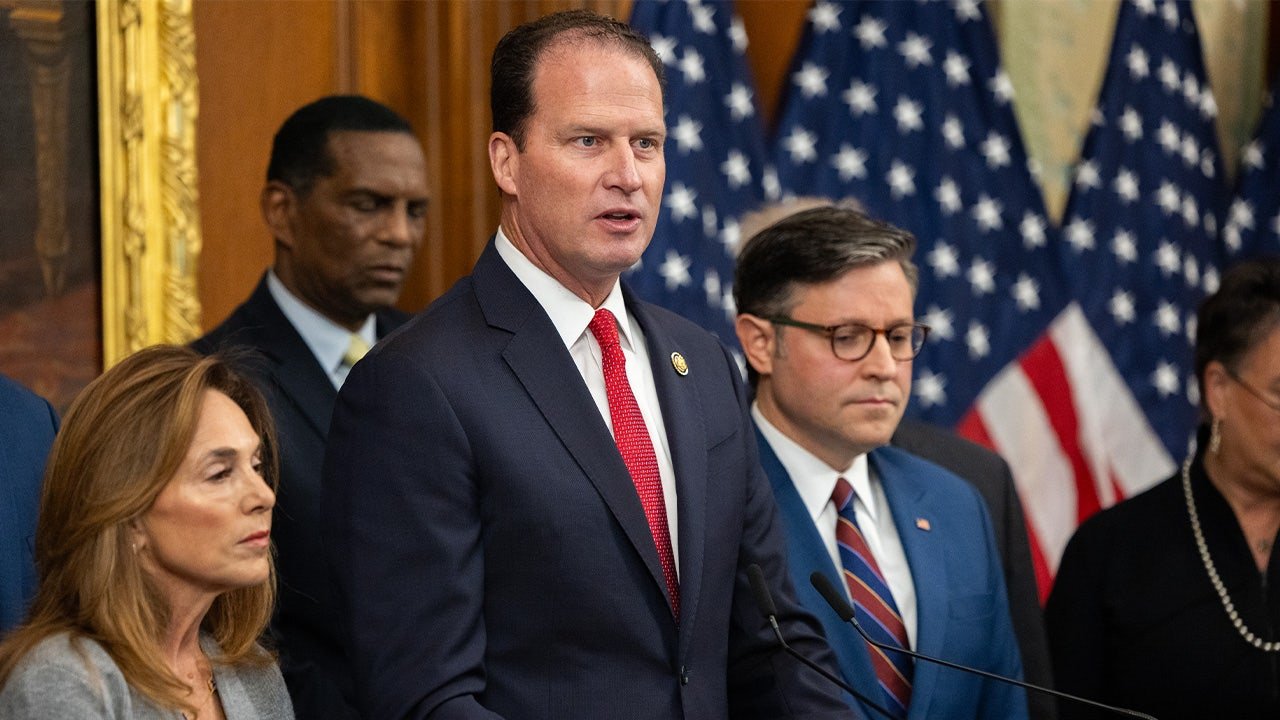
Republican Study Committee Chairman Rep. August Pfluger speaks during a press conference with other members of the Republican Study Committee as well as members of House Republican leadership in Washington, Oct. 28, 2025. (Nathan Posner/Anadolu via Getty Images)
House conservatives are hungry for a legislative victory in the 2026 midterms. So, they’re focusing on bringing down the costs of housing and healthcare.
The Republican Study Committee (RSC), the largest bloc of conservatives in the House, released its blueprint recently.
«Here is the framework for what we’re calling the Make the American Dream Affordable Again,» boasted RSC Chairman Rep. August Pfluger, R-Texas. «The reconciliation 2.0 plan.»
There’s that word again: reconciliation.
It’s a parliamentary term. Specifically, «budget reconciliation.» It doesn’t mean a great deal in the House — although the House must adopt a budgetary package. But budget reconciliation shouts from the mountaintops in the Senate. The Senate is where most legislation needs 60 votes to break a filibuster. But if a bill is budget-neutral and deals with numbers – not policy — it qualifies for the budget reconciliation process.
That’s where the political magic comes in.
Budget reconciliation measures are not subject to a filibuster. You only need a simple majority. Republicans used the budget reconciliation gambit to approve the One Big Beautiful Bill Act last year. Otherwise, Senate Republicans were stymied in their efforts. They only have 53 votes in the Senate. So the GOP made the decision to go it alone. And they may do so again this year.
«I think we’d be derelict in our duties if we didn’t try something with reconciliation, considering how difficult it is to get something done in a bipartisan way around here,» said Sen. Kevin Cramer, R-N.D. «Maybe there’s something that we can do with reconciliation. I think we ought to try it.»
SCOOP: HOUSE FREEDOM CAUCUS LAYS OUT GOP BATTLE PLAN AHEAD OF REPUBLICANS’ HUDDLE WITH TRUMP
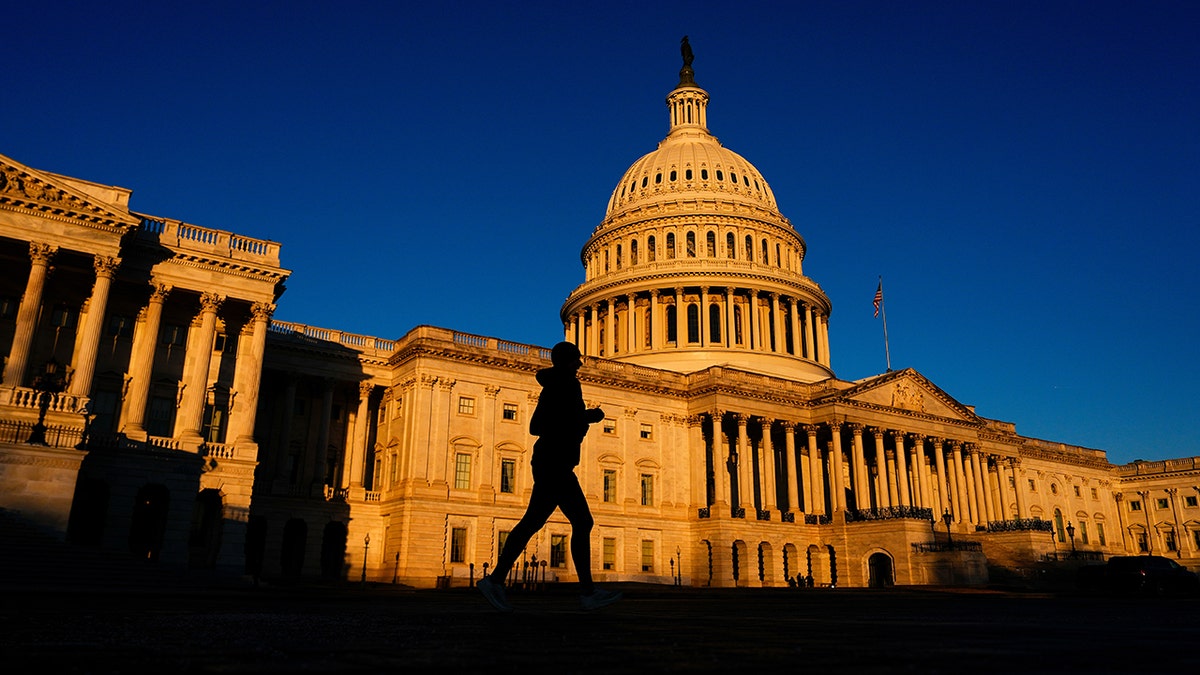
A runner jogs past the U.S. Capitol shortly after sunrise in Washington, Dec. 16, 2025. (Julia Demaree Nikhinson/AP Photo)
Rep. Eric Burlison, R-Mo., suggested that if the GOP didn’t try, they were squandering their majorities on Capitol Hill.
«The American people are not expecting a base hit. They need a home run. In short, this conference needs to go big or go home because the American people are going to send us home,» said Burlison.
The package eliminates the estate tax. That’s costly, dumping $281 billion onto the deficit.
Keep in mind this is coming from fiscal conservatives.
It also abolishes capital gains taxes on homes sold to first-time buyers.
«If you talk to anyone under the age of 40, they will tell you it is virtually impossible due to the inner barrier of entry. It is impossible to buy their first home,» said Rep. Kat Cammack, R-Fla. «First time homebuyers would be allowed to save for their down payment tax-free.»
So how do Republicans get this done?
«A lot of this we’ve got to do on our own,» said House Speaker Mike Johnson, R-La., on Fox. «So the reconciliation bill that we’re putting together right now will be just as beautiful. But just not as big as the one last year.»
It’s about the math.
And the math is utterly brutal for the GOP.
CONGRESS FLEES TOWN AS HEALTHCARE PREMIUMS SET TO EXPLODE FOR MILLIONS OF AMERICANS IN JANUARY
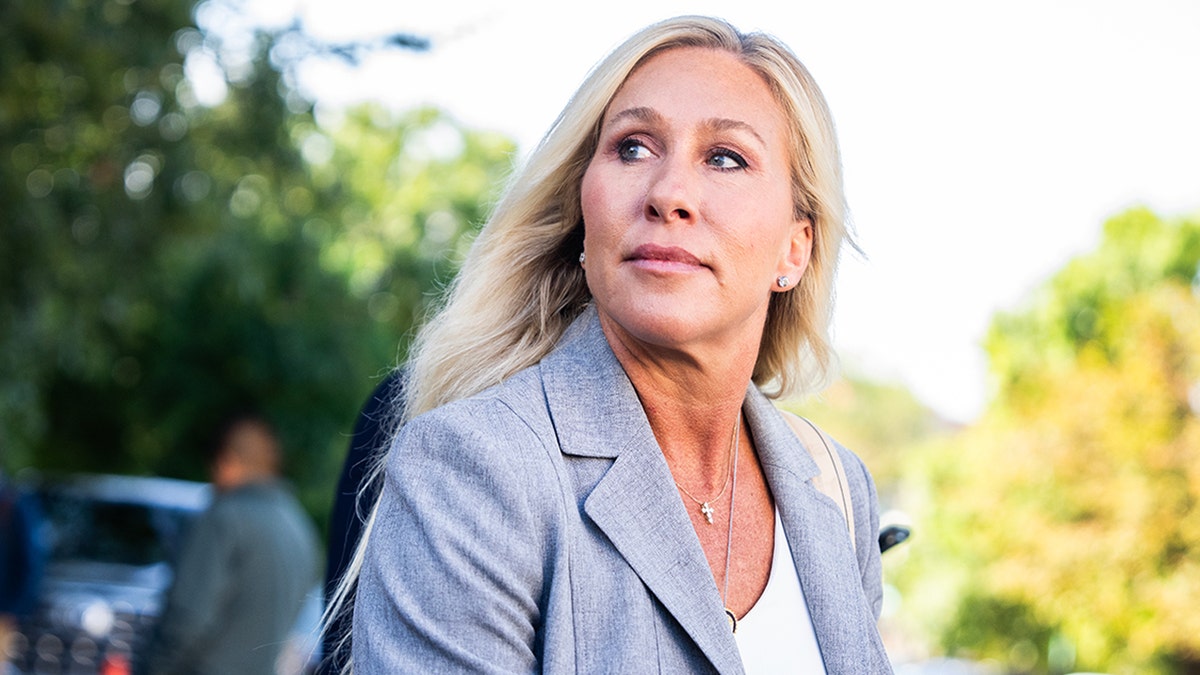
Rep. Marjorie Taylor Greene, R-Ga., talks with reporters after a meeting of the House Republican Conference at the Capitol Hill Club in Washington, Sept. 9, 2025. (Tom Williams/CQ-Roll Call, Inc. via Getty Images)
House Republicans can only lose two votes right now and still pass a bill on their own. That margin slips to a single vote later this month after a runoff between two Democrats in a special election for a House seat in Texas.
The GOP numbers game has dominated the conversation in the House in 2026. Former Rep. Marjorie Taylor Greene, R-Ga., resigned. The late Rep. Doug LaMalfa, R-Calif., died. Rep. Jim Baird, R-Ind., was in a car accident but returned with facial bruises and wearing a neck brace. Rep. Greg Murphy, R-N.C., has been out because of eye surgery. Rep. Derrick Van Orden, R-Wis., missed time due to a medical issue involving his wife. But he’s back. The attendance of Rep. Wesley Hunt, R-Texas, has been sporadic as he tries to win the GOP nomination and unseat longtime Sen. John Cornyn, R-Texas, in the March primary. Rep. Steve Womack, R-Ark., is out because his wife died.
And inevitably, others will be out as we pass through the months.
You try to get 435 people in the same room at the same time.
So this is not going to be easy. And the GOP brain trust is skeptical.
«I’d sure love to do one (a reconciliation bill). But obviously, with a one-seat majority basically, it means we’ve all got to come together and agree on what that framework would look like,» said House Majority Leader Steve Scalise, R-La. «There is no consensus yet in our conference.»
Following the Democrats’ election success last year — and the narrow vote matrix in the House, Minority Leader Hakeem Jeffries, D-N.Y., is doubtful Republicans can pass much of anything.
TOP 5 GAME-CHANGERS FROM THE 2025 CAMPAIGN TRAIL
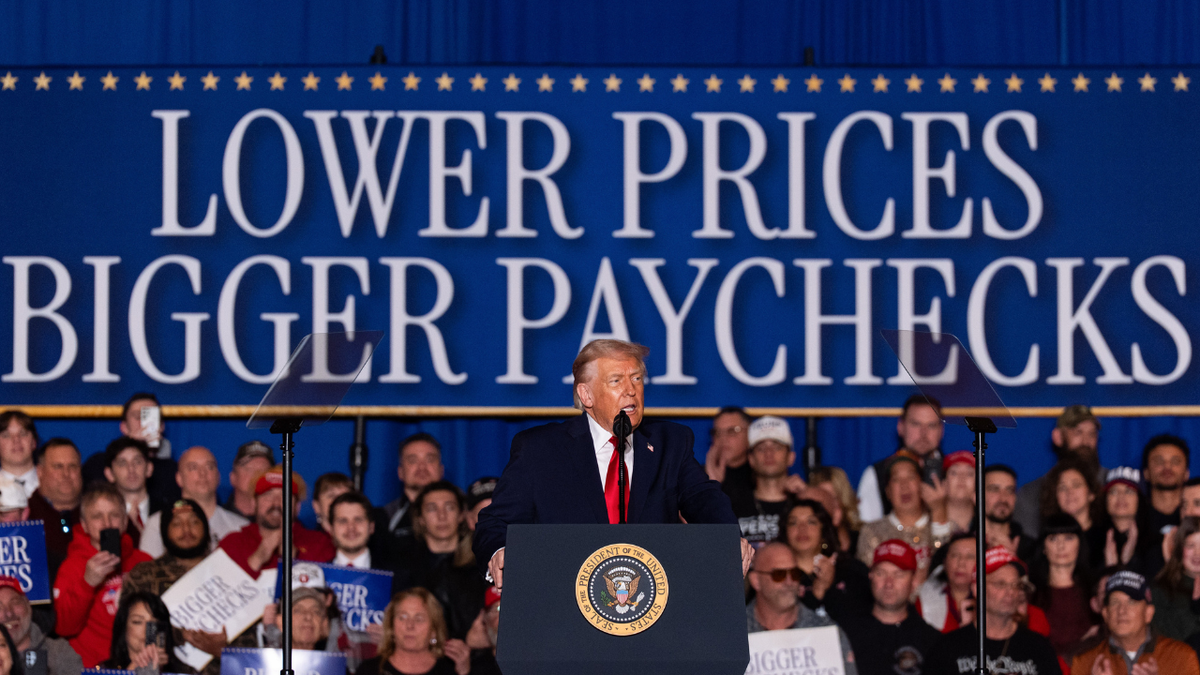
President Donald Trump speaks on inflation at Mount Airy Casino Resort in Mount Pocono, Pa., Dec. 9, 2025. (Adam Gray/Bloomberg/Getty Images)
«It’s strange to me after Republicans got crushed electorally all across the country, up and down the ballot in the off-year election last November, that now they’ve decided that perhaps they should actually try to keep their word and address the high cost of living in the United States of America. It’s all talk. There’s no action. These people are not serious,» said Jeffries. «These extremists don’t have the votes to get a reconciliation bill done.»
One key component of the bill is health insurance. It would cut out the middleman (the insurance companies) and send subsidies directly to consumers. That’s a specific request of President Trump.
«[We’re] redirecting Obamacare subsidies directly into the hands of patients. Not into the insurance companies,» said Pfluger.
Healthcare remains one of the most nettlesome issues in the history of the Congress. A bipartisan Senate working group was trying to craft a deal on healthcare. The hope was to create an off-ramp for the Obamacare subsidies, rather than forcing people to go cold turkey.
«The sooner, the better,» said Senate Health Committee Chairman Bill Cassidy, R-La., when pressed last week by yours truly about timing. «The longer it goes, the worse it gets.»
I asked Cassidy if they were «closer» than a few weeks ago.
«Probably,» replied Cassidy.
But Sen. Bernie Moreno, R-Ohio, said there’s an impasse.
«We are at a little bit of a pothole,» said Moreno, blaming the holdup on Senate Minority Leader Chuck Schumer, D-N.Y.
Republicans hoped to campaign on the economic benefits of the Big Beautiful Bill. But Republicans concede they’ve had trouble selling it. GOPers are still bullish that voters will reap economic benefits this year — and pull the lever for Republicans. But voters are fickle. They want to see what lawmakers have done for them on affordability.
«I do think it’s the most important issue for November,» said House Budget Committee Chairman Joey Arrington, R-Texas. «But the question going into November is, can we accelerate what we’re seeing with gas prices coming down. Rent coming down. Mortgage rates.»
CLICK HERE TO DOWNLOAD THE FOX NEWS APP
Republicans hope to catch the wave.
The economy is always important in elections. It was clearly the issue in 2025. It might not be at the top in 2026. Consider potential consequences from Greenland, Iran and even the echoes of Minnesota.
In other words, Republicans may expend a lot of political capital on trying to advance another bill. Especially through «reconciliation.» But that might not score them much political benefit if voters have «reconciled» their reservations about the economy — and moved on to something else.
politics,midterm elections,republicans,congress,house of representatives politics,senate









NEWYou can now listen to Fox News articles!
Senate Democrats have panned the GOP’s push for voter ID legislation as akin to segregationist laws from the Deep South, but the architect of the bill in the Senate says their arguments are detached from reality.
«It’s paranoid fantasy,» Sen. Mike Lee, R-Utah, told Fox News Digital. «These are absurd arguments. They should be ashamed to make them.»
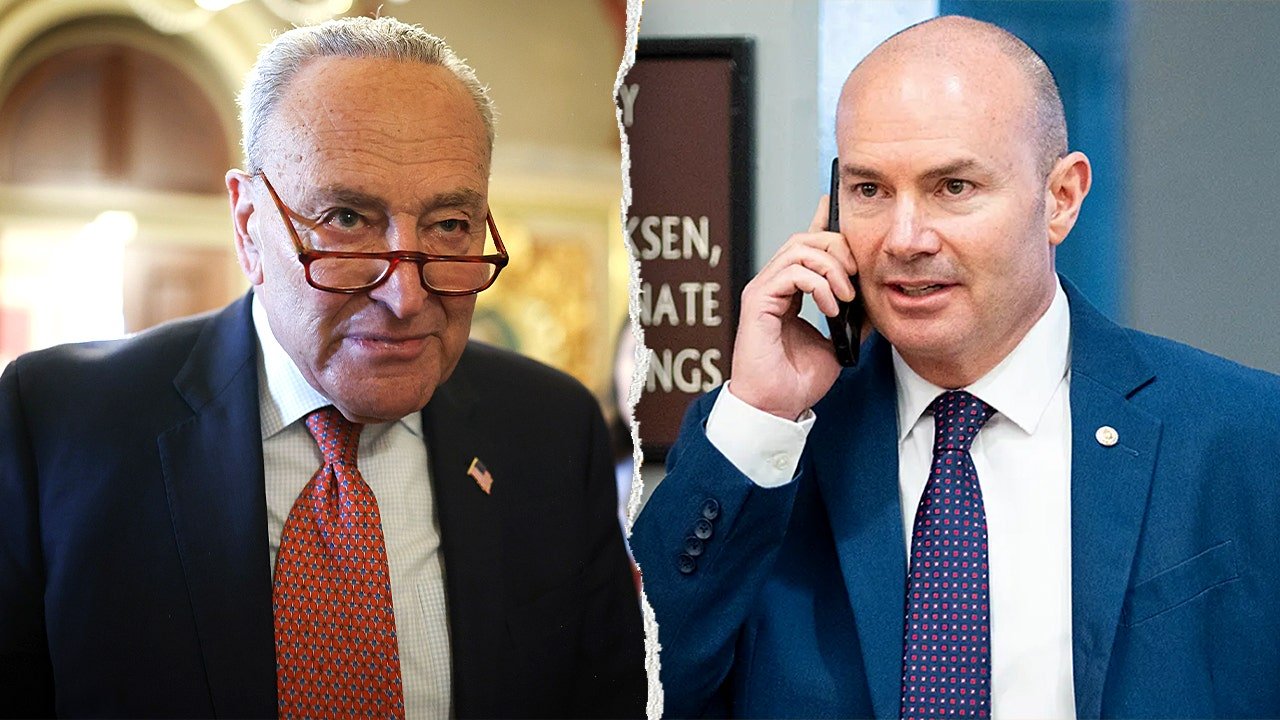
Lee was responding to comments from Senate Minority Leader Chuck Schumer, D-N.Y., who has doubled down on his claim that the Safeguarding American Voter Eligibility (SAVE) America Act is «Jim Crow 2.0.»
THUNE GUARANTEES VOTER ID BILL TO HIT THE SENATE DESPITE SCHUMER, DEM OPPOSITION: ‘WE WILL HAVE A VOTE’
Sen. Mike Lee, R-Utah, called the accusation that his voter ID legislation was «Jim Crow 2.0» by Senate Minority Leader Chuck Schumer, D-N.Y., «paranoid fantasy.» (Kayla Bartkowski/Getty Images; Bill Clark/CQ Roll Call, Inc. via Getty Images)
The bill, which passed the House last week and has been introduced and championed by Lee in the Senate, would require photo ID to vote in federal elections, proof of citizenship to register and would mandate that states keep voter rolls clear of ineligible voters.
Schumer and his caucus plan to block the bill, arguing that it is a tool of voter suppression that would disproportionately harm poorer Americans and minority groups.
But Lee argued that providing identification or proof of citizenship is routine in everyday life — whether undergoing a background check to buy a firearm or filling out tax forms when starting a new job.
COLLINS BOOSTS REPUBLICAN VOTER ID EFFORT, BUT WON’T SCRAP FILIBUSTER

Senate Majority Leader John Thune, R-S.D., told Fox News Digital that the SAVE America Act, voter ID legislation backed by President Donald Trump, would get a vote in the Senate. (Michael M. Santiago/Getty Images)
«By their logic, it’s Jim Crow to require somebody to establish citizenship before taking a job with a new employer, and that’s insane,» Lee said.
«And so then they argue here, well, voting is so fundamental, and we have constitutional protections protecting our right to vote,» he continued. «Well, we’ve got constitutional protections protecting our right to bear arms, and yet that doesn’t cause us to dispense with proving who you are and your eligibility to buy a gun. This has just been insane.»
Without Democratic support, however, the pathway to sending the legislation to President Donald Trump’s desk is complicated.
GOP REACHES KEY 50-VOTE THRESHOLD FOR TRUMP-BACKED VOTER ID BILL AS SENATE FIGHT LOOMS

President Donald Trump listens during a Cabinet meeting at the White House, Jan. 29, 2026, in Washington. (Evan Vucci/AP Photo)
Senate Majority Leader John Thune, R-S.D., has vowed to bring the SAVE America Act to the floor, and Republicans have the votes to move it through its first key procedural hurdle. From there, Democrats can block it with the 60-vote filibuster, which Lee often refers to as the «zombie» filibuster.
Eliminating the filibuster is out of the question for several of Lee’s colleagues, but Republicans are warming to reinstating a talking, or standing, filibuster, which would require Senate Democrats to make their case against the bill on the floor over hours of debate.
CLICK HERE TO DOWNLOAD THE FOX NEWS APP
Trump has already suggested he would issue an executive order if the legislation fails, which Lee declined to speculate on without first knowing what exactly would be done.
But he noted that it was all the more reason to pass the SAVE America Act, given the ever-swinging political pendulum in Washington, D.C.
«It’s still really critically important that we pass this law, because let’s assume that he issued such an order, and that it does most or all of what we needed to do here, that gives us protection for the moment, to whatever degree he’s able to do that through an executive action,» Lee said. «But we need something that can last longer than he’s in office.»
politics,senate,elections,chuck schumer

REUTERS/Raheb Homavandi
Las negociaciones nucleares entre Irán y Estados Unidos en Ginebra abrieron una fase de mayor optimismo en los mercados, tras jornadas marcadas por declaraciones enfrentadas entre el presidente Donald Trump y las autoridades iraníes. El precio del petróleo, que había subido ante el aumento de la tensión, experimentó una baja luego de que el ministro de Exteriores iraní, Abbas Araghchi, declarara que “se ha abierto una nueva ventana de oportunidad” para alcanzar un acuerdo sostenible, aunque Irán mantiene su disposición a defenderse ante cualquier amenaza.
El barril de West Texas Intermediate cerró con una caída de 0,9% hasta $62,33, tras haber llegado a subir 1,5% durante la jornada. Por su parte, el Brent del Mar del Norte retrocedió 1,8% hasta $67,42. Analistas del sector, como Aarin Chiekrie de Hargreaves Lansdown, indicaron que “hay especulación sobre la posibilidad de que Irán acepte diluir su uranio más enriquecido a cambio del levantamiento total de las sanciones financieras”, aunque persisten dudas sobre si ese gesto será suficiente para lograr un acuerdo definitivo.
Desde Teherán se informó que existe un acuerdo general con Washington sobre los términos básicos de un potencial pacto, mientras que un funcionario estadounidense confirmó que los negociadores iraníes volverán a Ginebra con una nueva propuesta en dos semanas. A pesar de estos avances, ambos países mantienen despliegues militares en la región: Irán anunció el cierre temporal de una parte del Estrecho de Ormuz para ejercicios militares, mientras que Estados Unidos envió un segundo portaviones. Esta situación añade volatilidad a los mercados energéticos, ya que el Estrecho es un punto clave para el tránsito mundial de crudo.
En el ámbito bursátil, Wall Street cerró la sesión con leves alzas, después de una jornada volátil. Chiekrie señaló que “los corredores de seguros, asesores financieros, servicios inmobiliarios y logística estuvieron bajo presión la semana pasada, y los inversores observan con cautela qué segmento del mercado podría ser el próximo en verse afectado por la inteligencia artificial”. Las bolsas europeas finalizaron en terreno positivo, con Londres y Fráncfort subiendo 0,8%, mientras que Tokio retrocedió y los mercados chinos permanecieron cerrados por el Año Nuevo Lunar.

EFE/ Cati Cladera
En el Reino Unido, los datos oficiales mostraron que el desempleo alcanzó un 5,2% en el último trimestre, el nivel más alto en cinco años, lo que aumenta la probabilidad de que el Banco de Inglaterra reduzca su tasa de interés de referencia el mes próximo. En el mercado de divisas, el dólar estadounidense se debilitó frente al yen.
Por otro lado, la Cámara de Industria y Comercio de Alemania advirtió que la mayor economía europea no se recuperará en 2026, debido a la persistente incertidumbre geopolítica, los altos costos y la débil demanda interna. Alemania apenas logró un crecimiento moderado en 2025, tras dos años de recesión.
En el sector corporativo, las acciones del gigante agroquímico Bayer subieron cerca de ocho por ciento luego de que su filial Monsanto propusiera un acuerdo de hasta USD 7.250 millones para resolver demandas colectivas en Estados Unidos, relacionadas con el supuesto vínculo entre el herbicida Roundup y el cáncer en sangre, lo que podría cerrar años de litigios costosos.
Mientras tanto, los inversores siguieron de cerca las negociaciones mediadas por Estados Unidos entre Ucrania y Rusia en Ginebra. Un asistente del equipo negociador de Kiev informó que las conversaciones continuarán el miércoles, y una eventual resolución podría allanar el camino para el levantamiento de sanciones y el incremento de los flujos petroleros hacia los mercados internacionales.
(Con información de AFP y Bloomberg)
Corporate Events,Commodities Markets,Energy Markets

El gesto de Luck Ra que sorprendió a una emprendedora: “No le creí que era él y me mandó una prueba”

Reforma laboral: los gremios estatales e industriales se suman al paro de la CGT

Reforma laboral: qué cambia tras la decisión del Gobierno de eliminar el artículo de licencias médicas

Gracias a un gol de Juan Fernando Quintero, River Plate venció 1-0 a Ciudad de Bolívar y avanzó a los 16avos de la Copa Argentina

Con guiños a la Casa Rosada, Rogelio Frigerio abrirá un nuevo período de sesiones legislativas en Entre Ríos

Lara López Calvo presentó el nuevo mapa laboral argentino: cómo cambió el empleo tras la pandemia

Cristian Ritondo: “Vamos a apoyar la ley de modernización laboral, pero no el régimen de licencias por enfermedad”

Uno de los jefes de la CGT adelantó que convocarán a un paro general por la reforma laboral: “Trabajaremos para que sea una gran huelga”

Reforma laboral bomba: menos indemnización, más horas y despidos más fáciles — el cambio que puede sacudir el empleo en Argentina

Efecto Santa Fe: policías y penitenciarios de Río Negro rechazaron un aumento en cuotas y amenazan con acampar por tiempo indeterminado en Viedma

 POLITICA1 día ago
Cristian Ritondo: “Vamos a apoyar la ley de modernización laboral, pero no el régimen de licencias por enfermedad”
- POLITICA2 días ago
Uno de los jefes de la CGT adelantó que convocarán a un paro general por la reforma laboral: “Trabajaremos para que sea una gran huelga”
- POLITICA6 horas ago
Reforma laboral bomba: menos indemnización, más horas y despidos más fáciles — el cambio que puede sacudir el empleo en Argentina