INTERNACIONAL
Rick Scott says Prince Andrew ‘absolutely’ must face US trial in Epstein case if American laws were broken

NEWYou can now listen to Fox News articles!
A top Senate Republican demanded that if former Prince Andrew is found to have broken American laws with his ties to Jeffrey Epstein, he should stand trial in the U.S.
«If he’s violated American law, absolutely,» Sen. Rick Scott, R-Fla., told Fox News Digital.
Scott’s comments came after the news that the former prince, now Andrew Mountbatten-Windsor, who is linked to the late pedophile Jeffrey Epstein, was arrested on suspicion of misconduct in public office in the United Kingdom on Thursday.
EPSTEIN PROBE LEADER COMER SAYS ‘NO ONE IS ABOVE THE LAW’ AFTER EX-PRINCE ANDREW ARREST
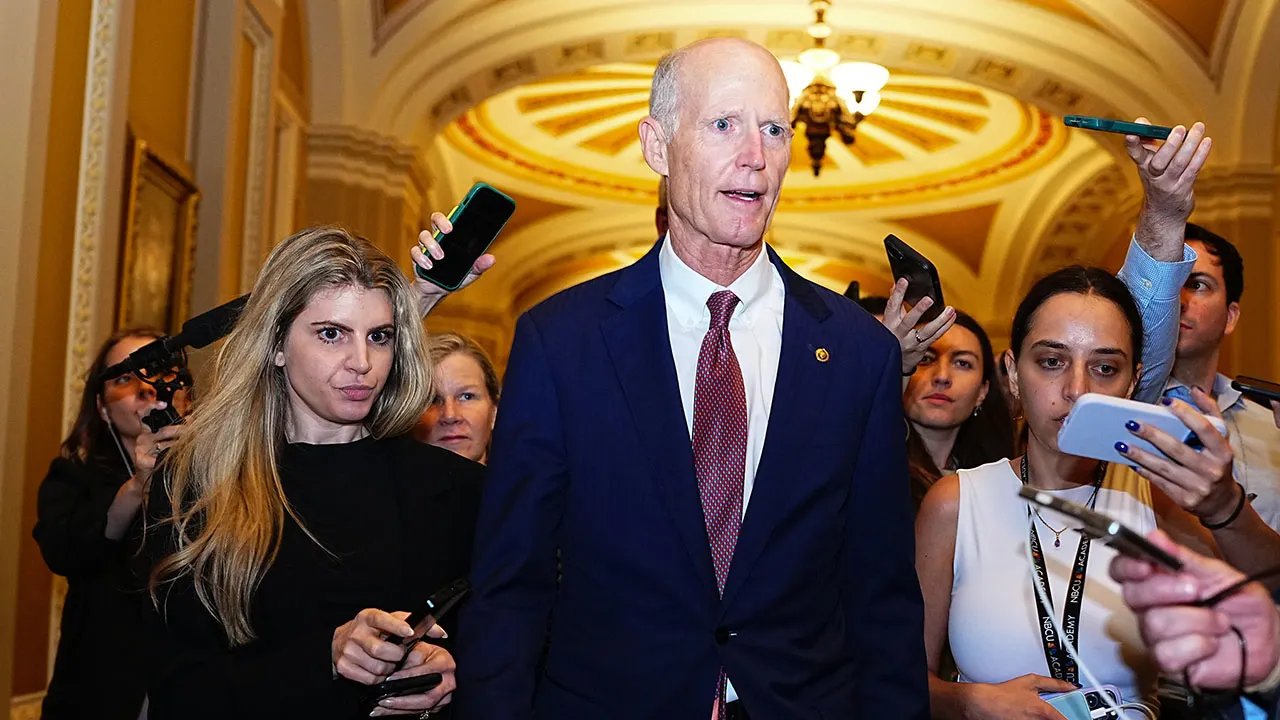
Sen. Rick Scott, R-Fla., said that former Prince Andrew, who was arrested under suspicion of misconduct in public office in the United Kingdom on Thursday, should «absolutely» stand trial in the U.S. if he was found to have broken any American laws with his ties to Jeffrey Epstein. (Aaron Schwartz/Bloomberg via Getty Images)
British authorities were reportedly investigating whether Mountbatten-Windsor had shared confidential trade information with Epstein while acting as Britain’s special envoy for trade over a decade ago, the Associated Press reported.
Mountbatten-Windsor has denied any wrongdoing in relation to Epstein, despite being one of his most well-known associates. He was also accused by the late Virginia Giuffre — one of Epstein’s most prominent accusers — in her memoir of having sex with her when she was a minor.
The list of co-conspirators and those connected to Epstein continues to grow, following Congress’ move to force the Department of Justice (DOJ) to release millions of documents related to him, known as the «Epstein Files.»
MASSIE, TOP OVERSIGHT DEMOCRAT CALL FOR SECRETARY LUTNICK TO RESIGN FOR ‘LYING’ ABOUT ALLEGED EPSTEIN TIES
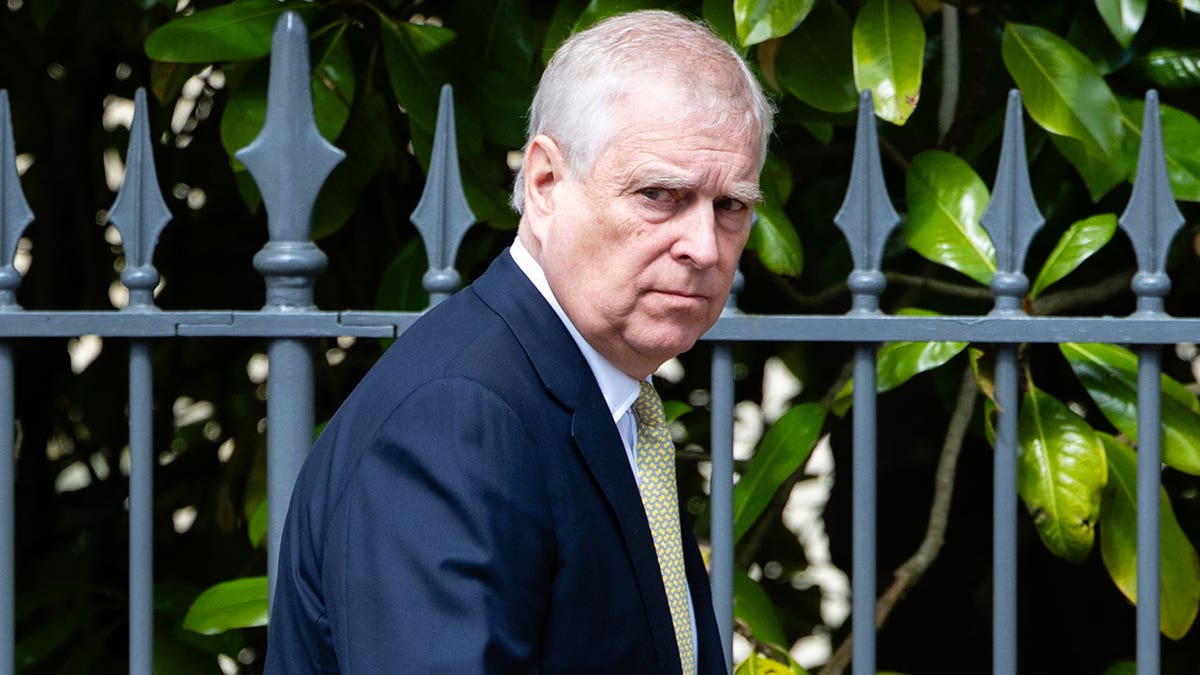
The former Prince Andrew, Duke of York attends the Easter service at St. George’s Chapel on April 20, 2025, in Windsor, England. He lost his princely title in October of that year. (Samir Hussein/WireImage/Getty Images)
But criminal action against those alleged to have ties with Epstein has remained scarce, given that appearing in the files doesn’t directly translate to criminal charges. Scott argued that if people «violate the law, you should be prosecuted to the full extent of the law.»
«It’s as simple as that. It’s despicable what Epstein did,» Scott said. «I can’t imagine these people who had relationships with Epstein, especially after he was convicted the first time, and they kept their relationship.»
«If they’ve done anything wrong, they should be held accountable,» he continued. «I don’t know if Prince Andrew has done anything wrong, but everybody who has should be held accountable. What you read that happened to these young girls is just like — I’ve got two daughters, I’ve got a granddaughter, and I can’t imagine, you know, the position that Epstein and, it seems like, some other people put these young women in.»
The Senate voted unanimously last year in favor of legislation that President Donald Trump signed into law that required the DOJ to release all unclassified records, documents, communications and investigative materials «publicly available in a searchable and downloadable format» related to the late financier and his accomplice Ghislaine Maxwell.
STARMER CALLS ON EX-PRINCE ANDREW TO TESTIFY BEFORE CONGRESS AFTER LATEST EPSTEIN RELEASE
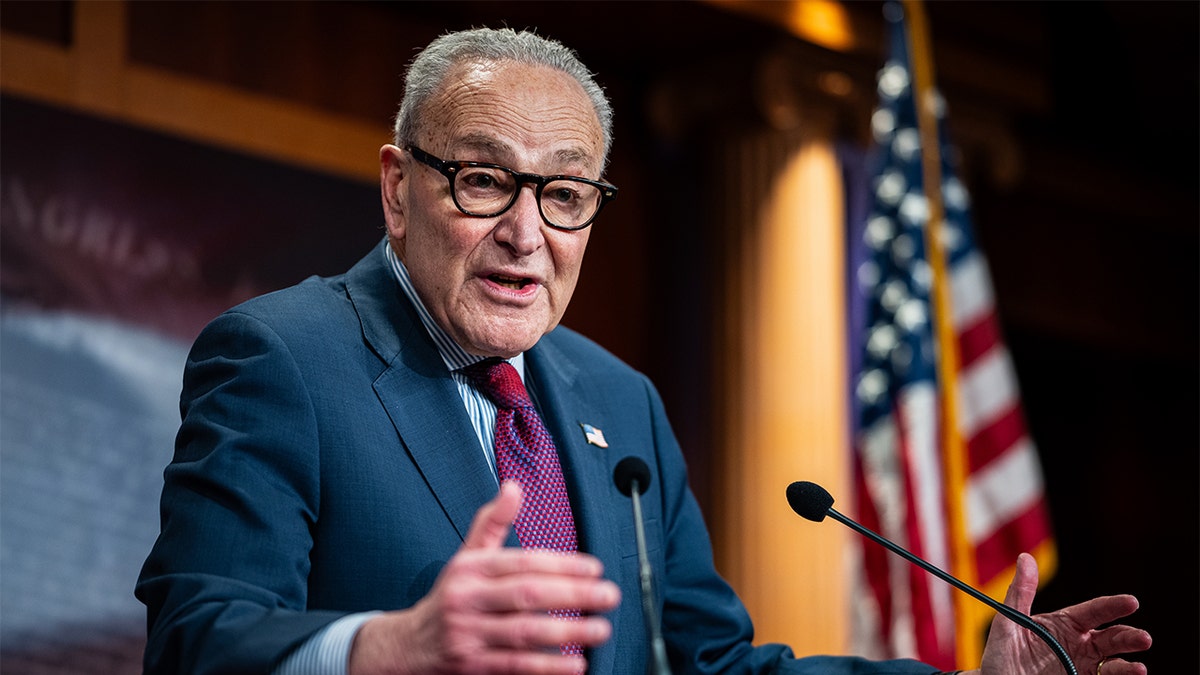
Senate Minority Leader Chuck Schumer, D-N.Y., speaks during a news conference at the U.S. Capitol in Washington, D.C., on Feb. 12, 2026. (Graeme Sloan/Bloomberg via Getty Images)
Several names of prominent Americans, including Commerce Secretary Howard Lutnick, were revealed in the trove of unredacted documents.
Senate Majority Leader John Thune, R-S.D., when asked if Lutnick or others should face consequences, said earlier this month that «transparency is something we all ought to aspire to here.»
«And if there are folks who are, you know, named in there or discussed in there in some way, they’re going to have to answer for that,» Thune said.
CLICK HERE TO DOWNLOAD THE FOX NEWS APP
Millions of files and a handful of months later, Attorney General Pam Bondi announced earlier this week that the DOJ had unloaded all the documents. But lawmakers have said it’s not enough.
Senate Minority Leader Chuck Schumer, D-N.Y., charged that the DOJ’s handling of the Epstein files «is a travesty.»
«But in France, the Paris prosecutor’s office just opened two investigations based on new leads from the released files,» Schumer said on X. «And in Britain, former Prince Andrew has been arrested over ties to Epstein. When will there be justice in America?»
politics,senate,jeffrey epstein,british royals,crime world











INTERNACIONAL
Estados Unidos: los millonarios se mudan a Miami para pagar menos impuestos y atraídos por el «glamour» de la ciudad
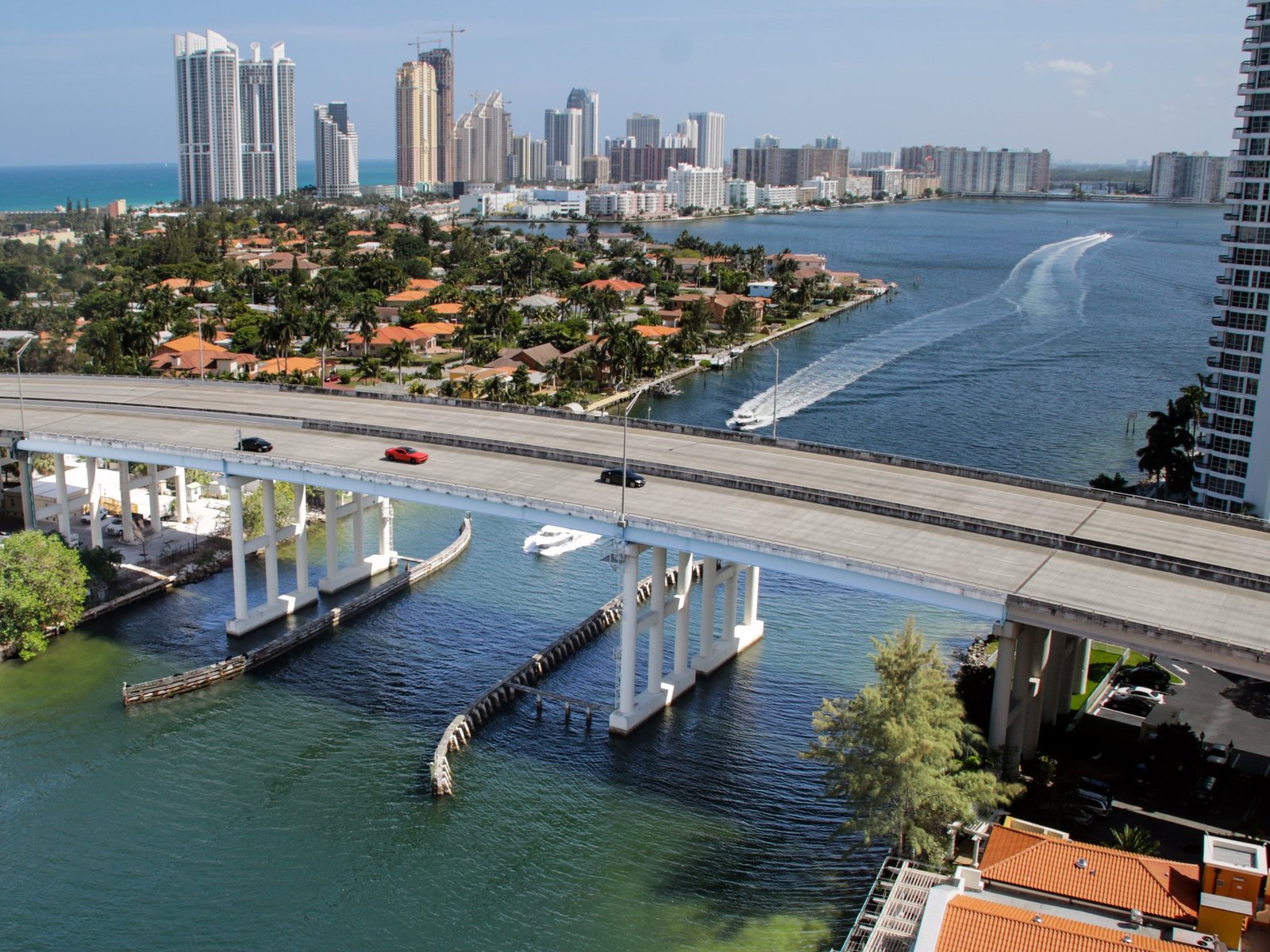
Impuestos y Trump, los factores
Latinoamericanos también llegan

INTERNACIONAL
Iraq War flashbacks? Experts say Trump’s Iran buildup signals pressure campaign, not regime change
NEWYou can now listen to Fox News articles!
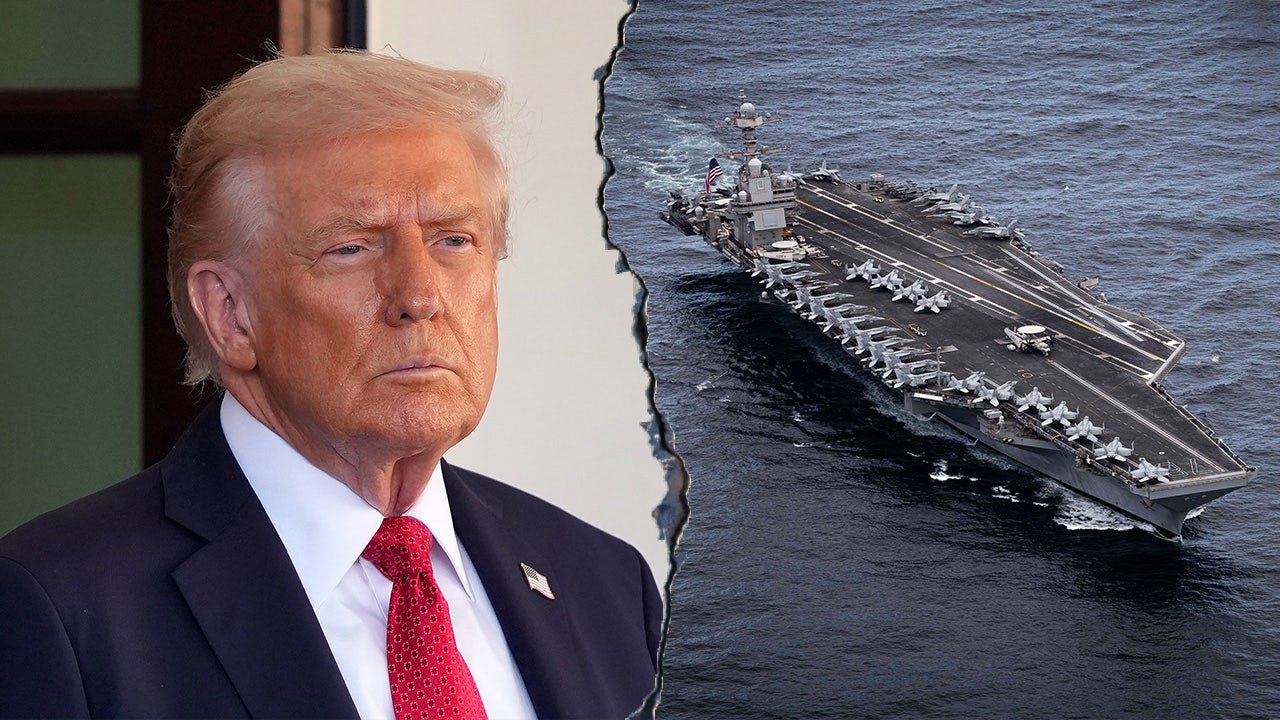
As U.S. forces surge into the Middle East amid escalating tensions with Iran, the military posture is drawing comparisons to the 2003 Iraq War buildup. But military experts and former officials say that while the scale of visible force may look similar, the design and intent are fundamentally different.
In early 2003, the United States assembled more than 300,000 U.S. personnel in the region, backed by roughly 1,800 coalition aircraft and multiple Army and Marine divisions staged in Kuwait and Saudi Arabia ahead of Operation Iraqi Freedom. The force was built for invasion, regime removal and occupation.
Today’s deployment tells a different story, as the absence of massed ground forces remains the clearest contrast with 2003.
«I believe there is absolutely no intention to put ground forces into Iran. So the buildup is very different,» retired Gen. Philip Breedlove, former NATO Supreme Allied Commander Europe, told Fox News Digital.
IRAN DRAWS MISSILE RED LINE AS ANALYSTS WARN TEHRAN IS STALLING US TALKS
The world’s largest aircraft carrier USS Gerald R. Ford is seen in the North Sea during Exercise Neptune Strike 2025. The photo was taken in the North Sea in September 2025. (Jonathan Klein/AFP via Getty Images)
«What is happening is that both firepower and supplies are being moved to the right places … Amateurs talk tactics; professionals talk logistics. And right now we are getting logistics right, not only in the form of shooters but supplies to sustain an effort,» he said.
John Spencer, executive director of the Urban Warfare Institute, told Fox News Digital that «the strategic objective in both cases is coercion, shaping an adversary’s decision calculus through visible military power, but while the scale of the buildup may appear comparable, what is being mobilized and threatened is fundamentally different.»
«In 2003, the United States assembled a ground-centric force built for regime removal, territorial seizure and occupation,» he said. «Today’s posture is maritime and air-heavy, centered on carrier strike groups, long-range precision strike and layered air defense, signaling clear readiness to act while also sending an equally clear message that there are no boots on the ground planned.»
«The recent U.S. military buildup against Iran — which now includes two aircraft carrier battle groups, in addition to dozens of other U.S. planes that have been sent to bases in the region and air and missile defense systems — provides President Trump with a significant amount of military capability should he authorize military operations against Iran,» said Javed Ali, associate professor at the University of Michigan’s Ford School and former senior counterterrorism official.
Ali noted that U.S. capabilities already in the region at Al Udeid Air Base in Qatar, Diego Garcia in the Indian Ocean and other locations give Washington multiple strike options.
If ordered, he said, operations «would very likely be broad in scope against a range of targets like the ruling clerical establishment, senior officials in the IRGC, key ballistic missile and drone production, storage and launch facilities, and elements of Iran’s nuclear infrastructure, and last for days if not longer.»
IRAN RAMPS UP REGIONAL THREATS AS TRUMP CONSIDERS TALKS, EYEWITNESS ACCOUNTS OF REGIME VIOLENCE EMERGE
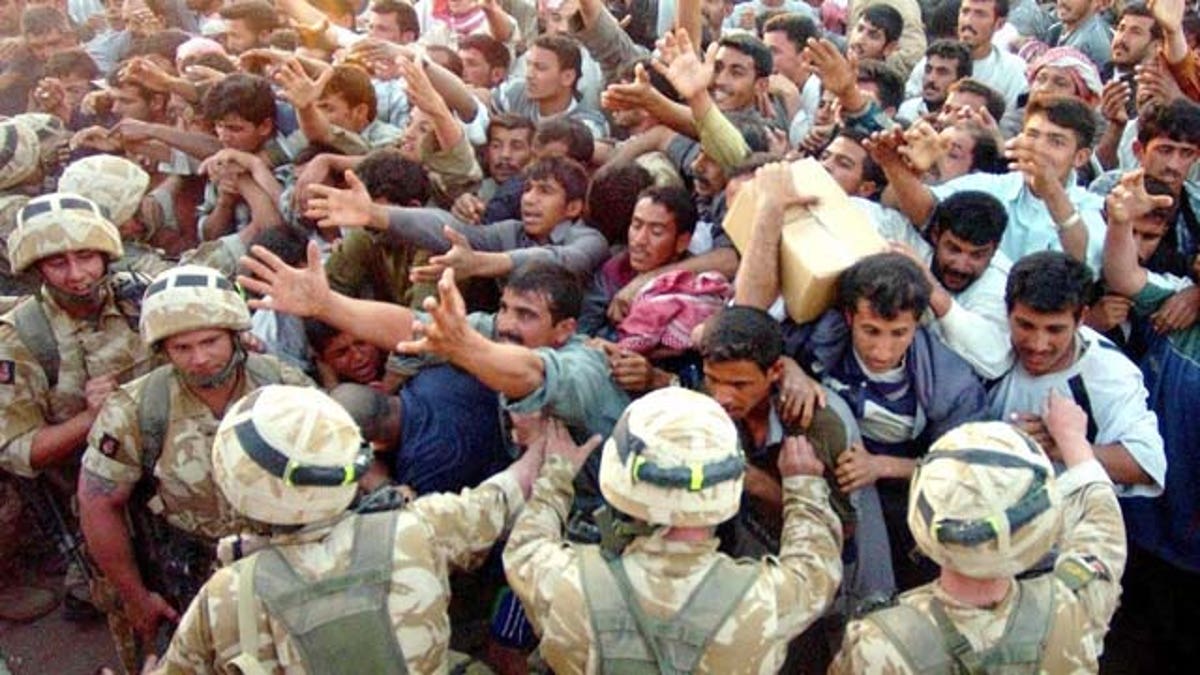
Soldiers of the British Light Infantry distribute aid packages to locals at Zubayr near Basra, southern Iraq. Britain, a key ally in the U.S.-coalition, was in charge of security in Iraq’s southern region until its withdrawal in 2007.
Breedlove said the incremental deployment of carriers and air assets appears designed to increase pressure, not trigger immediate war.
«We brought in one carrier battle group that did not change the rhetoric in Iran… so now the president has started sailing a second carrier battle group to the area. I think all of these things are increasing the pressure slowly on Iran to help them come to the right decision… Let’s sit down at the table and figure this out.»
Ali emphasized another major difference: legal authority and coalition structure. The 2003 Iraq War was authorized by a congressional Authorization for Use of Military Force and backed by a large international coalition, including tens of thousands of British troops. «Currently, no similar AUMF has been approved by Congress for military operations against Iran, which might mean President Trump may invoke his standing authority under Article II of the US Constitution as Commander in Chief as a substitute legal basis, given the threats Iran poses to the United States,» he said.
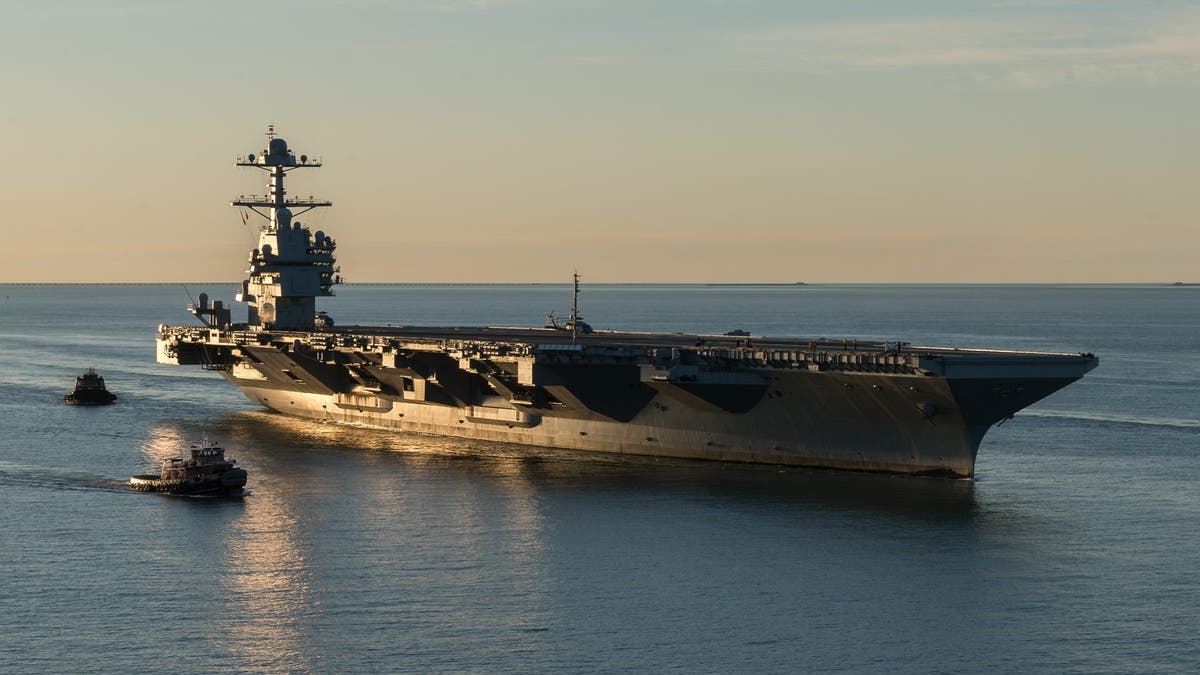
The aircraft carrier Pre-Commissioning Unit (PCU) Gerald R. Ford (CVN 78) pulls into Naval Station Norfolk for the first time. The first-of-class ship — the first new U.S. aircraft carrier design in 40 years — spent several days conducting builder’s sea trials, a comprehensive test of many of the ship’s key systems and technologies. (U.S. Navy photo by Matt Hildreth courtesy of Huntington Ingalls Industries/Released) (©Newport News Shipbuilding 2017)
That does not mean escalation is risk-free. Ali warned Iran could respond with «ballistic missile attacks» in far greater frequency than past strikes, along with drones, cyber operations and maritime disruption in the Persian Gulf.
Breedlove pointed to lessons learned from Iraq. «We want to have a clear set of objectives… we do not want to enter an endless sort of battle with Iran… we need to have a plan for what’s day plus one,» he said, warning against repeating past mistakes where military success was not matched by post-conflict planning.
CLICK HERE TO DOWNLOAD THE FOX NEWS APP

The world’s largest aircraft carrier, the U.S. Navy nuclear-powered Ford-class aircraft carrier USS Gerald R. Ford (CVN 78) arrives in St. Thomas, U.S. Virgin Islands, Dec. 1, 2025. (Seaman Abigail Reyes/U.S. Navy/Handout via Reuters)
The central military distinction, analysts say, is this: 2003 was an invasion architecture. Today is a deterrence and strike architecture.
The force now in place is optimized for air superiority, long-range precision strikes and sustained naval operations — not for seizing and holding territory. Whether that posture succeeds in compelling Iran back to negotiations without crossing into open conflict may depend less on numbers than on how each side calculates the cost of escalation.
iran,iraq,military,pentagon,national security,wars,middle east
INTERNACIONAL
La izquierda volvió al poder en Perú: la apuesta por el caos se cuela en las luchas electorales de la derecha

El inesperado regreso de la izquierda al gobierno de Perú, con la elección del nuevo presidente encargado José María Balcázar, reveló una profunda lucha de poder entre la centroderecha fujimorista y la derecha radical a dos meses de las elecciones generales del 12 de abril.
Balcázar, un veterano político de 83 años surgido del partido marxista Perú Libre, fue elegido el miércoles por el Congreso como mandatario interino en reemplazo del destituido presidente derechista José Jeri.
Leé también: El rey Carlos III rompió el silencio tras la detención del príncipe Andrés: “La Justicia debe seguir su curso”
Nadie en el país apostaba por la elección de Balcázar, que gobernará hasta el 28 de julio, cuando asuma el nuevo presidente elegido por el voto popular. Todos los números favorecían a la vocera del derechista Acción Popular, María del Carmen Alva, una dirigente polémica que tuvo enfrentamientos verbales violentos y hasta actitudes racistas con algunos pares.
Pero, ¿por qué un Congreso marcadamente conservador eligió finalmente a un presidente surgido de la extrema izquierda peruana, más allá de que rompió hace dos años con su partido y hoy se presenta como “independiente”?
La respuesta revela la compleja inestabilidad política que atraviesa el país: la centroderecha fujimorista liderada por Keiko Fujimori, y la derecha radical del exalcalde de Lima, Rafael López Aliaga, privilegiaron sus propios intereses y su estrategia electoral. En síntesis, apostar por el caos y desmarcarse de un Congreso desprestigiado.
Sin partidos fuertes, la democracia peruana genera presidentes débiles
La democracia peruana tiene hoy un profundo problema de base: carece de partidos fuertes.
La muestra está en la interminable lista de candidatos presidenciales que lucharán por llegar al poder en las elecciones del 12 de abril. Son 36 en total, la mayoría de ellos desconocidos para el electorado.
De esa manera, el voto se dispersa y los presidentes electos suelen contar con bancadas minoritarias en el Congreso. El resultado es una sucesión de gobiernos débiles que suelen ser destituidos por el Parlamento.
De hecho, Balcázar es el octavo presidente en los últimos 10 años. En julio asumirá el noveno. José María Balcázar (c) recibe la banda presidencial tras ser elegido presidente interino de Perú este miércoles, en Lima, Perú. (Foto: EFE)
Leé también: Trump dijo que en los próximos 10 días decidirá si ataca a Irán y advirtió: “Pueden pasar cosas malas”
López Aliaga, líder del ultraderechista partido de la Revolución Popular, lidera los sondeos a dos meses de las elecciones, seguido de cerca por Keiko Fujimori, hija del fallecido dictador Alberto Fujimori y líder de Fuerza Popular.
Pero ninguno de los dos despega. El último sondeo de Ipsos reveló que López Aliaga tiene el 12% de las intenciones de voto y Keiko, como la conocen todos en su país, apenas el 8%. Es muy poco para aspirar a ser presidente.
Para ser electo en primera vuelta, se necesita alcanzar el 50% más uno de los votos. Un eventual balotaje se realizaría el primer domingo de junio.
En ese escenario, crece cada vez más la percepción de que un “outsider” podría aparecer en el tramo final de la campaña.
Por qué Keiko Fujimori y Rafael López Aliaga le entregaron el poder a la izquierda
Por eso ambos dirigentes prefirieron despegarse de la lucha en el Congreso, no respaldar a otra fuerza derechista como Acción Popular de Alva y dejar el poder en manos de la izquierda.
“Los partidos de derecha han vuelto al enfrentamiento y a la polarización ideológica. Ellos creen que es lo que más les conviene. Esa es la pelea entre Renovación Popular y Fuerza Popular”, dijo a TN la directora de la consultora Imasen, Giovanna Peñaflor.
En ese escenario, las fuerzas conservadores más fuertes no hicieron nada para llegar a consensos.
“En disputa está quien gana el espacio de la derecha. López Aliaga venía ganando y Keiko trata ahora de recuperar terreno. El país es hoy más de derecha que de izquierda”, dijo Peñaflor.
Sin embargo, Perú vuelve a tener un presidente de ese espacio ideológico tres años después de la destitución de Pedro Castillo, de origen marxista. Tanto Balcázar como Castillo -condenado a 11 años, 5 meses y 15 días de cárcel por conspiración- surgieron del mismo partido, Patria Libre.
La mayor paradoja es que Balcázar terminará el período de gobierno del propio Castillo, destituido el 7 de diciembre de 2002 tras intentar disolver el Congreso. En el medio pasaron con mayor pena que gloria los presidentes encargados Dina Boluarte y José Jeri, ambos también removidos.
Para la analista, la estrategia de la derecha es clara: “Keiko apuesta a Balcázar para generar caos y López Aliaga busca responsabilizar a Keiko y desligarse del ´pacto mafioso´ que ha gobernado al país desde el Congreso».
Ahora, empieza la verdadera campaña electoral. La gran incógnita es si Balcázar podrá sobrevivir bajo la espada de Damócles de un Congreso adverso y una pelea de las fuerzas conservadoras por el poder.
Perú, José María Balcázar

Indagará a Tapia y Toviggino: quién es Diego Amarante, un juez de perfil severo y alejado de los operadores judiciales

“Oligarca caballero”: Kelly Olmos recitó un himno peronista en medio del debate por la reforma laboral

El Banco Central volvió a comprar dólares y las reservas superaron los USD 46.000 millones

Adam Bareiro será nuevo jugador de Boca Juniors ¿Cuánto dinero recibe River Plate por la transferencia?

El Gobierno logró dictamen para el régimen penal juvenil y evalúa dos fechas para convertirlo en ley en el Senado

Estados Unidos: los millonarios se mudan a Miami para pagar menos impuestos y atraídos por el «glamour» de la ciudad

Reforma laboral bomba: menos indemnización, más horas y despidos más fáciles — el cambio que puede sacudir el empleo en Argentina

Cristian Ritondo: “Vamos a apoyar la ley de modernización laboral, pero no el régimen de licencias por enfermedad”

El dólar no sólo cae en la Argentina: qué pasa con otras monedas emergentes y cuáles son las causas

Tras el anuncio de la CGT, también habrá paro total de los medios de transporte de pasajeros en el país

 POLITICA2 días ago
Reforma laboral bomba: menos indemnización, más horas y despidos más fáciles — el cambio que puede sacudir el empleo en Argentina
- POLITICA3 días ago
Cristian Ritondo: “Vamos a apoyar la ley de modernización laboral, pero no el régimen de licencias por enfermedad”
- POLITICA3 días ago
El ministro de Defensa visitó la fábrica que produce los vehículos todoterreno que el Ejército adquirió para renovar la flota