INTERNACIONAL
Rubio claims ‘tremendous amount of progress’ in Ukraine peace talks following Geneva meeting

NEWYou can now listen to Fox News articles!
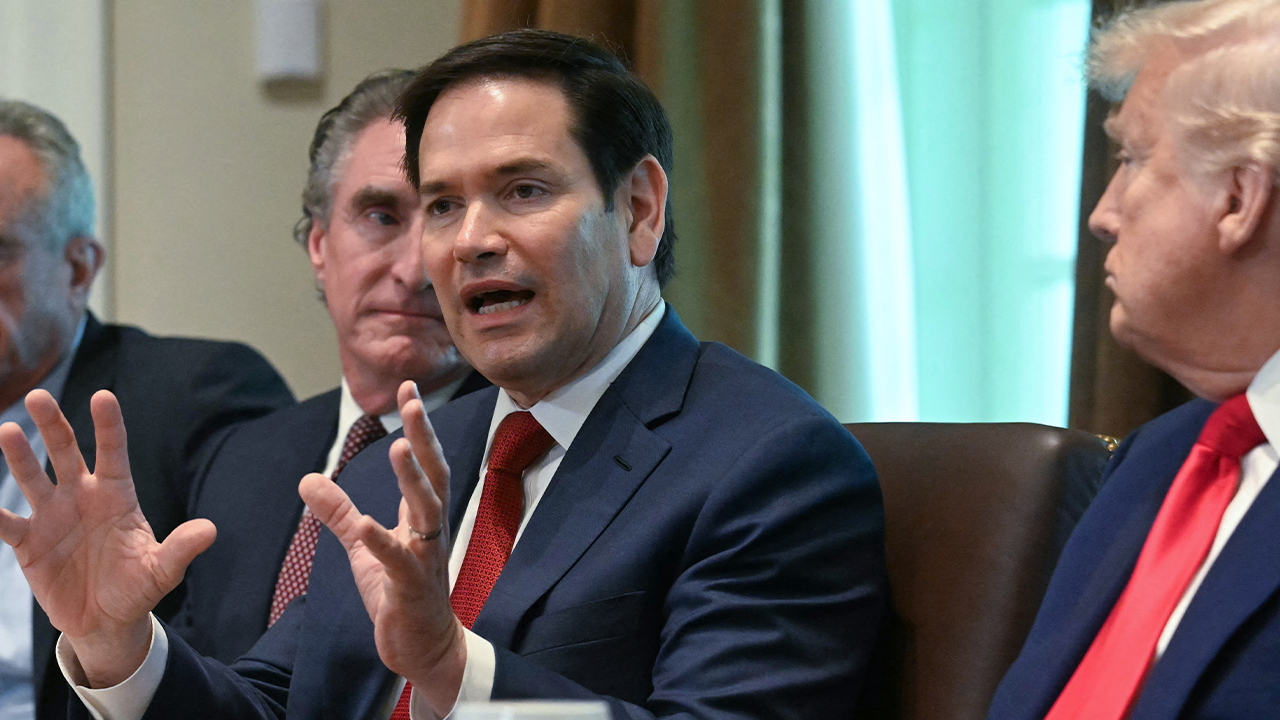
Secretary of State Marco Rubio said Sunday that discussions over ending the war in Ukraine have entered a productive phase, while claiming «a tremendous amount of progress» had been made.
Following a round of talks with a Ukrainian delegation in Geneva, Switzerland, Rubio told reporters negotiators had «a very good day today.»
«We had a very good day today. I think we made a tremendous amount of progress, even from the last time I spoke to you,» Rubio said.
«We began almost three weeks ago with a foundational document that we socialized and ran by both sides, and with input from both sides,» he said.
LAVROV OFFERS FACE-TO-FACE MEETING WITH RUBIO AS RUSSIA SIGNALS DIPLOMATIC OPENING AMID UKRAINE TENSIONS
Secretary of State Marco Rubio attends a signing ceremony for a peace agreement between Rwanda and the Democratic Republic of the Congo at the State Department on June 27, 2025, in Washington. (Mark Schiefelbein/AP Photo)
Rubio described how negotiators had been refining the 28-point peace framework that outlines potential conditions for a ceasefire and long-term settlement for Ukraine and Russia.
«Over the last 96 hours or more, there’s been extensive engagement with the Ukrainian side including our Secretary of the Army and others, being on the ground in Kyiv, meeting with relevant stakeholders across the Ukrainian political spectrum in the legislative branch and the executive branch, and the military and others to further sort of narrow these points.»
TRUMP AND ZELENSKYY TO MEET AS POLAND PRESSURES NATO ON NO FLY ZONE OVER UKRAINE
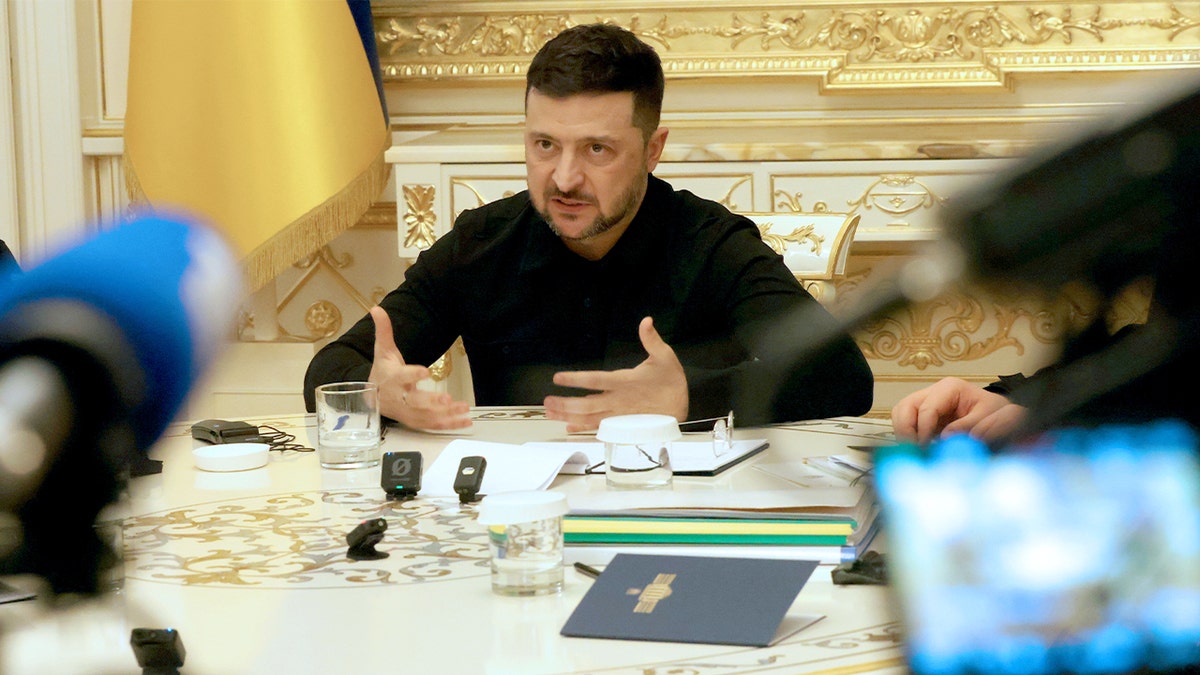
President of Ukraine Volodymyr Zelenskyy participates in a briefing at the Office of the President following a staff meeting in Kyiv, Ukraine, on Nov. 7, 2025. (Pavlo Bahmut/Ukrinform/NurPhoto via Getty Images)
«We arrived here today with one goal: to take what – it’s 28 points or 26 points, depending on which version, as it continued to evolve and try to narrow the ones that were open items. And we have achieved that today in a very substantial way,» he said.
The weekend talks centered on a 28-point plan, which is a framework drafted by the U.S. outlining steps for a possible ceasefire and political settlement.
The document is said to cover security guarantees, territorial control, reconstruction mechanisms, and Ukraine’s long-term relationship with NATO and the EU.
ZELENSKYY WARNS UKRAINE FACES ‘DIFFICULT CHOICE’ AS US PEACE PLAN HITS MAJOR HURDLE
The plan has reportedly evolved through several iterations, narrowing disputes point by point as both sides weigh concessions.
«Now, obviously, like any final agreement, it’ll have to be agreed upon by the presidents, and there are a couple of issues that we need to continue to work on,» Rubio clarified.
While declining to specify unresolved issues, Rubio described the moment as «delicate.»
«This is a very delicate moment, and it’s important – like I said, there’s not agreement on those yet. Some of it is semantics or language; others require higher-level decisions and consultation; others, I think, just need more time to work through,» he said before touching on some issues.
US AND RUSSIA DRAFT PEACE PLAN FOR UKRAINE REQUIRING MAJOR CONCESSIONS FROM KYIV
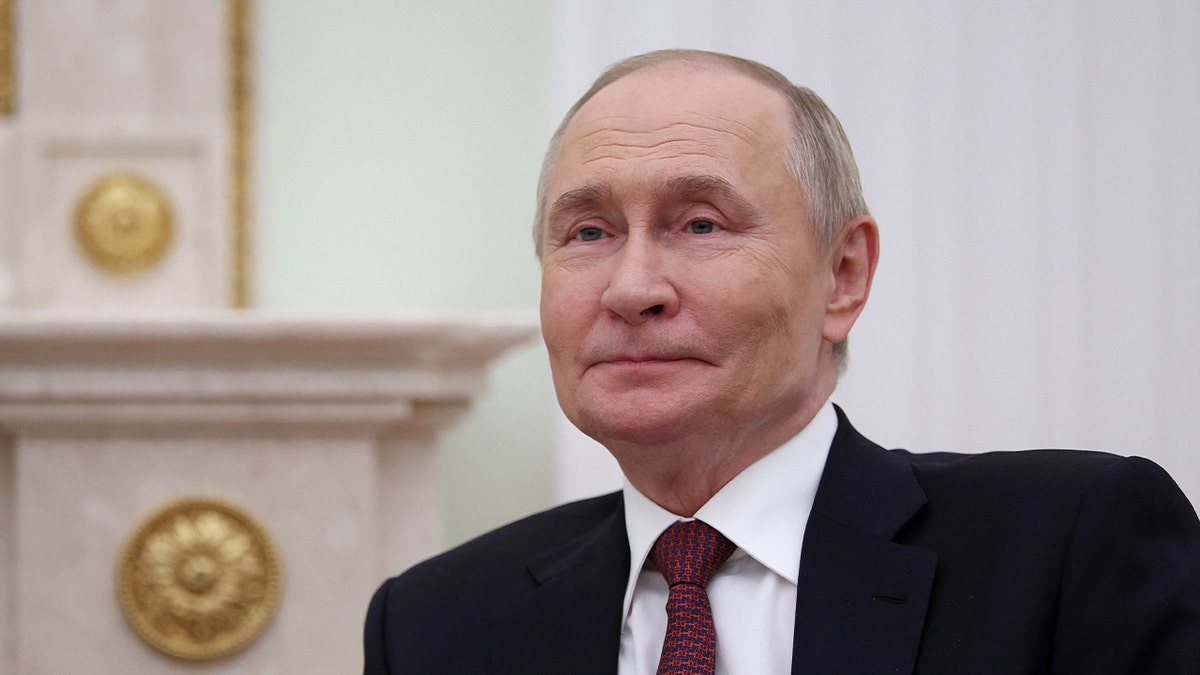
Russian President Vladimir Putin invaded Ukraine in 2022. (Ramil Sitdikov/Pool/Reuters )
«There were some that involved equities or the role of the EU or of NATO or so forth, and those we kind of segregated out because we just met with the national security advisors for various European countries, and those are things we’ll have to discuss with them because it involves them.»
«I don’t want to declare victory or finality here. There’s still some work to be done,» he added.
Suggesting there is intent to ensure Ukraine’s security, Rubio said that they all «recognize that part of getting a final end to this war will require for Ukraine to feel as if it is safe, and it is never going to be invaded or attacked again.»
CLICK HERE TO DOWNLOAD THE FOX NEWS APP
«I honestly believe we’ll get there,» he said, and when asked about next steps, Rubio said a possible call between Presidents Donald Trump and Volodymyr Zelenskyy could happen, adding, «I don’t know. It’s possible. I’m not sure.»
«The deadline is we want to get this done as soon as possible. Obviously, we’d love it to be Thursday,» he added.
russia,ukraine,secretary of state,marco rubio










NEWYou can now listen to Fox News articles!
FIRST ON FOX: Last year, when President Donald Trump helped broker a ceasefire agreement between Thailand and Cambodia, he took a victory lap.
«Who else could say, ‘I’m going to make a phone call and stop a war between two very powerful countries, Thailand and Cambodia?’» he said.
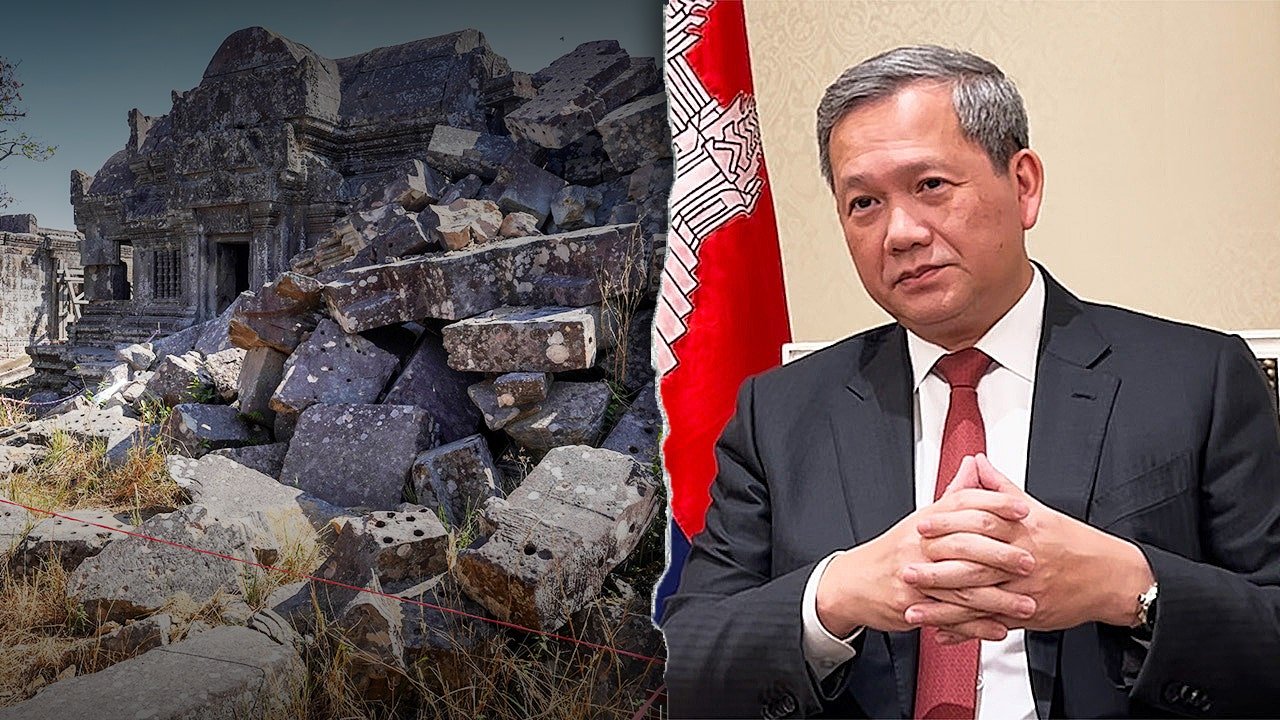
Now, that agreement appears under strain. Cambodian Prime Minister Hun Manet told Fox News Digital that Thai forces have pushed into long-held Cambodian territory beyond the line of dispute. Thai soldiers have sealed off villages with barbed wire and shipping containers, leaving 80,000 Cambodians unable to return home, according to Cambodian officials.
«The occupation is beyond even Thailand’s unilateral claim,» Manet said. «Many of the villagers cannot go back to their hometowns.»
US ALERTS TOURISTS OF ‘UNPREDICTABLE SECURITY SITUATION’ IN POPULAR HOLIDAY DESTINATION
Cambodia and Thailand have sparred for decades over sections of their 500-mile land border, much of which was drawn during the French colonial era and later interpreted differently by Bangkok and Phnom Penh. The dispute has periodically flared into armed clashes, particularly around areas near historic Khmer temple sites and rural villages where demarcation remains incomplete.
Tensions escalated again last year, with fighting breaking out along contested stretches of the frontier and displacing thousands of civilians on both sides. The clashes prompted diplomatic intervention and culminated in a ceasefire agreement brokered with U.S. involvement during an ASEAN summit in Kuala Lumpur.
Images and local reporting from the most recent fighting show damage to buildings near the frontier, including at or near the UNESCO-listed Preah Vihear temple complex, raising concerns about the safety of cultural heritage sites in contested zones. Cambodian officials have blamed Thai forces for the damage, while Thai officials have denied deliberately targeting religious or cultural landmarks, saying military operations were limited to contested security areas.
The Thai embassy could not be reached for comment on this interview.
Cambodian Prime Minister Hun Manet interviewed with Fox News Digital during a trip to Washington, D.C., for President Trump’s Board of Peace. (Fox News Digital)
TRUMP’S PEACE THROUGH STRENGTH IN 2025: WHERE WARS STOPPED AND RIVALS CAME TO THE TABLE
Still, Manet declined to threaten military retaliation.
«Our position is to always stick to peaceful resolutions,» he said. «We don’t believe that using war to stop a war is sustainable or practical.»
Thailand, with a population of more than 70 million — roughly four times Cambodia’s 17 million — maintains a significantly larger and better-equipped military, raising the stakes of any renewed conflict.
With fighting again threatening fragile stability along the frontier, Manet traveled to Washington this week for the inaugural meeting of Trump’s Board of Peace.
«The Board of Peace can play an active role in promoting peace, stability and normalcy between Cambodia and Thailand,» Manet said.
TRUMP CONVENES FIRST BOARD OF PEACE MEETING AS GAZA REBUILD HINGES ON HAMAS DISARMAMENT
Hun Manet took office in 2023, succeeding his father, Hun Sen, who ruled Cambodia for nearly four decades. The leadership transition marked the first formal handover of power in decades, though the ruling Cambodian People’s Party has maintained firm control over the country’s political system amid longstanding criticism from rights groups about limits on opposition activity.
A graduate of the U.S. Military Academy at West Point, Manet has sought to maintain close ties with China while cautiously reopening channels with Washington, including restoring joint military exercises that had been suspended in 2017.
As Cambodia navigates tensions with Thailand, it is also balancing relations between Washington and Beijing.
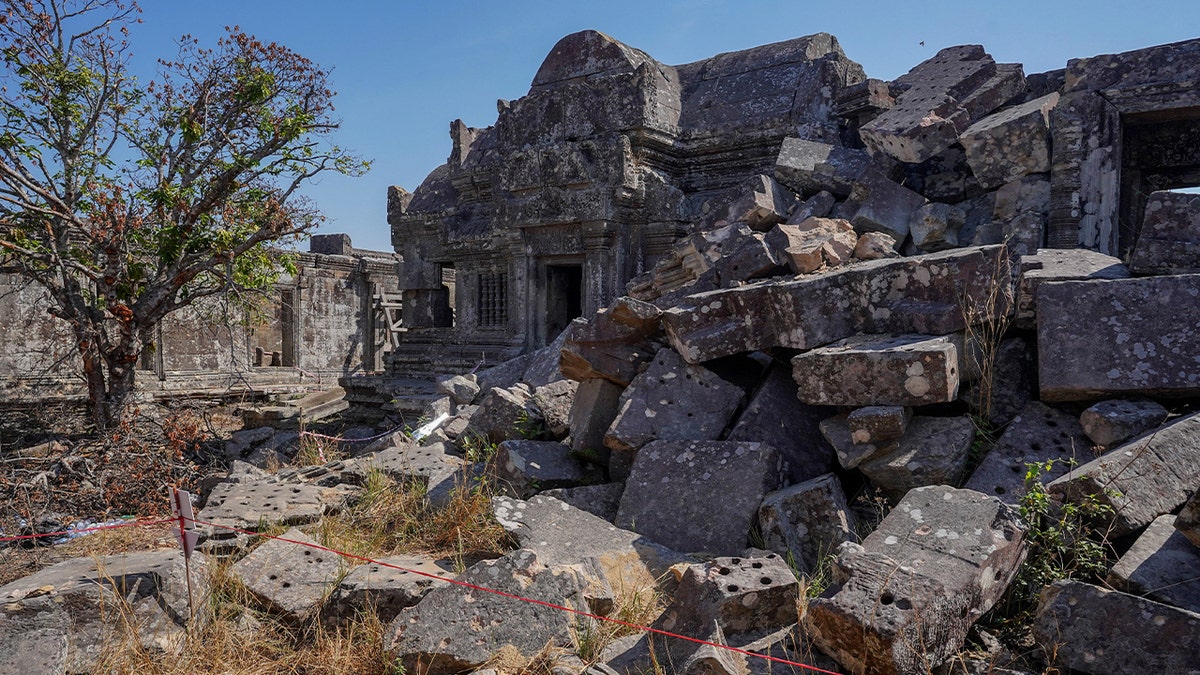
The Preah Vihear temple, a UNESCO World Heritage Site on the border between Thailand and Cambodia, where cluster munitions, unexploded artillery shells and other ordnance are marked around the temple grounds, after clashes between the two countries, in Preah Vihear province, Cambodia, Feb. 12, 2026. (Soveit Yarn/Reuters)
Manet said navigating ties with competing world powers «doesn’t have to be a zero-sum game» and that Cambodia, as a smaller nation, cannot afford to «choose one country against the other.»
That balance has centered in part on Ream Naval Base, a strategic site on Cambodia’s southern coast rebuilt with Chinese financing.
The USS Cincinnati docked at Ream in late January, marking the first U.S. warship visit since the base was renovated with Chinese funding and technical support. The visit was marked by a striking visual, the USS Cincinnati docked roughly 150 meters from a Chinese naval vessel already moored at the base. For years, U.S. officials have raised concerns that Cambodia had granted China exclusive access.
But Manet insisted the base remains under Cambodian control.
«Our constitution says that no foreign military base [can] be situated on Cambodian soil,» Manet said.

Images and local reporting from the most recent fighting show damage to buildings near the frontier, including at or near the UNESCO-listed Preah Vihear temple complex, raising concerns about the safety of cultural heritage sites in contested zones. (Soveit Yarn/Reuters)
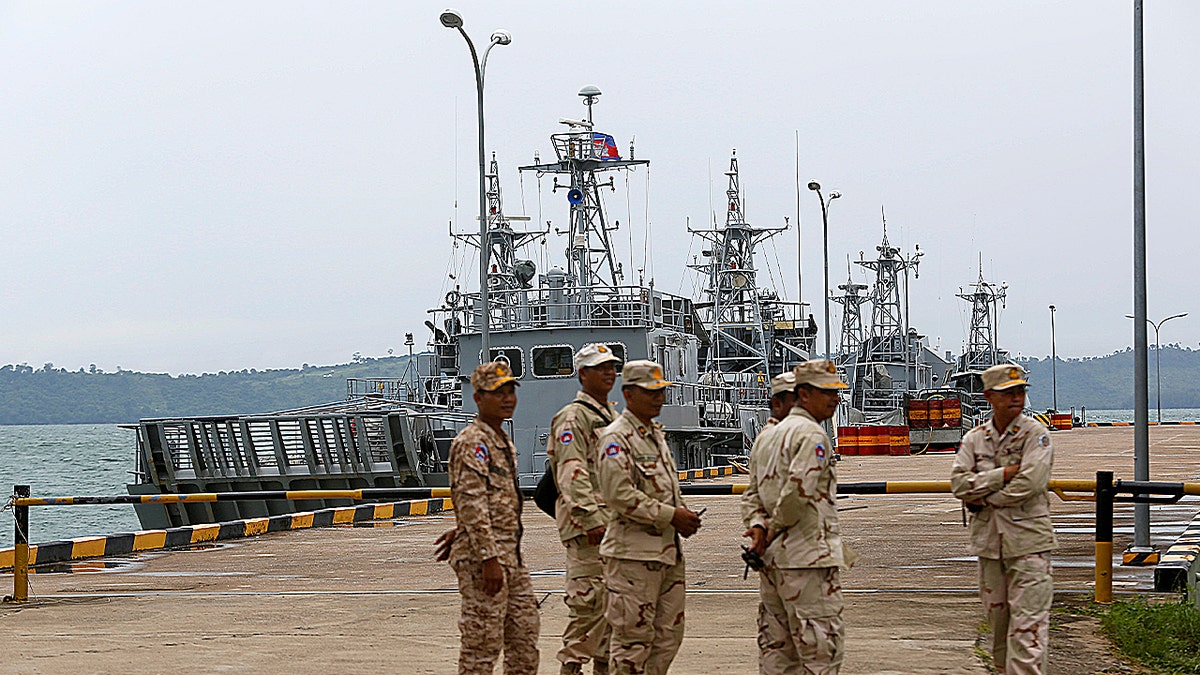
Manet said navigating ties with competing world powers «doesn’t have to be a zero-sum game» and that Cambodia, as a smaller nation, cannot afford to «choose one country against the other.» (Samrang Pring/Reuters)
The U.S. visit, he said, «clearly shows that Cambodia is not exclusively used as a naval base for cooperation with China.»
Manet also confirmed that annual U.S.-Cambodia military exercises known as Angkor Sentinel, suspended in 2017, will resume this year, signaling warming defense ties.
«We hope to have expanding cooperation with the U.S.,» Manet said.
In recent years, Cambodia has emerged as a hub for large-scale online scam operations, including so-called «pig butchering» schemes that have defrauded victims worldwide — including Americans — out of billions of dollars. U.S. authorities have sanctioned Cambodian-linked entities tied to crypto fraud and pressed Phnom Penh to intensify enforcement efforts amid concerns about trafficking and forced labor linked to some compounds.
CLICK HERE TO DOWNLOAD THE FOX NEWS APP
Manet said his government has stepped up cooperation with U.S. authorities and recently worked with the FBI to dismantle a major operation.
«We have recently worked with the FBI cracking on a major case involving one of the Oknyaks,» he said, referring to an influential Cambodian figure. «We arrested him, and we closed down one of the big compounds.»
conflicts defense,asia,foreign policy,donald trump
INTERNACIONAL
Zelenskyy dismisses Putin’s ‘historical s—’ in peace talks as ‘delay tactic,’ urges focus on ending the war
NEWYou can now listen to Fox News articles!
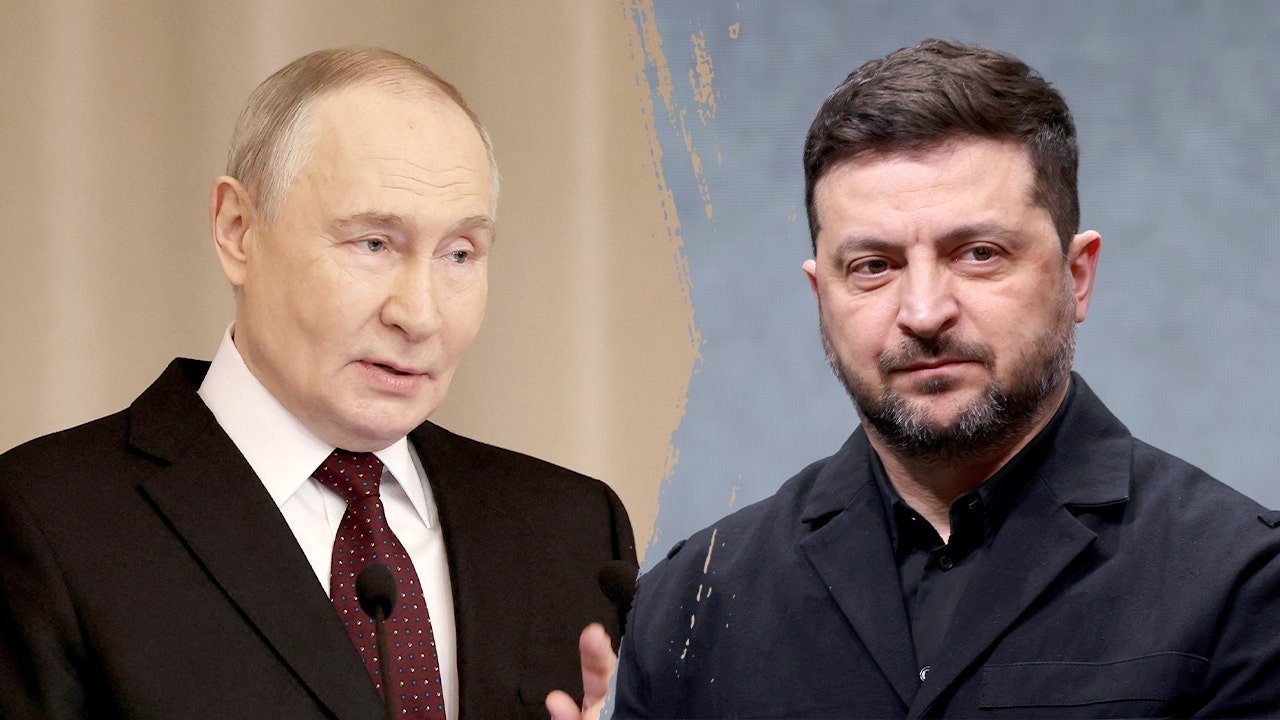
Ukrainian President Volodymyr Zelenskyy on Thursday dismissed what he described as Vladimir Putin’s «historical s—,» saying he has no interest in debating the past and wants peace talks focused squarely on ending the war.
In a pointed post on X, Zelenskyy described Russia’s historical arguments as a «delay tactic,» accusing Moscow of using them to stall meaningful negotiations. He argued the only issue worth discussing with Putin is how to bring the war to a swift and successful end.
Putin has long made claims about the history of Ukraine and Russia, including a 2021 piece he wrote that discussed his position that «Russians and Ukrainians were one people» and that the two countries are «essentially the same historical and spiritual space.» Zelenskyy said debates about history will not accomplish the goal of reaching peace, and will only prolong the process of reaching a resolution.
«I have been to Russia – to many cities. And I knew a lot of people there. He [Putin] has never been to Ukraine this many times. He was only in big cities. I went to small cities. From the northern part to the southern part. Everywhere. I know their mentality. That’s why I don’t want to lose time on all these things,» Zelenskyy wrote.
PUTIN REJECTS KEY PARTS OF US PEACE PLAN AS KREMLIN OFFICIAL WARNS EUROPE FACES NEW WAR RISK: REPORT
Russian President Vladimir Putin and Ukrainian President Volodymyr Zelenskyy have both met separately with President Donald Trump. Despite a peace deal agreement being close, territorial disputes remain, Zelenskyy said. (Julia Demaree Nikhinson/AP; Christian Bruna/Getty)
The remarks came after another round of trilateral talks between Ukrainian, U.S. and Russian officials in Switzerland; meetings the Ukrainian president suggested he had produced limited progress.
«As of today, we cannot say that the outcome of the meetings in Geneva is sufficient,» Zelenskyy explained, saying that while military representatives had discussed certain issues «seriously and substantively,» sensitive political matters, possible compromises and a potential meeting between leaders have not yet been adequately worked through.
HOUSE REPUBLICANS THREATEN TO FORCE RUSSIA SANCTIONS VOTE AFTER GIVING LEADERSHIP ‘ONE LAST CHANCE’
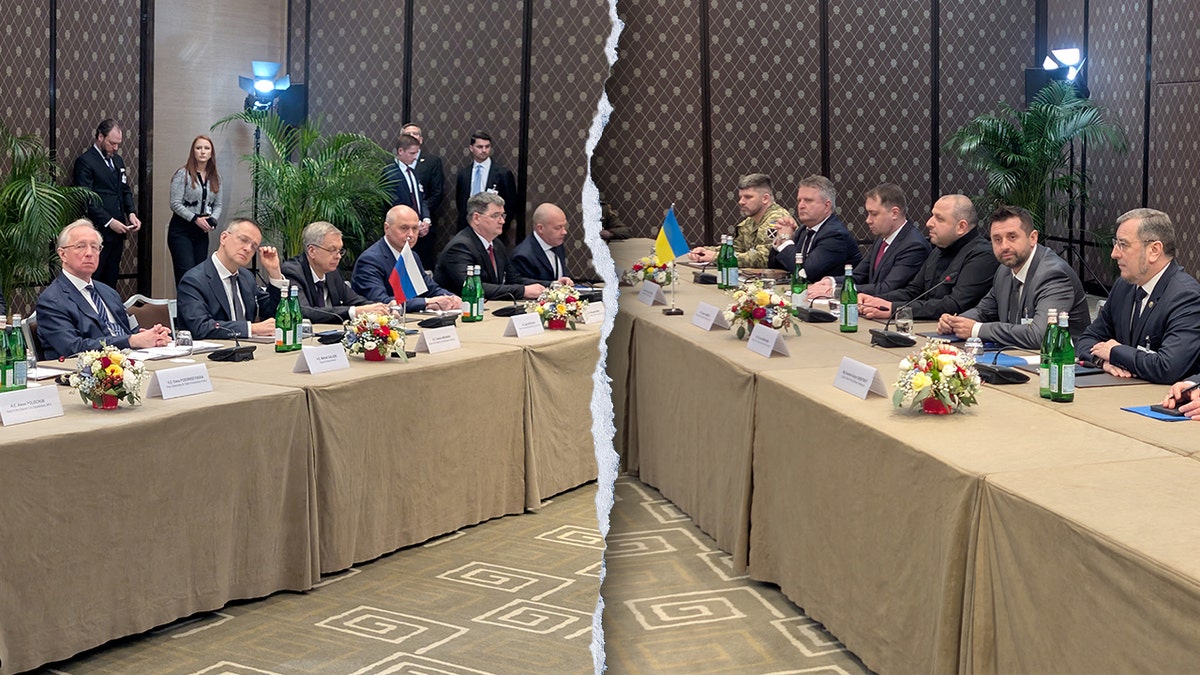
A Ukrainian delegation (right) and Russian delegation (left) wait for the start of a meeting on the first day of the third round of trilateral talks between delegates from Ukraine, Russia and the U.S. in Geneva, Switzerland, on Feb. 17, 2026. (Press Service Of The National Security And Defence Council Of Ukraine/Handout via Reuters)
NATO Secretary General Mark Rutte questioned at the Munich Security Conference last week whether Russia is serious about negotiations, noting that Moscow again sent presidential aide Vladimir Medinsky, who has previously emphasized historical narratives in talks, to lead discussions in Geneva.
Medinsky characterized the two days of negotiations as «difficult but businesslike,» according to a translation of his remarks from the Russian Foreign Ministry.
RUSSIA GETS PARALYMPIC SPOTS UNDER NATIONAL FLAG; UKRAINE OFFICIALS BOYCOTT OVER ‘OUTRAGEOUS DECISION’
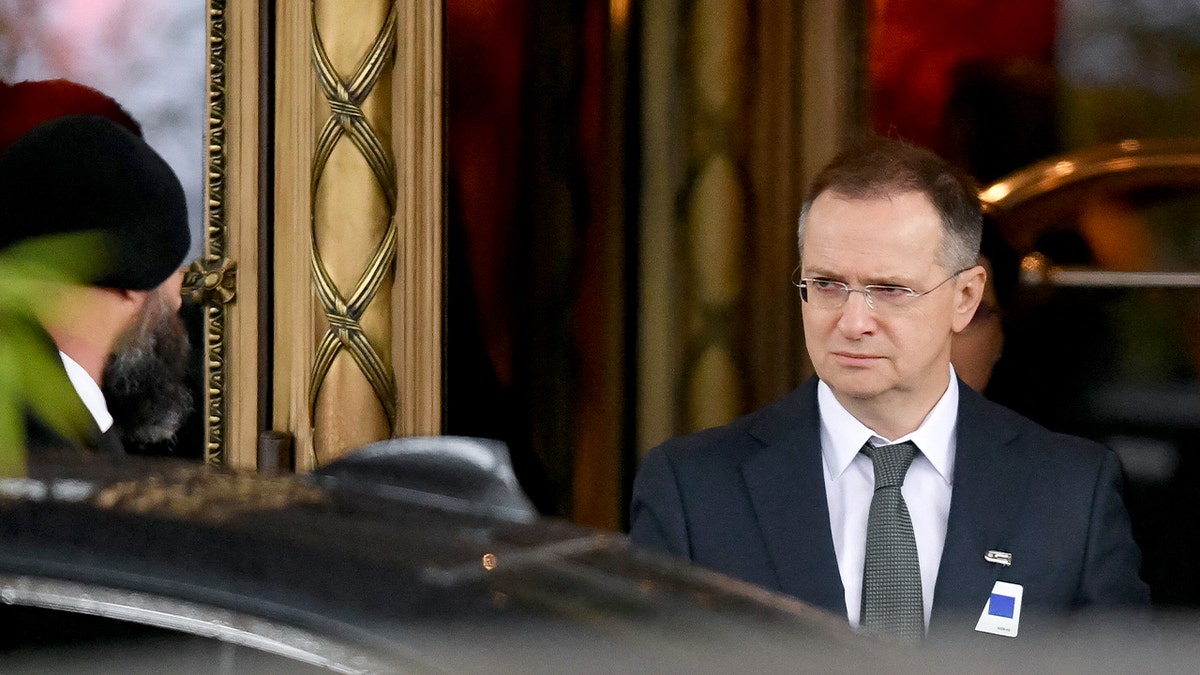
Russia’s chief negotiator Vladimir Medinsky leaves after a second round of U.S.-mediated talks between Russia and Ukraine in Geneva on Feb. 18, 2026. (Harold Cunningham/AFP via Getty Images)
CLICK HERE TO DOWNLOAD THE FOX NEWS APP
NBC News reported that Medinsky, who has served as a Kremlin aide since 2020, is regarded as a close Putin ally whose views on Ukrainian history closely align with the Russian president’s.
«It would seem obvious to anyone familiar with history at the primary school level: Russians and Ukrainians are historically — one people,» he wrote in a November op-ed for the Russian newspaper Komsomolskaya Pravda.
volodymyr zelenskyy,vladimir putin,ukraine,russia
INTERNACIONAL
De la IA a Starlink: cómo la tecnología de los drones está transformando la guerra en Ucrania
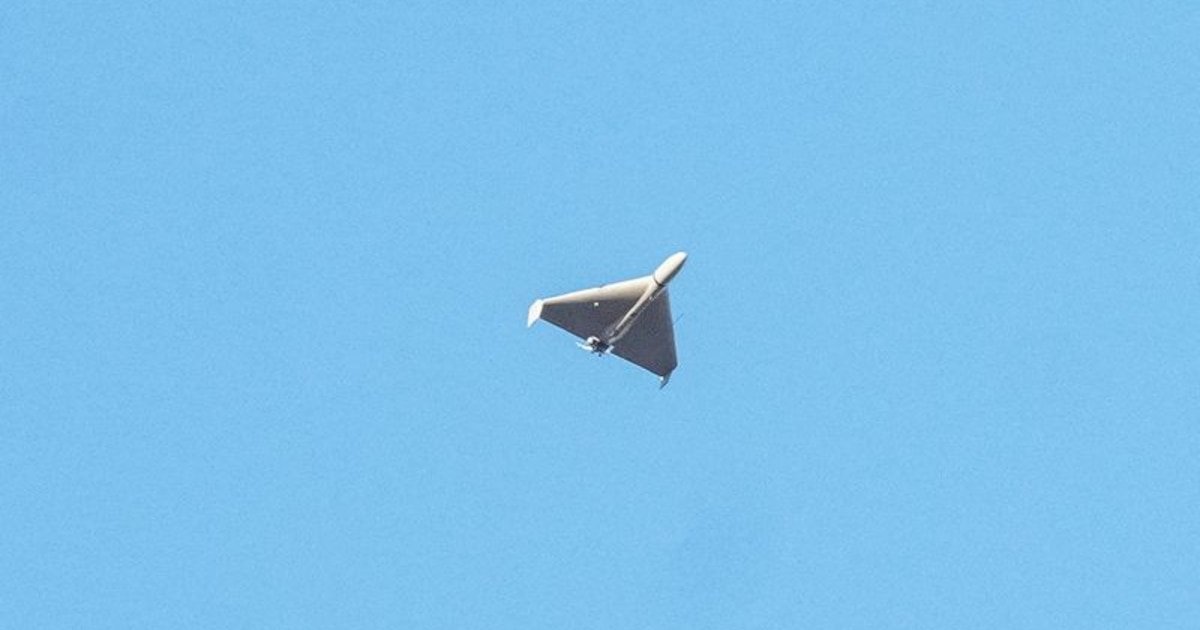
A medida que la guerra en Ucrania entra en su quinto año, los drones han llegado a dominar por completo la línea del frente, una transformación en la guerra moderna que está siendo observada en todo el mundo.
He aquí una mirada a la tecnología que está transformando la guerra, cuatro años después de que Rusia lanzó su invasión a gran escala enviando tanques y hombres a través de la frontera:
Los drones, que van desde dispositivos comerciales baratos diseñados para uso civil hasta aeronaves en miniatura cargadas de explosivos, son responsables de hasta el 80 por ciento de los daños en el campo de batalla, afirmó el ministro de Defensa de Ucrania , Mykhailo Fedorov.
“La guerra moderna es ahora imposible sin drones”, declaró a la AFP Koleso, un soldado de infantería ucraniano, en el este de Ucrania .
La línea del frente se ha transformado en una “zona de muerte” que se extiende hasta 20 kilómetros (12 millas) de profundidad: “un área entre dos lados donde nada puede sobrevivir porque está constantemente monitoreada por drones”, explicó la experta militar Kateryna Bondar.
Los soldados sólo pueden operar allí en pequeños grupos, moviéndose rápido y con la mirada fija en el cielo, con la esperanza de pasar desapercibidos.
Las piezas de artillería pesada, así como los lentos tanques y vehículos blindados, son demasiado lentos y visibles, lo que los convierte en blancos fáciles para ambos bandos.
Las tropas ucranianas, que no están dispuestas a enviar más hombres de los necesarios a la zona de exterminio, utilizan drones terrestres para transportar suministros a áreas peligrosas y evacuar a los soldados heridos.

Mantener una conexión estable entre el dron y su operador, controlándolo de forma remota, es una tarea crucial. “Ahí es donde se desarrolla la verdadera carrera : las comunicaciones y las conexiones”, dijo Bondar.
Inicialmente, la mayoría de los drones funcionaban mediante una conexión de radio. Pero demostraron ser vulnerables a la guerra electrónica, la práctica de interferir e interceptar naves enemigas, provocando que caigan del cielo o pierdan la conexión con el operador.
Rusia ha recurrido a drones controlados por cables de fibra óptica ultrafinos, en gran medida inmunes a las interferencias electrónicas. En escenas que parecen una película de ciencia ficción distópica, su uso generalizado ha dejado franjas de ciudades y campos de primera línea sepultados en redes de cables.
Como otra alternativa al control por radio, los ucranianos han comenzado a colocar terminales Starlink en los drones. Esto les permite volar utilizando una conexión a Internet por satélite.
“Necesitamos volar lejos con una señal de vídeo estable y un control estable”, dijo Phoenix, un comandante del Grupo Lasar de Ucrania, pionero en el uso de Starlink .
Las tropas rusas pronto comenzaron a copiar, hasta que Ucrania presionó a Elon Musk el mes pasado para que desactivara terminales rusas no autorizadas. La medida alteró los sistemas rusos y ucranianos, dijeron observadores militares.

El Instituto para el Estudio de la Guerra, con sede en Estados Unidos, dijo que el apagón probablemente ayudó a posibilitar un avance ucraniano localizado, pero rápido, en la región sureña de Zaporizhia a principios de febrero.
La proliferación de drones ha obligado a renovar los sistemas de defensa aérea. Disparar misiles avanzados, que pueden costar millones, para derribar drones que valen apenas una fracción de eso es una respuesta demasiado costosa.
Además de realizar interferencias, Ucrania también ha desarrollado drones interceptores baratos, construidos específicamente para destruir otras naves en el aire. “Abrimos el capítulo de la guerra de los drones con drones”, dijo Marko Kushnir de General Cherry, un fabricante líder de drones interceptores .
Las carreteras cercanas al frente han sido equipadas con redes protectoras que intentan detener los drones atacantes, mientras que camiones equipados con jaulas antidrones y bloqueadores de drones pasan a toda velocidad por ellas.
Las ametralladoras también son un último recurso para derribar drones del cielo. Los aliados occidentales de Ucrania han recurrido cada vez más a la experiencia de Kiev después de que drones rusos hicieran repetidas incursiones en el espacio aéreo europeo en los últimos meses.
Los ingenieros están compitiendo para equipar los drones con inteligencia artificial para mejorar su rendimiento.
Empresas ucranianas como The Fourth Law (TFL) dicen haber desarrollado la llamada guía terminal, que permite a la IA tomar el control de un dispositivo en los momentos finales antes del impacto. Esto tiene como objetivo mejorar la precisión de los golpes, especialmente porque la conexión generalmente se pierde en los momentos finales antes de un golpe.

“Rusia y China también están desarrollando este tipo de tecnologías, y si nuestros países no lo hacen… perderemos”, dijo Maksym Savanevskyi de TFL. Pero la autonomía plena aún está lejos.
“La IA está cumpliendo una función de ayuda en lugar de sustituir a la humana”, afirmó Bondar, el experto militar. “Pensé que simplemente podrían retirar a la gente del equipo de batalla, que podría automatizarse completamente. Esa es una visión ingenua”, dijo el ex director ejecutivo de Google, Eric Schmidt, ahora director de SwiftBeat, una empresa que suministra drones con inteligencia artificial al ejército de Ucrania .
“En el futuro previsible, primero tendremos drones y después personas”, dijo en una conferencia en Kiev. Durante todo el frente oriental, Koleso afirmó que los soldados de infantería siempre seguirían siendo relevantes.
“Hasta que no plantes la bandera tú mismo, con tus propias manos, y tomes la posición, no puede considerarse tuya”, dijo.
(AFP)
Europe,KYIV

El Gobierno prepara la hoja de ruta de las reformas para el 2026 y podría anunciar algunas en la Apertura de Sesiones del Congreso

El ataque de furia de Yanina Latorre con una panelista que le arruinó un chimento al aire: “¡Te vas!”

Cristina Kirchner saludó a militantes con motivo de su cumpleaños

Uno por uno, qué diputados votaron a favor de la reforma laboral y cuáles en contra

Fate, fábricas paradas y el precio de los autos: por qué la economía de escala es el eterno Talón de Aquiles de la industria

Los detalles del osado plan de Maradona y Bilardo para que Caniggia jugara el Mundial 2010 a los 43 años: “Hoy me culpo”

Reforma laboral bomba: menos indemnización, más horas y despidos más fáciles — el cambio que puede sacudir el empleo en Argentina

Cristian Ritondo: “Vamos a apoyar la ley de modernización laboral, pero no el régimen de licencias por enfermedad”

El dólar no sólo cae en la Argentina: qué pasa con otras monedas emergentes y cuáles son las causas

Tras el anuncio de la CGT, también habrá paro total de los medios de transporte de pasajeros en el país

 POLITICA2 días ago
Reforma laboral bomba: menos indemnización, más horas y despidos más fáciles — el cambio que puede sacudir el empleo en Argentina
- POLITICA2 días ago
El Gobierno endurece las medidas de seguridad y control en la marcha prevista contra la reforma laboral en el Congreso
- INTERNACIONAL3 días ago
House Dem’s graphic chicken decapitation ‘horrified’ her college roommates: ‘Blood went everywhere’