INTERNACIONAL
Rusia refuerza sus bases cerca de la frontera con Finlandia

Las fuerzas rusas han estado reforzando sus bases y construyendo infraestructuras militares cerca de la frontera finlandesa, según recientes imágenes por satélite, en movimientos que podrían revelar su estrategia para lo que suceda después de la guerra de Ucrania.
Las imágenes, confirmadas por funcionarios de la OTAN, muestran una hilera tras otra de nuevas tiendas de campaña, nuevos almacenes que pueden guardar vehículos militares, renovaciones en los refugios de los aviones de combate y una actividad de construcción constante en una base de helicópteros que había estado en su mayor parte inutilizada y cubierta de maleza.
Hasta ahora, los movimientos parecen ser las primeras etapas de una expansión mayor y a más largo plazo, y los funcionarios de la OTAN dicen que esto no se parece en nada a la acumulación a lo largo de la frontera con Ucrania antes de la invasión a gran escala de Rusia en 2022. Por ahora, Rusia, preocupada por su guerra en Ucrania, tiene muy pocas tropas a lo largo de la frontera, y los finlandeses insisten en que nada de esto es una gran amenaza, todavía.
Pero Finlandia es uno de los miembros más recientes de la OTAN, pues ingresó en ella hace dos años, y los movimientos reflejan sin duda la percepción de una amenaza por parte de Moscú: Esta frontera de 1.300 kilómetros (830 millas) es ahora la línea de contacto más larga de la alianza occidental con Rusia. Los analistas militares predicen que podría convertirse en un punto caliente, especialmente porque gran parte de ella se encuentra en el cada vez más disputado Círculo Polar Ártico.
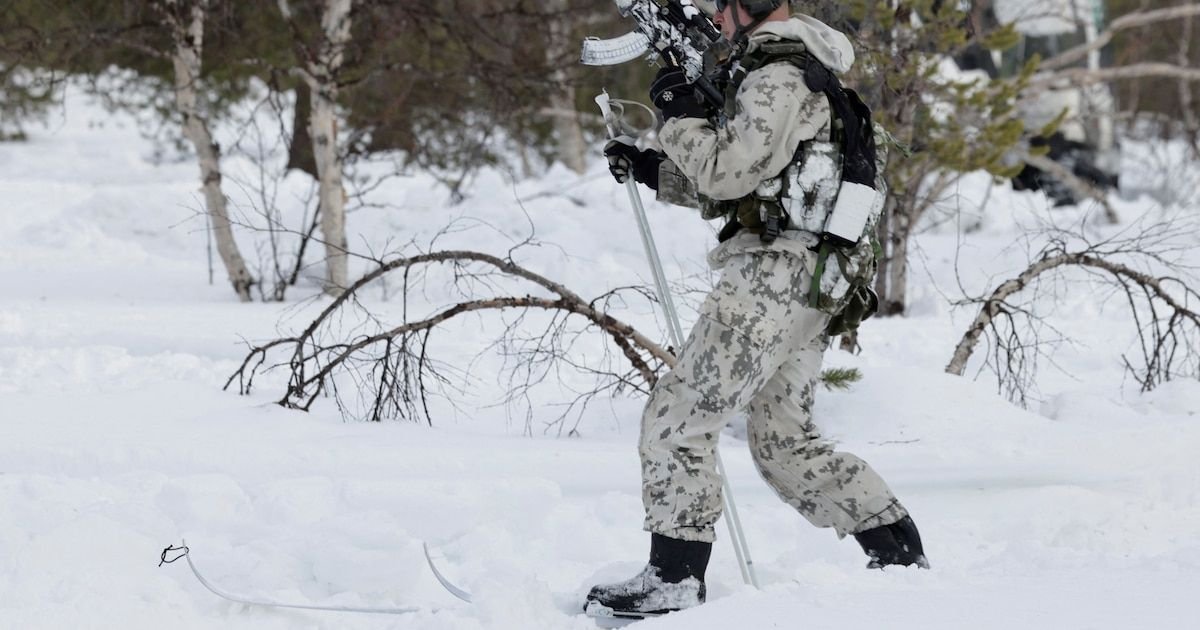
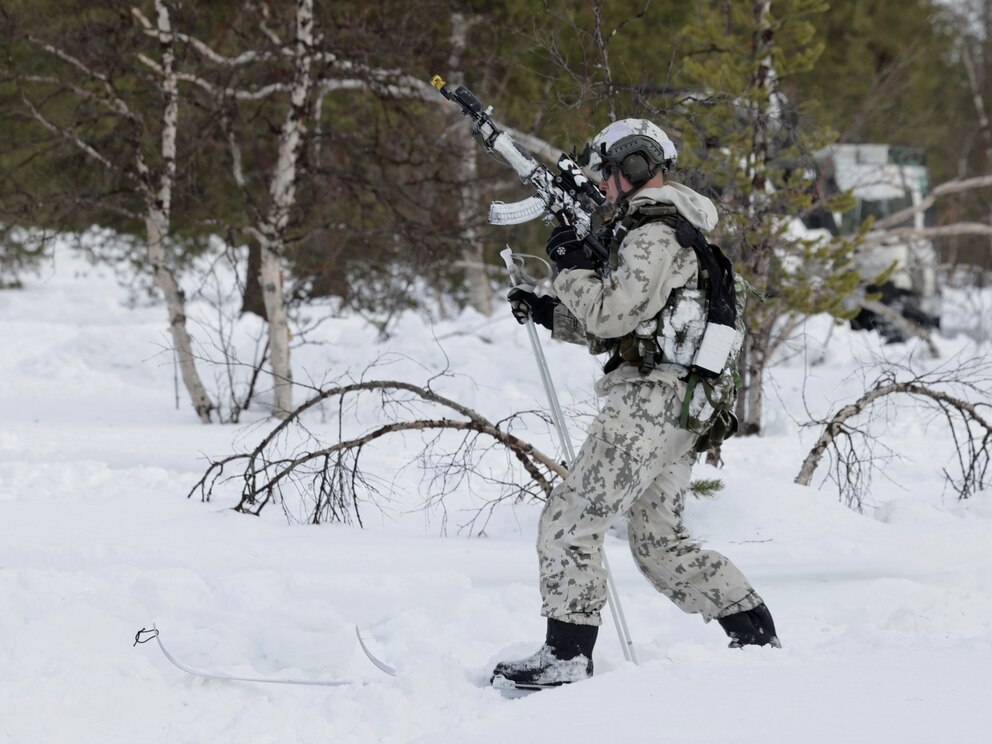
Las tropas norteamericanas y finlandesas celebraron recientemente un elaborado juego de guerra ártico en esta región, con cientos de soldados corriendo por los bosques y los finlandeses deslizándose entre los árboles con esquís de fondo. ¿El supuesto enemigo? Rusia.
Funcionarios de defensa finlandeses predicen que si la fase de alta intensidad de la guerra de Ucrania termina -uno de los objetivos de los esfuerzos de paz que se desarrollan en Turquía- Rusia volverá a desplegar miles de tropas en la frontera finlandesa.
Los finlandeses creen que les quedan unos cinco años antes de que Rusia pueda aumentar sus fuerzas hasta niveles amenazadores. Pero están seguros de que ocurrirá y de que el número de tropas rusas que se enfrenten a ellos se triplicará.
“Estaremos hablando de niveles de tropas mucho más altos”, dijo el general de brigada Pekka Turunen, director de la inteligencia de defensa finlandesa.
Desde la perspectiva de Moscú, los rusos necesitan reforzar sus defensas para protegerse de la expansión de la OTAN, que siempre ha sido un tema delicado. Los países bálticos fueron los primeros miembros de la antigua Unión Soviética que se incorporaron a la OTAN, con lo que grandes extensiones de la frontera rusa se enfrentaron a la de la OTAN. La perspectiva de que Ucrania, una antigua república soviética aún mayor, siguiera su ejemplo era tan amenazadora para Moscú que se convirtió en una de las causas de la guerra terrestre más devastadora en generaciones.
“El ejército ruso ha experimentado una importante expansión de sus fuerzas”, afirma Michael Kofman, investigador del Carnegie Endowment for International Peace de Washington. “Después de la guerra, la fuerza terrestre probablemente acabará siendo mayor que antes de 2022. Viendo la reestructuración prevista de los distritos militares, parece claro que van a dar prioridad a las zonas que se enfrentan a la OTAN.”
Los oficiales de la OTAN están de acuerdo.
Cuando termine la guerra de Ucrania, dijo un alto funcionario de la OTAN, Rusia redesplegará tropas cada vez más al norte.
Rusia cree que el Ártico y el acceso en el Ártico es una clave para el estatus de gran potencia, dijo el funcionario, hablando bajo condición de anonimato para discutir un tema sensible.
Según imágenes de satélite, helicópteros rusos regresaron a una base cerca de Murmansk, ciudad portuaria en el Círculo Polar Ártico, después de no haber estado allí durante dos décadas.
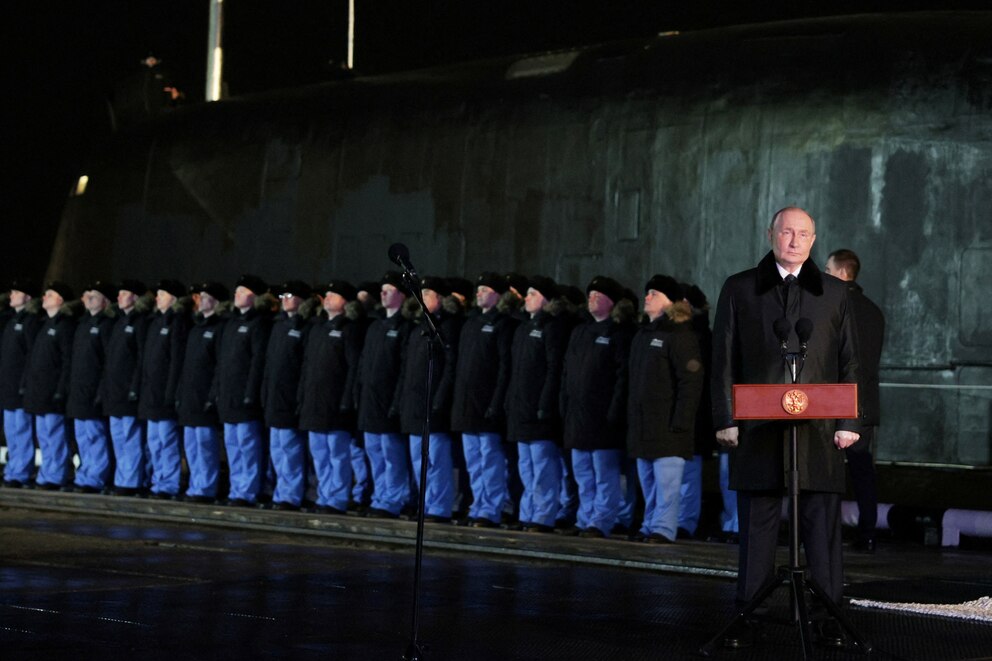
Mientras los drones ucranianos apuntan a aeródromos de toda Rusia, el mando ruso ha desplazado sus activos hacia el norte, para ponerse fuera de su alcance. Esto los ha situado mucho más cerca del territorio de la OTAN.
Decenas de aviones de combate rusos fueron vistos recientemente en la base aérea de Olenya, también en el Ártico y a menos de 160 kilómetros de la frontera con Finlandia, según las imágenes de satélite. Otra actividad reciente incluye más de un centenar de nuevas tiendas de campaña que aparecieron hace aproximadamente un año en Kamenka, una base rusa a menos de 65 kilómetros de Finlandia.
“Están ampliando sus brigadas hasta convertirlas en divisiones, lo que significa que las unidades cercanas a nuestras fronteras aumentarán significativamente, en miles”, declaró Emil Kastehelmi, analista del Black Bird Group, una organización finlandesa que analiza la evolución militar en el norte y en Ucrania.
Kastehelmi, que analizó docenas de imágenes recientes para The New York Times, dijo que los próximos años podrían traer cambios masivos en la frontera finlandesa, dependiendo de cómo y cuándo termine la guerra en Ucrania.
En Alakurtti, también cerca de Finlandia, y en Petrozavodsk, un poco más lejos, los rusos tienen nuevos edificios que pueden albergar al menos docenas de vehículos. La actividad también ha aumentado en otros lugares. Recientemente han aparecido nuevas tiendas de campaña y material militar en una base situada a unos 130 kilómetros de Estonia.
Los finlandeses tienen una vieja expresión: Rusia nunca es tan fuerte como parece ni tan débil como parece. Por eso, los responsables de defensa finlandeses se han mostrado tan realistas sobre el aumento de tropas.
“El aumento de la fuerza militar en nuestras zonas cercanas se producirá cuando se calmen los combates en Ucrania”, declaró Janne Kuusela, director de política de defensa del Ministerio de Defensa finlandés.
Cuánto tiempo llevará eso, dijo, no lo sabe.
Pero, añadió, “para eso tenemos que estar preparados”.
c.2025 The New York Times

INTERNACIONAL
El frío, el hielo y el misterio del ARN: cuáles son los experimentos que buscan conocer el origen de la vida

En el debate sobre el origen de la vida, el ácido ribonucleico (ARN) ocupa un lugar central gracias a sus cualidades excepcionales. Aunque en la biología actual el ADN es el protagonista, muchos investigadores sostienen que el ARN desempeñó un rol decisivo en los primeros pasos evolutivos.
Posee la capacidad de almacenar información genética y de actuar como catalizador en reacciones químicas, lo que dio origen a la hipótesis del “mundo de ARN”: moléculas capaces de codificar su propia composición y de impulsar su reproducción, sentando así las bases de los procesos evolutivos que llevaron a organismos cada vez más complejos, afirma Science.
Durante los años noventa, equipos liderados por Jack Szostak (hoy en la Universidad de Chicago) y David Bartel (hoy en el Instituto Tecnológico de Massachusetts) analizaron trillones de secuencias de ARN, identificando algunas capaces de realizar funciones necesarias para la autorreplicación.
No obstante, estas moléculas presentaban una limitación clave: tenían entre 150 y 200 bases, lo que implica que eran demasiado grandes, y ese tamaño las hacía poco plausibles como productos espontáneos de la química de la Tierra primitiva. Además, probablemente se degradarían antes de poder ser completamente sintetizadas.

En este contexto, los bioquímicos Edoardo Gianni y Philipp Holliger de la Universidad de Cambridge, junto con su equipo, se propusieron superar ese obstáculo y acercar la experimentación a condiciones más similares a las de la Tierra en su origen.
Su trabajo, publicado en la revista Science, logró que ciertas moléculas de ARN generen copias complementarias de sí mismas y, a partir de esas copias, restauren la secuencia original. Este avance acerca la hipótesis del “mundo de ARN” a la realidad experimental y refuerza la idea de que el ARN pudo ser el primer motor de la evolución biológica.
En principio, la clave de este logro fue la reducción significativa del tamaño de las moléculas de ARN utilizadas, que pasaron a ser de 45 bases. Gerald Joyce destacó que “eso es una innovación significativa”, ya que moléculas tan pequeñas tienen una mayor probabilidad de surgir espontáneamente, a partir de los componentes básicos que abundaban en los inicios del planeta. Esto abre nuevas posibilidades para comprender los orígenes químicos de la vida.
Los experimentos se realizaron bajo condiciones de bajas temperaturas. Trabajar con frío ralentizó las reacciones que degradan el ARN y permitió aprovechar un fenómeno físico donde, al congelarse el agua, los nucleótidos y otros componentes quedan excluidos de los cristales de hielo, concentrándose en canales microscópicos llenos de solución. Estos microambientes no solo favorecen la síntesis de nuevas cadenas de ARN, sino que también protegen a las moléculas de su rápida degradación.

El diseño incluyó la utilización de tripletes de nucleótidos, fragmentos formados por tres bases fusionadas, que permitieron que algunas cadenas de ARN permanecieran desplegadas y disponibles como moldes para la copia, mientras que otras conservaron la estructura plegada necesaria para actuar como catalizadores. Tras examinar alrededor de un billón de secuencias aleatorias bajo estas condiciones, el equipo identificó tres ARN capaces de completar este proceso de copia complementaria y restauración.
A pesar de este avance, el experimento presenta limitaciones; ninguna de las moléculas aisladas logró realizar el ciclo completo de autorreplicación por sí sola, y la síntesis de las nuevas cadenas de ARN tomó hasta 72 días en condiciones de frío extremo. Sin embargo, estos resultados son compatibles con la hipótesis de que la vida pudo originarse en ambientes sometidos a ciclos de congelamiento y deshielo, donde los componentes químicos se concentraban y protegían por los propios procesos físicos del entorno.
Jack Szostak considera que el reto siguiente será “lograr que este sistema, o uno similar, sea suficientemente eficiente como para observar ciclos repetidos de replicación”. Si se alcanza ese objetivo, el ARN podría consolidarse como el vínculo más probable entre la química prebiótica y la biología.
El hallazgo del equipo de Cambridge fortalece la hipótesis del “mundo de ARN” y abre nuevas rutas para investigar los orígenes de la vida. Al demostrar que moléculas relativamente pequeñas pueden acercarse notablemente al proceso de replicación, los investigadores ofrecen una base concreta para comprender cómo la evolución pudo comenzar a partir de sistemas moleculares sencillos, incluso en las condiciones más desfavorables del planeta primitivo.
cirugía molecular

NEWYou can now listen to Fox News articles!
Senate Democrats and the White House remain locked in a standoff over proposed reforms to immigration operations nationwide — a dispute that could carry unintended consequences for disaster response efforts.
Without a fresh infusion of funding, the Federal Emergency Management Agency (FEMA) could soon face constraints on its disaster relief operations. As hurricane season approaches, limited funding could hamper the agency’s ability to respond to major storms and other emergencies.
The partial government shutdown — affecting FEMA’s parent agency, the Department of Homeland Security (DHS) — entered its fifth day with no resolution in sight.
GOP WARNS DEMOCRATS USING DHS SHUTDOWN TO STALL SENATE VOTER ID PUSH
Senate Democrats, led by Senate Minority Leader Chuck Schumer, D-N.Y., and the White House are in a standoff over DHS funding as the partial shutdown drags on. And as the closure continues, disaster funding at FEMA could run dry. (Mariam Zuhaib/AP; Alex Brandon/AP)
Before the shutdown began last week, a top FEMA official warned lawmakers that shuttering DHS could significantly strain the agency’s disaster response capabilities.
Office of Response and Recovery Associate Administrator Gregg Phillips told a House panel examining the effects of a DHS shutdown that while FEMA’s disaster relief fund currently holds roughly $7 billion — enough to sustain emergency responses for the «foreseeable future» — a catastrophic event could quickly exhaust those resources.
«That said, if a catastrophic disaster occurred, the [disaster relief fund] would be seriously strained,» Phillips said.
For comparison, the federal government spent more than $50 billion on disaster relief during the last fiscal year. Phillips also noted that during his nearly two-month tenure, FEMA had already spent $3 billion in 45 days across roughly 5,000 projects.
THUNE GUARANTEES VOTER ID BILL TO HIT THE SENATE DESPITE SCHUMER, DEM OPPOSITION: ‘WE WILL HAVE A VOTE’
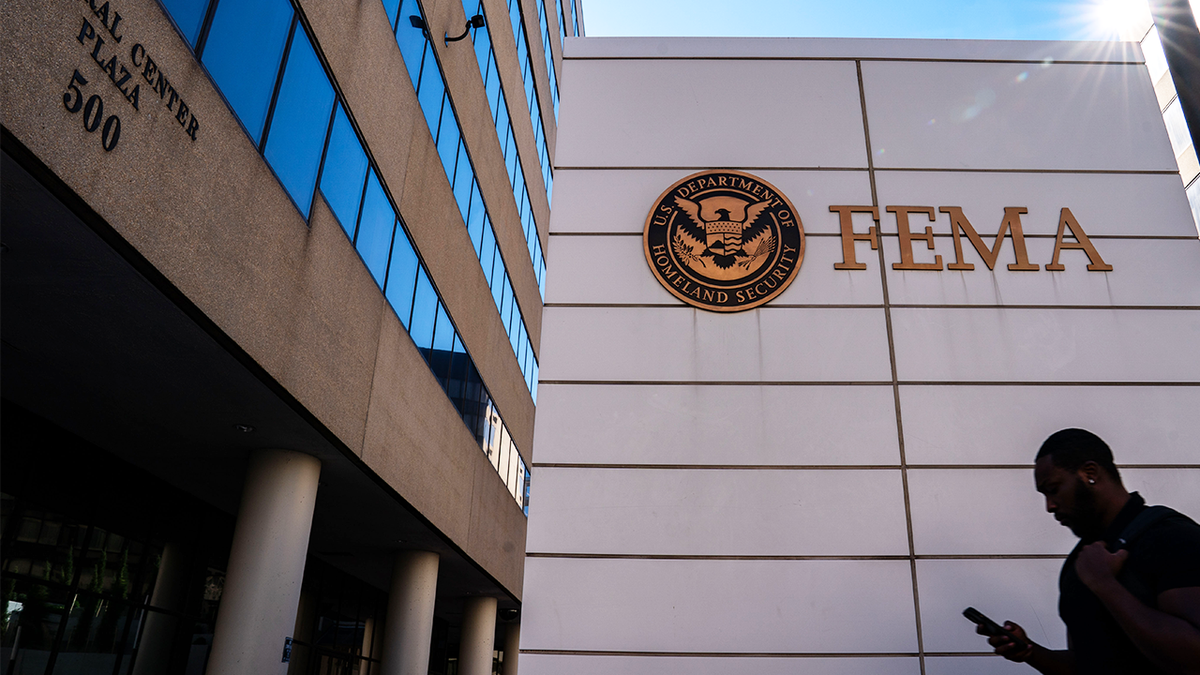
The Federal Emergency Management Agency (FEMA) headquarters is photographed on Oct. 8, 2024, in Washington, D.C. (Kent Nishimura/Getty Images)
Earlier this week, President Donald Trump said that FEMA would play a «key role» in responding to a sewage spill into the Potomac River, where roughly 200 million gallons of raw sewage have poured into the waterway that runs through the nation’s capital.
The cost of FEMA’s involvement in that cleanup effort has not yet been determined, a DHS spokesperson told Fox News Digital.
Meanwhile, the current DHS funding bill, which Senate Democrats rejected last week, includes roughly $26 billion for FEMA’s disaster relief fund. But negotiations remain stalled as Democrats push for reforms to Immigration and Customs Enforcement (ICE).
‘IT’S ABSURD’: DHS SHUTDOWN BEARS DOWN ON US AS LAWMAKERS JET OFF TO EUROPE
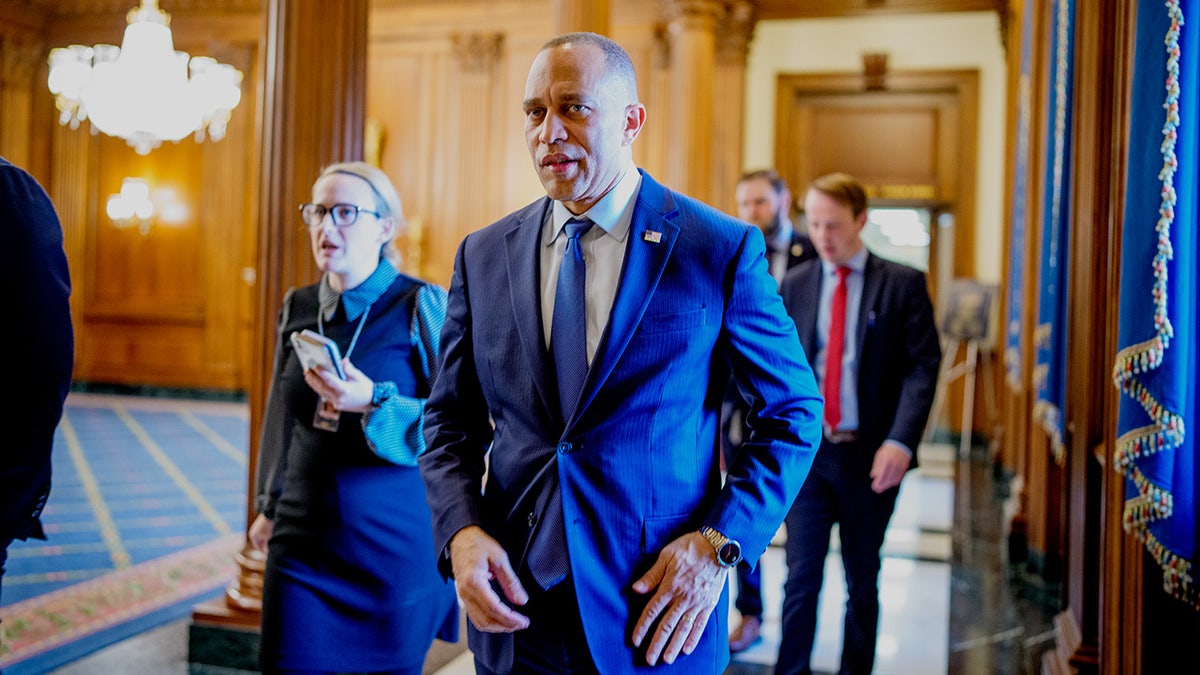
House Minority Leader Hakeem Jeffries, D-N.Y., walks toward the House chamber on Capitol Hill on Dec. 18, 2025, in Washington, D.C. (Andrew Harnik/Getty Images)
There has been little progress this week. Congressional Democrats sent a counterproposal to the White House late Monday, responding to an offer from the administration made last week.
A White House official told Fox News Digital that «the parties are still pretty far apart.»
«The administration remains interested in good-faith conversations to end the Democrat shutdown before more Americans feel the impacts,» the official said. «But the administration also remains committed to carrying out the president’s promise to enforce federal immigration law.»
Spokespeople for Senate Minority Leader Chuck Schumer, D-N.Y., and House Minority Leader Hakeem Jeffries, D-N.Y., said congressional Democrats have «been clear for weeks about the reforms needed to rein in ICE and stop the violence.»
CLICK HERE TO DOWNLOAD THE FOX NEWS APP
«We’ve continued working through language and additional issues to make progress, but Republicans have largely ignored the core guardrails Americans are demanding,» they said. «Dems are negotiating in good faith. It’s time for Republicans to do the same.»
Unless a deal is reached before next week, the Senate is expected to vote Monday on the original full-year DHS funding bill — a measure likely to be blocked again by Schumer and his caucus.
politics,senate,government shutdown,fema
INTERNACIONAL
Trump convenes first ‘Board of Peace’ meeting as Gaza rebuild hinges on Hamas disarmament
NEWYou can now listen to Fox News articles!
President Donald Trump’s newly created Board of Peace is set to hold its first meeting Thursday, with administration officials and participating countries framing the gathering as a step toward implementing the next phase of the Gaza ceasefire and reconstruction effort rather than a moment likely to deliver an immediate breakthrough.
At least 20 countries are expected to attend the inaugural session in Washington, where Trump is slated to chair discussions on a multi-billion-dollar reconstruction framework, humanitarian coordination and the deployment of an international stabilization force.
Trump unveiled the initiative at the World Economic Forum in Davos last month. Initial members include the United Arab Emirates, Saudi Arabia, Egypt, Qatar, Bahrain, Pakistan, Turkey, Israel, Hungary, Morocco, Kosovo, Albania, Bulgaria, Argentina, Paraguay, Kazakhstan, Mongolia, Uzbekistan, Indonesia and Vietnam.
RUBIO REVEALS SHARED INTELLIGENCE PREVENTED POSSIBLE HAMAS ATTACK, DISCUSSES INTERNATIONAL STABILIZATION FORCE
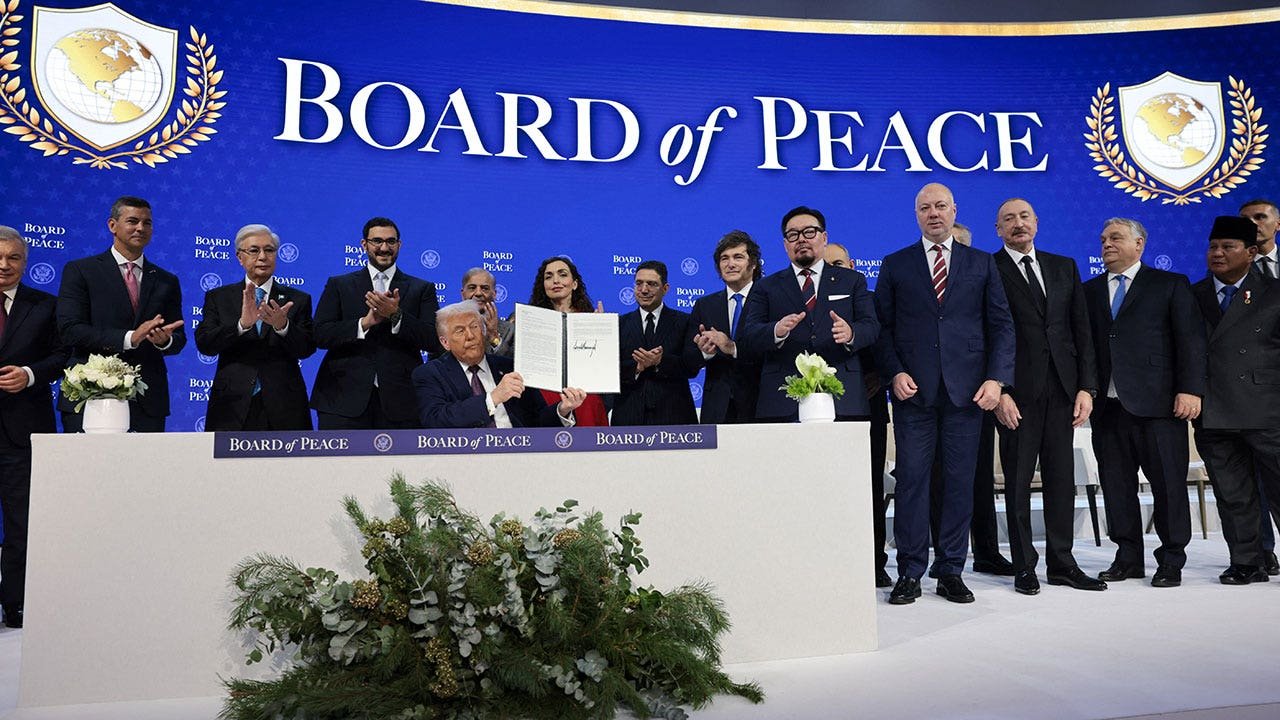
President Donald Trump, center, holds up a signed Board of Peace charter during the Annual Meeting of the World Economic Forum in Davos, Switzerland, Thursday, Jan. 22, 2026. (Evan Vucci / AP Photo)
On Sunday, Trump said members of the initiative had already pledged $5 billion toward rebuilding Gaza and would commit personnel to international stabilization and policing efforts. «The Board of Peace will prove to be the most consequential international body in history, and it is my honor to serve as its Chairman,» Trump wrote in a social media post announcing the commitments.
Italy’s foreign minister, Antonio Tajani, has announced a plan to train a future Gaza police force, while Indonesia has committed thousands of troops to a prospective international stabilization mission expected to deploy later this year.
The United Arab Emirates, a founding participant in the initiative, said it plans to continue its humanitarian engagement in Gaza.
«The UAE remains committed to scaling up its humanitarian efforts to support Palestinians in Gaza and to advancing a durable peace between Israelis and Palestinians,» the UAE Ministry of Foreign Affairs said in a statement, noting its role as a founding member of the Board of Peace and part of the Gaza Executive Board.
Even as Gulf and regional partners signal willingness to fund humanitarian needs, long-term reconstruction remains tied to security conditions on the ground.
TRUMP SEEKS DAVOS SIGNING CEREMONY FOR GAZA BOARD OF PEACE

Hamas terrorists stand in formation as Palestinians gather on a street to watch the handover of three Israeli hostages to a Red Cross team in Deir el-Balah, central Gaza, on Feb. 8, 2025. (Majdi Fathi/NurPhoto via Getty Images)
Disarmament remains the central test
Analysts say the meeting’s significance will hinge less on headline announcements and more on whether participants align on the unresolved core issue shaping Gaza’s future: Hamas’ disarmament.
Ghaith al-Omari, a senior fellow at the Washington Institute, argued the meeting’s credibility will depend on whether participants coalesce around a clear position on disarmament. «Unless there is going to be a joint statement coming out of it that clearly says Hamas has to disarm — to me the meeting would be a failure,» he said, because it would show «the U.S. cannot get everyone on the same page.»
Funding is also expected to dominate discussions, though diplomats and analysts caution that pledges may not translate quickly into large-scale reconstruction.
«We’re going to see pledges,» al-Omari told Fox News Digital, «with a footnote that a pledge does not always translate to deliverables,» urging attention to which countries commit funds and whether the money is earmarked for humanitarian aid, stabilization or long-term rebuilding.
John Hannah, a senior fellow at the Jewish Institute for National Security of America (JINSA), also cautioned that early financial pledges are unlikely to translate into immediate large-scale reconstruction. «I can’t imagine that much of that initial pledge or any of it is going to actual long-term or even medium-term reconstruction of Gaza. Just too many parties won’t support it, pending actual progress on the core question of disarmament and demilitarization of Hamas,» he said.
Hannah added that the financing challenge remains enormous. «It’s been a major outstanding question: How are you going to fund this tremendous bill that is going to come due over the course of the next several years?» he said. «I’ve been watching this now for 35 years, and if I had $100 for every time a major Arab country pledged support for the Palestinians but not delivered, I’d be a relatively wealthy man.»
NETANYAHU AGREES TO JOIN TRUMP’S GAZA BOARD OF PEACE AFTER INITIAL PUSHBACK
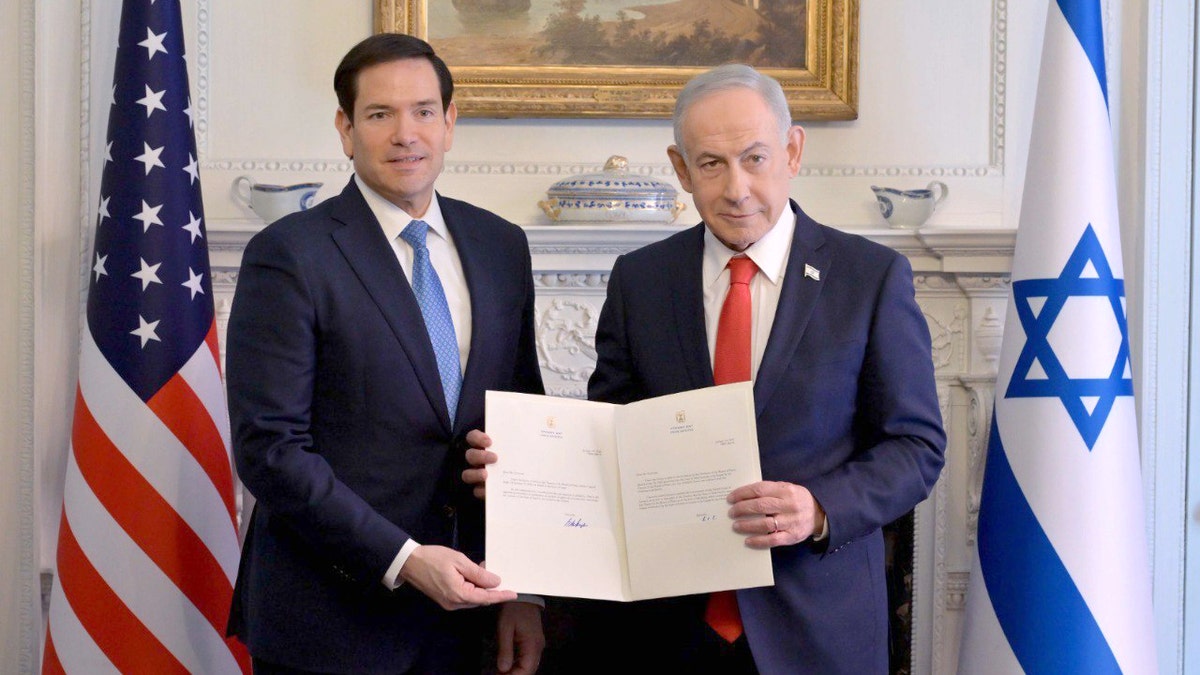
U.S. Secretary of State Marco Rubio (L) and Israeli Prime Minister Benjamin Netanyahu (R) hold a document after their meeting in Washington, United States, on Feb. 11, 2026. (Avi Ohayon/GPO/Anadolu via Getty Images)
Netanyahu signs on despite Turkey, Qatar tensions
The initiative has also highlighted political tensions surrounding Israel’s participation, particularly given the involvement of Turkey and Qatar.
Israeli Prime Minister Benjamin Netanyahu signed on to the agreement last week during a meeting with Secretary of State Marco Rubio, placing Israel formally inside the framework despite earlier Israeli objections to Ankara and Doha playing a central role in Gaza’s future.
Hannah said Netanyahu’s decision reflects strategic calculations tied to Washington. «I think the prime minister doesn’t want to anger the president. He’s prioritizing his really good strategic relationship with Trump over this tactical difference over Turkey and Qatar,» he said. «The prime minister is just making a basic calculation of where Israel’s interests lie here and trying to balance these competing factors.»
US MILITARY TO OVERSEE NEXT PHASE OF PEACE DEAL FROM COORDINATION BASE IN ISRAEL

President Donald Trump and several foreign leaders attend the signing ceremony of the Peace Charter for Gaza at the World Economic Forum in Davos, Switzerland, on Jan. 22, 2026. (Harun Ozalp/Anadolu via Getty Images)
European allies raise legal concerns
Beyond Gaza, the initiative has sparked concern among European allies, many of whom have declined to join the board.
European officials told Fox News Digital the group’s charter raises legal and institutional questions and may conflict with the original U.N. framework that envisioned a Gaza-focused mechanism.
Speaking at the Munich Security Conference, European leaders argued the Board of Peace’s mandate appears to diverge from the U.N. Security Council resolution that initially supported a Gaza-specific body.
European Union foreign policy chief Kaja Kallas said the resolution envisioned a time-limited structure tied directly to Gaza and to the U.N., but that the board’s current charter no longer reflects those provisions. «The U.N. Security Council resolution provided for a Board of Peace for Gaza… it provided for it to be limited in time until 2027… and referred to Gaza, whereas the statute of the Board of Peace makes no reference to any of these things,» she said. «So I think there is a Security Council resolution but the Board of Peace does not reflect it.»
In response, U.S. Ambassador to the United Nations Mike Waltz criticized what he described as excessive concern over the initiative and argued the status quo in Gaza was unsustainable, and attacked what he said was «hand-wringing» about the Board of Peace — saying the cycle of war with Hamas in control had to be broken.
UN AMBASSADOR WALTZ REVEALS TRUMP’S MIDDLE EAST PEACE PLAN IS ‘THE ONLY WAY FORWARD’

U.S. President Donald Trump’s son-in-law, Jared Kushner, and U.S. Special Envoy Steve Witkoff take part in a charter announcement for the president’s Board of Peace initiative aimed at resolving global conflicts, alongside the 56th annual World Economic Forum (WEF). The event took place in Davos, Switzerland, on Jan. 22, 2026. (Denis Balibouse/Reuters)
Not a replacement for the United Nations
Despite European unease, analysts say the Board of Peace is unlikely to replace the U.N. system.
Al-Omari dismissed the idea that the initiative poses a serious institutional challenge, arguing that major powers remain deeply invested in the existing multilateral structure.
CLICK HERE TO DOWNLOAD THE FOX NEWS APP
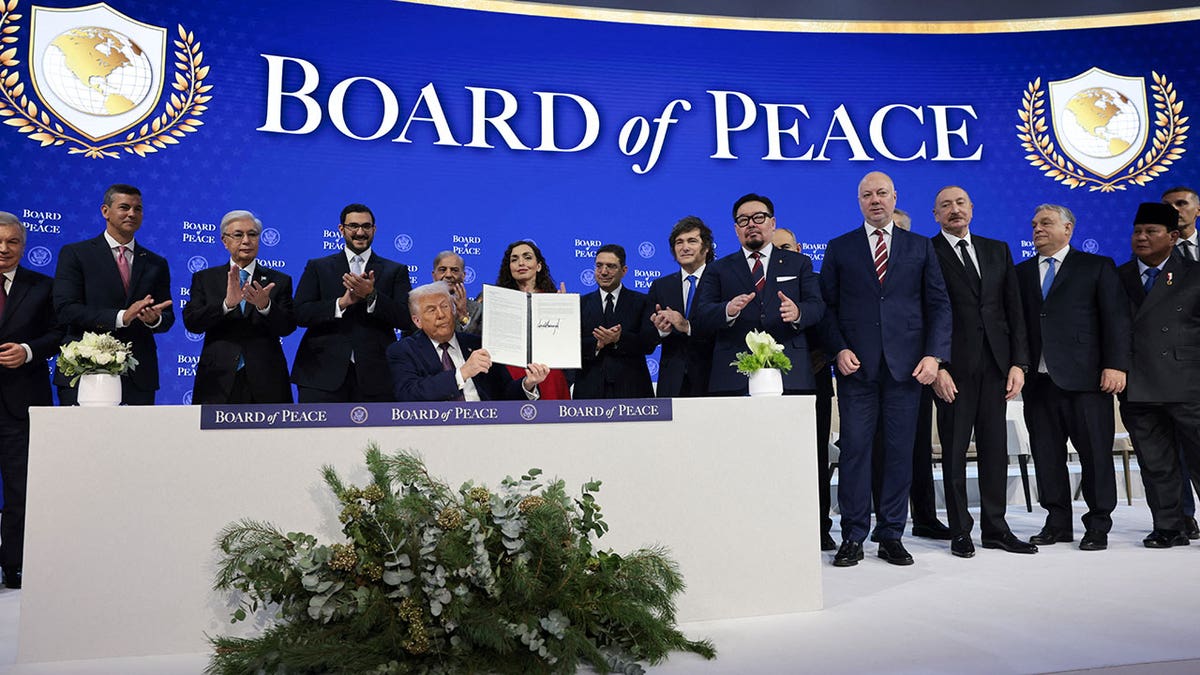
U.S. President Donald Trump takes part in a charter announcement for his Board of Peace initiative aimed at resolving global conflicts, alongside the 56th annual World Economic Forum (WEF), in Davos, Switzerland, Jan. 22, 2026. (Jonathan Ernst/Reuters)
Hannah agreed, saying the administration appears to view Thursday’s meeting primarily as incremental progress rather than any kind of major breakthrough. «The way the administration is looking at this is just another sign of continued progress and momentum, rather than any kind of major breakthrough,» he concluded.
donald trump,middle east foreign policy,israel,benjamin netanyahu,wars,turkey,united nations,europe,world

En medio del conflicto en Fate, Milei cuestionó: “¿Sabrán la diferencia entre ser promercado y proempresa?»

YPF anunció la cesión de Manantiales Behr a Pecom: en qué consistió la operación

Argentinos Juniors, con diez jugadores, vence a Barcelona SC en Ecuador por la Fase II de la Copa Libertadores

Cuándo es el paro general de la CGT por la reforma laboral

Comenzó BTV, el programa de Beto Casella en América tras su salida de Bendita: “La felicidad va a ser nuestra marca”

El frío, el hielo y el misterio del ARN: cuáles son los experimentos que buscan conocer el origen de la vida

Reforma laboral bomba: menos indemnización, más horas y despidos más fáciles — el cambio que puede sacudir el empleo en Argentina

Cristian Ritondo: “Vamos a apoyar la ley de modernización laboral, pero no el régimen de licencias por enfermedad”

El dólar no sólo cae en la Argentina: qué pasa con otras monedas emergentes y cuáles son las causas

Uno de los jefes de la CGT adelantó que convocarán a un paro general por la reforma laboral: “Trabajaremos para que sea una gran huelga”

 POLITICA1 día ago
Reforma laboral bomba: menos indemnización, más horas y despidos más fáciles — el cambio que puede sacudir el empleo en Argentina
- POLITICA2 días ago
Cristian Ritondo: “Vamos a apoyar la ley de modernización laboral, pero no el régimen de licencias por enfermedad”
- ECONOMIA2 días ago
El dólar no sólo cae en la Argentina: qué pasa con otras monedas emergentes y cuáles son las causas